


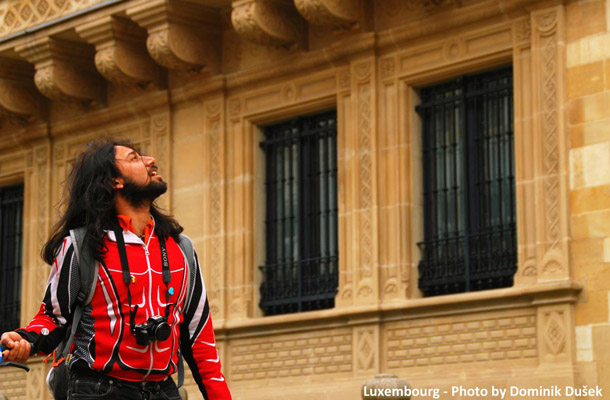
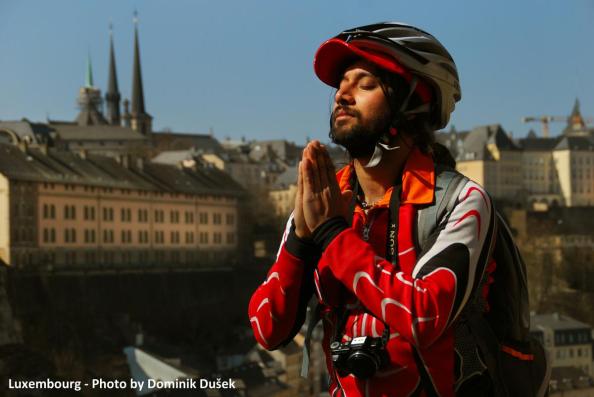
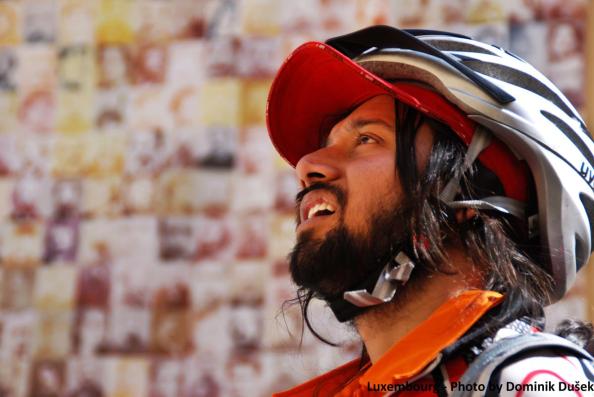
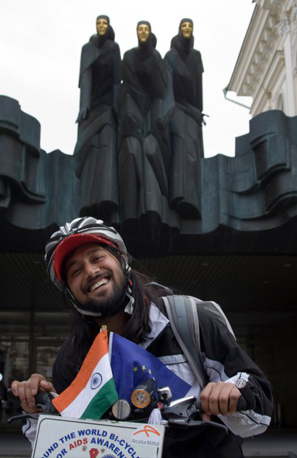
I started writing my Culinary Travel blog to pen down and share my ‘experiences’. But there wasn’t any mission. I have consciously never written anything about politics, religion, natural disasters, human disasters and many other calamities and catastrophes that I have felt strongly about. I want to write about things that make the readers feel that there is ‘hope’ in this world and there is much to look forward to. Embarking on a culinary journey and meeting new people on new shores on my travels give me that ‘hope’. So imagine my excitement to meet a man who has been traveling around the world ‘with a mission’ and with same belief that I had – there’s ‘hope’. He set off on his travels in 2004 and intends to continue traveling till 2020, before heading back home. His mission? To spread a message of peace and awareness about HIV/Aids. His preferred mode of transportation? A bicycle! He’s been travelling on a bicycle for nine years and has covered a distance of 97,000 km across 78 countries. Right now, he’s on his Middle East leg of his world tour and is in Dubai till the 16th of July, after which he’ll cycle his way off to other Middle Eastern countries, continuing his journey to Africa, North America and even to the South Pole!
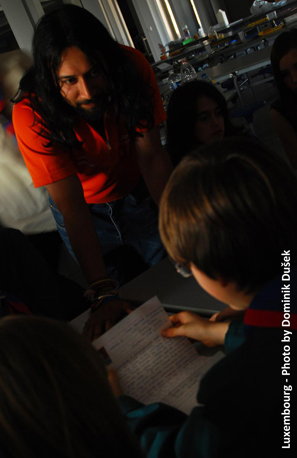
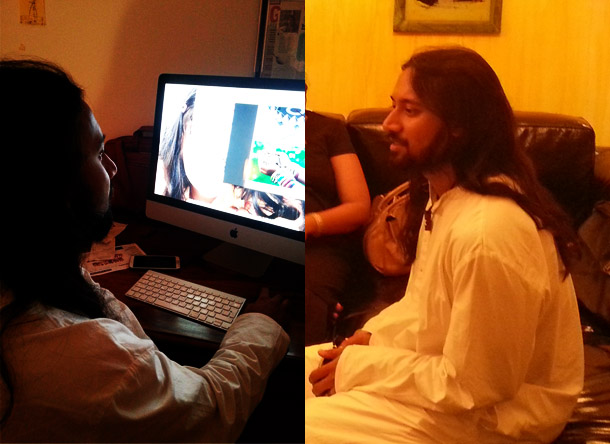
Somen Debnath was born a Bengali, but today he is nothing but a global citizen. He hasn’t met his family – the family that you and me would probably refer to. He’s looks at me bewildered when I ask him ‘Do you not miss your family?’ ‘My goal is to cover 191 countries till 2020. I will travel 200,000km around the world and will be reaching nearly 20 million people. I am with my family!’ He came home last night and we heard all about his stories over a home cooked traditional Bengali meal of Aloor Dom (Potatos), Bhaja Moonger Daal (yellow lentil soup), Chingri Malaikari (Prawn in Coconut Curry), Maacher Paturi (Fish in Mustard Sauce, wrapped in Banana leaf), Kasha Mangsho (Mutton slow cooked in Bengali style), Tomato aar Khejurer Chutney (Tomato and Dates Chutney) and Gur diye Chanar Payesh (Cottage Cheese and Milk Pudding with Jaggery). With a person who’s been travelling so much, I thought a Bengali meal must be something that he might not be coming across often. I have been ‘inspired’ naturally, to write about him at the middle of the night, just after he left. A snippet of our adda (Adda in Bengali refers to the casual chit-chat) with Somen Debnath follows the pictorial journey that he shared with us (sadly I can’t go on uploading!)…



◊—————————————————————◊
You left home when you were 20 years old. And you haven’t gone back. How did it all start? I wanted to do something since I was a child but I wasn’t sure what. I was involved in many social work from an early age. But the real inspiration for my mission came to me at the age of 14 when I read an article called ‘AIDS is Deadlier than Cancer’. A person was left lying in front of Medical College of Calcutta (What an irony!), abandoned by all his villagers and left to die alone – he had been suffering from AIDS. No one would touch him. This incident made a huge impact on me. When I started asking my school teachers about AIDS and HIV, they could not answer and avoided discussing the subject. So two years later, I decided to get a special training at W.B.S.A.C.S. (West Bengal State AIDS Control Society) and began an awareness campaign about HIV and AIDS, starting with educating my own teachers. AIDS-related stigma and lack of knowledge about this deadly yet preventable disease motivated me the most. My mission was to first spread the knowledge to the people from my village, then my country and then the world. Today, it is a global campaign.
What was your route? (It felt like he was chalking out the entire atlas!) Nepal, Bhutan, Myanmar, Srilanka, Bangladesh, Thailand, Indonesia, Malaysia, Pakistan, Afghanistan, Tajikistan, Uzbekistan, Turkmenistan, Kazakhstan, Azerbaijan, Iran, Georgia, Turkey, Bulgaria, Macedonia, Greece, Italy, Croatia, Slovenia, Austria, Hungary, Serbia, Montenegro, Albania, Romania, Moldavia,Ukraine, Belarus, Poland, Slovakia, Czech Republic…. (A total of 78 countries so far – 97,000 km till now – Phew!)
In Afghanistan, you were kidnapped. You made international headlines after you escaped from the clutches of the Taliban by feeding them an Indian curry. I am very nervous today feeding you! Oh yes, I was taken by the armed militants as I riding through the remote region in Afghanistan. They assumed that I was a spy. I was blindfolded and tortured. It was tough.
The Guardian UK came out with the first hand story – I strayed into Taliban territory in Herat, 138km from Kabul. The Taliban, taking me to be a spy, put me in a dark dungeon for 24 days before I could prove my innocence. I could have lost my head, quite literally… In 2006, after travelling across most of India, I reached the country’s north-eastern tip and the villages of the province of Assam. That’s where my bad luck started. I was held captive by the secessionist United Liberation Front of Assam for five days and only released when the ultras were convinced that I was not a government spy. My journey continued uninterrupted across 33 countries – until last month. I reached Afghanistan and was looking for help because it was obvious I knew nothing of Herat, a town in the west of the country. Suddenly a group of burly men, clad in traditional Afghan clothes and turbans, with bearded faces covered by scarves, surrounded me and started asking me questions. Did I know anything about Islam? Was I a Hindu? Had I read the Holy Koran? What was I doing in Herat?
The questions were rapid but I did not understand a word because they were talking in Pashto. They became impatient and furious and beat me up. I remember just lifting my hand in surrender, and kneeling down, praying to them for mercy. But I could not answer them because I did not understand their language. They blindfolded me and took me to their hideout which took half an hour to reach. I had no idea where it was. I just remember the semi-arid land.
After this, and again after much questioning, I was dumped in a dungeon which had no light. I was given no food save for some rice and a morsel of beef. I had to survive on that for a few days. At times, they beat me up in frustration for not understanding their commands. However, I got lucky when I chanced upon one of my captors who spoke English in monosyllables. It was from him that I came to know that I was being held by the Taliban. I knew then that I was to die.
One day I was asked to cook and my luck again turned for the better. Coming from India, I had what I thought was a natural talent for cooking hot, spicy dishes – particularly mutton. I did precisely that, except there was no mutton so I had to make do with beef, something we Hindus consider untouchable and a sacrilege. But there can be no bigger religion than life itself, I told myself.
I cooked hot, spicy food for them the way we have in the Sunderbans. They were very happy and told my interpreter that I seemed to be a safe guy. In the meantime, I had talked more with the interpreter and through our short exchanges, I managed to make it clear that I was simply a man who was on an adventure and had no intention of harming their cause.
The interpreter must have passed this on because I was set free after 24 days. The first sunlight which hit my eyes almost blinded me. It was hot outside and I had bruises all over. My bicycle had not been destroyed. I was again blindfolded and driven away from the area where I had been held captive, but not before my friend gave me a packet containing some dry fruit. I treasured it but at the same time, I felt a chill down my spine when I realised how close I had come to death. I had heard so many stories of Taliban torture.
A journey indeed. Now what? In 2020 when you return home, you’ll be 36 years old. What are you going to do then? I have been traveling to reach out to people. It will be the longest journey in the world, riding in a Bicycle and will be a part of the Guinness world records. In this 16 years of travel, I am expecting to visit 191 countries, totaling 200,000 km and reaching out to 20,000,000 people. During these travels, I visit schools and universities in different countries and educate people on health as well as Indian culture. After my travel is over, all the people that have I have connected to, will connect to me. I collect a pound of soil from every country I visit and send it home. At the end of this journey, I hope to build a global village of peace and all the soil collected from the different countries will be in the center. This global village is going to be a self-sufficient village and will house any citizen of this world, irrespective of cast, creed, country and religion.
What about the practicality of your mission. Who funds it? I am selling kms of my travel to my friends and families all over the world. One-third of my kms will cover expenses of my travel and two-third of kms will go towards the funding of our global village. I will also be auctioning all the bicycles that I’ll be riding at the end of my journey. The Indian Embassy in different countries process my visa and other travel papers. Moreover, each country comes forward to help as much as they can. And I am thankful to so many individual people that have helped me in many ways. They are all part of my family and friends.
Why did you choose a bicycle as your mode of transport? One) It is environmentally friendly; Two) It is a great form of exercise and keeps me fit; Three) It lets you meet people, connect with them and make new friends. If I ride 5 kms, I am meeting 5 new people and making friends.
You don’t want any corporate sponsorship? For example if a multinational cycle brand comes forward, your fund issues would be completely solved. Yes, but that might also mean that I might have to move away from my own objectives and the goal of my mission.
Coming to Food. You are a great cook yourself. What do you like to eat? I love Georgian food. Georgia is my second home. Khachapuri (regional Cheese bread), Khinkali, Kutchmatchi – I could go on! And what about Bengali Food? Very simple – Mushurir daal aar Aloo Bhaaté – the Masoor Daal and simple mashed Potato {a recipe on Mashed Potato from my blog}. It’s my personal wish to come out with a cook book as well at the end of my journey. It will document all the dishes that have originated out of India and have entered another country’s cuisine and vice versa. For example, the Turkish Sütlaç is simply Payesh or the Indian rice pudding.
Don’t you miss your family? You haven’t met them in these 9 years! (I’ve told earlier, he looked at me as I if I’ve just blurted out the most stupid thing on earth) No, I don’t miss them. I do speak to them over the phone. Only my mother is interested in knowing what I am doing. And my brothers are very nice – one is working for Kolkata Police and the other one is in Grade 12. They live with their extended families – so fourteen of them eating together and living together.
I read about you on Gulf News. And I feel very proud that you’ve taken such a leap forward. You are in Dubai till the 16th July. So what are your plans in Dubai? I will be riding to Sharjah. All my visa formalities are being done now at the Indian embassy. I hope that there will be many communities who will be interested in my mission and come forward to help me.
More on Somen: Website, Facebook, Twitter; Blog; Youtube
Email: somenglobe@gmail.com
Dubai Phone no: +971502429306
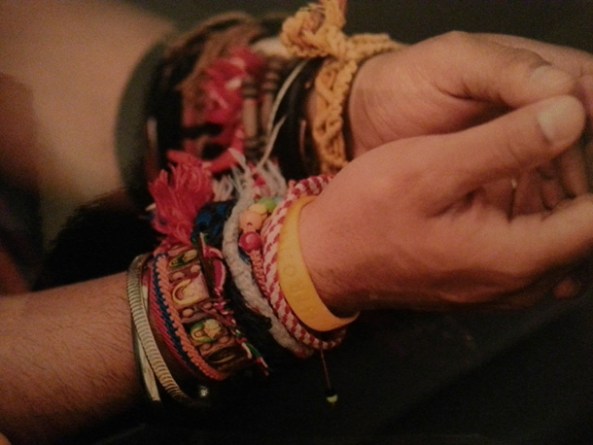
As I said, I have been inspired by Somen. But naturally, I cannot think like Somen. Family for me consists of the Z-Sisters, our parents and my relatives. A few friends have also entered into that periphery over the years, probably because of the many years spent on foreign shores. While I fondly recall Dubai as my home, Kolkata still feels like the home that beckons me nostalgically. And although we have set up homes in many countries (Germany, Srilanka) and they have begun to feel slowly like home, I still cannot live without visiting my parents, friends and relatives in Kolkata every year. After Somen left, I asked Big Z what she thought about Somen’s idea of the world as his home and all the people that he met up with, as his family? She said that sometimes she too, thinks like Somen and probably she won’t miss me that much when she left home. I was left with tears rolling down my cheeks. I don’t think I have the courage to hope that my girls take up such bold and brave steps as Somen. Yet, I want to share Somen’s story and would like you all to share his story as much as you can – because the world needs people like him. There are many people in his world who travel with Somen all the time, in spirit – each colourful bangle or band that encircles his wrist, has been given by a person who cannot travel physically with Somen. What a journey this has been for a man starting from Basanti in the Sunderbans. Do, ride on and inspire us!
Unblogging it all… Ishita
Disclaimer: The opinions stated here are my own and are absolutely independent. I hope you enjoy reading the posts with lot of visuals but please do not use any material from this post. You can see more pictures of my travel and food journey here. It does take lot of effort to capture a food experience in text and pictures. While it’s meant for you to enjoy them, I request you not to use them!
◊—————————————————————◊
BE SOCIAL. SHARE THIS!

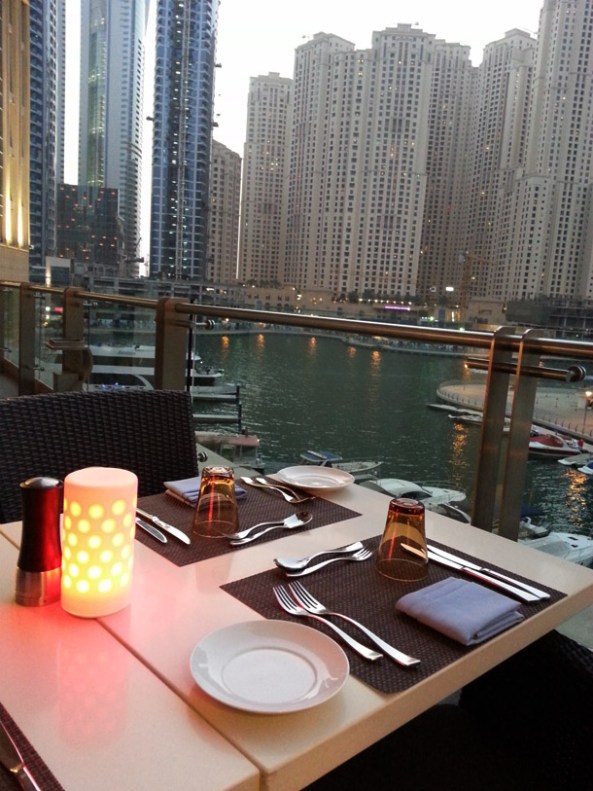
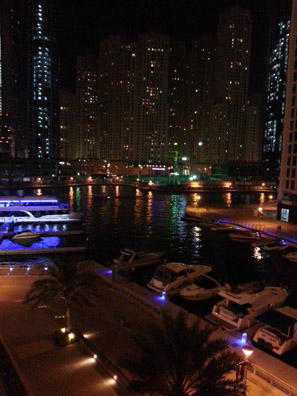
This post is a continuation in the spate of my recent outings to taste food from different parts of the world, with a blog giveaway at the end as promised. While I had been bowled over by the Iraqi Masqouf in the Bait Al Baghdadi Restaurant in Deira, the Address Marina has been a bit of a revelation of sorts. A bit understated, it is a beautiful property in a beautiful location. I have been hopping into their signature restaurant Mazina, eating, sniffing (sorry to disappoint you as I kick away my elegant demeanor), clicking incessantly, stumbling across a few dishes for the first time or delighted to have discovered again, so close to home – alibi their themed nights. A good dining experience is a real pleasure – be it a roadside, a shack, a casual restaurant or a top of the line (read top of the hill) restaurant. If you’ve experienced one, it lingers on.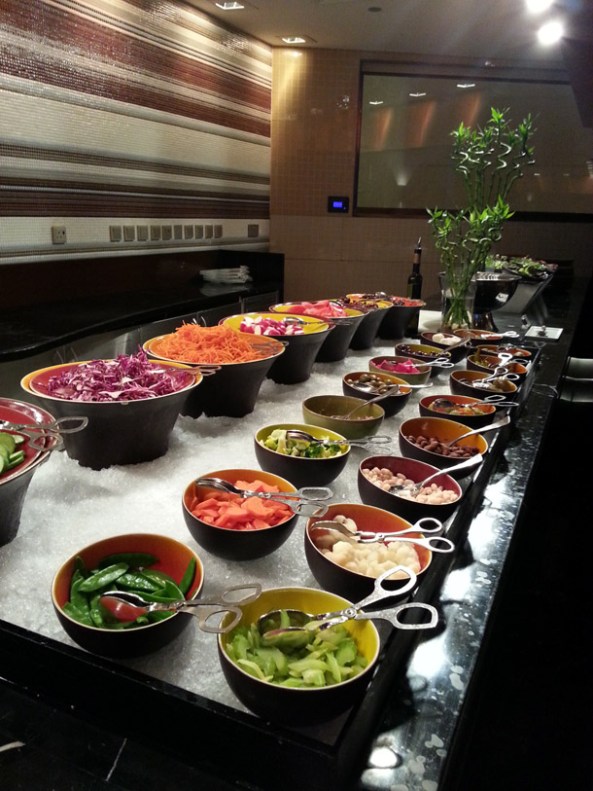
Eating through the Theme Nights
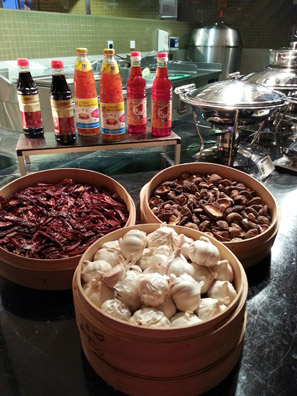
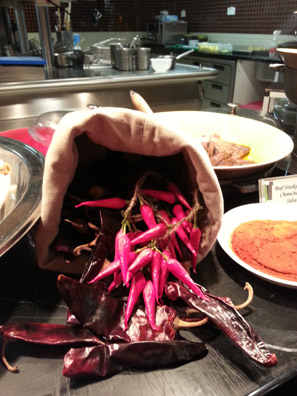
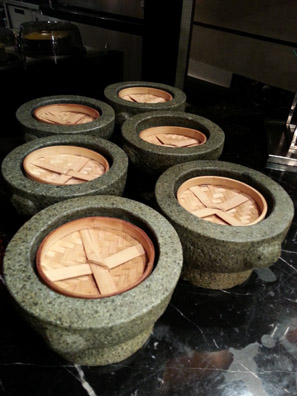
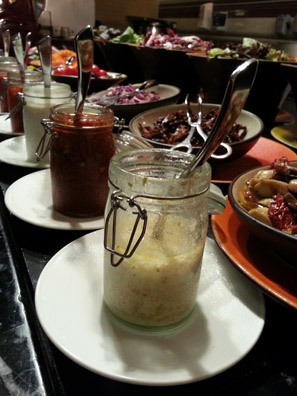
Mazina has a very casual elegance about it, with live cooking stations and lots of interaction with the staff and the chefs. You can hear the sizzling of pans amidst the hustle and the bustle. The dips, jams and sauces are mostly homemade (further below), and only sustainable fish is sourced. I am so happy to hear this as I feel if big hotels don’t lead in this issue and spread the awareness amongst diners, small eateries cannot be expected to follow suit (thus joining the league of places that I have visited who adhere to sustainable fishing – Desert Island Resorts in Bani Yas Island, Six Senses in Zighy Bay, Sense on the Edge in Zighy Bay, Islanda Krabi in Koh Klang). Coming back to Mazina, Chef Trevor who is at the helm of the kitchen, takes a lot of pride in the fact that the menu is created seasonally and changed very often, at the same time keeping in mind the basic theme of each night. A round up on a few fascinating dishes from around the world –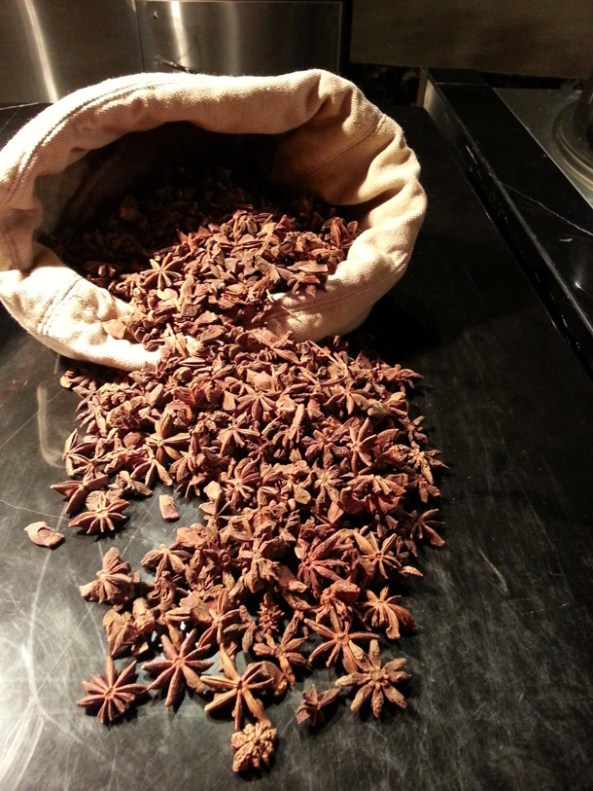
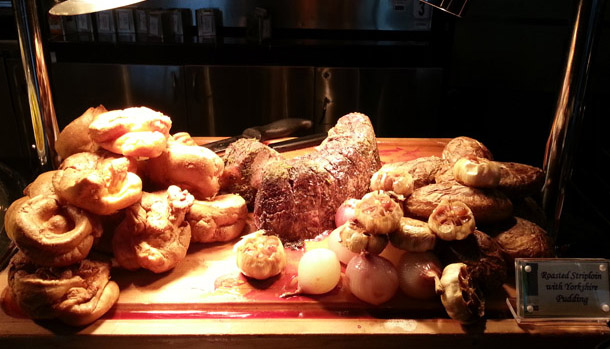
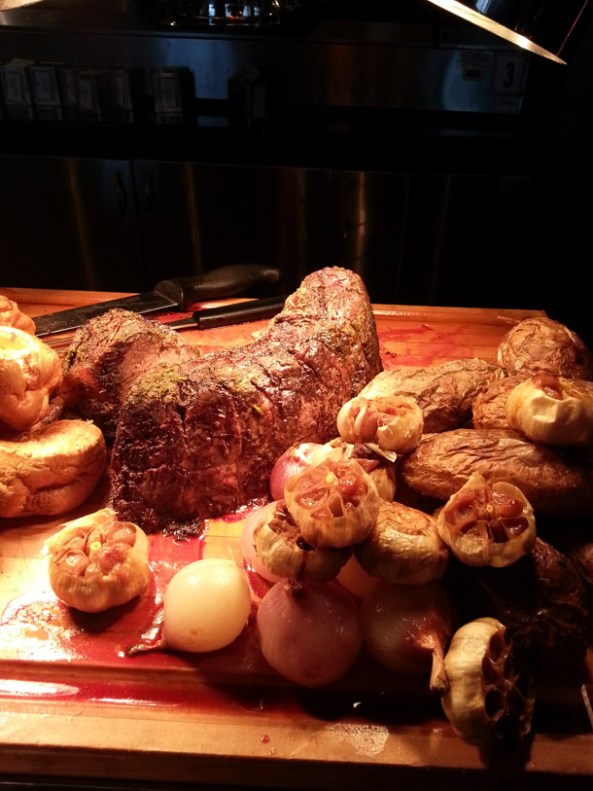
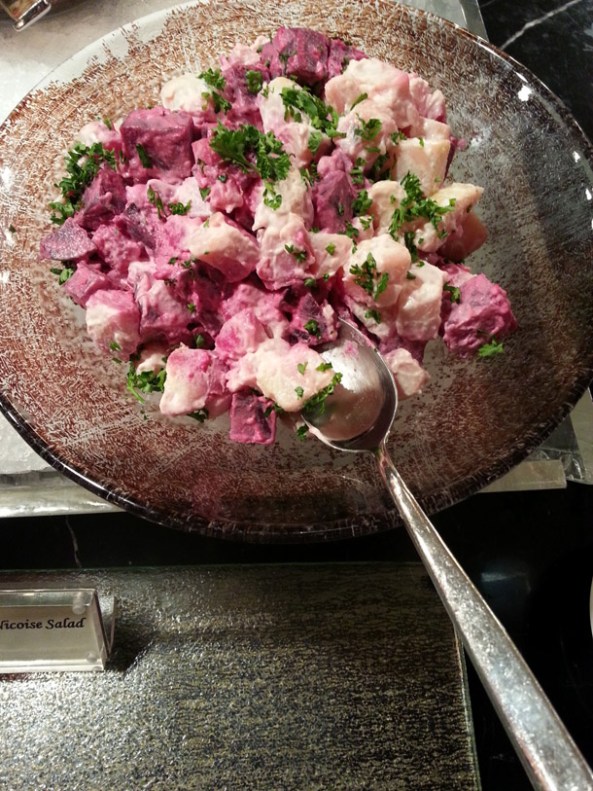 Roast Nights on Sundays… So, this is The Sunday roast! Traditionally, the main meal served on Sundays in Britain and Ireland consist of roasted meat, roasted potatos or mashed potato, with accompaniments such as Yorkshire Pudding, stuffing, roasted vegetables and thick gravies. I have always been fascinated with the Yorkshire Pudding. When I was a child, any pudding would form an image of a dessert in my mind. The Yorkshire Pudding broke that myth, though it could be served as a sweet. Also known as batter pudding, this dish (further below) is made from batter and usually served with roasted meat and gravy. There is a lot of legacy to this dish. The Yorkshire pudding is a staple of the British Sunday lunch and in some cases is eaten as a separate course prior to the main meat dish. This was the traditional method of eating the pudding and is still common in parts of Yorkshire today. Because the rich gravy from the roast meat drippings was used up with the first course, the main meat and vegetable course was often served with a parsley or white sauce. The history behind the Yorkshire Pudding goes thus… When wheat flour began to come into common use for making cakes and puddings, cooks in the North of England devised a means of making use of the fat that dropped into the dripping pan to cook a batter pudding while the meat roasted in the oven. In 1737 a recipe for ‘a dripping pudding’ was published in The Whole Duty of a Woman: Make a good batter as for pancakes; put in a hot toss-pan over the fire with a bit of butter to fry the bottom a little then put the pan and butter under a shoulder of mutton, instead of a dripping pan, keeping frequently shaking it by the handle and it will be light and savory, and fit to take up when your mutton is enough; then turn it in a dish and serve it hot. {More here}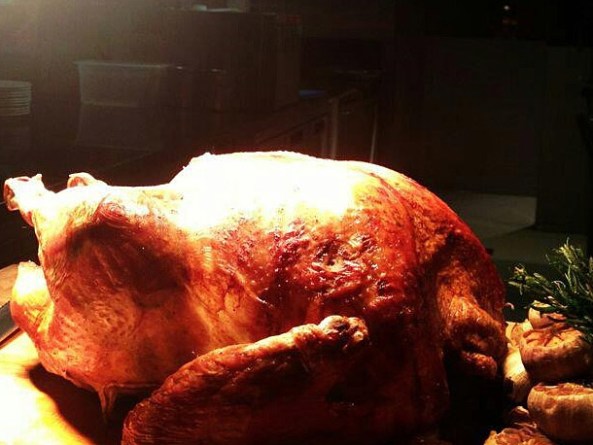
Spice Route on Mondays… 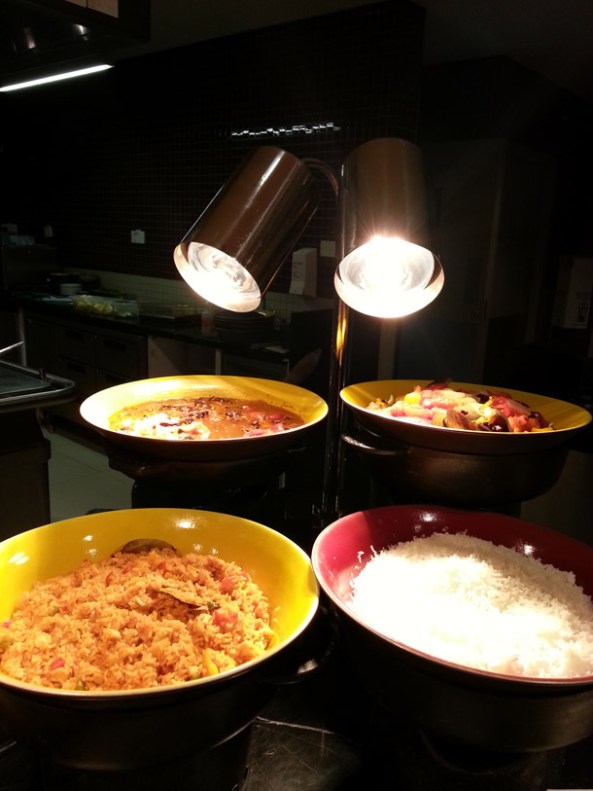
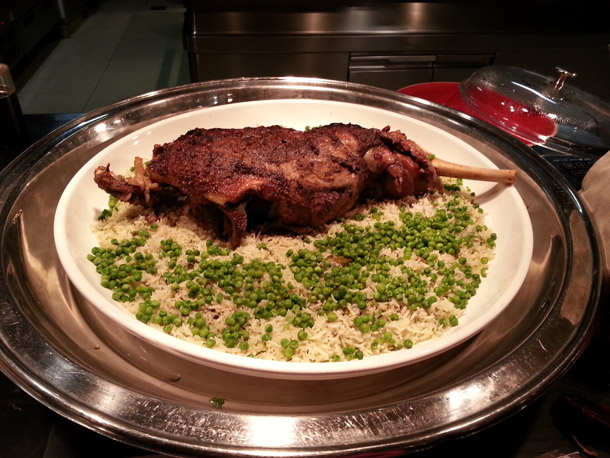
The Ouzi (above) holds a special position in Middle Eastern cuisine. Originating in the Mediterranean region, Ouzi is prepared in different ways across the Arabian Peninsula. Traditionally, these are flaky baked parcels made out of thinly rolled out puff pastry or a few layers of Phyllo, which, when burst open, contains spicy rice cooked with meat, assorted veggetables and slivered nuts. Though the Ouzis that I have come across in most Buffet spreads here in Dubai, haven’t been parcels but rice cooked and presented in a large platter with the roasted lamb placed on top – it is more like the one whose recipe that I once came across in The National. Aromatic and delicious, the grandeur and the exoticism of the Ouzi fascinates me a lot. Not an Ouzi, but I’ve tasted something similar when the celebrity chef Reza Mohammed cooked his Persian Pulao. 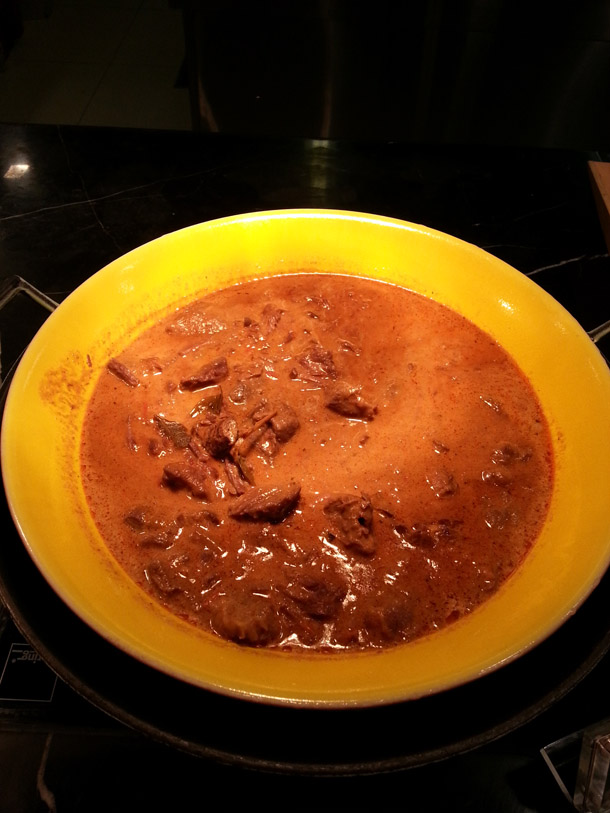
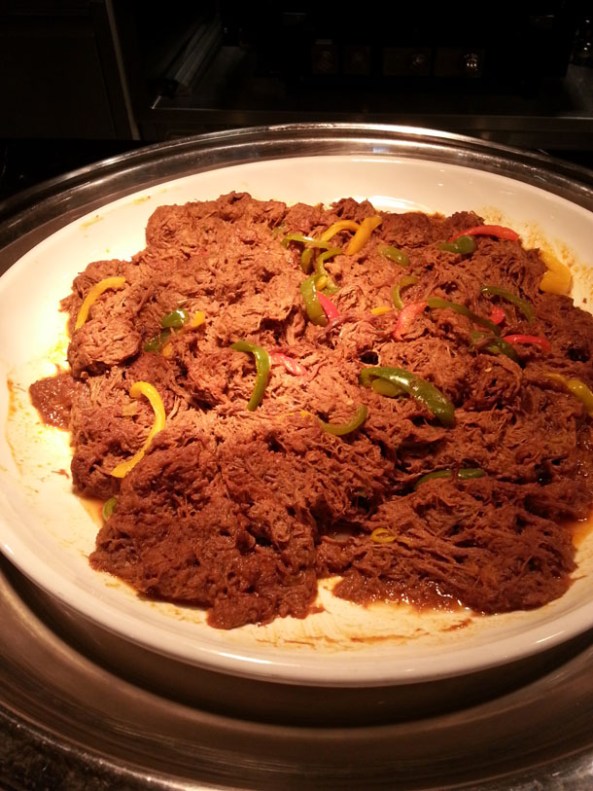
If any dish encompasses Philosophy, heritage and symbolizes any social significance, it must be the Indonesian Beef Rendang (above). Originating from the Minangkabau ethnic group of Indonesia, the Rendang is served at ceremonial and festive occasions and to honour guests. Now, it is very popular all across Indonesia, Malaysia, Singapore, Brunei, the southern Philippines and southern Thailand. This is a spicy meat dish and takes hours to cook. The meat is slow cooked in coconut milk and spices, letting the gravy to reduce and thicken while absorbing all the spices and the condiments at the same time. Though the true Rendang would be the dry one, I prefer the wet Rendang, known as the Kalio. The cultural significance of Rendang goes thus – Rendang is revered in Minangkabau culture as an embodiment of the philosophy of musyawarah, discussion and consultation with elders. It has been claimed that the four main ingredients represent Minangkabau society as a whole:
- The meat (dagiang) symbolizes the Niniak Mamak, the traditional clan leaders, such as the datuk, the nobles, royalty and revered elders.
- The coconut milk (karambia) symbolizes the Cadiak Pandai, intellectuals, teachers, poets and writers.
- The chili (lado) symbolizes the Alim Ulama, clerics, ulama and religious leaders. The hotness of the chili symbolizes sharia.
- The spice mixture (pemasak) symbolizes the rest of Minangkabau society. {More here}
It shouldn’t come across as a surprise then, that an online poll by 35,000 people held by CNN International chose Rendang as the number one dish in the category of the ‘World’s 50 Most Delicious Foods (Readers’ Pick 2011)’ list! 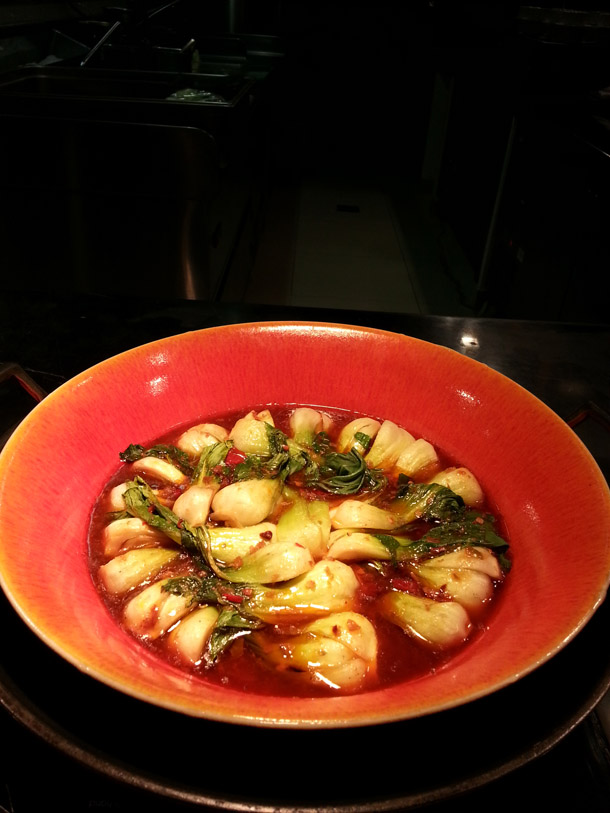
The simple Anda Paratha (below) or the Egg Paratha that brought back all the home cooked warmth and nostalgia of Sunday breakfast mornings of my childhood. The other version of Paratha this Anda Paratha brought was the Mughlai Paratha which is a deep fried stuffed Paratha filled with egg and minced meat. The connection of Kolkata and Lucknowi or Awadhi cuisine has a lot of historical connotation and Mughlai food holds special importance in most Bengali foodies. The history behind this Mughlai fascination roots back to the princely Indian state of Awadh (Oudh) in the times of Nawab Mohammed Wajid Ali Shah Bahadur (1822 AD-1887 AD). Today this is modern day Lucknow. In 1857 AD, after the Awadh kingdom was annexed by the British, the Nawab was exiled to Calcutta (today’s Kolkata). His passion for gourmet food traveled from Lucknow to Calcutta and was nurtured and garnished and fuelled by his special Bawarchis or the Chefs of the Nawab. Awadhi cuisine has traveled far and wide. But it is believed that only a handful of chefs with royal khansama/lineage know the secret ingredients. There are in fact a string of Awadhi Restaurants in Kolkata, and only a few carries that legacy forward and they also embellished the Dum Pukht style of cooking with aromatic ingredients, dried fruits, and aphrodisiacs that delighted the insatiable Nawab. 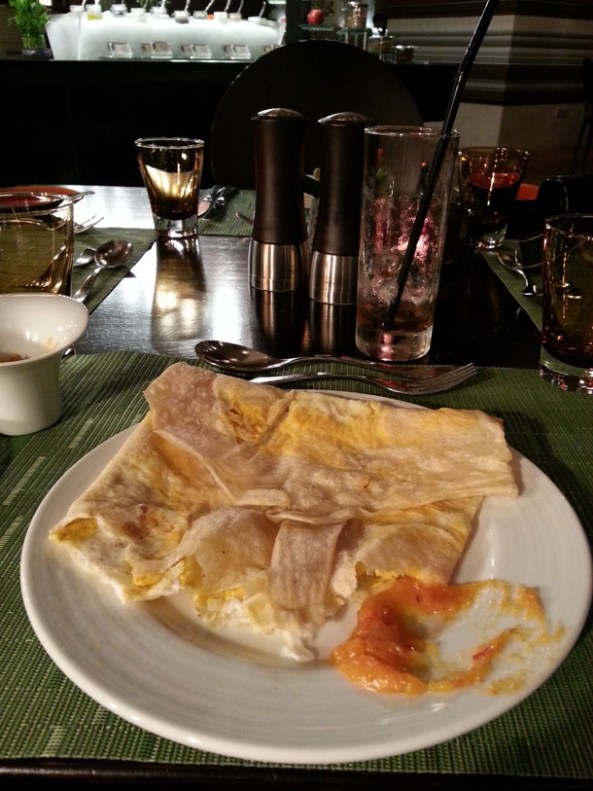 Seafood Nights on Tuesdays…
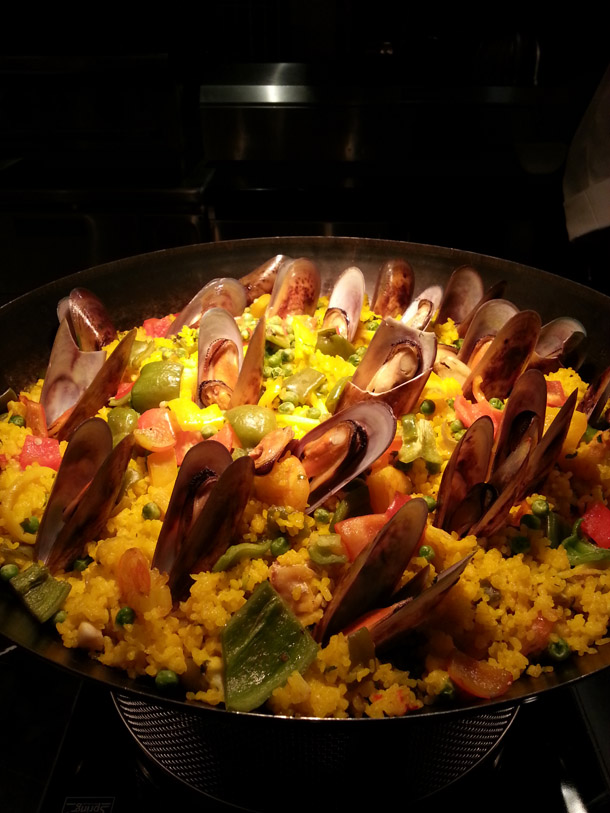
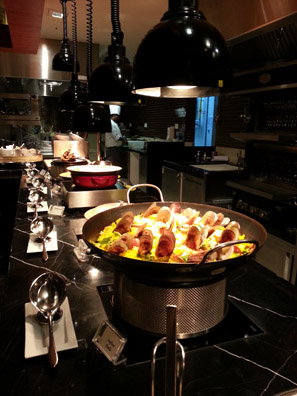
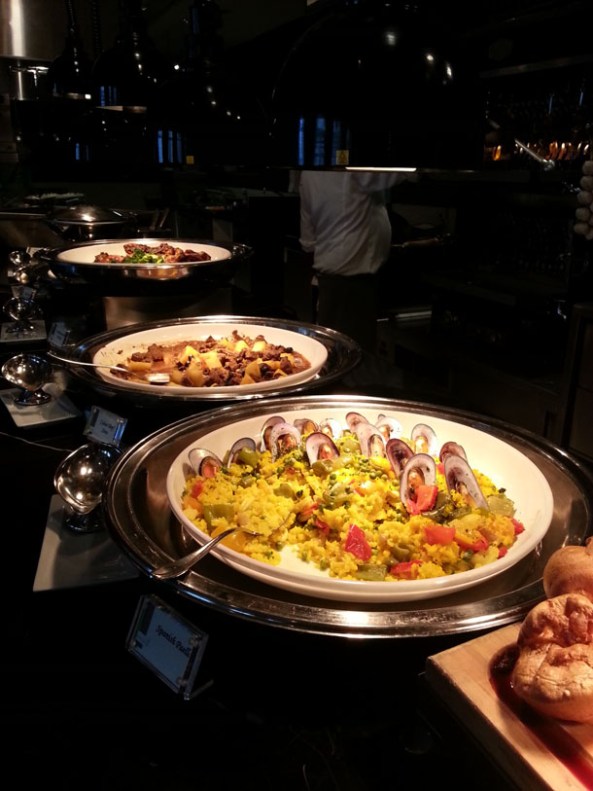
The love for Paella in my family is legendary. We’ve even visited the Spanish city of Valencia, where Paella has originated. My article on Valencia and Paella must have been, by this time, published in the Air Arabia inflight magazine and already boarded it’s first flight. Here goes, the world’s shortest essay on Paella… Paella (pronounced “pah-eh-ya”– the ‘ll’ is pronounced as a ‘y’) is a matter of local pride and every Valencian mother claims to make the best Paella. I had always associated Paella with sea-food but only in Valencia did I come to know that the dish originated as a poor man’s dish or should I say poor men’s (collectively) dish, a labourer’s meal cooked together in a large quantity over an open fire in the fields and eaten directly from the pan with wooden spatulas. Chicken was added only on some special occasion. Rabbits, ducks or the cheapest meat like snail meat were often added to the dish. And sea-food was just a random experiment that must have turned viral! Making Paella was an elaborate process and it would be eaten over the next few days – an USP that some restaurants actually use. Please don’t get surprised to find a placard like this – ‘Home-cooked Paella, made yesterday!’ You can actually find communal paella cooking and Paella cooking competitions in village festivals like Tomatina festival (an annual festival which takes place in Buñol, 38 km west of Valencia. Spaniards and tourists from all over the world gather in the town to throw 115,000 kilograms of tomatoes at each other). {My blog post on Valencia}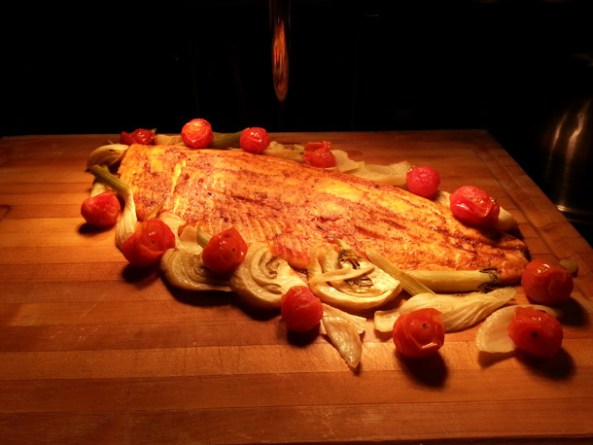
 Mongolian Nights on Wednesdays…
 Sushi and Steak Nights on Thursdays…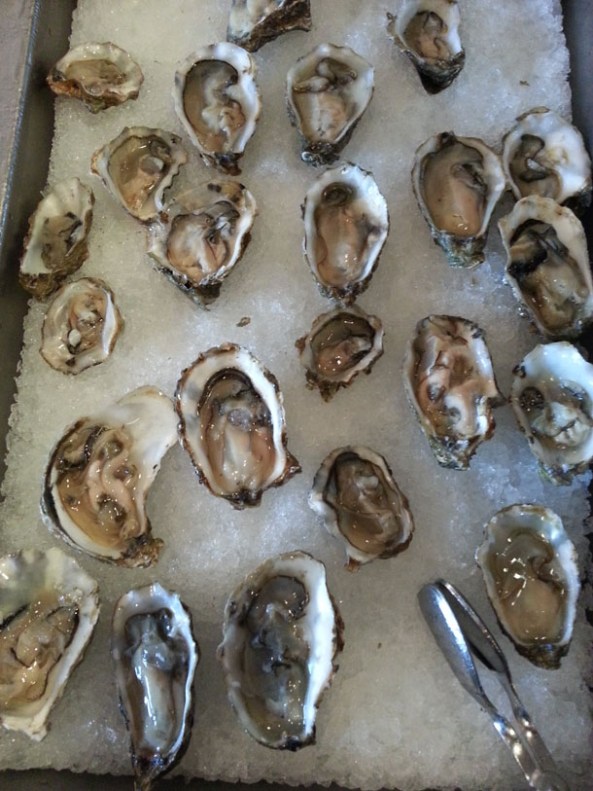
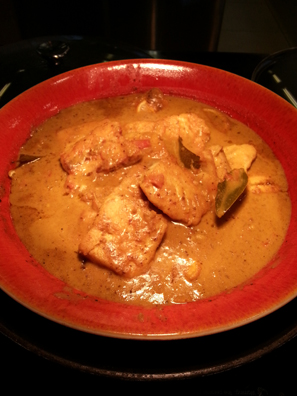
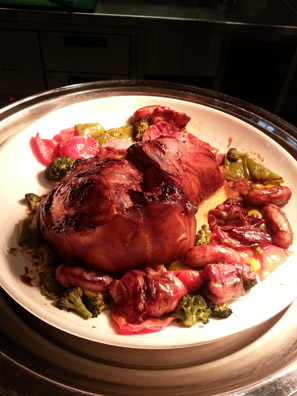
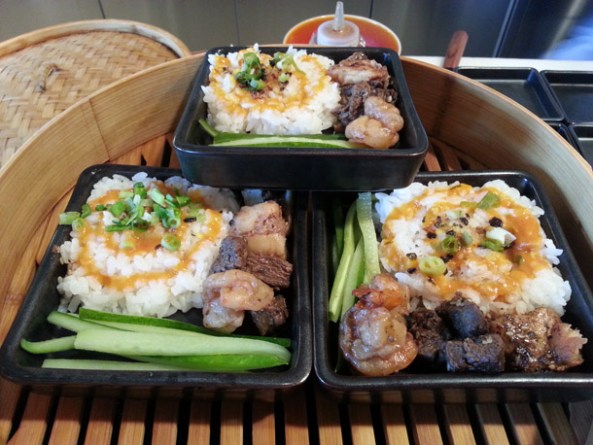
 The Friday brunch…
 The Friday Brunch…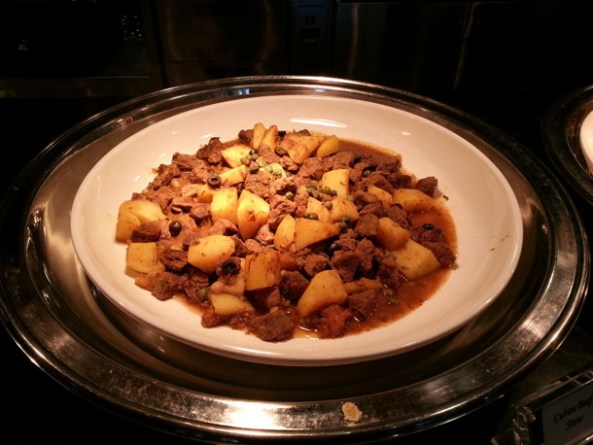
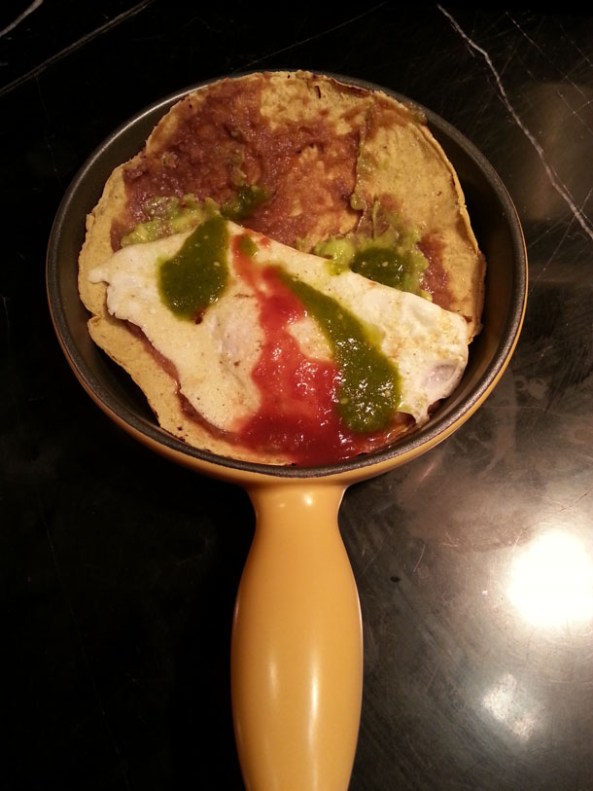 Huevos Rancheros (above) – the popular Mexican ‘farm’ breakfast consisting of fried eggs served upon lightly fried corn tortillas topped with a spicy tomato chilli salsa sauce. Just like the Middle Eastern Sashouka, this is a complete meal that’s very full filling. Non-Mexican additions such as cheese, sour cream, and lettuce also have become common in the recent times. An interesting version is also the Huevos divorciados or the divorced eggs, where two eggs are served in the usual fried style, but with a different sauce for each – a red and a green chilli. The green chilli sauce there? Yes, it is killing!
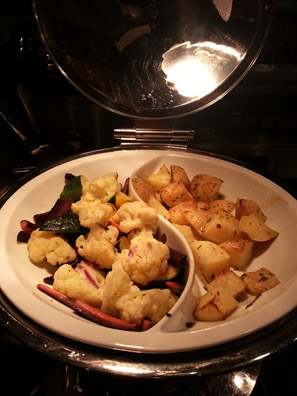
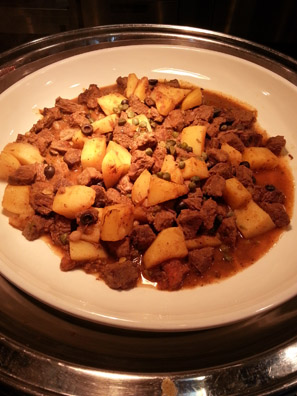
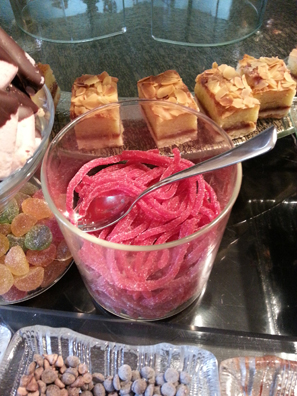
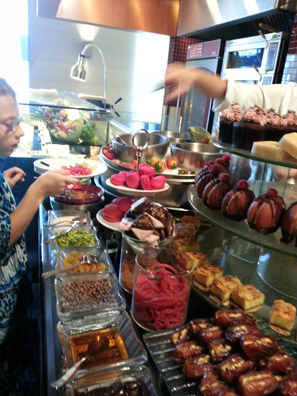
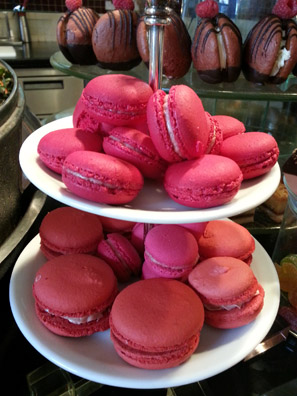
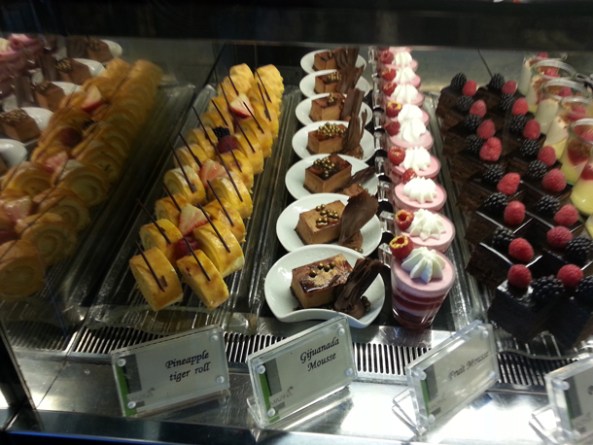
 And of course, there is the sweet sign off – the elaborate dessert spread every night… cakes of different types – sponge cakes, carrot cakes, strawberry, vanilla, chocolate and coffee cakes, assorted muffins, canolies, cranberry flapjacks, macarons, lollipops, lemon meringue tarts, caramel short breads, granola bars, fruit mousse, mocha mousse (a speciality here, I was told), mango pudding, panna cotta, berry truffles and more. Sugar laden sour punks, anyone? Or, my absolute favourite – the very traditional Umm Ali, served piping hot?
Roast Nights on Sundays
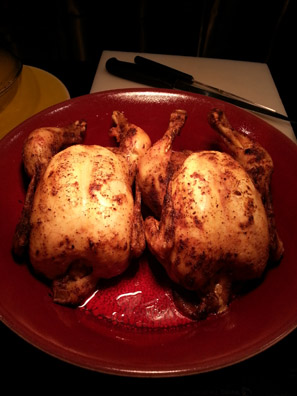
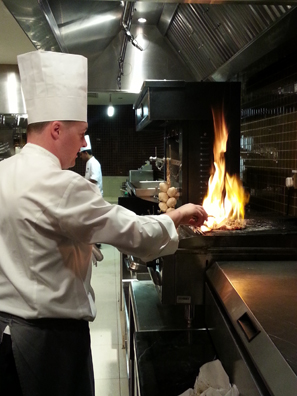
Roasts from a choice of Beef, shoulder of Lamb or Turkey, with Yorkshire Pudding on the side or classic accompaniments such as roast Potatoes, baked Root Vegetables, Cauliflower Provencal, Gratin Broccoli, sous vide Fennel with Olives, creamy Polenta and more – Sundays are nothing but Carvery Nights. The different sauces just make the roasts more irresistible. While I am familiar with the English, Dijon, Dill cream or the Horseradish cream sauce, I had never come across the Chocolate Barbecue Sauce before. (Dhs 220/person: 6:30pm -11:00pm)
Spice Route on Mondays
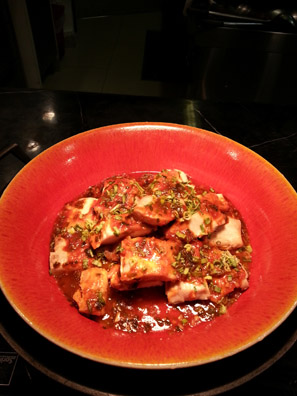
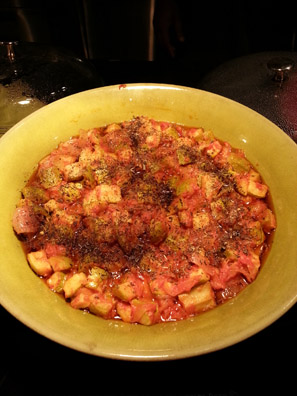
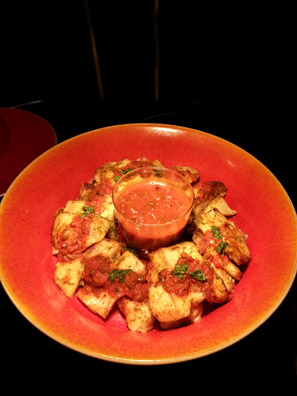
Different types of curries from the Asian subcontinent, spicy chutneys, tangy pickles, homemade Parathas, Malay breads – Mondays are absolute gastronomical roller-coaster rides. Starting with soups like the Malaysian Seafood Laksa or the Mulligatawny from the Indian state of Tamil Nadu, there are various dishes from all over the world. From Asia – the Srilankan fish curry Ambul Thiyal, Indonesian Beef Rendang, Indian Shahi Murg, Thai Yellow Crab Curry, the Japanese Beef Shabu Shabu, Chinese vegetable hotpot, Baby Bokchoy in Xo sauce, assorted dimsums, Pecking Duck and crispy rice rolls; from the Arab world – Egyptian sausages or the Soujuk Makhanek, the Nile Perch Muttafay, Lamb Ouzi with oriental rice; from Africa – the Jamaican Goat curry, Kuku Choma with Kachumbari roasted maize; from America and Europe – Louisiana Shrimp Gumbo, Mexican chili con carne with kidney beans, Beef flank with Chimichuri salsa, Chicken Jambalaya, Vadovan infused root vegetables, Patatas Bravas and many more. (Dhs 220/person; 6:30pm -11:00pm)
Seafood Nights on Tuesdays
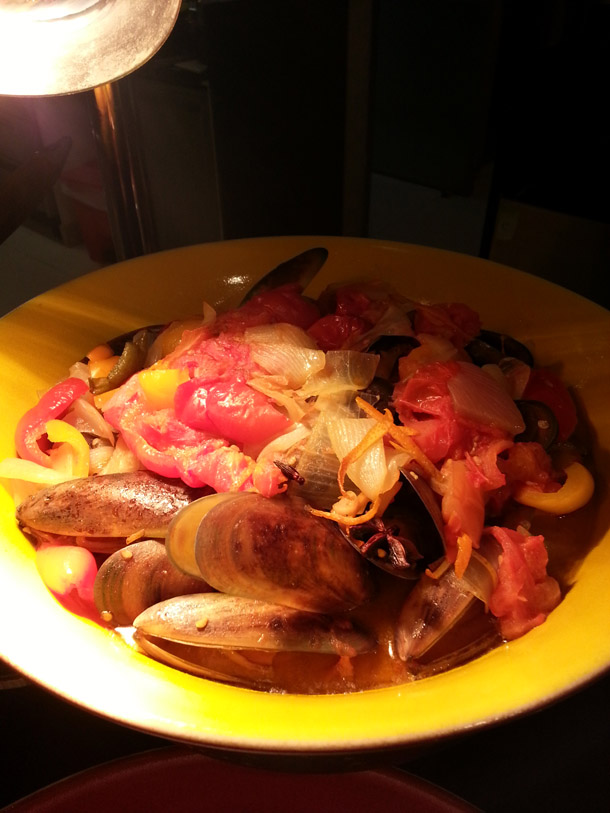
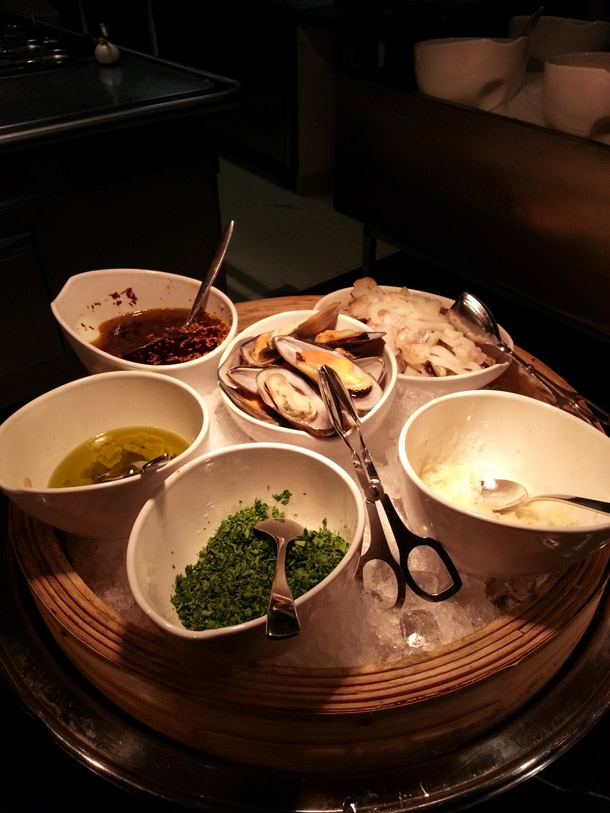
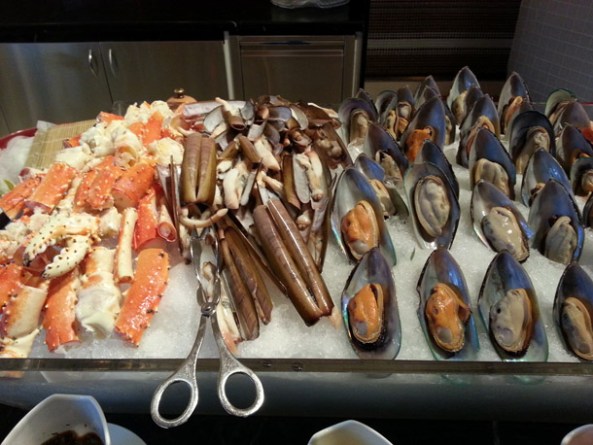
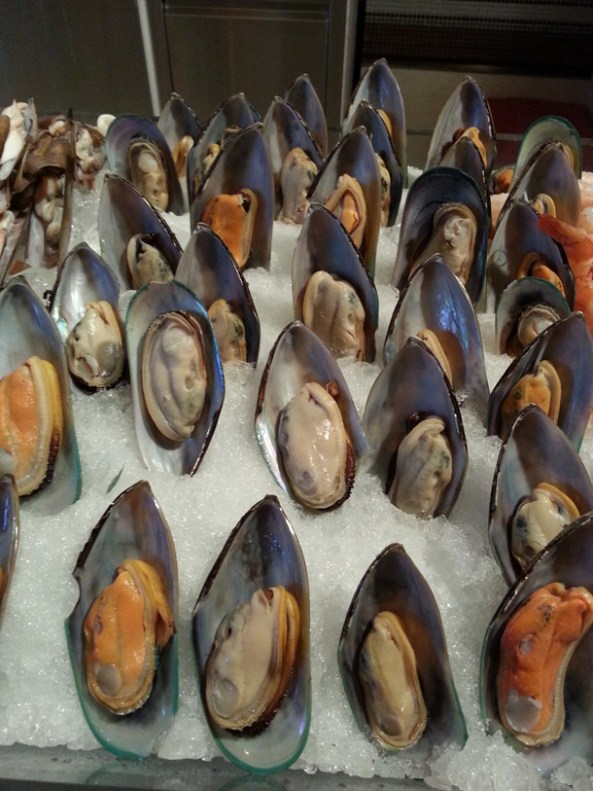
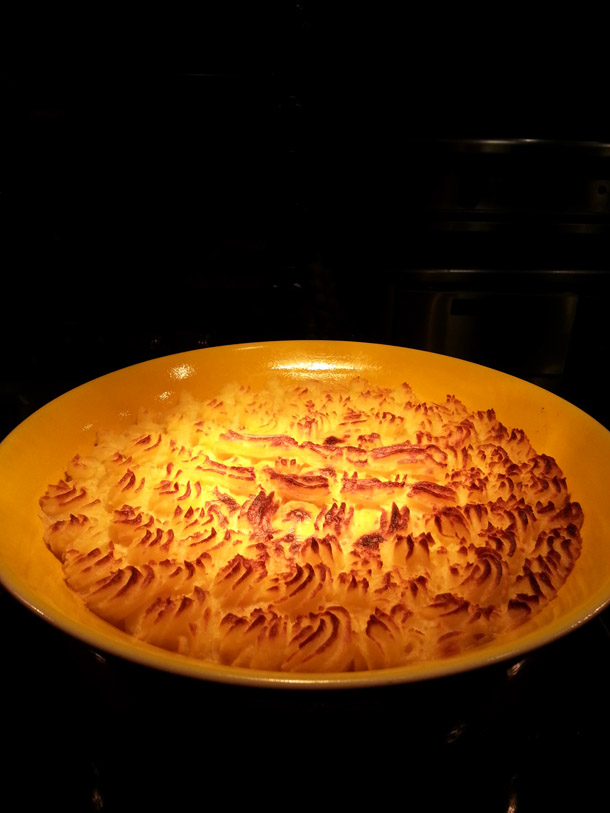
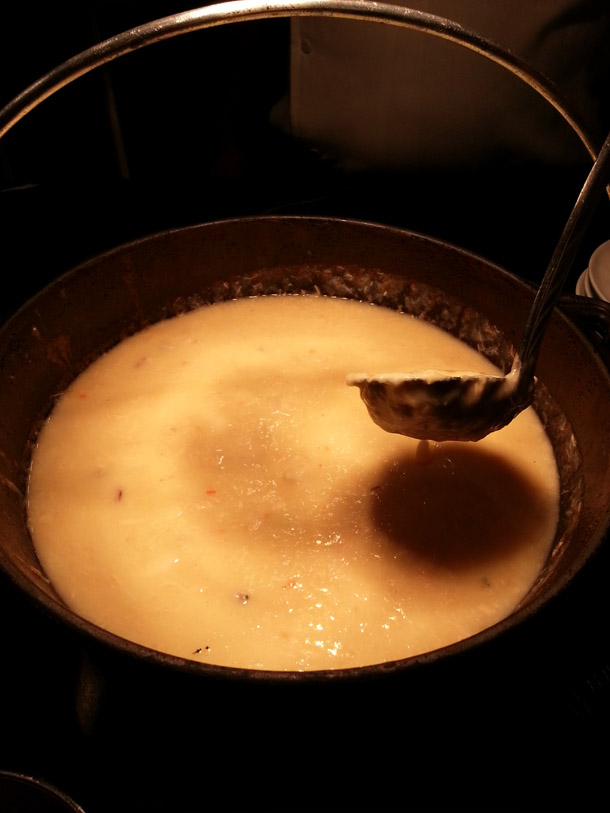
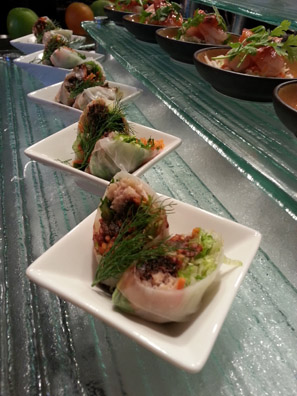
If I’m told that I can serve myself to unlimited ocean-fresh flavours – I’m sold! Well, that is exactly what the Seafood Night has to offer at Mazina – Sushi, Maki, fresh Sashimi, Smoked salmon, Gravlax, Vietnamese Seafood Rolls, Creuse Oysters, Tuna Niçoise, Spanish Paella, Chilli Crab (was it Singaporean Chilli Crab?), Prawn Satays and more. But if there was one thing that really caught my attention, it was the beetroot cured salmon! Just back from a Fam trip in Thailand, I have been on a massive Thai food rampage lately and my only complaint here was the lack of Thai food choice apart from the traditional Papaya Salad – Thai Som Tam. But that’s the never-satisfied-greedy-me speaking, in spite of the menu serving chilled Atlantic Prawns, delicious Mussels, Norwegian King Crabs and soups like the Clam Chowder soup, Seafood Shabu Shabu or the Miso soup. Some other delicacies on the menu that I must highlight are Fishermen’s pie, Seafood Paella, Mussels Marinara, Seafood Quesadilla, traditional Asian dim-sums and a sizzling Mongolian Style Seafood Counter. (Dhs 285/person; 6:30pm -11:00pm)
Mongolian Night on Wednesdays
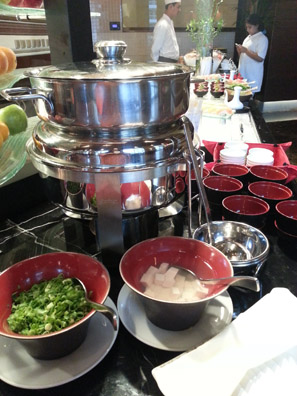
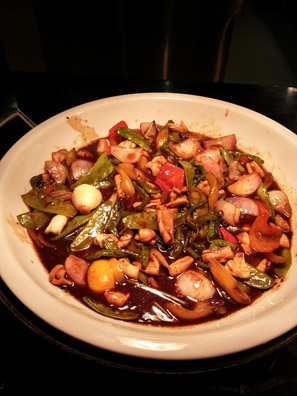
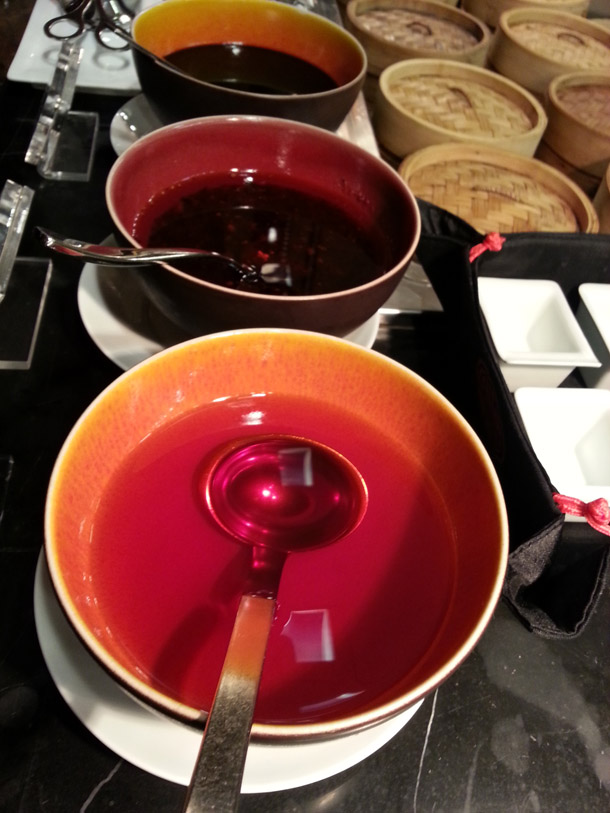
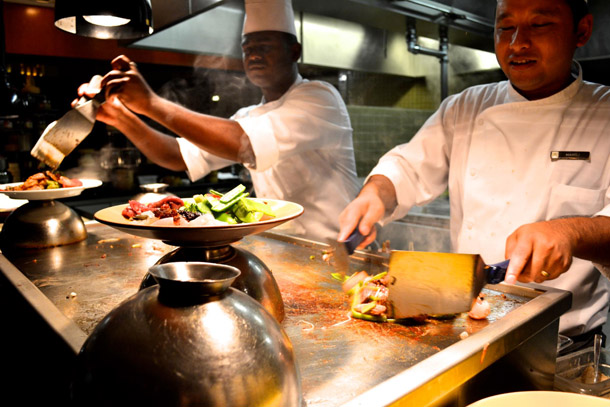
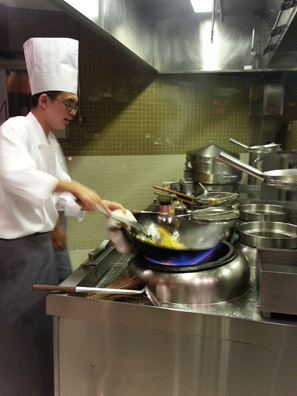
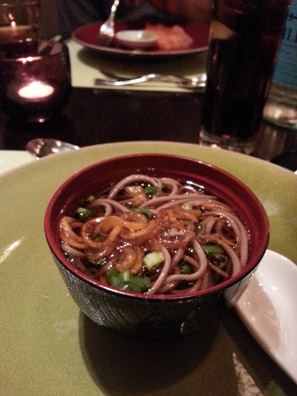
This is the Wok and the Grill night where one can customise their own sizzlers. Again, this is an unlimited Wok night, meaning – yes, one can experiment with as many sizzler as one wants. With an array of spices, sauces and dips to choose from like Coriander, Turmeric, Cumin, Chilli flakes, Chinese five spices, Soy sauce, Xo sauce, Oyster sauce, Chilli sauce, Hoisin sauce, Black Bean sauce – this can be really fun. A variety of rice, noodles (specially the Soba noodles), vegetables like Baby Bokchoi, Gailan or Shitake mushrooms can accompany the sizzler. Just choose your protein (slices of Beef, Chicken thigh, Duck breast, Nile perch, Lamb, Prawns, Mussels, soft Shell Crab etc), your choice of spices and sauces and let the Chef stir them up in the Wok in front of you. (Dhs 220/person; 6:30pm -11:00pm)
Sushi & Steak Night on Thursdays
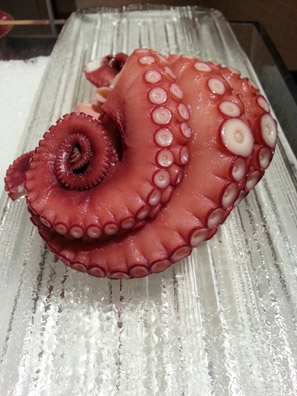
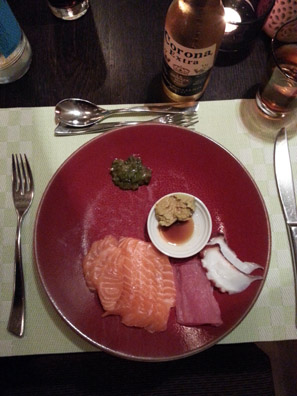
The Sushi and Steak Night must have been designed for confused eaters like me! With ‘all you can eat Sushi’ and a choice of steak (Canadian Beef filet mignon, Canadian Beef rib eye steak, Canadian Beef sirloin and thankfully, not another all you can eat option!) with two side dishes and sauce by the side (Pepper cCorn sauce, Béarnaise sauce, Red Wine sauce, BBQ sauce and more) – this night is for me. Though I’ve had better Steaks elsewhere, the Sushi – Nigiri, Maki rolls and the California rolls couldn’t have been better. Even the choice of Sashimi – Tuna, Salmon, Ebi, Tobiko, Crab stick, Mackerel, Eel Yellow tail, Egg, Salmon roe and the Hamachi (the Japanese Amberjack or Buri commonly used in sushi) was very good. And am I forgetting the Oysters jutting out from the crushed ice here like encrusted jewels? (Dhs 300/person; 6:30pm -11:00pm)
Brunch on Fridays
With a captivating Chocolate Fondue along with a few more dishes specially designed for the young diners (yes, not kids please!), the low lying special buffet counter had the thrilled Z-Sisters running up and down. Apart from the extensive buffet spread with glimpses of a few of the dishes that I had come across in the theme nights earlier, there were a whole lot of new entrants – I felt the brunch had the selected bests from each day. I assigned Big Z to write down the desserts and the list that I had mentioned earlier has been diligently compiled by her, after consultation with a lady Pastry Chef, it seems! Buzzing with diners – families, friends, young kids and some hip-shaking performance of LIVE Salsa thrown in between, the atmosphere in Mazina on a Friday was more casual than the theme nights, yet vibrant. (Dhs 280/person with soft beverages, Dhs 395/person with free flowing house beverages; 12pm to 3.30pm)
The Address Dubai Marina
Tel No: +971 4 4367777; Email: meet.dubaimarina@theaddress.com
For more info: Website; Facebook; Twitter
◊—————————————————————◊
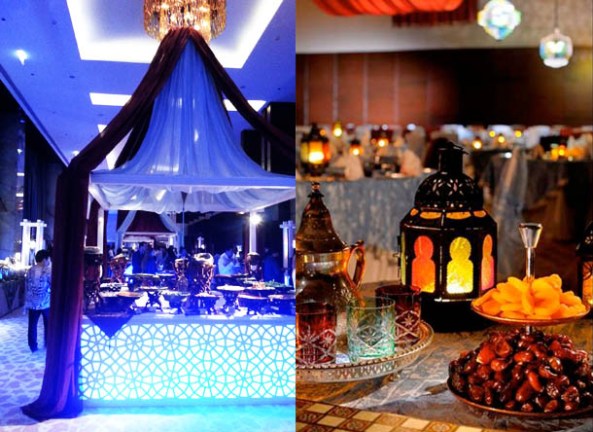
Before I sign off with the blog giveaway, a reminder that an extensive Iftar Buffet is available from sunset until 9pm during the entire holy month of Ramadan in the Constellation Ballroom of the hotel and an a-la-carte Suhour menu to be enjoyed in the Terrace Tent from 8pm onwards (I did have a preview of it). As you know, it’s been my blog dream to be able to organise giveaways so that the reader too, gets an opportunity to win a chance to visit the restaurant or the place where I have had a good ‘experience’. So here’s the giveaway…
Click here to enter the Giveaway!
Do leave your comment on the post as to which ‘Theme Night’ appeals to you the most and why (this is not a condition to win though!) and the winner can dine on his/her choice of Theme Night at Mazina after the Ramadan month is over. The contest will run throughout the month of Ramadan and close on the 9th of August, 2013. Please join me as I do daily posting of recipes (these are very special recipes that I have requested from some of the top hotels in Dubai as I know everybody may not want to go out Ramadan and prefer to cook at home) during the entire month of Ramadan. Do keep connected over Twitter, Facebook, Pinterest and Instagram and enjoy the your summers, wherever you are!
Unblogging it all… Ishita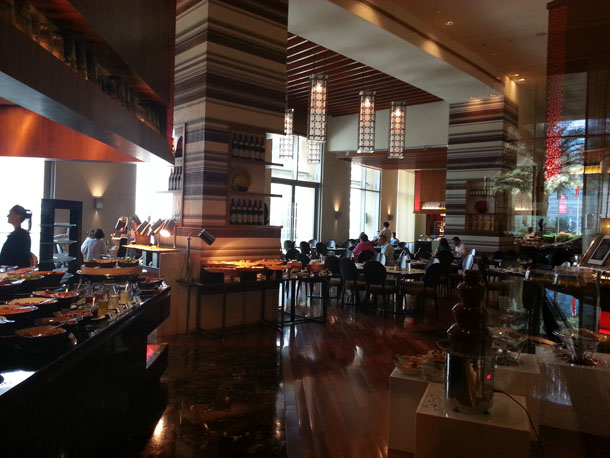 Disclaimer: The opinions stated here are my own and are independent of the dinner giveaway, kind courtesy of The Address Marina. I hope you enjoy reading the posts with lot of visuals. Please do not use any material from this post. You can see more pictures of my travel and food journey here.
BE SOCIAL. SHARE THIS!

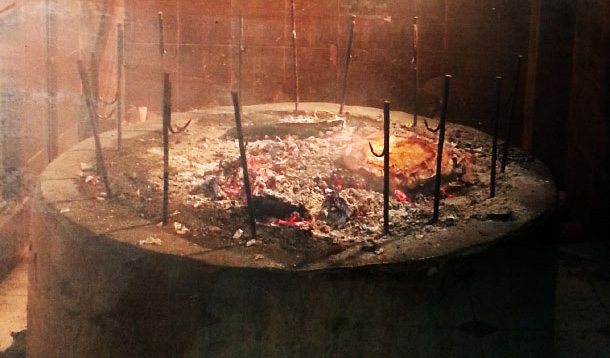
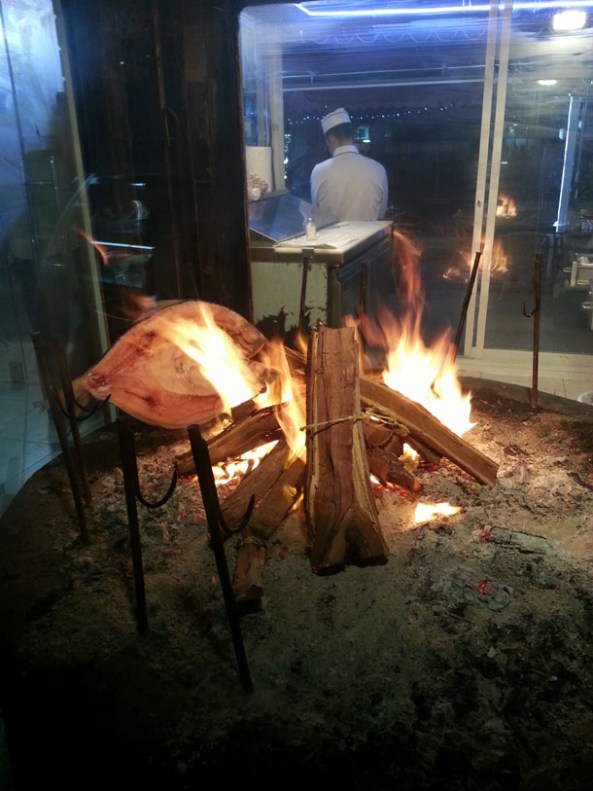
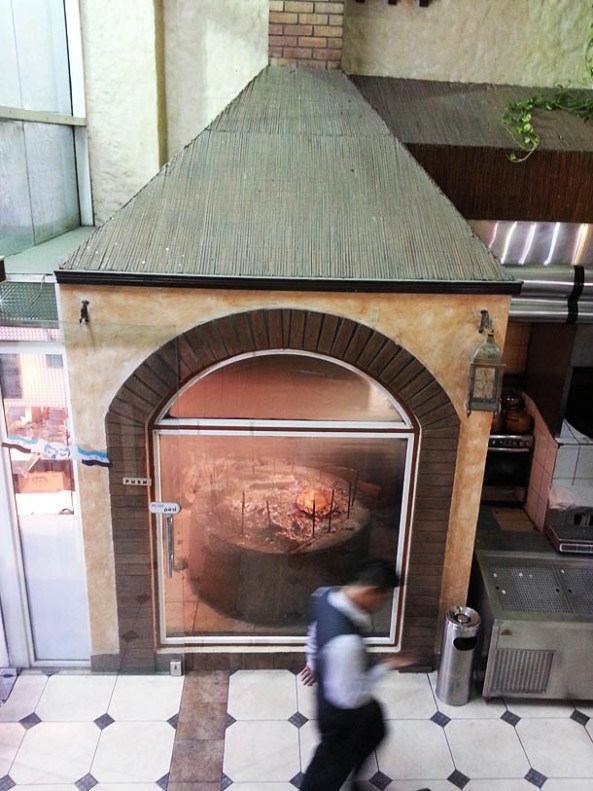
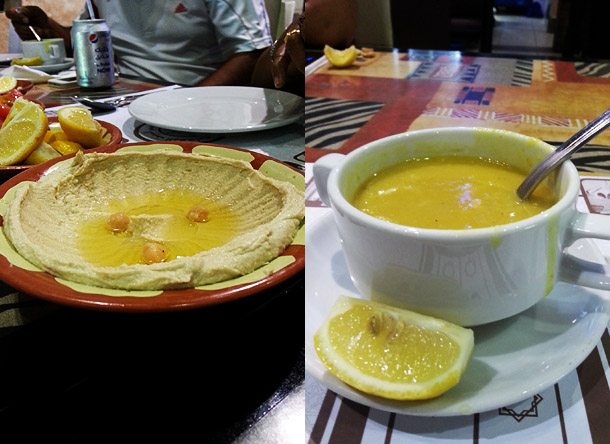
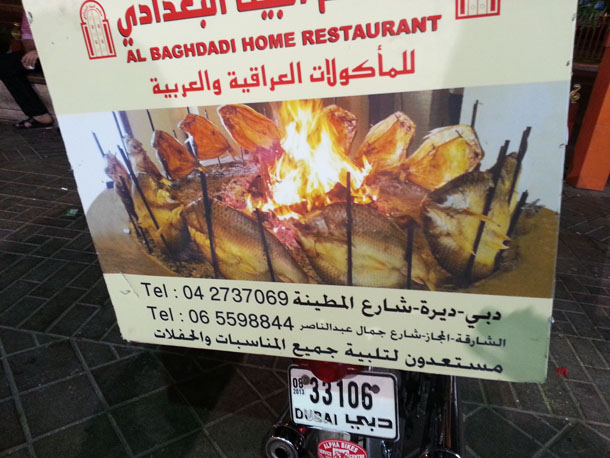
This must be one of the fishiest moments of my life – of course in the most awesome way. Tasting the Masqouf, also known as the Masgûf, is a culinary journey by itself. Located on Al Muteena Street, Deira, Bait Al Baghdadi is not very difficult to find. Bait, which translated into English means ‘home’, leads to the peculiar English name – Al Baghdadi Home Restaurant. The Maskouf here is a must-try for all fish lovers. And for non-fish eaters – if you happen to be a foodie, this is a culinary experience that you shouldn’t miss. Considered the National dish of Iraq, this grilled Carp is genuinely unique. The fish is cut in two identical halves from the belly up while leaving the back intact, opening up the fish. Usually, a marinade made up of olive oil, rock salt, tamarind and ground turmeric is generously brushed inside the fish and then grilled for 3-4 hours, with the fish locked in a standing position. But here in Bait Al Baghdadi, the fish is simply salted and then placed in a locking position in an open wood pit, inside a glass room to contain all the smoke and the heat. The fish then gets smoked and grilled in the heat for about 45 minutes to an hour, with the open side facing the fire. Then it is placed directly on a pile of open coals, while the underside gets singed. How only a simple ingredient like salt makes the Maskouf so tasty is beyond me. It has to do with the ‘smoke’ that goes into the flesh of the fresh fish. While we waited for our fish to arrive, Arabic breads with various dips like Hummous, a ‘Tahina‘ based yogurt dip, an amazing mango pickle and a Fattoush salad kept us occupied. Another thing that kept us occupied was a thick lentil soup that was more than just ‘comforting’.
Words of caution:
1) Please don’t get carried away by these frills and fill up your tummy because the fish is going to be quite big as the minimum weight of the fish with which the Maskouf is prepared is 2 kgs
2) Please ask the staff to serve you – scooping out the fish flesh can be an art in itself and a dish prepared so craftily ‘deserves’ to be served craftily as well. This is a tip that has genuinely saved us from eating disgrace and massacring the beautiful presentation of Masqouf and I have food blogger Arva to thank. The other thing that Arva’s post had urged us, was to order a Fish Stuffing – a salsa kind of tomato dip made with chopped onions, peppers, garlic and other •secret• ingredients. This dip was finger licking good and complemented brilliantly with the fresh hot grilled fish.

Heritage and history of Masqouf
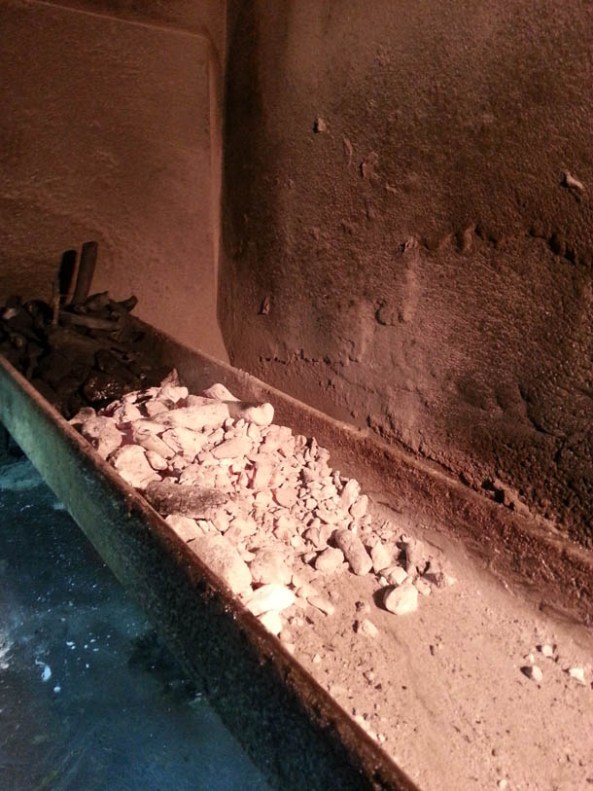
What the locals call the roasted fish, Masqouf can be found all over Iraq – from North to South, especially in the regions near the Tigris-Euphrates Basin. Though the famous Ebû Newâs district on the shores of the Tigris river is dedicated to this dish with more than two dozen fish restaurants, it is the Iraqi capital Baghdad which makes the best Masqouf. Outside of Iraq, the Masqouf is very popular in the rural parts of Syria, especially in the regions bordering Iraq. The Time Magazine recalls brilliantly how the Masqouf or the Iraqi fried fish has fed many American soldiers on their Iraq stay. Nate Rawlings writes from Baghdad – As the sun set over the city, families and bands of teenagers strolled along the river, an unthinkable activity only a couple of years ago. Children hopefully too young to remember the war played in a large pool, racing one another in bumper boats, spinning in circles and crashing with glee as their mothers looked on. We walked to an outdoor pavilion with a large tank in the back. By leaning over the side, I could see that the cistern was full of carp — thick, oily, 2-ft. (70 cm) fish straight out of the Tigris. TIME’s former bureau manager Ali al-Shaheen pointed to the specific fish he wanted, and the merchant wrangled the carp out of the water. Al-Shaheen inspected the fish closely and then said, “No, not this one. That one,” and pointed to another fish. When al-Shaheen was satisfied with his choices, the carp wrangler became a chef of sorts. He dumped the fish onto the pavilion’s concrete floor and, as they leapt into the air, bashed them over the heads with a wooden stick. The chef then slit the fish up the back, cleaned the guts out and flattened the bodies so that they resembled soft tacos lying open on a table. After sprinkling sea salt onto the fish, the chef carried them over to a fire pit, plunged two stakes into the ash and propped the fish on their sides to roast against the flames. This cooking technique is known as masgouf, a Baghdad specialty loved by Saddam Hussein. By roasting the fish vertically with the open side facing the fire, the oil seeps into the ashes, leaving salted, seasoned fish meat. After roasting the fish for nearly an hour, the merchant singed the undersides directly on a pile of open coals.





Bait Al Baghdadi – an Iraqi Restaurant
+971 4 2737069, Al Muteena Street, Deira (just after Sheraton Deira)
+971 6 5598844, near Al Majaz Park, Sharjah
Opening hours: 7:00am -1:00am
The Masqouf is charged according to the weight of the fish and it costs Dhs 69/kg. We were served a fish that weighed around 3 kgs. The Arabic bread, dips, mango pickle, the regular salad comes free with the dish. We had ordered the Fattoush salad and the Hummous separately. You can see the menu here.
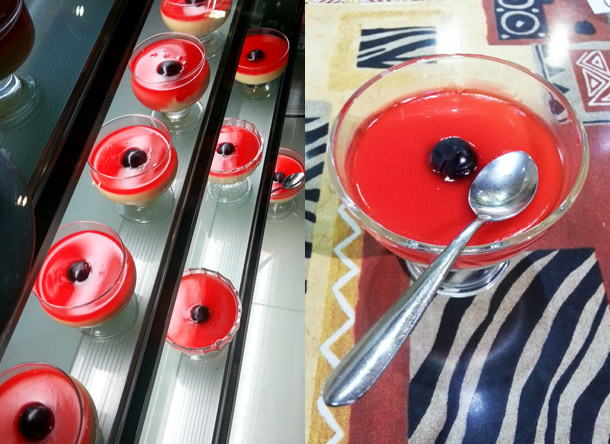
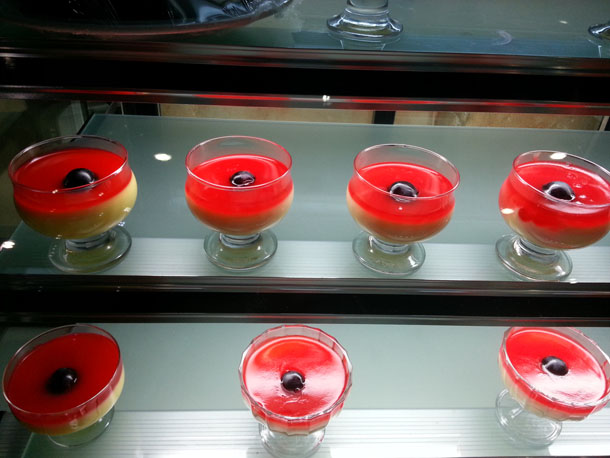
Service is very prompt (pardon the Maskouf, it’s going to take time to prepare it!) in Bait Al Baghdadi. The staff is very helpful and more than willing to share their knowledge on Maskouf – please hear them out as the dish carries a lot of legacy. The fire alter or the ‘sauna’ room is a subject for painting and is absolutely fascinating. Quite obviously, it is extremely hot. I went into the sauna room for my video and came out dripping in sweat, from head to toe. The Masqouf definitely enters my list of must-eat fast feasts or ‘no-chandelier’ eats in Dubai for the Chowzter application. And this could topple my top favourite Bu Qtair fish joint for the King’s crown. Though, the Masqouf hogged away all the attention that evening, another item that put my Instagram on fire were the custards – sitting pretty on the shelves like red poppies. It’s amazing how different dishes originate from different regions and countries, and my next post documents exactly that while I eat through a variety of dishes from around the world. And a blog giveaway too, as promised!
Unblogging it all… Ishita

Disclaimer: The bill for our dinner was Dhs 410 for six persons which also included water and diet cokes. This isn’t a sponsored post and the subject, story, opinions and views stated here are my own and are independent. While you enjoy reading the posts with visuals, please do not use any material from these posts. And do join me on my daily food and travel journey on Instagram, Facebook, Twitter and Pinterest.
◊—————————————————————◊
Posts that you might like:
• Arabian Pilgrimage Food Tour With Frying Pan Adventures
• Feteer Meshaltet In Video | Talking To Celebrity Chef Joe Barza
• Bu Qtair Fish Restaurant | Capturing A Hidden Gem In Jumeirah. A Video Too!
• Sense On The Edge @ZighyBay | Slow Life, Sustainable Menu & Fattoush Recipe
• UAE National Day… Making Aam Pana/ Green Mango Drink | My Dubai My City
• Semaiya Kheer/Vermicelli Pudding, Eid in Dubai | Eid Mubarak!
• Firni or Ferni, Ramadan or Ramzan, Mallick Bazar or Karama?
• An Iftar Preview in Address Marina | Countdown To Ramadan In Dubai
BE SOCIAL. SHARE THIS!

‘Ramadan Kareem’ in Dubai or ‘Ramzan Mubarak’ in Kolkata, the feeling is the same!
The countdown to Ramadan has begun. Each calendar year, Ramadan falls earlier by a few days. The last Ramadan fell during the school summer holidays and we were in Kolkata on our annual summer hibernation, (yes, that’s what I like to call it). I dragged the Z-Sisters to the Mallick Bazaar area near Park Circus, with the intention of experiencing an Iftar meal or the fast-breaking-meal in one of the many Muslim restaurants that are around in the area. The thin crescent of the moon peeping through the electricity lines of the trams, the faint sound of Adhan or Azaan drifting from the far-away minarets, the prayer-goers flocking to their loved ones so that they can break their Rozas/fast together – yes, I was feeling the spirit of Ramadan. The road-side kiosks of Mallick Bazaar (below) was full of Samaiya/Semolina, mixed fruits, Firni mix, glass bangles and mersmerised the Z-Sisters. The realisation that ultimately set in – whether it is ‘Ramadan Kareem’ in Dubai or ‘Ramzan Mubarak’ in Kolkata, this was the holy month for the Muslims the world over and a sense of solitude and profoundness hung in the air. Staying in Dubai during Ramadan is however, very different. Here, everybody – both the Muslims and the non-Muslims, is cued in to the holy fervor of the holy month. In the UAE, the non-Muslims too have to refrain from eating and drinking in public during the Roza/fasting hours and Iftar can be enjoyed by everybody at various Iftar Buffets, organised in many restaurants and hotels around the city. If you are living around the Bur Dubai region, you can actually hear the cannon of the Union House boom, every evening, to signal the end of the day’s fasting (the calculation of the Iftar and the other prayer timings is a very laborious process). This is, in fact a Dubai tradition (watch here).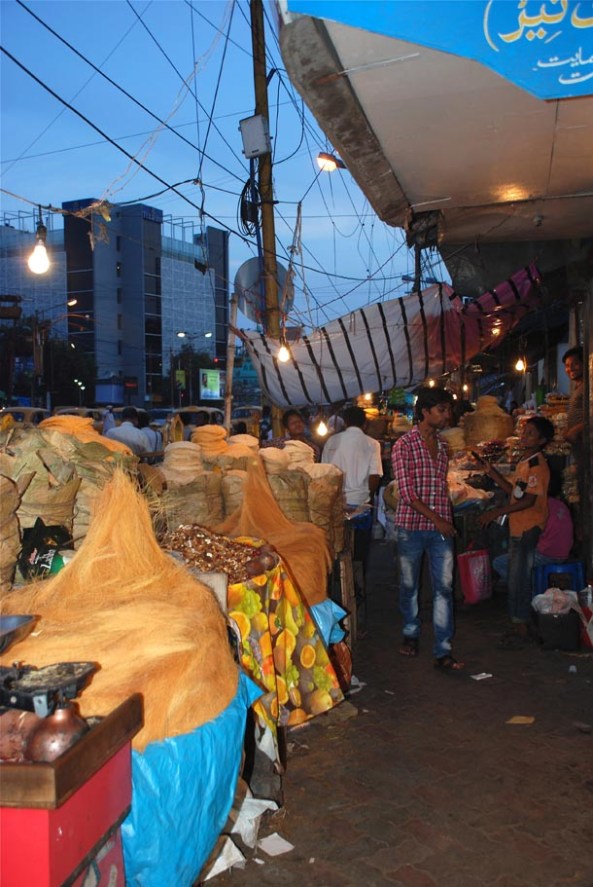
A grand Iftar Preview to set in the mood of Ramadan
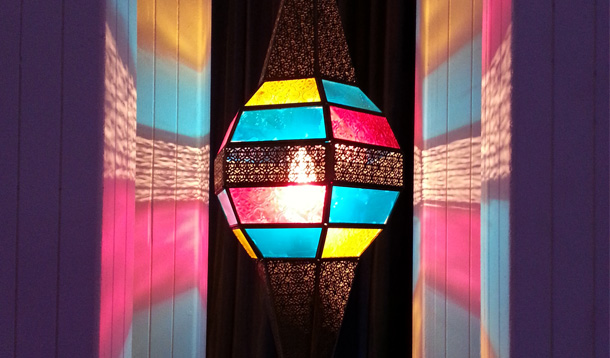
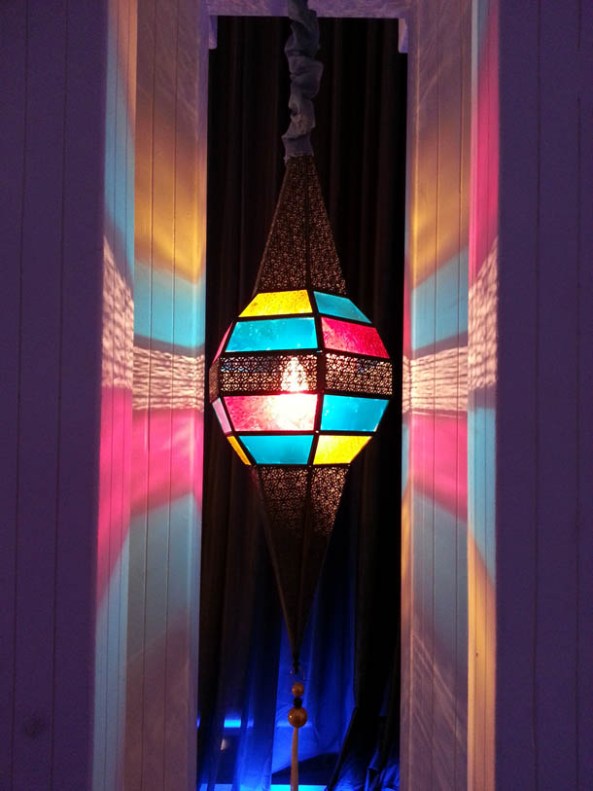
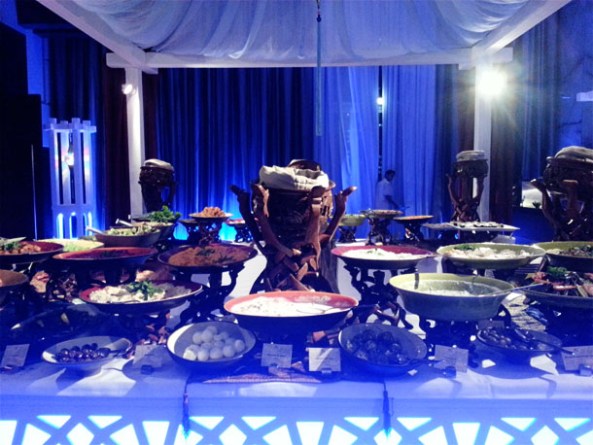
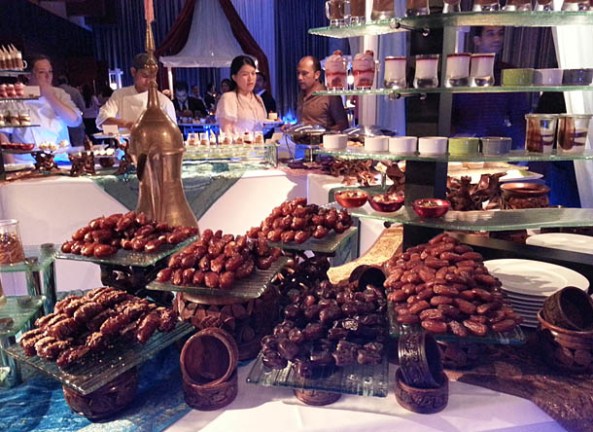
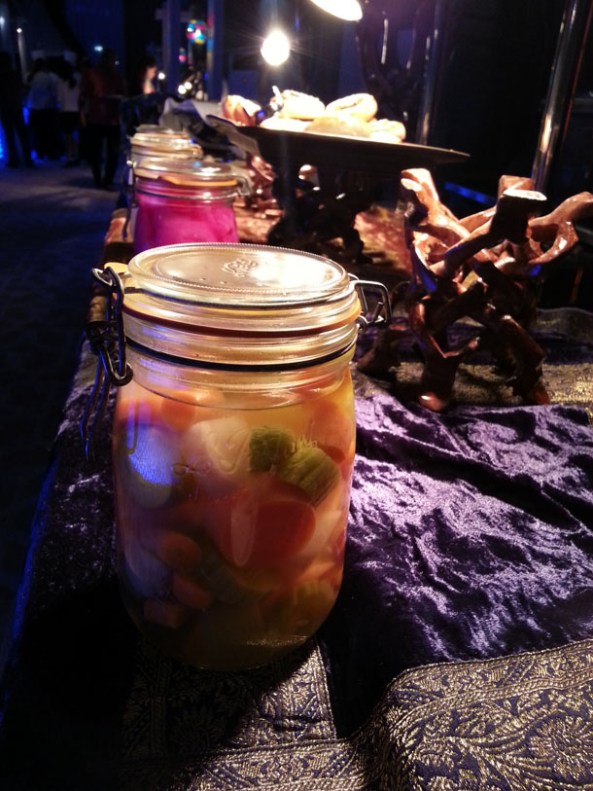
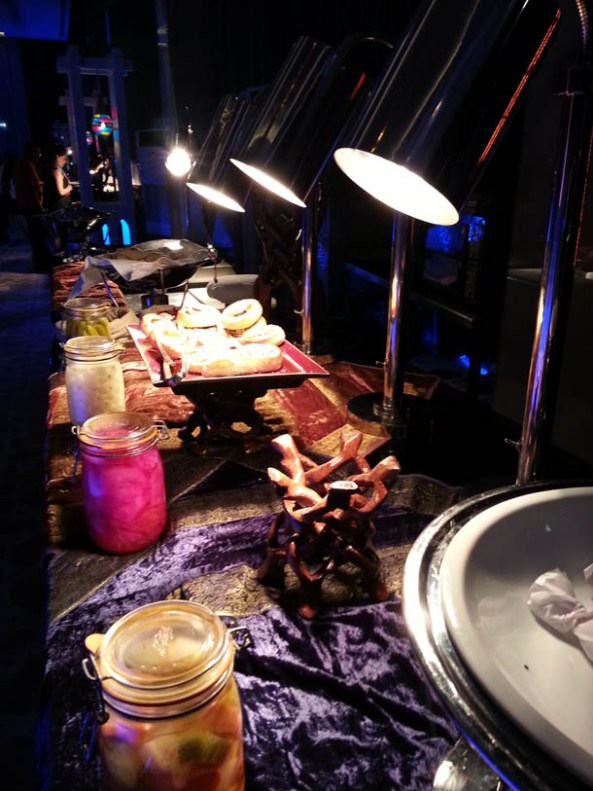
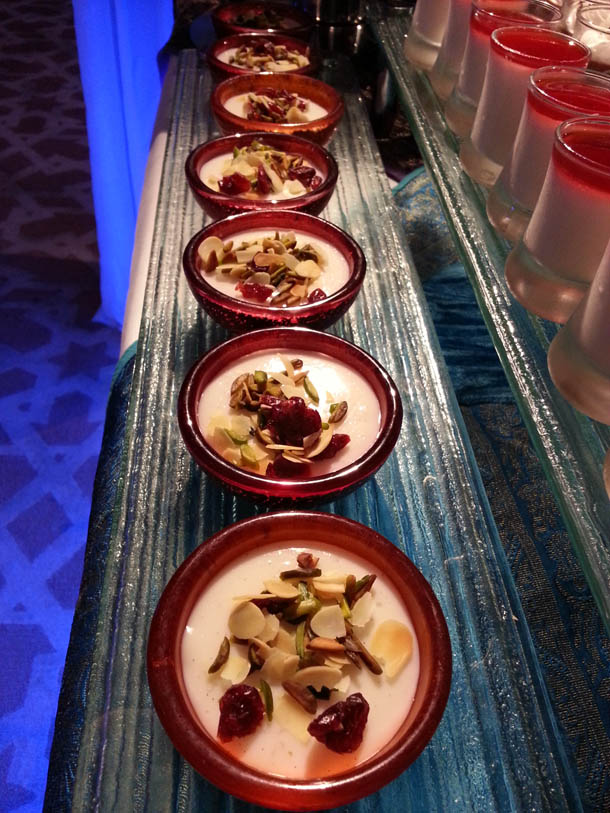
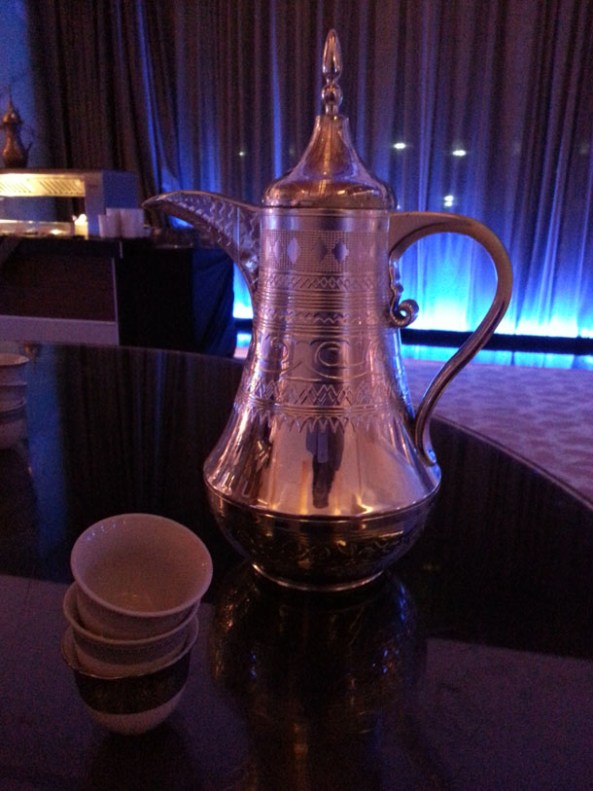
This year too, Ramadan falls during the school summer holidays. And like most summers, we will be off somewhere, thus missing out on the traditional Iftar buffets and the home made desserts that my Muslim friends make for us. But this year, I am going to eat the cake and take it too – I will have the solace of having attended an Iftar buffet, much well in advance. Designed in the manner of a traditional Ramadan tent but inside a modern air-conditioned set up of a ballroom, the Iftar preview in the Address Marina was to give an idea of what it’s going to be like during the month of Ramadan. Traditionally, Ramadan tents are erected during the month of Ramadan, where people can meet right after Maghrib or the sunset so that everyone who’s fasting for Ramadan can break their daily fast with friends and family over an Iftar meal. Dates form an important part of Iftar (three dates are eaten to break the fast, in the tradition of the prophet Muhammed, who broke his fast in this manner). Following this, an entire section in the buffet area is being designated to various kinds of dates (further below). Arabic tradition is typically reflected by geometrical patterns, colours, lavish renditions in their Middle Eastern cuisine and of course the communal bonhomie amidst friends and family. These were definitely in place the Address Marina – traditional Arabic lanterns lit up in each round table, colourful silk spreads thrown over the buffet counters, patterned boxes of Backgammon (below) lying around, elaborate food spreads, Kawa cups and the polished Arabic tea pots for the diners to pour some tea or coffee – complete with a little Majlis (a low seating on the ground) in one of the corners! 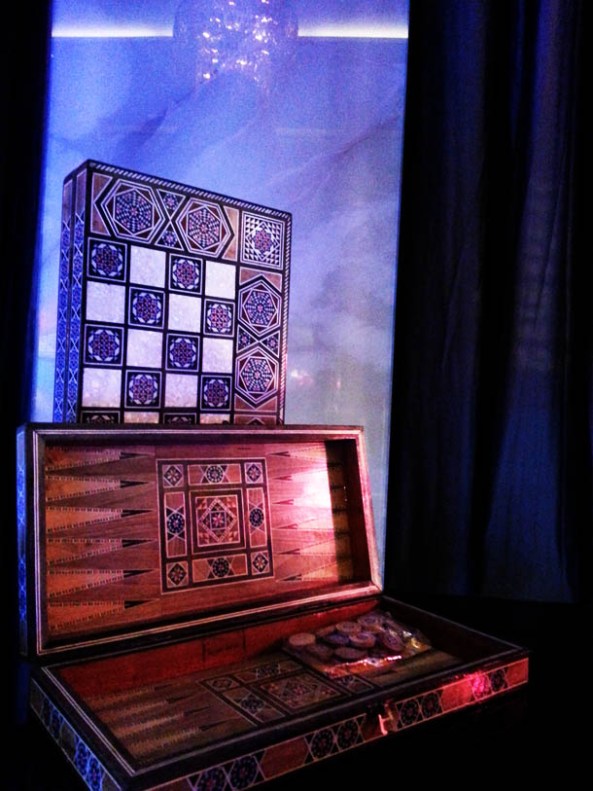


The Iftar Menu
The Iftar spread is quite elaborate. Starting with cold Mezzeh counters (Mezzehs are small dishes served traditionally at the beginning of Middle Eastern meals like Starters), soup and bread stations, salad bars, there will also be hot buffet and live cooking stations serving traditional Middle Eastern, Asian and International cuisine. Apart from live warm Mezzeh counters, grill stations, Pasta stations, cold dessert and hot dessert counters, there will be live cooking stations preparing a few traditional desserts as well. Chalking out a bit of the Menu, as much as I could (yes, I have also left out some!) –
The traditional Middle Eastern cold Mezzes being served are Hummous, Moutabel (the traditional moutabel as well as Carrot and Beetroot moutabel), Mouhamarah, Tabouleh, Fattouch, Babaganouj, Warak enab (vine leaves); Middle Eastern Salads like Kossa salad, Rocca salad with Sumac dressing (Sumac is a very popular spice used in the Middle-Eastern dishes, that is often used as a substitute for lemons), Couscous salad with grilled vegetables; Mixed Salads with Tomato Mozzarella,Greek salad, Carrot and Raisin salad, Pasta salad, Nicoise salad, Roast Pumpkin salad; a selection of Sushi with Maki and California rolls; Soups like Arabic lentil soup, Moroccan Harrira soup and a selection of mixed bread rolls and herb butters; Hot buffet and live cooking stations serving made to order Saj bread, Saj Manakish, traditional Shawarmas, handmade Fattayer (cheese, zatar, moradella); carving and grill station serving whole lamb Ozi cooked over Oriental Rice in the traditional way, Arabic mixed grills like Shish Taouk, Kofta, Shish Kebab, Arayaas, Shrimps; Live warm Mezzeh stations serving Meat Sambousek, Spinach Fattayar, Kebbehs (lamb, potato), Falafel; flat grill section where Egyptian Soujuk will be cooked with spicy sauce, Fetah, Mosakhan; hot Arabic food buffet like Vegetable Saloona, Dawood Pasha, Chicken fass, Beef Kalia, Prawn Macboush; Asian food with live cooking of Egg fried rice, Teppan fried soba noodles; a selection of Dimsum, sweet and sour chicken, Vegetables in Xo sauce, Beef in black bean sauce; live Pasta station (penne arabiata, farfel carbonara, fusili tomato sauce); other International dishes like Chicken vegetable casserole, slow cooked lamb with sweet onion and pumpkin, grilled Nile perch with broccoli, Vegetable au gratin, Vegetable lasagna, Rice and lentil stuffed capsicum with tomato sauce, hot dogs and mini burgers, Chicken nuggets, Fish goujons; Indian Cuisine with made to order Vegetable pakodas with dips, Chicken Tikka, Lamb Masala, Vegetable Jalfrezi, Vegetable Biryani and a selection of Nann, Roti and Pappads; Arabic Desserts like homemade Aych Al Saraya, Halawet El Jibn, Namoura, Baklava (Almond and Pistachio), Basboussa, Chaibeyat kachta, Katayef Nuts, homemade Assayfiry, Maamoul Maad with Dates, homemade Awamat, Ward Al Cham, Katayef Kashta, Balah el sham, Mafroukeh Pistachio, Mouhalabia; mini Desserts and cakes with Chocolate Jelly, Vanilla Cream, Lemon Meringue Tart, a selection of Crème Brulee’s (Pistachio, Chocolate, Raspberry), Italian Tiramisu whipped Ganache, Fresh Berry Trifle, Crème Fraiche Cheesecake, Chocolate Cake, mini Fruit Tartlets, Tarts (Apple, Honey and Rosemary) with caramelized Pine Nuts, homemade Doughnuts; hot Desserts like Um Ali, Sticky Date Pudding with Caramel Sauce, baked Fig Tranche; cooking stations serving fresh Waffles and a few of the traditional Arabic desserts… and of course Ice Creams.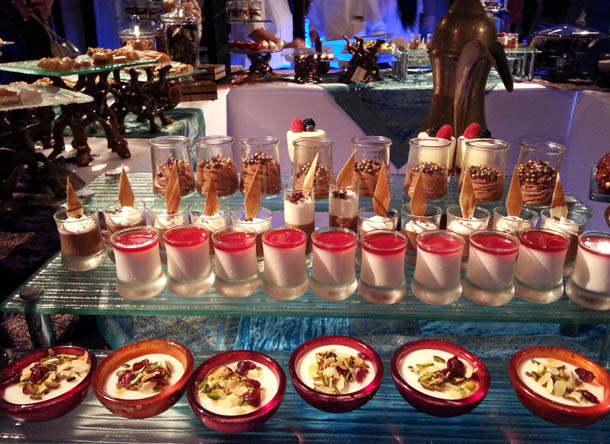
◊—————————————————————◊
The Address Dubai Marina – in the Constellation Ballroom
An extensive Iftar Buffet (at a very reasonable price of Dhs 155/person) is available from sunset until 9pm during the entire holy month of Ramadan and an a-la-carte Suhour menu to be enjoyed in the Terrace Tent from 8pm onwards. The buffet spread is overwhelming with the seating in the main ball room, which can accommodate up to 400-500 diners. Families and friends can seat themselves around round tables decorated with traditional Arabic lanterns and date platters. Well, if the preview is to go by, the Ramadan nights are going to be gorgeous.
Tel No: +971 4 4367777; Email: meet.dubaimarina@theaddress.com
For more info: Website; Facebook; Twitter
Ramadan is being celebrated in the Address hotels in other locations too.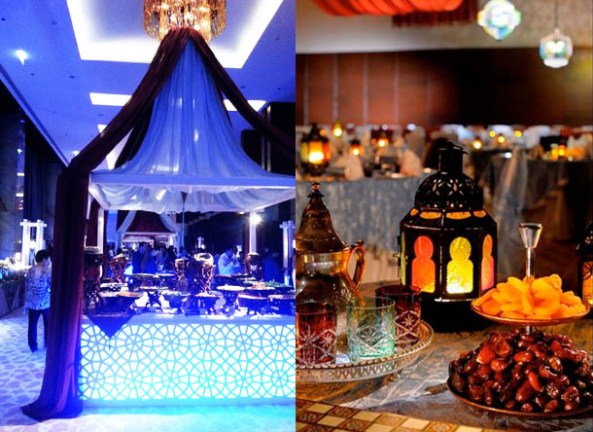
◊—————————————————————◊
In preparation of Ramadan, the artisan chef and food blogger Dima Sharif doles out daily recipe posts during the entire month of Ramadan for those who plan to prepare traditional meals at home. According to her, While in Dubai, and especially among the expat community, Iftar Buffets are very popular – probably because they are away from Family, and in Ramadan tradition has it that you break fast with a large number of people – it is not the actual tradition of Ramadan among most and not in fact the most famous forms of breaking fast. Actually, the tradition and spirit of Ramadan (the essence) is very much alive, and that is my focus this year. I am discussing all that and more throughout the 30 days of the Holy month, so do check out the posts, and I assure you by the end of the month, anyone who’s read the posts will have explored Ramadan fully this year, and got a better understanding of the Ramadan traditions. I have been inspired by her and am planning special Ramadan postings myself… do watch out for daily posts in my blog as well as hers, starting 8th of July till the end of Ramadan.
My own religious philosophy stems from growing up in a multicultural city of Kolkata with friends having different faith and religion. The city is known to be decadent. But is is also known to be enlightened. For me, it is important that the very essence of Ramadan shouldn’t be lost in all the opulence and the lavishness showered in the way Iftar is observed in the city of Dubai. Fasting is one of the five pillars of Islam (the other four being Iman, prayer, Haj and Zakat). The blessed month of Ramadan is the month of prayers, the month of charity, the month of piety, the month of Quran and, above all, the month of introspection and self-reform. It is especially during this month that Muslims strive to do all the good they can, by all the means they can, in all the ways they can, in all the places they can, to all the people they can. So, the breaking of the fast shouldn’t crumble the very essence of why it is observed in the first case. So as you enjoy your Iftar meals with your family and friends, please ensure that there is no food wastage. A small snapshot comes in mind from my last year’s Ramadan experience (below) – As Iftar set in, everybody set out to break their Roza. An amazing experience ensued. People formed groups – on the roads, in corners, behind stalls and prayed on the street and started picking on dates and nuts and other savouries from the same plate. These were strangers breaking their fast together – strangers bonded by the same belief, faith and principle!
Unblogging it all… Ishita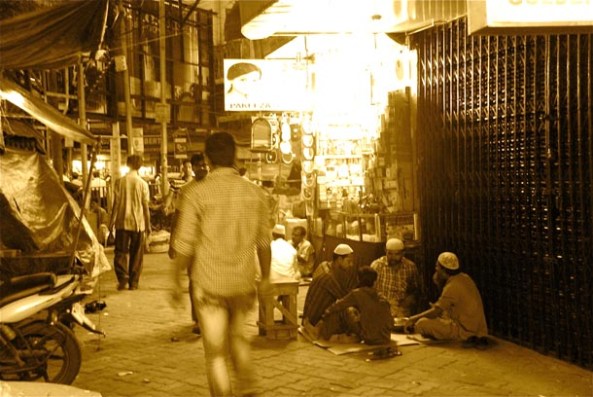
Disclaimer: The Iftar preview was only by invite. However, the opinions stated here are my own and are independent. I do hope you enjoy reading the posts with lot of visuals. Please do not use any material from this post. You can see more pictures of my travel and food journey here.
◊—————————————————————◊
Posts that you might like:
• Arabian Pilgrimage Food Tour With Frying Pan Adventures
• Feteer Meshaltet In Video | Talking To Celebrity Chef Joe Barza
• Sense On The Edge @ZighyBay | Slow Life, Sustainable Menu & Fattoush Recipe
• UAE National Day… Making Aam Pana/ Green Mango Drink | My Dubai My City
• Semaiya Kheer/Vermicelli Pudding, Eid in Dubai | Eid Mubarak!
• Firni or Ferni, Ramadan or Ramzan, Mallick Bazar or Karama?
BE SOCIAL. SHARE THIS!

“All truly great thoughts are conceived while walking.” ∼ Friedrich Nietzsche, Twilight of the Idols
Culinary journeys and food tours reflect culture, heritage and personality of a city…
I am fascinated by street food and culinary journeys that expose me to different cultures and cuisines. The history behind these leave me breathless as I try to store new food facts in my memory. Naturally, my first food tour with Frying Pan Adventures, the only food tour company offering such tours in Dubai, is something that is close to my heart. I had been following food blogger Arva Ahmed’s journey even before she had set up tours in a city that is mostly associated with bling and glamour, rather than excursions into alleys in the old parts of Dubai. It is here that a treasure chest of culinary experience and gastronomical thrill awaits the tourist. Today, in many cities, food tours are as popular as sight-seeing tours.
Culinary tourism or food tourism – experiencing the food of a country, region or area, is now considered a vital component of tourism experience. Dining out is common among tourists and ‘food is believed to rank alongside climate, accommodation, and scenery’ in importance. The World Food Travel Association (WFTA) defines Food tourism as the pursuit of unique and memorable eating and drinking experiences. Interestingly, culinary or food tourism does not imply gourmet food. And according to WFTA, gourmet comprises only 8.1% of culinary travelers.
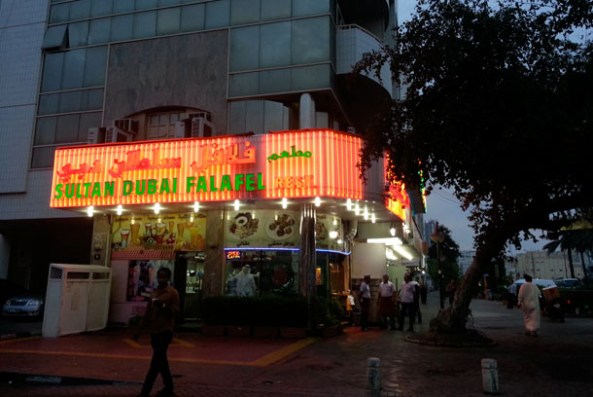
The Arabian Pilgrimage Food tour – my first food tour in Dubai
Our meeting point of the evening was in front of the Philippine Supermarket on Muraqqabat Street in Deira. I was accompanied by my friend Mamta, who I considered a ‘neutral’ companion. Being neutral meant that though she was a big foodie, she was new to Dubai (a few days old in Dubai at the time of our food tour) and had never read any blog posts written by me or Arva (and probably any blog for that matter). It also meant that she was completely unbiased and was expected to judge the food tour from the value for money aspect of a prospective tourist as well as a Dubai resident. I trusted her to act as an honest judge in our adventure. As for me, I was already starting the tour with a bit of bias – because of my belief in the concept of a food tour and the novelty of such an activity being offered in Dubai, a multi-cultural and an otherwise tourist frenzy city boasting of loads of things to do. Plus, I loved reading Arva’s blog, knew a bit of the behind-the-scene stories and had read up on a lot of good reviews on her tours. My expectation was sky high, so was my excitement.
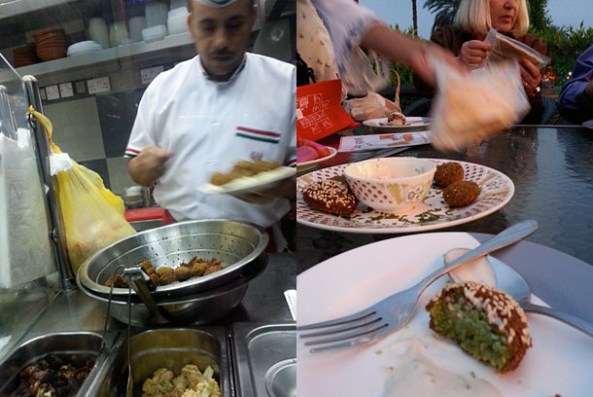
Falafel Mahshi and Hommous @Sultan Dubai Falafel
In the course of the evening, Mamta and I were joined by six other members and the eight of us strutted behind Arva like ducklings following a Mother Duck as she goes on a food rampage. Our first stop was Sultan Dubai Falafel where we got a small lesson and mini demonstration of Falafel making (above left and in the video below). We parked ourselves in the outdoor seating on the boulevard outside its adjoining Palestinian restaurant, Qwaider Al Nablusi. First, came the normal Falafels and then came the showstopper Falafels – the Falafel Mahshi – all from the Sultan Dubai Falafel restaurant. The ornate looking Falafel Mahshi (further below) is not the regular Falafel. Here, the Falafels are stuffed with chickpeas (like any other Falafel), coriander, parsley and lined with chilli, onions and Sumac (a very popular spice used in the Middle-Eastern dishes, that is often used as a substitute for lemons). Then these are deep fried and studded with sesame Seeds. What an amazing rendition of Falafels! These were accompanied by a yogurt and a Tahini (an oily paste made from ground sesame seeds) dip as well as the Hommous, the traditional Middle Eastern dip made with chickpeas. Till now, I had always referred to the Hommous as ‘chickpea Hommous’. Arva corrected me – remove the word chickpea before hummous, because it’s like saying ‘chickpea chickpea’!
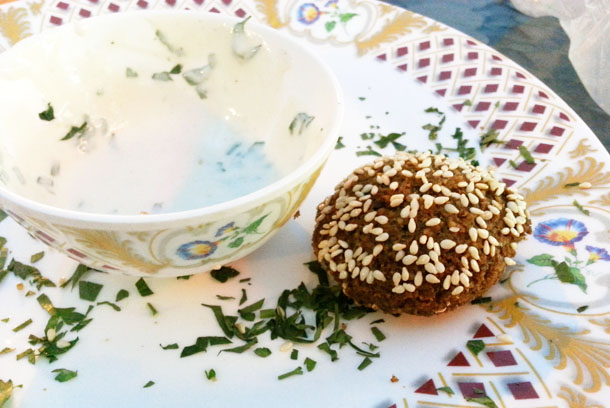
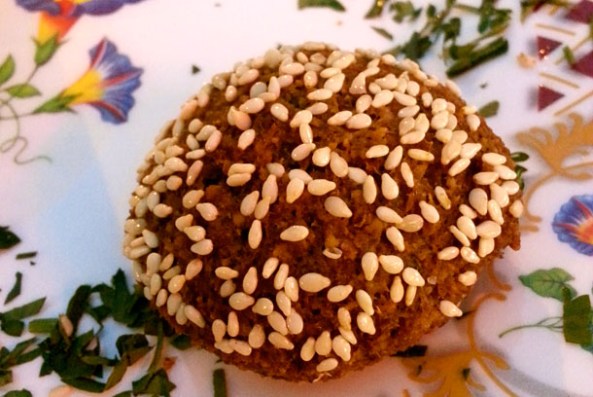
Just like most things in today’s world, there is a controversy regarding the origin of Falafels too. Though it is generally accepted that Falafels have been first made in Egypt, these deep fried crispy chickpea balls have become the most popular Mezze or Starters, as well as a stand alone snack served in Middle Eastern cuisine, all over the Arab world. I’ve learnt to make the Falafel in one of our holidays and I’m quite fascinated with the entire process of Falafel making – scoop the chickpea paste, slap a spoonful onto the contraption of the Falafel maker, unclasp the shaped ball from the contraption, drop the ball into a wok full of oil for deep frying – all in a matter of minutes!
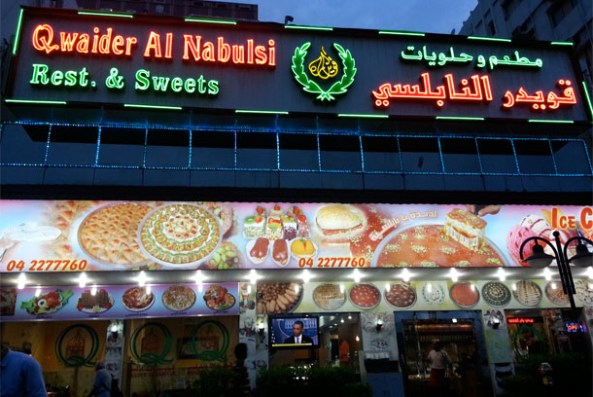
Jordanian Mansaf and Kunafa @Qwaider Al Nablusi
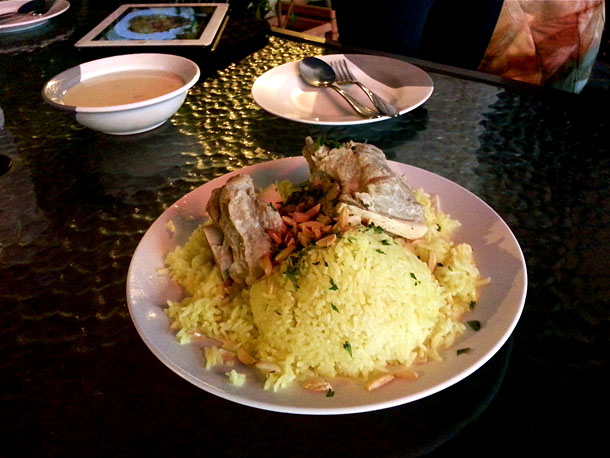
After our foray into the Egyptian Falafels, we were introduced to the Jordanian Mansaf (below) from Qwaider Al Nablusi. Traditionally, a Jordanian and a Palestinian dish, the Mansaf has been described as the national dish of Jordan in recent years. It is cooked in a very special way. The lamb is cooked in a broth of Jameed, a dried up fermented Laban (a very popular Yogurt drink in the Middle East) made from goat’s milk. The cooked lamb is then served on a large platter with a layer of flatbread (Markook or Shrak) topped with rice, then meat, and finally garnished with almonds and pine nuts. As Wiki supplements – The name of the dish comes from the term “large tray” or “large dish”. Mansaf is served on special occasions such as weddings, births and graduations, or to honor a guest, and on major holidays such as Eid ul-Fitr, Eid ul-Adha, Christmas Day, Easter and Jordan’s Independence Day. It is traditionally eaten collectively from a large platter in the Bedouin and rural style, standing around the platter with the left hand behind the back and using the right hand instead of utensils. I was surprised to discover a distinctive smell of Ghee in our Mansaf (it was Mamta who first noticed), and the taste of the lamb was very strong and unusual.
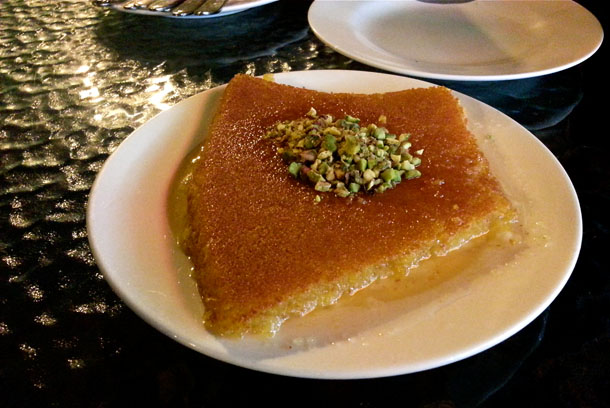
Following the Mansaf, was a super cheesy dessert by the way of Nabulsi Kunafa (below) from Qwaider al Nabulsi. Kunafa is a cheese pastry soaked in sweet syrup. Sounds simple? Probably, but the preparation of the Kunafa doesn’t sound that simple at all. The pastry is heated with butter or palm oil and then spread with soft white Nabulsi cheese and topped with more pastry. A thick syrup of sugar, water, drops of rose water or orange blossom water is poured on the pastry during the final minutes of cooking. The Nabulsi cheese or the Jibneh Nablusi is a white-brine cheese originating from the city of Nablus, situated on the West Bank. Nablus is famed for it’s elite or ‘high cuisine’. It is also famous for Kunafas. In fact, Jibneh Nablusi along with the Akkawi cheese are the most popular cheeses in Jordan. One of the characteristics of the Kunafa cheese – that it becomes soft and elastic when heated, probably lends this awesome dessert its softness and the ultra cheesy feel. I have been craving for Kunafas ever since our food tour and have been wanting to do a Kunafa re-run, but the Kunafa has been evading me in every single Deira visit of mine! Served with sprinklings of crushed green Pistachios, the Kunafa sometimes comes in my dreams. As I was referring to Instagram while I was writing this post, I found an earlier update on the day of our tour – ‘Kunafa replaces my love for chocolates’. How true!
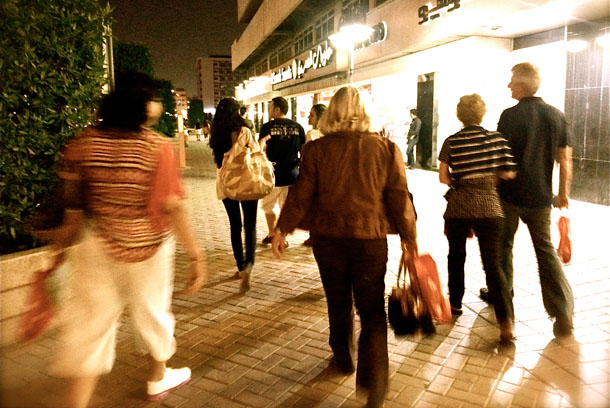
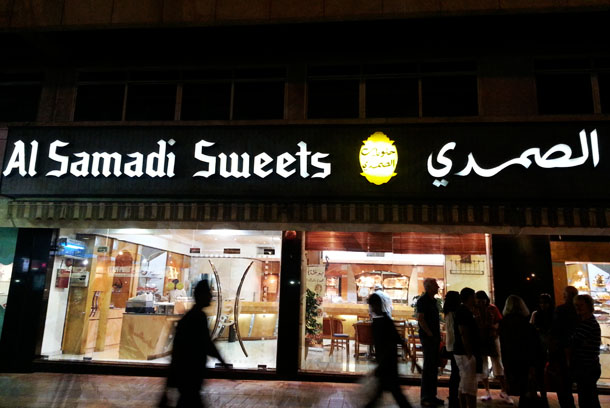
Still on Muraqqabat Road, we now walked towards the Abu Baker Siddique Street (the road that has the Clock Tower, or better still, the road that comes down the Makhtoum Bridge). At the end of our tour, I realised that we had been walking quite a lot, interspersed with a lot of eating. This gave the brain that 20 minute wait signal required to attain food satiety, every time we stopped for our next food tasting. Our next stop was Al Samadi Sweets (further below). I’ve promised myself that the next time I shift houses, I’ll do myself a favour – I’ll take up a house which is within a 200m proximity of the building that houses this sweet shop.
Halawat al Jibn, Karabij, Baklava and Turkish Coffee @Al Samadi Sweets
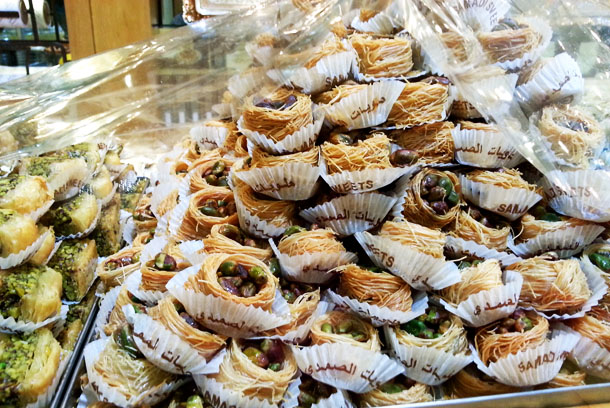
Huge trays filled with different types of Arabic sweets – Baklavas of different kinds, and thin noodles of Vermicelli studded Kunafa (I could have jumped onto a tray after my date with Kunafa a few minutes back) – Al Samadi Sweets was a sweet loving Bengali foodie’s ultimate dream. After having doused ourselves in strong Turkish coffee and shaking ourselves out of Arva’s magic story telling, we tasted some Arabic sweets – two of which were completely new to me – the Halawat al Jibn and the Karabij. While my taste buds have always welcomed the traditional Baklava, I also came across a few new ones which were not less than any royal treat. Though not my first encounter with these, but I specially love the Bülbül Yuvasi (below). This is a Turkish dessert, a different variant of the Baklava, prepared with baked phyllo dough having a hollow centre. This hollow centre is stuffed with pistachios and resembles the ‘nightingale’s nest’.
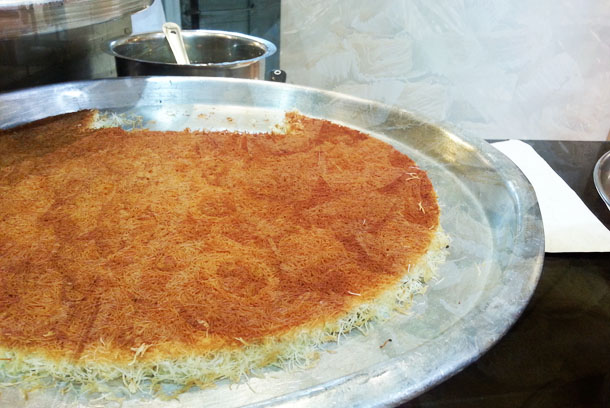
Large pans were filled with the Khishnah Kunafa (below), where the rough crust is made from long thin noodle threads. This Kunafa was largely different from the Na’ama or the fine Kunafa made with the semolina dough that we had tasted earlier. People ate Kunafas in sandwiches for breakfast, stuffing the soft Kunafa inside a bread like a sandwich bag. We were told that by the time it was 10 am, 4-5 large trays of Kunafa were almost gone!
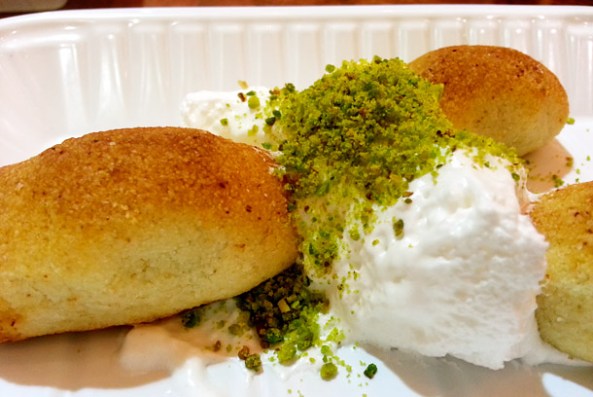
Karabij
Karabij was a Lebanese cookie stuffed with pistachios and served with the Natef cream, a fluffy cream which looks like the Meringue. Arva explained the fascinating way in which the Natef cream was made, complete with a video (on her tablet) of the famous author and writer of Mediterranean cuisine, Anissa Helou demonstrating how to make the Karabij. It’s interesting to know how the Natef is made. It is made from a special root called the Shersh al halawa or the Soapwort Root (Saponaria). The roots are first boiled in water, strained and allow to cool. Then it is whisked for a very long time. As drops of rose water or the orange blossom water is added to this, the surface forms into a foamy white cream – the Natef. I didn’t like the slightly bitter taste of the Natef cream.
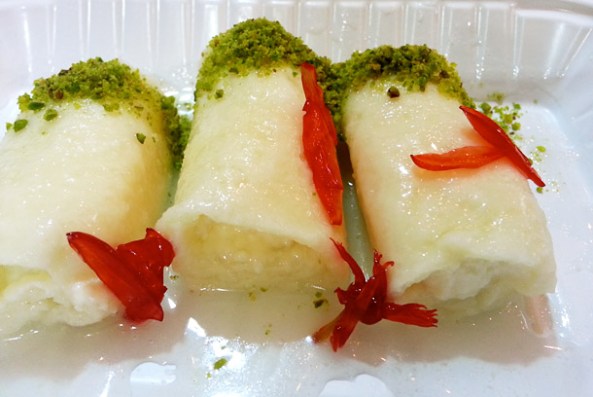
Halawat al Jibn
I have absolutely fallen in love again. This time with the Halawat al Jibn (below). The taste of these desserts remind me of the freshness of Malai Chomchom, a sweet made with cottage cheese or channar mishti that Bengal is so famous for. Served chilled from the fridge (you’ll not find the Halawat al Jibn displayed outside), the taste is out of this world. A thin dough made out of Akkawi cheese and Semolina is first rolled out. Then Ashta, the thick custard like cream that is the basis of most Lebanese pasties, is spread on it, and the dough is rolled into mini cannellonis which are drizzled with sugar syrup and rose water.
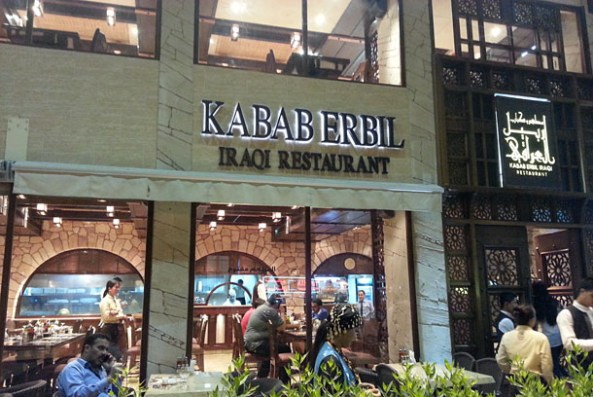
Ogling at the Masqouf @Kabab Erbil
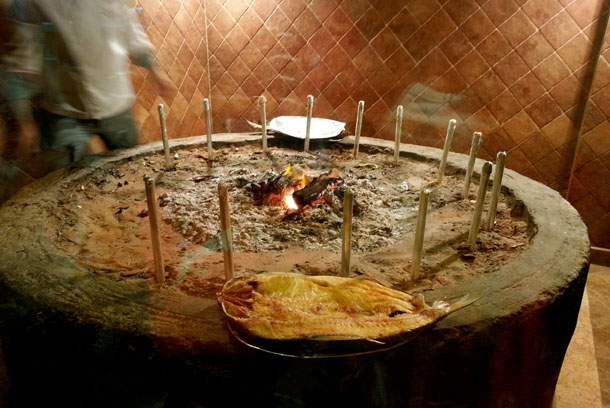
By this time we had walked a lot to reach the Al Rigga Road. While Arva’s posts have introduced me to the Masqouf from another Iraqi restaurant – Bait al Bagdadhi (I promise a post very soon on that), we went inside Kabab Erbil, a new Iraqi restaurant, where we had a glimpse of the fascinating Maqouf being cooked. Considered the National dish of Iraq, this grilled Carp is unique. The fish is cut in two identical halves from the belly up while leaving the back intact, opening up the fish. A marinade is generously brushed inside the fish and then grilled for 3-4 hours, with the fish locked in a standing position (below). This is an experience for sure – but alas, not captured fully in this tour!
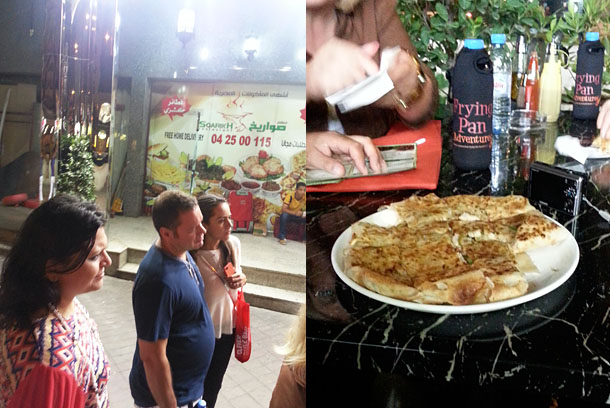
Fateer @Soarikh Restaurant
If you have ever watched Fateer making, you’ll realise why Egyptians are proud of their Fateers. Feteer Meshaltet, Fetir or the Fateer is the Egyptian layered pastry meaning ‘cushion-like pie’ – the stuffing or the filling coming in the form of chicken and cheese, sausage and cheese, tomatoes and olives, cream and honey or traditionally, the simple Kraft Cheese! We tasted the Chicken and Cheese Fateers (below) in the Soarikh Restaurant, after being dazzled by the demonstration of Fateer making – particularly when the cook throws the thin round flattened dough in the air like a Frisbee and catches it untorn and throws it back into the air once again. While the video below shows the traditional Fateer making, my other video on Feteer making demonstrates how Celebrity Chef Joe Barza brings in a few modern twists to the Fateers, in the recently opened Helio Lounge.
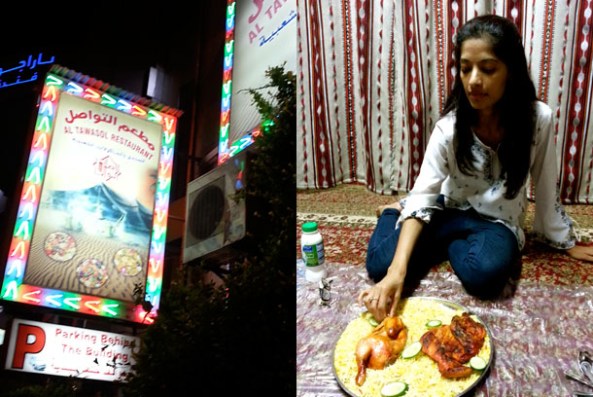
Mandi and Bedouin heritage @Al Tawasol Restaurant
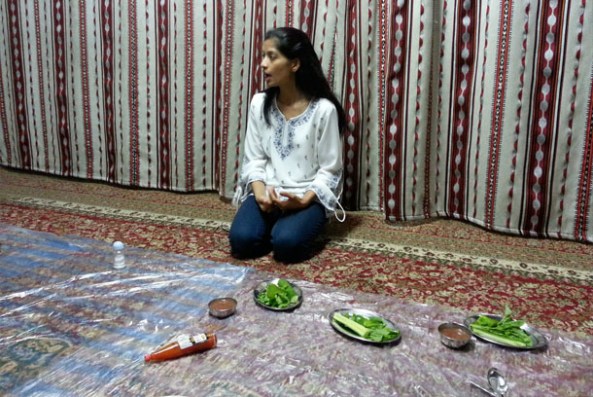
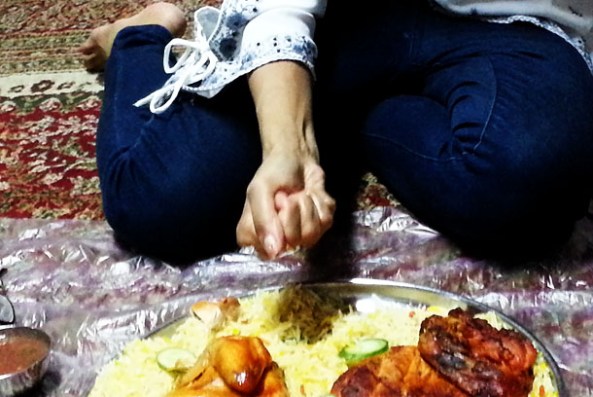
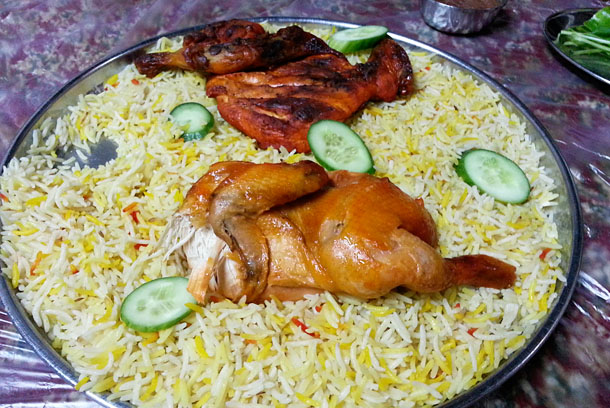
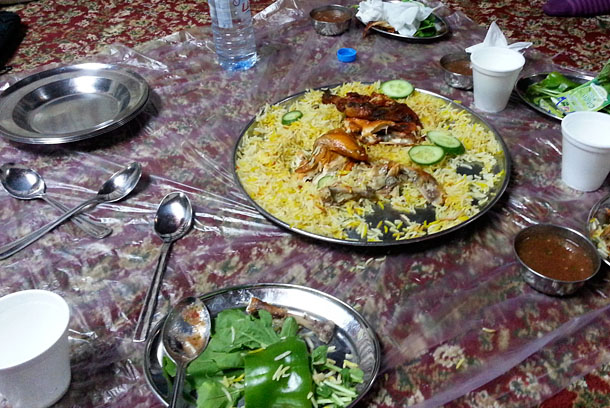
Entering the Al Tawasol Restaurant (just opposite the clock tower) on the busy Abu Baker Sidiqque Street was like entering an Arab world of tents and Bedouin heritage (below). The hankering of horns from the passing cars stuck in the Deira traffic soon faded out as we entered the restaurant. There were curtained rooms that looked like bedouin tents. We entered into a tent after leaving our shoes outside and plopped ourselves on thick large cushions that had been laid out on the carpeted ground. A thin transparent plastic sheet was spread on the carpet by the welcoming waiter, and fresh green salads were served – to be dipped into a really spicy tomato sauce. We were here to taste the Yemeni Mandi. I had heard a lot about the Mandi and this was my first Mandi experience. The Chicken is cooked in the Tanoor or an underground oven and served over yellow rice. This was the Mandi, also known as the Haneeth – a soft and succulent half chicken. Another half of a Chicken was served as the Madhbi or the Mazbi – spiced up like Tandoori Chicken and barbequed. Arva demonstrated how the Mandi was to be eaten. Originating in the Yemeni province of Hadhramaut, this unique dish was to be eaten in the Bedouin style – in the manner of communal eating, to be shared from a single plate. The Mandi was eaten by using fingers (but not exactly in the manner in which we are used to in Indian homes) by clasping a little amount of rice into the palm and making it into a small ball and then smoothly rolling it into the mouth (further below). It was fascinating to watch Arva as she traced out the history of each dish we were tasting. It was also interesting to note the route taken by a dish, beyond it’s place of origin. If I were to choose one Dubai food experience for my guest, it would definitely be a Mandi experience in a restaurant like Al Tawasol.
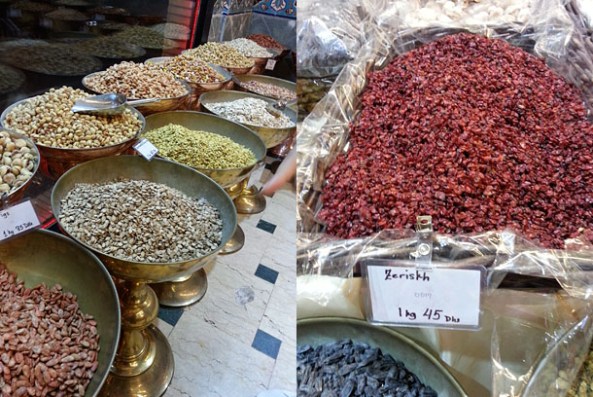
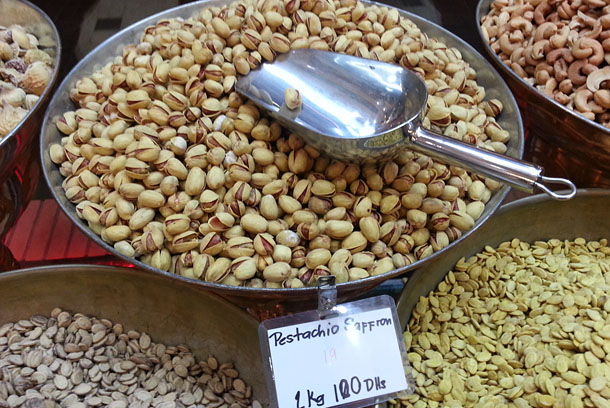
A mini introduction to Arabic spices and nuts came in the way of a small visit to a Spice shop, where a few of our tour members did some souvenir shopping. Well, to have spent almost 3 hours in Dubai without shopping, hadn’t we already committed a bit of sacrilege? It naturally had to be compensated.
Sangak, Baghali Polo with Lamb, Chicken Kabab, Lamb Koobideh and Iranian sweets @Abshar Restaurant
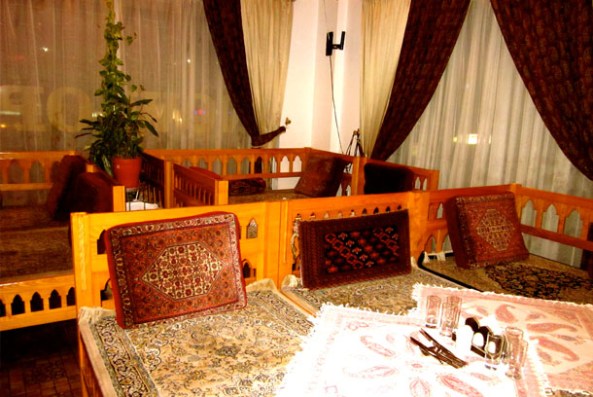
This was our final stop and by this time it had got pretty late at night. Abshar restaurant didn’t look like a typical restaurant where the decor was diffused in a soft yellow lighting or provided a bit of privacy to its diners. On the contrary, it was housed in an open floor inside a shopping mall. It looked deserted (but then it was very late already). A small group of four men sat close to the stage where a band was playing Iranian folk instruments. The group burst out into emotional screams and clapped out occasionally in delight, probably overjoyed by the lady singer belting out traditional Iranian wedding songs. The stark tube lights exposed not only the heavy make up of the singer but also the neat but not overtly classy decor of the restaurant – huge wooden seating beds (below) covered with Persian carpets and oversized cushions to lean back comfortably while sitting on them. The coldness of the decor and the ambiance was compensated by the warmth of the Iranian dishes that we were served a few minutes later.
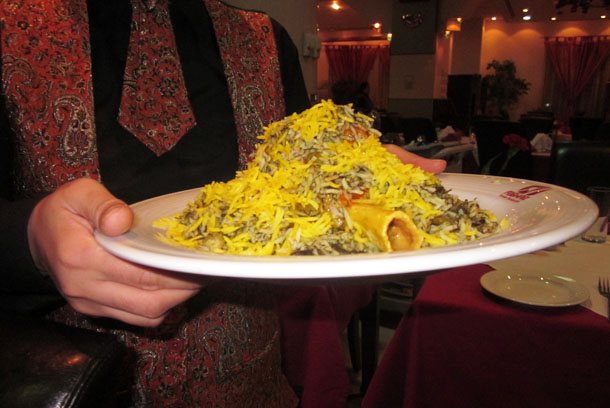
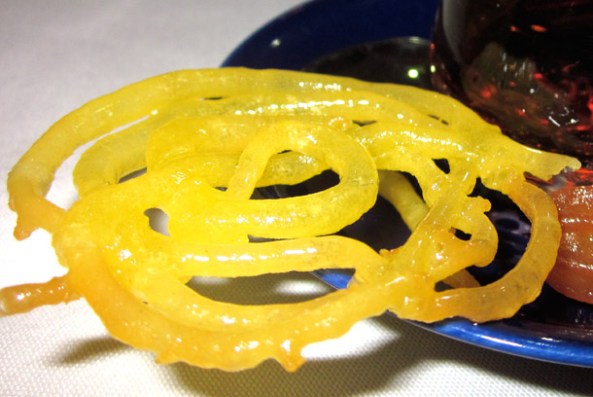
The grand entry of the Baghali Polo with Mahicheh (below), a traditional Iranian dish prepared with fragrant long grained rice and served with soft chunks of tender lamb pieces along with a medium sized lamb shank, melted us completely. Along with the Baghali Polo came a platter of Chicken Kababs and the soft Lamb Koobideh or the Kūbide, an Iranian minced meat kabab which has been made from ground lamb, beef or chicken, often mixed with parsley and chopped onions. Lamb Koobideh is also known as Soltani, meaning the ‘Sultan’s Feast’ and we were indeed having a feast. In Iran, Kababs are considered as a national dish and there are many variations of Kababs. These Iranian delicacies were followed by some Iranian sweets. First came the Jalebi (further below) – very similar to the Indian sweet with the same name. The Iranian Jalebis probably smelt of the rosewater more than their Indian counterpart (or that could be my imagination – Iranian food = rosewater and dried rose petals!). Then came the Bamieh, a fried-dough pastry made of deep fried dough soaked in sugar syrup or honey and cinnamon. These looked like small golden brown sausages but broke into soft syrupy bites as one crunched into them – an Iranian version of the Emirati Lqeimats!
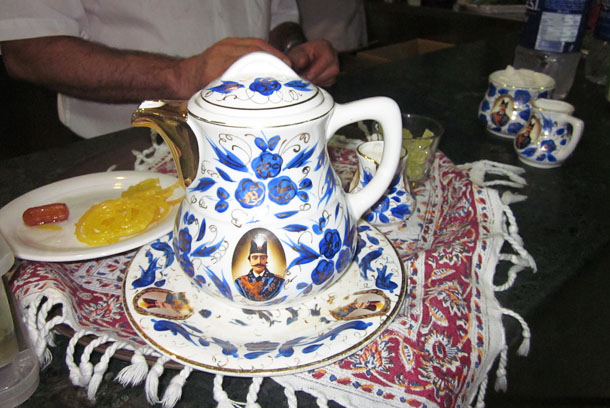
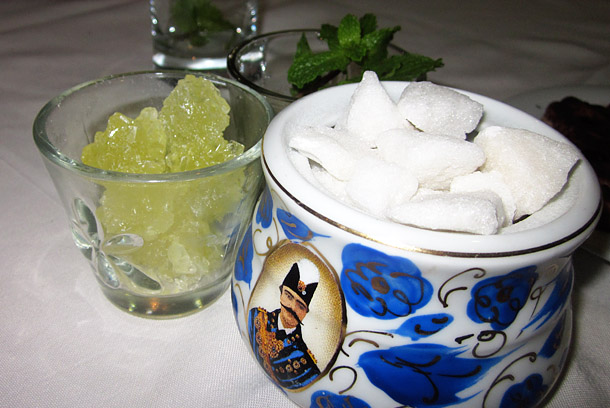
Our tour came to an end as we soaked ourselves into the aroma of Iranian tea, pronounced as Cha-ee. Cha-ee In Iran, is drunk in the morning and after each meal – almost throughout the day. Iranians make tea in their own way and serving the tea in beautiful porcelain tea-sets is as much part of a ritual, as brewing the Iranian tea (I have forever over-romanticized the Iranian tea making – dried up rose petals brewing along with loose tea leaves in an ornate tea pot!).
Duration of our tour
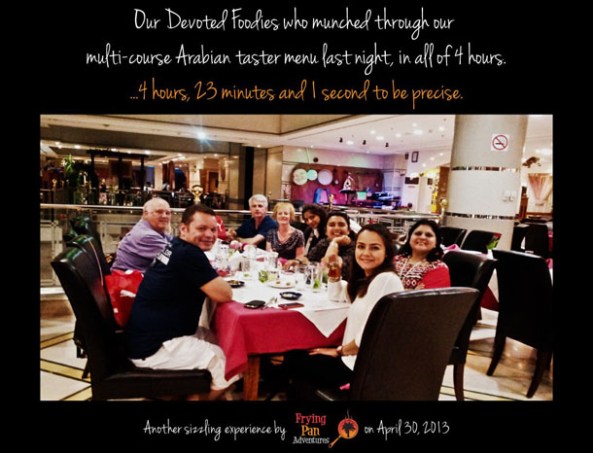
As timed precisely by Arva’s stopwatch, our food marathon lasted 4 hours, 23 minutes and 1 second to be precise! A very, very long duration. But worth every second of it and a must do for every foodie. However, I wouldn’t recommend it to families with little children. Generally, the Z-Sizters are always excited with the prospect of any kind of new food, specially restaurant food (where Chefs prepare food!). But the long duration and the frequent walking in between the food stops might not be practical, even for them.
Frying Pan Adventures – Food tours in Dubai
Website, Facebook, Twitter
The tours have been modified for the summers (shortened tours and air-conditioned vehicles to escape the heat) and special Iftar tours are being offered during the Ramadan as well.
Food transcends border
Food manages to transcend borders and barriers – both geographical and emotional. Egypt may boast of inventing the Falafels, but today they are popular and are a part of any Middle-Eastern cuisine. Variations of the Jordanian Masaf is also eaten in parts of Iraq, Syria and Saudi Arabia. Say, the Kunafa. Also spelt as Knafeh, Kunafeh or Kunafah, it is also popular in Turkey where they are known as the Künefe, though it originated in Nablus. Instead of using the Nablusi cheese here, a semi-soft Mozzarella cheese is used in the filling. A variation of Kadaif is also popular in Greece. The Egyptian Fateers have become Feteers or Fitrs or Fatayers, depending upon which Arabic country it is being eaten in. The Persian Bamieh becomes the Loukoumades in Greece, the lokma tatlısı or simply the Lokma in Turkey, the Lokmades in Cyprus and the Luqmat al-qadi in Arabic. That probably translates into my favourite Emirati sweet – the Lqeimat! The Mandi, originating in Yemen, is now very popular in the rest of the Arabian Peninsula, particularly in Egypt and Syria. No matter where a dish originates, it becomes belongs to a wider region as it becomes popular or as assimilation takes place between different cultures and cuisines. Though the evening took us through a journey into the Middle East via food, in effect, it showed us the world!
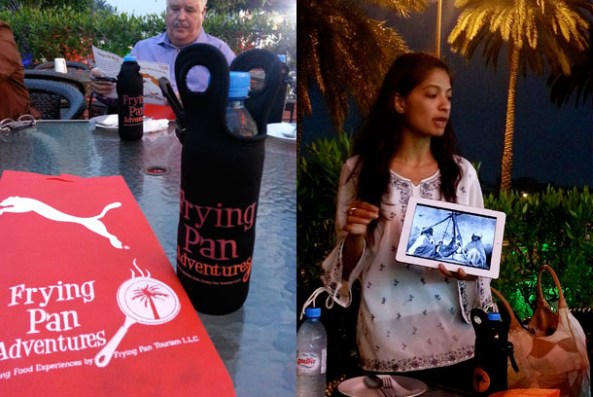
Conclusion: What made the food tour so special apart from the food that’s on offer?
It’s Arva herself. She is passionate about the subject of food, has a lot of knowledge on the origins of different type of dishes that she has selected for tasting in her food tours and the variety that one gets to taste. Starting from the little warm touches of the bottle cooler (I know it sounds weird) and the face wipes that were given to us at the beginning of the tour, to the demonstrations of culinary history on her tablet or through her story telling – she’s here to make you fall in love with the subject that she loves – Food. She didn’t wake up overnight and set up a food tour company. I’m beginning to imagine that these ideas were probably sown slowly and steadily for many years while she was writing about the ‘hole-in-the-wall ethnic eats of old Dubai’ in her blog I live in a Frying Pan. Many of my food blogger friends from Fooderati Arabia had been guinea pigs in her soft runs and initial trials that ultimately led to the design of the food tour packages that you will currently experience.
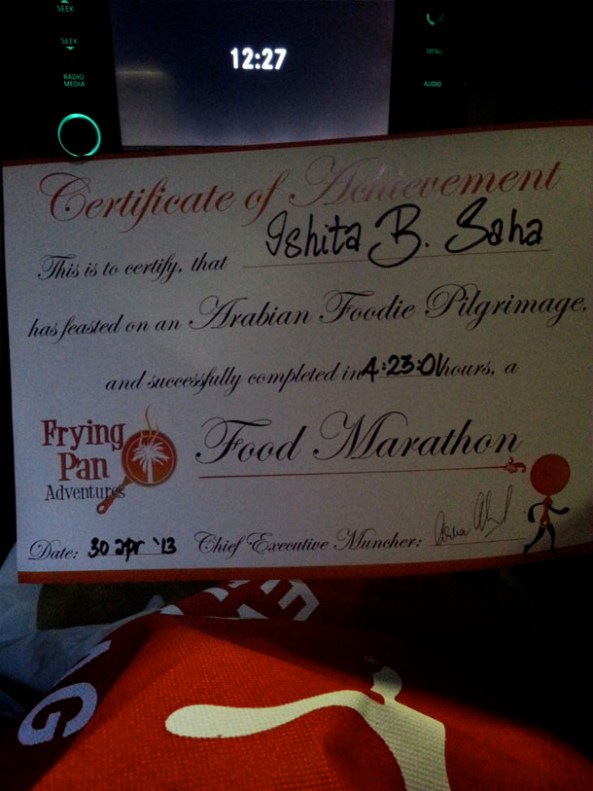
4 hours, 23 minutes and 1 second seemed to zip by in a blink and when I reached home the next day (I parked my car in the garage precisely at 12:27 am the next day), even this seemed short for the Masqouf, or the Koshari or the Hamam Ma’shi that we didn’t get to taste that day. Have you been to any food tour before, in any other city? Have you been to any of the other food tours from Frying Pan Adventures (they also have a North African and Little India food tours)? Do you embark on culinary journeys while holidaying? Talking of food and heritage, my earlier post chalks down all the UNESCO World Heritage sites that I’ve visited so far. And culinary journey brings back memories of my recent Thailand visit. I’ve never ever been so inspired as I’ve been in this trip. And, and, and… before signing off, a reminder on my my blog giveaway – ‘A romantic dinner for two’ from the romantic Thai restaurant Thiptara from The Palace Downtown. The contest closes today midnight!
Unblogging it all… Ishita
Disclaimer: The Arabic Pilgrimage Food Tour cost us Dhs 350/person. The subject, story, opinions and views stated here are my own and are independent. None of the outlets mentioned here have sponsored this post. While you enjoy reading the posts with visuals, please do not use any material from these posts. And do join me on my daily food and travel journey on Instagram, Facebook, Twitter and Pinterest.
◊—————————————————————◊
Posts from Fooderati bloggers on Arva’s tours:
• FooDiva: Savour an ethnic food safari in Dubai
• My Custard Pie: Tour the Middle East via your tastebuds
• My Custard Pie: A tour of North India without leaving Dubai
• Life in the Food Lane: Dubai Food Tour
• D for Delicious: Dubai Last Suppers: Frying Pan Adventures
• Arabic Zeal: Dubai Food Adventure – Tastes of North Africa
• FooDee: Let Frying Pan Adventures take your taste buds on tour
Related posts:
• The Hedonista: A slice of Baghdad in Dubai
• The Hedonista: Fateer, Feteer, Fetir – by any other name, it’s still quite orgasmic
BE SOCIAL. SHARE THIS!


My love for the decadent past
Sometimes I feel that I haven’t travelled much. At other times when I sit back and ponder, I realise that though there are many places in this world that I haven’t yet seen, I must have been blessed enough to have seen and travelled this far. With each little step I take, I realise that the World Awaits Me. Perhaps, that had been the idea behind the title of the parent category under which all my posts had been initially filed. I’ve renamed that category today as simply – Travel. The travel bug had bit me even before I could crawl and I have to thank my dad and his brilliant tenure in the Indian Administrative Service (IAS) for this. He indulged us to be a part of his whirlwind tours while he served various positions in the various government departments. Both my brother and I learnt beyond what was being taught within the four walls of our classrooms. We travelled a lot with our dad and accompanied his official entourage like two small excess baggage. The various colonial houses that we stayed in, managed to shape our childhood and was part responsible for shaping our personalities – seeking out for adventure all the time {a historical house that I grew up in}. Probably, my love for old architecture and the intricacies of the structure of old buildings were ingrained from the very beginning. Moving to a city like Kolkata in the later stage of my schooling years magnified this love for decadence and history. I would be strolling forever in the terraces of old buildings and walk around North Kolkata which showcased the grandeur of Kolkata of yesteryears. At a later stage when I started travelling, it was quite obvious that I would be attracted by heritage sites and buildings. This post jots down all the UNESCO World Heritage sites that I’ve visited so far. The feeling of standing in a heritage site is unique and most of them listed here are either cultural or natural sites as categorised by the UNESCO list and not inscribed on the List of World Heritage in Danger. Unfortunately, not all the images shown here are mine as the travel bug had bit me long before the shutter bug bit me. And definitely much before the digital cameras came in. I have resorted to the web and the Wikipedia for a few images (these have been mentioned) and yes I realise today, that my Nikon has lost an opportunity… sigh! Here’s tracking my footprints…
The UNESCO World Heritage List
A UNESCO World Heritage Site is a place (such as a forest, mountain, lake, desert, monument, building, complex, or city) that is listed by the UNESCO as of special cultural or physical significance. As of 2011, 936 sites are listed: 725 cultural, 183 natural, and 28 mixed properties. Italy is home to the greatest number of World Heritage Sites to date with 47 sites inscribed on the list.While each World Heritage Site remains part of the legal territory of the state wherein the site is located, UNESCO considers it in the interest of the international community to preserve each site.
 There is a lot of controversy and debate with regard to the sites chosen for UNESCO World Heritage sites. The debates touch upon issues which are political as well as socio-economic. I’m concerned with only one thing – if clustering a few sites under a certain banner can bring in more focus and attention towards better maintenance and preservation of that site – so be it. Kolkata is abundant with decadent colonial buildings and probably recognising a few of them as ‘heritage sites’ would bring in the necessary funds and expertise to preserve them. A small example, the old colonial building (above) which now houses a primary school where my Mum teaches – is in a state of absolute dilapidation. You just have to close your eyes to imagine the glory and the grandeur of this decaying house in the past. This house reflects the story that perhaps, many more houses in the city have to share.
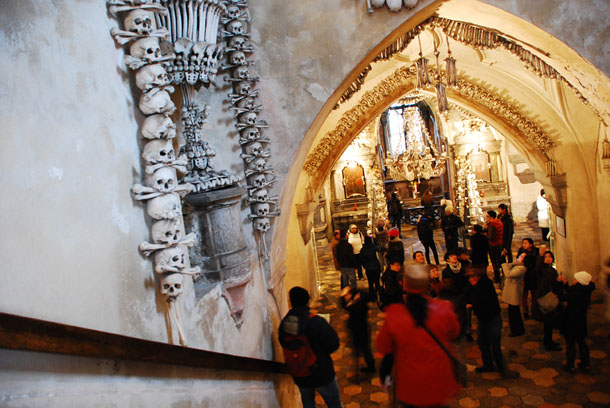
Though there are many more Heritage Sites in the world than the ones listed officially by UNESCO, an official recognition from such an international body brings in a lot of global attention and helps in preserving these sites (hopefully!). Visiting some of these sites – for example, in Waterloo where Napoleon battled it out or the freaky but beautiful bone church in Kutná Hora in Czech Republic or stuck in the swampy mangroves of the Sunderbans in Bengal… have been some of my incredible ‘travel moments’. It’s time for some stock taking (read travel introspection!) while looking at the foot marks on the sand by the beach, close to home.
I am elated! Dubai Creek could get the status of UNESCO World Heritage Site
Also close to home, Dubai Creek is in a bid to attain it’s status as a UNESCO World Heritage site (thank you Radhina of Platetrotter to bring my attention to this). As I have written in an earlier article before, the Dubai Creek has a lot of historical importance. Whereas most places in Dubai has a history running to as little as 2 to 5 years or a maximum 10 years, Dubai Creek is really the focal point in Dubai’s history. It is a natural sea-water inlet which cuts Dubai into two parts – the old part of the city known as Deira and the relatively modern part – the Bur Dubai. These two parts have their own uniqueness and identities, not to mention their own idiosyncrasies.The Dubai Creek is definitely one of the most amazing features of Dubai. It obviously doesn’t have the promenades, the upper-lipped gourmet restaurants and the exclusive lifestyle that the artificially built Dubai Marina boasts of. The Dubai Creek is real. It mirrors centuries of old trading traditions. Throughout the creek, starting from its initial inlet into the mainland Dubai one can still see the loading and unloading of trading goods from the traditional Dhows. The smells from the the various ports of origin for these Dhows, situated in distant countries like the South-East Asian countries, India, countries from Africa etc seem to pervade the air. Whereas, the trading boats are visible on the Deira side of the Creek, one can only find beautiful luxury private yachts, traditional wooden Dhows promising sunset and dinner cruises, on the Bur Dubai side of the Creek. The Dubai Creek has been very important in Dubai’s development as well, as Dubai started off as a small trading city, occupying a small dot on ancient trading routes connecting Asia-Europe-Africa. It still does.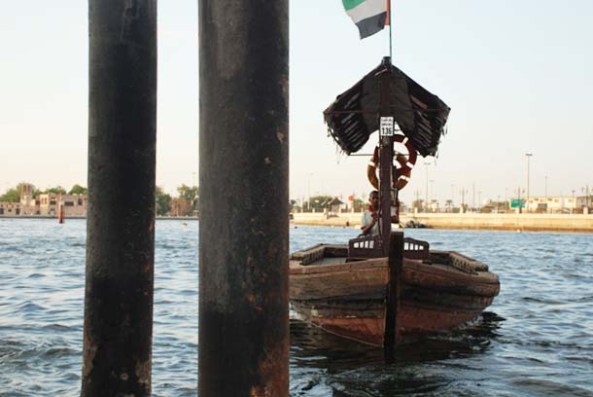
Travelling is a very humbling experience indeed – it makes one realise how vast the world is, how diverse each culture is and how unique each individual is. What are your thoughts on this? Have you ever stood on a piece from history? Signing off by directing you to my previous post which has a brilliant blog giveaway.
Unblogging it all… Ishita
Disclaimer: The opinions stated here are my own and are independent. I hope you enjoy reading the posts with lot of visuals and probably the only post where much of the visuals have been gathered over the web. Please do not use any material from this post. You can see more pictures of my travel and food journey here.
◊—————————————————————◊
UNESCO World Heritage Sites in Europe that I have visited
Austria
Hallstatt-Dachstein / Salzkammergut Cultural Landscape 
Historic Centre of the City of Salzburg 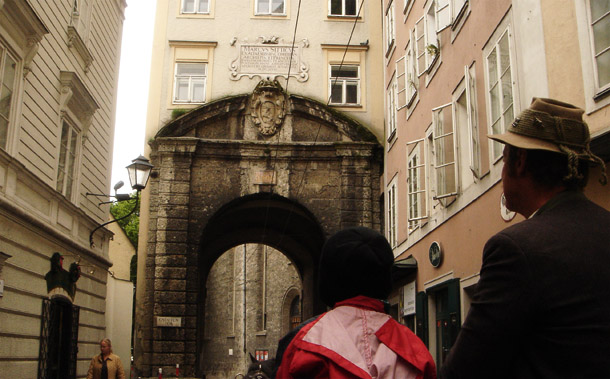
Heiligenkreuz Abbey (This is the oldest continuously occupied Cistercian monastery in the world and is a tentative UNESCO World Heritage site which has been submitted for inclusion)
Hohe Tauern National Park (The Hohe Tauern range includes Austria’s highest mountain, the Grossglockner. This is also the second highest peak in the Alps)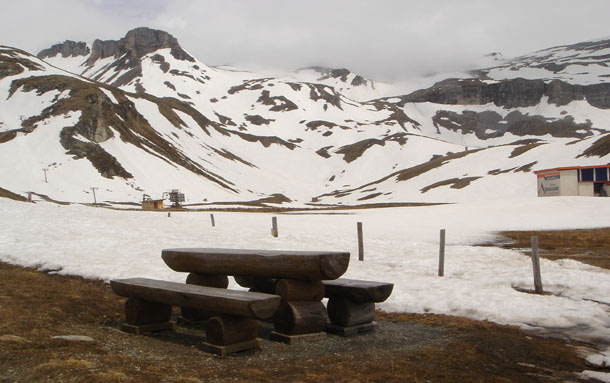
Belgium
Historic Centre of Brugge (Brugge is an example of a medieval historic settlement, where the architecture has evolved over the centuries, and where the original Gothic constructions form part of the town’s identity. This is also the birthplace of the Flemish Primitives which helped in the development of painting in the Middle Ages with artists such as Jan van Eyck and Hans Memling)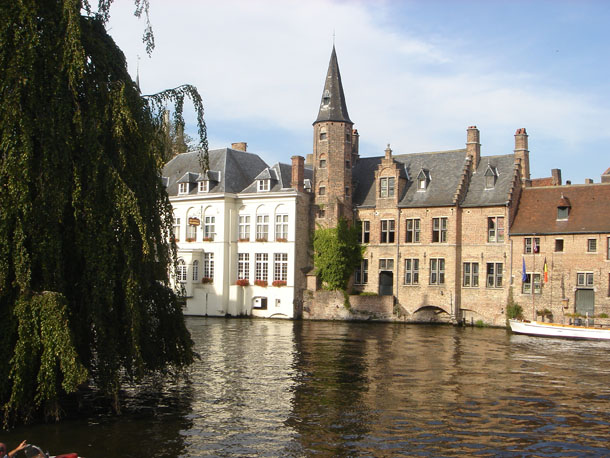
La Grand-Place, Brussels (These public and private buildings date back to the late 17th century)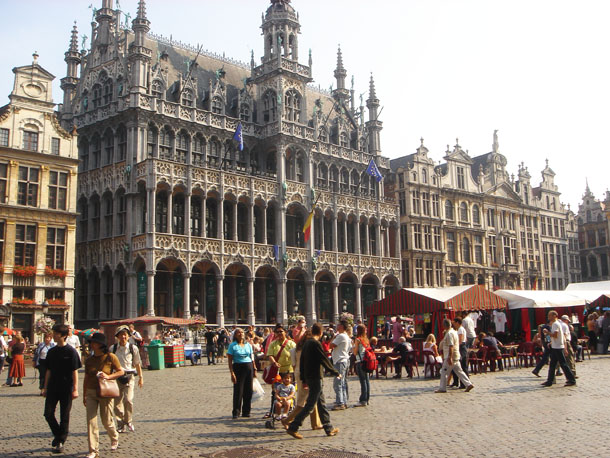
Lieux de mémoire et monuments de la Grande Guerre: le Westhoek et Régions voisines (Places of memory and monuments of the Big War: the Westhoek and Regions neighbors – a tentative UNESCO World Heritage site which has been submitted for inclusion). The picture below shows the poignant Menin Gate in Ypres, a memorial for those missing belonging to the Commonwealth nations (except New Zealand and Newfoundland) and who died in the Ypres Salient during the First World War. Between 1914 and 1918, Ypres witnessed some of the bloodiest battles and suffered the greatest loss of lives of the First World War as Allied Forces fought against Germany.
Le champ de Bataille de Waterloo, la fin de l’épopée napoléonienne (The battlefield of Waterloo, the end of the Napoleonic epic) Napoleon’s headquarters during the battle, the Caillou (“Pebble”) Farm, is shown below. Also shown here is the Lion Mound or the famous morne plaine (further below) which has been described by Victor Hugo in his novels. The Lion Mound has been erected on the spot where Prince of Orange is believed to have been wounded. 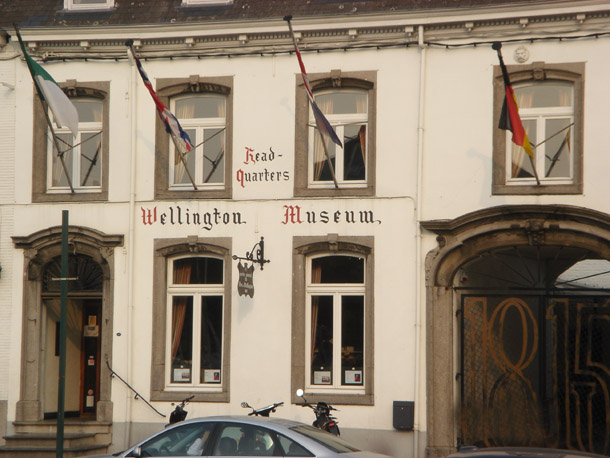

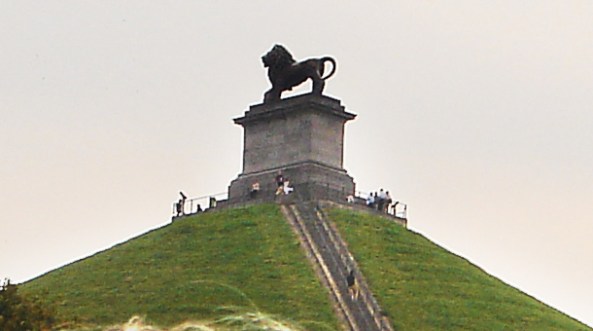
Le Panorama de la Bataille de Waterloo, exemple particulièrement significatif de « Phénomène de Panoramas » (The Panorama of the Battle of Waterloo, particularly significant example of ‘Phenomenon of Panoramas’) First unveiled in 1912, the panorama of the Battle of Waterloo, on an immense 110 m. long by 12 m. high circular painting portraying scenes from the battle fought on 18th June 1815. A central platform places the visitor in the very thick of a reconstructed clash between life-size infantrymen and cavalry brought vividly to life by the skilled use of perspective by the artist, Louis Dumoulin, with immensely realistic foregrounds. Quadraphonic sound effects make this unique panorama even more lifelike and impressive [Image and info Source: here]
Czech Republic
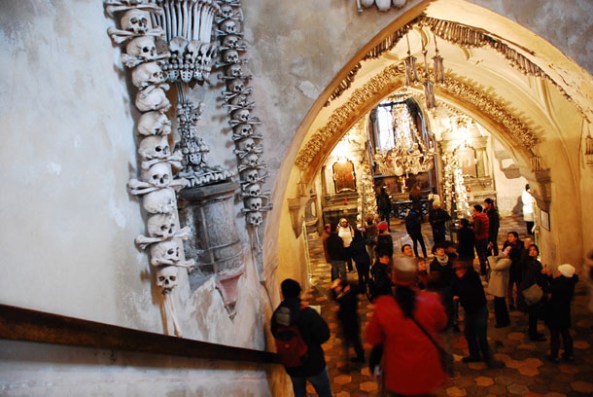

France


Germany
Berlin Modernism Housing Estates
Cologne Cathedral (Image Source: Wikipedia)
Museumsinsel (Museum Island), Berlin (Image Source: Wikipedia)
Palaces and Parks of Potsdam and Berlin (Image Source: Wikipedia)
Pilgrimage Church of Wies, Steingaden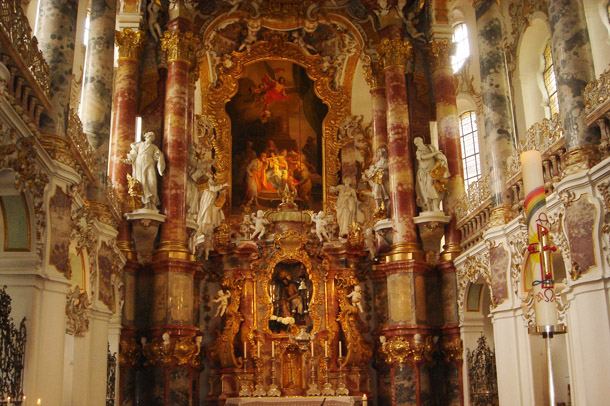
Upper Middle Rhine Valley  Situated in the the Upper Middle Rhine Valley, the Romantic Rhine Region between the city of Bingen and Koblenz, has been declared a UNESCO World Heritage Site. In this stretch of 65 kms, there are more than 40 ruined castles and palaces, all along the Rhine. Each ruin has its own story and each castle has its own legends – some happy and pleasant, while others are laden with heavy grief. (Below – Image Source: Wikipedia)
Würzburg Residence with the Court Gardens and Residence Square (Image Source : Wikipedia)
Heidelberg Castle and Old Town (This is a tentative UNESCO World Heritage Site submitted for inclusion)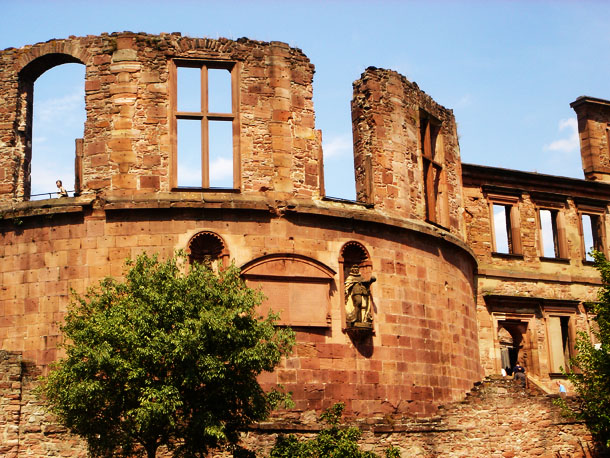
Italy
Archaeological Area of Agrigento 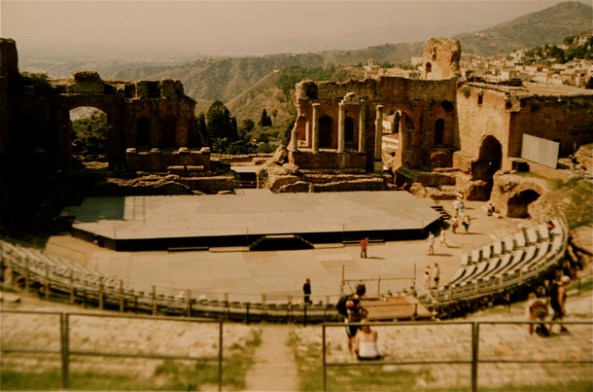
Piazza del Duomo, Pisa (Image Source : Wikipedia)
Portovenere, Cinque Terre, and the Islands (Palmaria, Tino and Tinetto) (Out of the 3 listed above, I have visited Cinque Terre, Image Source : Wikipedia)
Syracuse and the Rocky Necropolis of Pantalica (Image Source : Wikipedia)
Venice and its Lagoon (Image Source : Wikipedia)
Archaeological Areas of Pompei, Herculaneum and Torre Annunziata (Out of the 3 listed above, I have visited Pompeii, Image Source : Wikipedia) 
Historic Centre of Florence (Image Source: Wikipedia)
Historic Centre of Naples (Image Source: Wikipedia)
Historic Centre of Rome, the Properties of the Holy See in that City Enjoying Extraterritorial Rights and San Paolo Fuori le Mura (Image Source: Wikipedia)
Netherlands
Seventeenth-century canal ring area of Amsterdam inside the Singelgracht (Seventeenth-century canal ring area of Amsterdam inside the Singelgracht, stalls of the Bloemenmarkt (flower market) floating in the Singel)
Spain
La Lonja de la Seda de Valencia (The Silk Shop of Valencia/ La Lonja de la Seda de Valencia) 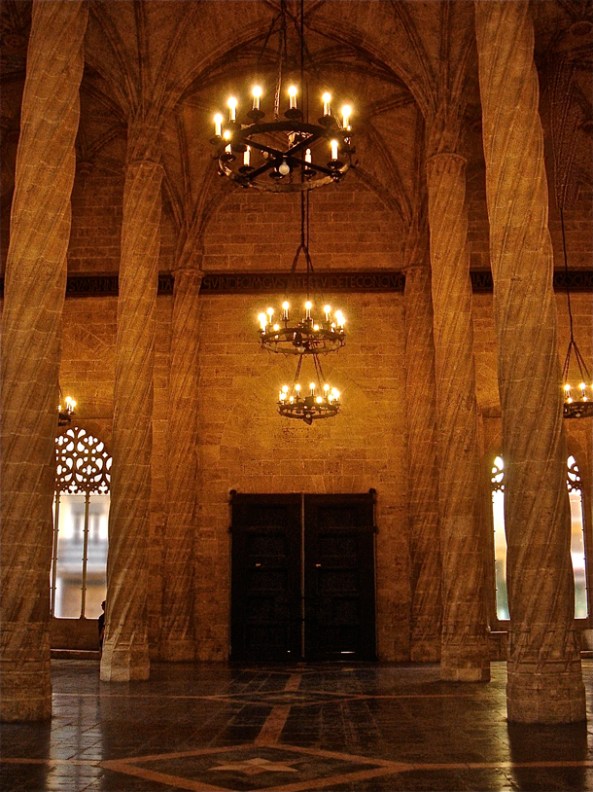
Switzerland
Lavaux, Vineyard Terraces (Image Source: Wikipedia)
Old City of Berne (Image Source: Wikipedia)
Rhaetian Railway in the Albula/Bernina Landscapes (Image Source: Wikipedia)

◊—————————————————————◊
UNESCO World Heritage Sites in India that I have visited


Chhatrapati Shivaji Terminus (formerly Victoria Terminus), Mumbai


Great Living Chola Temples, Thanjavur
Group of Monuments, Mahabalipuram

Mahabodhi Temple Complex, Bodh Gaya
Mountain Railways of India
Among the three railways that are still fully operational, I have had the experience to travel only on the first one-
- The Darjeeling Himalayan Railway was the first, and is still the most outstanding, example of a hill passenger railway. Opened in 1881, its design applies bold and ingenious engineering solutions to the problem of establishing an effective rail link across a mountainous terrain of great beauty.
- Nilgiri Mountain Railway, a 46-km long metre-gauge single-track railway in Tamil Nadu State was first proposed in 1854, but was completed in 1908.
- The Kalka Shimla Railway, a 96-km long, single track working rail.

Qutb Minar and its Monuments, Delhi

Sundarbans National Park (This is a natural site and not inscribed on the List of World Heritage in Danger. UNESCO has recorded Sunderbans as the only World Heritage site in West Bengal)


From the tentative UNESCO World Heritage List (submitted for inclusion)

Hill Forts of Rajasthan (Among the 5 forts listed, I have visited only Chittorgarh Fort. The others listed are – Kumbhalgarh, Gagron Fort, Ranthambore Fort, Amber Fort, Balor Fort, Bala Kila Fort)
◊—————————————————————◊
UNESCO World Heritage Sites in Asia (other than India) that I have visited
Srilanka

Old Town of Galle and its Fortifications 
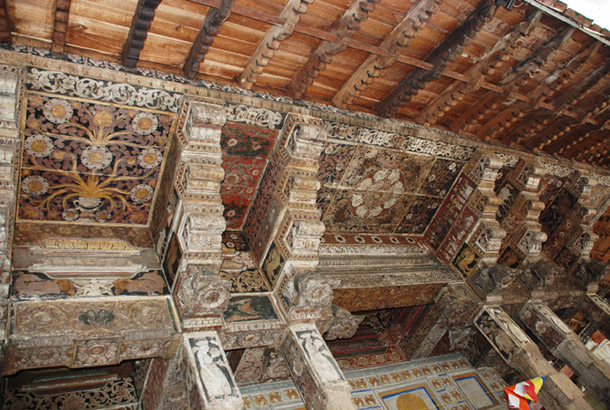

Nepal
Kathmandu Valley – The cultural heritage of the Kathmandu Valley is illustrated by seven groups of monuments and buildings which are the Durbar Squares of Hanuman Dhoka (Kathmandu), Patan and Bhaktapur, the Buddhist stupas of Swayambhu and Bauddhanath and the Hindu temples of Pashupati and Changu Narayan. I have visited the Durbar Squares of Hanuman Dhoka (below) and the stupas of Swayambhu and Bauddhanath (further below).


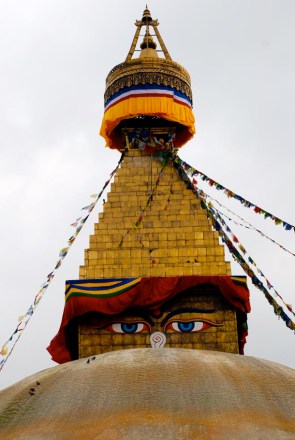
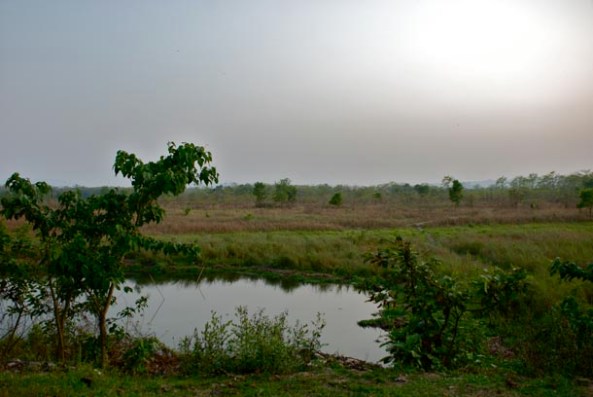
Sagarmatha National Park (The park includes the highest point on the Earth’s Surface, Mount Sagarmatha or the Mt Everest (8,848m). At an elevation range of 6,000m Sagarmatha National Park (SNP) covers an area of 124,400 hectares in the Solu-Khumbu district of Nepal. An exceptional area with dramatic mountains, glaciers, deep valleys and seven peaks other than Mount Sagarmatha over 7,000 m the park is home to several rare species such as the snow leopard and the red panda. We did have the unique experience of flying over the Mt Everest!)
United Arab Emirates
Cultural Sites of Al Ain – Hafit, Hili, Bidaa Bint Saud and Oases Areas (Hili has the ‘Aflaj irrigation’ system which dates back to the Iron Age! This entire region reflects sedentary human occupation of a desert region since the Neolithic period with vestiges of many prehistoric cultures)
Dubai Creek (Recently, an article carried out in Gulf News stated that the Dubai Municipality has submitted an application in a bid to attain the UNESCO World Heritage site status and is awaiting a visit from an expert team in September 2013. The verdict is expected to be announced by June 2014) 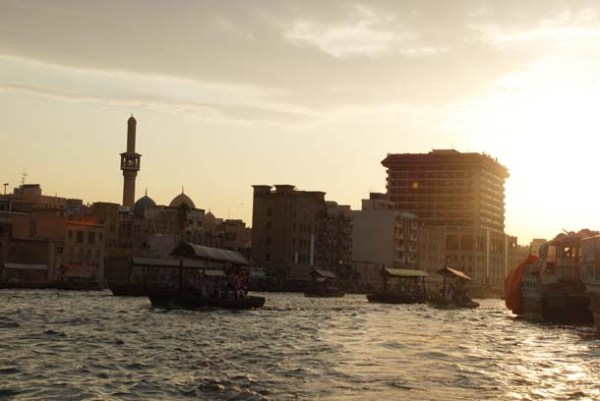
◊—————————————————————◊
Related posts that I’ve written earlier:
Things To Do In Dubai – Like A Tourist In My Own City
Where The Buddha Only Sees!, Kathmandu – Nepal
Gift Wrapped & Preserved For Each Tourist | Chitwan, Nepal
The Abandoned Women Amidst Many Prayers | Pashupatinath Temple, Kathmandu, Nepal
Flying over Mt Everest | Nepal
In the land of Paella | Valencia, Spain
The Magistrate’s House, No 1 Thackeray Road | Kolkata
Smuggled into Godfather’s Sicily | Italy
BE SOCIAL. SHARE THIS!


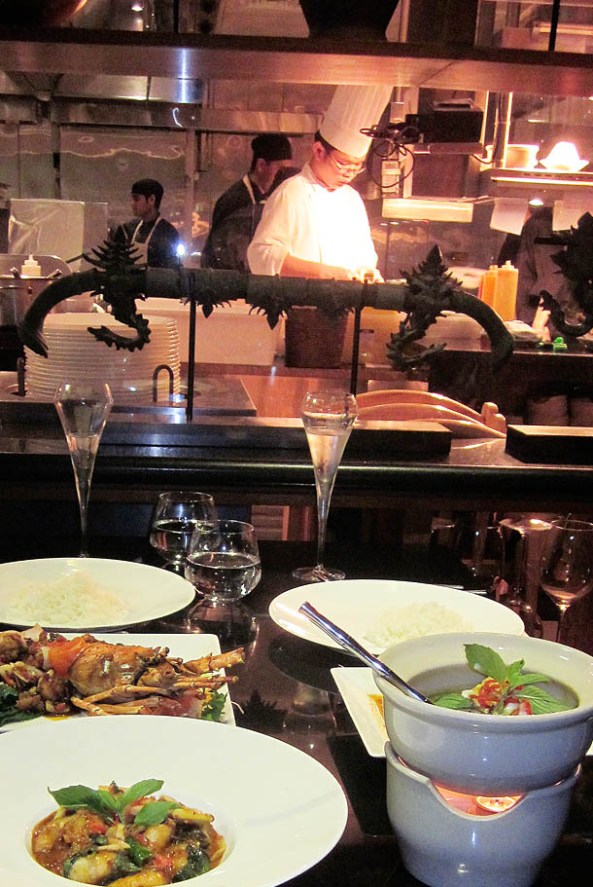
Win a romantic dinner giveaway for a couple from Thiptara
I’ve been writing on Thailand in my last few posts and I can only say that I’ve never been so inspired on my travels as I have been on this trip. Apart from writing travel posts loaded with images and food thoughts, I wanted to continue this brilliant journey with my readers in Dubai. I just mentioned this once to The Palace Downtown and they immediately organised this romantic dinner giveaway for a couple from Thiptara, the beautiful Thai restaurant serving the most delicious and the most beautiful Thai food. Beautiful is perhaps not the usual adjective used for food. But in Thiptara, there is no other adjective that can be used! Thiptara has been shortlisted as one of the ‘most romantic restaurant’ in Dubai in Time Out Restaurant Awards 2013. It has also won the Time Out Restaurant Awards for the ‘best Thai restaurant’ in 2013, while it had been the winner of the ‘best restaurant’ in 2012. It had also been the first winner of What’s On Awards for the ‘favourite Thai restaurant’ in 2012. To enter the Blog giveaway from such a restaurant, all you got to do, is to read through the post!
Chef’s Table at Thiptara
According to Wiki, a chef’s table is a table located in the kitchen of a restaurant, reserved for VIPs and special guests. Patrons are served a themed tasting menu prepared and served by the head chef. Reserved for VIPs… ahem! I am not a VIP but my companion was definitely a diva – fellow food blogger, FooDiva and the treatment that we were met with while dining at the chef’s table at Thiptara was no less than any VIP treatment. As FooDiva writes about it – A glass-fronted door opens into the kitchen and a cosy chef’s table seating four people, or less if you like. You’re really in the hub of the kitchen here with woks sizzling away, yet the chefs working ever so quietly away at their stations. And if you nab the seat I did, you can even glimpse the magical fountain lake show…worth noting, this is the only restaurant whose sound system is inter-connected to the musical score. Opt for à la carte where you are encouraged to highlight any special requests and dietary restrictions, or just let the chef recommend a Thai feast which is what we did. Here’s what I ate, a rather divine black pepper lobster included, with fellow food blogger Ishita Unblogged.

The magic at Thiptara
Thiptara means ‘Magic at the Water’. That magic definitely lends itself into the kitchen as well. I am a great fan of Thai Cuisine and every time I visit Thiptara, it manages to touch a soft spot in my food radar. Each dish is created as if it’s a work of art – fragrant, aromatic and bursting with Thai flavours. Combining that with brilliant presentation, a trip to the restaurant can only be defined as an ‘experience’. With the majestic dancing fountains and the Burj Khalifa forming a brilliant backdrop to the wall to wall glass windows of the restaurant, the dining room seems to be right there on the water. The bronze artifacts in bronze shining in the glowing torches and the reflections of the fountain on the lake, Thiptara’s ambiance is purely magical. With so many accolades raising one’s dining expectations, its a nice feeling when the expectations are met. Dining inside the kitchen of Thiptara is again a very different experience altogether – it’s like fine dining meeting warm hospitality of a home invitation! The regular menu designed by Chef Chaiwat Kawikitpraphat (above left) can be customised further according to an individual’s taste and liking. The day we were at the chef’s table, Chef Chaiwat was off and the sous chef – Chef Thani (below) pampered us in a matronly way, personally serving each and every dish to us – almost like a Thai Mama hovering over us. She had prepared a few signature dishes and hoped that ‘we would like it’. Like it? As FooDiva and I tweeted later, almost simultaneously without each others knowledge – the evening surpassed all our expectations and imagination. 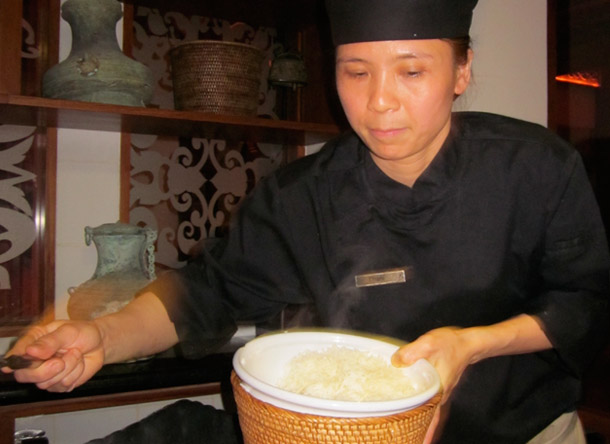
The food at the chef’s table
We started off with a Starters Basket consisting of Thod Maan Pla or Thai fish Cakes that have been deep fried and served with a sweet Chilli Sauce; Gai Hor Bai Toey or the deep fried marinated chicken wrapped in Pandan leaves and served with Ginger Soy Sauce; Satay Gai or the grilled Chicken Satay marinated in a yellow curry; Ko Noum Jeehp Song Sagai or the steamed lobster and scallops stuffed in wanton and served with Sesame Soy Sauce. Interestingly, each starter was paired with a different dip. The Starter Basket also had the Som Tum Talay or the popular spicy Green Papaya salad made with fresh seafood, long beans and tomatoes. Next, we had the Tom Yum Goong. This is perhaps the most famous soup, internationally. Made traditionally with prawns that have been flavoured with Thai herbs, lime juice and mushroom (FooDiva’s came without the mushroom as per her liking), the soup had all the spices and the perfect combination of sweet and sour taste that was needed to heighten the food drama of the evening. And the drama was calmed down by the home made lemon sorbet to cleanse our palettes before the next round of Thai dishes engulfed us.
Talking of Tom Yums, I’ve just come back from Krabi province in South Thailand, where the Tom Yum has originated… so I’m now officially an expert Tom Yum taster, having tasted the original Tom Yum in the land of Tom Yum!
Following on the footsteps of the Starters, the Main Course too, was stunning. The Geang Kiew Wan Gai (second pic below) or the Chicken green curry with baby eggplants and sweet basil leaves, is one of the signature dishes of Thiptara. Along with this, the Ped Nam Ma Kam (below) or the barbequed Duck Breast cooked in a sour chilli sauce and served with crispy fried onion rings, is another signature dish that I’ve tasted before at Thiptara. Our quota of greens was diligently met with the Pad Pak Ruam Mit – a delicious dish prepared with seasonal mixed vegetables cooked in Oyster sauce and fried garlic. But the show-stealer was definitely the Goong Mung Korn Pad Grappao or the Black Pepper Lobster (above) – an exquisite presentation combined with an amazing taste. The sweet sign off came with a Dessert platter consisting of fresh fruits – Mangoes, Rambutans, Pineapples, Watermelons and some traditional Thai desserts like the Sang kha ya or the Thai Custard Cake, the Foi Thong which is a dessert made with egg yolk and the Khanom chan made with Pandan-flavoured sticky rice flour mixed with coconut milk.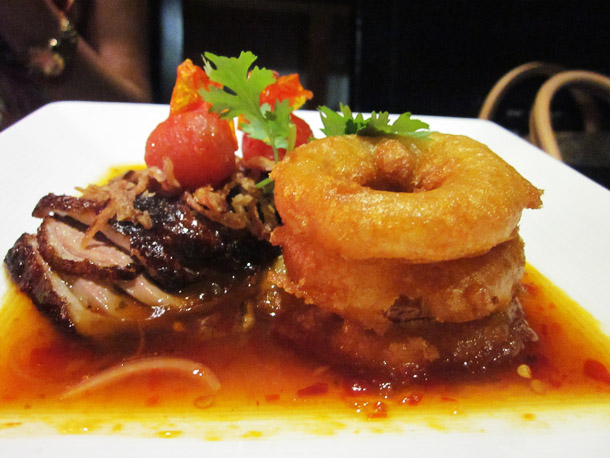

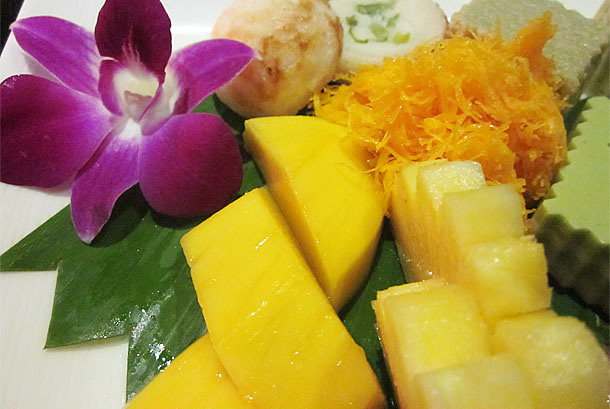
Thiptara in The Palace Downtown – Thai fine-dining restaurant
Tel: +9714 888 3444 or Email: dine@theaddress.com
For more info: Facebook; Twitter or the restaurant Page in the hotel website
For the Chef’s table, the price is Dhs 1500/couple with a full set menu (starter, soup, main course and dessert)
including 1 bottle of house wine (red/white), water and soft drinks. Or, the guest may choose from the a la carté menu or can request the chef to customise a special menu.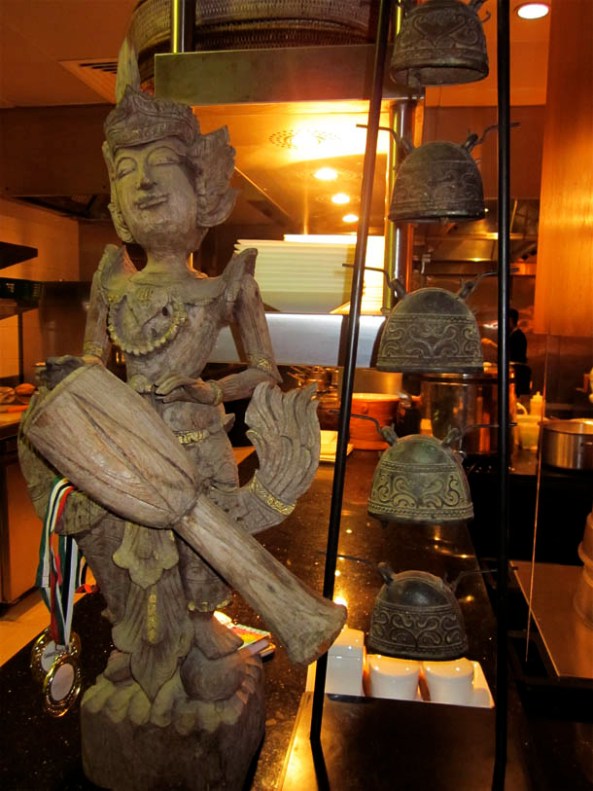
Click here to enter the Blog Giveaway
A couple can win an invite for a romantic dinner in Thiptara (inclusive of soft beverages only). Friends on referral who join the contest must mention you (referrals could get you an extra point!). The contest closes Friday, 14th June, 2103. Facebook likes, follows on Twitter, Instagram, Pinterest earn you points. If you are already following me, there are other ways to earn points (for example leaving comments on this blogpost as well as my other blogposts on Thailand). Please don’t un-follow me and then follow me again just to earn points – it really hurts me – after all, I do take a lot of effort in my blog just so that you have a good time reading my blog. And also, I do have a list of all my readers with me already!
My other posts on Thailand:
• Ruen Mai Restaurant In Krabi | A Tantalising First Experience Of Thai Food In Thailand!
• Koh Klang in Krabi, Thailand | A Photo Essay of An Island Life
• Baan Ma-Yhing Restaurant In The Fishermen’s Village | Recipe of Thai Red Curry As We Cook ‘fresh catch’ Baramundi!
• Kotung Restaurant in Krabi Town | A Taste of Thai Chinese
• Kayaking, Caves, Krabi Sightseeing… And Finally A Thai Spa!
• Island Hopping And Then Hong Island… Here I Witnessed God!
Recently, I had visited the Krabi region in Thailand on an invite from Tourism Authorities of Thailand Middle East. I was joined by bloggers and media personnel from different countries in Europe. I have been sharing about my experiences through Twitter, Instagram and a lot of write ups. I would love to know which Thailand post of mine has been your favourite? Do leave a comment on the post as well as this post (yes, it earns you points). Hoping that this blog giveaway and my blog posts will provide you with as much inspiration as I have got, while you continue to travel with me in my blogging journey!
Unblogging it all… Ishita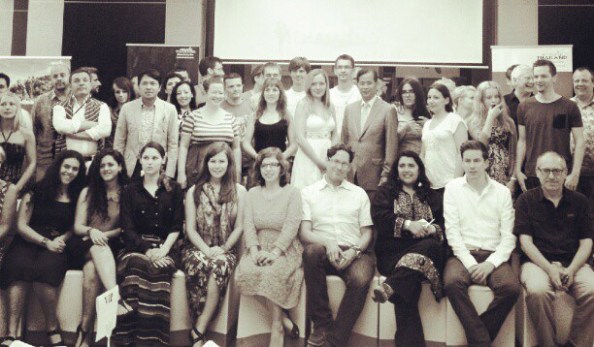
Disclaimer: The opinions stated here are my own and are independent of the dinner giveaway, kind courtesy of The Palace Downtown. Neither is there any collaboration between The Palace Downtown and the Tourism Authorities of Thailand Middle East. I hope you enjoy reading the posts with lot of visuals. Please do not use any material from this post. You can see more pictures of my travel and food journey here.
BE SOCIAL. SHARE THIS!

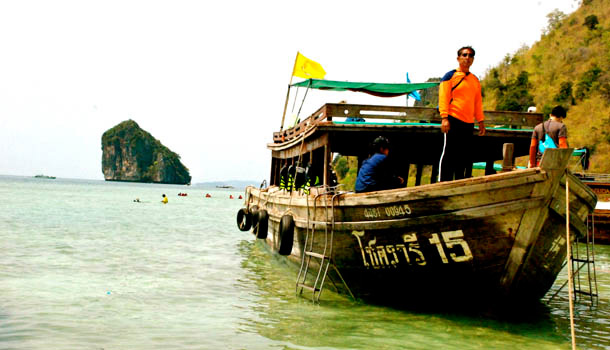
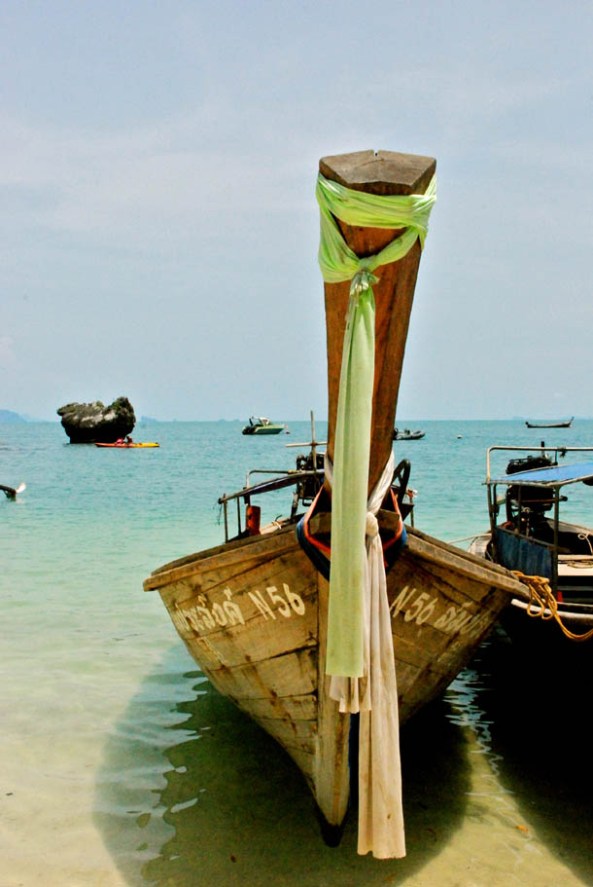 This was a day of island hopping. White sandy beaches, crystal clear water, stark green islands echoing with deep humming of crickets, chirping of birds and fish nibbling at my feet, shades of emerald green turning into shades of sapphire blue as one looks into the horizon, spectacular limestone cliffs and rock formations – it was a vision of a dream. Long tail boats garlanded at the helms, the brazen stare from the innocent Thai kids, a sense of solitude pervaded my soul and gratitude engulfed my heart. I felt utterly thankful for having been able to see what I have seen. To be able to feel what I have felt. To be able to hear what I have heard. This is a photo essay of the day – probably one of the most beautiful and memorable journeys of my life. This was also the day when I felt the presence of the Almighty, specially when I landed in Hong Island as it reverberated with life. And it sounded thus:
We were based in the resort town of Ao Nang in Krabi coastal province. Ao Nang, known for having the world’s second finest beach, provided us with a different experience than Koh Klang, the small fishing island where we had been staying in for the past few days. 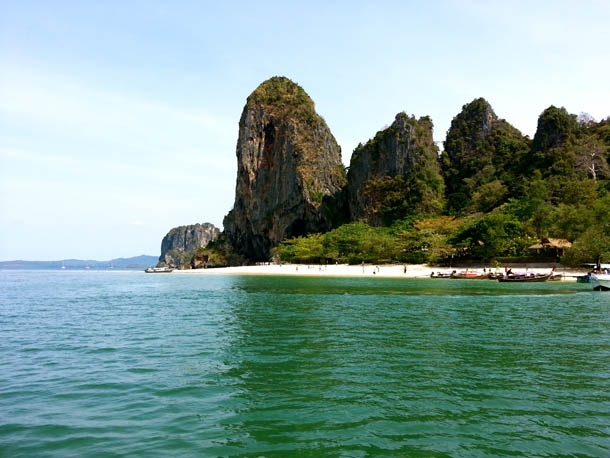
Tha-le Whaek and Phra Nang Beach
This is where the ‘miracle’ happens. As the tide recedes, the sea is gradually separated by white sand from the limestone beach in the Krabi coast and it appears to be connected to the Poda Island and its satellite islands at low tide. To experience this miracle of the ‘divided sea’, the visit has to be timed so that it coincides with the high tide which occurs twice in a month – from the 12th day of the waning moon to the 5th day of the new moon when the ebb and the flow are at their peaks. Our first stop was Hat Phra Nang in the Railey peninsular and is considered to be one of the finest beaches in Thailand. The view from Tham Pra Nang or the Phra Nang cave is also considered to be one of the finest sunset views in Thailand (one of the 12 Moon, 7 Star and 9 Sun attractions). According to folklore, the spirit of Phra Nang, the Princess Goddess, resides in the cave of Phranang beach. Phra Nang was the wife of a fisherman who was lost at sea. She lived out the rest of her days in the cave, awaiting her husband’s return. Fishermen, before going out to the seas, would pray to Phranang for good luck and for ensuring safety in the sea. Once wishes are fulfilled, the worshipers shower offerings to Phra Nang in the form of flowers, incense sticks and the unusual offering of lingams. The cave is filled with many lingams or phallic-shaped statues meant to represent the Hindu god Shiva and the shrine is dedicated to the belief that the lingams and the holy womb would create fertility and prosperity to the earth and all of mankind. (More on lingams)
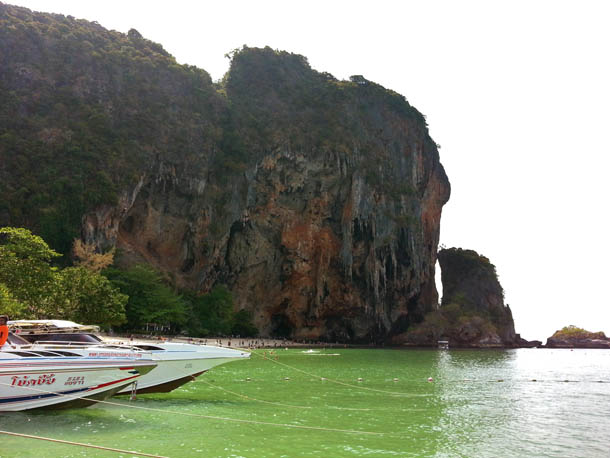
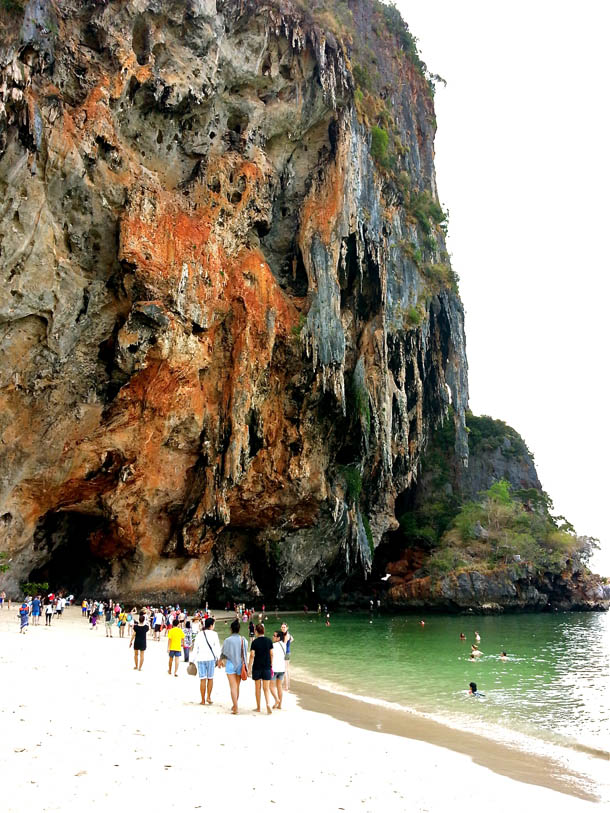
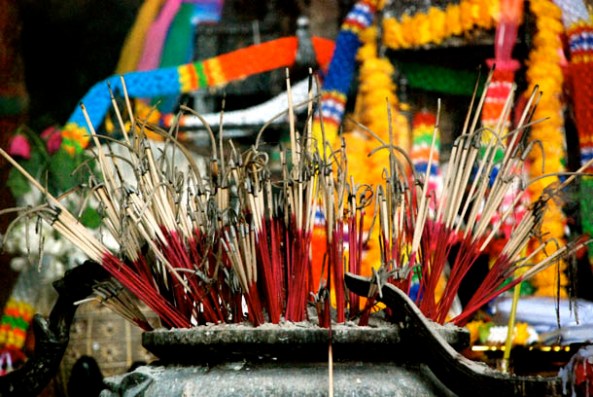
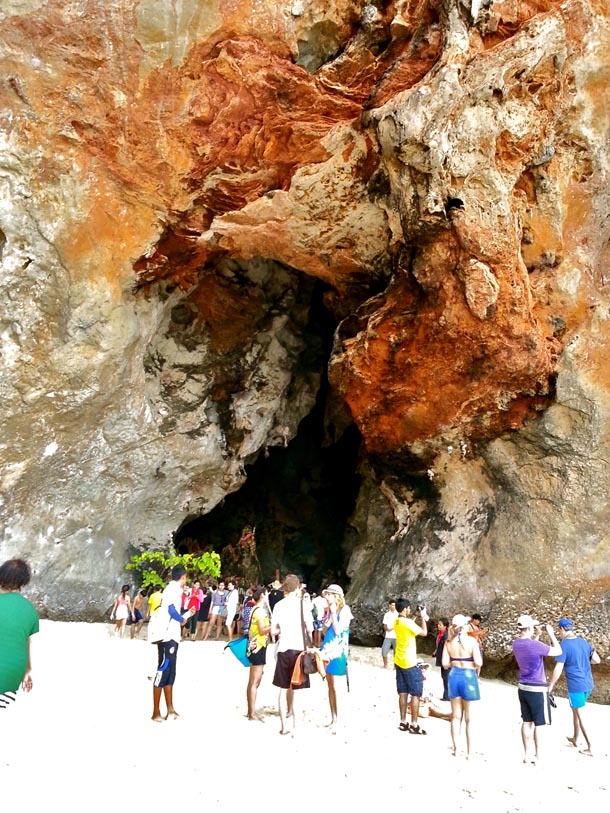
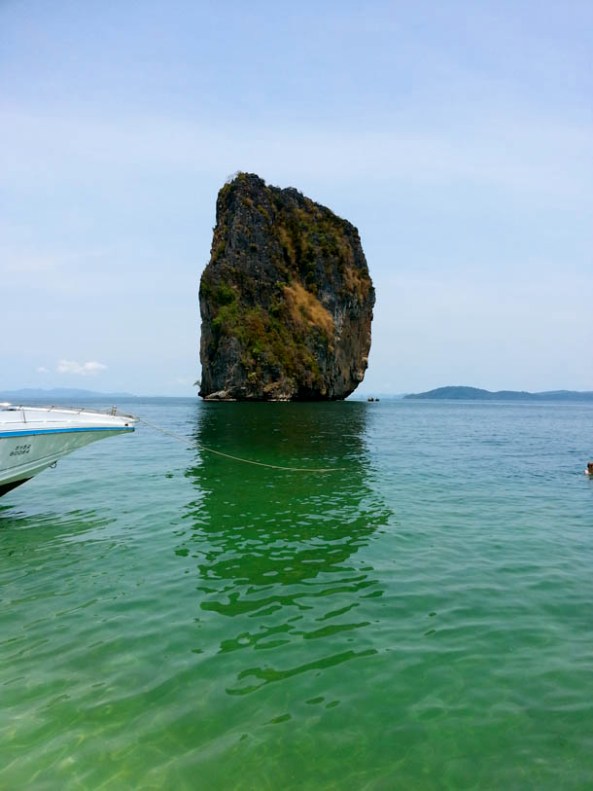

Ko Thap and Ko Kai or the Chicken Island
Before the tide recedes, we reach the Divided Sea at Ko Thap and then stop at Ko Mo. The islands are thronging with tourists. Jostling for some personal parking space is like asking for the moon here. But the beauty of the surroundings compensate all the touristic chaos. The sunset here is marked with flight of flying foxes, tens and thousands in number. Before heading to the Poda Island, en route is the Ko Kai or the Ko Dam Hok Dam Khwan, where the rock sculpture has taken the form of a rooster’s head – naturally.

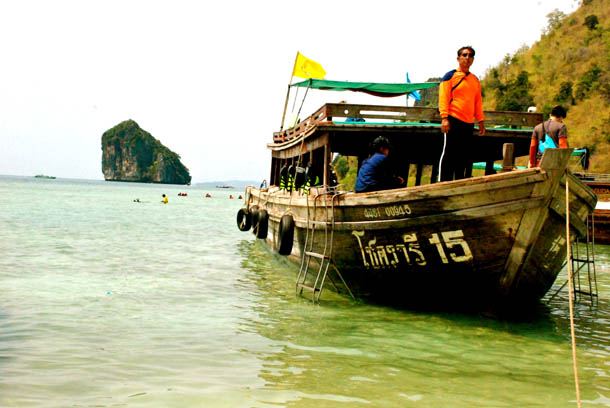
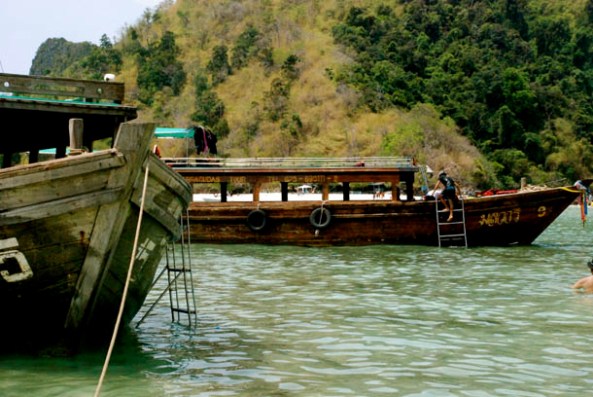
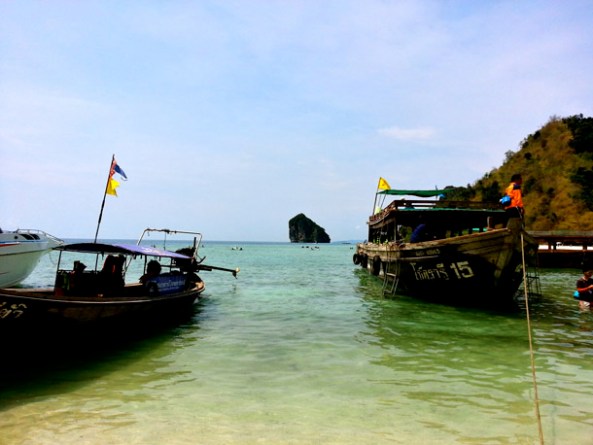
 The Chicken island…

Ko Poda
The shell laden white beach, boats converted into small make shift floating restaurants, small rock islands jutting out of the water in the horizon – Ko Poda is absolutely charming. I simply fell in love with this island. I was fascinated with the busy lives revolving inside the boats – families resided here and members helped each other to prepare food for the tourists. What were these small restaurants not offering? Pancakes to Pad Thai, Barbeque chicken to chilled beer – everything was available here. And the huge banners swaying in the breeze reconfirmed that. By the time we landed in Ko Poda, the sun was overhead and it has started to become very very hot. I really felt touched when a chilled fresh watermelon juice (below) waited for me as I took a breather from my camera – courtesy Debbie, my blogger friend who had accompanied me on this trip.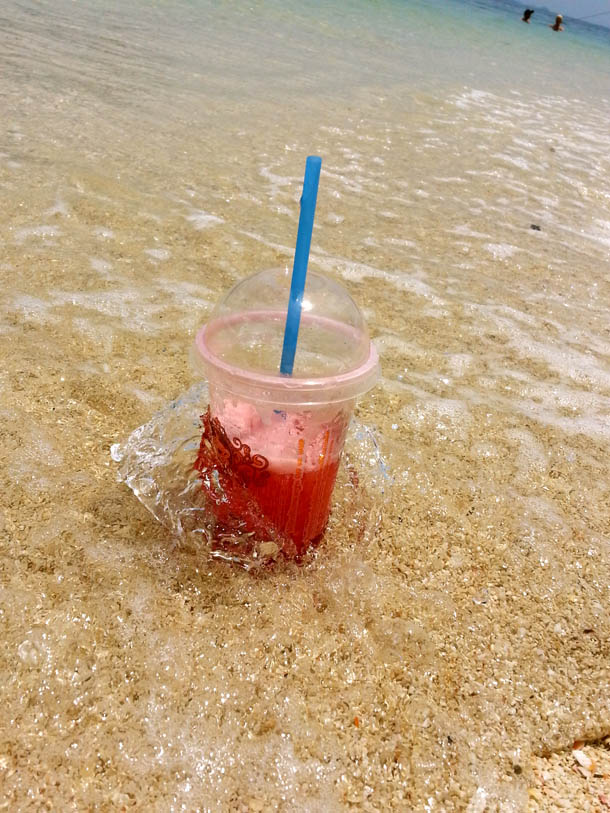
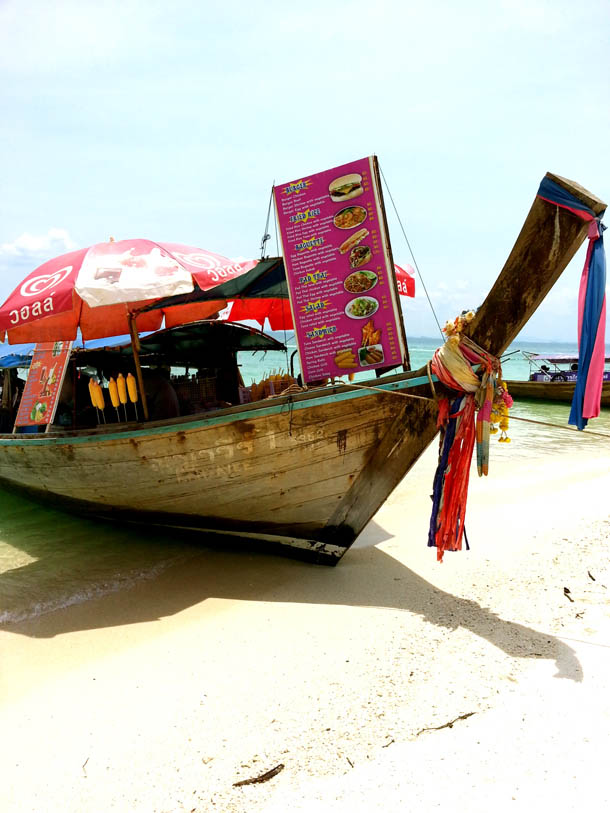

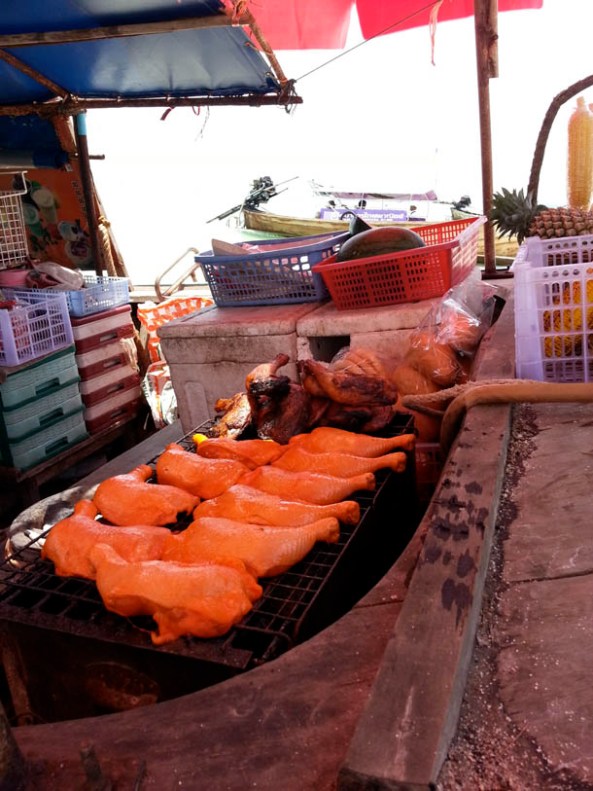
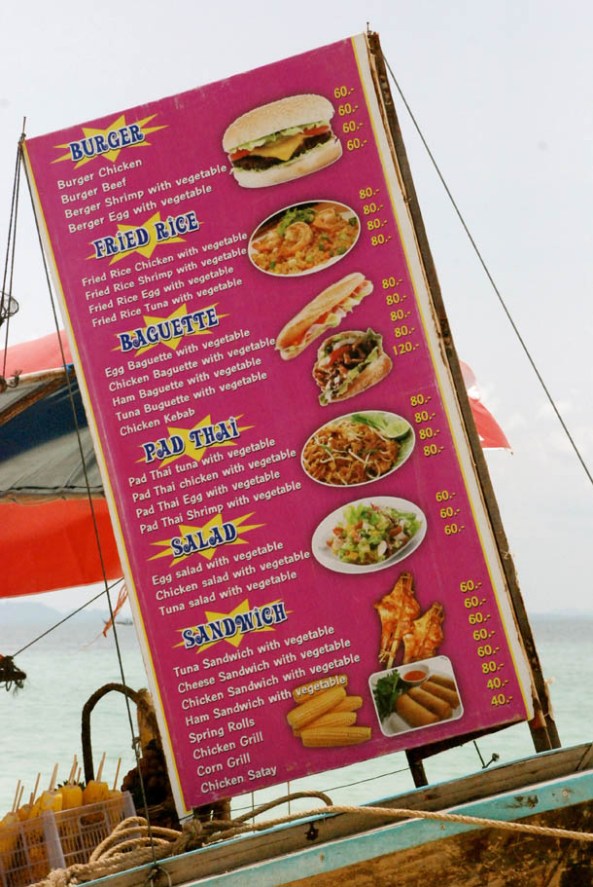

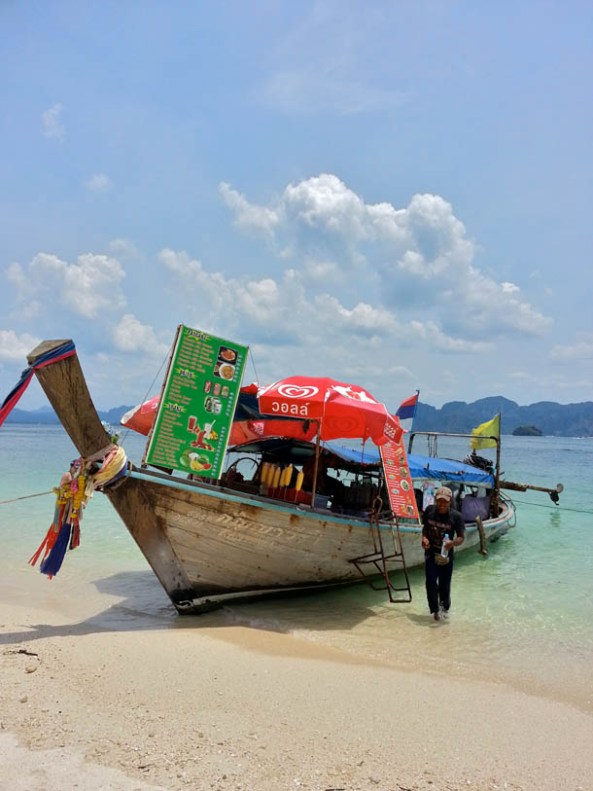
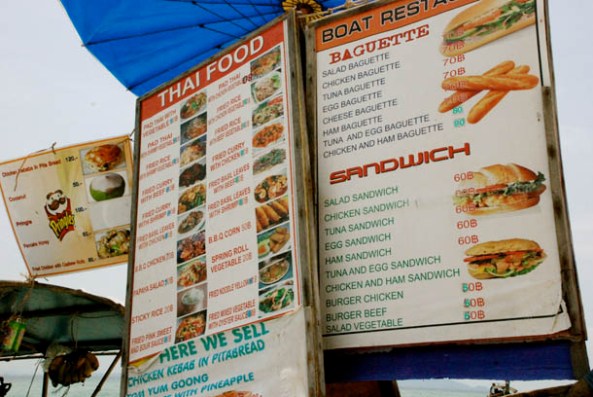
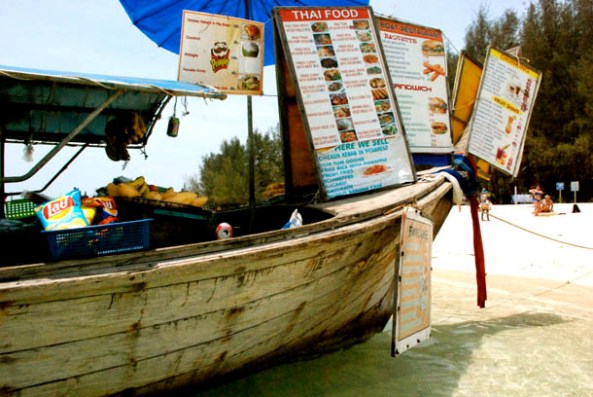
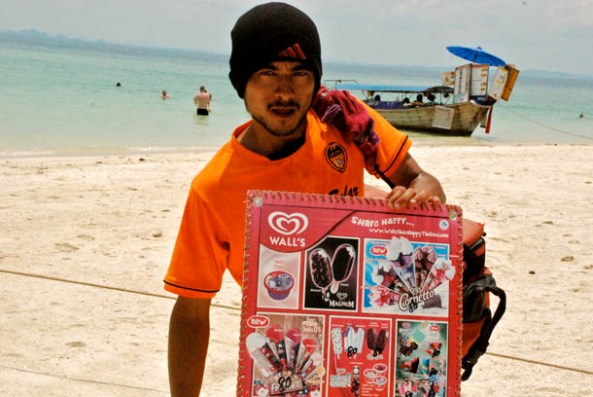


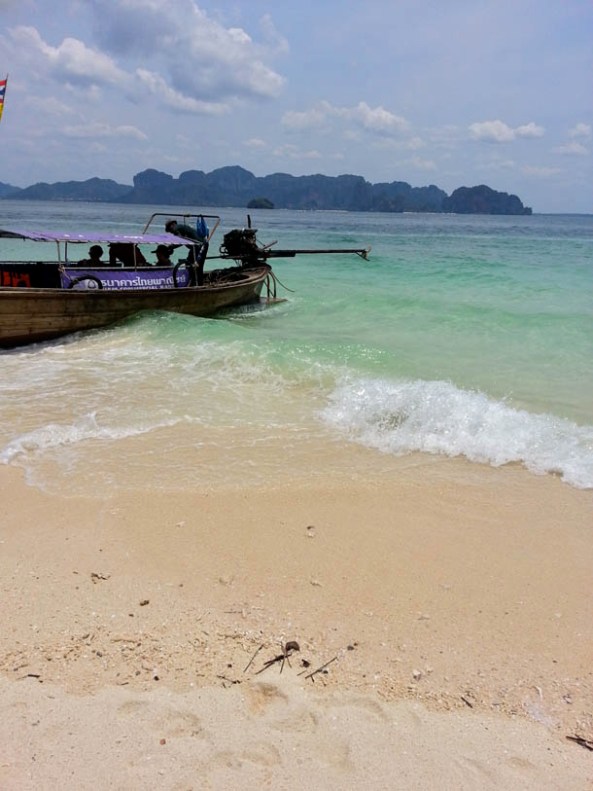
Hin Daeng
Daeng means red and Hin means rock in Thai language. In Hin Daeng or the Daeng Island, suddenly the rocks here turns brazen red. The water is the colour of the emerald and it was evident that it was deep. The island itself is formed out of a rock coming out of the sea and revealed underneath the green water are some spectacular coral formations. According to John Williams, of the award-winning Lonely Planet Diving & Snorkeling series – This is one of the four principle places for diving in the area south of Phi Phi islands and offers everything a diver could want, from dramatic walls and big fish action, to lush tropical underwater.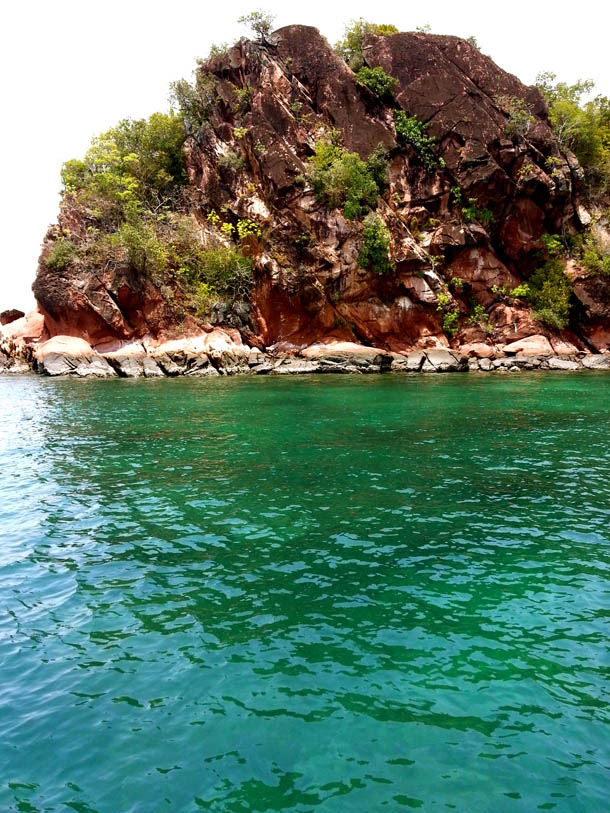

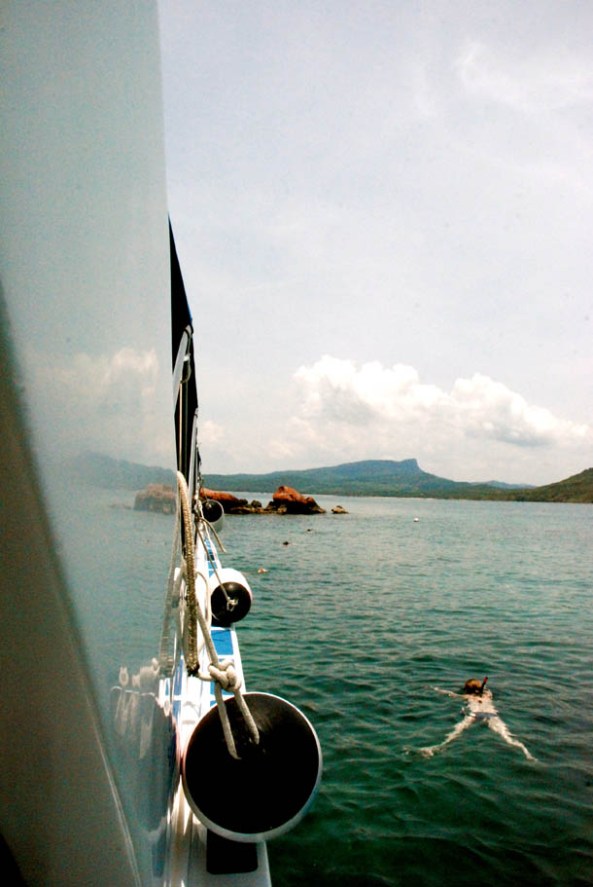

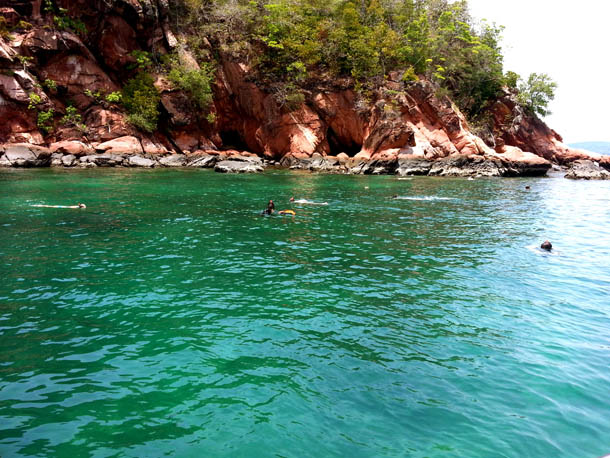
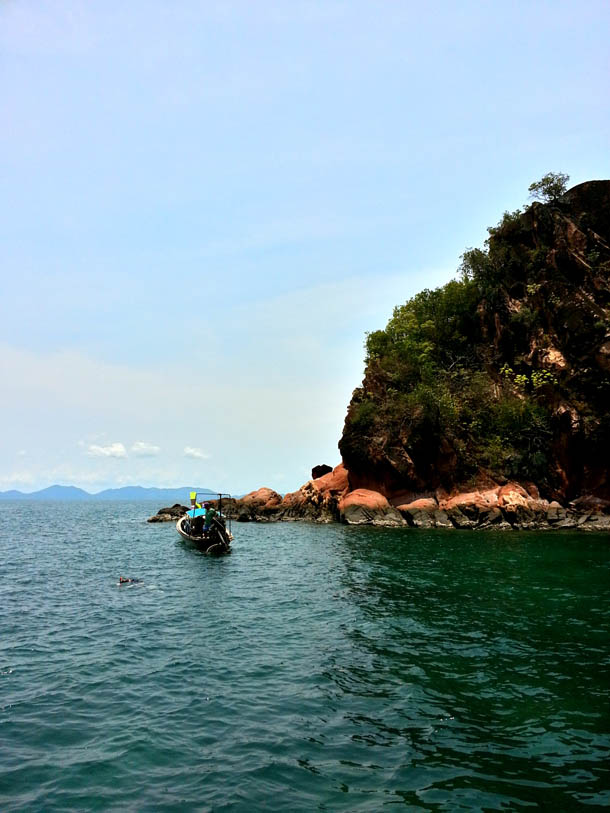

And finally Ko Hong
Hong Island – this is where I felt the presence of the Almighty. Surrounded by limestone mountains, mini lagoons with crystal clear green waters, fine white sand and lush green forests, Ko Hong seems like a cocooned paradise on earth. In spite of the large number of tourists visiting this island, one can still have a ‘deserted island’ experience. There is a profound feeling as the island resonates with the chirping of birds (hope you’ve heard the recording by now). Though it sounds strange, but there is a strange silence looming in the island. The chirping of the birds and the crickets sound almost like a prayer or a chanting. Hong means room in Thai language. There are eroded group of caves in the middle of the island which harbours a large lake with a small passage to the sea. When the tide is high, long tail boats are able to enter the ‘room’ and tourists can swim in the crystal clear water with a depth of around one metre. Interestingly, Koh Hong is also a collection point for the nests that provide the ingredients for bird’s nest soup. Young men risking their lives, climb up bamboo poles to great heights to collect these nests, which can fetch up to 100,000-120,000 baht for a kilo of unprocessed nests!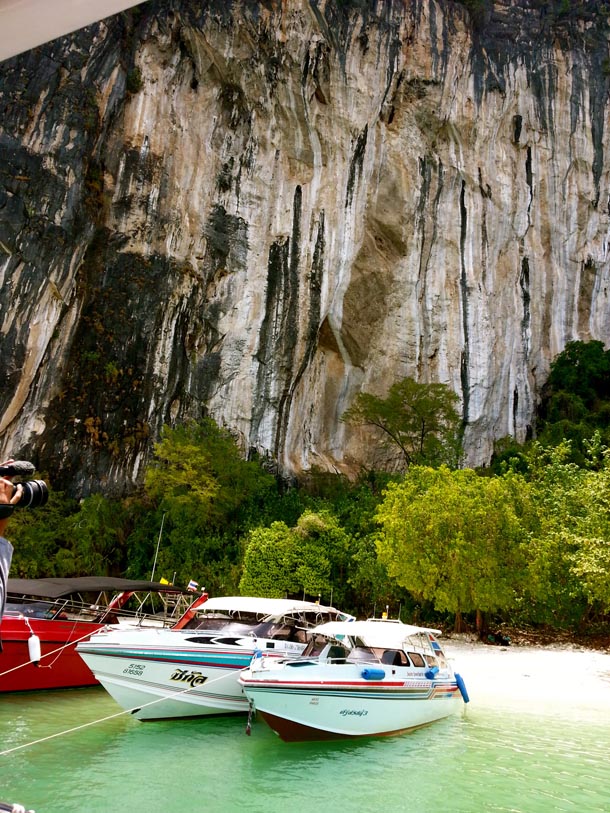
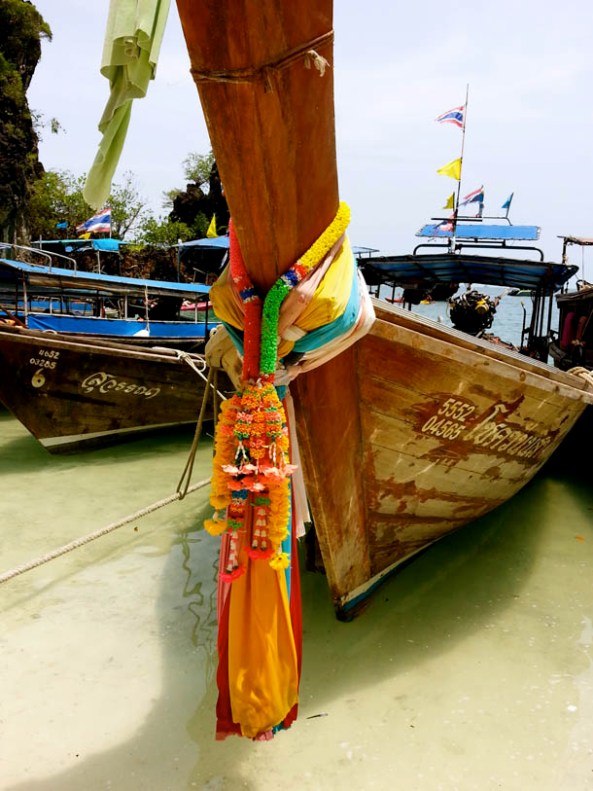
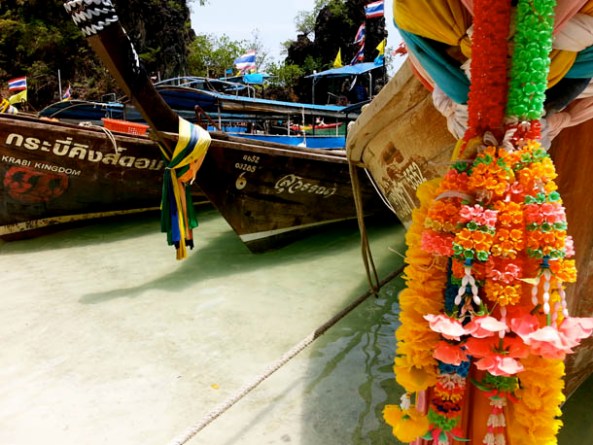
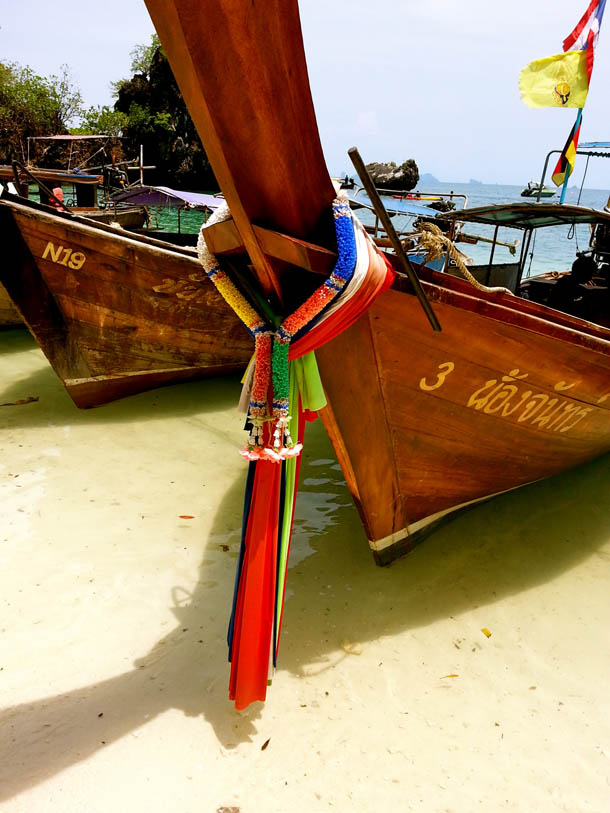
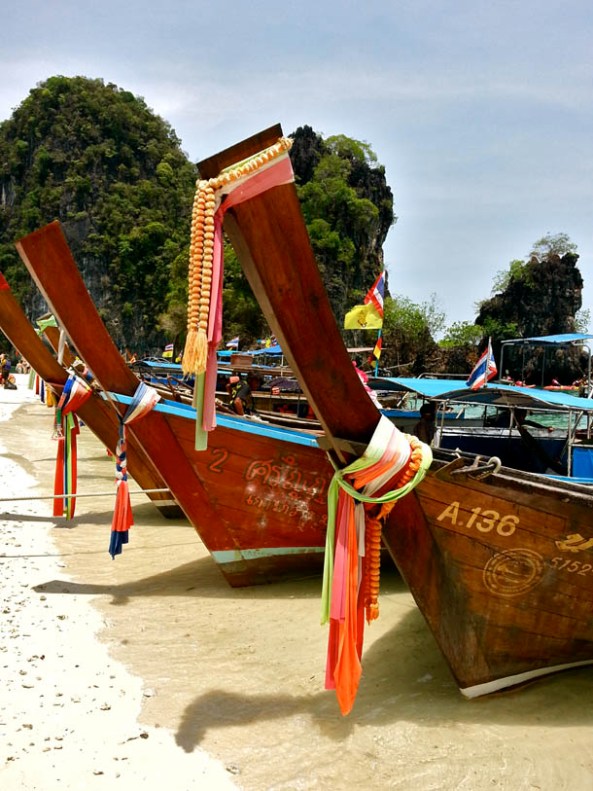

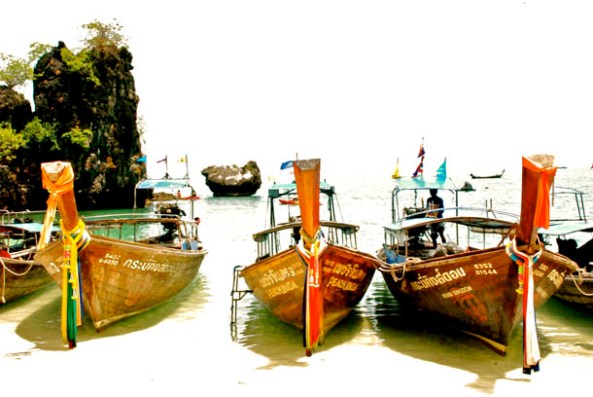
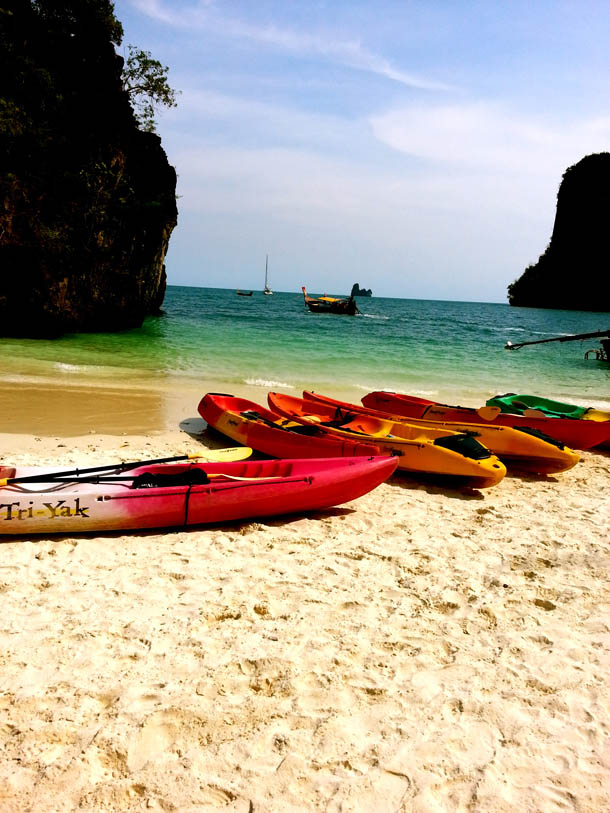
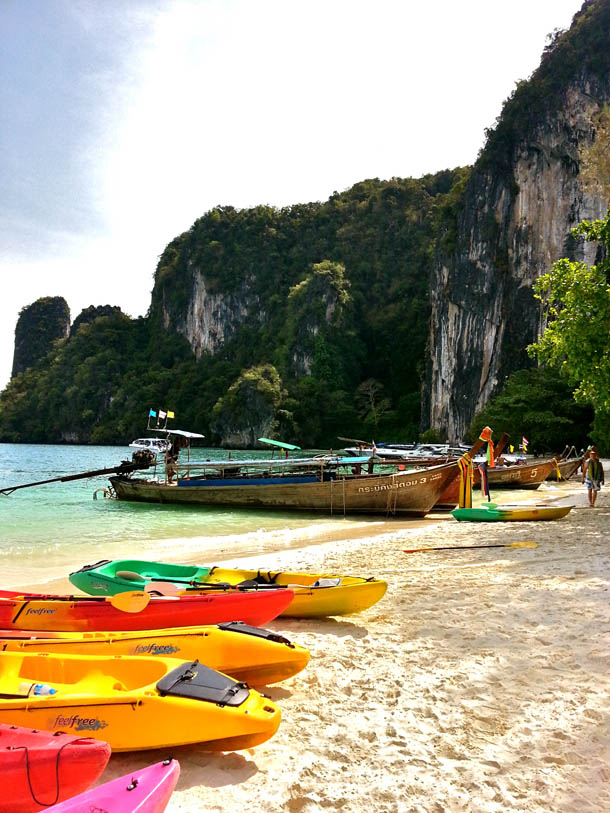

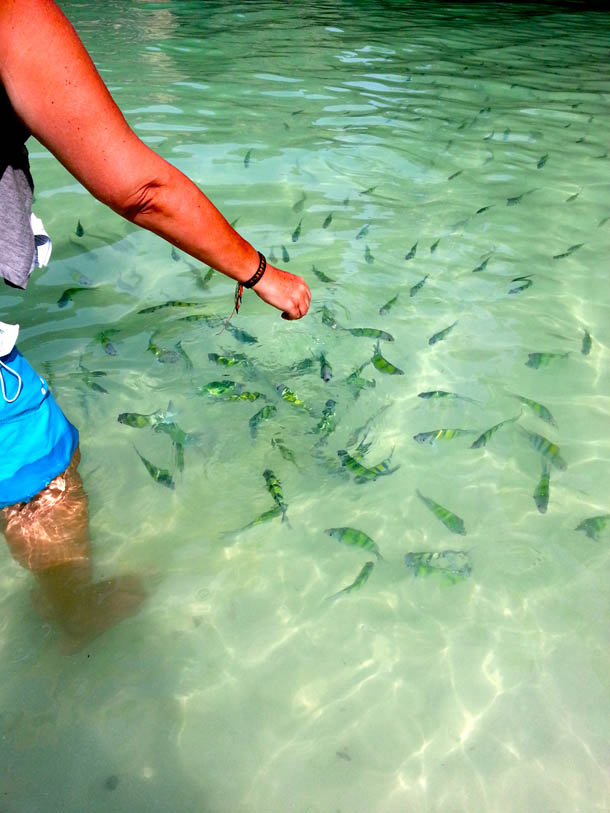
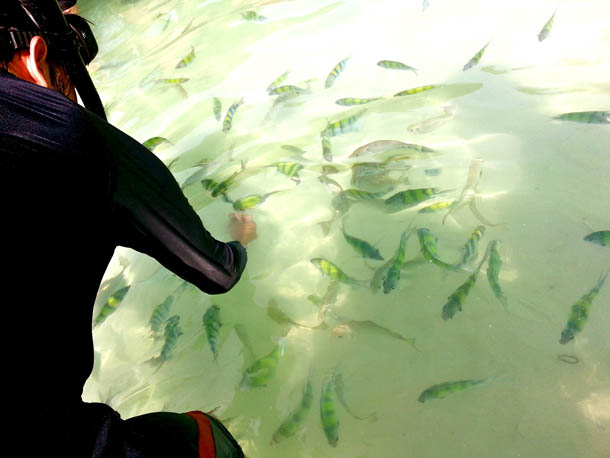
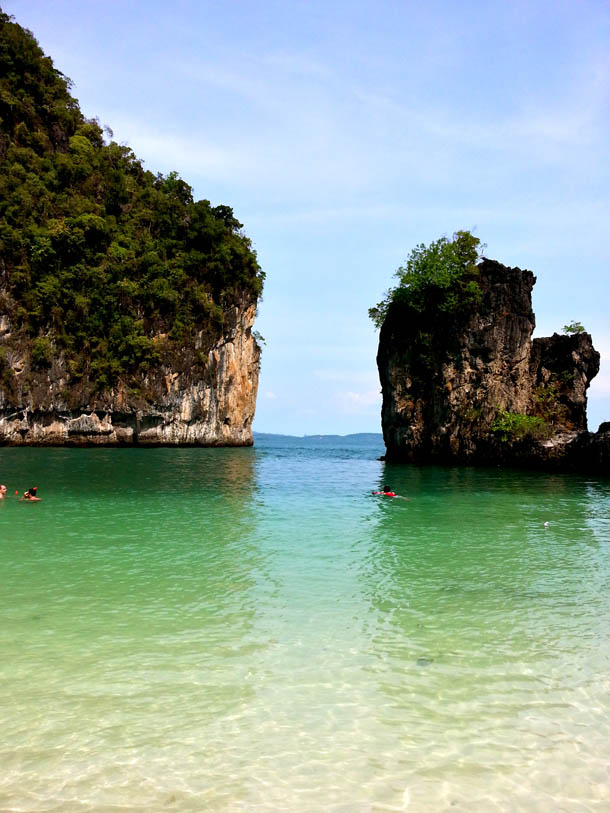


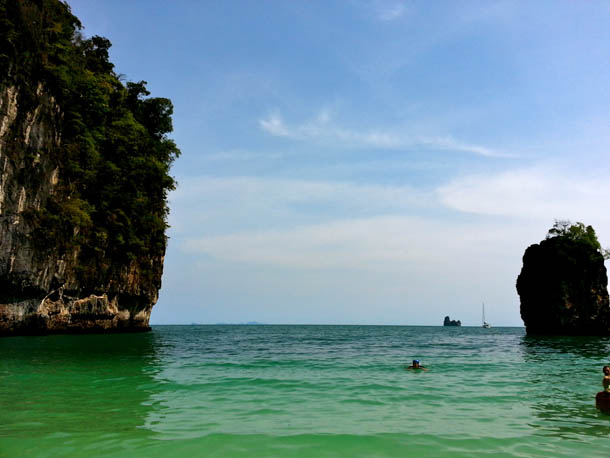
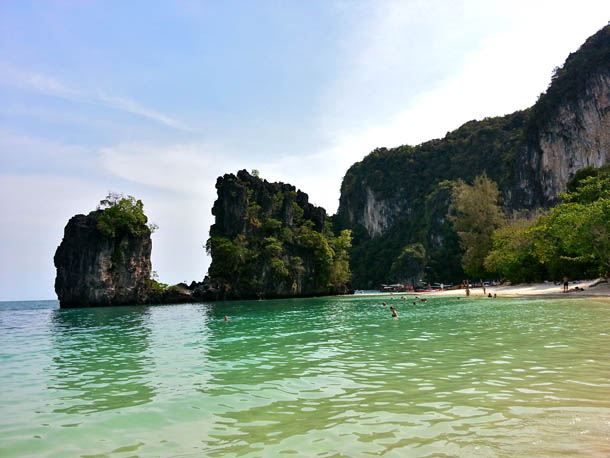

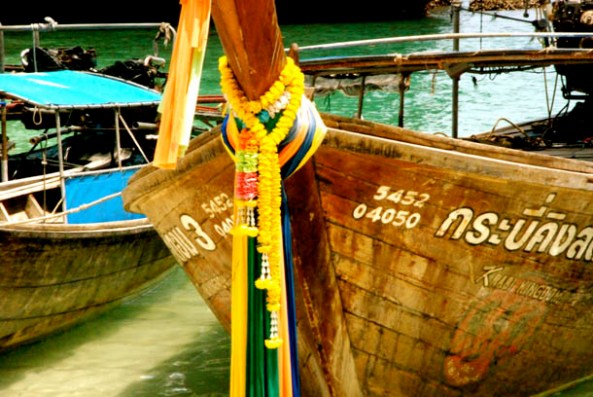

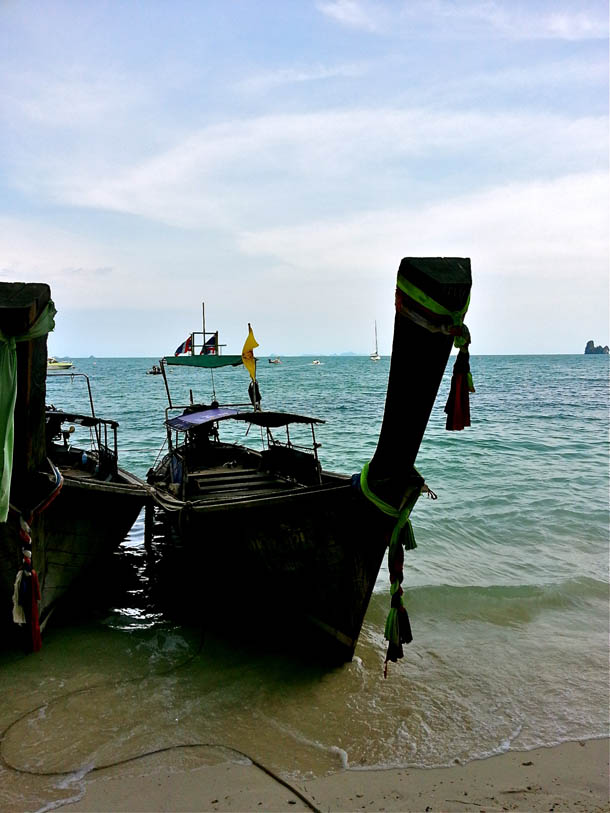
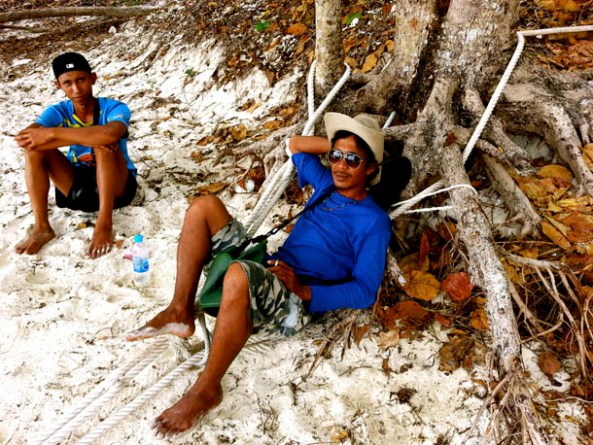

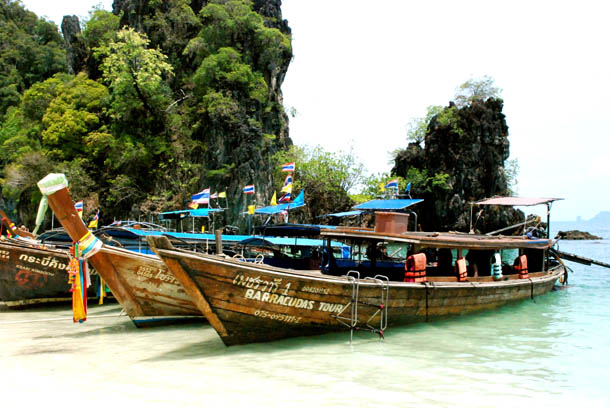
◊—————————————————————◊
 As I was rewinding the day in the resort that we were staying in, I was asking myself whether it was the statistics (one of the top 10 destinations in the world) that made Hong Island so special? Or was it the archaeological formation (a copybook archipelago nurturing an amazing underwater life)? I definitely had witnessed the presence of the Almighty that day in the Island. A feeling beyond my power of expression. I felt that the Creator can only dwell in an island like Hong, where the evidence of life throbbed in the breeze blowing through the leaves, waters washed in colours that lured the fish and the birds chirping through the howling wind. And the sanctity of the island should be maintained by leaving the island to its rightful owner, at the end of the day!
Unblogging it all… Ishita
Disclaimer: The Thailand Academy trip was an invite from the Tourism Authorities of Thailand Middle East and Aviareps Group. However, the opinions stated here are my own and are independent. This was definitely one of my dream destinations. I do hope you enjoy reading the posts with lot of visuals. Please do not use any material from this post. You can see more pictures of my travel and food journey here.
◊—————————————————————◊
My other posts on Thailand:
• Ruen Mai Restaurant In Krabi | A Tantalising First Experience Of Thai Food In Thailand!
• Koh Klang in Krabi, Thailand | A Photo Essay of An Island Life
• Baan Ma-Yhing Restaurant In The Fishermen’s Village | Recipe of Thai Red Curry As We Cook ‘fresh catch’ Baramundi!
• Kotung Restaurant in Krabi Town | A Taste of Thai Chinese• Kayaking, Caves, Krabi Sightseeing… And Finally A Thai Spa!
My other Oriental journeys:
• Singapore At Night
• Eating Out Is A National Pastime | Singapore
• Bikol Express & The Romanticism Of The Mayon Volcano
• Pancit – Palabok, Bihon, Canton | On A Filipino Food Trail
Posts from other members who were in the trip:
• Amazing Thailand – Dubai to Koh Klang – a Krabi experience «coffeecakesandrunning.me»
• Koh Klang Local Village Life «coffeecakesandrunning.me»
• Kayaking & Spa Day in Krabi «coffeecakesandrunning.me»
• 44 Konsonanten, 16 Vokale und ein Lächeln für alle «Escribo»
• Ein Dorf am Meer: Islanda Eco Village Resort, Krabi, Thailand «Escribo»
• Pressereise 2.0: Arbeiten ist immer «Escribo»
• Abseits vom Massentourismus in Thailand, Impressionen aus Krabi von «Reisewerk»
BE SOCIAL. SHARE THIS!


 Taking a slight detour from the previous food posts of my Thailand trip, this is a breather post so that all the Thai food that I had been talking about in my earlier posts can settle down. Permanently, in my senses! It was the last day of our inspiring stay in Koh Klang island, the small fishing village in the Krabi region of South Thailand. After breakfast, we all arrived in Baan Ma-Yhing restaurant, the same floating restaurant where we had our elaborate lunch the previous day. This was also the same restuarant where Debbie, my blogger friend from Dubai who had accompanied me for the Thailand Academy trip, and I had come back for our Thai cooking lessons with Bao, the restaurant cook. Checking out from the eco resort that we had been staying in Koh Klang, our luggage had a different itinerary chalked out than ours – they were to be transferred directly to the beach resort that we would be staying in the Krabi mainland. Our itinerary on the other hand, included kayaking in the Krabi river amongst the mangroves, Krabi sightseeing, a lunch break at Kotung restaurant where we tasted Thai Chinese food and finally a Thai Spa experience!
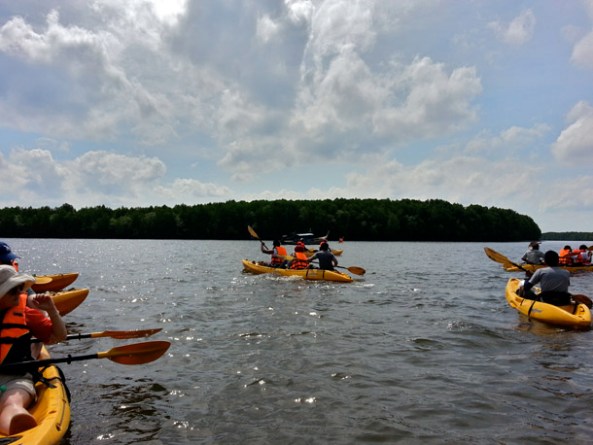 Kayaking amongst the mangroves
Koh Klang is covered with extensive mangrove forests. There are mangrove swamps even within the island, where the local villagers hunt for shellfish. On the previous day, we were given a crash course on shell hunting but I don’t remember learning much as the afternoon heat had become unbearable for me and I had left the group for the comforts of shade and some refrigerated fresh coconut water! The mangroves in this island constitutes an important part in the bio-diversity of the island’s eco system. Learning to co-exist with the mangroves and educating the locals and the tourists how to preserve the mangroves and chalking out activities around them – kayaking, shell fishing etc, therefore forms an important aspect of sustainable tourism here. Kayaking lets you explore the mangroves from close quarters. Poh (below), the lady in charge of organising our Koh Klang itinerary, has been raised in this island. Since childhood, she’s learnt how important these mangroves are – how they have nurtured many birds, animals and acted as a breeding ground for many rare aquatic species. In recent times, many of the birds were getting endangered and fish getting over exploited or dying out due to pollution. She was stressing the need for educating the future generations about the importance of these mangroves. I really liked how her 21 year old son, a Swiss resident, had come back and joined her as she introduced the tourists to the natural charm of Koh Klang. He was also keen to learn about the land where his mother grew up and to know about his own roots, before he went out into the world to work. (What are Mangroves?)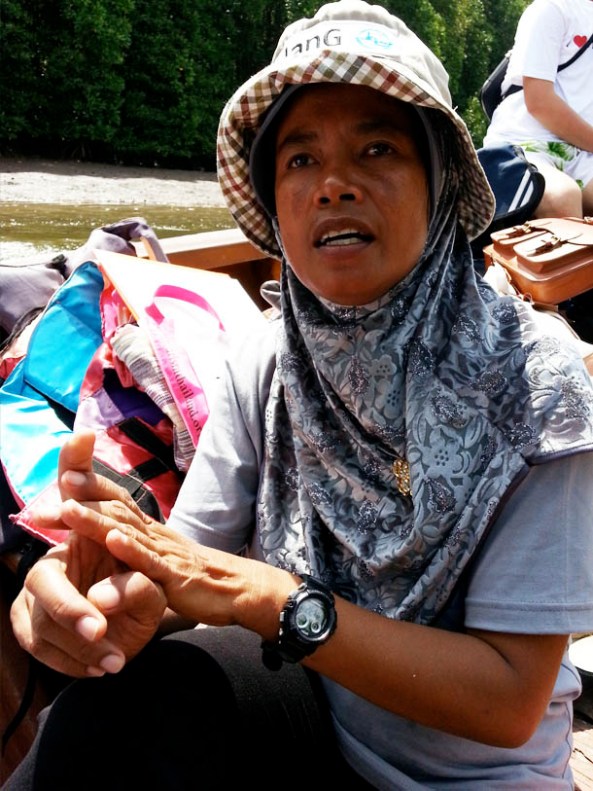 Social Media Travel vs Social Travel
I met Claudia from Switzerland, during this trip. She writes an inspirational blog. Her post sums up sums up the way we bloggers travel – always working! Though she writes in German, the photographs of the bloggers are hilarious – you’ll find them photographing themselves while swimming in the river and perhaps uploading pictures from the boat! See below how Debbie and Ghanim, one of the Emirati students from our Dubai team, are kayaking. They are probably tweeting or instagram-ing! I have talked about this in an earlier post too – we realised during our trip how much of a social traveller we had become. I had to Tweet, Instagram and post on my Facebook Page and although I was travelling without my family, leaving behind the Z-Sisters – I was not travelling alone. I was constantly in touch with my readers and friends through LIVE interaction over social media. Social Media Travel was perhaps the new phenomenon in travelling, as opposed to the other trending phenomenon – Social Travel. The latter is personified through the super amazing travel series on television, of the two Emirati brothers in the Peeta Planet. I love these two guys. They are dare devils and hilarious and are trying out things that no one has done before – to see the world in the way their followers want them to see. Although my travel decisions might not be dependent on those who are following me on social media, I have been sharing my stories and taking many cues from suggestions left behind by them. I started blogging in the first case, because I wanted to share my stories. While previously I could share my travel and culinary stories only when I blogged about them, now I share them LIVE over social media and write my blogposts in detail much later. So if you find me dipping my camera into the water to take pics of the fish nibbling my feet and instagram-ing it before I relax, well – that’s me – the Social Media traveller.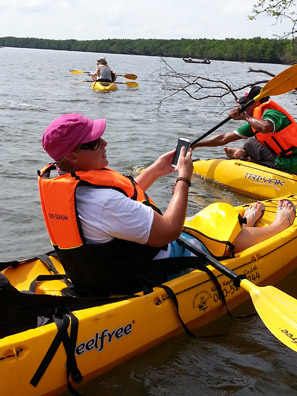
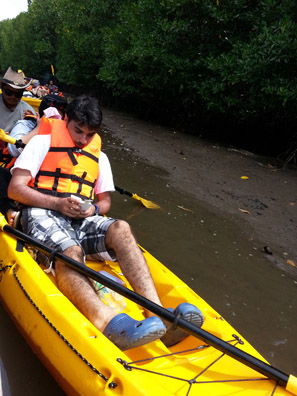 Island life is controlled by the tides
Situated on the Andaman Sea, Koh Klang is covered by thousands of acres of mangrove forest. Koh means island, Klang means middle and Koh Klang is situated in the middle, just at the mouth of the Krabi river as it opens up into the Andaman Seas. Koh Klang can only be reached from the Krabi town by crossing the Krabi river in long tail boats. The landscape along the banks change with the tides – the long tail boats stand stranded in the muddy swamp during the low tide and wait for the high tide to return. The sea being the primary resource here, these long tail boats are worshiped and bright flower garlands wrap the helms with love and respect. The Krabi river is flanked by fishermen’s villages with delicately constructed houses floating on the water with the help of indigenous floaters – tyres and wooden planks, asbestos sheets and plastic jerry cans. Each house fabricated into a work of Installation Art!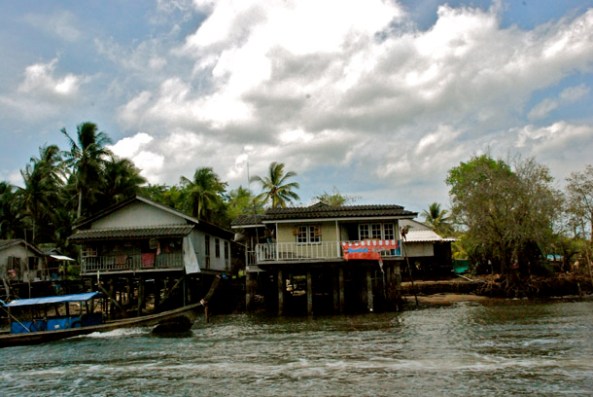
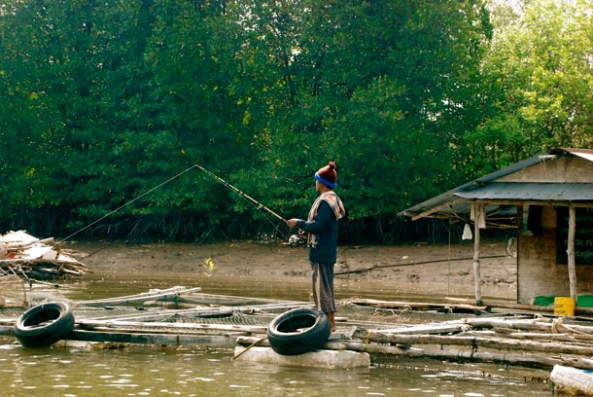
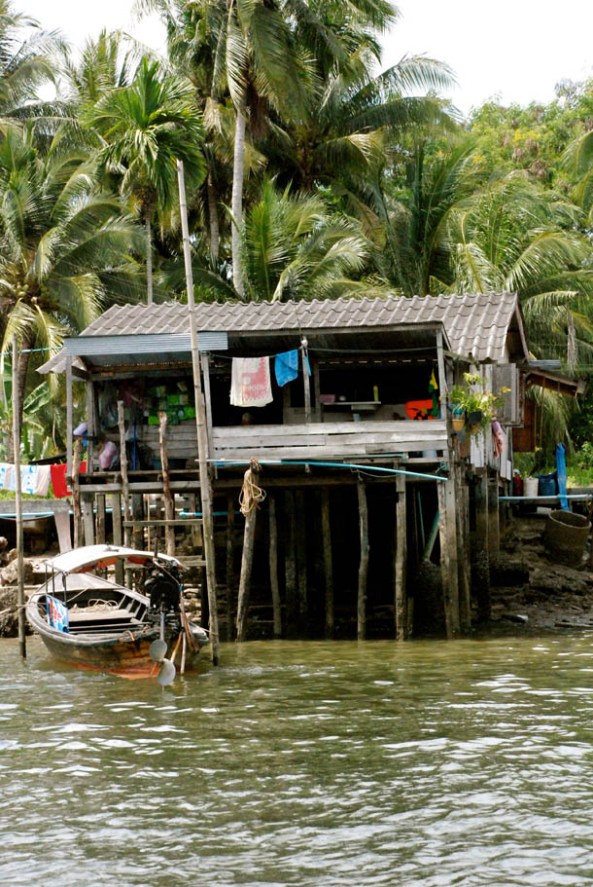
◊—————————————————————◊
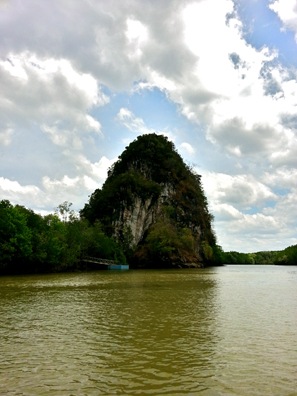
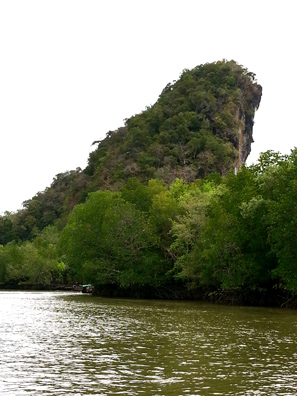
Krabi sightseeing… Khao Khanap Nam
Looming out of the Krabi river, the Khao Khanap Nam are two limestone massifs (above), roughly 100 meters high. These two massifs flank the Krabi River which runs between them and are synonymous with Krabi and forms the town’s most prominent landmark. lnside the Khao Khanap Nam, there are magnificent caves with stalactites and stalagmites. After kayaking we sailed in our long tail boats to these caves. In fact, the only way to get to the Khao Khanap Nam is by chartering a long tail boat from the Chao Fah Pak Pier in Krabi town. As we approached the massifs, the chirping of birds and humming of crickets resonated through the air and magnified itself many-fold. The 100m high massif gradually seemed to grow in size and began to loom in front of us like a gigantic rocks searing into the sky above. (About stalactites and stalagmites)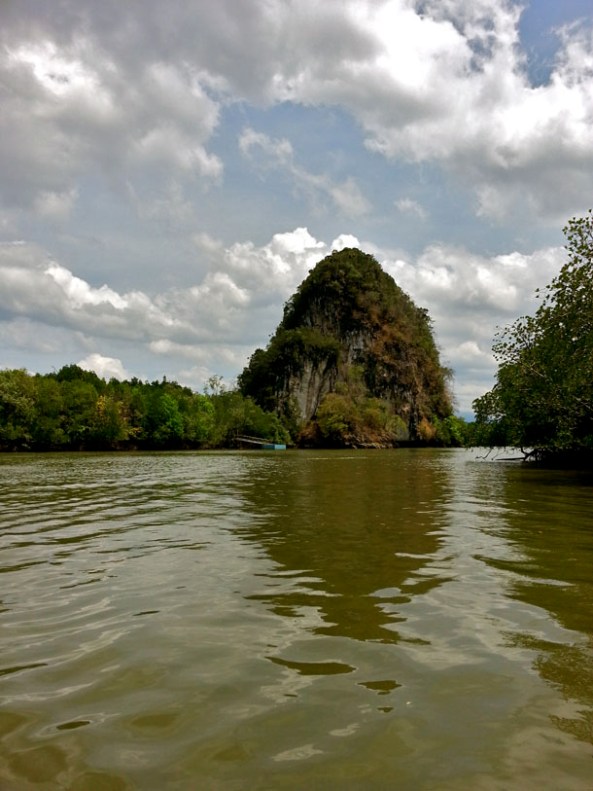
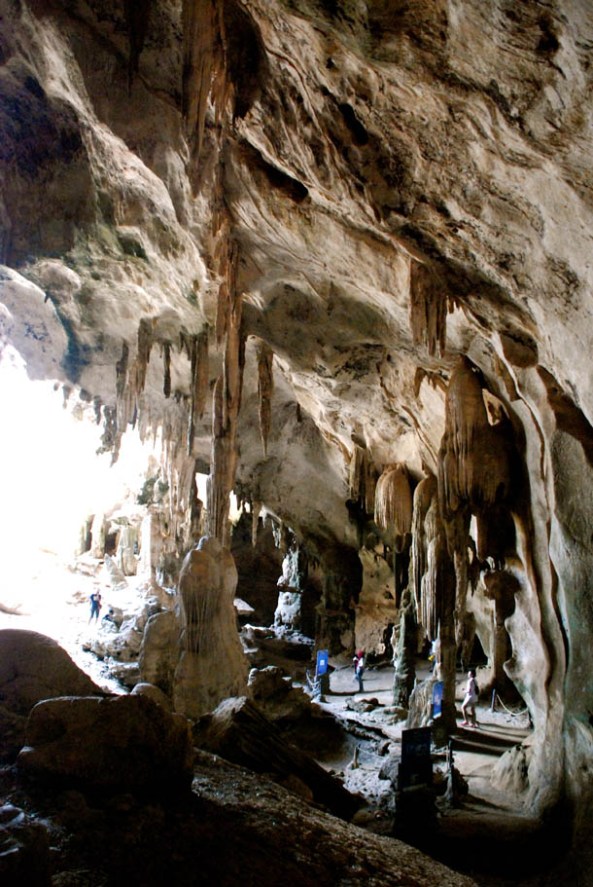
Seeking spirituality inside the caves
Staircases (below) led up to the caves and we entering into momentary darkness. As the eyes got slowly accustomed to the darkness, the limestone formations – dripping down as stalactites or breaking through the ground as stalagmites was baffling. This was was a spiritual site – years and years of history and stories of human evolution hidden in the rocks. Bats hung from the ceilings while our own breathing echoes in the corners. A large number of human skeletons were also discovered inside these caves who might have been people who were either trapped when cut off by the water, or who were once living in the caves and perished in an ancient flood. From the information written there, I gathered that these caves were discovered by Dr Douglas D. Anderson and probably served as dwellings of ancient men from many eras. Evidence in the form of human skeletons, stone tools, fragments of pottery suggest that prehistoric men dwelt in these caves, specially the Mohkiao cave in Naching village, and could be as old as 27,000 – 43,000 years, probably one of the oldest prehistoric finds in South East Asia!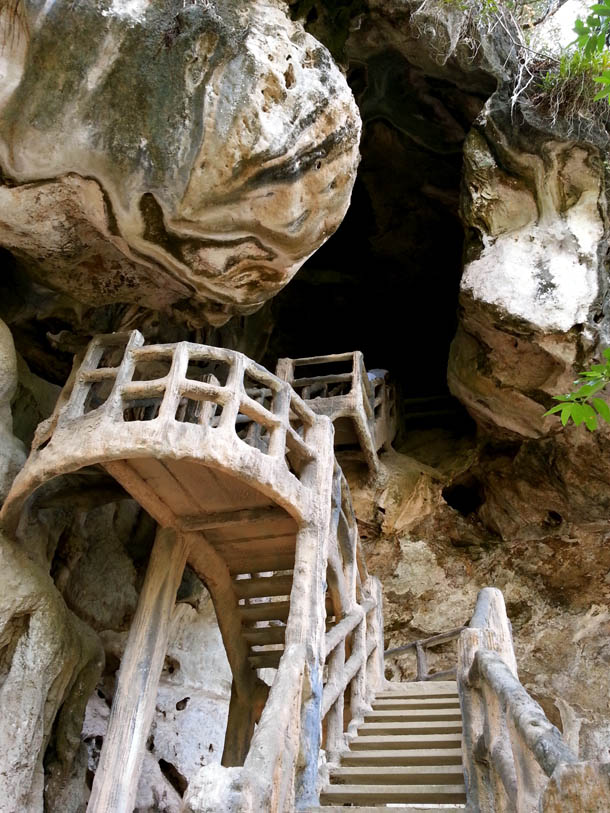
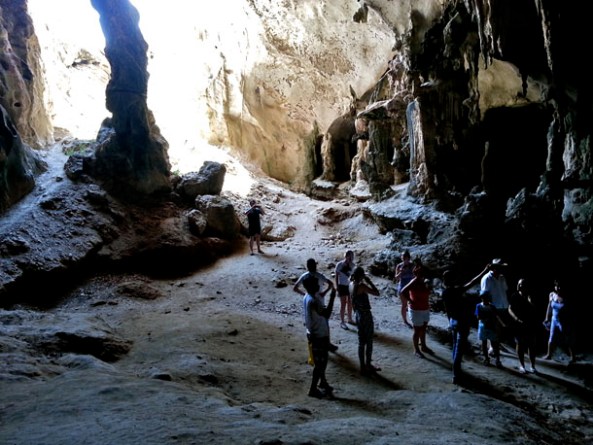
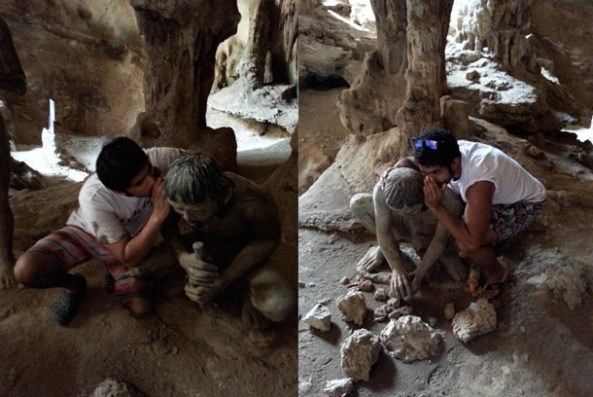
The Emirati students from the Dubai team break the seriousness of the prehistoric men and skeletons, hanging bats with their mischief (above). That is what I would describe as inter-era communication – between the prehistoric era to the modern era! Later, we headed to the Krabi town for our lunch at the Kotung restaurant. After experiencing ‘island living’ and learning about the village life for the previous few days, this was a town experience after a long time. 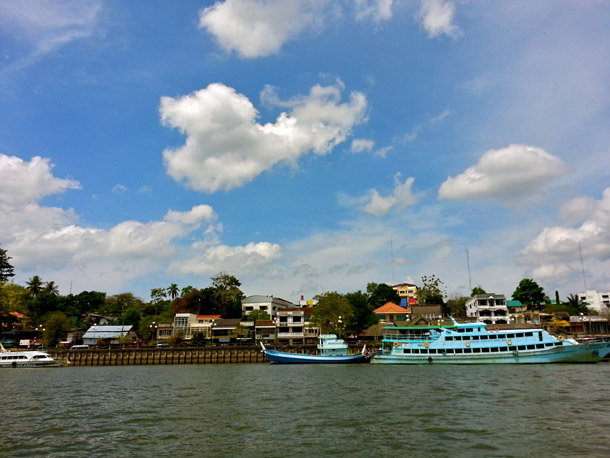
◊—————————————————————◊
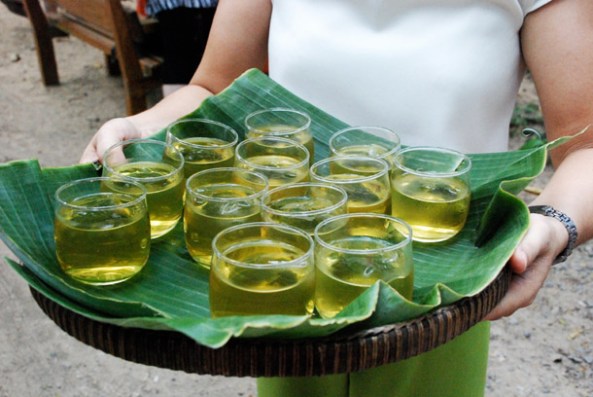
Traveling opens up the boundaries of the mind. As we see new places and meet people from different culture and country, we are education our minds and broadening our horizons. New culinary experiences stimulate the taste buds. Even the welcome drinks that we were served at various places seemed intriguing and novel. I came across many such drinks made from Hibiscus drinks, Lemongrass, Tamarind, wild flowers. At Waree Raksa, where we took a mini relaxing spa break, I came across another such drink – cold wild flower tea. Located in lush tropical landscape of over 10 acre, with open pools which are bathed by natural hot spring waters, fruits are grown in organic gardens and fruit orchards in the compound itself. Another fruit that I really fell in love with – more because of the look is Dragon fruit (below). Resembling more like a flower and less of a dragon, I wonder why the fruit is called a dragon fruit! Is there any particular food or drink that you have come across while travelling, that has become a part of your kitchen? Look forward to hearing from you.
Unblogging it all… Ishita
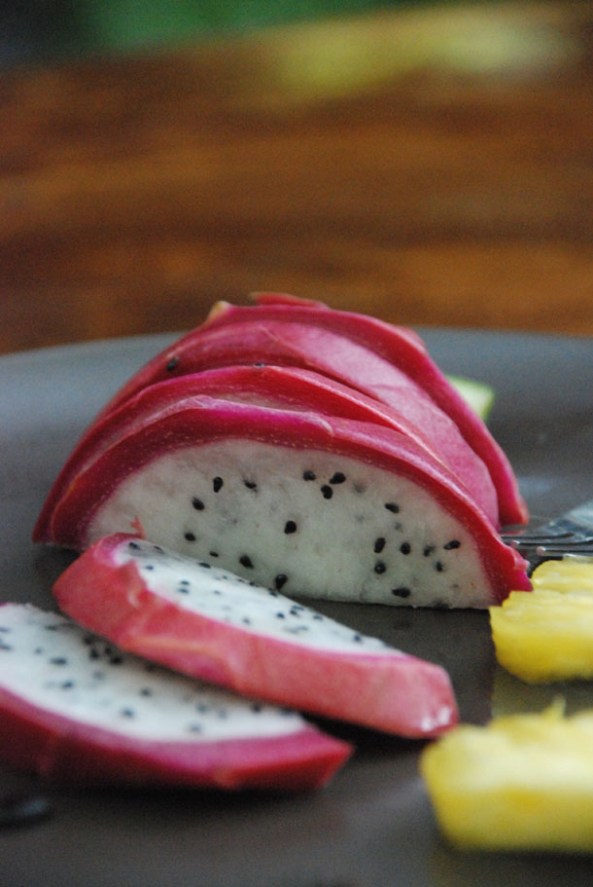
Disclaimer: The Thailand Academy trip was an invite from the Tourism Authorities of Thailand Middle East and Aviareps Group. However, the opinions stated here are my own and are independent. I do hope you enjoy reading the posts with lot of visuals. Please do not use any material from this post. You can see more pictures of my travel and food journey here.
◊—————————————————————◊
My other posts on Thailand:
• Ruen Mai Restaurant In Krabi | A Tantalising First Experience Of Thai Food In Thailand!
• Koh Klang in Krabi, Thailand | A Photo Essay of An Island Life
• Baan Ma-Yhing Restaurant In The Fishermen’s Village | Recipe of Thai Red Curry As We Cook ‘fresh catch’ Baramundi!
• Kotung Restaurant in Krabi Town | A Taste of Thai Chinese
My other Oriental journeys:
• Singapore At Night
• Eating Out Is A National Pastime | Singapore
• Bikol Express & The Romanticism Of The Mayon Volcano
• Pancit – Palabok, Bihon, Canton | On A Filipino Food Trail
Posts from other members who were in the trip:
• Amazing Thailand – Dubai to Koh Klang – a Krabi experience «coffeecakesandrunning.me»
• Koh Klang Local Village Life «coffeecakesandrunning.me»
• Kayaking & Spa Day in Krabi «coffeecakesandrunning.me»
• 44 Konsonanten, 16 Vokale und ein Lächeln für alle «Escribo»
• Ein Dorf am Meer: Islanda Eco Village Resort, Krabi, Thailand «Escribo»
• Pressereise 2.0: Arbeiten ist immer «Escribo»
• Abseits vom Massentourismus in Thailand, Impressionen aus Krabi von «Reisewerk»
BE SOCIAL. SHARE THIS!

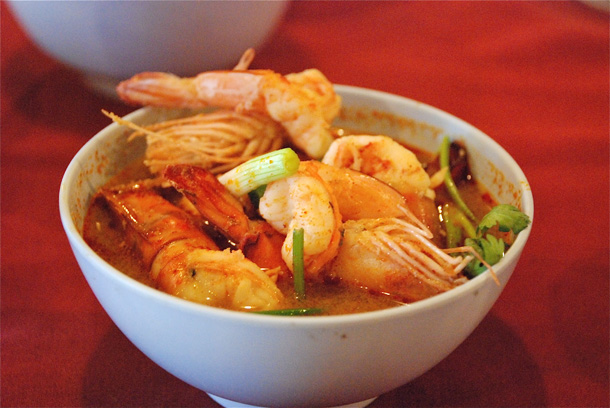
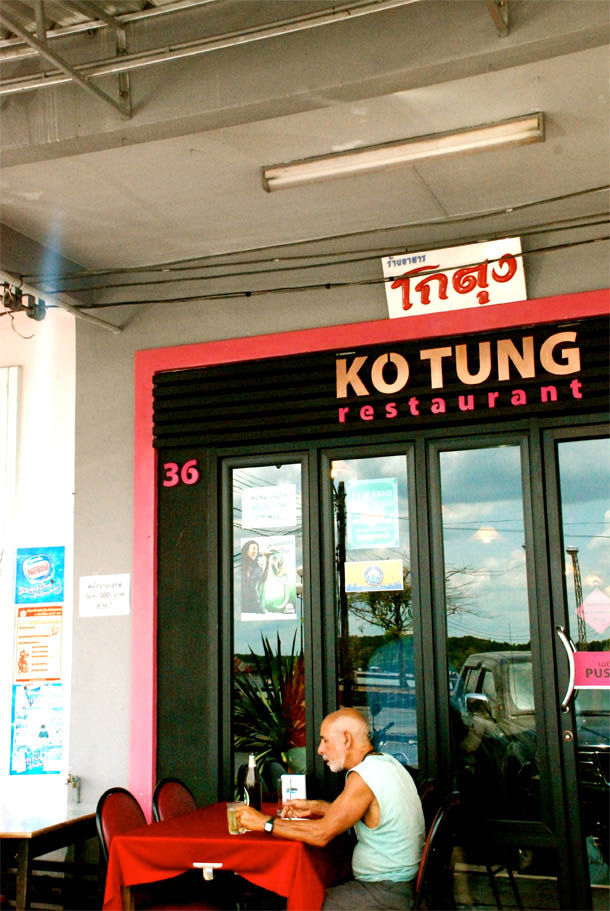
I have been writing on my Thailand trip for a while in my earlier posts. But I had to take a momentary detour to fill you up with what I had been upto, back home in Dubai. However, I’ve taken the stance to finish all my Thailand posts, rounding it off with a great great giveaway – am not going to divulge any further on this, lest I spoil the surprise. For those who are new to the blog, I had been part of a Dubai team who had descended on a small fishing island called Koh Klang, situated in the Krabi region of South Thailand. {The earlier posts had been Ruen Mai Restaurant In Krabi | A Tantalising First Experience Of Thai Food In Thailand!, Koh Klang in Krabi, Thailand | A Photo Essay of An Island Life, Baan Ma-Yhing Restaurant In The Fishermen’s Village | Recipe of Thai Red Curry As We Cook ‘fresh catch’ Baramundi!}
After experiencing ‘island living’ and learning about the village life, this was a town experience after a long time. And we entered a propah restaurant. Kotung restaurant is located just in front of Chao Fah Park Pier in Krabi town – very easy to locate. This was my first experience of Thai Chinese food. So long we had been eating very traditional South Thai cuisine – both in the Ruen Mai restaurant as well as in Baan Ma-Yhing restaurant, the floating restaurant in the fishermen’s village. The food was not drastically different from the Southern Thai food we had been eating earlier, but some dishes like the Chicken Cashew Nut was more like the Chinese food that we are used to eating.
The Thai way of eating – all together, at the same time!
By this time I had already learnt a few characteristics of the food and eating culture of the Thai people. Whether a restaurant is small or big, all food is served at the same time to all tables. Ideally, there’s no concept of Starters or Main course. The cooking starts once the guests pour into the restaurant so that food can be served freshly cooked. But not necessarily hot. This is because they’ll cook everything and serve only when the last dish has been cooked. Also, the Thai people like to mix their food while they eat. So, soup gets mixed up with starters and slurped into the mouth along with some noodles. I had asked my co-diners, specially the locals who were sitting at thae same table as me, whether it is a usual thing to cook so many items for regular meals at home. It seems like the food that we had been eating in the restaurants was not drastically different from what the Thai people ate at home. The more dishes on the table, the better they like it. And the number of dishes is proportional to the number of family members.
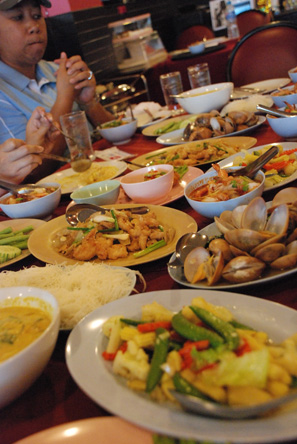
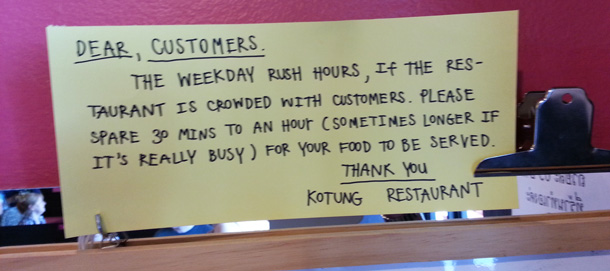
What is Thai Chinese?
The regional difference in Thai cooking has arisen from the difference in the cultural and the geographical attributes of the country. While the basic Thai cuisine could be broadly classified into four regional cuisines corresponding to the four main regions of the country, there was a lot of influence from the cuisine of the countries neighbouring the different regions. Many popular Thai dishes had its origin in Chinese cuisine. Dishes like Chok or rice porridge, Kuai-tiao rat na or fried rice-noodles and Khao kha mu or stewed pork with rice were introduced to Thailand mainly by the Teochew people who make up for the majority of the Thai Chinese. The technique of deep-frying and stir-frying, use of noodles, oyster sauce and soybean products in Thai dishes can also be attributed to the Chinese influence. The first visible Chinese influence in Kotung restaurant comes in the form a Chilli sauce (below) – red and green chilli pieces dipped in vinegar – a common sight in popular Chinese restaurants worldwide.
How different is Southern Thai food?
In the southern way of Thai cooking (as we learnt from our cooking class) there is a lot of usage of Turmeric. In fact, while making the Thai red curry, we were also grinding whole Turmeric or Kamin along with red chillies, thereby diluting the red colour of the Thai red curry. In Southern Thai curries, there is a prevalence of coconut milk and fresh turmeric in most dishes, as compared to other regions in thailand. In general, the classification of Thai cuisine can be explained as below.
The four different classification was – Northern, Northeastern (or Isan), Central and Southern, each cuisine sharing similar foods or foods derived from those of neighboring countries and regions: Burma to the northwest, the Chinese province of Yunnan and Laos to the north, Vietnam and Cambodia to the east and Malaysia to the south of Thailand. In addition to these four regional cuisines, there is also the Thai Royal Cuisine which can trace its history back to the cosmopolitan palace cuisine of the Ayutthaya kingdom (1351–1767 CE). Its refinement, cooking techniques and use of ingredients were of great influence to the cuisine of the Central Thai plains.Western influences from the 17th century CE onwards have also led to dishes such as foi thong and sangkhaya. (More on Thai Cuisine)
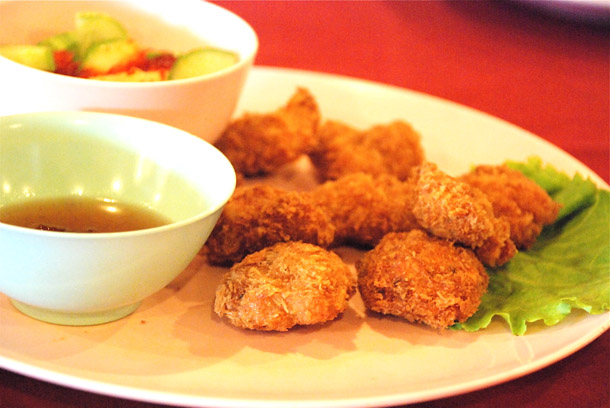
Thai Chinese food at Kotung
We started with the Tod Man Kung or the Prawn Fish Cakes (above). I forgot to ask whether the cakes had both prawns and fish because of the peculiarity in its name. For the first time in Thailand, we tasted the Tom Yum Kung soup. I had been expecting the Tom Yum from the day we had arrived, as this is perhaps the most popular Thai soup and the only soup we easily associate with Thai food. I found the original Tom Yum much sweeter than the versions that I had eaten before. In South Thailand, seafood reigns over Chicken and other meat dishes. We had barely ever eaten Duck or Lamb while we were in the South.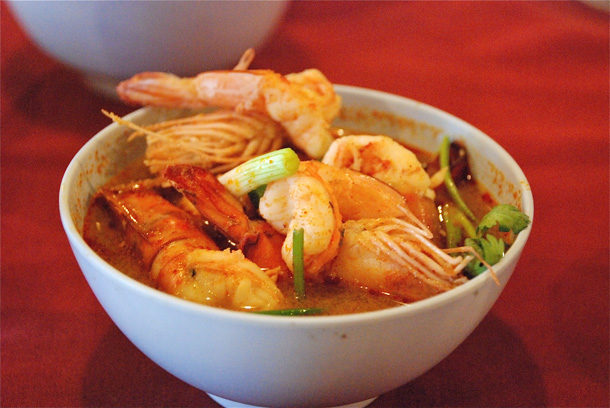
The Tom Yum soup originates in Krabi
Interestingly, I was told that the Tom Yum (originates) originates from the region of Krabi. The word Tom Yum is derived from the two words – tom and yam. While the former refers to the boiling process, yam means ‘mixing’ and refers to the sour and spicy Thai salad {here}, also popular in Laos. The Tom Yum soup is the unique hot and sour soup with a fragrant broth, the fragrance resulting from the use of ingredients like Lemongrass, Kaffir lime leaves, Galangal, lime juice, fish sauce and crushed chili peppers. The surname lagging behind the Tom Yum depends upon the other *protein* ingredients that go into the soup. Tom yum goong or Tom yam kung has prawns; Tom yam pla is a clear fish soup; Tom yum thale has mixed seafood, like prawns, squid, clams and pieces of fish; Tom yam nam khon has prawns, milk or coconut milk; Tom kha gai has chicken and Galangal (ginger) as the dominant flavour in this coconut milk-based soup; Tom yam kung maphrao on nam khon is another version with prawn and meat of young coconut in a coconut milk broth; Tom yam kha mu has pork knuckles. Modern additions to the Tom Yum are straw mushrooms and oyster mushrooms, freshly chopped coriander leaves. Packaged DIY Tom Yum packs flood the supermarket shelves and groceries in Thailand. In fact while coming back I had picked a whole lot of them from Bangkok.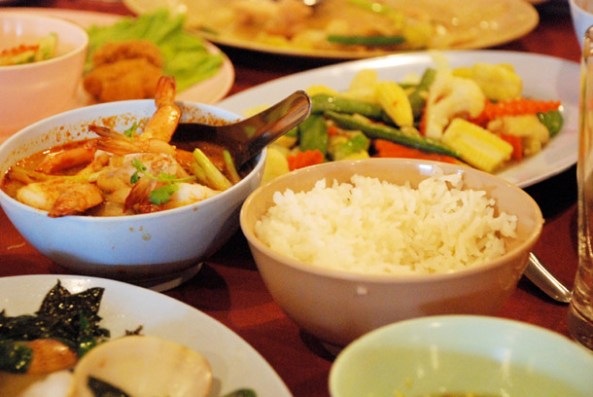
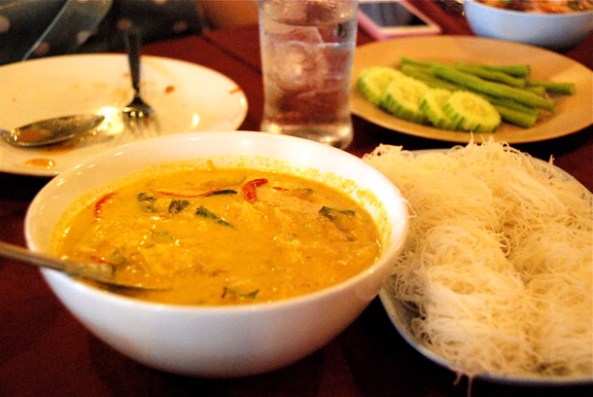
Kaeng Ka-ree Poo Pad Pong or the Crab Meat in yellow curry soup was a new dish for me. Chunky pieces of crab meat dunked in a very thick coconut milk broth. This was served with thin vermicelli noodles that resembled Srilankan string hoppers. 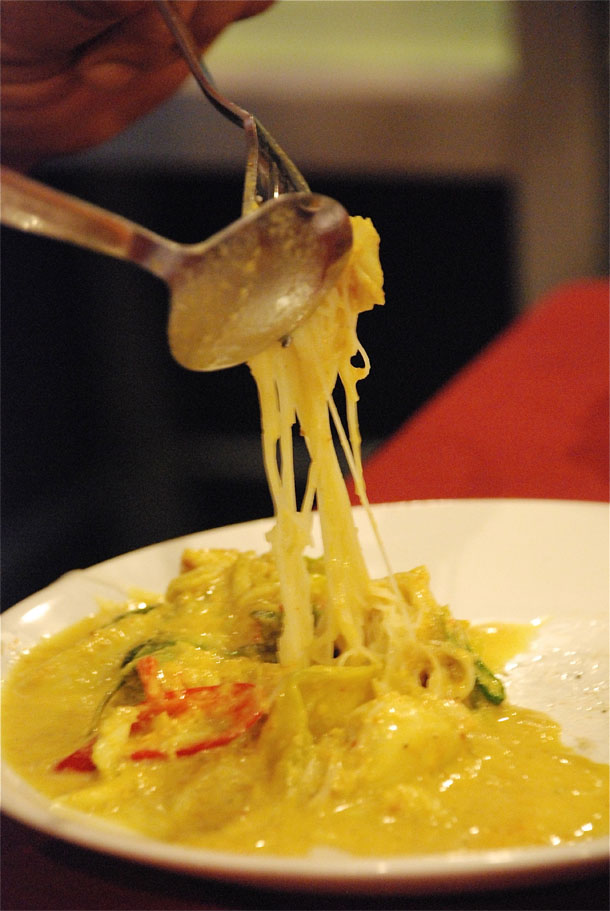
Finally Chinese
Kai Pad Med Mamaung Himmapan or the stir fried Chicken Cashew Nut had a very familiar taste – I’ve tasted this dish in many Chinese restaurants before. Soon I realised that this was a fairly popular dish and was quite easy to make. Eaten with steamed white Jasmine rice, here the chicken was simply stir fried with vegetables and seasoned with cashew nuts. A few days of reading menus in the different Thai restaurants and I had actually begun to understand the logic behind the break down of the names of the dish. Here, Kai or Gai was chicken, Pad meant fried, Med meant seeds and Med Mamuang Himmapan meant our simple cashew nuts!
I had begun to expect this dish in every meal
Almost every meal in our Thailand trip had a dish with clams or shells. In the floating restaurant in Koh Klang earlier, I had fallen in love with the Clam soup with Lemongrass or the Hoi Talab Lai Tom Takrai. It was a very light clear broth with the clams boiled in. The strong flavour of ginger and lemongrass seemed very comforting. Here, in Kotung restaurant, rather than the lemongrass, Basil was a dominant flavour in the Clam soup – the Hoy Lai Pad Horapu. The sweetness of basil was strong and nice, even though it overpowered the stir fried clams.
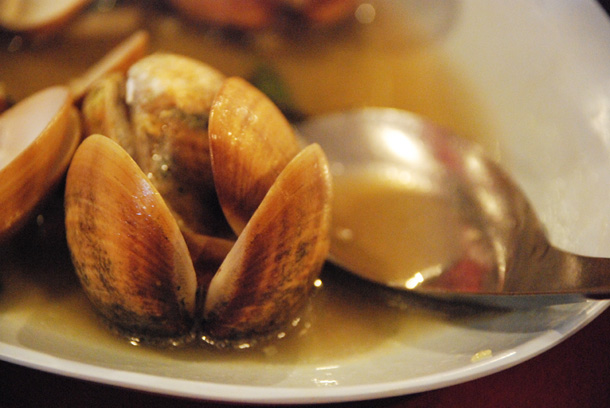
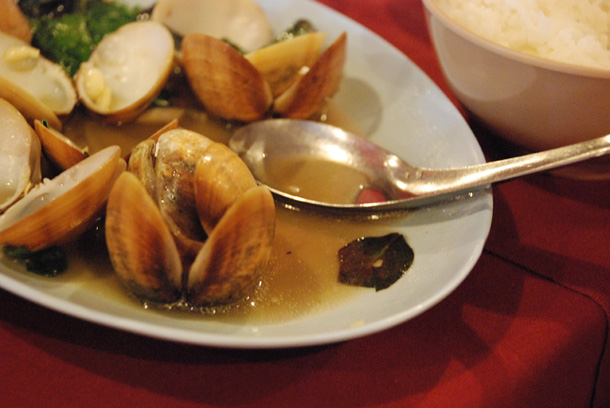
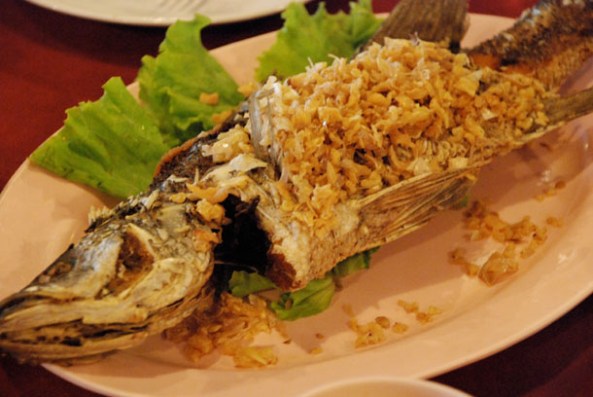
I have even become an expert in cooking whole fish, post Thailand trip
I was getting used to the Pla Krapong or the deep fried Grouper in garlic – almost like the Clam soup. Whole fish, either deep fried and then served with Thai red curry sauce, or steamed served with Chilli sauce, was definitely going to be there in each of our meals. Earlier, I had tasted the Pla Kao Rad Prik or the Grouper topped with Chilli, a variation of which I had learnt to cook in the floating restaurant where fish were caught fresh infront of us before they were plopped into the pan. Another dish that was served to us was the Pla Krapong Nung Manao or the Snapper steamed with Lemon. This dish looks plain – only a steamed whole fish but the sauce which is made with chopped green and red chillies, makes the taste buds go ballistic. I have even cooked a 3 kg whole fish in the Thai red curry version after coming back to Dubai. While we were getting a taste of many new Thai dishes, I also realised that to cover all was quite a daunting task, specially if one goes by this long list.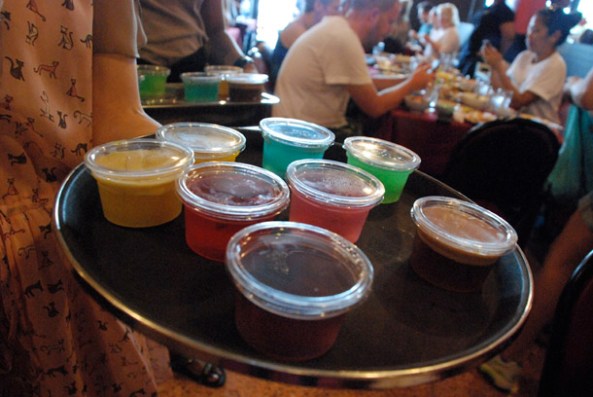
Desserts in the form of colourful jellies
Finally, I tasted some desserts. So long, our desserts had consisted of fresh fruits – mouthwatering and tasty – no complaints about that. In fact, most Thai meals finish with fresh fruits and why not? When the land is abundant with fruits as tasty as these. These are Woon or colourful fruit jellies with a topping of coconut pudding – the different colours coming from the different flavourings like jack fruit, raspberry, grapes, lokboe, longan, dragon fruit and many more. I am slightly confused as to whether I like the taste or not. Honestly, in dearth of any other dessert tasting in Koh Klang, these fruit jellied did give a quick mini sugar fix for my Bengali tummy for a while. I found assorted fruit jellies like these being sold in abundance in local supermarkets too.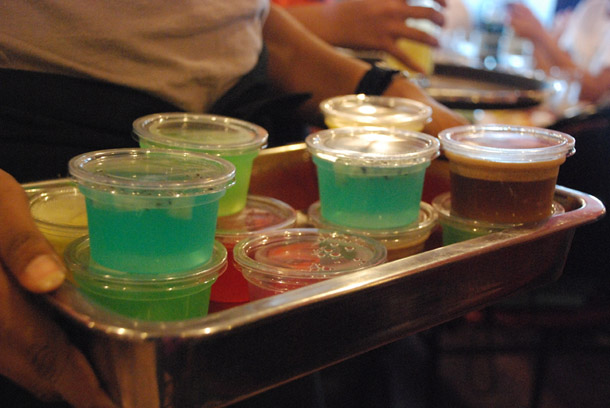
◊—————————————————————◊
Kotung Restaurant
Thai-Chinese; Seafood Restaurant (cash only)
Location: 36 Khongkha Rd, Paknam, Muang, Krabi, Thailand 81000 (exactly in front of Chao Fah Park Pier in Krabi town)
Tel No: +6675611522 , +66800860808; Email: Kotung.Restaurant@gmail.com
For more info: Facebook
◊—————————————————————◊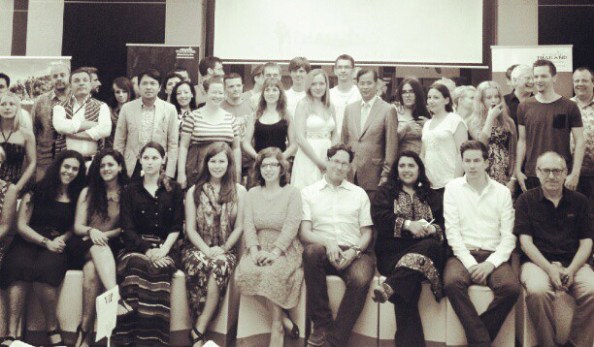
One of the above is me – probably framed in the B/W hall of fame in the Thailand Academy trip. Debbie, a fellow Fooderati blogger, who till now had just been an accompanying hashtag on Twitter (#FoodieOnTour) and soon became more of a buddy. She writes everything that we did on the day we visited Kotung (we did a lot more than just eat as I would have you believing – kayaking, visiting caves and a Spa, plus some more). Thanks to Rung from the Tourism Authorities in Thailand, who I would pester continuously to write down the Thai name of the dishes that we were eating. Do stay with me as I write the remaining part of my amazing Thailand experiences. A fabulous giveaway will be coming up soon in the last post!
Unblogging it all… Ishita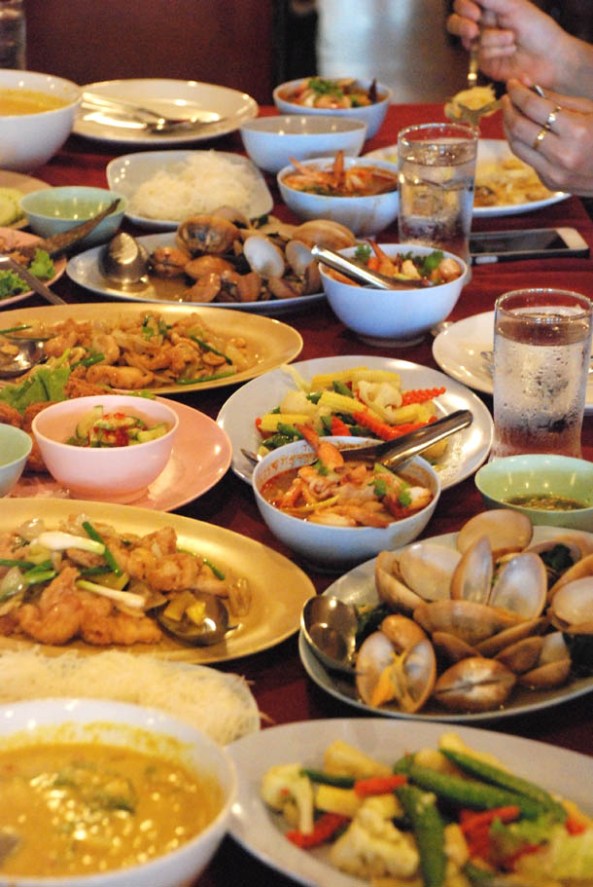
Disclaimer: The Thailand Academy trip was an invite from the Tourism Authorities of Thailand Middle East and Aviareps Group. However, the opinions stated here are my own and are independent. I do hope you enjoy reading the posts with lot of visuals. Please do not use any material from this post. You can see more pictures of my travel and food journey here.
◊—————————————————————◊
My other posts on Thailand:
- Ruen Mai Restaurant In Krabi | A Tantalising First Experience Of Thai Food In Thailand!
- Koh Klang in Krabi, Thailand | A Photo Essay of An Island Life
- Baan Ma-Yhing Restaurant In The Fishermen’s Village | Recipe of Thai Red Curry As We Cook ‘fresh catch’ Baramundi!
My other Oriental journeys:
- Singapore At Night
- Eating Out Is A National Pastime | Singapore
- Bikol Express & The Romanticism Of The Mayon Volcano
- Pancit – Palabok, Bihon, Canton | On A Filipino Food Trail
Posts from other members who were in the trip:
- Amazing Thailand – Dubai to Koh Klang – a Krabi experience «coffeecakesandrunning.me»
- Koh Klang Local Village Life «coffeecakesandrunning.me»
- Kayaking & Spa Day in Krabi «coffeecakesandrunning.me»
- 44 Konsonanten, 16 Vokale und ein Lächeln für alle, «Escribo»
- Abseits vom Massentourismus in Thailand, Impressionen aus Krabi von «Reisewerk»
BE SOCIAL. SHARE THIS!


My Mum has just arrived from Kolkata today. And if you think that the next few days of our kitchen lives will be spent smelling Mustard Oil and cooking Bengali food – absolutely not. On the contrary, I’ll be looking out for non-Bengali or non-Indian recipes from all my cookbooks. The good thing about this? I’ll probably be handling a lot of cookbooks that otherwise remain stacked on my bookshelves like showpieces! She needs a Chutney everyday after her meal (a Bengali after all) but she wouldn’t like a Bengali Chutney. Don’t get my Mama wrong – she loves Bengali food but she gets tired of cooking and eating it in Kolkata – as she describes it – diner por din/day in and day out. What do I do? Research, obviously! I had heard a lot about the nutritional benefits of Figs and had been wanting to do a bit of study on them. But it was during our stay in the Six Senses Zighy Bay resort that we got initiated to Figs in a royal way. It was only fair that I wrote about a dish that used Figs in a royal way too! And that comes in the form of a rich Chutney, the recipe of which belongs to Masterchef Sanjeev Kapoor. Anjeer Ki Chutney or the Fig Chutney is rich and spicy, creamy and has the unique texture that only Figs can impart. My only regret – I didn’t come across this Chutney before meeting the Masterchef himself. It would have given me some excuse to prolong our chit chat with another serving of this delicious Chutney.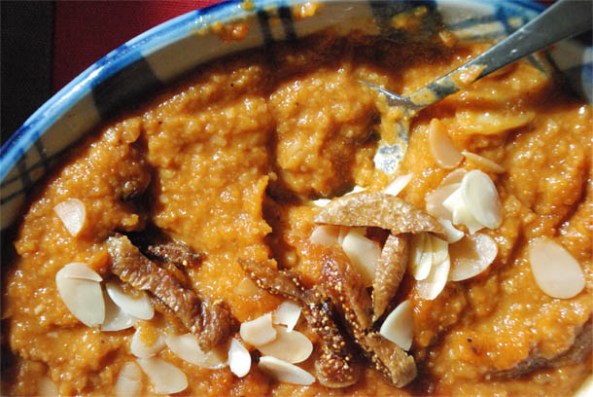

Introduction to Figs in Six Senses Zighy Bay
Most of the Six Senses resorts are located in remote places and they blend into the surroundings. The plants and the trees in the resort compound are also of indigenous origin – Dates (1,066 Female trees and 14 Male trees within resort, precisely!), Figs (430), Lime (90), Sidr (340 in the Zighy Bay area) etc. Six Senses Zighy Bay adopts Ecotourism in a subtly luxurious way. And introduced us to these awesome gift from Mother Nature – Figs!
Different fruits growing in the resort yield organic production throughout the year. The Figs in the resort compound grow from November to May. Figs and Dates go into the making of home made jams (below), desserts, reductions and Spa treatments. We were served a wide array of home-made jams and compotes for breakfast. While some of the combinations are interesting – Apricot and Basil, Tomato and Vanilla, the specialities are of course the Fig jam and Honey made from local Dibba Dates.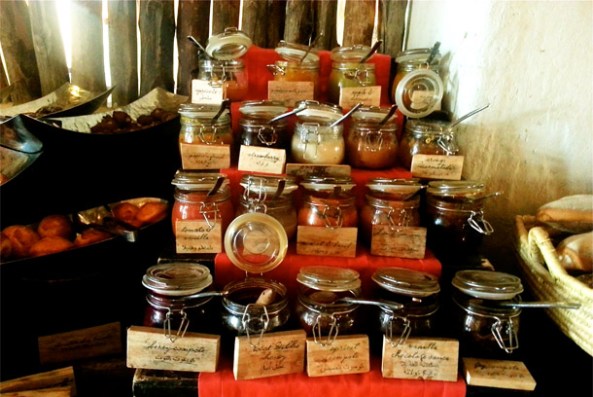
Nutritional Benefits of eating Figs
Taking 1 page from the 11 page document – Trees in Six Senses Zighy Bay…
– The rich potassium content of figs helps to maintain the blood pressure of the body
– Figs are rich in dietary fiber, which make them very effective for weight management programmes
– Even the leaves of the fig plant have healing properties! Eating fig leaves helps diabetic patients reduce their amount of insulin intake
– Consuming figs helps to reduce the risk of breast cancer
– Calcium and potassium present in figs prevent bone thinning and help to promote bone density
– Tryptophan, present in figs, induces good sleep and helps get rid of sleeping disorders like insomnia
– Eating figs relieves fatigue and boosts memory power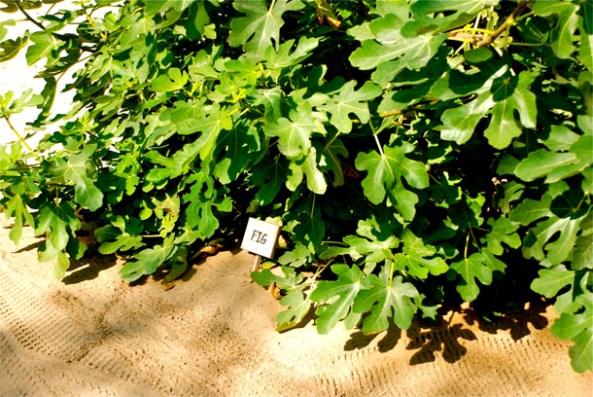
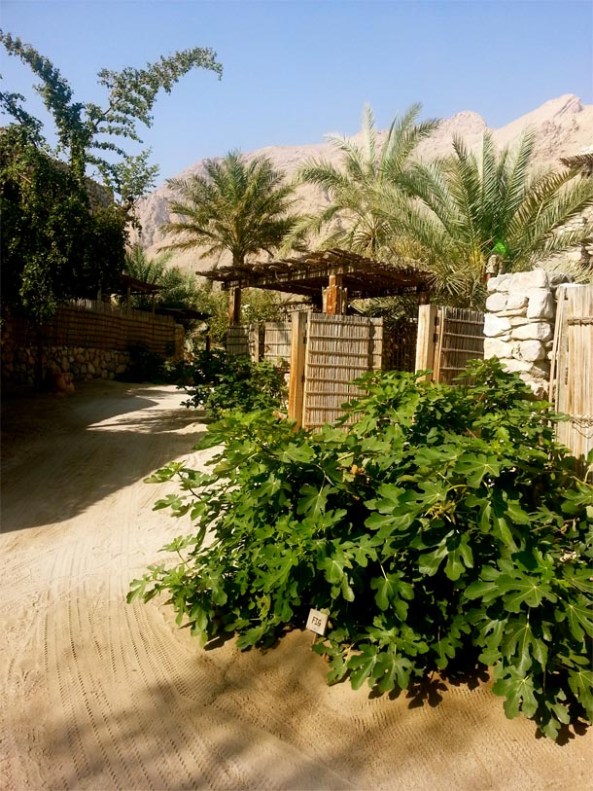
◊—————————————————————◊
Anjeer Ki Chutney/Fig Chutney
Category – Chutneys; Cuisine type – Indian/North Indian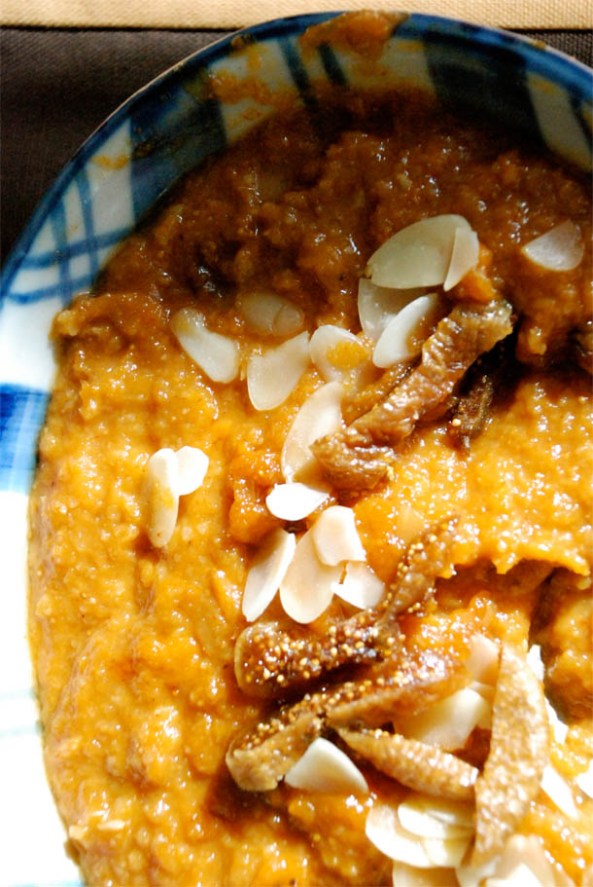
The Chutney is very easy to make and tastes absolutely divine. The fact that the main ingredient that goes into making this dish are Figs, which are full of nutritional benefits, make the dish more appealing.
For the printable recipe →
Cooking Time: 20-25 minutes; Preparation time: 5-10 minutes
Ingredients
Anjeer/Figs – 500gms
Almonds – 15-20 pieces
Oil – 3tbsp
Garlic – 4-5 cloves, chopped
Onions – 2 medium, chopped
Malt Vinegar – 2 tbsp
Red Chilli Powder – 1tsp
Salt – to taste
Sugar – 4 tbsp
Green Chillies – 3, finely chopped
Green Cardamom – 1 tsp, powdered
White Vinegar – 2 tbsp
Melon Seeds (Magaz)* – 1tbsp
Method of Preparation
– Blanch Anjeer and Almonds
– Peel the Almonds and slice them
– Heat 2 tbsp of Oil in a kadai or Wok, add Garlic and sauté briefly
– Add Onions and sauté
– Add Malt Vinegar, Red Chilli Powder, Salt and 3tbsp of Sugar
– Add 1/4 cup of water and mix well
– Remove from heat and let cool
– Grind together Anjeer, Green Chillies, half of the Almonds, Green Cardamom Powder and the cooked ingredients
– Add 1 tbsp of White Vinegar and water to dilute the paste
– Heat remaining Oil in a Wok but take care not to heat it too much. Add Melon seeds and the remaining sliced Almonds
– Add the ground Chutney and mix well. Adjust the seasoning
– Add the remaining sugar for glaze and White Vinegar for sourness
– Serve when cool
– Garnish with sliced dried Figs and Almond flakes
*{Sanjeev Kapoor talks all about Melon Seeds and you can read it here}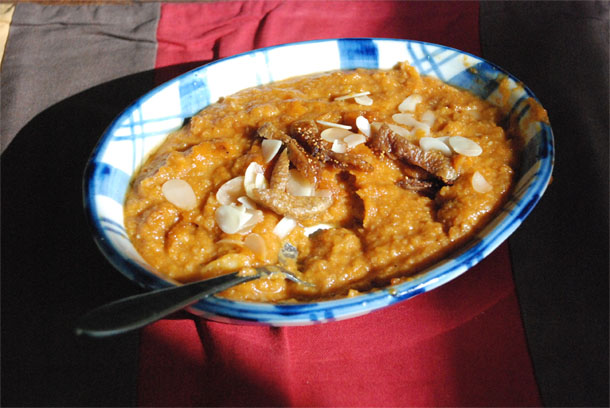
Anjeer Ki Chutney is definitely not the Bengali Chutney. A Bengali Chutney is very different. You end your main meal with a Chutney. And that Chutney is generally sweet, tangy and can be made with every conceivable fruit and even vegetables! For example – Aam/mangoes, Jalpai/Olives, tomatoes, Anarosh/pineapple, Tetul/tamarind, Pépé/papaya and various other type of fruits. Dry fruits like Khejur/dates, Kishmish/raisins may also be added to it the Chutney which is also splashed with Phoron/Mustard seeds cooked slightly in oil or Paanch-Phoron/5 seeds cooked in oil. Papad/Big chips like flakes made up of Potatos or Dried Daal usually accompanies the Chutney {another Chutney in the blog – this time a Bengali Chutney – Kaacha Aamer Chutney or the Green Mango Chutney}. And after the Chutney comes the formal dessert tasting – Mishti!
This Chutney is usually had as an accompaniment to the main meal and has it’s origin in North India and is specially popular in Delhi, introduced to us by our Marwari friends. Incidentally, they have done the honour of introducing us to many Indian dishes beyond the borders of Bengal and also beyond the so called popular dishes of North India and South India that most of us are used to. In fact, these are the same friends who have taught me to make the most calorific Indian desserts of all – the Gulab Jamun Rabri. Now coming back to the Fig Chutney – the credit of introducing us to the Chutney goes to our friends and the credit of the recipe goes to Masterchef Sanjeev Kapoor. Do I have any credit here? Yes, of course – I saw, I tasted, I clicked and I decided to scream and shout out loud about it – this is chutneylisciously awesome! Which is that recipe belonging to your favourite chef, that you really really like? Do Share.
Unblogging it all… Ishita
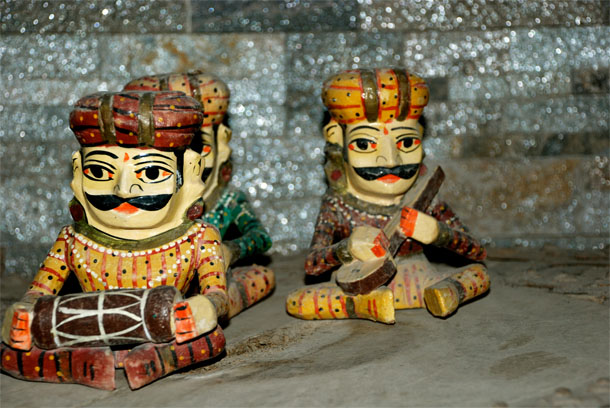
Disclaimer: Recipe Courtesy – www.sanjeevkapoor.com. Our stay in Six Senses Zighy Bay adds to our list of the Eco Resorts that we’ve visited so far, trying to travel responsibly, as far as possible. The opinions stated here are my own and are absolutely independent. I hope you enjoy reading the posts with lot of visuals but please do not use any material from this post. You can see more pictures of my travel and food journey here. It does take lot of effort to capture a food experience in text and pictures. While it’s meant for you to enjoy them, I request you not to use them!
◊—————————————————————◊
Related Posts:Sense On The Edge @ZighyBay | Slow Life, Sustainable Menu & Fattoush RecipeSix Senses Zighy Bay, Oman | Appealing To More Senses Than Six!
BE SOCIAL. SHARE THIS!


Feteer Meshaltet, Fetir or Fateer is the Egyptian layered pastry meaning ‘cushion-like pie’ – the stuffing or the filling coming in the form of chicken and cheese, sausage and cheese, tomatoes and olives, cream and honey or traditionally the simple Kraft Cheese! Had as a sweet or a salty savoury, the making of Feteer is an art in itself – a dramatic, action packed act in an opera. The video shows Chef Takrori making Feteers in the recently opened Helio Lounge in Dubai Marina. He is an expert hailing from a family where 3 generations have engaged themselves making Feteer. These Feteers are a modern day, but a fine adaptation of the traditional Egyptian Feteers under the guidance of Celebrity chef Joe Barza, who is one of the top chefs in the Arab world and the creator of the menu of Helio – an Egyptian fusion menu with an international twist.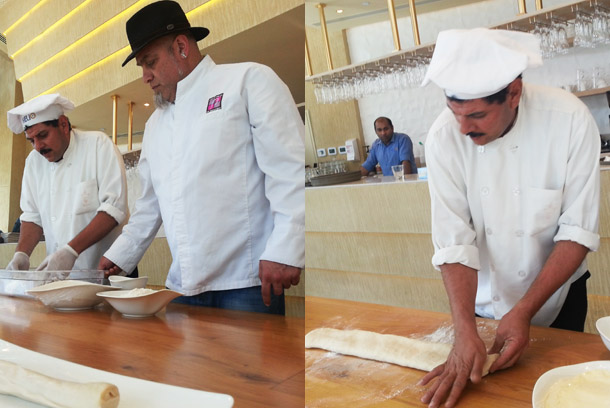
We watched in awe while Chef Takrori (above right) gave a classic performance while making these modern Feteers. Traditionally, Feteers are one of the most traditional dishes in Egypt – layered pastries with stuffing or filling. Served in bite size forms and a myriad of exquisite fillings, the Feteers, here, take the name Helios. There is an interesting mix of savoury Helios – minced beef with labna (also called Labneh or Greek yogurt, Süzme yogurt, yogurt cheese) in a crunchy mix of walnuts and pomegranate molasses; minced beef and Egyptian foul (fava beans) mildly spiced with garlic; chicken and spinach with cream sauce and cheese etc. And then there are some sweet Helios – the Choco – Halawa where the semi-dark chocolate is melted along with Halawa (what is Halawa?) and pistachio; caramel glazed apples with almonds and cinnamon; crushed almonds mixed with icing sugar; Khoshaf (Khoshaf is a dried fruit salad served at the end of most family meals in the Middle East) with an exotic mix of dried apricots, dates, prunes, figs and raisins, mixed with honey and cottage cheese; and finally, Coconut mixed with icing sugar. All Helios, whether savoury or sweet, are served with an interesting mix of dips that complement each filling. Of course, the menu has more than just Helios. The pictures below show the long rolls of Feteer before they went into the oven; after they came out of the oven; the traditional Halawa filling with Pistachio; and the Chocolate – Halawa filling.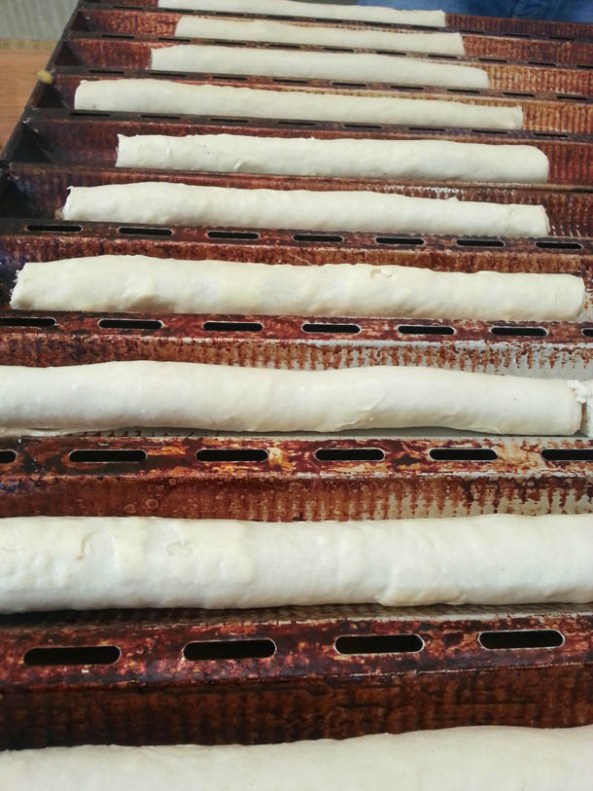

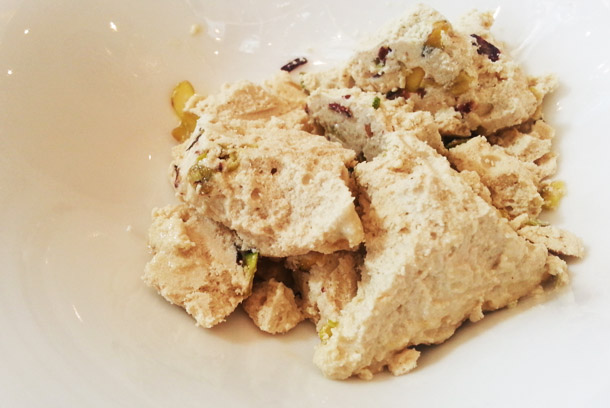
◊—————————————————————◊
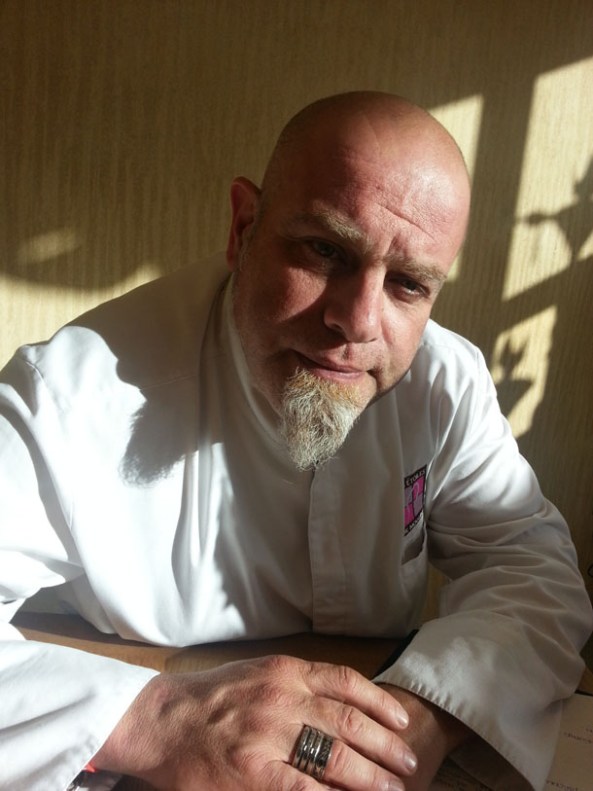
Talking to Chef Joe Barza
Chef Joe Barza is a celebrity chef, well known television personality (co-host of the Middle Eastern version of the TV program Top Chef) and a culinary consultant. Our tête-à-tête revealed how interesting his career and his life has been (from being the personal bodyguard to the President of Lebanon to becoming the top Chef in the Arab world – a very interesting journey that you can read here), despite the hardships that he had to face in his early years. Because of time constraint, my blogger friend Debbie, of Coffee Cakes and Running, and I shared the Chef for the the interview. So some of our questions naturally seem to overlap and some the questions are hers.
You are originally from Lebanon. And your repertoire reflects your expertise in Lebanese cuisine and showcases Lebanese cuisine to the world. So how did the Egyptian fusion food happen? You see, if you love food and you have the technique and the imagination, then it is not difficult. I brainstormed with the owners many times and tried to understand what they have been visualizing. At night I scanned all these in my brains. And with 24 years of culinary experience, I created and conceptualized a menu that is exactly what the restauranteur had imagined. For me, Sugar is not just sugar. I respect the ingredient. For me – whether it is Japanese or Vietnamese, I respect the differences in each cuisine. Right now I’m working for a Vietnamese restaurant. For me, it’s all about passion. I did a lot of research as well. Lebanese Cuisine is vast – there are thousands of different dishes. But there’s not such a wide variety in Egyptian cuisine. I started looking at the backbone of traditional Egyptian cuisine – the Breads, the Rice, the Koshari (traditionally this is a rice-stuffed pigeon dish), the Tahmeya etc. and came up with a menu that is contemporary and modern, at the same time works around traditional Egyptian cuisine. A good presentation, a nice Salad, a bit of French fries and special dips – I think I tried to give the food it’s value.
Do you source the ingredients locally? Are they organically produced? No, they are not always organic. But yes, the ingredients are all sourced locally. There are very good markets with good products in Dubai. They are a bit expensive but the quality is amazing. A lot of world class restaurants have opened up here. I’ve run promotions all over the world and I’ve realised that to make any venture commercially viable, one has to work cleverly with whatever options are available to him, how to be flexible while at the same time understanding the local culture.
You have been showcasing Lebanese cuisine to the world. Do you think that it is very easy or it is is very difficult to showcase one’s regional cuisine? It is actually my pleasure to demonstrate my country’s cooking. I wouldn’t say that it is easy and I wouldn’t say that it is difficult. Once I was demonstrating Lebanese cuisine in Venezuela. There were 400 people – no one spoke in any common language, nor had any idea about Lebanese cuisine – Humous etc. But everybody loved what I served. You know the result.
What is the signature dish or your favourite dish in the menu here? Isn’t the menu very vast? A lot of them actually. I like the Feteers – specially the stuffing of the Fateers because it is an achievement for me. I love the wraps as well. The menu is not vast at all. There are 50 to 60 dishes but people love more options. And we do have plans to add a few more dishes. How often do you think you would change the menu? I feel that one has to give any menu a chance. And you have to educate the diners as well. People have to have the culture of the food in their mind and they can then pass on the message. For me cooking is a pleasure – I have fed 21,000 people at the end of the day. So in one way, the entire process is industrial. And in another way, it is not industrial – you are in direct contact with people.
The Dubai diners want something new all the time and the dining culture is very different. How do you plan to cater to their wants? There are lots of tourists in Dubai. Also, there are lot of professionals working here who don’t want to cook at home. They want to go out and try different types of food. I am not sure how loyal the Dubai diners are. In Lebanon, I use to run a chain of international restaurants (The Chase, which had 9 outlets in Lebanon, and many around the world). There were diners who would come for breakfast, lunch and dinner everyday for 10 years! I also had to make the same dish over and again – this is very difficult!
As a Consultant, you must be cooking less and thinking on strategies more nowadays? No, cooking for me is like sport. It is distressing. What do you cook at home? I don’t cook so much at home nowadays. But even two years back, I would take my son to the markets and come back and cook for the whole week. So, you cook at work? Yes, I have big kitchens in my company where I cook. What about cooking on TV shows? I was co-hosting Top Chef. Now I am helping with the preparation for a food program in a big format with MBC1 in the US. But I do not want to go on stage and cook – not because I feel that the people may not understand what I will cook but because even I don’t understand what I cook! (Here, we all burst out laughing) Either, I record each step that I’m cooking or I have assistants who write that down.
In what way do you maintain an ongoing involvement with a restaurant where you’ve lent your signature? All the way. It’s not as if I’ll create a menu and am only present during the restaurant launch. Even after months if there is a problem with the working of the menu, I’ll be there and I shall work on it. You see, there should be something more than the business. What’s the use if I create a menu and it doesn’t work? Where is my achievement then?
Some interesting projects that you are working on and if you’d like to share with us. I‘m doing another restaurant in Kuwait, a Vietnamese restaurant in Beirut. I’m also signing up with a premium magazine here to provide recipes. I have a large catering company in Beirut where I’m a consultant. But what about a restaurant which will have your own label? In my mind, I’m doing all that I am doing is because I’m not chained to a place – I’m not going to sit in the restaurant the whole day and follow a routine. Right now, I’m doing promotions in different hotels (Atlantis, Park Hayat etc), meeting people like you, cooking Egyptian, learning Vietnamese food, travelling the world – Jakarta, Australia, India… I’m living my dreams.
Well, a free spirited man there. Chain him down with a routine and he says – ‘I can die! Right now I sleep happy, I wake up happy.’

◊—————————————————————◊
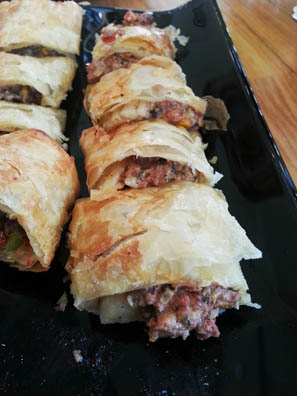
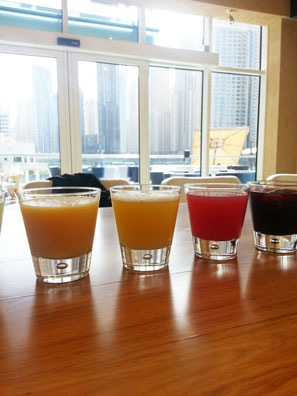
Helio Lounge (Middle Eastern)
Location: Mezzanine Floor, Trident Bayside Tower, Marina Walk, Dubai Marina
Tel: +971 4 432 9457; Email: info@helio.ae
For more info, you could visit their Website; Facebook Page; Twitter
◊—————————————————————◊
Hallucination on Feteers is inevitable. My blogger friends have touched upon this subject with much love and obsession. Sarah in her blog, The Hedonista, declares Fateer, Feteer, Fetir – by any other name, it’s still quite orgasmic; Arva who writes on eating holes in Dubai in her blog I live in a Frying Pan, writes about her Feteer obsession in The National; Debbie writes on her Feteer experience in Helio Lounge. Before signing off, I have only one thing to say – when you bite into the crunchy pastry flakes of a Feteer which is piping hot, freshly out of the heaven and the the delicious filling oozes out, I can only think of what Sarah has defined Feteer to be. Orgasmic!
Unblogging it all… Ishita
Disclaimer: The opinions stated here are my own and are absolutely independent. I hope you enjoy reading the posts with lot of visuals but please do not use any material from this post. You can see more pictures of my travel and food journey here. It does take lot of effort to capture a food experience in text and pictures. While it’s meant for you to enjoy them, I request you not to use them!
◊—————————————————————◊
My other posts with Chef talks:
• Sanjeev Kapoor | Talking To The Chef Extraordinaire• Asha Bhosle | Cooking With Her & Sharing Her Chicken Keema Recipe!• Violet Oon | The Singaporean Food Guru & Her Recipe Of Chilli Crab!• Chef Abhijit Saha | Is There Heart And Soul In Molecular Gastronomy?• Chef Sanjay Bahl | Flavours And Flavours And Flavours of Patiala!
BE SOCIAL. SHARE THIS!


We are born of love; Love is our mother ~ Rumi
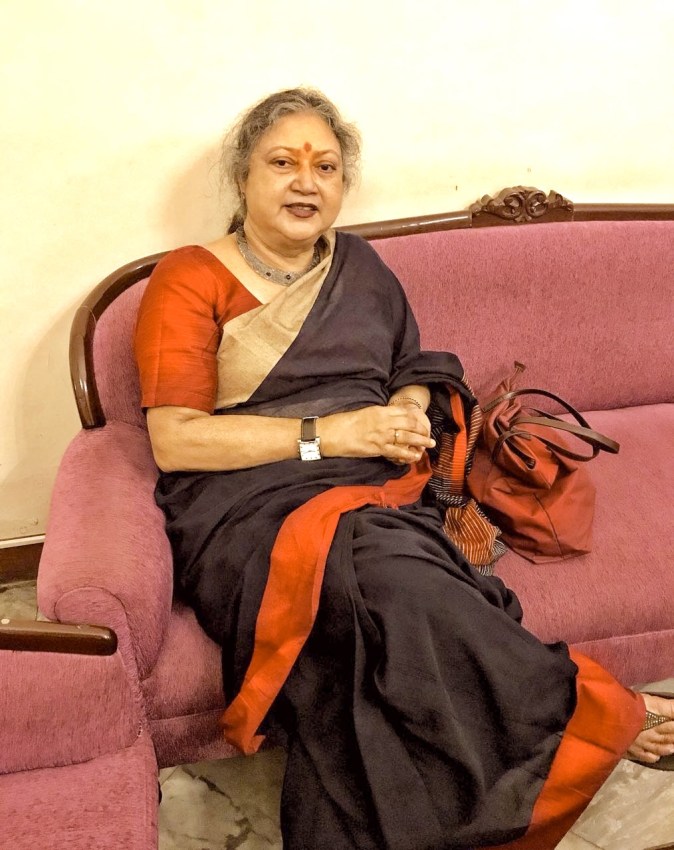
No Oscar speech. No thank you notes. Nothing can make this post more special than it is. This is my Ma. Desh, Anandobazaar and Rabindranath* defines her. Music is her life. So are we – Baba, my brother and me. And now, the bearded biker and our two girls – the Z-Sisters. In the same order? Maybe… maybe not. Hopefully not. I don’t really care if it is. For, we fit in perfectly in her life, without juggling for space. If she had a chance, she would be running in the green pastures, climbing up the trees, singing to the winds, talking to the birds and swimming with the tides. She’s like Maria from The Sound of Music – ‘How do you pin a cloud upon the sky?’ Fortunately or unfortunately, we pinned her down with our love.
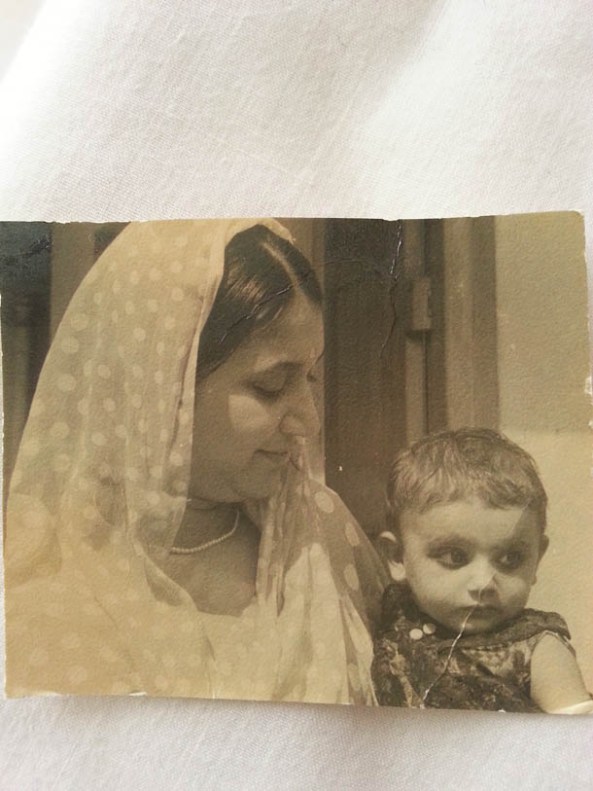 Ma and I in our ancestral home in Naihati, clicked by my dearest borojethu, the eldest paternal uncle
Ma gave my little brother and I enough freedom in our lives, also enough chances to recover from our mistakes. We’ve grown up breathing art, music and life and I’ve grown up believing that all mums must be like her. So, I cannot fathom that when I read articles or hear about children being brought up by other kind of mums. In my life right now however, another Ma shares the space with my own Ma. That is my mum-in-law. I’ve written about her and her cooking a few times in my blog. But my own Ma? I guess this is the first time. I’m confused with so many Mother’s Days that are celebrated all over the world. I don’t mind though, as it gives us a moment to celebrate mothers around the world. Ma is an independent wild spirit whom my Baba never wanted to tame… as it should be in a relationship. Happy Mother’s Day, Ma… and to all the other mothers in the world!
Unblogging it all… Ishita
Thank you for joining me on my daily food and travel journey on Pinterest, Instagram, Facebook and Twitter!
*Desh is a popular Bengali magazine, Anando Bazaar is a daily Bengali Newspaper and Rabindranath refers to the Nobel laureate Rabindranath Tagore.

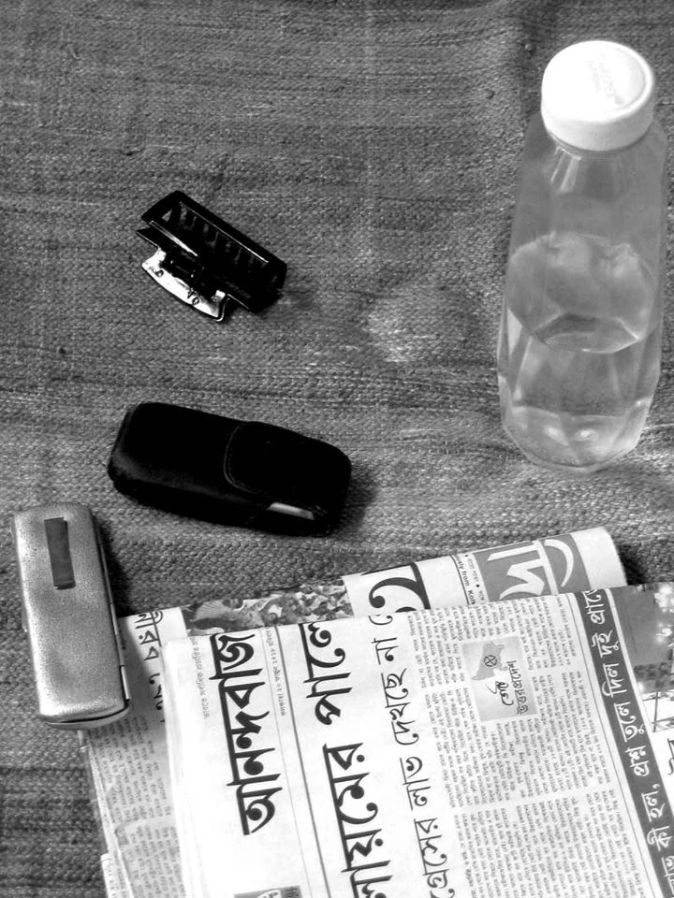
Disclaimer: I’ve shared some pictures from my brother’s personal album. This isn’t a sponsored post, nor are there any affiliated links for any of the brands that may have been mentioned in this blogpost. The subject, story, opinions and views stated here are my own and all images are from my personal album. While you enjoy reading my posts with lot of visuals, please do not use any material from these posts.
BE SOCIAL. SHARE THIS!

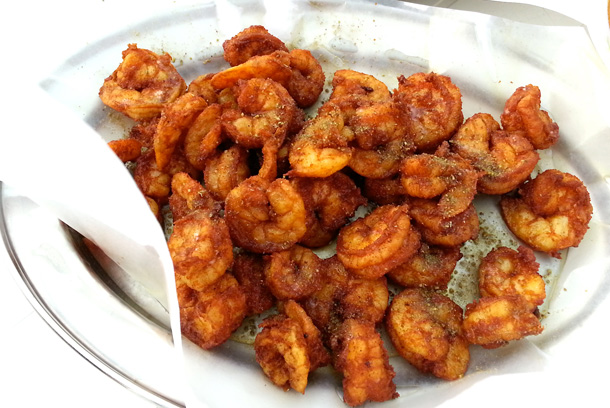
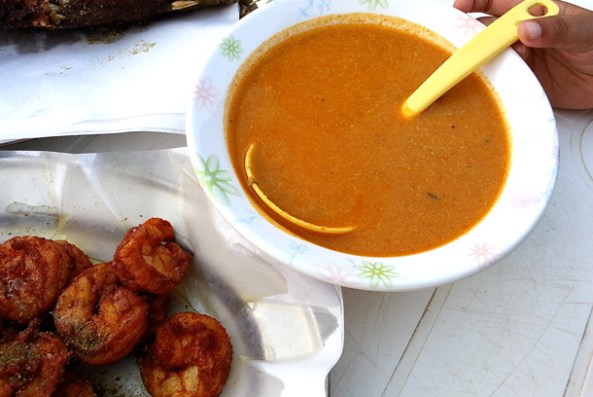
◊—————————————————————◊
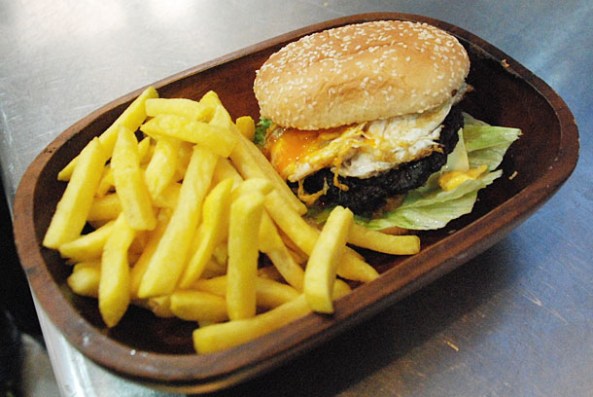
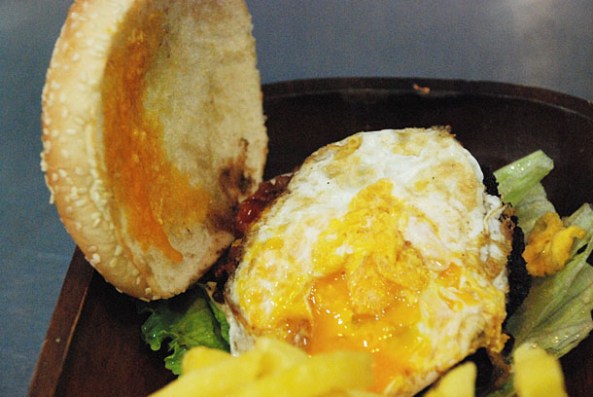
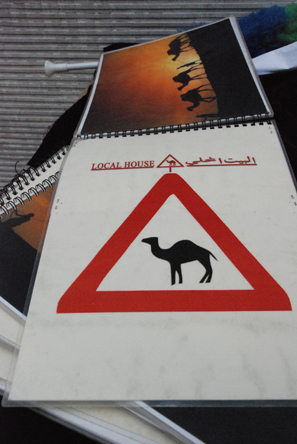
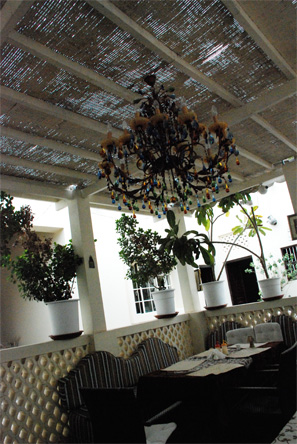
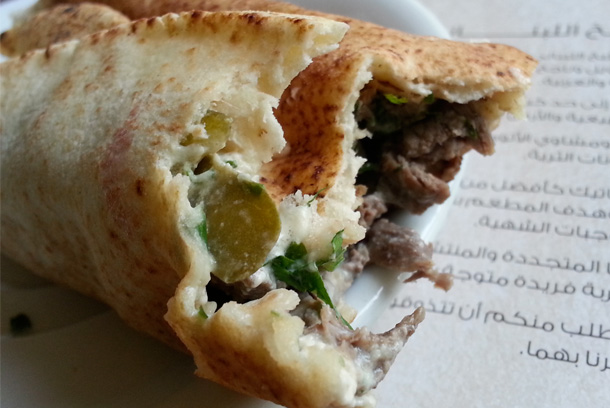
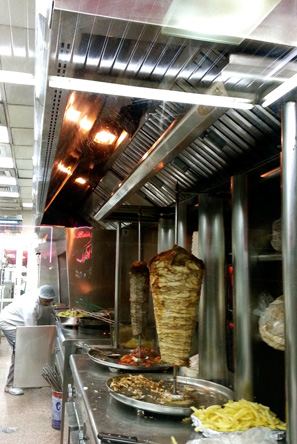
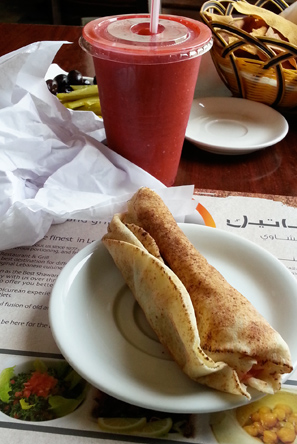
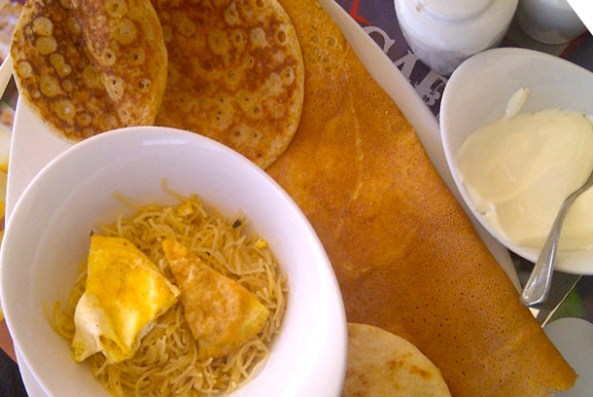
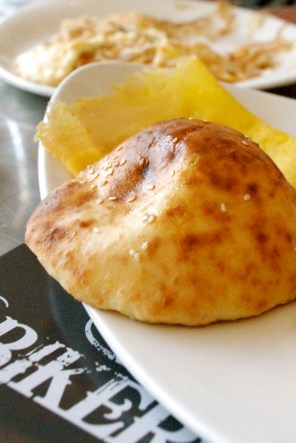
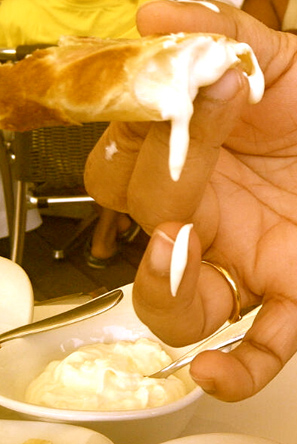
Tel: +971 4 3493585; Email: info@bikerscafeblog.com
Or you could visit their Website; Facebook Page; Twitter
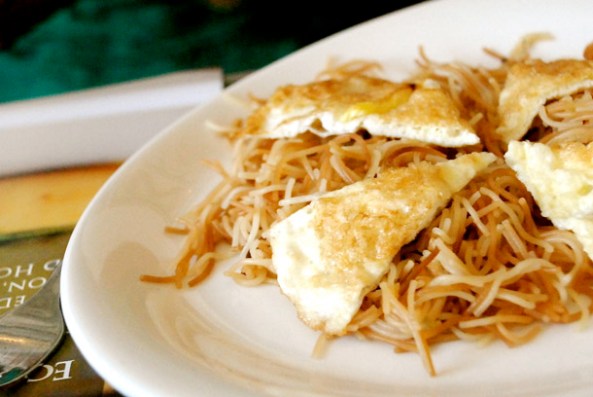
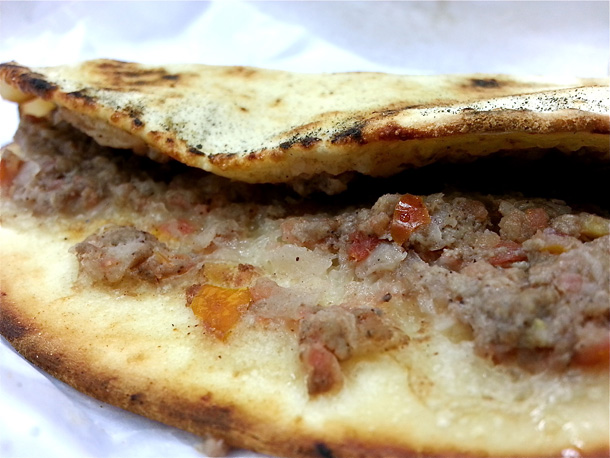
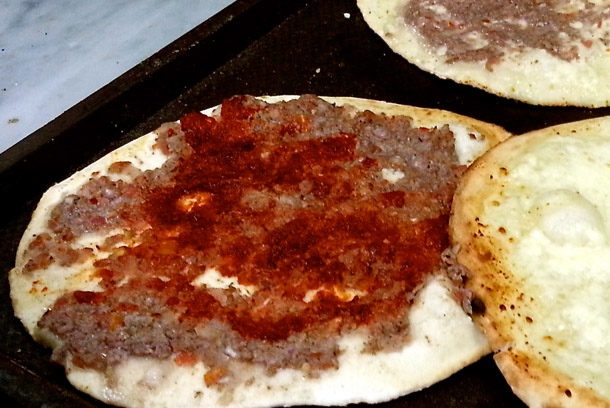
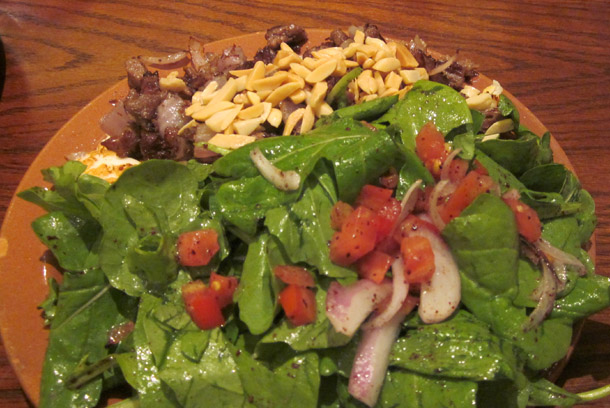
Tel: 800 6262; Opening hours: 8:00am – 2:00am daily
Or you could visit their Website; Facebook Page
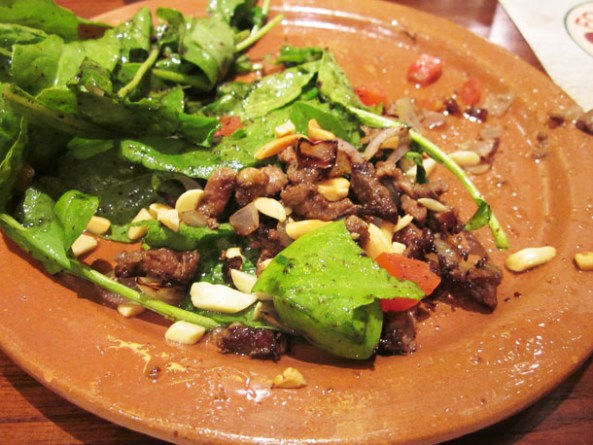
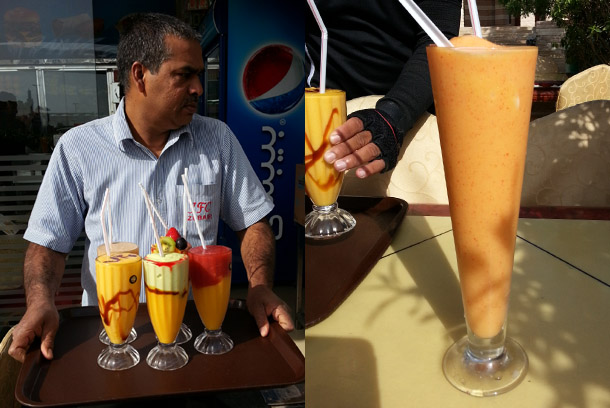
Or you could visit their Facebook Page
◊—————————————————————◊
What is Chowzter? Chowzter is dedicated to identifying the world’s tastiest fast feasts and is working with food bloggers from around the globe to find the best items in each city. The APP lists all the best local dishes at all the best local restaurants that won’t leave you bankrupt!
Available on both the Apple Store for iPhones (here) and Google Play for Android phones (here), the Chowzter APP lets you to 1) keep a journal of everything that you have eaten as well as create a wish list for the things you would like to try; 2) rate each dish and create your own top 7 favourite dishes in every Chowzter-represented city across the globe. However, it doesn’t stop you from becoming the true international foodie by compiling your own Global list of the WORLD’S greatest 7 dishes. These lists and ratings as well as user uploaded photos and comments can be shared with all your family and friends who use the APP.
Very recently, in April 28 in London, Chowzter revealed the world’s seven tastiest food items in a gala Chowzter Awards evening, as well as the top seven foodie cities. Dubai better be there soon!
Unblogging it all… Ishita
Disclaimer: The opinions stated here are my own and are independent. I do hope you enjoy reading the posts with lot of visuals. Please do not use any material from this post. You can see more pictures of my travel and food journey here.
◊—————————————————————◊
Related articles on Chowzter Awards:
Want the world’s tastiest fast feast? Head for the Story Deli in London…
Slice of the action! Bethnal Green pizza is “world’s most delicious”
Lunch Business: Want the world’s tastiest fast feast? Head for the Story Deli in London…
The Tastiest Fast Feast in the World
World’s top pizza? Forget Italy—it’s at Bethnal Green’s Story Deli
BE SOCIAL. SHARE THIS!

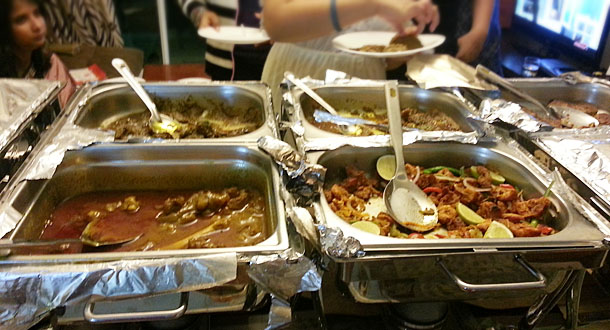
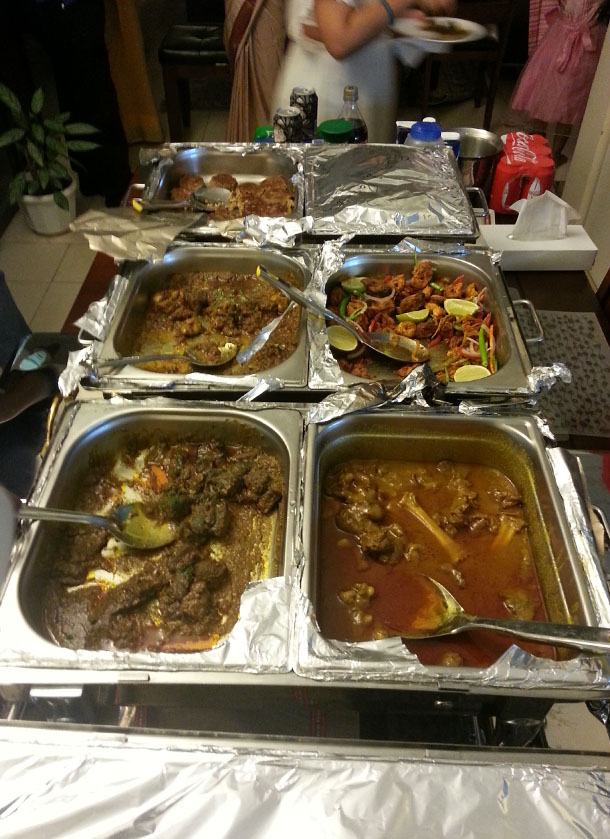
Poila Baishakh with home delivery from Shiraz followed by a Bengali Buffet in the restaurant thereafter
This is not my first post on Shiraz. And it’ s not going to be the last post either. But this is definitely the last episode of a series of posts on last month’s festive restaurant hopping. The series…
• Nowruz Buffet At Ezi Dzi | Celebrating Festivals in Dubai – Episode 1
• Songkran Splash At Westin and A Dinner At Sukhothai | Celebrating Festivals in Dubai – Episode 2
• Baisakhi Celebration in Patiala and Options By Sanjeev Kapoor | Celebrating Festivals in Dubai – Episode 3
No, I don’t own the restaurant. Neither do I have a friend who owns it. It’s just that my Kolkata nostalgia pulls me towards Shiraz. In the absence of a Bengali restaurant in Dubai, what do we do? If not a Bengali restaurant, here’s atleast one restaurant that hails from Kolkata. Hence – dive in or ask them to deliver! Shiraz has it’s origins in Kolkata and does tempt us with posters of a Bengali Buffet now and then on special festive occasions like Durga Pujo and Poila Baishakh or the Bengali New year. We fall for it, even at the expense of my friends in Kolkata scoffing at us – Shiraz cooking Bong food! What does a Mughlai cook know anything about Bengali cooking? Not much, but a good cook is a good cook – I argue. Not a very authentic or extraordinary Bengali Buffet, but yes, a few dishes here and there touch the Bong heart. But then, Shiraz has never promised to feed the Bengalis in Dubai, Bong food. It delivers where it promises – it serves brilliant Awadhi food. The Biryani and the other Awadhi dishes, touch the heart always. Most of the Bengalis that I have met, associate Biryani and the Mughlai food with the Lucknowy or the Awadhi style of cooking. Hence, as much as we love the various kinds of Biriyani – the Hyderabadi, the Sindhi and the Pakistani Biryanis, the Bong taste-buds still search for Shiraz’s Biryani. There is no dearth of mid-range Indian restaurants in Dubai, but Shiraz is the only Indian restaurant which can satiate the Mughlai food nostalgia for those who grew up in Kolkata.
An excerpt from an earlier encyclopaedic post of mine where I re-visit Kolkata Shriaz after ages and feel ecstatic when Shiraz opens its doors in Dubai shores… Shiraz Golden Restaurant, Dubai | From Lucknow To Kolkata And To Dubai!
Amongst all the golden memories of my college days in Kolkata, the one thing that consistently churns up is Shiraz Golden Restaurant in Circus Avenue, Park Circus. All our random parties or any special party during any festival, for example Holi, Diwali or even Durga Puja was necessarily powered by Mutton Biriyani, Chicken Chaap and Firni (an Indian Dessert made with milk and powdered rice) from Shiraz.
If you are joining this series from this episode, then you have to bear with a bit of a repetition from the last episodes (doesn’t it always happen in movie sequels? The update of the prequel tend to eat up some reels of the sequel. Or in the television soaps where each segment after a small break typically feeds you with 10 minutes of the pre-break segment!) Also bear with me for not-that-good pictures – they are all shot in my smart phone, in dim lighting. My Nikon’s conked off during my recent Thailand Academy trip, probably a bit too much of rough handling in the small fishing island of Koh Klang, in South Thailand (Instagram above). The earlier posts capturing my Thai experience…
• Ruen Mai Restaurant In Krabi | A Tantalising First Experience Of Thai Food {In Thailand, That is!
• Koh Klang in Krabi, Thailand | A Photo Essay of An Island Life
• Baan Ma-Yhing Restaurant In The Fishermen’s Village | Recipe of Thai Red Curry As We Cook ‘fresh catch’ Baramundi!
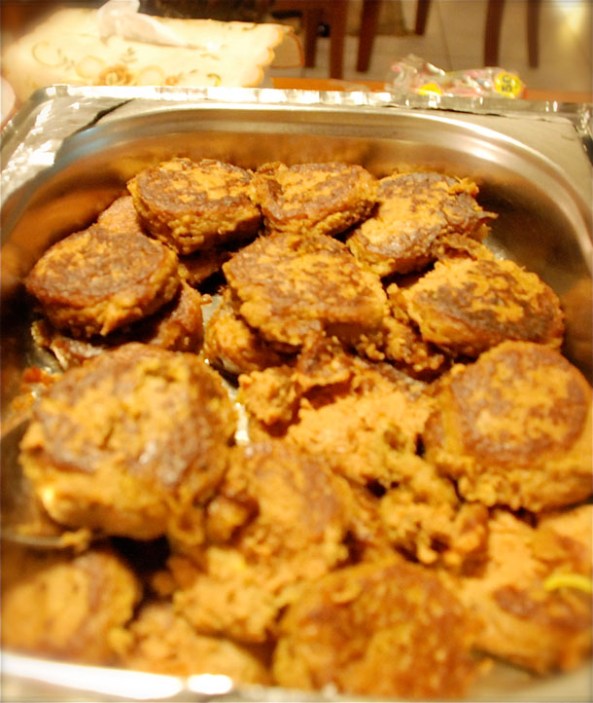
The Bengali New Year or the Poila Baishakh falls around 15th of April in Bengal while it is celebrated a day earlier in Bangladesh. Living outside Bengal however calls in for a lot more confusion. One Noboborsho or New Year greeting on Facebook and soon everyone’s pouring in their greetings – even if its days earlier than the original day. The end result? A prolonged Noboborsho celebration. For me, the Noboborsho celebration was also powered by the Thai Songkran festival and the Punjabi Baisakhi festival. Never say No to any celebration on offer! While I was being updated with the not-so-traditional celebrations back home over Skype this year, I have been trying to think – how did we traditionally celebrate our Bengali New years anyway when we were growing up? The things that come to my mind are new clothes, good food and a school holiday. In Dubai, the tradition of buying new clothes during Durga Pujo, Noboborsho and Janmadin/Birthdays have given way to scheduling the shopping with the many shopping festivals that take place in Dubai – at least we are still upholding a bit of tradition by shopping during festivals! The Poila Baisakh weekend culminated in a huge party at a good friend’s place with food from Shiraz and Whiskey, the Bengali’s preferred spirited drink – courtesy our colonial heritage. It was good food, but not Bengali food. Biryani, Kebabs, Paya and Brain Curry with Parathas. And of course, one of my favourite topics of discussion – Galautis. This special form of Kebab which practically melts in the mouth, lends the name Galawati, meaning the one that melts. Galauti Kabab is minced meat round patty cooked over griddle, smoked with aromatic spices – traditionally, it can go up to 120 different spices. Interestingly, there is a new Indian fine dining restaurant in Dubai which can boast of a cook whose ancestors invented Galautis! Galauti is a speciality of Shiraz and they do their Galautis pretty well. Though I am not very fond of Paya and Brain Curry – not really my kind of great food, they did manage to get my friends into a stampede. In fact, the Paya and the Brain Curry, originally ordered as a part of the Main Course, didn’t survive long. They were polished off with Parathas as Starters! The only thing that was really ‘Bengali’ about our Poila Baishakh party was perhaps the Rôshogolla or the Rasgullas from Bikanervala. Rôshogolla is definitely one of the most famous of all Bengali sweets and my personal favourite. Not only have I written on them {Rôshogolla or Rasgulla – Bengali’s Own Sweet} but I’ve also made Rôshogolla on Dubai One, a local television channel {Rasgulla Macapuno On TV & Shubho Bijoya to all!}. So that was us – NRBs (non resident Bongs) ushering in the year 1420 of the Bengali calendar. There has been a lot of jokes circulating around regarding the year being ‘420’…
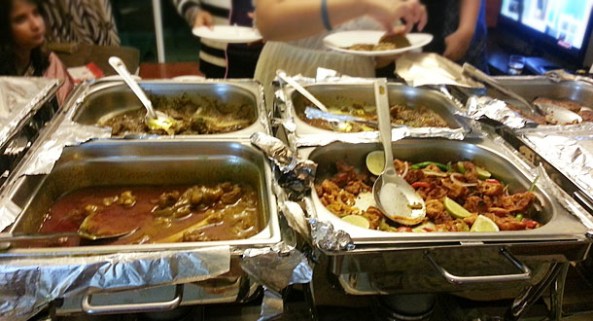
◊————————————————–◊

Our weekend celebration with home delivery from Shiraz was followed by a subsequent visit to the restaurant 2 days later, for the Bengali Buffet. Apart from their standard Awadhi fare, a few Bengali dishes were there too (as promised in their Poster). These were Kasha Mangsho/Mutton cooked in Bengali style, Aloo Dum/Potato, Aloo Bhaja/Potato fritters, Beguni/Eggplant deep fried in batter, Moong Dal/Yellow Dal, Rui MaacherKalia/Rohu Fish Kalia, Chingrir Malai Curry/Prawn Malai Curry. As usual I fall into the trap of judging how authentic was the Bengali food? It’s like asking how good is the Paella served by a Fish and Chips restaurant. I’m biased – I don’t want to put Shiraz into judgement here {have been doing that for another Bengali Food festival in one of the award-winning Dubai restuarant} – I’m getting to eat Bengali food on a Bengali festive day – that’s good enough for me. The Rui Maacher Kalia or the Rohu fish Kalia and the Kasha Mangsho/Mutton slow cooked in Bengali style {my recipe of a *spirited* version of Kasha Mangsho – Mutton Kassa With Red Wine And Red Grapes}, was really tasty – reminding me of the biyer bari version – oil and taste intact! These type of fish and mutton preparations used to be typically served in Bengali weddings, long before fusion and international blends came into the wedding menu! And I loved the jhurjhure Aloo Bhaja – crispy and crumbly, thin potato fritters. I always look forward to jhurjhure Aloo Bhaja – they liberate my mind, probably with the light, airy feeling that comes along whenever I eat them. And they did come in a new avatar – in two different shades of yellow and garnished with fried peanuts and coriander leaves Suggestion time – I would love to lick into my fingers at the end of the meal with some Chutney. And also can we have Rôshogolla instead of Gulab Jamun, or better still, in addition to Gulab Jamun {No objection here too, love Gulab Jamuns – a recipe here… Gulab Jamun Rabri}!
Shiraz Golden Restaurant – Awadhi (Indian), Casual Dining; The Poila Baishakh Buffet cost us Dhs 59/person
Tel No: +971 4 3589818, +971 4 3589322; Location: Al Abbas Building, Bank Street, Bur Dubai
For more info: Facebook
Bikanervala – Indian Sweet Shop and Veg Restaurant
A few Bengali sweets are also sold here.
Tel No: Tel: +971 4 3968813 (Karama); +971 4 298703 (Food Court, Lulu Hyper Market, Quasis); +971 4 3695544 (Al Barsha)For more info: Website, Facebook, Twitter

My conversation on Twitter about Shiraz caught Ariana Bundy, the noted TV chef and author of ‘Pomegranates & Roses‘, which recently recently won the Best Asian Cookbook Award in the UK section of the Gourmand World Cookbook Awards 2012. What I find interesting is how a simple discussion about the origin of Shiraz culminated into a discussion on Persian influence on Indian food and me trying to sell Shiraz’s Galauti Kababs to her on Twitter. And then a strange coincidence of her spotting Shiraz after our tweets brought led her to try food at Shiraz! 
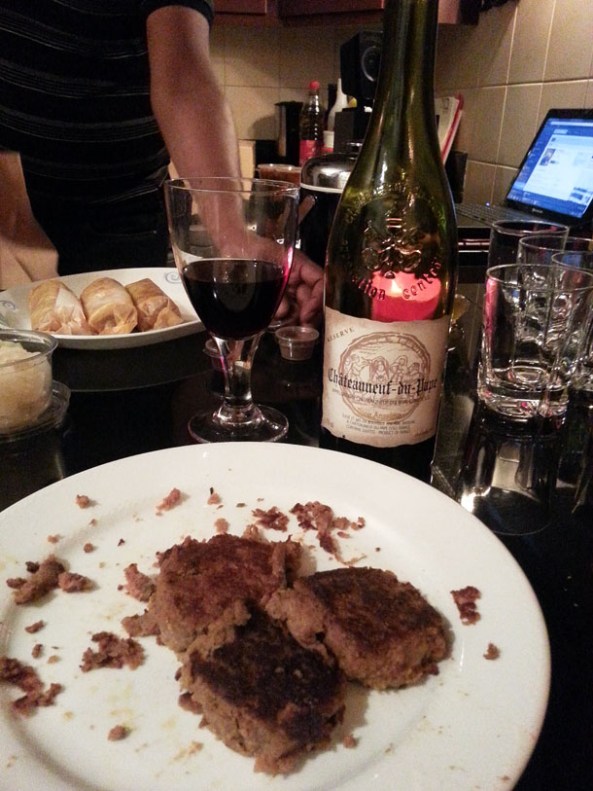
I’ve also been guilty of celebrating my birthday (celebrating the current over-the-top age that I am, that is) at home with a Buffet spread from Shiraz. And I have to admit that the Galauti Kababs tasted absolutely divine with the red wine gifted by a dear friend – a reserve from Châteauneuf-du-Pape, one of the best French wine appellations in the southern part of the Rhône Valley. I’ve been keeping the concluding paragraph of the last few posts the same – as this is a series of posts following the same thought – celebrating festivals in Dubai. Although born into a Hindu family, my brother and I grew up in Kolkata, celebrating all festivals from all religion. So Eid would mean that we would flock to the homes of our Muslim friends and pestering their Mums whom we would address as Mashi/Aunt to refill our bowls of Shimuyer Payesh or Semayia/Sevaiya Pudding and ransack their kitchens for home-made Biriyanis and Laccha Parathas, a type of Indian flat bread, triangular in shape with multiple layers lapped with Ghee/Indian clarified butter. Or Christmas would mean attending midnight mass at St Paul’s Cathedral with my Christian friends and rip open my small gifts of fruit cakes that my Christian Mashis/Aunties would have prepared for me. I’ve reminisced all this nostalgia in an earlier post – Living By The Water With Sunset As Prop – Kolkata & the Ganges. It talks about the multicultural upbringing of my childhood that has shaped my own philosophies in life. That brings me to my question – What about you? Have you embraced any other festival from any other country or religion, apart from your own?
Unblogging it all… Ishita
Disclaimer: The opinions stated here are my own and are absolutely independent and none of the Shiraz meals or home deliveries have been freebies. I hope you enjoy reading the posts with lot of visuals but please do not use any material from this post. You can see more pictures of my travel and food journey here. It does take lot of effort to capture a food experience in text and pictures. While it’s meant for you to enjoy them, I request you not to use them!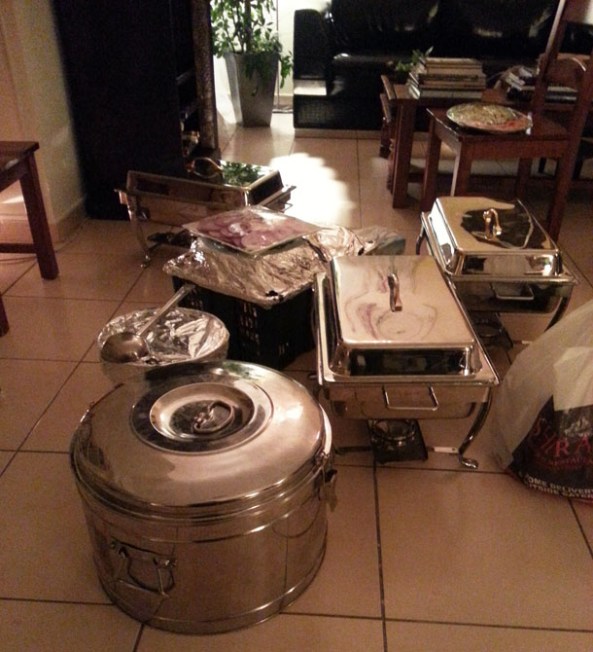
◊—————————————————————◊
Posts on celebrations and festivals:
- Celebrating Dubai Christmas | Dining In, Dining Out, Cooking or Mall Hopping!
- Gajorer Payesh/Carrot Pudding | Happy Diwali!
- Semaiya Kheer/Vermicelli Pudding, Eid in Dubai | Eid Mubarak!
- Rasgulla Macapuno On TV & Shubho Bijoya to all!
- TRIBES Celebrating South African Heritage Day!
- Firni or Ferni, Ramadan or Ramzan, Mallick Bazar or Karama?
- Living by the water with sunset as prop | Kolkata & the Ganges

 IshitaUnblogged