
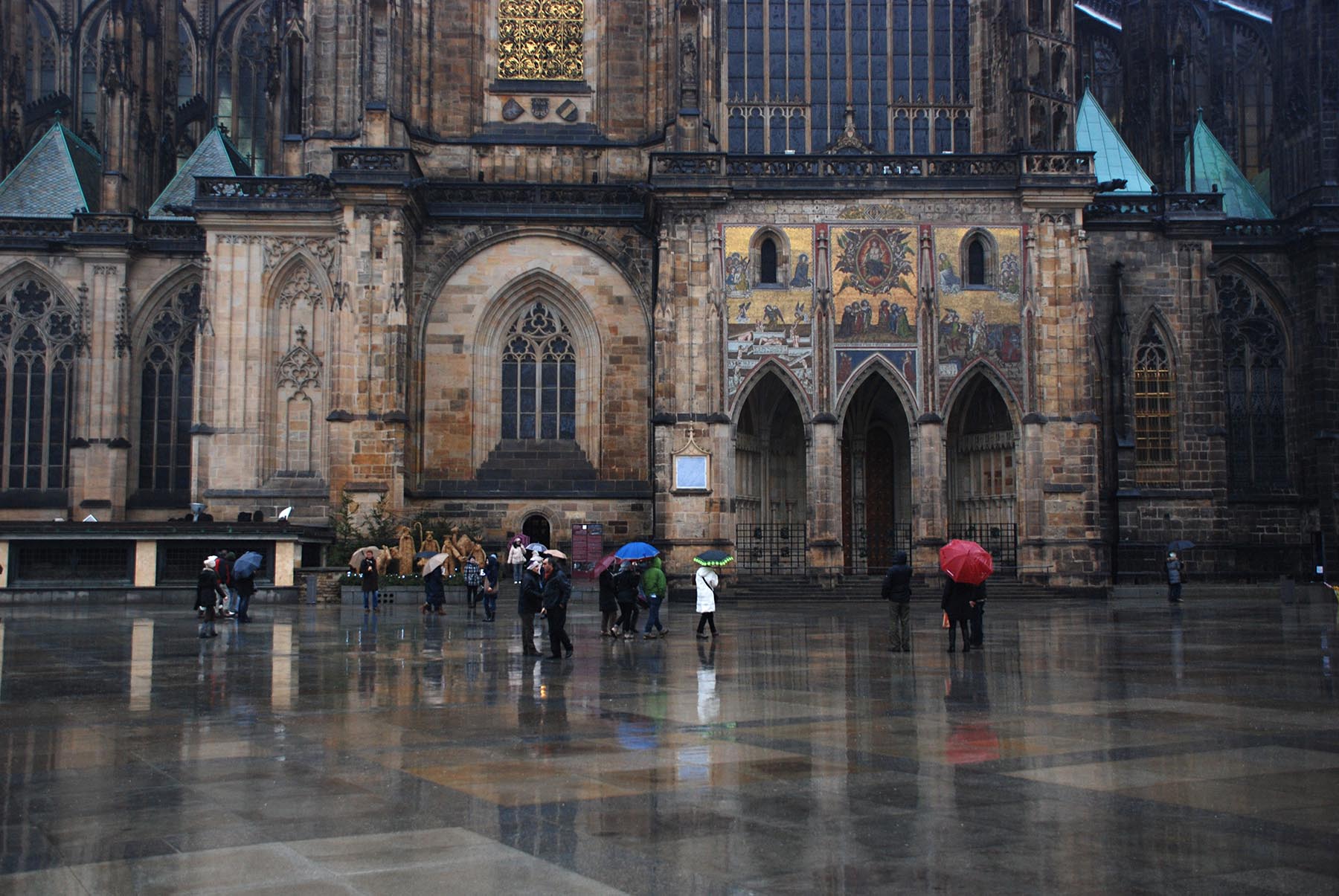

Christmas isn’t a season. It’s a feeling. ∼ Edna Ferber
[Note: Article mentions pork and alcohol]
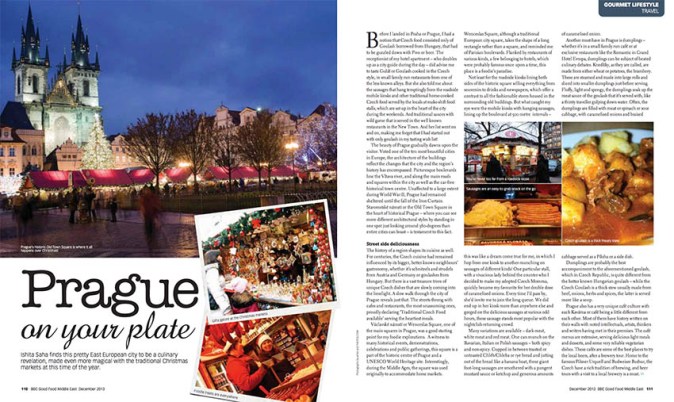
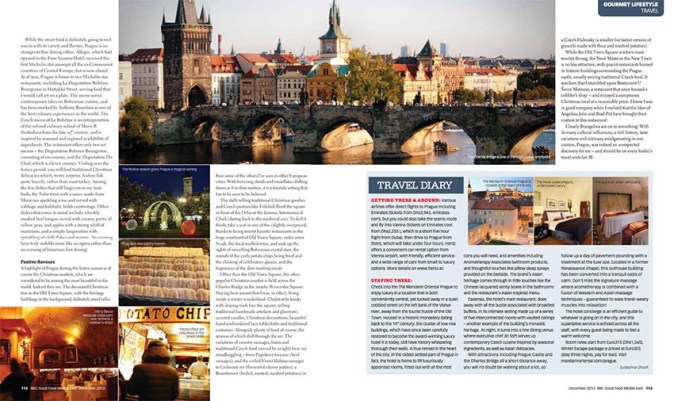
This is a foodie’s diary in the historical city of Prague in December… and a Christmas winter wonderland thrown in! It’s December and it can’t be but Christmas in the air. The December issue of BBC GoodFood ME carried an article of mine which traces out my culinary journey of Prague – from street food to fine-dining and all the way to the Christmas markets to an exclusive restaurant that I had visited while I was in Prague. I dined all alone there – my first dining experience in a Michelin star restaurant, because my bunch of travel girl buddies who had accompanied me, preferred to spend their money on shopping and sightseeing rather than dining here. Apart from my article, the December issue is filled with many more festive ideas, Christmas recipes or simple ideas to brighten up this festive month. So do get a copy off the shelf and here’s a peep into the article with excerpts that has been published in the magazine and some additional photographs thrown in from my personal album, in addition to the ones that I’ve shared with the magazine.
I checked the weather forecast of Prague before landing there from sunny Dubai in December. It was going to be 0ºC with occasional cloudy skies and maybe a bit of rains. Well, practically everything that a Dubai-ite desires for – snow, clouds, rains and… Christmas! This trip did warrant shopping for real winter clothes, not the fancy warm sweaters that we strut around in Dubai winters. So with overcoats and mufflers, leather gloves and snow boots, I was ready to roam around Prague, in the midst of what many would describe as the most beautiful Christmas Markets in Europe. Before I landed in Praha or Prague, I had a weird notion that Czech food consisted only of Goulash borrowed from Hungary, that had to be guzzled down with Pivo or the Beer. Home to the famous Pilsner Urquell and Budweiser Budvar, the Czech have a rich tradition of brewing and Beer tours with a visit to a local brewery is a must. The receptionist of our hotel apartment who also doubled up as a city guide during the day, told me to taste Guláš or Goulash cooked in the Czech style, in small family run restaurants from one of the lesser-known alleys around town. Her suggestion also included Sausages that hung temptingly from the roadside mobile kiosks and the traditional home-cooked Czech food served by the locals from make-shift food stalls, which are set up in the heart of the city during the weekends. Not to forget the traditional home made sauces, which accompanied the wild games that were served in some of the well known restaurants flocking the New Town. The list went on and soon I wished that I had lost the ‘thing to eat’ list. Having Goulash on my tasting-wish-list was good enough because I would soon be tasting Goulashes of all price range, from different categories of restaurants and cooked following different family recipes.
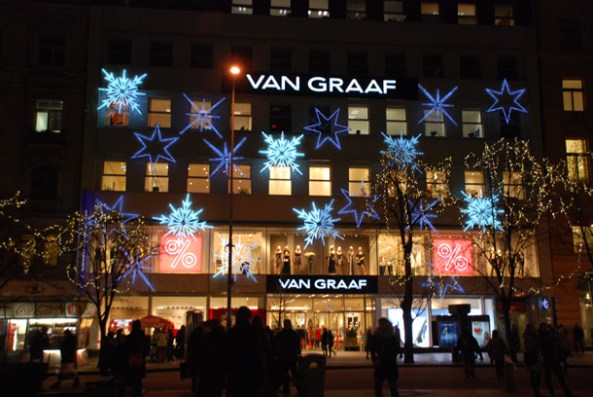
I was staying in Václavské Náměstí or the Wenceslas Square (above), one of the main squares in Prague. Tourists flocked this square all the time, relaxing on the wooden park benches that lay here and there, chatting to friends and lovers and clicking ‘Facebook-worthy’ pictures in front of the flower bushes that lined the boulevards. Staying here soon proved to be a blessing. A witness to many historical events, demonstrations, celebrations and public gatherings, this square was a part of the historic center of Prague – a UNESCO World Heritage site. Interestingly, during the Middle Ages, the square was used originally to accommodate horse markets. Wenceslas Square taking the shape of a long rectangle and not a square, resembled the Parisian Boulevards. Drifting into comparisons or drawing up parallels between the various cities I have travelled or lived in, is a favorite pastime of mine. I haven’t spared pulling up or down any city in the world or pitted them against each other. Definitely Prague was not to be spared. These are the most sentimental travel moments of mine.
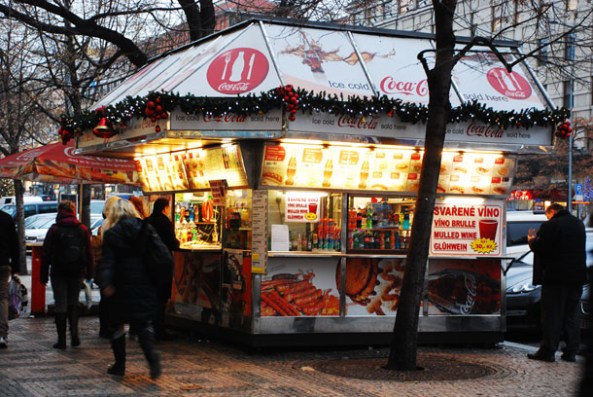
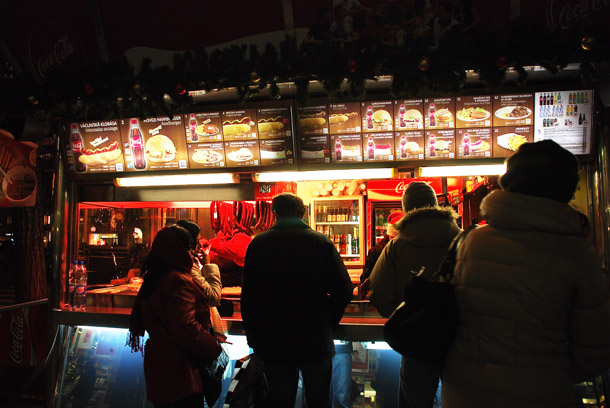
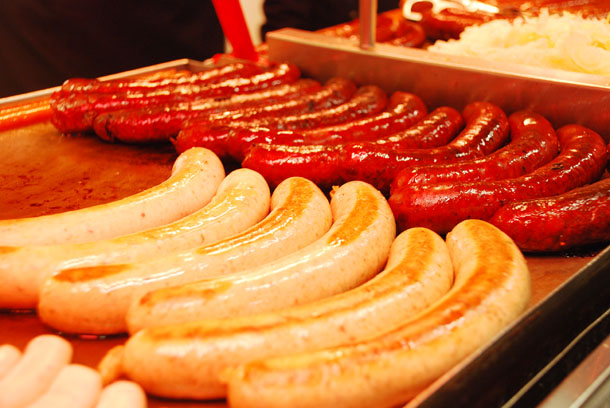
Flanked by restaurants of various kinds, a few belonging to hotels which were probably very famous once upon a time, this place was a foodie’s perfect paradise. The roadside kiosks lining both sides of the historic boulevard sold almost everything - from souvenirs, snacks, drinks and papers to branded bookstores and retails chains, all very fashionably housed in the surrounding old buildings. The roadside mobile kiosks (at that point in time, highlighted in my food itinerary with a thick fluorescent marker) with the hanging Sausages, lined up the boulevard at 500m intervals from each other. In effect, my dream where I just had to hop from one kiosk to another, munching on different kinds of Sausages – small and big, was about to come true. The largest and most popular markets during Christmas are held in the Old Town Square and the Wenceslas Square. The former was just a 10 minutes walk away from the Square. Staying here meant that I was in effect living inside the Christmas market. Kiosks looking like wooden huts with sloping roofs, lined the Square, selling traditional handmade artifacts and glassware, scented candles, wooden Christmas decorations, beautiful hand-embroidered lacey table cloths and traditional costumes. Aroma of food drifted through the air. The farmers sold fresh juices and country sausages, hams, traditional Czech food throughout the day. In the mornings, they arranged their counters, unpack their goodies and I made a mental note of what I was going to be eating from these kiosks. After the whole day of touring around the city, when I came back at night, I saw them pack up and close their shops. Festivities lent a different magic in the air – strangers would feel close too. There were shopkeepers who had come from far away – I would befriend them, click their photos and try to know about their daily lives. For them, Christmas brought in a lot more hard work and stress, but the magic in the air eased them all.
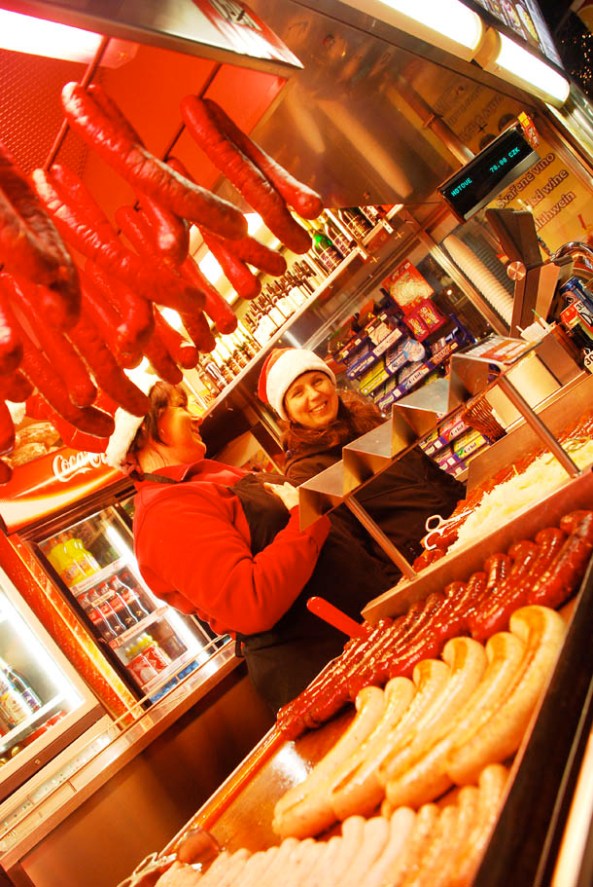
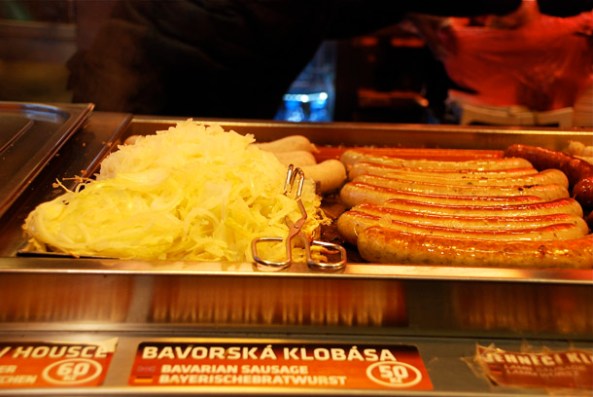
Since the day I arrived, I had already eyed a particular road stall and the vivacious lady behind the counter soon became my temporary adopted Czech Momma (the lady to the left in the picture above), eager to feed the hungry bystanders with her double XL dose of caramelised onions (above) over the mammoth sausage she handed over. Every time we passed her by, she invited me to join the long queue. Naturally, I did end up in her kiosk more than anywhere else. In return for such hard work, I did get to gorge on her delicious Sausages at various odd hours. Such was her magnetic charm, or was it the caramelized onions (I am yet to figure that out), that I ended up buying bottled mineral water at double the supermarket prices from her. Because, unlike Dubai, the supermarkets are not open 24x7, nor are there small neighborhood grocery guys who’ll come running to deliver small contingency needs from salt to water.
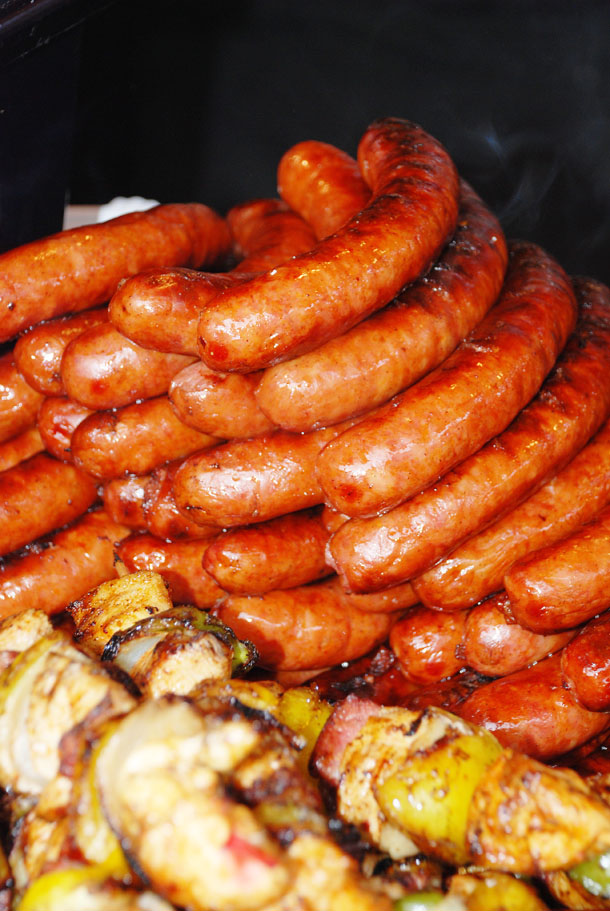
These (in)famous sausage stands do chip in long after the supermarkets and restaurants have closed down, feeding hungry tummies of the night-club-returning crowd. Famous or infamous, I realized that the sausages are the ones that attract the most attention, followed by the caramelized onions. And they hand snootily in their many avatars – dark meat, white meat and red meat; the Bavarian, Italian or Polish sausages – both spicy and non-spicy. Cupped up in between toasted or untoasted Chléb/Chleba or Rye and jutting out of the bread like a banana boat, these giant-sized Sausages with over generous amounts of caramelized onion smothered over these - and behold - a new love saga with foot-long Czech Sausages just about begins.
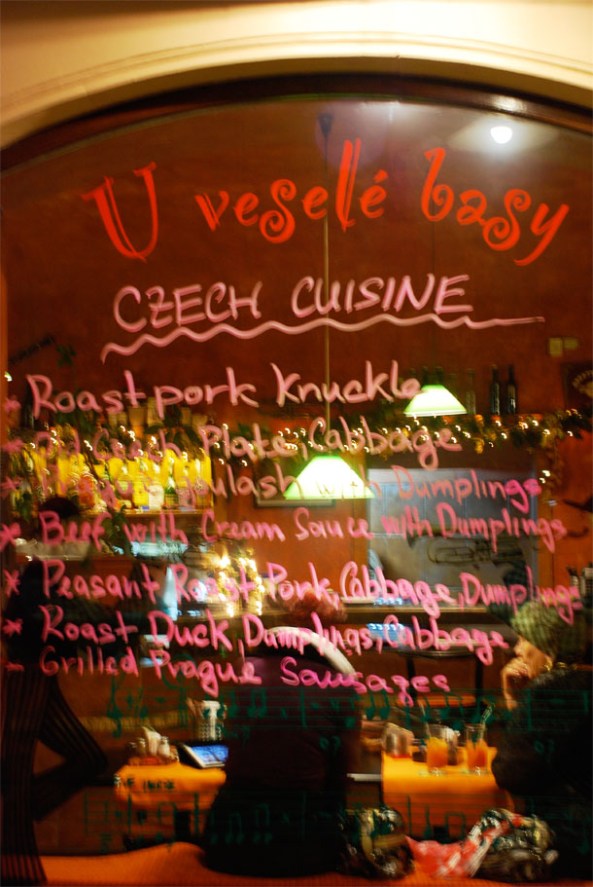
The beauty of Prague gradually dawns upon the onlooker. Voted to be one of the ten most beautiful cities in Europe, I have to admit that Prague doesn’t seem like that at first glance. The architecture of the buildings reflect the changes that the city and the region’s history has encompassed. Scenic boulevards line the Vltava river and along the main roads and squares within the city as well as the car-free historical town center. There is a decadent charm in the city’s demeanor. Unaffected to a large extent during World War II, Prague had remained sheltered till the fall of the Iron Curtain. History of a region shapes its cuisine as well. For centuries, the Czech cuisine had remained influenced, borrowing its Schnitzels and Strudels from Germany and Goulashes from Hungary. But there is a vast treasure trove of unique Czech dishes that are slowly coming out in the limelight. A slow walk through the city of Prague reveals exactly that. The streets throng with cafes and restaurants, the most unassuming restaurants serving the heartiest traditional Czech meals. Boards outside the restaurants proudly declaring ‘Traditional Czech Meals available’, are abundant.
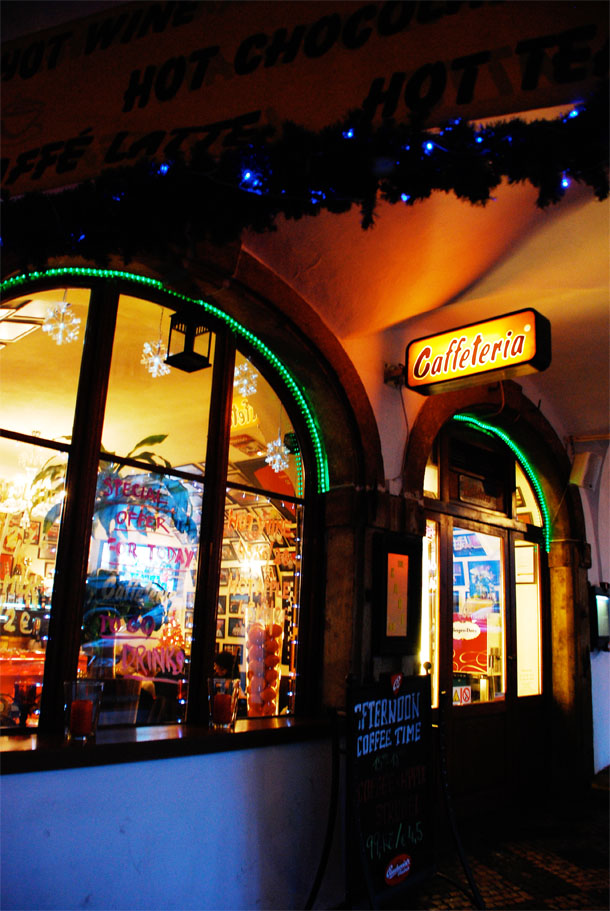
Prague has a very unique café culture with each Kavárna or café being a little different from each other. Most of them have history written on their walls with noted intellectuals, artists, thinkers and writers having met on their grounds. A café menu is extensive, serving delicious light meals and desserts. And interestingly most reliable if one is vegetarian.
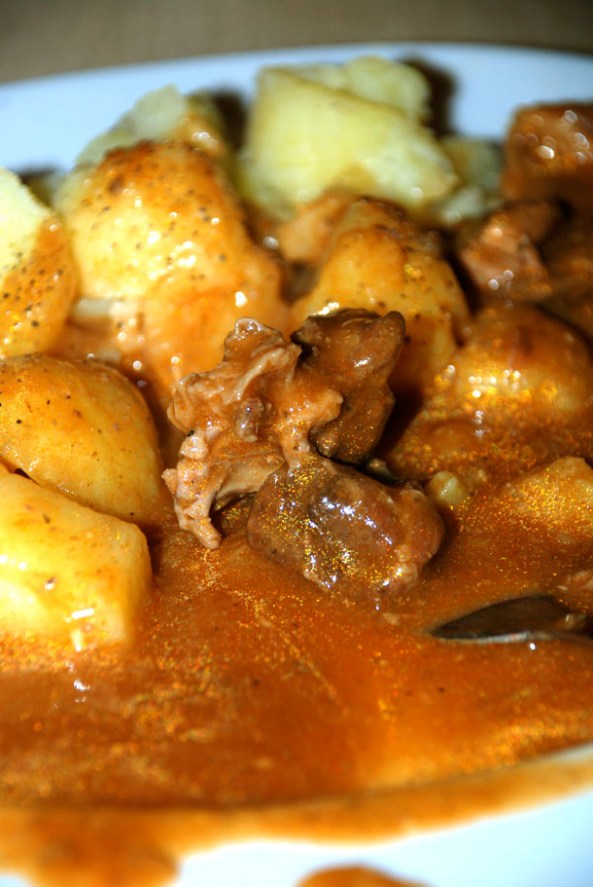
Dumplings, oh heavenly dumplings… whether it’s a small family run restaurant) or at exclusive restaurants like the Romantic in Grand Hotel Evropa, dumplings can be culinary subject of discussion. Knedlíky, as they are called, are either made from wheat or potatoes, the brambory. These are steamed and made into large rolls and sliced into smaller dumplings just before serving. Fluffy, light and spongy, the dumplings soak up the meat sauce of the Goulash that it’s served with, like a thirsty traveller gulping down. For a foodie traveller, the culinary journey just begins here. Often, the dumplings are filled with meat or spinach or sour cabbage, with caramelized onions and cabbage served as a Příloha or a side dish. The braised Czech Cabbage definitely isn’t the German Sauerkraut and is usually boiled in a light sugar sauce. Leaving Prague without tasting Goulash is a criminal offense. As our plates full of dumplings are guzzled down with ladles of thick Goulash stew, we are told that the Czech Goulash is very different from the Hungarian Goulash. While the Czech Goulash is a thick stew usually made from beef, onions, herbs and spices, the latter is served more like a soup.
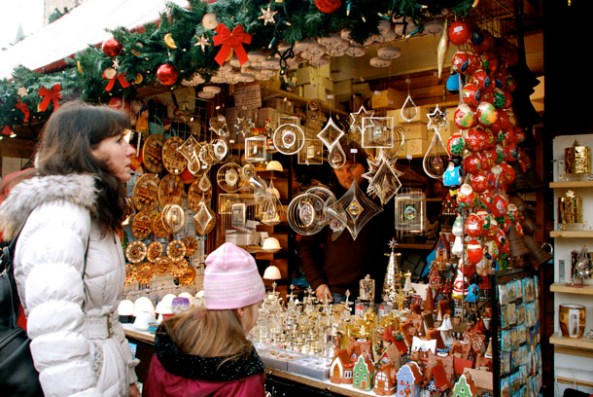
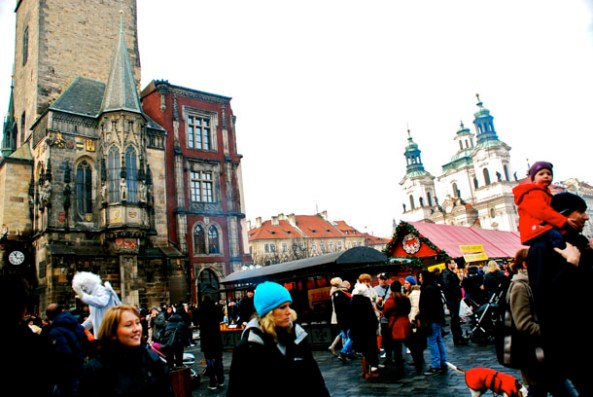
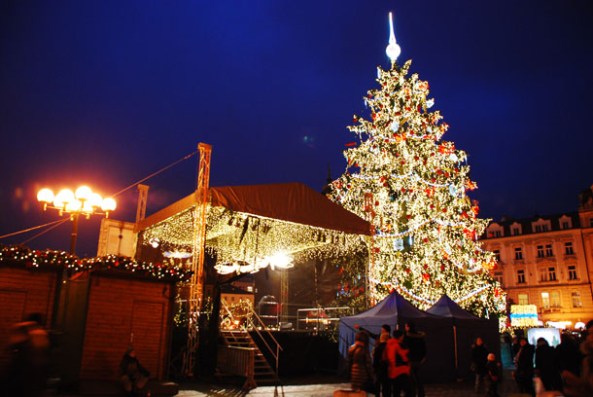
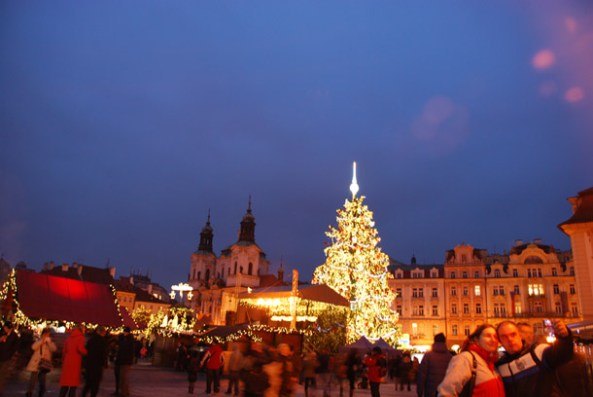
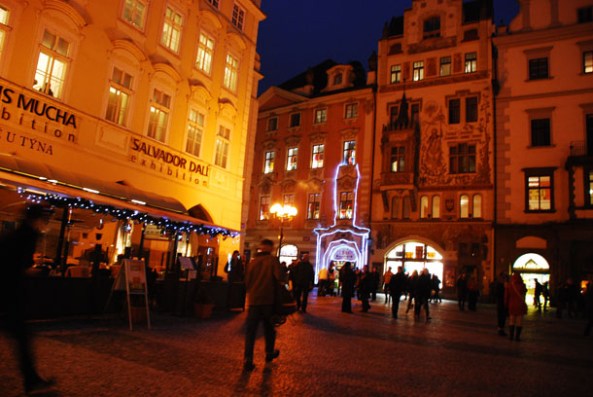
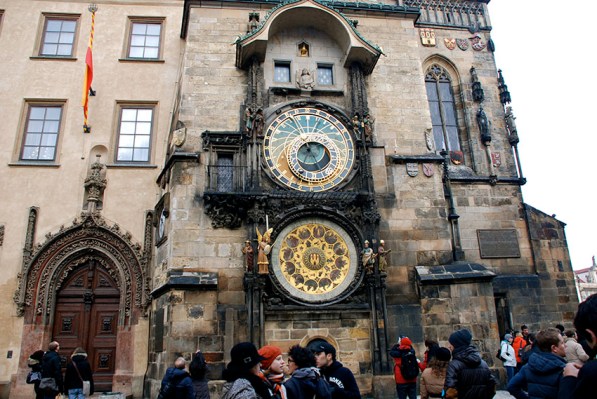
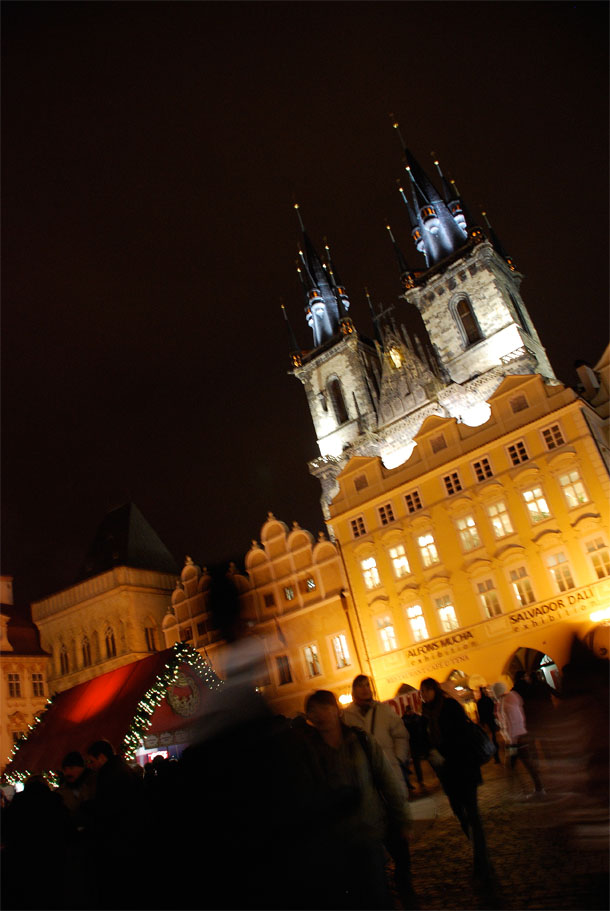
The Staroměstské Náměstí or the Old Town Square (above) is surrounded with expensive restaurants and cafés that serve fancy sandwiches and Svařák, the local mulled wine, the recipe of which varies from place to place, as does the price. Wherever I might have been during the day, I would make sure that I was there in the Old Town Square by evening time. Prague Christmas markets are considered to be one of the prettiest and the most beautiful in Europe. Indeed it was. Again, there would be a romantic mental musing of various Christmas markets that I had seen in Europe – Frankfurt, Rothenburg, Heidelberg etc. The decorated Christmas tree with the heritage buildings in the background, definitely stood taller than the others. It seemed more mystical as clouds hovered around it and like a slow motion scene in a movie, snowflakes started drifting down. I stood there, as if I was in a dreamy movie set - with a sense of déja vu. Hadn’t I seen this all? In fairy tale books and movies?
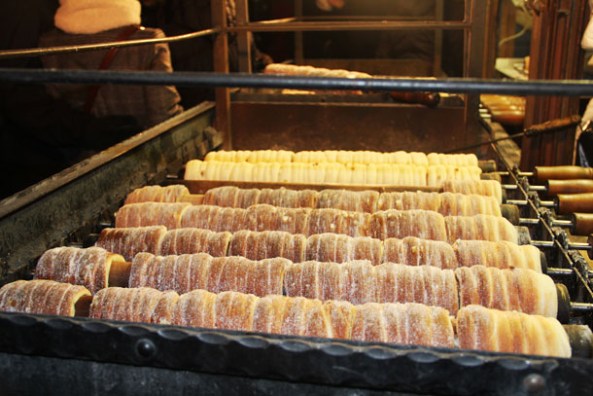
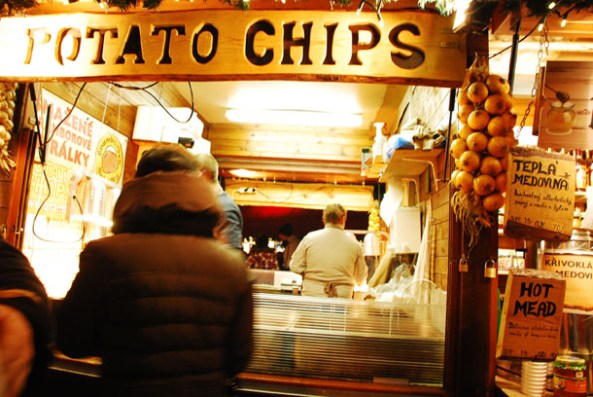
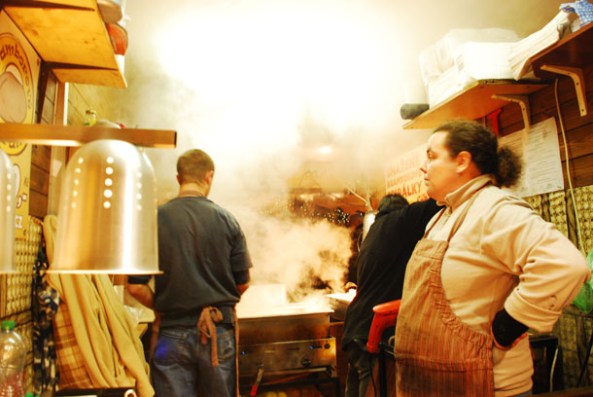
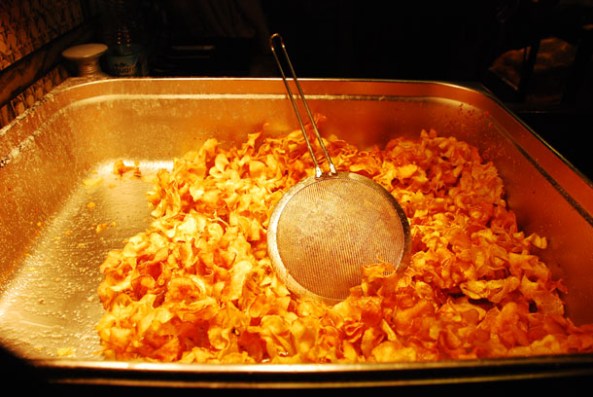
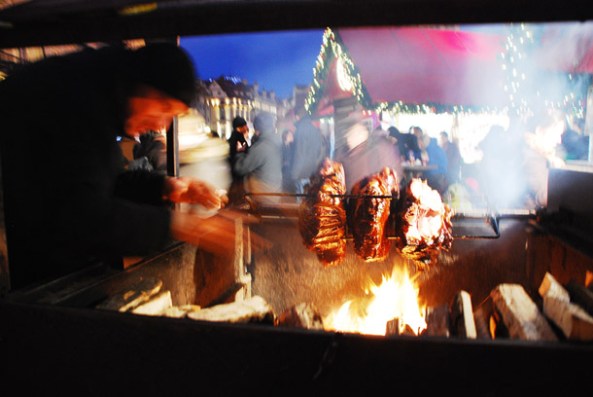
The stalls selling traditional Christmas goodies and Czech cake and sweet pastries like Trdelink (the first image above) flooded the square in front of the Orloj or the Astronomical Clock. This is the heart of historical Prague. To feel it throb, please take a seat in one of the restaurants in the huge courtyard of Old Town Square. As I write down my magical Prague experience, I can almost visualize the souvenir shops selling glittery artifacts and swiveling stars made of Bohemian crystal. I can hear the curly, crispy Potato Chips being deep-fried and almost sniff the oily aftermath left behind in the huge wok. I know that the Lamb will soon be slow roasted over open fire (all the above pictures)!
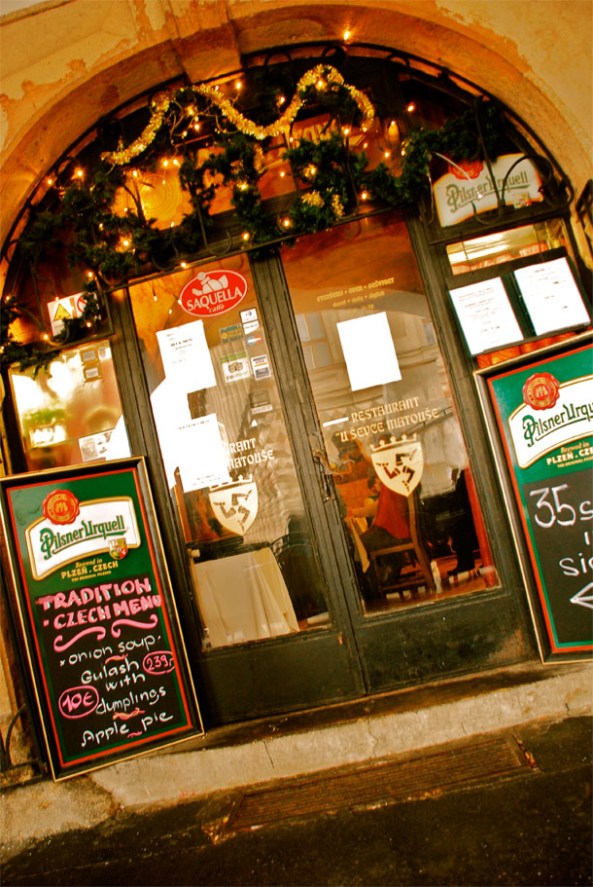
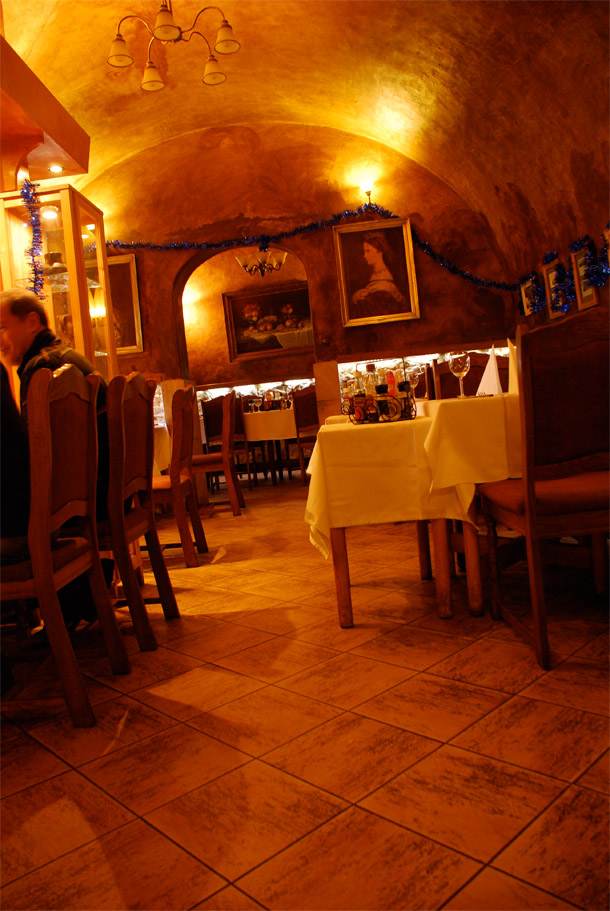
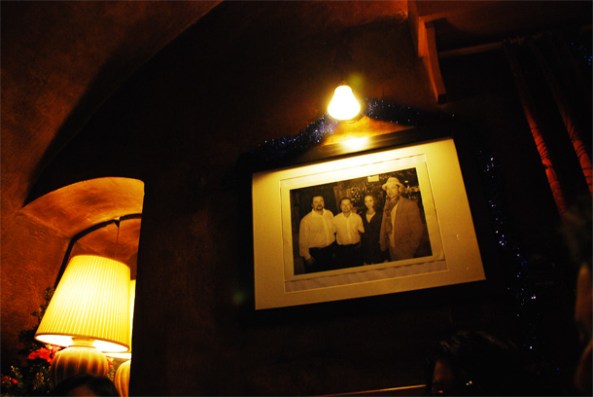
Done with the Old Town Square! A long sigh and I am back to reminiscing other parts of Prague that deserve equal mention – for example, the Nové Město or the New Town. It boasts of quaint restaurants housed in old architectural buildings surrounding the Prague castle, and usually serves traditional Czech food. A walk over the famous Charles Bridge exudes a typical European charm with clinking of glass, bonhomie and loud chatter over a hearty meal, al fresco table settings, and live music wafting faintly through the air. It was here in Hradčany, that I stumbled into Restaurant U Ševce Matouse (above), a restaurant that once housed a cobbler’s shop, had the most sublime Christmas meal, at the most reasonable price. The restaurant was also known as Mathew the Cobbler restaurant, and Mathew, who owns the restaurant, personally looked after each of us, as if we were guests at his home. and realized that this was one of the most popular restaurants in that area, frequented by the likes of Anjelina Jolie and Brad Pitt (as evident in the above picture). I do have proof to show – I have a picture of myself clicked in front of a framed picture of the famous couple!
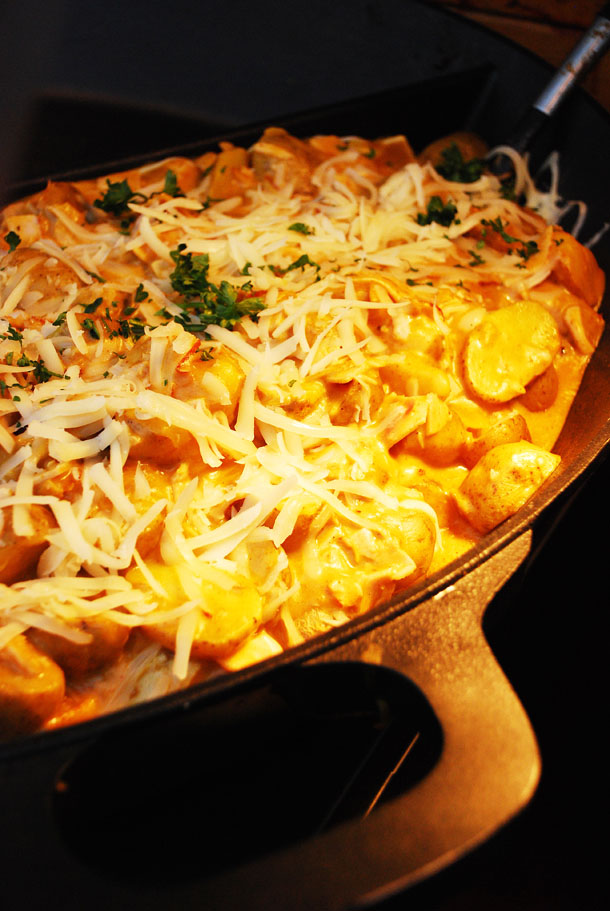
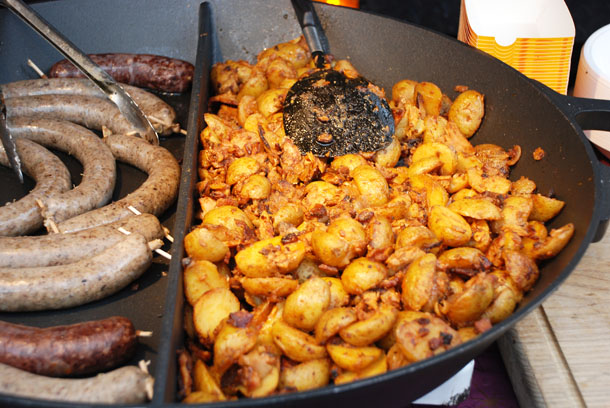
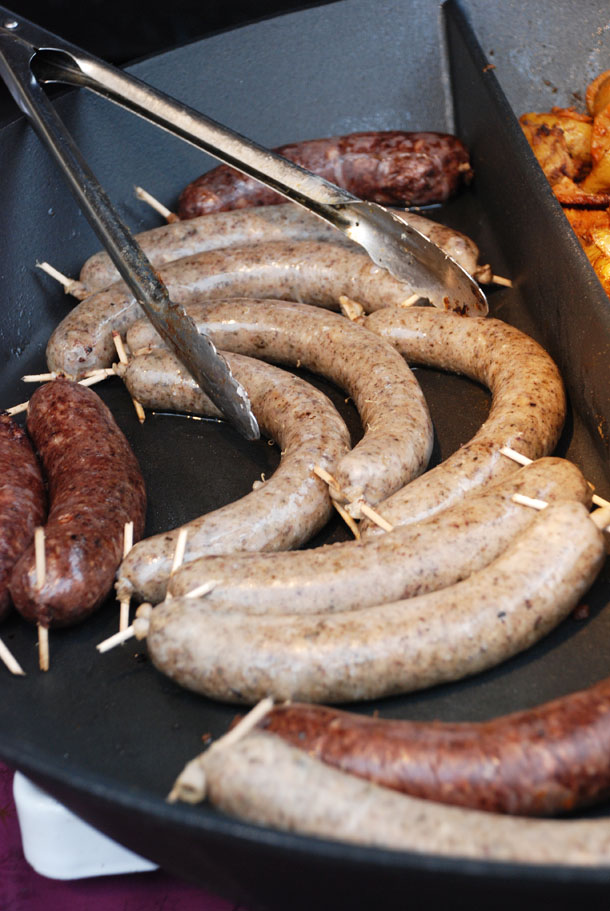
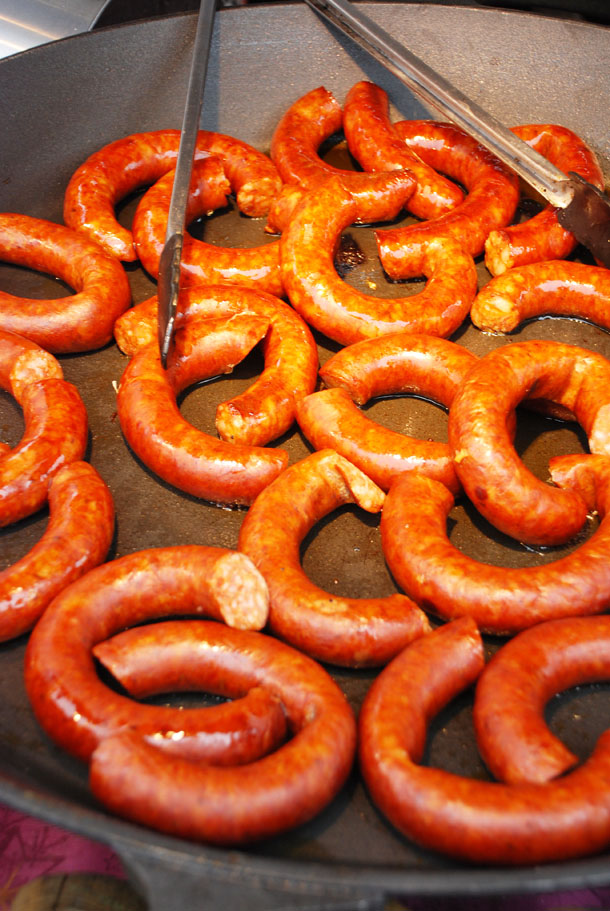
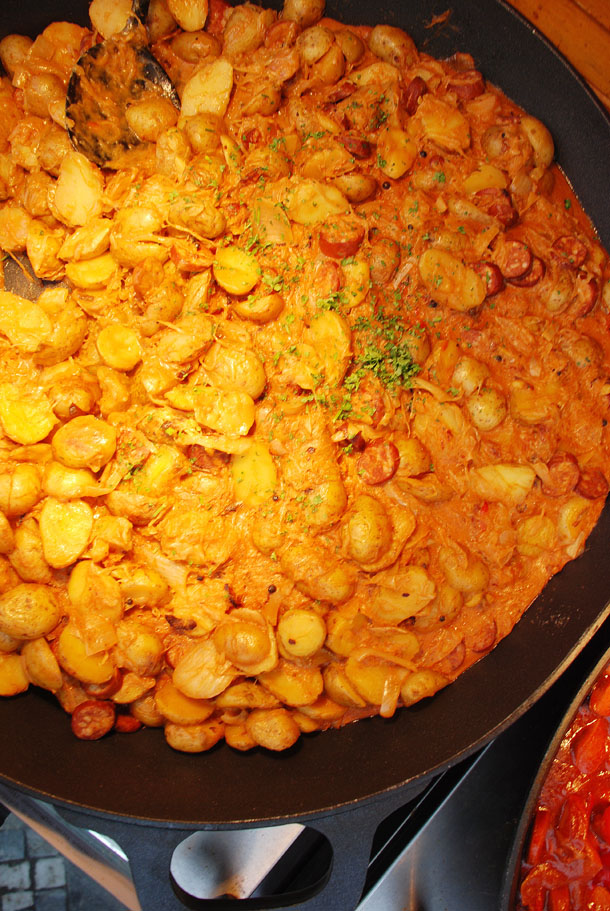
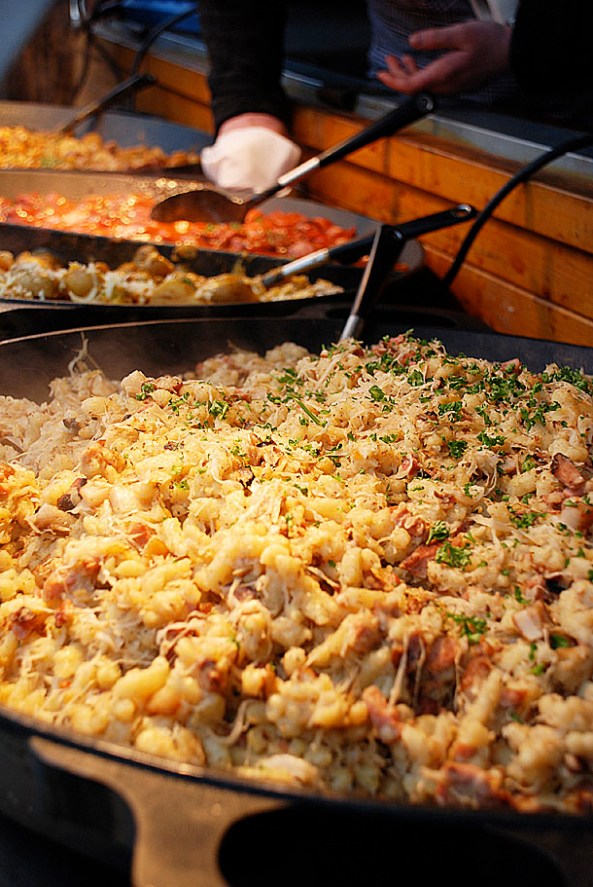
Look out for freshly cooked traditional Czech food sold by weight, served by the jovial Czech vendors at makeshift food stalls (above pictures) specially set up for Christmas and Easter around the Wenceslas Square. The variations of sausages and traditional Czech food served here are mindboggling – Paprikový tocenec or the Beef sausages, the Vinná klobása where sausages have been coiled up or the Grilovaný syr, the cheese patties and different dishes of potatoes or the Bramborové - boiled, roasted, mashed potatoes french fries and of course the famous Bramborové knedlíky or the potato dumplings. The star dish of all the potato frenzy must be the Czech Halousky - a smaller but insanely tastier version of gnoccis made with flour and mashed potatoes (the last image above). I am guaranteeing that it is here that you are bound to fall in love with a Bramborové or our very own Potato in its many Avatars. Or may be the Czech Halousky!
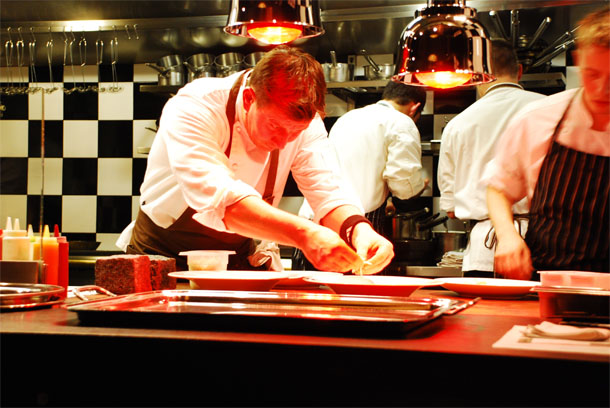
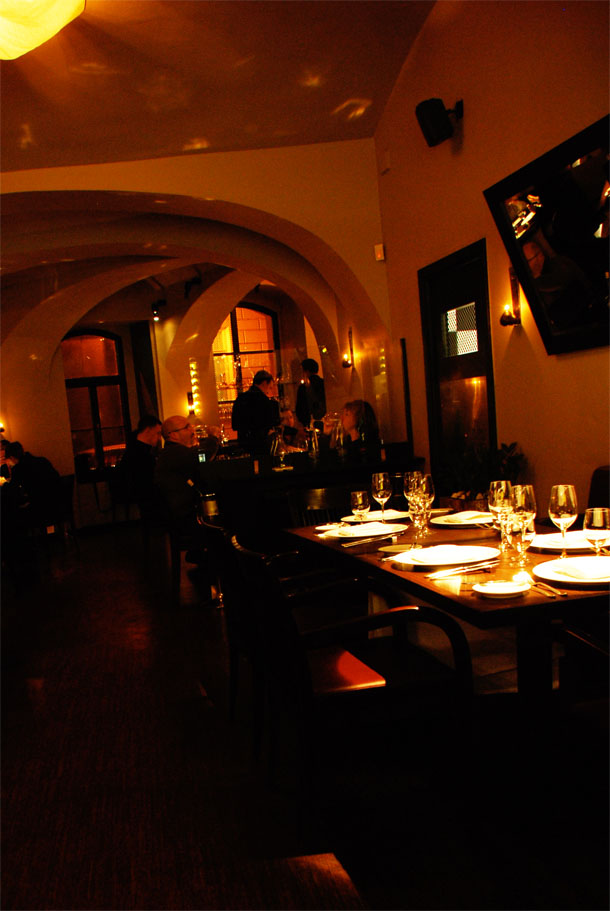
Over the recent years, Prague has definitely come up the food radar, the proof being the recognitions from the Star that matters - the Michelin star. Allegro, located in the Four Season Hotel in Prague (sigh, but the restaurant is closed at this moment), received the first Michelin star amongst all the ex-Communist countries of Central Europe. As of 2012, Prague is home to two Michelin star restaurants – the Alcron in Radisson Blu Alcron Hotel and La Degustation Bohême Bourgeoise, in 18 Haštalská Street, the latter serving food that I would call art on a plate. La Degustation’s menu has contemporary Bohemian cuisine based on 19th century old school Czech cuisine and has been marked by Anthony Bourdain as one of the best culinary experiences in the world. The Czech menu of Le Bohême is an interpretation of the refined culinary school of Marie B. Svobodová from the late 19th century and is inspired by seasonal and regional availability of ingredients that go into the preparation of each dish. For a serious foodie, dismissing an experience here would have been sacrilegious. So I ended up spending my entire shopping budget on one evening of 'seven course' degustation menu tasting, paired with wine. The experience was almost like watching an opera from the VIP circle. If I can see you frown at that, there is also an eleven course degustation menu on offer, which neither my belly space or budget permitted this time.
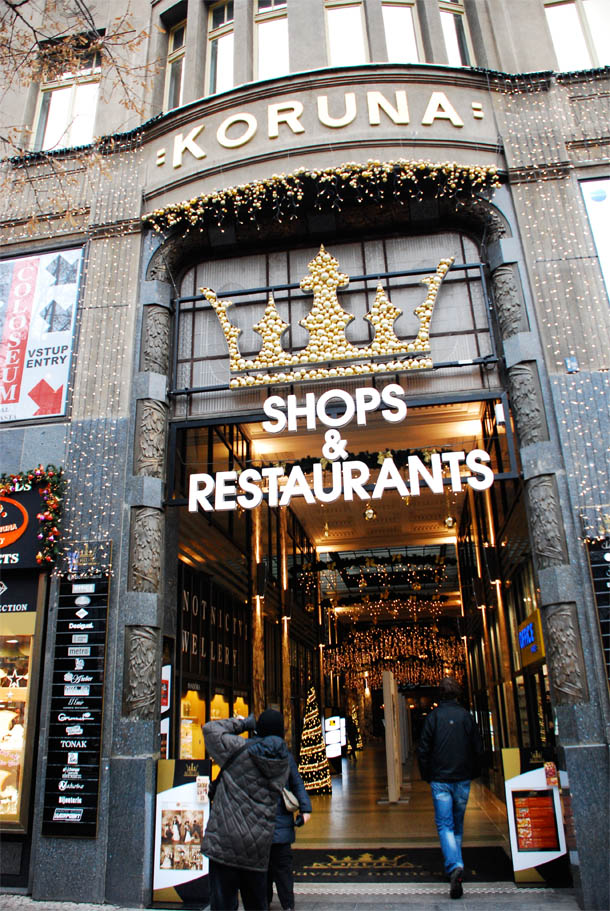
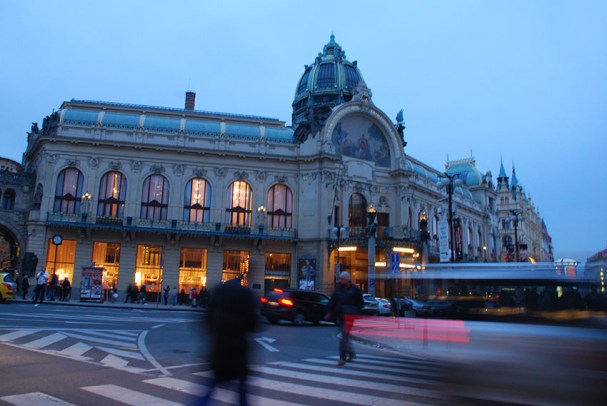
Michelin or non-Michelin, street food or fine dining, café or a restaurant, Prague was an unexpected culinary revelation. With many cultural influences, rich history, heritage, taste variations and intricacy amalgamating in one cuisine, I won’t be surprised if Prague becomes the next European culinary destination. And if it is Christmas then, it is definitely a magical destination too. I hope I’ll still be able to afford my return air tickets once it comes into the ‘hot travel destination’ list!
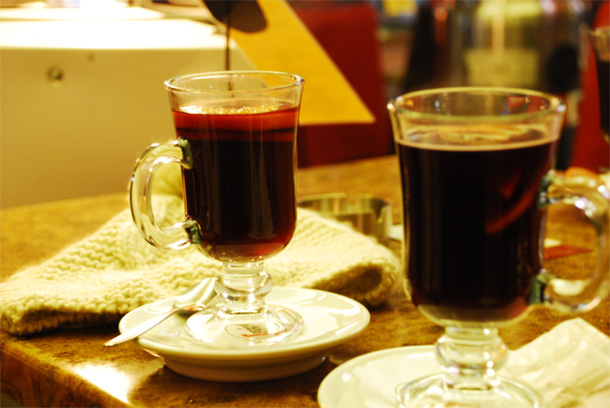
Hope you liked my culinary sojourn in Prague as it appeared in this festive issue of BBC GoodFood ME. If you are visiting Prague while the Christmas market is on (12th January 2014), I do hope that you find this article useful. Enjoy the festive season while I mull some wine at home right now, Czech style!
Unblogging it all… Ishita
Disclaimer: This isn’t a sponsored post, nor are there any affiliated links. This is a non-paid collaboration with BBC GoodFood ME. The subject, story, opinions and views stated here are my own and all my bills on this vacation have been self paid. We flew by Austrian Air via Vienna and it cost us approx AED 3,200/person and we split up the Apartment cost us AED 800 for 5 nights – the cost was split between 6 of us. The food bills accounted for maximum AED 1,000/person. In addition to this, I spent CZK 3450 or AED 620 for the 8-course degustation menu at La Degustation Bohême Bourgeoise.
While you enjoy reading my posts with lot of visuals, please do not use any material from these posts. Do join me on my daily food and travel journey on Instagram, Facebook, Twitter and Pinterest.
SaveSave
BE SOCIAL. SHARE THIS!

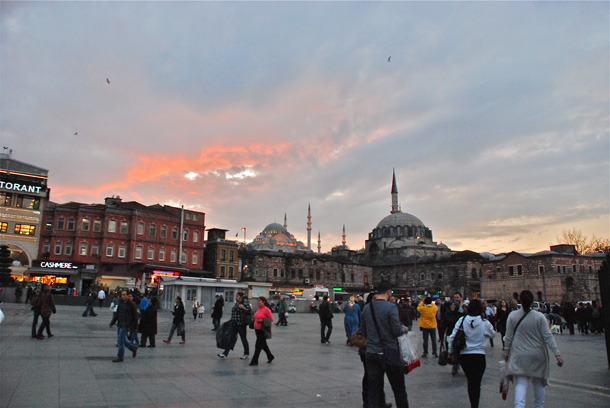
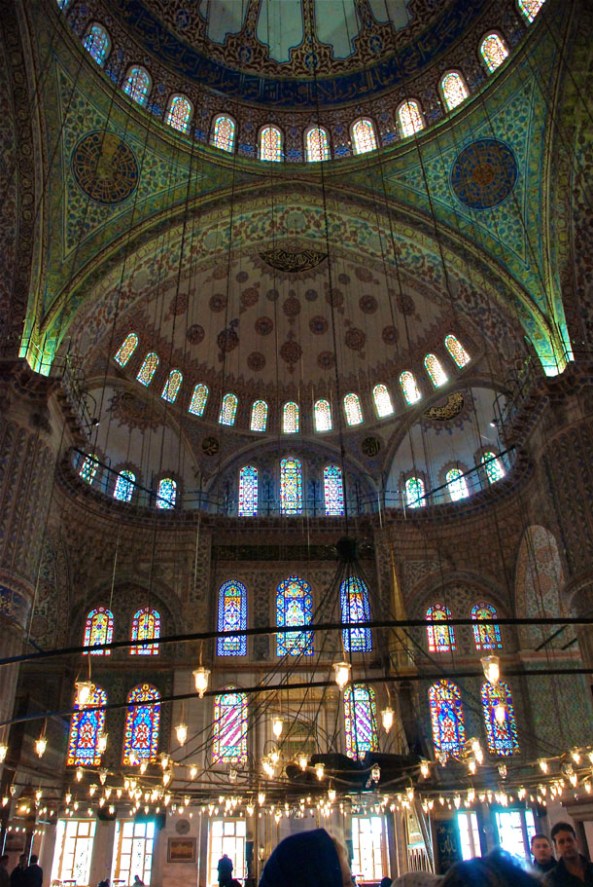
We love travelling and although each place that we’ve visited holds a special charm for me, Istanbul left me spellbound. I found the city absolutely fascinating – a myriad of art, culture, cuisine and religion. It was like a kaleidoscope and put my senses on an overstimulated mode {reminding me very much of Kolkata, the city that I come from}. The charm of old buildings combined with the quirkiness of the modern Istanbul peeping through it that effortlessly blended into a palpable throbbing that could be felt at every corner, each historic site that we visited and each alley we passed by. Every single brick in each building seemed to have experienced multiple layers of existence as different conflicting religious and cultural beliefs settled in at different periods in history. The city is a foodie’s paradise, from street food to electrifying nightclubs to exclusive restaurants. My earlier posts elaborately chalk out my culinary journey in Istanbul. This post is a photo journey capturing Istanbul throughout the day and as night cast its spell on the mesmerizing city until the day when I left. And it ached to leave the city at the backdrop of the setting sun and a swarm of people – all of them strangers who had engulfed my senses during my short and hurried stay.
‘Till Dusk Do Us Part’, here’s Istanbul in pictures. Many pictures to be precise!
Unblogging it all… Ishita
PS: A round up of the earlier posts, starting with the most recent post:
• A Culinary Journey of Istanbul | From Street Food To Fine Dining
• Will You Read My Post on Turkish Ice Creams If There Are No Snapshots?
• One Magical Night In Ortaköy | Istanbul
• Turkish Meatballs or Izgara Köfte | Sultanahmet Köftecisi, Istanbul
• Drenched in Turkish Tea And Sugar Cubes | Grand Bazaar, Istanbul
Sultanahmet Camii or the Blue Mosque…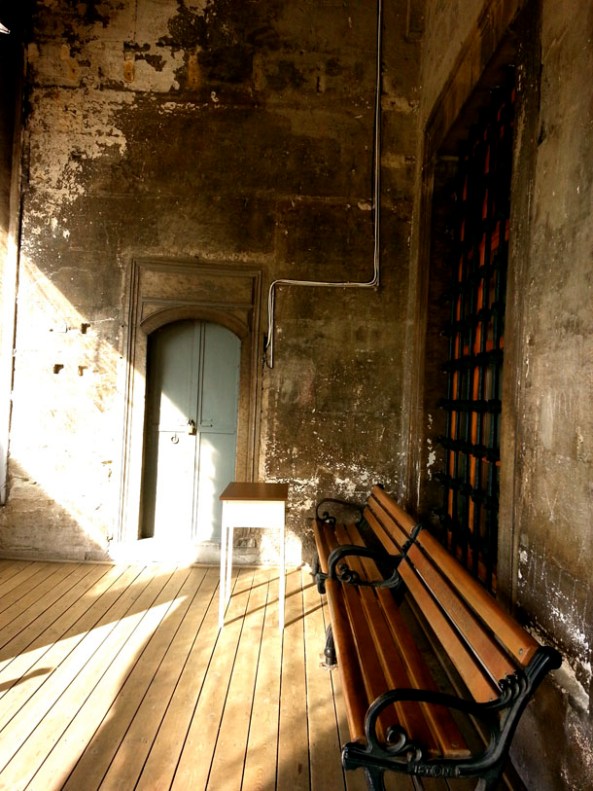
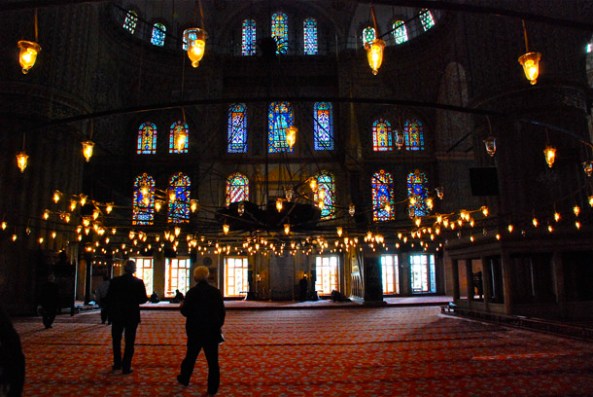
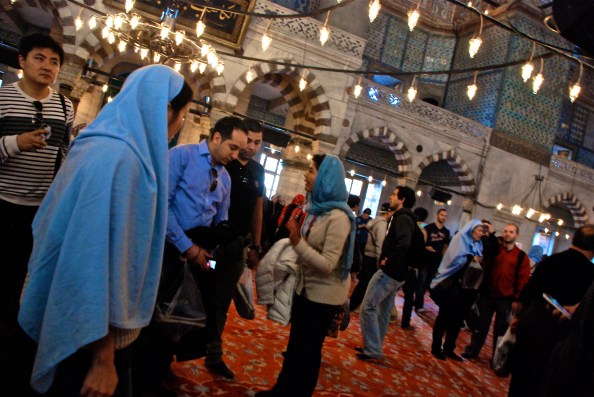
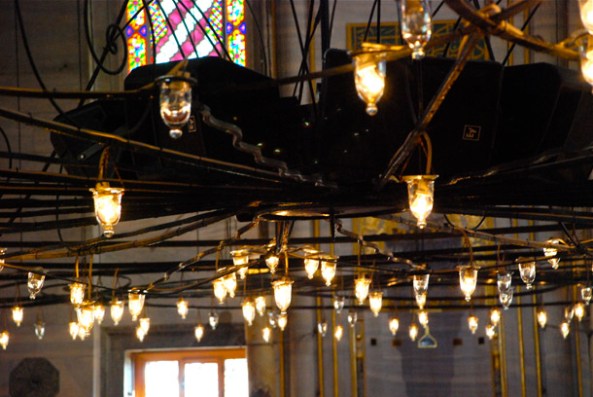
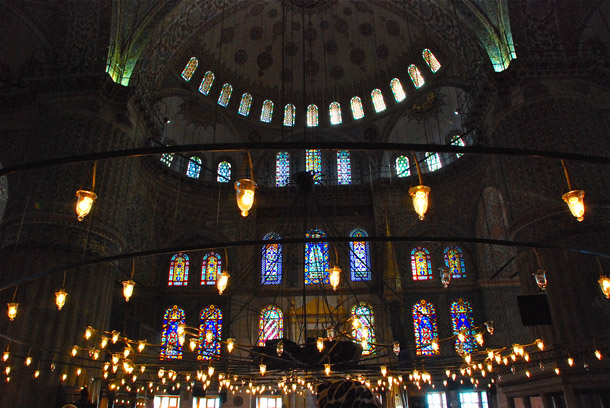
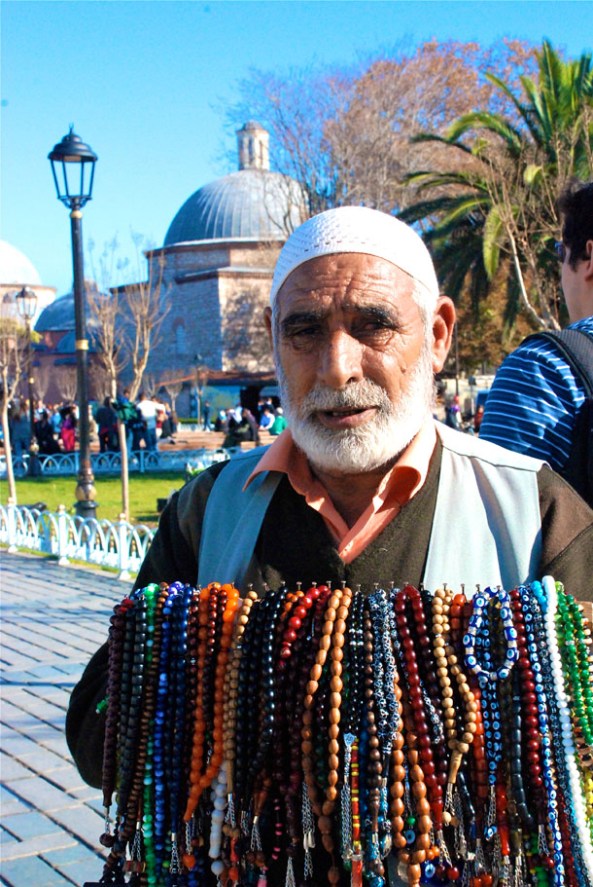
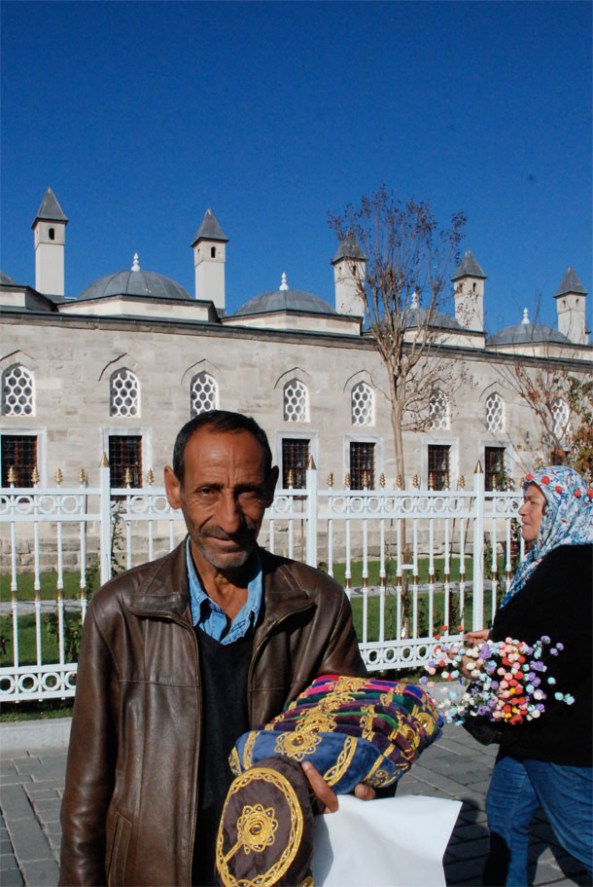
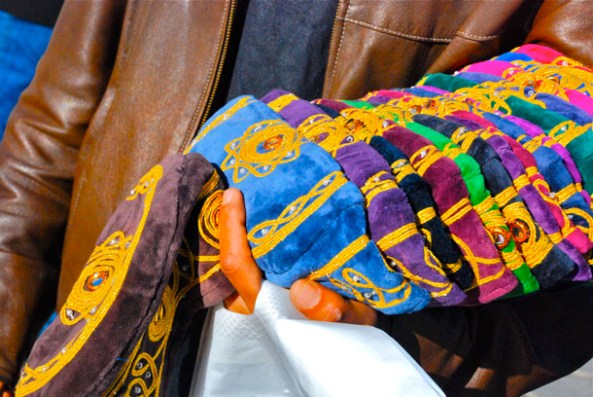
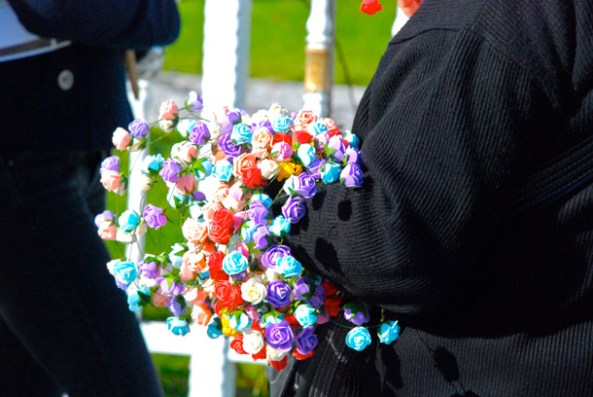
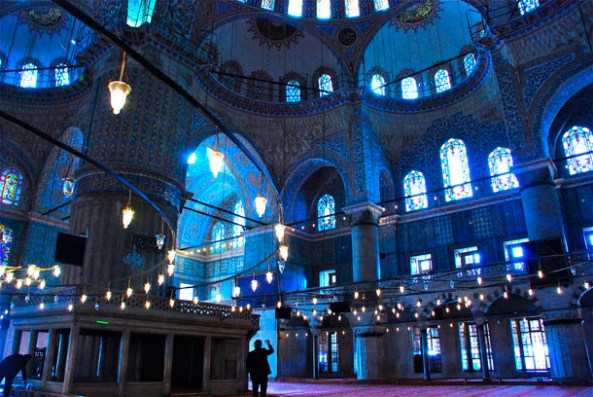 The strangers who became familiar in the Sultanahmet Square…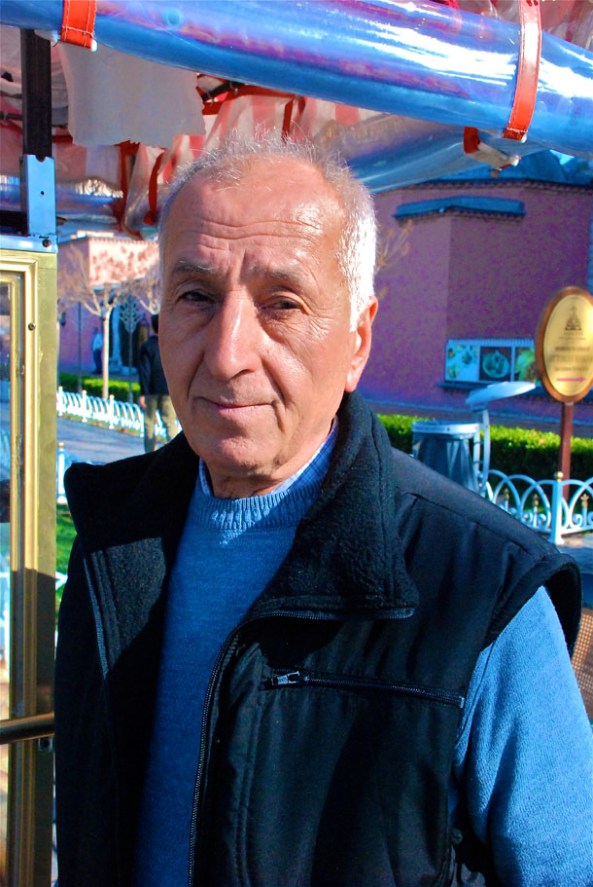
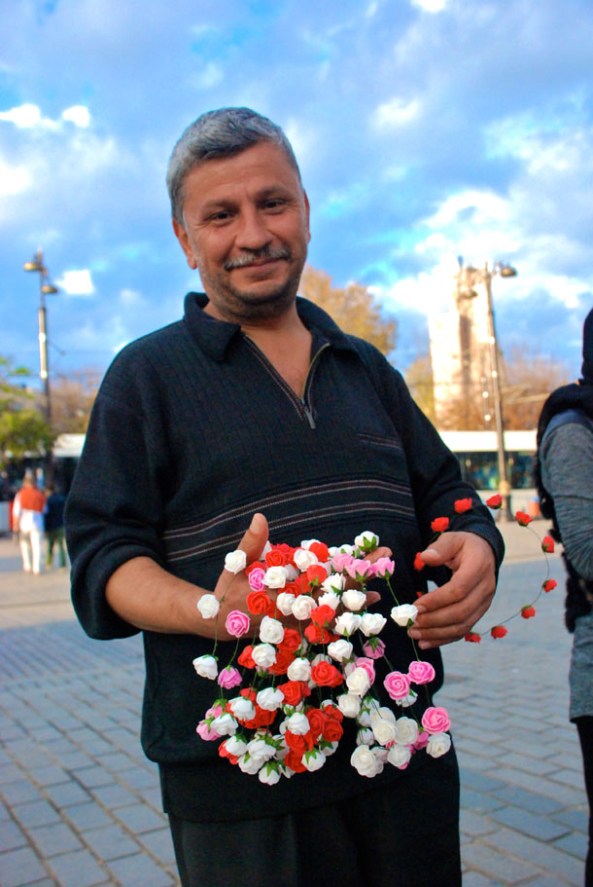
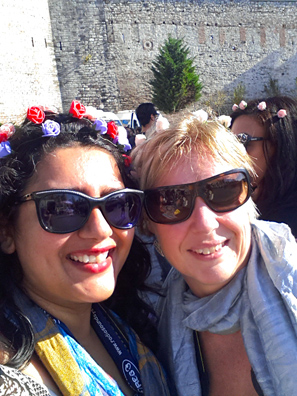
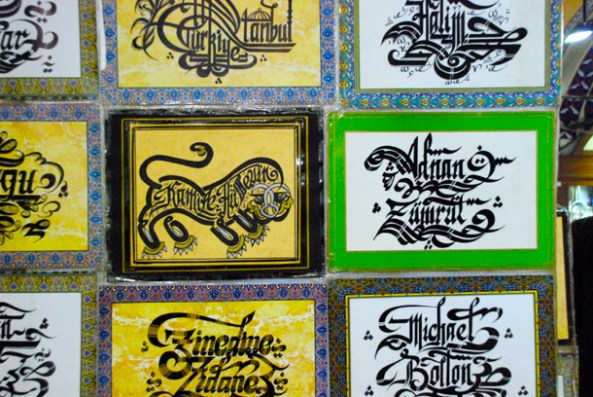
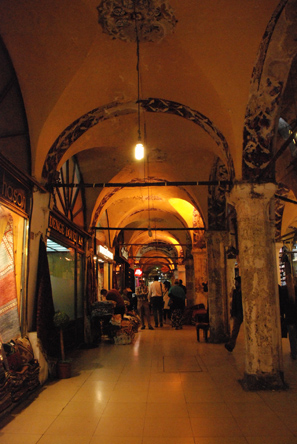
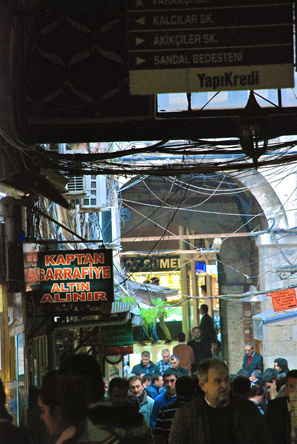
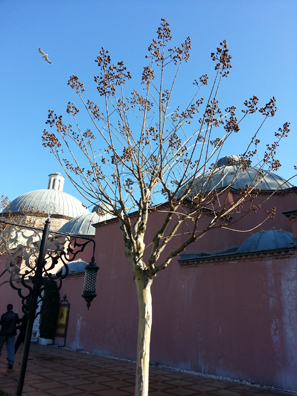 The kaleidoscopic Kapalıçarşı or the Grand Bazaar…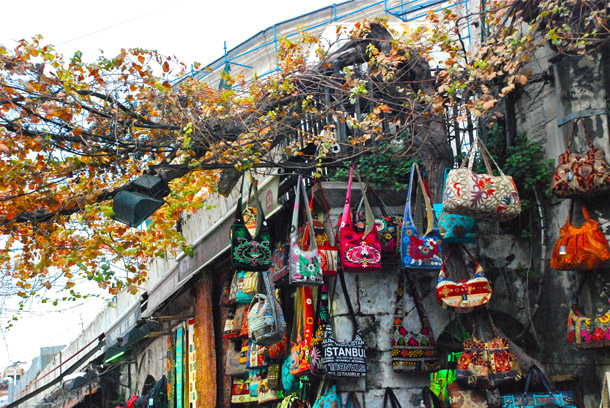
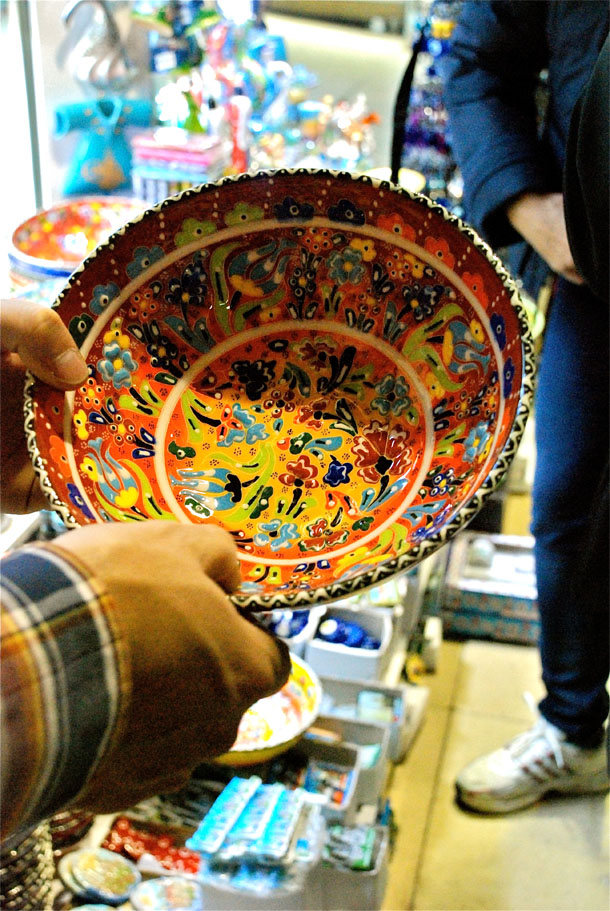
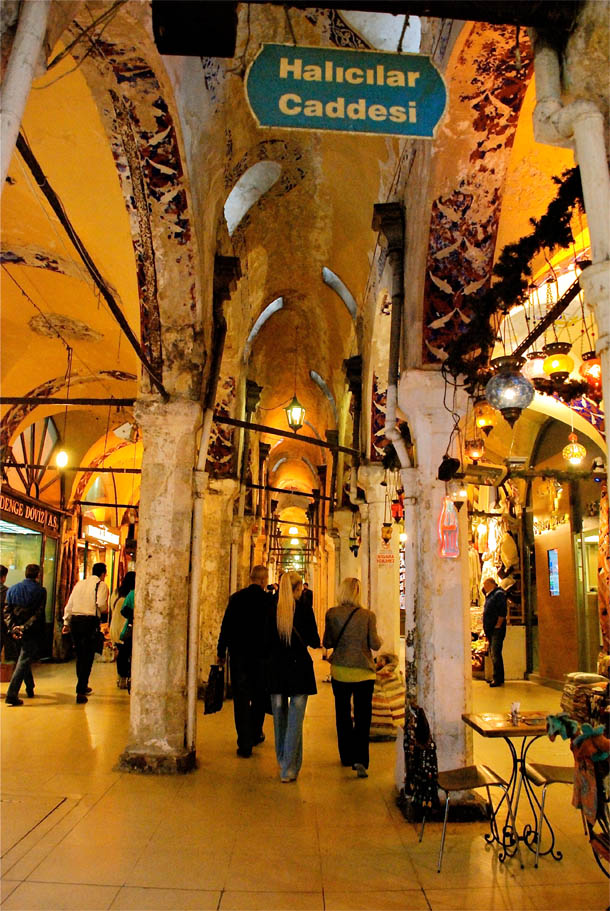
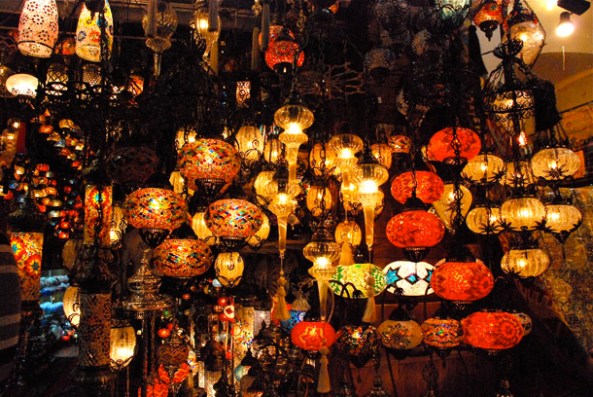
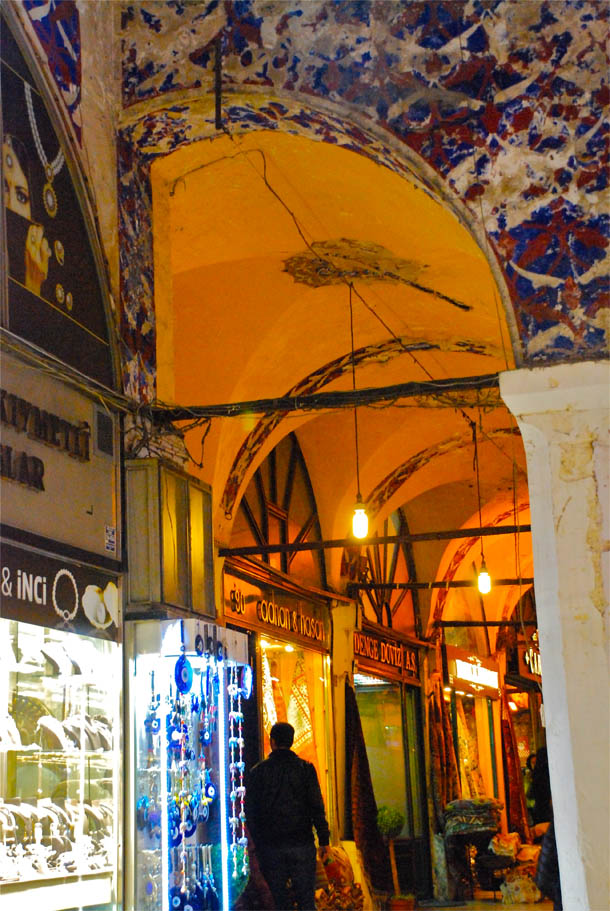
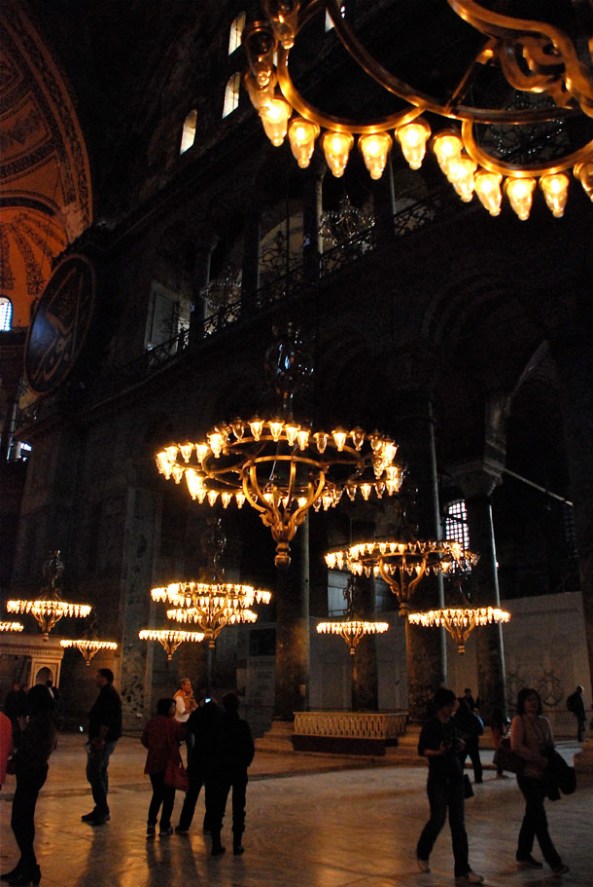
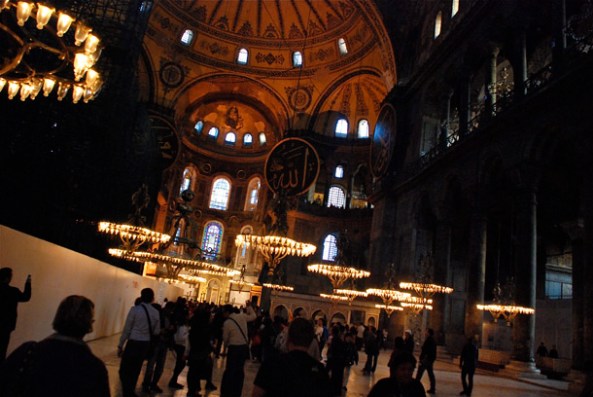
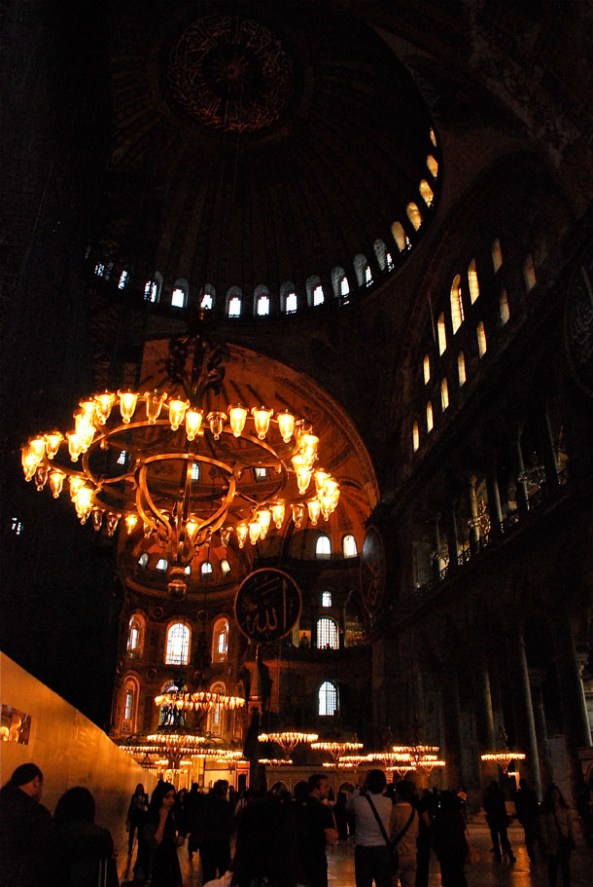
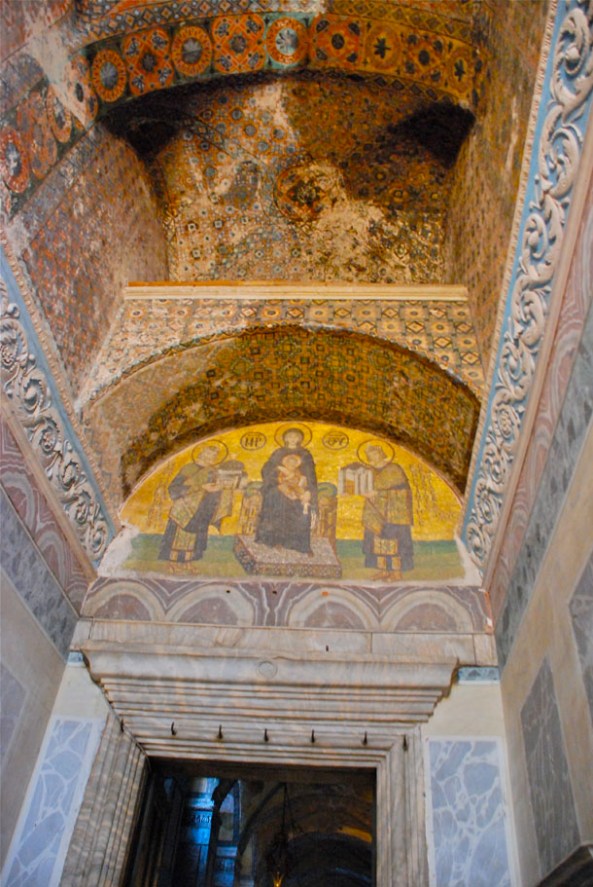
 The mystical Ayasofya or Hagia Sofia Mosque…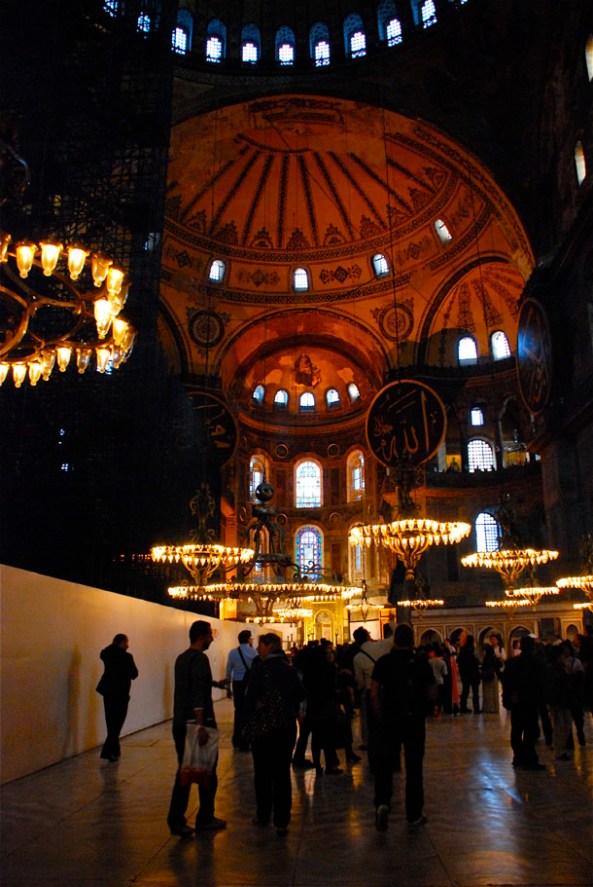
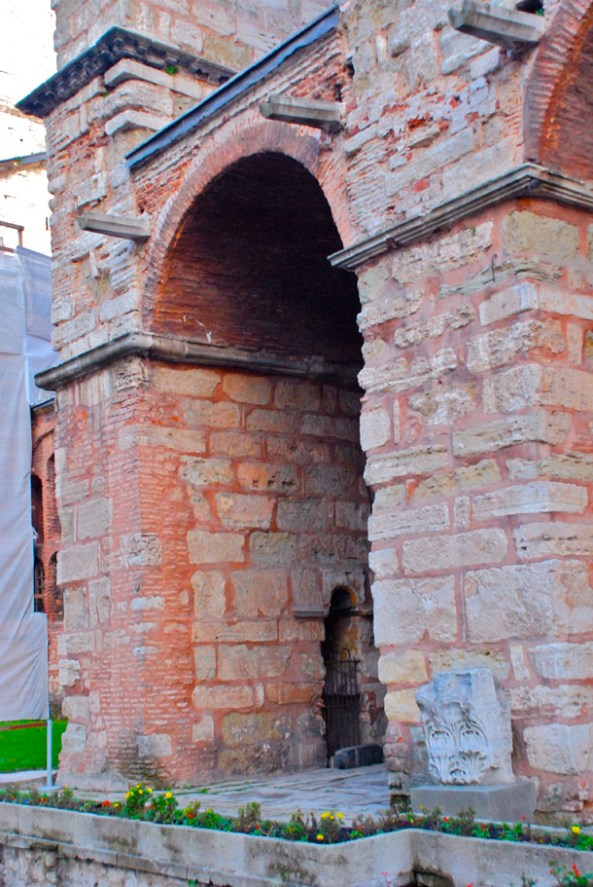 Topkapı Sarayı or the Topkafi Palace (photography isn’t allowed inside the palace museum)…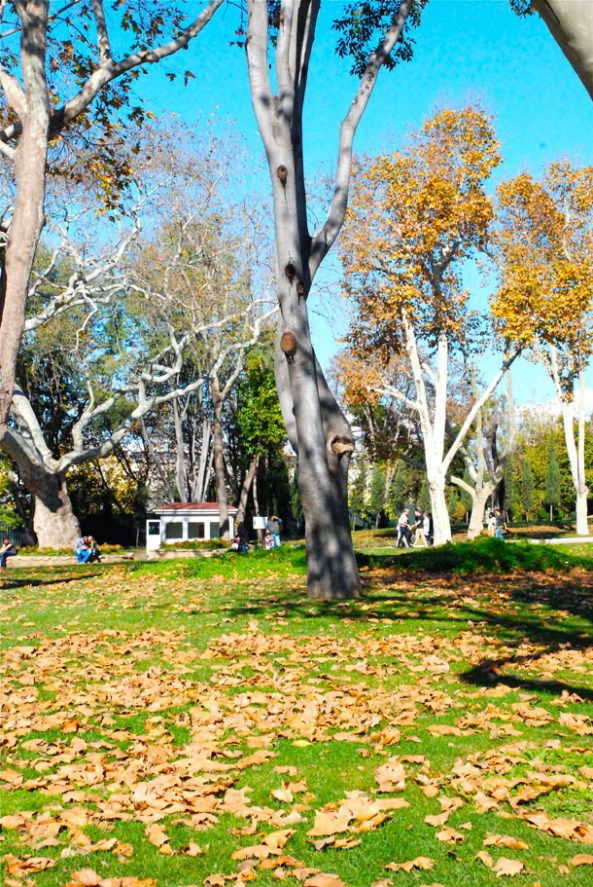
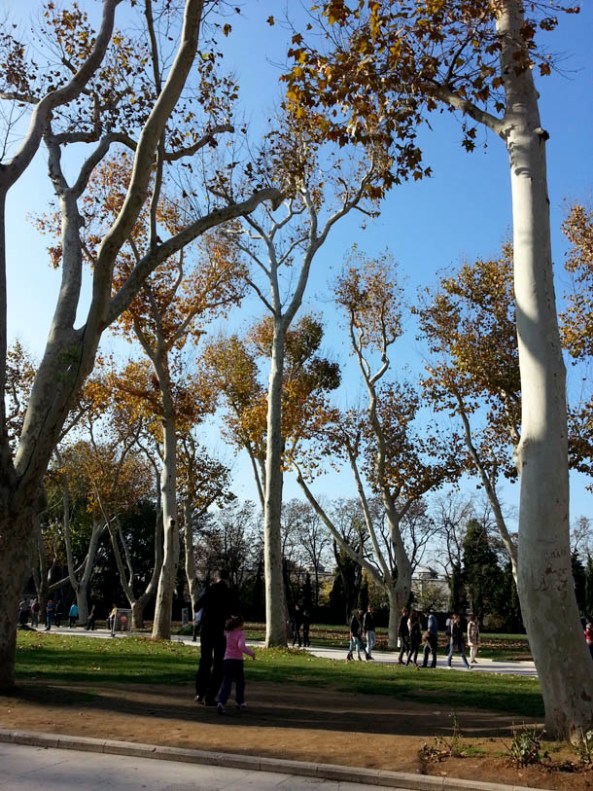
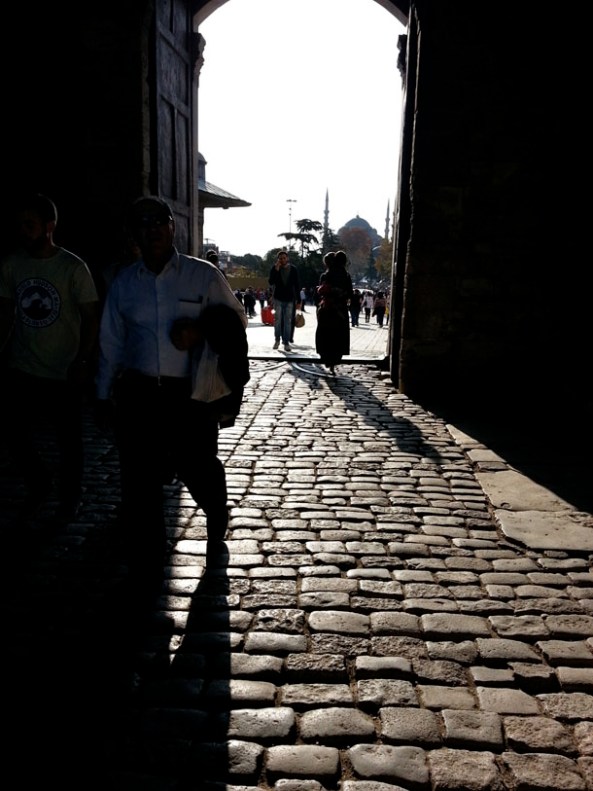
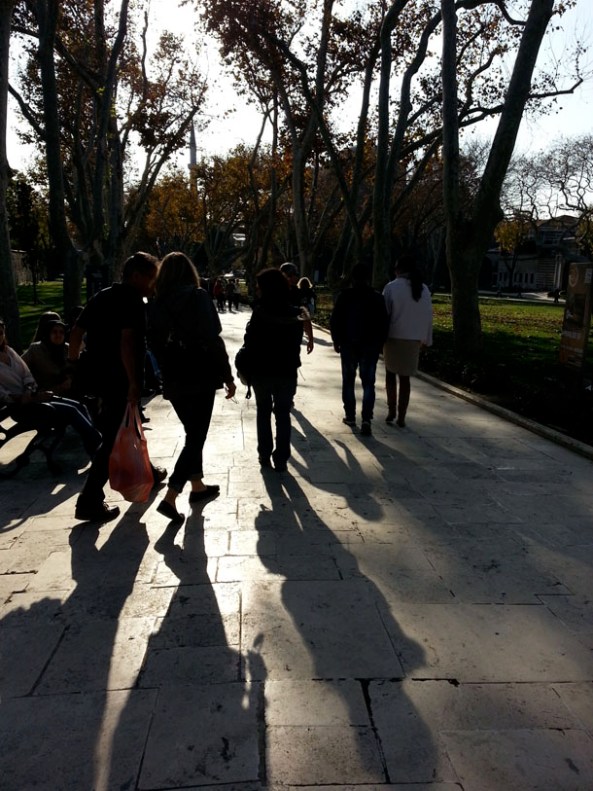
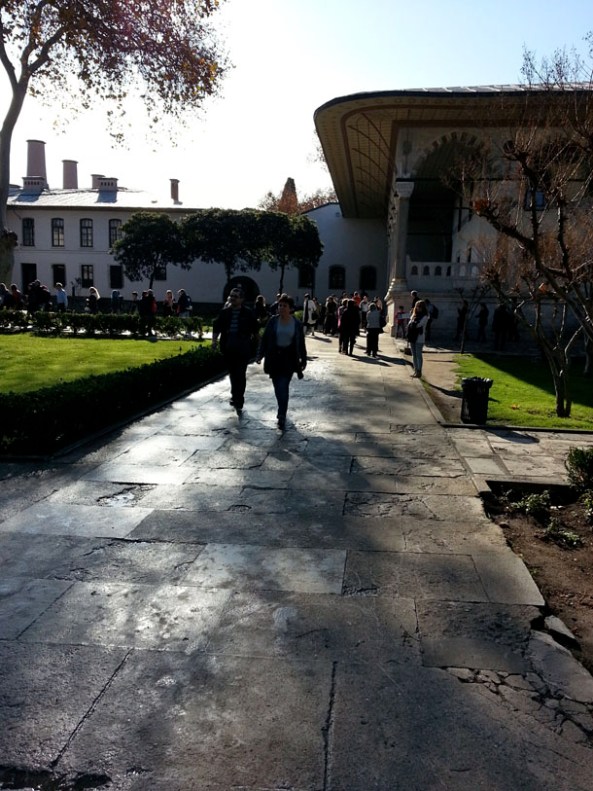
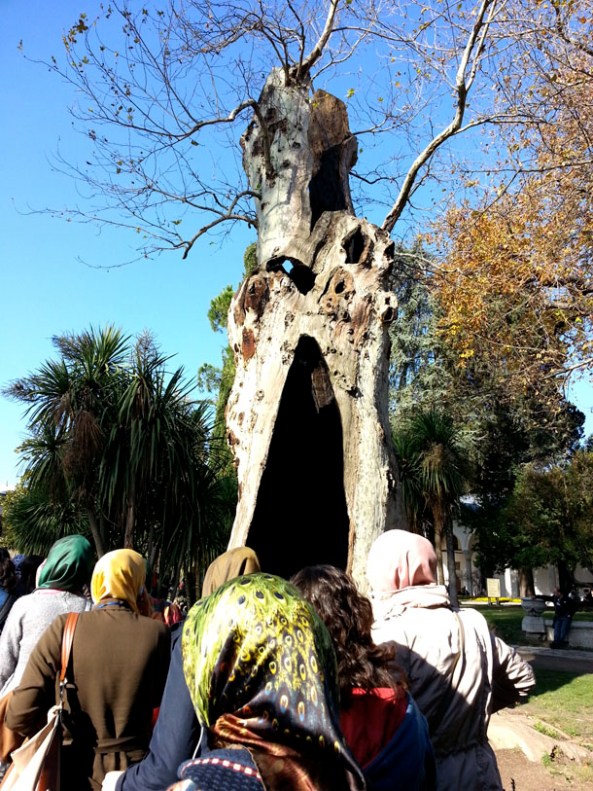
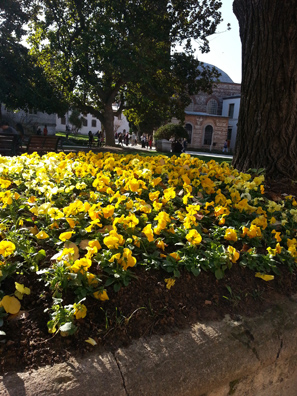
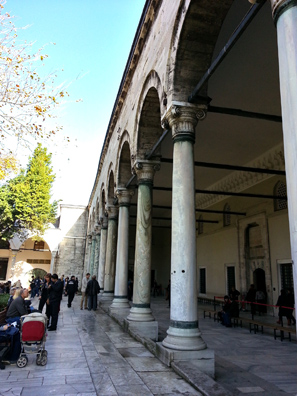
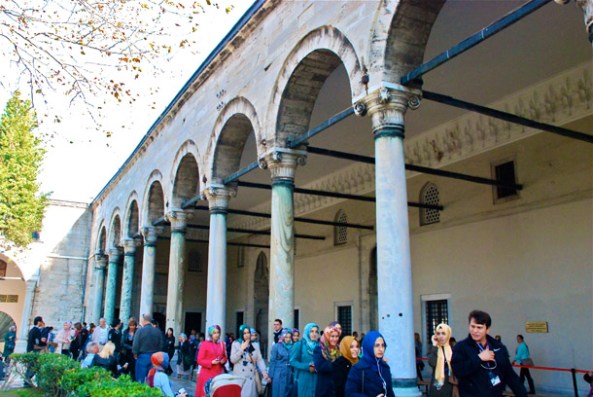 The beautiful fall colors and people in the Sultanahmet Square…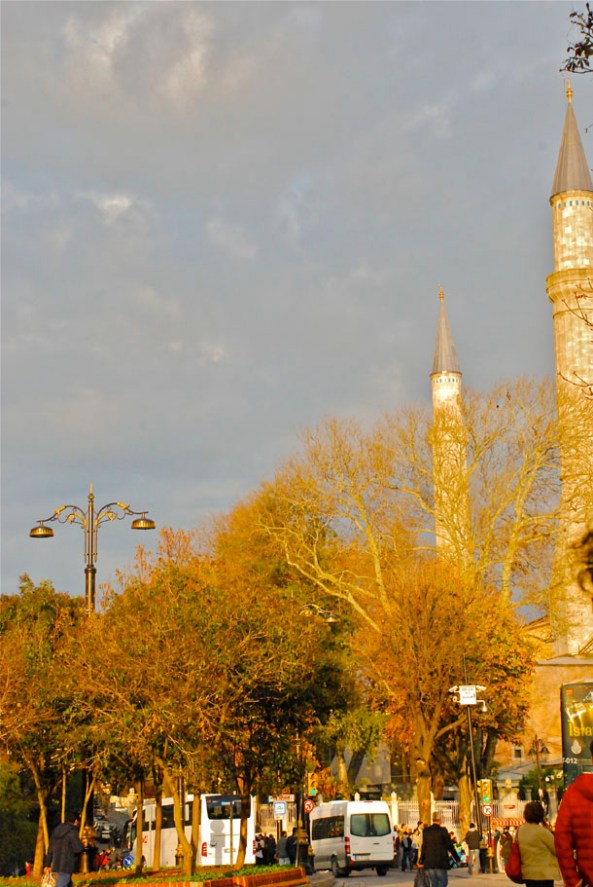
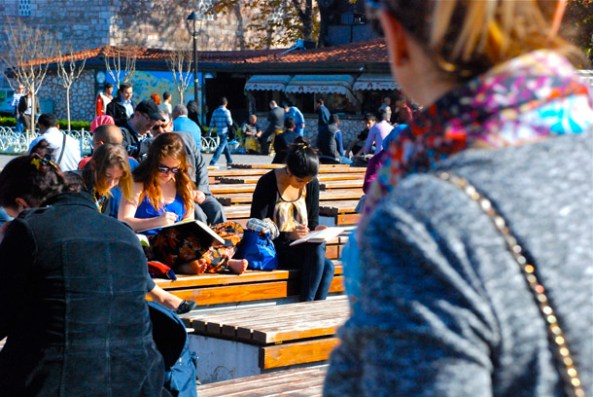
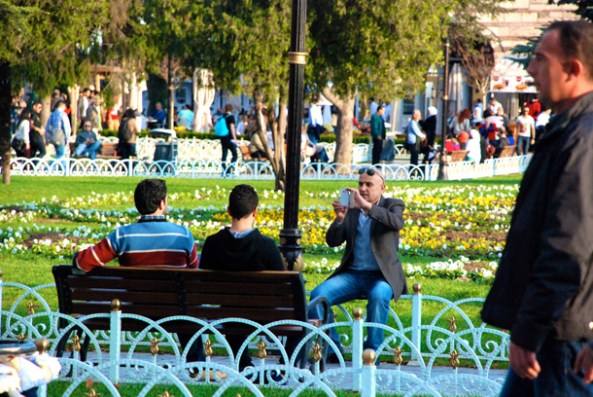
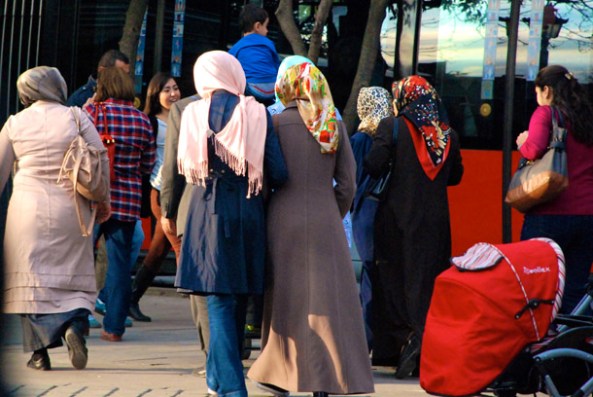 Istanbul at night time – view from Istanbul Sapphire, the tallest tower in Europe and then in the backstreets of the magical Ortaköy…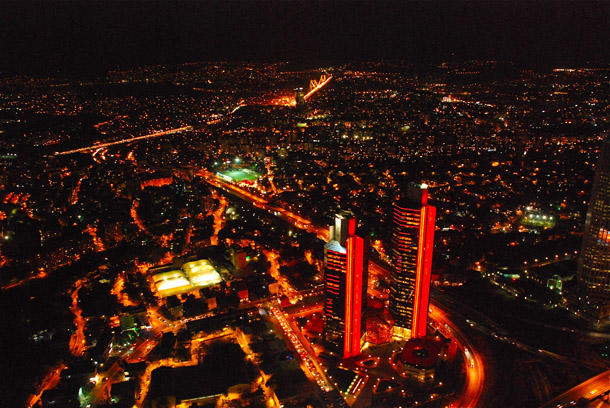
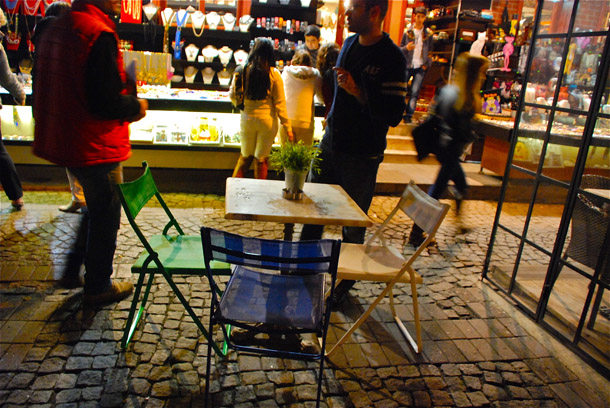
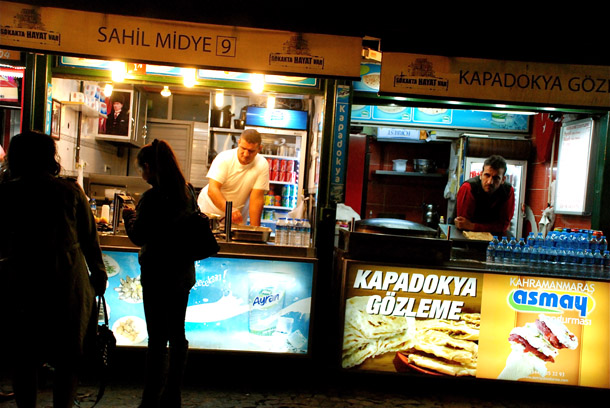
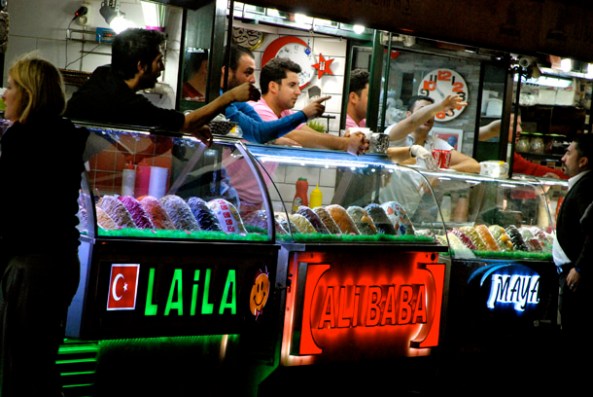
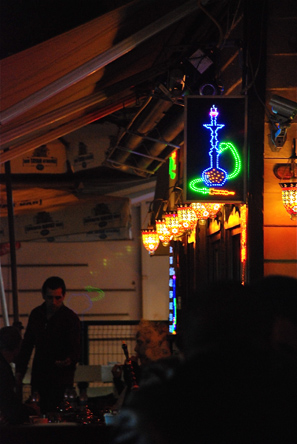
 Walking along the backstreets through the alleys of old Istanbul as we arrived at the Bosphorus shores…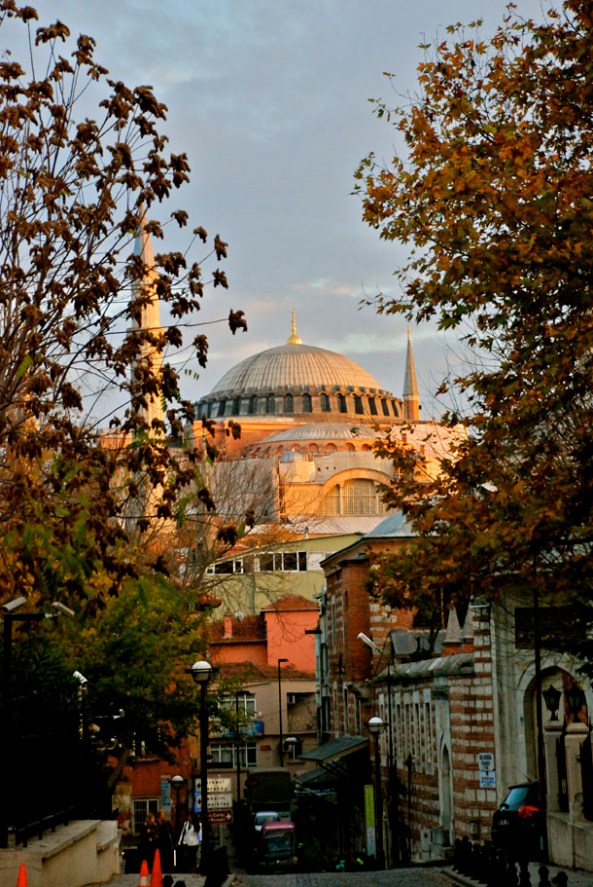
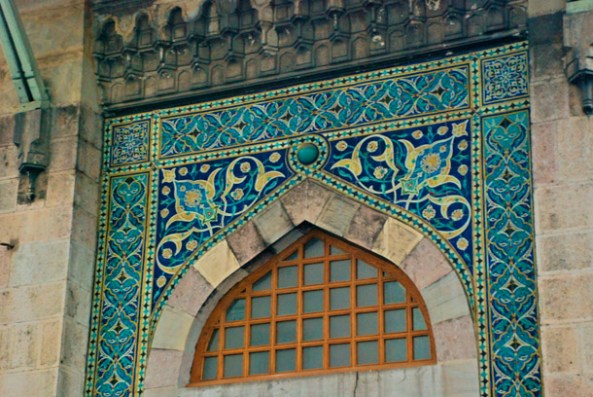
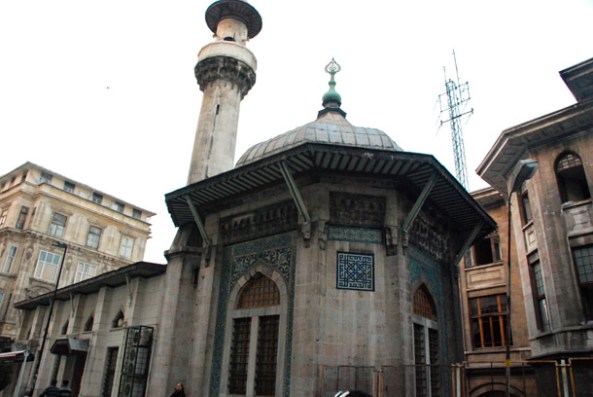
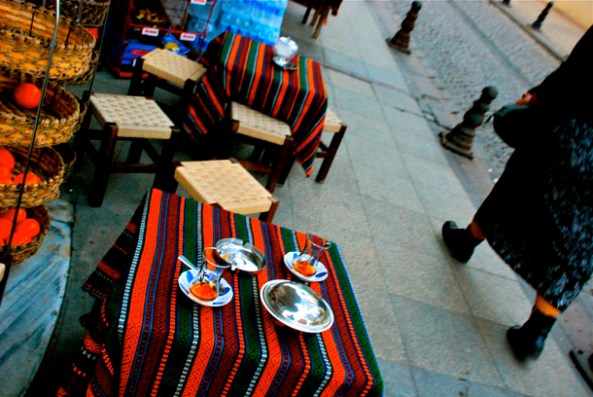
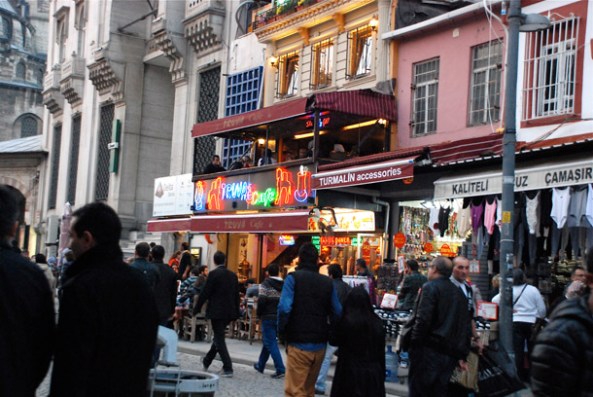
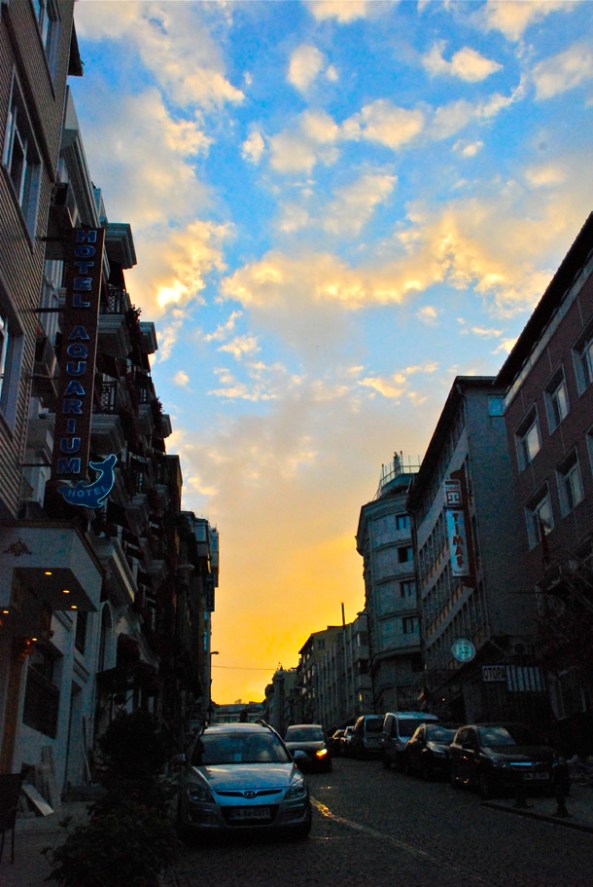
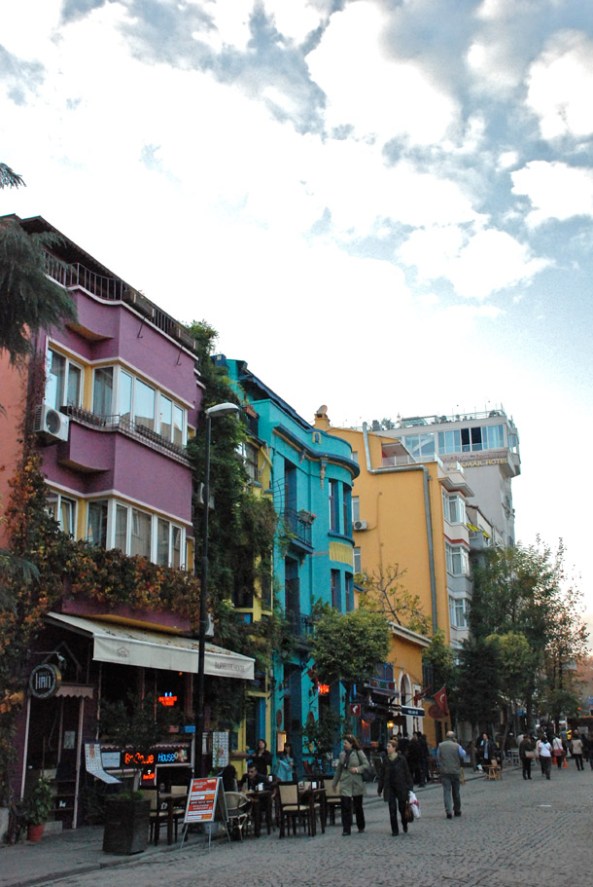
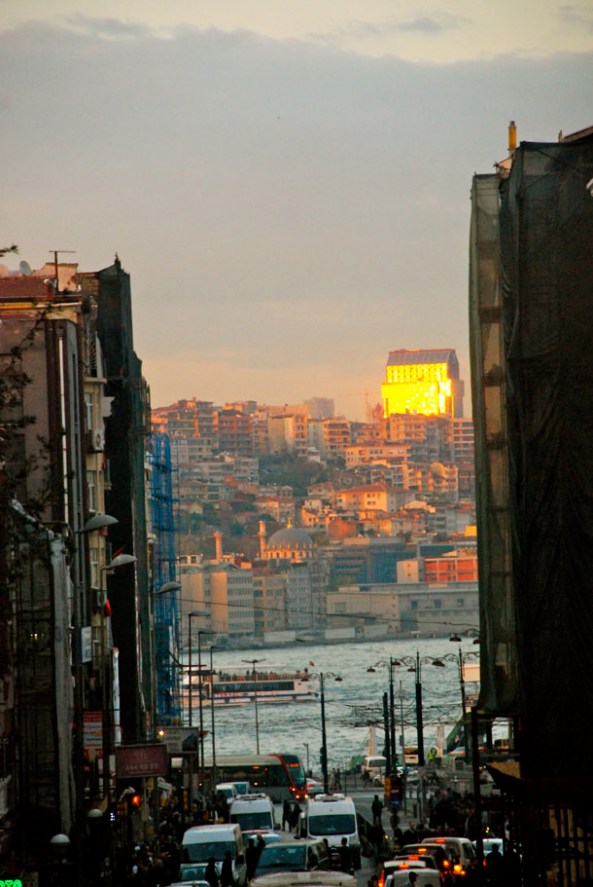 The quirky traces of modern Istanbul peeping along the way…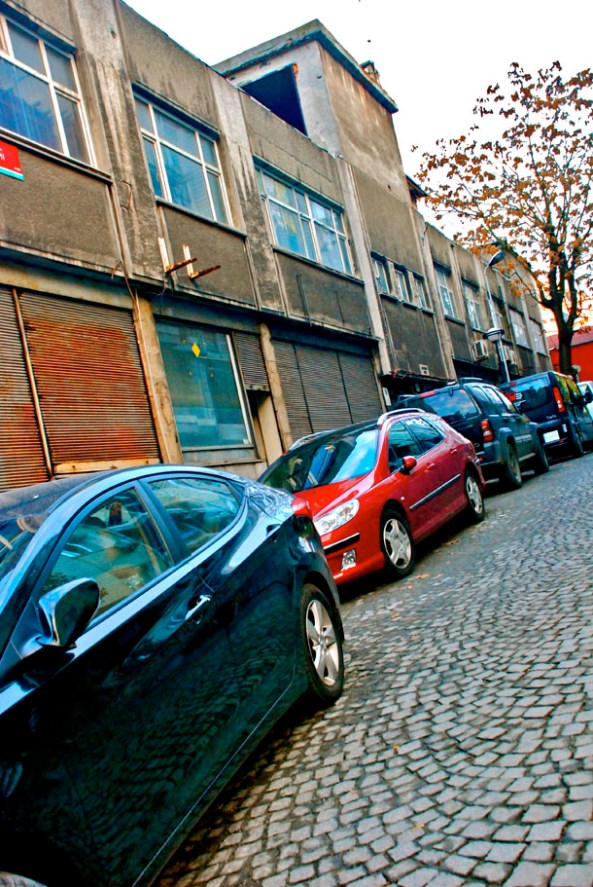
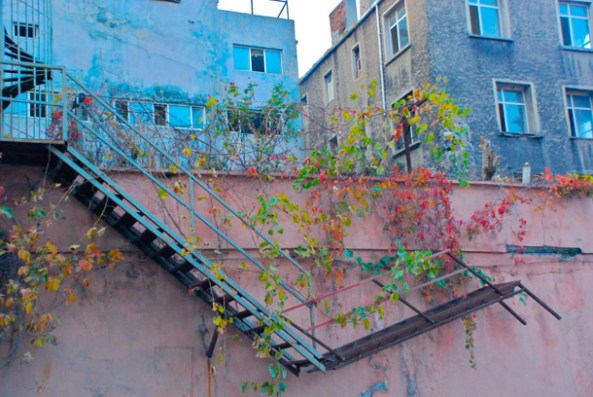
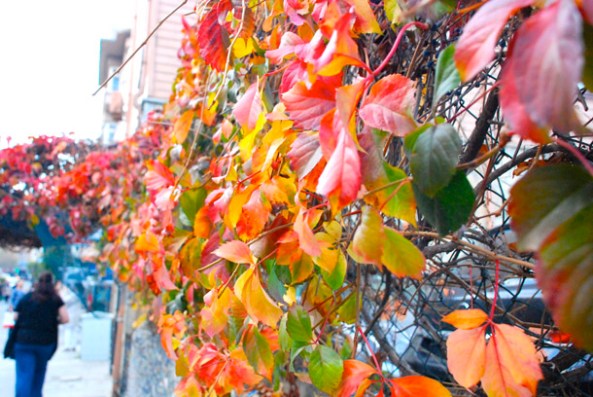
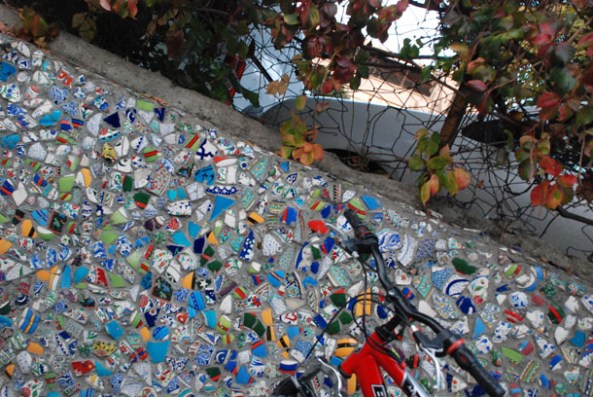
 Around Yeni Camii or the New Mosque by the Bosphorus at sunset…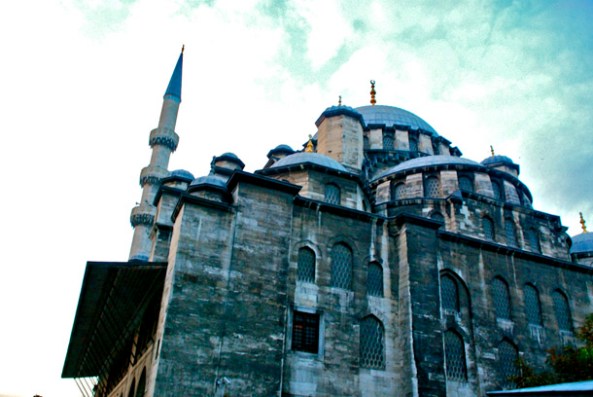
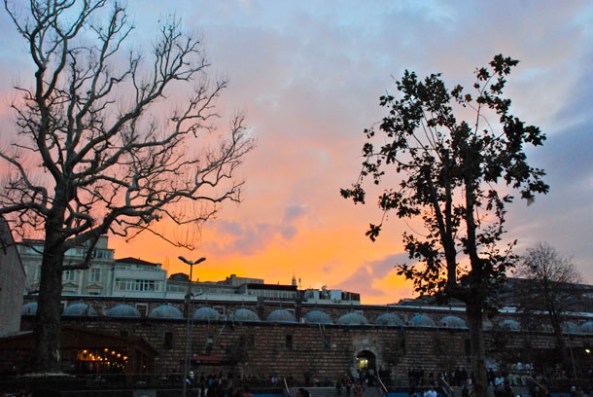
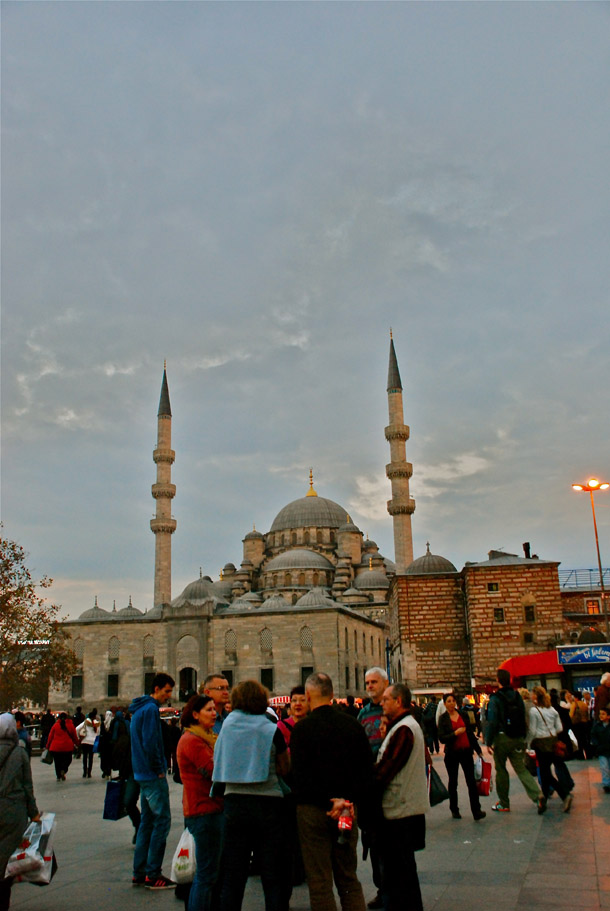
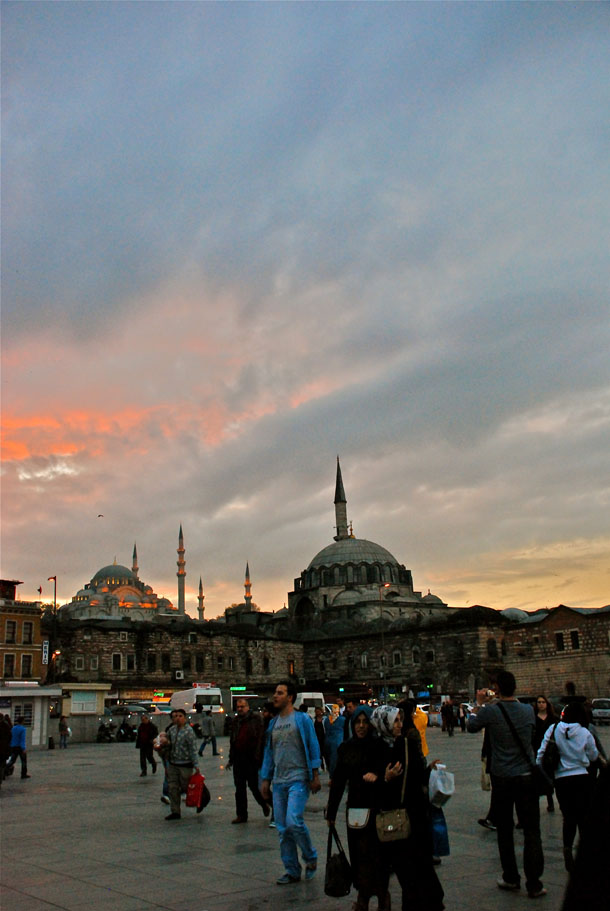
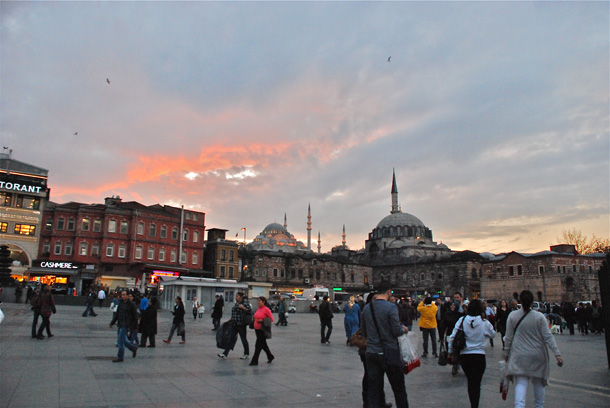
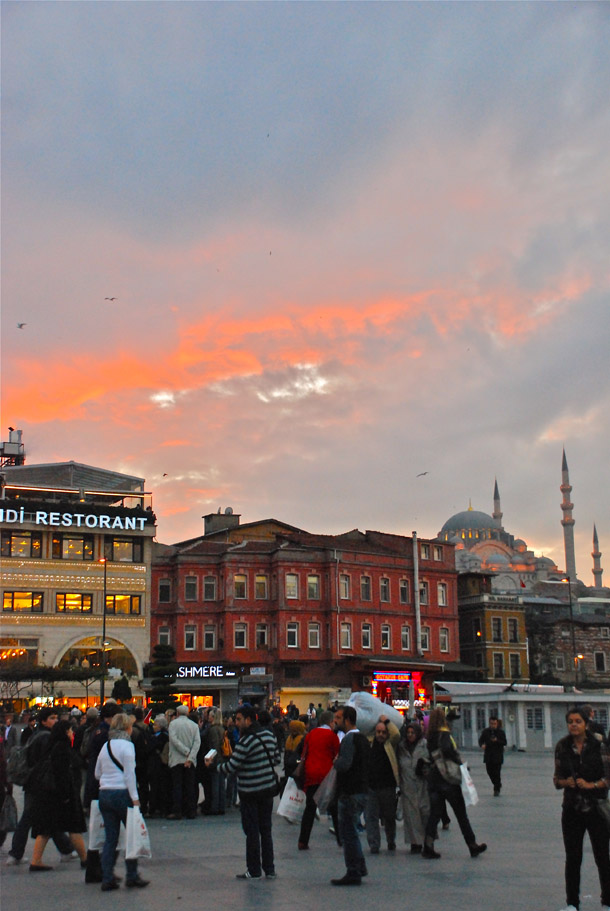 And finally reaching the chaotic Mısır Çarşısı or Spice Bazaar or Egyptian Bazaar…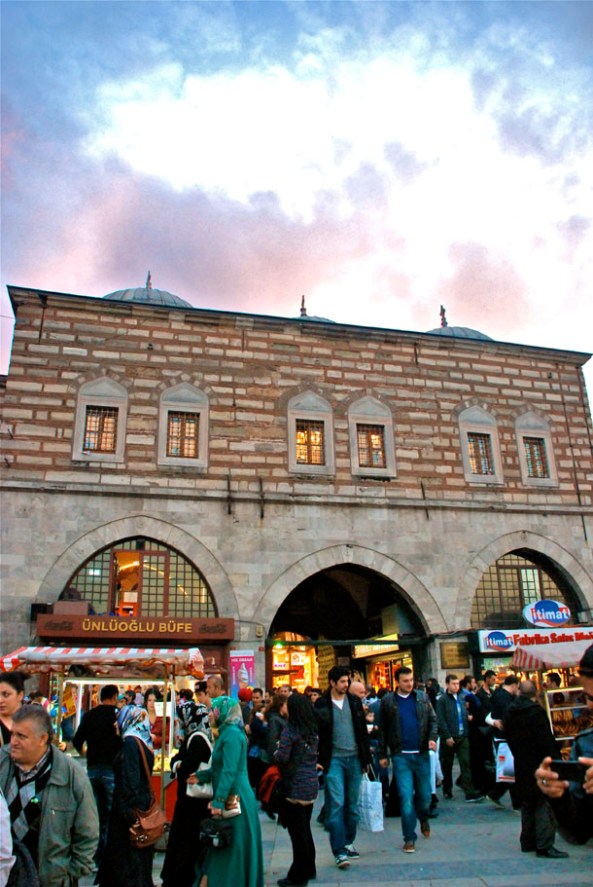
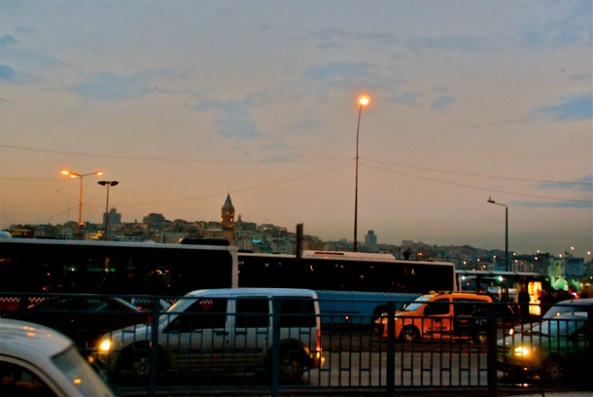
 Leaving Istanbul at dusk…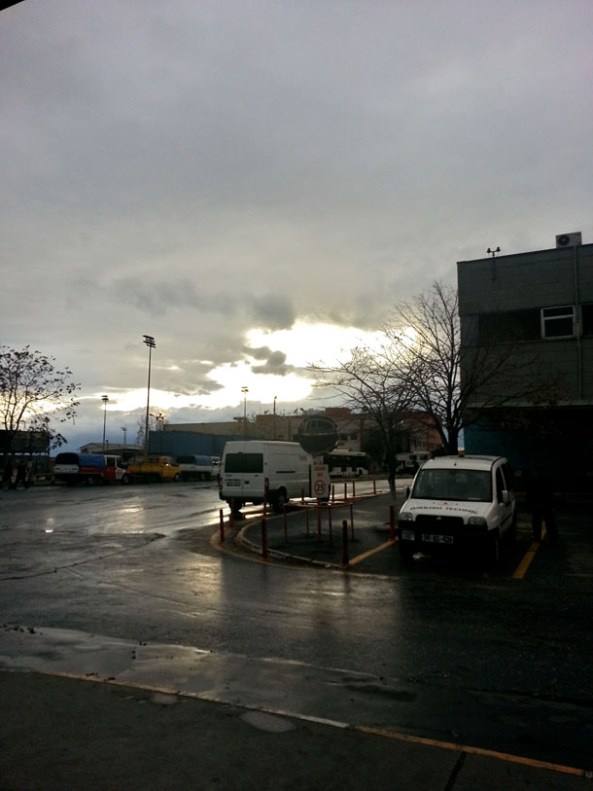
 Disclaimer: Please note that this post is not a sponsored post and the subject, story, opinions and views stated here are my own and are independent. While you enjoy reading the posts with lot of visuals, please do not use any material from this post. You can see more pictures of my travel and food journey here.
Wikipeda links to all the above places:
• Istanbul
• Grand Bazaar
• Blue Mosque
• Hagia Sofia
• Topkapi Palace
• Egyptian Bazaar
• New Mosque
BE SOCIAL. SHARE THIS!

 Where do I begin? On the streets of Istanbul? In cafeterias? Or in restaurants? If it is a restaurant, how expensive do you want it to be, or how cheap? Or perhaps one of the random alleys tucked somewhere in the city? Istanbul is definitely a place for foodies. The culinary heritage is reflected by the various influences that has shaped Istanbul’s history. There is a lot of influence of Ottoman Cuisine which itself is a fusion of Middle Eastern, Mediterranean and Balkan cuisines. As Wikipedia describes – Turkish cuisine varies across the country. The cooking of Istanbul, Bursa, Izmir and rest of the Aegean region inherits many elements of Ottoman court cuisine, with a lighter use of spices, a preference for rice over bulgur, koftes and a wider availability of vegetables staw turlu, eggplant, stuffed dolmas and fish. The cuisine of the Black Sea Region uses fish extensively, especially the Black Sea anchovy (hamsi), has been influenced by Balkan and Slavic cuisine, and includes maize dishes. The cuisine of the southeast—Urfa, Gaziantep and Adana— is famous for its kebabs, mezes and dough-based desserts such as baklava, kadayıf and künefe (kanafeh).
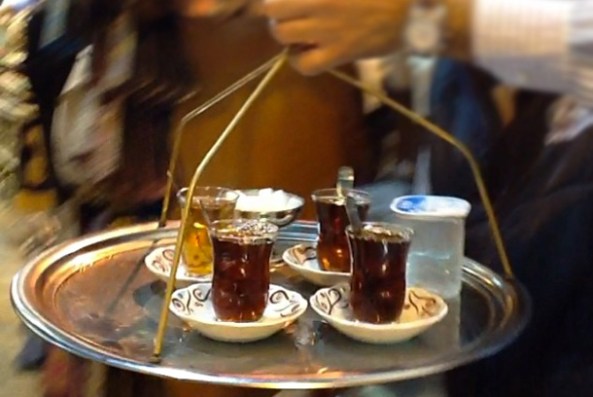 Turkish tea or Çay: You cannot escape Istanbul without banging into a man hurrying with a tray carrying either tea or coffee. Turkish tea is not only a part of Turkish culture and tradition, it also symbolises Turkish hospitality and has many social connotations. The first thing that is served to a guest who comes home, or to any tourist that enters a shop, is the tea. Tea breaks barriers here and binds people from different faith, culture, religion to speak a common language. Çay, as it is called, generally refers to the Black tea and is served in the famous tulip-shaped glasses (above). As I have mentioned in an earlier post {Drenched in Turkish Tea And Sugar Cubes}, in Kapali Carsi or the Grand bazaar, all I could see around me were hanging trays with 4-6 glasses of Çays being taken from one shop to the other. The man from the tea shacks would systematically bring in filled glasses of tea and would serve the shop keepers and all the tourists who visited the shops and would eventually take away the empty glasses once they were done. A few minutes later, another fresh tray of Turkish tea would arrive.
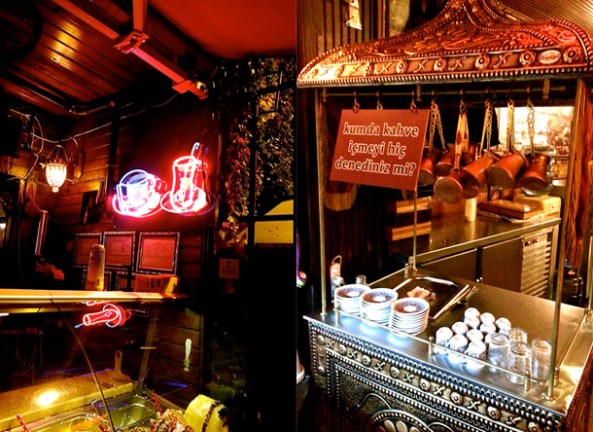
 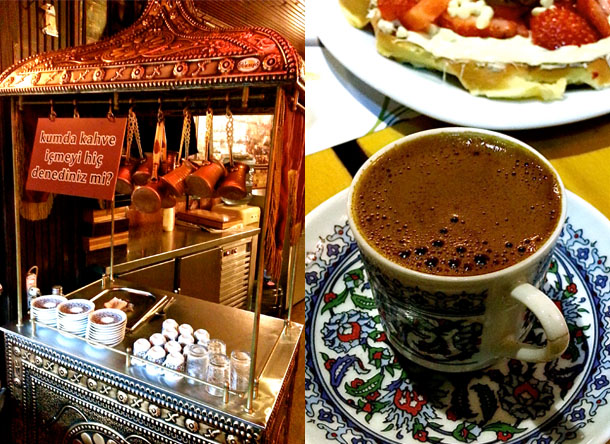 Turkish Coffee or Kahve: Although the Turkish coffee is too much for me to handle, it deserves a separate post of its own. Incredible as it may sound, the Kahve has been recognised by the UNESCO as an Intangible Cultural Heritage of Turks (Intangible cultural heritage (ICH) is promoted by UNESCO as a counterpart to the World Heritage that focuses mainly on intangible aspects of culture, for example song, music, drama, skills, crafts and the other parts of culture that can be recorded but cannot be touched and interacted with, without a vehicle for the culture. These cultural vehicles are called ‘Human Treasures’ by the UN). The strong aroma and the rich chocolate colour of the coffee, served in the uniquely designed little ceramic cups (above right), can soon become a fatal addiction. The aroma of Kahve is not your Italian or American coffee that you’ll find in branded cafe chains like Starbucks. The Turkish Coffee actually refers to the method of preparation of coffee. Coffee beans are first roasted and then ground. The beans are then boiled in a special pot called Cezve (above left – the Cezves are hanging in a typical Turkish coffee stall) and served in the famous cup where the coffee grounds are allowed to settle – very similar to the way coffee is prepared and served in many countries in the Middle East, North Africa, the Caucasus, the Balkans, Bali, and various locations within Eastern Europe. Although I have tasted Turkish coffee in Dubai before (called the Qahwah), the one thing that makes the Turkish coffee in Istanbul different is the addition of sugar in the boiling process – not surprising in a city where a bowl of sugar cubes can be found to stand side by side with a salt shaker in every dining table!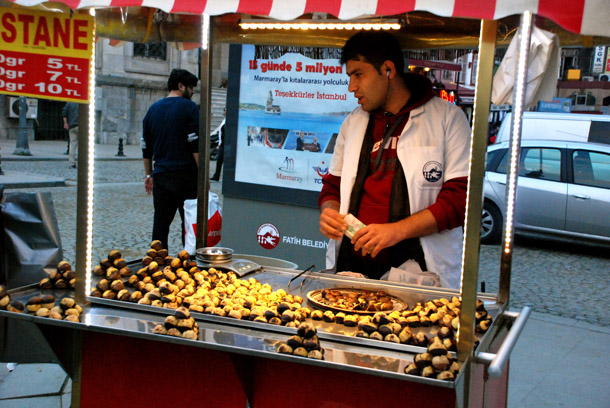
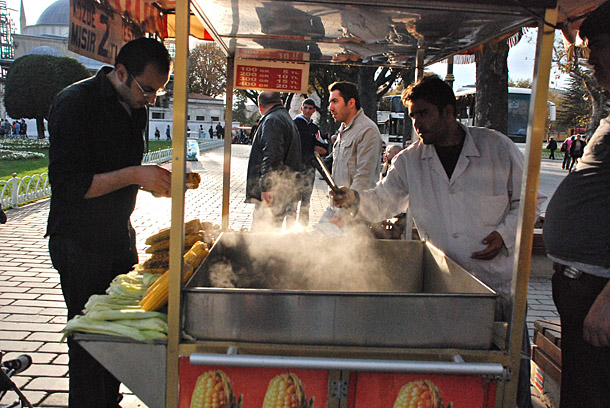
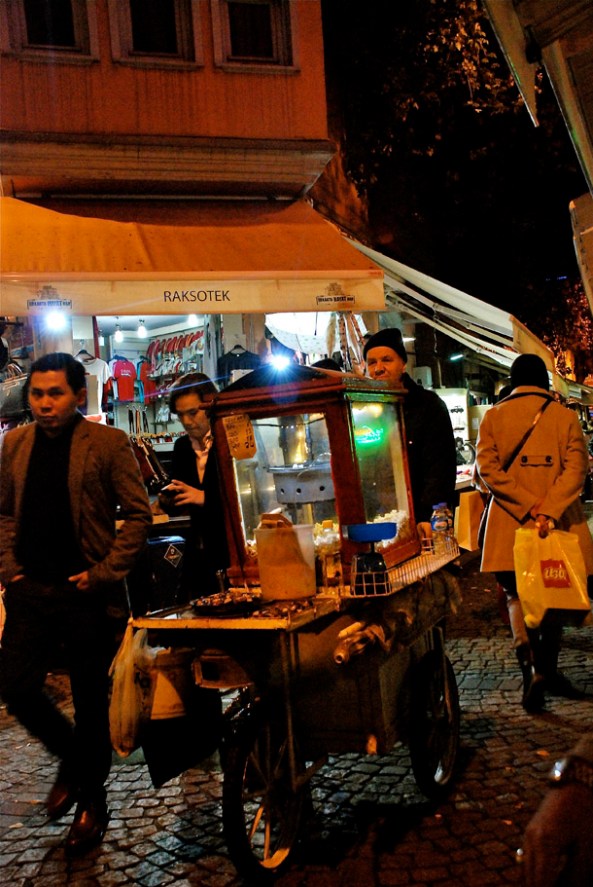
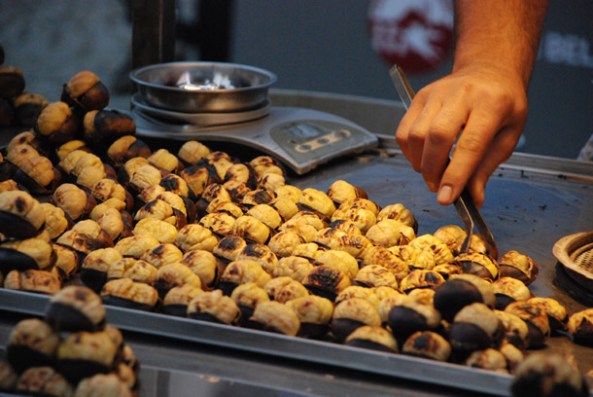 Roasted Chestnuts or Kestane kebab, Grilled corn on the cob or Mısır (street food): If there is a smoke emanating from some corner of a street in Istanbul, either you’ll find meat kebabs or corn on the cobs or chestnuts being roasted in the style of a barbecue. There are food carts selling these all across the city but in the popular tourist places like Sutanahmet Square, the display of the roasted chestnuts in the carts acquire the form of an art. As the vendor sets the warm sweet chestnuts one by one next to each other, you can almost feel the love that he has for his beloved chestnuts. Similar push carts selling boiled or corn on the cob or Mısır (below) are also rampant on the streets. Although, the corn on the cobs are usually popular during the summers and the chestnuts take over these carts during the winters, push carts selling both of them seem to be present everywhere even in the month of November, specially around the popular Sultanahmet Square and in front of Hagia Sofia and the Topkafi Palace (further below).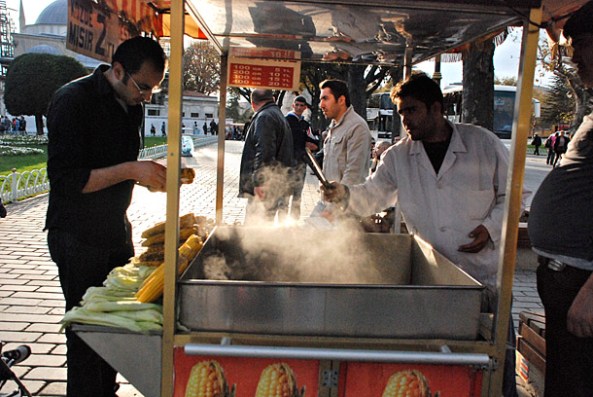

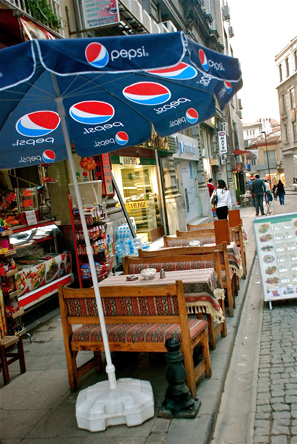
 Döner kebabı (street food, cafeterias and casual restaurants) This is the single most popular Turkish food that must have been exported outside Turkey. This is the origin of Shawarma, which can be found in other Arab countries, where the meat is roasted on a large open, vertical spit. In fact the word Shawarma has evolved from the Turkish word çevirme, a synonym of döner (meaning turning, spinning, rotating). You’ll find unique eateries resembling bar counters (half-outside/half-inside like the one above) all across the city and almost at almost every nook and corner. But the biggest concentration would be in the Taksim area.
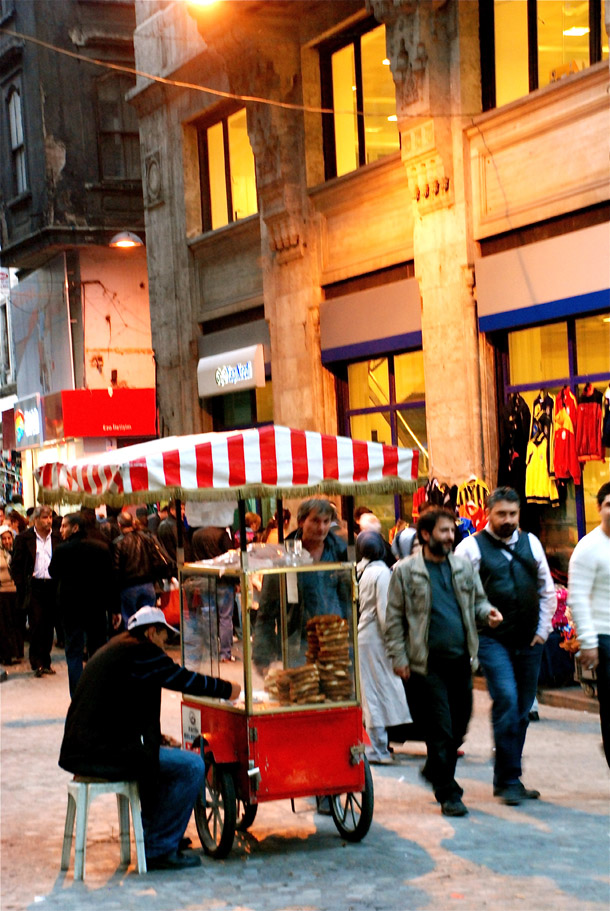 Simit or Turkish bagels (street food or bakeriess): This is a type of ring-shaped bread covered with sesame seeds. Simit is commonly eaten in Turkey, plain or with cheese, butter or marmalade and is probably the most popular food to eat in Istanbul. Although, the Simit is eaten at breakfast, this can also be had anytime and anywhere – much like the Turkish tea and is actually a great accompaniment to the Turkish tea. Although you’ll find street vendors all over the city (above and below) selling the classic Simi, in recent years you have fast food chains like Simit Sarayi (meaning Simit Palace) which serves many variations of Simit. Fancy a Simit sandwich anyone?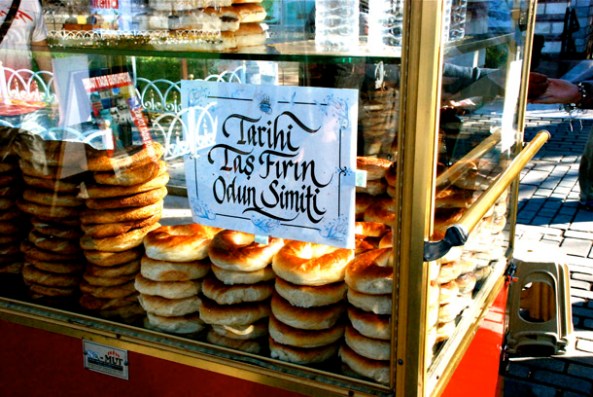

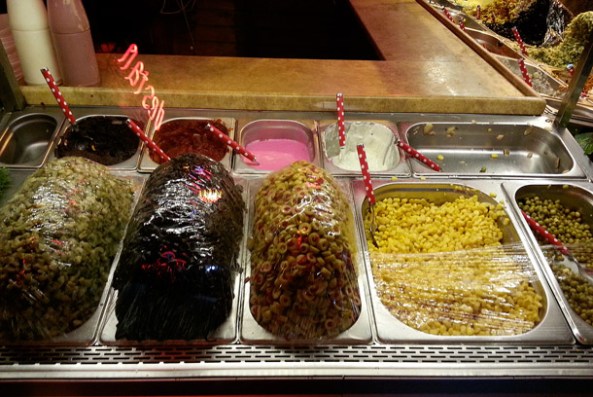
 Kumpir (street food): This is baked potato served with a medley of chopped vegetables – onions, tomatoes, green peas, corns, fresh olives, some pickled vegetables, probably soaked in brine (above). You will even find hot dog slices – all served inside a half of a mighty potato with its’ skin on.
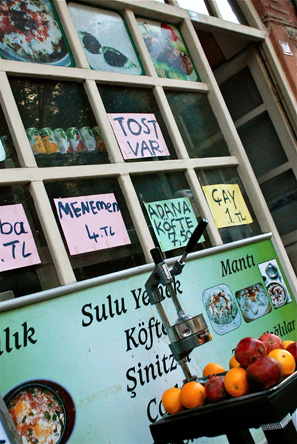
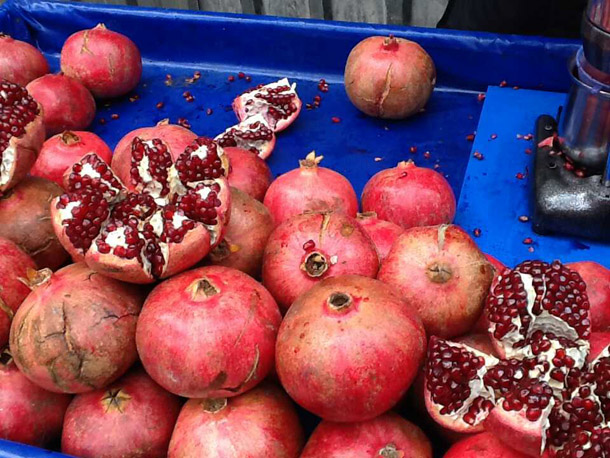 Pomegranates and juice stalls (street food, cafeterias, restaurants): Pomegranates acquire a gargantuan proportion in Istanbul. You will find either food carts or small juice shops (below) selling fresh pomegranate juices almost everywhere. Pomegranates transcend into embroidery for clothes, ceramic artwork, even playing an important part in the New Year’s celebrations in Turkey – with midnight approaching, each person would grab a pomegranate, smashing it against the ground, with the belief that the more pieces it breaks in to, the more good luck it would bring in the New Year. I It was hard for me to resist my temptation to buy ceramic pomegranates painted with bright colors in Turkish designs, in Grand Bazaar. In Turkish culture, Pomegranates represent abundance, prosperity and fertility. Cultural belief apart, I can vouch for one fact and that is I have never come across pomegranates looking this beautiful and tasting this good, specially when they have been squeezed into juice!
 Sultanahmet Köftecisi, Istanbul (casual dining): According to Wikipedia, a 2005 study done by a private food company suggests that there were 291 different kinds of Köfte in Turkey! The question is, where do you want to taste these meatballs while you are in Istanbul? If you are you looking for leg space, arm space, any space where you want to hang around for hours and relax with your friends, while you savour your Turkish meatballs? If you are, this is not the place. But if you want to enter a historical site – the ‘Historical Sultanahmet Meatballs Restaurant’ (the quoted portion is exactly as it says in their website), with the promise of the ‘best Izgara Köfte in town’ in a restaurant which originally ‘created’ them, then it has to be this restaurant. Sultanahmet Köftecisi is located in the crowded and the very touristy Sutanahmet Square in Istanbul, still housed in the original building where the restaurant was established way back in 1920. Although there are more than 20 franchises of the same all across the city and many restaurants with similar names, this particular one is a ‘must visit’. The other branches also serve more dishes than the ones served in this ‘original’ Sultanahmet Köftecisi in the Sultanahmet Square. But, if you are looking for that ‘dining experience’, feel the vibrating floor as the diners walk up and down the rickety stairs, gulp your delicious food down under supervision (there’s a restaurant staff who’ll immediately inform the staff on the ground floor that a potential table might be empty within the next 4-5minutes!), and be a part of some kind of culinary history of Istanbul, this is the place to be. In addition you have some soft, greasy and buttery minced meat melting in your mouth by the name of meat balls. Here’s my whole story… Turkish Meatballs or Izgara Köfte in Sultanahmet Köftecisi.
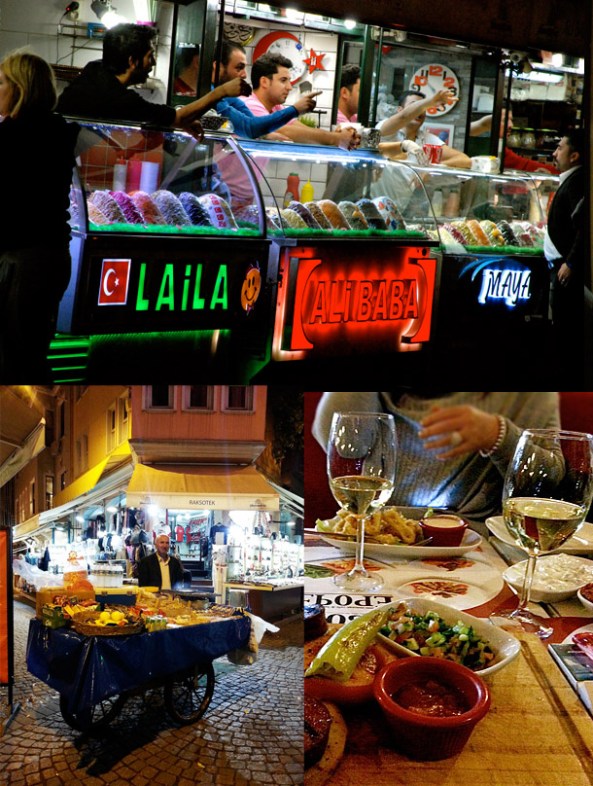 Ortaköy – a different world altogether (street food, cafés, casual dining, fine dining, pubs, night clubs): I had never come across a place like Ortaköy before. It was throbbing with life. Little cobbled alleys lead to other alleys and they all seemed to meander through cafes cum pubs and restaurants, packed with diners – locals and tourists alike. Musicians were belting out haunting Turkish melodies, occasionally interrupted by the loud jazz music played in-house in some restaurant. Billy Joel, Dean Martin caught my attention, so did Mr Saxobeat. We walked, undecided as to where to eat and ultimately reached an open space where almost 8-10 food stalls lined up (above), all serving Kumpir. Although Kumpir stalls are all across Istanbul, but Ortaköy Kumpirs have their own fame, with Maya Kumpir stealing the show. And this particular insanely electrifying area is known as the Kumpir Sokak or the Baked Potato Street and leads up to the Ortaköy mosque. We chose a casual restaurant called the Epope Cafe and Restoran for dinner – a plate of Grilled Garlic Sausage, a plate of Iskender Kabab and an Ezme salad accompanied by a Turkish Sauvignon Blanc. This was followed by the most delicious Turkish waffles and pancakes with Nutella and strawberries, smoked a Caramel flavoured Shisha (Nargille as they are called here) in the Destan Cafe, just 10m across the road. Apart from beautiful cafés with brilliant Bosphorus view, such as the Ortaköy Kahvesi and House cafe, pubs and world class restaurants near the ferry port like Zuma and Köşebaşı, Ortaköy is known for some of Istanbul’s best seashore night clubs, including Reina (where Madonna comes to party in her own yacht and has hosted famous stars like Bon Jovi, Kylie Minoque, U2, Uma Thurman, Daniel Craig, and Naomi Wattswith its exclusive entertainment concept),Sortie, Anjelique, Blackk and SuAda. The last name brings us to an island in the middle of Bosphorus! Here’s my photo heavy post on one Magical Night In Ortaköy.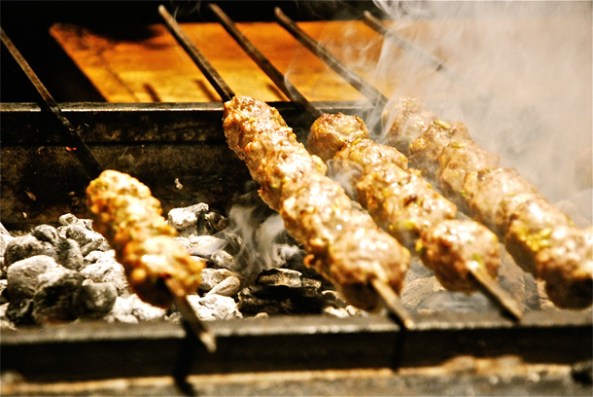
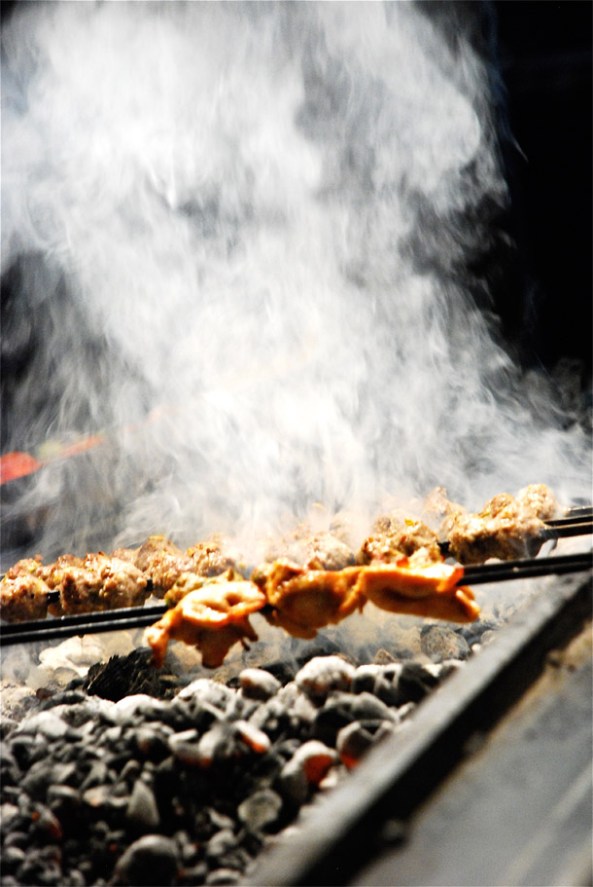
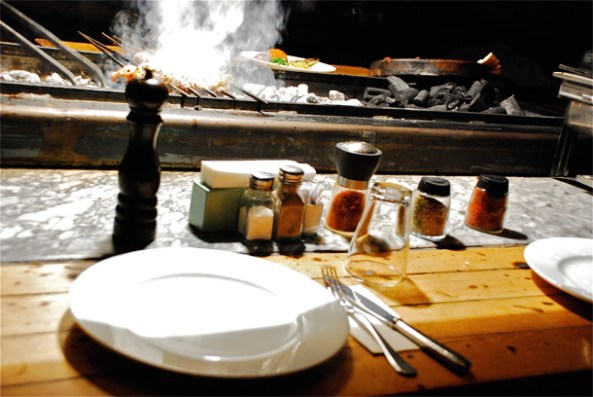 Suada – an island between two continents, in the middle of Bosphorus (nothing but premium fine dining): Located 165 meters away from the European shore in Kuruçeşme the island was a present for Serkis Kalfa, the head architect of the Ottoman palace, by Sultan Abdülaziz in 1872. Serkis Kalfa built a three-storey mansion on the island and lived there until he died in 1899. After World War I the island was rented and used as a coal storehouse. In 1957 Galatasaray Sports Club bought the island and transformed it into a social facility. Suada is a sought after glamourous venue in Istanbul. It has a pool (imagine a pool in the middle of Bosphorus!), a night club and six exclusive fine dining restaurants offering different cuisines from sea food, kebabs to authentic pasta. Such exclusivity comes at a premium and expect a minimum set back of $200/person if you are dining in one of these restaurants. Can you expect anything less if your potential fellow diners are Madonna, Daniel Craig, Megan Fox, Gisele Bündchen, Bono, Kevin Costner, Monica Bellucci, Kylie Minogue, Matt Dillon or Kobe Bryant? As we entered the Suda Kebap for dinner, the restaurant seemed completely packed and throbbed. The entire glass facade overlooked the Bosphorus and the chill in the wind settled into the interiors from some of the doors which were left open by the diners who stepped outside in the verandah deck to smoke. This place was definitely for Kebab lovers. The aroma and smoke from the marinated kebabs placed on open charcoal grills, filled up the space (do check the header picture of the post). You could almost choose to sit on the pit itself as there was a wooden counter running all along the pit (above). Puree dand raw meatballs were favourite hors D’oeuvres here with the most popular dishes on the menu being Gavurdağı or the Turkish Tomato Salad with walnuts and cumin, Çöp Şiş (little chunks of lamb and a chunk of fat on a split wood skewer -the “chaff”, roasted and served with a spicy green pepper), Külbastı (these are meat cutlets cooked in its’ juice) and Katmer (an ancient pastry, well-known in Anatolia, especially in rural areas). Once you have digested the food here, step onto the verandas for some visual stimulation – lit up boats plying the Bosphorus, the city’s many bridges and the fascinating cityscape of Istanbul.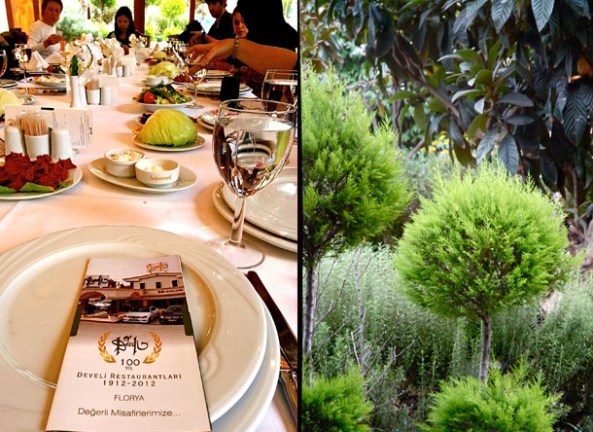
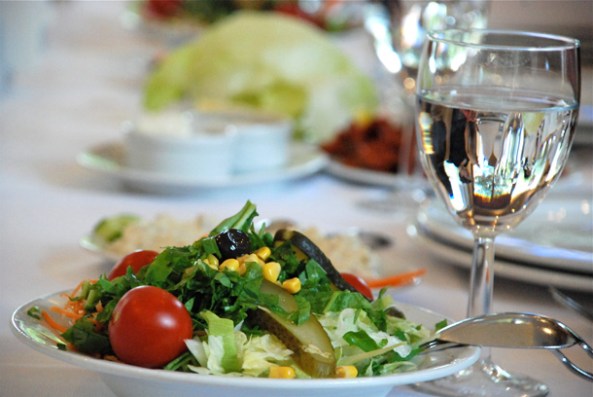 Develi Restaurantlari (fine dining): A very exclusive restaurant in Istanbul, Develi was established in 1912 in Antep and showcases the finest of Antep (the informal name for Gaziantep) and Turkish cuisines with a snapshot of different tastes from the cuisines of Aegean, Mediterranean, and Central Anatolian regions. As soon as we entered the elaborate dining room shimmering in an subdued golden shade overlooking a lush greenery outside (above) in Florya, I had a gut feeling that dining here had to be special. Starting from the Mezze or the Starters to the desserts – food here is incredibly good. Here, I learnt about the Çiğ köfte (translated it means ‘raw meatballs’. Originally this dish was made of raw ground meat, pounded wheat and red pepper but now commercially sold çiğ köfte are no longer allowed to contain raw meat). The soft buttery köfte made up of mashed bulgar and onions has to be wrapped up in a lettuce leaf before putting it in the mouth {my 15 seconds video on Instagram}. Although this is a very popular street food in Istanbul, the fine dining restaurant appeal didn’t take away any bit of its splendid taste. Develi is famous for it’s Pistachio Nut Kebab – not surprising for Pistachios make for Gaziantep fables. According to Lonely Planet, there’s one Turkish word you should learn before visiting Gaziantep: fıstık (pistachio). This fast-paced and epicurean city is reckoned to harbour more than 180 pastry shops producing the world’s best pistachio baklava. A restaurant doesn’t celebrate 100 years for nothing – eating here gives you a feeling of an old world charm combined with luxury and great food – a 2002 Zagat Survey lists Develi as İstanbul’s best 5th restaurant and the British Observer in 2006 lists it in the ‘best 100 restaurant worldwide’.
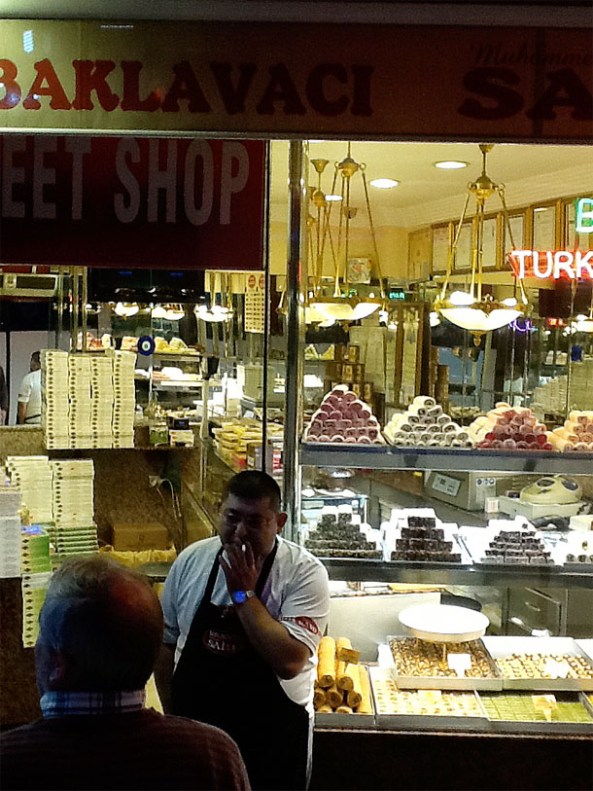 Baklava and other Turkish sweets: Yes, Baklava is the most famous of Turkish sweets. Turkish sweet shops or the Baklavacis are everywhere. From outside, you can see their glass windows adorned with trays of delicate and exotic looking Baklavas – şöbiyet, bülbül yuvası, saray sarması, sütlü nuriye, and sarı burma. People gathered around these shops for casual evening banters (above), catchinh up on their day to day lives while sipping on Turkish tea and buying a few sweets for home. Apart from the Baklavas, I tasted some fruit desserts where the fruits had been cooked in sugar with carnation, cinnamon and served chilled. I have to admit that I fell prey to the kabak tatlısı or the pumpkin sweet. these were fine examples of how to make healthy fruits ad vegetables go unhealthily wild!
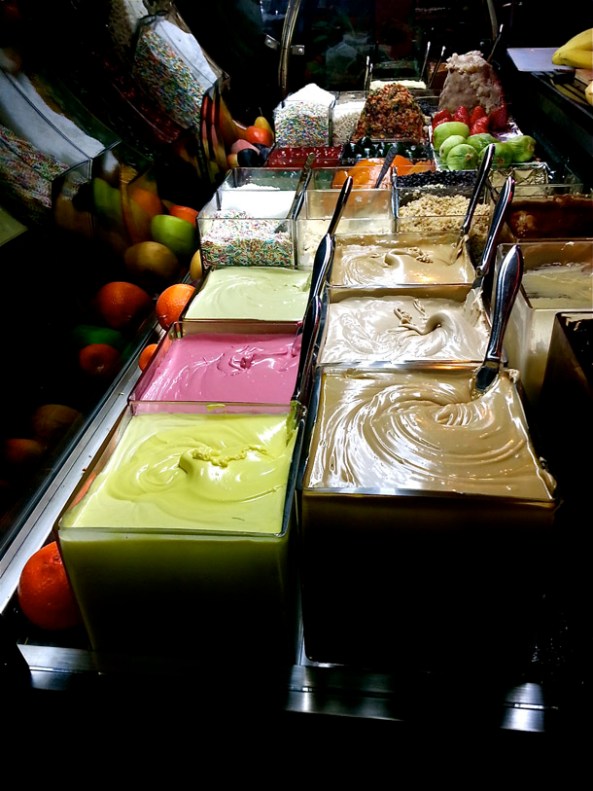
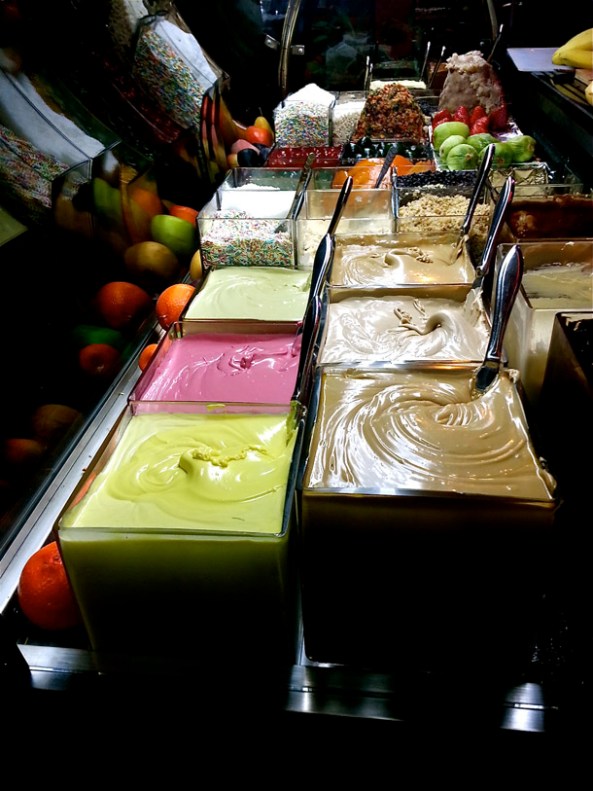 Turkish Ice cream or Dondurma: You will most certainly find a Dondurma stall (above) everywhere in Istanbul – from street kiosks to fashionable cafes, even in some fancy restaurants. Bold rectangular compartments of thick creamy ice cream in tantalizing colors of different shades line up each ice cream stall. The Turkish ice creams are not your regular ice creams. Apart from the regular ingredients like Milk and Sugar, they also have an ingredient called Salep, a thickening agent made from a flour from Orchids and Mastic, a resin that gives the chewiness and the crunchiness. The ice cream vendor churns out the creamy mixture of an ice cream flavor with a long-handled paddle and as he scoops it out like a thick elastic chewing gum, you have to wait for the customary trick to be performed on you – these Dondurma-men serve you the ice cream, hand it over to you by wrapping the cone delicately in tissue paper and as you put your hand forward to grab the ice cream, you realise that the tempting ice cone has already gone back to the seller. Then with a swish of his hand he topples the cone upside down! Once a spoonful of this magic cream enters your mouth, you’ll know that you’ve chewed upon the thickest and the creamiest form of edible ‘divinity’. Do read my ode on Turkish Ice cream in an earlier post… Will You Read My Post on Turkish Ice Creams If There Are No Snapshots?
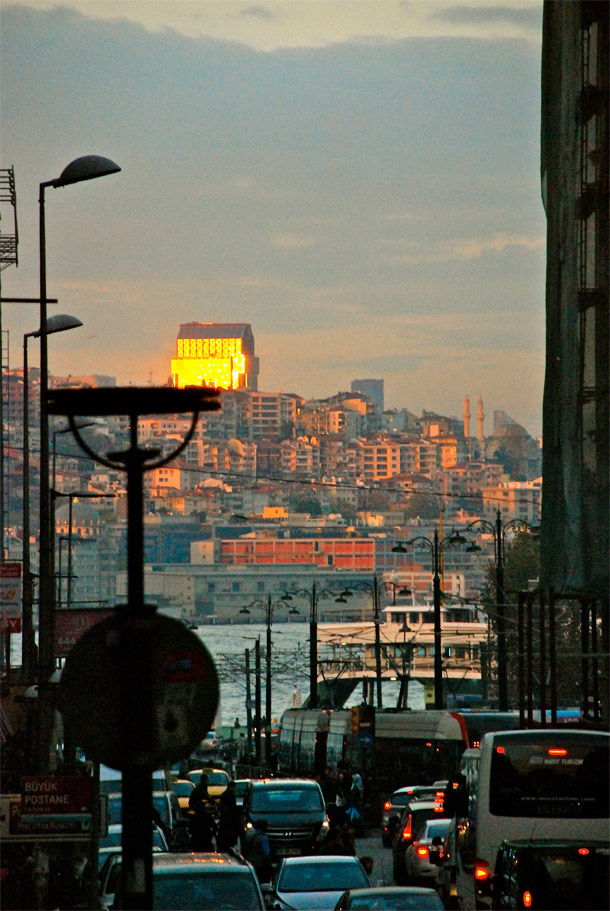 Although I don’t profess to have eaten everything that I had chalked down in my ‘Things to eat in Istanbul’ list – the Lahmacun or the Turkish-style pizza, Balık ekmek or the ‘fish bread’ on the shore next to the Galata Bridge or the incredibly tempting and colourful chewey ice creams – (below, but wait some body said they were bubble gums – eeks!), did it really matter at the end of the trip? The city seemed to have grown on me at no time. As I walked from the Sultanahmet Square towards the Egyptian Bazaar and the Spice Souk situated on the banks of the Bosphorus river, I was mesmerized by the dark alleys of the older part of the city through which I was walking and the crowd that gathered at every junction. It was simply painful to leave Istanbul with the backdrop of a setting sun (above), the snarling traffic, the deluge of long robed people, the innumerable tea vendors and all the random vendors trying to sell their fascinating artifacts and the junk jewellery… I knew that I had to return very soon. Coming up next is a photo journal on Istanbul sans text (as if this post was devoid of them), so hang on!
Unblogging it all… Ishita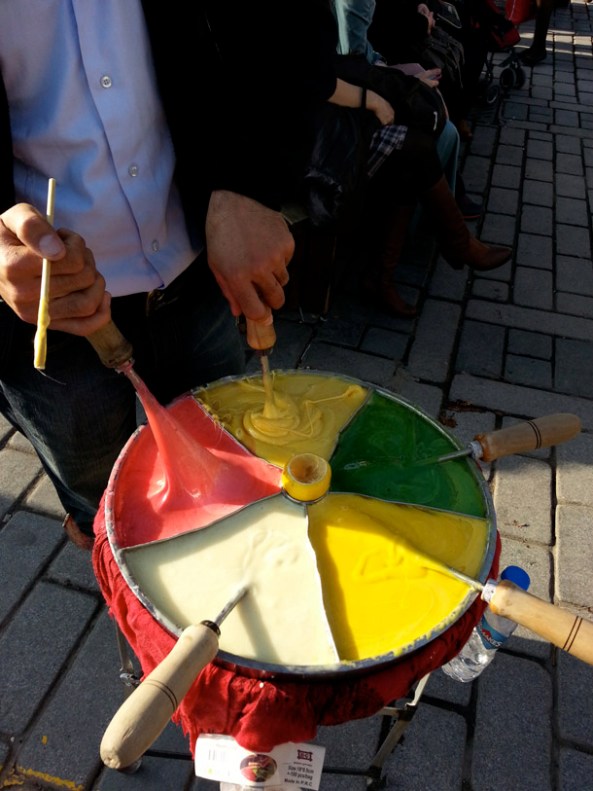
More Info here:
• Sultanahmet Koftehcisi website
• www.suadaclub.com.tr• http://www.develikebap.com/• Istanbul’s Street Food – What’s hot and what’s not! (WTT Hotels Magazine)
• Turkish cuisine (Wikipedia)
Disclaimer: You can see the menu and other details of all the restaurants mentioned here on Zomato Istanbul. Please note that this post is not a sponsored post and the subject, story, opinions and views stated here are my own and are independent. While you enjoy reading the posts with lot of visuals, please do not use any material from this post. You can see more pictures of my travel and food journey here.
BE SOCIAL. SHARE THIS!


To expect the unexpected shows a thoroughly modern intellect ∼ Oscar Wilde
The feature image is courtesy www.pixabay.com
This is the only post in my entire history of blogging which will ‘go down’ or should I say ‘stand out’ as the only post without photographs. I’ve submitted, rather surrendered myself to the ‘Weekly Writing Challenge: Snapshots‘ from WordPress where I have to write down my impressions of a scene surrounding me without giving into the urge to take a picture. Who’s around? How does the air feel? What sounds do I hear? What emotions am I experiencing?… all of these in words!
Nowadays, I can’t capture a scene around me until and unless it’s through a camera lens. Not one but two, to be precise. One is a normal Nikon D-80 SLR that helps me to transport myself to the moment when an event took place, zooming it eight times, cropping the unnecessary frills that intrude into my desired frame. This heavy-duty equipment has the potential to take 10 mindless shots of a beautiful sunset and clogs the memory of a 80GB hard disc of my mammoth iMac. The other lens is comparatively small. But hundred times more powerful than my Nikon. It not only clicks a memorable event, it lets me immediately share it with my readers (who I like to imagine, are waiting just for me to upload the moment pictorially on Instagram, describe it in 140 words with whacky hashtags on Twitter, and gives me an opportunity to talk about it 5 times daily on my Facebook page).
Why did I take up this challenge?
I had recently visited Turkey and my life was going perfectly fine till that momentous event when I had my first Turkish ice cream. As I was about to savour the first spoon of the famous Turkish ice cream, my smartphone died. I was frozen in time. What was I going to do next? Call up the emergency? I looked around for my travel mates. Was there someone, oh please, anyone to capture that moment for me – the historical moment where I licked my delicious creamy Turkish ice cream for the first time? The Facebook moment that I had waited for so long? The tweet that was about to set forth 1000 retweets and another 10,000 new followers? That Instagram post which would perhaps be the featured post of the week? Could that be ‘whatsapp’-ed to me so that I could post it on Instagram and Twitter later as a #latergram? I was telling my two little girls (affectionately known as the Z-Sisters in this blog and by my readers) how my phone died and I couldn’t take even take a picture of the ice cream that was so famous here in Turkey. They didn’t seem perturbed at all. The simple asked me the question – ‘Mama, how was the ice cream?’
I couldn’t answer. I didn’t have an answer. My taste buds also seemed to have died down along with my smart phone. Not being able to take pictures had made me turn senile. I knew that senility was coming, but surely not this soon? Realisation dawned upon me then – I seriously needed to detoxify. I had to see life once again through my own eyes. I am not professing to give up my addiction and obsession but I am definitely taking up this challenge to prove to myself (and to others) that yes, I can still paint a picture in words. Good photography is integral to my posts, but sans them, I am not going ruin my own experience. I am still going to savour the moment and be able to share my experience with others.
Will you read my post on Turkish ice creams if there are no snapshots? Say Yes… please!
It only took me minutes after having landed in Istanbul to realize that this city was a kaleidoscope of people and culture. Every moment was being captured in my camera and smartphone. Except that one experience. Yes, I couldn’t capture the famous Turkish ice cream – the Dondurma, which I am going to capture now through words (do I even have a choice here?). You will most certainly find a Dondurma stall everywhere in Istanbul – from street kiosks to fashionable cafes, even in some fancy restaurants. Bold rectangular compartments of thick creamy ice cream in tantalizing colors of different shades line up each ice cream stall. Do you like coffee ice cream and foamy cream? Or would you prefer plain creamy white vanilla with chopped stark green pistachios? Or may be a single scoop of delicious pink strawberry delicately crowning a double chocolate will do for you. Whichever flavor you fancy, if you think that you can get hold of your ice cream easily, then you are in for a pleasant surprise. The ice cream vendors here are magicians in fancy clothing – a mesmerizing red velvety long robe with embroidered borders and an equally mesmerizing hat that looks like a big glass upside down with a tussle dangling from it. These Dondurma-men serve you the ice cream, hand it over to you by wrapping the cone delicately in tissue paper and you put your hand forward to grab the ice cream. Is the ice cream in your hand? No, it isn’t. The deliciously tempting ice cone has already gone back to the seller. Oops, if that’s a mean trick, wait for the next act. With a swish of his hand he topples the cone upside down, and as your heart beat races with the thought that your object of desire – the creamy, swirling scoops have fallen off the cones – no, they haven’t! They are still dangling from the cone, hanging in mid-air, each scoop refusing to part from the other like two inseparable lovers who have vowed never to part themselves away from each other. This is an act in an opera where you, the helpless bystander along with many surrounding bystanders anxiously wait for your ice cream amidst occasional screams of oops and ahhs.
The Turkish ice creams are not your regular ice creams. Apart from the regular ingredients like Milk and Sugar, they also have an ingredient called Salep, a thickening agent made from a flour from Orchids and Mastic, a resin that gives the chewiness and the crunchiness. The ice cream vendor churns out the creamy mixture of an ice cream flavor with a long-handled paddle and as he scoops it out like a thick elastic chewing gum, you have to wait for the customary trick to be performed on you. Go ahead – make a fool of yourself as the others waiting for their turns break into delirious laughter. I warn you here, once a spoonful of this magic cream enters your mouth, you’ll know that you’ve chewed upon the thickest and the creamiest form of edible ‘divinity’.
Unfortunately, I realized this a bit too late, much after the first scoop went into my numb mouth and dead taste buds. It is only when I resigned to my fate and accepted that the death of my smartphone was as inevitable as life’s fact that one day even our lives would come to an end, that I started feeling my taste buds come alive with the richness of the last spoonful of the last scoop of the Turkish ice cream. It was a bit too late, but never the less a lesson learnt that will be etched in my memory for ever. And that which will take me now not only to Istanbul once again but to the land where the Turkish ice creams originated from – Maraş, thus giving another name to these divine, desirable, chewy and scrumptious ice creams – the Maraş Ice Cream.
WordPress, thank you for bringing me back into the world where I was born. The world which I had learnt to feel with my senses initially and suddenly unlearnt it mid-way!
Unblogging it all… Ishita
PS: This emotional post also happens to be my 150th post, thank you for being with me throughout my journey!
Disclaimer: I was in Turkey as a guest of Turkish Airlines and visited their flight catering company Turkish Do & Co and the Turkish Technic. While we were hosted at the various restaurants, the Turkish Icecream was self paid! There aren’t any affiliated links in this post and the subject, story, opinions and views stated here are my own. While you enjoy reading my posts with lot of visuals, please do not use any material from these posts. Do join me on my daily food and travel journey on Instagram, Facebook, Twitter and Pinterest.
BE SOCIAL. SHARE THIS!


This is the post in my entire history of Blogging which will ‘go down’ or should I say ‘stand out’ as the only post without photographs. I’ve not taken up but rather submitted myself to the ‘Weekly Writing Challenge: Snapshots‘ from WordPress where, rather than giving into the urge to take a picture, I have to write down my impressions of a scene surrounding me. And describe ‘Who’s around? How does the air feel? What sounds do you hear? What emotions are you experiencing?’
Please stoppppppp! This is torture for me. Nowadays, I don’t capture a scene around me until and unless it’s through a camera lens. Not one but two, to be precise. One is a normal Nikon D-80 SLR that helps me to transport myself to the moment when an event took place, zooming it eight times, cropping the unnecessary frills that intrude into my desired frame. This heavy-duty equipment lets me take 10 mindless shots of a beautiful sunset and clogs the memory of the 80GB hard disc of my mammoth iMac. The other lens is comparatively small. But hundred times more powerful than my Nikon. It not only clicks a memorable event, it lets me immediately share it with my readers (who I like to imagine, are waiting just for me to upload the moment pictorially on Instagram, describe it in 140 words with whacky hashtags on Twitter, and gives me an opportunity to talk about it 5 times daily on my Facebook page).
Why did I take up this challenge? I had recently visited Turkey and my life was going perfectly fine till that momentous event when I had my first Turkish ice cream. As I was about to savour the first spoon of the famous Turkish ice cream, my smartphone died. I was frozen in time. What was I going to do next? Perhaps call up the emergency? I looked around for my travel mates. Was there someone, oh please, anyone to capture that moment for me – the historical moment where I licked into the delicious creamy Turkish ice cream for the first time? The Facebook moment that I had waited for? The tweet that was about to bring in 1000 retweets and 10,000 followers? That Instagram post which would perhaps be the featured post of the week? Could that be ‘whatsapp’-ed to me so that I could post it on Instagram and Twitter later as a #latergram? I was telling my two little girls (known as the Z-Sisters in this blog) how my phone died and I couldn’t take even take a picture of the ice cream that was so famous here in Turkey. They asked me a simple question – ‘Mama, how was the ice cream?’
I couldn’t answer. I didn’t have an answer. My taste buds also seemed to have died down with my smart phone. Not being able to take pictures had made me turn senile. I knew that senility was coming, but surely not this soon? Realisation dawned upon me – I needed to detoxify. I had to see life once again through my own eyes. I am not professing here to give up my addiction but I am definitely taking up this challenge to prove to myself that yes, I can still write in words and paint a picture. Good photography is integral to my posts, but sans them, I will not ruin my own experience and still be able to share that experience with others.
So, will you read my post on Turkish ice creams if there are no snapshots? Please say Yes!
It only took me minutes after having landed in Istanbul to realize that this city was a kaleidoscope of people and culture. Every moment was being captured in my camera and smartphone. Except that one experience. Yes, I couldn’t capture the famous Turkish ice cream – the Dondurma, which I am going to capture now through words (do I even have a choice here?). You will most certainly find a Dondurma stall everywhere in Istanbul – from street kiosks to fashionable cafes, even in some fancy restaurants. Bold rectangular compartments of thick creamy ice cream in tantalizing colors of different shades line up each ice cream stall. Do you like coffee ice cream and foamy cream? Or would you prefer plain creamy white vanilla with chopped stark green pistachios? Or may be a single scoop of delicious pink strawberry delicately crowning a double chocolate will do for you. Whichever flavor you fancy, if you think that you can get hold of your ice cream easily, then you are in for a pleasant surprise. The ice cream vendors here are magicians in fancy clothing – a mesmerizing red velvety long robe with embroidered borders and an equally mesmerizing hat that looks like a big glass upside down with a tussle dangling from it. These Dondurma-men serve you the ice cream, hand it over to you by wrapping the cone delicately in tissue paper and you put your hand forward to grab the ice cream. Is the ice cream in your hand? No, it isn’t. The deliciously tempting ice cone has already gone back to the seller. Oops, if that’s a mean trick, wait for the next act. With a swish of his hand he topples the cone upside down, and as your heart beat races with the thought that your object of desire – the creamy, swirling scoops have fallen off the cones – no, they haven’t! They are still dangling from the cone, hanging in mid-air, each scoop refusing to part from the other like two inseparable lovers who have vowed never to part themselves away from each other. This is an act in an opera where you, the helpless bystander along with many surrounding bystanders anxiously wait for your ice cream amidst occasional screams of oops and ahhs.
The Turkish ice creams are not your regular ice creams. Apart from the regular ingredients like Milk and Sugar, they also have an ingredient called Salep, a thickening agent made from a flour from Orchids and Mastic, a resin that gives the chewiness and the crunchiness. The ice cream vendor churns out the creamy mixture of an ice cream flavor with a long-handled paddle and as he scoops it out like a thick elastic chewing gum, you have to wait for the customary trick to be performed on you. Go ahead – make a fool of yourself as the others waiting for their turns break into delirious laughter. I warn you here, once a spoonful of this magic cream enters your mouth, you’ll know that you’ve chewed upon the thickest and the creamiest form of edible ‘divinity’.
Unfortunately, I realized this a bit too late, much after the first scoop went into my numb mouth and dead taste buds. It is only when I resigned to my fate and accepted that the death of my smartphone was as inevitable as life’s fact that one day even our lives would come to an end, that I started feeling my taste buds come alive with the richness of the last spoonful of the last scoop of the Turkish ice cream. It was a bit too late, but never the less a lesson learnt that will be etched in my memory for ever. And that which will take me now not only to Istanbul once again but to the land where the Turkish ice creams originated from – Maraş, thus giving another name to these divine, desirable, chewy and scrumptious ice creams – the Maraş Ice Cream.
WordPress, thank you for bringing me back into the world where I was born. The world which I had learnt to feel with my senses initially and suddenly unlearnt it mid-way.
Unblogging it all… Ishita
PS: This emotional post also happens to be my 150th post
BE SOCIAL. SHARE THIS!

 We – my #FoodieOnTour buddies (Debbie and Kirsty) and I, left the hotel that we were staying in at around 9:30pm after gulping down an inaugural round of drinks. Where could we go out for the night for some decent food, a few drinks, have a feel of Istanbul and return back to the hotel safe and sound? Everybody suggested Ortaköy. I had already had an initiation into Ortaköy the night before, when we were stuck in the famous Istanbuli traffic while coming back to the hotel {my 15 seconds video on Instagram on that}. I remember somebody asking the bus driver ‘How long is it going to take to reach our hotel?’ and he answered ‘If we reach the main road by 10 minutes, its going to take 10 more minutes to reach the hotel’… But the question I should have asked him perhaps – ‘how long will it take to reach the main road?’
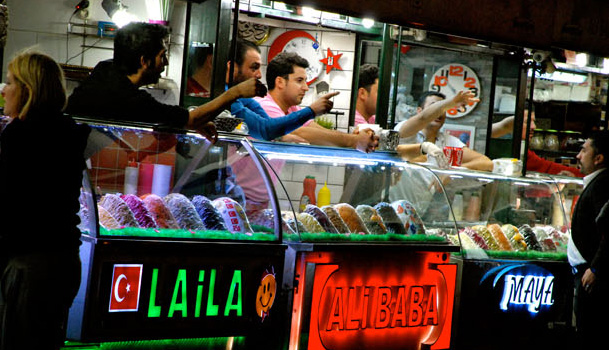
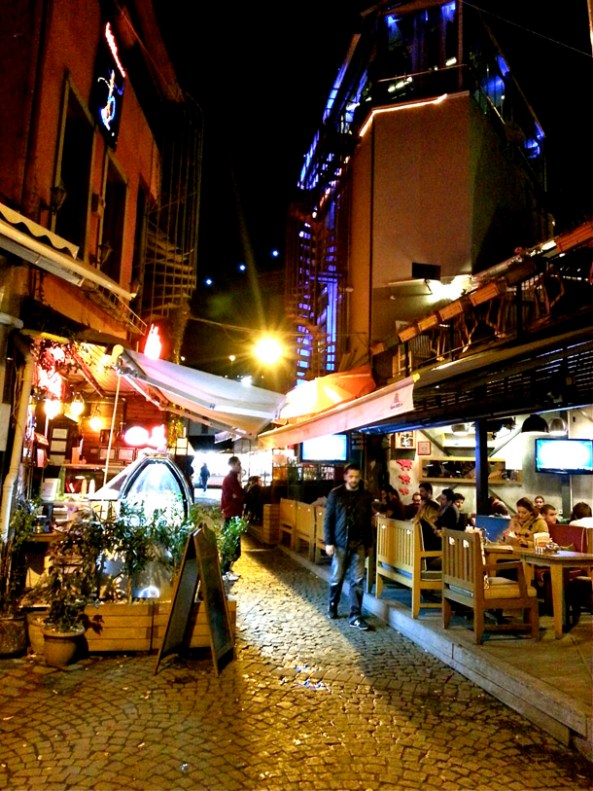
 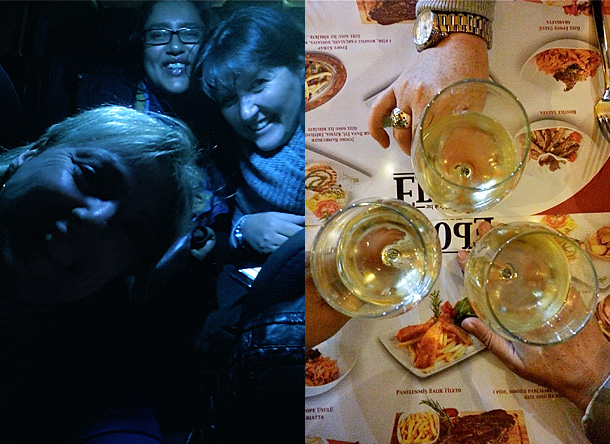 We got into a taxi and throughout our journey the blue lights inside the taxi was on – casting a horrendous blue glow on our faces (above left) that we obviously had to capture on Instagram. This evening was going to be the mother of all Instagram nights, to be splattered all across Facebook and Twitter. I hadn’t seen something like Ortaköy before. It was throbbing with life. Little cobbled alleys lead to other alleys and they all seemed to meander through cafes cum pubs and restaurants, packed with diners – locals and tourists alike. Musicians were belting out haunting Turkish melodies, occasionally interrupted by the loud jazz music played in-house in some restaurant. Billy Joel, Dean Martin caught my attention, so did Mr Saxobeat. We walked, undecided as to where to eat and ultimately reached an open space where almost 8-10 food stalls lined up (below). All these stalls were serving Kumpir – baked potato served with a medley of chopped vegetables – onions, tomatoes, green peas, corns, fresh olives, some pickled vegetables that I thought were probably soaked in brine, even hot dog slices – all served inside a half of a mighty potato with its’ skin on. Kumpir stalls are all across Istanbul, but Ortaköy Kumpirs have their own fame, with Maya Kumpir (below) stealing the show. And this particular area is known as the Kumpir Sokak or the Baked Potato Street and leads up to the Ortaköy mosque. Kumpir Sokak was insanely electrifying.
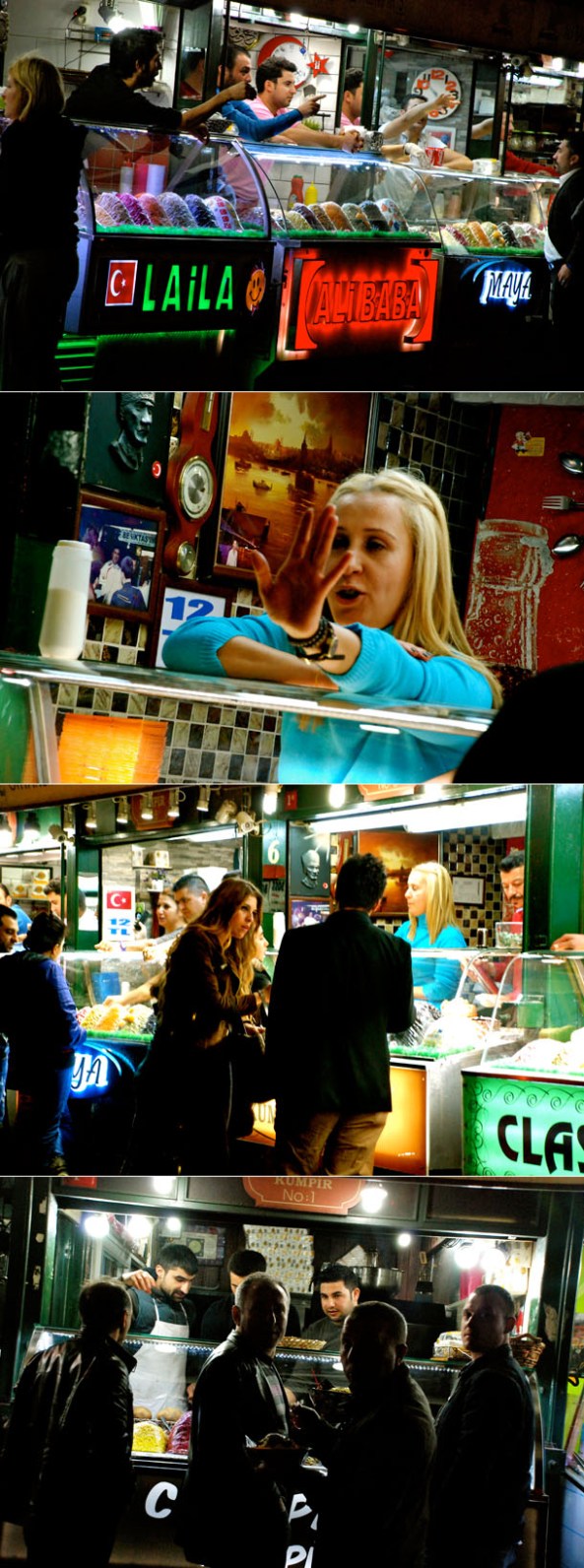 Each stall here was clamoring for attention. The vendors screaming and shouting in a flirtatious way to everyone passing by, specially the girls. ‘Hey Beautiful, come,oh come!’ ‘Oh look at you beauty!’ ‘Try our potatoes sweetheart’… and if you happen to come closer to one stall, the men from the other stalls would start screaming out. It was more like a casual and harmless eve-teasing. Everybody seemed to be okay with it, the girls retorting back with equal gay abundance, as they walked past, looking pretty and sexy in their fashionable gum boots, winter overcoats and overdone makeups. I found the entire atmosphere very intriguing. Though I have grown up in Kolkata which has a very open culture, eve-teasing has never been considered harmless. To be honest, the eve-teasers that I have seen before, either had more intentions lurking in their minds or had been plain obnoxious. Eve-teasing simply never happened so casually or in such a harmless manner as was happening between the men and the women in Ortaköy that night.
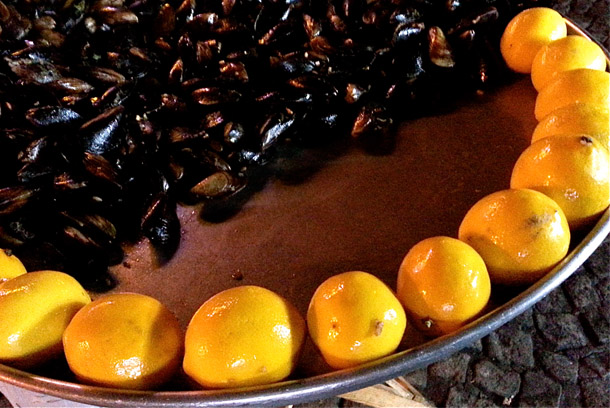 We didn’t stop by those ‘loud’ stalls for the potatoes that night. Or the mussels and lemons (above) that were being sold on the streets, although both of them were in my ‘things to eat in Istanbul’ list. Ortaköy seemed to be crowded that night. It was a Friday and a very popular spot for locals and tourists alike. There were art galleries, night clubs, cafés, bars, and restaurants all around this area. Interestingly, the locals who visited this place didn’t necessarily come for drinks. They were whiling away their time sitting in a small café, smoking Shishas (called Nargiles here) and drinking Turkish coffees. As I found out by the end of my trip, tea and coffee were not only a part and parcel of Turkish tradition, or an obsession or an addiction, it was the Turkish people’s claim to their heritage! An earlier post recounts my new found fascination with Turkish tea on this trip {Drenched in Turkish Tea And Sugar Cubes | Grand Bazaar, Istanbul}.
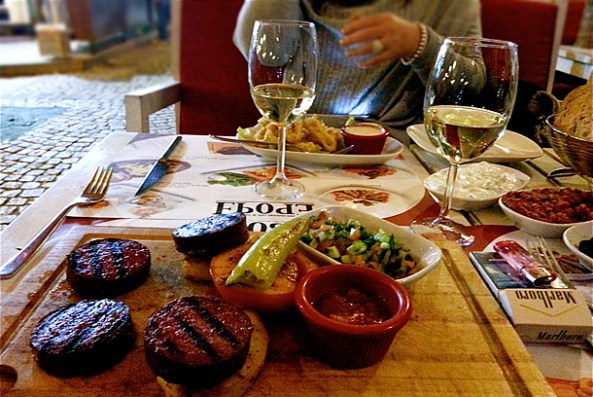
We settled in a restaurant called Epope Cafe and Restoran (below). Sitting here reminded me of an isle sitting in an aircraft where you are brushed aside continuously by whoever walks past. There were elderly locals walking past coughing and sneezing, there were food vendors who would stop and asked whether we would order anything from their cart. I failed to get this logic. Why would I be sitting in a restaurant eating the food that I have already ordered and still want to order something from the food carts passing by? For example, popcorn, castanias coated on chocolates or say Kumpirs. I know street food in Istanbul is irresistible, but still there has to be some logic behind placing such a simultaneous order. We ordered a Turkish Sauvignon Blanc (Kayra Leona Sauvignon Blanc 2010) to kick start our evening and went straight to the Main course (Kirmizi Etler) rather than fiddling with Appetisers. I liked my order – a plate of Grilled Garlic Sausage (below) which came with slices of grilled jumbo garlic sausages resembling patties and french fries served with an interesting Chilli Sauce that I felt, was just another pickled and spicier version of the Salsa sauce. Debbie ordered a plate of Iskender Kabab and an Ezme salad, while Kirsty ordered a fried Calamari. The Kebab came in a very fancy manner – a brass lid covering a brass platter which held the kababs and the mashed potatoes. Both of them were a bit unhappy with their orders. As Debbie tweeted later ‘the Iskendar Kababs were average and lukewarm but the company and the Turkish wine made up for it. Plus the people watching’.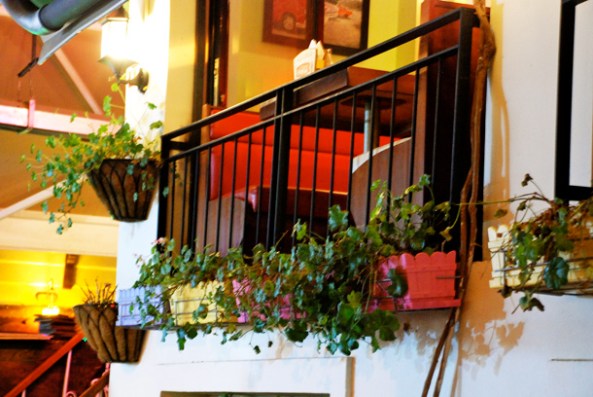
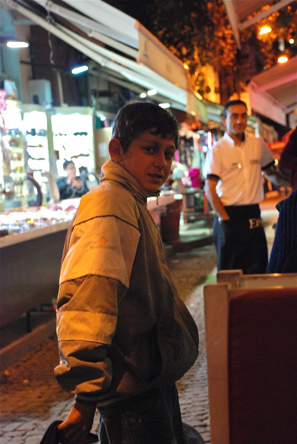
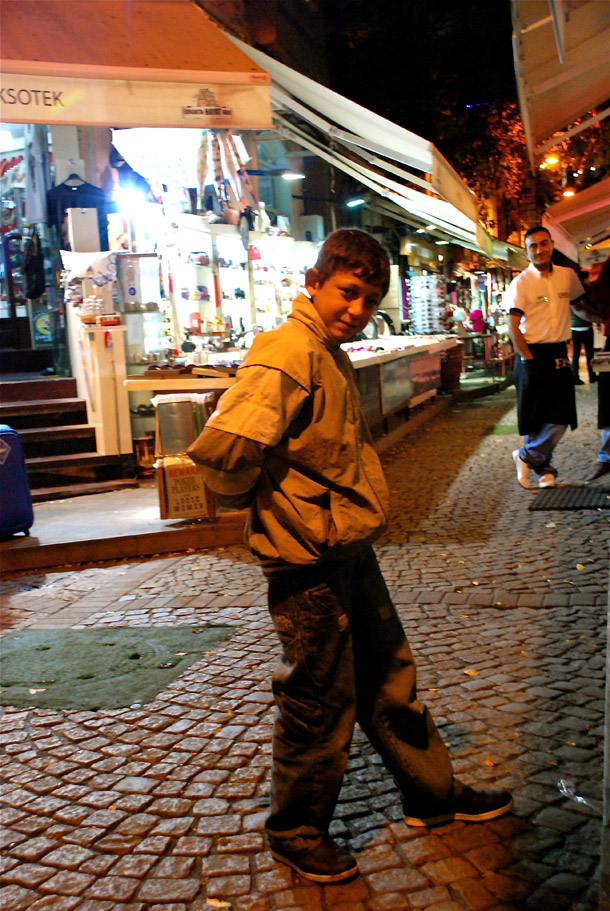
 Yes, ‘people-watching’ we did. In fact, it was like being on the set of an opera where you have been asked to watch the performance, but end up getting called upon stage unexpectedly, to fill in for someone. We watched food carts pass by, little girls begged for alms, flutists promised to play only for us. As I was eating, suddenly this boy who was asking for alms too, (below) appeared like a Jack in the box and startled me. I jumped out of my seat and it amused him so much that he started laughing. I loved his mischievous yet innocent face as he posed boldly for my camera {reminded me of the boy who posed for my camera in Mallick Bazaar, Kolkata and the Tharu children in Nepal}.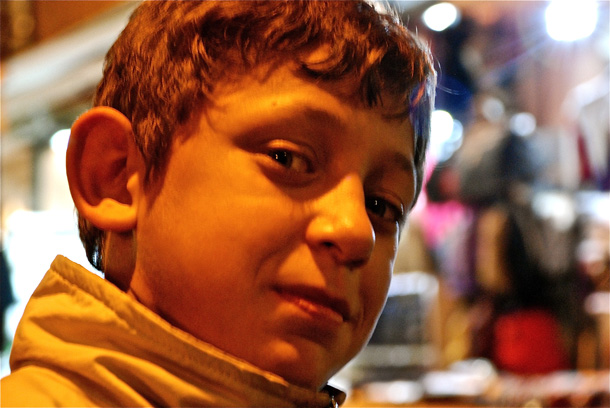
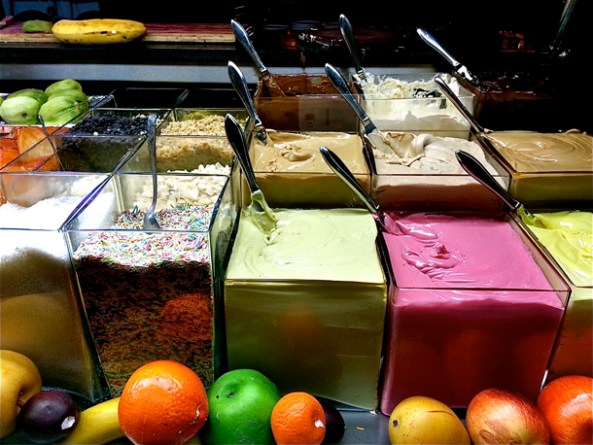
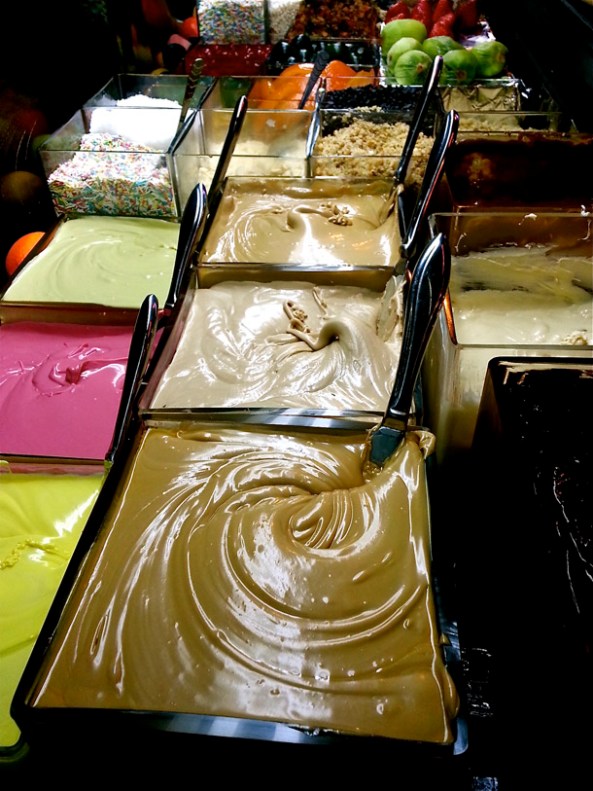
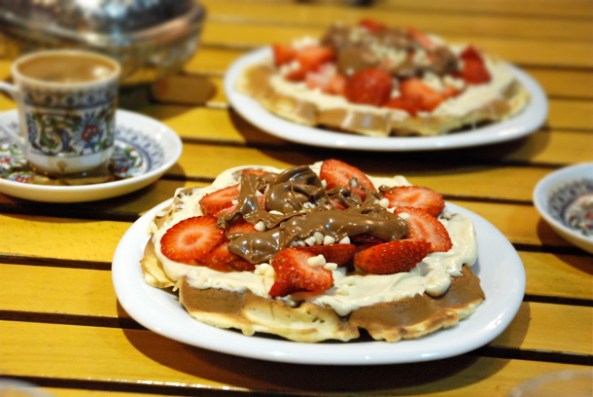
 After our dinner at Epope restaurant, we went into the Destan Cafe (below), just 10m across the road. This is one helluva interesting cafe. The entire cafe is dissected by the main alley and on one side there is the actual shop where the waffles, the teas and the coffees are being made. A counter here, houses the most colorful Turkish ice creams that I had ever seen. A man behind the counter was tempting us with the promise of special Turkish waffles and pancakes. The options for toppings were mind boggling. While we were to taste our first Turkish ice creams on our Turkey trip, I realised that instead of ice creams, Debbie had ordered waffle pancakes with Nutella The Kumpir counter looked inviting as well, but we settled for Turkish coffee and of course the divine looking pancakes. A photo journey below of the irresistible flavors of Turkish ice creams that we said ‘No’ to, at least on that evening.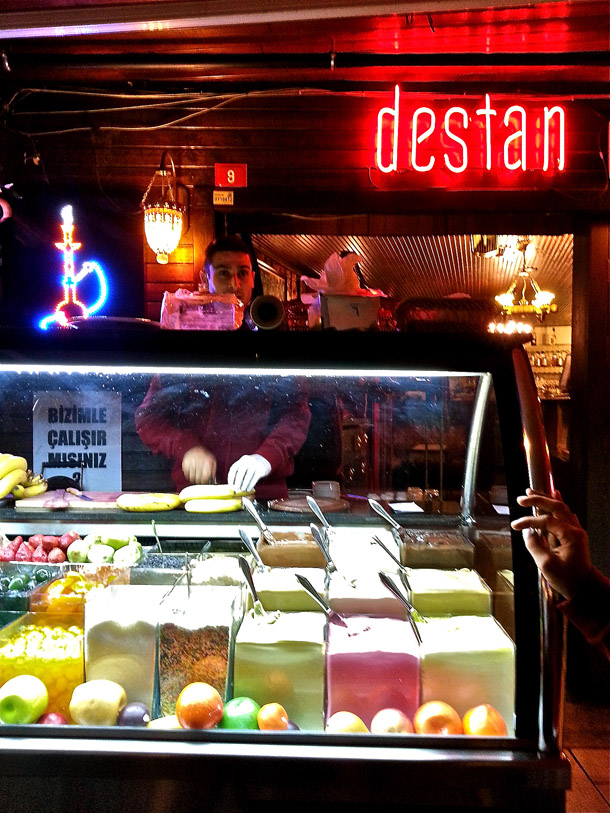
The other side of the cafe standing on the opposite side of the alley, was a revelation of sorts. A quirky decor (below) that screamed ‘Football’ in a very Turkish manner, awaited us. The cafe had different rooms, each room decorated in a very ‘homely’ manner. There were bookshelves holding books and memoirs. Although the Plasma television on the wall was new, everything else cried glory of the old world – gramophone sets, hand telephones, ornate mirrors, chandeliers, fossils, leather couches etc. Even the unconcealed and dangerously hanging electric wires looked desirable (below).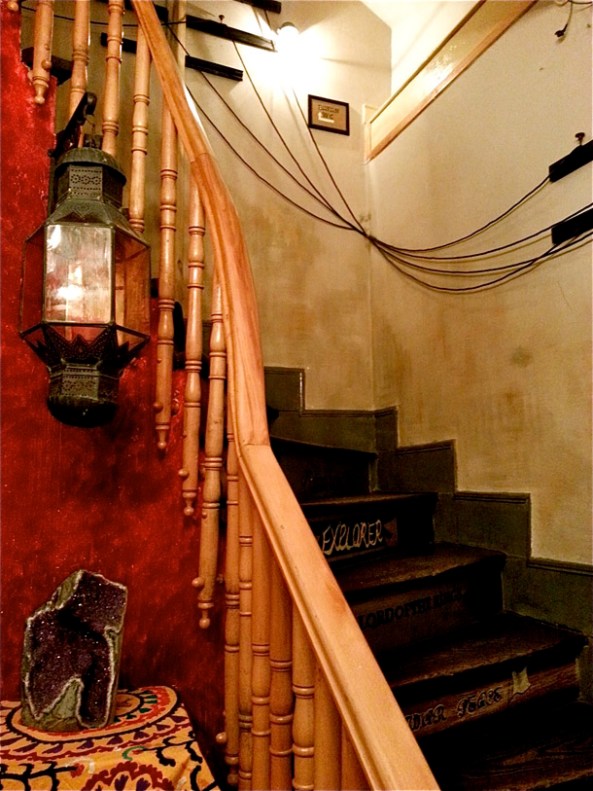
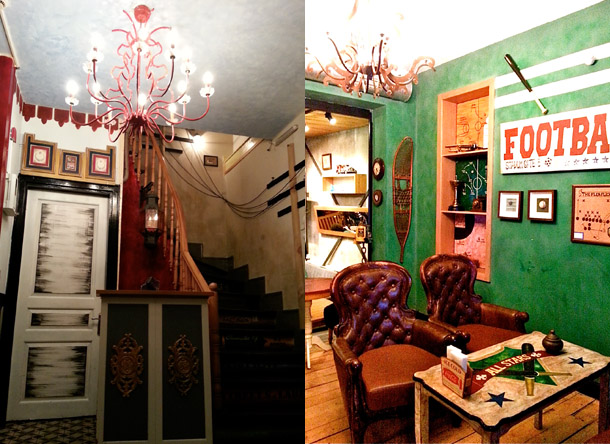
Yes, as desirable as the waffle pancakes that arrived at the table. Along with the zesty Turkish coffees with the surface erupting in small bubbles all along the rim of the unique cups that were used to serve them. The waffle pancakes were drop-dead gorgeous. Not only did they look that way, they were definitely one of the most calorific and tastiest pancakes I have ever tasted in my life. The pancakes definitely deserve a separate post on them. But then this was a magical night in Ortaköy and there were far too many acts that led up to the entire drama. Quite naturally, each one had to be mentioned.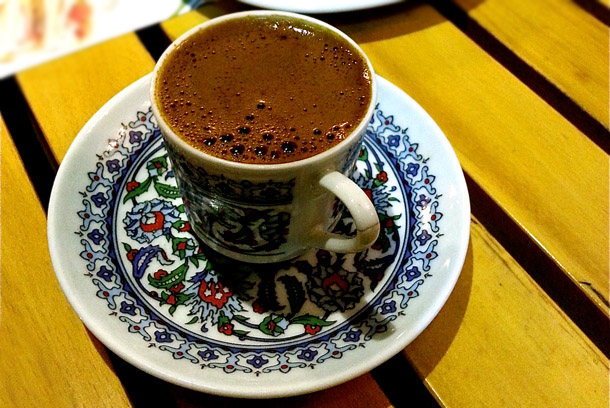
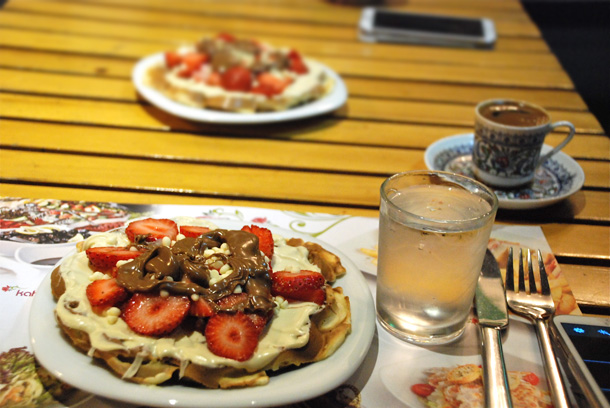
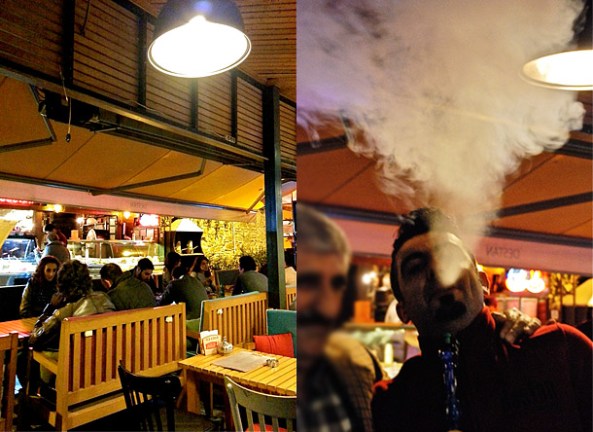 Smoking kills. That message was for the Z-Sisters who hover around my blog. Specially for Big Z who edits my posts and earns her living out of it (Dhs 10/post). A caramel flavoured Shisha arrived at our table (Big Z, it just arrived, I don’t know who had ordered!). It also had a chocolate taste as one inhaled the pipe. And the man who set up the Shisha, put up a demonstration that could make Turkey’s carbon footprint soar really high {my 15 seconds video on Instagram}. Ortaköy is special. The breeze of the Bosphorus serenades you. You can blow up your entire fortune, rummaging through artifacts or the stalls selling semi-precious jewellery and junk. It’s boisterous and lively. Though we didn’t walk up to the banks of the Bosphorus that night, I am sure that the feeling of standing right below the lit-up Bosphorus Bridge (just like the Golden Bridge in San Fransisco) must be very special. You can have fun just by people watching, eating and just be a part of the crowd. And I am not even mentioning the famous and the most expensive night clubs in the world – Reina, where Madonna comes to party in her own yacht!
Unblogging it all… Ishita
PS: Debbie writes her blog Coffee Cakes and Running from Dubai. Kirsty is based in Qatar and writes 4 kids, 20 suitcases and a beagle
Disclaimer: You can see the menu and other info of Epope Cafe and Restoran and Destan Cafe on Zomato. Please note that this post is not a sponsored post and the subject, story, opinions and views stated here are my own and are independent. I was in Turkey as a guest of Turkish Airlines (organised by Burson-Marsteller) and visited their flight catering company Turkish Do & Co and the Turkish Technic. While you enjoy reading the posts with lot of visuals, please do not use any material from this post. You can see more pictures of my travel and food journey here.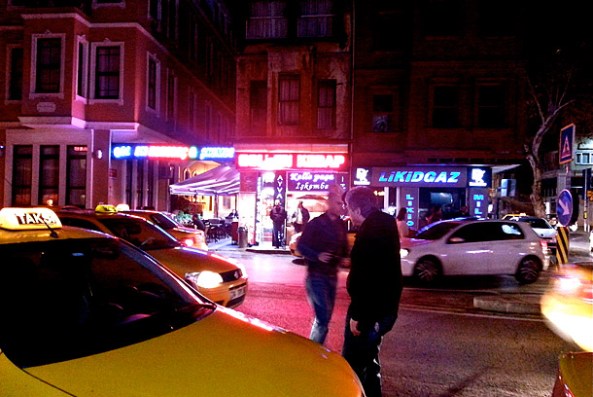
BE SOCIAL. SHARE THIS!

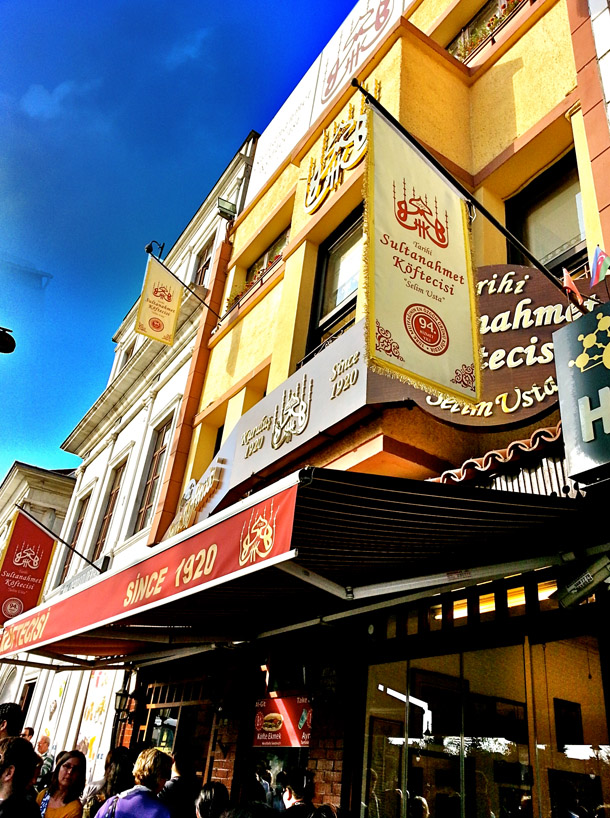 After spending the entire morning sightseeing in the Sultanahmet area in Istanbul rushing from one historical site to the other, our lunch halt was also in a historical site – the ‘Historical Sultanahmet Meatballs Restaurant’ (the quoted portion is exactly as it says in their website). The promise of the ‘best Izgara Köfte in town’ in a restaurant which originally ‘created’ them, awaited us. Sultanahmet Köftecisi is located in the crowded and the very touristy Sutanahmet Square in Istanbul, still housed in the original building where the restaurant was established way back in 1920. Although there are more than 20 franchises of the same all across the city and many restaurants with similar names, this particular one is a ‘must visit’. The decor supposedly hasn’t changed over the years and the restaurant is housed in several floors, each floor completely jam packed with locals and tourists – a good sign that the food probably will live up to the promise.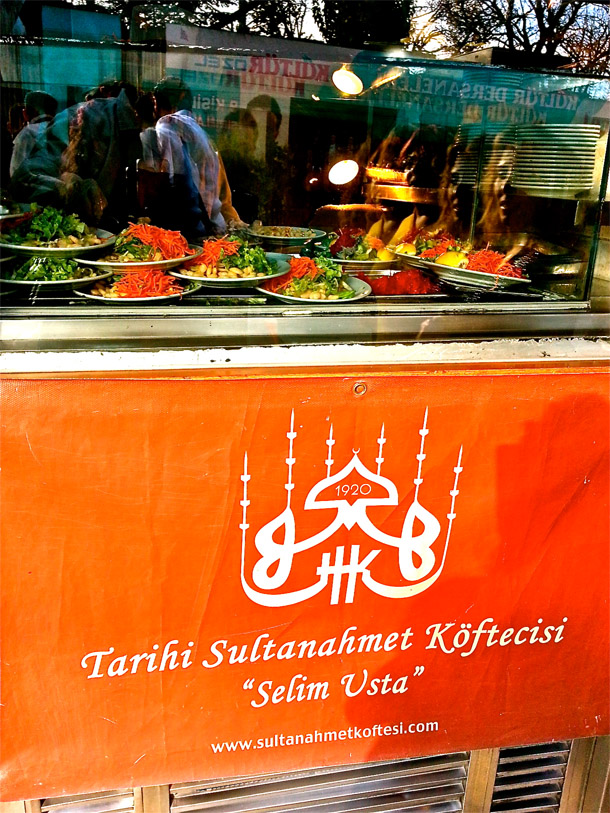
A long serpentine queue leads up to the restaurant. As you wait outside, you can see the rush inside through the glass window (above), the salads being prepared in a a jiffy and passed on to the waiters who would rush them to the tables. I think that our travel guide had done a group booking for us at a specific time and we managed to bypass the queue and went directly to our tables. We saw the diners who had previously occupied our tables, get up and leave, the moment we arrived at our designated tables. Not a single second is lost here. A restaurant staff appointed on this floor monitors the movement of the diners with the the usher on the ground floor via a walkie talkie. The moment a diner is done, immediately that is notified to the ground staff, and a fresh batch of expectant diners are ushered in. The tables by the alcoves (below) look very tempting and beautiful, but don’t be carried away – you have no choice in choosing your own table. You sit wherever you have been asked to and you are plain lucky that you’ve got a seating in the first place! 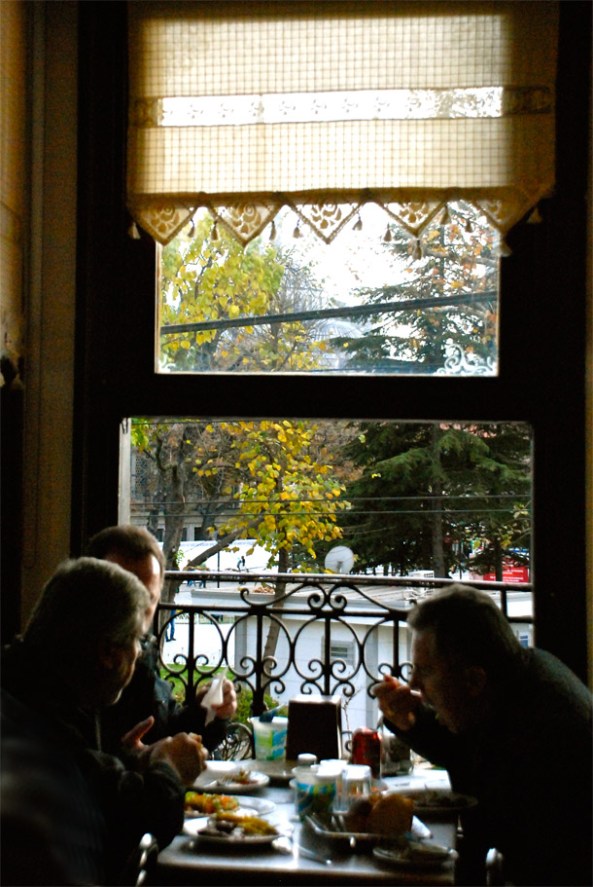
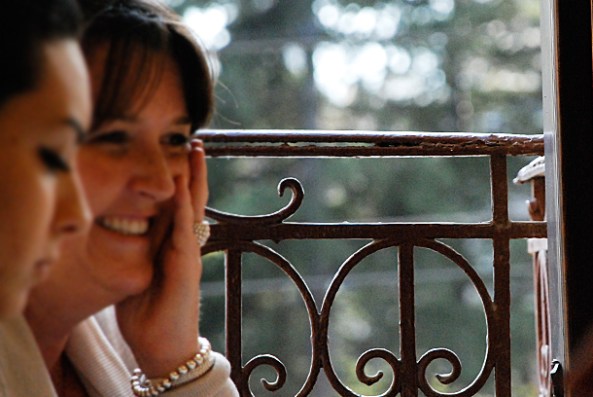
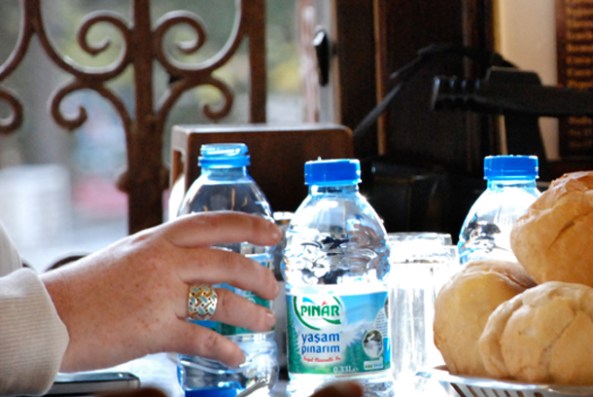
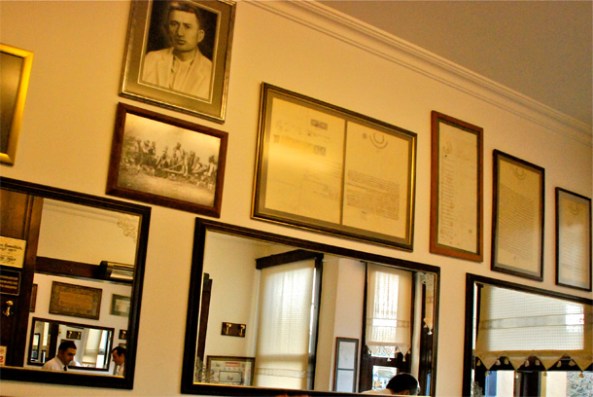
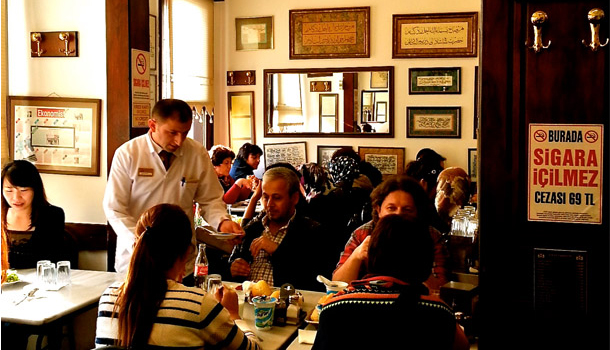
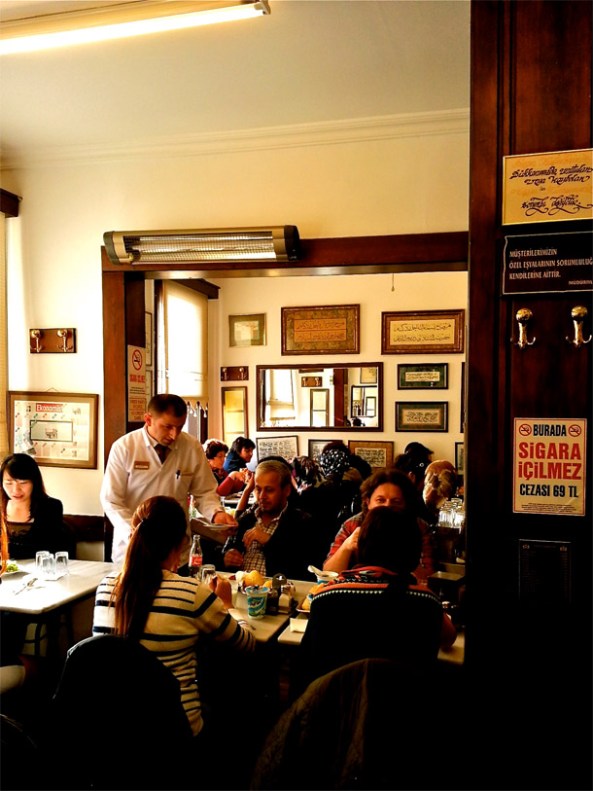 Once you sit down and absorb the surroundings including the framed letters and certificates (above), you’ll notice that while the hurried waiters are continuously bringing in giant trays carrying the food, most people are being served more or less the same food. The menu is very simple. You have a choice of Izgara Köfte or the meatballs; the Piyaz salad made up of butter beans, onions, tomatoes served chilled and sprinkled with vinegar; the Çorba or a soup made up of lentils, margarine and thickened with flour; Kuzu Şiş or lamb Sheesh Kebap; Pilav which is not exactly the Pulao that I had visualised but plain white rice and the İrmik Helvası (pic further down) or the sweet Semolina cake made with milk, pine nuts and semolina which tasted pretty much like the Suji Halwa that we make in India.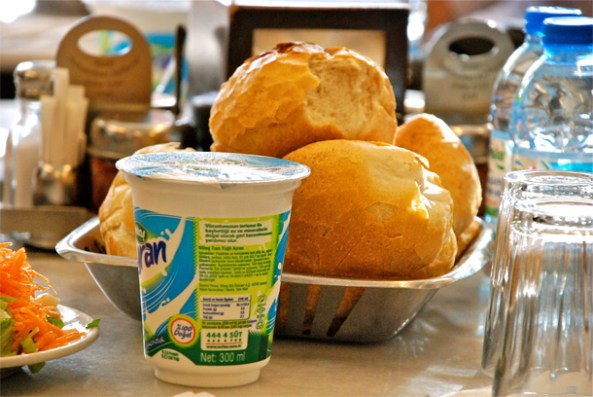
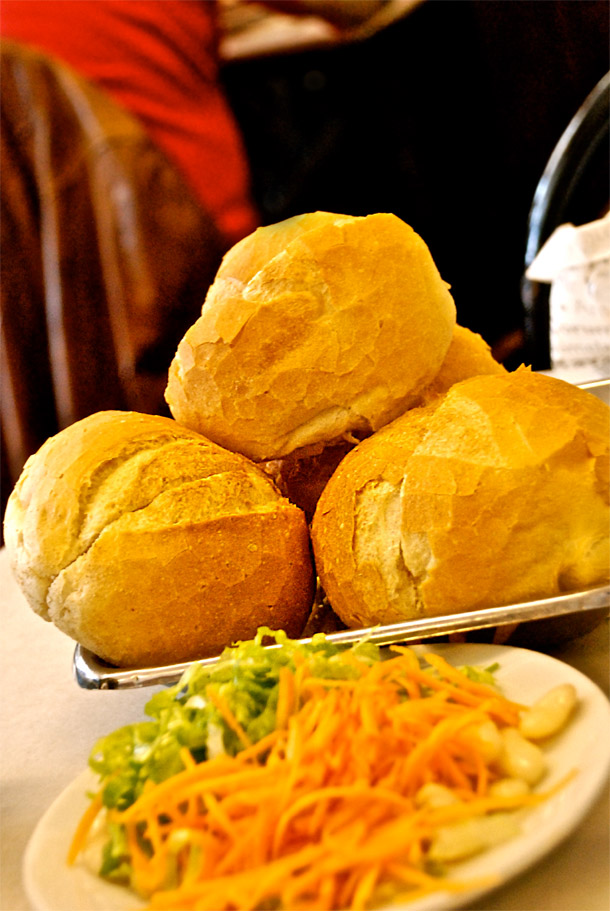
We were served the Izgara Köfte (below). The Turkish Köfte is lamb or mutton mince mixed with bread crumbs, minced onions and spices. Interestingly, the Köfte, which translates into meatballs, don’t like meatballs. Instead, they are shaped into little cylinders and then cooked. And the Izgara Köfte, or the grilled Köftes are usually garnished with onions, parsley and paprika. Hardly any spice that is, but the Sultanahmet Köftecisi menu says that their Köfte do not contain any spice. A mound containing palmful of rice, a few tanatalising pickled chillies adorning six flat cylinders of Köfte – a plate of Izgara Köfte costs maximum 15 Turkish Liras and it is accompanied by Ayran or a drink made with blending yogurt, water and a pinch of salt. Also, a few fresh Turkish sourdough breads are served along, which looked like hard crackling buns. My fellow diner, a Palestinian guy who turned out to be a real foodie, suggested that Ayran was the perfect drink to cut down the spiciness of the Izgara Köfte. Which spiciness was he talking about? All I could feel was soft, greasy and buttery minced meat melting in my mouth by the name of meat balls and which looked like flat cigar like cylinders.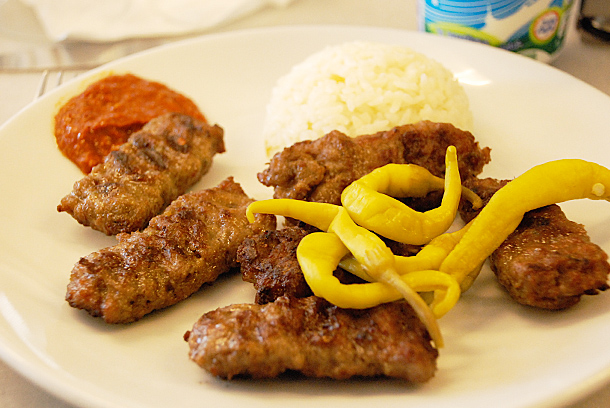
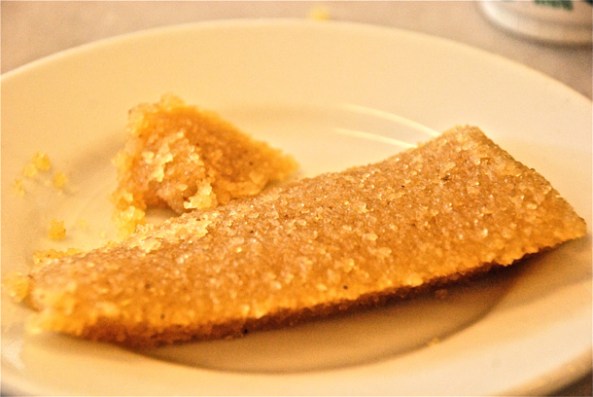 Turkish Köfte have many forms and many names – Şiş köfte (köfte is pressed onto flat skewers or Şiş), Salçalı köfte (köfte simmered in a tomato sauce), İzmirli köfte (köfte simmered in a vegetable stew), Peynirli köfte (with Cheese in the köfte) and many more. Köfte can open up a whole new world of culinary study and according to Wikipedia, a 2005 study done by a private food company suggests that there were 291 different kinds of Köfte in Turkey! The question is, where do you want to taste these meatballs while you are in Istanbul? I’ll question you back – are you looking for leg space, arm space, any space where you want to hang around for hours and relax with your friends, while you savour your Turkish meatballs? If you are, this is not the place. Or probably find another branch of the same restaurant elsewhere in the city {you can use Zomato guide} which also serves more dishes than the ones served in this ‘original’ Sultanahmet Köftecisi in the Sultanahmet Square. But, if you are looking for that ‘dining experience’, feel the vibrating floor as the diners walk up and down the rickety stairs, gulp your delicious food down under supervision (remember the restaurant staff who’ll immediately inform the staff on the ground floor that a potential table might be empty within the next 4-5minutes?), and be a part of some kind of culinary history of Istanbul, this is the place to be. I had the audacity to enter the kitchen here, take a 15 seconds video on Instagram of the famous Köfte being grilled over fire, while being brisked away by the busy staff. After coming out from restaurant as we walked away, from far away I saw the Sultan Terrace (below) and I was just wondering whether sitting there would have been any different. No, I guess. The taste of the famous Köfte wouldn’t change, would they?
Unblogging it all… Ishita
Disclaimer: You can visit Sultanahmet Koftehcisi website for more info. Please note that this post is not a sponsored post and the subject, story, opinions and views stated here are my own and are independent. I was in Turkey as a guest of Turkish Airlines (organised by Burson-Marsteller) and visited their flight catering company Turkish Do & Co and the Turkish Technic. While you enjoy reading the posts with lot of visuals, please do not use any material from this post. You can see more pictures of my travel and food journey here.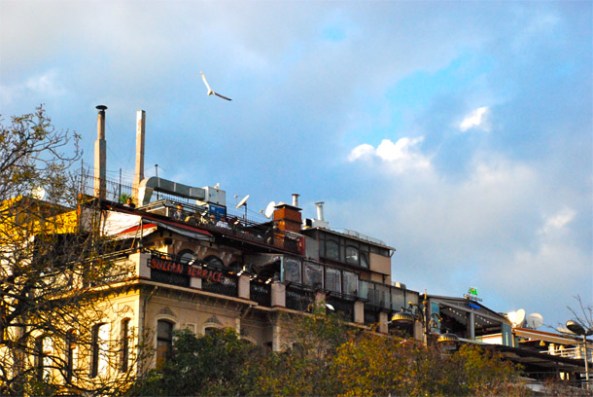
BE SOCIAL. SHARE THIS!

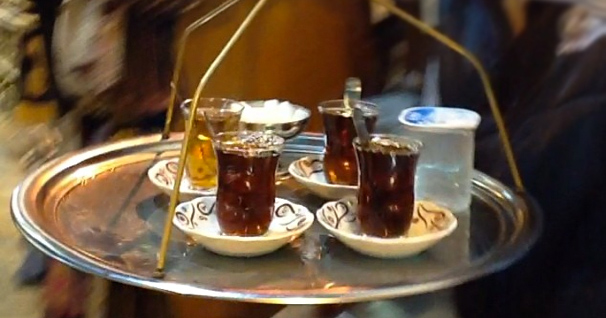
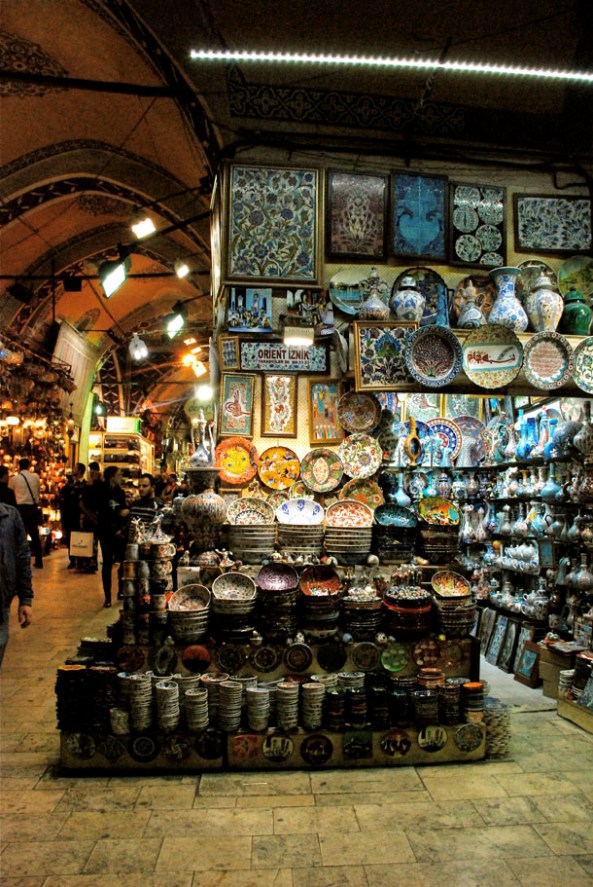
 From the moment we landed in Istanbul to the time we left, the two things that come to mind are the constant servings of Turkish tea and Turkish coffee – everywhere and at all times. This post handles only Turkish tea. Turkish coffee, for me, is too much and too strong to handle. Entering the Grand Bazaar or the Kapali Carsi (Kapalıçarşı, meaning covered bazaar), I was immediately pulled into the crowd. The non-stop hankering from the shop keepers trying to lure us into buying their ware, the crumbling ceiling desperately holding on to the main structure and giving away the faint traces of the grandeur of the mosaic art that must have engulfed the entire Grand Bazaar once upon a time… the non-stop pouring of Turkish tea – I was captivated from the very moment I stepped on the first brick of this enormous Bazaar.
  Turkish tea is not only a part of Turkish culture and tradition, it also symbolises Turkish hospitality and has many social connotations. The first thing that is served to a guest who comes home, or to any tourist that enters a shop, is the tea. Tea breaks barriers here and binds people from different faith, culture, religion to speak a common language. Çay, as it is called, generally refers to the Black tea and is served in the famous tulip-shaped glasses. All I could see around me were hanging trays with 4-6 glasses of Çays being taken from one shop to the other. The man from the tea shack would systematically bring in filled glasses of tea and would serve the shop keepers and all the tourists who visited the shops and would eventually take away the empty glasses once they were done. A few minutes later, another fresh tray of Turkish tea would arrive. As if there was a set formula that monitored the rhythm of this entire tea-serving mechanism.

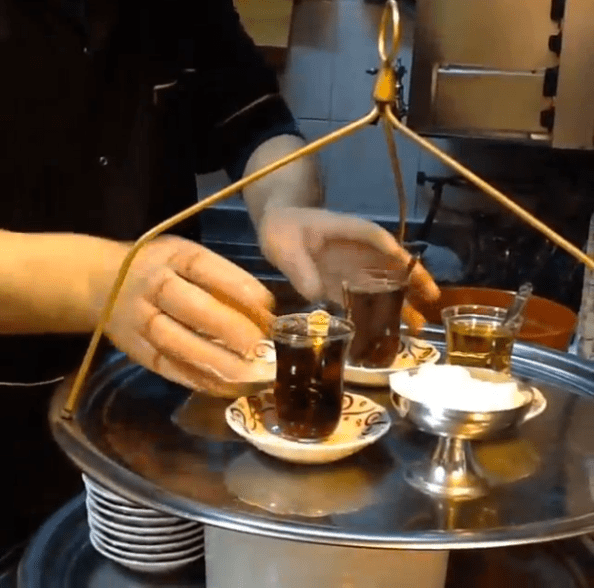
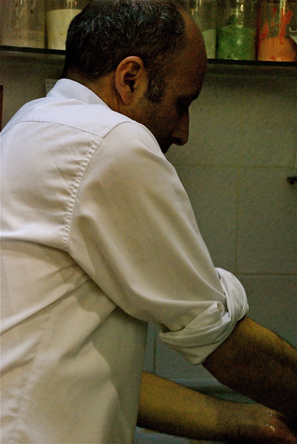 What surprised me was that I didn’t see anyone paying for the tea, yet glasses of tea would appear and the empty glasses would disappear like magic. I tried to follow one of the tea-servers with an intention of making a video, but the enitre act happened so fast. There was no time for posing, enacting, pretending etc. There would be someone in the tea shop making the tea continuously. Instead of regular tea pots, the Turkish tea is made in special double stacked kettles called çaydanlık (the brass pots that you see in the above left picture). The bottom part of çaydanlık is used for boiling the water while the upper portion is used for brewing the tea. Another staff is engaged in continuously washing the empty glasses (below).
While the tea is being prepared, freshly washed plates are stacked onto the tray (below) and then the glasses of tea plop onto its respective plate before it embarks on its swinging journey to the person who’s placed the order. Everybody gets the tea that they have ordered (with or without sugar, with or without lime, or both) – there’s no mistake ever. I did manage to make a 15 seconds video on Instagram of this tea-making performance – it does give an idea of the rhythm that had me glued on. On some days, more than 2,000 glasses of tea have to be prepared, even in a small tea shop. 
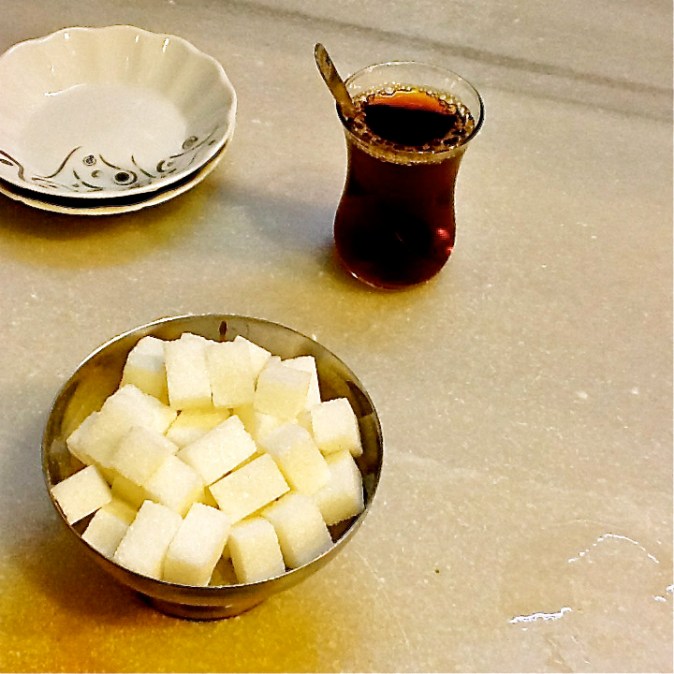
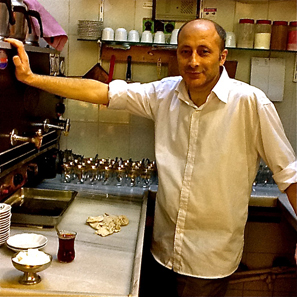


If I don’t mention the bowls of sugar cubes, my Çay story will remain incomplete. Walking the streets of Istanbul, I realised one thing – here, a bowl of sugar cubes stand side by side with a salt shaker in every dining table. Oh, I forgot to mention how an account is being kept on how many glasses of tea are being consumed in a shop. As Murat Ghureli who has a shop called Iznik Works in Grand Bazaar, explained to me later – there’s a small bowl at the door of each shop. Every time the man from the tea shop serves tea, he drops a small plastic coin in that bowl – each coin corresponding to each glass of tea and the shop keeper pays the tea stall owner at the end of the day. We did spend a lot of time in Ghureli’s shop, drinking a lot of tea and a lot of plastic coins accumulated by his door. A small ‘plastic’ investment on his part considering the amount of dollars I ended up spending. It’s all done now. So, let some more fresh batches of Turkish tea keep brewing and in case you’ve missed out the video, here it is!
Unblogging it all… Ishita
Disclaimer: Please note that this post is not a sponsored post and the subject, story, opinions and views stated here are my own and are independent. I was in Turkey as a guest of Turkish Airlines (organised by Burson-Marsteller) and visited their flight catering company Turkish Do & Co and the Turkish Technic. While you enjoy reading the posts with lot of visuals, please do not use any material from this post. You can see more pictures of my travel and food journey here.


Related Posts that you might enjoy reading:
• Tantuni Rolls – A Taste Of Turkish Street Food
• Sumac Octopus with Pomegranate | Recipe From Celebrity Chef Silvena Rowes
BE SOCIAL. SHARE THIS!

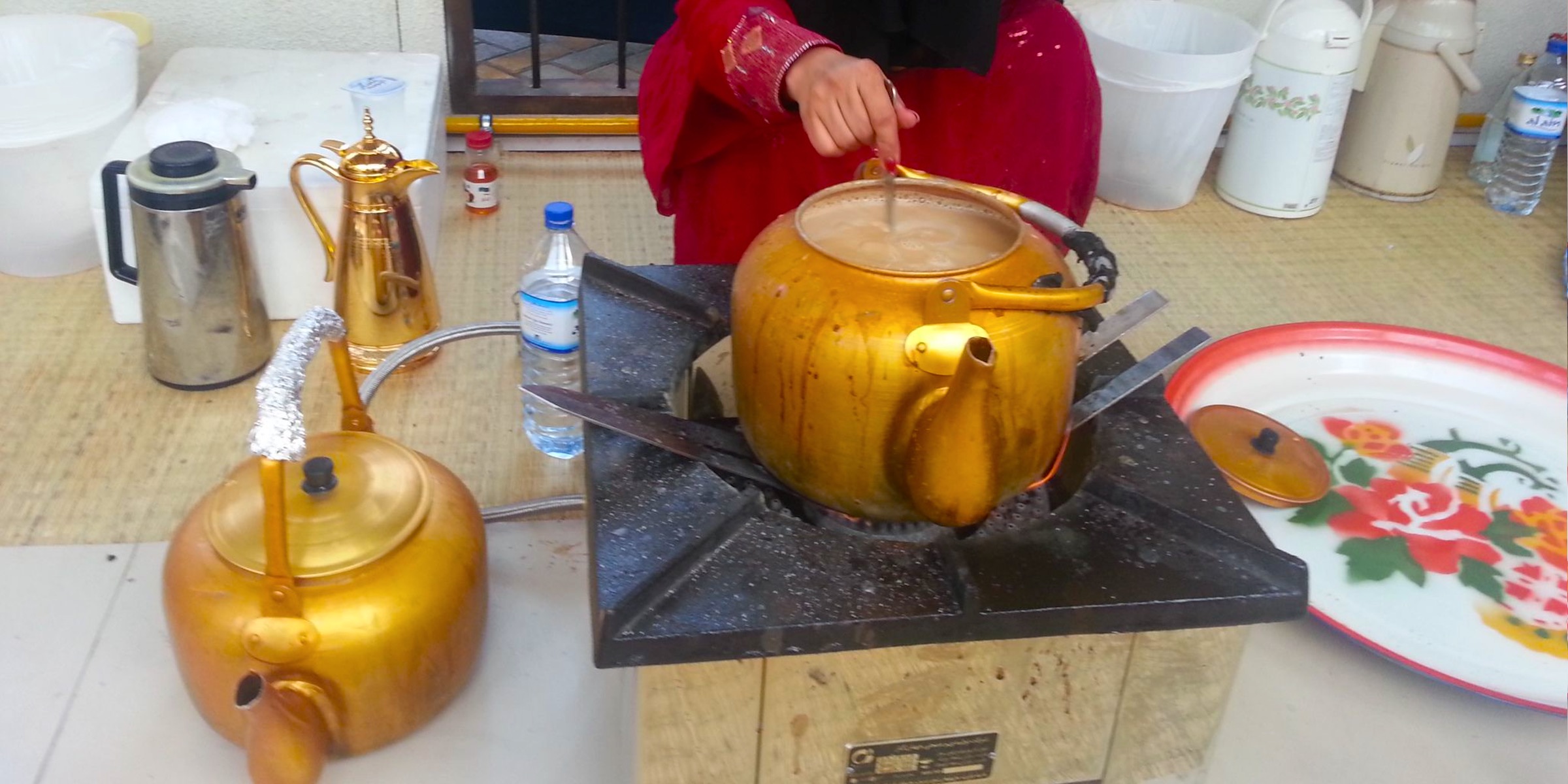
Tasting traditional Emirati food cooked by the local ladies and sharing a traditional meal together with them while sitting down in a traditional ladies’ majlis/seating, was an amazing experience.
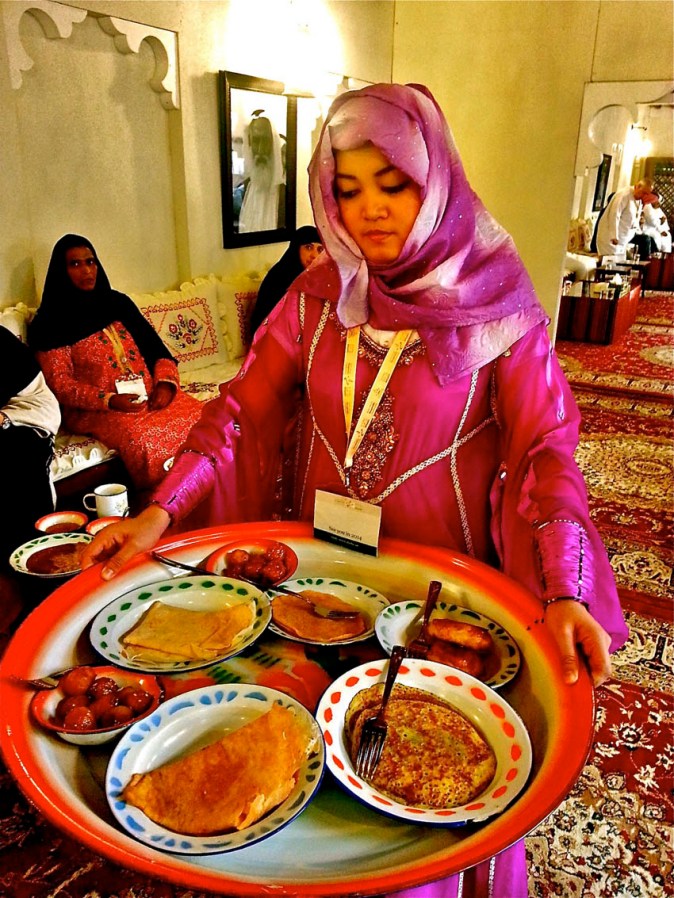
The UAE’s expatriate population had till now, a very limited opportunity to know about the Emirati Cuisine, until and unless someone has had the chance to be invited by an Emirati into his/her home. Our previous experiences of tasting Middle Eastern food had been limited to mostly Lebanese food, Jordanian food, Egyptian food and Iranian food. Although, we have been living in Dubai for quite a while, every time a guest would visit us and wished to taste local food, we would take them to probably a Lebanese restaurant. The best Emirati food experience that we have had till date was at the Sheikh Mohammad Centre for Cultural Understanding (SMCCU) – a traditional Emirati cultural meal, followed by a walking tour of the Bastakiya region. The occasional Emirati food experiences were the Leqaimats, the golden crisp fried dough balls coated with date syrup and sesame seeds, made by the local womenfolk either at Heritage Village or in the Global Village. It’s only recently that a few restaurants have come up – for example, the authentic Emirati food in Al Fanar or the Emirati breakfast in the Biker’s Café.
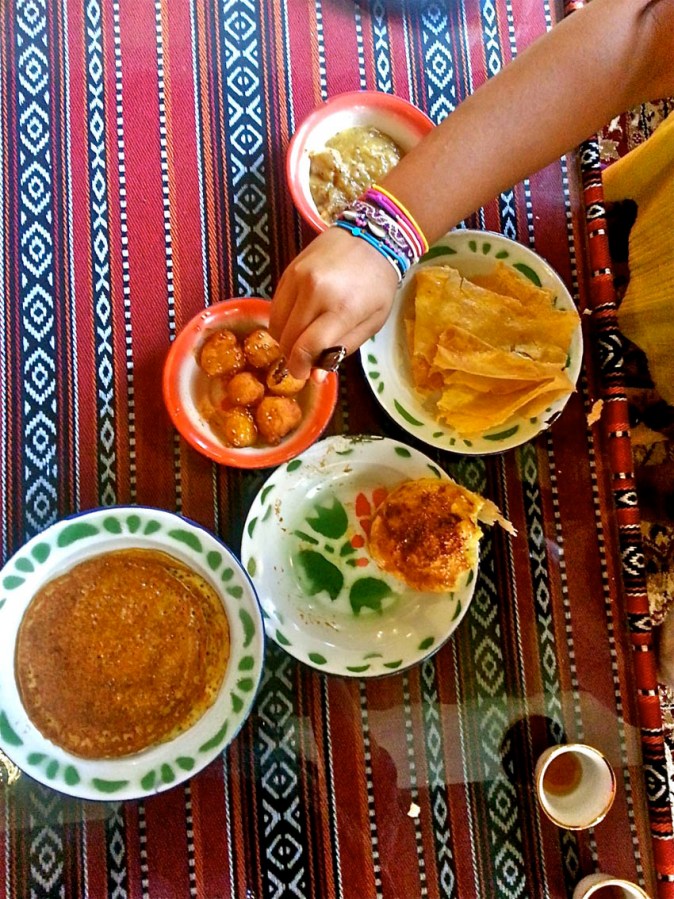
Recently, the Dubai World Hospitality Championship (DWHC) took an initiative to bring out Emirati cuisine from traditional kitchens and exhibit it to the world. A great learning for the Z-Sisters, who have ‘adopted’ Dubai as their home since their birth. To be able to click pictures of traditional Emirati women (usually, the local womenfolk prefer not to be photographed), tasting traditional Emirati food cooked by the local ladies and sharing a traditional meal together with them while sitting down in a traditional ladies’ majlis/seating, was an amazing experience. These Bastakiya-like wind-towered houses formed quite an interesting contrast against the modern day architecture of World Trade Centre apartments. While you enjoy the pictures, please remember that although the local womenfolk have been specially educated to brave in front the camera just like they were educated to wear gloves while doing their cooking! I have taken permission from each individual that I have clicked. Come, explore the world of Emirati cuisine and culture through my eyes and my lenses, as Dubai keeps its fingers crossed – 7 more days and we’ll get to know whether it gets to host the World Expo 2020 (grapevine has it that it already has won the bid)!
Unblogging it all… Ishita
Thank you for joining me on my daily food and travel journey on Pinterest, Instagram, Facebook and Twitter!
Disclaimer: The Dubai World Hospitality Championship (DWHC) is created under the directive of HH Sheikh Hamdan bin Mohammed Bin Rashid Al Maktoum, Crown Prince of Dubai. This isn’t a sponsored post, nor are there any affiliated links for any of the brands that may have been mentioned in this blogpost. The subject, story, opinions and views stated here are my own and all images are from my personal album. While you enjoy reading my posts with lot of visuals, please do not use any material from these posts.
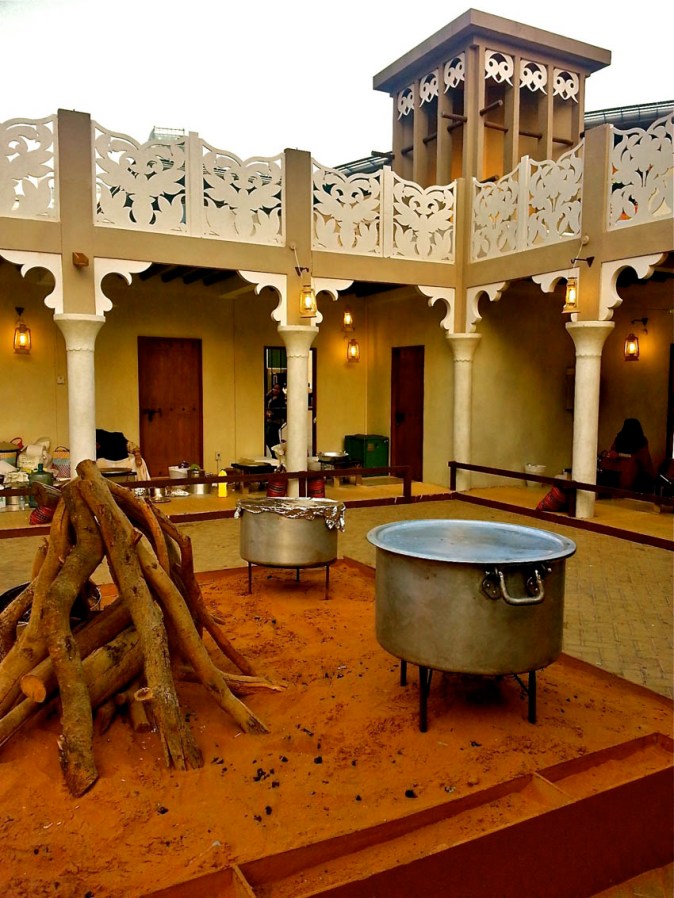
The courtyard of a traditional Emirati home


The inside of a traditional Emirati house recreated | Emirates Towers at the backdrop
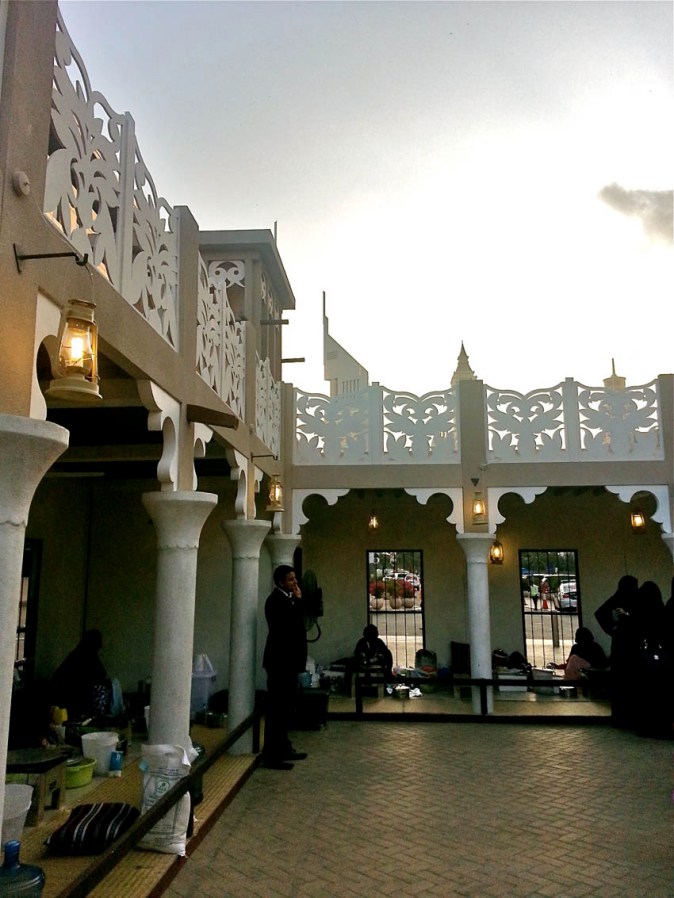
Local womenfolk cooking in the balcony that surrounds the courtyard
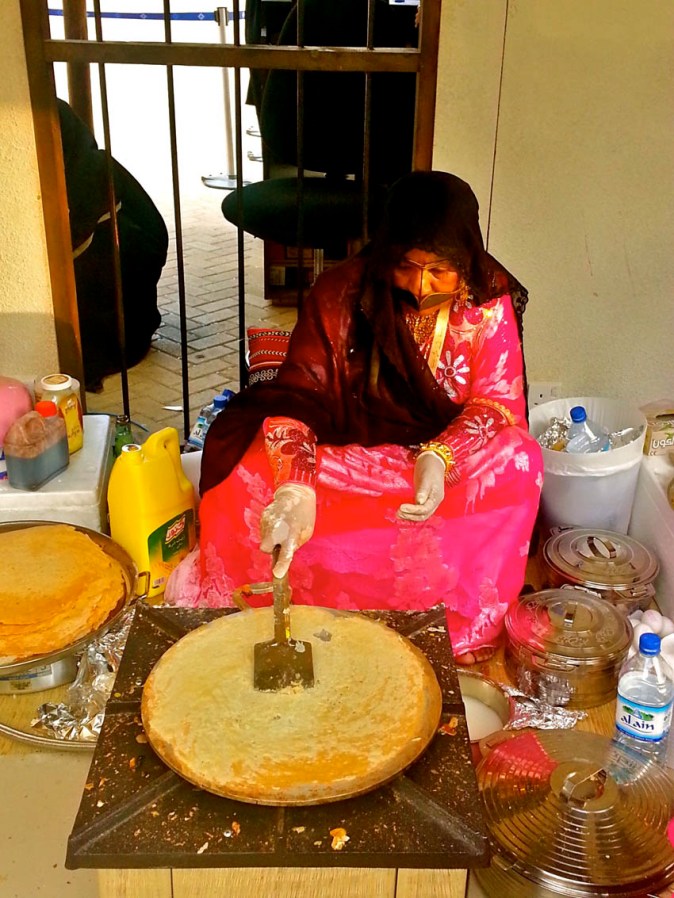
The thin crispy Rgag that can be eaten plain, drenched in ‘Salona’ stew, sprinkled with fish sauce
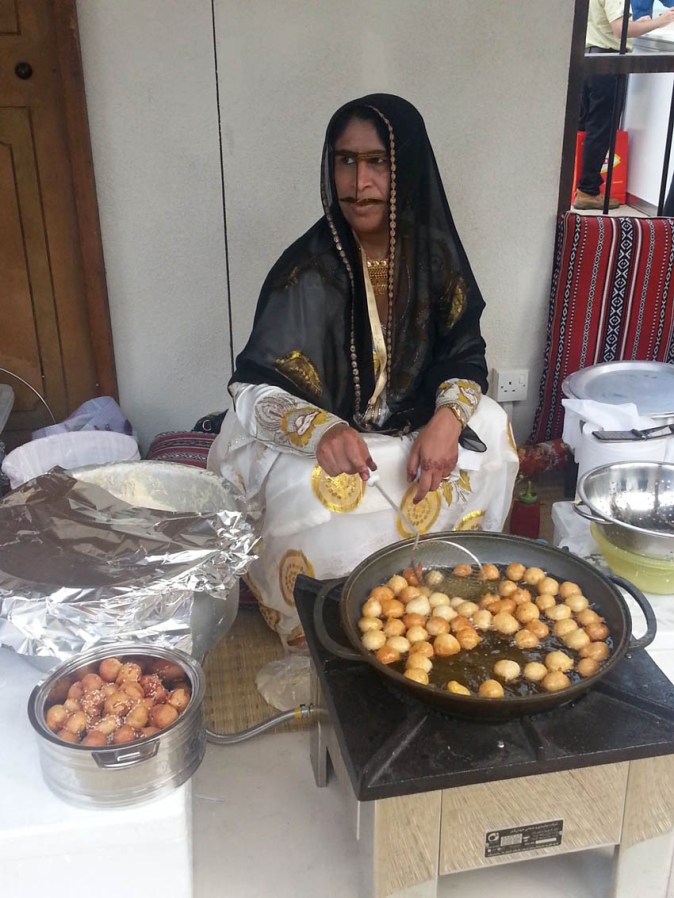
Leqaimat, crispy fried golden dough balls coated with date syrup and sesame seeds. This is one deadly-divine-dessert!
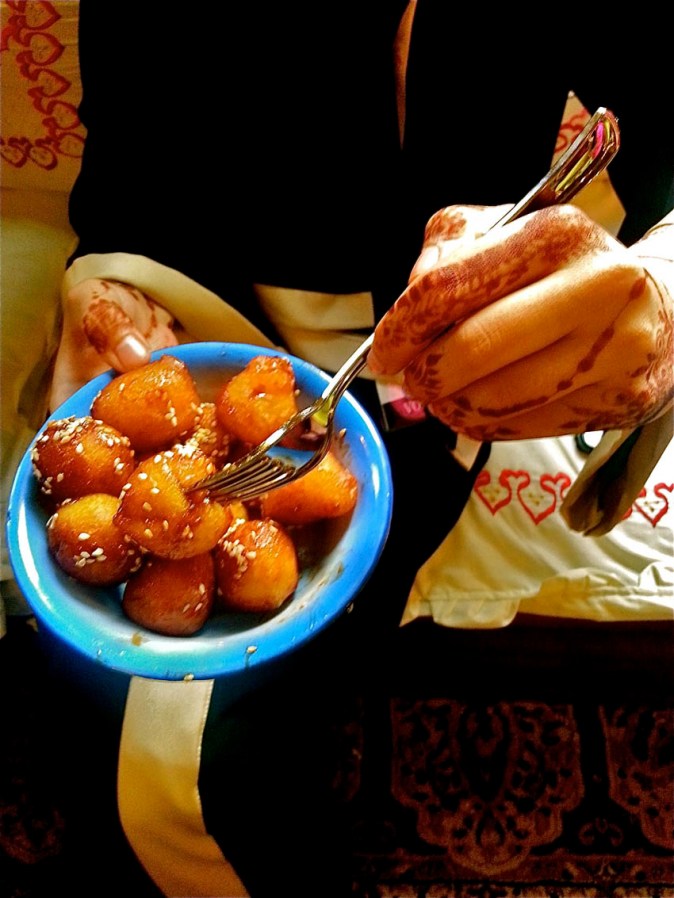
Henna designs on the hands complement the sesame-sprinkled divine Leqaimats
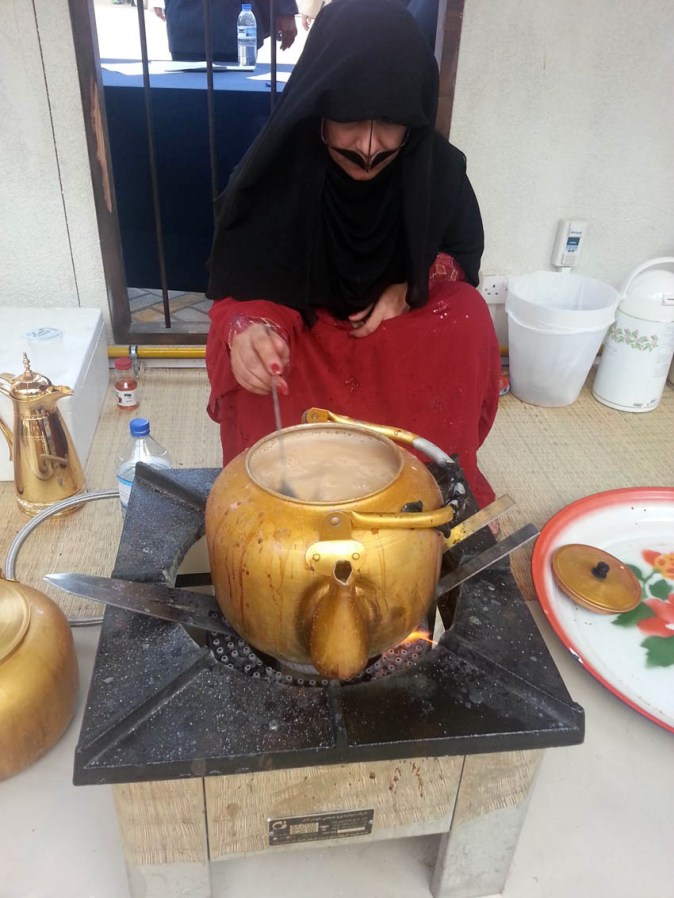
The Kadak Chai – every Emirati family has an unique way of making this and nobody shares their secret ‘ingredients’
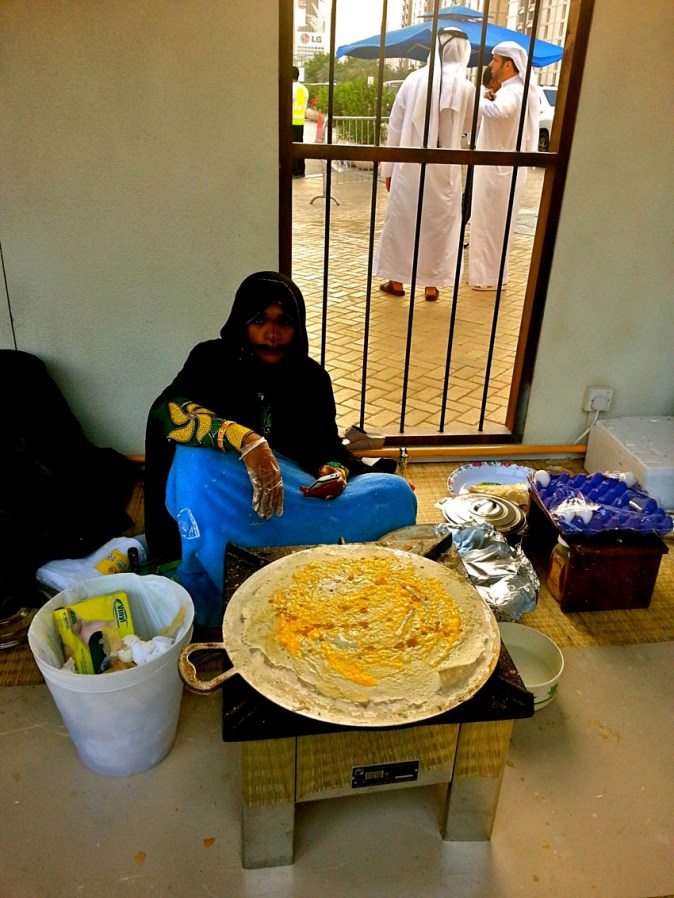
Perhaps consulting the recipe App on the smartphone?
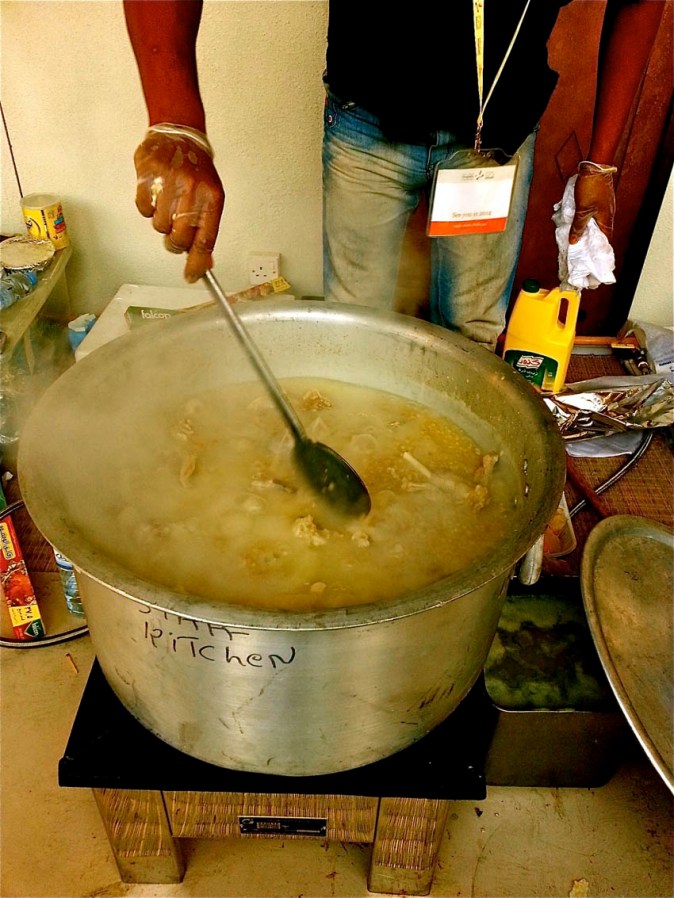
Harissa is a dish of boiled, cracked or coarsely-ground wheat and meat or chicken
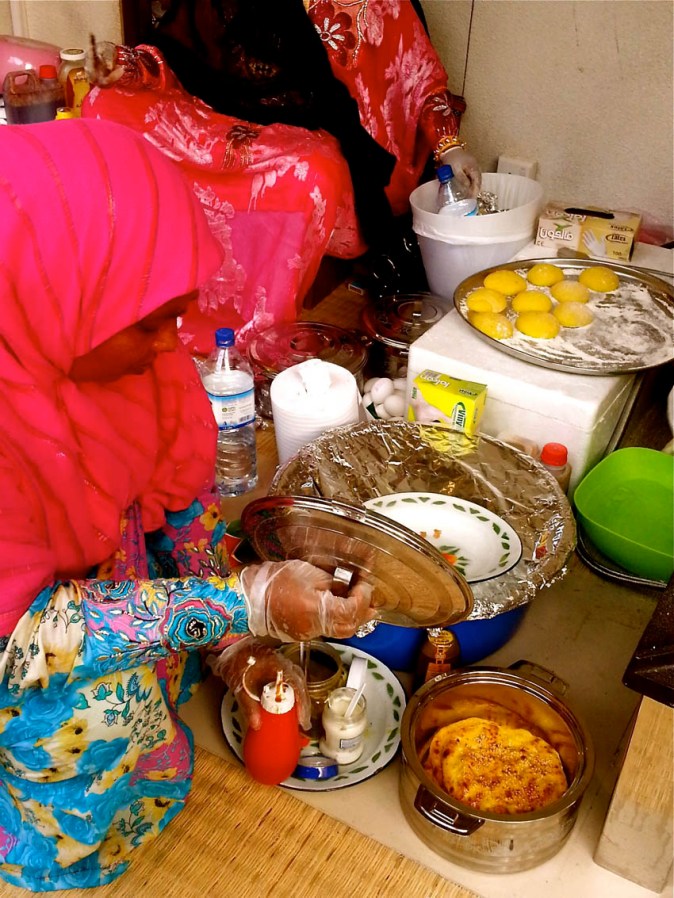
Puffed up fluffy Khameer sprinkled with Sesame seeds, to be had with Kraft Cheese (yes, you heard it right again!)
A glimpse into a traditional Emirati kitchen
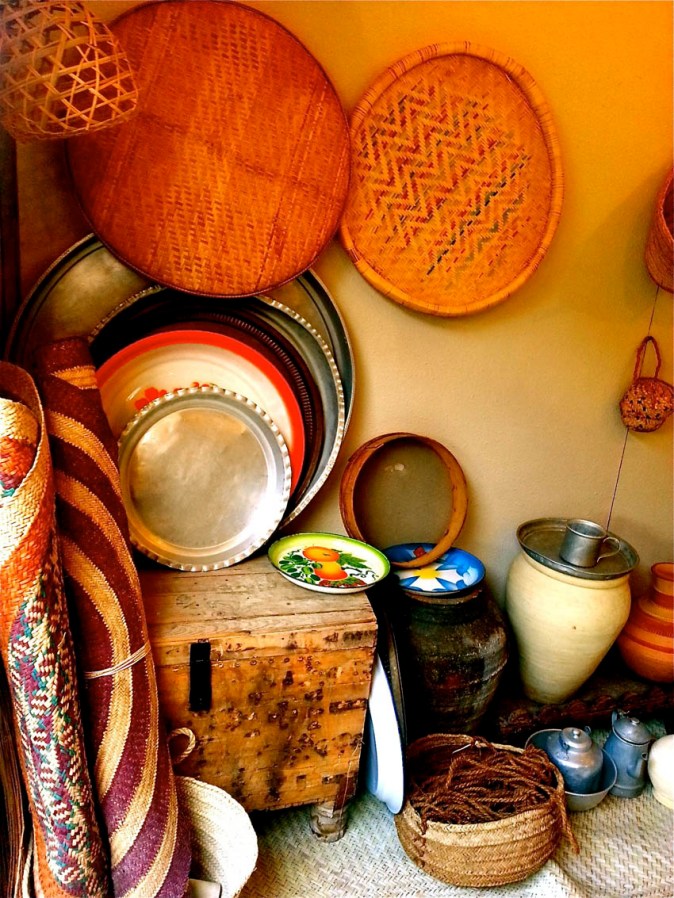
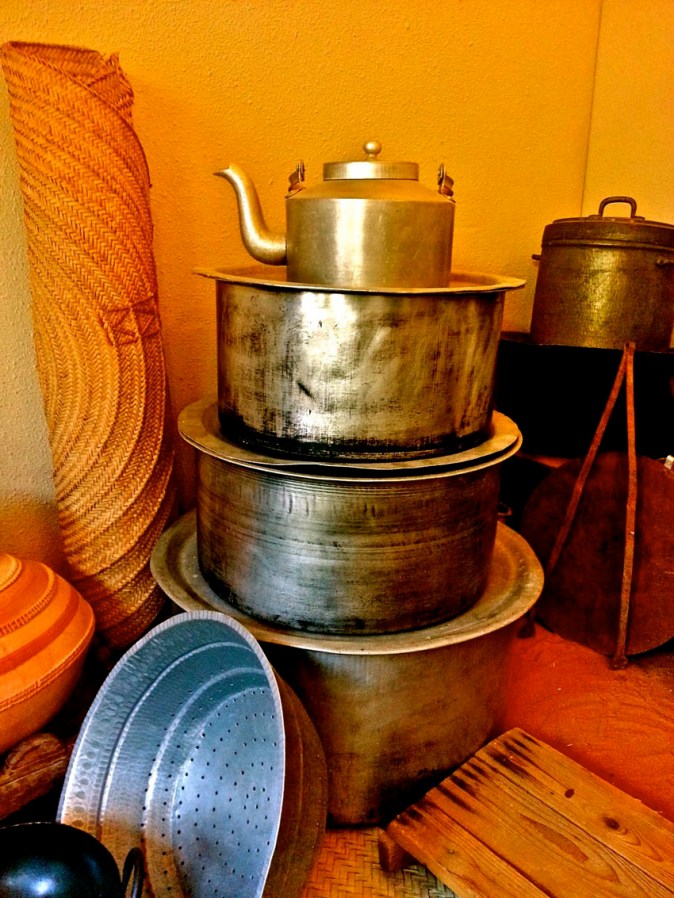
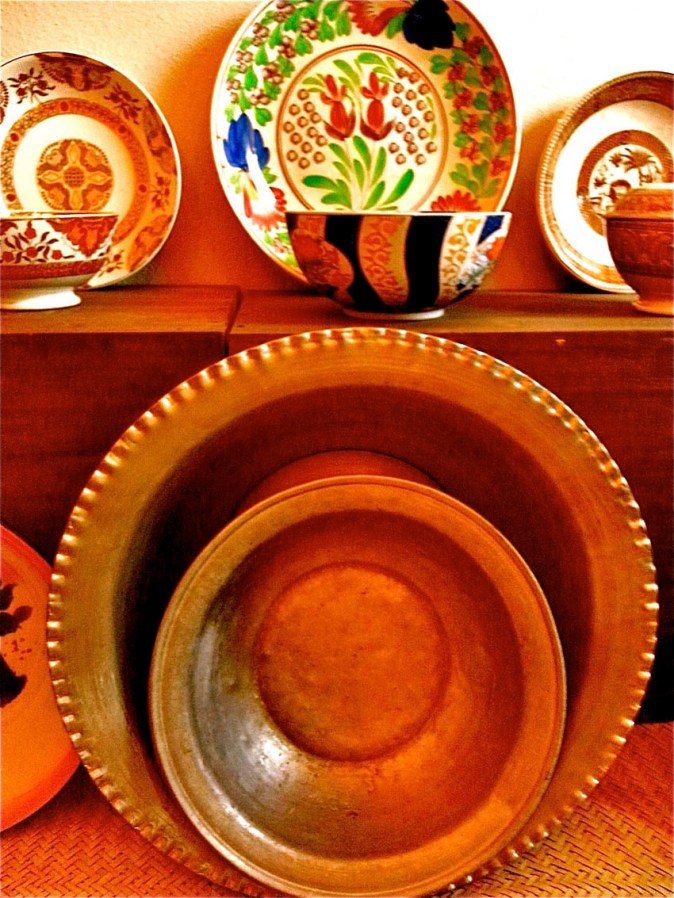
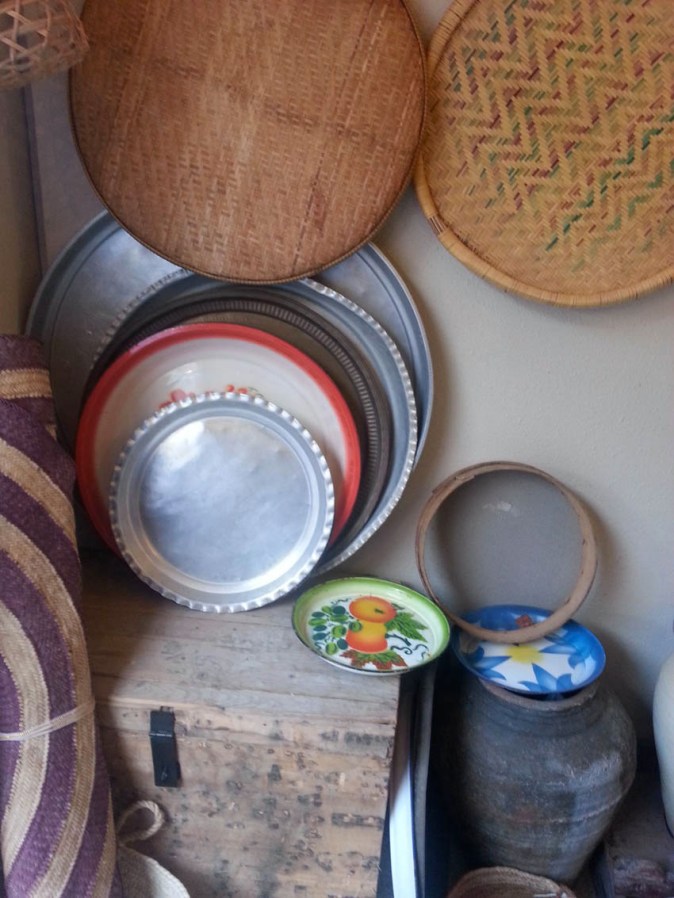
A glimpse into Emirati culture
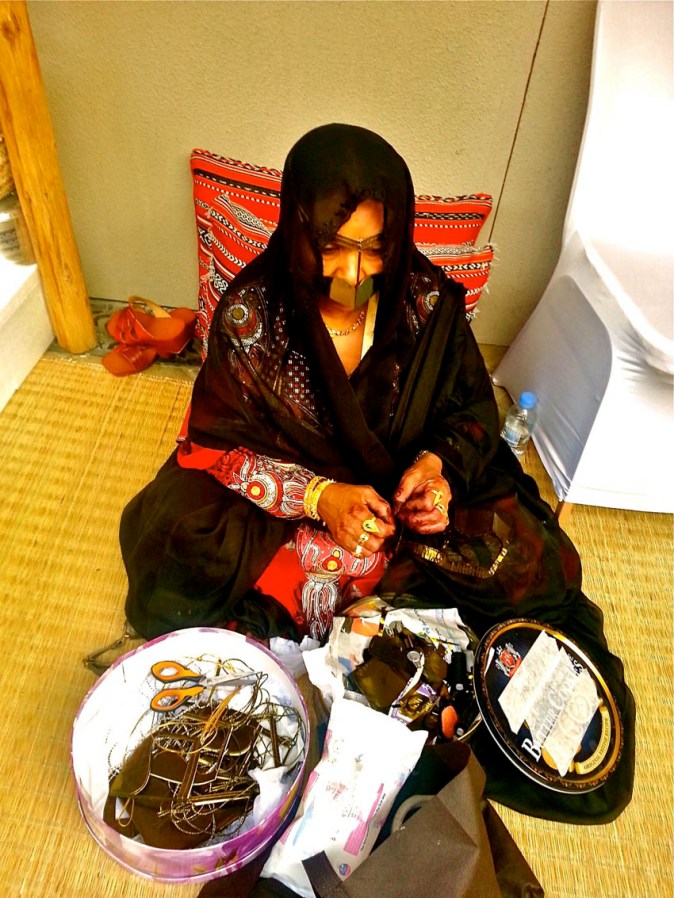
Embroidery of the Burga worn on the face. I am told this isn’t part of the Islam religion but part of tradition
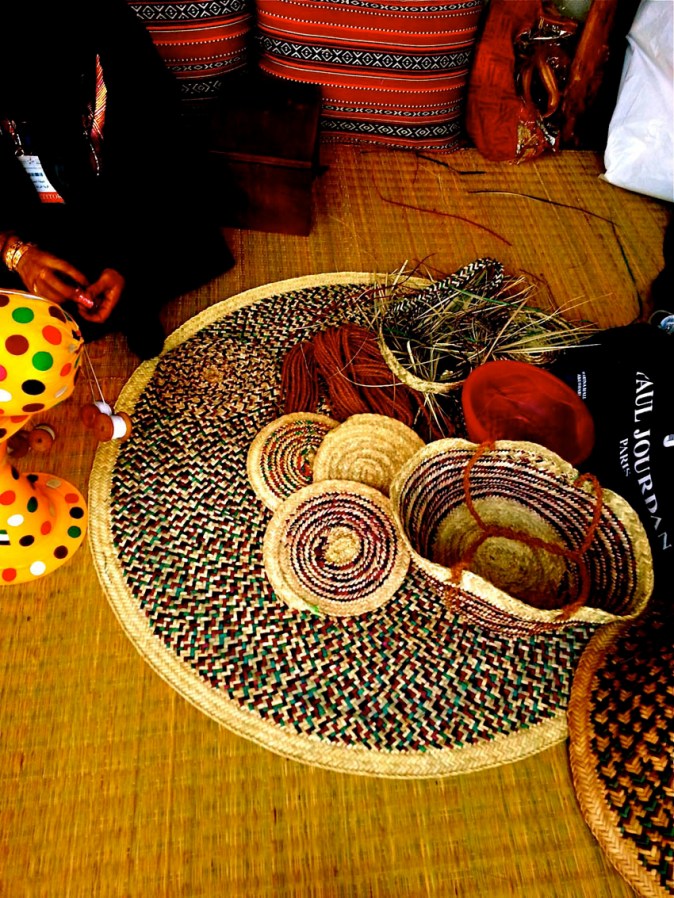
Traditional handicrafts from coloured Palm leaves
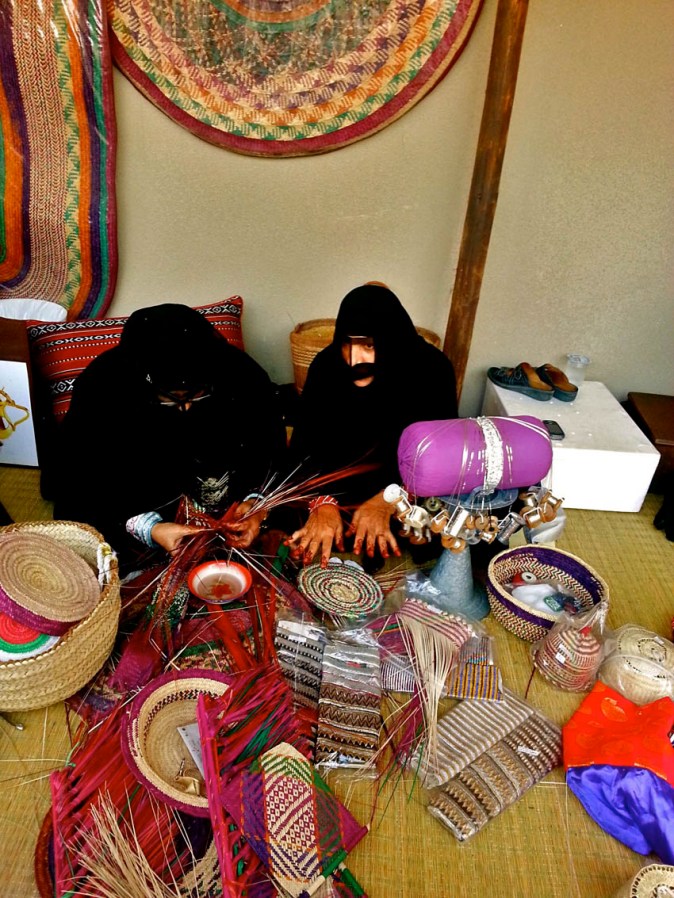
The cylindrical cushion like ‘thing’ on the stand is called the Talli. And the stand is called Kajoojeh and it’s used to make embroidered neck pieces for the Jalabiya, or the traditional dress that an Emirati woman wears
Attar or traditional scents, the bottles that hold them are pieces of art too!
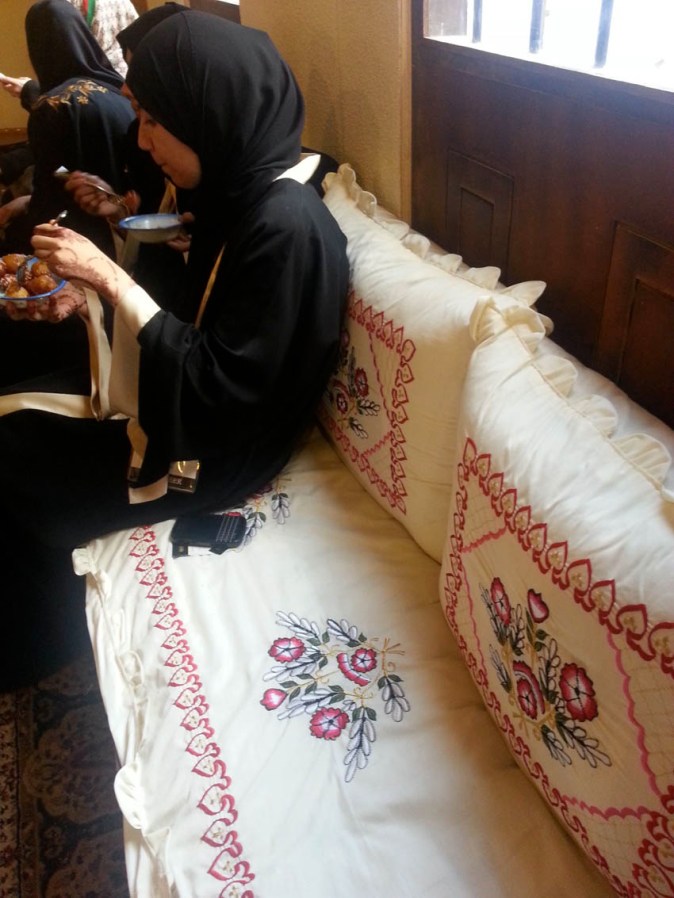
Traditional embroidery adorning the pillows and the cushions inside the Majlis
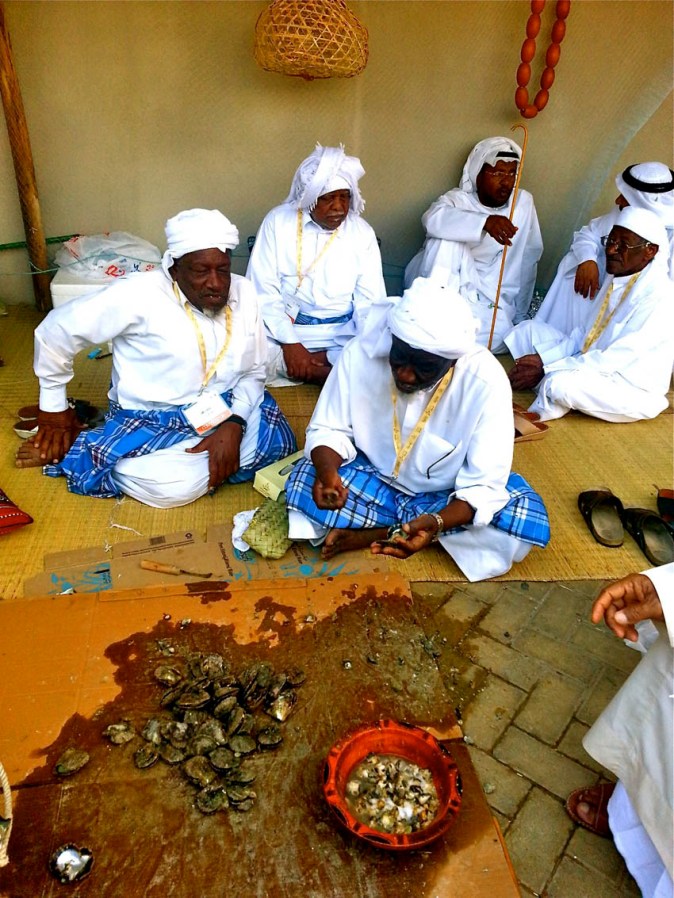
Pearl diving has been one of the oldest professions in the UAE


Al Ayyala dance is a traditional Emirati group dance | Memorabilia and nostalgia adorning the wall
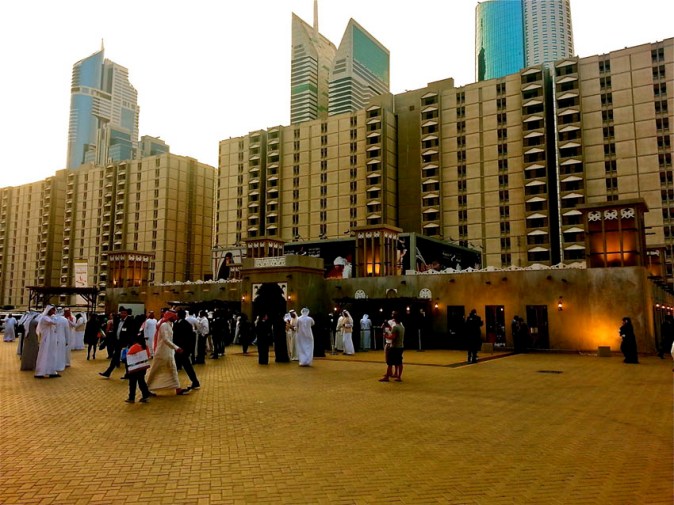
The contrasting backdrop of the WTC apartments against the recreated traditional wind-towered Emirati houses
You might like some of my Dubai articles:
Things To Do In Dubai | Like A Tourist In My Own City
Bu Qtair Fish Restaurant | Capturing A Hidden Gem In Jumeirah. A Video Too!
Masqouf in Bait Al Baghdadi | Tasting Iraq’s National Dish
Al Fanar Restaurant & Café | My First Authentic Emirati Food Experience!
Arabian Pilgrimage Food Tour With Frying Pan Adventures
Semaiya Kheer/Vermicelli Pudding, Eid in Dubai | Eid Mubarak!
BE SOCIAL. SHARE THIS!

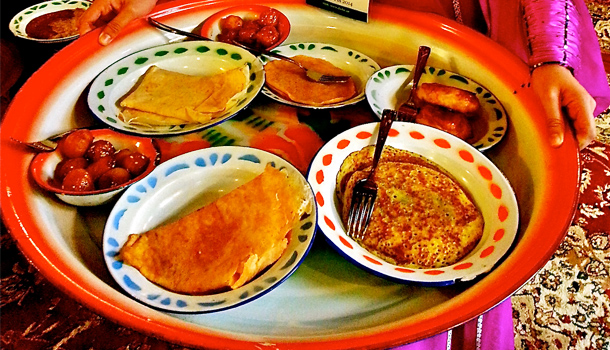

We have been living in the UAE for a long time now. More than a decade – that’s long enough to be able to cook the cuisine of a country one is living in. But alas, that hasn’t been the case. The Emiratis have a closed culture. The UAE’s expatriate population had till now, a very limited opportunity to know about the Emirati Cuisine. Practically impossible for most of us until and unless someone has had the chance to be invited by an Emirati into his/her home. Our previous experiences of tasting Middle Eastern food had been limited to mostly Lebanese food, Jordanian food, Egyptian food and Iranian food. Although, we have been living in Dubai for quite a while, every time a guest would visit us and wished to taste local food, we would take them to probably a Lebanese restaurant. The best Emirati food experience that we have had till date was at the Sheikh Mohammad Centre for Cultural Understanding (SMCCU) – a traditional UAE breakfast, followed by a walking tour of the Bastakiya region {you’ll get more information on the SMCCU website}. Our other Emirati food experiences were the occasionally Leqaimats, the golden crisp fried dough balls coated with date syrup and sesame seeds, made by the local womenfolk either at Heritage Village or in the Global Village. It’s only now that a few restaurants have come up {for example, the authentic Emirati food in Al Fanar or the Emirati breakfast in the Biker’s Café}. Recently, the Dubai World Hospitality Championship (DWHC) took an initiative to bring out Emirati cuisine from traditional kitchens and exhibit it to the world. A great learning for the Z-Sisters, who have ‘adopted’ Dubai as their home since their birth. To be able to click pictures of traditional Emirati women (usually, the local womenfolk prefer not to be photographed), tasting traditional Emirati food being cooked by the local ladies and sharing a traditional meal together with them while sitting down in a traditional ladies’ majlis/seating, was an amazing experience. These Bastakiya-like wind-towered houses formed quite an interesting contrast against the modern day architecture of World Trade Centre apartments. While you enjoy the pictures, please remember that although the local womenfolk have been specially educated to brave in front the camera (just like they were educated to wear gloves while doing their cooking!), I still have taken permission from each individual that I have clicked. Come, explore the world of Emirati cuisine and culture through my eyes and my lenses, as Dubai keeps its fingers crossed – 7 more days and we’ll get to know whether it gets to host the World Expo 2020 (grapevine has it that it already has won the bid)!
Unblogging it all… Ishita
PS1: Post updated as suggestions pour in. Arwa, an Emirati blogger who writes La Mere Culinare, chips in – There’s a new place in Jumairah called Local Bites. Haven’t been there but lots of people have praised it. There’s another place in the building close to Al Mamzar Center in Deira, called Al Khattar. Barzh, another initiative, is an online Emirati-food directory dedicated to educating everyone about Emirati food. Barzh mentions Klayya Bakery & Sweets, an Emarati bakery with an eclectic touch; White Coffee, in Khalifa City, where they serve traditional Emirati food with a modern touch; Fenyaal Cafe in Al Qasba, Sharjah, which serves Arabic coffee and a variety of teas with pastries and traditional Emirati breakfast
Disclaimer: Please note that this is not a sponsored blog and all the opinions and views stated here are my own and are independent. The Dubai World Hospitality Championship (DWHC) was created under the directive of HH Sheikh Hamdan bin Mohammed Bin Rashid Al Maktoum, Crown Prince of Dubai. While you enjoy reading the posts with lot of visuals, please do not use any material from this post. You can see more pictures of my travel and food journey here.

Indoors of a traditional Emirati house (left); Emirates Towers at the backdrop (right)
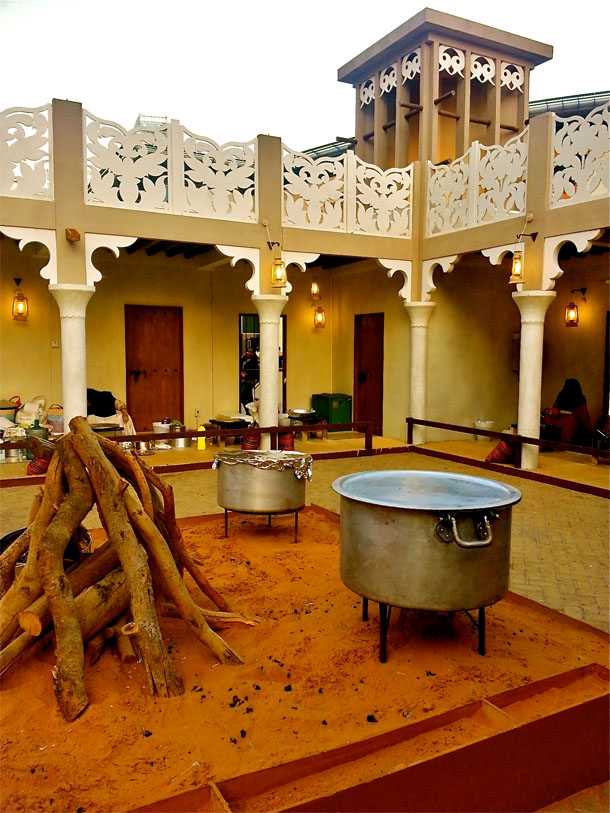
The courtyard of a traditional Emirati home
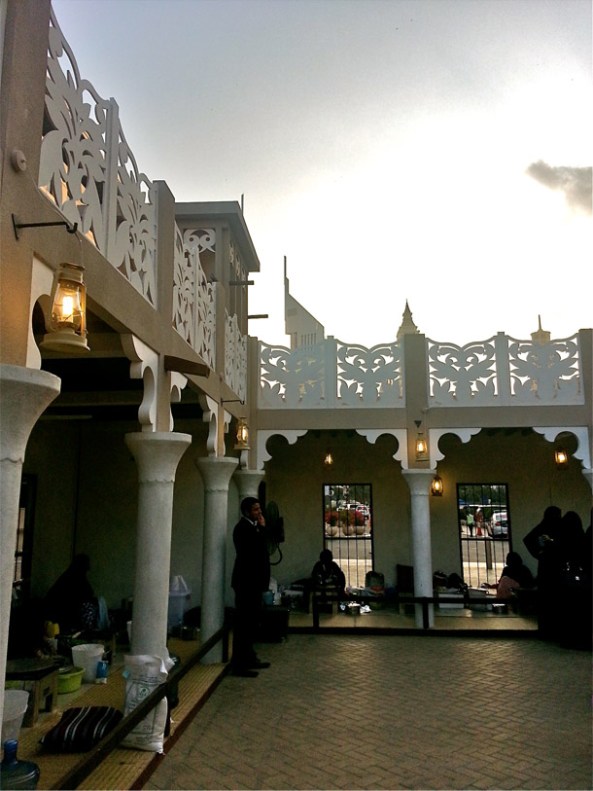
Local womenfolk cooking in the balcony that surrounds the courtyard
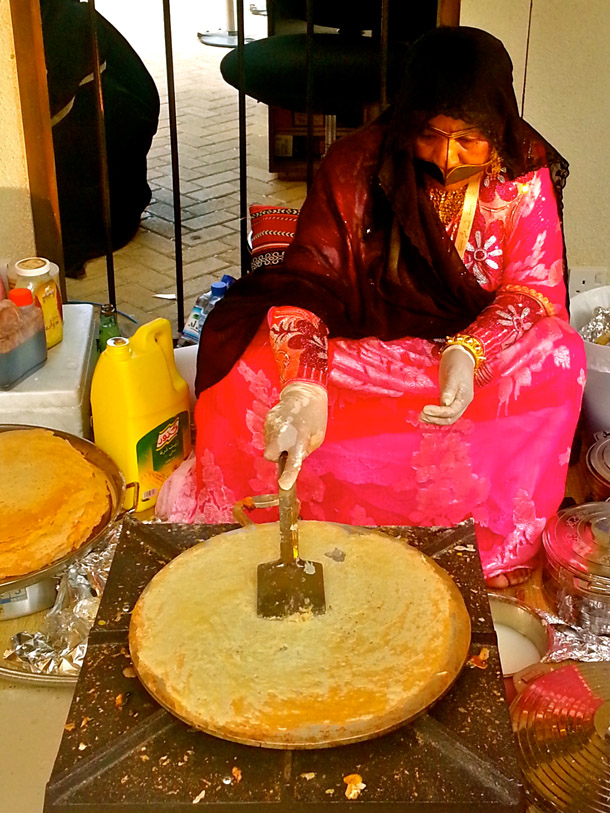
The thin crispy Rgag that can be eaten plain, drenched in ‘Salona’ stew, sprinkled with fish sauce (endless options according to Arwa)
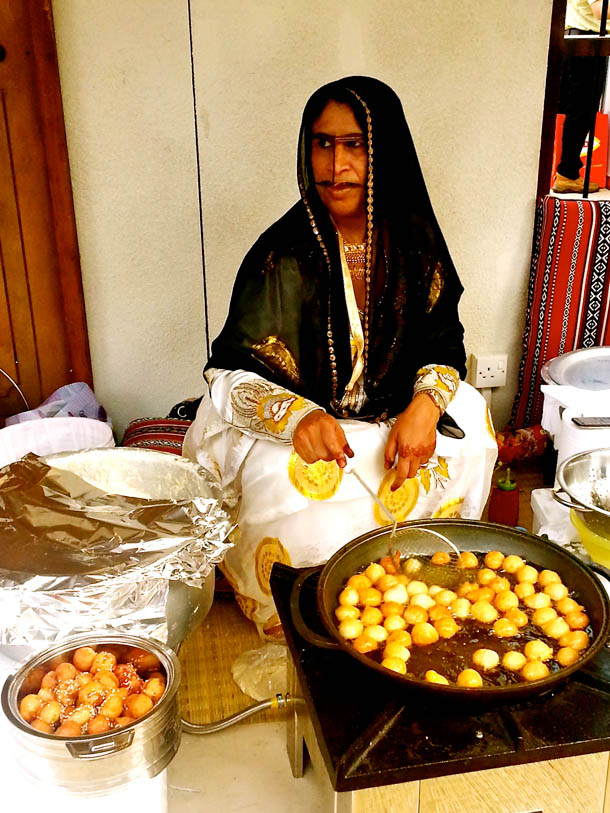
Leqaimat, crispy fried golden dough balls coated with date syrup and sesame seeds. This is one deadly-divine-dessert!
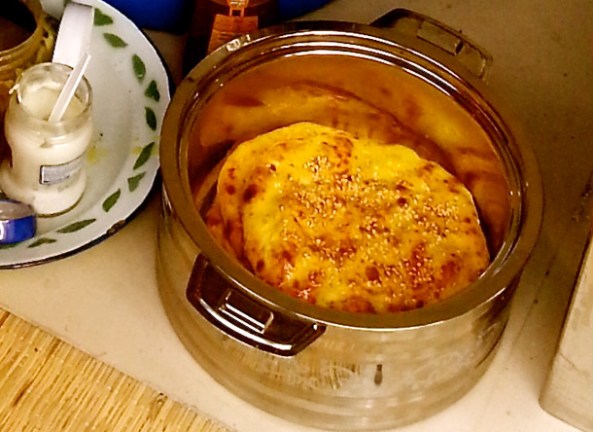
Puffed up fluffy Khameer sprinkled with Sesame seeds, to be had with Kraft Cheese (yes, you heard it right again!)
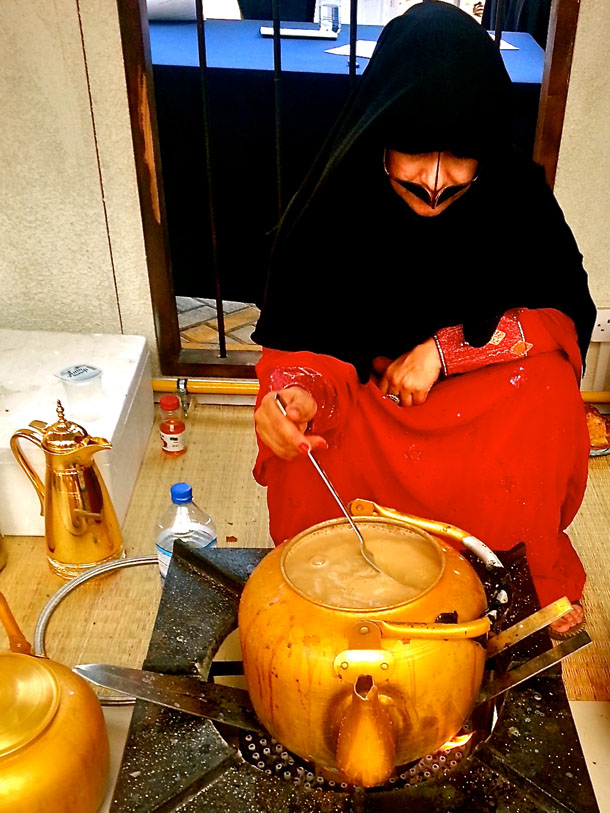
The Kadak Chai – every Emirati family has an unique way of making this and nobody shares their secret ingredients
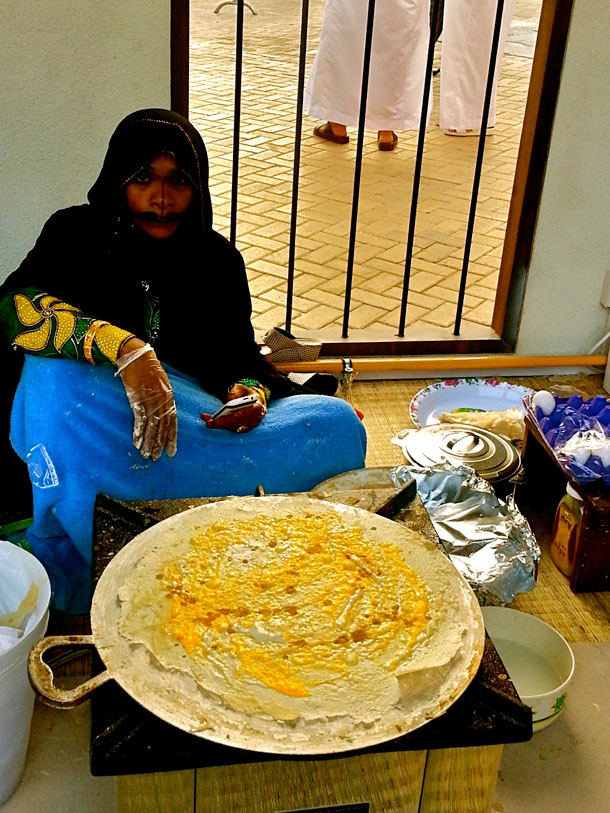
Perhaps consulting the recipe App on the smartphone?
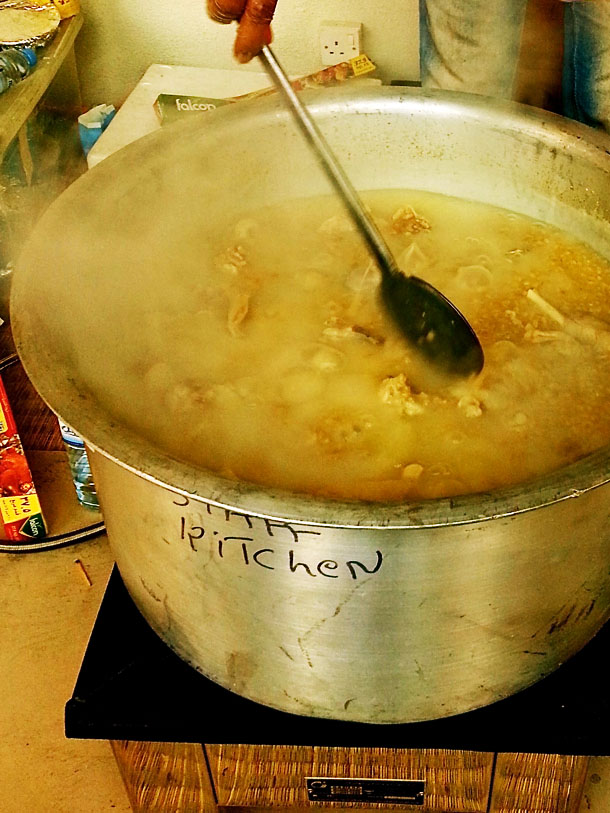
Harissa is a dish of boiled, cracked or coarsely-ground wheat and meat or chicken. Sadly, this wasn’t ready when we left
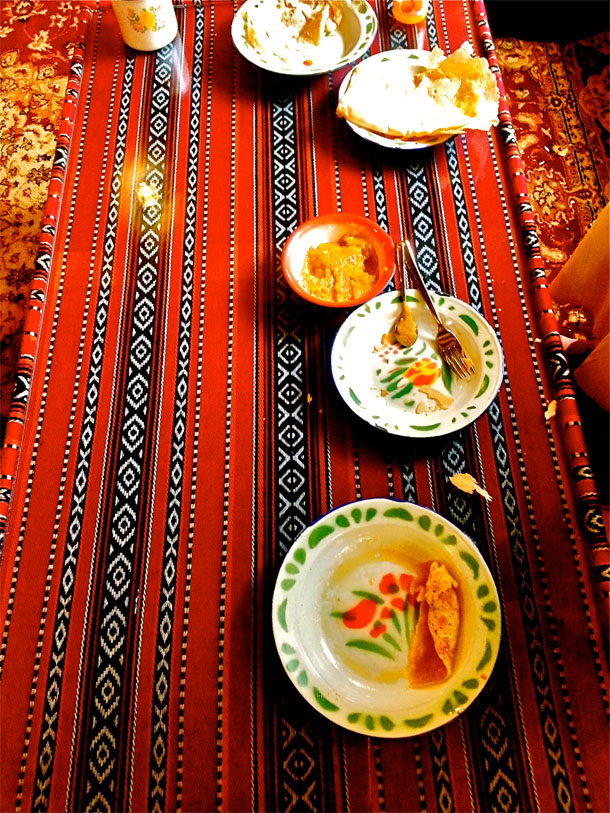
We devoured almost everything that was served inside the ladies’ majlis
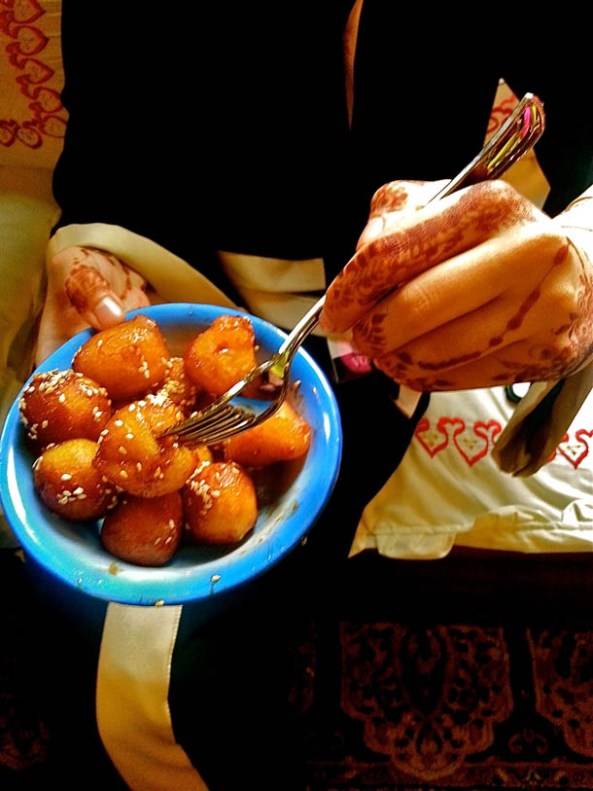
Intricate Henna designs on the hands complement the sesame-sprinkled divine Lequimats
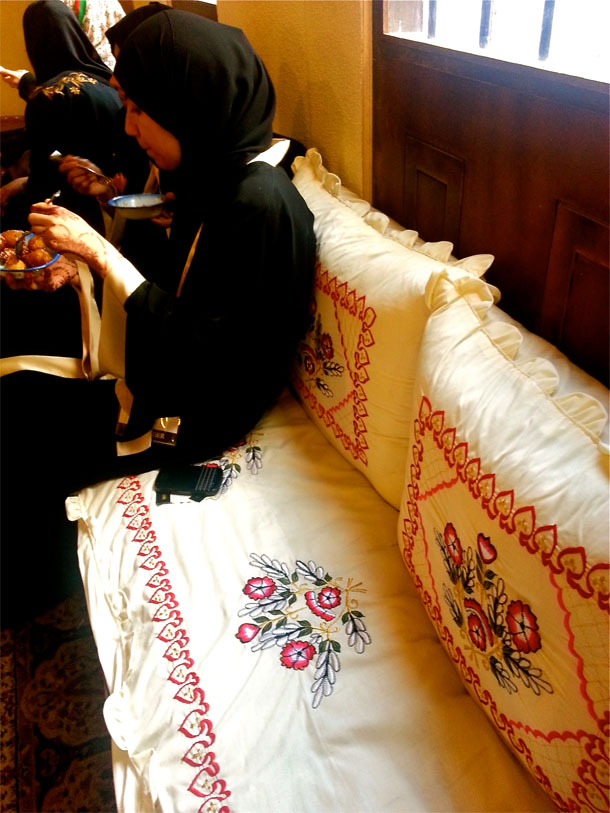
Traditional embroidery adorning the pillows and the cushions inside the Majlis
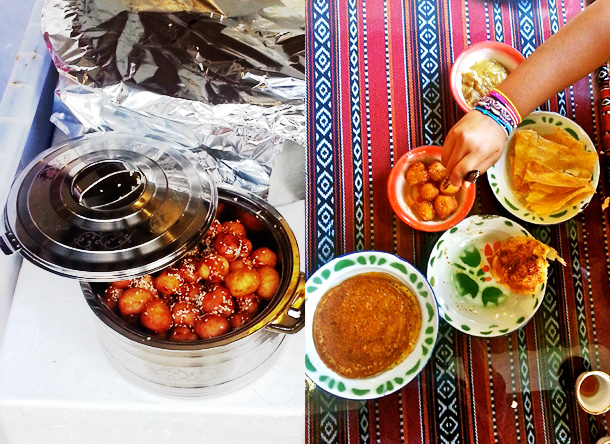
Lequimats all the way (left); the Z-Sisters absolutely thrilled (right)
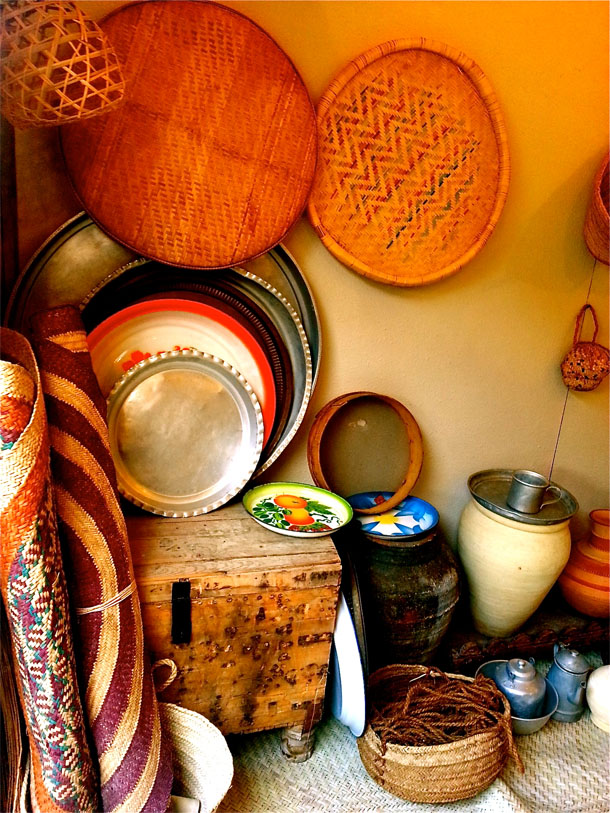
A glimpse into an Emirati Kitchen
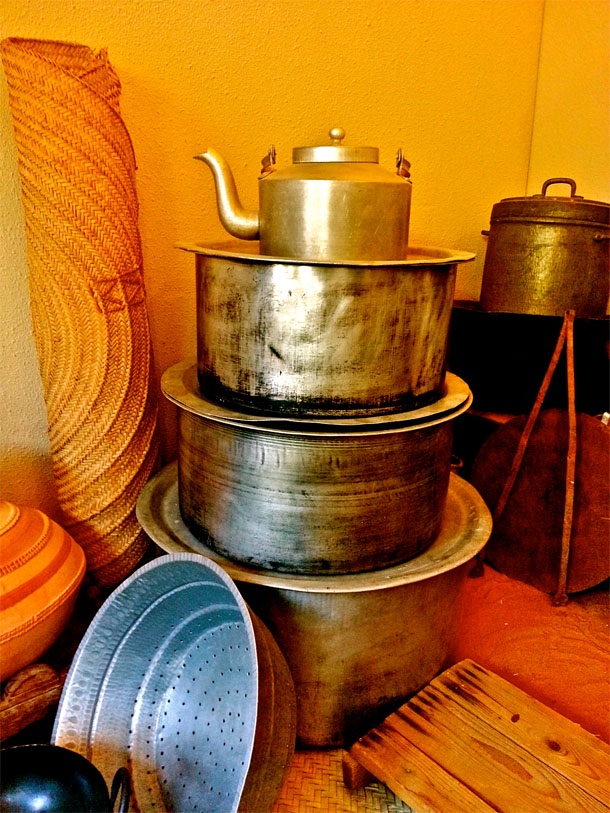
Inside the show kitchen
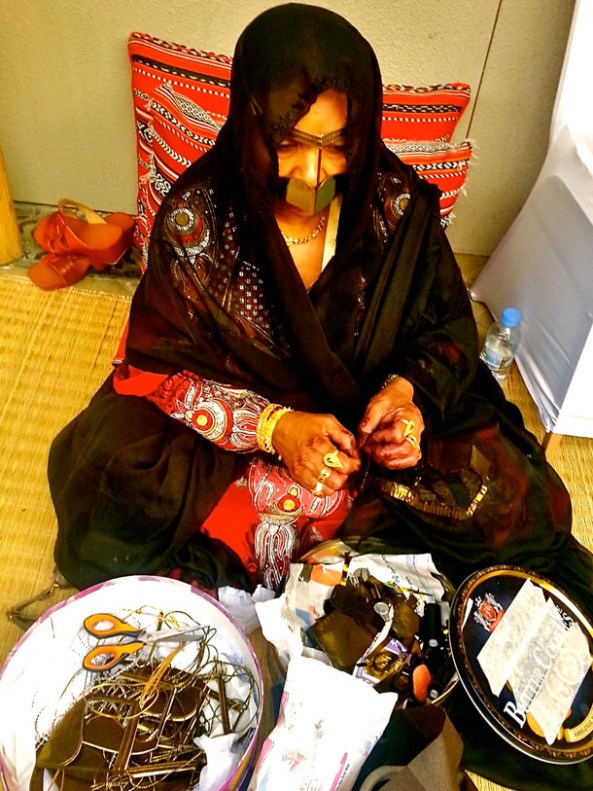
Embroidery of the Burga worn on the face. This isn’t part of the Islam religion but part of tradition (thanks Arwa!)
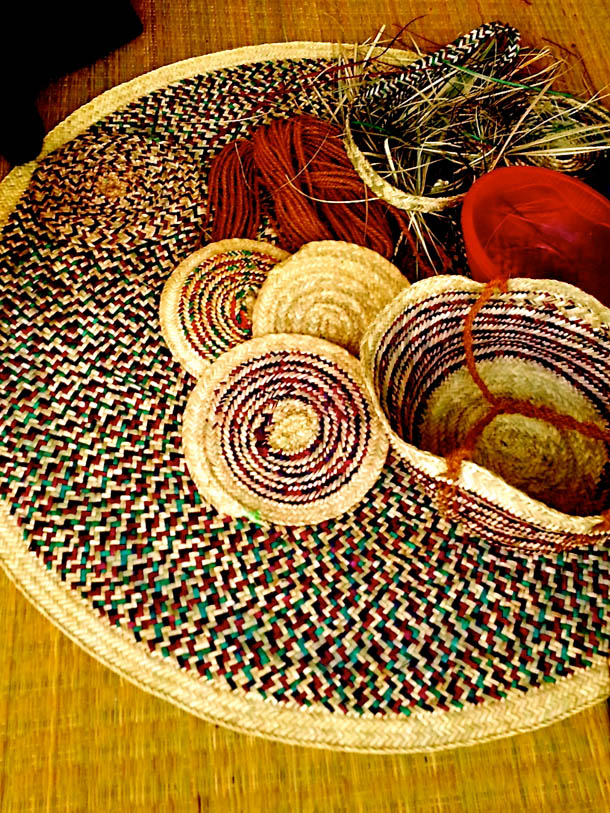
Traditional handicrafts from coloured Palm leaves
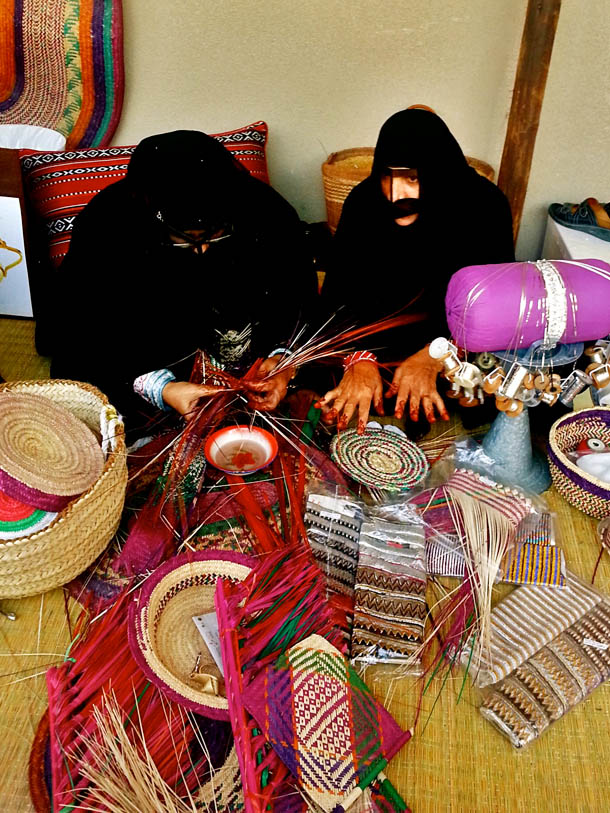
The cylindrical cushion like ‘thing’ on the stand is called the Talli. And the stand is called Kajoojeh and it’s used to make embroidered neck pieces for the Jalabiya, or the traditional dress that an Emirati woman wears

Memorabilia and nostalgia adorning the wall
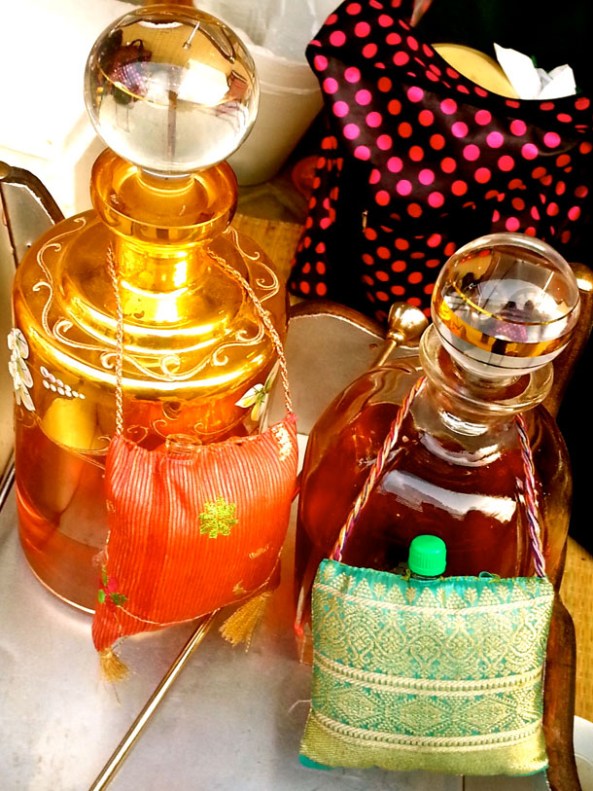
Attar or traditional scents, the bottles that hold them are pieces of art too!
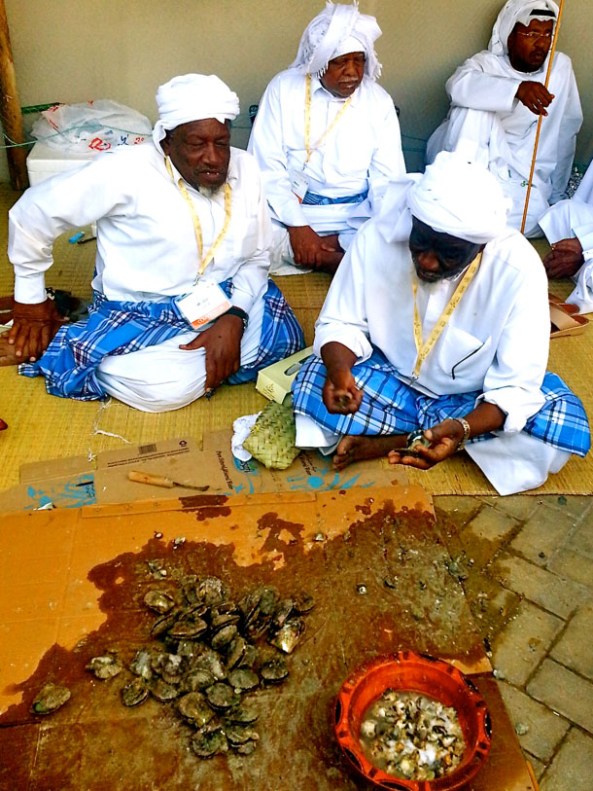
Pearl diving has been one of the oldest professions in the UAE
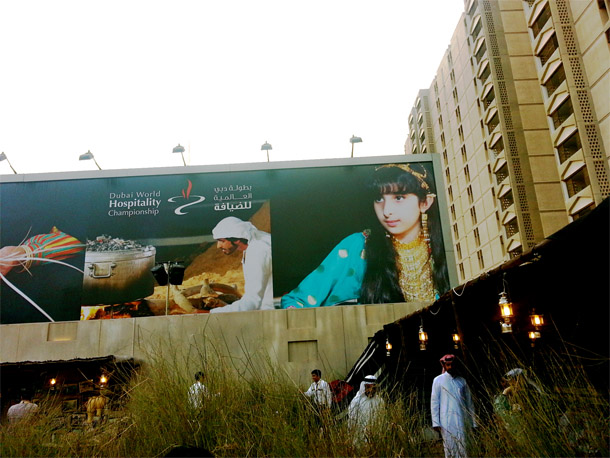
Huge billboards showcasing DWHC’s promise to hold a legacy of tradition and heritage
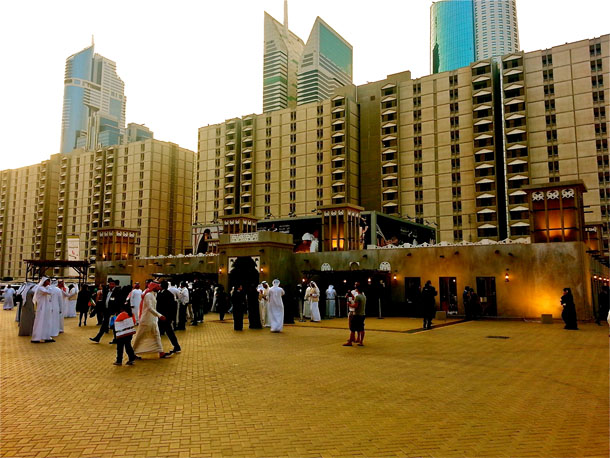
The contrasting backdrop of the WTC apartments against the recreated traditional wind-towered Emirati houses
Some related Dubai articles that you might enjoy:
♦ Things To Do In Dubai | Like A Tourist In My Own City
♦ Bu Qtair Fish Restaurant | Capturing A Hidden Gem In Jumeirah. A Video Too!
♦ Masqouf in Bait Al Baghdadi | Tasting Iraq’s National Dish
♦ Al Fanar Restaurant & Café | My First Authentic Emirati Food Experience!
♦ Arabian Pilgrimage Food Tour With Frying Pan Adventures
♦ The 7 Tastiest Fast Feasts Of Dubai | Introducing Chowzter to Dubai
♦ Locavorism, Friday Market | Tok Palong/Sour Spinach Chutney
♦ Semaiya Kheer/Vermicelli Pudding, Eid in Dubai | Eid Mubarak!
♦ Lafayette Gourmet’s Festive Menu | Christmas Is In The Air!
♦ Meena Bazaar At Night | Introducing DubaiUnblogged… Dubai In Instagram
BE SOCIAL. SHARE THIS!

I didn’t grow up celebrating Halloween in India. Nor Valentine’s Day or Mother’s Day or Father’s Day for that matter. Not that I belong to the black and white generation. Just like I can’t recall the pre-digital days, now I can’t recall those days when pumpkin was remembered for the simple vegetable that it always was, not a medium for creating strange artwork in the name of art – pumpkin carving. I am definitely learning something new from the Z-Sisters every day, aren’t I?
The bottom line is, we didn’t associate pumpkins with Halloween when we were kids. Quite naturally, pumpkins teared apart and carved into scary faces, is something that I am yet to reconcile with. Though I studied in a well known English medium school in Kolkata, the concept of Halloween was alien to us, as was Valentine’s Day. The only non-food association that I could come up with a pumpkin was that it could probably be transformed into a fairytale carriage, thanks to the copious amounts of books that we read since our childhood, starting from Russian folk tales to Grimm brothers – which moulded us much later in life, into the pseudo intellectuals that we as Bongs (the colloquial term for Bengalis), were always expected to be!


Big Z carves a pumpkin for halloween | Lil Z out with friends for ‘Trick or Treating’
Beautiful Pumpkins or Kumro bring to my memory lovely Kumror Chechki that accompanied perfectly puffed up fluffy Luchis {recipe here in my blog} on our Sunday breakfasts. If you ask what is Chechki, then the answer would be no short of a thesis. The style of preparation and the cooking categorise a Bengali vegetable dish into whether it would be called a Chechki or a Chokka or a Labda or otherwise. As if there isn’t enough complications in a Bengali’s life, a simple vegetable dish comes with thousand names! Rita, a reader asked me about these differences over a Labda picture (the Bengali ratatouille) that I had posted on my Facebook Page and I was contemplating whether I should delete my account just to avoid answering her. I did answer her, which she exclaimed was an ‘amazing explanation’, giving me the courage to copy down an extract of it… ‘Rita, this is a huge subject of discussion – Chorchori, Chyachra, Labda, Chechki and Paanch-meshalir torkari, Ghyaat and Ghyonto! The differences lie in the cooking styles. Chorchori has got all mixed vegetables, cut in long strips (sometimes peel on), may or may not have fish bones and fish head, stir fried slightly with Paanch Phoron (the Bengali 5 spices); Chyachra is mainly with fish head, fish bones, fish oil and all the assortment of vegetables; Labda is when all the assorted vegetables are a bit overcooked – big leafy vegetables like Pui Shaak and Cabbage covers them all; Chechki is when the pieces of vegetables are left a bit chunky but overcooked; Ghonto would be the same but the vegetables are finely chopped and cooked in jhol, Ghyaat is exactly that ‘ghyaat‘ or punched!!! While there are fine boundaries lying between all of these, our Ma-Mashis knew exactly how to cut the vegetables for each of the dish and if you ask them for any explanation, there exists none!’
 Shorsher tel or Mustard Oil? A few things that cannot be substituted in most Bengali cooking is the use of mustard oil, specially in a Bengali fish dish {recipe of a traditional Bengali Mustard fish from the blog}. Without this, a Bengali fish is absolutely incomplete. The gravy that gathers once cooked in mustard oil is, then Bong certified! More so in a Bengali vegetarian dish, the aroma of the Panch Phoron or the Bengali 5 spices is complemented by the use of mustard oil. Getting the right mustard oil can be sometimes tricky on foreign shores. The Asian supermarkets as well as regular supermarkets in Dubai do stock different types of mustard oil. Do look out for the term ‘Kachi Ghani‘ where the term refers to cold press extraction process of Mustard Oil, so that it may retain more oxidants and vitamins and needless to say, more pungency.
In Bengali, mashed steamed vegetables are called Bhaaté. The term literally means ‘in rice’ and must have originated because very often these vegetables were traditionally steamed in the same pan in which the rice has been cooked. Mashing these steamed vegetables – assorted vegetables or any particular vegetable along with a dash of Mustard Oil or Ghee (Indian clarified butter), the Bhaaté creates a delicious and a healthy accompaniment to plain white Rice and Daal (lentils). Bhaaté or Mashed Vegetables of Aloo/Potatoes, Kumro/Pumpkin, Ucche/Bitter Gourd etc are very popular. Add to the Mash a bit of chopped green chillis or onions, may be some fresh coriander leaves, a little dash of Mustard Oil and a bigger dash of Kasundi, a pungent mustard sauce used as a dipping (specially for another Bong favourite – Fish Fry) and a quasi side-dish is ready {here’s a recipe for another honourable Bhaaté from the blog – the Mashed Potato Bengali Style/ Aloo Bhaaté which have already floored my German friends}.
500 gm pumpkin or butternut squash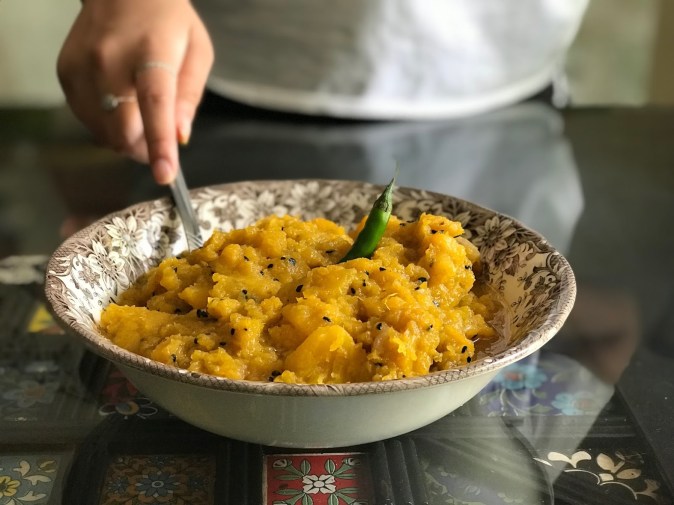
Ingredients
1 medium sized onion, finely sliced
1 green chilli, finely chopped if you want it spicy
2 whole dried red chillies
1 tsp black cumin seeds
1 tbsp mustard oil
1 tsp Kashundi paste
1 tsp roasted cumin powder
1 sprig fresh coriander leaves, finely choppedMethod
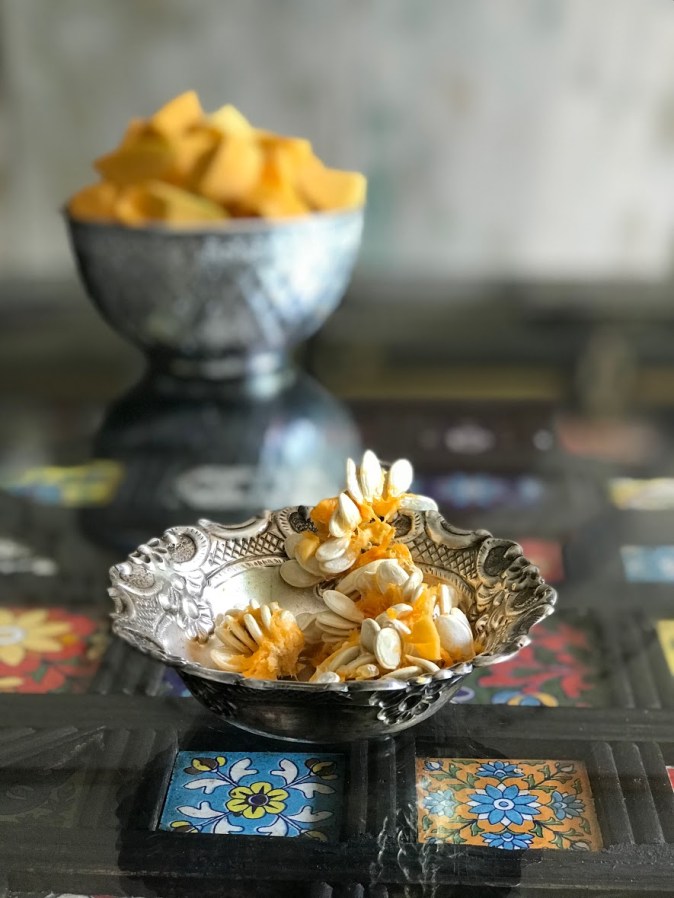
Bhaaté is also called Makhaa (literal meaning – squashed or mixed) but I prefer to address by the former as the latter meaning connotes a lot of mess. Bhaatés make me absolutely nostalgic. I have got the strongest holiday memories of Bhaatés. When we would return from vacations and holidays and my Mum would be too tired to stir up anything in the kitchen, she would just steam a whole lot of vegetables and put the Daal/lentils (usually Masoor or Moong Daal) in a soft white cloth and tie it up and cook them all along with the Rice. Occasionally, she would put eggs into the crowd as well for boiling. And our lunch would be plain Rice, Daal, vegetables and the boiled eggs – all mashed up with a pinch of salt and dollops of butter or a generous spoonful of Ghee! The simplest recipe and the simplest meal – but absolutely divine.
Pumpkins not only remind me of mashed Pumpkins but also the lovely batter fried Pumpkin fritters or Kumri that are perfect accompaniments of the lentil and rice dish, Khichuri, that a Bengali craves for, specially during the rains. See the picture below? All the pumpkin discussion started from one Halloween special Brunch that we attended recently. I have to admit here that although I may cry foul for not understanding what Halloween is, I do let myself loose on any occasion that calls for celebration. I must say here that I have adapted to the changing times with great elan and celebrate Halloween or Valentine’s Day in the same manner that I would celebrate Christmas and get excited as much as I would while preparing an elaborate Bengali spread for Bijoya Dashami.
Unblogging it all… Ishita
Try some of my Bengali recipes:
Shorshe Baata Maach or Bengali style Mustard Salmon
Kolkata Mutton Biryani
Moong Daaler Payesh or Yellow Lentil Pudding
Thank you for joining me on my daily food and travel journey on Pinterest, Instagram, Facebook and Twitter!
Disclaimer: We were hosted for brunch at The Address Marina which costs Dhs 220/person including soft beverages; children six years and under enjoy complimentary meals and half the price for seven to 12 years. This month the Generation Creation brunch at Mazina organised sushi making while next month it’s going to be ginger bread making. This isn’t a sponsored post, nor are there any affiliated links for any of the brands that may have been mentioned in this blogpost. The subject, story, opinions and views stated here are my own and all images are from my personal album. While you enjoy reading my posts with lot of visuals, please do not use any material from these posts.
BE SOCIAL. SHARE THIS!

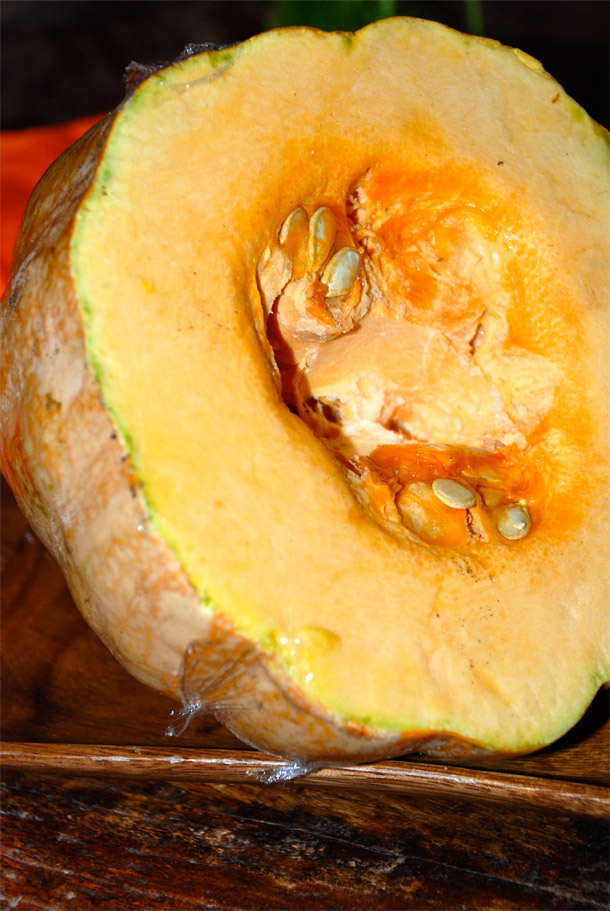
I didn’t grow up celebrating Halloween in India. Nor Valentine’s Day or Mother’s Day or Father’s Day for that matter. I don’t belong to the black and white generation either. But just like the tabs and the smartphones that have invaded our lives in a way that I don’t even remember the days when we didn’t have them, now I can’t even recall those days when pumpkin was remembered for the vegetable that it was, not a medium for creating strange artwork during Halloween in the name of art a.k.a pumpkin carving. Well, I am learning something new from the Z-Sisters every other day. When I tell them things like ‘when we were small, we never celebrated Halloween or played on tabs and X-boxes… ‘ the conversation takes a turn that I would have hated to hear as a child. Here I am, the modern day mum – technologically savvy, virtually available, active on social media, know each of my gadgets (and each remote control that monitors each gadget in the house) and there I am, wondering where today’s world is heading to – where marketing gimmicks blow up an ordinary day into a historic day screaming for epic celebration.
 The only unsavvy thing about me perhaps, is that I don’t play Candy Crush saga. But that is not because I cannot play the game, but because I am scared that I’ll be addicted to it. The fear stems from one incident in my childhood, when my parents had bought me an imported video game set from Hongkong market in Siliguri (a lot of imported goods, mostly from China and other Asian countries such as Nepal, Thailand, etc. used to be available in the days of pre-globalised India). I had played so much with the joystick (yes, those days the video games came with enormous joysticks that only pilots knew how to maneuver), that I found myself with a ‘locked’ fist for days!
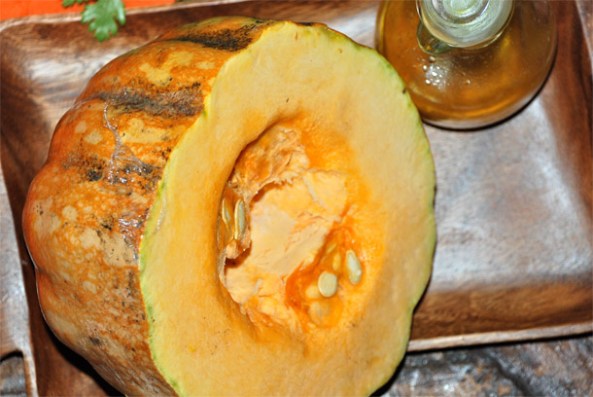 The bottom line – we didn’t associate Pumpkins with Halloween when we were kids. Quite naturally, pumpkins teared apart and carved into scary faces, is something that I am yet to reconcile with. Though I studied in a well known English medium school in Kolkata, the concept of Halloween was alien to us, as was Valentine’s Day. The only non-food association that I could come up with a pumpkin was that it could probably be transformed into a fairytale carriage, thanks to the copious amounts of books that we read since our childhood, starting from Russian folk tales to Grimm brothers – which molded us much later in life into the pseudo intellectuals that we as Bongs (the colloquial term for Bengalis), were always expected to be.
 Beautiful Pumpkins or Kumro bring to my memory lovely Kumror Chechki that accompanied perfectly puffed up fluffy Luchis {recipe here in my blog} on our Sunday breakfasts. If you ask what is Chechki, then the answer would be no short of a thesis. The style of preparation and the cooking categorise a Bengali vegetable dish into whether it would be called a Chechki or a Chokka or a Labda or otherwise. As if there isn’t enough complication in a Bengali’s life, a simple vegetable dish comes with thousand names! Rita, a reader asked me about these differences over a Labda picture (the Bengali ratatouille) that I had posted on my Facebook Page and I was contemplating whether I should delete my account just to avoid answering her. Bit I did answer her, which she exclaimed was an ‘amazing explanation’, giving me the courage to copy down an extract of it… ‘Rita, this is a huge subject of discussion – Chorchori, Chyachra, Labda, Chechki and Paanch-meshalir torkari, Ghyaat and Ghyonto! The differences lie in the cooking styles. Chorchori has got all mixed vegetables, cut in long strips (sometimes peel on), may or may not have fish bones and fish head, stir fried slightly with Paanch Phoron (the Bengali 5 spices); Chyachra is mainly with fish head, fish bones, fish oil and all the assortment of vegetables; Labda is when all the assorted vegetables are a bit overcooked – big leafy vegetables like Pui Shaak and Cabbage covers them all; Chechki is when the pieces of vegetables are left a bit chunky but overcooked; Ghonto would be the same but the vegetables are finely chopped and cooked in jhol, Ghyaat is exactly that ‘ghyaat‘ or punched!!! While there are fine boundaries lying between all of these, our Ma-Mashis knew exactly how to cut the vegetables for each of the dish and if you ask them for any explanation, there exists none!’
 Shorsher tel or Mustard Oil: A few things that cannot be substituted in most Bengali cooking is the use of Mustard Oil, specially in a Bengali fish dish {recipe of a traditional Bengali Mustard fish from the blog}. Without this, a Bengali fish is absolutely incomplete. The gravy that gathers once cooked in Mustard Oil is, then Bong certified! More so in a Bengali vegetarian dish, the aroma of the Panch Phoron or the Bengali 5 spices is complemented by the use of Mustard Oil. Getting the right Mustard Oil can be sometimes tricky on foreign shores. The Asian supermarkets do stock different types of Mustard Oil. Here in Dubai, even regular supermarkets like Spinneys, Choitram’s, Carrefour or Lulu Hypermarkets stock Mustard Oil but a few of the brands are taste very bland and flat. A small study into Mustard Oil {here…} probably will help in choosing the right Mustard Oil. It has to be really pungent, must be very deep in colour and have a strong Mustard smell. I have been using a brand that is called PRO (probably there are more brands around, but this is readily available. I remember using another brand called Tez while we were in Frankfurt. I had found this brand of Mustard Oil in Dubai too, but haven’t seen it around recently). Do look out for the term ‘Kachi Ghani‘ where the term refers to cold press extraction process of Mustard Oil, so that it may retain more oxidants and vitamins and needless to say, more pungency.
Mashed Pumpkin Bengali Style or Kumro Bhaaté
Category – Vegetarian/Side Dish; Cuisine type – Bengali traditional
In Bengali, mashed steamed vegetables are called Bhaaté. The term literally means ‘in rice’ and must have originated because very often these vegetables were traditionally steamed in the same pan in which the rice has been cooked. Mashing these steamed vegetables – assorted vegetables or any particular vegetable along with a dash of Mustard Oil or Ghee (Indian clarified butter), the Bhaaté creates a delicious and a healthy accompaniment to plain white Rice and Daal (lentils). Bhaaté or Mashed Vegetables of Aloo/Potatoes, Kumro/Pumpkin, Ucche/Bitter Gourd etc are very popular. Add to the Mash a bit of chopped green chillis or onions, may be some fresh coriander leaves, a little dash of Mustard Oil and a bigger dash of Kasundi, a pungent mustard sauce used as a dipping (specially for another Bong favourite – Fish Fry) and a quasi side-dish is ready {here’s a recipe for another honourable Bhaaté from the blog – the Mashed Potato Bengali Style/ Aloo Bhaaté which have already floored my German friends}.
For the printable recipes →
Ingredients
500gm Pumpkin/Butternut Squash
1 medium sized Onion
1 Green Chilli, finely chopped if you want it spicy; slit in case you dont
1 tsp Black Cumin Seeds
1 tbsp Mustard Oil
1 tsp Kasundi paste
1 tsp roasted Cumin Powder
1 sprig fresh Coriander leaves, finely chopped
Method of Preparation
• Chop the Pumpkin into cubes, boil them (microwave/pressure cook) and mash them (not a puree)
• Heat oil in a wok, add the Black Cumin Seeds and let them splatter
• Add Onions, chopped Green Chillies, Coriander leaves, Salt and roasted Cumin Powder
• Add the mashed Pumpkin and let it cook in low seam until the mash thickens
• Turn off the fire, set aside and let it cool down, sprinkle more Coriander leaves, roasted Cumin Powder and add a dash of Kashundi
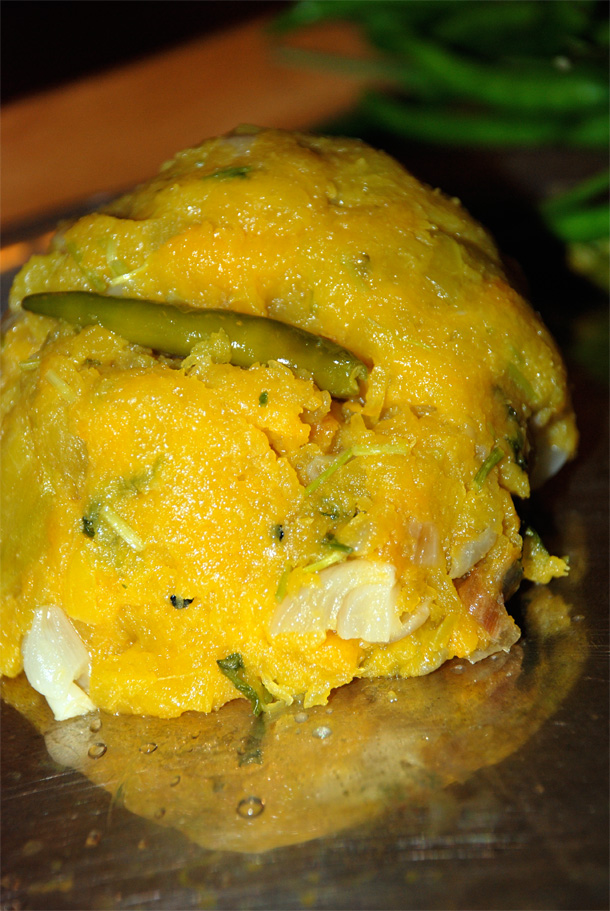 Bhaaté is also called Makhaa (literal meaning – squashed or mixed) but I prefer to address by the former as the latter meaning connotes a lot of mess. Bhaatés make me absolutely nostalgic. I have got the strongest holiday memories of Bhaatés. When we would return from vacations and holidays and my Mum would be too tired to stir up anything in the kitchen, she would just steam a whole lot of vegetables and put the Daal/lentils (usually Masoor or Moong Daal) in a soft white cloth and tie it up and cook them all along with the Rice. Occasionally, she would put eggs into the crowd as well for boiling. And our lunch would be plain Rice, Daal, vegetables and the boiled eggs – all mashed up with a pinch of salt and dollops of butter or a generous spoonful of Ghee! The simplest recipe and the simplest meal – but absolutely divine.
 Pumpkins not only remind me of mashed Pumpkins but also the lovely batter fried Pumpkin fritters or Kumri (the picture above Big Z) that are perfect accompaniments of the lentil and rice dish, Khichuri, that a Bengali craves for, particularly when it rains. See the picture below? All the pumpkin discussion started from one Halloween special Brunch that we attended recently. I have to admit here that although I may cry foul for not understanding what Halloween is, I do let myself loose on any occasion that calls for celebration. I must say here that I have adapted to the changing times with great elan and celebrate Halloween or Valentine’s Day in the same manner that I would celebrate Christmas and get excited as much as I would while preparing an elaborate Bengali spread for Bijoya Dashami.
Unblogging it all… Ishita
Disclaimer: Please note that this is not a sponsored blog and all the opinions and views stated here are my own and are independent. The brunch at The Address Marina costs Dhs 220/person including soft beverages; Children six years and under enjoy complimentary meals and half the price for seven to 12 years. This month the Generation Creation brunch at Mazina organised sushi making while next month it’s going to be ginger bread making. While you enjoy reading the posts with lot of visuals, please do not use any material from this post. You can see more pictures of my travel and food journey here.
BE SOCIAL. SHARE THIS!

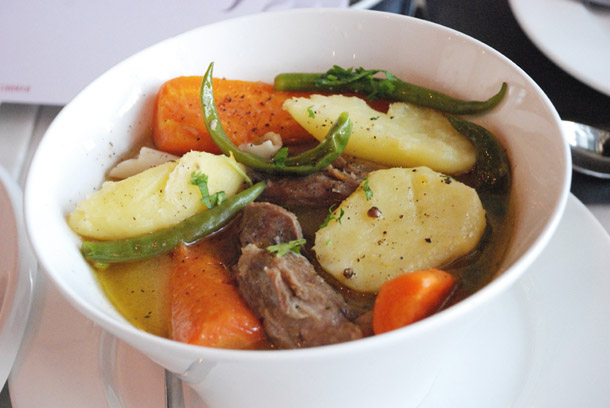
 ‘What? You went to Barbecue Delights? But that’s a Pakistani joint’. Yes, sounds incredulous, but many miles across the Indo-Pak border and the LOC (lines of control), we Indians and Pakistanis still let Politics rule our conversations in our Dubai drawing rooms, while pretending to be neutral and oh-so-enlightened-and-educated. When I had started my blog, I had promised myself that I will not be discussing Politics, Religion and other social calamities that might affect the world, not because they didn’t affect me. It’s because I believe that food connects to people, bringing them closer as they dig upon memories and nostalgia – in a way heal the wounds left behind by mindless regional politics. But, tasting the Afghani Rosh in this Pakistani restaurant has brought back so many memories, that I am forced to break my vow of not discussing the Indo-Pak issue in my blog. If I don’t do this now, when will I?
  Politics is a very dirty power game. I believe that the common man has no interest in it and gains nothing from it. Yet, for years and years, countries are at loggerheads, people’s lives are at stakes and generations after generations suffer from one battle that may have sliced a country through. Then you taste a dish and realise that this could well have been a dish from your country, only that it’s not because Partition set us apart.
 Like this Afghani Rosh (above). The dish hails from Peshawar, a city in the North-West Frontier Province in Pakistan. Arriving in a plain white bowl, the Afghani Rosh appears unpretentious and clean. A clear Mutton stew with bright orange carrots and huge chunks of potatoes shining through. The sprinkling of fresh pepper, a few sprigs of fresh coriander leaves, the strong aroma of garlic and a few sliced green chillies – it brings back my childhood memories when my Mom would cook a similar stew during the winters. We would dip our hot Chappatis into a bowl of simmering Mutton stew, the over-generous sprinkling of fresh pepper occasionally making us cough aloud as it cleared our throats and nostrils. Tasting the same flavorful Mutton Stew in a restaurant in a posh Dubai locality like The Downtown, can only break me into tears. And a smile thereafter. I do remember my Mom telling me that she learnt it from a cook who worked for a corporate guest house in Durgapur, an industrial town in West Bengal. And his family hailed from Peshawar in the pre-Partition days. And Durgapur, situated in Eastern India was more than 1000 miles away from Peshawar, located in the North-west frontier, in Pakistan!
If we randomly pick up a packet of Basmati Rice from a supermarket that has been produced in Pakistan, we become an India-basher. Biryani should be from Delhi Darbar and not Karachi Darbar. Ravi’s Biryani is Pakistani. We shouldn’t wake up on a Friday craving for a buffet from Al Ibrahimi in Karama. If Pakistan is playing against West Indies in a cricket tournament, an Indian should support the latter. I have nothing against West Indies, but why not stand up for someone who’s geographically closer – our own neighboring state? Ironically, even in the annual International fare at the ‘British school’ that the Z-Sisters study in, the Indo-Pak border issue creeps up in a subtle way. The Indian stall has to outdo the Pakistani stall and vice versa and there is an undercurrent of competition as to which stall brings in more money into the school fund. I fear that there must still be some families living here, who nurture this animosity through their conversations (however hushed up it might be) and sincerely hope that this doesn’t transcend down the generations. The counter arguments that I get to hear from my friends are ‘ Show me one Pakistani who supports India in a similar situation’, ‘Pakistanis are very patronising and they would prefer a Pakistani restaurant to an Indian restaurant any day’. I do understand the sentiments attached to one’s roots. But I refuse to understand the bitterness that originates from them.  We have been ordering a lot from Barbecue Delights before, but they had never, ever inspired me enough to write a post on the restaurant. The Afghani Rosh is a fresh addition, specially for the winters – an addition which is very ‘unlike-Barbecue Delights’, in the sense, that most diners associate the food from the subcontinent to be strong on the spices and taste. The broth is strong in garlic flavours, reminds one of a home cooked pot roast with light gravy or simply the soulful stew and breaks down all the myth about subcontinental cuisine. True, subcontinental cuisine can be spicy but not necessarily hot. The Barbecue Delights’ dishes that we were familiar so far had been very ‘typical’ – the Chaapli Kababs or the deep-fried patty kababs of mutton minced that has been spiced up with green chillies, fried pomegranate and whole coriander seeds. My better half’s favourite is the Friday Breakfast Buffet (seems like the entire subcontinental diaspora descends upon these buffets), which serves almost everything that the menu has to offer – from Paya Curry (hoof curry) and Brain Masala to oil dripping Puris with Sabzi and Halwa. I wouldn’t however, ever eat hoofs that have been running around, that too cooked in curry – however tasty they might be!
 Revamping post with a giveaway: Initially I hadn’t planned a giveaway for this post. An impromptu one now, as I celebrate Instagram reaching 500 friends. If you are on Instagram, do join me with my daily pictorial update of my culinary travel journey. Also, click here to enter the blog giveaway… A Meal for 2 persons at Barbecue Delights in Emaar Boulevard, Downtown.
The Afghani Rosh tasted exactly like what my Mom had fed me in my childhood. This brings a lot of hope for the future. I imagine myself being able to visit the exact place in Peshawar, from where the cook who worked in the Durgapur guesthouse came from. I also imagine that Peshawar being a semi-dry region, the hand-made Chappatis and the Naans are lovingly brushed with dollops of butter or Ghee before they are served onto the plate. The severe Peshawari winters must be calling in for barbecues and bonfires outdoors. I also crave for the Paratha that a Dubai Taxi cab-driver who hailed from Peshawar, was once talking about. He said how he missed those Parathas, specially the ones that are made for breakfast during the Eid celebrations and smiled at the thought how his kids refuse to have their normal Subeh ka Chai or the morning tea without these Parathas. And yes, he also missed the Shir Khurma that his Ami or Mother made (Shir Khurma – it is the same Vermicelli Pudding that I’ve just written about), specially during Eid. It’s amazing how he shared these special emotions with me – an Indian, while driving me to my destination. The only common bonding at that hour must have been that we both hailed from the subcontinent.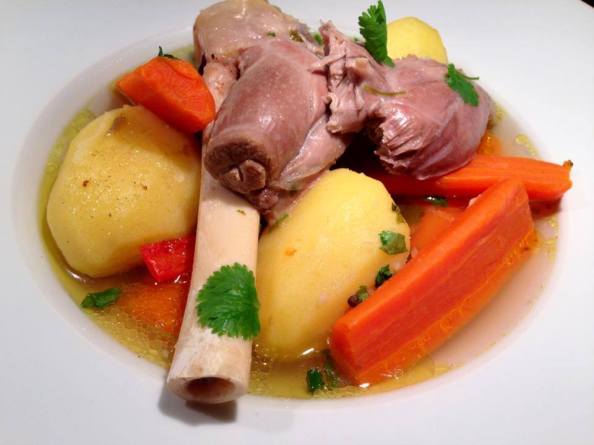
The Afghani Rosh did that nostalgic magic. And perhaps, a few other dishes that I tasted from the North-West frontier – the Afghani Lamb Pulao, the delicious Banjan Borani, the crispy Khandari Naan etc. It broke my vow not to talk politics on my blog. Would love to hear what do you think of this?
Unblogging it all… Ishita
PS1: I feel blessed when a post evokes emotions… Lovely post Ishita! As a daughter of two families displaced from Pakistan who both tell stories of being helped by Pakistanis to avoid the mobs and cross the border safely, I find myself firmly on your side. Although, I can’t be completely sure that I would feel the same if our family had lost members during the partition.The bitterness among Indians and Pakistanis seems to me similar to what you would see among two brothers who have had a falling out. You hate most those who you loved once. Isn’t it? The betrayal of trust on both sides during partition sowed a lot of anger. But it’s worth remembering that people do mad things in mobs and in war. It doesn’t make them inherently bad. It’s certainly not fair to hold it against new generations, and it’s simply not worth our short lifetimes. Sharing Rogan Josh is so much better! Yes, FootWalker, I definitely agree – sharing Rogan Josh is a lot more better!
PS2: Coming on the heels of the Afghani Rosh post, dear friend Sunanda shares her recipe of what she calls a one-dish dinner, ‘a lighter/European-palate-friendly version of Afghan Rosh’. You can see more of the recipe here.
PS3: Naila writes… Wonderful just wonderful blog post!!! Thank you so much for writing this Ishita. You have done the right thing to write this article and I don’t think it’s like discussing “POLITICS” . It’s about telling that Pakistani and Indians are humans too and that they share the common vision of love and harmony between each other. The citizens of both countries have relatives on either sides of the border and are dying to meet each other!! only if it was that easy thanks to the diplomatic hurdles!! and if an Indian goes to visit Pakistan, he will be surprised and overwhelmed at the welcoming response he gets in Pakistan. I know of many Indo-Pak Matrimonial unions, dating back to more than 30 years and also of those taking place now which shows the true feelings of both the sides. I wish that this Political and Media war is done over with and let Humanity, Respect and Understanding rule over us!!!
PS4: And Google comes with it’s Reunion ad which has had 4,095,833 hits on YouTube in just 5 days. Am I right to assume that Google has been inspired by this post?
Disclaimer: Please note that this is not a sponsored blog and all the opinions and views stated here are my own and are independent. The lunch was hosted by Chef and TV personality Saba Wahid and Barbecue Delights. Personally, we have visited the restaurant on The Walk many times and the average bill that we have incurred is around Dhs 150 for two persons. While you enjoy reading the posts with lot of visuals, please do not use any material from this post. You can see more pictures of my travel and food journey here.
BE SOCIAL. SHARE THIS!


Yes, my blog turned 2! I have just completed 2 years of my blogging journey. We celebrated at home with the Z-Sisters, who went a bit overboard with their excitement. Big Z made an ice cream cake by mashing and crumbling two flavours of ice creams. She then made a huge mountain of ice cream, sprinkled Choco chips all over it and served mini scoops of ice creams in tiny shot glasses (below) – apparently the entire family, excepting Li’l Z, is trying to lose weight! Then for the photo-shoot, they planned the ‘look’ of the shot and used my bedside table to get the perfect night lighting. I showed my gratitude in return by scolding them for having messed up the bed side table – after all, they were expecting me to do this. I rolled in laughter when Li’l Z said – ‘ I hope your blog likes the ice cream cake that Didi made’! Two years might not sound like a very long journey, but for me, this indeed was a long one. A journey that was filled with many mini Oscar moments – for each of which I had prepared long, over the top Oscar speeches, re-writing them several times. Today’s post would have been perfect for stitching all the speeches together and blurting them out like a whole bundle offer. Instead, I decided to scrap them at the last moment. I’ll keep that ‘long’ speech for the day when my blog turns 20!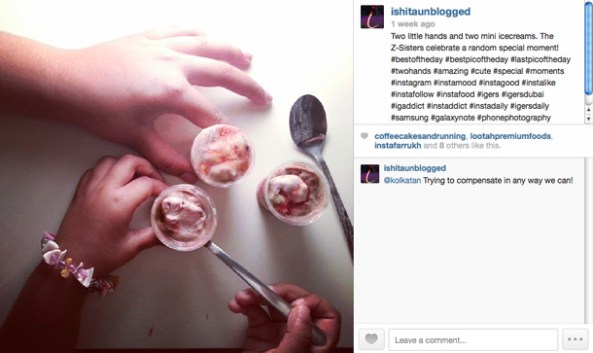 Who says that I’ll still be blogging after 20 years? I do. I am absolutely sure about this. Blogging has given me much more personal gratification than my chosen career in advertising. I have also given myself to Blogging much more than I have done to anything in my life. I have interacted with people with whom I have never even met before. I have received emails from people who have wanted to see me because they felt nostalgic, homesick and felt that my writings had touched them by connecting them to their own roots and culinary heritage. I have met people from so many nationalities and culture and they have all willingly opened up their homes and kitchens to me. Along with the food that we have eaten together, out came their food stories, kitchen secrets and even personal tribulations.
Blogging has also given me the opportunity to travel to many places, visit kitchens of various restaurants, learn about different food trends and topics, meet brilliant chefs, cookbook authors, writers, celebrities, bloggers, travellers, enthusiastic school children, college goers, homemakers and passionate foodies and also non-foodies, who are not interested in food. Excepting the last category of people, I have connected to most because of the common bonding that we share – our love for food and travel. Interestingly, I have even connected to the last category, not because of the recipe that I have written about a particular food, but because of the stories that have built around the them.
A reader writes to me saying ‘I hate cooking. I hate mashed potatoes. But I read your post on mashed potatoes many times because it reminds me of my childhood days when my mum used to make it after we would come back from our holidays’! Another reader invites me to her ancestral home in Bangladesh because of the emotional aspect that I have touched upon in a simple Daal/Lentil Soup recipe – ‘the story of this side and that side’ (the consequence of India’s Partition with Bangladesh). Another reader left a comment ‘Ishita, didn’t know someone could write about herself SO MUCH! I spent more than 30 minutes reading your ‘about me’ page! And it IS interesting!’ Another invite comes from Hong Kong – ‘Let me know if Family Ishita ever stop by Hong Kong, I would be more than happy to lead you on a gastronomic tour.’
Recently, I met up with Jonathan. He had read about my feature of Bengali Luchi and Kasha Mangsho on Ahlan! Gourmet (Luchi Featured In Ahlan! Gourmet | My Ode To Phulko Luchi!) and had written me a letter. Letters like these are the reasons why I have to keep on blogging… excerpt from it… ‘Dear Ishitadi, I read your feature on the Ahlan! Gourmet column and was amazed by your love for Kolkata and the true Bengali food. My mother hails from Bengal and my dad’s from HongKong, a mix of cultures run in my blood. And during my visits to Kolkata, I found love among the people and food. It is truly beautiful. Amar Bangla! Sonar Bangla! I remember hearing this often in Kolkata.I have visited Kolkata during the Durga Puja too… I would love to talk about Kolkata and Bengali food. Do you know of any Kolkata restaurant here? ‘ My quest for Kolkata restaurants here in Dubai is because of readers like Jonathan.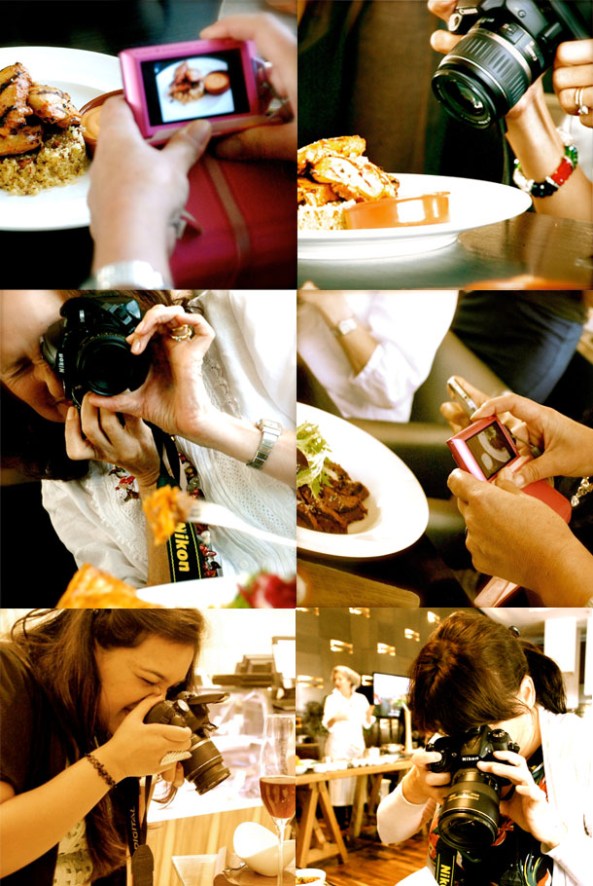 How have I have changed in these 2 years?
• Lovely comments, emotional feedbacks – there are too many, each adding up to my mini Oscar moments. And more than the countable ones are the uncountable ones, where the readers don’t leave any comment but can narrate each and every post that I have written. I have had strangers walking up to me in parties and asking me whether I am the same Didi/sister who writes on food. Contrary to what I would like to believe (the very attractive, irresistible, super slim culinary travel blogger), I have become the rolly polly stand-in sister or the mother or the daughter in many people’s life, guiding them through Meena Bazar in search of that Bangladeshi grocery who delivers Bengali fish. Also that food blogger who might be able to help find some random restaurant to celebrate a special occasion or shout out loud for any achievement that Dubai may boast of. And definitely the one to seek to, when you need to know all about the Things to do in Dubai!
• I’ve found a bunch of foodies from Fooderati Arabia, whom I like to call Food Paparazzis (above). These bloggers have similar repeated thoughts (about food), feelings (about blogging), ideas (about why blogging on food give us solace), sensations and obsessions (photographing the food and dissecting it for digestion and the camera). We blog on different food matters – some write recipes, some review restaurants, some earn from food, some only spend on food. Now I don’t depend on my cricket loving or a fashionista friend to read my food or travel posts!
• Connecting with more and more foodies all over the world virtually, has made me feel complete. I have interacted with many international food bloggers and celebrity chefs that I had always admired. Pure food connection and celebration here, no hanky panky, no random chit-chat – only food talk.
• I’ve become a social media junkie. Although I don’t let social media rule my life, but I do let it take me far and wide into the virtual world. From not knowing what Twitter was even a year back, I now eat, click, tweet, instagram and sometimes facebook my experience LIVE. Though the ever-increasing numbers of followers does me super proud, I know that these doesn’t necessarily translate into actual readership for the blog. I have learnt a few life’s lessons here. One can purchase LIKEs on Facebook, and I yes, I have once purchased about 1, 500 LIKES. I realised soon that the profiles of my followers didn’t match the subjects that I write on (not that hot males and females and body builders or hackers can’t be serious foodies, but in my case, they were not). So discounting those 1,500 LIKES, some of which must have surely become UNLIKES by now, today there are more than 6,000 followers on FB, who I have gained through my daily interactions and my constant food quests. And my quest on Twitter and Instagram is still on.
• I’ve started writing on food and travel in different media publications and that explains the monetary infrastructure that supports my stance in keeping the blog non-commercial. But with that comes the pain of ‘planning’ all my eatings and outings. Previously, I would eat and write spontaneously – for example, Phuchkas in Kolkata or Momos in Tiretti Bazaar. But I realised from my recent US trip, how pathetically synchronised my trip was to what I could write in my blog or pitch elsewhere. The Z-Sisters weren’t allowed to eat anything but Clam Chowder Soup in San Fransisco and we only ate Middle Eastern food from the food kiosks in Manhattan. Now, please can someone commission me with a write ups on these?
• Down the line, I have started getting invites for Food Events, Restaurant Launches, Food-tastings, to contributing recipes and writing about food and travel. Most of the times, I feel that these invites are an indirect way in which the restaurants and hotels promote themselves at no extra-cost, with each blogger sharing his/her experience on social media. I mostly accept invites where there are ‘no obligations what-so-ever to write’. One cannot write a review on the basis of a media event. Period. At the beginning, it felt nice when these invites started pouring in and it seemed like a great way to connect and network. But now I have realised that these events don’t ‘fit’ my blog and if the passion is reflected in your blog, people – both readers and people working in the food industry alike, would naturally want to genuinely connect. I like to attend blogging events or food events where I can learn something, write about something or will be experiencing something new (like the one at Lafayette Gourmet, where I cooked Kolkata Biryani or when I attended an exclusive dinner hosted by the celebrity chef Silvena Rowe). I choose to write about things and places that I want to write about and if and only if something inspires me and I’ve had an experience that can be written about. Each post is based on my own experiences and and my own independent opinions and the disclaimer at the end of the post mentions whether I have been a guest or the amount I have paid for my meals. Collecting heritage recipes and travelling… The blog started off as a result of a self introspection and my quest to find about my own roots and culinary heritage after having lived on foreign shores for so long. I have been able to showcase a few of them – Notun Gurer Payesh/Rice Pudding, Gajorer Payesh/Carrot Pudding, Hot Garlic Pickle, Tok Palong/Sour Spinach Chutney, Frozen Aam Pana/Green Mango Pulp and many more. I have written food essays – Pickles – Mother (-in-law) Of All Pickles, Rôshogolla| Bengali’s Own Sweet, created fusion Bengali recipes – Shondesh/Sandesh Pudding and have made many traditional dishes for the media. There are many places that I have visited (a few travel posts here… Srilanka, Thailand, Nepal), many people I have written about – some of whom I’ve known dearly – my Lady Friday – Bikol Express & The Romanticism Of The Mayon Volcano; my Dida (maternal grandmum) – Notun Gurer Payesh; my Thakuma (paternal grandmum) – A Tale of 2 Cities & Naru/Coconut Jaggery Truffles; my Ma, my Mum-in-law – Pickles, Mother-in-law of all Pickles, my Marwari friend Seema – Gulab Jamun Rabdi . They have equal weightage along with the celebrity chefs that I have written about or the strangers who have affected me – the Abandoned Women Amidst Many Prayers in Mahasthan Ghar, Nepal or the Tharu Children in Chitwan. There are hundreds of stories still lying in the hard disc of my Mac, along with many many pictures, yet to be told.



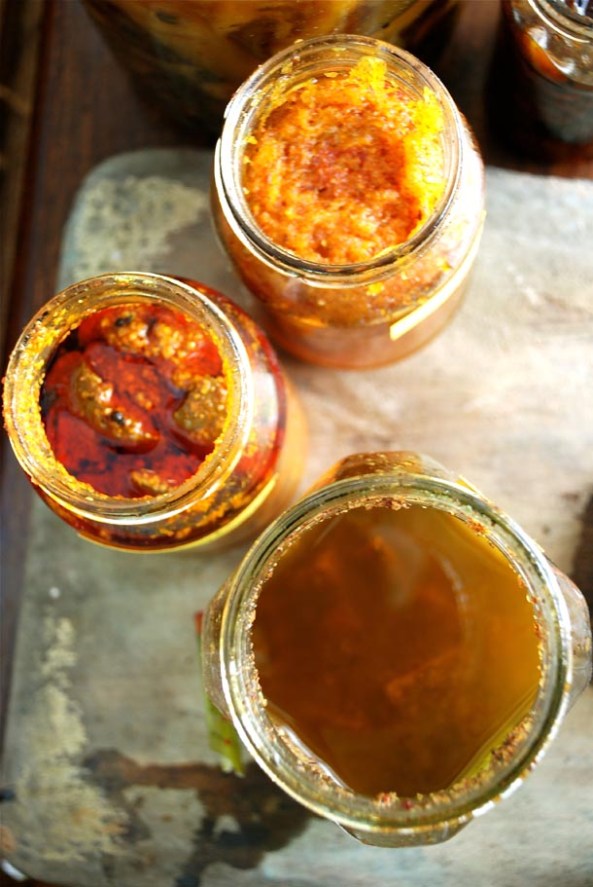 Important: What haven’t yet come my way but I’m hoping that it does!
• A book deal from a publisher who knows that my story is not going to be limited to one time zone or time frame or geography or region or country and culture – I have a story that weaves through all these.
• An ‘experience’ show on TV, where I am a traveller and I travel through regions, pick up nostalgic threads from different people, explore a day in each one’s life and realise that special memories, relationships and almost everything relates to food.
• A ‘concept restaurant’ which gives the feel of the city that I come from – Kolkata. A fine dining gourmet restaurant, which will come alive with sound, sights and taste of that city. Traditional yet a stylised essence of Bengal which is true to its rich heritage.
• And some more concepts that I don’t want to divulge on!
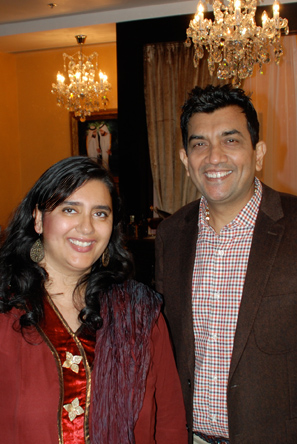
A very special Blog Giveaway to celebrate the birthday!
It has always been my blog dream to organise giveaways for every post of mine so that at the end of reading a post, the reader too, gets to enjoy an experience that I have had. Many people have asked me whether I have any financial gain out of these giveaways. I don’t. I approach restaurants and hotels if they would like to organise a give away for my reader. Sharing my own experience and extending it beyond a written blogpost – that is my vision of making ‘reading IshitaUnblogged in 3-D’! For instance, now. I had been wanting to celebrate my blog’s 2nd birthday in a very special way with my blog readers and I had an opportunity coming up this week, to meet MasterChef Sanjeev Kapoor myself this week. Now 2 of my lucky blog readers get a chance to meet him at a Master Cookery Class in his flagship restaurant Signature, courtesy Melia Hotel, where he is going to launch a new menu. I have met this chef extraordinaire before and though he needs no introduction, may I just warn you a bit? His million dollar smile can be more than just charming, so be prepared.
A chance to meet and greet (plus photo op) with Chef Sanjeev Kapoor!
Date: 24th October, 2013; Timing: 1pm to 3pm
Venue: Signature Restaurant, Melia Dubai Hotel
The contest closes 22nd October midnight, so not to much time left! 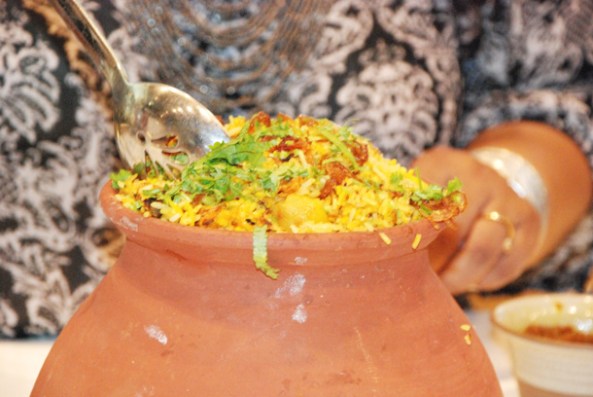
I have been very humble in this post, never for once have I showed off my blog. Clichéd – but yes, I feel truly blessed with all the blog love that I have got (some brick bats are there too and no, I haven’t deleted them). When I started my blog, it was simply to share my journey with a few people. I knew I wanted to go somewhere with the blogging, but wasn’t very clear. But now the blog has a direction. I hope that all of you who had been reading my blog for so long, will support me in all my future endeavors. No, I’m not opening up a fashion franchise for sure, until and unless it is edible fashion (scandalous yes, but a great idea, though not an original one). I also hope that a lot of new readers will join me in my journey henceforth. Do enjoy the special blog giveaway – your moment with Masterchef Sanjeev Kapoor and please don’t forget to share them with me. I promise to keep sharing my journey as well. One thing is for sure – like Li’l Z (below), I too feel that l am the fairy in my own story and my journey has only just begun*!
Unblogging it all… Ishita
*PS: I told you I was humble!
Disclaimer: Please note that this is not a sponsored blog and all the opinions and views stated here are my own and are independent. While you enjoy reading the posts with lot of visuals, please do not use any material from this post. You can see more pictures of my travel and food journey here.
10 most popular posts in my blog so far, some of them being my personal favourites:
Traditional Bengali Cuisine | In ‘Slight’ Details
Things To Do In Dubai – Like A Tourist In My Own City
Bu Qtair Fish Restaurant | Capturing A Hidden Gem In Jumeirah. A Video Too!
Shorshe Bata Maach – Mustard Salmon In This Case | A Detour From Thailand To Wish Shubho Noboborsho!
Asha Bhosle | Cooking With Her, Listening To Her & Sharing Her Recipe!
Sanjeev Kapoor | Talking To The Chef Extraordinaire
The Abandoned Women Amidst Many Prayers | Pashupatinath Temple, Kathmandu, Nepal
Rasgulla Macapuno On TV & Shubho Bijoya to all!
Locavorism, Friday Market & Tok Palong/Sour Spinach Chutney
BE SOCIAL. SHARE THIS!


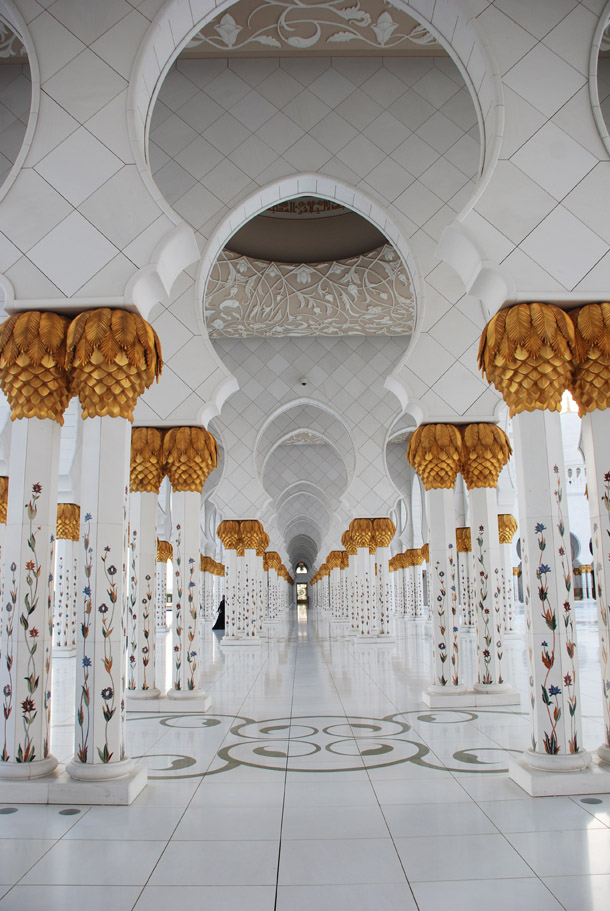 What better time to visit the Grand Mosque, but now. More than 40,000 people gather here for worship during Eid. This is also one of the few mosques where non-Muslims are permitted to enter. Inspired by Arab, Mughal and Moorish mosque architecture, the design of the mosque is an amalgamation of cultures. Do plan your visit to the mosque around sunset. Arrive much before sunset and soak in the beauty of the architecture and the intricacies of the design by daylight and then watch the sun go down slowly, the golden rays fleeting in through the pillars. The grandeur of the mosque resplendent in its white glory during the day time and as soon as the mosque is lit up by all the lights, the huge courtyard begins to feel like a page out of the Arabian Nights. There is a sublime feeling as the evening call of Adhan (the Islamic call to prayer) fleeting through the minarets. Apart from being the largest mosque in the UAE and the eighth largest mosque in the world, the thoughts that have gone into the design also reflects the multicultural living of the UAE – the design and construction ‘unites the world’, using artisans and materials from many countries including Italy, Germany, Morocco, Pakistan, India, Turkey, Malaysia, Iran, China, United Kingdom, New Zealand, Greece and more. The main prayer hall (further below) accommodates over 7,000 worshipers and the carpet that dons the floor is the largest in the world, and built on the site that took almost two years to complete. If you are interested in more staggering statistics (like the Dhs 2 billion that was spent on the construction or the millions of Swarovsky crystals that make up the Chandeliers or the 2,268,000,000 knots that weaved the carpet or that the unique lightning system reflects the phases of the moon – beautiful bluish gray clouds are projected in lights onto the external walls and get brighter and darker according to the phase of the moon… and many more!), read here. Admission is free, but a note of Wisdom here – if you are driving from Dubai, don’t miss the exit at Al Maqtaa bridge. You will have to drive up to the signal to take a U-turn back, once the mosque is in view at your left. The prayer hall closes down during the Prayer times, so do check up on the timings (02 441 6444). Men and women, both need to be sensitive to the dress code. Abayas (the black robe that are worn in the Muslim world) are available for ladies but if any clothing that covers the knees and arms, will suffice. It helps to carry a scarf to cover the head. While you can take tour the mosque on your own, there are timings for guided tours too ( more information here), including a Sunset tour.
Eid Al Adha: This is an important 4-day religious holiday celebrated by Muslims worldwide to honor the willingness of the prophet ʾIbrāhīm (Abraham) to sacrifice his young firstborn son Ismā’īl (Ishmael) as an act of submission to God, and his son’s acceptance of the sacrifice before God intervened to provide Abraham with a ram to sacrifice instead… read more.
Festivities bring in lots of varied emotions – emotions of togetherness, memories of childhood and hope for the future. There is a unique feeling living in a city like Dubai, where people from all over the world have gathered to build their homes. Whereas Eid al-Fitr marks the end of the fasting month of Ramadan – the Islamic holy month of dawn-to-sunset fasting, Eid al-Adha means ‘solemn festivity’. Tomorrow is Eid al-Adha, also known as the Greater Eid or Eid al-Zuha. In India it is called the Bakhri-Eid or the Feast of Sacrifice. I am born a Hindu but I have grown up celebrating all festivals from all religion in Kolkata. An earlier post talks about this multi-cultural upbringing that shaped my own philosophies in life. Childhood memories of Eid brings in the sweet taste of Semaiya Kheer/Vermicelli Pudding, also called Shemaiyer Payesh (an earlier blogpost here) and the Firni or the Rice Pudding (a blogpost here). Before all the sweets get mingled up in my head, here’s a pictorial journey to the Sheikh Zayed Mosque, capturing the transition from day to evening to night time. And Eid Mubarak to all of you – may there be peace and happiness all around!
Signing off… Ishita
Disclaimer: Please note that this is not a sponsored blog and all the opinions and views stated here are my own and are independent. While you enjoy reading the posts with lot of visuals, please do not use any material from this post. You can see more pictures of my travel and food journey here.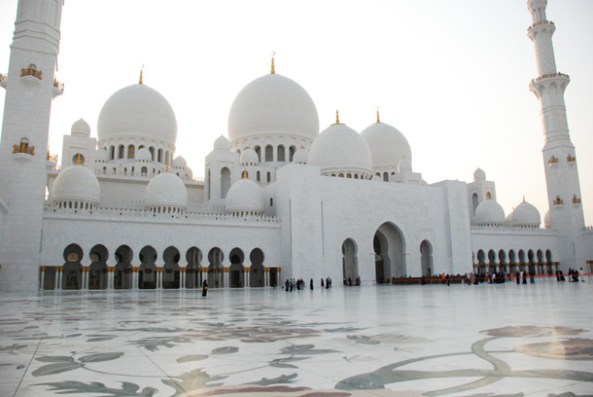
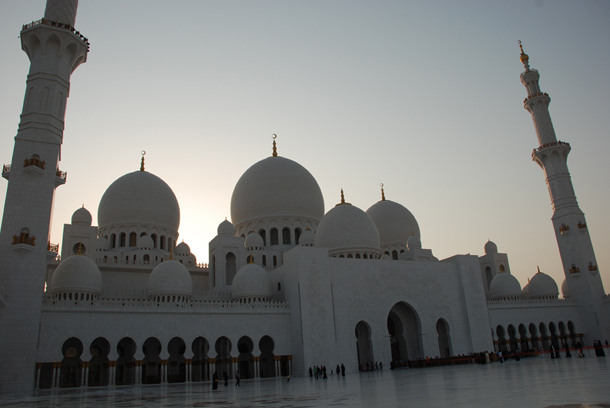
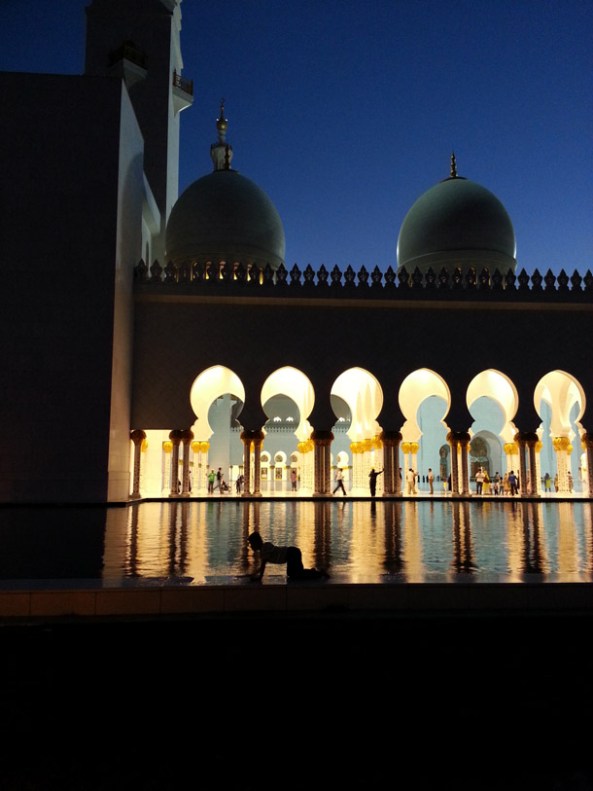
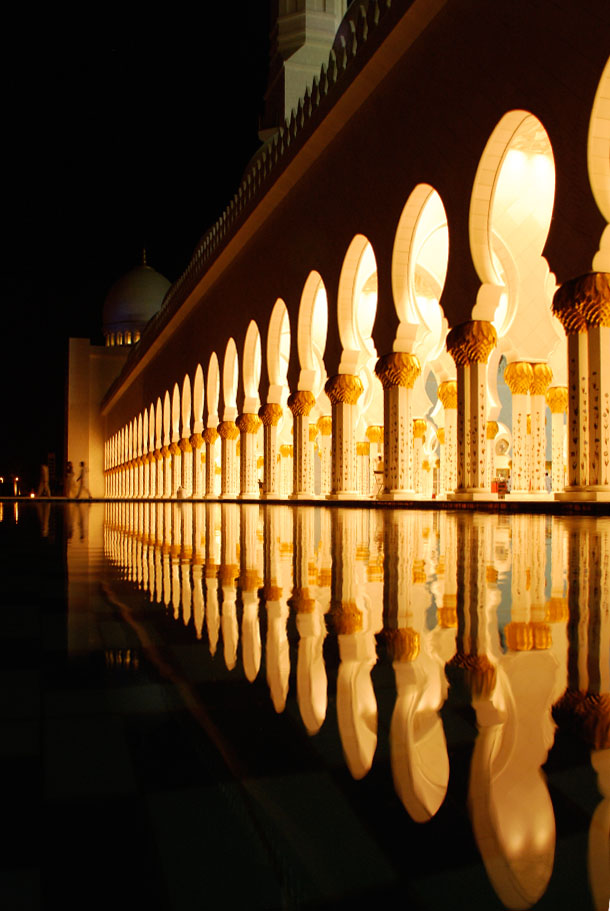
If you are staying in Dubai during the Eid break, the following posts may be of help:
- Things to do in Dubai, like a tourist in my own city.
- Where Can You Go On A Day Trip From Dubai this Eid? Part 2
- Where Can You Go On A Day Trip From Dubai this Eid? | Part 1
- A Connoisseur’s Guide To Eating Out In Dubai
- Masqouf in Bait Al Baghdadi | Tasting Iraq’s National Dish
- Arabian Pilgrimage Food Tour With Frying Pan Adventures
- The 7 Tastiest Fast Feasts Of Dubai | Introducing Chowzter to Dubai
If you would like to cook something special for Eid:
- Semaiya Kheer/Vermicelli Pudding, Eid in Dubai | Eid Mubarak!
- Firni or Ferni, Ramadan or Ramzan, Mallick Bazar or Karama?
- Kolkata Biryani | Cooking The Royal Dish In Lafayette Gourmet

 IshitaUnblogged