
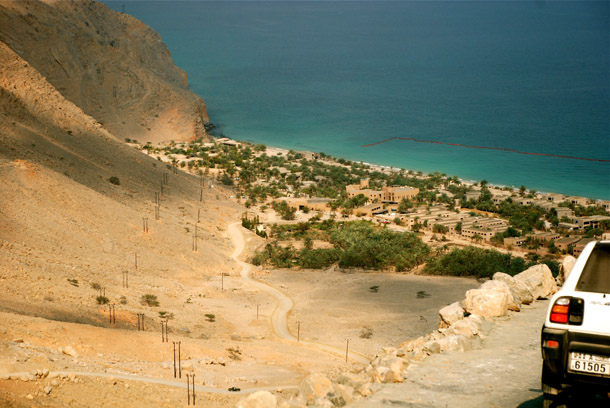


This is one of those unforgettable holidays for a long time to come. Zighy Bay – tucked away in the Musandam Peninsular in Northernmost part of Sultanate of Oman that juts out into the Strait of Hormuz, at the entrance to the Persian Gulf. It is hidden from the rest of the world by the breathtaking Hajar Mountains. This place is a surprise gift, waiting to be unwrapped. The journey to the place is as breathtaking as our stay in the rustic yet luxurious, understated yet exotic, luxury Eco Resort – Six Senses Zighy Bay. Many moons back, before the Z-Sisters had come into our lives, we used to regularly camp in the Hajar Mountains. Technically, we would be camping in the Omani territory – a small fringe of Oman slides into this Eastern part of the Peninsular. A steep, curvy foot road would take you up the rocky mountain. Standing atop, if you ever happened to glance Eastwards, you’ll be looking at the transparent, azure blue waters of the Bay of Oman, with your back towards UAE. If you looked down, that would be Zighy Bay – a white sandy beach with a few Omani huts scattered amidst Date Palm trees and palmed in between the rough, rocky and breathtaking Hajar Mountain.

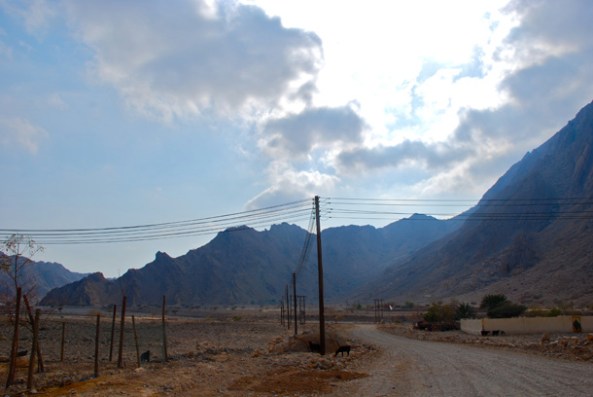
The Hajar Mountains have a different beauty altogether – brazen and bold, rough and textured, barren and rough. In Arabic, the word Hajar means stone mountains. This is the highest mountain range in the eastern Arabian Peninsula and fringes along northeastern Oman and the East coast of UAE. The topography of the UAE side (I will not be able to tell about the Oman side) suddenly changes from undulating sandy desert to the sudden barren stones with the appearance of the Hajar Mountains. We take the new Dubai-Fujairah highway – it glides smoothly through the Ras-al-Khaimah desert and brings us close to the Fujairah Cement Factory in an hour. Though the drive time is shortened, I lament that the charm of driving past the Friday market (read stopping and shopping!) has been lost. The province of Musandam, is separated from the rest of Oman by the two emirates of UAE – Sharjah and Fujairah. After crossing the town of Dibba in Fujairah, a small drive along the East Coast brings us to the Border Check-post. Our visas await us with the Omani Border Police, while we await the drive to the place which we had always seen from atop. And from afar, many moons back!

 A small drive and the tar-road ends. The adventure begins with an unpaved path. We drive through the rugged roads and reach the first Reception point of Six Senses Zighy Bay (above) and the first Receptionist who welcomes us, is this Billy goat to the left. Suddenly, we are surrounded by a herd of Billy Goats! Big Z and I get out from our cars, click a lot of pictures and resume our journey only after getting the permission from this particular Mr Billy (left). He wouldn’t leave us!
This is also the point where you can park your cars in case your car is not equipped to drive on these rocky terrains. A Toyota Landcruiser from the resort would transport you to the main reception area in the resort. See the mountains above? We would be driving up across the range and then to go down to the actual resort. The unpaved, steep and snaky road soon brings us to the point from where we get the first glimpse of the Bay of Oman (below). This is definitely an Omani version of an Italian Amalfi Coast. Excepting that the mountains surrounding the Bay here is not green. Instead, rocks and stones and pebbles frame the mountain range. Who knew barrenness could be so beautiful?

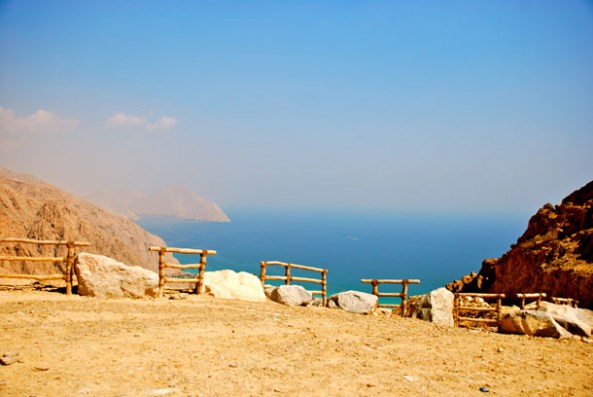


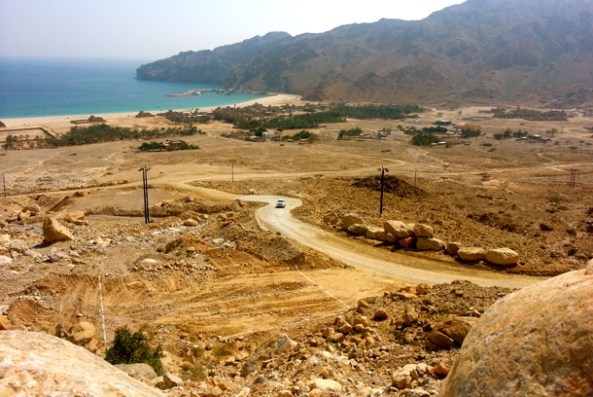
The direction signs (in one of the photos above) directs us down to the resort, while the other arrow points upwards to the Six Senses restaurant called Sense on the Edge – an experience that we would be embarking on, in one of the evenings during our two-night stay at Zighy Bay. It also takes one to the point from where many prefer to check-in to the resort, paragliding! We choose to drive down (quite naturally!) and enter what I would describe as an Omani village. Enter would be the wrong word – we had already entered the premises long back, where the Billy Goats had greeted us. It was time now to halt – sit down on the crispy white cushions dotting along the mud walls (below), sip into cool Date Shakes offered to us as Welcome drinks. The Dates, as I had expected, had been plucked from one of the Date Palm trees dotting the resort. Dates are abundant and are used for almost everything – they go into the scrubs for the resort Spa, they go into Desserts as Date Cème Brulee, they also go into their Martinis – a subject that I might have to make a separate post on!


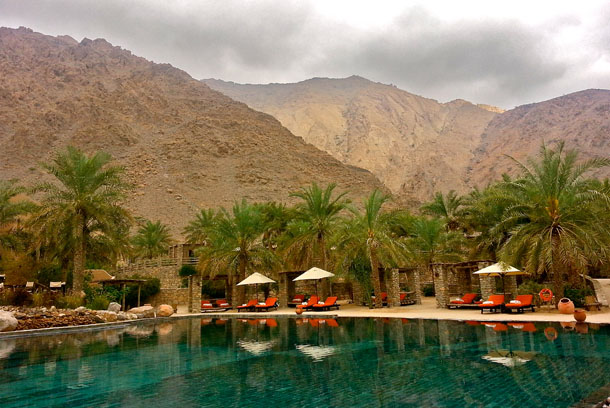
Most of the Six Senses resorts are located in remote places. Zighy Bay is no exception. The Hajar Mounatins have isolated communities for centuries and still today most of the coastal villages in the Musandam can only be reached by boat rather than by road. The slip road for the resort access (the rocky and snaky road that we had driven on), currently has facilitated the lives of the villagers living in Zighy Village. Six Senses shares the Bay with this village, which comprises of approximately 33 houses and is inhabited by a number of large families totaling a population of around 100 people. The resort blends into the surrounding environment. It practically blends into the adjacent Zighy village. No Bougainvilleas blooming or manicured green lawns. Neither are there any paved paths leading you to your villas. Sandy foot roads meander through the resort which stretches along the coastline for about 1.5 kms. The plants and the trees are also of indigenous origin – Dates (1,066 Female trees within resort and 14 Male trees within resort – I am told!), Figs (430), Lime (90), Sidr (340 in the Zighy Bay area) etc. I am stunned by the resort staff (or hosts, as each staff would prefer to be called) who discuss their dinner Menus with equal enthusiasm and passion as they would recount the facts and figures of the number of the plants and trees dotting the resort, or the number of cats they are homing, waiting for anyone who might be interested in a feline adoption! Our stay in Six Senses Zighy Bay adds to our list of the Eco Resorts that we’ve visited so far, trying to travel responsibly as far as possible. Six Senses Zighy Bay takes Ecotourism to a different level altogether. In a subtly luxurious way.

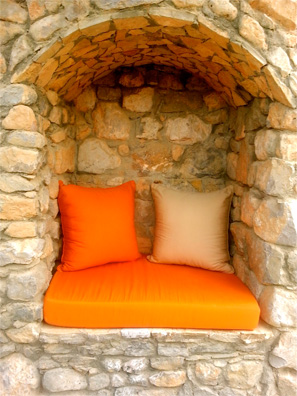

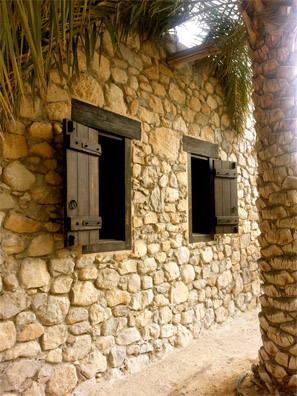
The villas are designed on the style of traditional bedouin houses of an Omani village – cobbled walls and floors, bamboos tied up in ropes forming the staircase railings, rough textured walls appearing like mud walls, a huge earthen pot in the entrance holding water to clean the beach-returned sandy feet, a small alcove outside the villa with cushions to curl up your feet with a book (above), an outdoor Majlis/traditional Arabic summer house etc. The small details in the nooks and corners fill up our aesthetic souls. 4 cycles of four different sizes (below) await at the entrance to the villa – the resort is wide spread and though we are staying quite close to the main dining areas and the Reception area, many guests staying in villas further away, cycle back and forth, kids in tow, riding on smaller cycles.


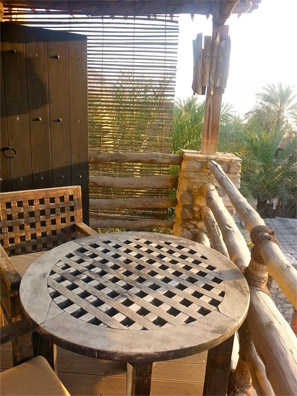

The balcony from the first floor overlooks the Bay waters through the Date Palm trees and another row of villas. The rays of the morning sun streams into the living cum bedroom upstairs through this balcony door. Each villa has it’s own infinity-edged pool – needless to say that the water is recycled and treated (practically no chlorine) and the pool water is tested everyday if there are kids staying in. This is a different world, cocooned within nature, in understated luxury.





 Talking about kids… We’ve been trying to give the Z-Sisters a different kind of vacation each time. Our intention is not to make them realise at every stage how fortunate they are but to help them develop into compassionate and tolerant human beings. Most importantly, make them aware of the fact that there is a world beyond the flower painted walls of their apparently safe rooms! Yes, holidays are meant to be fun for the kids. But if learning about the local community and the region is subtly incorporated into the fun, then why not? But every stay hadn’t been as luxurious as Six Senses Zighy Bay. Neither have all holidays been as enriching (in an indirect, non-preachy way). A few holidays truly have been. For example, our holidaying in Nepal. The Tharu Village in Nepal showed a different world to them. Our stay in the Eco Resort, Machan Paradise View Resort in the Royal Chitwan National Park made the girls realise how the Tharu people were living dangerously close to nature. The Machan Resort had been much less luxurious. Food was excellent – fresh and organic, the resort staff prided themselves to be expert naturalists. The resort enriched us. This is exactly what happened in Zighy Bay as well. And what’s more, Six Senses Zighy Bay also touches the barometers of absolute exclusivity and luxury.
We learnt something new each day during our stay here. Considering the fact that the exclusivity of the resort that would appeal to romantic holidaymakers, it is unusually and surprisingly child-friendly. While the Chaica’s club organises activities for younger kids, like Kite flying, feeding the goats, Arabic lesson, mini snorkeling, Wii Games and more, the Al Feetean’s Club organises activities suitable for teenagers. Interestingly, we had to fill up forms regarding the kids’ personal preferences in terms of the various activities they might like to take up during their stay in the resort – all this while we were sending in the forms required for the Visa processing (first time any resort has asked for such forms!). Big Z found new friends who were all the way from Mongolia (we found friends in their Mama and Papa too!) and was already drawing a logo for the gang they would form – Dragons of the World!
BTW, Big Z wrote her post on Zighy Bay much before I downloaded my pictures onto my Mac. Yes, she has her own blog going – a diary of a 8 year old.

The Organic Garden and the fresh produce… Our initiation into the resort’s organic garden takes place by way of an evening of social mingling – all guests are invited to the organic garden for some Canapes and drinks, including fresh fruits juices – some of the fruits growing in the resort itself. The organic garden produces most of the herbs and green vegetables that are required in the kitchen – Flat Parsley, Rockets, Lettuce, Tomatoes, Radish, Eggplant, Pumpkin, Bitter gourd, Water spinach, Chico [zapato], Onions, Baby spinach, Beet root, Mint, Sweet basil, Dill etc. Tomatoes are abundant – the excess goes into making home-made, sun-dried tomato pastes. Only organic fresh produce is used in the Resort – vegetable that do not grow in the resort garden comes from the organic farms from Oman. I’m happy to hear that the Six Sense philosophy favours Locavorism over organic produce, a topic that has warranted a lot of discussion currently. So, if a fresh produce cannot be farmed organically but is produced locally, the latter would be given more importance. I did hope though that our Arabic cooking class would take place in this garden just like FooDiva had done, but technical glitches (composts attracting too many flies!) shifted the lessons to their restaurant, Spice Market (coming up in the next post along with a recipe).
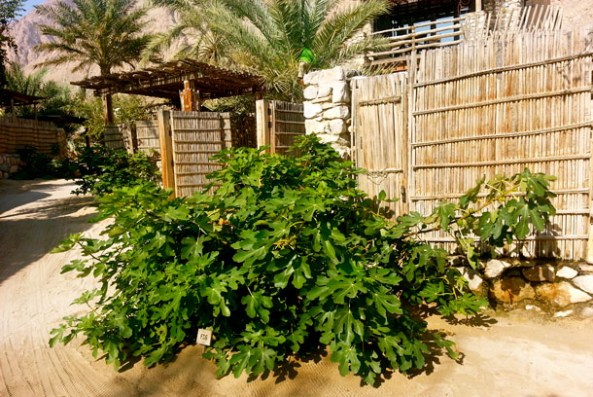

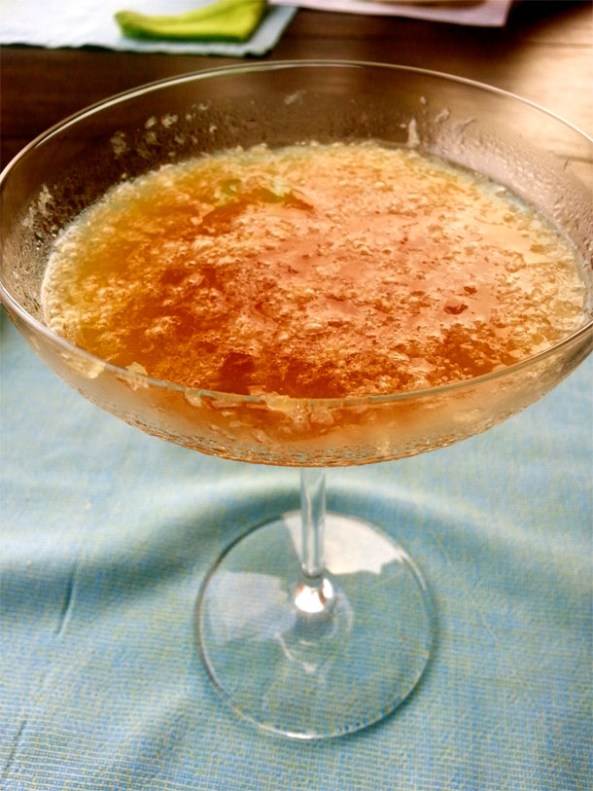
Different fruits growing in the resort yield organic production throughout the year. Date trees blossom in February and the harvest spreads from May onwards. Organic vegetables grow from November to May, so does the Figs. Limes grow from May to March, while Hennas are there all the year round. Figs, Dates go into the making of home made jams, desserts, reductions, and Spa treatments. The wide array of home-made jams and compotes are served for daily breakfast – some of the combinations are interesting – Apricot and Basil, Tomato and Vanilla! Fig jam and Honey made from local Dibba Dates are the specialities here. So is the Passion-fruit Martini and the Date Martini (below). I think I must have been drunken on Date Martinis even during tea-times! Vodka, Date paste and crushed ice – what a serious punch!



The Norway of the Middle East… The rocky mountains surrounding the Musandam peninsula looms 2,100m above the coast and juts into the Strait of Hormuz like a fjord (Fjord is a long, narrow inlet with steep sides or cliffs). The beaches and the bays here are secluded. The view from the beach is ruggedly spectacular. Most of Zighy villagers follow traditional seasonal migration patterns, spending most of the winters in the mountains in nearby Haffah. During the summer time, they return to Zighy Bay to look after their Date plantations and live off Fishing and Goat herding. Fishing is the main economic activity still. The fish in the resort’s menu comes from these local villagers, provided, they have had a surplus.


The little green book… Ecotourism is defined as “responsible travel to natural areas that conserves the environment and improves the well-being of local people.” (TIES, 1990). Six Sense Zighy Bay does full justice to this by ‘co-existing in harmony with the environment and the local community, to minimise the ecological footprint‘
We find the above green book lying on the study table of our villa. I go through it and I’m happy that a lot of commendable efforts have been made in terms of partaking sustainability – a key factor underlying Ecotourism. A few locals from Zighy village is employed at the resort, while the Zighy children undertake English lessons on a weekly basis at the resort and Souqs are organised involving the Zighy ladies to provide an additional income for their families. Community awareness regarding beach cleaning, waste management etc are carried on a regular basis.
The Six Senses 20/20 Vision… is not to achieve carbon neutral or zero carbon on-site operations by 2020, but to actually implement programmes resulting in a net absorption of C02. that is decarbonize!
Home-made Drinking Water? Yes, the resort purifies and bottles its own Drinking Water through Reverse Osmosis (what is Reverse Osmosis?) and re-usable glass bottles have replaced plastic bottles. Moreover, 50% of Six Senses Drinking Water sales from any of resort’s F & B outlets go to Social and Environment Responsibilities Fund (SERF), a fund for local social projects. Apart from the Drinking Water, the entire water supply of the resort is obtained by desalinating sea-water. Considering that the water requirement is enormous, with all the villas having their own independent pools, the resort’s sustainable management of freshwater is noteworthy. On International World Water Day, held annually on 22nd March, 100% of the revenue generated from Six Senses water sales is placed into the SERF, in-order to carry out clean water initiatives throughout Oman.
Slow Life and a sustainable Menu… Hammour and lobsters have not been in the Zighy Bay menu ever since they have been become ‘over-fished’. Instead, the fish menu depends upon the fresh catch from the local fishermen in the bay. Tuesdays are dedicated Meat Free days here. Recently, the other Eco Resort that we visited which is following sustainable fishing was Desert Islands Resorts By Anantara.
Reed Bed System? I thought these were grass flowers… I visit the Reverse Osmosis Plant as well as water treatment plant. All waste water generated on the resort is treated using the Moving Bed Bio Reactor technology (what is MBBR?) and the treated water is reused for landscaping irrigation. What I thought as grass flowers turned out to be a Reed Bed System which treats and reuses the resort’s sewage sludge. The reed plants (below) used are locally sourced from the region (Phragmites Australis) and are abundant in the surrounding Wadis. According to the little green book, ‘ It is estimated that after 10 years the reed bed will create around 400m³ of peat soil from 16,000 m³ sewage sludge. This peat soil will be used for soil improvement of farm land and landscaping’.
◊—————————————————————◊
Six Senses Zighy Bay
5* Luxury Eco Resort;Zighy Bay, Musandam, Oman
Zighy Bay is located 120 km, or 90 minutes drive from Dubai International Airport
Tel: +968 26 735888; Email: reservations-zighy@sixsenses.com or you could check for their special packages. Or you could visit their Website; Facebook Page; Twitter
Paragliding, Microlites, Kayaking, Snorkeling, Scuba-diving, various Water sports (Water Ski, Wake Board or Tubing), Dhow Cruise, Fishing, Mountain hiking, Mountain Biking, Trekking etc – one can choose from various activities offered by the resort apart from the various specialised Spa treatment from the award-winning Six Senses Spa. A Six Senses Spa is a key component of a Six Senses. The resort features 79 independent pool villas plus the Private Reserve and 2 Retreats in traditional Omani style, with modern amenities and luxury. Six Senses Zighy Bay is one of the exclusive ecologically and socially responsible resorts as chosen by Eco luxury Retreats of the World.


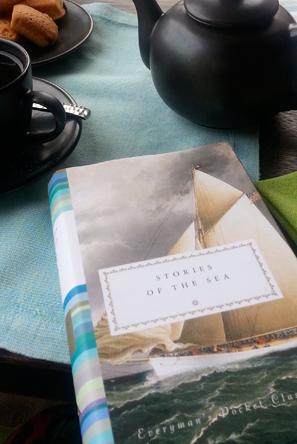
Our holiday in Zighy Bay was an experience. We have been trying to travel responsibly over the years and visiting Six Senses Zighy Bay which has bagged the 2012 Middle East Hotel Awards for the Best Sustainable Initiative, was of paramount importance. Adhering to a Slow Life… Meat Free Tuesdays… no wild Salmons flown over the Atlantic… is not very easy when the mindset of a regular guest is that he/she has a right to demand whatever they want, specially in a resort as expensive as this. This is where the Guests have to be in unison with the Six Senses’ vision and philosophy. Was our stay all about visiting the Reverse Osmosis plant and reading the little green book? No, this post was in line with my green quest for my blogpost. I also managed to read some lovely stories from a book. The stories of the sea. The Z-Sisters were pampered spoilt. So were we, with our personal lady Butler-in-call. We’ll definitely return to this place once again. I have been told that the Billy Goats are waiting for me. And the next time we could opt for a Paragliding arrival – Inshallah! The next post talks about our family cooking class with Chef Hassan and a lovely Arabic recipe. Also, our candle-lit dinner in Sense on the Edge, their restaurant perched on a cliff top 293m above sea level!
Unblogging it all… Ishita
Disclaimer: Room rates start at US$900 for a pool villa (for 2 persons) plus 9% local taxes and 8.4 % service charge per villa per night. While you enjoy reading a post with a lot of visuals, please don’t use them as some of them may have been taken from our personal albums, just to make your reading experience more pleasurable. You can see more pictures of my travel and food journey here.
BE SOCIAL. SHARE THIS!

‘I SHALL SURVIVE TO EAT’!’ I have just survived an evening of rapid back-to-back menu-tasting of two restaurants in The Palace Downtown – all in one single evening(!) when I had the opportunity to take a sneak peep and taste the menu offered by two of their flagship restaurants – Thiptara and Asado. This was their menu offering for Taste of Dubai that is taking place from 14-16th of March in the Dubai Media City Amphitheatre.
My first halt had been the Thai restaurant in the The Palace Downtown – Thiptara. That was Part 1 of my gluttonous double munching! After finishing at Thiptara, I dashed off to Asado, the Argentinian restaurant in The Palace, to taste what they had to offer in the Taste of Dubai. This is where the Part 2 of my Double Munching begins! 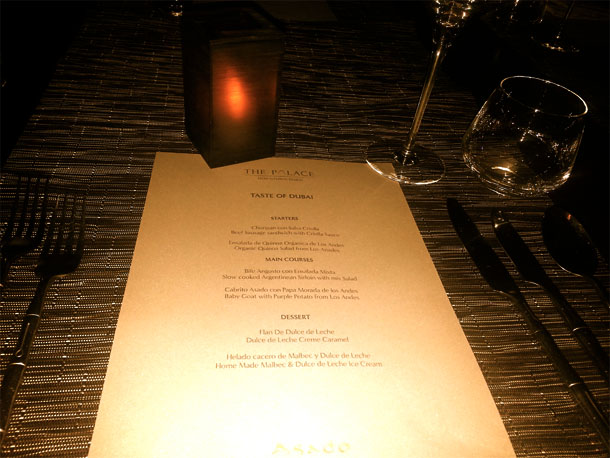
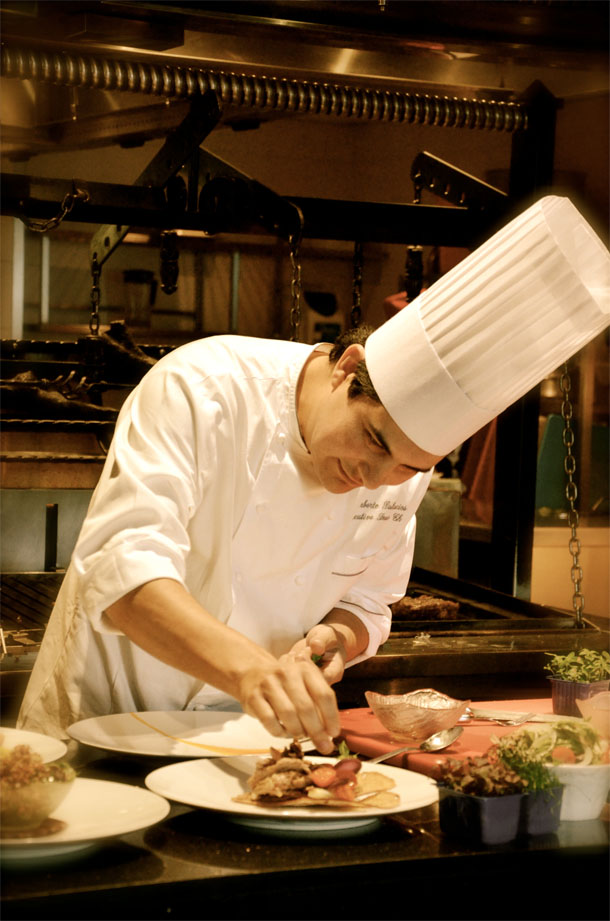
The Asado menu has been designed by Chef Norberto, the Executive Sous Chef of The Palace Downtown. Nominated as the Chef of the Year by Caterer Middle East Awards 2010, he’s also worked at a three-star Michelin restaurant in San Sebastian. Naturally, the expectations from him is sky-high. 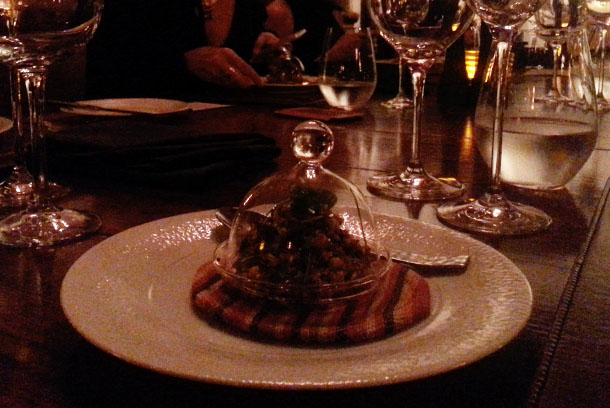
Starting with the Salad – Ensalada de Quinoa Organica de Los Andes or the Organic Quinoa Salad from Los Andes (above). Quinoa, now considered a Superfood, is very high in nutritional content and has been an important staple in the Andean cultures for many years. It is only recently that it’s increasingly becoming popular worldwide. I like Quinoa and am always faltering while making it at home. So munching on a fantastic Quinoa preparation, I started on my guilt-free food munching for the second half of the evening (hopefully, washing away some guilt of my indulgence in the first half). The Starters also comprised of Choripan con Salsa Criolla or the Beef Sausage Sandwich with Criolla Sauce. The Chorizos or the Beef Sausages were home-made, I was told. In Asado too, each dish was complemented by a wine chosen by Sarah, who I have already had the pleasure of meeting, long long back, when she had led us on our evening of Wine tasting in the Asado Wine Club. 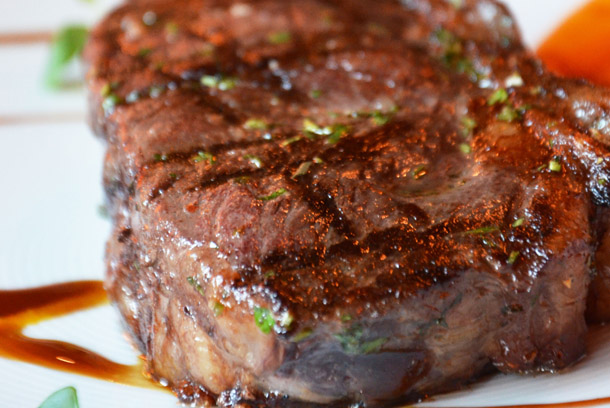
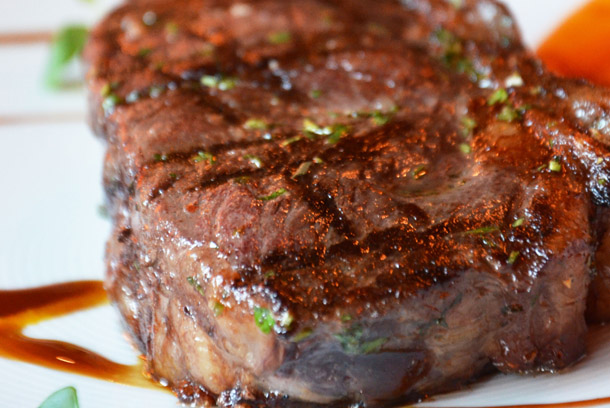
The Main Course comprised of Bife Angosto con Ensalada Mixta (above) – a slow cooked Argentinean Sirloin that was accompanied by a mixed Salad. I love my steaks, but most of the times I’m bickering once they reach my plate. And this is why I trust only a few places where I find my-kind-of-perfect steaks (I loved my Wagyu in Al Maha, and also my other steak experiences in the Tribes restaurant and Butcher Shop & Grill, both in MOE). Asado has always served brilliant steaks – soft, juicy and grilled to perfection with a wide variety of sauces. This time too, it was no different.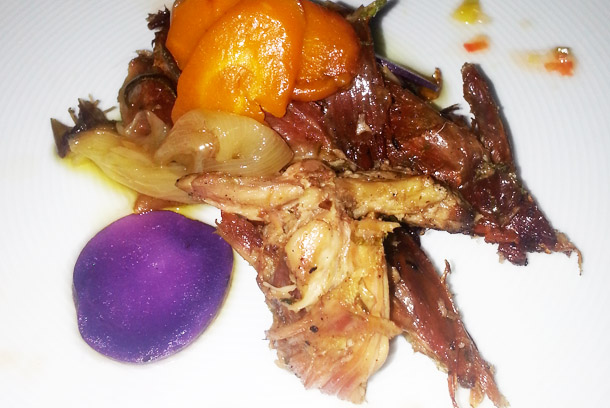
The next dish is a signature one from the restaurant – Cabrito Asado con Papa Morada de los Andes (above) or the Baby Goat. In Asado, the meat is either grilled on the Parrilla (barbeque) or Al Asador (open fire). The Baby Goat is slow-roasted in an open charcoal fire pit, almost in the middle of the restaurant and is a sight only for the brave-hearted! The meat inside tasted very tender, though the skin outside was a bit crispy and hard. This was served with Purple Potatos from Los Andes. 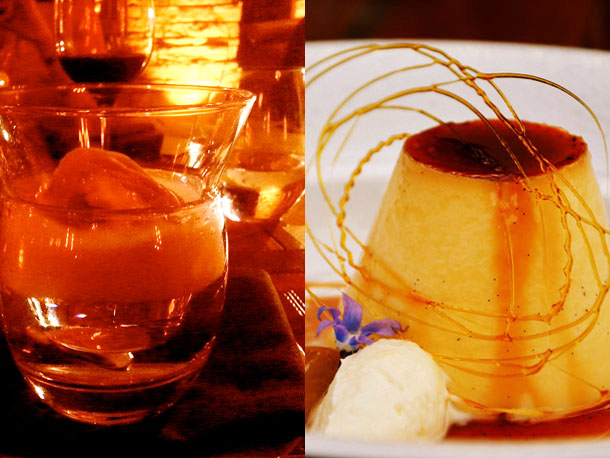
For me, no good meal can be complete without a sweet sign-off, specially for a true-blue Bengali like me. And our meal at Asado was signed off with two brilliant desserts. The first one – Helado cacero de Malbec y Dulce de Leche (above left), was a killer. A dessert made with home-made Malbec and Dulce de Leche Ice Cream, it was served amidst a huge smoke emanating from dry ice. The taste was spectacular, so was the taste. The purple Malbec grapes make most of Argentina’s best known wines. So, it was an interesting Argentinian twist to the dessert, I should say. The second dessert was Flan De Dulce de Leche (above right) or the classic Dulce de Leche Creme Caramel. Dulce de leche, meaning candy of milk or milk jelly in Spanish, is a rich and creamy sauce, similar in flavor to Caramel. It is very commonly used in most of the desserts of many South American countries, including Argentina. So tasting a good dessert made in the old-school traditional style of Dulche de Leche, while sitting in a good Argentinian restaurant in Dubai – there can be no better way to end an evening, that till now, had been satisfying and delicious!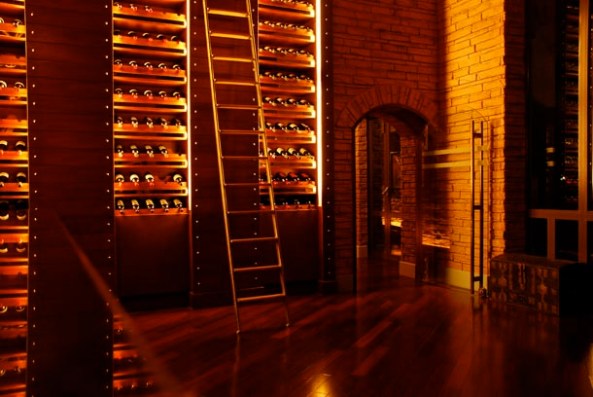
Asado
Argentinian fine-dining restaurant in The Palace DownTown
Tel: +971 4 888 3444 or email dine@theaddress.com
For more info, visit Facebook: The Palace Downtown; Twitter: @PalaceDowntown or the restaurant Page: Asado
Taste of Dubai: The Palace Downtown Dubai will highlight the signature tastes of Thailand and Argentina through its flagship restaurants, Thiptara and Asado, at the Taste of Dubai Festival 2013, to be held from March 14 to 16. All items on the menu will be priced between AED 15/ – AED 30/. Chef Noberto, the Executive Sous Chef of The Palace, will host a session at the Philips Chefs’ Theatre on Saturday, March 16, at 8pm. Visitors stand a chance to win Barbeque classes with Chef Norberto, for eight people from Asado and dinner for four at the Chef’s Table at Thiptara. You can also register at the Thiptara and Asado’s stalls at Taste of Dubai.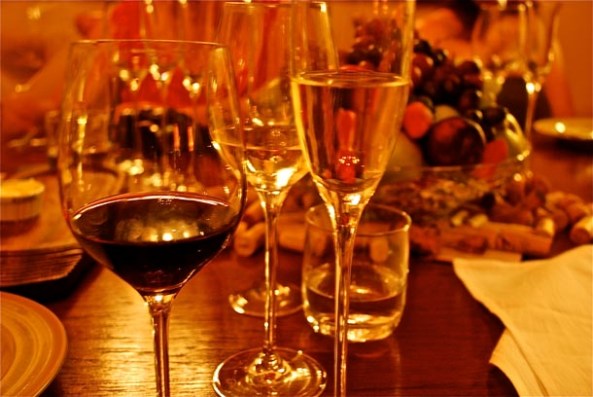
In this episode of food munching too, I was accompanied by Sarah – The Hedonista (@the_hedonista), Samantha – the FooDiva (@FooDivaWorld), Jasmine of Pear Tree Diaries (@peartreediaries), Saba Wahid of Culinary Delights by Saba Wahid (@saba_wahid), Nina of Acoustic Chef (@CookNPlayGeetar) and Jerry (@bugipogi).
Good wine accompanying good food, rustic wooden decor amidst dimly lit chandeliers, a secret hidden cellar as well as a huge open one – Asado is one of my favourites when it comes to dining out in Dubai. Another thing that sets Asado apart, is the enthusiastic and knowledgeable staff. Asado actually makes an ideal place for a very formal official lunch/dinner and can turn itself into the most romantic place (specially the section that overlooks the fountains and the lake) or a good fun place to hang around with friends with live music, good food and a vibrant ambiance. But experiences like these are not always easy on the wallet. Hence, most of us look forward to the Taste of Dubai. It gives an opportunity to the Dubai diners to taste what some of the finest dining outlets in Dubai have to offer, at very reasonable prices. So, do pick on Asado’s offering at the Taste of Dubai in March – I have already revealed the Menu here!
Unblogging it all… Ishita
◊————————————————–◊
Disclaimer: I was invited for Asado’s special Menu-tasting for the Taste of Dubai 2013. The visuals of the Chef, the Sirloin and the Creme Caramel belong to The Palace Downtown. While you enjoy reading a post with a lot of visuals, please don’t use them as some of them may have been taken from our personal albums, just to make your reading experience more pleasurable. You can see more pictures of my travel and food journey here.
Related articles
- Taste Of Dubai Menu Tasting At Thiptara | Part 1 Of My Gluttonous Double Munching! (ishitaunblogged.com)
BE SOCIAL. SHARE THIS!

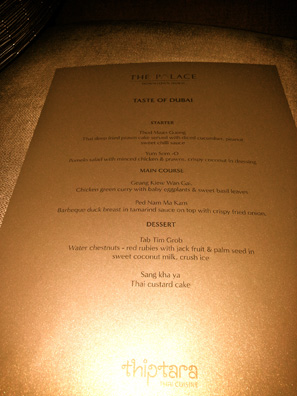
If I have survived this DOUBLE munching to upload last night’s crumbled up Menu, it’s coz of sheer will power and my motto – ‘I SHALL SURVIVE TO EAT’! That had been my Facebook Page update after an evening of back-to-back menu-tasting of two restaurants in The Palace Downtown. I had the opportunity to take a sneak peep (and taste!) into the menu offered by two of their flagship restaurants – Thiptara and Asado, for the Taste of Dubai that is due to take place from 14-16th of March in the Dubai Media City Amphitheatre.
Our first halt was the Thai restaurant in the The Palace Downtown – Thiptara. I arrived very late, due to horrendous traffic and joined my other foodie friends as they were about to start on their Main Course. However, I caught up with them very fast – chomping away on my Starters, Main Course and gulping down the Riesling – all simultaneously before dashing off to the Argentinian restaurant, Asado (part 2 of my Double Munching!), to taste what they had to offer in the Taste of Dubai.

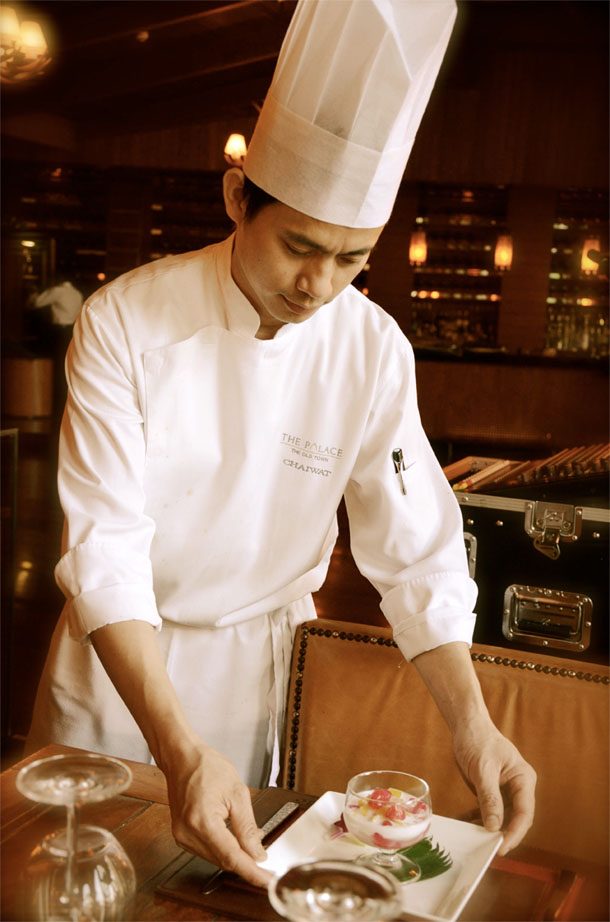
Taste of Dubai is one of the most awaited food events in the city. Bringing in an alfresco dining experience, the event features not only internationally renowned chefs (Gary Rhodes, Richard Sandoval, Giorgio Locatelli, Vineet Bhatia and The Food Network’s Jenny Morris and Reza Mahammad) but also 30 of Dubai’s top fine-dining restaurants. This is the first time that the The Palace Downtown is participating in the event. Naturally, Chef Chaiwat Kawikitpraphat, the Head Chef of Thiptara, had designed his Thai Menu with utmost care. As the Chef explained each of his culinary creations in detail, Sarah, the wise Sommelier in The Palace, poured the perfect Riesling or the Bordeaux that complemented each dish in the menu. I say wise, because I have already had the pleasure of having Sarah leading us on a fine evening of Wine tasting in the Asado Wine Club, a long time back.
We tasted some of Thiptara’s speciality dishes that the restaurant will offer at the Taste of Dubai. For Salad, there was Yum Som – O or the Pomelo salad mixed with minced Chicken and Prawns. The salad had a crispy coconut dressing making it’s taste slightly sweet while retaining the sourness of the Pomello, nevertheless refreshing all the way. For the Starters, there was Thod Maan Goong or Thai Prawn Cakes, deep fried and served with Cucumber, Peanuts and a sweet Chilli Sauce. The Chef said that he had added his own style in making the Thai Prawn Cakes, infusing into the taste a lot more Thai herbs than it’s normally done, specially Lemongrass. This extra infusion lent more flavour to the dish without making it actually spicy.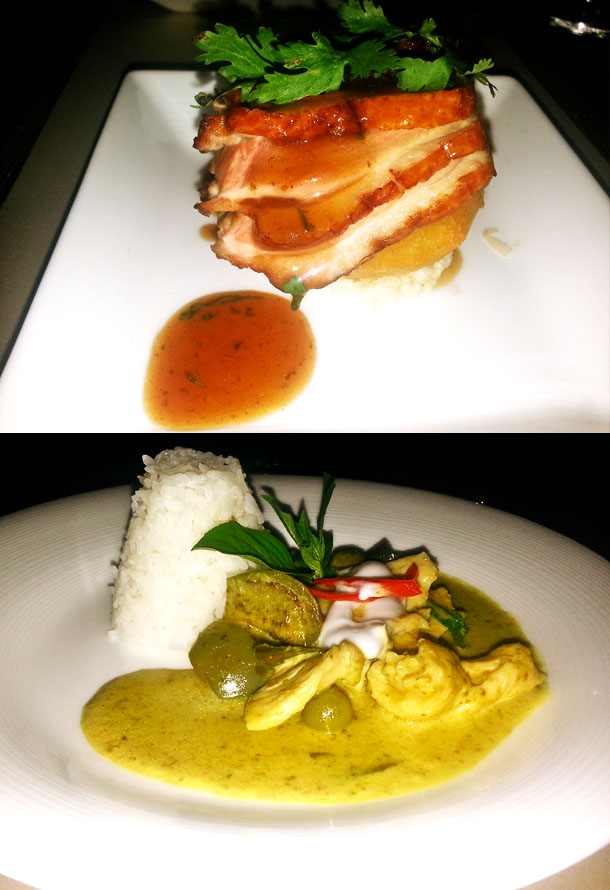
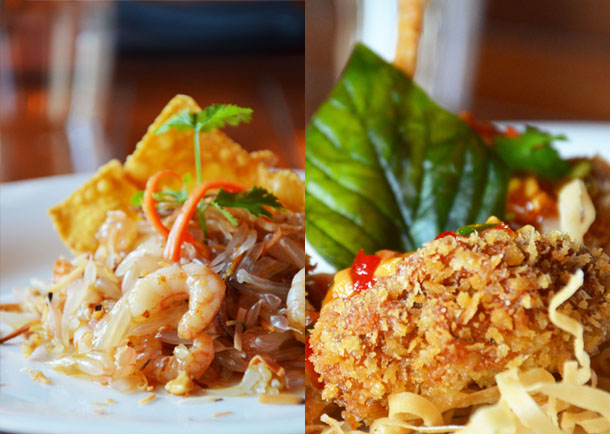
For the Main Course, we first tasted the Ped Nam Ma Kam or Barbequed Duck Breast (the first picture above). It had Tamarind sauce dripping over it and was sitting atop an Onion ring, which too had become succulent from the Duck’s juices. Then came the Geang Kiew Wan Gai or Chicken Green Curry (the second picture above). With the right amount of Thai sweet fragrances of Kaffir Lime, sweet Basil leaves and with the soft baby Eggplants over-drenched with the mildly spicy Green Curry, this dish was perfect.
No meal can be complete without a sweet sign-off, specially for a true-blue Bengali like me. The first Dessert was Tab Tim Grob. This is a very popular Thai dessert. Water Chestnuts are first cut into pieces and a bit of red food colouring is added. Traditionally, red Dragon fruit juice is added. Then they are coated with Tapioca flour and are blanched in boiling hot water. Apparently, the final result is that, these cubes are left looking ravishing in Red, just like Rubies! In the Tab Tim Grob that we tasted, the Red Rubies were served with Jack fruit and Palm seeds, mixed in sweet Coconut Milk and crushed Ice. Did I like the taste? Well, if you have tasted the Filipino dessert Halo-Halo, then Tab Tim Grob comes only second in comparison (I think Halo-Halo’s preparation is quite similar, with an addition of purple Ube or Yam). The other dessert was Sang kha ya or the Thai Custard Cake. Southeast Asian Cuisine has organically incorporated the classic Creme Caramel into their traditional cuisine because of the Colonial legacy that many of the countries in this region may have had. Interestingly, each regional version differs from the other in terms of the ingredients. The Thai version of the Custard Cake uses Coconut Milk instead of Cream, probably making it much lower in fat than the regular Creme Caramel. The sweetened, fried whizzy of Egg yolk on top of the Thai Custard Cake added to its unusual taste.
Thiptara
Thai fine-dining restaurant in The Palace DownTown
Tel: +9714 888 3444 or Email: dine@theaddress.com
For more info, visit Facebook: The Palace Downtown; Twitter: @PalaceDowntown or the restaurant Page: Thiptara
Taste of Dubai: The Palace Downtown Dubai will highlight the signature tastes of Thailand and Argentina through its flagship restaurants, Thiptara and Asado, at Taste of Dubai Festival 2013, to be held from March 14 to 16. All items on the Menu will be priced between AED 15/ – AED 30/. Chef Noberto, the Executive Sous Chef of The Palace, will host a session at the Philips Chefs’ Theatre on Saturday, March 16, at 8pm. Visitors stand a chance to win Barbeque classes with Chef Norberto, for eight people from Asado and dinner for four at the Chef’s Table at Thiptara. You can also register at the Thiptara and Asado’s stalls at Taste of Dubai.

Dining with blogger friends is always such a pleasure. It’s very comforting. Nobody jumps on the food before it’s photographed properly. One holds the flashlight, somebody else holds the fork. From smart phones to Nikons – different versions and different angles of a dish can be captured and shared. In this episode of food munching, I was accompanied by Sarah – The Hedonista (@the_hedonista), Samantha – the FooDiva (@FooDivaWorld), Jasmine of Pear Tree Diaries (@peartreediaries), Saba Wahid of Culinary Delights by Saba Wahid (@saba_wahid), Nina of Acoustic Chef (@CookNPlayGeetar) and Jerry (@bugipogi).
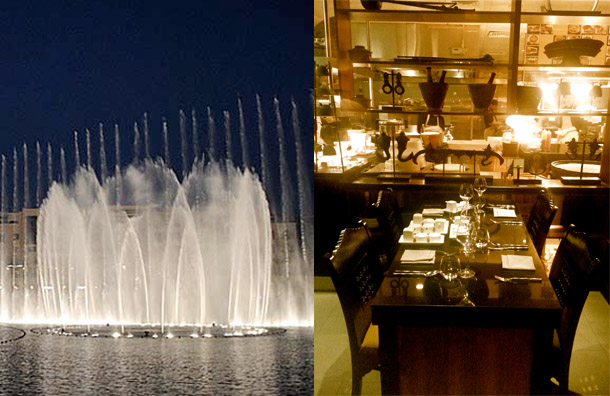
Thiptara means ‘Magic at the Water’. And probably that magic lends itself into the Thiptara kitchen as well. I scuffled into the elegant dining hall of the restaurant, arriving very late. I also managed to finish off my meals before finishing off my greetings with my fellow foodie friends. We had to go for the next Menu tasting at Asado. As I was going to rush out, the Dubai Fountains in front of the Burj Khalifa started to dance and whip up in a twirling frenzy. I stood frozen – transfixed as the majestic dancing fountains formed a brilliant backdrop to the wall to wall glass windows of Thiptara. The dining room was right there on the water and the many Oriental artifacts in bronze shone in the glowing torches and the reflections of the fountain on the lake. A shame that I realised the beauty of the decor only now, just before leaving the place (as I was busy catching up on the food earlier on). I am a great fan of Thai Cuisine and I think Thiptara has just touched a soft spot in my food radar. You can taste all of these in the Taste of Dubai. What’s next? I dash into Asado for their Menu tasting… that’s the Part 2 of my gluttonous double munching – all in one single evening!
Unblogging it all… Ishita
◊————————————————–◊
Disclaimer: I was invited for Thiptara’s special Menu-tasting for the Taste of Dubai 2013. Only the visuals of the Chef, Thai Crab Cakes and the Pomello Salad are not clicked by me and belong to The Palace Downtown. While you enjoy reading a post with lot of visuals, please don’t use them, as some of them may have been taken from our personal albums just to make your reading experience more pleasurable. You can see more pictures of my travel and food journey here.
Related articles
- Taste Of Dubai Menu Tasting At Asado | Part 2 Of My Gluttonous Double Munching! (ishitaunblogged.com)
BE SOCIAL. SHARE THIS!


‘If Bruschetta remains Bruschetta and Crostata remains Crostata, then Phulko Luchi should be nothing else but be called Phulko Luchi!’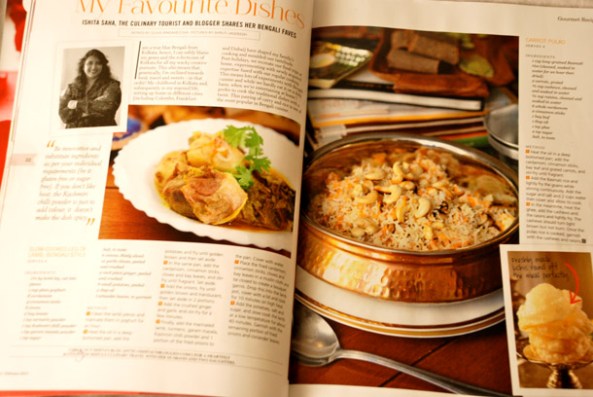
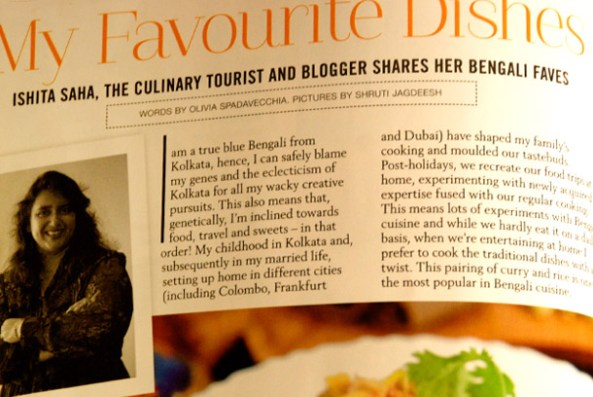
Luchi got featured in the February issue of Ahlan! Gourmet (above), along with Kosha Mangsho and Polao. Naturally, my Bengali foodie soul is very satisfied. When Olivia Spadavecchia, the Editor of Ahlan! Gourmet contacted me, I had already been planning to do a post – an Ode of the pictorial kind, on Luchi. I was slightly skeptical as to whether the Bengali names of the dishes should remain the same or was I going to translate and create names for them. What was I going to call Phulko Luchi? Puffed-up Flour Flatbread? Or, the Kasha Mangsho for that matter? Slow cooked Lamb, in the Bengali Style? I resorted to Twitter with a few Bengali blogger friends, a few of them having quite a lot of credibility internationally. A virtual ‘TweetAdda‘ (Adda is a common Bengali pass-time referring to plain, simple and pure Chit-chat, so TweetAdda refers to Adda on Twitter!) followed with @BongMomCookBook, @Finelychopped, @Soma_R (eCurry), @kankanasaxena (Sunshine & Smiles), @kaniskac (For the love of food) and @marginfades. 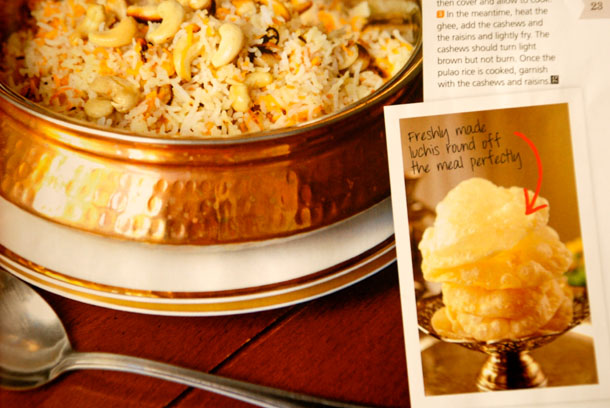
What follows below, are bits and pieces of our TweetAdda to highlight the dilemma a food blogger or a food writer who’s wanting to showcase a regional dish to those who are uninitiated to it. Does a dish lose it’s meaning and the very essence that’s associated with it, if the original name is not there or if it’s kind-of translated? Is everything lost in translation? And if at-all something can be captured in the translation, is it good enough? Do overlook the grammar, the punctuations and simply enjoy the pure essence of a discussion on Luchi.
What would be #KashaMangsho in English for international readers? Urgent!
Bong Mom’s Cookbook: Aiyyo don’t translate. Kasha Mangsho would be slow cooked spicy goat meat
For the love of food: just like you don’t translate chocolate
Margin Fades: add to that the word “dry” (dry slow cooked spicy goat meat). it’s helpful to have a description, even if it’s wordy
Sunshine and Smiles: i say, keep the original and explain the breakup detail in bracket. that’s how people should know the dish, by it’s original name!
eCurry: I do translate when I can in the title along with the original name
Me: I know that – your Patishapta translates into Crêpes with Sweet Coconut Cardamom Filling!!! #Lost in #translation??
eCurry: I feel everything is lost in translation 😦 do the best I can do. but it is crepe and it has that filling. LOL!
eCurry: the essence of the recipe is all lost in translation! too many words. like Kosha Mangsho says it all 🙂 but only for us
Can #Phulko Luchi be translated into Puffed-up Flour Flat-Breads?
Sunshine and Smiles: i think, fried puffed indian bread in brackets 🙂
@coffeemike joins in. I don’t know him (but will be following up on him, once the post is published). His tweets from a non-Bengali and a non-Indian perspective shows a different angle to the discussion.
@coffeemike: If I’m cooking another culture’s food, I’d like to know what it’s properly called
Me: Along with the explanations right? Mere translations won’t do, I presume!
Margin Fades: I would think so – can’t imagine leaving anyone to figure out Labongo Latika, for example
Me: that one will take some figuring out, honestly
Margin Fades: exactly! Labanga Latika, for example, is like a coconut turnover, pinned with cloves.
Me: Ivy Clove, perhaps?
Margin Fades: but as Ishita explains, it translates to Clove Ivy. (Which makes absolutely no sense.)
Ahhh, I got it Margin Fades, what a boost for my ego!
The final conclusion – if Bruschetta remains Bruschetta and Crostata remains Crostata, then Phulko Luchi should be nothing else but be called Phulko Luchi. As Kankana puts it ‘I feel we should never change the name or call it Indian something (for example – Samosas are not to be described as Indian Empanadas)… that’s how we can make these dishes famous, make people know the name as it should be. Adding an explanation in bracket would help people understand’. I am reminded of my conversation with MasterChef Sanjeev Kapoor. When I ask him why does Indian food mean either the North Indian food or the South Indian snacks and not any other regional Indian cuisine, he says – ‘It is the people from those region who have to take pride in their own food and come forward.’ Not to give up, I barge in – so there’s scope for a Bengali food blogger to come forward to the rescue? He answers – ‘Of-course, hundred percent!’
Interestingly, Olivia got back to me saying that she was more interested in Luchi than the Polao. In-fact, she wanted to capture Luchis in the making! I should have been surprised. Wow! She knows about Luchi? But it didn’t surprise me at all. I had already read about her in fellow Fooderati Blogger, Chef and Steward‘s I Work in Food series. I knew she was comfortable being in a kitchen, was adventurous and very much aware of the different cuisines of the world. Boasting of Italian roots, I’m presuming that her love and adventure for food can be perfectly complimented by a this Bong’s food passion. So here I am Olivia, taking pride in my Luchi and writing my ode on it, as I had promised! 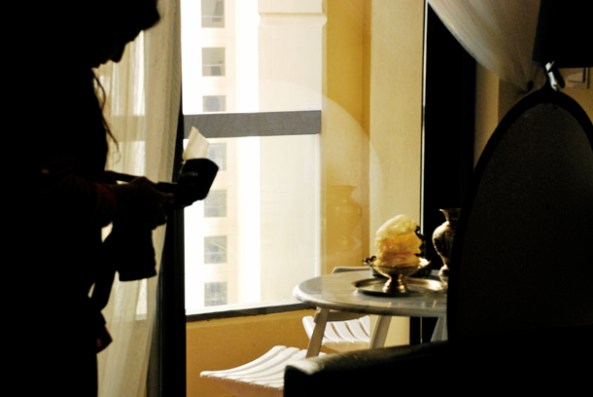
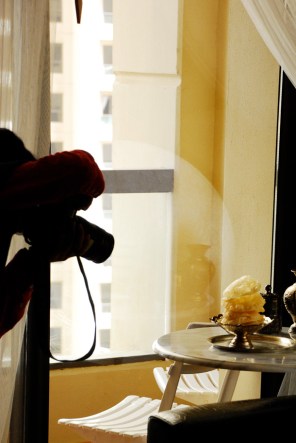
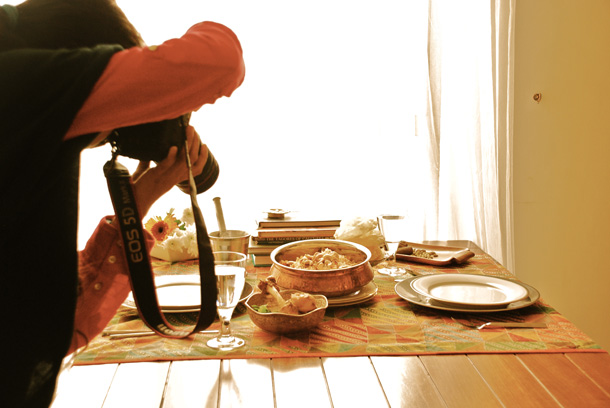
Luchi, the star, throws enough tantrums. As revealed by the Behind the Scene shots taken by me!
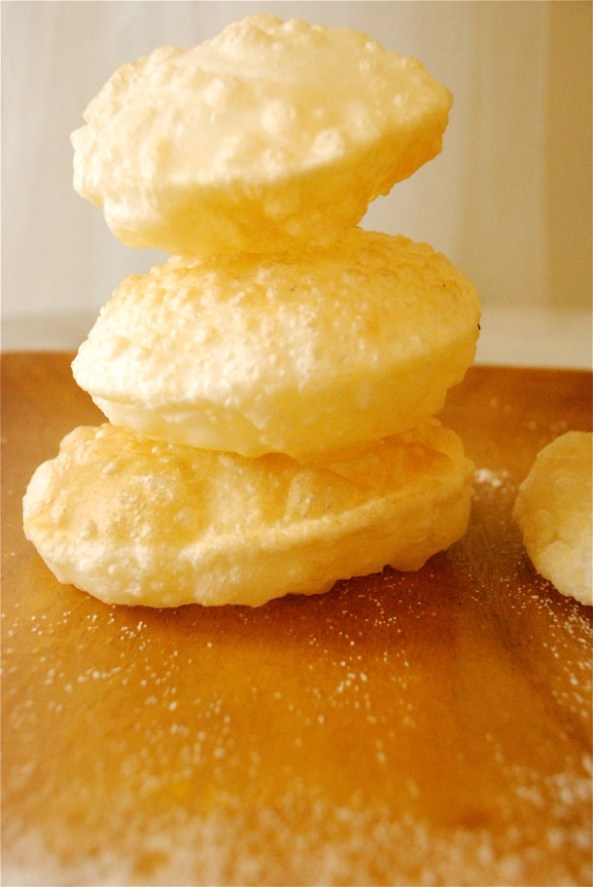
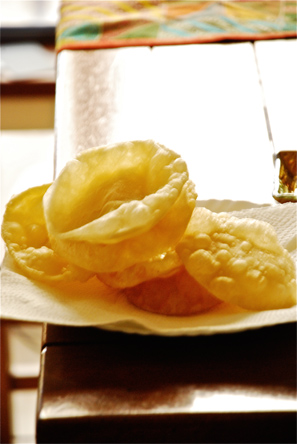
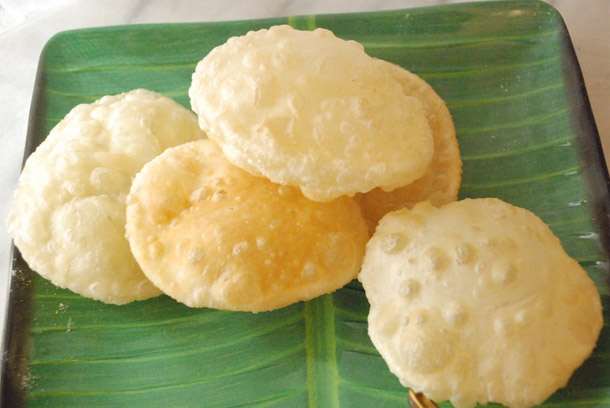
On the day of the shoot, as Shruti, the photographer puts the spotlight on Luchi, getting a shot of the perfectly Phulko Luchi or the perfectly puffed up Luchi becomes almost next to impossible. Many weeks back, I did manage to get my dream shot of Luchi at home – each Phulko Luchi perched on top of the other (the first cover picture in this post, much much above). But this was probably not a Star’s day for perfect-shots. By the time the Phulko Luchis were being scurried from the frying pan, across the kitchen counter and passed on to the table near the balcony door – possible the only place that gets a bit of decent sunlight, the Luchis were getting deflated. The beauty of Luchis is in its’ puffed up and swollen demeanor. That beauty fades completely once they become deflated (above right)! Finally, like a star who shines in front of only a good photographer, my Luchis did turn out looking great on fine-print.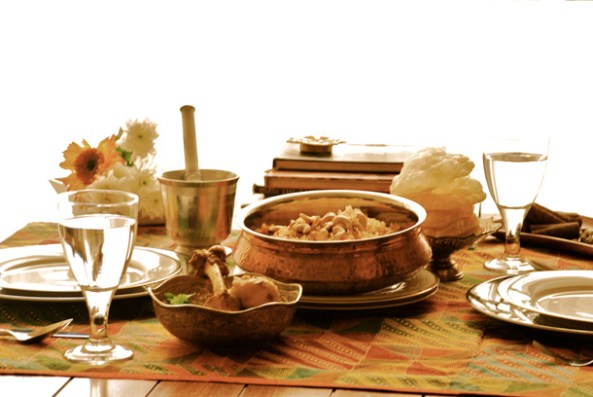
The table-setting as I had visualised… Coffee-table books on Kolkata and Art of Bengal, some traditional silver serving bowls, mortars, real whole spices along with wine glasses, contemporary crockery etc. And of-course with Luchi, Polao and Kasha Mangsho. 
Phulko Luchi or Puffed Flour Flatbread
Category – Meal accompaniment; Cuisine type – Traditional Bengali
You may substitute the White Flour with Gluten-free Flour, but if Atta/Whole Wheat is used, then Luchi ceases to be the Bengali Luchi and turns into a non-Bengali Puris
Following are the characteristics of all recipes doling out of our little hands, big hearth –
♥ Easy to cook
♥ Regular canned products off the shelf may be used (However, we advocate using fresh products)
♥ Goes well both as a regular or party dish
♥ Children can easily help in making the dish (My two little sous-chéfs are aged 8 and 3 years!)
♥ And lastly, guaranteed to be tasty!
The best thing about making Luchis, is that, I can delegate the messy job of kneading to the Z-Sisters! Both Big Z and Li’l Z are thrilled everytime I outsource the job to them. 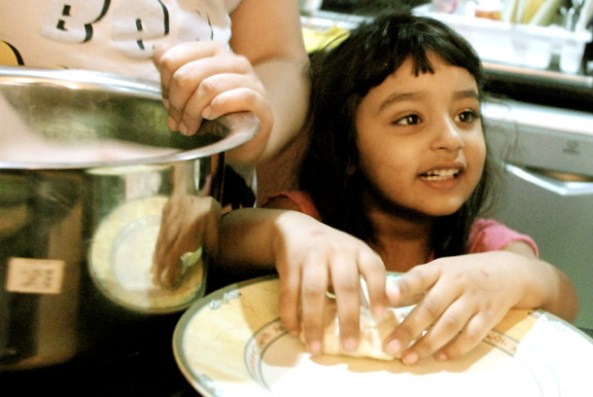
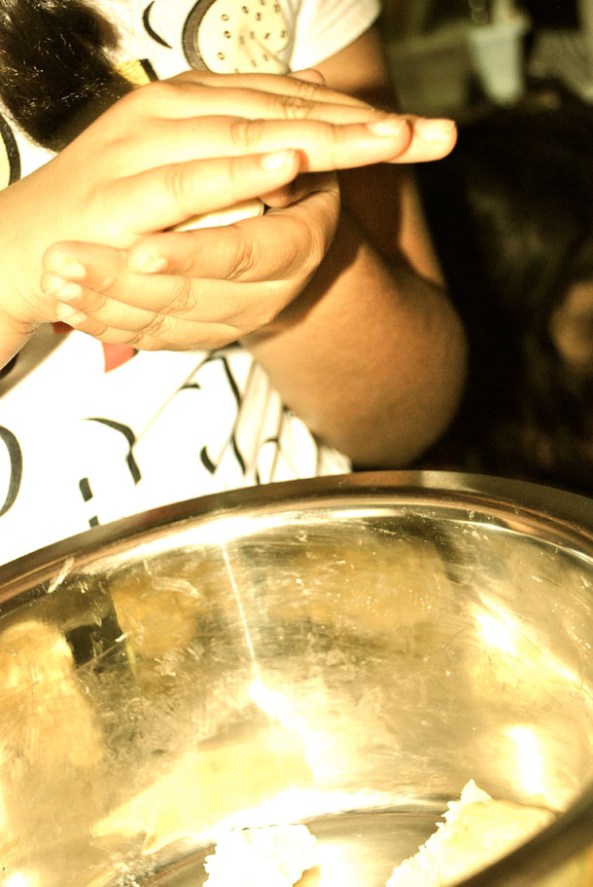
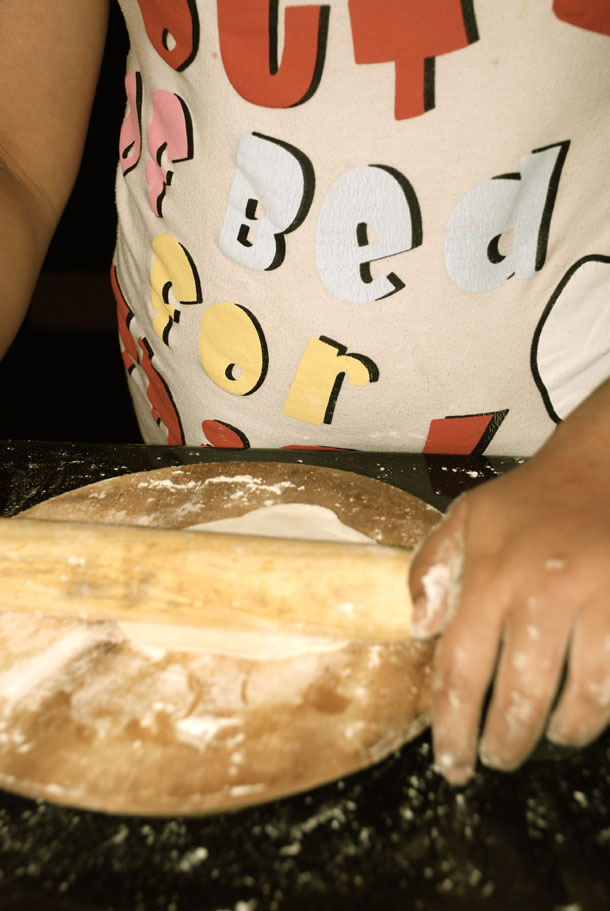
Makes 15 Luchis approximately
Ingredients
Flour – 1 cup
White Oil – 2 tbsp for the dough
White Oil – 2 cups for deep frying
Sugar – a pinch
Baking Soda – a pinch
Method of Preparation
Making the Dough
– The Dough should be kneaded into a smooth and soft ball
– Place it in a container and keep it covered for at-least 30 minutes
– Add the White Oil, Sugar, Baking Soda to the Flour and start kneading by sprinkling water very frequently
– The Dough should be kneaded into a smooth and soft ball
– Place it in a container and keep it covered for at-least 30 minutes
– Knead the Dough once again just before making the Luchi
– Pull out small amounts of Dough and make smooth, round balls in your palms (Each ball should be 1 inch in diameter)
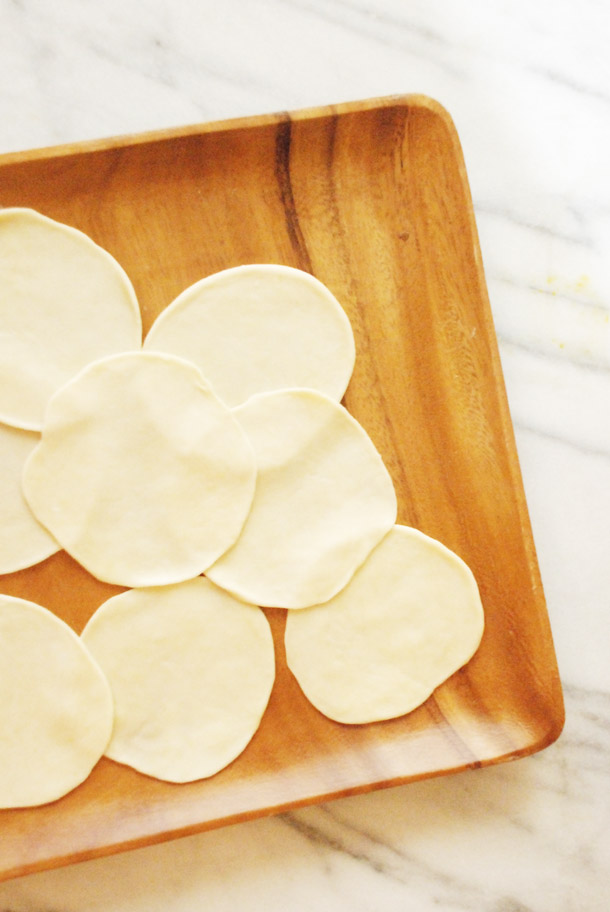
– Flattened these balls by using a rolling-pin into circles of 4-5 inches in diameter (Perfect circles can be made by flattening the small balls and placing a sharp-edged round glass or bowl on top and cutting off the excess – that’s cheating but worth the aesthetic appeal!)
Frying the Luchi
– Heat the oil in a Wok (If the Oil is not very hot the Luchis won’t puff up. They will become crispy and flat
– Slide in each flattened flour into the hot oil and after a few seconds press it with your ladle. Immediately the Luchi should puff up. Turn it over and immediately take it off the oil (as shown in the pics below)
– Each Luchi has to be deep-fried separately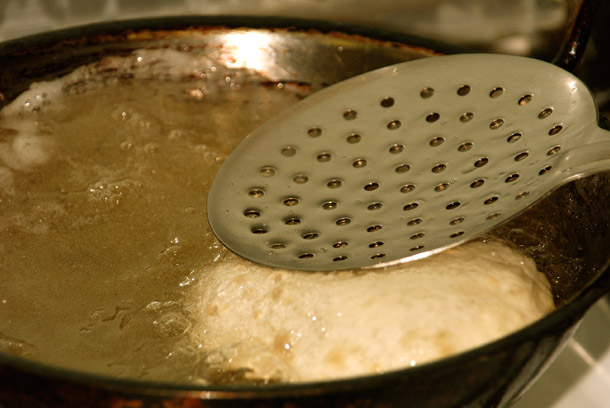
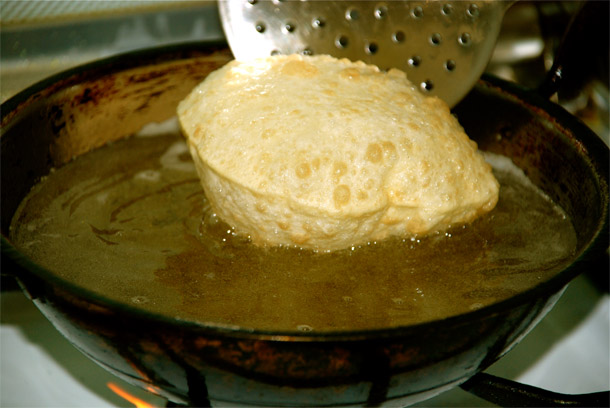
How do we serve Luchis?
Luchis are versatile. They can be served during Breakfast as well as for Main Meals. Depending upon whether one is having Luchi as a Snack or a Main meal, the accompaniment differs. Serve the Luchis hot. Take caution and don’t poke the puffed up Luchis with your finger immediately after they have been taken off the fire – the inside tends to remain extremely hot!
Famous Food Pairings that can be conjured up with Luchi
– Luchi and Begun Bhaja/Fried Eggplant
– Luchi and Aloo Bhaja/Fried Aloo
– Luchi and Aloor Dum/Potatoes- Luchi and Cholar Dal/Dal with Bengal Grams
– Luchi and Kasha Mangsho/Slow cooked Meat Bengali style (my post on a non-traditional Kasha Mangsho with red Wine!, while the traditional recipe is in the Blog queue!)
– Luchi and Payesh/Rice Pudding (my post on Notun Gurer Payesh /traditional Bengali Rice Pudding with Jaggery)
While the list goes on, here’s a pictorial journey to my ode on Luchi, from the very beginning. These photographs had already been taken long back and were lying in the IPhoto Albums, waiting for the day I would be making a post on Luchi. Thanks to Ahlan! Gourmet, my long-desired post got written!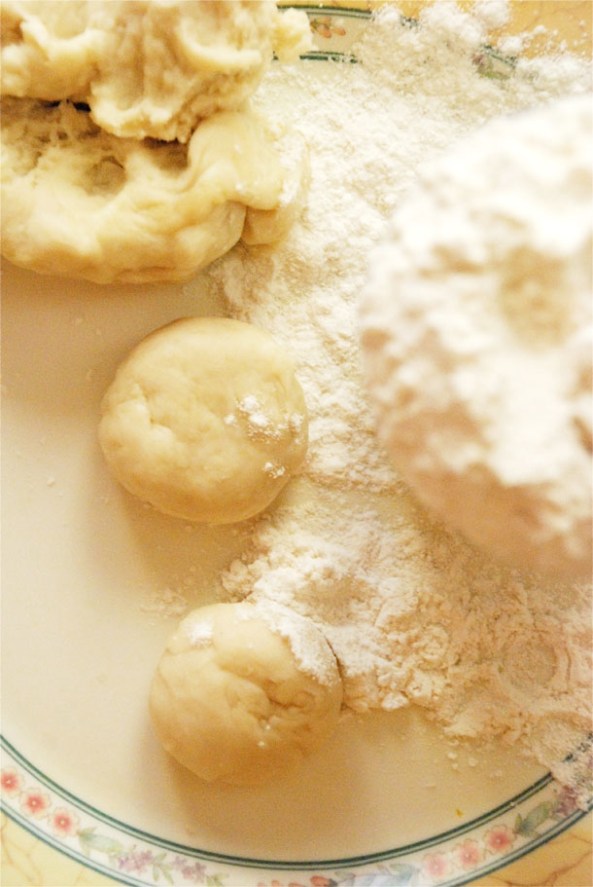
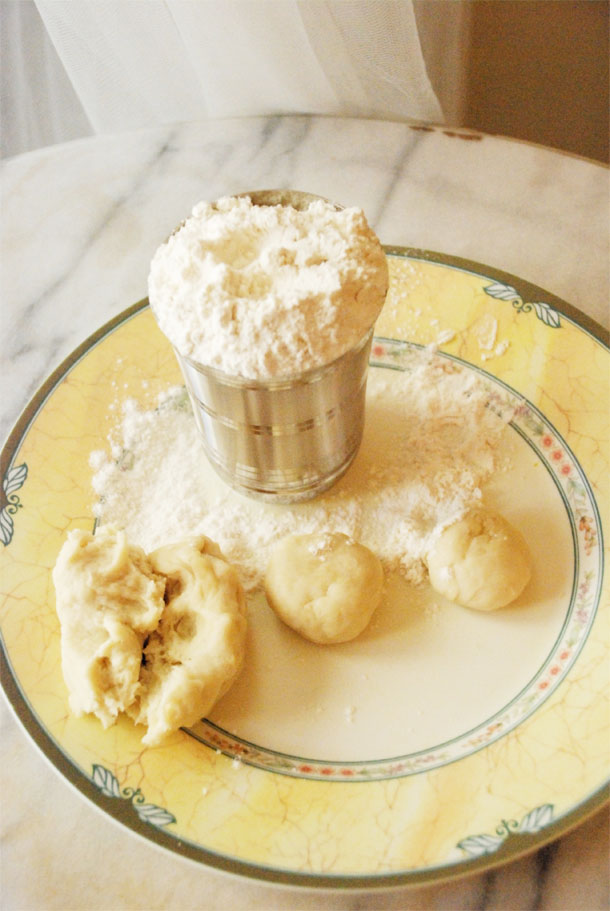
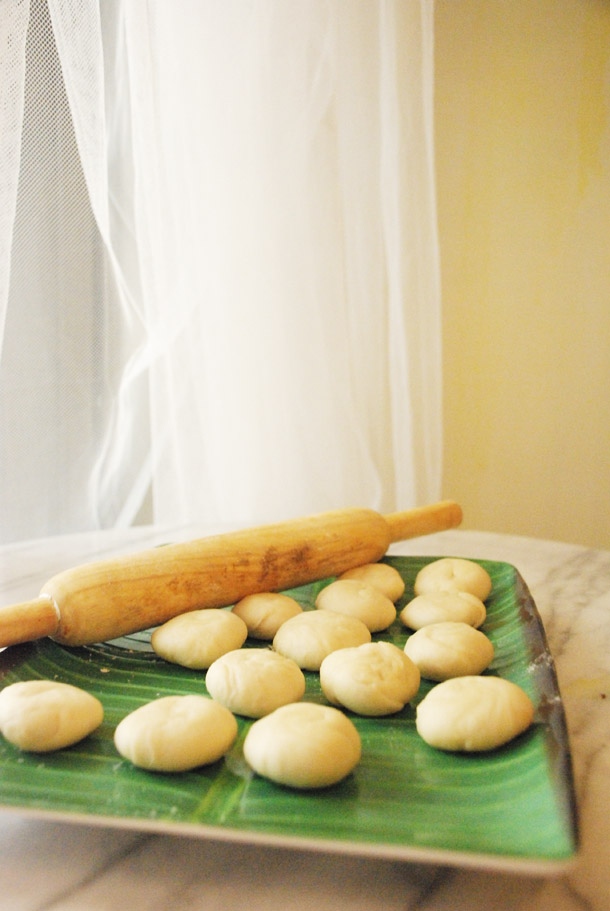
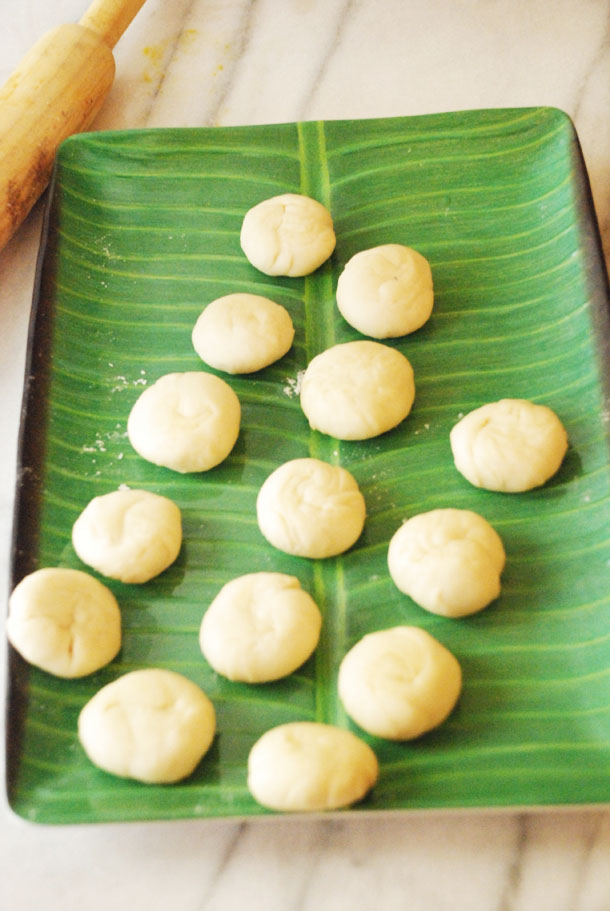
My Mum said ‘Jya! Luchi aar Kasha Mangsho ki emon khabar? Eto kichu banash, ekta onyo kichu korle partish!/Why Luchi and Kasha Mangsho? It’s such a regular dish. You cook so many things, couldn’t you have done something else?’ Precisely my point, Mama. It’s irregular for us and may just become extinct and not reach your grand-daughters’ plate, if a story is not written on it!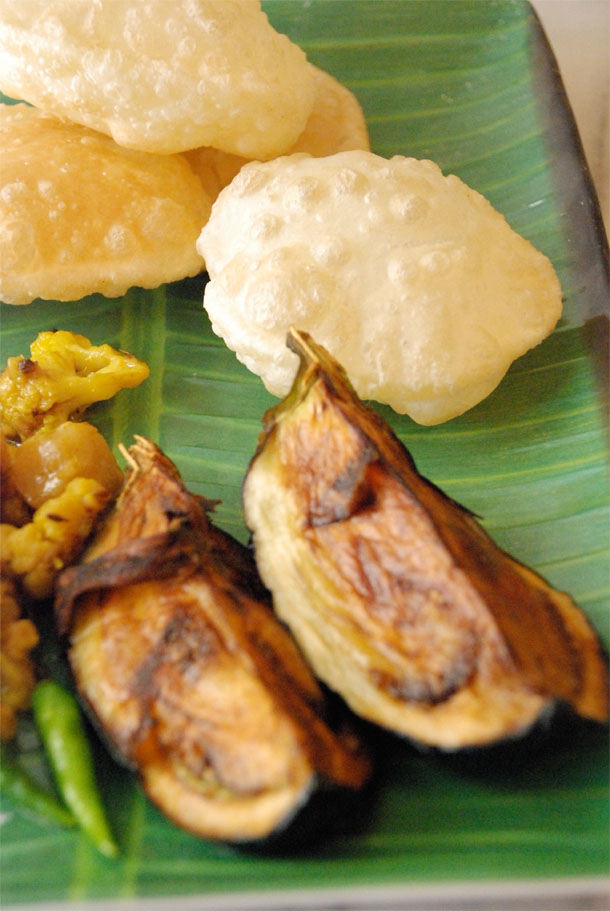
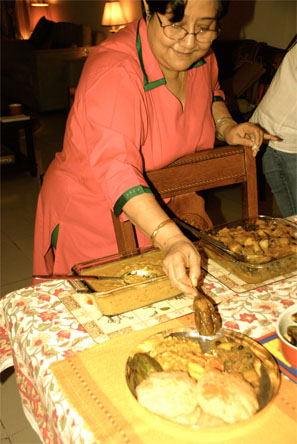
A post on Luchi would be incomplete without mentioning Indranimashi (below left). She’s been my parents’ friend for long. She has seen me since I was a child and has now, become a friend of mine as well. Having lived in Dubai for a decade, with parents living thousands of miles away, a few friends like Indranimashi, have become our unofficial guardians. No dinner in her place is complete without Luchi and every other traditional Bengali dish that go with it – Potol Bhaja, Begun Bhaja, Cholar Dal, Kasha Mangsho etc. The minimum amount of Luchis that she has to make for any party is 100. Her trusted Roti-maker (it flattens the dough balls) lends a very helping hand. Whenever I visit Indranimashi, I make sure that I also peep into her kitchen to say an inaudible Hello to the antique Roti-maker!
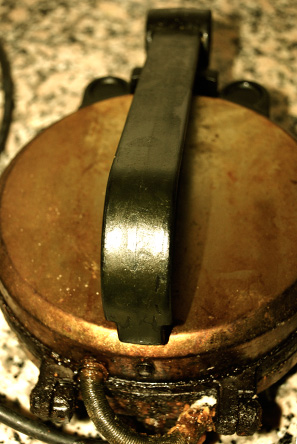
The article in Ahlan! Gourmet connected me to a lot of people – a lot of them are non-Bengalis but have had some connection to Kolkata at some point in time. Interestingly, a reader whose mother is a Bengali and father is from Hongkong, mailed me, addressing me as Ishitadi. He’s been to Kolkata, has seen Durga Puja and misses Luchi and Kasha Mangsho. Another British reader wrote to me, saying that he was posted in Kolkata, a long time back and is now living in Dubai. Would I be interested in teaching his kids to speak in Bengali and his wife to cook a few Bengali dishes! It’s interesting how Food gets us connected to strangers. It connects us with memories and nostalgia and people from across different regions. And it is while talking, writing about Food, sharing ideas on it and of-course while enjoying eating it, that we break down all our barriers!
Unblogging it all… Ishita
◊————————————————–◊
Disclaimer: Please do not use any material from this post. I hope you enjoy reading the posts with lots of visuals. While you enjoy seeing them, please don’t use them as some of them have been taken from our personal albums just to make your reading experience more pleasurable. You can see more pictures of my travel and food journey here.
BE SOCIAL. SHARE THIS!

+ Travel
Bikers Cafe | Emirati Breakfast Followed by Emirati Desserts (Only A Bengali Desires For Desserts In An Over-filled Tummy!)
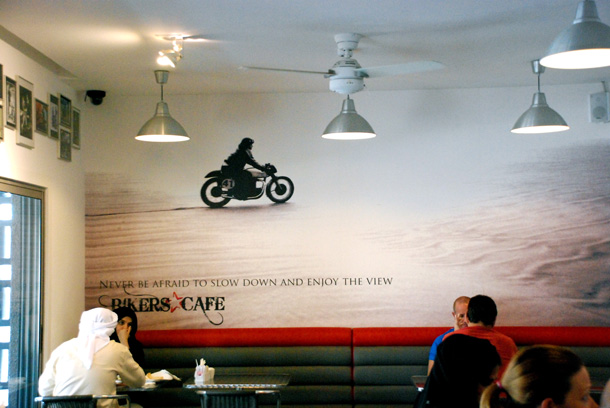
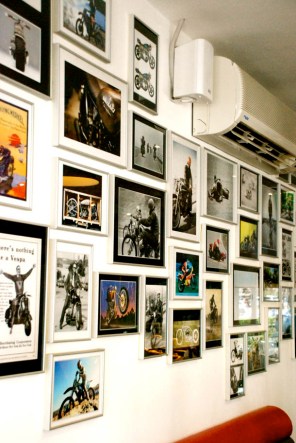
Bikers Café is ‘For all of us on bikes…’ So what happens to those who are not on bikes? Follow the Bikers, I guess or the road which leads to Bikes – of all shapes and colours and sizes. This is UAE’s and probably the region’s first motorcycle-themed café. Visiting the place was inevitable – I do have someone in my life who’s a Biker. Like a late baby bloomer, S has been a late bike bloomer. Having over-protective parents (alas, amongst all Indian parents, Bong parents are the most over-protective!), driving a car or riding a bike during the college days was always a ‘borrowed’ and a ‘hidden’ option – drive someone else’s car or borrow someone else’s bike – and of course, hide the fact from parents! After hitting 40, this late bloomer has caught on. And has a bike to ride to the Bikers Café and I have my own Biker to flaunt!
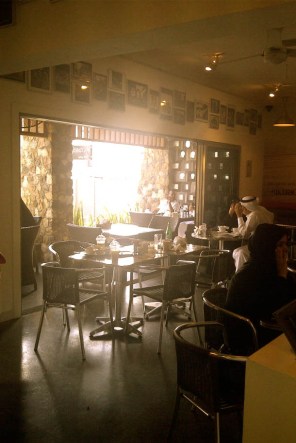
Already three times down to the Bikers Cafe, my first time was with Arva. Arva writes about all the eating holes in Dubai in her blog, I live in a Frying Pan. From writing about her life in the Frying Pan to starting her own Food tours in Dubai, scooting out delicious and mouthwatering food is perhaps, in her veins. So I scampered to the Bikers Café, like a bunny offered an extra-long carrot stick. By sheer coincidence, all my three visits had been on Saturdays. And the mood on all the three days had been pretty similar – the place thronging with diners and their loud conversations reverberating through the rooms; waiters with their over-filled trays walking up and down, expertly navigating through the rooms without tumbling. There is a level of comfort in this Café – and seems quite like a favourite hang-out pad with the local Emirati people, specially the Emirati women. Oh, by the way, I guess I have to mention that HH Sheikh Mohammed Bin Rashid Al Makhtoum and many other royal dignitaries have been currently visiting the Café for the Emirati Breakfast! Not everyone who’s visiting the Café needs to have a bike. Actually, most of the diners don’t. And that is reflected by the adventure in finding a parking spot here. I have to admit that there’s quite a sense of exhilaration and thrill in dashing for an empty parking spot (that is, if one finds one) in the the open sand-pit opposite the Café. No valet parking, just rough it out a bit and let your hair down. A bit unusual for the numerous blingy joints that Dubai offers (a new credit card may temp a new customer with a Valet parking – oh what a novel offer that is!), specially if it happens to be in Jumeirah. Actually, life can be made simpler – there are paid RTA parking slots on the main Jumeirah Beach Road. But everybody prefers to rough it out. The extra struggle and saving 5 extra Dirhams before chilling out, perhaps!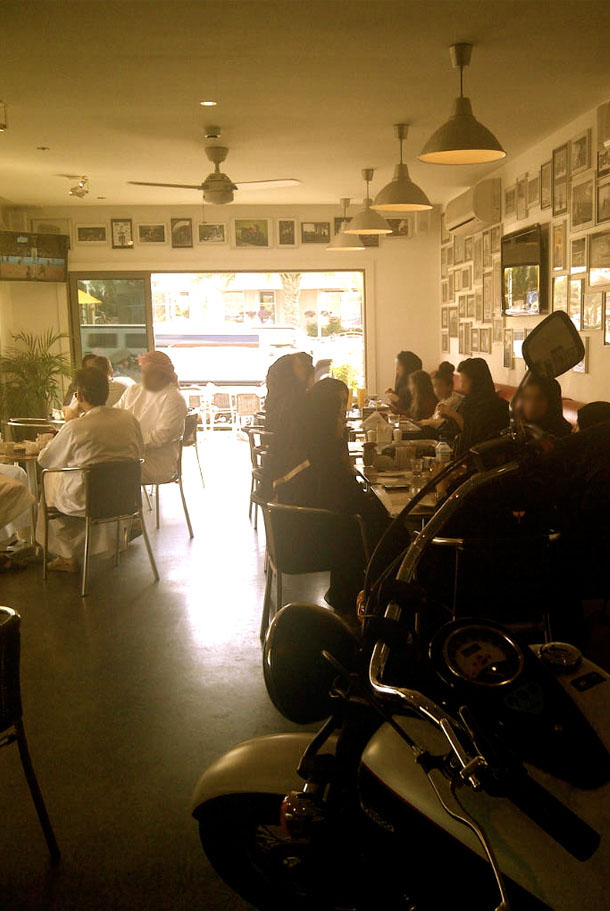
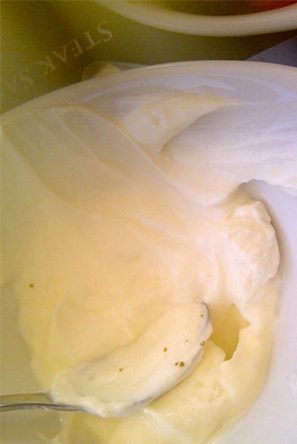
Arva introduced me to the Flavor of Arabia, which is a traditional Emirati Breakfast platter. On a plate (below) there is a puffed up fluffy Khameer sprinkled with Sesame seeds, two Chebabs or Emirati pancakes, all sitting on a thin, folded Muhalla which is like the South-Indian Dosa. All these are served with Jam, Honey, Dates and Kraft Cream cheese spread. I am told by the Café attendant that only Kraft Original Cheese Spread is used, not only in the restaurant but also traditionally in all Emirati homes. Interestingly, this enters the Facts on Cream cheese spread in the Kraft Original’s official site – ‘Did you know that Kraft Original Cream Cheese Spread is one of the most memorable tastes that Middle Eastern adults have of their childhood?’
Ah… I believe that Nutella has the same effect on my German friends!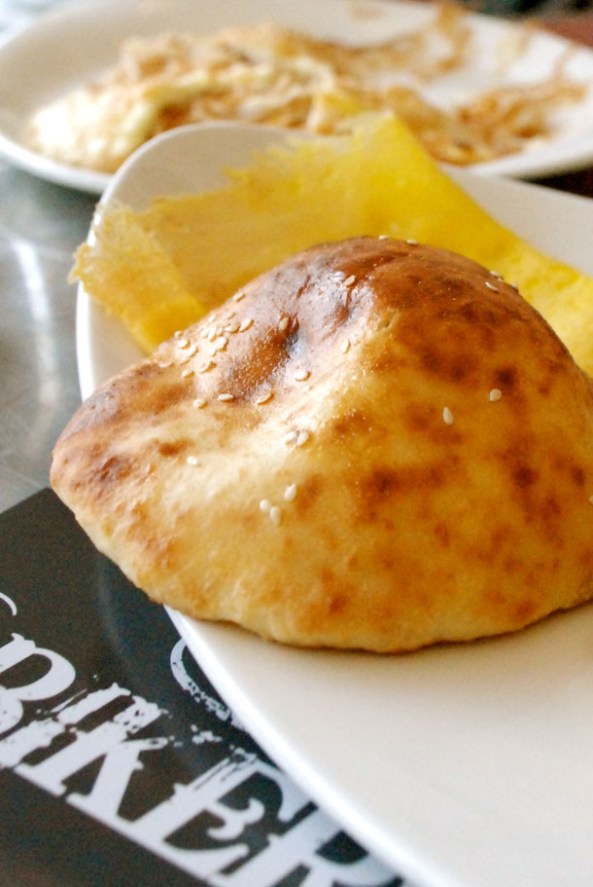
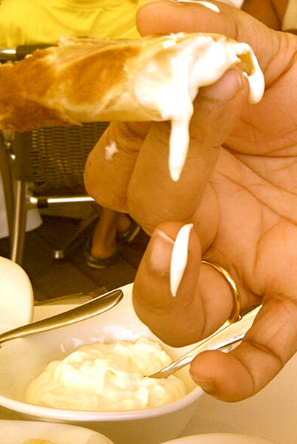
The Khameer sprinkled with Sesame seeds (above) while the Chebab or the Emirati pancakes, atop a thin Muhalla (below). The not so drippy, thick and slightly sour tasting creamy Kraft cheese complements the above perfectly, though the Chebabs are slightly sour to taste. But the thin crispy Muhalla dipped into the creamy Cheese leaves me licking my fingers (further below)!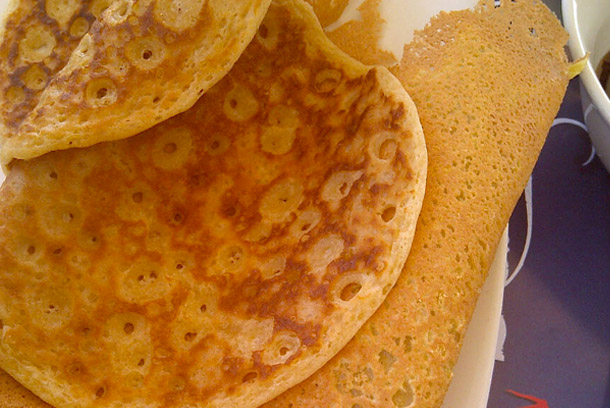
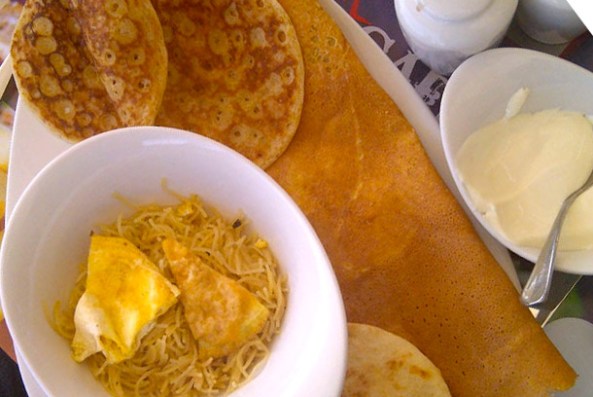
The other dish that comes with the Flavor of Arabia is Balateet (below). This is a traditional breakfast dish and means Vermicelli in Arabic. Tasting both sweet and salty at the same time, the taste is pretty unique. Omelets cut into triangles cover up the sweet tasting, Cardamon flavored Vermicelli. Traditionally, however, eggs are whisked, beaten and scrambled very finely along with Onions, Cardamom Powder, Saffron strands and then the sweetened Vermicelli is added to the egg. Which version do I like? Ahhh… I’ve tasted both and I am slightly torn between the two. I guess, I’ll go for both – as long as they are cooked in such a delicious manner.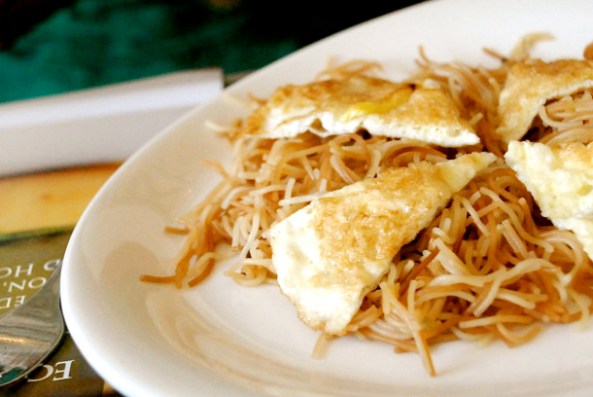
The Egg Malawach (below) that we ordered had scrambled Eggs, spicy Tomatoes, Za’atar (a spice mix popularly used in Middle Eastern cooking) and yes, the Kraft cream cheese (again!) stuffed inside special Yemeni Bread. The rolls were served with spicy dip of Tomato Salsa and Kraft Cream Cheese! I would say, these are stuffed up and more sophisticated versions of the Anda Paratha Rolls/ Egg Paratha Rolls served in the small Malabari cafeterias that feed many Dubai office-goers, who skip their healthy breakfast at home just to have these Anda Parathas, sans the Kraft Cheese Cream! The bottom line is that the Egg Malawachs does taste very good!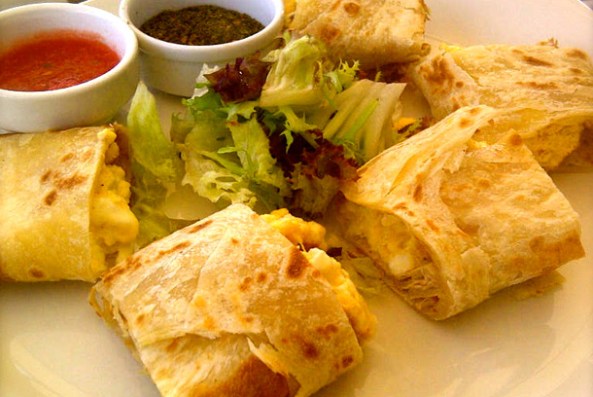
The Mediterranean Breakfast comes as a combo platter with Hommos, Labneh, Foul Medammes, Halloumi Cheese and Olives. Hommos or the Hummus is a popular dip or a spread used in Middle Eastern cooking and is made from cooked Chickpeas blended with Tahini (a paste made from ground, hulled Sesame seeds), Olive oil, Lemon juice, Salt and Garlic. While Labneh is a sour and creamy Yogurt dip. Our family, specially the Z-Sisters love the various Arabic dips like Motabbel, BabaGanoush and others. So this combo was quite a hit with the family, excepting the Halloumi Cheese. I have tried Halloumi on many occasions because I believe that liking a particular cheese is an acquired taste. I’ve really tried hard to acquire the taste, given it’s so popular in the country that I am currently residing in. But alas, I still haven’t acquired the taste for Halloumi Cheese and I’ve always found it very salty!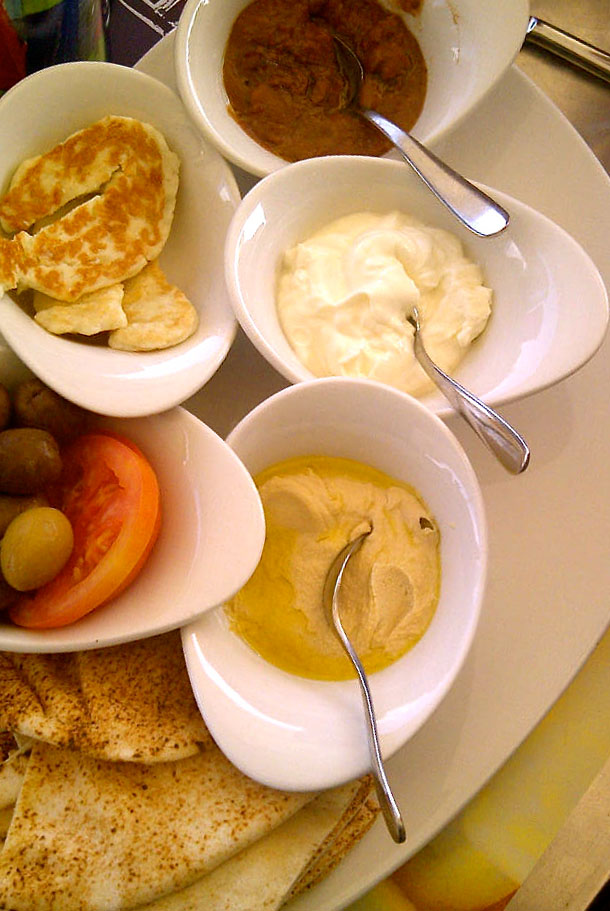
Barring my first visit, on my second visit to the Bikers’ Café, we had all the intentions of having Breakfast, but considering that we had booked a table for as late as 11:00 am on Saturday mornings, I think we ended up having a prolonged Breakfast cum Brunch, signing off with Desserts. Not unusual, as time and again, I’m always blaming my Bengali genes for our sweet tooth! 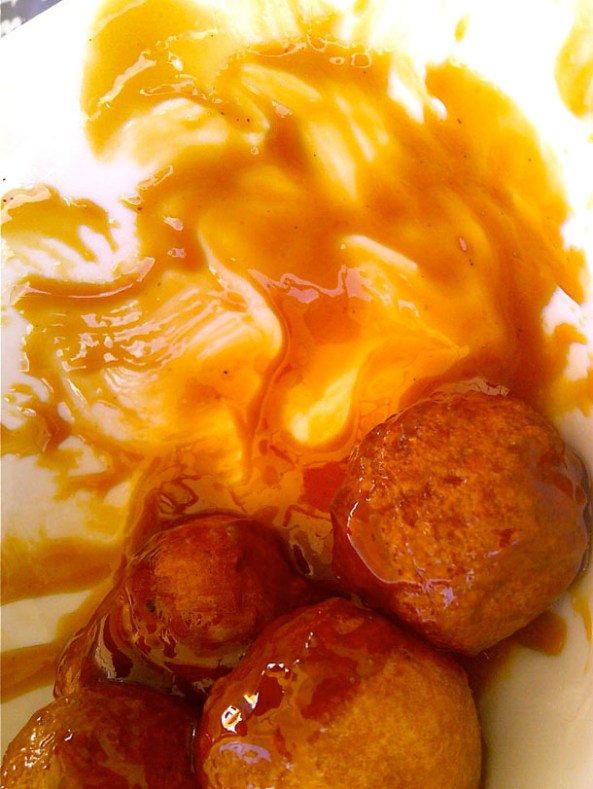
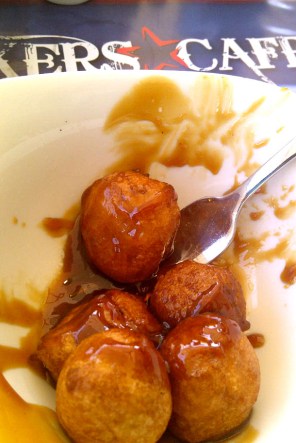
How much of sweets can go into a Bengali tummy which is completely full? Practically everything that is there on the Menu. We ordered the Leqaimat (above and below)– crisp fried golden dough balls coated with date syrup and sesame seeds, the Um Ali (a bread Pudding with raisins, nuts and cream) and the Sticky Dates Pudding. The Leqaimat and Um Ali (further down) are our favourites. Though the perfect Um Ali, for me, is something next to impossible – either they are too runny or too thick and depends upon individual preferences. Recently, I’ve tasted my kind of perfect Um Ali here and have learnt to make it as well, in a cooking class by the Beach – I’ll probably share the recipe soon in a future post.

While the Um Ali served was my-kind-of creamy and thick (above right), the Sticky Date Pudding (Alas, no picture!) too was deliciously sticky and when served with a huge scoop of Vanilla Ice-cream perched on a slice of Pineapple and topped up with Caramel Sauce – the only thing I can say is… sheer sweet bliss. Yes, all of the Desserts have passed my sweet acid test and have been able to please my Bengali sweet tooth!
The Verdict – The Bikers Café has much more in its Menu than the traditional Emirati dishes that we tasted. Given the dearth of restaurants in Dubai serving authentic Emirati food, we will most probably stick to what we ordered on our previous visits. We can always taste the Egg Benedict, Pancakes and the Spanish Omelet elsewhere, but with not too many widespread Emirati food options available, we’ll go back to Bikers Café, even if they serve only Emirati Breakfasts!
The only other place that we’ve tasted a traditional Emirati Breakfast so had been at The Sheikh Mohammed Centre for Cultural Understanding (SMCCU) in Bastakiya – the windtower thronging alleys near the Dubai Museum area in Bur Dubai. But it’s been aeons since that first Emirati breakfast! Much later, I was thrilled to have found Al Fanar Restaurant in Dubai Festival City – the first Emirati restaurant. I took my parents who were visiting us and had an experience of what I would say was my first authentic Emirati food experience!

I have nothing to do with Bikes. That is, until recently. Now, I am following Bike trends just because my aging husband has resorted to a passion that must have been haunting him since childhood. The three women in his life (Big Z, Li’l Z and me) – we are trying to support him as much as we can – which right now translates into following the man (below) and his bike (above) in our car. But later, this may just translate into riding one of these mean machines ourselves! 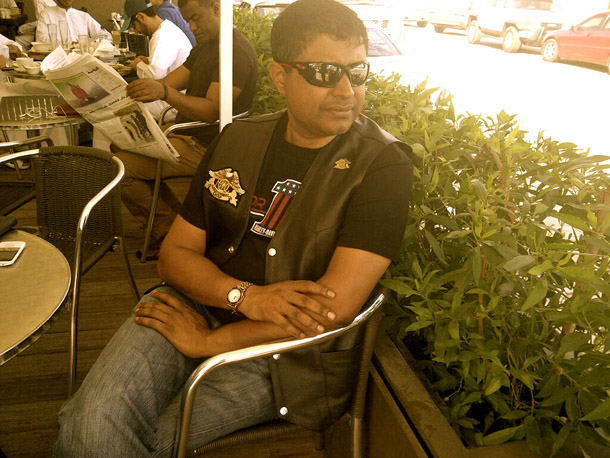
Bikers Cafe
First motorcycle-themed cafe in the UAE
Location: Opposite the Town Center Mall on Jumeirah Beach Road
Tel: +971 4 3493585; Email: info@bikerscafeblog.com
Or you could visit their Website; Facebook Page; Twitter
There’s more to the Menu than what we have tasted. You can check the menu here.
◊—————————————————————◊
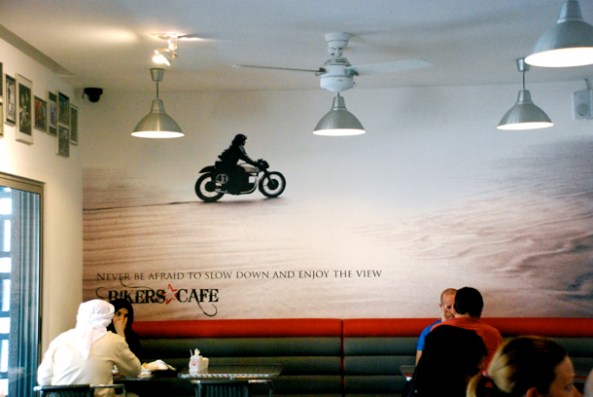
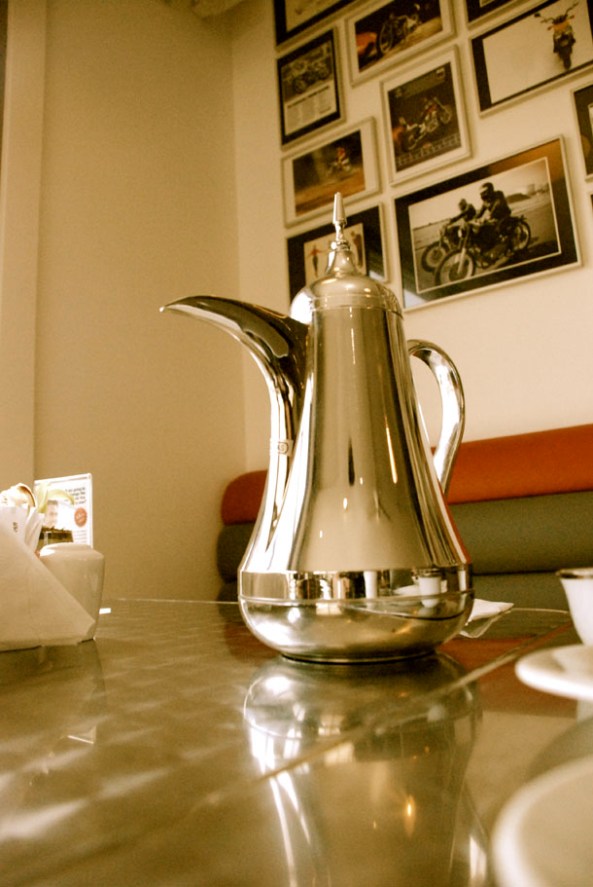
The Saturday that I took the entire family to Bikers Café, diners gradually poured in. By the time we left, it was maddening – people spilling out of every chair handle and table, in almost every nook and corner. It’s pleasantly chaotic. The orders drift back and forth, but at the end of all the mayhem, the right orders do reach the respective tables amidst smiling and warm attendants and most importantly – pretty fast. One has to yell through the vroom-vroom of the proud bikers parking their prized bikes almost everywhere – on the pavement in-front of the Café, along the Café brick wall in the side alley but never, never on the open sand pits! Those sand pits are for 4-wheelers and other lesser mortals (read vehicles) to practice their mini dune bashing. And I’ve passed by the Bikers Café many a night and have seen entire herds of bikers parked in-front. And people just whiling away their time – standing and chatting and drinking Gahwa – Arabic Coffee poured out of the signature teapots, the miniature silver versions of which you may have seen in Arabic souvenir shops!
Our previous experiences in Arabic food had been limited to mostly Lebanese food, Jordanian food, Egyptian food and Iranian food. The UAE’s expatriate population had till now a very limited opportunity to know about the Emirati Cuisine. Almost impossible for most of us until and unless someone has had the chance to be invited by an Emirati into his/her home. We have been living in Dubai for quite a while and every time a guest would visit us and would wish to taste local food we would take them to most probably, a Lebanese restaurant. The only Emirati food experience we have had till now, previous to SMCCU, Al Fanar and Bikers Café, were the occasional Leqaimats cooked up by the local womenfolk at Heritage Village or some the UAE kiosk in the Global Village. So, a hearty welcome to Bikers Café and all I can say is – this place is throbbing and alive. We all #HaveBeenLivingInDubaiForLong, leading a fast-paced life, I genuinely want to incorporate the Café’s motto in my life – Never be afraid to slow down and enjoy the view!
Unblogging it all… Ishita
◊—————————————————————◊
Disclaimer: Our Breakfast-Brunch cost us approximately Dhs 260/- for the 3 of us (ignoring Li’l Z!). If you skip the Dessert and go for breakfast only, you could sign off your bill at Dhs 32/ to Dhs 40/, per person, excluding Tea or Coffee. The opinions stated here are my own and are absolutely independent. I hope you enjoy reading the posts with lot of visuals but please do not use any material from this post. You can see more pictures of my travel and food journey here.
BE SOCIAL. SHARE THIS!

Molecular Gastronomy or ‘Food under Surgery’?
A few days back, I attended a demonstration session on Molecular Gastronomy conducted by Chef Matthias Mittermeier from SOSA. SOSA is one of the leading manufacturers of premium Molecular Gastronomy Ingredients. Molecular Gastronomy, also termed as the modern style of cooking or the Avant-Garde European Cuisine, is practiced by both scientists and food professionals in many professional kitchens and labs. Here, cooking takes advantage of the technical innovations in various sciences and is a sub-discipline of food science that seeks to investigate, explain and make practical use of the physical and chemical transformations of ingredients that occur while cooking, as well as the social, artistic and technical components of culinary and gastronomic phenomena in general (more on Wiki). 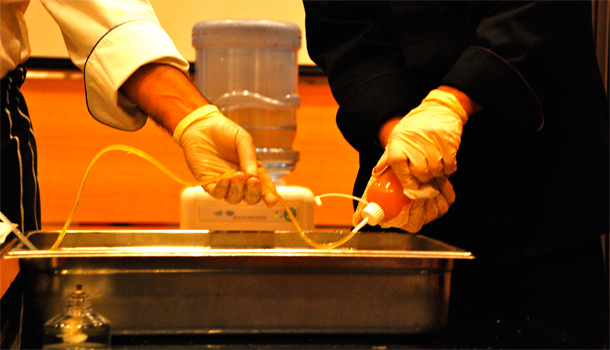
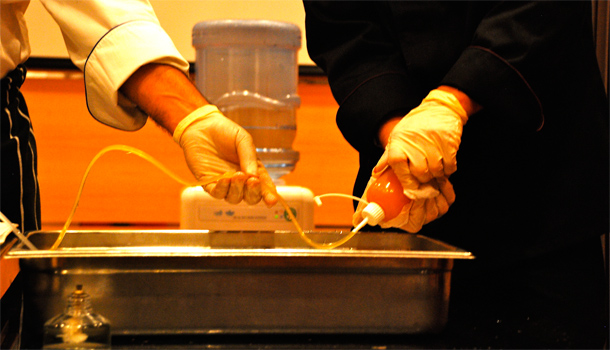
I felt as if I was in a futuristic sci-fi kitchen in a laboratory, where ingredients with names like Maltosec and Isomalt – all popping out of cans as jellies and powders and going into various cooking ‘equipment’ requiring ‘techniques’ and ‘temperature control’ and ‘time measurement’! The above image shows making of spiced mandarin jelly spaghetti, in the SOSA session that I attended, held in The Emirates Academy Of Hospitality Management. Though, I was fascinated with the entire concept, I concluded that I am a taker for spluttering of oil, chopping the actual fruits and vegetables, feeling them under the running tap water, taking in their aroma as I load them into my basket in the supermarket, panting Oophs and Aahs as the gravy starts sticking into the pan and all the melodramatic nonsense associated with the verb Cooking. For me, this was Food under surgery, if the aroma had to be blown into the dessert through a tube. For me, the food that was cooked, didn’t have soul. I didn’t care much for what some described as a Culinary Art.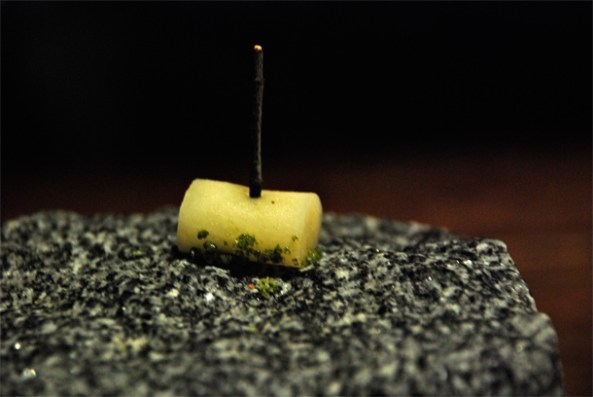
Intrigued, fascinated and confused, I set out on my quest to learn more.
There is no denying that Molecular Gastronomy is a fascinating concept. On my quest to learn more on the subject, I’ve done the following 3 things so far –
1) Dined at a restaurant called La Degustation in Prague, where the Czech menu is an interpretation of the refined culinary school of Marie B. Svobodová from the late 19th century. The restaurant has been claimed by Anthony Bourdain as The restaurant. A very different take altogether on fine-dining based on Modern Gastronomy. If a dollop of cheese dipped in mint (above) can taste like what I’ve tasted and presented like an art on canvas, then I had to give this Culinary Art a second chance!
2) Read FERRAN, the biography of Ferran Adrià, the head Chef of El Bulli. El Bulli has been voted to be one of the world’s best restaurants and the Menu has been created taking nuances from Molecular Gastronomy. (FooDiva tells me that Ferran Adrià detests the terminology Molecular Gastronomy and prefers to call this cutting edge cuisine. She suggests that I read FERRAN when I go ballistic over my idea of ‘Food Under Surgery’ on my Facebook Page.)
3) Sent a request to Chef Abhijit Saha saying that I wanted to meet him. Caperberry, his acclaimed restaurant in Bangalore, is based on a unique view of Avant-Garde European Cuisine where the pursuit for perfection is aided by the integration of culinary arts with culinary science and culinary artistry, achieved by a judicious mix of traditional and modern scientific cooking techniques and equipments with conventional and New Age ingredients.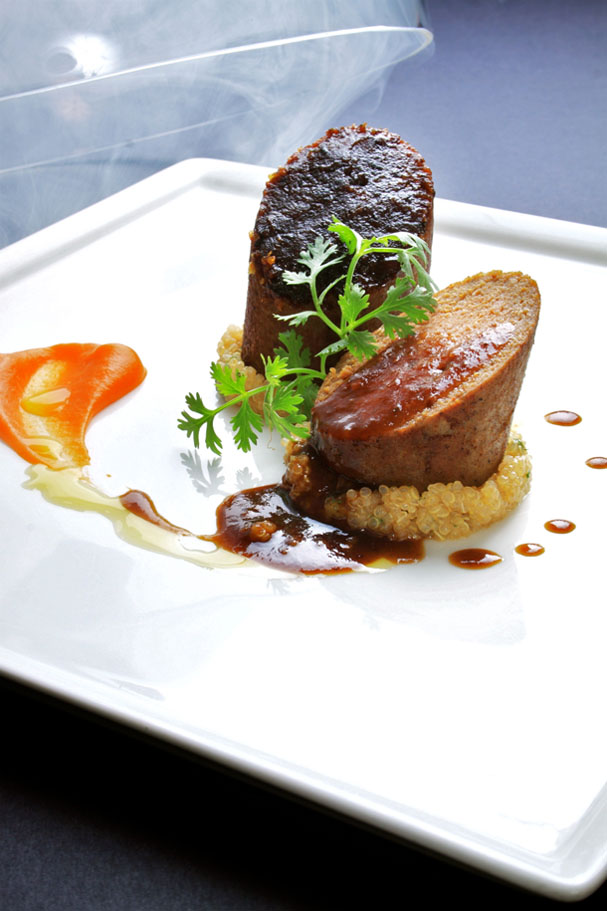
If you see the food image above, (Chef Saha shared this when I requested for a dish cooked in his signature style – his eagerness to share his knowledge is perhaps as strong as my eagerness to learn more on this subject), you’ll understand my restlessness in going deeper into the subject. Food looking as good as this must have some heart and soul in it. This is Sous Vide Cooked, Gilouti flavoured Smoked Lamb Roulade flavoured with Kakori Spices with Quinoa Risotto and Date Chutney, a signature dish served in Caperberry and cooked using Molecular Gastronomy techniques.
Chef Abhijit Saha, a man with a formidable list!
– Amongst one of the ’50 Most Influential Persons’ of Bangalore, according to India’s premier newspaper DNA
– Amongst one of the ‘Top 10 chefs in India’ by Outlook magazine
– Member of the voting panel for the London based ‘Restaurant’ magazine’s annual list of ‘Top 50 Restaurants of the World’
– Member of the elite team of chefs from across the world selected to participate in the ‘World Culinary Arts’ DVD which has won the ‘James Beard Foundation’ award
– Youngest to be featured in the coveted ‘Hall of Fame’ list of ’50 most important people in the Food and Beverage business in India’, published by the UpperCrust Magazine
An expert in Classical and Modern European and Indian cuisines; he has studied Oenology (Scientific Study Of Wines) and has a detailed understanding of old and new world wines. He is currently President of The Bangalore Wine Club and Corporate Chef (Marketing) for Indian Federation of Culinary Association. The list goes on… you can read more here. 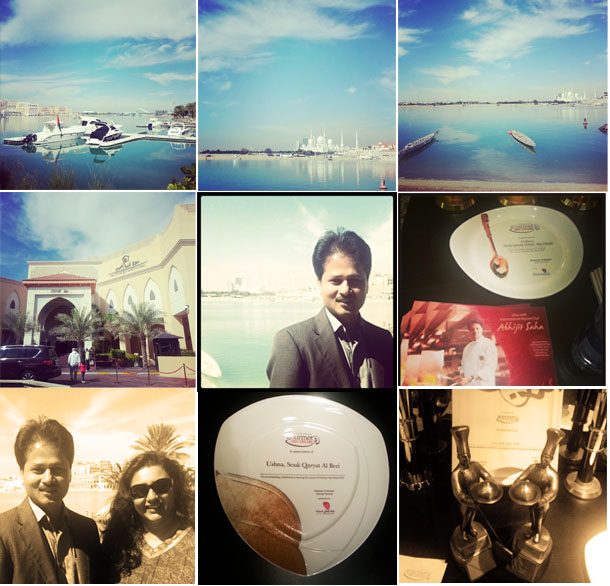
I met up with Chef Abhijit Saha in Ushna, at Souk Qaryat Al Beri, Abu Dhabi. He’s one of the International MasterChefs attending Gourmet Abu Dhabi 2013. Here’s our conversation –
You are almost in all lists – top 10, top 50, the best… too many lists and it’s pretty intimidating!
In life, you never plan things to be on a list. You have to love what you do. You’ve to be passionate, apply yourself, work hard – there are no short cuts. When you do all of these things right, use some common sense – everything else happens. The lists that you are talking about, should be a result of the work that you do and not vice versa. You work because you love the job, you love to cook, you love the business of Food. Cooking is only one part of the story. But how do you manifest your vision with the team of people around you to deliver that vision. You may have multiple restaurants in different countries one day, but to ensure that the vision is implemented across the board is very important.
So what should be the vision?
Your own style is your vision. And that style is – whatever you have set out to do, whatever standards you’ve set for yourself and whatever you have in mind while trying to create a dish. I find status quo very boring. You have to learn new things all the time, update yourself with new technology, re-invent yourself – no matter how old you are. You cannot just rest on your past laurels. I believe that the best is yet to happen and have to keep on striving for the better with utmost sincerity so that you can relate to your customers and your team.
Everybody who’s been to Caperberry believes that dining there is an experience. Do you try hard to create this experience?
Caperberry doesn’t serve run of the mill food. When you do things in a different way, it requires a lot of effort. I focus only on one thing – How do you want to surprise and delight your diners? To convert a regular dining into an experience, you have to do things differently. For a diner who walks into a restaurant, it’s not just about eating food. He’s also seeking variety of other things. Although, we do have a fixed menu (in India, you need to have a fixed menu) there are also Tasting menus, Food Festivals (for example – Mushroom Festival!), Guest Chefs coming in – you have to keep on doing new things to be on ‘top recall’ for a diner.
Fine-dining always has a fear factor associated with it, it can be intimidating for many – the wine lists, the food pairings etc. You don’t intend to take gourmet or fine-dining to the larger sections of people?
We’ve done this with Fava (his other restaurant in Bangalore with Mediterranean all-day dining restaurant and wine lounge, with private dining facilities and a delicatessen counter), where the ambiance is more Bistro-like. It is inclusive not exclusive, though the food served is presented in a different format and is very exclusive.
The Chef’s job In India has now become very fashionable. There’s a WOW factor to it. What would you contribute this to?
First and foremost, this is an interesting profession for sure. Secondly, it is being packaged well. Does Master chef Sanjeev Kapoor have any contribution here? I’m sure with the longest running food show on Indian Television, Sanjeev Kapoor has a lot to do with presenting the image of a Chef in India. Having said that, there are several factors contributing to this. Interaction with food has increased so much. The level of understanding and awareness of food has also increased in India due to international travel. Various ingredients are available and so many different types of restaurants have opened up. When you are so aware of food you want to try out different types of food. You are no longer happy eating the food that you are used to on a regular basis. Nowadays, all families go out to eat at-least once a week, specially in the urban areas. There are so many international channels on Television showcasing food and there is so much media coverage on Chefs. In fact, the kids today are also so much tuned into Food and Cooking.
In India where diners are used to Indian cuisine, opening up a Tapas Lounge or a restaurant serving international flavour, is a novelty. But now that you are outside India and if you set up a restaurant here, is the menu going to be like Caperberry’s or it is going to be based on Indian Cuisine and the regional variation? Will you bring in the Avant-Garde technique of cooking – presenting Indian food differently?
If I am looking forward to an international restaurant, it has to have my name on it. And I will create a new signature style, the showcase of which is being done in Ushna (the award-winning Indian restaurant at Souk Qaryat Al Beri, Abu Dhabi). This will usher in a new style of Indian food that I want to present internationally, in all it’s glory. The richness of Indian food comes from several heritages, including home-cooking. You still have so many homes where cooking is done on a daily basis and imagine the quantum of knowledge that has accumulated over so many years. With a civilisation as old as the Indus Valley Civilisation, the various influences from the different foreign invasions, a rich legacy, so much of variety in terms of culture, climate and geography, it’s long coastline – it’s incredible what is possible.
Again, coming back to my favourite question, almost a clichéd one now – Yes, it’s incredible what can be done and although Indian Food is very popular, I feel sad that the regional cuisine has never been showcased. Internationally, Indian Cuisine had always confined itself to a few North Indian dishes – Chicken Tikka, Chicken Butter Masala and the Biryani or else the South Indian Dosas, Idlis and Vadas.
I am going to showcase regional Indian cooking presented in the contemporary manner, as well as cooked in the Avante-garde technique. I have taken inspiration from traditional dishes from different regions and then present it in a different style or a format so that it confirms to certain international standards of style. I’m maintaining the regional names of the dishes. (From the Menu – Bengali Seabass Curry, Dhuyen Ka Murgh Korma, Pashmina Chicken Supreme Kebab and many more).
Is this something you are trying here for the first time?
I used to run an Indian Restaurant called Saffron in The Park Hotel, Kolkata for 4 years. I did a lot of work in Saffron that was contemporary and based on modern cooking. Working as a Chef in Indian Hotels, has given me many opportunities to be in touch with Indian cuisine. Moreover, we also have bespoke catering where we do cook Indian food. My touch with Indian food has always been there. Probably, the time needs to be right for me to open an Indian restaurant.
Coming to Molecular Gastronomy, I’ve attended a session on it which made me feel that I was in a Science Lab. The food that came out was perfect. I felt something was missing…
The heart and the soul is missing? Molecular Gastronomy is not a cuisine. It is a collection of cooking techniques. Like boiling, roasting etc. These are very contemporary cooking techniques that have developed over the past 20 years by understanding the science behind it. It is sometimes used in the Food Industry. How does the cookies come out so crunchy from a packet? Or how does the Potato Chips turn out to be the way it is? Many of the techniques have already been used before and many are being created by understanding the science behind cooking – what are the chemical changes that the ingredients undergo when you are cooking them. How do you apply these techniques in traditional cooking, to make the food innovative and create an experience for your diners – the essence of traditional cooking will be there and yet it will be contemporary. I will be demonstrating all these in my Master class (at Gourmet Abu Dhabi 2013).
It is not a Molecular Gastronomy Cuisine as such, but style of cooking developed in Molecular Gastronomy, i.e. Avante – Garde Cuisine which refers to pushing the boundaries, being innovative, being experimental. So you do not have to have an Indian restaurant that is based 100% on Molecular Gastronomy. If there is a technique you can use from Molecular Gastronomy to enhance the flavour, the quality or the presentation of the dish, then we’ll do that. So there is no question of not having any warmth in any dish. Even in Caperberry, the Menu is not 100% based on Molecular Gastronomy. We’ve taken the traditional and modern European cooking, applied techniques of Molecular Gastronomy, to create innovative dishes.
You’ve studied so much – the old wines and the new wines, ancient and modern European Cuisine – what has been the motivation behind this? (he has studied Hotel Management in Pusa, New Delhi and Oenology at the Johnson and Wales University, USA. Subsequently he has toured France, Italy, Spain, California and Australia for a detailed understanding of old and new world wines. He is a Founding member of Wine Society of India and member of Chaine des Rotisseurs, Paris.)
One has to evolve and one has to do new things all the time. Why should I cook if cannot do it in a new way? It has to be exciting. I used to be an Italian Chef for such a long time that opening an Italian restaurant was the most obvious thing to do. But when I opened my restaurant, it was more Spanish! Ultimately, it’s also my life and I have to do things that teaches me something, I can learn new things every day and excites my sensibilities, challenges my intellect and caters to my emotional needs as well. I feel that a day is wasted if you haven’t learnt anything on that day.
Do you think that this Caperberry experience is working in a city like Bangalore because it has got a huge expat population. But it might not work in other Indian cities or say in places like Dubai and Abu Dhabi which already have many ‘exciting’ dining options?
Ultimately, food has to taste good, feel good, look good and satisfy the diner at end of it. When Food is presented on a plate, it should look good and ultimately it should be delicious. That’s the whole essence. It doesn’t matter how you arrive at that – whether it is street food, whether it is Indian cuisine or Spanish Cuisine. According to Harold Maggi, Molecular Gastronomy is ‘study of deliciousness’. One needs to ask at the end of the day – ‘Does it taste good?’ and it doesn’t matter what cuisine and which part of the world you are opening up a restaurant. It has to find place in the heart of the customers. There is a formula for a good restaurant and a bad restaurant but there is no formula for a successful restaurant.
It is a very urban trend nowadays to visit a New restaurant, probably because of more disposable income, exposure to new culture etc. How does an existing restaurant cope up with the constant ‘re-inventing’ of one’s self?
The market has to be sustainable. And one has to keep connected to the customers all the time. You have to market yourself well, organise festivals, invite Guest Chefs. It is becoming more and more challenging for existing restaurants as new restaurants are proliferating. But I feel that it’s good that new restaurants are opening up and can probably cater to a particular area that hasn’t been catered to before. That’s the way the world evolves.
I am all for technology if it doesn’t ruin our lives. I keep on studying about restaurants and Chefs, specially the Indian scenario and I think that there’s no other restaurant in India that has invested so much in kitchen technology as your restaurant has. Did you get introduced to these things? (the expenditure and the cost of setting up his spanking ‘green’ kitchen is staggering – INR 3,000,000/ or AED 24,000/- approximately for a Sous Vide – a kitchen gadget, which slow cooks meat, seafood and even vegetables at a precise temperature incorporating the latest of techniques!)
Everyday when you get up it’s a new day, isn’t it? (I burst out laughing!) Everyday I like to refresh myself, rejuvenate and re-think. I get new thoughts and ideas, get inspired from my travels. I like to keep in touch with the world of innovations. But, to incorporate these things in daily restaurant life does increase the cost of operations in the long run, isn’t it? Yes, it does. I like to work with a good team. A Chef is as good as it’s team. So we have a high man-power cost. We work with the best equipment and ingredients so that the team also feels proud to be doing something new all the time. There are certain high costs associated with keeping up with the whims and fancies of a Chef!
There are many young Chefs who read my blog, what do you have to say to them? They might have started their careers as a passion but now they are just doing their jobs and feel they are stuck in a rut!
The first 10 years of your life, you need to work very hard, learn everything in a focused manner and do things differently. The foundation has to be very strong. If it is about chopping the onion or peeling the garlic, then be a master in that and start thinking different. But then not everyone can be an Entrepreneur? Everybody doesn’t have to be an Entrepreneur. I wasn’t an Entrepreneur even 4 years back. Today’s Chefs have such a wonderful opportunity to explore the world – go around different countries, learn from different cultures. Maybe 2 years in the Caribbeans, 2 years in France and so on.
Do you ever think that the Master Chefs can come up together to build up a Culinary Academy in India on the lines of French Cooking Schools?
Yes I have. There is not a single culinary institute that teaches Indian cooking – to either the Indian students or the International students who want to learn about Indian Cuisine. I want to do that. You have the Le Cordon Bleu for French cooking or you have the ICIF for Italian cooking. But as I speak, some Indian Chef must be thinking of setting up an academy of the highest International standards.
When will Michelin come to India?
Michelin, the body doesn’t feel that there is a quantum of a good number of Indian restaurants for them to come to India. For Michelin to set up in India, there has to be a certain level of cooking and quality that has to be prevalent across the large section of restaurants, then it makes sense for them to come. It is not only about home-grown Indian restaurants but also about International Chefs finding India to be a destination to open up their Michelin-star restaurants. Michelin is a very European concept. It’s only 3 years that they have come to Singapore, 4 years in Japan and 5 years in America. For India, there is still time. I am expecting that 5 years down the line, Michelin would be setting up a body here. Is Michelin-star restaurant a fashionable thing or does it genuinely define the quality of the restaurant? There is a certain evaluation scheme and does define the image of a restaurant. It also means that the quality of the restaurant is of a certain level. I myself would be interested in getting one if Michelin comes to India. (There are stories that if Michelin comes to India, Caperberry will be the first to get a Michelin!).
And finally, my favourite question – Do you read Food Blogs? Do you think that Food Bloggers have an important role? Do you think this way – we already had Food Critiques, why again a Food Blog?
Unfortunately, I do not have the time to read as much as I would love to. If someone finds Food fascinating and writes about that, what is the harm? Each person had a different perception of Food. It also depends upon individual preferences. Everybody has their own right to write about Food.
◊—————————————————————◊
You can experience an Epicurean dining with Masterchef Saha (11-14 February, 2013) and an exclusive set menu on Valentine’s Day at Ushna, at Souk Qaryat Al Beri, Abu Dhabi as a part of Gourmet Abu Dhabi 2013. For reservations and for more details, please call +971 2 558 1769.
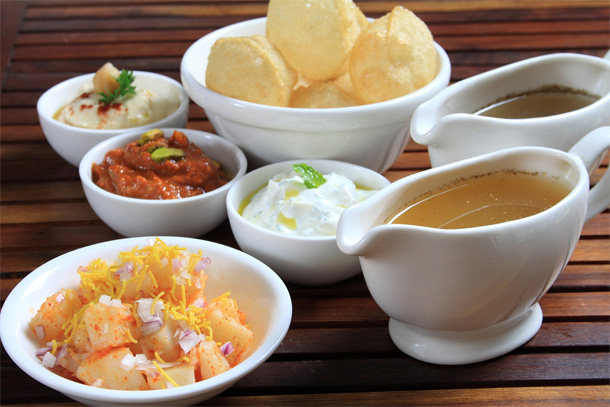
You can have the Preview of the Menu here, while the following images are enough to knock me down. A sneak preview of Indian food cooked up with Avante-garde techniques that will be served by Chef Saha. These Indian makeovers can only be created by a maverick! For example, the Gol Guppas above with Hummus or Tzatziki (an ode to my love for Kolkata Phuchkas) or the Curry Leaf Seared Foiegras with Kokum Saar (chilled Kokum and Coconut broth, Cinnamon roasted Apple and Apricot Chutney), the Bengali Seabass Curry (Home ground Mustard paste, Green chilli and Turmeric sauce; Crispy Straw potatoes) or the Assorted Spherifications below (with Jal Jeera/Cumin water; Mango Lassi; Tomato Rasam/Tomato & Curryleaf flavoured broth). And these are just a few of the vast menu that Chef Saha will be showcasing.
A shame that I won’t be able to attend his dinner as I am travelling. I can only imagine the kind of crispiness that can be achieved by Molecular Gastronomy when the Crispy Straw potatoes will be served with the Seabass Curry. This must be the jhurjhure Aloo bhaja that accompanies a Bengali meal.
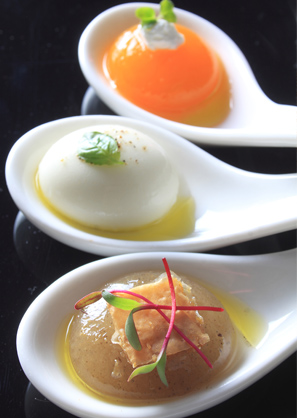
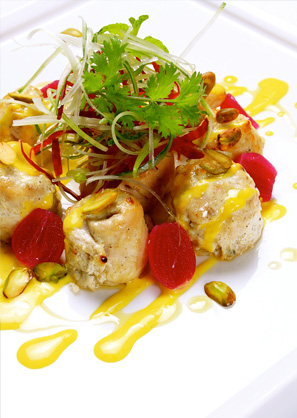
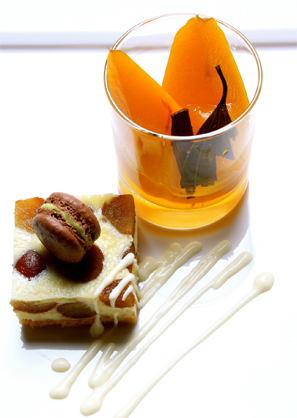
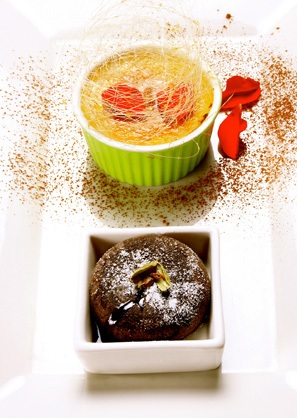
◊—————————————————————◊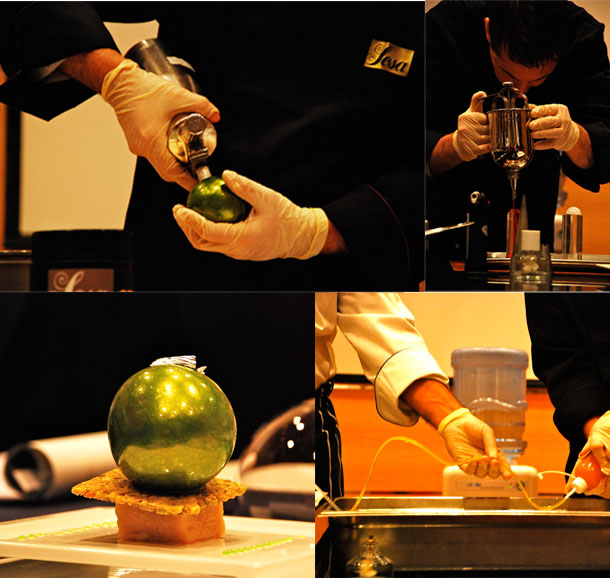
Discussing Molecular Gastronomy with Fooderati:
After attending the SOSA session (above), I was very intrigued and we had a very interesting debate and conversation amongst my foodie friends in Fooderati Arabia (a passionate and a serious group of UAE food bloggers) – some of them had attended the SOSA session with me. The discussion is as follows:
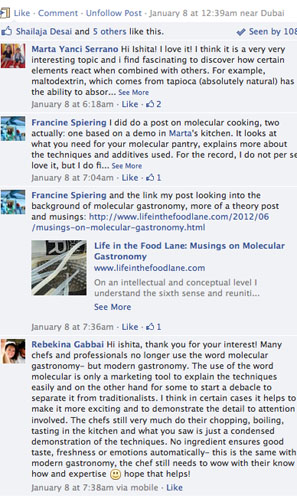 Marta of Marta’s Kitchen: I love it! I think it is a very, very interesting topic and I find fascinating to discover how certain elements react when combined with others. For example, Maltodextrin, which comes from Tapioca (absolutely natural), has the ability to absorb all fat and reduce any fatty product to a sort of sand or powder! wow!! Molecular Gastronomy is fascinating!
Francine of Life in the Food Lane: I did do two posts on molecular cooking: one based on a demo in Marta‘s kitchen. It looks at what you need for your molecular pantry, explains more about the techniques and additives used. I do find it intriguing. Slow food for me… here’s my posts – A Recipe For Fun with Molecular Cooking and the link to my post looking into the background of molecular gastronomy, more of a theory post and musings: Musings on Molecular Gastronomy.
Rebecca of epicurUAEn: Many chefs and professionals no longer use the word molecular gastronomy, but modern gastronomy. The use of the word molecular is only a marketing tool to explain the techniques easily and on the other hand, for some to start a debacle to separate it from traditionalists. I think, in certain cases it helps to make it more exciting and to demonstrate the detail to attention involved. The chefs still very much do their chopping, boiling, tasting in the kitchen and what you saw is just a condensed demonstration of the techniques. No ingredient ensures good taste, freshness or emotions automatically – this is the same with modern gastronomy, the chef still needs to wow with their know how and expertise. Hope that helps!
Stacy of Food Lust People Love: I felt much like you did, Ishita. It was fascinating but I am not sure of the applications for a home cook. This is fancy stuff and gorgeous, to be sure, but I daresay it requires equipement and expertise that I don’t have. The one thing that I thought where I would use this in home cooking, were the essential oils. If only they came in smaller quantities! That said, I was very happy that I attended the demonstration. The “star” chef’s enthusiasm for the potential of the products was infectious. And his artistic skills blew me away!
Debbie of The Real Geordie Armani: Interesting, but I am more a cook like Grandma did kind of person
Sally of My Custard Pie:I wanted to attend this as I feel very ‘anti’ this whole area and wanted to see if finding out more confirmed or contradicted my prejudices. Couldn’t make it sadly. Interesting to hear your view.
Swati of Swati Bansal Rao: My thoughts are exactly the same. I am intrigued by this modern way of cooking but not yet there. I love more of rustic and traditional cooking. Perhaps, one day, when I am more familiar to this new way of cooking.
Marta: As Rebecca said, it is not about doing a whole meal based on this, but using some elements to enhance your traditional and delicious dish!
Mitzee of The World according to Mitzee Mee: Here’s my link – Molecular Gastronomy: From the lab to the kitchen
Samantha of FooDiva: This subject fascinates me… if you fancy a good read, try Ferran Adria’s bio – he detests the term molecular and prefers ‘cutting edge cuisine’.
◊—————————————————————◊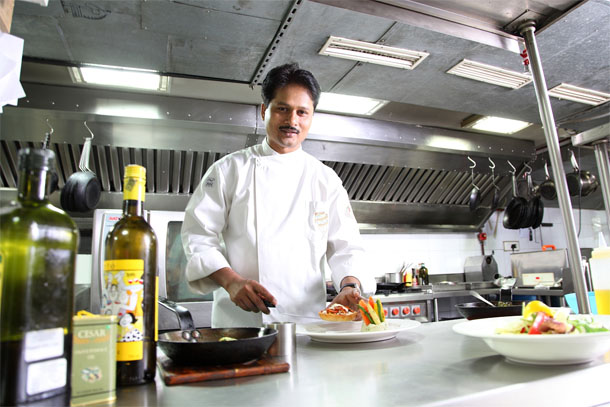
A Bengali hailing from Siliguri, a city in North Bengal with schooling in the picturesque Himalayan town of Kurseong, and turning into a Delhi boy only later in his life, this man has no regular day at home. Running a successful business with no frown lines has earned him the title of the ‘Young Chef – Abhijit Saha’. If only people sharing the same surname could genetically possess the same vigour and the same virtues, then I’d have been a very happy lady!
I’m very (secretly) proud of this Bengali Chef who loves his Chingris/Prawns and Aloo Postos/Potato with Poppy Seeds and Mishtis/Sweets, (overtly) proud of this Indian Chef and (supremely) proud of this International Masterchef who’s keen to take Indian Cuisine to a different standard with new age technology. Molecular Gastronomy is not just ‘food under surgery’ after all and one can breathe life, heart and soul into it – there’s probably a formula to it. And talking about formulas, apart from the kitchen, the other thing that probably excites Chef Saha is Formula 1. Infact, he is going to drive a F1 on the Valentine’s Day – a Valentine’s gift from Abu Dhabi Tourism board. Had Big Z been there, she would have definitely screamed – ‘Lucky You!’
Unblogging it all… Ishita
Disclaimer: The food images and the image of Chef Saha in the kitchen were sent to me when I wanted to showcase some Indian food cooked with Avante-Garde technique. I hope you enjoy reading the posts with lot of visuals but please do not use any material from this post. You can see more pictures of my travel and food journey here.
◊—————————————————————◊
References:
Molecular Gastronomy in Wikipedia
BE SOCIAL. SHARE THIS!

Our one week-long stay in Singapore in August 2011 turned us in total Sea-food and Crab Addicts! Our family, already obsessed with good and tasty food – went ballistic. We ate everywhere – in Chinatown, from the food hawkers at Newton Food Centre, in polished restaurants at the elite Clark Quay and at various food stalls thronging the random alleys in the city. Posts documenting our gastronomical exhilaration – Eating Out Is A National Pastime – Singapore and Singapore at Night. Singaporean Pepper Crab and Singaporean Chilli Crab, the two celebrity Singaporean dishes have crossed the Singaporean boundaries, and have spread across the globe. They have also remained etched in our taste-buds. A peculiar Crab-itch develops in our family sometimes and we practically run down the streets, hunting for Crabs cooked either in the Malayalee or the Singaporean style!
A long ‘Crabby’ affair back home in Dubai: A few weeks back, suddenly, we spent days eating only Crabs. Day 1 – we had some brilliant home-cooked Thai Chilli Crab (above) over a Friday dinner at a very close friend’s place. The very next day – Day 2, we tasted Singaporean Chilli Crab and Singaporean Pepper Crab at a restaurant called Chimes in Al Barsha. We ate to our heart’s content, bringing back home big parcels with the left-overs. The result? Day 3 of Crab eating at home! The following Friday (just 3 days later!), we met Shiv Chowrasia, the Indian golfer who had come to play for the Dubai Desert Classic. A very humble man with an inspiring story behind his rise to the level of a professional golfer (Chowrasia’s father worked as the greenskeeper at the Royal Calcutta Golf Club in Kolkata, India. It was at this golf course that Chowrasia picked up golf at the age of 10. The self-taught golfer is nicknamed “Chip-putt-sia” because of his short game.Before entering professional golf, he was a caddie for a few years! Info courtesy: Wiki), he just happened to mention that he loved Crabs and ‘would dig his hands into the plate if there were Crabs’.
Yes, you guessed it right – we were into our Day 4 of Crab eating. The next day Chowrasia came home and we ordered Singaporean Chilli Crab (below) and Singaporean Pepper Crab (above) from Chimes. Each Crab weighed about 800gms – 900gms – quite huge ones. Day 5 was spent finishing the left-overs from our previous dinner (we had ordered 2 portions of Singaporean Chilli Crabs and 1 portion of Singaporean Pepper Crab for 6 adults. Naturally, hoping deep down in my heart that we wouldn’t be finishing all of them on the first day itself!). 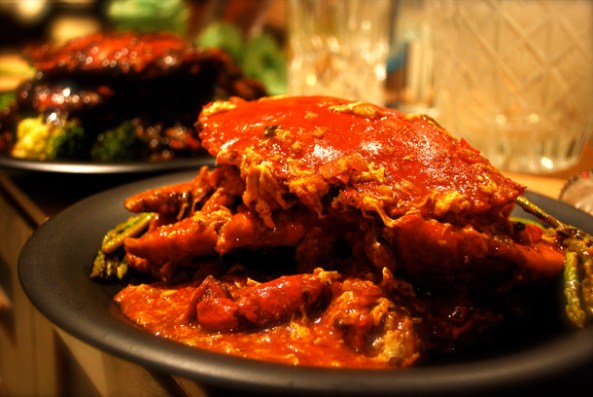
Discovering Crabs that have been cooked well is pretty much a pleasure as well as a novelty. I was so taken up with the dinner at Chimes that I was all over the Twitter and Instagram (to which I have been inducted very lately) till the wee hours of the morning. We started our dinner at 8:30pm and walked out of the restaurant around midnight. The dinner at Chimes dug up a lot of Srilanka nostalgia (our past Srilanka connection in my earlier posts – Living by the water with sunset as prop – Colombo and the Indian Ocean and Red Tuk-Tuks and Triumphant Rides – Colombo, Srilanka]. Incidentally, Shenika, the Partner and Managing Director for Chimes came over to say a Hello and we ended up discussing about Srilankan food, Singaporean food and how her husband and her passion for cooking Singaporean, Malay and other South Asian cuisines led to the opening of the restaurant. We bid adieu to her around midnight!
And the sweetest thing of all (of-course, apart from the desserts!), Chimes is giving my blog readers a brilliant blog giveaway – a chance to win an amazing Valentine’s Day Dinner for two – along with the candle lights and rose that can be enjoyed at the comforts of your own home!
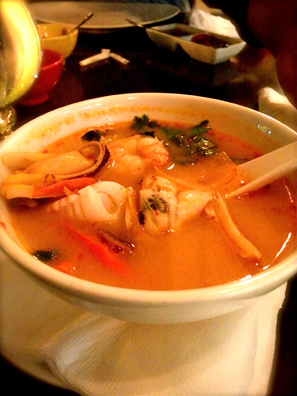
Food in Chimes, in one word, is damn good. Their Far Eastern menu options include cuisines of Thailand, Singapore, Malaysia and Indonesia. We knew what we would order for the main course (!) and kept our Starters and the Soup very simple.
For Starters, we had ordered Chicken in Pandan Leaf – deep-fried marinated Chicken wrapped in Pandan leaves (used widely in Southeast Asian cooking as a flavoring. More here) that came with Thai Sauce and Sambol. We also ordered a Tom Yam Kung Soup (above left)– an oriental tangy prawn soup seasoned with Galangal (very popular in Thai food. More here) and Kaffir leaves (Kaffir limes are used in Southeast Asian cuisine. More here)
For the Main Course, a Singaporean Chilli Crab (below left) and a Singaporean Pepper Crab, with each mud crab weighing around 700gms – 800gms, were enough to last us till the next day. We had ordered a Fried Rice along with the Crab. Check out my pic (above right) reading myself for ‘Project Crab-fix’. No contact lenses please and definitely requiring some spare aprons!
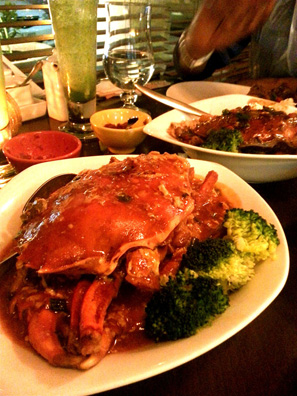
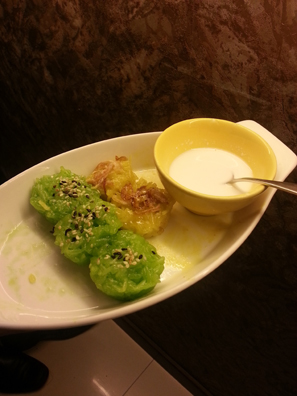
The Desserts were presented uniquely. Kao Niew Ma-mwong (above right) is sweet Sticky Rice and is a fairly popular Thai dessert. Topped with Sugar Syrup and Coconut Milk, the green colour comes from the Pandan leaves and the yellow ones are flavoured with Mangoes.
The Verdict: Ask for the home-made Sambol instead of the regular one to accompany your Starters, provided you love the flakiness of chillies and the spunk of other spices hitting your tongue. The sea-food Tom Yam Kung Soup was strong and tangy with generous chunks of Mussels, Prawns and Calamari – the aroma of Galangal and Kaffir leaves seeped through the pores! The Singaporean Chilli Crab and the Singaporean Pepper Crab – the very reason for our visit to Chimes, was truly justified. While the Chilli Crab had it’s ‘signature’ slight sweet tasting gravy sticking to the innermost part of the shells of the Crab, the Chilli hit the tongue softly but surely! I loved the Chef’s innovation in sprinkling the Pandan Rice Cakes with Sesame and the Mango ones with mildly salty crispy fried Onions!
My observation here – the menu is quite vast consisting of dishes coming from various South Asian regions. Making it simple could probably make life much easier for diners. The decor of Chimes is elegant and tasteful, the service is prompt, the staff is well-versed with the different regional variations offered in the Menu. It’s location in Al Barsha probably hinders its visibility though there are many repeat – diners coming in from very far, only because there is a lot of goodwill that has been generated through word of mouth.
Chimes
Casual Dining; Far Eastern Cuisine
Location: Seven Sands Hotel Apartments, Al Barsha
Tel: +971 4 3234211 / 800 CHIMES; Email: info@chimesdubai.com.
Or you could visit their Website; Facebook Page; Twitter
If you wish to order a big mud Crab cooked in the Singaporean style, do tell them before! They also do catering services.
◊—————————————————————◊
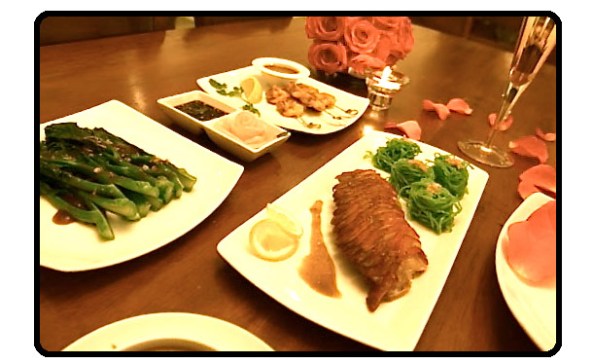
I wrote about this utterly, hopelessly romantic Dining by Design in my last post (Desert Islands Resorts by Anantara at Sir Ban Yas Island) – a super romantic concept where Chefs will prepare food in unique and intimate settings or exotic locations by the sea or high up in the mountains or by the Wadi waters – perfect for Valentine’s Day. A utopian concept for our family with two kids in tow. I had promised that I’ll have to find a way where a romantic candle-light Valentine’s Dinner comes home… well, I didn’t have to look very far when Chimes informed me about their innovative Valentine’s special package for home (above; Image Courtesy: Chimes).
♥ The special Valentine’s Dinner-for-two package consists of a four-course dinner ♥
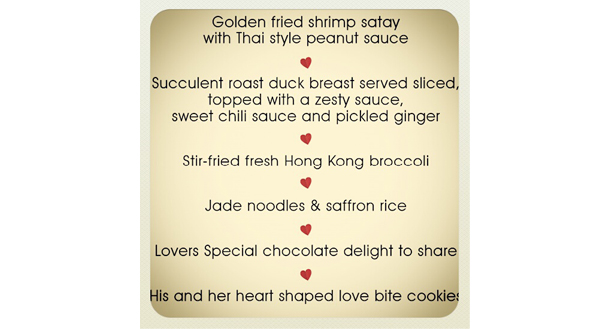
Along with the dinner, comes an assortment of pampering treats from Herbal Home Boutique (in Dubai Marina Mall and Dubai Festival Center), candles, a fresh rose. It costs Dhs 300/, the best part is that you can enjoy this special Valentine’s dinner in the comfort of your home! However, orders need to be placed by 3pm on 13th February and can be picked up on the Valentine’s Day – noon onwards.
Click here to enter the Blog Giveaway for Valentine’s Day!
◊—————————————————————◊
Talking of Singaporean Food, I am very excited that the Singapore Food Festival is coming to Dubai. Taking place from 20th February till 2nd of March 2, this is a promotional festival held in LuLu’s supermarkets throughout the UAE. Foods from Singapore will be available, and there will be a full program of cooking demonstrations, tastings, and other events – Francine writes all about it in Life in the Food Lane. I’ll be meeting up with Singapore’s celebrity Chef Violet Oon. Chef Oon’s Singapore Food Festival repertoire will include the famous Chilli Crab. Other dishes include: Singapore Satay – spiced meat skewers served with a velvety peanut-based sauce; Laksa – smooth rice noodles in a spicy coconut broth; and Chicken Rice, succulent bites of chicken served on fragrant rice.
Waiting to learn how to make Singaporean Chilli Crab from the expert herself. Fingers crossed!
Unblogging it all… Ishita
Disclaimer: Our dinner was hosted by Chimes. For the home-delivery, the Singaporean Chilli Crab (large) cost us Dhs 129/ and the Singaporean Pepper Crab cost us Dhs 125/. The opinions stated here are my own and are independent of the complementary dinner or the Blog Giveaway provided by Chimes. I hope you enjoy reading the posts with lot of visuals but please do not use any material from this post. You can see more pictures of my travel and food journey here.
BE SOCIAL. SHARE THIS!


No matter what happens, travel gives you a story to tell.
∼ Jewish Proverb
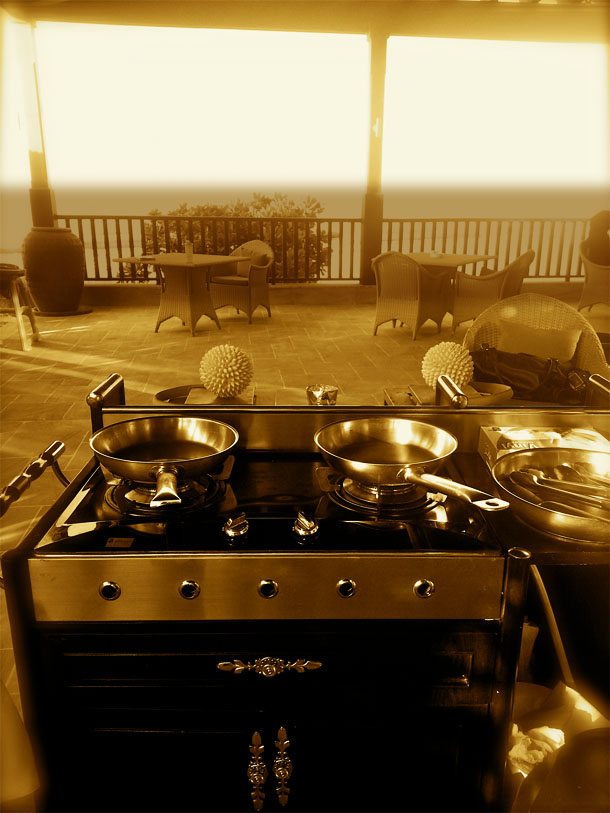
The Island
The turquoise blue waters of the Arabian Gulf surrounds this island. 400 kms and almost a 4-hours drive away from Dubai, then a boat transfer from Jebel Dhanna Jetty to about 7 kms off the western coastline of the emirates of Abu Dhabi and finally another 20 minutes bus ride to the actual resort – we were already psychologically tuned into a holiday far, far away! Desert Island Resorts & Spa by Anantara is situated on Sir Ban Yas island, a protected natural reserve and the island itself is pretty alluring. While vacationing, we try to book ourselves into places which adhere to responsible tourism. Anantara ‘recognises the importance of sustainable business practices that consider the environment and the use of energy and resources’. We are proud that the list of the eco resorts that we’ve visited, is slowly but steadily growing longer. There’s an unparalleled excitement in eating Dates and drinking fresh juice squeezed from Oranges or tasting Olives which are grown (surprisingly Olives too!) locally on in the island. Arabian Oryx, Gazelles, Indian bucks roam around freely on the island, while the constant chirping of the birds provoke an unusual question from my mini urban dwellers, the Z-Sisters, unused to such a natural surrounding – ‘What’s that noise?’
The Food
Our stay in this beautiful island deserves to be documented, bit by bit. However, here I’m documenting from the last day of our stay with our culinary experience – the family cooking experience to be precise, at Samak, the sea-food restaurant in Desert Islands. Chef Mahmoud taught us how to cook Moutabel – the popular Arabic dip; the spicy Prawn Harra, cooked in the Lebanese style and Um Ali – my favourite Arabic desserts of all! Even Li’l Z who is just 3, accompanied us in the cooking class, helping Chef Mahmoud with the Um Ali as she crumbled the almonds with her messy hands. A beautiful cooking arrangement was set up exclusively for us. It was by the beach and overlooking the blue waters of the Arabian Gulf. 3 hours later, we were having a candle-light dinner in the Samak restaurant, eating the food that we had cooked for ourselves. Quite obviously, the invisible touch of Chef Mahmoud’s magic must have been responsible for the amazing dinner we had cooked!
Joining the bandwagon called Instagram
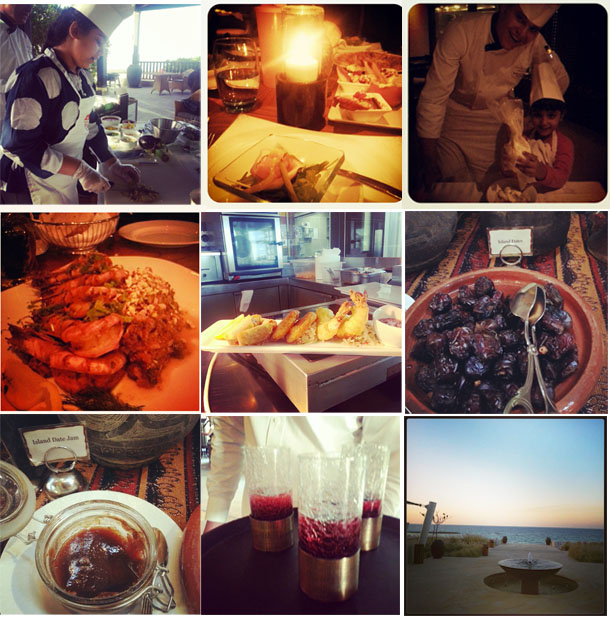
The Desert Islands trip was my first experiment as to whether I could do LIVE Instagram-ing and tweeting and still enjoy my life without disrupting family moments and transforming myself into a social media menace. I wouldn’t disclose my verdict on that but I loved the interaction with readers that these LIVE postings created. Do join me on my Instagram🙂
A cooking class by the beach
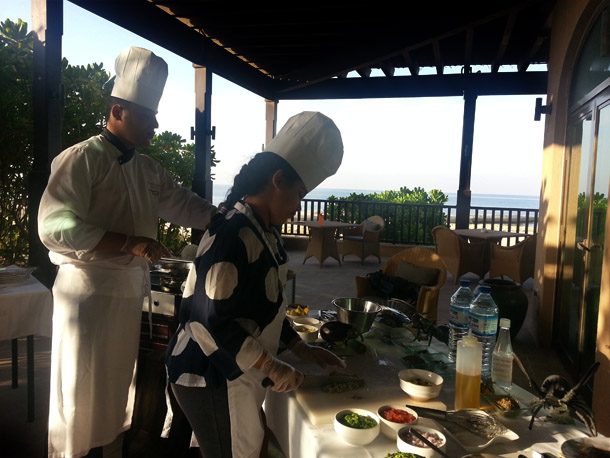
Our cooking class started with the Moutabel (below). Made with Eggplants, Olive Oil, Tahini paste (a paste made from ground, hulled Sesame seeds and is used extensively in North African, Greek, Turkish and Middle Eastern cuisine), minced Garlic, Lemon juice, Salt, Pepper, green Chili Peppers – the Moutabel is an easy-to-cook dip. Chef Mahmoud hails from Egypt and had many interesting stories to narrate. First, he would show us how to make a dish and then we would be making the same thing. Well, we turned out to be pretty good students – all the dishes tasted quite amazing. Or, did some secret ingredient go into them once they were taken back into the kitchen?
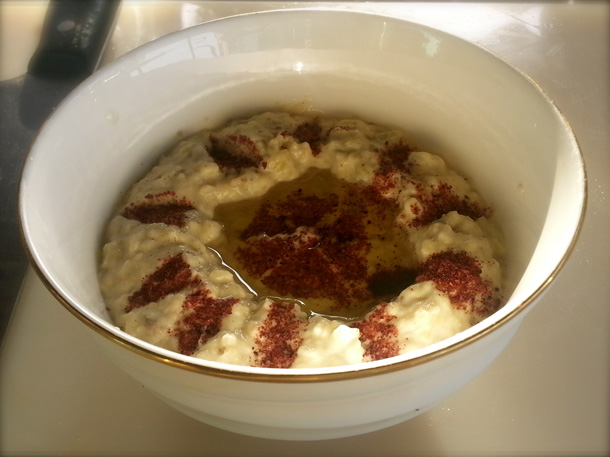
Big Z was given the creative freedom to go into the kitchen, bring out any dish or any other object from the kitchen and present the food that she cooked in a different manner altogether. She managed to cover the entire Prawn Harra with fresh green herbs and said – that was ‘her Prawns in the forest!’ Neither the Chef nor me were expecting such ‘think-differently’ and inedible presentation of the delicious prawns. I prefer my Prawns to remain either in water or on a plate – probably wouldn’t mind some shells thrown in but not an entire forest! Prawn Harra, was spicy and easy-to-cook. It can turn your dinner into something quite exotic. Hence, I am sharing the recipe in this post. By the time we had started to cook the Um Ali, it was already dark. I was surprised that even Lil Z, who’s the most unsocial member of our family, joined in with Chef Mahmoud in the making of the Um Ali. I love Um Ali, but this is also one dessert that I’m disappointed with most of the times while dining out. Either, I find the Um Ali too runny or too thick. Chef Mahmoud cooked the Um Ali in a slightly non-traditional way, using whipping cream and burnt the surface using a torch and let it set like the Crème brûlée. Keeping that recipe for some future post!
Samak, the sea-food restaurant


This is a sea-food restaurant right there on the beach and prepares all it’s fresh seafood on an open grill. The restaurant advocates sustainable fishing (if you are still not aware that many of the fish in the UAE waters are over-fished, then do read this post on sustainable fishing in the UAE) and the fish on display (below) is bought from the local fish markets – either from Ruwais or Abu Dhabi. Guilty of ordering the basic Fish & Chips on the first day after being pressurised by the little ones, the next few meals were spent trying out different signature dishes from the restaurant. We tried a Starter platter with Crab cakes, Prawn tempura and Hamour – all cooked with Thai flavours and served on Ginger-Papaya salad; the Tagliatti Prawn Pasta, of-course the Prawn Harra that we cooked and grilled Salmon – have written about that in great detail below. The other thing that is really impressive and which FooDiva, known for her impartial and intelligent restaurant reviews, so rightly points out is about the restaurant’s wine list – ‘the wine sommelier and his list impress with a staggering selection of rosé vinos, quite unusual for this country, let alone an island way off the beaten track.’
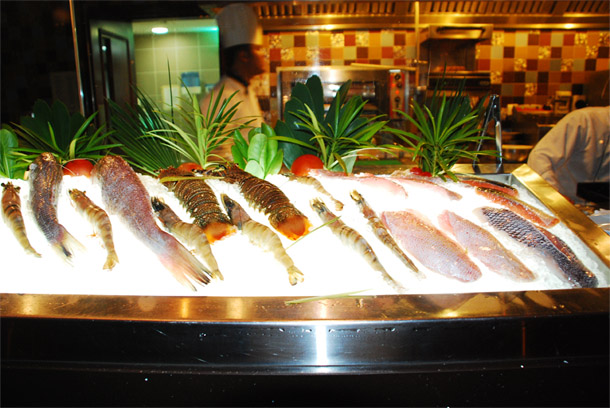
The Salt-Guru in Samak and Gourmet Salts
The tagline of Samak is ‘Sea. Fire. Salt.’ The third element is probably the most interesting element here. There is a Salt Guru – a term that I came across for the first time. Different types of natural and unrefined salt from different parts of the world fill up a Salt-trolley. Until recently, Sea Salt was considered just like an ordinary salt but now they are being defined as Gourmet Salts and restaurants and gourmands worldwide are increasingly learning to appreciate the distinctive qualities of the many varieties of gourmet Sea Salts and the different ways these Salts enhance the flavors and the finish of foods. There are many different varieties of Salt – Coarse Salt, Finishing Salt, Flake Salt, Grinder Salt, Sea Salt, Smoked Sea Salt and of-course our known culprit of all salts – the Table Salt!
The most popularly demanded Salts in Samak are the Peruvian Pink Salt, the Durango Hickory Smoked Sea Salt and the Fumee De Sel. The Peruvian Pink Salt comes from a natural spring located at an altitude of 10,000 ft in the Peruvian mountains. The warm water seeps into terraced salt ponds and this salt has been hand-harvested for over 2,000 years! This salt is used for seasoning. The Durango Hickory Smoked Sea Salt (created when delicate Pacific Sea Salt flakes are naturally smoked in Hickory hard wood) is used as a Finishing Salt or as spice blends on salads, meats, seafood, sauces/soups, salt cures and brines. The Fumee De Sel (the salt has been slowly smoked with Chardonnay oak wine barrels) is used as a Finishing Salt or during roasting or goes into spice blends in salads, meats, seafood, sauces/soups. Our Tagliatti Prawn Pasta was sprinkled with the Fumee De Sel which lent the dish a smoky flavor with a hint of wine!
A little note here on Finishing Salts… These Salts are considered to be the premier varieties in the world of specialty salts. They are harvested— generally by hand, in special areas around the world and are known for their unique textures. The various finishing salt textures—usually either moist crystals or delicate flakes, provide a strong crunch and dissolve quickly, giving you a burst of clean, mild salty flavor with each bite. These salts bring out the depth of natural flavors of any dish and also add to a beautiful table-side presentation. The various colors and flakes of finishing salts make gorgeous garnishes for every meal. Read more on this amazing subject in this Guide to Sea Salts and Gourmet Salts.
7 different types of salt is served in Samak and the Salt Guru, Damynfu Dao-On (below right) advises the diners on the perfect paring of each salt depending upon the technique of cooking of the particular dish. Different Salts not only enhance the ingredients that go into the cooking of each dish but also renders a strong aroma once they are sprinkled on the dish, post-cooking. I have to mention the grilled Salmon we tasted. Salmon fillet, marinated with Lime and Garlic was first char-grilled and then put into the oven by placing the fillet on a circular brick of Himalayan Pink Salt. The Salmon was all infused with the salt and we were struck by it’s enhanced flavour. I was told that the Himalayan Salt slab could be heated on the stove top and thinly sliced meats, fish, seafood and vegetables seared on it. It could also be chilled for serving Sushi, appetizers, cold meats and cheeses, fresh fruit and vegetables. These salt slabs are harvested from deep within the ancient Himalayan mountain range of Pakistan and have remained protected from pollution and impurities for centuries, making this what many consider the purest, cleanest salt in the world. (Read more here. Please note that I’m in no way advocating/endorsing the product. The link is just useful for you to know more on Himalayan Salt)
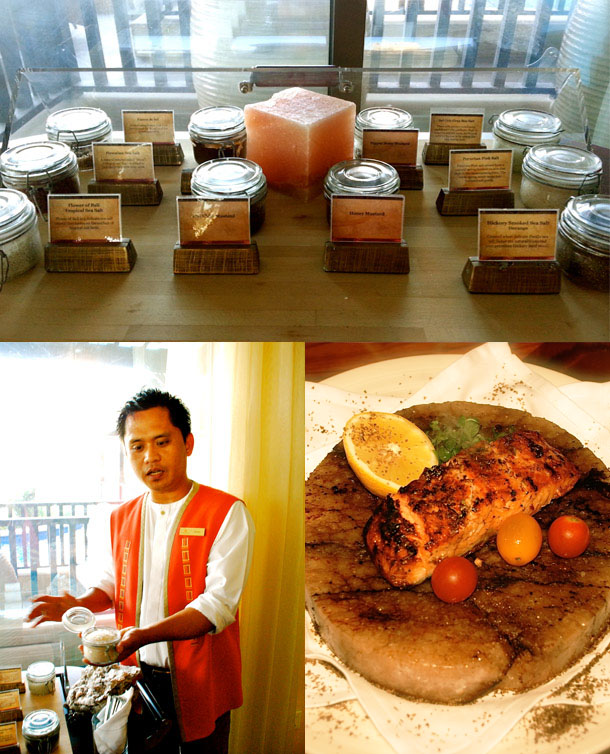
A Kid’s Menu with Vegetables served in delicious disguise
A slight detour from the salted conversation to the Kid’s Menu. I find that most restaurants underestimate the young diners. The Kids’ Menu is so typical. Why does a Restaurant which otherwise takes so much care in preparing the adult menu, take such little interest while preparing their Kids’ menu? Why do they have to resort to the standard Nuggets and French Fries – that too frozen? This pertinent issue has been taken up brilliantly by Sarah – The Hedonista. There are 7 items in the Kid’s Menu with cute names and some dishes manage to trick the young ones into eating vegetables in delicious disguises. For example, Ginger & Rocky serves Grilled Chicken breast with steamed vegetables and creamy mushroom soup. Or the Nemo served with the steamed Hamour fillet with buttered potatoes and creamy Leek soup. Then there is the Scooby Doo with grilled Chicken sausages and garden greens in Cocktail Sauce. Li’l Z unused to such choices ended up ordering a Bambi (after seeing the illustration of Bambi on the Menu card!) on her first meal which happened to be 2 mini burgers served with French Fries – quite a big portion for a small tummy and in the subsequent meals, a lot of vegetables did go in unknowingly!
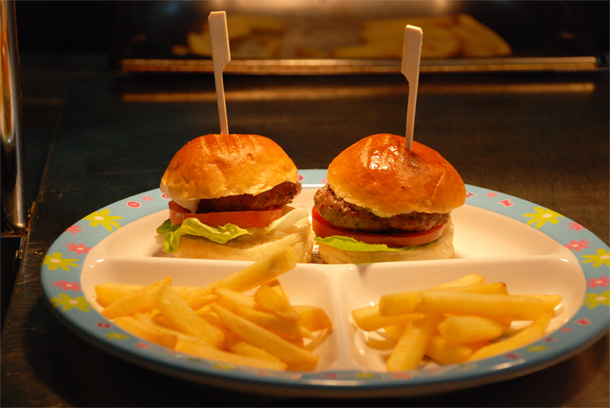
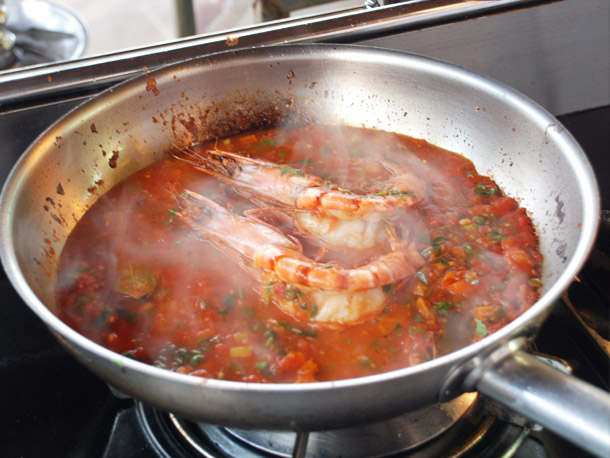
Prawn Harra
Ingredients
10 Tiger Prawns, cleaned, deveined with head and tails and intact, but slit (shown in the video below)
Tomatoes – 3 big, finely chopped
Green Bell Pepper – 1 big, finely chopped
Red or Yellow Bell Pepper – 1 big, finely chopped
Garlic – 6 pods, crushed coarsely
Onions – 3 big, finely chopped
Coriander Leaves – 2 tbsp, finely chopped
2 Green Chillies – finely chopped (Note: the quantity depends upon individual preference)
Bay Leaves – 3 small
Black Pepper – 2 tsp
Cumin – 4 tsp, Slightly roasted, partly grinded and partly whole
Red Chilli Powder – 1 tsp (Note: Again, the quantity depends upon individual preference)
Olives – 1/2 cup, chopped into small pieces
Tomato Paste or Purée – 1 cup
Chicken Stock (for example – Maggi or Knorr) – 1 Cube Salt – as per taste White Oil – 2tbsp
Garnishing
Cashew Nuts – Salted, crumbled into small pieces
Rosemary – 1 sprig
Lemon – 1/2
Method
- Heat the White Oil in a flat bottomed pan
- Stir in the Tiger Prawns till they become slightly fried and take them off the pan
- Fry the Onions and Garlic till they are brown
- Add the Bay leaves, Pepper, Tomatoes, Tomato Purée, the Roasted Cumin, Chili Powder, Black Pepper, Green Chilies and the chicken Stock
- Add the Tomato Paste, Salt, Olives and the Coriander leaves
- Add 3 cups of water and let the gravy boil in low flame for 5 minutes
- Add the Prawns and cover the pan and let the Prawns cook for 10 minutes
- Serve the spicy Prawn Harra with Cashew Nuts, sprig of Rosemary and a dash of Lemon.
The Resort

Desert Islands Resort & Spa by Anantara
The Arabian Wildlife Park on Sir Ban Yas Island Sir Bani Yas is the largest natural island in the UAE and one of the collection of eight islands that comprise Abu Dhabi’s Desert Islands. This island was originally home to Arabia’s largest wildlife reserve, much of which was getting extinct over time. The Arabian Wildlife Park, a reserve was established in 1971 by the late ruler and founder of the UAE, HH Sheikh Zayed Bin Sultan Al Nahyan, spanning over 87 sq km to carry on planned conservation projects on this island. This means that the reserve is now home to thousands of free-roaming animals, birds and several million trees and plants. The Desert Islands Resort organises various excursions like guided safaris, guided game walks into the conservation park and also kayaking, mountain biking, archery, hiking and snorkeling in different areas of the island. The resort also supports the WWF Marine Turtle Conservation Project which focuses on the conservation of the critically endangered Hawksbill turtles.
Tel: +971 2 8015400; Email: dirs@anantara.com or you could check for their special packages and visit their Website; Facebook Page; Twitter
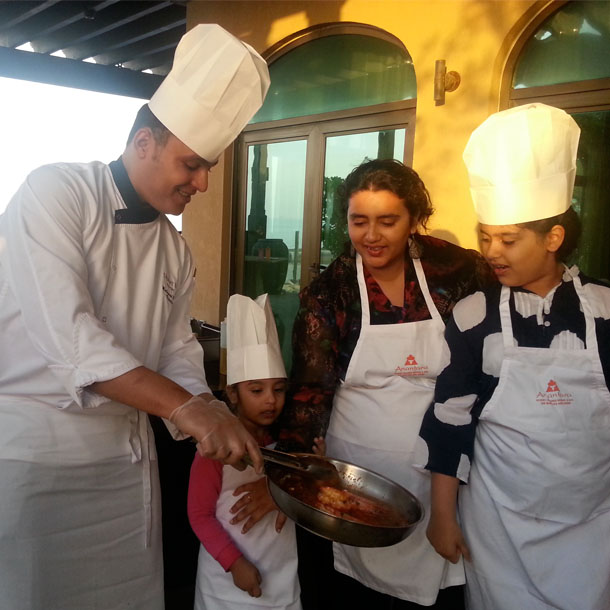
The Sign off
It took nearly 2 hours to cook up our exotic dinner – something that’s unimaginable at home. An unimaginable situation too for a busy kitchen in a resort like Desert Islands. But they did create such an unforgettable experience for us. Dining by Design is another interesting concept where the Chefs cook whatever you desire in unique and intimate settings or exotic locations by the sea or high up in the mountains or by the Wadi waters – perfect for some couple on their Valentine’s Day. Unfortunately, an option not for me – with the two kids in tow. I’ll have to find a way where a romantic candle-lit Valentine’s Day Dinner comes home and I’m sure I’ll find that out too and keep you all posted!
Unblogging it all… Ishita
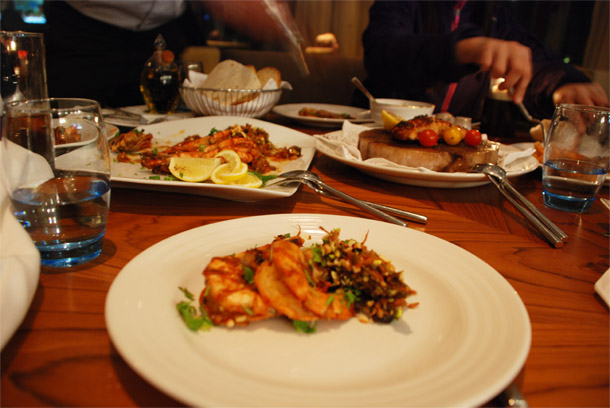
Disclaimer: I was offered a media discount for our stay and meals. The family cooking class was complimentary. Please note that the subject, story, opinions and views stated here are my own and are independent. While you enjoy reading the posts with lot of visuals, please do not use any material from these posts. You can catch my daily food and travel journey on Instagram, Facebook and Twitter.
BE SOCIAL. SHARE THIS!


IshitaUnblogged blog is text-heavy. I have been toying with an idea of another blog for a long time that will help me to shut my thoughts up – in terms of writing and bringing up all the photos of Dubai that I am incessantly clicking. And yes, while jumping into the new bandwagon, that is called Instagram!
DubaiUnblogged, my second baby, unravels Dubai through images and photographs. It will feature lots of hidden gems of Dubai that are crying out loud for attention. Lots of ideas are there and according to many, introducing the blog with only 4 posts is unwise. But I like ‘growing up and growing old’ together with my readers. It has been the case with IshitaUnblogged. And I’m sure it’s going to be the same with my new blog. Not asking you guys to hop over – this post is a glimpse of what the other blog is going to look like. There will be no text there, I assure you.
Awaiting your feedback!
Unblogging it all… Ishita
◊———————————————–◊
Meena Bazaar
Meena Bazaar at night… cars, cycles, pedestrians, clothes, shoes, jewellery, food – all shout out loud and simultaneously for attention! Contrary to the glitzy shopping malls in Dubai, Meena Bazaar has a different charm altogether. From glaring lights to the blaring horns from cars struck in the perennial traffic, from the snaky lanes and by-lanes to the crowded main-road, from Indian and Pakistani stores selling traditional clothings to Iranian spice shops, from haute-couture fashion Boutiques (selling mainly traditional Indian and Pakistani ethnic attire) to stores selling high-street fashion, branded watch-houses to shops – the ’10 Dirhams shops’ selling inexpensive models of electronics to home products, from computers to spare-parts, from quick-fixers like cobblers and menders to expensive tailoring shops – I love Meena Bazaar. Specially, when the narrow dark alleys suddenly open up and you are hit with the bright sunlight and the sparkling sea-green waters of the Dubai Creek! Did I say sunlight? Oops, mistake – this post is about Meena Bazaar at night!
History of Meena Bazaar: Traditionally, Meena Bazaars were special Bazaars/markets organised to sell items to raise money for non-profit organizations. During the Mughal era, Meena Bazaars were exclusively held inside the palace courtyards resembling a Bazaar for the women of the Royal courts who were not allowed to go out to shop.
Dubai Meena Bazaar: Originally known as Cosmos lane, it is interesting to note how this area acquired the name Meena Bazaar. According to an article in the Gulf News – the residents and the taxi drivers started calling the area Meena Bazaar because of the decorated mannequins lining the shops just like in India and Pakistan.
A visit to the Meena Bazaar at night is a must. You’ll be blinded by it’s glitter. One word of caution – Please plan to walk. Driving into a crowded Meena Bazaar can be worse than a nightmare. This is just adjacent to the Dubai Museum and the Bastakiya quarters and you may walk along 50B Street near Dubai Museum or approach the area from Khalid Bin Walid Street/Bank Street in Bur Dubai.
Opening hours: 9:30am – 10:00am and shops shut by 1:00pm; Re-opens at 5:00pm and continue till about 9:30pm – 10:00pm; 2:00pm till midnight on Fridays


Disclaimer: I hope you enjoy reading the posts with lots of visuals, some of which have been taken from our personal albums just to make your reading experience more pleasurable. You can see more pictures of my travel and food journey here.
Related Articles:
- Things To Do In Dubai – Like A Tourist In My Own City
- The Diary Of A Dubai Resident… As Home Turns Into An Inn!
BE SOCIAL. SHARE THIS!

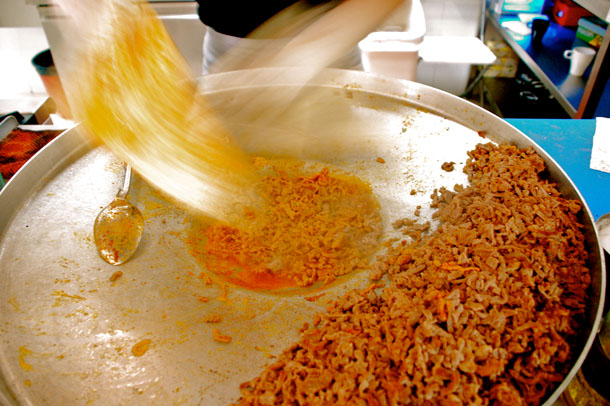
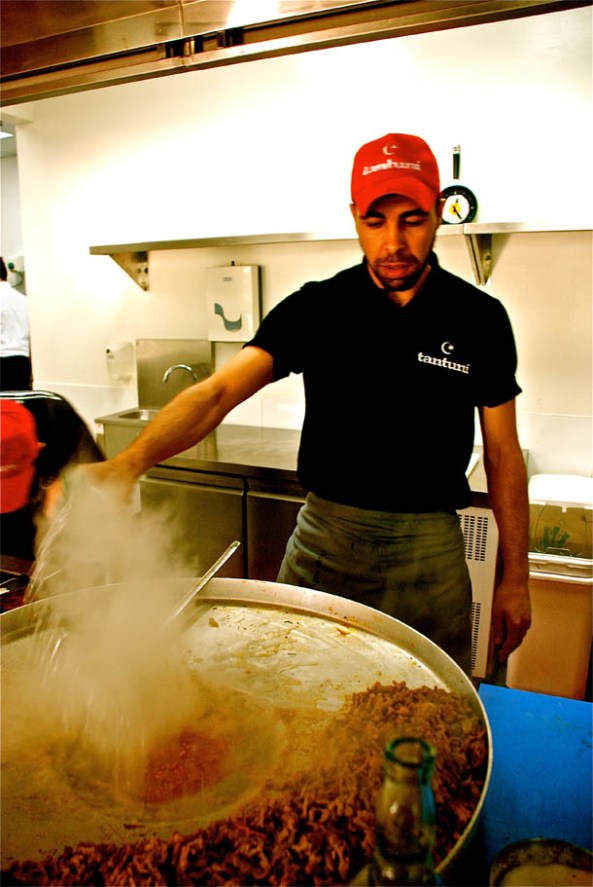
I got an invite from a strange but sweet sounding restaurant called Tantuni the other day.
‘We’re a newly opened Turkish fast-food restaurant… Our concept is a traditional Southern Turkey street food cuisine called Tantuni. The restaurant is named after this dish also… I can assure you that the Tantuni rolls are quite tasty and addictive since we brought the chefs from the main source, South Turkey… The taste has been approved by the Turkish community here and they claim it tastes just like how it’s meant to taste in Turkey.’
Yes, you’ve guessed it right. I’m obsessed with street-food and I was on my way to Tantuni.


What is Tantuni? It is a traditional Turkish street-food originating from the city of Mersin, situated on the Mediterranean coast of Southern Turkey (more on Mersin). Contrary to popular belief, Tantuni Rolls in Turkey are more popular than the Döner Kebabs. Traditionally, thinly diced Beef is cooked with Turkish spices in special Tantuni pans (above right) and then served in special durum wrap rolls called Lavaş/Lavash (above left). 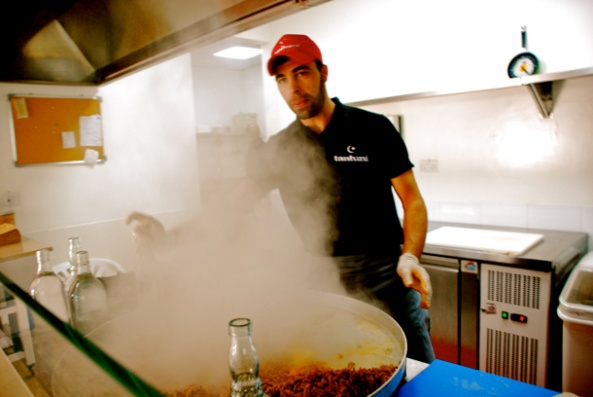
The story of Tantuni: Tantuni sellers are found on every street corner in many Turkish cities – including Istanbul. The speciality of the Tantuni rolls are well kept secrets of the Tantuni Chefs. The Tantuni Chefs, as they are proudly called, have their own secret techniques of making Tantunis (some boil the meat a bit more or fry their meat a little bit less or have their own proportions of spices). So the taste of Tantuni differs from one Tantuni shop to the other. The pans where Tantunis are cooked are also special. The central part of the huge pan indents downwards. The oil is put here and the diced meat is added in little amounts as they are brought forward from the bigger pile that surrounds the rim of the Tantuni pan. And as the spices are added, the sound that the entire act makes – Tan/Tun, Tan/Tun… this probably lends the name to the dish. And finally, a lot of spices are added. All I can say is, this has to be the crucial act in making the Tantunis so addictive!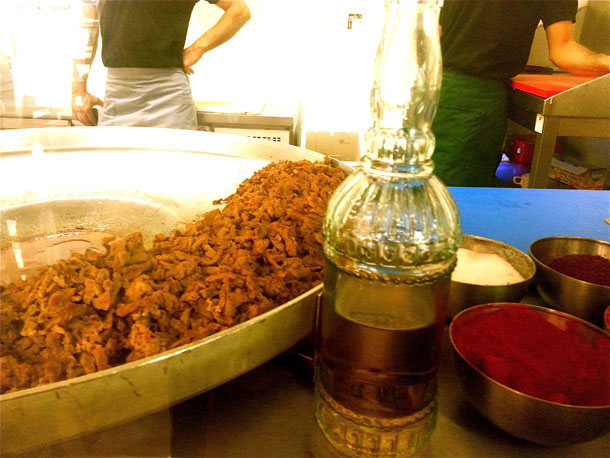
Is a milder version of Tantuni being served here? Two friends Cem and Can ended up opening up a Tantuni shop themselves when their search for Tantuni failed in Dubai and claims this to be the only Tantuni shop in Dubai! I wanted my Tantuni to be really spicy… and yes, the Tantuni Chef made mine really spicy. Don’t worry, the spice factor depends upon how you want your Tantuni to be! As Cem said, it will depend completely upon each diner. However, the taste of the Tantunis served here are authentic (as authentic as it can be given that the taste of Tantunis differs from one shop to the other depending upon the specific Tantuni Chef) and cooked probably in the manner that Cem and Can like their Tantuni Rolls to be. According to the Tantuni Chefs, the Tantuni pans are an important factor in making good Tantunis.
With all the important factors been taken care of, and the two Tantuni Chefs as well as the special Tantuni pans flying down all the way from Turkey, Tantuni, the restaurant, is all set to wrap and roll!
The making of Tantuni: Previously boiled meat (traditionally, beef is used but the restaurant also serves Chicken Tantuni) is cooked in Sunflower Oil along with the spices – Paprika, Sumac, Red Chilli Powder and Salt. Hot water is added to this from time to time, resulting in a a voluptuous smoke erupting from the pan. In addition to controlling the temperature of the meat, this also creates some steam in which the Lavaş, the bread that is used to wrap up the meat, is softened. The Tantuni Chef then places the cooked meat in the bread, puts some onions which have been softened with Sumac and Parsley, tomatoes and a dash of more spice and wraps up the roll and plops the Tantuni Roll on the serving plate. The roll which is surprisingly very soft, is now ready to take up any shape that you want to make with it. All this is done in about an animated action-packed episode of 3 minutes flat!
A pictorial version of the 3 minute sequence…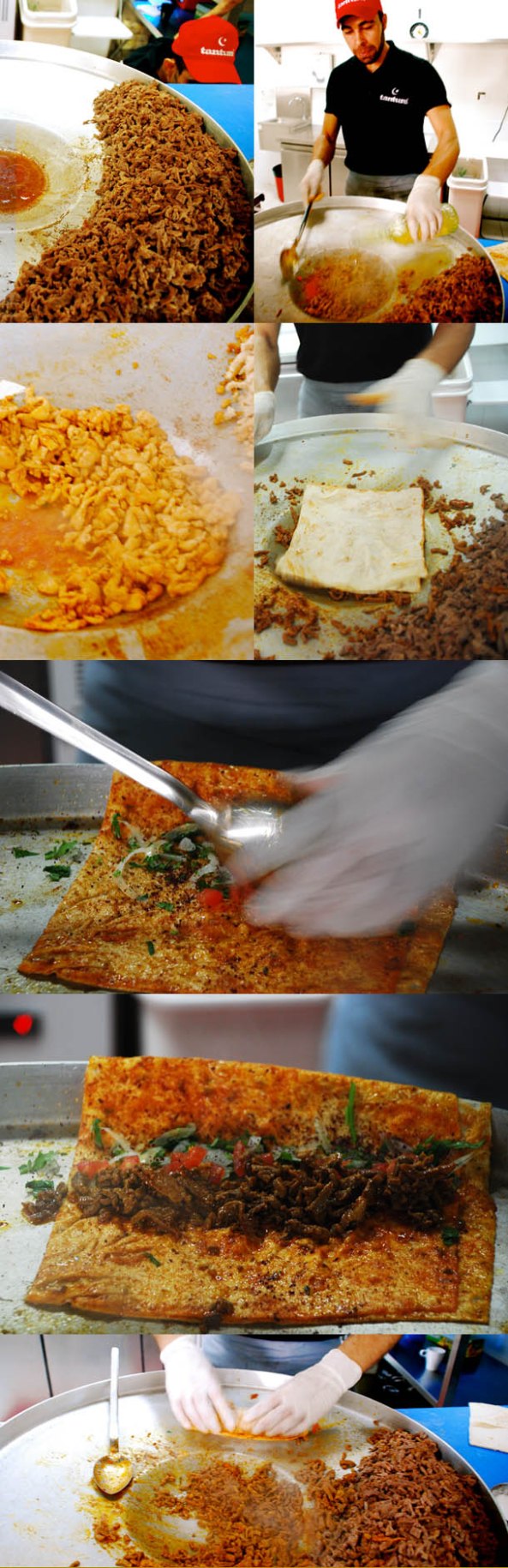
In that 3-minutes sequence, these are the places where I would like to add some pause buttons (for special effect!): When the Tantuni Chef softens the Lavaş bread with the juice of the meat (below left); when he adds water in the cooked meat and an enormous smoke erupts with a sizzle (below right).
And finally, when the Tantuni Chef slaps the Lavaş bread swaying it from side to side on to the cooked meat at a lightening speed… what a fast-paced action, almost from a Danny Boyle movie! Swish-Swash, Swish-Swash (below)!
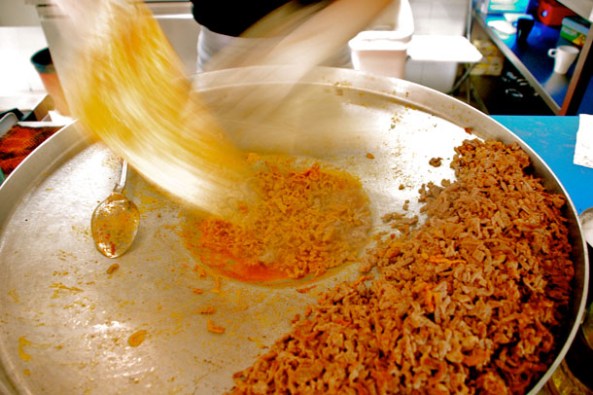
In Turkey, Tantuni rolls are served either with the Ayran (below left) or the Şalgam Suyu (below right). Ayran is the Turkish version of Laban – a cold beverage of Yogurt mixed with cold water and salt. In Turkey, Ayran is so popular that it is regarded as a separate category from other soft drinks and International fast-food chains like McDonald’s and Burger King include Ayran on their menu (read here)!
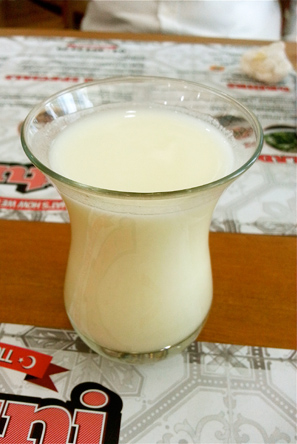

Şalgam means ‘turnip’ (interestingly in Hindi language too), although the drink Şalgam is made with the juice of pickled Red Carrot, salted and spiced, flavoured with aromatic turnip (çelem) that have been fermented in barrels with the addition of ground bulgur (read here). The Şalgam drink that was served to me in the restaurant was bottled though and had a strong taste of Beetroot and spices. I liked Şalgam better than the Ayran. It was slightly tangy and spicy. Both the chilled beverages have a cooling effect that perfectly complements the Tantuni Rolls!


Cem insisted that I should try the special Chilli Pickle that comes complimentary with the Rolls… I’ve survived to write the tale and the proof that I did bite into the pickled Chilli is also documented here (above right)! The Tantuni Combo here comes either with the Ezme Salad which is a Tomato and Onion salad mixed with spices and Pomegranate sauce. Or the Bostan Salad (above right) which is a rare Turkish delicacy where chopped Tomatoes, Cucumbers and Onions are served in Şalgam juice.


The art of eating Tantuni Rolls: Once the Tantuni rolls are served, unwrap the roll, squeeze some lemon and sprinkle some hot Pepper, Cumin Powder (above left), some Sumac (above right) and wrap it up again. You can shape up the rolls into whichever way you like it and gorge and gobble on them. I quite loved my fellow Fooderati friend, FooDee’s Tantuni wrap as well as the slideshow that accompanies her post on Tantuni. Other fellow bloggers, The Real Geordie Armani and Coffee, Cakes And Running have also written about their Tantuni experience.

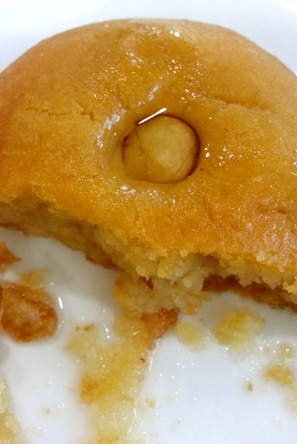
Tantuni shops in Turkey don’t serve sweets probably because one cannot confine Turkish Sweets into one or two varieties – a fact that I’m realising gradually as I’m reading the book – Sherbet and Spice: The Complete Story of Turkish Sweets and Desserts by Mary Işin (sent to me for reviewing… hopefully a post in the future very soon!). So in a way, I am glad that my Bengali tooth’s hankering for something sweet at the end of every meal was pampered a bit by the two Turkish sweets Tantuni offers – the famous Baklava and the Şekerpare (above right).
Though I’ve tasted Baklava many times before, Cem insisted that I haven’t tasted the original Turkish Baklava in Dubai! I opted for Şekerpare – one of the most delectable and popular desserts in the Turkish cuisine. Şekerpare is prepared by baking soft balls of pastry and dipping them in thick lemony sugar syrup. I could taste some coconut flavour in this Şekerpare. I did pour some extra Sugar syrup on top of my Şekerpare – otherwise it felt a bit dry for me (any excuse to add more sugar!) Both the Baklava and the Şekerpare were home-made and I was told that they tasted the way they would taste, if a Turkish Mama was to prepare them at home!
◊———————————————————-◊
Tantuni
Turkish fast-food; Parking available
Opening Hours: 10:00 am – 10:00 pm daily (plans are there to extend the timings)
Location: Ground Floor, Lake Terrace Tower, Cluster D, Jumeirah Lakes Towers (JLT)
Prices: Between Dhs 23 (for a Single Tantuni Roll Combo) to Dhs 40 (for a Double Tantuni Roll Combo)
Tel: +971 4 454 2329; Or, you can visit their Facebook Page and follow them on Twitter.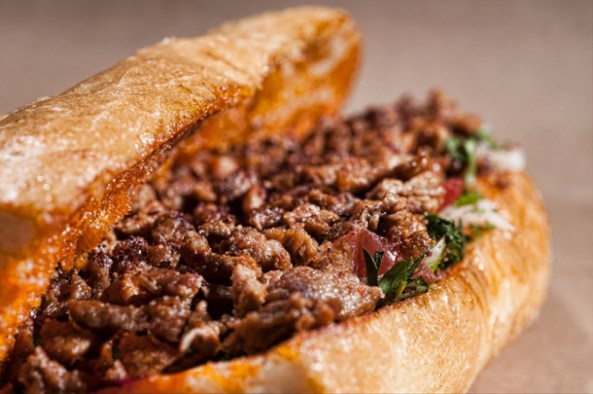
Though traditionally Tantunis are cooked with beef, here Chicken Tantuni Rolls are also available. Tantunis may also be served in sandwich breads if you so desire (above; Image courtesy: the restaurant). In Turkey, Tantunis are also served in sandwich breads but 80% of Turkish people prefer the Lavaş rolls.
The restaurant is located on the ground floor of one of the highrises of Jumeirah Lake Towers (JLT), the beautiful landscaping took me by surprise as did the addictive taste of Tantuni Rolls. The JLT area is probably going to be the next foodie haven very soon and a number of restaurants have started lining up the boulevards, surrounded by the emerald green waters of the JLT lakes. My own prophecy – Ahem!
◊———————————————————-◊
Everybody knows Turkish Döner Kebabs but Cem and Can wants to introduce Tantuni rolls to Dubai… The restaurant is not even a month old. Just 3 days onto Twitter (!), do share some Tantuni love (Like us on Facebook, follow us on Twitter, share the post etc). 20 lucky readers of my blog also gets a chance to taste some extra Tantunis by way of ‘Buy 1 Tantuni Combo and Get 1 Tantuni Combo FREE’ – courtesy Tantuni!
Click here to enter the Blog Giveaway!
There are many more ways in which you can earn your points – share the post on Facebook, tweet about the post, refer a friend (which does earn you an extra bonus point but do ask your friends to mention your name). I would also love to hear what you think about my blog in the About Me page (a new additional point there this time).


Originally, a poor man’s food, Tantunis have now become the most popular street food in Turkey today where there are Tantuni shops selling only Tantunis. Cem and Can want to make their Tantuni shop in Dubai exactly that. They want to carve a niche for themselves with minor modifications to cater to Dubai’s palate, such as serving Tantuni in Combos along with a choice of salad, a dessert (yes, a sweet sign-off is a must!) and a drink.
And before I sign-off, I must tell you that I took away another Tantuni roll for myself (if you are wondering whether I am perennially hungry? Yes, I am – the super-greedy me – eeks!) and also for the Z-Sisters for their lunch after their school pickup!
Unblogging it all… Ishita
◊———————————————————-◊
Disclaimer: I was hosted by the restaurant for my Tantuni tasting only and not for my personal take-away. I hope you enjoy reading the posts with lots of visuals, some of which have been taken from our personal albums just to make your reading experience more pleasurable. You can see more pictures of my travel and food journey here.
BE SOCIAL. SHARE THIS!


I am yet to recover (below left) from talking to Sanjeev Kapoor – the Chef extraordinaire, the Entrepreneur, the TV Host, the Author and an absolutely down to earth and one of the most humble celebrities that I have come across. My last post talks all about the candid, one-to-one interview that I had with him when the award-winning restaurant, OPTIONS By Sanjeev Kapoor, opened it’s second restaurant very recently in The Mövenpick Hotel Deira. I had also promised my readers that 2 couples will win Romantic Dinner Invites from this newly opened restaurant in this post.


Two things that visibly excite me about this newly opened restaurant – a LIVE cooking kitchen in the middle of the restaurant and Akshada Parab, the Executive Chef (above right). Chef Akshada is one of the very few lady Executive Chefs managing the kitchens of Indian fine-dining restaurants in the world (and definitely Dubai’s first!). The feminine touch might bring back a whole lot of nostalgia related to Mummy’s cooking, as one waits in anticipation for the food, though I haven’t had the experience of having such a young Mummy! All this amidst a lot of aroma drifting out of the central cooking area accompanied by the background score of sizzling and tadka!
I keep showing examples to the Z-Sisters all the time of girls achieving and succeeding in different professions – women astronauts, pilots, doctors etc. I’ve witnessed many Mummy-is-coughing-and-can’t-answer situations (for example, when the F1 Grand Prix was on in Abu Dhabi, they had asked me why there were no lady F1 drivers?). So, Chef Akshada… thank you for saving Mummy this time. As a woman you make me feel really proud!
For a few days it had seemed like a preparation for a big fat Indian wedding – attending the soft launch of the restaurant a few days back; visiting it even the day before the opening and felt the nervous excitement of the staff as they were preparing themselves for the opening; and ultimately the final reception culminating in the grand opening itself! (More pictures of Soft Launch and Official Launch on my Facebook Page).
OPTIONS by Sanjeev Kapoor, DWTC has just won the Masala Award for the Best Asian Restaurant. Quite naturally, the expectation from this OPTIONS is also very high. Mr Md. Sayed Hussain, the Chairman (above left) believes – ‘When you are dining in the Deira restaurant you shouldn’t feel that anything is less than the one in DWTC. The decor, the service, the food – everything should be at par. In-fact, the diners should feel that yes, they are indeed eating in the same award-winning restaurant as OPTIONS in DWTC (yes, the one where I had attended RannaGhar, the Bengali Food Festival).’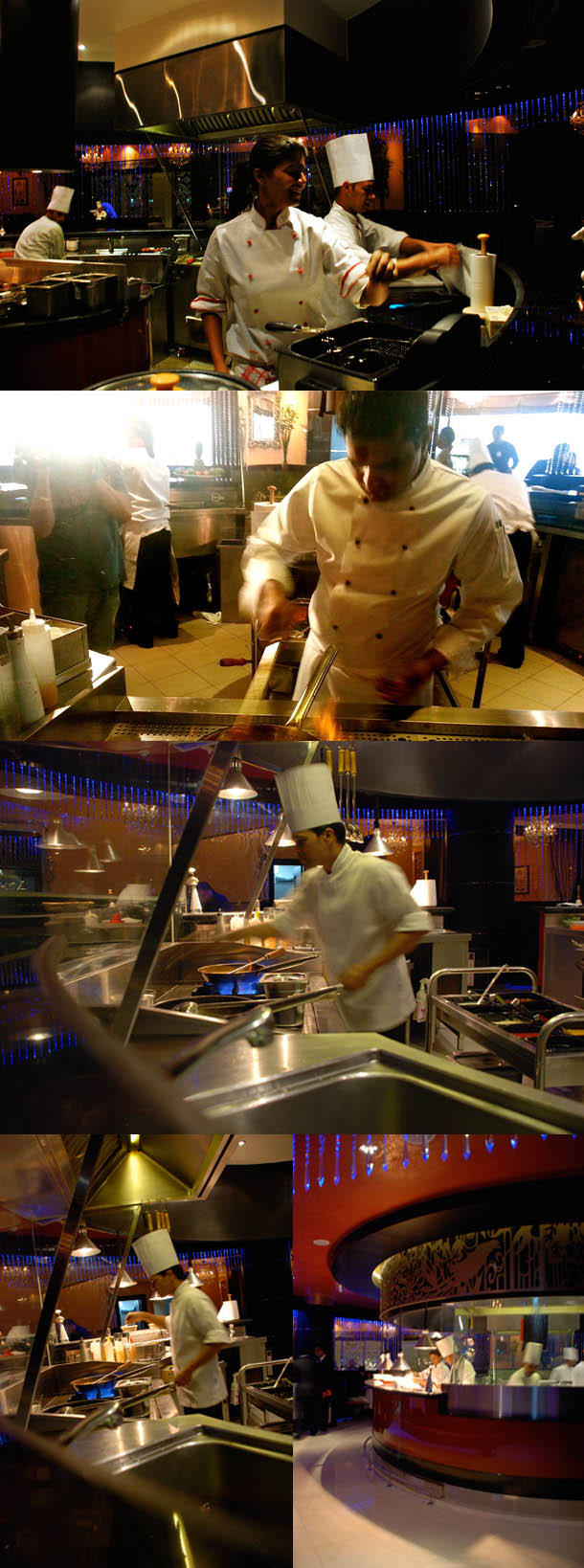
The opening saw Chef Akshada as well as Chef Raturi (Executive Chef of OPTIONS in DWTC, 2nd pic from top in the above image) jointly cook up a storm, or should I say Kebabs, Mutton Rogan Josh and some brilliant Kulchas and Naans (that must have given you the trailer for the Lunch Menu). I didn’t have the luck to sit through the meal as I had better luck awaiting me in terms of being summoned to interview Sanjeev Kapoor.
My previous experience with OPTIONS
Each month a special food festival is celebrated at OPTIONS. I had previously visited the restaurant for RannaGhar, the Bengali Food Festival. Dubai doesn’t have many places where you can get to taste a Bengali meal. My experience was very good. Though there were a few hits and misses – the Kasha Mangsho/Bengali Mutton Curry wasn’t authentic, the fish was too fried in case of Shorshe Bata Maach/Mustard Fish but even for a traditionalista, the Deemer Chop/Egg Chops (Deemer Devil in Bengali), Shukto/Bitter Vegetable Preparation (the most difficult vegetable dish to imitate in my book!), Daab Chingri/Coconut Prawn, Murgir Jhol/Chicken Curry scored high marks. And the Rasgullas were very good – really soft and not too sweet, presented in a very novel way! However, many of my friends who had gone towards the end of the festival didn’t have a good experience to recall. I had also mentioned how this restaurant in Kolkata should inspire the OPTIONS team to take Rannaghar to the next level!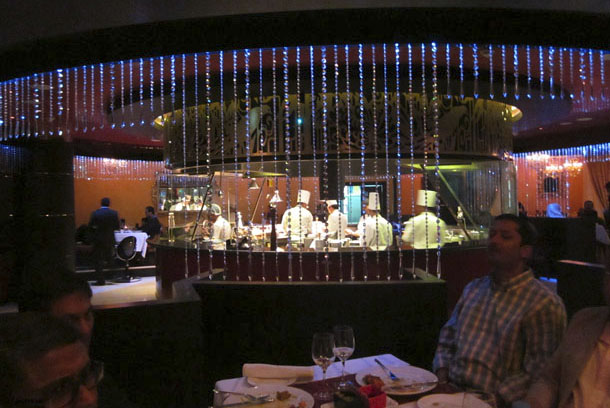
Food tasting and the Soft Launch
Each one of us who had attended the soft launch of the restaurant were given score sheets and were told that the restaurant was going to open up to the public only when each dish had got a score of 10 out of 10!
We felt that the Starters had been extraordinarily good while the Main course still needed a bit of sprucing to match up to the Starters.
In the Starters… The vegetarian Starters kick-started our food tasting. Spinach Dumpling – cooked with Garam Masala and served after unwrapping them from a foil covered pot, were the most delectable (Scored 10); Badam Bahar, another extraordinary rendition of crushed nuts cooked in spices and made into rolls (Scored 10); Vegetable Sheekh Kebabs were a bit disappointing though, falling flat on the taste (Scored 5); Both the Chicken and the Mutton Sheekh Kebabs were soft, juicy and succulent (was told that they had been marinated with special herbs, spices and yoghurt. Scored 10); Tandoori Prawns were mildly spicy, grilled to perfection (Scored 10); Tandoori Salmon was the winner all the way (Scored 10)!
In the Main Course… The Daal Makhni was fabulous – creamy, buttery and rich in taste and aroma (Scored 10); Shaam Savera – this is one of Sanjeev Kapoor’s most popular signature dish consists of Palak Paneer/Spinach and Cottage cheese koftas (Cottage cheese balls embedded in spinach roundels) cooked in a rich creamy tomato gravy… absolutely delish (Scored 10); Butter Chicken failed to impress us. The gravy was too sweet and tasted almost similar to Shaam Savera (Scored 5). Butter Chicken is perhaps one of the most popular dishes in Indian cuisine and is most often requested, specially by non-Indian diners. So, this definitely needed some make-over.
All the above was accompanied by the Bread Basket consisting of various kinds of Naans – stuffed and plain… I would have wanted them to be a bit more soft and fluffy (Scored 7). Worth admitting here, is that the Kulchas stuffed with Green Peas that were served on the day of the opening were out of the world. So I am assuming that the restaurant had worked on their score sheet. On the day of the official launch, we were served Mutton Rogan Josh which would have definitely scored another 10!
How could I forget the sweet sign-off – the Desserts? Unfortunately, not much choice was left excepting Gulab Jamuns. Perfectly sweet for my Bengali sweet tooth, however too sweet for a few of my fellow diners – so we settled on an average score of 8!
A LIVE cooking kitchen in an Indian restaurant is quite a challenge with a whole lot of smoke from the sizzling, specially the Tadka that is associated with the Indian cooking style. I had anticipated a lot of smoke and eye irritation. But this didn’t seem to pose any problem – there must be a strong exhaust system taking care of this. In fact, I felt that the entire experience was pretty much like a 4-D experience – we could see the food, smell the food, taste the food and hear the sizzle while it was being cooked!

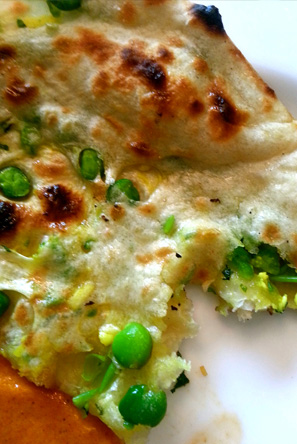
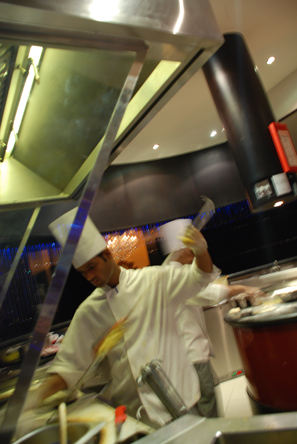
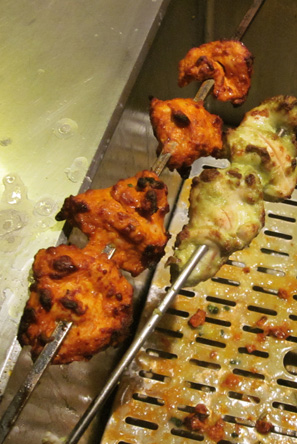
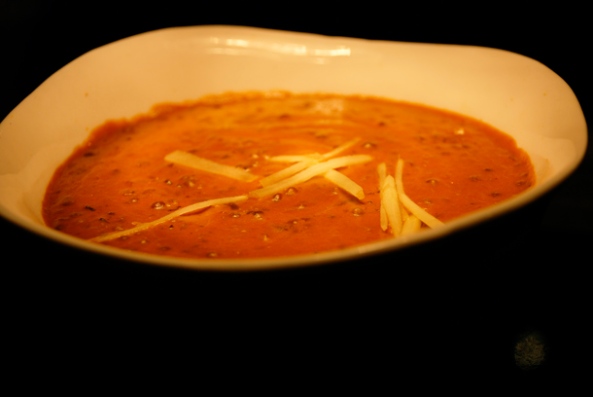

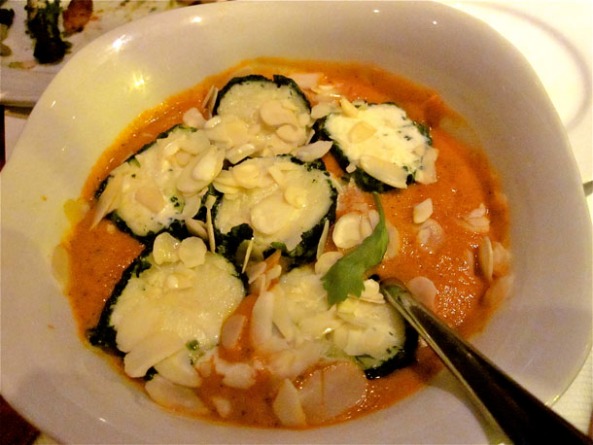
The Fashion Lounge
Adjacent to the Restaurant is The Fashion Lounge – equipped with a huge projection screen and fully stacked bar… a bit of lounging and chit-chat with your friends before you go inside the chandelier-lit restaurant for a formal dinner. I think the location of the new restaurant is going to be it’s USP – there are many diners in Deira but there are not too many fine-dining options. I am also wondering how does both the OPTIONS restaurants plan to re-invent themselves every now and then while maintaining their unique identity, specially in a city like Dubai where a new restaurant opens up every minute and the general trend is to visit a new restaurant every time? Different promotions and innovations are still probably the best bait while making sure that certain exclusivity is maintained in designing the menu, I was told. Is that sufficient to appease the seemingly fleeting loyalty of Dubai diners?
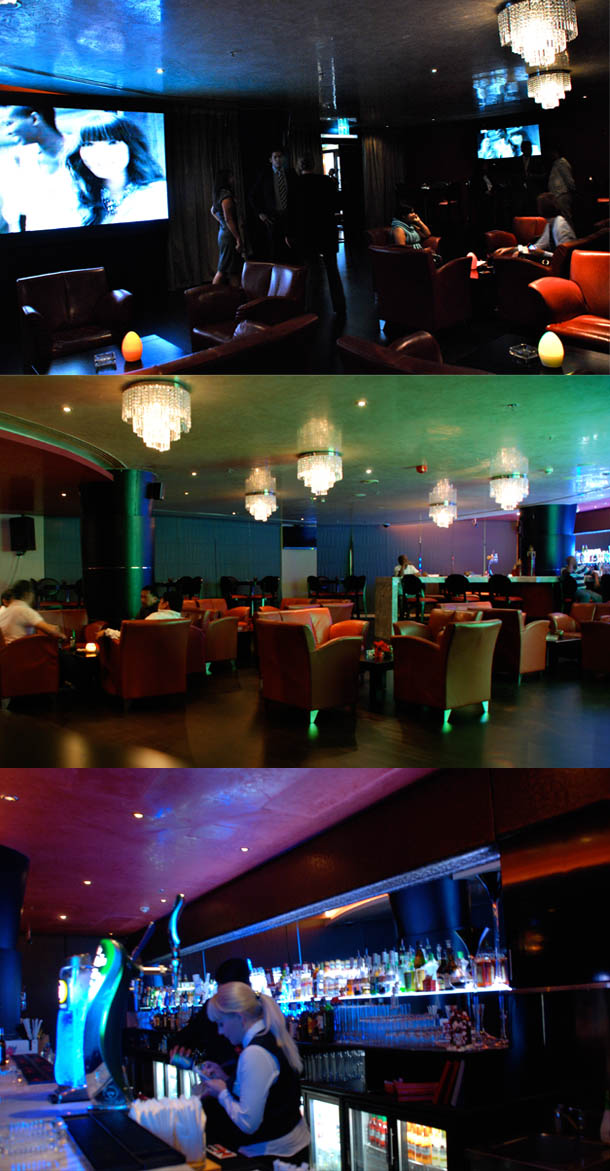
OPTIONS by Sanjeev Kapoor, Deira
Fine-Dining Indian restaurant; Fully licensed; Free Valet Parking
Opening Hours: 12pm – 2:30pm; 7pm – 11:30pm daily
Location: Ground Floor, The Mövenpick Hotel Deira
Tel: +971 4 4446466; Or, you can visit their Facebook Page and Website
◊————————————————–◊
The Romantic Dinner Giveaway
Click here for the Blog Giveaway !
2 couples can win invites to the newly opened restaurant. Friends on referral who join the contest must mention you (referrals could get you an extra point though!). The contest closes next Sunday, 20th January, 2103. Chandi Kaliya, Shaam Savera, Murgh Makhani/Butter Chicken, Methi Chaman, Kaache Gosht ki Biriyani… are just some of the signature dishes that you can taste in this newly opened restaurant, cooked in a LIVE cooking section in the middle of the restaurant. Specially crafted by the MasterChef, Sanjeev Kapoor himself!
Unblogging it all… Ishita
◊————————————————–◊
Disclaimer: The opinions stated here are my own and are independent of the dinner giveaway from the Restaurant. I hope you enjoy reading the posts with lot of visuals. Please do not use any material from this post. You can see more pictures of my travel and food journey here.
BE SOCIAL. SHARE THIS!

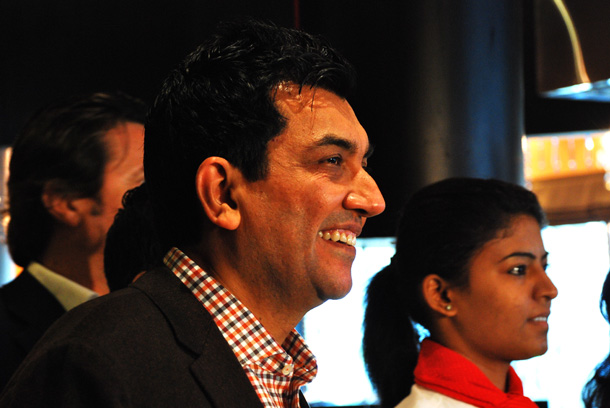

Sanjeev Kapoor needs no introduction. Sounds clichéd. But that is the truth. The million dollar smile that radiates from his face and has earned more than millions of fans worldwide (I wouldn’t be surprised if the figure touches a billion in India!) cannot be the only reason. A celebrity Chef, TV Show host (Khana Khazana, his cookery show on television was telecast non stop for more than 17 years!), author of many best-selling Cookbooks, National Award winner for ‘Best Chef of the Year 2008’, co-owner of India’s first 24 Hour Food Lifestyle Channel, Entrepreneur… the reasons are many.
A few pointers of his fame internationally:
– His cookbook, How to Cook Indian was listed among the Summer Cookbooks of the year 2011 in New York Times (read here)
– He spent his 2012 Easter Sunday visiting the kitchens of the White House (read here). Even presenting Mr President & Mrs Obama a signed copy of his cookbook (pictures in the blog of KN Vinod, an eminent Indian-American chef from Washington who runs three popular Indian restaurants in Washington)
– CNN channel host Richard Quest featured him on a programme on crème de la crème of celebrity chefs – along with Gordon Ramsay, Jamie Oliver, Heston Blumenthal, Wolfgang Puck (more here)
– Rachael Ray, the American television personality, celebrity chef and author describes him ‘as the Rachael Ray of India’ and introduces him in her lifestyle show as an amazing chef who has sold more cookbooks than any other chefs who have appeared on her show (watch here)


Talking to the man himself as OPTIONS By Sanjeev Kapoor opened it’s second restaurant yesterday in The Mövenpick Hotel Deira, the one thing that I learnt from him amongst many others – never leave behind your humility, good behavior and your smile at home when you meet people. This man has single-handedly changed the Indian mindset in making the Chef’s profession fashionable and probably the most sought-after profession. An incredible feat in a land where till now the most revered professions had been Doctors, Engineers, MBAs and Civil Servants. Most Indian Chefs that I have had the opportunity to meet, acknowledges this hands-down (The Bohemian Chef too agrees). Our conversation starts off taking a cue from here.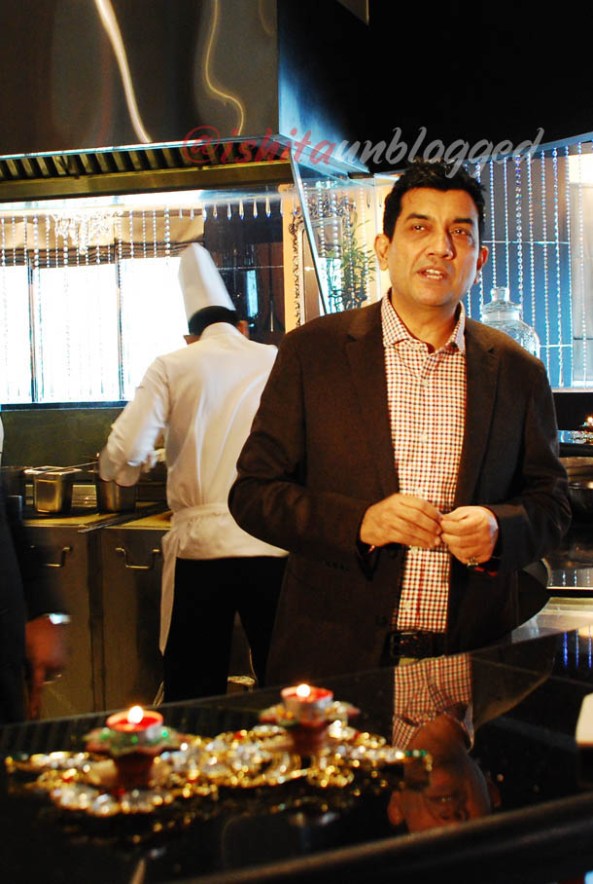
You’ve given the designation of ‘Chef’ a lot of credibility in India and have made the profession fashionable. How do you think you did that? Was there at all an intention like that – to change the mindset?
I was not a typical Chef. When I started, I didn’t know what a Chef is, who a Chef was or how the entire thing works. No one in our family or friends’ circle or in our neighborhood was a Chef. It’s not that I had a passion for it. The only criterion was – it had to be something creative and something different. It could have been anything and I would have done that.
Then why not something else? Why Chef?
Initially, I thought that I would do Architecture – it fitted all criterion. Then somehow I got introduced to this field and I thought ‘Oh my God! This is very different’. That was the motivation. It’s like how you quit your job and started your blog (yes, I had already told him how I wanted to spend my lifetime writing on Food and Travel). Did anyone do any arm-twisting? No. That was your choice. Did you know that you would start writing a blog? Or when or how you’ll start? (I told him – yes, I knew I wanted to write on travel & food, that’s it!) But did you know when you’ll start? In my case, I was certain that I wanted to do something creative. Fortunately, my parents were very supportive. Today, I’m supportive of whatever my two daughters want to do. One is studying Law and the other is a National level athlete. So, people often wonder whether that bothers me and they ask me – ‘Isn’t it good to have someone from the family to manage your business?’ No, it doesn’t. I’m happy for my daughters. They are doing what they want to. I can always hire people to manage my business. But I cannot give my daughters what they want if I don’t give them that opportunity. I don’t want to take that choice away from them.
(Absolutely touching! I stop myself from being overtly emotional as I have two daughters myself and I have told the Z-Sisters that I’ll do whatever it takes to support them to help them achieve their dreams. Taking this discussion to a different level, I think that it’s equally important that the MasterChef’s message reaches out to those families, specially in the subcontinent, where girls are still not given equal opportunities as boys. Although much is changing in many places, even remote places, as I found out in the Tharu village in Nepal.)
Since I was very different, I started doing things differently. One of the first things that I realised when I started working in the kitchen was – the Chefs were not teaching. It was a pain to be in a kitchen when I started. The Chef’s cooks had the skills but they were not educated. Moreover, the Chefs felt insecured to train anyone else (The Mummy syndrome, I said!). It was very frustrating. If you wanted to know something, you had to learn and you had to learn it very very fast. So I asked myself what I could do? Well, this is what I can do. For me it’s going to be difficult to learn. But as soon as I learn something, I’ll teach something. I started this right from my first job. As a trainee I started to train. This started creating opportunities. At that time, I didn’t know that what I did would eventually turn out to be what I am doing now. So it all started because I decided to share my knowledge.
Sharing has been the key to your success as a Chef and an Entrepreneur. Right now you’re both. If you were to choose between the two which one would you choose, assuming you were starting all over again?
Any skill that you have – for example cooking – one you cook to earn and the other you cook to feed. As a Chef when you work and cook, it is to earn. And while you cook it pleases you. And when you are getting paid, you are already an Entrepreneur. If you are working in any job and you don’t start thinking like an entrepreneur, don’t work!
My first job outside India was in New Zealand. I opened an Indian restaurant for someone. Within 6 months I realised that right next door, a restaurant space was available. Economy was down. I told the owner of the restaurant which I set up – let’s rent the other one. We’ll use the same kitchen and I’ll manage the cooking for both at an increased wage of 500$ while he only had to invest in the interiors. Suddenly, I was thinking for him, I was thinking as an entrepreneur and I was also working as a Chef. No matter what you do, if that is being done to earn, you are already an entrepreneur. It’s not either/or.
Khana Khazana broke the entire mindset of Indian people. It has been one of the longest running show of its kind in Asia, broadcasting in 120 countries and having more than 500 million viewers. You have your own Food Channel. What would be the next level of aspiration for Sanjeev Kapoor?
(Laughs) Not many people realise that I’m always doing something new. I feel there’s so much that needs to be done and there’s so much one can do. My dad had said something that has struck me forever – You don’t know what you are doing. In India, the power of cooking has never been understood. You are giving this power to women which they already have but only now can be celebrated. This is in some sense, emancipation of women. And that is your contribution. I felt that these words were too powerful and I thought if this was the change that I have brought about, then I haven’t changed the way people look at Chefs but actually I have changed the way people look at women. So I thought that I have to do more. I started a company where we train women to cook. These women in turn trains her circle of friends. But what is the motivation? I may be charged and motivated. But to motivate these women, you have to bring in money into the system. So, we have created a model where we have almost 500 kitchen products and these products are embedded in our training programmes. It’s simple at one level, complex at another level and also commercial. Today we have over 15,000 such franchises. These are women who love to cook and are happy to earn. I know so many women who are making Papads, Pickles and so many other food items to sell. Now they are getting an opportunity to to earn in an organised way.
The topic of women brings us to OPTIONS which has brought on board Chef Akshada, probably one of the very few lady Executive Chefs in Indian fine-dining restaurants in the world (and definitely Dubai’s first!)
That’s true. The feminine touch will probably bring back all your nostalgia related to your mother’s cooking.
How does he plan to keep Sanjeev Kapoor, the brand – unique and exclusive with so many different upcoming Franchisees? What brand positioning does he want his fans and customers to relate to? (I asked this question on behalf of one of my readers – I had kept the Facebook Page and Twitter open to my readers who could ask questions – via me!)
Each restaurant has it’s own concept and idea. OPTIONS will be making sure that the diners get the best of Indian Cuisine cooked in the most traditional way. The ‘Live’ cooking in the middle of the Restaurant is going to be exciting for sure. Diners will anticipate for the Food as they see it being cooked, out in the open. You can see the food being cooked, interact with the Chefs as well.
3 questions that I have decided that I’ll be asking from now onwards to any Chef that I talk to…
1) Which food can catch on as the next Indian food trend apart from Butter Chicken, Chicken Tikka & Chicken Tandoori? (No offense meant to my British friends but aren’t we a bit overfed with these three?) (Laughs) Actually, now people are getting used to more regional dishes, specially South Indian food.
I barge in – this is one thing that upsets me – Indian food means either North Indian food or South Indian snacks – Idli and Dosas… nothing in between. So it is the people from those region who have to take pride in their own food and come forward.
I barge in again – So there’s scope for a Bengali food blogger to come forward to the rescue? Of-course, hundred percent!
(He does take the names of some popular Bengali restaurants that he had vsisited. Interestingly, Mumbai has more Bengali restaurants now than restaurants serving local food. Wherein, I suggest that the next time he visits Kolkata, he must try this restaurant, offering contemporary Bengali Cuisine)
2) As a Food blogger I always feel inadequate when I write posts that cannot provide solutions or relate to the many food problems in the world. As in – more people in the world die of hunger or health related diseases rather than violence, accidents or natural disasters. Do you think that it’s the restaurant or the food industry’s responsibility to educate people or should that be left to individual choices?
The restaurants should inform but at the end, this has to be left to individual choices.
There are ‘healthy menu options’. But what if the entire Menu is revamped and recreated in a healthy way?
Even today when people go out to eat, the primary reason is to taste. Eating out is a social outlet where people want to be happy. Unfortunately, the common perception of healthier food is equal to boring food. The trend is changing though. More healthy options are entering the restaurant Menu. It can be healthier not just healthy. But it will take time. Till then information is important. It’s difficult but not impossible. For example, 15 years ago, when I started my first restaurant in Dubai, we had started making Bran Naans (Indian Flatbreads) and started cooking with Olive Oil. Within 3 months we had to change as no one was ordering them. Even today, the Kaali Daal or the Black Daal has to be with the Makhan/Butter and Cream. Everyone knows Yellow Daal is lighter and healthier but people prefer to order Kaali Daal when they dine out!
Do you read Food Blogs? Do you think that they have some responsibility? Or, do you think this way – we already had food critiques, why again Food Bloggers?
Everybody has a responsibility. I think it’s not understood very well. Food Blogging is not only critical, it is a responsibility. Any type of writing or sharing of thoughts is a responsibility. The more responsible you are, the more number of people you can reach and the more responsibility you have. You are creating an impression and you are influencing minds. If you understand that you have that power, then influence in a responsible way. It is like Spiderman’s power. (Woohoo! Already Tarun, the RJ from City 1016 comes and tells him that he has a link going live soon. And I too realise that I had overshot my allotted quota by 10 minutes. But I still had a lot to ask. Quite naturally! Probably I’ll shoot an email and hope that they get answered! A few other pertinent questions – including ‘whether Dubai is ready for Michellin?’ has already been answered in FooDiva’s interview with the man)
What’s your favourite Bengali food? Bengali fish or Bengali Sweets? (Oh, I shoot out this last one as I get up from my chair and gather all my belongings – the recorder, my Nikon, the Notepad, my bag and myself. I did resemble pretty much the mad, unwanted stranger who’s shooed out of an elegant office… I’m sure you must have seen the kind of a scene I just described in movies before!)
Mishti Doi. (Wow! So, here’s my recipe in Beram & Tagine E-Magazine, where Mishti Doi and Payesh pictures have been swapped with each other!!)
Finally, my wait was over and I met MasterChef Sanjeev Kapoor. I had attended the soft launch of OPTIONS Deira a few days back and was eagerly anticipating it’s official launch (Pictures on my Facebook Page – Soft Launch and Official Launch). This restaurant was not going to be different from the one that is located in the Dubai World Trade Centre (DWTC), where I had attended RannaGhar, the Bengali Food Festival. As Mr Md. Sayed Hussain, the Chairman, said – ‘When you are dining in the Deira restaurant you shouldn’t feel that anything is less than the one in DWTC. The decor, the service, the food – everything should be at par. In-fact, the diners should feel that yes, they are indeed eating in the same award-winning restaurant as OPTIONS in DWTC’. OPTIONS by Sanjeev Kapoor, DWTC has just won the Masala Award for the Best Asian Restaurant. Congratulations to the OPTIONS team and the man himself!
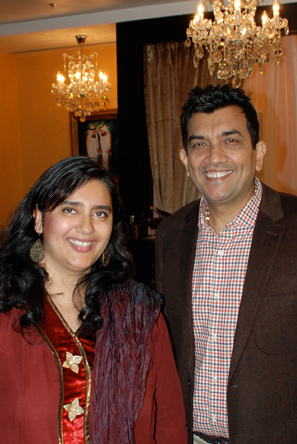

Okay, so I met the smiling, ever ebullient Mr Charm himself. His smile is intoxicating. So is his energy level. But who got to keep his signed autograph? My Mum-in-law! She’s been a major fan and has been writing down each and every recipe that has been shown in Khana Khazana! There’s also something in store for you. Stay tuned for the next post which is going to be exclusively on the newly opened restaurant and for which 2 couples will be winning dinner vouchers!
Unblogging it all… Ishita
◊————————————————–◊
Disclaimer: This interview got published in Sanjeev Kapoor’s website as well. Please do not use any material from this post. I hope you enjoy reading the posts with lots of visuals. While you enjoy seeing them, please don’t use them as some of them have been taken from our personal albums just to make your reading experience more pleasurable. You can see more pictures of my travel and food journey here.
◊————————————————–◊
Resource:
http://www.ifood.tv/network/sanjeev_kapoor
http://www.foodfood.com/chefs/chef-sanjeev-kapoor/
http://www.sanjeevkapoor.com/
BE SOCIAL. SHARE THIS!

Bohemian… bəʊˈhiːmɪən/a socially unconventional person, especially one who is involved in the arts… a nonconformist, unconventional person, beatnik, hippy, avant-gardist, free spirit, dropout, artistic person;

I have just returned from a short Christmas break in Prague. Apart from being the Czech capital, Prague also happens to be the capital of the region – Bohemia. This was a sojourn which was Bohemian in spirit. A bit of self-introspection – without my husband or the Z-Sisters, along with a bunch of 6 other girlfriends. We came back giggling like school girls. Till I had boarded the plane and it was off the UAE soil, everybody had doubts whether I’ll be actually going. The once self-proclaimed Bohemian Me had now become too domesticated with age and mellowed down by the Z-Sisters!
My Bohemian sojourn had already begun on the blogging front though, with our visit to the Bo House Cafe on the JBR Walk. The restaurant claims to be the house for Mohemians – the Modern Bohemians. However, deep down in my heart I knew that after my Prague visit, the first post of 2013 would have to be on a restaurant in Kolkata, which I had visited long back in August 2012, but had been waiting all this while to write a post. Absolutely Bohemian in the creation of it’s menu, the small restaurant reflects the true spirit of being free-spirited. Thus, worthy of being the first post in the New Year. A year, I’m hoping, would be free of all turmoil and procrastinated thoughts!
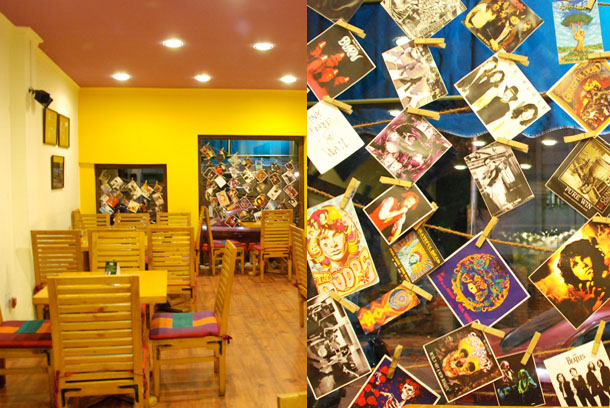
I first heard about this restaurant, aptly named Bohemian, from my friend Yummraj. The menu seemed quite intriguing – Gondhoraj Lebu Sorbet & Gondhoraj soufflé, Vegetable Monihari with tender Coconut & Gondhoraj Lebu, Prawn Gondhoraj, Bhetki Gondhoraj… my mind was quite blurred. After-all, I have been playing the chasing game with Gondhoraj Lebu for a long time now. This specific Lime that originates in the Bengal shores is chalked out in my olfactory cells and tastebuds for ever. A bit from my very Bengali post, Traditional Bengali Cuisine… In ‘Slight’ Details… Squeezing a bit of Gondhoraj Lebu or the Bengal Lime in Dal/Lentils, specially Mushurir Dal/Masoor Dal or Bhaja Moonger Dal/Fried Moong Dal is very unique to Bengali Lunches. These limes have their own aroma and something that I haven’t been able to find beyond the shores of Bengal. Although we have tried finding substitutes for many things as we lead our Bengali lives in non-Bengali shores. The closest I’ve come to the aroma of Gondhoraj Lebu is the Thai Kaffir Lime! Kancha Lanka/Green Chillis, Gondhoraj Lebu/Bengali Lime and a pinch of Salt in the corner of the plate is a trademark of traditional Bengali meal.
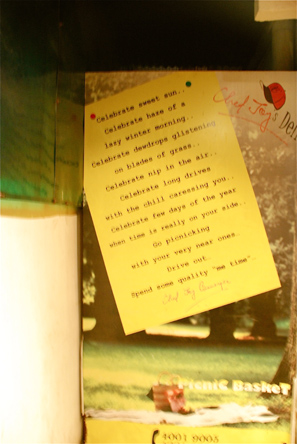
The place where the restaurant (above left) stands now – the 32/4 Old Ballygunge 1st lane, is where I have practically grown up and spent almost my entire life before marriage. We have been living in Iron Side Road just off the Ghughudanga Bazar area – the local street market around the corner. There used to be a STD booth here from where I have made numerous phone-calls to S during my unofficial dating period while he was posted in Srilanka. Never ever realised at that time that there would be a building here, erupting tall from a very narrow plot and it would soon become such a sought-after place in Kolkata. And there will be people lining up and wait outside ogling at diners inside, directing all their energies to make sure that they gulp their meals fast, making space for those waiting outside!
Okay, I do admit that I did a lot of research before going to eat at Bohemian. Nothing intentional. In a way, I was forced to. We generally spend the months of July and August in Kolkata – a period that I refer to as my summer hibernation, while Dubai boils and all the schools shut down. I shift my work base from my spacious study table of my Dubai home to the dining tables of our Kolkata homes, squeezing my laptop between steel utensils holding the Maacher Jhol/Fish Gravy or the Daal or the Aloo Posto/Potato with Poppy Seeds. A distracting work ambiance for sure but highly energising for sure. This summer, from the time I had landed in Kolkata, I practically saw a smiling face of a man called Chef Joy in some magazine or the other and every other person chanting about this restaurant called Bohemian.
I got in touch with Chef Joy and reached Bohemian one fine evening, much before the crowd started flooding in. My recorder conked off that very day and I resorted to typing in as much as I could on my Macbook! Somebody told me later that I could video the entire chit-chat. Oh, thank you very much! Chef Joy had his own visions and ideas and his passion for doing something different definitely shone through. When I had left Kolkata in 1999, there were not many restaurants serving Bengali food. The only places that come to my mind are Aaheli in Peerless Inn Kolkata and Suruchi – two diametrically different restaurants offering Bengali food. The former was a decent place to visit while the latter restaurant had become quite jaded with time. Suruchi had once been really famous – it was formed by the All Bengal Women Union Home and was run by women only. Apart from it’s fame in home-cooked Bengali delicacies, this place has had its moments of glory with famous diners like Satyajit Ray and others.
I don’t exactly remember whether Sonargaon in Taj Bengal had started operating at that time. But in those days, 5-stars were not some places where we could visit with our dwindling, almost-never-ever-replenished pocket money or the little earnings that we had in our beginning of our careers!
When Baba’s friends came from abroad, it would be Ma showcasing her skills, initiating them into the nuances of Bengali Cuisine. Kolkata has always boasted of great restaurants (for instance, the fabulous Chinese restaurants flocking Park Street) and has had a rich food culture – be it street food or fine-dining but there were hardly any place where one could go to have a traditional Bengali meal. Probably, it wasn’t required with most homes cooking traditional fare on a daily or pretty much regular basis. If going out was going to be a treat then why go to a restaurant serving Bengali food? Wasn’t that available at home anyway? The last decade has seen a major shift in this view – so many good restaurants have opened up in Kolkata which specialises only in Bengali Cuisine. The new generation is also looking forward to trying these out along with their burgers and the Pizzas. Probably it has also got to do with the fact that the modern Bengali kitchens too have resorted to other cuisines, home deliveries and microwave meals.
Amidst all the Bengali restaurants that have flooded Kolkata, how is Bohemian different? Chef Joy (who previously had been the Head Chef of Oh! Calcutta, another famous chain of restaurants) sweetly sat through the entire rendezvous and explained in his own words…
“Smoking, pan grilled – these are not traditionally Bengali cooking techniques. Nor are the desserts traditionally Bengali – the Mousse or the Soufflé. But the spices used are all Bengali Moshla/Spices. The fresh produce is locally sourced and very indigenous. Even a few years back, there were not many restaurants serving Bengali food. Bengalis, in general, didn’t have the inclination to eat Bengali food when they went out to eat. Not many believed that a Bengali restaurant could be made commercially viable. Here, the contribution of Oh! Calcutta has been huge.
Bengali Food doesn’t only mean Maach-Bhaat/Fish & Rice. There has been many foreign influences – for example, 150 years of British rule or the Portuguese influence, even the Armenian influence… The Vindaloo is different in Kolkata. Bangali khabar manei Shorshe-bata Maach aar Paturir Noy. Bangali khabar shudhu Bangalider modhy sheemabodhyo kora uchit noy. Amar iche Bangali Khabar onyoder kaacheo pouche dite/ Bengali food shouldn’t only mean Mustard Fish or Fish popularly wrapped in Banana leaves. Neither should Bengali Cuisine be restricted to the Bengali people, I want others to experience Bengali food as well. Art is only appropriate or successful when it is appreciated. It is a small restaurant at this moment. But there are big dreams. Flavours are not alien to Bengalis but the treatment is. Hence I would call this Contemporary Bengali Cuisine.
We start off on this alien treatment with our drinks and starters. Here, I would like to mention that we had visited the restaurant twice and I’m clubbing the food that we tasted from both the visits.

Drinks: The different drinks that we had ordered were Gondhoraj Julep (Gondhoraj Lime, Coriander leaves & lemonade), Mint Julep (Lime, Mint leaves & Lemonade), Bluuu (Blue Curacao & lemonade), Sunny Citrus Cooler (Pineapple, Ginger Ale, Orange juice & Lemonade), Magic Potion (Pineapple, Mango, strawberry & Ginger Ale) and Sex on the Beach (Peach Nectar & Cranberry juice) – Oops!
The Verdict – The Gondhoraj Julep (above pictures) was definitely the show stealer. As I have mentioned before, Gondhoraj Lime has a fragrance that’s absolutely unparalleled and combining it with coriander leaves rendered it absolutely refreshing. Second in heed would be the Mint Julep (below). I’m always apprehensive about Mint and find it’s flavour too strong for my liking. Since the leaves were probably not crushed and floated in the Lemonade as uncut sprigs, I think the aroma seeped in without the intense taste of the mint – an idea that I’ve used as well in my video of how to make Aam Pana/Smoked Green Mango Drink for My Dubai My City!
Panch Phoron laden food: What makes the Bohemian menu intriguing is the amalgamation of flavours. And the use of distinctly Bengali flavours and spices in it’s non-traditional cooking. There’s an element of surprise in each and every dish that is served. Maybe not so surprising for someone who’s not aware of Bengali food. But for a Bengali, to find his/her favourite dish with an international twist or an international dish laden with unique Bengali spices like Panch-phoron/5 Spice Mix is definitely a novelty. Panch Phoron features strongly in most of the Bohemian dishes and very rightly so – since this is probably one spice that can uniquely differentiate Bengali Spices from other Indian Spices.
[Panch Phoron is a very unique Bengali spice blend and consists of five spices in equal measure. The 5 spices that make up Panch Phoran are – Methi/Fenugreek; Kalonji /Nigella seed/Black Cumin; Radhuni – Radhuni is similar in appearance to those of Ajwain, Celery and Caraway. Because of their similarity in both appearance and flavor, it is often confused or substituted with Celery seed. Radhuni is often used in traditional Bengali cuisine but are rarely used in the rest of India. In absence of Radhuni, many substitute this with Rai or Shorshe/Mustard seed – the black or brown flavored one; Saunf or Mouri/Fennel seed and Jira/Cumin seed. The above 5-Spice Blend is courtesy Bong Mom’s Cookbook.]
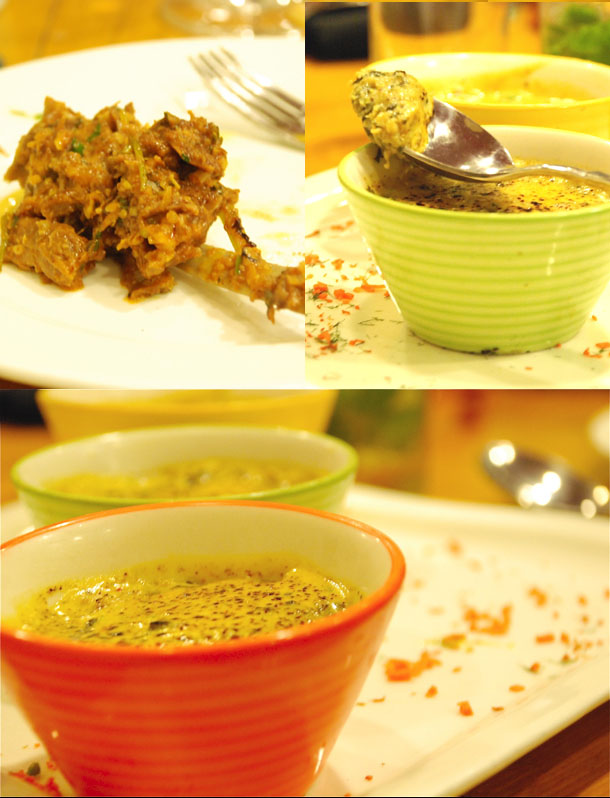
Starters: We had ordered Panch Phoron flavoured Chicken Escallops (picture much above along with my Macbook), Vodka soaked Prawns with Grilled Garlic Aioli (gobbled up much before they could be photographed!), Joyous Mutton Chops (above left in the 1st row) and Chilli Pickle n Cheese baked Crab with Kolmi Greens (above and also above right in the 1st row).
The Verdict – Each dish had it’s own flavour and story, minutely detailed in it’s flavouring. For example, the Chicken Escallops had been marinated with Panch Phoron, ginger paste, chilli paste, lime juice and grilled. Occasionally basting it with well, what else? With Panch Phoron oil. But the winner would be the Chilli Pickle n Cheese baked Crab with Kolmi Greens. Hands down. No questions asked. This was a mix of Crab meat & Kolmi Shaak (also known as Water Spinach and is very commonly used in Bengal – as a preparation with other vegetables like Potatoes or simply stir fried). Interestingly combined with a spicy Chilli Pickle and baked with creamy Cheese on top!
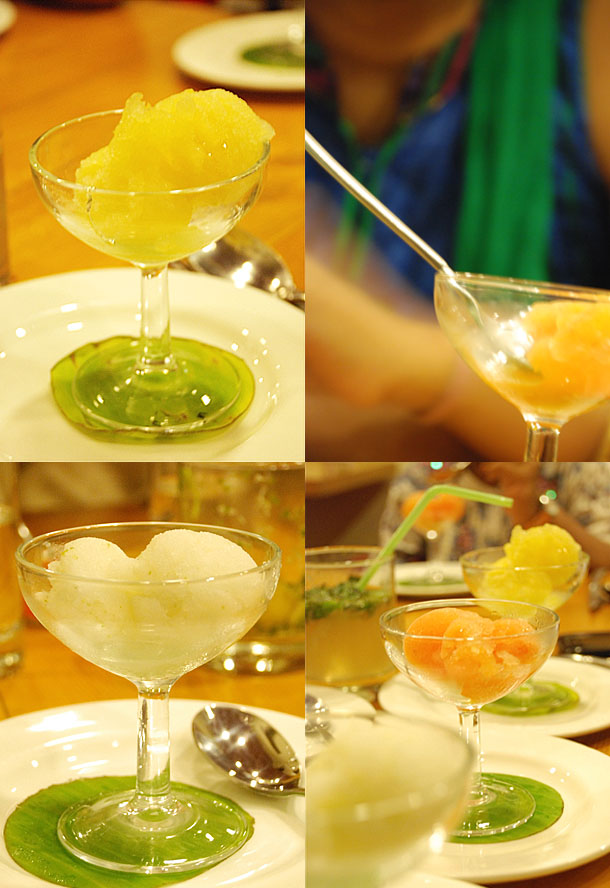
Palette Cleansers: Definitely worth-trying. We had ordered Green Mango & Honey Sorbet (above left in the 1st row), Orange & Aam Adaa Sorbet (above right in the 1st row) and Gondhoraj Sorbet (above left in the 2nd row).
The Verdict – We absolutely loved all the Sorbets that we had ordered. But the Orange & Aam Adaa Sorbet had a very distinct pungent taste of Aam Aada – definitely a Palette cleanser! What is Aam Ada? Dried Ginger sprinkled with Aamchur/Mango Powder? And ofcourse the Gondhoraj Sorbet wins hands down. Such distinct flavour of the unique Bengal Lime!
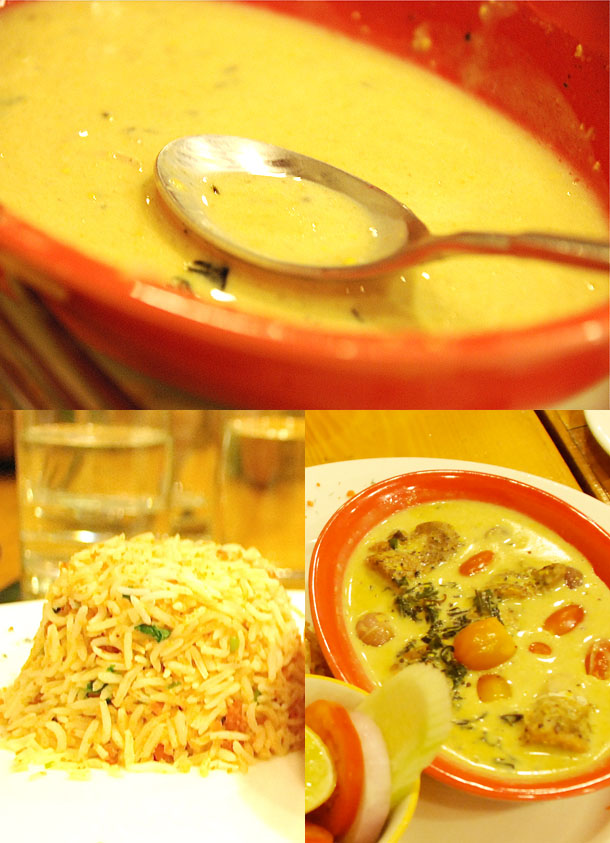
Main Course: We had ordered some ‘tweaked traditional fare’ according to the Menu… Daab aar Gondhoraj Diye Shabji-r Monihari/Vegetable with Coconut & Gondhoraj Lime, Phoolkopir Malai Curry/Cauliflower Malai Curry. Interestingly, there are many vegetarian options in the Menu which sounds absolutely drool-worthy and exotic.
Between the two days we had tasted the following…
In Fish: Pabda Rolls stewed in Cherry Tomato & Spinach Broth (above), Panch Phoron flavoured Parshe with smoked Green Chilli Sauce, Grilled Bhetki with Bengal Berry Sauce, Bacon baked Tilapia with Ginger & Fennel and Prawns with Muddled Grapes & Chillis. In Meat: Spicy Pork Curry (Anglo-Indian spices), Royal Bengal Roast Mutton with Bhuna Sauce, Mutton Vindalaoo (Calcutta style), Ham Steak – Chef Joy’s style. And also a Pasta… Penne with Alfredo Sauce!
The Verdict – Some culinary experiments work. Some don’t. And the verdict does depend upon individual taste preferences. I feel in Bohemian a lot of these work. I loved my Pabda Rolls stewed in Cherry Tomato & Spinach Broth. Also the Panch Phoron flavoured Parshe. My mum-in-law didn’t. She found the taste of Panch Phoron too strong. Again, that’s exactly what made the dish memorable for me (No, there’s no Mum-in-law Daughter-in-law enmity between us!). For the Pabda I wouldn’t mind having the Broth as a soup (above)!
All dishes by Chef Joy are an amalgamation of flavours and much like abstract art, each dish will have it’s own suitors. My friend was probably expecting a ‘traditional’ Ham Steak and was slightly disappointed. On the other hand we were so used to Goan Vindaloo that we were surprised to stumble upon our own Mutton Vindalaoo (Calcutta style)! I wasn’t even aware of any Vindaloo existing in Bengali Cuisine so far. I loved the Grilled Bhetki with Bengal Berry Sauce. Who could ever imagine that Kul or Bengal Berries could actually be used to make such a tangy & exotic sauce? My brother is a skeptic. He was transfixed with his Royal Bengal Roast Mutton with Bhuna Sauce. But he was craving for some Luchis though!
A few interesting elements here and there… crumbled Bori (Boris are sundried Lentil Balls used as crispy add-ons in vegetables, Daals etc – very readily available in most Bengali Kitchens) in the Rice Pilaf, use of typical Bengali Spices like Panch Phoron, Radhuni, Mouri or the Aam Aada to tweak the dishes… Pickles & Chillies, readily available and most commonly used vegetables like Kolmi Greens, Spinach… everything tasted exotic. Each dish was made from locally sourced ingredients and most importantly from ingredients that had always been existing in the Bengali kitchen all this while.
My suggestion here, would be to include some Chutneys too before making the transition to formal dessert-tasting.
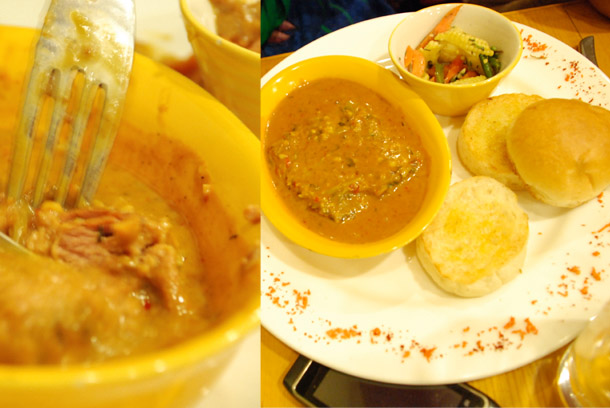

Desserts: Again, between the two days we tasted Malpua Cheese Cake (we tasted this on the 2nd day as well!), Gondhoraj Soufflé (Yes, my obsession with Gondhoraj continues & we tasted this on the 2nd day too!), Spiced Mango Soufflé, Mustard and Tender Coconut Mousse, Channa Panch Phoron Mousse.
The Verdict – To please the sweet-toothed Bengali, this has to be the final acid test for any restaurant. We loved the Malpua Cheese Cake. The very concept of using traditional Malpua (Malpua could be equated to Pancakes with a filling, deep-fried and dipped in Sugar Syrup) as layers inside a Channa Cheesecake is amazing. However, the Soufflés in both the days had become overtly melted and very, very soft. Almost served at room temperature. Again, the combination that went into the mousse blew our imaginations.
Many months later when I was having Cinnamon, Saffron and Chilli Chocolate Crème brûlée in Al Maha Desert Resort & Spa, I suddenly remembered the novel combinations that went into our Desserts in Bohemian.

I had visited Bohemian twice – once with school friends who were probably more exposed to different types of cuisines and were open to experiments. The other time (the acid test) was when we visited with two sets of Mums – my Mum and my Mum-in-law and the whole jing-bang lot! Generally these two Mums are very skeptical about any experimentation, specially of Bengali food that has been cooked in others’ kitchens. What was their verdict? I had expected a whole lot of ‘Nunta ektu beshi/It’s a bit too salty!’ or ‘Maachta ektu kancha/The fish is still raw!’ But apart from ‘Panch Phoron ta ektu beshi na shob kichute? Kintu kharap lagchilo na, ki bol?/Isn’t the Panch Phoron a bit too strong in all the food? It wasn’t tasting bad at all, what do you think? -‘ which I would take as a very very mild version of their normal selves. Which means that Bohemian had passed the acid test with flying colours!
That brings me back to my chit-chat with Chef Joy (CJ)…
I’m surprised to see the Café loving internet generation hanging around in Bohemian.
CJ: Interestingly, we have a very young crowd as well as the elderly visiting us – from age 17 – 85 – everybody is enjoying the Bohemian food. This is a big achievement. The generation growing up on Pastas and Burgers are trying out our dishes. Not only is the age-group widely distributed, so is the social demography. It’s not only the Bengalis who are coming to Bohemian but also the Marwaris, Biharis and every other community.
Special Plans for the Pujas or in the near future?
CJ: Only one special plan… Consistently bhalo khabar banabo/will cook good food consistently!
Do you like cooking at home?
CJ: Cooking is completely based on circumstances around you… At home, my mother cooks a Doi Maach/Yogurth Fish that’s my personal favourite.
Any plans to add that to the Bohemian Menu?
CJ: May be! I am not fussy about eating and I like to eat with an open mind.
How did this Bengali Fusion come into your mind?
CJ: I’m not the first one to experiment or incorporate other types of cuisine into the Bengali kitchen. The famous Chingrir Chine Kabab, a popular recipe from Thakurbari (the house of the Tagores) has done such a fusion many years years ago. There’s a lot of legacy left behind by Anglo-Indian cooking, specially the Cooks of old hotels like Grand Hotel, Kolkata or say the Bawarchis of yesteryears who have created a niche segment in the colonial Clubs in Kolkata… how can you say that the Vindaloo or the Jhal Fraezi is not ‘Bengali’? Or the Railway Mutton Curry for that matter? These people knew the complete art of cooking – from A to Z. I wish that the Bengalis are more educated on their own cuisine without limiting it to Fish Curry and Mustard Oil. Do you know that there are 700 different types of Jaggery available in Bengal? Tell me, how many people know about Thakurbarir Ranna?
The Bohemian Menu is quite vast. Isn’t that a problem when you are cooking everything afresh?
CJ: More the merrier! Kono shoja kaaj korina/I don’t do anything that is straightforward and simple! I am building up an aquarium at home – a coral reef aquarium – for a long long time now. It’s difficult but I’m doing it.
It must be heartening for you to to see that being a Chef has become quite a fashionable profession now?
CJ: Definitely! The contribution of Master Chefs like Sanjeev Kapoor are immense. To make the profession fashionable and desirable to the younger generation, acceptable to the society, an addition to the ‘type-casted’ professions like Doctors, Engineers etc. Even Bollywood has also contributed to this change in the mind-set. Imagine the change in the perspective from films like Bawarchi a few years back to the suave Chefs of today who are the heros of films like Salam Namaste or Chini Kum. [Sanjeev Kapoor, Bawarchi, Saalam Namaste, Cheeni Kum, Bollywood]
Talking of Sanjeev Kapoor, yes, I had an opportunity to interview him as well. Also, I remember referring Bohemian to Chef Raturi when I was invited to Rannaghar, the Bengali food festival at the award-winning restaurant in Dubai – Options by Sanjeev Kapoor in October (my review of Rannaghar). The restaurant did a brilliant job in serving up a traditional Bengali fare. Yes, there were a few hits and misses – but in a city inundated with multi-cuisine options but unfortunately not a single, good Bengali restaurant that one can boast of, Rannaghar scored reasonably well. But to conjure up a menu like Bohemian would be to alleviate it to the next level – where the diners are introduced to an exotic gastronomical experience, irrespective of the region from where the cuisine comes from. And to make sure that the taste appeals to all.
Bohemian
Contemporary Bengali Cuisine; Restaurant, Take-away & Home-Delivery
Tel No: + 9133 6460 1001/6460 1002 (Bohemian – The Restaurant); + 9133 4001 9005/4001 9006 (Chef Joy’s Deli – For Home Deliveries)
Address: 32/4 old Ballygunge 1st lane, 700019
My obervations here:
1) Reservations are an absolute must as the space is very limited!
2) Dishes take a bit long to prepare and arrive at the table, so have a go at the entire Menu and place all the orders – from starters to desserts together.

The Bohemian experience is quite similar to the gastronomical extraordinary experience I had recently in Prague in a restaurant called La Degustation. The restaurant is an epitome of fine-dining, recommended by Anthony Bourdain, the American Chef, author & TV presenter. The comparison is not in terms of the get-up of the restaurant but in terms of it’s food philosophy – presenting food like a painting on canvas – sometimes detailed as a miniature painting and sometimes random strokes from an Abstract painting (I’m sure even these random strokes have been tried and tested). I haven’t had traditional Czech food before visiting La Degusation. But they prided themselves on serving up a Contemporary Czech Cuisine and it really filled up my senses. Quite similar to the Bohemian food philosophy. Though the above picture was taken before I had even tasted the Bohemian food, I want to keep it as it probably describes my reflection of the restaurant after I had tasted their food – Bliss!
I visited Bohemian in August, 2012… and my post is coming out in January 2013. I do have a long blog queue but somehow after I had come back to Dubai, I did not get a special opportunity to showcase Bohemian. I have even pitched it to some international magazines. It deserves every bit of it. I have pushed all my friends and family in Kolkata to try Bohemian at-least once. They have tried it not only once but many times there after. We’ve continuously discussed the Bohemian Menu on my Facebook Page and my Facebook Group. We have discussed what we ate there and what we missed out eating and what we should eat on our next visits. This is a great achievement of Bohemian – people are remembering the Menu and going back and trying what they haven’t tried before. As if, the Bohemian Menu had become a subject in of research for an examination!
Big Z came home from our first visit and said ‘Mama – did you enter the bathroom?’. So, the first thing that I did on my next visit to Bohemian was visit the bathroom (below)! What I saw was definitely what I had expected of a restaurant which plays Grateful Dead and Pink Floyd while they serve Bengali food. What was not expected though was being told ‘Yes, you all ate a lot’! when I lamented that there were so many things in the menu yet to be tasted and we were so full! I know it is the truth. But what the heck? It’s my money, my tummy and the food is burpingly, drool-worthily good. Isn’t that being Bohemian is all about? In the words of Chef Joy himself –
It takes a different bent of mind to think out of the box, be a free thinker, a nonconformist, radical, maverick, avant garde, contemporary and slightly eccentric to achieve excellence. In one word ——- bohemian!!
The official tagline of Bohemian is where Food does cabaret on the senses… it definitely does, whether one eats spitefully less or gluttonously… lots!
Unblogging it all… Ishita

◊————————————————–◊
Disclaimer: Both my visits were independent visits and the average bill/visit was approximately INR 5,500/- for 5-6 adults. All opinions and views are my own. I hope you enjoy reading the posts with lots of visuals. While you enjoy seeing them, please don’t use them as some of them have been taken from our personal albums just to make your reading experience more pleasurable. You can see more pictures of my travel and food journey here.
◊————————————————–◊
Related articles on Bohemian:
- Finely Chopped – The Bohemian Bengalis … Bohemian, Bondel Road, Kolkata
- Yummraj – Bohemian (32/4 Old Ballygunge1st lane, Kolkata: off Ballygunge Phari crossing – towards Bondel Gate)
Recipes from Chef Joy gathered over the internet :
- Cabbage dolmades with green tomato and kalojeere (black cumin) vinaigrette
- Grilled bekti with Bengal berry sauce
- Crab stuffed pumpkin flowers
- Baked Hilsa with Cheese & Kancha Lonka Pickle
- Malpua Cheesecake
BE SOCIAL. SHARE THIS!

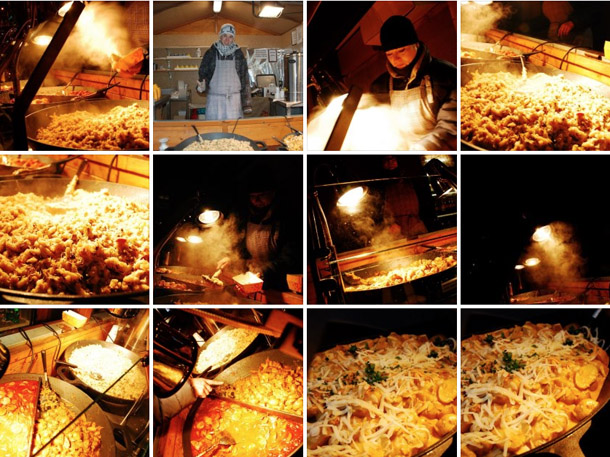

At this time of the year, the only thought that pours in – this year just whizzed by! A bit of reminiscing and I realise that it was long enough for me to have eaten some of the most amazing foods – from street food to fine-dining and every food in between. Also, it was long enough for me to have travelled to some brilliant destinations and have some of the most enlightening moments. I would like to sign off the year by sharing the Best of 2012 Food & Travel Posts from my blog and announcing the end-of-season give-away. And this time there are 3 cookbooks to be grabbed – essential MEDITERRANEAN, essential ASIAN and obviously a sweet sign-off – essential DESSERTS!
These Murdoch Books Test Kitchen has been published in more than 20 languages, the hugely successful Essential series has now been revised with stunning new contemporary design and photography. Still an indispensable reference library for enthusiastic beginners and advanced cooks, it provides a comprehensive guide to cooking techniques, expert tips and hundreds of timeless recipes.
Essential Asian (256 pages) guides you through the cuisine of 12 Asian countries – from China to Indonesia, Japan and Malaysia. Traditional recipes are supported by detailed Asian ingredient and utensil information, step-by-step photography and authentic cooking techniques.
Essential Mediterranean (256 pages) takes you on a journey through the food-loving countries of Greece, Italy, France, Turkey, Spain, North Africa and the Middle East with a collection of reliable and authentic recipes. and supported by step-by-step photography and detailed information on ingredients and cooking techniques, including tapas, meze and pizza.
Essential Desserts is where you will find everything from the perfect fruit pie to deliciously rich cheesecakes, the classic soufflé, comforting puddings and elegant chocolate creations.
Click here for the blog Giveaway!
◊————————————————–◊
Best Food Trips of 2012
Phuchkas in Vivekananda Park, Kolkata
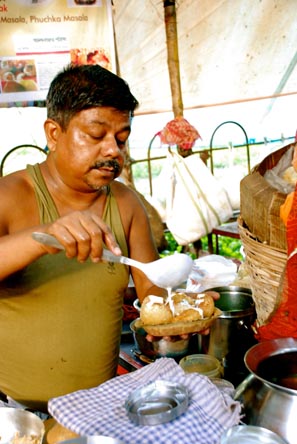
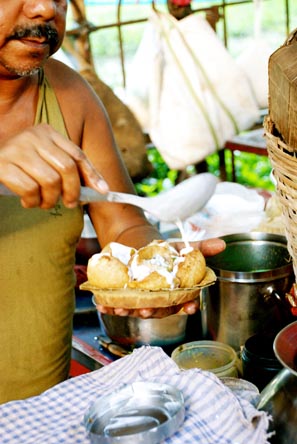
Firni or Ferni, Ramadan or Ramzan, Mallick Bazar or Karama?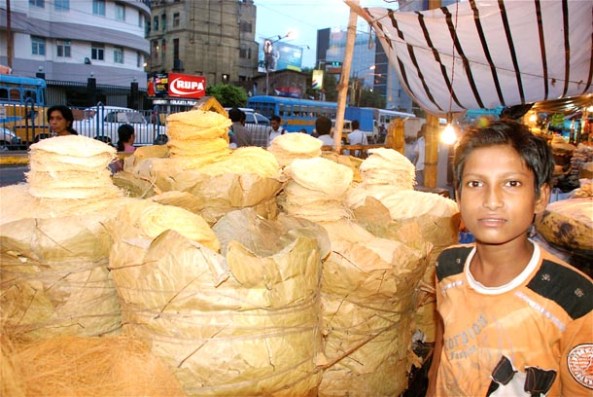
Searching for Shiraz Golden Restaurant – From Lucknow to Kolkata and Finally Dubai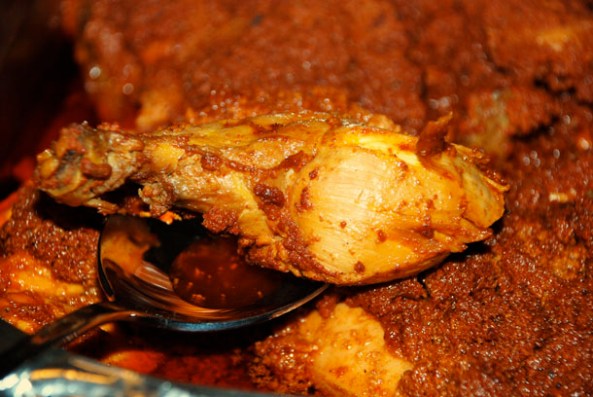
An Authentic Emirati Food Experience (First Time Ever!), Al Fanar Restaurant, Dubai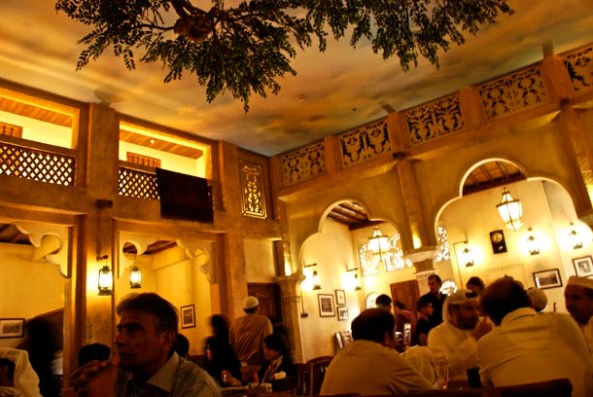
Pickles… Mother (-in-law) Of All Pickles!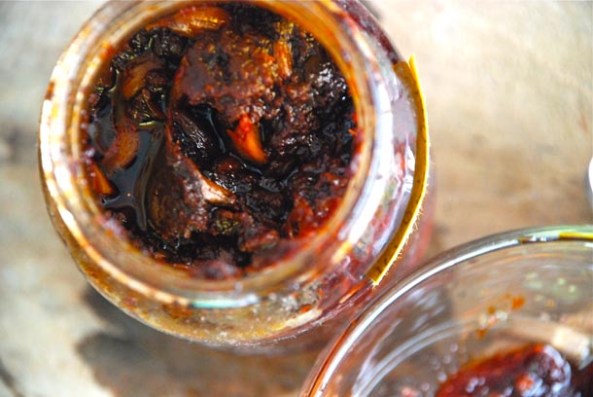
Sikarni Raan/Marinated Lamb Shank from Hotel Yak & Yeti, Kathmandu, Nepal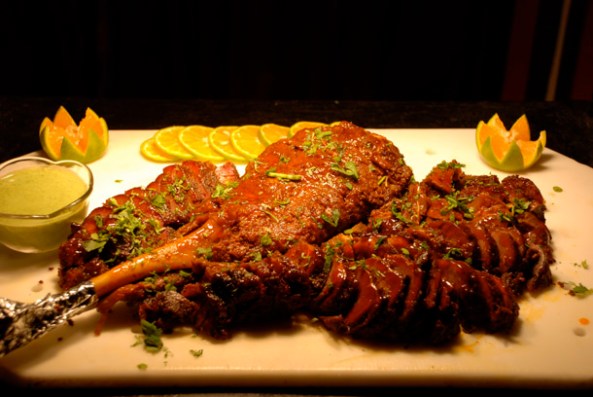
Lafayette Gourmet’s Festive Menu… Christmas Is In The Air!
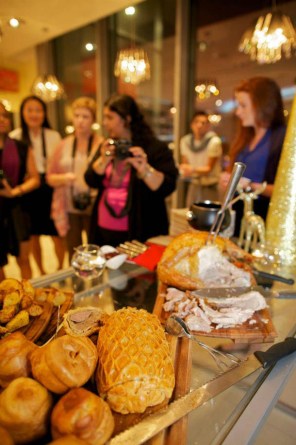
An Evening of Wine Tasting at Asado Wine Club, The Palace Hotel, Dubai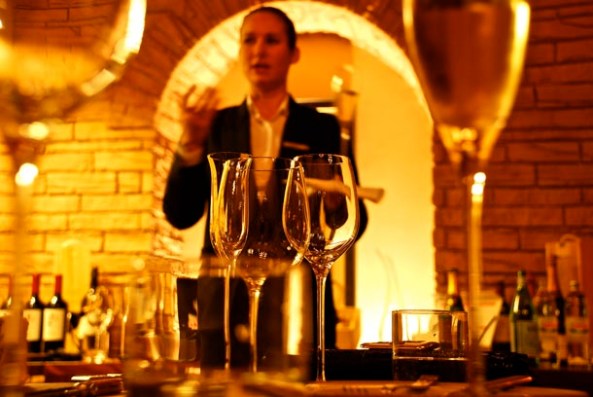
Eating Out Is A National Pastime – Singapore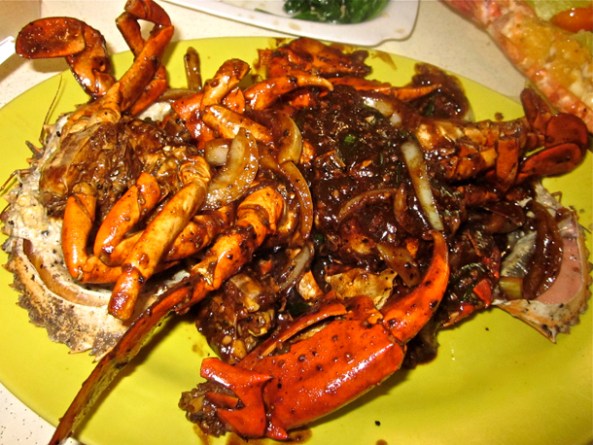
Khichuri As Harbinger of Hope & Kolkata Soaked In Rains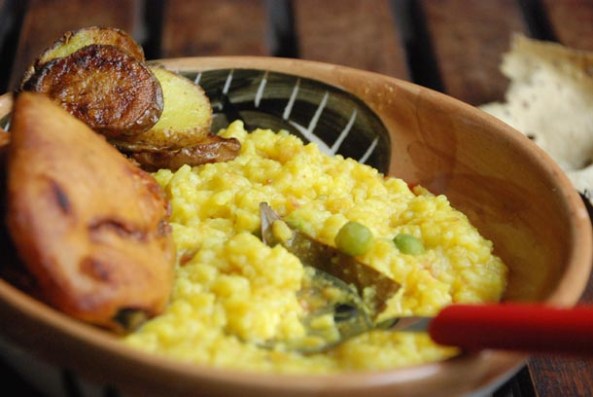
◊————————————————–◊
Best Travel Trips of 2012
The Abandoned Women Amidst Many Prayers, Pashupatinath Temple, Kathmandu, Nepal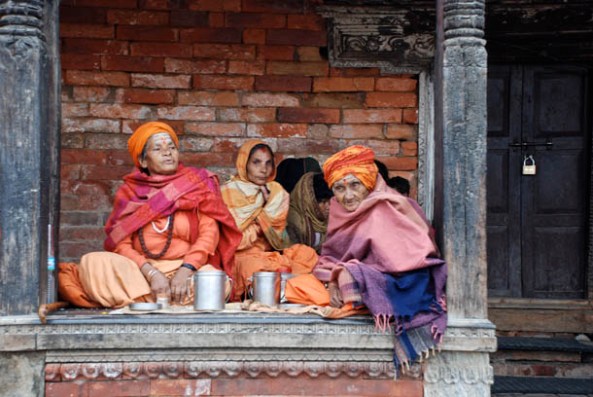
Flying over Mt Everest – Nepal
Gift Wrapped & Preserved For Each Tourist – Chitwan, Nepal
Deep Sea Fishing & Fish Barbeque – Persian Gulf, UAE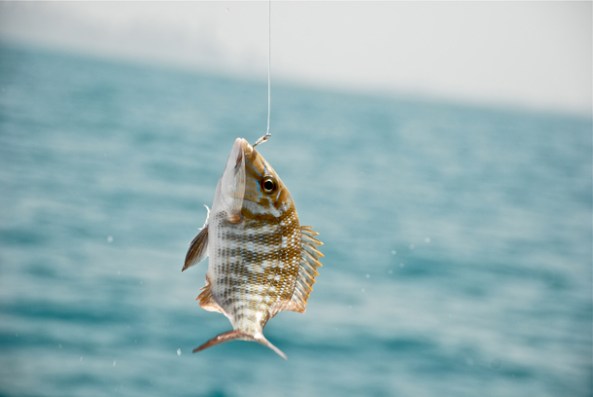
In the land of Paella – Valencia, Spain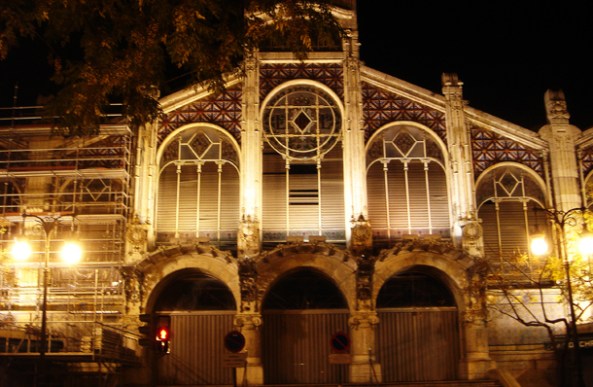
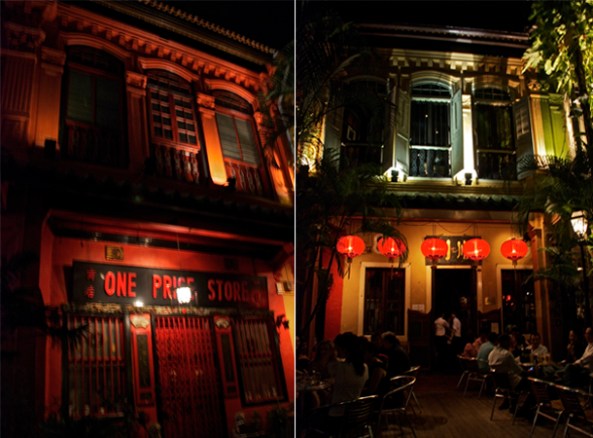
Locavorism, Friday Market & Tok Palong/Sour Spinach Chutney
Things To Do In Dubai – Like A Tourist In My Own City
◊————————————————–◊
While many posts have been written, many are still lying in the blog queue. For example, my incredible culinary experience in Prague recently (above) where I ate through all my senses – from road side kiosks to traditional Czech food in the Farmers’ Market & Christmas Markets; from savouring 19th century recipes to eating in a restaurant visited by The Brangelinas; from gobbling up home-made Goulash in a Caverna/Café to having a ‘haute-couture’ Goulash in Grand Hotel Europa of Mission Impossible fame!!! 
Or the unique contemporary Bengali Cuisine that we tasted in a restaurant called Bohemian (above) in Kolkata. Absolutely free spirited and Bohemian, the menu offered by Chef Joy’s deli is good enough to inspire one to break out into a Bohemian Rhapsody. You’ll get a snapshot of all the food and drinks that went into my tummy in my Facebook Page, specially those which haven’t yet been tumbled out as blog posts.
A lot of recent events happening around us have often made me think whether it’s preposterous for me to keep on writing on yummy food and far-away destinations. I have purposely refrained myself from making any religious and political comment on the blog. This is a Culinary Travel Blog and it should solely remain so. Many of my readers feel that I should keep on writing on Food and Travel, irrespective of whatever happens around us because ultimately travelling and food matters connect a lot of threads together – of different places scattered all over the world, of different spices evolving through communal interaction and binding these strongly is an element of Hope. So, here’s wishing all my readers a wonderful New Year – safe and secured, healthy & happy, peaceful and prosperous. Also, all the best to all of you – there’s going to be not 1 but 3 winners for the Cookbook giveaway. Happy cooking!
Unblogging it all… Ishita
◊————————————————–◊
Disclaimer: I hope you enjoy reading the posts with lot of visuals. While you enjoy seeing them please don’t use them as some of them have been taken from our personal albums just to make your reading experience more pleasurable. You can see more pictures of my travel and food journey here.
BE SOCIAL. SHARE THIS!

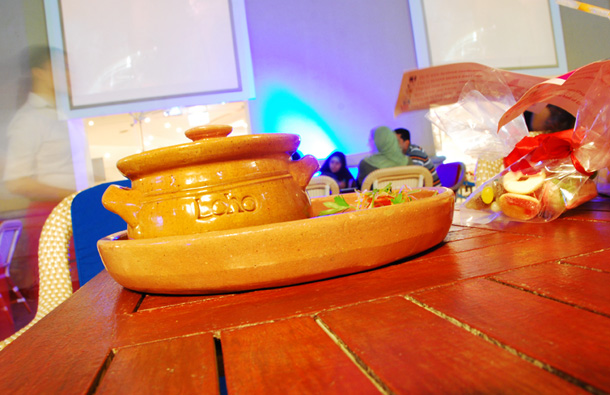
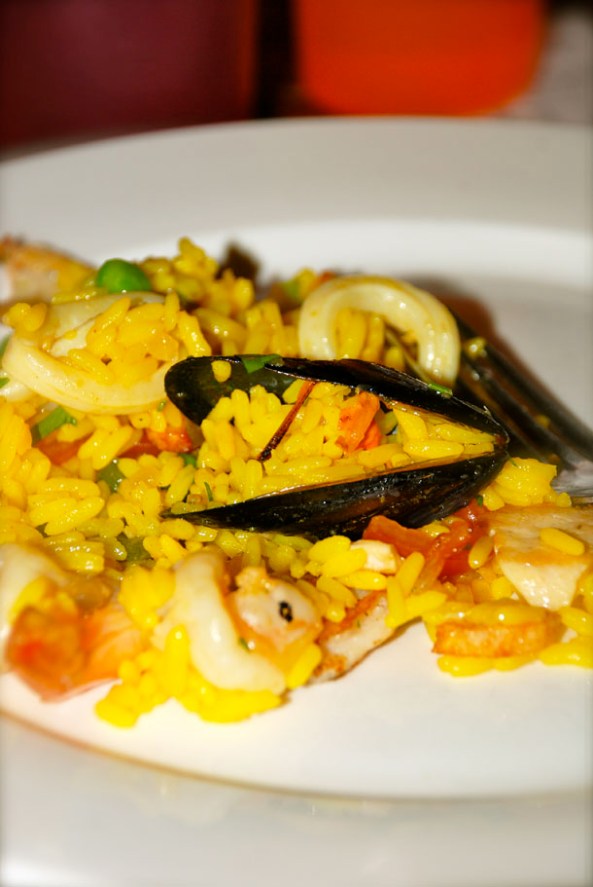
We’ve walked past the Bo House Café a lot of times on the JBR Walk. The little glimpse of the fun decor that’s inside and it’s location on the beach side of the JBR Walk (until recently as now the entire JBR Walk has been fenced off with the temporary construction wall suggesting some more happening things being constructed on the Beach, I guess!) had always been inviting. I think apart from one Juice Bar that’s located on the beach side of the pavement, it must have been the only Restaurant to be located on this side of the JBR Walk – literally the right side as you enter The Walk. Yes, some of the hotels in this area do boast of absolutely-on-the beach Restaurants but definitely not the independent ones. 
Bo House Cafe promised a festive family evening with Christmas carols and a whole lot of kiddy fun. According to their own words, Bo House Cafe offers the perfect setting for a cool outdoor hang out as well as a trendy indoor retreat. It’s a shame that soon there will be perhaps, no gust of wind with a shopping mall coming up just next to the Restaurant on the beach. The beautiful harpist treated us to carols while we sat outside on the deck in a slightly chilly evening. The Z-Sisters wrote letters to Santa and even posted their letters in a red post box – the kind that have probably become extinct in today’s digital age of Twitter, Facebox and Skype. Cute, cute, absolutely cute! All these will be aired on a Bo House special episode on Sony TV on 28th December, Friday, 12:30 pm. Repeat telecast will be on 29th December, Saturday, 6:30pm and again on 30th December, Sunday, 10:30pm.
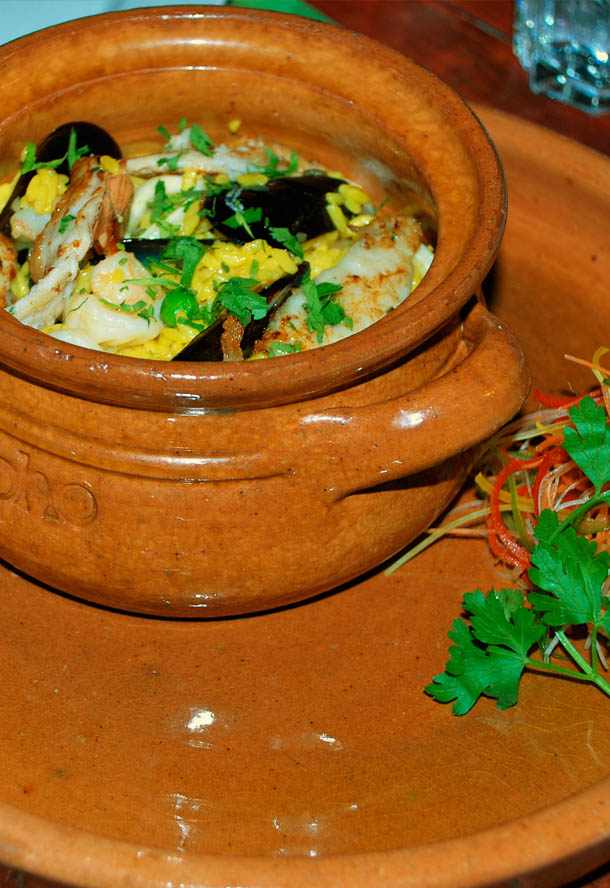
Sergio, the Spanish restaurant manager who had joined very recently was beaming with a whole lot of new ideas that he would be introducing in the coming year – including making a terrace garden on the deck and a few additions to the menu. Infact, the Seafood Paella and a Seesha Platter were to be added onto the Menu and we were the first ones to be trying them out. He asked – Are you okay with that? Oh, pretty heck – Yes, we were!
The Seafood Paella (above) came after the starters – the Seesha Platter but I just feel the need to write about the Paella before anything else – just because my Paella craving was at a all-time high, having recently seen some gorgeous Paellas – the Black Paella with cuttlefish & shrimp, the traditional Seafood Paella, the Meatballs Paella etc in Tapeo of Lafayette Gourmet where I had tasted the festive menu that is being offered right now and can also be catered in and home-delivered throughout this season.
Paella (pronounced “pah-eh-ya”– the ‘ll’ is pronounced as a ‘y’) originates from Valencia in Spain. We were fortunate to have had the most authentic Paella in it’s land of origin. An experience thatI’ve written about in an earlier post – In The Land of Paella – Valencia, Spain. So did this match up to our expectation? A Yes and a No. A Yes because our Seafood Paella was really very tasty – it had calamari, mussels and a satiable amount of prawns. You can never please a diner like us with the prawns and the shrimps – it’s never enough! And a No because no matter how well you cook a dish, it’s authenticity is always questionable. Specially outside the boundaries of where the dish originally belongs. 
The Seesha Platter is a mixed platter that the Restaurant wants to introduce as a special Starter which can be had while the diners are enjoying their Seesha. A very interesting platter – it had Crab Cakes, a Quinoa Tabbouleh (Tabbouleh is a very popular salad in the Arab world, traditionally made of Bulgar, tomatoes, finely chopped parsley, mint, onion and garlic, and seasoned with olive oil, lemon juice and salt. it is served as a Mezze in the Arab world and is gradually becoming very popular all over), Sesame Prawns (breaded Prawns splattered with both white & black Sesame seeds), Potato Croquettes and a bit spicy Chicken Lollipops. The Quinoa Tabbouleh was definitely an interesting version. Curious whether the Couscous was completely substituted by the Quinoa but the question didn’t occur to me at that time.
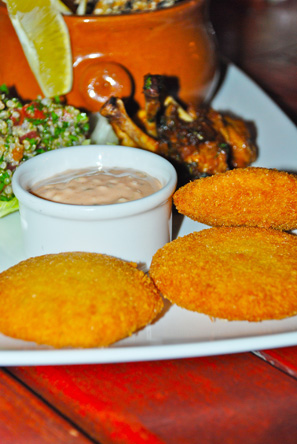
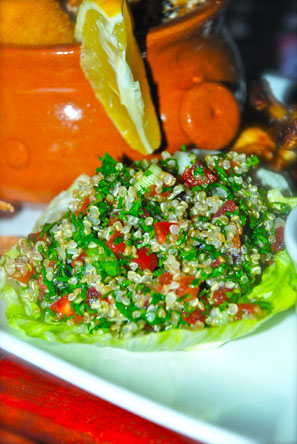
Most of the Restaurants underestimate the young diners. The Kids’ menu is so typical. Why does a Restaurant which otherwise takes so much care in preparing the adult menu, take a bit of interest in their Kids’ menu? Why do they have to resort to the standard Nuggets and French Fries – that too frozen? This pertinent issue has been taken up brilliantly in one of her posts by Sarah of The Hedonista. We were assured that the Chicken Nuggets that were served to Li’l Z were fresh and home-made. Well, she’s kind of growing up thinking Kids’ Menu consists only of Nuggets and for her any other food experiments seem pretty futile. So if we are in a Restaurant, her meal has to be Nuggets. Well, we haven’t tried but the Salad Bar looked pretty tempting and deliciously fresh. Their Health Factory has many items on the Menu – Feta salad with Quinoa, Grilled Asparagus, Grilled Zucchini with sun dried tomato dressing etc. They will soon be starting delivering door-to-door meals which are well balanced aimed at a healthy lifestyle & weight-loss.
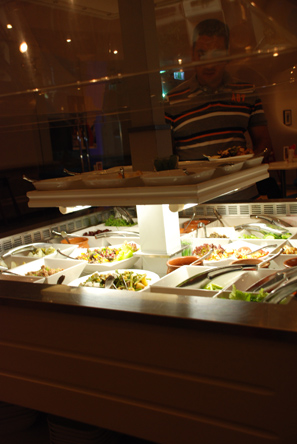
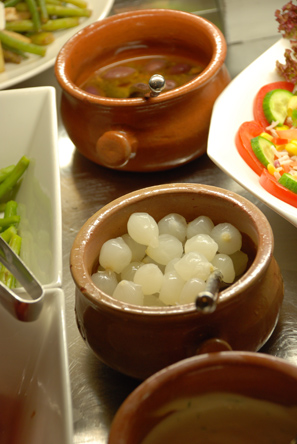
Talking about sweet sign-offs, yes we’ve had their Gelatos quite a lot of times as we’ve walked past the Gelato station in the JBR Walk. The award-winning Gelatos. Unfortunately with The Z-Sisters coughing and falling sick every now and then this season, we too had to resist our temptation to give in to the award -winning Gelato and we ended up tasting mini, really mini scoops of Lemon Sorbet, Chocolate, Coconut and 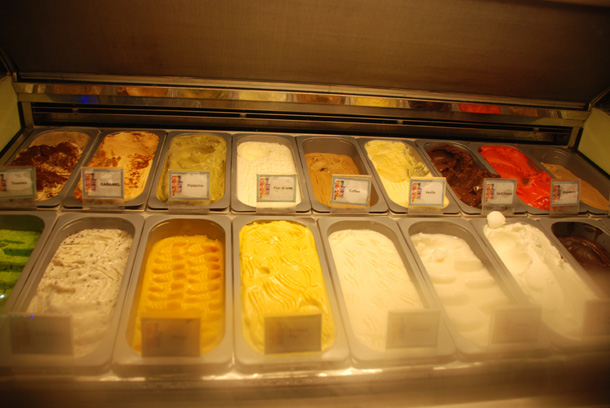
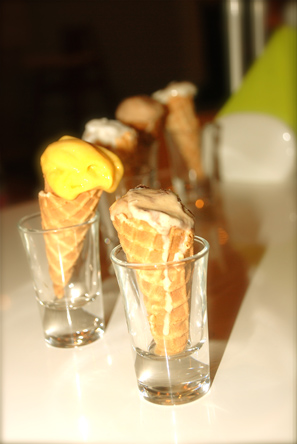
Bohemian
I’m slightly hooked onto the word Bohemian right now. Bohemian is described in the dictionary as a person, as an artist or writer, who lives and acts free of regard for conventional rules and practices; the Czech language, especially as spoken in Bohemia; a Gypsy; pertaining to or characteristic of the unconventional life of a bohemian; living a wandering or vagabond life, as a Gypsy. Read more about Bohemian style here.
What’s Bohemian about Bo House Café? Splattered all over, it’s written home of Mohemians… So who’s a Mohemian? A Mohemian is a modern Bohemian I am a Mohemian. I would say I am a combination of a Hippie. A Bohemian and a free spirit. Hop onto their Timeline on Facebook – a few words and expressions catches my fancy. ‘legend says, when you can’t sleep at night, it’s because you’re awake in someone else’s dream’ or simply ‘Take a deep Breath’ or the doodles on the coffee table outside on the terrace – Make love, Be yourself, Create, Design, Express…

The concept of the Restaurant appeals to my creative senses for sure. Every Thursday nights are for Bo Tunes where talented musicians can come and play. Art exhibitions and crafts bazaar, poetry reading, Sufi songs… all seems very contemporary and aesthetically appealing. Definitely for people like me. It gives a lot of breathing and apparent thinking space.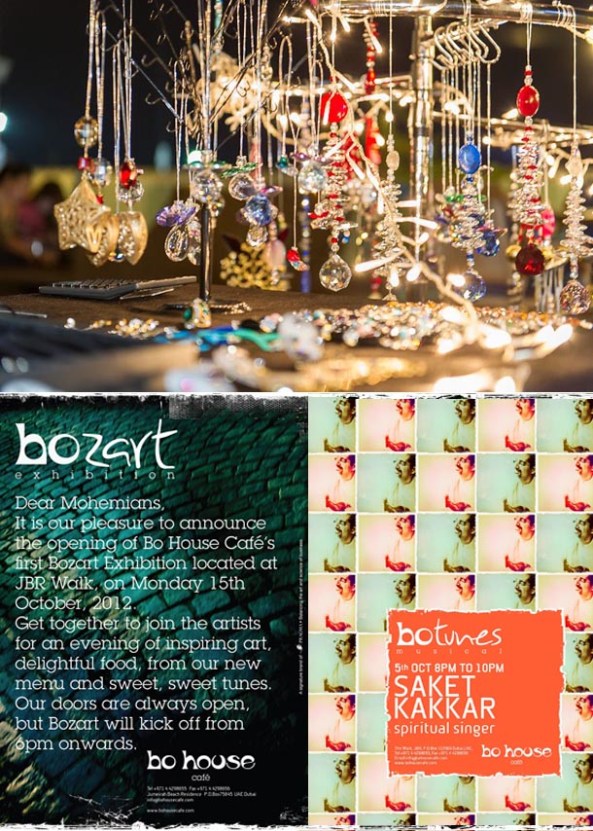
But what had stopped us from Bo House Cafe till now? I have to be really honest here… A few friends whispering ‘ Oh! Come on, the menu is quite limited’ and some reviews here and there. For example, Time Out Dubai. The critic writes – Had I ordered a simple burger, or perhaps stuck to a coffee and pastry, my Bo House experience may have been entirely different altogether – the venue boasts a great spot on The Walk, which would be perfect for a straightforward coffee and sandwich. Instead, the restaurant is shrouded in pretentious waffle and loses sight of the simple things. In the words of Bo House itself, it might be a place ‘to get together for fun, for love, for a scoop, for no reason, for a word, for a gust of wind…’ but not for a decent meal. It might be a place ‘to get together for fun, for love, for a scoop, for no reason, for a word, for a gust of wind…’ but not for a decent meal!
But that was in 2010, when the Restaurant had just opened. A recent review (2012) from Time Out Dubai does conclude by saying that it’s a café after our own heart. I want to believe that Bo House Cafe is trying to re-inventing itself with a few changes in the menu in the coming year, to tackle exactly where it loses sight and to provide a decent meal and more. Not withstanding theconstruction in the background and the new shopping mall coming up next to it and stealing the gust of wind that previously belonged to Bo House Cafe. Things has
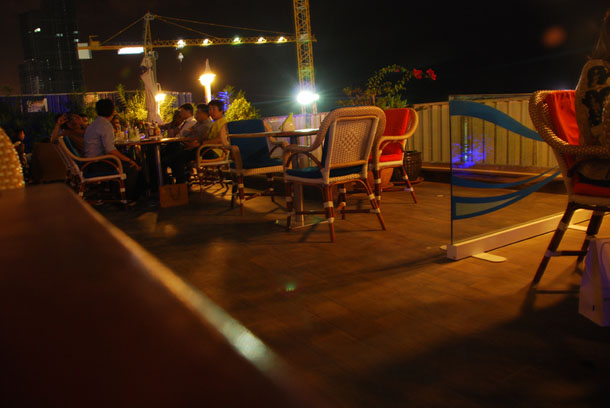
With Christmas around, I’ve gathered everything I could so that you could spend a fabulous Christmas in Dubai, whether you opt to dine in, or dine out; cook lavish dinners at home or opt to cater from outside or simply enjoy Christmas while hopping the Dubai Malls… also a peep into our German Christmas experience while we were living in Germany… Celebrating Dubai Christmas | Dining In, Dining Out, Cooking or Mall Hopping! And if you are in a mood of slight introspection, then do hop into my previous article, Giving Back.
I’m hooked onto the phrase Bohemian for more reasons than one. Tonight I’m flying off to the Bohemian capital, Prague, with a few of my girlfriends, leaving behind the Z-Sisters in care of S. A bit of self-introspection and an attempt to do something different than leading our regular daily routine. I’ll be offline (yes, I promise!)… aIntend to experiment whether I am as free-spirited and Bohemian as I think myself to be. We’ll be spending Christmas there. But when I come back, the first post is not going to be on Prague but a a restaurant in Kolkata – which calls itself Bohemian and is truly so in the food that Chef Joy offers. It’s a small place but absolutely free-spirited.
Unblogging it all… Ishita
◊————————————————–◊
Disclaimer: The evening was hosted by Bo House Cafe. But my opinions and views are my own. I hope you enjoy reading the posts with lot of visuals. While you enjoy seeing them please don’t use them as some of them have been taken from our personal albums just to make your reading experience more pleasurable. The B/W pic of the harpist and the pics depicting Bozart & Bo Tunes have been taken from the Restaurant’s Facebook Page. You can see more pictures of my travel and food journey here.

 IshitaUnblogged
