


 [Edited on 5th Nov, 2014: Food e Mag dxb now has its own inbuilt reader in its own website. There have been a few changes in the Editorial team.]
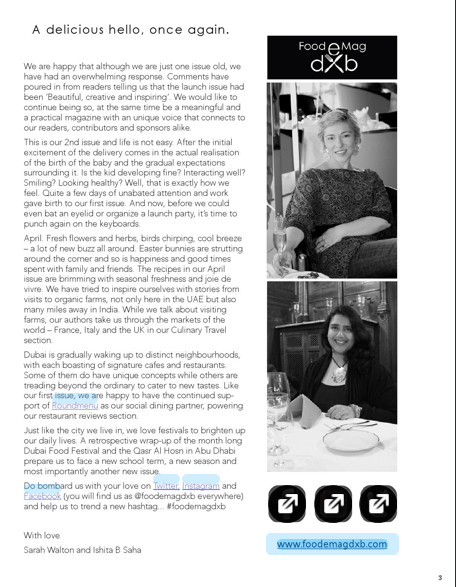
A few of you have been aware that a new baby has arrived in my blogging life, guzzling up my time and energy and that is the bimonthly digital magazine called Food e Mag dxb. I have been co-editing this magazine with my talented blogger friend, The Hedonista. Why it all happened, what is it all about and how it all happened, you can read the history here. Well, time flies and the second issue is also out, looking more inspiring and beautiful than the launch issue (I am not saying this because I am biased). A small peep below into the editorial page of this issue will reveal what all is filling up the pages, but before than a quick flip through. Absolutely can’t wait to hear the feedback on the Spring issue!
Unblogging it all… Ishita
Dislaimer: The cover picture of the Spring issue is taken by Sheban of Airperspectiv Media at the Greenheart Organic Farm. Please note that this post is not a sponsored post and the subject, story, opinions and views stated here are my own and are independent. While you enjoy reading the posts with lot of visuals, please do not use any material from this post. You can catch my daily travel and food journey on Instagram, Facebook and Twitter.
BE SOCIAL. SHARE THIS!

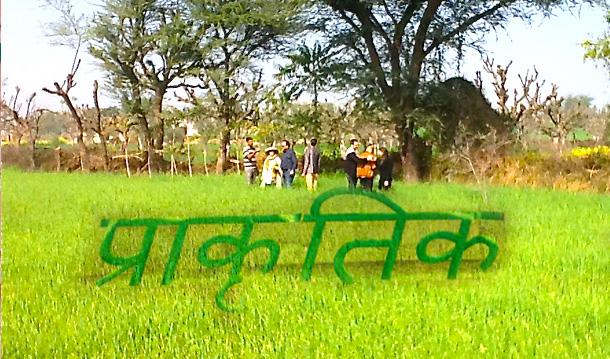
 This post captures four locations, two time zones, different sets of people and many emotions – a posh cafe restaurant, an organic store, a small Farmers’ Market – all in the heart of Dubai and a Farmers’ Festival and a few organic farm lands, thousands of kilometers away in Rajasthan. What is the relationship between all of these? It can seem as simple as procuring the right ingredients from the source where the farmers are, or the very complicated relationship where products nurtured in many small organic farmlands across India, travels many many miles before they finally reach the actual buyer (farm to fork philosophy) – all the while maintaining that they have been ethically procured and organically farmed. A bit of a ‘heavy background’ story to the food that arrives at the table which has been in a fancy Dubai restaurant. My earlier post on the traditional Marwari meal of Daal – Baati – Churma has nothing to do with the fact that I am writing two posts on two consecutive days – the common thread in both of them being ‘Rajasthan’. This is definitely not a coincidence. It’s destiny perhaps?
 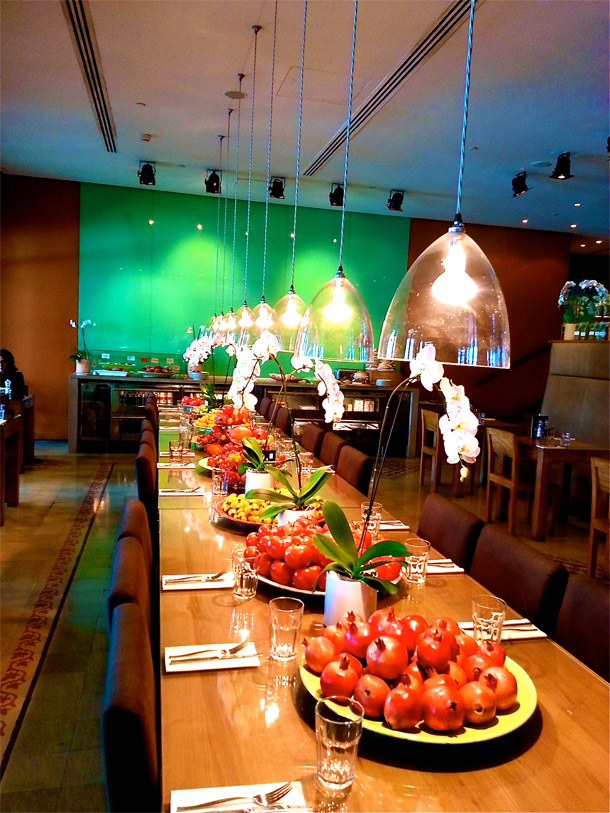 Location 1 – Baker & Spice, Dubai: A concept cafe cum restaurant with gorgeous locations (below is the one in Souk Al Bahar where you can experience the gorgeous Dubai fountains with a stunning backdrop of Burj Khalifa), this is definitely a restaurant which is one of a kind in Dubai. I have met Yael Mejia, the lady behind Baker & Spice, a few times and everytime I am intimidated by her presence. Am I using enough of my social media and writing power to promote a concept that I absolutely believe in but feel (like many others) is difficult to sustain and maintain, more so, considering the nature of the city that we live in? Definitely not impossible. The concept of ‘organic’ food or ‘locally produced’ fresh produce is gaining awareness only recently, but what is commendable about Yael is that she has been committed to supporting local and organic farmers, even when the concept itself was new to many of us in Dubai. So was the concept of a ‘changing’ menu, depending upon the seasonal fresh organic fruits and vegetables that can be procured from the local farmers. The philosophy – local, organic, fresh and homemade – rules the Baker & Spice kitchen and that definitely reigns my heart. Also, trust me to dig out a Bong connection here in my last visit – there’s Chandan who hails from West Bengal and has been working in the restaurant for the last 6 months {do check my Instagram post}. Hearing “Abar ashben kintu” or “Please come again” in Bengali at Baker & Spice – is not what will bring me back to the place again and again. It is the freshness of the food served and the positive vibe that reverberates through their long rectangular dining hall. {Baker & Spice website}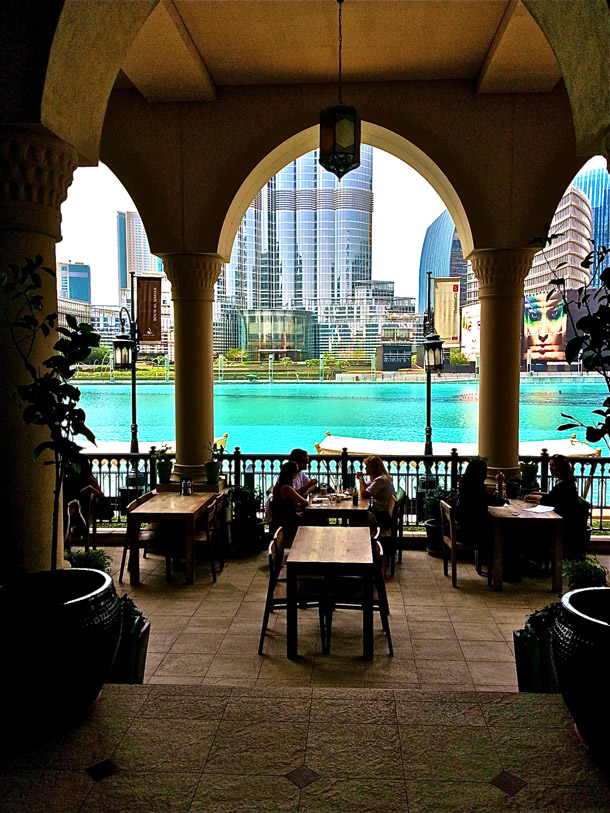

Location 2 – Down To Earth Organic Store, Dubai: The first time I had entered Down To Earth was way back in June 2012. In fact, the first time I met Lokesh Aswani, the Managing Director of Down To Earth Organic, I had to prod him to talk about his products. He wanted the wide range of his products to speak for themselves. Borrowing the words from my earlier post (probably their first ever media post if I am not mistaken)… The essence of Down To Earth Organic is captured by it’s very logo – beautiful green stems branching out from the ground. The red bricked walls with the humbling word ‘natural’ written in various languages (even in Bengali, my mother-tongue) reflects what the entire shop stands for. In their own words, ‘Down to Earth Organic Products retain the natural goodness of food and are produced in harmony with the environment. These products are free of all chemical, pesticide and fertilizer residues; hence the perfect instrument to live in harmony with our bio-rhythms, our society and our world.’ But then, don’t all organic products profess the same? How are these any different?… One thing that struck me as I was exploring the shop was the wide range of Masala/Spices (both powdered and whole) available. Also the prices. One always assumes that Organic products have a higher price tag as compared to non-organic counterparts. Surprisingly, the prices of most of the products (Rice, Cereals, Spices etc) were quite comparable to any other non-organic products available in normal supermarkets. A reason for suspicion? Yes, indeed. But my suspicions and doubts were laid to rest as Mr Lokesh explained how in most cases the existence of intermediaries between the farmers and the shops add up to the bulging cost of organic products. Down To Earth Organic products were sourced directly from the farmers, hence there were no hidden costs involved. Hmm, that was many moons back when Lokesh and I were discussing how to spread the message and make people aware of their organic products. I feel super proud that today, there are almost 300 products under the Down To Earth brand and they supply to all the Spinneys outlets, various other organic stores {for example, the The Change Initiative} across UAE and of course to Baker & Spice. {Down To Earth website}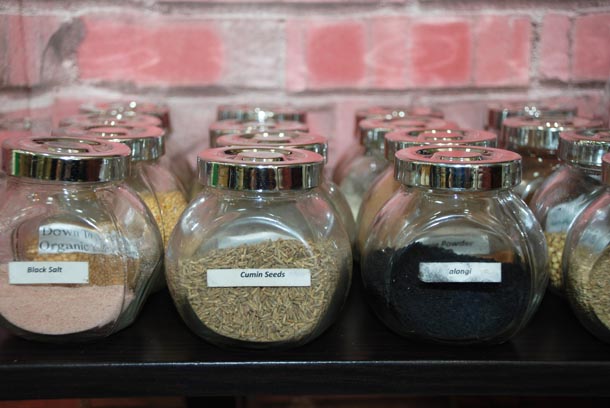
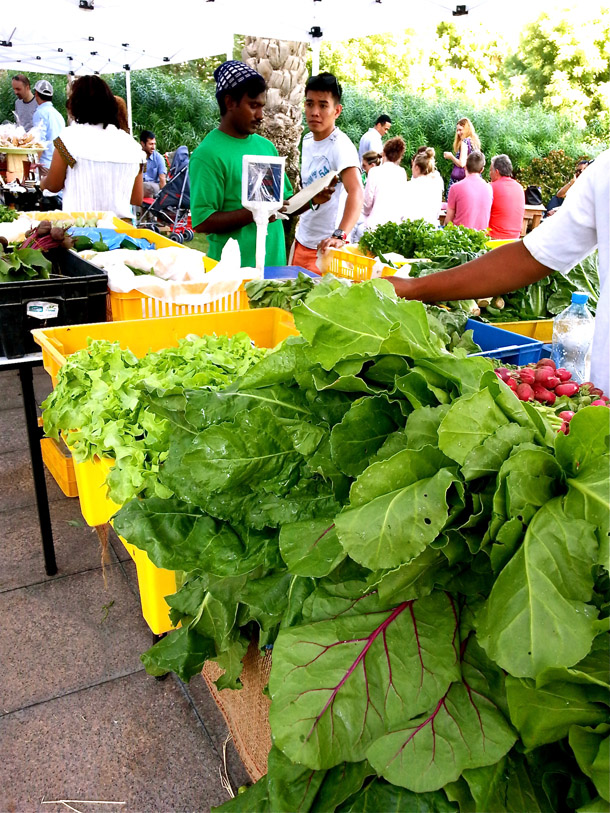
 Location 3 – Farmers Market on The Terrace, Jumeirah Emirates Tower: Imagine breakfast on Fridays sitting on a wooden bench or on a picnic mat on green grass surrounded by locally produced fresh, bright organic vegetables available at affordable prices. Does the term ‘affordable’ even exist in Dubai, you wonder? This is the Friday Farmers’ Market organised by Baker & Spice at the Terrace of the Emirates Towers. Initially, starting with 7 farmers, today there are many local farmers who have joined in, along with other organic vendors displaying their organic products, starting from Coffee to Honey. At a distance, you could soak yourself in the aroma of Suzanne Husseini’s LIVE cooking as she educates her fans about these local farmers and their produce. Or watch celebrity Chef Silvena Rowe fill up her ‘recyclable’ bags with fresh vegetables almost every Friday. The Z-Sisters love coming here on Friday mornings. Although, we can’t make it on most Fridays, in the past I have placed my vegetable order via my blogger friend’s LIVE Instagram updates! 2 weeks back, I caught up with Lokesh and Yael when I heard that they had gone all the way to Rajasthan to meet the farmers and to experience the Shekhawati Festival, or the Farmers’ Festival – such is the passion in sourcing the right ingredients in the right way, for both these outlets. Again, the focus here is on the farmers and one can buy directly from them. {Farmers’ Market on Facebook}

A snippet of our chit-chat with Lokesh:
What is the Shekhawati Farmers’ Festival all about? According to Lokesh (above right), the Shekhawati Festival festival is a kind of a break for the farmers and celebrates the farming families’ hard work throughout the year by sharing traditional Rajasthani food made with organic ingredients grown on the farms. During the 4 days of the festival, all the farmers who come to the town of Shekhawati, which is about 125 kms from Jaipur, from all parts of Rajasthan as well as India, are served organic food. A huge stadium is hired and the farmers set up their own food court where the women folk cook traditional Rajasthani food, while there are performances and competitions for the kids all day long. (This must the only festival in the world, where everyone – both the participants and the visitors are fed only organic food)
What was the objective of Bakers & Spice and Down to Earth, in going all the way to India to see the source from where the ingredients are sourced? To understand more on the sourcing of Down To Earth ingredients, it’s important to know about the the Morarka Foundation. It is a 19 year old non-profit voluntary organization, set up by Mr. Kamal Morarka, which started helping the farmers to convert their lands into organic farm lands. He came up with the concept of creating support services for farmers. Today, there are 70,000 farmers associated with the Morarka Foundation and over the last 15 years, the foundation has impacted around 250,000 farmers across India. So, with the team of Bakers & Spice, we all went down to see the farms and the research centres. Our trip happened to coincide with the Shekhawati Festival and that made our journey much more interesting and colourful. Bakers & Spice is using a wide range of our organic products. By itself, their concept is very unique and focuses a lot on ethically produced ingredients. They wanted to find out the authenticity of all these ingredients and also understand the how this is being done.
Tell me more about Organic Farming in India. The concept of Organic Farming in India is not very old. The Morarka Foundation is the pioneer of sustainable agriculture in India and Down To Earth is a part of this Foundation. It didn’t start with the intention of starting organic agriculture, but simply to provide some sort of support services for the farmers like providing information on weather etc.
Going back to the past, didn’t Indian agriculture follow the principles of organic agriculture, specially when chemicals weren’t as prevalent? Yes, true but not in the last 35 years. With the Green Revolution in the 1970s, farming started to become hybrid with more focus on commercial crops. Contrary to popular belief, I believe (and who ever believes in Organic Farming, believes) that Green Revolution didn’t boost Indian agriculture. It boosted the harvest of only two particular crops – corn and wheat (same as in the US). But in reality, for most farmers in India who are marginal farmers owning 2-3 acres of land, monoculture or cultivating only one crop is not sustainable. A typical Indian farm would have wheat growing along with say, coriander and other crops underneath and much of this produce nurtured the farmer’s own family. So although there was a boom in production with the Green Revolution, after the 1990’s there was a thrust to change the type of crops being farmed by small farmers. So, the thought here was, why not start farming organically? However, even today, this hasn’t proliferated much into the core of the Indian farmlands. With the help of the Foundation and Mr Mukesh Gupta, an agricultural scientist, there was a movement to promote organic farming. Starting from being a one-village concept with 50 to 60 farmers, the movement slowly spread to the neighboring village and gradually it reached 70,000 farmers! The dry goods like lentils and spices are collected from the different farmers and brought to our facility, packaged and then distributed across the stores. {Do read the entire process involved in Dubai Eye’s blog}
No middle men or intermediaries? No, not at all. The farmers give their produce to the Morarka Foundation and that comes directly to all the Down To Earth stores across the globe. Some of these farmers are associated with the foundation for the last 15 years.
Organic spices are sourced from India. But what about the organic Pastas? As a commercial company, we realised that to increase the viability of production we have to produce everything ourselves. Initially, we were sourcing these from Italy but they proved to be very expensive. So we worked back the recipe of Pasta, and started manufacturing Pasta ourselves. Everything that is being sold is sourced in India. For example, tea. Adjoining the famous Kaziranga National Park, there is a beautiful tea estate called the Hathikuli Tea Estate and our tea grows wildly in this estate which is very regularly frequented by elephants, rhinoceros.
How is Baker & Spice special? Bakers & Spice understands what we are doing. Most commercial operation would probably use organic products if they are offered a decent price. The very agenda of going organic or the choice that Baker & Spice makes while choosing its ingredients – proximity to the source of produce – is very important. Spices don’t grow in this region and hence one of the closest sources would naturally be India. They make an effort in doing that. For the rest, we have to go and convince them. It’s just not being ‘organic’ but they are also very conscious of ‘fair trade’ and ensures that we pay the farmers the prices that they deserve. So, conceptually we are at the same plane. While every business needs to be commercially viable, everyone who’s starting an organic business knows that it’s going to take a long time to make it sustainable. Behind this, there has to be a passion to ‘believe’ in the concept of ‘going organic’. Yes, it’s good for the environment but also the main focus is the ‘farmer’.
The final question that is probably the most important. Being conscious is one thing, but as a consumer, am I paying more when I make a choice of going organic? Yes, but not very much. We are unable to communicate to the consumers that the purity of the spices is the biggest challenge when it comes to spices. For most brands, the adulteration is at the source itself. In India, where a trader who owns hectares and hectares of land, if there is an adulteration at the source of even 10%, it is a turnover of crores of Rupees. Until and unless, they are whole spices, the chances of adulteration is very high.
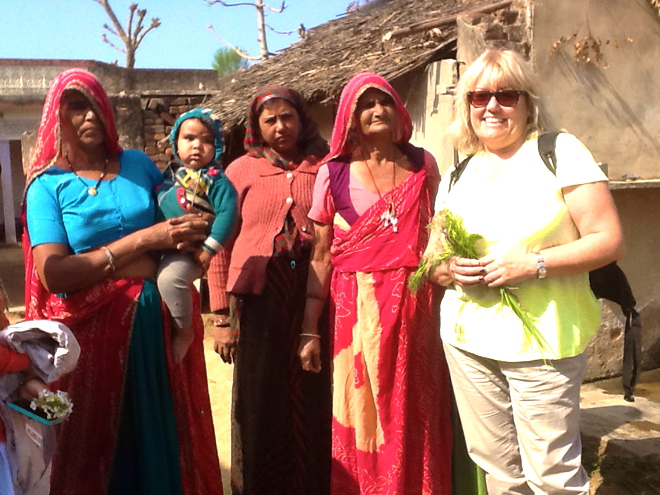 Location 4 – Rajasthan, India: Suzanne Radford of Dubai Eye 103.8FM (above right with the farmers’ family), the host of the popular talk show ‘Dubai Today’ where she brings in people, places and personal stories from the heart of the city, had accompanied the Lokesh and Yael to India to learn the trail of organic farming. Suzanne shares the following pictures of the Shekhawati Festival (I have made some minor adjustments to the colours). Do hear the episode where Suzanne documents this amazing Rajasthan trip with Baker & Spice and Down To Earth (below).

Suzanne with the entire team of Bakers & Spice and Lokesh

On the farm

Organic cabbages
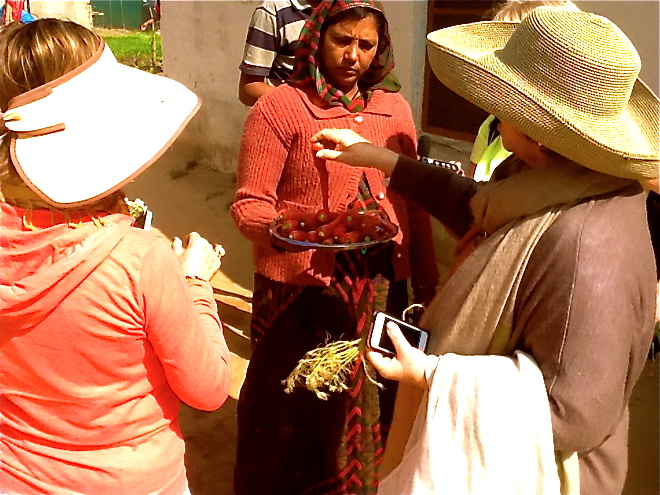
Yael, the founder of Bakers & Spice
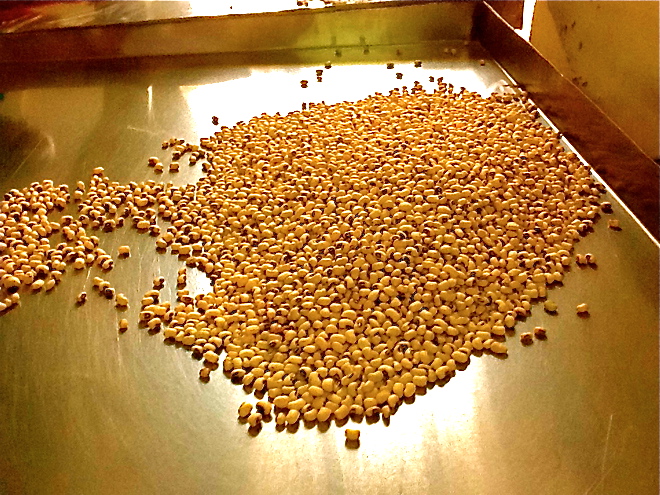
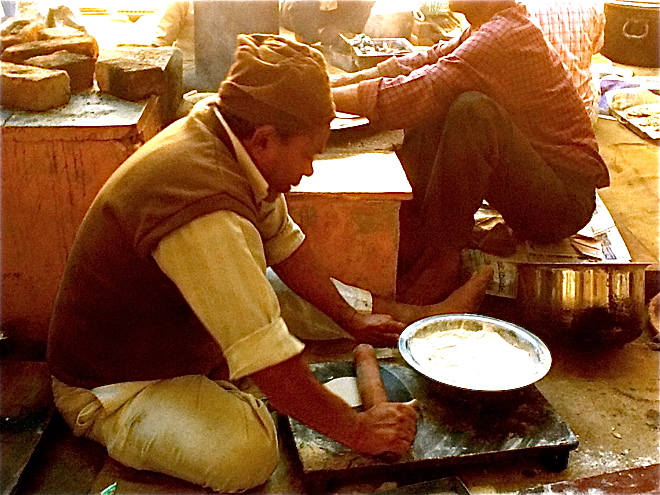
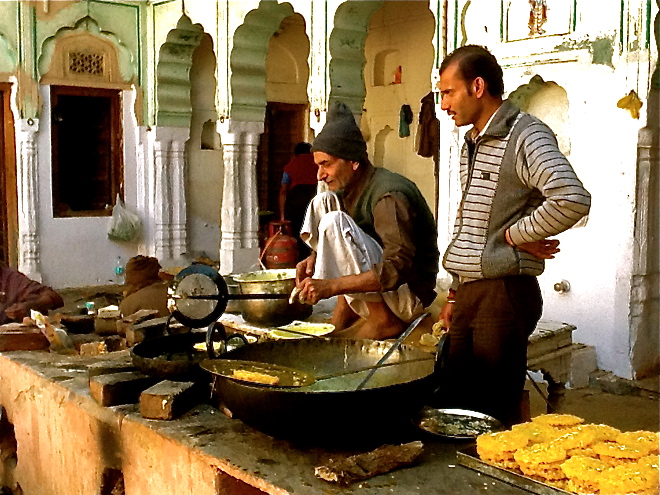
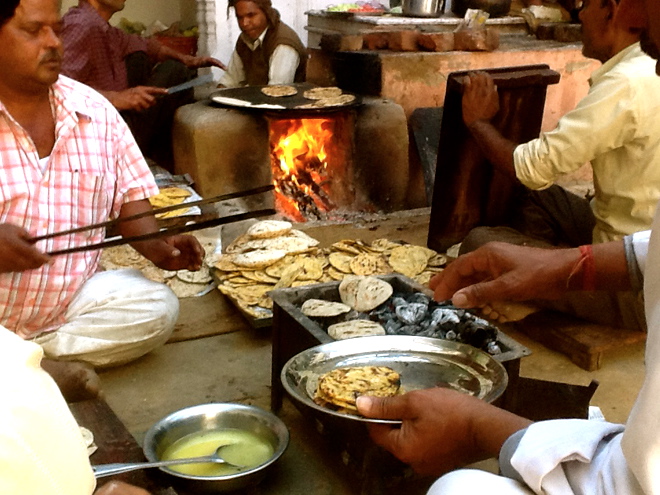


 Imagine a crowded Farmers’ Festival in Rajasthan – and a few Dubai-ites immersing themselves in the crowd to learn about the sourcing of their own ingredients and to educate the end consumers. Inspiring, isn’t it? You will definitely find me in the plane that goes to Jaipur from Dubai next February – I really have to make my way to the Shekhawati Festival. And talking about Rajasthan, do hop into my earlier post and join me as I drooled over the Marwari speciality – Daal – Baati – Churma!
Unblogging it all… Ishita
Disclaimer: The pictures of Rajasthan has been kindly shared by Suzanne Radford from Dubai Eye 103.8FM. Please note that this post is not a sponsored post and the subject, story, opinions and views stated here are my own and are independent. While you enjoy reading the posts with lot of visuals, please do not use any material from this post. You can catch my daily travel and food journey on Instagram, Facebook and Twitter.

- Related articles on Friday Farmers’ Market:
- Four Foodie Fridays – Week One {Coffee Cakes and Running}
- The Farmer’s Market in Dubai {I Live In a Frying Pan}
- … a drink with jam and bread {My Custard Pie}
- Related articles on Rajasthan:
- An Evening of Traditional Marwari Food | Daal Baati Churma {IshitaUnblogged}
- Jaipur – sights and sounds {My Custard Pie}
- Jaipur – shopping {My Custard Pie}
- Jaipur – eating, staying and getting about {My Custard Pie}
- Related articles on Organic UAE:
- Frozen Aam Pana/Green Mango Pulp | The Change Initiative! {IshitaUnblogged}
- Locavorism, Friday Market & Tok Palong/Sour Spinach Chutney {IshitaUnblogged}
- Desert Islands Resorts By Anantara | Cooking Spicy Prawn Harra By The Beach {IshitaUnblogged}
BE SOCIAL. SHARE THIS!

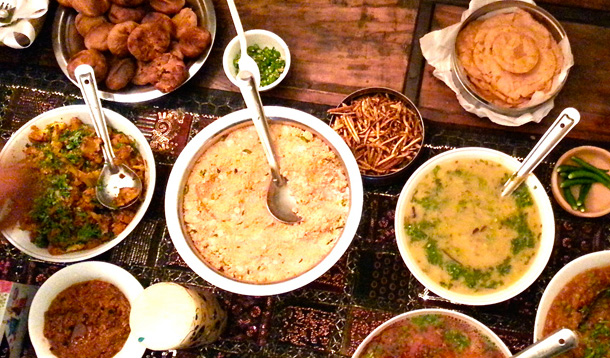
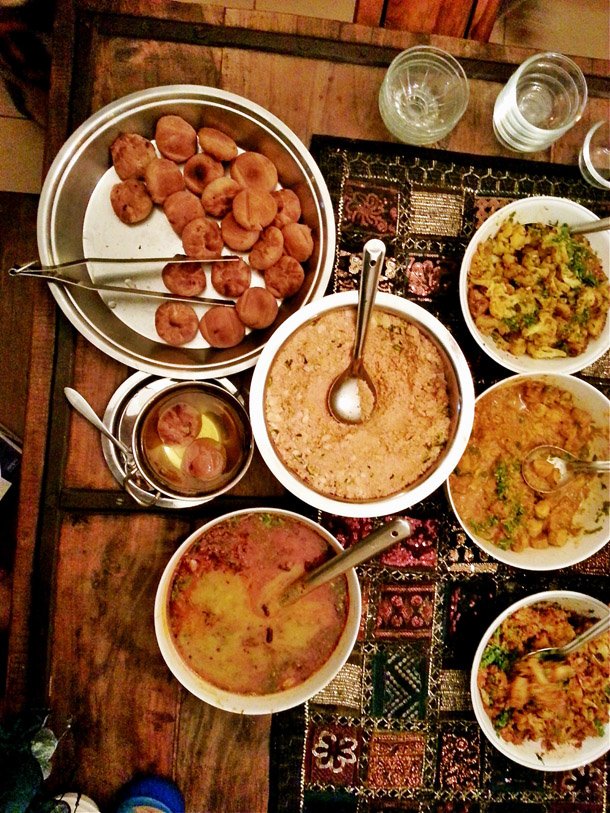
We have been friends with the Nevatias for long – they are more like our family now – a Marwari extension of a Bengali family. My blog is inspired by people, places and memories. It actually started off with recipes created by friends or at our own humble kitchen. Lately, I have been writing a lot more on places and people that I have come across along my blogging journey. So, when our incredible dinner at the Nevatia household last night left such an impression on the Z-Sisters, I had to capture the moment immediately (another blogpost with smartphone pictures, like the earlier one on House of Curry. Hope I don’t get lazy and stop carrying my SLR completely!). It was an elaborate Marwari home cooked dinner, complete with the Rajasthani speciality – the Daal Baati Churma, transporting me to a different dining experience that no award winning fine dining or the most popular street food can replicate – the warmth of ghar ka khana or a home cooked meal. But first, a sip into the Indian styled nimboo pani spiced up with with slit chili (below).

An earlier post carries the legacy of my friend’s cooking through some of her recipes – the Gulab Jamun Rabri and the Anjeer Ki Chutney or Fig Chutney. The same dining table is featured in this post, making this the most *featured* dining table in my blog. However, this time, these are night shots taken scandalously by me as I stand up on the wooden bench that acts as the dining seat. My other friends disown me completely as I loom from above directing them to move or to serve or to eat or to stop eating. In my defense, I would say that, every day is not a Daal – Baati – Churma day. In fact, for my Bong soul who craves mostly for non-vegetarian food, obsessing over vegetarian food like the way I do at the Nevatias, is really an exception. It is here that I close my eyes and munch on vegetarian food with a satisfied smile, as each dish is always cooked with so much love and affection and dare I add – a lot of Desi Ghee (Indian clarified butter)!
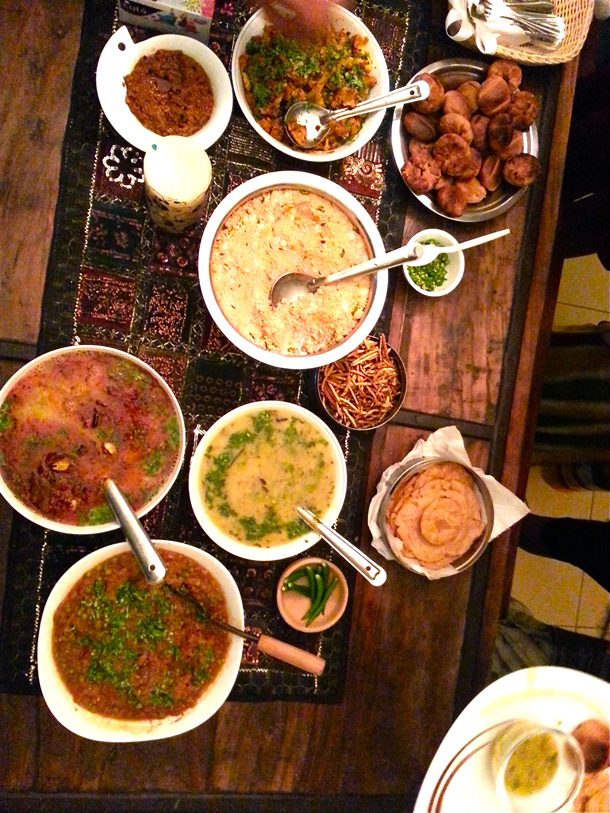
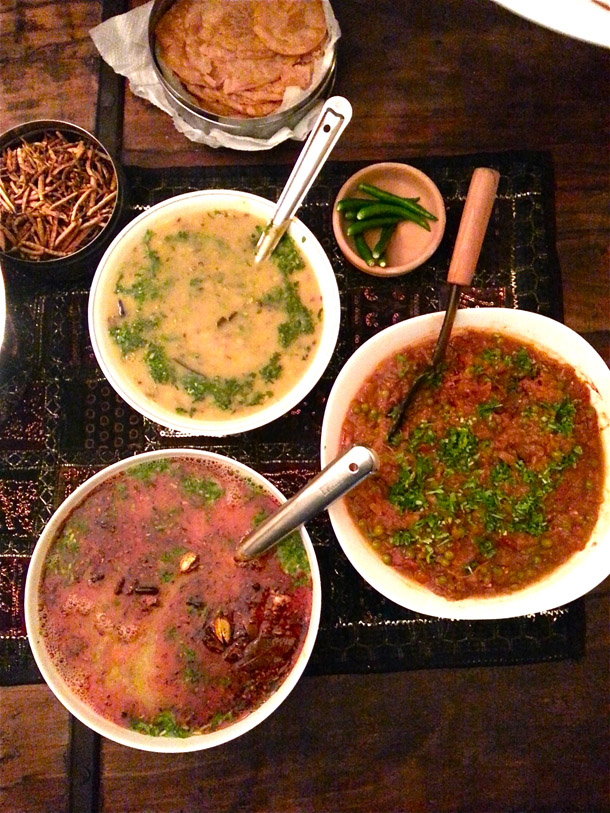
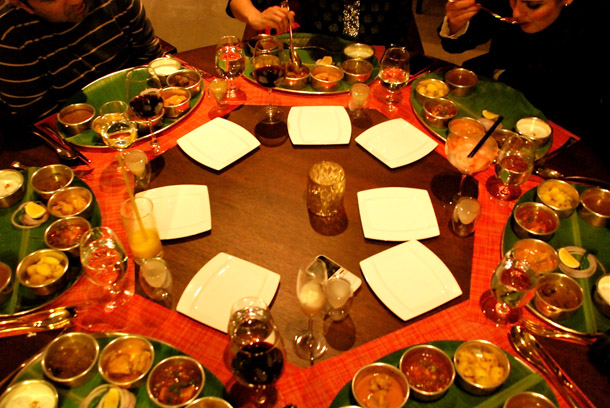
Daal Baati Churma: Rajasthani food is incomplete without this famed trio. As my friend tells me, the entire process of making this dish is very cumbersome, but is an integral part of a festive or a wedding menu. Baatis are round balls of breads made of wheat flour, which are baked traditionally over firewood or a clay oven. My friend had put a potato filling in these Baatis, although that may have been her own addition to the recipe, for enticing us – the potato loving Bongs. Before serving, the Baatis are dipped into piping hot Ghee (yes, I can smell heaven alibi a cholesterol ridden heaven – but never mind!). A Panchmel or Panch Kutti Daal – a Daal prepared by simmering 5 different types of lentils in Ghee and spices. My friend served two variations of the Panchmel Daal – a spicy (the red Daal above) and a non-spicy (the yellow Daal above). What is Churma? The preparation of Churma is no less than building a space craft. Unsalted dough of wheat bread is shaped into small rounds – more like unsalted Baatis – and deep fried in Ghee. These deep fried Baatis are then crushed and mixed with cane sugar or jaggery (my friend uses a blender) to form a rough brown sweet powder. How do you eat Daal – Baati – Churma? This would be the second course of Rocket Science. The Baati is crushed into a bowl of Daal and is eaten along with the sweet Churma. Imagine the intriguing taste of the salty Daal and the sweet Churma along with the Ghee-dipped Baatis. Heavens, someone just screamed that Bengalis have sweet teeth. In our defense, I would say that at least, we eat sweets at the end of our meals, like the majority of the world’s population, and not during a meal. In case you want to know more on Bengali cuisine, here’s my encyclopaedic post on it. According to the Nevatias, in Dubai, the few restaurants that serve authentic Rajasthani fare are Manvaar in Karama and Rajdhani in Rolla Road, Bur Dubai (I believe it has changed its name recently). If you don’t have the fortune of having a Marwari friend who can cook all of these traditional fare with great elan – I do pity you. The only option for you would be to make Daal Baati Churma at home. Here’s the recipe from the legendary Tarla Dalal, the queen of Indian vegetarian food, who very recently passed away.

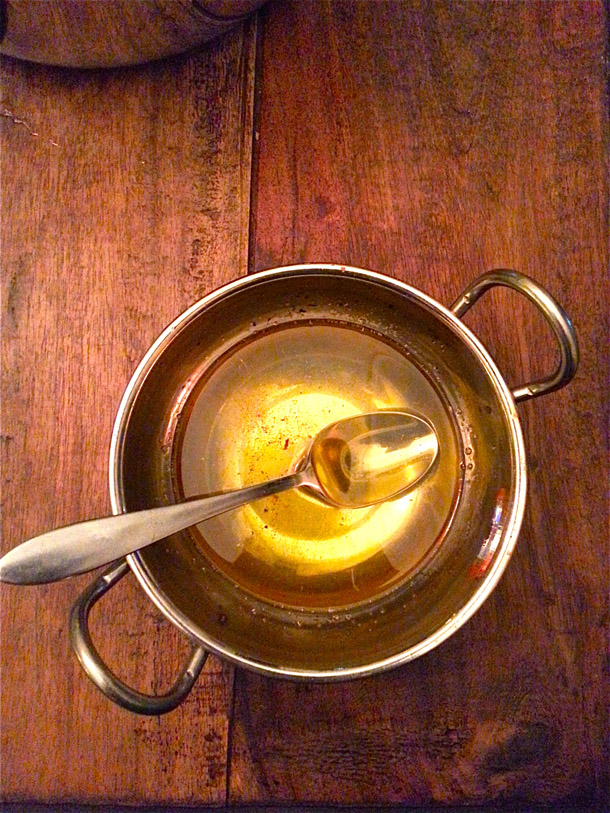
The hot simmering Ghee
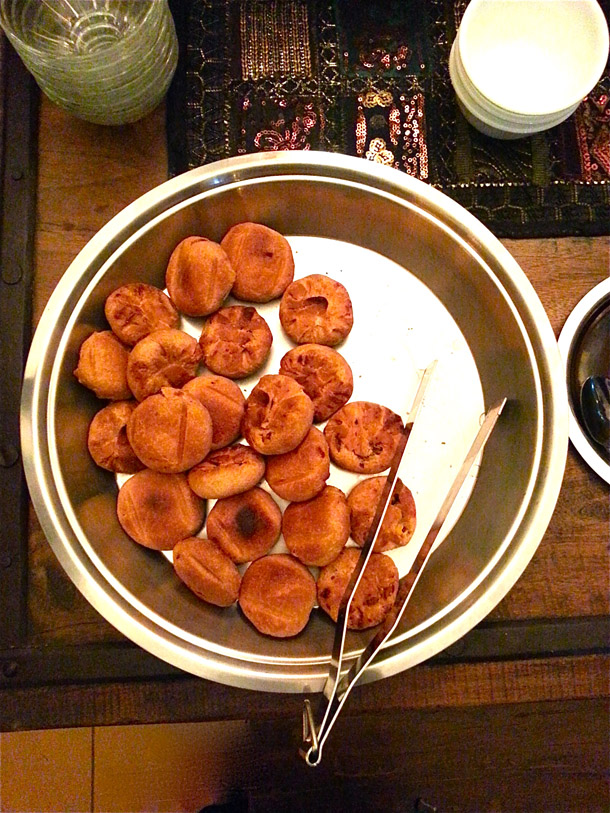
Baatis – the baked round doughs of wheat bread

Baatis dipped in hot Ghee
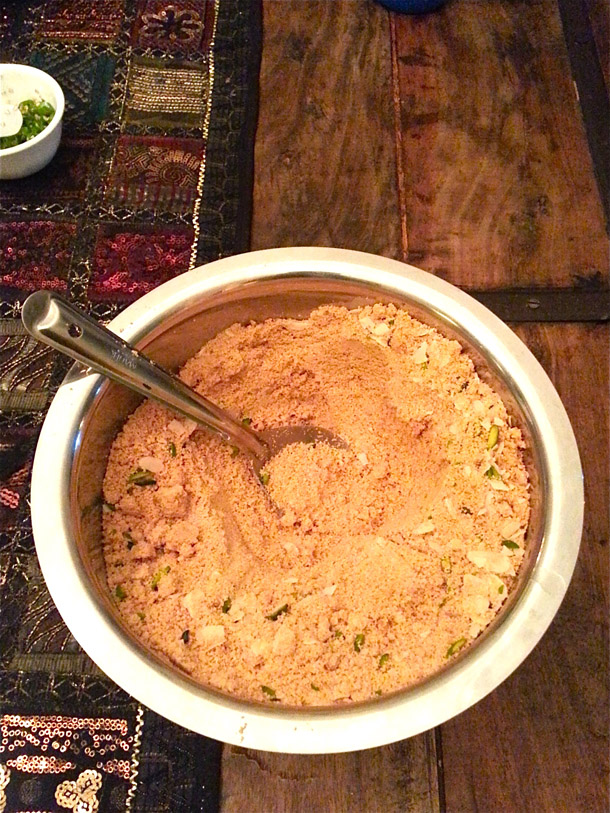
Churma – the sweet powdered crushed Baatis
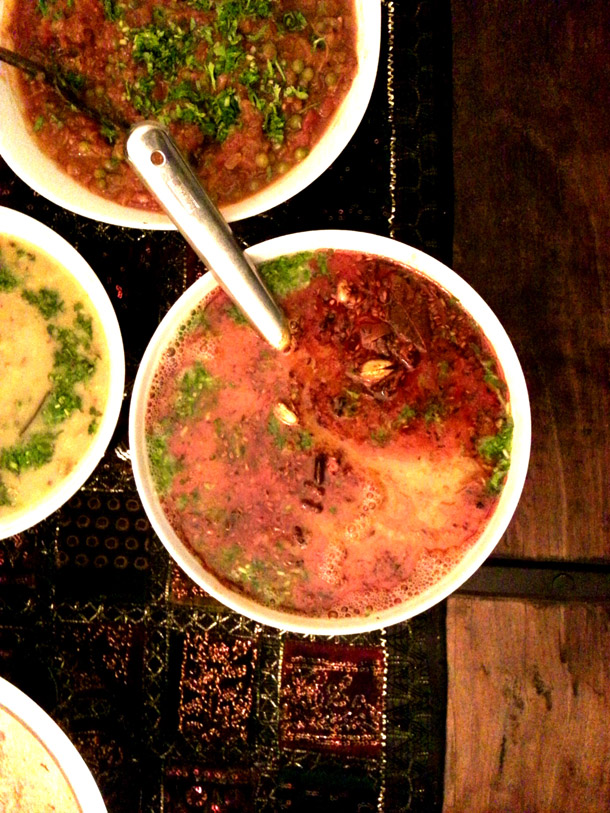
The spicy Paanchmel Daal
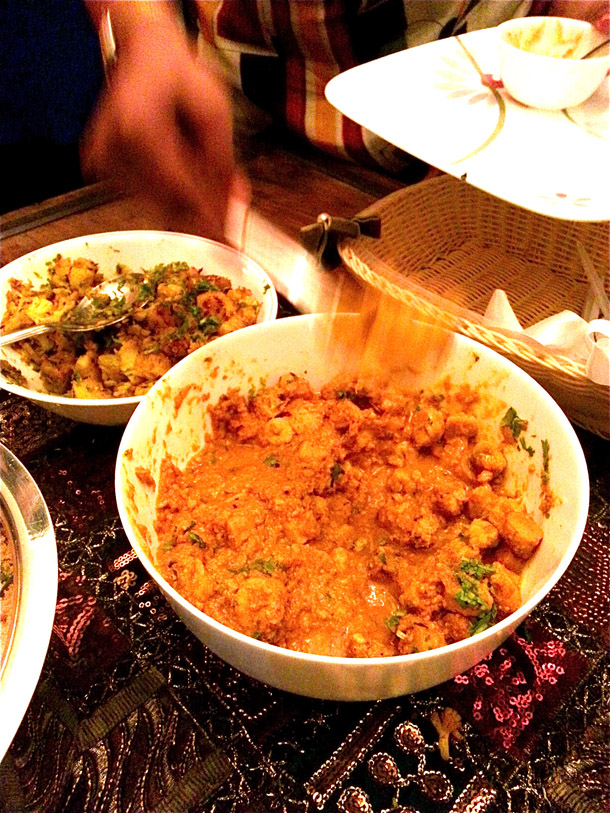
Gatti ki Sabzi

Spicy Falli Chips
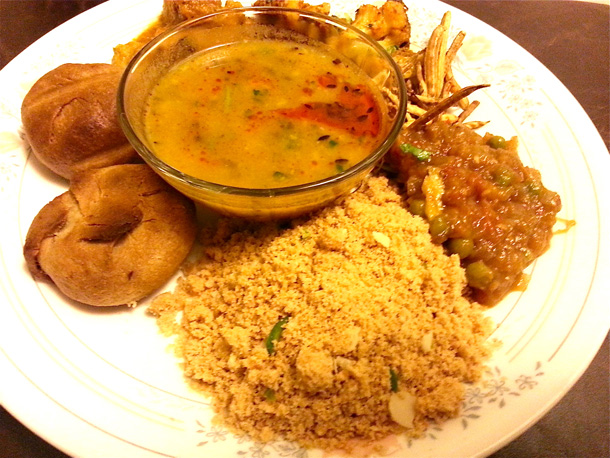
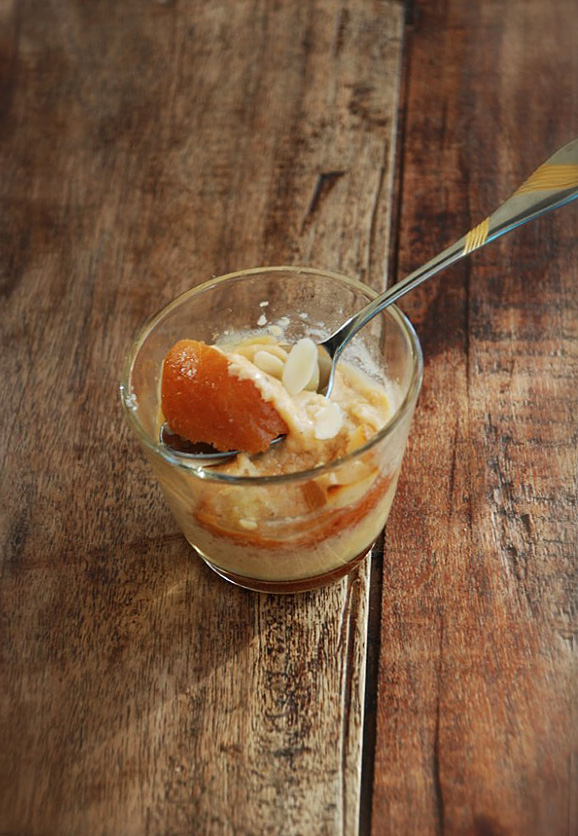
Our traditional Marwari meal didn’t stop at the Daal Baati Churma. The table was laid with different dishes – Baigan ka Bharta, Gatti ki Sabzi, to name a few. Only regret, the Gulab Jamun Rabri (below pic) was missing that evening. Indian cuisine can be overwhelming, with different states having different kinds of food and regional variations of the same dish. But definitely, Rajasthan is a different kind of sensory stimulation – it’s colours, sights and sounds are very different from the state of Bengal – from where I come from. While on Rajasthan, do read my other post which has a different angle – how a Dubai based organic food store and an award -winning restaurant, went all the way to Rajasthan to attend the farmers’ festival there and meet the farmers from whom they source their ingredients. Also, my blogger friend, My Custard Pie, went to Rajasthan recently (her first trip to India) and was so stimulated that she wrote 3 posts for the 3 days she stayed there… Jaipur – sights and sounds, Jaipur – shopping, Jaipur – eating, staying and getting about. I don’t blame her!
Unblogging it all… Ishita
Disclaimer: Please note that this post is not a sponsored post and the subject, story, opinions and views stated here are my own and are independent. While you enjoy reading the posts with lot of visuals, please do not use any material from this post. Do catch my on my daily travel and food journey on Instagram, Facebook and Twitter.
BE SOCIAL. SHARE THIS!

 PLEASE NOTE THAT WHEN I WROTE THIS REVIEW, MY FAMILY AND I HAD A REALLY GOOD EXPERIENCE. RECENTLY, I HAVE BEEN HEARING COMPLAINTS FROM MY FRIENDS AND READERS WHO HAVE VISITED THE HOUSE OF CURRY ON MY RECOMMENDATION. I HAVE WRITTEN TO THE RESTAURANT AND THEY HAVE RESPONDED AND LOOKING AFTER THE ISSUE. Being an Indian I am very skeptical about Indian restaurants. I can never explain to myself what price is a *good price* to pay for food that can be cooked at home. I love going to Ravi’s or a Karachi Darbar (these are Pakistani restaurants but treads on the similar subcontinental North Indian flavour), because I cannot replicate the food – the typical greasiness, the mind-blowing taste and a food bill that doesn’t make me squirm. A bit more high end and I am thoroughly confused. And to find the Indian Menu characterized only by North Indian food, infuriates me further. Very recently, I had the opportunity to taste a 9-course Navratan Menu hosted by Atul Kochhar himself at his restaurant Rang Mahal, and I loved the way he had deconstructed the Indian menu and reconstructed a platter with nuances from different regions of India (beautiful recount by My Custard Pie). But then that is high-end dining. Forget all these conversations. Chances are, I will never go to an Indian Restaurant of my own accord.


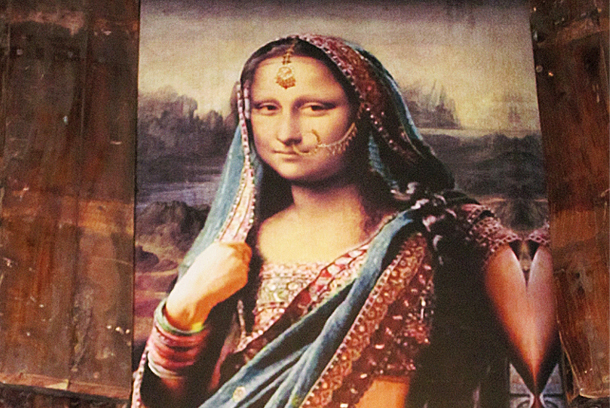
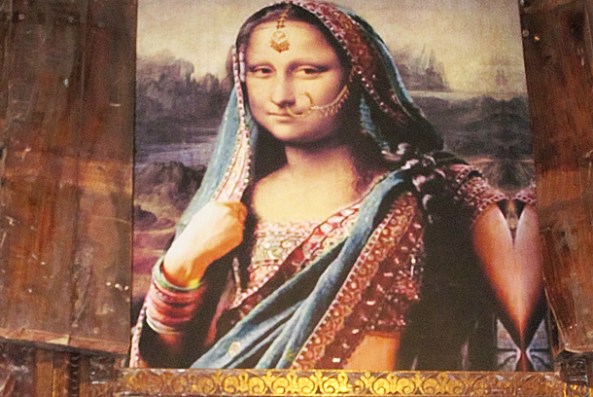
This weekend however, had been special. An extended *milestone* birthday celebration – well, mine actually (haven’t I always said that humility was my middle name?) and a beautiful feeling all around (my imagination of course!). I promised the Z-Sisters something special. We walked to the new beach development on JBR (Jumeirah Beach Residence), cribbing all the while how unfair it was that the JBR residents who had thought that they had bought their apartments by the beach would now be actually having a beachfront mall in front of them. And by the time we reached The Beach Mall, I had already started to sing new tunes – ‘Oh my God! How beautiful this place has become!’. Trust me, when Dubai creates something, it does know how to surpass everybody’s expectations. And then I came across the House of Curry. And I did a few things that I would never have normally done before. 1) Entered an Indian Restaurant of my own accord; 2) Loved the *keep calm* poster which normally infuriates me; 3) Ordered Butter Chicken and Kaali Daal of all things – the oh-so-usual-stuff-on-the-Indian-menu and I liked it; 4) I did a blogpost with my smartphone pictures – I hadn’t carried my SLR as I had no intentions to review; 5) I loved Monalisa for the first time (I know I might be stoned to death, but I can never understand the fuss with this lady. I am intrigued by her fame but not by her beauty. And no, my opinion hasn’t changed even after seeing the original in Louvre). Monalisa donned a sari and peeped out of a traditional handcrafted Indian window. My verdict? A Good experience, deserving an immediate blogpost!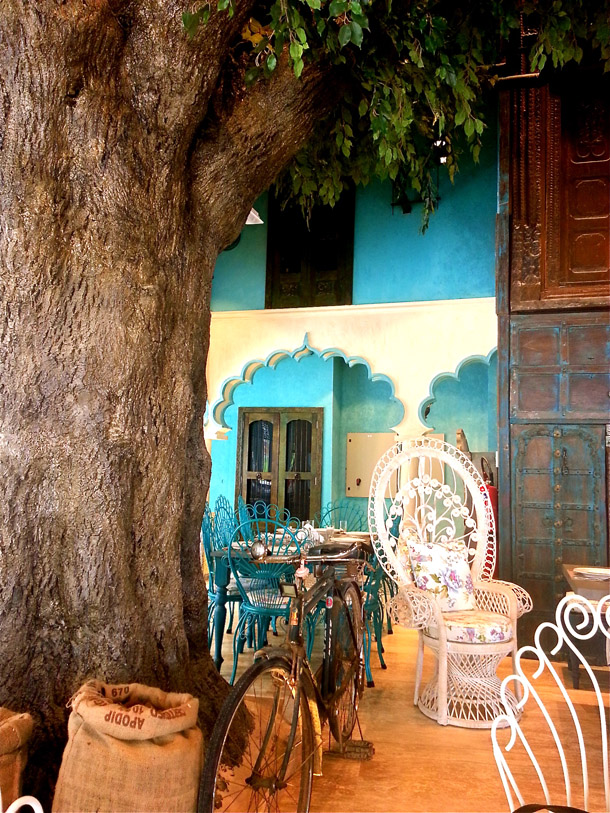

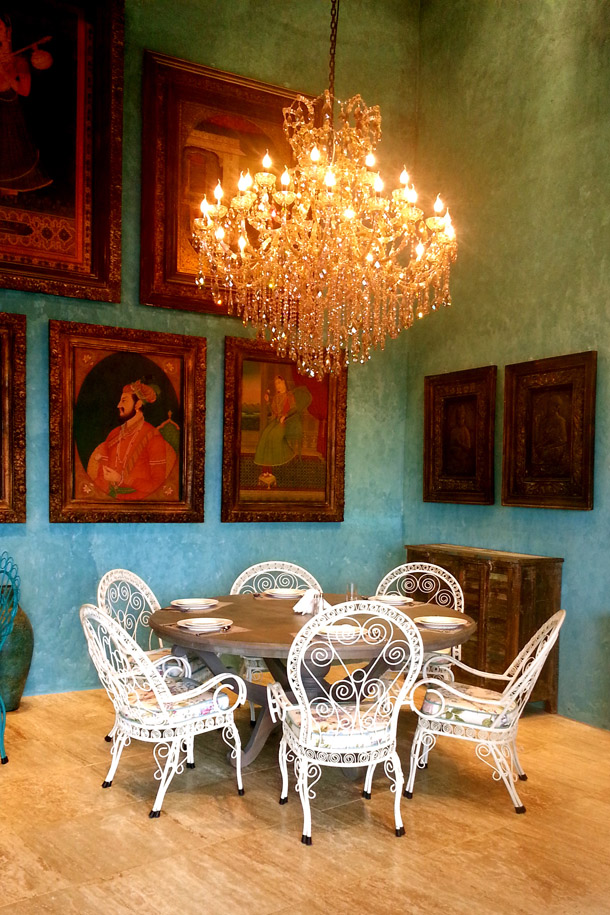
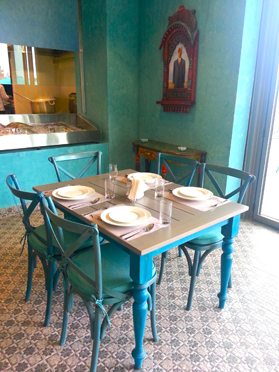
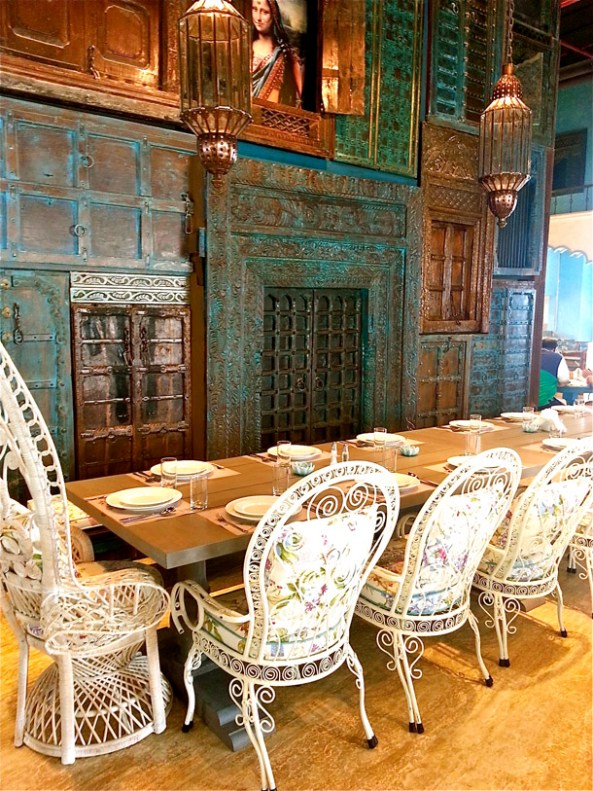 The decor and the ambiance: The interior is fascinating, resembling a courtyard of a *haveli* or a traditional North Indian mansion with the white wrought iron chairs lending an airy feel in the overtly ethnic decor. Most of the furniture had been created locally from recycled materials. The highlight being naturally the Indian Monalisa peeping from a handcrafted window on a wall which been created with, at my last count, 17 traditional doors and windows. There were bicyles – Atlas bicycle (Atlas is one of the oldest bicycle companies in India), sacks with spices, trees looming into the mock sky. Yes, an Indian version of Al Fanar Restaurant. A very regal feel, a beautiful space and a very relaxed environment, throbbing with diners – kids and adults alike.
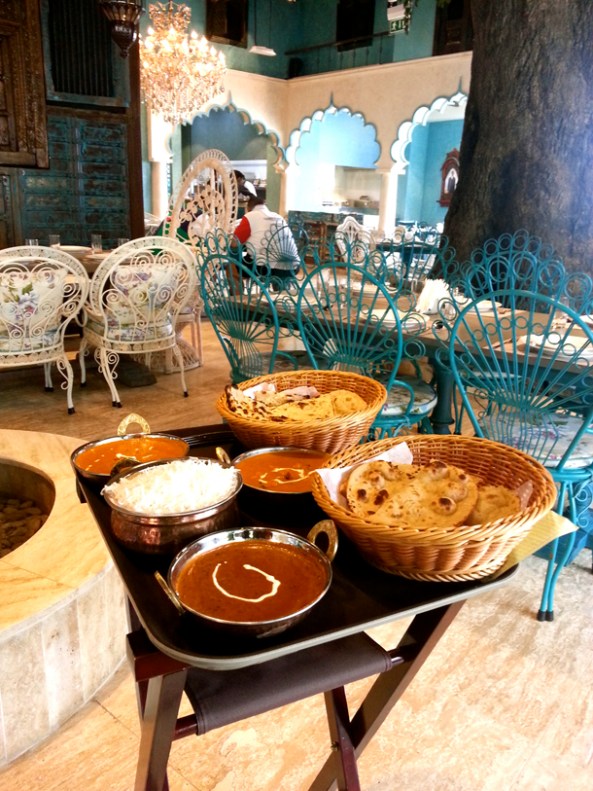
 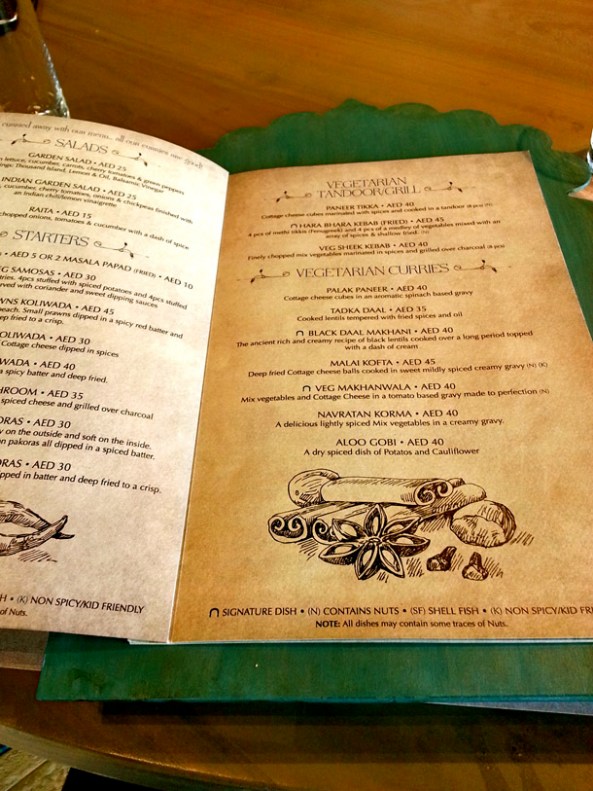 The food verdict: The menu consists of the usual Indian-menu suspects – Chicken Tikka Masala, Butter Chicken and Daal Makhani, Malai Kofta, Navratan Korma, Aloo Gobi etc in their vegetarian offerings. We did order the regular Butter Chicken, Kaali Daal and Garlic Naans (below) because the Z-Sisters are kind of British in their Indian food preferences (ahem, the colonial hangover of non-resident Indians!). But there are a few interesting twists here and there – the Murgh Bhushtrina Tikka or marinated chicken in lemon grass along with traditional Indian spices and or the coastal dishes – for example, Chicken in Green Curry or the Mutton Chop Masala. But the highlight for me would be the Seafood Menu.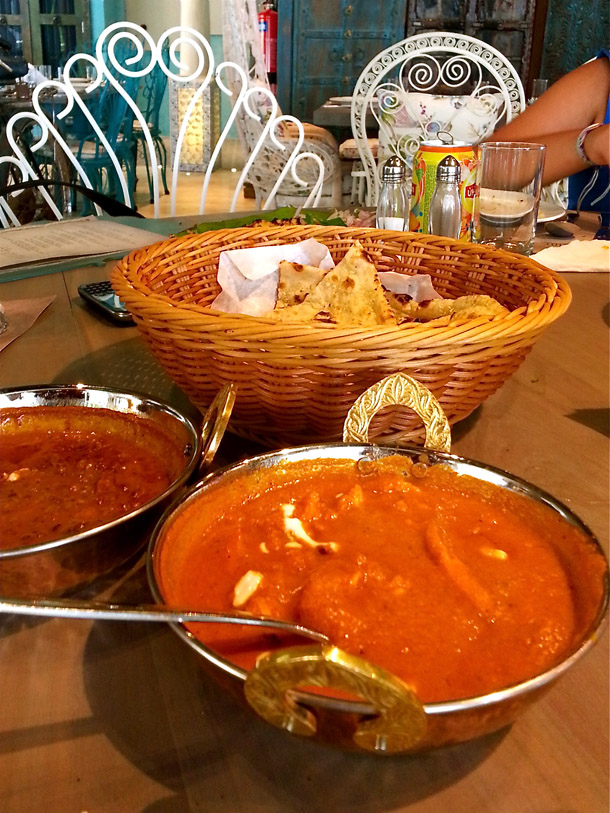
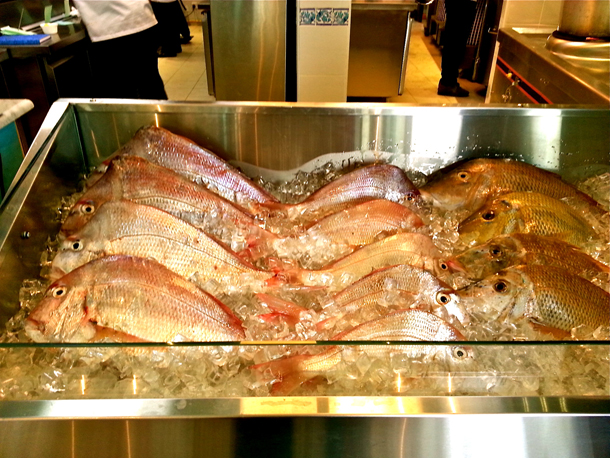
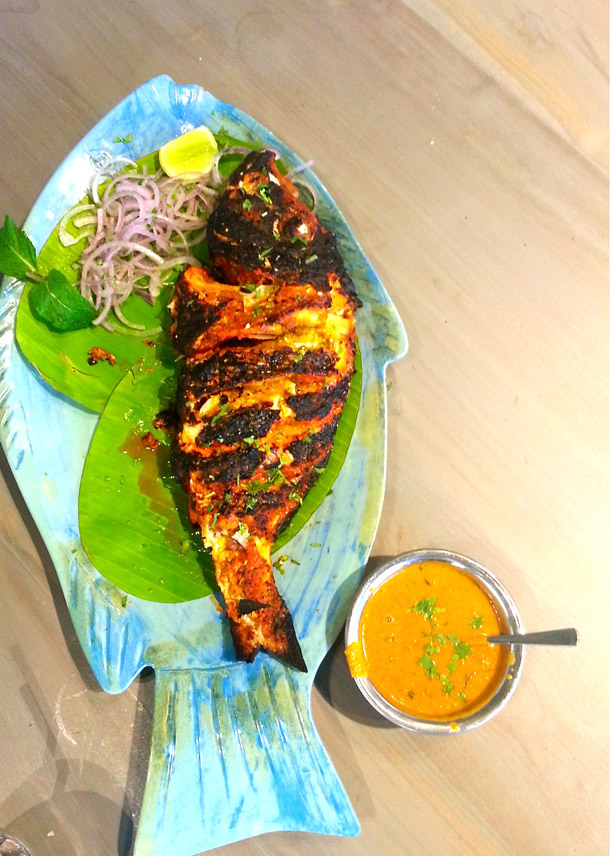
The Seafood Menu: Much like the Seaview Restaurant that has become my recent favourite, the seafood menu here, too, is based on the fresh catch of the day. What I understood from my conversation with the restaurant staff and later the manager (well, I do ask too many questions), one of the owners has a fishing boat. The fresh catch of the day is on display. The diner chooses the fish and the preparation style it is to be cooked in – either grilled, tandoored or fried. We chose a Sheri fish weighing almost a kg and a half, prepared in the Tandoori style. It arrived at the table beatifully arranged on a huge green ceramic fish-shaped tray (below), with a bed of thinly sliced onions on the side, lime slices and a small bowl of gravy – the South Indian styled Sambal. You can also choose a spicy Dip – the Chatpatta Masala or the HOC special – a mustard based sauce as the complementary gravies for your fish. My usual questions on fish sustainability remains slightly unanswered. The overfished Hamour will probably be there in the menu but before I probe further, I need to study a bit more on this. As I was told in the Seaview Restaurant, Hamour can also be sustainable, if it is caught during certain months of the year. I cannot say I am convinced. But for the time being, yes, I am silence. 
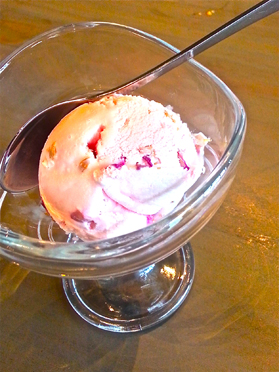
The Sign off: Clam Sukka (clams in a dry gravy), Mussel Curry (mussels cooked in a strong spicy broth), Crab Masala Curry (cracked blue crabs with a tangy coastal gravy), Goan Jhinga Curry (prawns cooked in the Goan style with coconut and tamarind) and a few more interesting seafood items in the House of Curry menu remains to be tried. But considering the great service (the staff was really courteous and caring), good food, a brilliant location with a sea view (they have another outlet in Downtown), the dining experience in House of Curry is not exorbitant at all. Plus, this would be great during dinner as well – I wouldn’t mind dining inside an Indian haveli at this price! I was told that, just the other day, they ran out of food. I believe them – if they can consistently serve the food they did to us (only two weeks into their opening), this would definitely become the mid-range Indian Restaurant where one can come for an *experience*. As for now, I am going to return for some of the untasted dishes on their seafood menu, the hand churned traditional Rose Ice cream (very popular in Baroda) and of course to see the Indian Monalisa!
Unblogging it all… Ishita
Disclaimer: Our bill amounted to approximately Dhs 400 for 4 hungry adults and 1 picky kid. There are many new outlets that are still in their *soft opening* phase in this development – We have also tried Eat Greek restaurant, located just beside House of Curry, also the Counter Burger and the Leopolds. Please note that this post is not a sponsored post and the subject, story, opinions and views stated here are my own and are independent. While you enjoy reading the posts with lot of visuals, please do not use any material from this post. You can catch my daily travel and food journey on Instagram, Facebook and Twitter.
BE SOCIAL. SHARE THIS!


 [Edited on 5th Nov, 2014: Food e Mag dxb now has its own inbuilt reader in its own website. There have been a few changes in the Editorial team.]
What is Food e Mag dxb? Why Food e Mag? Introducing Dubai’s best selection of Food and Dining news in a bimonthly e-Magazine, compiled from some of the brilliant work of the talented bloggers around the region. I have been blogging for the last two years and as I have written in an earlier post… Blogging has given me much more personal gratification than my chosen career in advertising. I have also given myself to Blogging much more than I have done to anything in my life. I have interacted with people with whom I have never even met before. I have received emails from people who have wanted to see me because they felt nostalgic, homesick and felt that my writings had touched them by connecting them to their own roots and culinary heritage. I have met people from so many nationalities and culture and they have all willingly opened up their homes and kitchens to me. Along with the food that we have eaten together, out came their food stories, kitchen secrets and even personal tribulations.
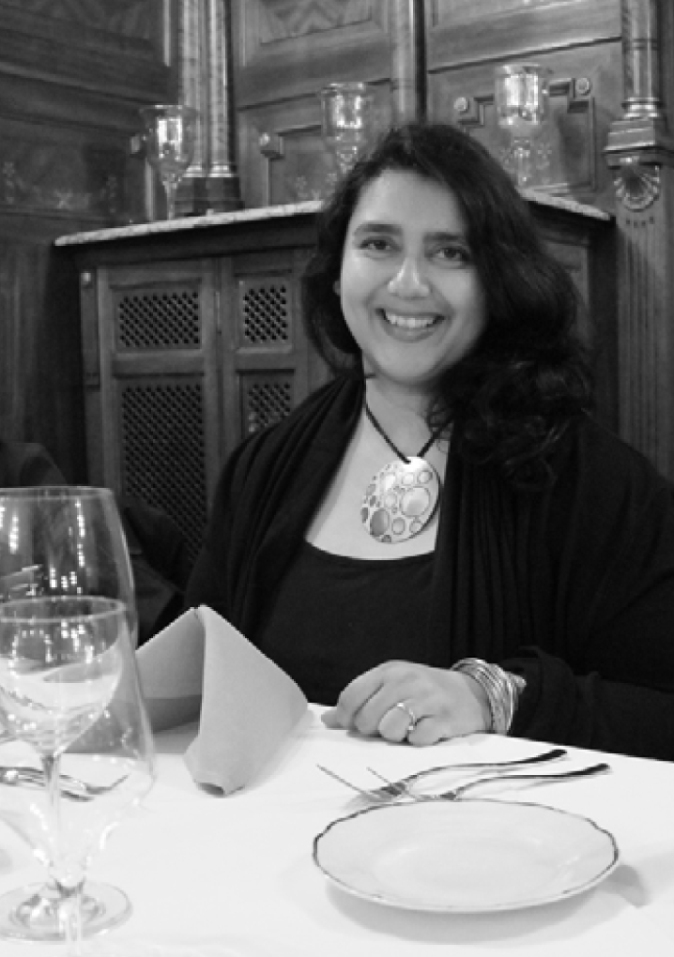
And as I delved deeper into blogs, I have realised how much passion and effort it takes to build a blog with an unique voice. A good blogger is knowledgeable, impartial, has unique insights and writes for an audience that knows and loves them. They have their own niche and each blog caters to a particular segment and deals with a specific food subject. We – Sarah (who writes a very popular blog, The Hedonista) and I, both of us felt the urge to go beyond our own blogs and bring out a content that will be inspirational. And that content seemed to have been there. As individual bloggers, we were not being able to go beyond the philosophy and the direction of our own blogs. At the same time we wanted to showcase the work of bloggers around us who had been inspiring us. This gave birth to our digital baby – Food e Mag dxb. A snapshot of our thoughts from the Editors’ Note…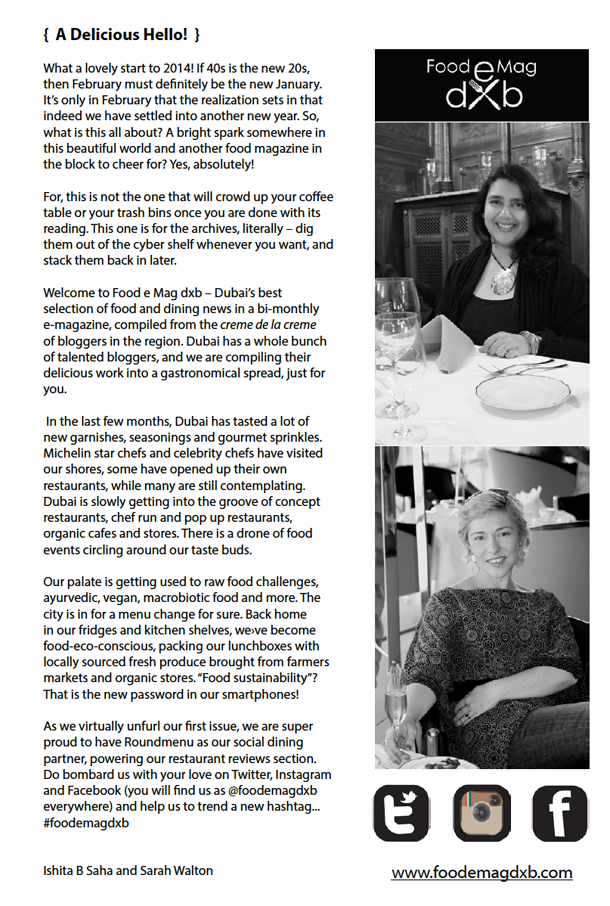 We wanted this magazine to be different. It had to inspire people with its recipes, culinary travels and also chalk out the regular happenings in the Dubai dining scene – for after all, this is the city that we have all build our homes in. It’s been days and days of hard work – starting from the selection of the articles to the selection of the right ‘e’ in our logo. I did a few logo designs, Sarah did only one – the one that you see. She liked one of my logos. But I loved her’s. I felt that there was a certain sporadic rhythm in the entire scheme of design. But our bone of contention had been the ‘e’. So there was a time when we went through all the ‘e’s that were available in our Font Folder and finally settled on the ‘e’ you see!
Things hadn’t been smooth. Sarah’s design would open up in my computer with different fonts and my designs would look misaligned in hers. There were files being transferred to an fro across the virtual space. Sometimes, I didn’t like what she did. The other times, she didn’t like what I did. The launch of the magazine didn’t happen on time. But the one thing that we both shared was – what incredible work has been done by the bloggers – we have to bring it out and do justice to those work! There were many technical glitches – we were both novices at how to give shape to the magazine. Just when we thought that it was ready and could be published, we started our social media… Launching Soon/Loading 75%/Loading 99%… and then we got stuck. Once loaded, the magazine didn’t look right at all, it lost its links, the fonts changed. Both of us were so deep into the magazine and working on it for far too long (Sarah crashing the hotel internet in Cortina where she had supposedly gone on a ski-break – all the while she had been there, she was loading files onto dropbox). It seemed only right to wait for as long as it would take, to get the first issue out perfectly. Now it all seems like a dream and I feel like giving big hugs to my gorgeous co-editor – she has endured many whatsApp messages of mine, even when her status read *Sleeping*!
The initial response has been very warm and overwhelming. ‘Inspiring, Beautiful and Different’… are a few of the feedback that we have been getting on our launch issue – we are really thrilled. Have a flip through our much awaited launch issue here… and tell us what you feel and do subscribe if you like it (it’s free!). You may click here to visit the Food e Mag dxb website and also win a ‘Mongolian Dinner Night For Two’ at Mazina, the culinary powerhouse of The Address, Dubai Marina. Do bombard our digital baby with your love on Twitter, Instagram and Facebook (you will find us as @foodemagdxb everywhere) and help us to trend a new hashtag… #foodemagdxb. You will find the icons below and I have kept them really big lest you miss them. But remember, while the magazine is one, it’s a bit schizophrenic on social media – because Sarah and I are completely two individuals with two different ideas on how to approach social media. Expect some frenzy. From my side, I promise that never shall I splatter the magazine, Sarah or myself in my blog. But right now, as she tweeted, yes #woohooImAnEditor!
Unblogging it all… Ishita





Disclaimer: Please note that this post is not a sponsored post and the subject, story, opinions and views stated here are my own and are independent. While you enjoy reading the posts with lot of visuals, please do not use any material from these posts. You can catch my daily food and travel journey on Instagram, Facebook and Twitter.
BE SOCIAL. SHARE THIS!

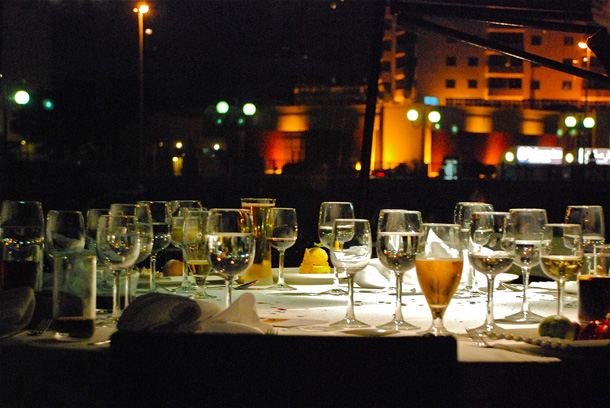
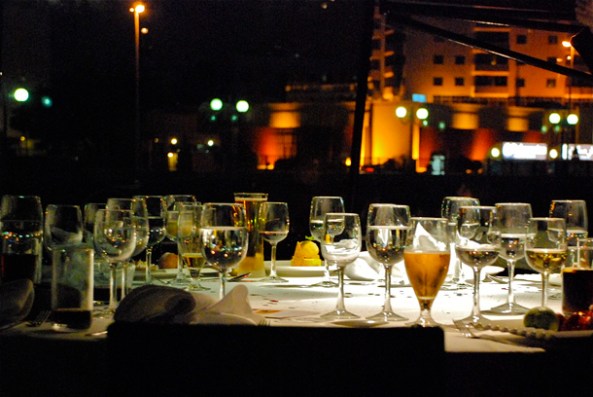
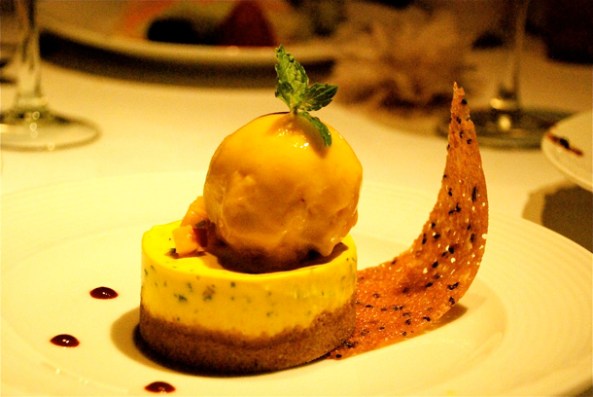
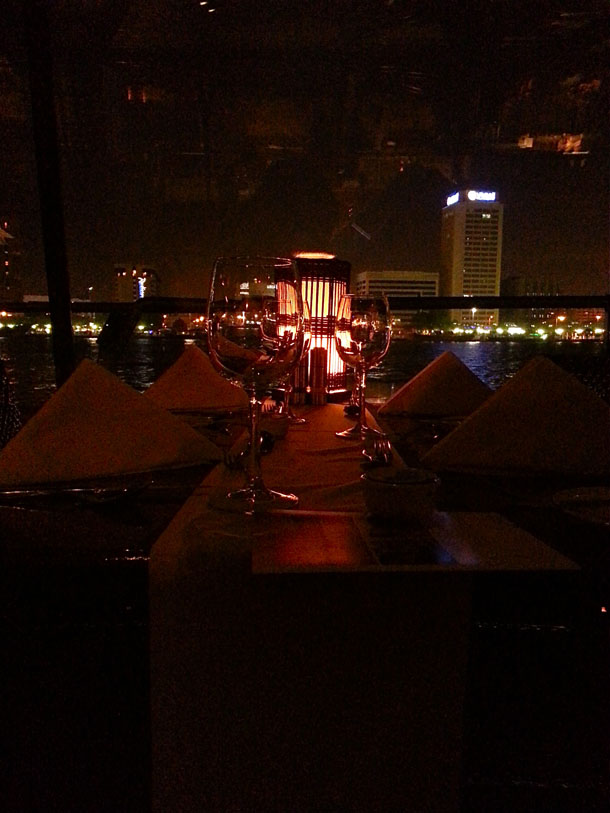
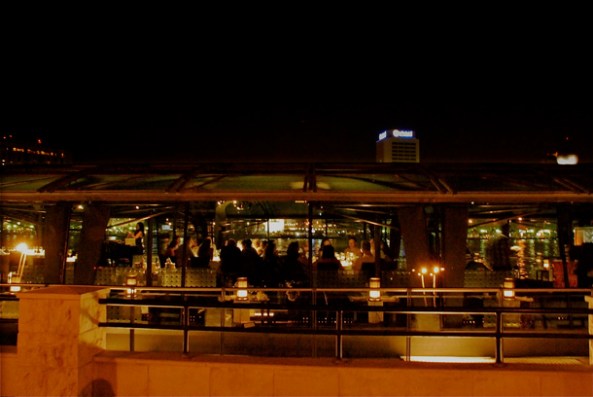
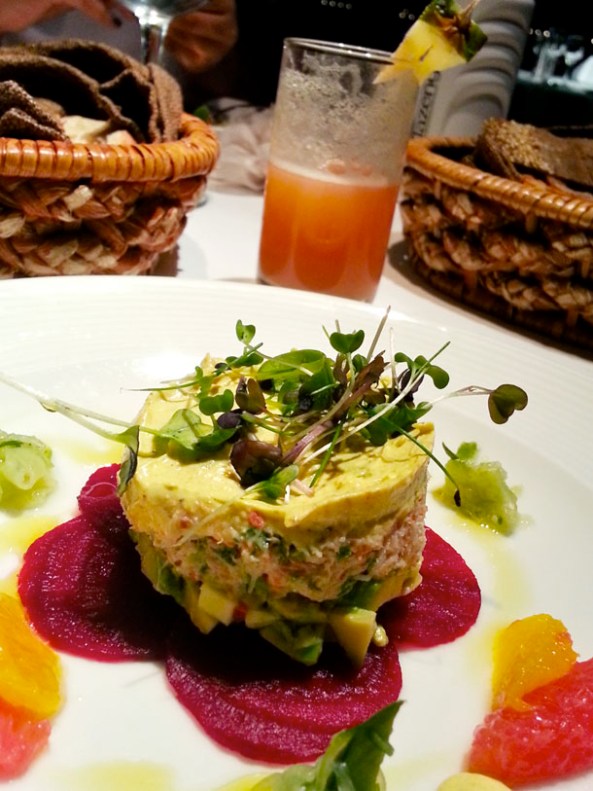 Food shot first (above), then the venue (below). This is my outrage against the ‘Fancy French Chefs Want to Ban Food Porn Photos From Their Restaurants’. How else can I share the ‘experiential dining’ that this beautiful glass boat gliding (not sailing) the waters of the Dubai Creek? Much to the annoyment of my fellow diners, I do unashamedly boast myself as the ‘foodstagrammer’ and I do click pictures of the food till it gets cold. In my defense, I will say, I don’t ever use flash in a restaurant, lest it disturbs other diners and even a child knows how difficult it is to make the food look delectable in a restaurant where there is an ambiance – which loosely translates into dim lighting. So if my food shots are good enough to bring a few of my readers into a restaurant (and I believe that diners did come by the dozens to this restaurant that I had recently written about), I have all the right to be outraged. But first, the food has to be really really good.
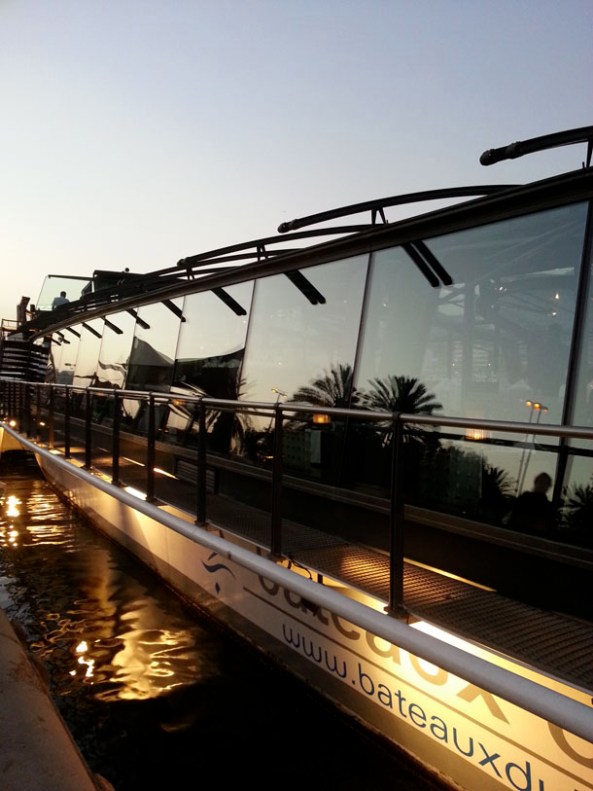 The Creek Experience: Dubai Creek is one of my favourite spots in the city. I have done innumerable dhow trips, sunset cruises, have walked along the Creek for the entire 9 months of my two pregnancies. I have crossed the Creek many times by Abra, cut surprise birthday cakes in one of those small boats that offer to give tourists a 30 minutes cruise along the creek for barely 25 Dhs. I have eaten in most of the small restaurants and cafes that dot along the Bur Dubai side of the Creek. And I have always seen this beautiful glass boat anchored along the Creek – the Bateaux Dubai, waiting for its fancy diners to arrive. I have felt that this was Cinderella’s glass slippers – and my feet didn’t fit into them. And as much as I would have loved to have stepped into the beautiful glass boat, I have always had this feeling that the food served would probably be an upgraded version of the dinner buffets that are served in most dhow cruises. Never had I imagined that this was going to be another fine dining restaurant with a real kitchen. No, not any pre-cooked buffet food here, prepared in one of the restaurants of the parent company (JA Hotel & Resorts) and then brought and warmed up here. Not only is the food great, the experience is beautiful. Nothing beats the spectacular view of a lit up Dubai Creek at night. A special snooty feeling here, once you park yourself after dinner on the huge Moét & Chandon signature floor cushions (below left) on the upper deck – it feels like leading Coco Chanel’s life!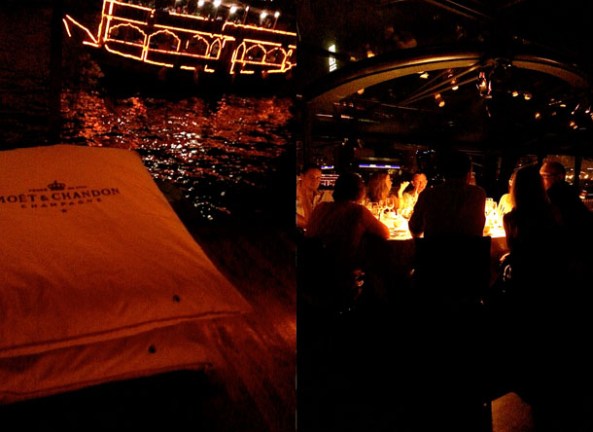
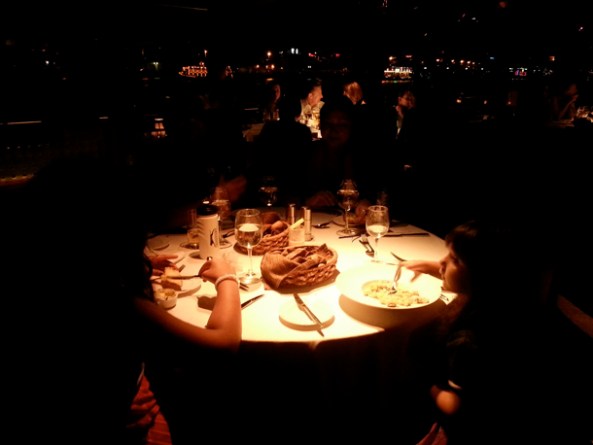
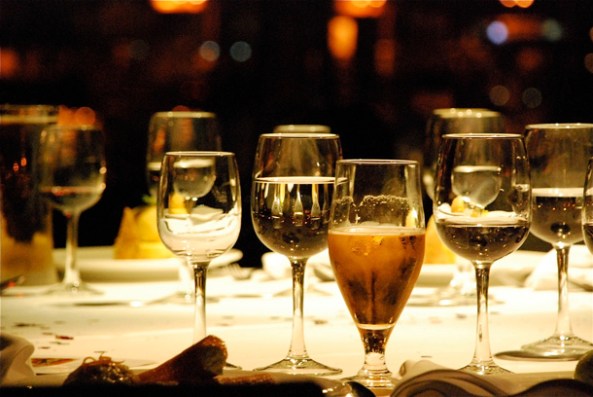
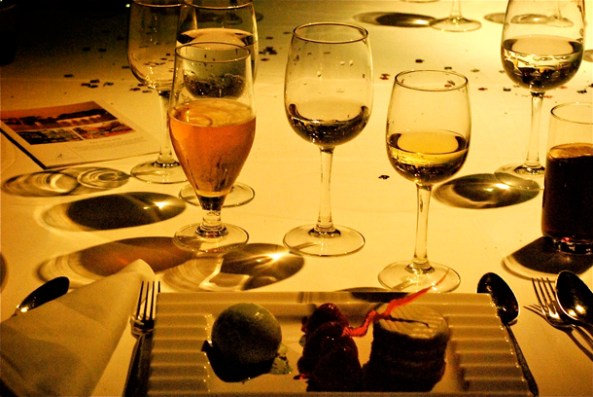
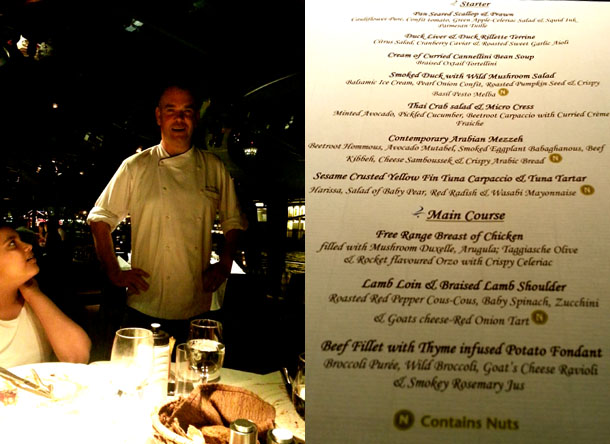
The Food: Now that I am done with the glass shots (literally, the wine glasses, the glass facade and everything glassy!), let’s talk about the food. At the helm of the kitchen is the very talented Chef Alan van Heerden (above). With a team of nine Chefs on board Bateaux Dubai, he creates a 4-course menu, taking in inspiration from their varied mix of different backgrounds and cultures. Every dish ordered from the menu, is freshly made in the specially designed kitchen, with finest of ingredients (locally sourced? Yes. Sustainability taken into account? Yes. Organically produced? Not everything). After nibbling into house breads and soup, for Starters we chose Pan Seared Scallop & Prawn (served delicately with a purée of cauliflower, tomatoes and a green apple celeriac salad and interestingly a Parmesan tuille with squid ink), Smoked Duck with Wild Mushroom Salad and a Sesame Crusted Yellow Fin Tuna Carpaccio and Tuna Tarter. The Smoked Duck was the winner for me – served with Balsamic ice cream and a crispy Basil Pesto Melba. For the Main Course, I loved my Seared Salmon with Braised Pok Choi (Salmon is such a favourite at home that I’ve managed to make a Bengali Mustard fish out of it too!). The other dishes that we had ordered was Beef fillet with Thyme infused Potato Fondant and Lamb Loin and Braised Lamb shoulder served with roasted red pepper couscous, baby spinach and a delicious tart made with Zucchini and Goats Cheese-Red Onion. Do you fancy chillies for dessert? We did, for we ordered a Mango, Coriander Chilli Cheese Cake with Mango Salad and Candy Ginger Tuille and that reminded me of another superb experience of a chillied dessert I have had before. The minute detailing that go into making this kind of ‘intricately created fine-dining’ menus, always leave me fascinated – Broccoli purée and then again wild Broccoli, Goat Cheese Ravioli and Smokey Rosemary Jus – wow! It’s like embroidery – millions of colour threads and minute beads are all interwoven together to create a beautiful pattern!
The odyssey of #foodporn below… (Excuse me, French Chefs – do you really think that I am breaching your intellectual property rights by showcasing your artwork to the word? Nay, tell that when someone walks into your restaurant demanding to eat a dish that they had seen a picture of, on my Instagram!)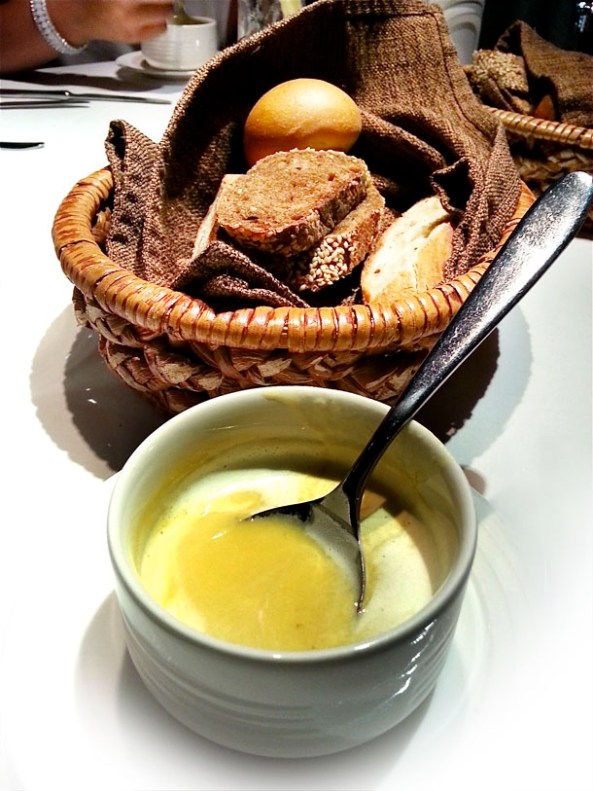
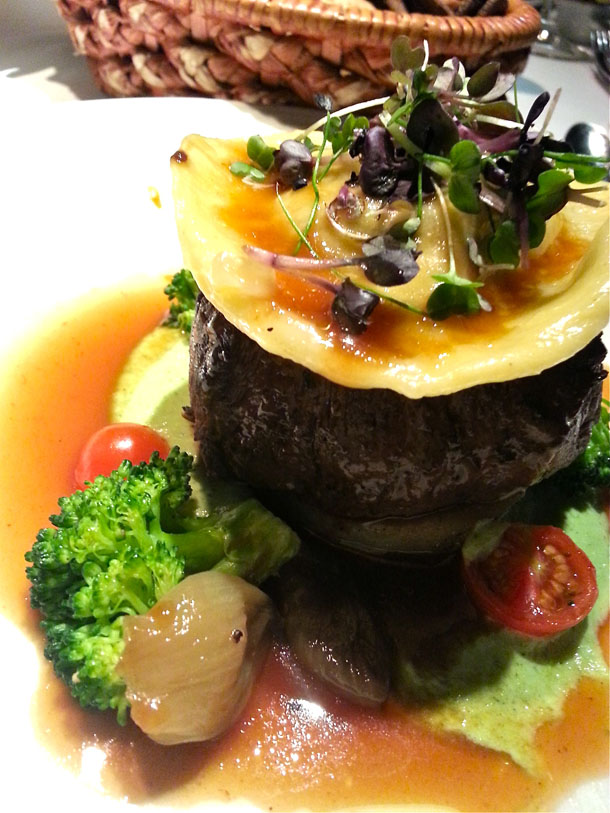
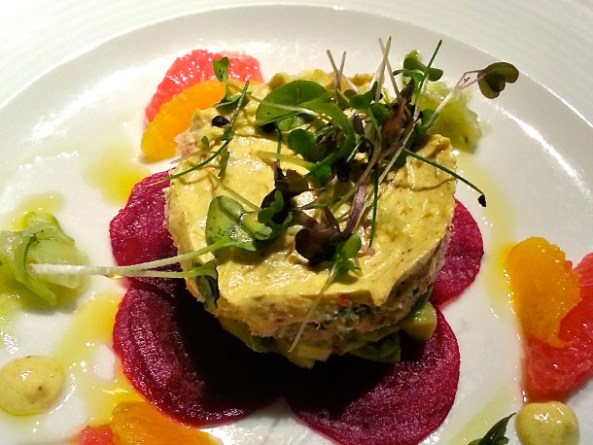
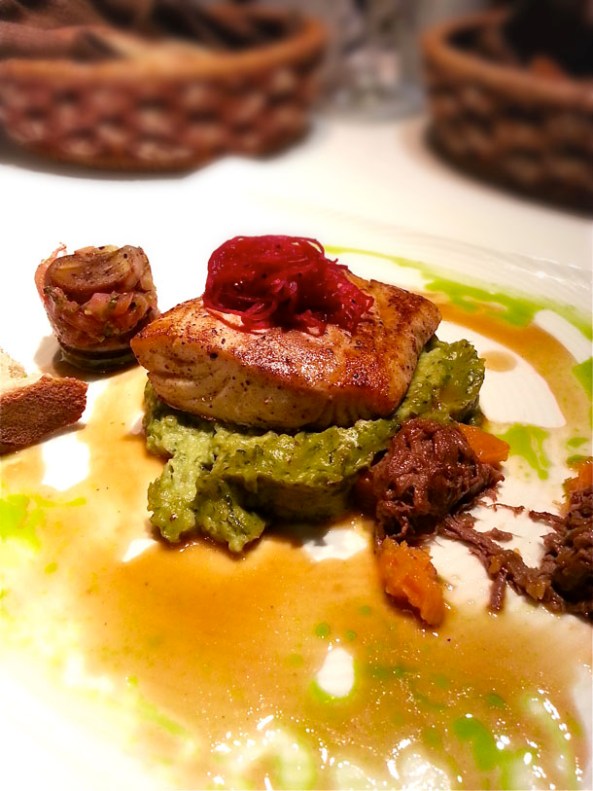
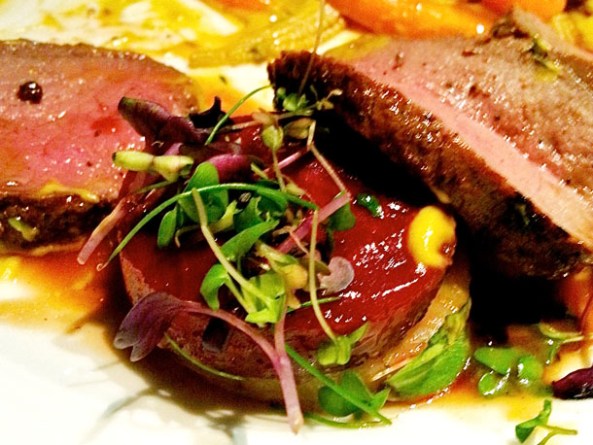
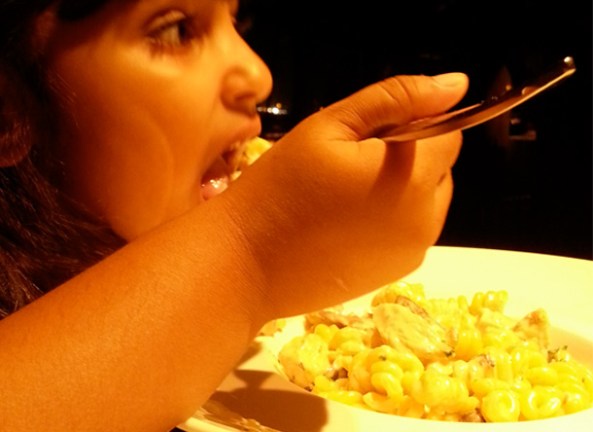
 The experience of the Creek apart (pictures below), Bateaux Dubai was a great dining experience. It was Big Z’s birthday and the day felt anyway special (also thanks for the complimentary fruits instead of the cake as she was trying to be healthy). Emotions apart – the vessel is so heavy that one doesn’t feel any movement, unlike in many of my previous experiences of dhow Cruises, where I have tumbled with my plate filled with food. The experiential dining (actually nominated in this category in the recently concluded BBC GoodFood Awards 2013) does come at a price (395 Dhs/person for a four-course gourmet dinner, a welcome drink and a selection of canapés, and at a higher price if you opt for house beverage inclusive package). This is definitely a special-treat dining venue – good food and excellent service (also there is a gorgeous lady swayingly playing the violin – not Vanessa Mae exactly, but still, creates some vibe!). My post on Bateaux Dubai has been pending for long as I had pitched a write up on the different types of experiential dining that one can have along the Dubai Creek, which unfortuinately didn’t materialise. It’s my blog’s gain after all. The next post comes up with a cheat idea – not in Bateaux Dubai but on the Dubai creek experience with great food and one-tenth the bill. In reverse order now, from fine dining to street food – the blog pens down ‘experiences’ after all!
Unblogging it all… Ishita
Disclaimer: Exclusive Dubai Food 2014 Festival menu is available in Bateaux Dubai from 21st February until 15th March 2014. Please note that this post is not a sponsored post and the subject, story, opinions and views stated here are my own and are independent. While you enjoy reading the posts with lot of visuals, please do not use any material from this post. You can see more pictures of my travel and food journey here.


BE SOCIAL. SHARE THIS!

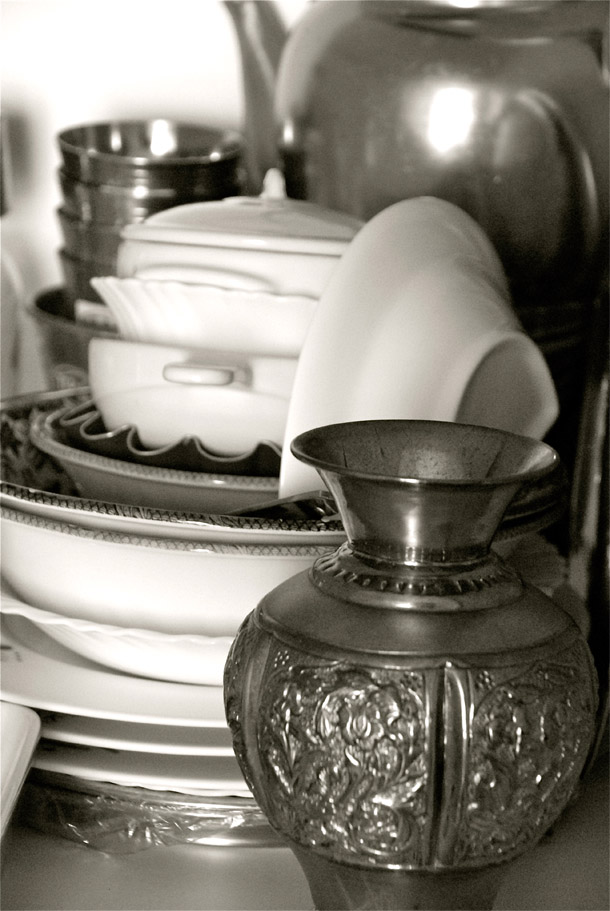
What’s the one item in your kitchen you can’t possibly cook without? A spice, your grandma’s measuring cup, instant ramen — what’s your magic ingredient, and why? Photographers, artists, poets: show us KITCHEN… that has been the WordPress Daily Prompt and I am waking up to it.
If there is one ingredient that I can’t possibly cook without, then that is some story. A story with some magic attached to it along with my childhood memories and nostalgia, the aroma of cooking from the kitchen, each dish arriving on the dining table, cooked with much love by some loving hand – either my Ma‘s, or my Thakuma’s (paternal grandma) or my Dida‘s (maternal grandma) or some Mashi (aunt) and much later, my Mum-in-law’s. Today, that secret ingredient is sourced from antique cookbooks or handwritten recipes, that have been duly passed onto me. Each recipe unfolds from some story or the other. And each story surrounds around some delicate and delicious food moment that I have experienced in my childhood. I intend to pass on the same magical ingredient to my girls – the Z-Sisters. Along with my collectibles and memorabilia from the kitchens of my childhood – some old pots and pans – some torn pages of recipes – a few tattered cookbooks – many rusty silver spoons – and innumerable stories surrounding them all. Capturing the secret intangible ingredient through old photographs, old pots and pans…
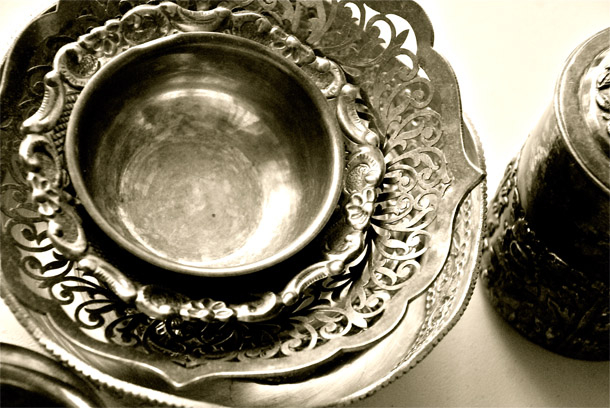
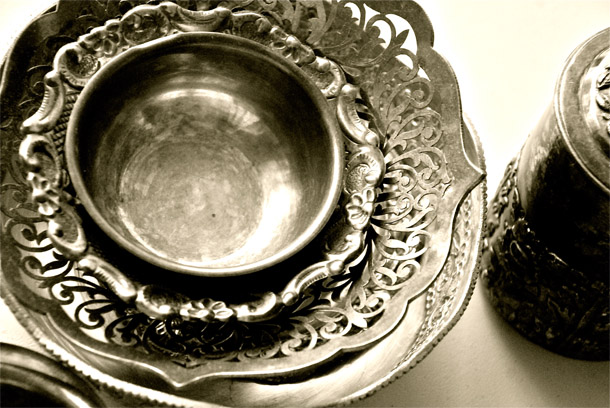
We (my husband and I) have inherited the silverware from both our families – and we have used them as children!
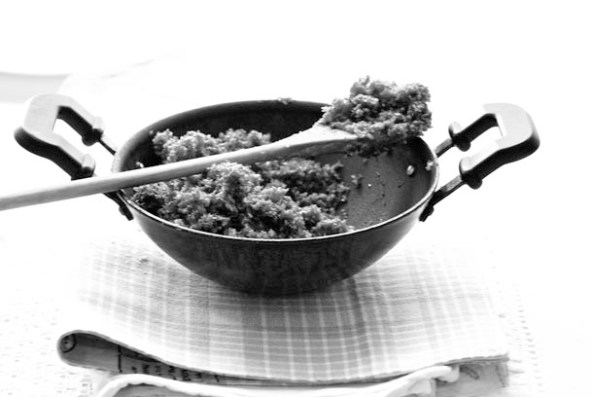
Thakuma’s iron wok to make Narkel Naru/Jaggery Truffles
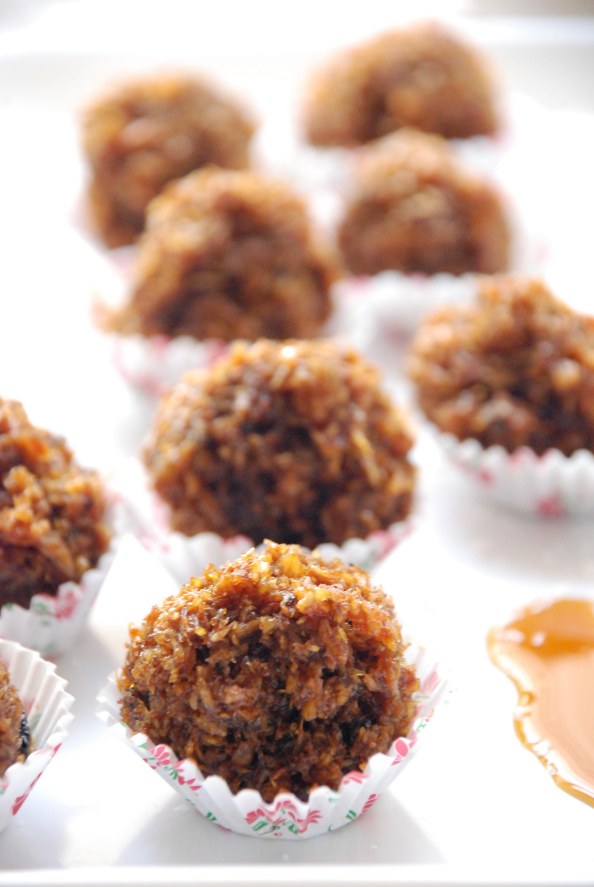
Narkel Naru or Coconut Jaggery Truffles … my Thakuma’s recipe

This is my Ma. Desh, Anandobazaar and Rabindranath* defines her.
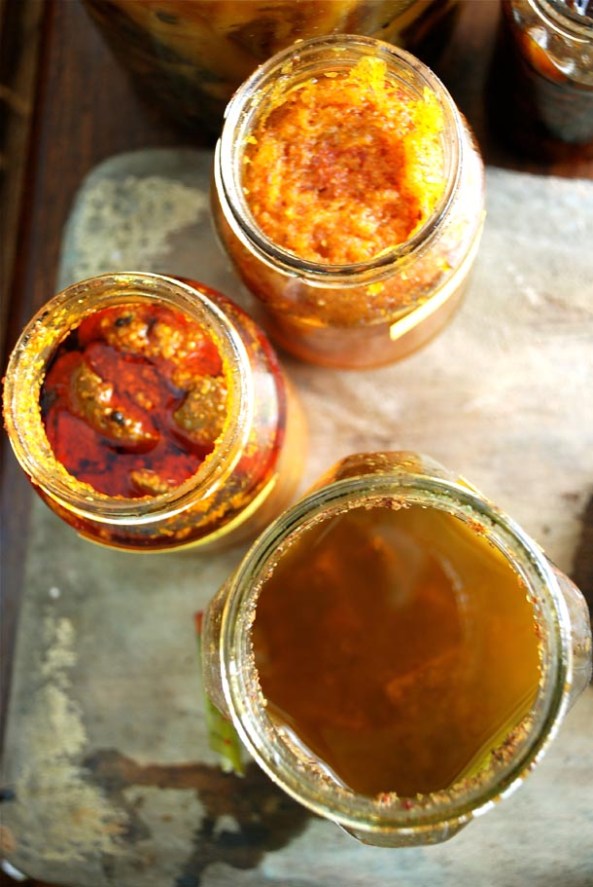
Pickles made from my Mother-in-Law’s handwritten notebook – her ‘Diary of Pickles’
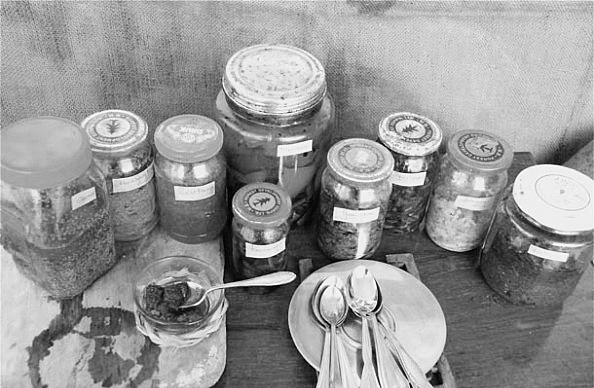
Special glass jars dedicated only for making pickles… I’ve inherited all of these
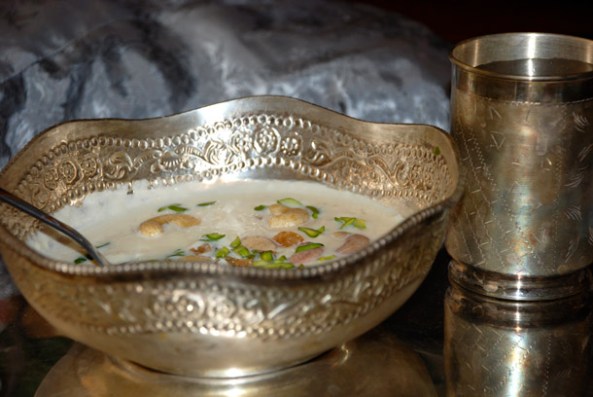
Notun Gurer Payesh or Rice Pudding… my Dida’s recipe. I have inherited the silverware from both families – from my husband and my side.
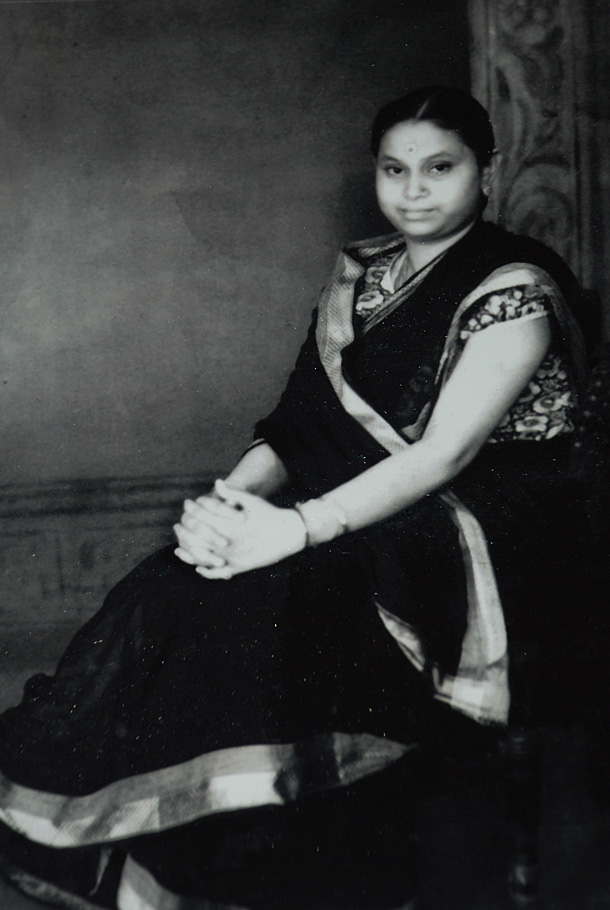
My Dida and my unforgettable memory of her culinary skills
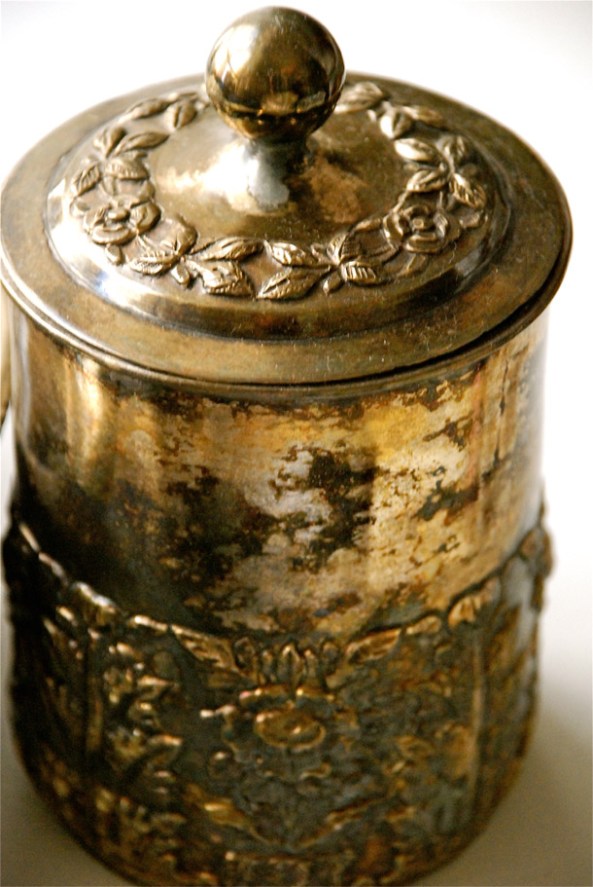
The silver glass that my husband used during his ‘Annaprashan’ or the first rice ceremony – when he was six months old!
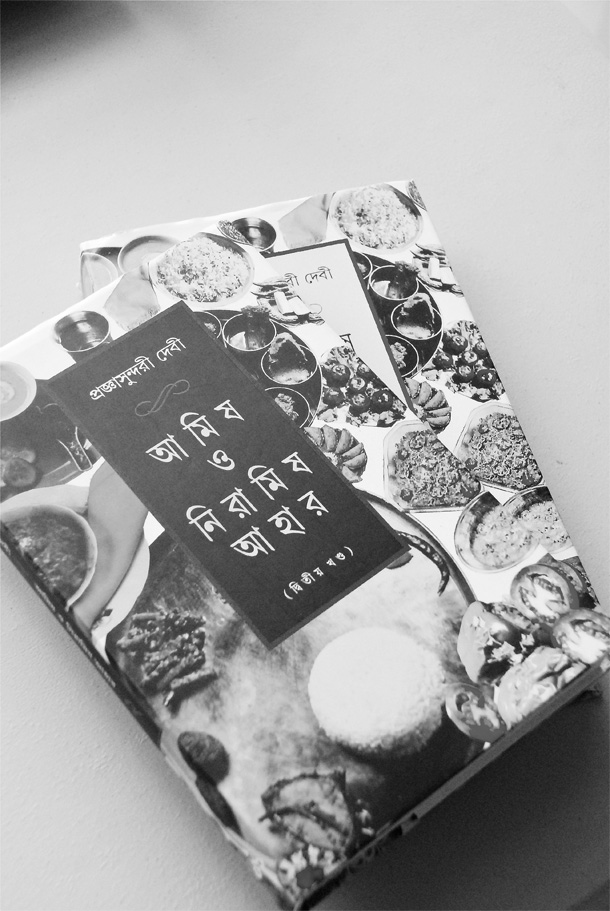
‘Amish O Niramish Ahaar’ by Pragyasundari Debi. A scion of the Tagore family, Pragyasundari used to write a column in a vernacular news paper on various recipes. That perhaps was the first column of its type in the end of 19th Century and the beginning of the 20th Century!
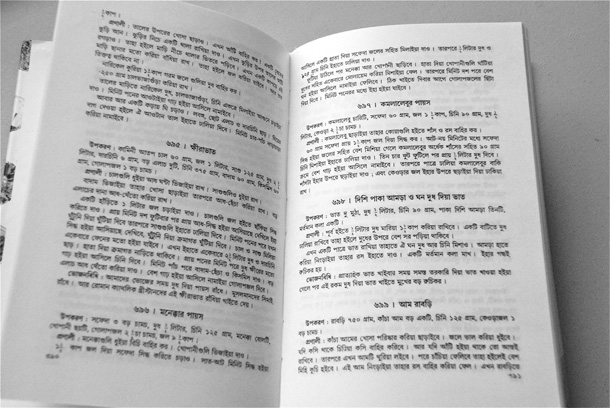
‘Amish O Niramish Ahaar’ by Pragyasundari Debi… heritage recipes, some of them unique and unusual
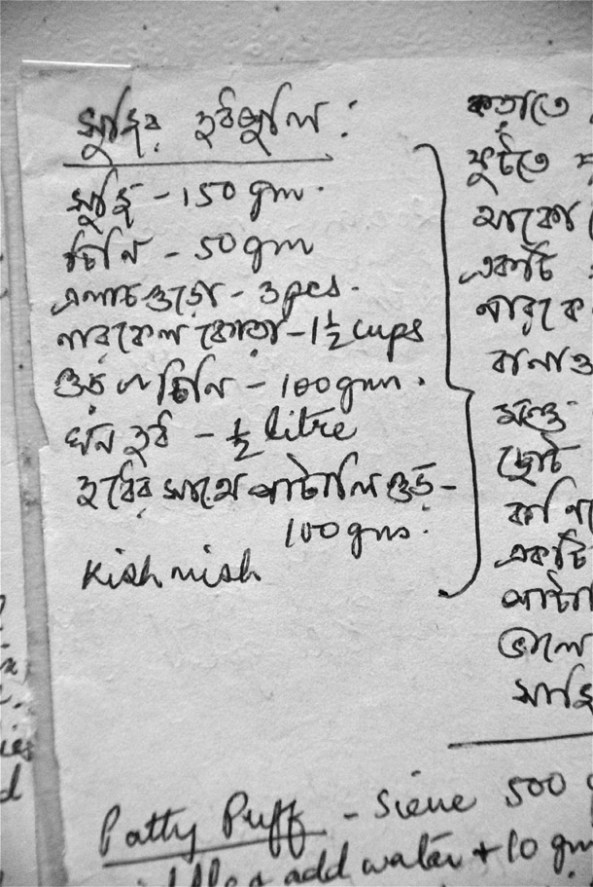
Hand written scribbles of recipes – both traditional and modern, Bengali and western.. I have inherited these from my Mum-in-law!
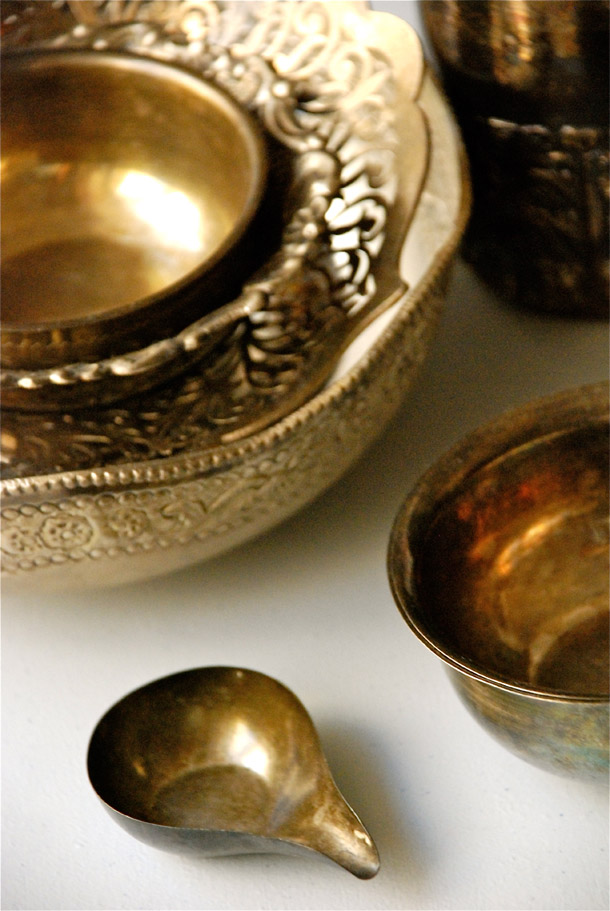
‘Jhinuk’ – a soup like spoon used to feed milk to infants. This belongs to my husband!

An etched ‘Shil Nora’ – a grinding stone used in most Bengali kitchens to make Masala Pastes where one rolls the mortar back and forth on a stone slab sitting on the ground
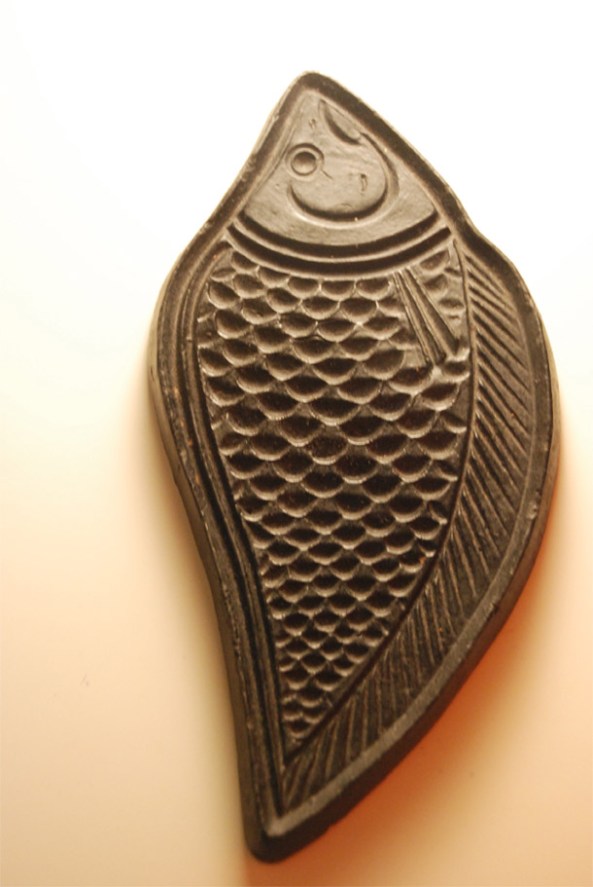
An earthen fish mold (almost 9 inch) to make the traditional Bengali sweet – ‘Shondesh’. This belonged to my husband’s Dida (maternal grandma)
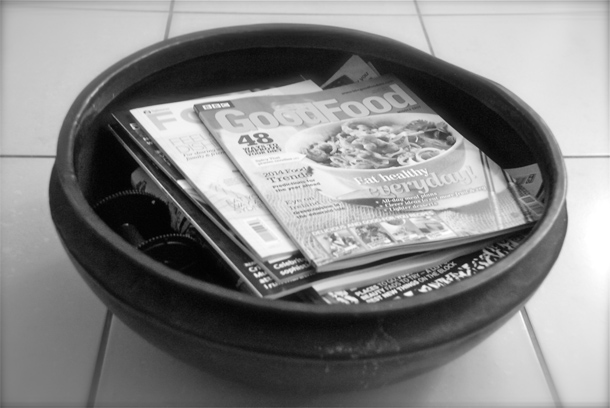
An enormous iron container belonging to my husband’s Thakuma (paternal grandma), which now holds all my food magazines and food cutouts

What goes out, comes back in a circle… now the magic is transferred to my kitchen with me trying to enamor my kids with food stories!

My kids now create the same magical flavour to the sweet corn that they make!
Before signing off, one advice that has been re-iterated by all these special mentors of mine – it is resonated in the Bengali phrase ‘je radhe, shey chulo badhe’. Translated, this would probably mean ‘she who cooks, also takes care to do her hair’… So cook and serve, but serve beautifully. And most importantly, look beautiful. As a reminder, the little mirror (below) has been passed on to my girls from my beautiful Mum-in-law!
Unblogging it all… Ishita
Disclaimer: Please note that this post is not a sponsored post and the subject, story, opinions and views stated here are my own and are independent. While you enjoy reading the posts with lot of visuals, please do not use any material from this post. You can see more pictures of my travel and food journey here.

Below are the posts from my blog that have already captured a bit of the secret ingredient…
Narkel Naru or Coconut Jaggery Truffles … my Thakuma’s recipe
Hot Garlic Pickle | The Pickled Diary – Episode 1 … my Mother-in-law’s recipe
Pickles | Mother (-in-law) Of All Pickles! … my Mother-in-law’s recipes
Notun Gurer Payesh/Traditional Bengali Rice Pudding … my Dida’s recipe
Khichuri As Harbinger of Hope & Kolkata Soaked In Rains … my Ma’s recipe
Traditional Bengali Cuisine | All The ‘Slight’ Details … my essay on Bengali Cuisine
Purple Haze Yoghurt with Purple M&Ms … my kids’ recipe
Cuppa-Corn Sweet Yellow Moments… my kids’ story
BE SOCIAL. SHARE THIS!

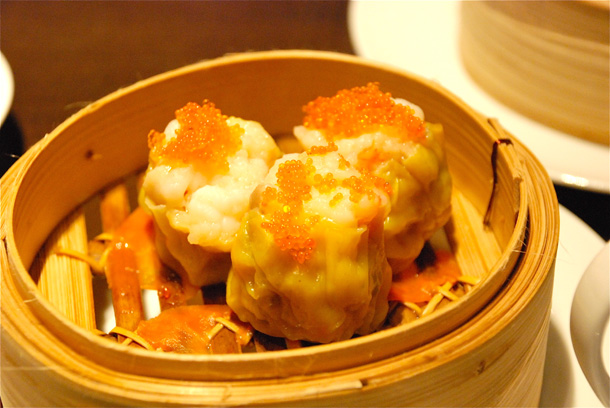
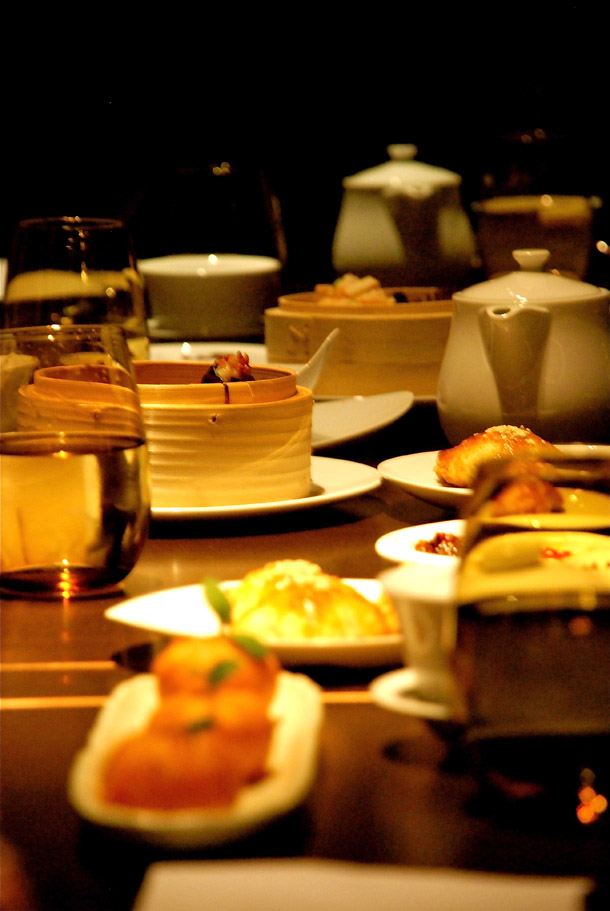
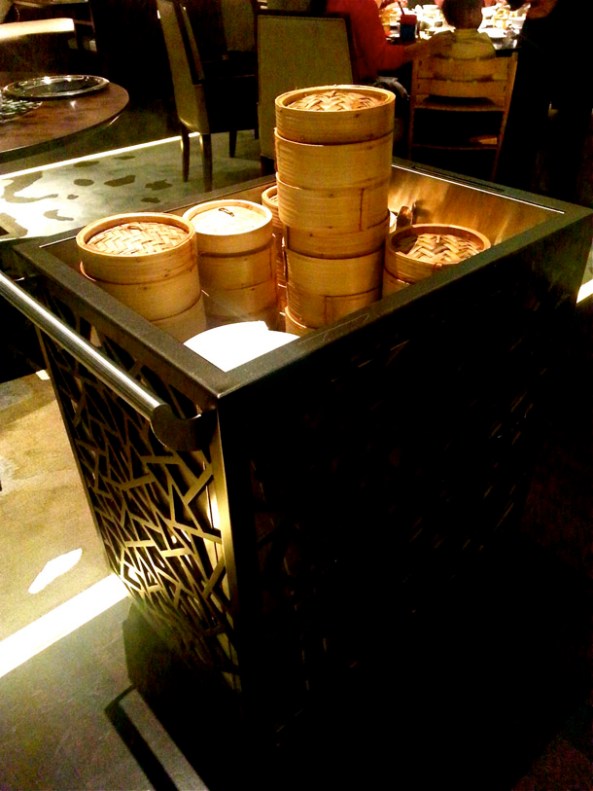
I just came back from a Friday Yum Cha brunch at Yuan in Atlantis and I am still thinking about it. This would be one of those fine dining Dubai brunches (mostly dim sums and what a mind boggling variety of them) that comes at a casual dining price. Priced at Dhs 188/person (why such an unusual figure? 188 is a lucky number in Chinese tradition), one can taste an unlimited amount of the dim sums that are offered in the Menu, plus 4 more pages doling out a selection of steamed items, wok-fried/deep-fried items and salads, rice/noodles and of course some traditional Chinese desserts. And the entire experience starts with the *dim sum trolley* that rolls out (below)… oh what a brilliant start to a weekend indulgence! 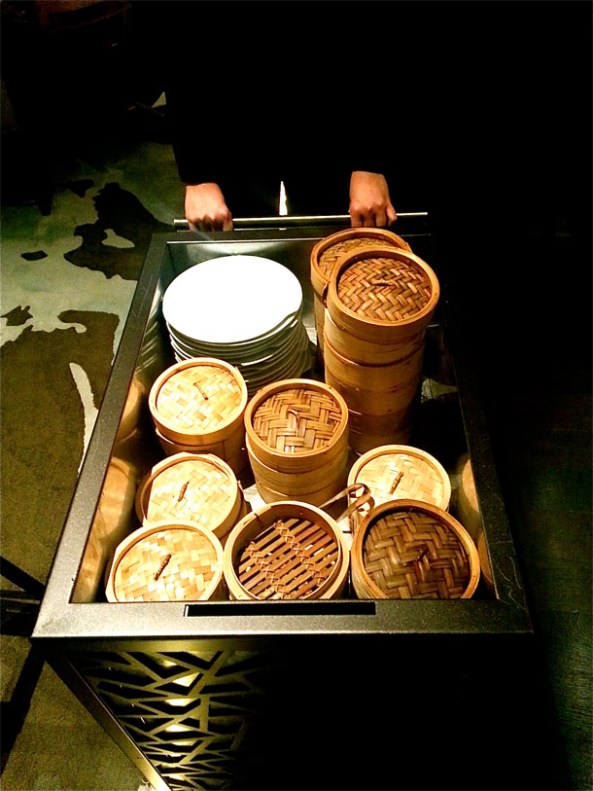
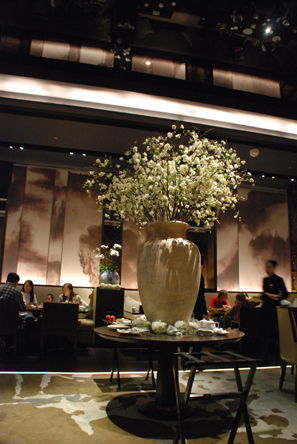
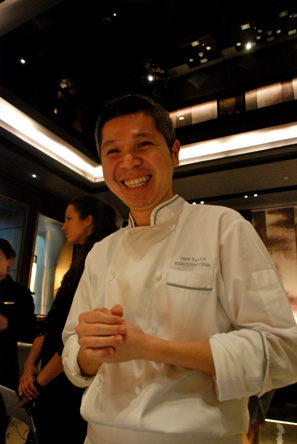
Yuan unmasked itself (a term that had been used in its launch propaganda) in October last year and although I was unable to attend the launch, I heard that the restaurant opened with a lot of aplomb. My first dinner at Yuan was marked with a bit of *hits and misses*, although I was floored with the interiors. Apart from an Oriental inner courtyard, designed using Chinese elements of harmony and balance, there was the Principal House, reminiscent of dining halls built for Chinese nobility. Diners could also opt to relax in private dining rooms while enjoying a menu that has been created with a blend of traditional Szechuan cuisine and diverse flavors of the Sichuan province. But the Friday *Yum Cha* experience sealed out everything else. From the smiling Executive Chef (below) and a team of courteous staff hovering around the diner, this was sheer pampering.
What is Yum Cha? Yum Cha is a traditional Chinese style morning tea. Also known as Ban ming, this Chinese style of drinking morning or afternoon tea is accompanied by eating dim sum dishes. In Yuan, a Yum Cha session is drenched with the finest selections of free flow teas (and also non-alcoholic beverages). A traditional Yum Cha not only focuses on drinking of tea but also on the range of small dishes served (which are collectively known as dim sum) either with breakfast, brunch or afternoon tea. It is customary to share the dim sum dishes among everyone seating at the same table. {More here on customs and etiquettes of Yum Cha and Dim Sums}
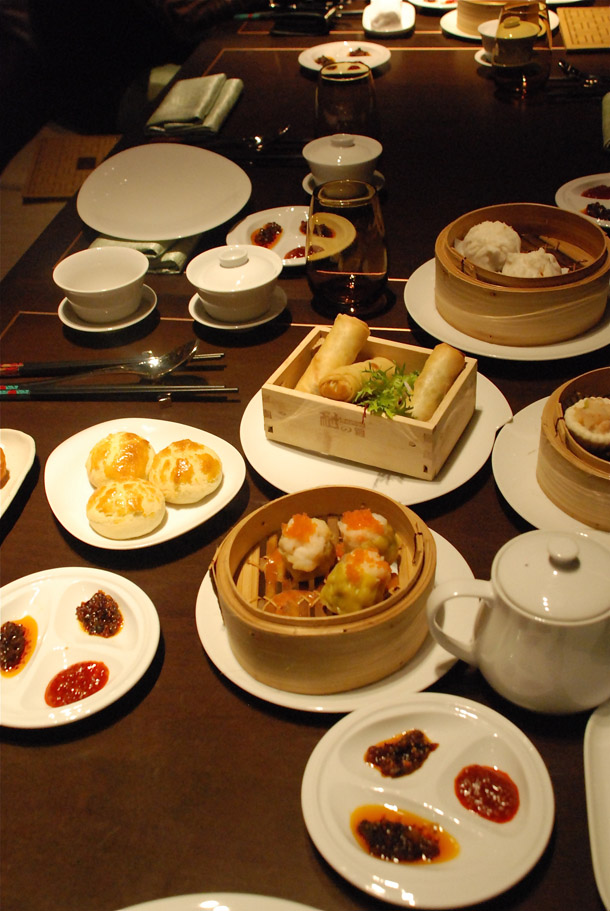
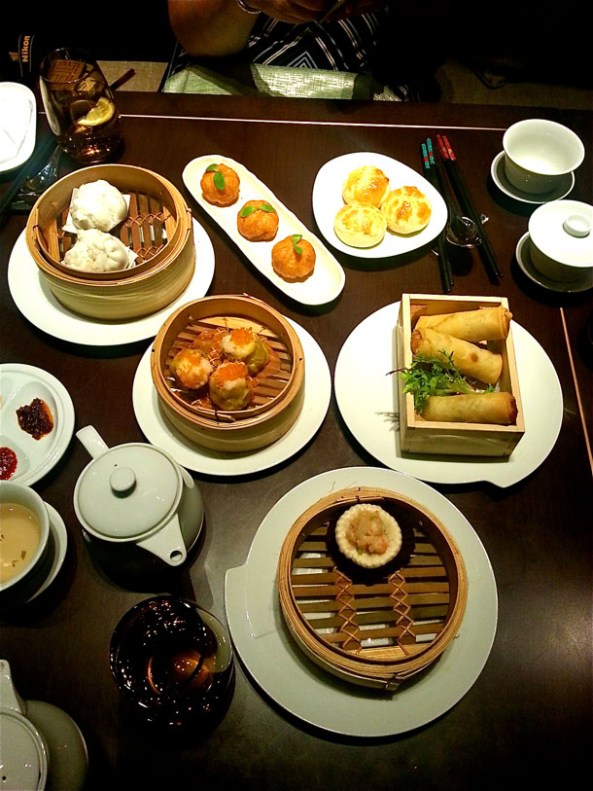
As is evident from the pictures above, our table had been overflowing with a non-stop serving of a variety of dim sums, each type of dim sum served delicately in bamboo boxes like wrapped up gifts. Each time we lifted the lid of a box, along with the steam, a surprise dumpling was being revealed. Instead of choosing from the menu, we let the staff choose a variety of dim sums for us – a wise decision, I must say, considering the long list of interesting options listed in the menu. Here’s an account of those dishes that can’t be missed at any cost. The first dish that we tasted was the Steamed Sticky rice with shrimps. Wrapped in lotus leaf – the rice was delicate, flavorful, really soft and sticky. This was followed by the Steamed Seafood Tart and the traditional steamed buns – a version of the famous char siu baau, but made with Chicken – the Steamed Barbecued Chicken Bun. Another baked version of the same – Baked Barbecued Chicken Bun was served later on (I liked the latter much more). One of my top favorites of the day would have to be the deep fried King Crab Meat and Taro Puff – the crispy fried Taro Puff probably not being the main reason behind salivating on this dish, but the deliciously moist crab filling inside. Now here comes a confusion – the same dish came arrived on the table in two avatars – one with a frizzy crispy fried outside and the other one looking a bit more sober with a smoother looking appearance (pictures much below) – what do I order from the menu (it’s written simply the deep fried King Crab Meat and Taro Puff!) if I want the wilder frizzier one that stole my heart? Don’t miss the fashionable Crispy Duck and Pumpkin Puff looking like mini pumpkins. Although I am not too fond of the typical sweet fillings that characterize many of the Chinese dumplings, I was surprised with myself for liking these sweet filling. For example, the Baked Barbecued Chicken puffs and the Baked Barbecued Chicken buns – bite into them and a sweet filling of chicken strips lost in caramelized onions squeezes out delicately. Or the steamed Custard Pumpkin Bun. I was told that the latter could also be served as a dessert – well, I would prefer to order this one as a Starter, because, for a dish to be categorised into a dessert, my Bengali genes demand more sweetness. Not that we were any less full, but because of sheer greediness and shame (it’s an all you can eat menu and we hadn’t even covered 1/3rd of the Menu!), we did order two non- dim sum dishes – San Bei Chicken Clay Pot with sweet Basil, Chili and Spring Onion and the Crispy Chicken Salad with Pomelo in Mango Plum Dressing. The sweet fragrance of Basil in the San Bei Chicken Clay Pot fooled us initially and made us forget that the other ingredient that had been mentioned in the dish was Chili – until the subtle spiciness hit the nostrils. And the Pomelo Salad reminded me of a traditional haute couture French Salad being ‘orienatlised’ perfectly!
Our Yum Cha experience in pictures…
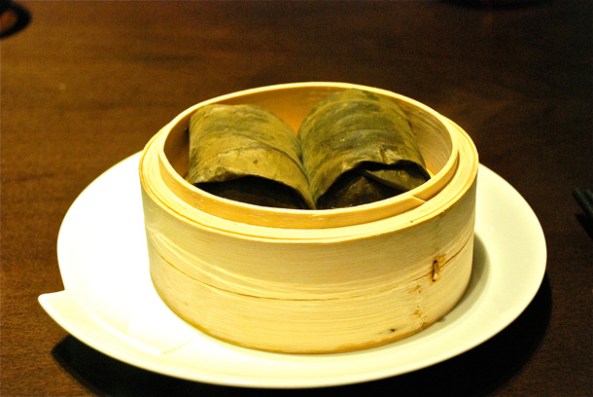
Steamed Sticky rice in lotus leaf with shrimps

Steamed Sticky rice in lotus leaf with shrimps
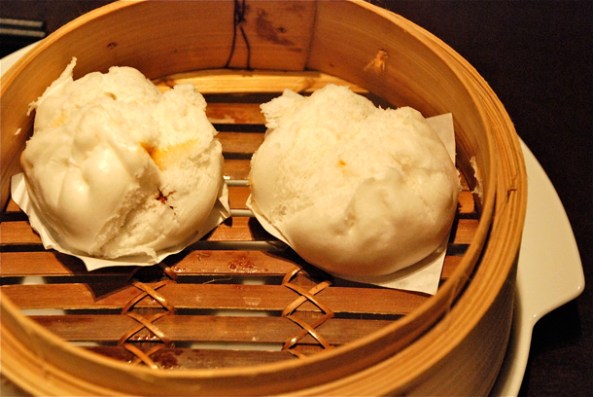
Steamed Barbecued Chicken Bun

Steamed Seafood Tart and Steamed Barbecued Chicken Bun (behind)
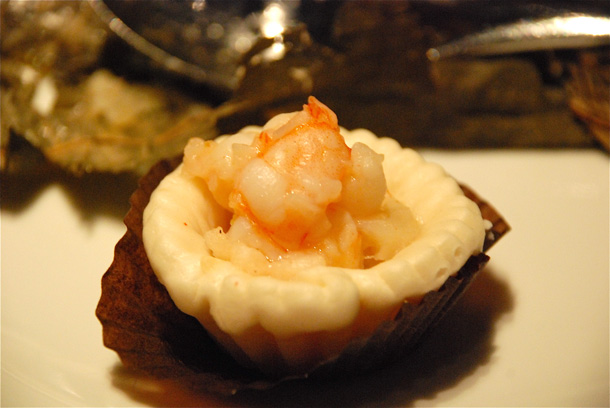
Steamed Seafood Tart
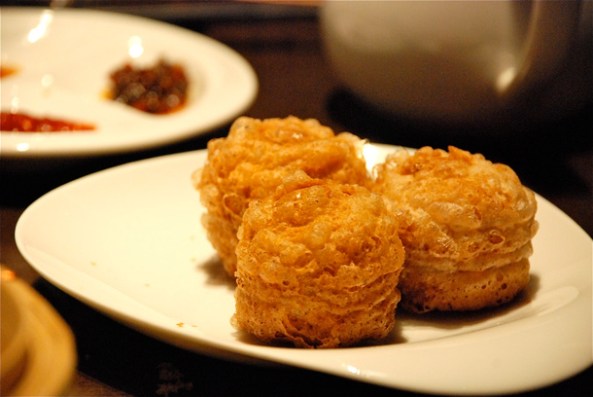
Deep fried King Crab Meat and Taro Puff
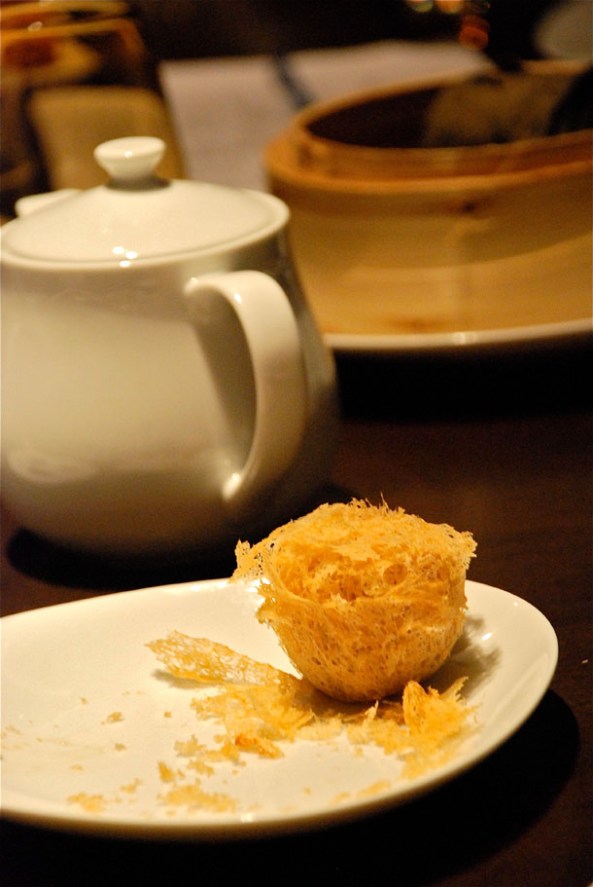
Deep fried King Crab Meat and Taro Puff

Deep fried King Crab Meat and Taro Puff – the inside

Crispy Duck and Pumpkin Puff

Steamed Shrimp Dumpling

Vegetable and Mushroom Spring Rolls
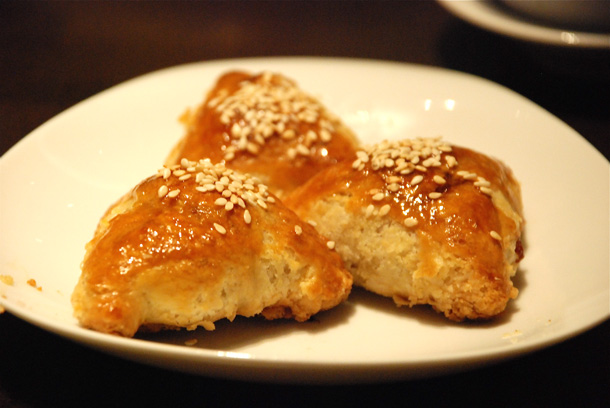
Baked Barbecued Chicken Puff
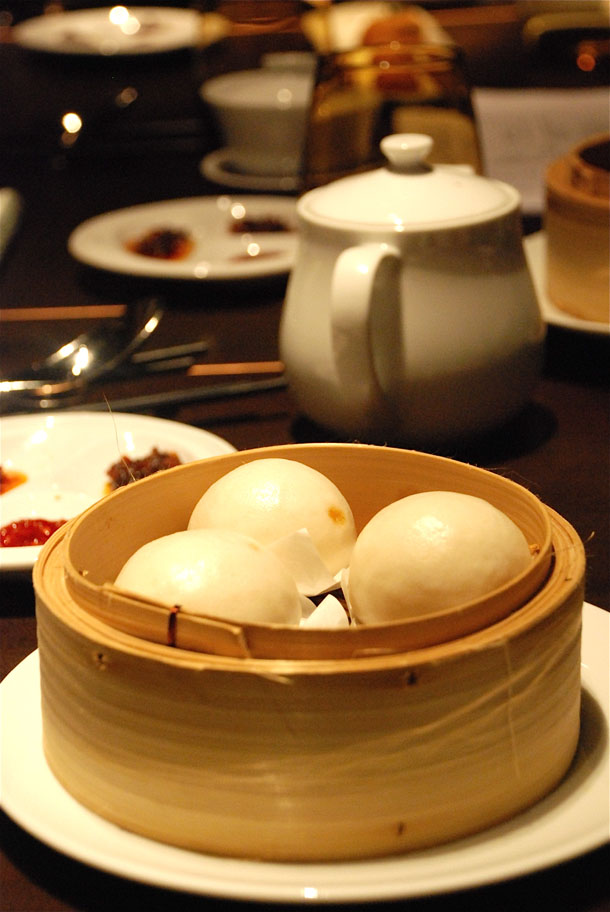
Steamed Barbecued Chicken Bun
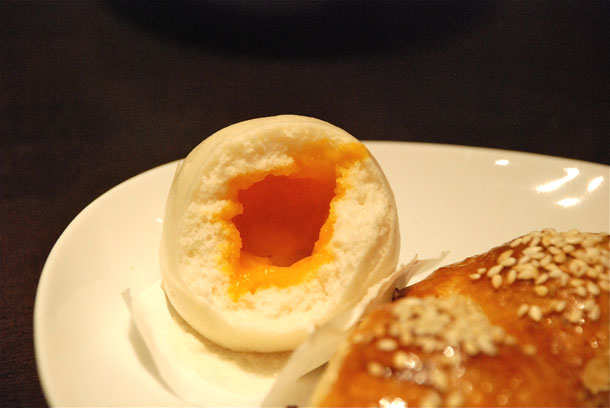
Steamed Custard Pumpkin Bun
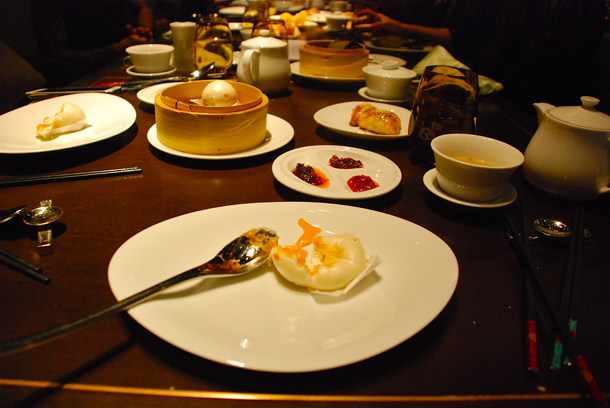
Steamed Custard Pumpkin Bun – the filling spilling out

Baked Barbecued Chicken bun

San Bei Chicken Clay Pot with sweet Basil, Chili and Spring Onion

San Bei Chicken Clay Pot with sweet Basil, Chili and Spring Onion
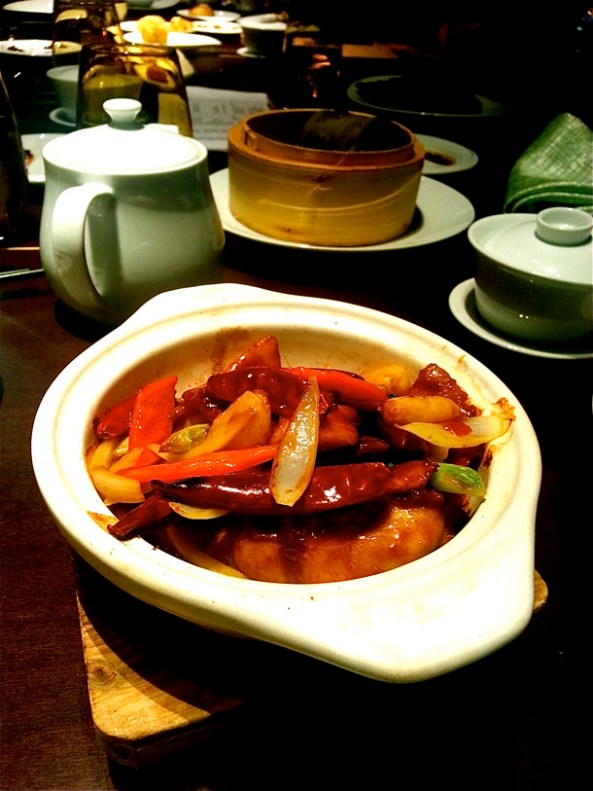
San Bei Chicken Clay Pot with sweet Basil, Chili and Spring Onion
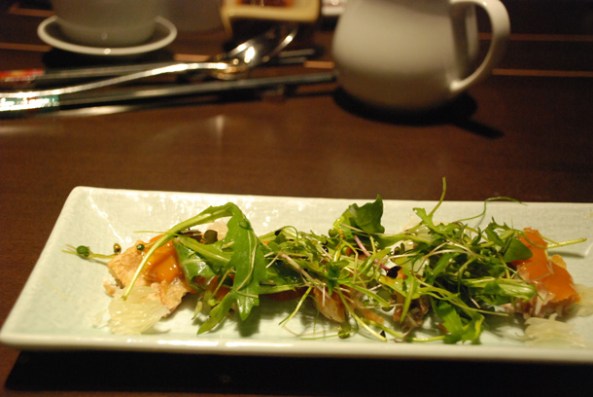
Crispy Chicken Salad with Pomelo in Mango Plum Dressing
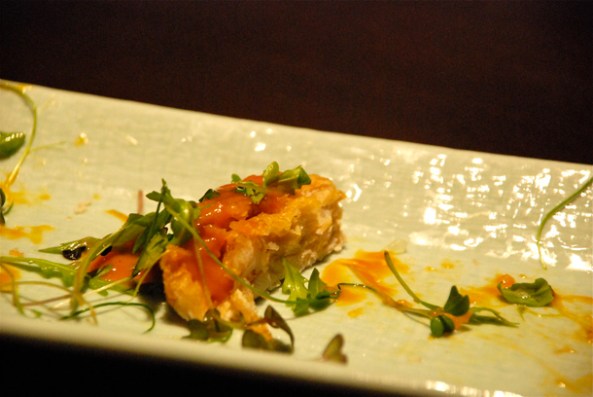
Crispy Chicken Salad with Pomelo in Mango Plum Dressing
With the 2/3rds of the menu remaining untasted, I am going to come back for a Yum Cha brunch very soon. Next time, I have to be bring a bigger appetite and the Z-Sisters too, coz although Yuan is positioning itself as a lounge cum fine dining outlet sans children, the Yum Cha brunch does permit children above 4 years. I think the killer USP is the pricing and it’s fabulous, considering the quality of the food that Yuan is serving, plus a whole lot of vegetarian options. At the same fine dining category, Hakkasan offers a Yum Cha brunch on Fridays but that comes at a higher price range (Dhs 278 and above). If you are looking for a cheaper option, you can try Da Shi Dai in The Walk which serves a Dim Sum brunch at Dhs 88 (a full review by fellow blogger FooDee).
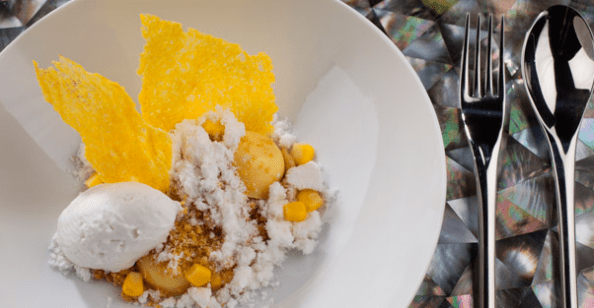
Do you know of any cheats to dine in a fine dining restaurant? For example, The Hedonista suggests a tea option that lets you experience Burj Al Arab in a less pricey way. Throw in your tips please. By the way, although we didn’t have any dessert at Yuan this time, please don’t miss out a dessert with this peculiar name – Textures of Corn: Custard, Crumble, Crisp, Coconut Sorbet, Sweet Milk Snow (below) – I had tasted it in my earlier visit (you can read my review here) and I just realised that I completely forgot about it this time. Also my good friend Debbie (Coffee Cakes and Running) captures the Plum Martini (along with the dim sums of course) that was such a hit in our table on our Yum Cha morning – another reason to come back to Yuan!
Unblogging it all… Ishita
Disclaimer: Please note that this post is not a sponsored post and the subject, story, opinions and views stated here are my own and are independent. While you enjoy reading the posts with lot of visuals, please do not use any material from this post. You can see more pictures of my travel and food journey here.
BE SOCIAL. SHARE THIS!

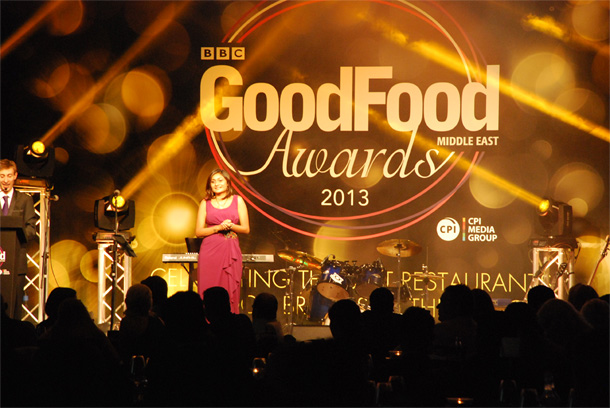

So the Oscar of Food Awards got over only last night. I hurriedly left the after-party celebrations before the clock stroke midnight, almost like Cinderella – lest my glass slippers disappeared and I turned into the nagging mother that I am, struggling to get up in the wee hours of the next morning, trying to get the Z-Sisters ready for school. Reaching home, as I downloaded the pictures from my Nikon and the smartphone, a few scenes from the evening flashed back. Sitting in a table with a few expectant winners, even I had a few moments of anxiety. This is hilarious, considering the fact that I didn’t work for any nominated restaurant or a food brand. But yes, I have had associations with a few of them over my past 2 years of blogging.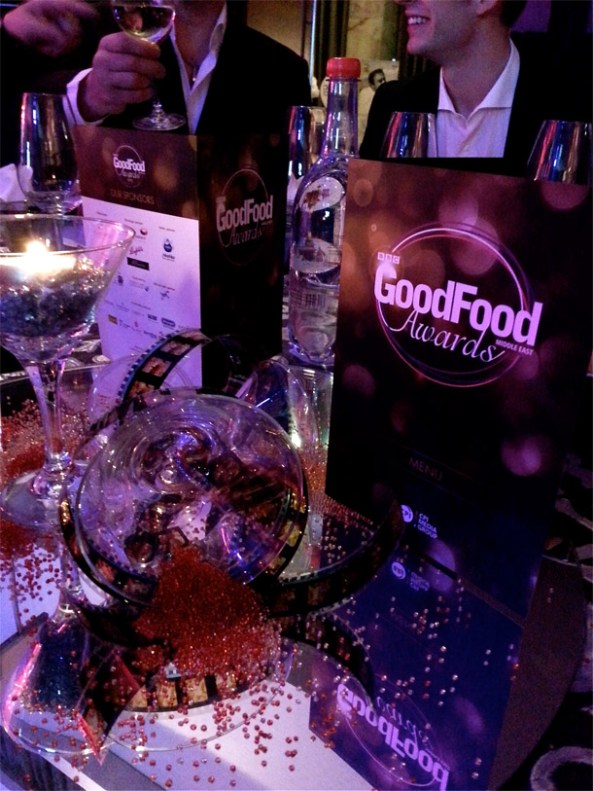 For example – Blue Jade, the Asian restaurant in Ritz Carlton. When Blue Jade opened, I had been one of the first ones to have dined there, in an exclusive sit-down invite hosted by Chef Eric Meloche. He had introduced us to the very humble looking Chef Ta Van who had prepared the menu for the night. Another time, I had attended a Masterclass where Chef Ta Van took us through a journey of the East by picking up a heritage dish, the recipe of which had been passed on to him by his grandmother. I learnt to cook the Ginger Lotus Sea Bass – Sea bass cooked in Vietnamese Ginger Lemon Sauce, all the way wrapped in Lotus Leaf! Last night at the Awards, when Chef Ta Van joined me outside the ballroom of The Address Hotel in Dubai Marina, he confessed that he was very anxious and nervous – Blue Jade had been nominated for the ‘Best New Restaurant – Dubai’ but he didn’t expect that Blue Jade will win the coveted title later in the evening. So Blue Jade’s win in many ways was, as if, my own personal victory. There were many such moments like these. I expect that in the Awards next year, the Blue Jade team will be sitting at a table in front, rather than at the back with the Executive Chef, Eric Meloche holding hands. (No offense meant but a bit of gossip and glitter do go together after all. If it’s the Oscar of Food Awards, the seating is important, right? Sitting around the Judges table, perhaps? Well, at least some of the Instagram feeds did seem to suggest that!)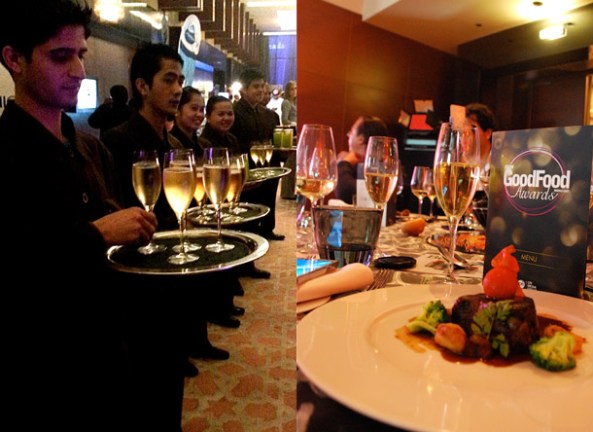
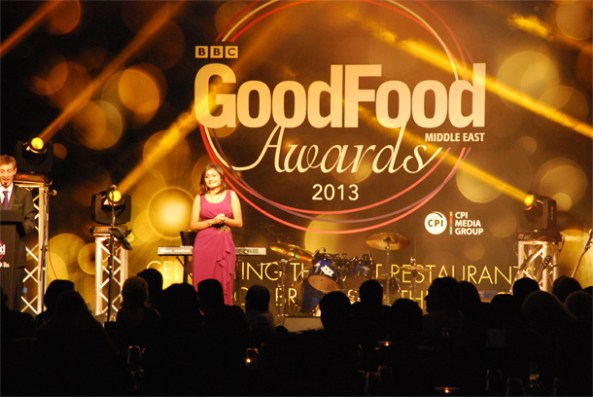
As the evening rolled, Sudeshna Ghosh (above), the Editor of the BBC GoodFood ME announced the surprise guest of the evening – the celebrity chef – Gary Rhodes (Surprising? No, not really. With a new restaurant in Abu Dhabi, he needs to be around the region a bit more, isn’t it? Incidentally, Rhodes 44, The St Regis Abu Dhabi won the Best New Restaurant – Abu Dhabi). Emphasising on home cooking as well as dining out, sourcing local produce from Farmers’ Markets, Sudeshna touched upon a few dining trends and very rightly said that ‘this is probably one of the most exciting times to be in’. And as Gary Rhodes (below) later said ‘Eating is part of the daily entertainment in Dubai’. Indeed so. A point that I have highlighted in Top 11 Unique Things About Living in Dubai – ‘You ask yourself ‘Which new restaurant will I eat this time?’ instead of ‘What new am I going to try out from the menu this time?’ Yes, nowhere in the world will you find restaurants opening up everyday (and sadly shutting down as well). A lot of quotes there from the experts in the food industry!

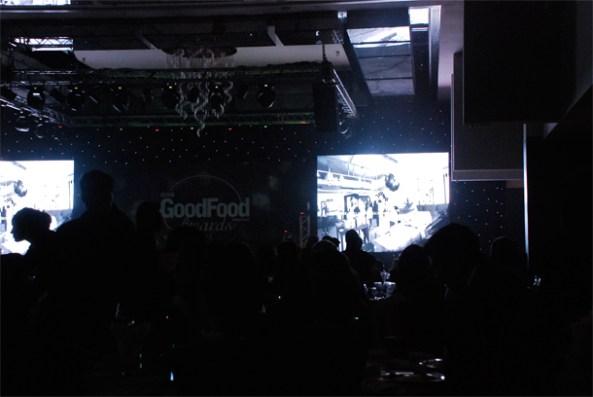 One of the Award categories that really excite me, is the Chef of the Year. The nominees are pitted against each other and the winner is chosen after cooking off against their closest competitors in a Mystery box cooking challenge. A snippet below captured from the big screen showing a film documenting the 4 finalists on the day of the competition – Amrish Sood (Rang Mahal by Atul Kochhar, JW Marriott Marquis – the winner of the evening), Izu Ani (La Serre Bistro & Boulangerie, Vida Downtown), Jamie Robertson (Gaucho, DIFC) and Roberto Segura Gonzales (The Act, Shangri-la Hotel)…
I like the fact that while the winners for Restaurant of the Year (Dubai and Abu Dhabi), Best New Restaurant (Dubai & Abu Dhabi) and Chef of the Year is chosen by an independent judging panel (this time the panel comprised of Chef Uwe Micheel, Tarek Ibrahim and Marianne Saulwick), all the other categories in the BBC GoodFood Awards are chosen by actual diners through online voting. It is important for me that the end consumers get to decide the winners. One point I would like to make here (without breaking into a controversy) – BBQ Delights won the Award for the Best Casual Dining Indian Restaurant and just in case you thought otherwise, I am very happy as it also happens to be one of the regular places that I am always ordering for home deliveries. Very recently, I just wrote a post which garnered a huge amount of feedback and interaction and that was purely based on BBQ Delights primarily being a Pakistani restaurant – The Afghani Rosh That’s Forced Me To Discuss Indo-Pak Politics! As their website proclaims, Barbecue Delights is a casual dining restaurant offering a variety of Pakistani, Afghani and North Indian inspired cuisine. Just like there are award categories like Best Asian (without specifying it as Chinese or Japanese or Korean) Restaurant or the Best Middle Eastern Restaurant (again without specifying it as Lebanese or Syrian or Jordanian or Emirati), I think it’s time to consider having a separate category that reflects the cuisine from the Subcontinent. What if today a Srilankan fine dining restaurant pops up, where is one going to fit that in? Yes, there are enough Indian restaurants in Dubai (just like there are Italian restaurants), and probably deserves an independent category but I am sure an Irish restaurant will not fit into the category of ‘Best Contemporary British restaurant’. Also any new category that can recognise the culinary creativity of Chefs working independently (example, Chef Tomas Reger or Chef Marta)? Any thoughts here?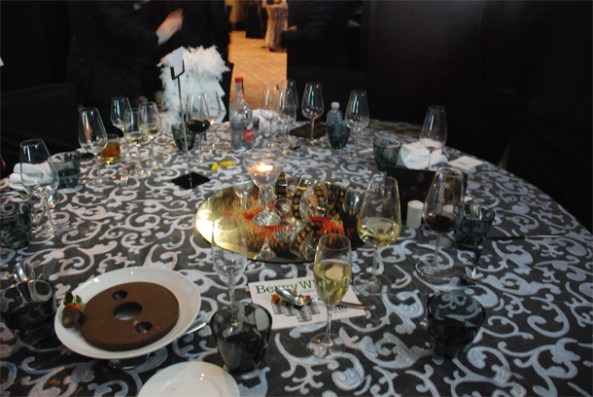
On a lighter note, while leaving (please ignore the mess we left as evident from the above picture), I was in the same lift as the Zuma guys and I congratulated them (Zuma won the coveted Restaurant of the year – Dubai, another favourite of mine and here’s my blogpost on it). The lady standing opposite me smirked ‘Yeah, I am from Le Petite Maison’, another restaurant nominated for the same category. It seemed like we were all school kids and I was stuck between two teams competing for the house trophy on the sports day. The air felt stifled inside and I took a deep breath and tried to remember some great moments from the evening – no, not the blaring live performance or the slightly overcooked Beef tenderloin (of course compensated by the Vanilla Pannacotta served for dessert) but downing some bubbly with my blogger friend Debbie who writes Coffee, Cakes and Running (she managed to tweet each one of the award winners – Phew!) or Chef Marta looking more like a lady and less like a Chef (she’ll be offended I know) and oh yes, Sudeshna looking lovely and playing the perfect hostess, pausing at each one of the tables that night and finally the momentary elation that I felt, each time one of my personal favourites won in some of the categories. Here’s a list of all the winners… well done!
Unblogging it all… Ishita
Disclaimer: I was a guest of BBC GoodFood Middle East. Please note that this post is not a sponsored post and the subject, story, opinions and views stated here are my own and are independent. While you enjoy reading the posts with lot of visuals, please do not use any material from these posts. Do join me on my daily food and travel journey on Instagram, Facebook and Twitter.
BE SOCIAL. SHARE THIS!


“Memories warm you up from the inside. But they also tear you apart.” ― Kafka on the Shore
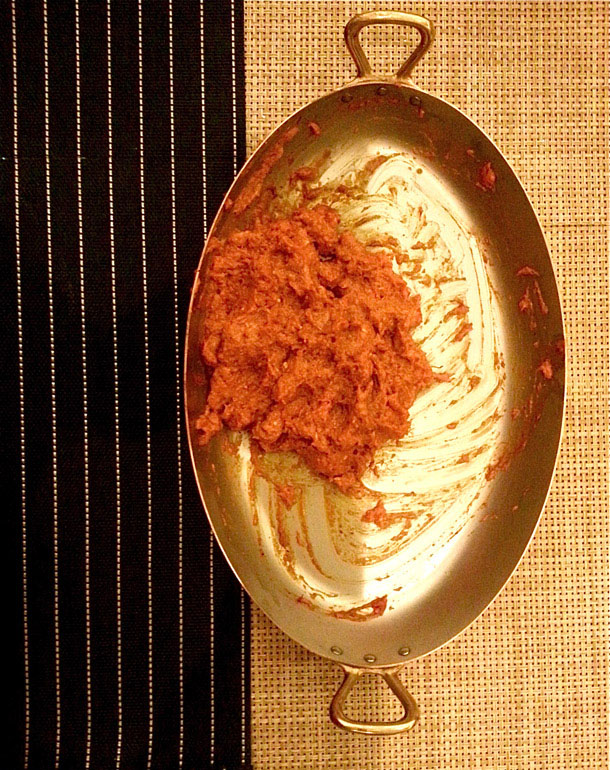
Every one who knows me, knows my love (my family’s love actually) for Galouti Kababs. Galouti Kababs melt me down, always… as the melt-in-the-mouth minced kebabs melt in my mouth! The Galouti always deserved a special post in my blog. With a hands-on experience in a masterclass on how to make real Galoutis and the Dum Pakht style of cooking, I feel that I can finally belt out a melting post full of aroma, while the taste of the kababs still linger on. Chef Dirham, a Galouti expert, took us through this masterclass experience at Ananta, a fine dining Indian restaurant at The Oberoi Dubai.
Galouti, Galauti or Galawati? Well, I’ve been on my own trail in search of this special form of kebab which practically melts in the mouth, lending the name Galawati or ‘the one that melts’. Galouti Kabab is a minced meat round patty cooked over griddle, smoked with aromatic spices – traditionally, with 160 different spices! Invented during the rule of Nawab Asaf ud Daula in Lucknow, a princely Indian city from where the Lucknowi or the Awadhi cuisine originated, the Galauti Kababs were made specially for the aging toothless nawab.
The historical connection between Kolkata and Awadhi Cuisine: For anyone who has some connection to Kolkata, Biryanis and Kababs mean essentially the style of cooking, or the Awadhi style. In 1857 AD, after the Awadh kingdom (modern day Lucknow) was annexed by the British, Mohammed Wajid Ali Shah Bahadur (1822 AD-1887 AD), the Nawab or the ruler of Lucknow, was exiled to Calcutta (today’s Kolkata). His passion for gourmet food traveled from Lucknow to Calcutta and was nurtured, garnished and fuelled by his special Bawarchis or the Chefs of the Nawab. Although Mughlai food is definitely not Bengali food, a discussion on Kolkata cuisine will remain incomplete without the former. The Biryani or the Kababs that we have grown up eating are the authentic Awadhi Biryani or Awadhi Kababs, cooked in the Dum pukht style. This is the style of cooking where a dish is cooked on very low flame, mostly in sealed containers so that the meat cooks in it’s own juices – the Indian version of the sous vide cooking. A few months back, I had the honour of showcasing the royal Kolkata Biryani in a culinary event at the Lafayette Gourmet. I have a lot of nostalgia and good memories of Mughlai food that we used to eat in Kolkata, specially from a restaurant named Shiraz Golden Restaurant, which now has a branch in Bur Dubai. {More on Lucknowy or the Awadhi style of cooking and the Dum Pukht from Wiki}
Galouti Kabab
Ingredients
1kg lamb boti (cubed lamb)
100gm lamb kidney fat
10gm dry rose petal flower
60gm ghee or clarified indian butter
15gm green cardamon powder
5gm black cardamon powder
5gm clove powder
10ml kewra water (screwpine, more here)
10ml rose water
70gm fried brown onion paste
30gm raw papaya paste
1gm saffron powder
3gm all spice*
salt to taste
Method of Preparation
– Mince the lamb boti and kidney fat together, mince it 7-8 times to get a very fine mince
– Transfer the lamb mince to a big bowl
– Add all the spices above and mix well with your hands
– Refrigerate the marinated mince for about 12 hours
– Heat a flat frying pan. Add ghee (oh yes, generously!)
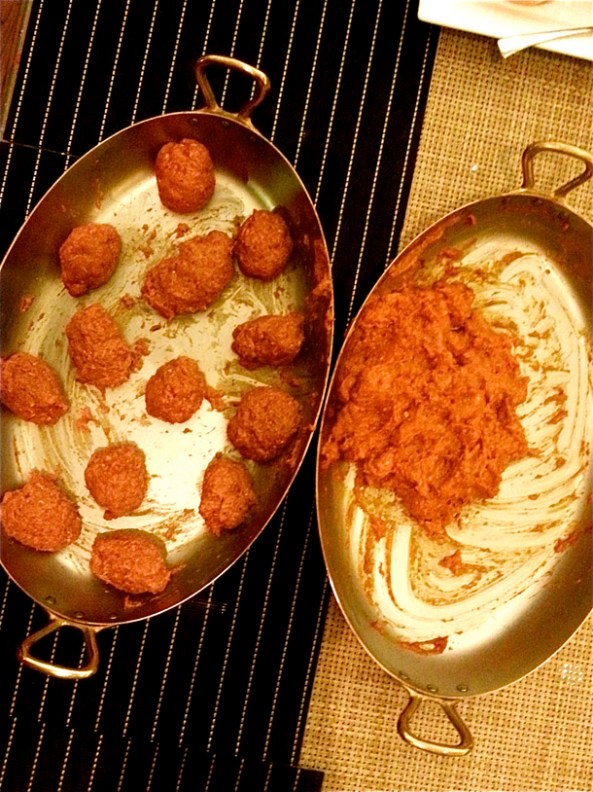
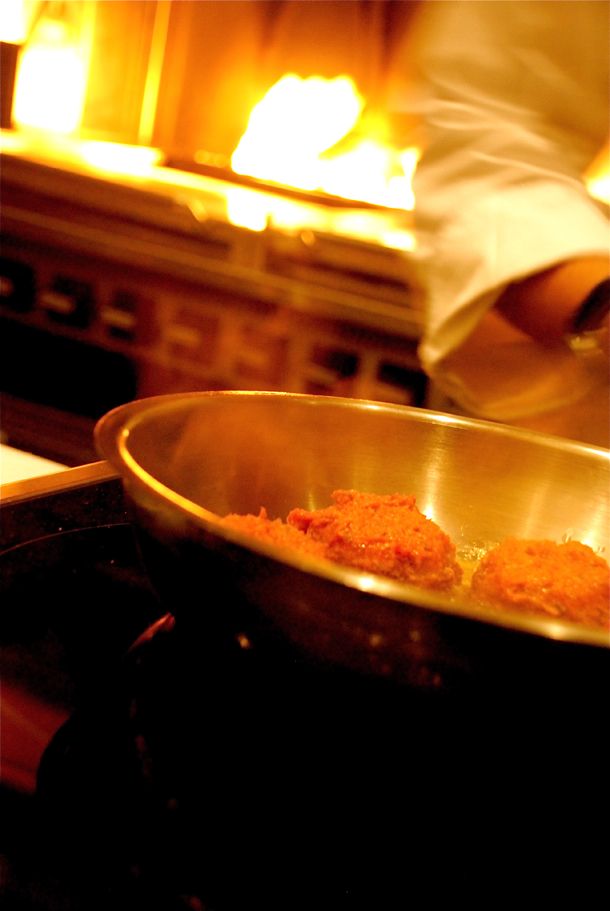
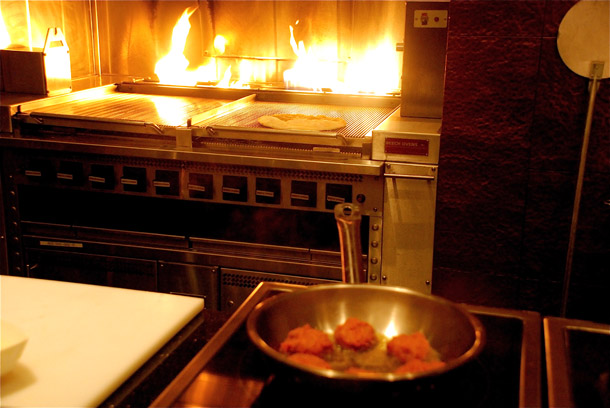
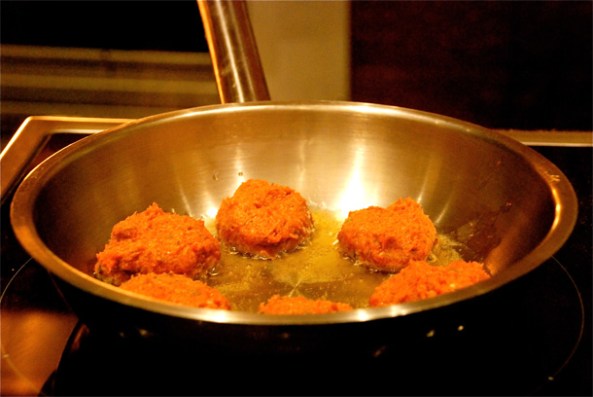
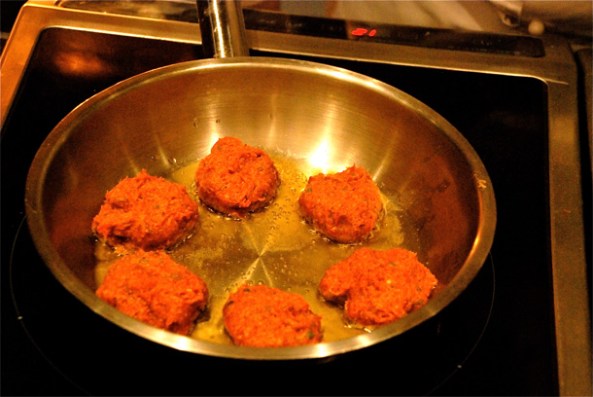
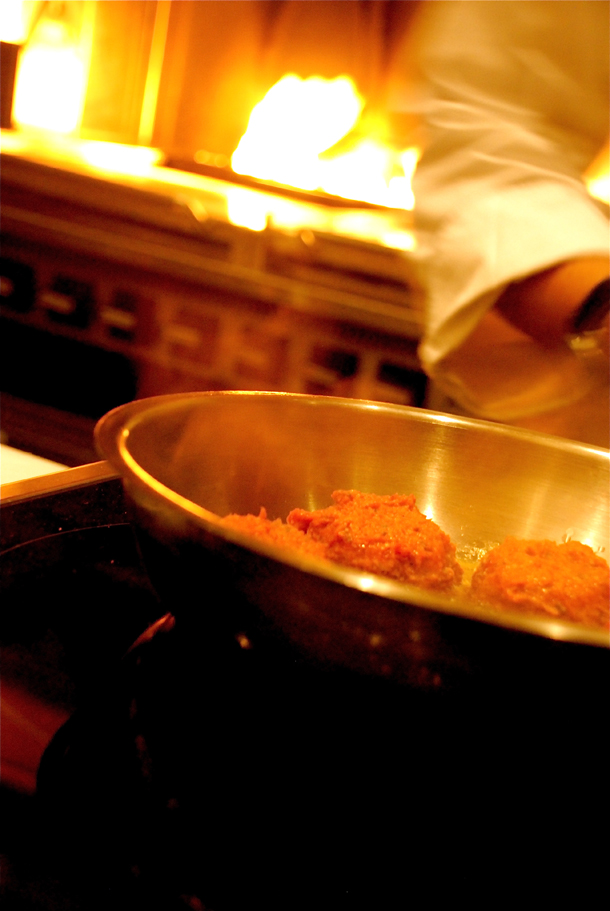
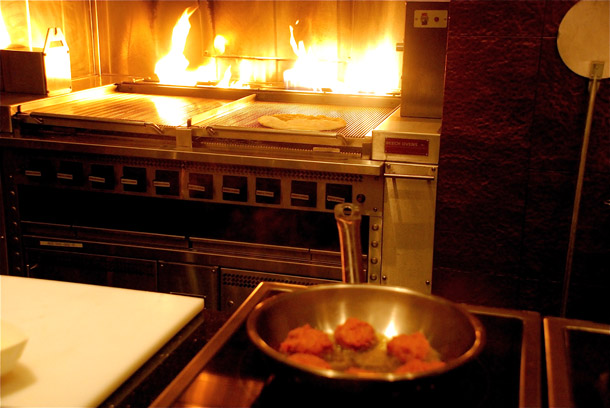
– Make small patties of the minced Lamb and shallow fry on a very low heat until the kebabs and cooked and tender
* All Spice is a blend of spice that is available in the Indian section of most supermarkets in Dubai like Lulu, Spinneys, Carrefour. If not, then you will definitely get any Indian spice at any branch of Al Adil supermarkets.
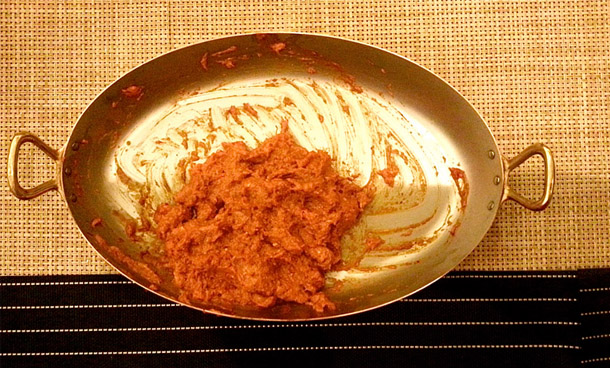
Tips from my hands on experience: Ghee, more Ghee and slightly more Ghee (see below) – is indeed one of the secret ingredients to the soft Kababs, apart from the very many spices that go into them. The mince taken from the lamb leg would be the most judicious choice. Invest some time to marinate it overnight, one of the key factors in giving out a strong flavour and aroma, something that is so intrinsic to Galoutis. The minced lamb should be tenderly cooked yet the patties shouldn’t be fried so much that they would have a hard crust. It can be a difficult task to arrive at that right balance, and this is where the expertise lie.

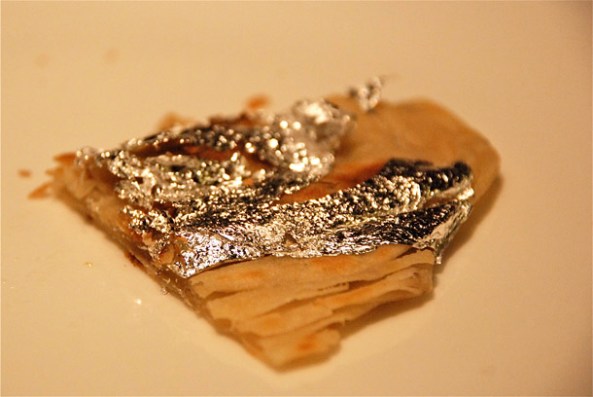
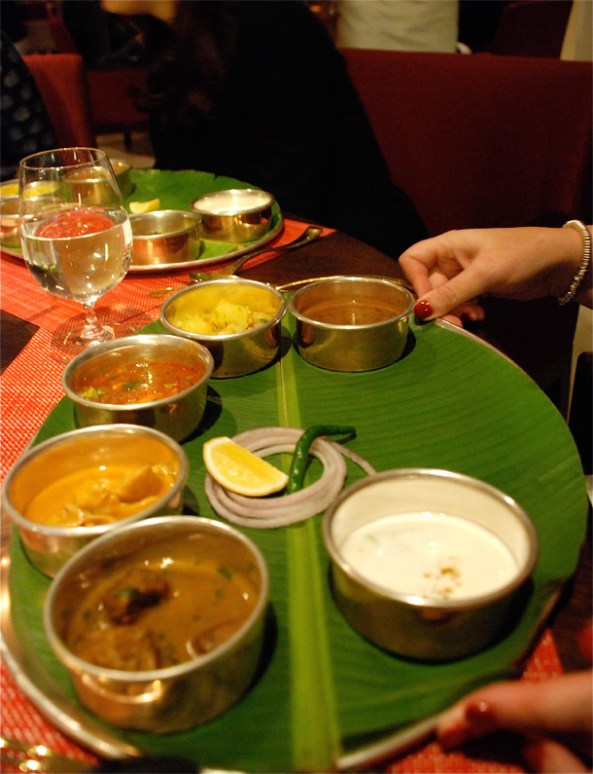
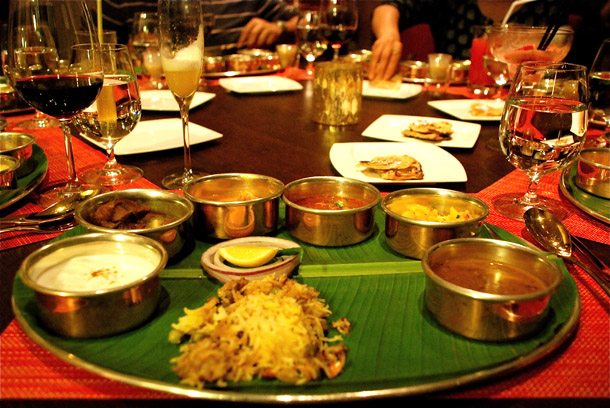
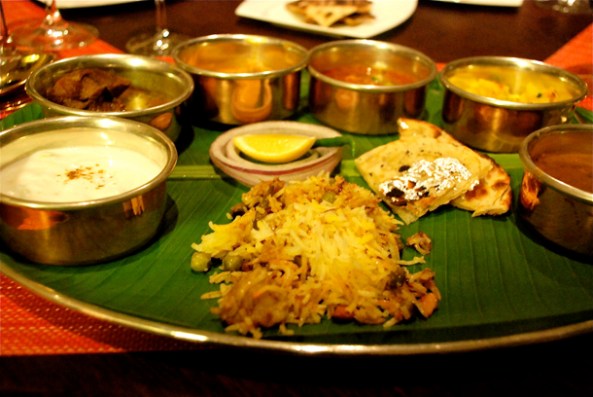
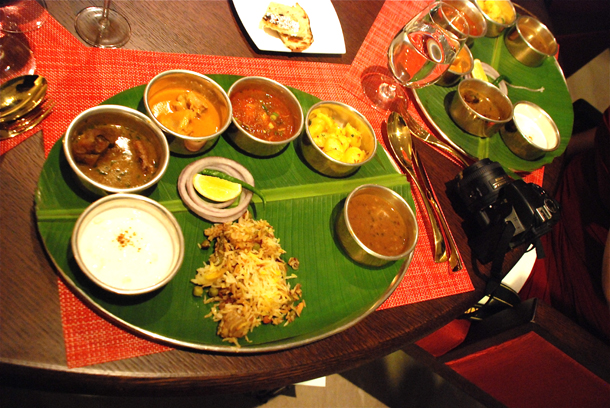
Apart from the Galouti Kababs, I also learnt to make the Warki Paratha, a layered wholemeal flat bread with a coronation of edible silver foil on top (above). These parathas complemented the soft, melting Kababs perfectly. All the hard work (to watch with full concentration amidst the aroma and retaining every bit of the knowledge till I downloaded every little detail and and my five-pence of wisdom onto my humble post, is hard work, isn’t it?) was soon compensated by the Royal North Indian thali (further below) that arrived at the table with an Indian Bellini to gulp down the food with. Indian Bellini, did I hear you say? Well, my food blogger friend who writes Coffee, Cakes and Running, shares the amazingly easy recipe that you may want to try!
Unblogging it all… Ishita
Disclaimer: Chef Dirham has been flown specially from Gurgaon and his Dum Pukht menu is available at The Oberoi between 22nd – 31st January, 2014. I was an invited guest of Oberoi Hotels. This isn’t a sponsored post, nor are there any affiliated links. The subject, story, opinions and views stated here are my own and all my bills have been self paid. While you enjoy reading my posts with lot of visuals, please do not use any material from these posts. Do join me on my daily food and travel journey on Instagram, Facebook, Twitter and Pinterest.
BE SOCIAL. SHARE THIS!

 Every one who knows me, knows my love for Galouti Kababs. Galauti Kababs melt me down, always… as the spiced up minced kebabs melt in my mouth. Galauti Kabab always deserved a separate post in my blog and I had enough material to write on this. But with a hands-on experience on how to make real Galoutis in a Masterclass, that too in the Dum Pakht style of cooking, I feel that I can finally belt out a melting post full of the aroma, with the taste that’s still lingering on in my taste buds. Lingering on from the Galoutis that I just tasted a few days back, prepared by Chef Dirham – a Galouti expert, at the Oberoi Dubai’s fine dining Indian restaurant – Ananta.
  Galouti, Galauti or Galawati? Well, I’ve been on my own trail in search of this special form of Kebab which practically melts in the mouth, lending the name Galawati or ‘the one that melts’. Galauti Kabab is a minced meat round patty cooked over griddle, smoked with aromatic spices (traditionally, there were 120 different spices that were used in Galoutis!). Invented during the rule of Nawab Asaf ud Daula in Lucknow (another princely Indian city that gave birth to the Lucknowi or the Awadhi cuisine), the Galauti Kababs were made specially for him since he had weak teeth and eventually became toothless… yes, that’s the story that has been going around! Another Indian restaurant in Dubai – Patiala restaurant in Souk Al Bahar, claims that their Chef Arif has an ancestral heritage that I can only envy of – his forefathers had been the creators of the famous Galauti Kabab! I also believe that it’s my love for Galautis that has been instrumental in forcing Chef Sanjay Behl, who was till recently at the helm of the Patiala kitchen, to take up a Twitter handle like @galoutiontweet! {Chef Sanjay Bahl | Flavours And Flavours And Flavours of Patiala!}
 The historical connection between Kolkata and Awadhi Cuisine: For a Kolkatan, North Indian cuisine doesn’t mean the Punjabi cuisine but it means essentially Mughlai food cooked in the Awadhi style. In 1857 AD, after the Awadh kingdom (modern day Lucknow) was annexed by the British, the Nawab or the ruler of Lucknow – Mohammed Wajid Ali Shah Bahadur (1822 AD-1887 AD) was exiled to Calcutta (today’s Kolkata). His passion for gourmet food traveled from Lucknow to Calcutta and was nurtured, garnished and fueled by his special Bawarchis or the Chefs of the Nawab. Although Mughlai food is definitely not Bengali food, a discussion on Kolkata cuisine will remain incomplete without the former. The Biryani or the Kababs that we have grown up eating are the authentic Awadhi Biryani or Awadhi Kababs, cooked in the Dum pukht style. This is the style of cooking where the dish is cooked on very low flame, mostly in sealed containers so that the meat cooks in it’s own juices – the Indian version of the sous vide cooking! In fact, such is my love for the Kolkata Biryani, that a few months back I did end up showcasing the royal Kolkata Biryani in the Lafayette Gourmet. It’s also worth mentioning here about another restaurant in Dubai, although not in the fine dining category, which serves the Mughlai food that I have grown up eating – Shiraz Golden Restaurant in Bur Dubai. {More on Lucknowy or the Awadhi style of cooking and the Dum Pukht}
Galouti Kabab
Ingredients
1kg Lamb boti (cubed lamb)
100g Lamb kidney fat
10g Dry Rose Petal flower
60g Ghee or Clarified Indian Butter
15g Green Cardamon Powder
5g Black Cardamon Powder
5g Clove Powder
10ml Kewra Water (Screwpine, more here)
10 ml Rose Water
70g Fried Brown Onion Paste
30g Raw Papaya Paste
1gm Saffron Powder
3g All Spice*
Salt to taste
Method of Preparation
– Mince the Lamb boti and kidney fat together, mince it 7-8 times to get a very fine mince
– Transfer the lamb mince to a big bowl
– Add all the spices above and mix well with your hands
– Refrigerate the marinated mince for about 12 hours
– Heat a flat frying pan. Add Ghee (oh yes, generously!)
– Make small patties of the minced Lamb and shallow fry on a very low heat until the kebabs and cooked and tender
* All Spice is actually a blend of spice that is available in the Indian section of most supermarkets in Dubai (Lulu, Spinneys, Carrefour. If not, then definitely Al Adil Supermarkets would be storing it)
Tips from my hands on experience: Ghee, more Ghee and slightly more Ghee (example of that below) – that indeed is one of the secret ingredients to the Kababs, apart from the very many spices that go into them. The mince taken from the lamb leg is the most judicious choice and marinating it overnight is also one of the key factors that goes in giving out a strong flavour and aroma, something that is so intrinsic to Galoutis. I think, to arrive at the right balance where the minced lamb should be tenderly cooked yet the patties shouldn’t be fried so much as to have a hard crust, is difficult and requires a lot of practice.

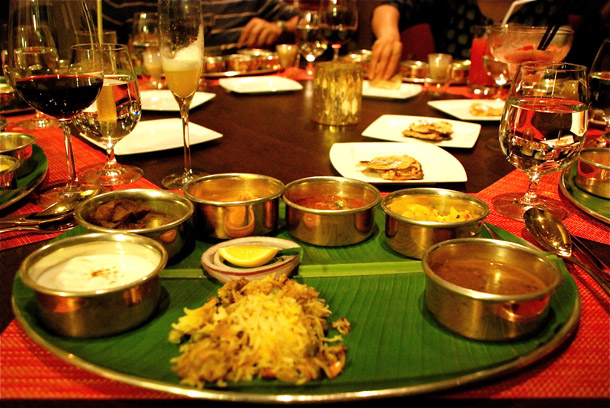
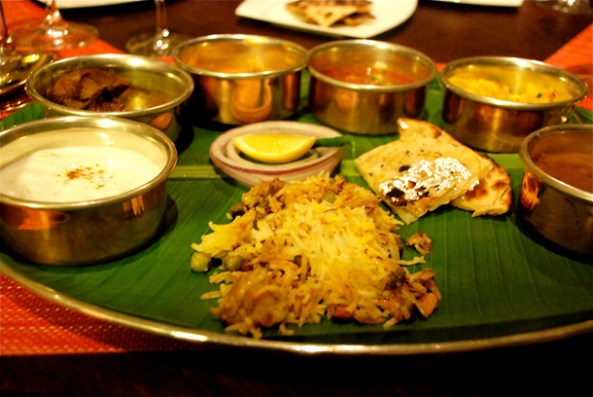
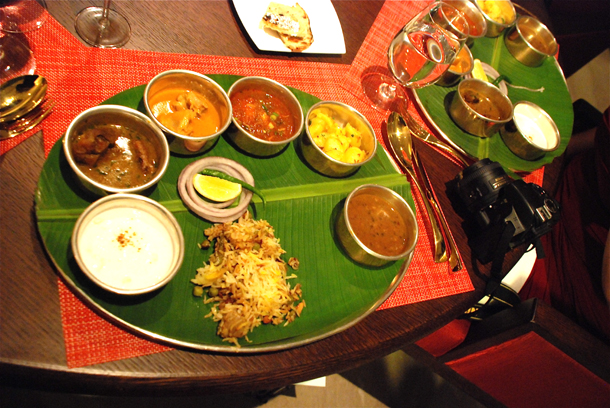
 Apart from the Galouti Kababs, I also learnt to make the Warki Paratha that day – a layered wholemeal flat bread with a coronation of edible silver foil on top (above) – a perfect complement to the soft, melting Kababs. All the hard work (to watch with full concentration amidst the aroma and retaining every bit of the knowledge till I downloaded every little detail and and my five-pence of wisdom onto my humble post, is hard work, isn’t it?) was soon compensated by the Royal North Indian thali (further below) that arrived at the table with an Indian Bellini to gulp down the food with. Indian Bellini? My food blogger friend who writes Coffee, Cakes and Running, shares the amazingly easy recipe. Later that day, I found that a reader had left a comment on my Instagram post – ‘Is this a South Indian thali?’ Well, that set me thinking whether serving food in Banana leaves, is also a North Indian tradition or does it confirm only to the South of India and Bengal? Do fill me in if you have any knowledge on this please.
Unblogging it all… Ishita
Disclaimer: Chef Dirham has been flown specially from Gurgaon and his Dum Pukht menu is available at The Oberoi between 22nd – 31st January, 2014. Please note that this post is not a sponsored post and the subject, story, opinions and views stated here are my own and are independent. While you enjoy reading the posts with lot of visuals, please do not use any material from this post. You can see more pictures of my travel and food journey here.
BE SOCIAL. SHARE THIS!

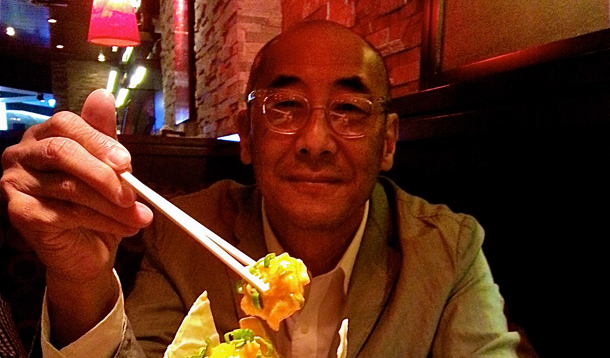
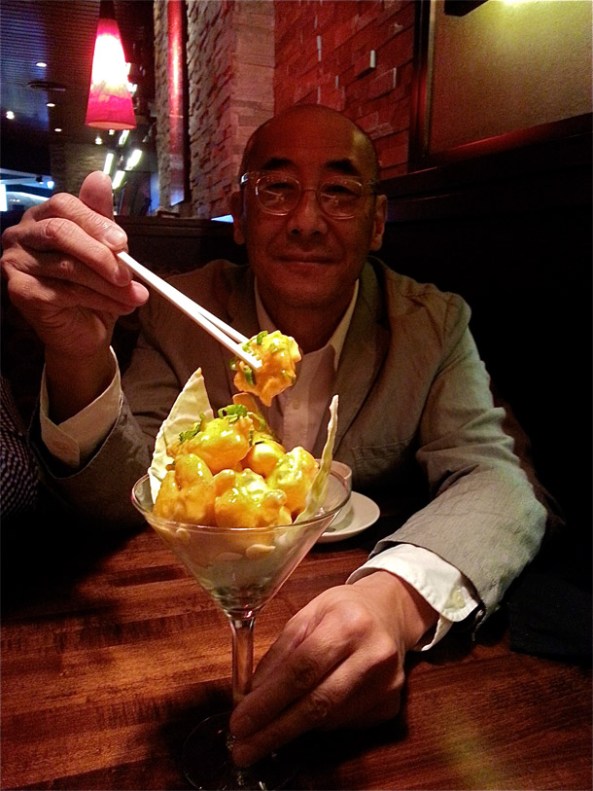
‘So what do you think is the reason that you like Dynamite Shrimp?’ or ‘Do you think that PF Chang’s will work in India?’ – well, these were the questions that I was being asked by Mr Philip Chiang, the co founder of P.F. Chang’s China Bistro, the popular American casual dining restaurant chain. And I thought that I had come to interview him! In exchange of an exclusive lunch invite to celebrate the opening of another of P.F. Chang’s many outlets (in the World Trade Center Mall in Abu Dhabi) today, I met up with him yesterday in the early morning hours as he visited the restaurant in the Mall of Emirates. This was undoubtedly a much better deal – no other media or invited guests surrounding the man. Here I was chatting to him exclusively, over some Dynamite Shrimp for breakfast.
I looked at my watch when asked ‘Would you like to eat or drink something?’ I grinned, ‘Is it too early for your Dynamite Shrimp?’. I thought I had quipped a very smart one, at 9:30 am in the morning. The kitchen hadn’t yet opened but soon a martini glass with the signature dish arrived at the table, prepared specially for me when I had said that this was my favorite of their menu. Dynamite Shrimp for breakfast? Sin, sin, sin! Unfortunately the secret of the recipe is not out, but here comes a snippet of a fantastic food banter with the man behind the largest full service, casual dining Chinese restaurant chain in the United States and many more outlets across the globe. 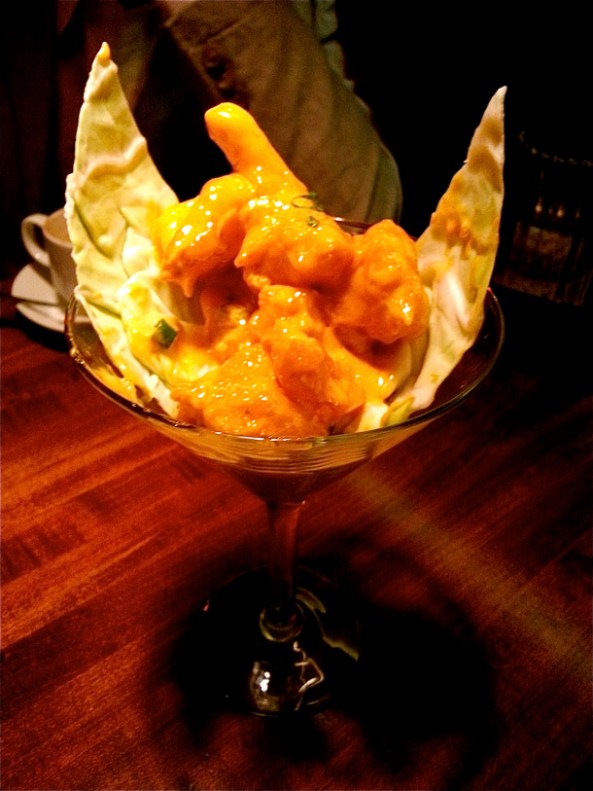 How did the Dynamite Shrimp of PF Chang get created (a Google search will give you more than 100 ‘copycat recipes‘ for P F Chang’s Dynamite Shrimp!)? It was actually influenced by the British in Hong Kong. Chinese Cuisine doesn’t really have any dairy product and the Dynamite Shrimp has Mayonnaise in it. The British brought that to Hong Kong and soon the Chinese Chefs in Hong Kong discovered it and started using milk proteins. That’s how it came about. We added the spice and a bit more flavor to the recipe.
Chinese cuisine is probably the most popular ‘exported’ of all regional cuisines. PF Chang is known for American Chinese but does the menu change across countries and regions? No it doesn’t. In every restaurant across the world, the flavors and the recipes are consistent. 80-90% of the menu is pretty much the same, whether it is in Mexico or Colombia. Maybe, we could add a bit more spice in Mexico but that’s about it. In the States, we have a few more items, otherwise it’s exactly the same. The people who come into any particular location, expect the same food that they would have tasted in any other location.
Interestingly, although PF Chang is expanding across the globe with a lot of expansion in the Middle East (Lebanon, Turkey, Kuwait, Bahrain, KSA and the UAE), barring Philippines, there isn’t any prevalence of PF Chang in the South East Asia. We are going to open in Korea this spring. Is it because the Chinese that you serve is probably not very authentic, more Americanized and the flavor is very different from what the people in these regions are used to? Actually not. On the contrary, you’ll be surprised that our Menu is very authentic. It’s the style of preparation. When we opened up, Mr Paul Fleming (the other co founder whose name’s initials form the P. F. part of PF Chang while the surname of Philip Chiang is shortened to Chang) summarized the concept as Chinese food but Western service. We will see how it goes in Korea. A lot of our menu is actually authentic. When we took our team of people to China on culinary tours, they were surprised to see how authentic our food was. Yes we do change/adapt our menu a little bit in terms of certain ingredients depending upon their regional availability. The style of cooking is a little different but everything else that we do in our kitchen is very authentic – we cook in woks, we use Chinese Cleavers to cut most of our food and in that sense everything is traditional.
Do you locally source your ingredients everywhere? Yes, as much as we can and if it meets our standards. Are you fussed about using only organic stuff? Chains often don’t have a reputation for doing all these. I don’t know much about the local organic scene here. Even in the States, for a restaurant chain it is very difficult to maintain the organic aspects. Because of the cost involved? Not only because of the cost but also because of our volume, it is next to impossible. But all our food is cooked to order and everything is fresh. We pride ourselves in being consistent, so if you taste our Mongolian Beef, it will taste exactly the same everywhere. Our quality standards are very high. Before a restaurant opens up in any particular market, a culinary team is here a year before to check out all the ingredient sourcing.
Coming back to Dubai, is it a very different market than the other international markets that you have come across? What is the reason behind the brand’s success in this region? In my opinion, Dubai is trendier. It is almost like a Miami Beach culture where people are always expecting something new and happening. It is a melting point and has a major tourism presence. Our restaurants are mostly located in the trendiest malls here and we do attract a certain clientele that is always looking for the latest things. In that sense Dubai is very special. Also, the entire Middle Eastern market for us has been tremendously successful. I know a little bit about the Middle Eastern taste and I am wondering whether it a slightly different kind of spiciness that we bring in, that is missing in their own food culture. Are there any plans to open up in a more exclusive, non-shopping mall set up with perhaps, alcohol license? No, we are not thinking of alcohol license for the Middle East market. The Middle East market is a very family oriented market and our restaurants, as you said allows for families to get together (I had told Mr Chiang how kids are very fond of PF Chang, the Z-Sisters included – the ketchup factor?). We are located in the malls and not in any hotels and we cater to all categories of consumers – families and locals etc and we seem to be doing absolutely great. The point of reunion in the region seems to be the shopping malls but in the future, if there are any such opportunities, like a neighborhood or an exclusive location, we will definitely consider. Initially we were always in the malls, even in the States. I believe the MOE outlet is the busiest of all your outlets in the world. No plans of expanding this one? Yes, it is. There are plans to open up more restaurants in Dubai – there’s a new PF Chang opening up in the newly constructed part of JBR overlooking the sea, the Deira City Centre. In Abu Dhabi too, apart from the one in World Trade Centre Mall, there is going to be another one opening up this year.
Recent studies reveal that Chinese food is being increasingly considered as unhealthy – high on Sodium and oil. Have you considered creating a MSG-free menu (Chinese food also has a reputation for high levels of MSG or Monosodium glutamate to enhance its flavor)? We are very much aware of the trends in terms of high levels of sodium and sugar and we try incorporate these finds. We are constantly evolving in this area because these factors are worldwide concerns now. Re-iterating here, that all food is fresh, cooked to order and nothing is pre-cooked. Naturally, preparations in terms of chopping etc has to be done before but nothing is cooked until and unless one places the order. In this way, we can take care of any specification that one might have – taste preferences or any allergies. Your menu in the States has a gluten-free option. Why not here? We are developing a gluten-free menu here.
Which is your personal favorite from the PF Chang menu? Definitely the Chicken and the Lettuce wrap. The top 3 from the menu that everybody else likes, incidentally I also like! Actually, this is the No 1 selling item across the world. We cater to so many different type of consumers – imagine a consumer in Mexico or Turkey, or say Dubai or the Philippines, but at the end of the day when we measure what menu item is selling and what is not selling, we find that the almost exactly the same across all the locations. And the number one selling item is Chang’s Chicken and Lettuce wrap!
Did you create the original Chang’s menu? Yes. The staff came into the LA kitchen and we worked together. When you started off, did you have a vision of having a chain of restaurant? Not at all. We were only going to do just one restaurant in Arizona and that’s about it. No body thought that in 20 years time we will be having 220 restaurants world wide (The first restaurant was opened at the Scottsdale Fashion Square in Scottsdale, Arizona in 1993). It’s a combination of food, the ambiance and the service and the diners experiencing that should also feel that it’s a great value for money. The service is very important (As Genero Pérez, the VP Global Marketing put in – get a limo ride but you pay for a taxi and that is very important for us). The restaurant business is very complex and a lot goes into it, even the Music that is playing on in the background. So far I think we have succeeded. We might be a chain of restaurant but we like to believe it is a collection of restaurants and each restaurant is very different in terms of its decor and the look – the mural changes, the light changes. For example, the restaurant in Jeddah is absolutely beautiful. People look forward to going to a new PF Chang’s.
What is the next level of ambition – like let’s do these 220 PF Changs restaurants right and then what? We have Pei Wei Asian Diner, which is an offshoot of PF Changs. It is more Asian (influenced by the cuisines of China, Japan, Korea, Vietnam and Thailand), fast casual. The operations are smaller but the food is very tasty as it is freshly prepared and cooked to order.
You had been working as a Chef in your earlier years. Do you miss going into the kitchen? I do actually. I am not actually a trained, professional Chef. I pick things up just being around Chefs. My mother had a Chinese restaurant and I have been around my mother’s restaurant when I was growing up. The Chinese food that I enjoyed as I grew up wasn’t really for everybody. For instance, in my own restaurant, I didn’t have the typical fortune cookies or any stereotypical menu items that people expected. My niche was the mass audience.
What’s your favorite cuisine apart from Chinese? Italian and Japanese cuisine. Any favorite Chinese restaurant apart from PF Chang naturally? No. I have dishes that I like and I go to specific restaurants for a specific dish. I like Thai food quite a bit. What about Middle Eastern food? Oh yes, I love it. There is a similarity in both our foods in terms of zestiness in the flavors and the taste.  Before sign off, I just had to take a picture of Philip with the horse statue that has almost become synonymous with the restaurant (am told that in Kuwait or in KSA, the statue is not allowed). One of the most interesting thing about interviewing is to discover elements about a person that most people wouldn’t probably know. Philip’s real passion lies in painting – he is an artist! If a new P.F Chang opens up in India, please remember that I did tell him that the American Chinese would definitely work in India, a country which loves its variations regional variations in Chinese food (Kolkata is the only Indian city with an official Chinatown known as Tangra and the unofficial count of the number of Chinese stands at 5,000 – 200,000. This is an interesting blog post of mine… Momos in Tiretti Bazar | The Last Chinese Remnants Of Kolkata). I walked out with a takeaway bag of Dynamite Shrimp – personally this is the only item of their menu that appeals to me (don’t get me wrong though!). In return, I gave him a glimpse into a food blogger’s world of idiosyncrasies – incessant clicking of the dish before even a spoonful could go into the tummy. And that too my Nikon wasn’t working that day!
Unblogging it all… Ishita
Disclaimer: Please note that this post is not a sponsored post and the subject, story, opinions and views stated here are my own and are independent. While you enjoy reading the posts with lot of visuals, please do not use any material from this post. You can see more pictures of my travel and food journey here.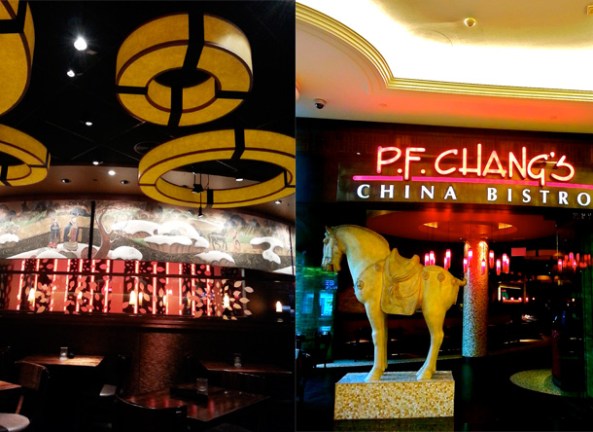
You may enjoy reading other interviews in this blog:
♦ Violet Oon | The Singaporean Food Guru & Her Recipe Of Chilli Crab!
♦ Masterchef Sanjeev Kapoor | Talking To The Chef Extraordinaire
♦ Taste of Dubai 2013 | I Saw Them Cook And I Ate What They Cooked
♦ Asha Bhosle | Cooking With Her, Listening To Her & Sharing Her Recipe!
♦ Chef Abhijit Saha | Is There Heart And Soul In Molecular Gastronomy?
♦ Joymalyo Bannerjee/Chef Joy | Bohemian Restaurant In Kolkata !
♦ Talking To Celebrity Chef Joe Barza | Helio Lounge and Feteer Meshaltet In Video
BE SOCIAL. SHARE THIS!


Hoping that the New Year is treating you all well. This is my first post of 2014 and I am wondering where do I begin? A round up of the year that went by – a year that had been overtly generous to my culinary travel blog? Or should I make a fresh new beginning? Let me start my blogging year with a brand new restaurant that has given me a lot of solace. I visited the place for the second time today when Dubai was under the wraps of heavy clouds and pouring rain – within a week of my first visit. My Ma who is visiting us, wanted to enjoy the rains – she wanted to see the rains approaching the shore, to be precise! And I wanted to have a quick lunch rendezvous with my blogger friend @coffeecakesandrunning before I picked up the Z-Sisters from school. So there we were on the terrace below which overlooked the Umm Sequim fishing harbor, gazing at the horizon with my arms outstretched as I embraced the rains.
What is unique about this restaurant? A seafood restaurant overlooking a harbor by the sea or a menu serving fresh catch from the sea hulled to the shores daily by fishermen employed by a restaurant – all these may sound like the most obvious developments in other cities in the world that may boast of long shorelines. Unfortunately, Dubai till now, didn’t have such a restaurant. The seafood restaurants by the beach were mostly premium restaurants and belonged to well known hotels. A few stand alone restaurants that popped up once in a while, were mostly lined along the Jumeirah Beach Road – but none of them claimed having their own fishing boats that brought in the fish directly from the sea to the dining table. Visits to a few cities located on the waterfront – San Francisco, Singapore, Istanbul, Colombo, Panjim etc and I have come back to Dubai, longing for a laid back casual restaurant, picking up on my fish bones blissfully and not shrieking out loud when the final bill arrived. The restaurant that I am talking about in my post, has a licensed fishing boat to catch fresh seasonal local Hamour, Sheri, King Fish, Mullet, Mackerel, Shrimp and Crabs, thus keeping the daily menu flexible and dependent on the fresh catch of the day. I wish all this could be enjoyed over a mug of beer or while sipping some white wine. Alas, that is not going to happen, as there is no alcohol license!

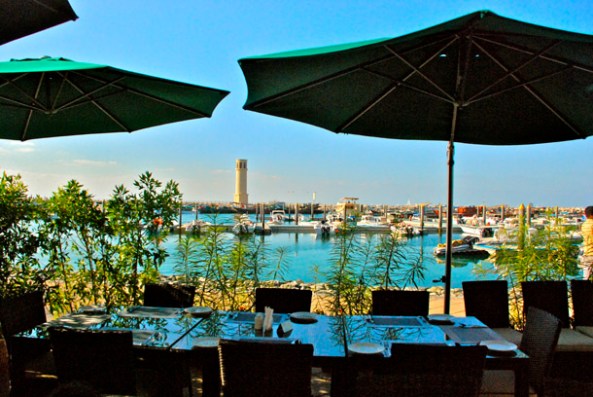
Seaview restaurant is a brand new restaurant – it is not even two months old. On my first visit here, I arrived in my full capacity – two kids and a group of visiting house-guests. Most of them had seen Dubai in its full glory, having already ticked off all the things to do and places to visit in Dubai. We wanted a restaurant which served good seafood, was different from the expensive branded or popular joints, haven’t been visited before by us (the Dubai residents who have managed to visit most of the places a multiple times accompanying guests) and which would calm our senses without making a hole in our pockets. Seaview restaurant fitted our criterion perfectly. After our initial gasps of ooohs and aaahhs following the first glimpse of the panoramic view of the fishing harbor (the above pictures are from my first visit last week when the sun shone brightly and refused to be tamed by the wintry chill), we chose to sit on the terrace outside. Barely a few meters away from the water, the December chill in the air soon gave into a warm welcoming space with the friendly staff ushering us in and settling us down around our table. A few minutes into the menu and I realized that I couldn’t categorize this restaurant according to a particular cuisine type. Although the menu wasn’t too elaborate, it had been thoughtfully created with a nice medley of Arabic, Continental, Indian, Malaysian and African flavours. Hence, a Peri Peri Sheri vied for equal attention as an Achari Machi Tikka (Fish Tikka prepared with pickled flavored spices in the North Indian style) or a Malay Steamed Sea bream competed with the Prawn Caprese.
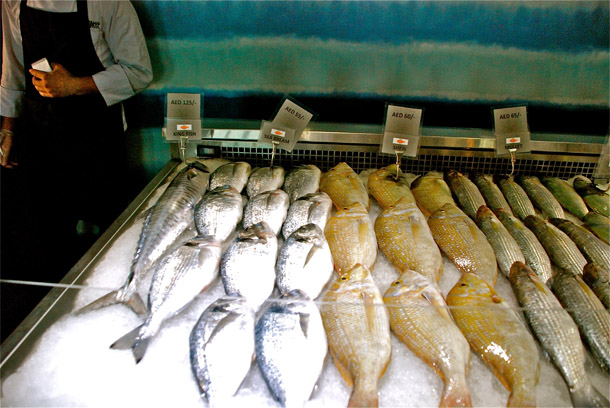
The food and the preparation style: From the fresh catch that’s on display inside the restaurant (above), we could choose the styles in which we wanted our fish to be prepared. For our Main Course we could choose between grills, Arabic BBQ style, Indian Tandoori style or fried or steamed. Interestingly, the catch of the day is priced ‘per piece’ and not sold by weight. We chose a grilled Hamour in the Arabic BBQ style (I had stopped eating Hamour after it had been categorized in the UAE as over fished. I ordered this Hamour after I learnt about how Hamour can also be fished sustainably. That story comes in here a bit later), a grilled Sheri to be prepared in the North Indian Tandoori style, a fried Sheri and one of the signature dishes of the restaurant, namely Seaview Prawns.

While we waited for the Main Course to arrive, we munched into a delightful array of seafood Starters (above). The Fried Calamari is our family’s all time favorite and it is rarely that we don’t order this – the most-common-take in any seafood menu. A plate of crispy breaded Calamari rings preceded a plate of Jhinga Tandoori – Prawns marinated in mild Tandoori Masala and cooked in a traditional Tandoor or a clay oven. A Tandoori preparation is one of the most famous exports from the North Indian kitchen and can hit a non-Indian palate very strongly if the Masalas are not blended properly. Although a very popular preparation, most restaurants don’t do justice to the preparation, lending a Tandoori dish spicier than it should be. A perfectly crispy fried Calamari and a flavorful but a mildly spicy Tandoori Prawn preparation as Starters complemented by a Fatoush Salad, set the tone for a brilliant afternoon spread that was about to be unfurled soon.
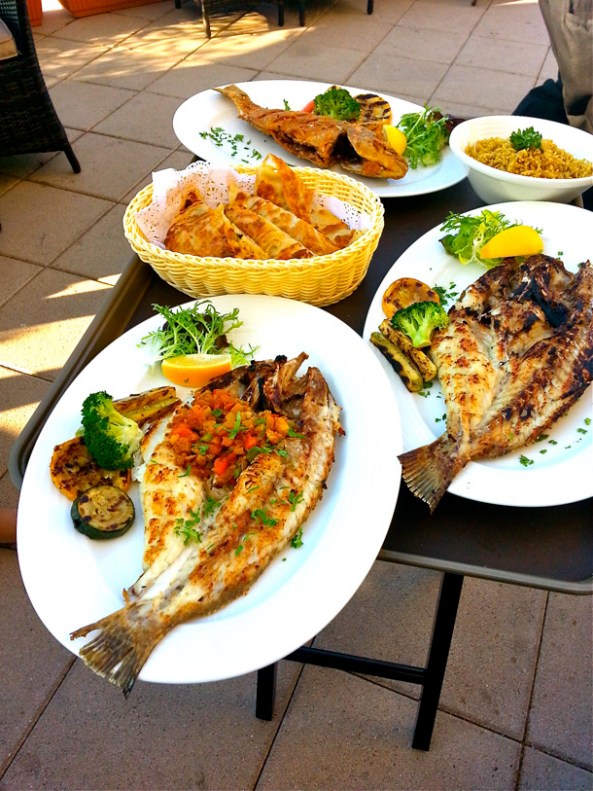
By the time our Main Course arrived (above), the waterfront was abuzz with seagulls encircling above the anchored fishing boats and although the sun was yet to set in the horizon, the blue in the sky had started to pale in its color. A slightly tangy sauce with chopped tomatoes, onions and Arabic spices covered the grilled Hamour. Hot and flaky, the flesh seemed to glide off the bones. A plate of Majboos Rice and the Lemon and Herb Rice were perfect accompaniments to our fish preparations.
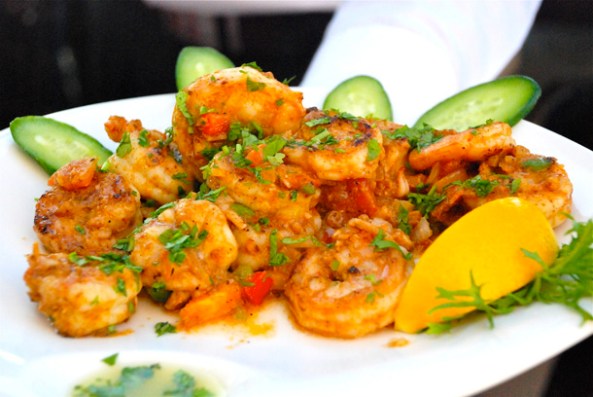
The winner however had to be the Seaview Prawns (above) – a brilliant adaptation of the Mangalorean Prawn Ghee Roast. Ghee Roast is one of the most popular delicacies of Mangalore (a coastal town in South Indian state of Karnataka) that has been popularized by the Bunt community of Kundapur. The finishing act in this preparation comes from the mild aroma of clarified butter – the Ghee and as I bit into the soft, juicy and spiced prawns, I could imagine myself coming back to the restaurant a couple of times only to taste this particular preparation (which I did today). A restaurant staff recommended that we order a few Seafood Roti Canai (below) as well as a plate of regular Roti Canai (a type of Indian influenced flat bread found in Malaysia and Indonesia and is very similar to the Indian Kerala Porotta – picture further below) to dig in with the Seaview Prawns. Soft and slightly crispy, they were perfect to scoop out the juicy and buttery prawns off its plate. A note here – the staff seemed pretty well versed with the menu and confidently guided us as we placed our orders, without succumbing to call upon the senior staff – a thing that I have got used to in most restaurants in Dubai, especially if it’s a new restaurant. This is indeed a welcome change indeed and lets the diner discover a menu that he/she is not conversant with.
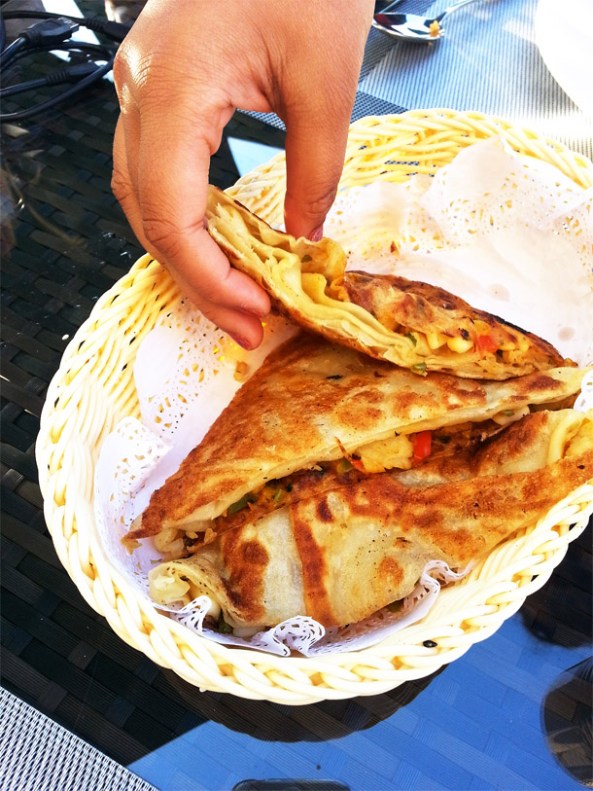
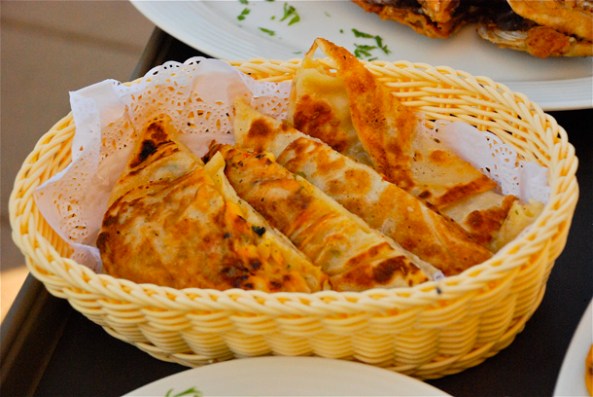

On our second visit, apart from ordering the Seaview Prawns, we tried two other signature dishes – the Malay Steamed Sea bream and the Peri Peri Sheri – both of them are definitely must-trys. Do try their home made sauces that are served along with them – the tangy Tomato, Honey Mustard and the Roasted Lemon with my preferred sauce being the tangy Tomato. The only dish that I wouldn’t recommend is the Fried Sheri (above). I don’t know whether it was the chill in the air or the long time that had elapsed between the time the fish was served initially and the time we actually ended up eating the Sheri, it had turned a bit too crispy and very cold.
 The question of sustainability of Hamour: With its location in the Umm Sequin 1 fishing harbor that is maintained and strictly controlled by the Dubai Customs, licenses are issued only to Emirati fishermen. They are the boat owners, who in turn employ South Indian fishermen (mostly from the Indian state of Tamil Nadu) to assist them in all their fishing activities. Fresh licenses are not being issued currently in order to prevent overfishing. However, occasional transfer of licenses among locals is permitted. What is interesting here, is that fishing with large nets is prohibited during the months of June to October and most of these 900 odd fishermen return to their home state in Tamil Nadu. Only a handful of them stay back and fish with small Ghargour metal cages and this gives some breathing period for fish like Groupers to mature. This is also the justification of maintaining Hamour in the restaurant’s menu and my justification in ordering a Hamour after ages (in recent times we have been refraining ourselves from ordering the overfished Hamour and have enjoyed our dining experiences in restaurants that adhere to sustainability and eco-conservation – Samak Restaurant in Desert Islands Resorts by Anantara, Zighy Bay by Six Senses in Oman or Islanda Krabi in Thailand).
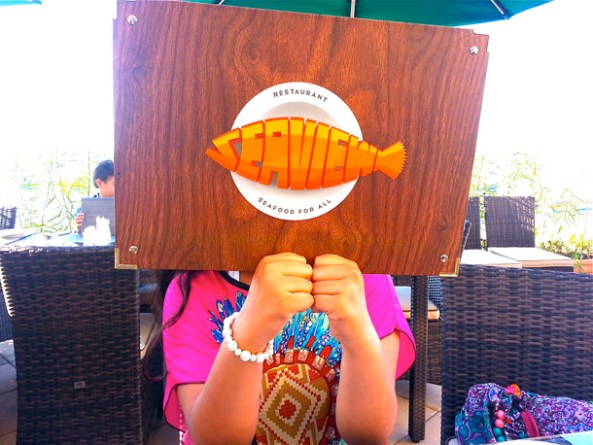
Signing Off: It is about time that Dubai had a simple, fuss free restaurant like this serving fresh local catch. I feel that the restaurant has got a huge potential. The menu is fresh and interesting and as I have mentioned earlier, has blends from different cuisines – Crab cakes served with Guacamole, Fish Masala Pappads, Haryali Hamour Tikka, Kesari Macchi or the Saffron flavored fish, Grilled Fillet with Gherkin Sauce, Polenta Crusted Mullet in Oyster Sauce, King Fish Darne in Banana Wraps and many more. The location is spectacular – much like the Fishermen’s Wharf in San Francisco. Mr Prashant, one of the partners of the restaurant, has a degree of Hotel Management and his contribution comes in the form of the subtle adaptation of the Mangalorean Prawn Ghee Roast into the Seaview Prawns, so that it may suit the international palate. Mr Majid, his local partner is a third generation Emirati. He is a part of the local fishing industry and owns a couple of fishing boats. Hence, one can expect that the quality of the fresh catch that goes into the restaurant kitchen or the taste of a prepared dish is unlikely to be compromised here.

Although the restaurant adheres to it’s tagline ‘Seafood for all’, for all those who are not into seafood, there are a few Chicken and vegetarian fare in the Menu supplemented by the incredible harbor view and the lure of the proximity to the water. You can sign off your meal on a sweet note too with a Crème Brûlée or a Blueberry Cheese cakes which my companions declared as not too sweet and nice (I didn’t want to dilute my seafood experience so soon with a dessert, an exception for my sweet craving Bengali genes). With future plans of selling live fish which will be stored underwater in the Ghargour nets next to the restaurant’s fishing boats and a changing menu every 4 months, I really look forward to my next visits, especially since the next change in the menu will include a few local Emirati seafood delicacies like Jesheed, Maleh and Habool. If only the seafood could be gulped down with some white wine, sigh!

Hoping that even in 2014, my blogging journey is accompanied by my readers, blogger friends around the world and my foodie friends in Dubai, who had made my 2013 tastier and more wholesome. To name a few… My Custard Pie has not only been inspiring me to write better, but also to read better; The Hedonista has made Dining Predictions for 2014 – Dubai and the UAE; FooDiva on whom I always banking on for impartial reviews of all the new top notch restaurants in town; I Live in a Frying Pan who writes on eating holes and ethnic eats around old Dubai that give me so much solace; Dima Sharif who is always trying to teach her readers something new; and Coffee Cakes and Running who had been my travel mate on my blogging trips to Thailand and Istanbul. Have a fabulous 2014 all of you!
Unblogging it all… Ishita
Location: Umm Suqeim 1 fishing harbor (second right after KFC/Hardees on Jumeirah Beach Road if you are going towards Burj Al Arab and once the road bends naturally to the left, you will find the Seaview restaurant on your right side). For more info, please can visit their website. The bill amounted to approximately Dhs 550 for 5 adults and 2 kids. You can see more of the menu here. Also read fellow blogger Geordie Armani’s review.
Disclaimer: Please note that this post is not a sponsored post and the subject, story, opinions and views stated here are my own and are independent. While you enjoy reading the posts with lot of visuals, please do not use any material from this post. You can see more pictures of my travel and food journey here.
BE SOCIAL. SHARE THIS!


 May the New Year bring luck and love, health and happiness, prosperity and peace of mind… May there be sanity and equilibrium in spite of the chaotic madness around us.
Inspiration: Tanoura Dance, an Egyptian folk dance usually performed in Egyptian Sufi festivals… 8 minutes of continuous whirling by the ‘Darawish’, the Sufi man who performed the dance and yet when he stopped he was completely still. ‘Focusing on an inner point in the mind keeps one in equilibrium, irrespective of how long one whirls’, he said. Do watch my 15 seconds video on Tanoura Dance in Instagram.
2013 has been exceptionally kind to my blog – I have traveled to many countries, met many chefs, visited many new restaurants, learnt many new recipes and have been showered with a lot of love from many new readers. I do hope that I’ve been able to remain connected to those readers who have been with me from my early days of blogging (Facebook, Twitter, Instagram). Only a few hours left for the New Year to begin. What are your plans to ring in the New Year? How did 2013 treat you and what do you hope for in 2014? If you still haven’t made your plans, Foodiva can be of some help or hop onto Fooderati Arabia to check out what some of the UAE bloggers have to say.
Unblogging it all… Ishita
Disclaimer: Tanoura Dance can be experienced in most campsites during a Desert Safari in Dubai. Please note that this post is not a sponsored post and the subject, story, opinions and views stated here are my own and are independent. While you enjoy reading the posts with lot of visuals, please do not use any material from this post. You can see more pictures of my travel and food journey here.







 December 2013 Posts:
- Gingerbread House and Gingerbread Macarons | Merry Christmas Everyone!
- Prague On Your Plate | Article In BBC GoodFood ME
- Until Dusk Do Us Part | Istanbul In Pictures
- A Culinary Journey of Istanbul | From Street Food To Fine Dining
- Will You Read My Post on Turkish Ice Creams If There Are No Snapshots?
- One Magical Night In Ortaköy | Istanbul
- Turkish Meatballs or Izgara Köfte | Sultanahmet Köftecisi, Istanbul
November 2013 Posts:
- Drenched in Turkish Tea And Sugar Cubes | Grand Bazaar, Istanbul
- The World of Emirati Cuisine And Culture | A Photo Essay
- Kumro Bhaaté or Mashed Pumpkin Bengali Style And I Ask What The Heck Was Halloween?
October 2013 Posts:
- The Afghani Rosh That’s Forced Me To Discuss Indo-Pak Politics!
- Blog Turns 2 Years | A Very Special Giveaway!
- Sheikh Zayed Mosque or Grand Mosque In Abu Dhabi | A Photo Essay
- Where Can You Go On A Day Trip From Dubai? Part 2
- Day Trips From Dubai During Eid Holidays | Part 1
BE SOCIAL. SHARE THIS!


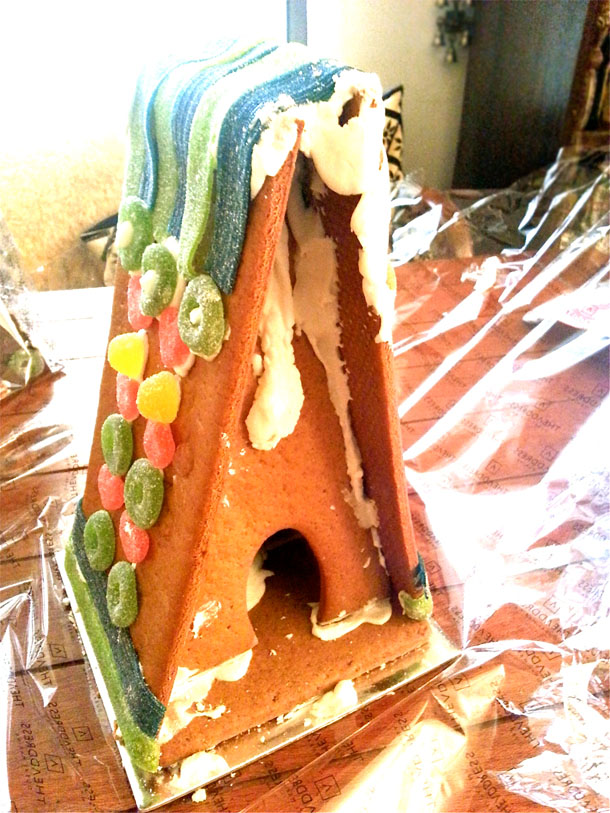 Merry Christmas everyone! While a festive wine is being mulled for the next post with Prague captured during Christmas, this one captures our experience with the gingerbread houses and the gingerbread Macarons that filled up our dining table – for a while! One Materclass down and basking in the glory of having decorated two gingerbread houses – one in my Masterclass with Chef Alannah Doe of Address Marina and the other in a gingerbread house decoration competition where the Z-Sisters had been my mighty assistants, I am still fumbling. I am an accidental, experimental cook – a creative person of the abstract genre. I am filled with envy when I see beautiful well crafted gingerbread houses with perfect thin icings and coloured candies sticking delicately to the roofs and walls. Mine is all about asymmetry. There’s snow falling all over the ceiling just to cover up the dodgy joints of the roofs and walls of our gingerbread house (above). At the end of it all, it doesn’t matter. When the Z-Sisters saw the one that I made in my Masterclass, they hugged me and shouted out loud – ‘You are the best, best and the best’, ‘This is so awesome’, ‘Yours is the best, Mummy!’ and the last shriek which jerked me slightly but had a happy ending to it – ‘Your Macarons are monstrous but are so fabulous’! Mummy’s ego restored and dignity intact, I walked out with my head held high, inflated too with praises from my mini cheer leading team echoing all around.
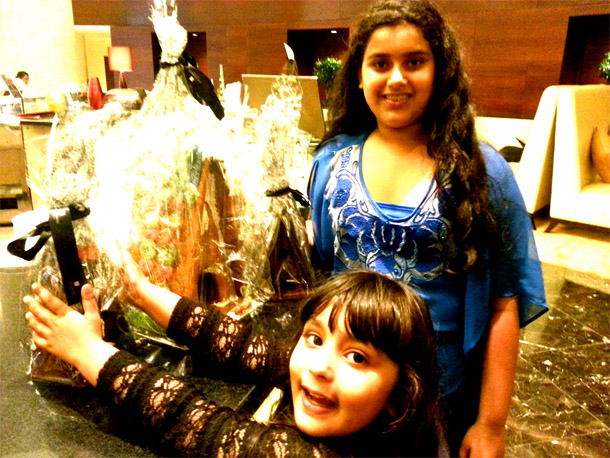 An Introduction to Gingerbread: Gingerbread was brought to Europe in 992 by the Armenian monk Gregory of Nicopolis. He left Pompeii, to live in France. He stayed there 7 years, and taught the Gingerbread cooking to French priests and Christians. During the 13th century, it was brought to Sweden by German immigrants. Early references from the Vadstena Abbey show how the Swedish nuns were baking gingerbread to ease indigestion. It was customary to bake white biscuits and paint them as window decorations. The first documented trade of gingerbread biscuits dates to the 17th century where they were sold in monasteries, pharmacies and town square farmers’ markets. In Medieval England gingerbread was thought to have medicinal properties. One hundred years later the town of Market Drayton in Shropshire, UK became known for its gingerbread, as is proudly displayed on their town’s welcome sign. The first recorded mention of gingerbread being baked in the town dates back to 1793; however, it was probably made earlier, as ginger was stocked in high street businesses from the 1640s. Gingerbread became widely available in the 18th century. The pictorial journey of my gingerbread house…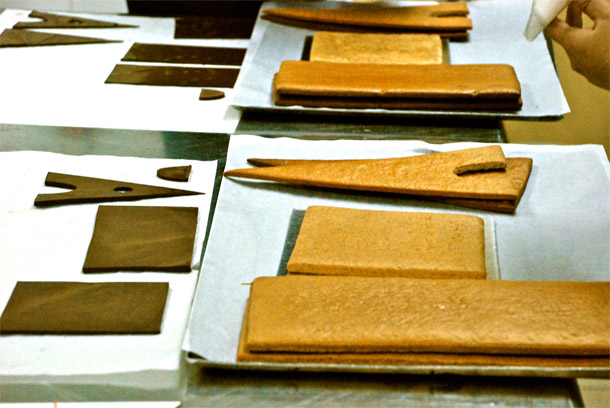
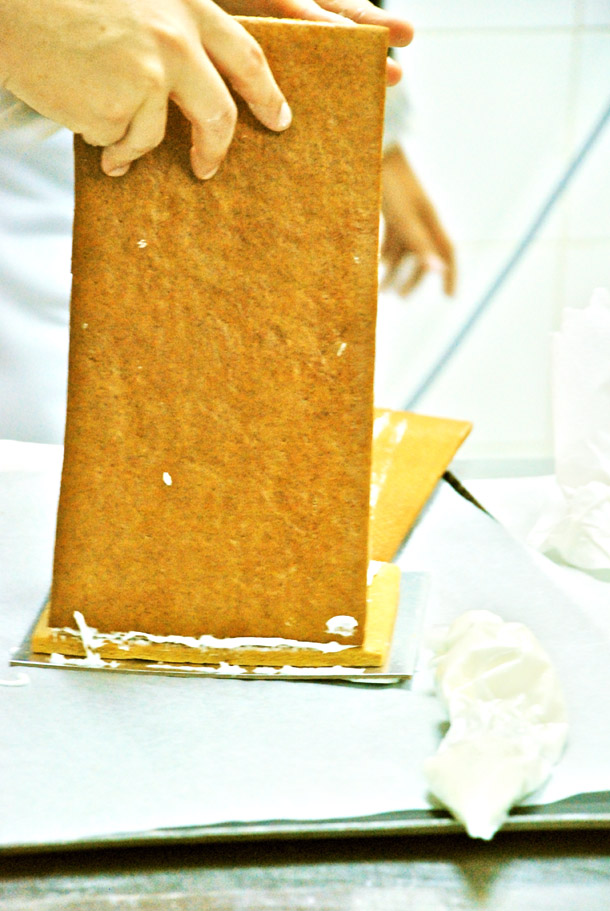
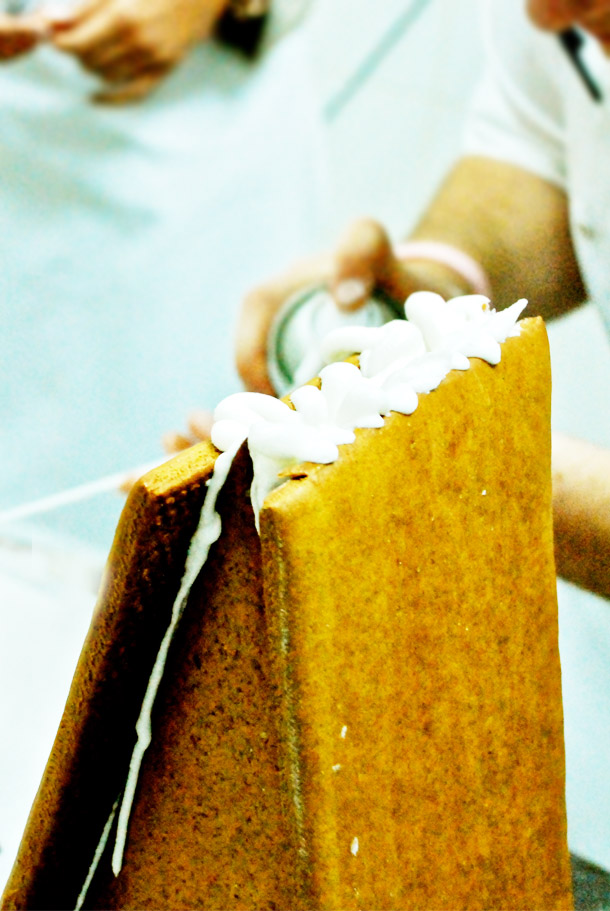 Considering the fact that Li’l Z had been eating most of the candies and jelly beans that were supposed to have gone onto the decoration of our gingerbread house, we managed to do pretty well. Our roof is intact, so are the walls and there are also a few candies sticking to the wall. Yes, the snow fell a bit more heavily on our house (further below) than other houses but that may have to do with Mummy trying to cover up her inability to draw stable icing lines rather than meteorological forecasts.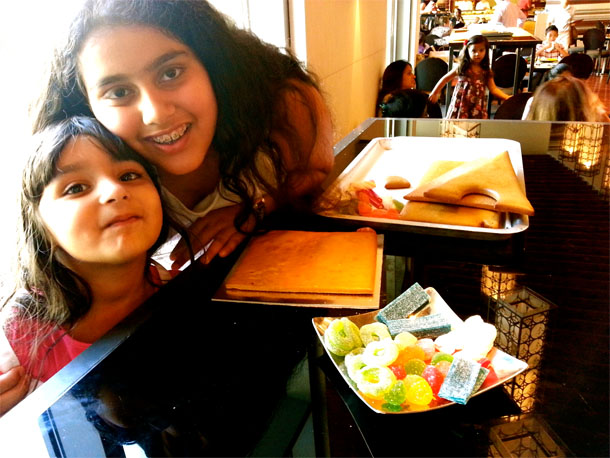
 The following gingerbread houses are the type of houses that I am envious of, not because they belong to the other contestants but because of the symmetry and precision in the decorations…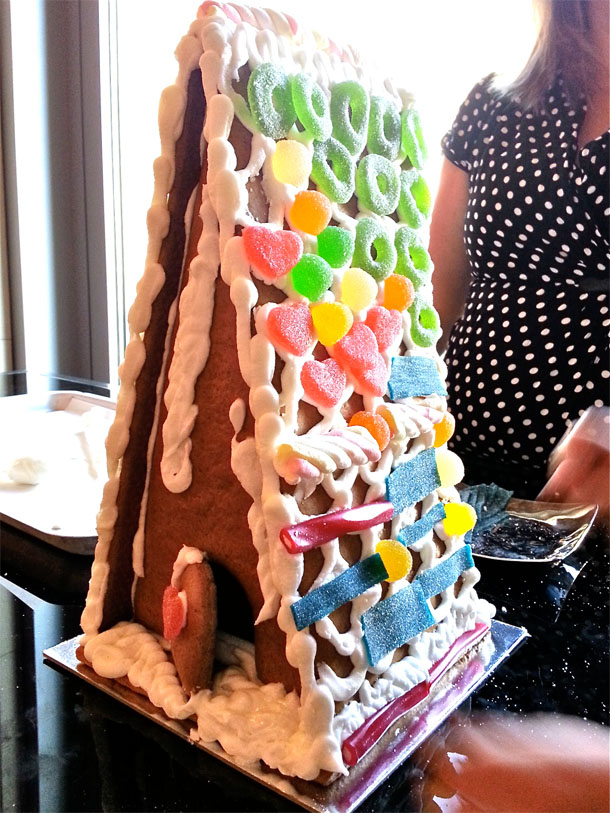


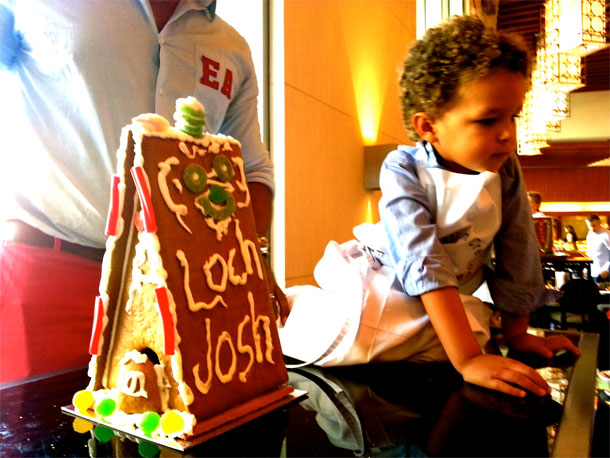
 And these are the ones that are my type of gingerbread houses – only the heavy snowfall part, and not the brilliant roof decorations and the perfect drippings of icing coming down the roof and the doors. These had been prepared by the pastry chefs of the hotel and not the contestants (otherwise I would have had a pangs of envy attacks once again!)…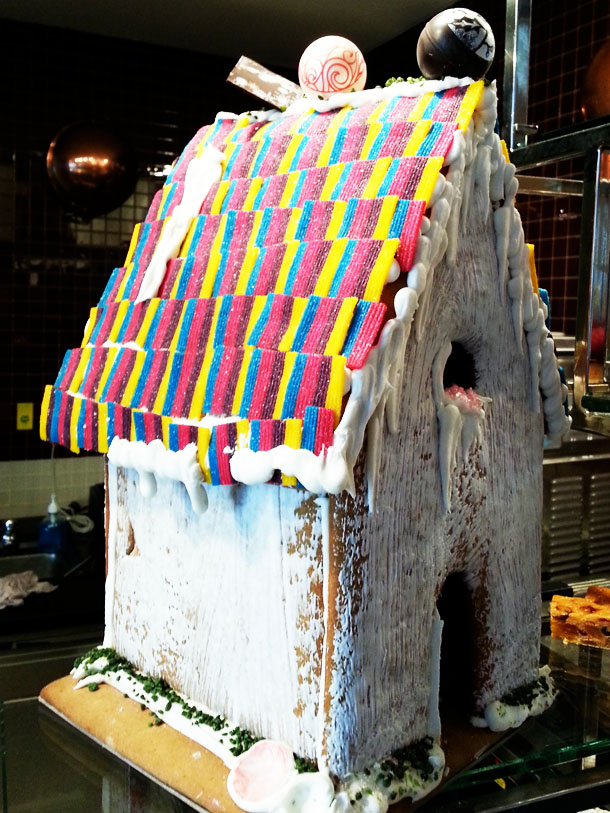
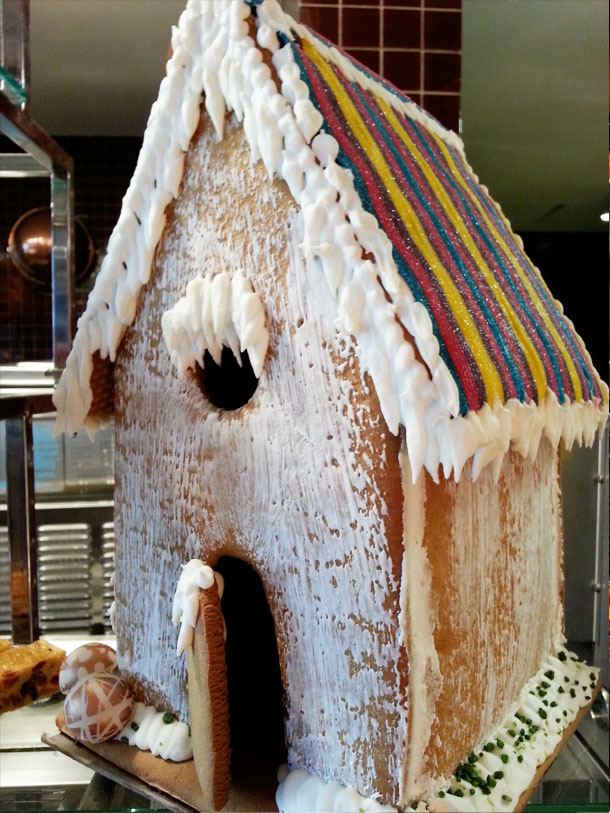
Homemade Gingerbread
Ingredients
For the Gingerbread
250g Honey
150g Sugar
50g Egg
38g Milk
25g Oil
7.5g Bicarbonate of Soda
20g Gingerbread Spice*
525g Soft Flour
Method of Preparation
• Melt the honey and sugar together until all the sugar has dissolved.
• Mix all the flour, gingerbread spice, bicarbonate of soda in a bowl and add the honey mixture.
• Once it has cooled slightly, add the eggs and finally the milk and oil.
• Knead until a smooth dough is formed, then allow to rest for 2 hours.
• Roll out to the thickness you would like and brush with milk before baking.
• Depending on your desired texture, bake at 160 C for 12 minutes.
* Gingerbread Spice can easily be made at home using the following ingredients: 2 teaspoons ground ginger, 2 teaspoons ground cinnamon, 1 teaspoons ground allspice, 1 teaspoons ground cloves, 1 teaspoons ground nutmeg
◊—————————————————————————◊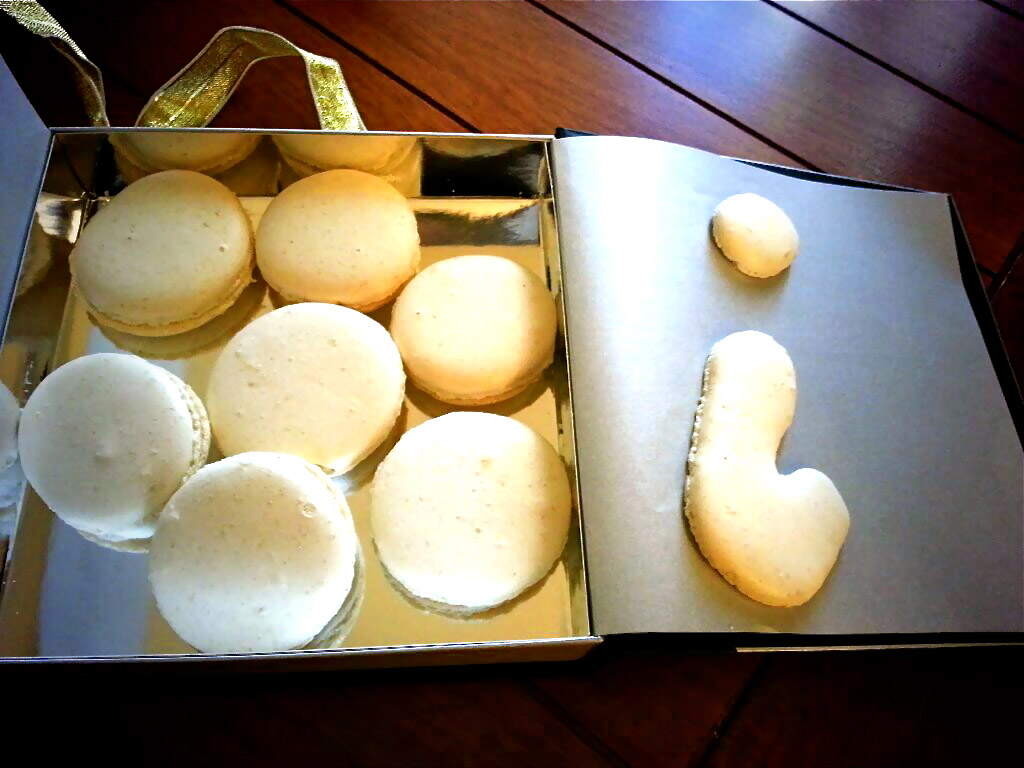
Macaron or Macaroon? Well that has been a confusion for me ever since I chomped into a Macaron, or was it a Macaroon? While Macaroon is toasted desiccated coconut combined with egg whites and sugar to form a frothy meringue then baked to a nice golden colour. They are crunchy on the outside, soft and chewy on the inside. The Macaron is on the other hand made from ‘TPT’ which stands for Tant pour Tant in French. Translated, this simply means equal quantities in reference to the icing sugar and ground almonds used as the base of a Macaron. This is then mixed with a meringue of one’s choice – French, Swiss or Italian, piped and baked. It forms a nice shiny shell with a small rise and a little foot at the bottom. Traditionally, the two are then sandwiched together to form a Macaron! From my experience, the making of Macaron is no less than rocket science. Well definitely not for passionate bakers but definitely for me for whom sticking to proportions and following instructions accurately, is a chore. Plus, the rocket science part of it which involves the understanding of the molecules that would ultimately result in that perfect Macaron. If you don’t believe me, please check out my 15 seconds video on Instagram of Chef Alannah explaining the logistics of the molecules in the culinary backstreets of the hotel.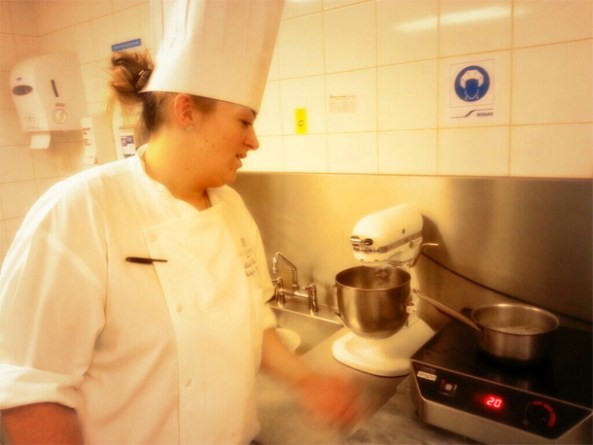
Gingerbread Macarons
Ingredients
For Macaron Shells
600g Sugar
160g Water
220g Egg White
Brown food Colouring
600g Icing Sugar
600g Almond Powder
10g Gingerbread Spice
220g Egg White
For Cream Cheese Frosting
250g Sugar
100g Water
125g Egg Whites
500g Butter
440g Cream Cheese
Method of Preparation
Macaron Shells
• Boil 160g water and 600g in a saucepan until it reaches 121 C, let it cool.
• In a blender, whisk slowly 220g of egg white, add sugar and increase whisking speed until meringue has cooled down. Once cold add your desired shell colour.
• Mix sugar and ground almonds with the egg white to make a paste.
• Once the meringue is cold, fold in 1/3 roughly and then carefully fold the remaining 2/3.
• Take a tray and a non-stick mat or greaseproof paper, ensure both are dry.
• Pipe small circles onto the mat and leave to rest for 5 minutes then bake at 160 C for 14 minutes.
Cream Cheese Frosting
• Whisk egg whites on slow speed.
• Bring the sugar and water to boil and allow to cook until it reaches 121 C.
• Pour mixture slowly over egg whites whilst whisking and turn the machine up to full speed. When this mixture is just warm but not cool, slowly add small pieces of soft butter whilst whisking, continue whisking until smooth
• Soften cream cheese and then mix with the butter cream
◊—————————————————————————◊
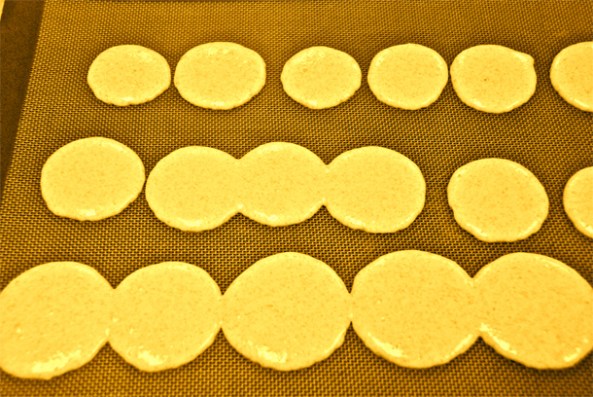 So while my Macarons took the shape of make-1-get-another-1-free-attached-with-the-first-one, or even 5 pieces together (above), as Big Z said they were ‘monstrous but fabulous’. I also managed to make a trendy one with the letter ‘I’, for IshitaUnblogged, naturally! Megalomaniac? No way but I definitely needed something to bruise my ego after seeing the devastation of my precious gingerbread house (below), in 2 minutes flat. A reader tweeted ‘Seems like your gingerbread house has been hit by a typhoon!’. Oh yes, typhoon indeed, generated by two pairs of monstrous little hands. Before signing off, just a small note – I’d love it if you hopped onto my last post to read my foodie diary in the historical city of Prague… street food to fine dining and a Christmas winter wonderland thrown in between, as it appeared in BBC GoodFood Me magazine. And wishing you all a Merrrrrrrrrrrrrrry Christmas once again!
Unblogging it all… Ishita
 Disclaimer: The Masterclass at The Address Marina cost me Dhs 350 including all the materials and I got to keep the gingerbread house. For the Generation Creation brunch however, we were guests at Mazina. Please note that this post is not a sponsored post and the subject, story, opinions and views stated here are my own and are independent. While you enjoy reading the posts with lot of visuals, please do not use any material from this post. You can see more pictures of my travel and food journey here.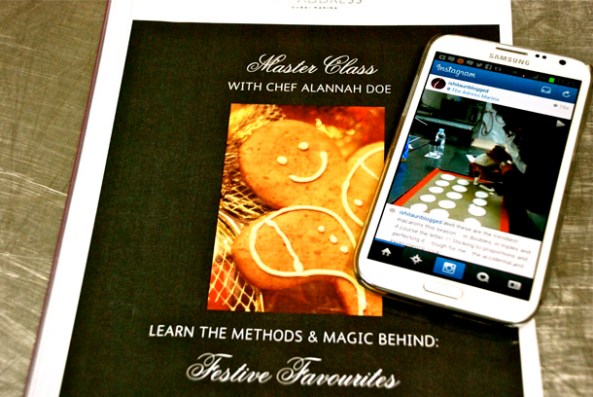

 IshitaUnblogged