
+ Travel
Baisakhi Celebration in Patiala and Options By Sanjeev Kapoor | Celebrating Festivals in Dubai – Episode 3

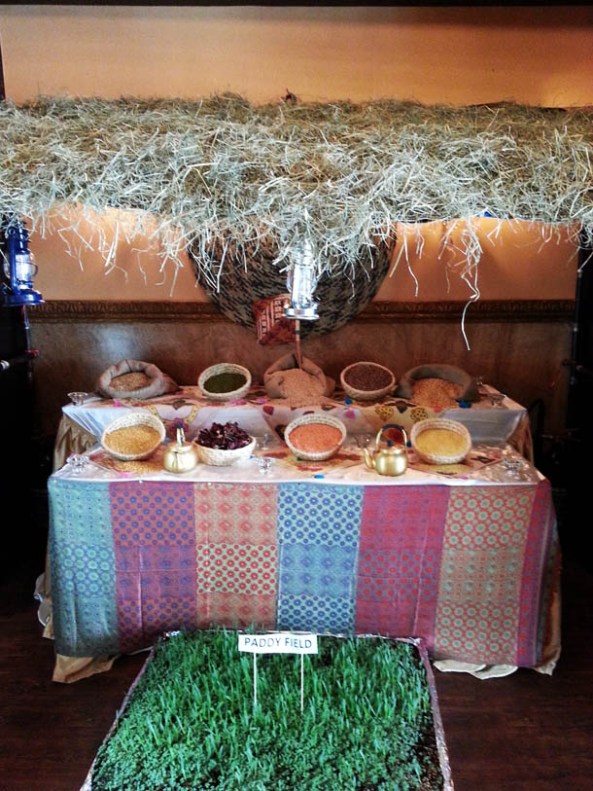
Baisakhi celebration for this foodie was an absolute double bonanza – visiting the two restaurants – the newly opened Patiala as well as the much visited Options by Sanjeev Kapoor in DWTC. As Baisakhi celebrates the harvest, the cute little paddy field grown inside the Options restaurant (above) bowled me over. I wasn’t visiting any of them for the first time – so the visits were like home-coming – a warm welcome accompanied by even warmer food! This is the third of a series of posts on last month’s festive restaurant hopping – we were celebrating some festival or the other from some part of the world {The series… Nowruz Buffet At Ezi Dzi | Celebrating Festivals in Dubai – Episode 1, Songkran Splash At Westin and A Dinner At Sukhothai | Celebrating Festivals in Dubai – Episode 2}. If you are joining this series from this episode, then a small note – the not-so-good pictures are all shot in my smart phone, in dimly lit but beautiful surroundings. My Nikon’s gone through a lot of rough use during my recent Thailand Academy trip, to the small fishing island in South Thailand called Koh Klang. My Instagram images… 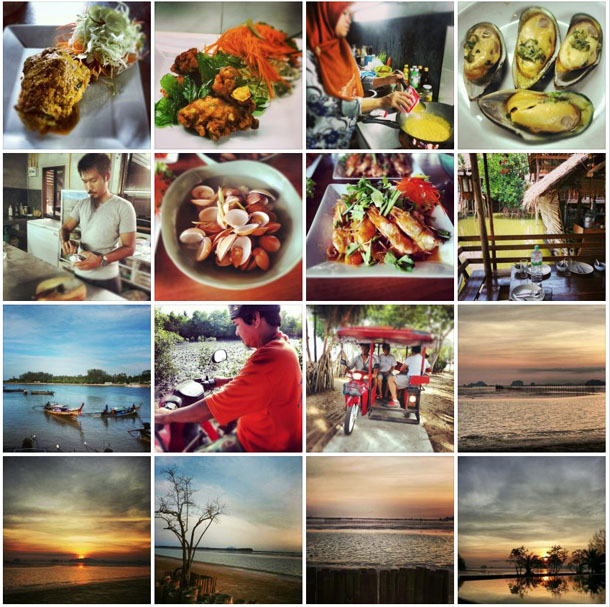
The earlier posts capturing my Thai experience…
• Ruen Mai Restaurant In Krabi | A Tantalising First Experience Of Thai Food {In Thailand, That is!
• Koh Klang in Krabi, Thailand | A Photo Essay of An Island Life
• Baan Ma-Yhing Restaurant In The Fishermen’s Village | Recipe of Thai Red Curry As We Cook ‘fresh catch’ Baramundi!
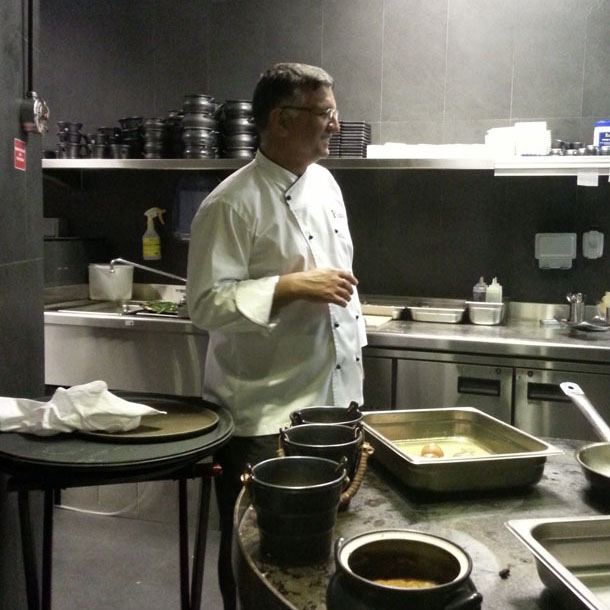
Coming back to my Baisakhi celebrations in Dubai, my first stop was Patiala, the newly opened North Indian fine dining restaurant. Chef Sanjay Bahl (above), who is at the helm of the Patiala kitchen, is warm, affectionate, experienced and extremely passionate about the food that he serves. I have previously had the opportunity to chat with him {an earlier post… Chef Sanjay Bahl | Flavours And Flavours And Flavours of Patiala!} and I have come to the conclusion that the Galouti Kababs or Galawati Kababs he serves, are one of the best that I’ve tasted in recent years. Incidentally, the kitchen boasts of Chef Arif with an enviable ancestral heritage – his forefathers had been the creators of the famous Galauti Kababs. The Chef insists on good taste, pure flavours and a great dining experience, accompanied, obviously by the perfect wines served by the glass (only a few restaurants in Dubai do this). Our Baisakhi dinner was, however, not about Galawatis. The Chef had created a special Baisakhi menu consisting of some traditional Punjabi dishes that were specially cooked in the Punjabi homes during Baisakhi.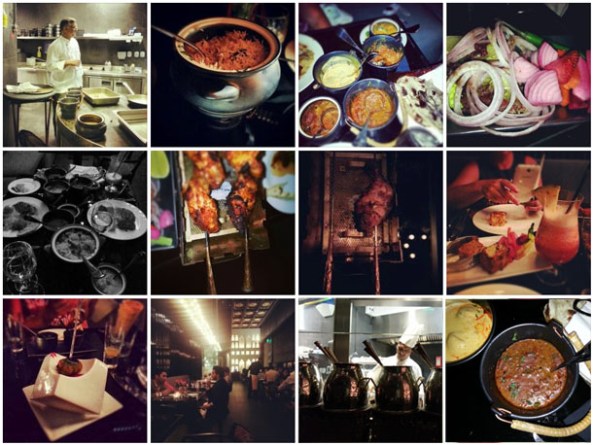
The Starters consisted of Achari Paneer Tikka – Paneer or Cottage Cheese marinated in pickle and cooked in Tandoor (Tandoor is a cylindrical clay oven used in cooking and baking. Traditionally, the heat for a Tandoor is generated by a charcoal or wood fire, burning within the tandoor itself, thus exposing the food to live-fire, radiant heat cooking, and hot-air, convection cooking, and smoking by the fat and food juices that drip on to the charcoal. Read more on Tandoor); Tandoori Choozey – Spring Chicken marinated in yogurt and spice, also cooked in a Tandoor. The Main Course offered an interesting meat preparation called Meat Beliram – a *spicy* – a Lamb Curry cooked in the traditional Punjabi style. The dish apparently got its name from the creator of the dish – Beliram! Beliram was the royal cook of Maharaja Ranjit Singh who ruled the Patiala kingdom, during the early half of the 19th century. Beliram was considered an Ustaad or a Master Chef in his times. Next was Mogewala Kukkad – a Chicken curry with minced chicken and traditional spices. The dish has it’s origins in rural Punjab and is a very popular village dish. Here, the boneless chicken or minced chicken is slow cooked and simmered in spices, specially a fenugreek flavored rich tomato gravy. The Baisakhi menu had a lot of tasty vegetarian options… Amritsari Dal – mixed lentils that had been tempered in Garlic, Cumin and Kashmiri Chilies; Punjabi Kadi Pakoda – a spiced yogurt and gram flour curry served with deep-fried gram flour dumplings that have been tempered with fenugreek seeds and red chilli; Aloo Wadiyan – dried spiced lentil dumplings and potatoes cooked with onion and tomato masala (this tasted just like the home made Boris or the lentil balls and the Bengali Borir jhol that my mum cooks at home) and the very special Guchhi Pulao – Morels cooked with Basmati rice. Guchhi is the Kashmiri black morel mushroom, famed for its flavour, rarity and exoticism. Most of the dishes that we tasted – the Meat Beliram, the Mogewala Kukkad, Punjabi Kadi Pakoda, Aloo Wadiyan and Gucchi Pulao, are not in the regular Patiala menu and were specifically added as Baisakhi specials. I felt that I was having an elaborate meal cooked at a Punjabi home – each dish delicately created and very flavourful and didn’t come dripping with the oiliness that we’ve come to accept in most North Indian dishes. For once this carnivorous foodie was overawed with the vegetarian offerings.
I requested for tiny samples of desserts so that we didn’t miss out on our *sweet* experience. Gajrela or the Gajar ka Halwa, as it is popularly known as, is a traditional Punjabi winter dessert where the carrot is slow cooked in milk {reminds me of the Gajorer Payesh or the Carrot Pudding that my Aunty made for Diwali. Cooked in the Bengali style, the Gajorer Payesh turned out to be very different from Gajar Ka Halwa, though the technique of cooking seemed to be similar, up to a point}. The next dessert was the Kheer. Again, this Rice Pudding which had been cooked with Rice slow cooked in milk and nuts has a Bengali variant – the Payesh. But the North Indian Kheer tastes very different from the Bengali Payesh {my post on Payesh… Notun Gurer Payesh/Traditional Bengali Rice Pudding | Remembering My Dida}. But the dessert that seemed to intrigue me and seemed unique – something that I hadn’t tasted before was the Rose Petal Halwa – this was a Halwa where dried rose petals were cooked in milk, Cardamon and Pistachios. Rose petals always takes me on my Persian food fantasy!
The sign off was with a beautiful Masala Chai. Chef Sanjay Bahl specifically suggested that we try this special version of Masala Chai, the speciality being that the Chai had been sweetened by Gur or Jaggery. The first thing that the Chai reminded me was – India! This was exactly the kind of teas that are served in the platforms of Indian railway stations and inside the trains. I wasn’t sure whether the Chef would take this nicely, had I told him that. But trust me, this was a compliment.
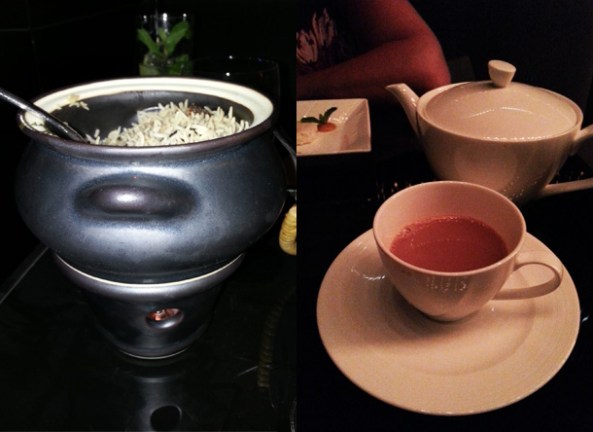
Debbie, my fellow Fooderati blogger, had accompanied me to Thailand. Post Thailand trip, we tried visiting restaurants together, till our respective daily routines crept into our lives and separated us! Debbie and I went for our Baisakhi dinner at Patiala together {her post on Patiala} – this was a much needed break in our *Thailand* inspired lives as we were writing on Thailand, eating Thai food, cooking Thai food and talking only about Thailand. Till Baisakhi came in. Baisakhi is usually celebrated on 13th April, and occasionally on 14th April and around this time even Poila Baisakh or the Bengali New Year is celebrated. This Bengali foodie was ushering in her Bengali Poila Baisakh by celebrating the Thai festival Sangkran and the Punjabi festival of Baisakhi. Festivity is all in the mind and has to render itself into some kind of a celebration, isn’t it? {More on Baisakhi}
Patiala – North Indian Cuisine, Fully licensed; The non-vegetarian tasting platter cost us Dhs 200/person
Tel No: +971 4 451 9151; Email: reservations@patiala.ae; Location: Level 3, Souq Al Bahar
For more info: Official Website, Facebook Page, Twitter
◊—————————————————————◊

This was my first visit to Options By Sanjeev Kapoor after they had won the BBC Good Food ME Awards 2012 for the best Indian restaurant. My gut feeling is that, the diners’ profile must have had a huge upheaval after winning this award, though it had been an award-winning restaurant even before that (Masala Awards for the Best Asian restaurant). Considering that a huge *celebrity* name is attached to the restaurant, the expectations from the Options’ kitchen is always very high. My attachment to Options is for a multiple of reasons. In the absence of a single Bengali restaurant in Dubai, Options does pamper the Bengali foodie for at least a few days every year, when it holds Rannaghar, the Bengali food festival during the Durga Pujo – the biggest annual festival for the Bengalis that take place during autumn. Though Options specialises in North Indian cuisine, Chef Raturi (above right in second last row) manages to churn up a traditional Bengali menu {My experience of Rannaghar}. Also, it was during the launch of it’s Deira branch, that I got to meet the Master Chef, Sanjeev Kapoor. Not only did I get to meet him, I did in fact had the opportunity to talk to him – you will find me hideously dumbstruck above as I pose for a picture {My post… Sanjeev Kapoor | Talking To The Chef Extraordinaire}! Also, when my blog turned one, Options generously gave away a romantic dinner for two to a lucky reader. Well, these are hardly any food related reasons to like Options – apart from the Kasha Mangsho or the Mutton cooked in the Bengali style and the Bengali Luchi and the fabulous Roshogollas or Rasgullas (the famous Bengali sweet) they fed me during Rannaghar!
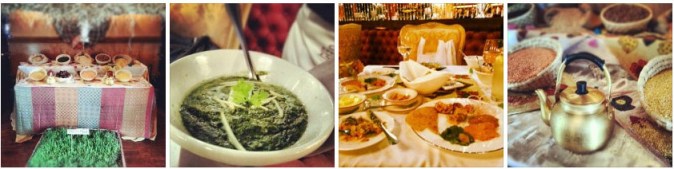
My Baisakhi lunch at Options was super hurried just like my most lunches are, with Mommy duties calling for picking up the Z-Sisters from school. I was invited by Samah, a newbie on the blogosphere. My food order was strictly Baisakhi specials on the menu but when the food arrived our table, a few restaurant specialities seemed to have crawled along. The Saag Shorba or the creamy Spinach soup was deliciously comforting till Samah told me that most of the times she preferred having the Saag Shorba without the cream. A fitness freak and the most petite person I’ve ever come across, I heard her but didn’t quite get her. I mean, why order a Shorba if there’s no cream? You might as well order a clear lentil soup! The Shorba was followed by the Dahi Papri Chat – a plate of crisp Papris (papris are like fried dough wafers made from white flour) topped with boiled potato, sprouts, more sweet than sour tamarind chutney, chilled yogurt and Sev. I like a bit of an overdose of sprinkling of Cumin powder, Chaat Masala, dry roasted red Chilli powder. Papri Chaat is a very popular subcontinental street food and ranks second in my list of lip smacking Indian street snacks. Phuchkas, the Bengali version of Pani Puris top my list {interestingly, a very old post on Phuchka is the most visited post on my blog… Dilipda’s Phuchkas in Vivekananda Park | ‘World Famous’ In Kolkata}. After this and a round of Chicken Reshmi Kababs (I don’t seem to remember ordering this, but one should never deny what’s being offered), we were served the most famous rural Punjabi home cooked Khana of all – Makki di Roti and Sarson Da Saag. Honestly, they filled up my senses. Makki di Roti literally means bread of corn and is always baked on a Tava (is a large, flat pan made from metal) and gathering from my Punjabi friends, they are a bit cumbersome to make. The Makki di Roti’s most popular accompaniment is Sarson Da Saag – prepared from green Mustard leaves. Traditionally, both of these dishes are had with dollops of Butter. Non-traditionally, sans it! We also ordered a Mahi Daal which was more like a home cooked, light lentil and bean based Daal rather than the creamy Dal Makhani that we are familiar with. The non-vegetarian comfort came in the form of delicious Lahori Murgh, a typical kadai Chicken preparation hailing from the North West frontier, where kadai is a wok type of a vessel used to cook the dish. This was a rich preparation, with the Chicken cooked in a thick tomato gravy with a lot of spices. However, the Dum ka Gosth reigned over the Lahori Murgh. In the former, the Goat meat dumplings were tenderly cooked in the Dum technique – a technique that is my personal favourite. Meat is cooked on a very low flame, in sealed containers so that the meat gets cooked in it’s own juices. I left Options with the taste of Makki di Roti, Sarson da Saag and the Dum Ka Gosht still lingering on. Alas, there was no room for desserts.
Options By Sanjeev Kapoor – Award winning Indian restaurant; Fully licensed
Opening Hours: 12pm – 11:45pm daily
Location: Ground Floor, Convention Tower, DWTC; Also in The Mövenpick Hotel Deira
Tel: +971 4 3293293/4 (DWTC); Tel: +971 4 4446466 (Deira)
For more info: Website, Facebook Page, Twitter
◊—————————————————————◊
As I sign off, I thought that I should share the above thought from one of the inner pages in the Options Menu. I’ve been keeping the concluding paragraph of the posts same – as this is a series of posts following the same thought – celebrating festivals in Dubai. Although born into a Hindu family, my brother and I grew up in Kolkata, celebrating all festivals from all religion. So Eid would mean that we would flock to the homes of our Muslim friends and pestering their Mums whom we would address as Mashi/Aunt to refill our bowls of Shimuyer Payesh or Semayia/Sevaiya Pudding and ransack their kitchens for home-made Biriyanis and Laccha Parathas, a type of Indian flat bread, triangular in shape with multiple layers lapped with Ghee/Indian clarified butter. Or Christmas would mean attending midnight mass at St Paul’s Cathedral with my Christian friends and rip open my small gifts of fruit cakes that my Christian Mashis/Aunties would have prepared for me. I’ve reminisced all this nostalgia in an earlier post – Living By The Water With Sunset As Prop – Kolkata & the Ganges. It talks about the multicultural upbringing of my childhood that has shaped my own philosophies in life. That brings me to my question – What about you? Have you embraced any other festival from any other country or religion, apart from your own?
Unblogging it all… Ishita
Disclaimer: The opinions stated here are my own and are absolutely independent. I hope you enjoy reading the posts with lot of visuals but please do not use any material from this post. You can see more pictures of my travel and food journey here. It does take lot of effort to capture a food experience in text and pictures. While it’s meant for you to enjoy them, I request you not to use them!
◊—————————————————————◊
Posts on celebrations and festivals:
- Celebrating Dubai Christmas | Dining In, Dining Out, Cooking or Mall Hopping!
- Gajorer Payesh/Carrot Pudding | Happy Diwali!
- Semaiya Kheer/Vermicelli Pudding, Eid in Dubai | Eid Mubarak!
- Rasgulla Macapuno On TV & Shubho Bijoya to all!
- TRIBES Celebrating South African Heritage Day!
- Firni or Ferni, Ramadan or Ramzan, Mallick Bazar or Karama?
- Living by the water with sunset as prop | Kolkata & the Ganges
BE SOCIAL. SHARE THIS!

+ Travel
Songkran Splash At Westin and A Dinner At Sukhothai | Celebrating Festivals in Dubai – Episode 2
The last month was all about celebrating some festival or the other from some part of the world. This is the second of a series of posts on the different restaurants that I have visited over the month, participating in the celebration {First of the series… Nowruz Buffet At Ezi Dzi | Celebrating Festivals in Dubai – Episode 1}. Pardon me for the not-so-good pictures shot with my smartphone, in dimly lit but beautiful surroundings – my Nikon’s gone through a lot of rough use during my recent Thailand Academy trip. The Thailand trip was an entirely different experience – I was with a bunch of Emirati college students and without the Z-Sisters, as a part of the Dubai team which, along with two other teams who had come from London and Frankfurt, descended upon a bit too loudly on a small fishing island in South Thailand called Koh Klang. (My Instagram images below)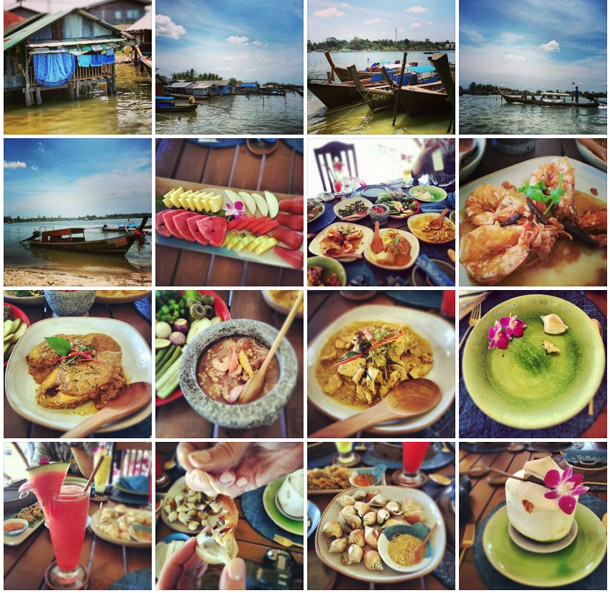
{My earlier posts capturing my Thai experience… Ruen Mai Restaurant In Krabi | A Tantalising First Experience Of Thai Food {In Thailand, That is!, Koh Klang in Krabi, Thailand | A Photo Essay of An Island Life, Baan Ma-Yhing Restaurant In The Fishermen’s Village | Recipe of Thai Red Curry As We Cook ‘fresh catch’ Baramundi!}
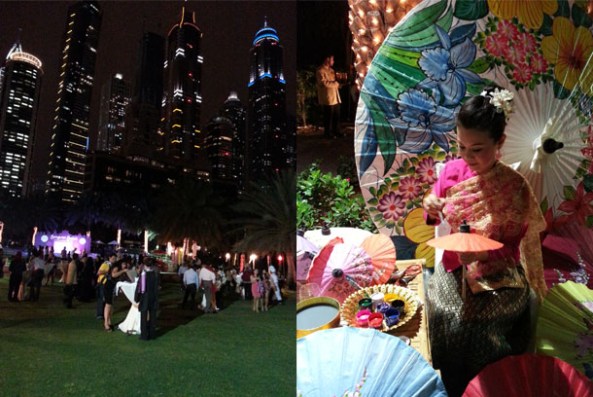
Our first glimpse into Thai culture even before we landed in Thailand, was actually in Dubai with a Songkran Splash dinner hosted by TAT Dubai {Tourism Authorities of Thailand Middle East} at the Westin Dubai. Held at the hotel’s lawns by the waterfront, this was definitely a very tempting prelude to the Thailand trip. Special Songkran dance performances, traditional hand painted Thai parasols – both Debbie (my fellow Fooderati blogger Debbie who writes Coffee, Cakes and Running and accompanied me to Thailand) and I were pretty enthralled. To top it all up, there was a beautiful Thai buffet (beautiful may not be quite the right adjective for food but there is no other adjective to describe Thai food) – Som Tom Thai or the traditional salad with shredded Papaya; Yam Talay or Mixed seafood salad with spring onion, Tom Kha Gaiaed or Chicken soup with coconut milk; Pad Thai, Kaow Neaw Ma Muang or the sticky Rice with Mango… and more.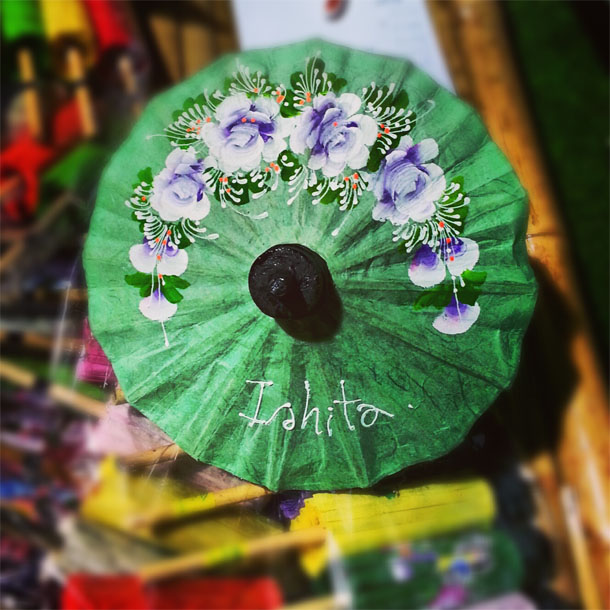
The Songkran festival is celebrated in Thailand from 13th April to 15th April. This is to mark the celebration of the Thai New Year and has been adapted from the Holi, the Indian festival of colours. The people roam about in the streets with containers of waters and throw water upon others {more on Songkran…}. We missed Songkran in Thailand by a few days but was kept updated by Suteepa, a Thai friend that I made in this trip. Sharing a picture of Songkran that she sent (below) – this is a scene of the street below her house in Krabi. Tourists visiting Thailand at this time partakes in the entire wet madness as well. Crazy, isn’t it? Must mention that the Songkran Splash at Westin ended with a miraculous drizzle – described humorously as ‘part of the production’ by Ian from Aviareps Group who had been responsible for organising our Thailand Academy trip with TAT Dubai!
The Westin Dubai Mina Seyahi Beach Resort & Marina
Spice Emporium, serves traditional and authentic Thai menu in ‘family-style’.
Tel No: +971 4 399 4141 (The Westin), +971 4 511 7136 (Spice Emporium); Location: Al Sufouh Road, Jumeirah Beach
For more info: Website, Facebook, Twitter

◊—————————————————————◊
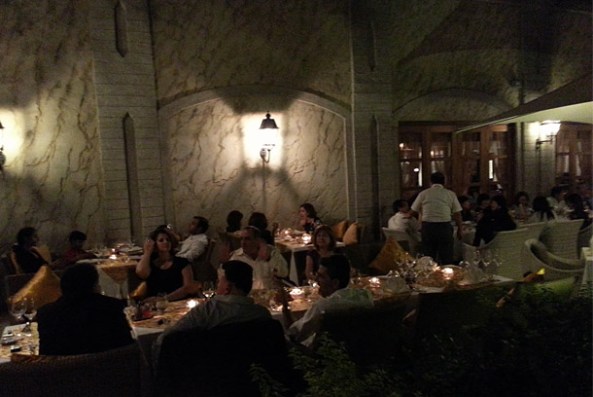
Post Thailand trip, I had become an adopted Thai citizen. Absolutely tuned into a ‘Thai’ mode – I was eating, dreaming and talking of only Thai food. I was even cooking Thai food at home – for breakfast, lunch and dinner! Debbie invited me to a Songkran dinner – a many course dinner with wine pairing at Sukhothai in Le Meridien Airport Hotel. This was like déja vu – Sukhothai must have been the first fine dining restaurants that I have visited, many years back during my initial Dubai life (one dinner bill at Sukhothai must have been followed by several meals of instant Maggie noodles!). Sukhothai had been an award winning restaurant in those days (voted the Best Southeast Asian Restaurant) – the decor is still charming with pillars intricately carved out of wood and a small Thai Wat, or the temple structure holding center stage. The restaurant is inspired by the Sukhothai period – 1238 until 1438.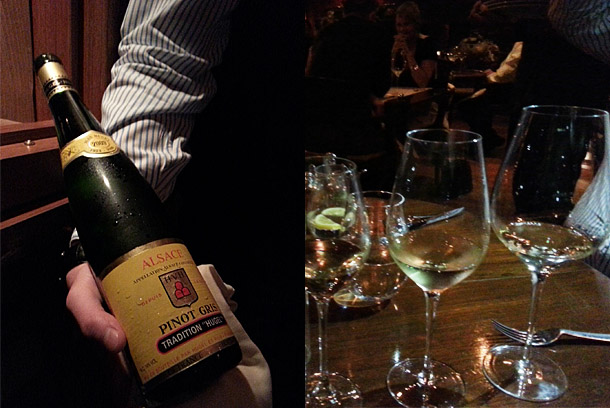
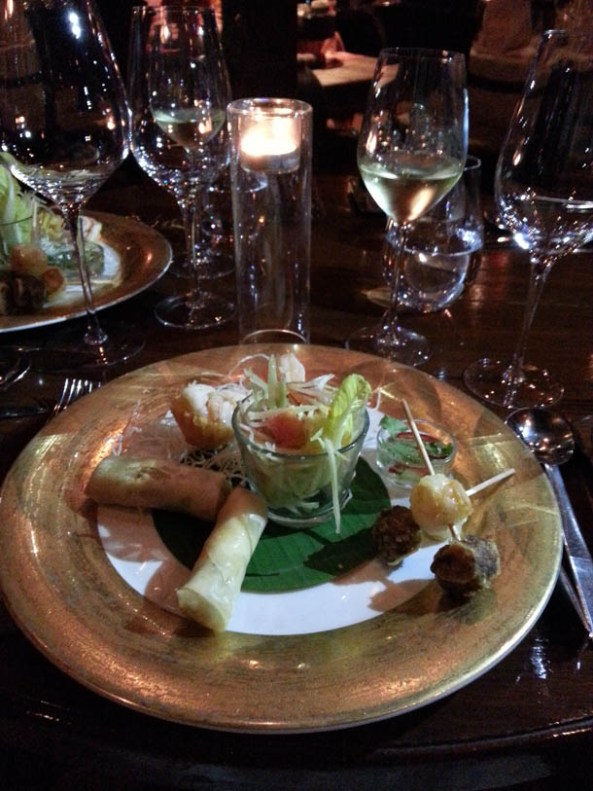
The astonishing Starter came with E-Sarn Ruam Mit (below) – a platter with green Papaya salad, char-grilled beef sausage with sticky rice, deep fried glass noodles salad, spring rolls and a spicy prawn salad presented beautifully in small pastry cups. This was paired by a Gentil, Hugel Et Fils 2011 (all the pairings came from the house of Alsace Hugel, the very old French winemaker producing wines since the 1600s. Interestingly, the wine notes for the different wines in their official website comes from Serge Dubs, who’s been voted the World’s Best Sommelier in1989) – based on the refreshing Sylvaner and Pinot Blanc grapes. The soup that followed – the Tom Kha Nam Khon was equally astonishing. This was a herbed soup of Scallop, flavoured with lemongrass, Kaffir limes, Galangal, Mushroom and Coriander – a very subtle but distinctly flavourful. This was paired with a Riesling – a Hugel 2010-2011. The Main course consisted of a Northern style diced beef in curry paste, ginger, peanuts, onions and tamarind juice – the Gaeng Hang Tay Neau; a Bangkok styled steamed Hamour with grilled chilli lime sauce – the Pla Nueng Jaeo; and the enormous sized Phuket lobster filled with Coconut red curry, young Coconut, sweet Basil and other Thai herbs – the Hau-Mok Goong Mang Gorn Ma Phrao Orn. All these were served with Khao Suai, the Thai Jasmine Rice and the greens came in the form of Phak-Wan Phad Nam Man Hoi or the wok-fried North-East sweet leaf with Oyster Sauce. The wine pairing came in the form of a Pinto Gris Tradition, Hugel et Fils 2009 -2010 – rich and full but still dry, this perfectly matched the meat and fish in sauce. The Chocolate Mamoung dessert was paired with the Gewurztraimmer, Cuvée Jean Hugel 2010-2011. The Main Course, though very impressive, had yet to match up to the astonishing Starter and the subtle Soup that followed it. One point to note here – many big hotels and restaurants are gradually making a conscious move to stay away from fish which belong to the ‘overfished’ category in the UAE, for example, Hamour. Diners will always insist on Hamour and it still remains to be the most popular fish requests but a few big places that I’ve visited recently have a very sustainable and environmentally conscious menu {Sense On The Edge @ZighyBay | Slow Life, Sustainable Menu & Fattoush Recipe, Desert Islands Resorts By Anantara | Cooking Spicy Prawn Harra By The Beach}.
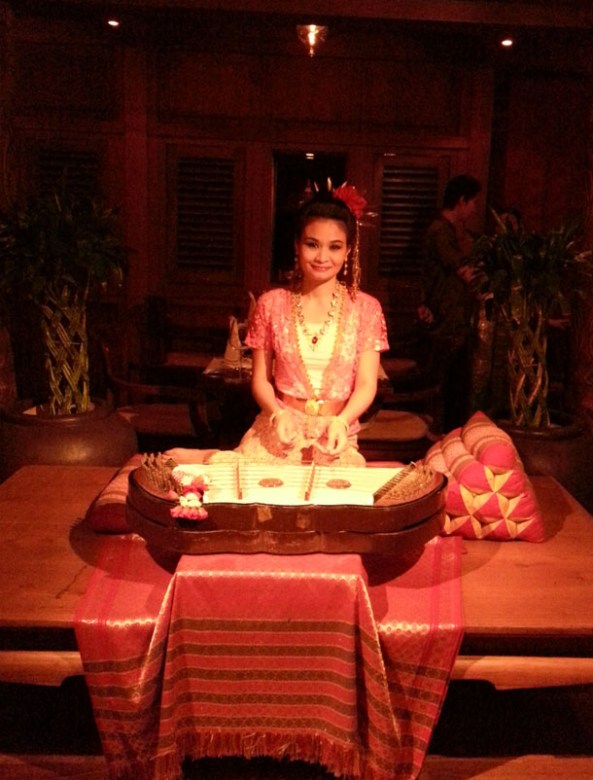
Ram Thai or traditional Thai dance is the main art form in Thailand. The Sri-Nuan dance performance by the beautiful Thai dancer (the cover picture above), accompanied by the sweet music added to the festive mood of the evening and was followed by the fairwell Songkran wish of washing away all bad luck (below right).
Sukhothai – Authentic Thai Cuisine; Fine Dining
Tel No: +971 4 217 0000; Location: Le Méridien Dubai, Airport Road
Opening hours: Lunch 12.30 pm – 2.45 pm; Dinner 7.00 pm – 11.45 pm
You may view Sukhothai menu or the Chef’s recipes with Thai cooking tips.
For more info: Website, Facebook, Twitter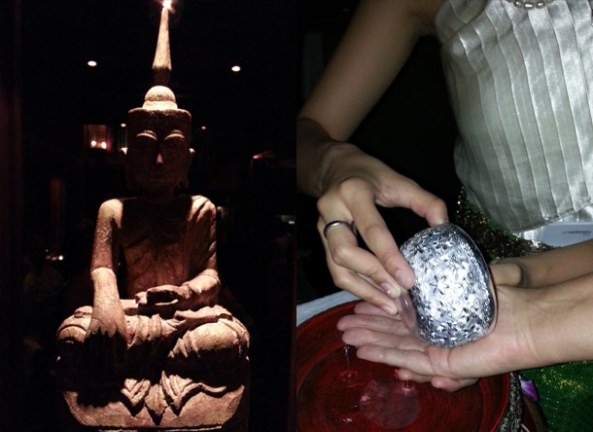
◊—————————————————————◊
Signing off by borrowing the concluding paragraph from the last post as this is a series of posts following the same thought – celebrating festivals in Dubai… though born into a Hindu family, my brother and I grew up in Kolkata celebrating all festivals from all religion. So Eid would mean that we would flock to the homes of our Muslim friends and pestering their Mums whom we would address as Mashi/Aunt to refill our bowls of Shimuyer Payesh or Semayia/Sevaiya Pudding {My recipe post… Vermicelli Pudding, Eid in Dubai | Eid Mubarak!} and ransack their kitchens for home-made Biriyanis and Laccha Parathas, a type of Indian flat bread, triangular in shape with multiple layers lapped with Ghee/Indian clarified butter. Or Christmas would mean attending midnight mass at St Paul’s Cathedral with my Christian friends and rip open my small gifts of fruit cakes that my Christian Mashis/Aunties would have prepared for me. I’ve reminisced all this nostalgia in an earlier post – Living By The Water With Sunset As Prop – Kolkata & the Ganges. It talks about the multi-cultural upbringing of my childhood that has shaped my own philosophies in life. What about you? Have you embraced any other festival from any other country or religion, apart from your own?
Unblogging it all… Ishita
Disclaimer: The opinions stated here are my own and are absolutely independent. I hope you enjoy reading the posts with lot of visuals but please do not use any material from this post. You can see more pictures of my travel and food journey here. It does take lot of effort to capture a food experience in text and pictures. While it’s meant for you to enjoy them, I request you not to use them!
◊—————————————————————◊
Posts on celebrations and festivals:
- Celebrating Dubai Christmas | Dining In, Dining Out, Cooking or Mall Hopping!
- Gajorer Payesh/Carrot Pudding | Happy Diwali!
- Semaiya Kheer/Vermicelli Pudding, Eid in Dubai | Eid Mubarak!
- Rasgulla Macapuno On TV & Shubho Bijoya to all!
- TRIBES Celebrating South African Heritage Day!
- Firni or Ferni, Ramadan or Ramzan, Mallick Bazar or Karama?
- Living by the water with sunset as prop | Kolkata & the Ganges
BE SOCIAL. SHARE THIS!

As I look back, I realised that the last month was all about celebrating some festival or the other from some part of the world, including celebrating Poila Baishakh – the Bengali New year. How else would this humble foodie be celebrating? Quite obviously by eating all across the city, immersing herself in the many culinary novelty that each cuisine had to offer. Living in Dubai is a blessing – there are so many restaurants offering so many different cuisines, except a good Bengali restaurant. Instead of searching for my known Bangla Khabar in Dubai, I’ve begun to embrace all kinds of unknown food as my own. Smart act isn’t it?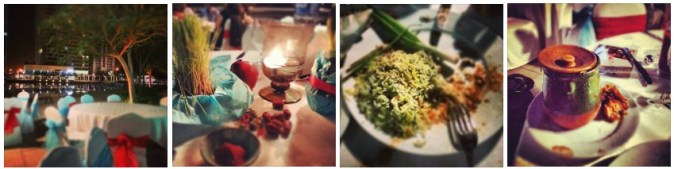
This is the first of a series of posts on the different restaurants that I have visited over the month, participating in the celebration. All pictures are shot with my smartphone – giving my Nikon a rest (the truth of course is different – I think I’ve managed to tickle it up the wrong way in the fishermen’s village in Thailand). I have also realised that either you can ask for an ambiance or good pictures. You cannot demand both. That is, good pictures in dimly lit, beautiful surroundings. My Instagram pictures come to the rescue in such situations (above).
Nowruz celebration at Ezi Dzi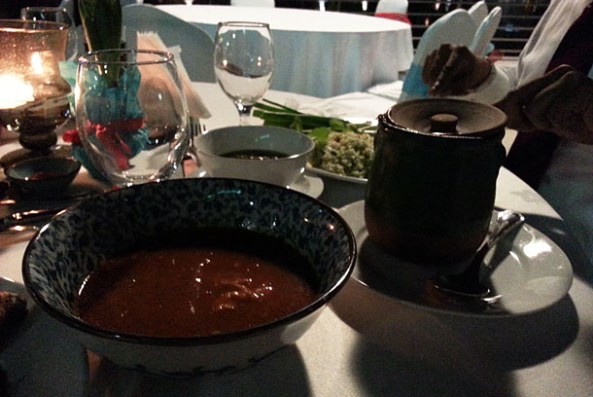
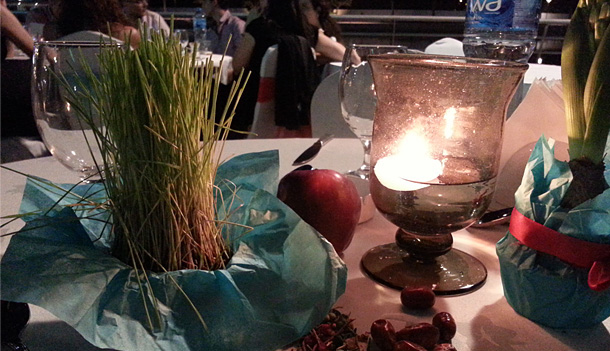
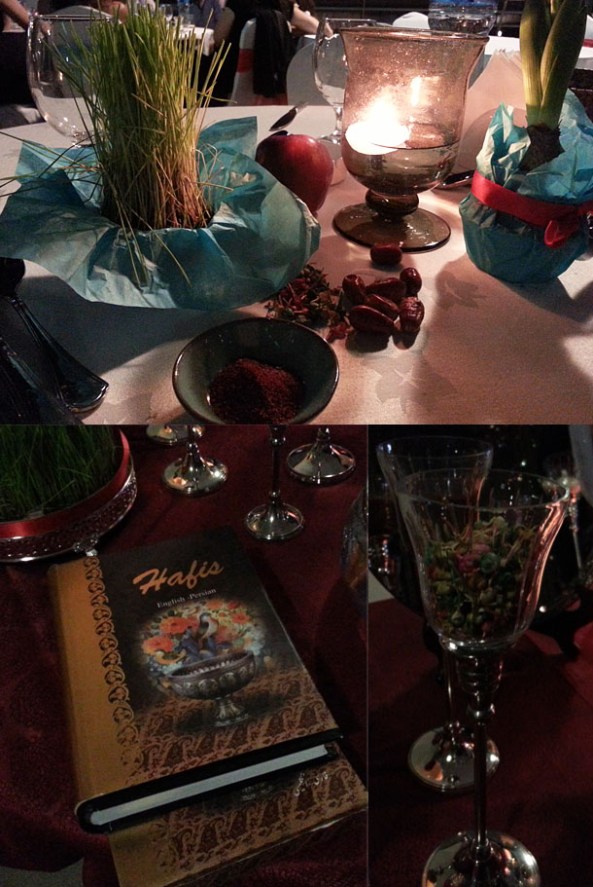
I heard that Ezi Dzi (pronounced ee-zee dee-zee), a new Persian restaurant in JLT, was celebrating Nowruz, the Iranian New Year with a traditional Iranian Buffet in an outdoor setting from fellow blogger Debbie who blogs at The Real Geordie Armani. It was a busy Wednesday and I called the restaurant thrice to inform that we were going to be delayed. At 10:30pm, when I was about to cancel my reservation(S said that he was so caught up that he wouldn’t make it before 11:30pm), Gelare, who c0-owns the restaurant, managed to convince me that people would still be coming in late and yes, food will still be there (in plenty, that is!) even if we reached around midnight. I’m glad that we did manage to visit Ezi Dizi – the entire place looked so festive and thronged with Iranians who had come to dine with their families and friends in order to usher in their Nowruz. The table settings were done up in the way it is done traditionally to celebrate Nowruz (above) – with the Haft Sîn or the seven ‘S’s – that is with the seven items starting with the letter ‘S’ or Sīn in the Persian alphabet. Books of Hafis, the 14th-century Persian mystic and poet lay on the table – creating a very elegant ambiance. {More on Nowruz…}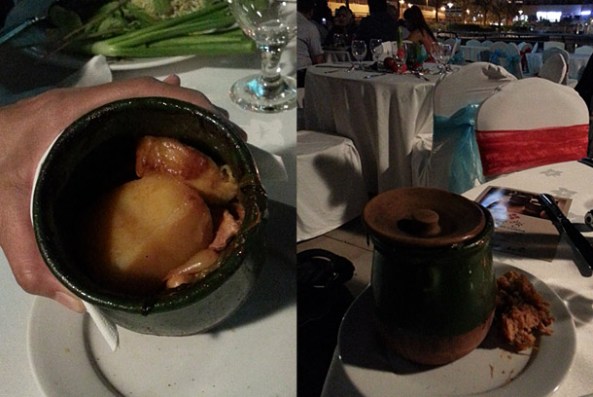
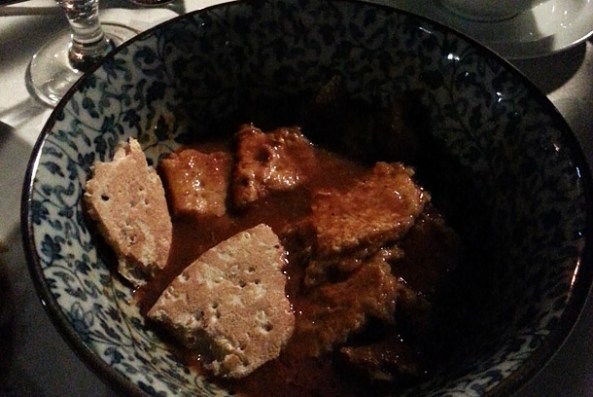
The Buffet had many traditional Iranian dishes. We tasted the Sabzi Polo Mahi – the special traditional dish that is cooked to celebrate Nowruz. Sabzi Polo Mahi is Rice with green herbs and is served with fish. But the dish that absolutely mesmerized me was Dizi. Dizi or Abgoosht is a popular Iranian dish – often termed as a classic meal. Dizi refers to the small clay pot (above) in which the food is cooked and served. Lamb, potato, chickpeas, tomato and turmeric – everything is steamed in an oven on low heat for many hours. Dizi recipes seem to have been handed down from generation to generation over thousands of years and vary from family to family, town to town and district to district. The gravy or the juice is taken from the Lamb is taken out from the clay pot and then the potatoes and lamb is blended into the remaining gravy by stirring and mashing in with the rest of the ingredients. Freshly baked bread is broken into pieces and dipped into the gravy (which was initially taken out of the Dizi; image below) in a bowl. Into this gravy now goes the mashed paste of Lamb and Potatoes etc. My observation – If the Aloo or Potatoes from the Bengali Kasha Mangsho were mashed into it’s own gravy and then served with Iranian bread, it would probably turn into a Dizi. {While I do not have the recipe of Bengali Kasha Mangsho in my blog, I do have a ‘spirited’ variant – Mutton Kassa With Red Wine And Red Grapes}. There are many more traditional Iranian dishes like Dolmeh or stuffed vegetables, Koofte/Meat balls in the Ezi Dizi menu. Gelare insisted that we try the Iranian Faloodeh. I’ve never been been fond of Falooda that accompanies Kulfis, the sub continental version of Ice creams if I may describe them like that. The Iranian Faloodeh is definitely very different – this is a cold dessert and tasted more like a Sorbet. Traditionally, the Faloodeh consists of thin vermicelli noodles made from corn starch mixed in a semi-frozen syrup made from sugar and rose water. And yes, I loved my Iranian Faloodeh. {A cute recipe of Kulfis that we made at home… Colourful Kulfis | Celebrating The Colours Of Holi!}
Ezi Dzi – Persian; Casual dining; The Nowruz Buffet cost us Dhs 180/person, though an a-la carte is normally available.
Tel No: +971 4 4317070; Location: Cluster C, Gold Crest Executive Tower, JLT
Opening hours: Mon – Sun: 11:30 am – 11:30 pm
For more info: Website, Facebook, Twitter
◊—————————————————————◊
Though born into a Hindu family, my brother and I grew up in Kolkata celebrating all festivals from all religion. So Eid would mean that we would flock to the homes of our Muslim friends and pestering their Mums whom we would address as Mashi/Aunt to refill our bowls of Shimuyer Payesh or Semayia/Sevaiya Pudding and ransack their kitchens for home-made Biriyanis and Laccha Parathas, a type of Indian flat bread, triangular in shape with multiple layers lapped with Ghee/Indian clarified butter. Or Christmas would mean attending midnight mass at St Paul’s Cathedral with my Christian friends and rip open my small gifts of fruit cakes that my Christian Mashis/Aunties would have prepared for me. I’ve reminisced all this nostalgia in an earlier post – Living By The Water With Sunset As Prop – Kolkata & the Ganges. It talks about the multi-cultural upbringing of my childhood that has shaped my own philosophies in life. What about you? Have you embraced any other festival from any other country or religion, apart from your own?
Unblogging it all… Ishita
Disclaimer: The opinions stated here are my own and are absolutely independent. I hope you enjoy reading the posts with lot of visuals but please do not use any material from this post. You can see more pictures of my travel and food journey here. It does take lot of effort to capture a food experience in text and pictures. While it’s meant for you to enjoy them, I request you not to use them!
◊—————————————————————◊
Posts on celebrations and festivals:
- Celebrating Dubai Christmas | Dining In, Dining Out, Cooking or Mall Hopping!
- Gajorer Payesh/Carrot Pudding | Happy Diwali!
- Semaiya Kheer/Vermicelli Pudding, Eid in Dubai | Eid Mubarak!
- Rasgulla Macapuno On TV & Shubho Bijoya to all!
- TRIBES Celebrating South African Heritage Day!
- Firni or Ferni, Ramadan or Ramzan, Mallick Bazar or Karama?
- Living by the water with sunset as prop | Kolkata & the Ganges
BE SOCIAL. SHARE THIS!

Bu Qtair has shifted to a new location, just across the street… here’s the new story.
This is perhaps the only restaurant in Dubai that hasn’t changed over the years, despite it’s soaring popularity and its enormous media publicity in recent times. The first time I had visited Bu Qtair, it must have been in 1999. We had just arrived in Dubai and went all over the moon discovering a run-down small shack in the unexpected of places – on Jumeirah beach, serving lip smacking fried fish. In-fact, the only change that must have taken place over the years, is the change in the name from Bu Qtair Cafeteria to Bu Qtair Restaurant (with an additional tagline – Fish Restaurant, in their modestly printed visiting cards). The charm of Bu Qtair lies in the contradiction in its location – the sudden discovery of a modest porta cabin selling fried fresh fish on the beach, with the 7-star hotel Burj Al Arab acting as the unusual backdrop. As such, a fish shack on a beach is not a novel concept, it’s probably the most common organic development in beach-front cities and places. But for a city like Dubai, it is a novel concept for sure, specially when the location is the posh Jumeirah beach. My humble attempt at making a time-lapse video has failed where I wanted to capture the change in the Bu Qtair landscape throughout the day. I’ve captured this nevertheless in several video footage with Z-Sisters and the wind howling through and I’ve managed to make an amateur film, which already has more than 75,000 hits on YouTube.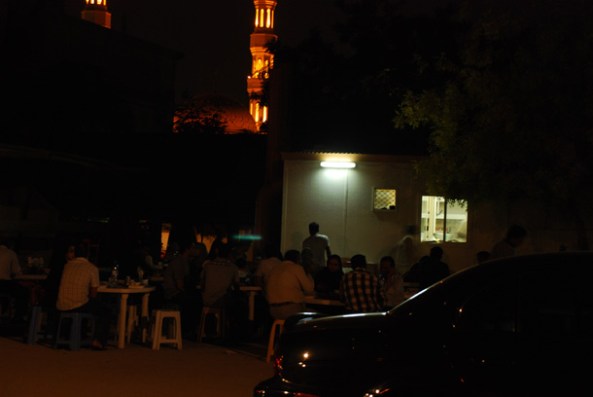
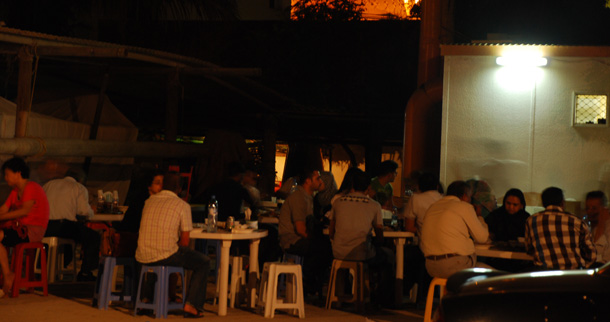
The seating arrangement in Bu Qtair is basic – plastic dining tables and multi-coloured plastic tools (the later is an investment that the restaurant has done in recent years. No more investments please – the charm of the place would be gone completely!). There is a long queue while placing the order inside the tiny porta cabin which also holds the kitchen area. Once the order has been placed, there’s a long wait outside. As the number of people waiting outside, after having placed their orders (below right) increase, so do the number of cars that drive in and park by the pavement. The restaurant staff serves the waiting diners simultaneously while they attend to honking cars demanding their take-aways. It’s a manic rush but all’s well that ends well – everyone gets their right orders (no goof -ups there) and each person goes back a happy soul with an overfilled tummy!

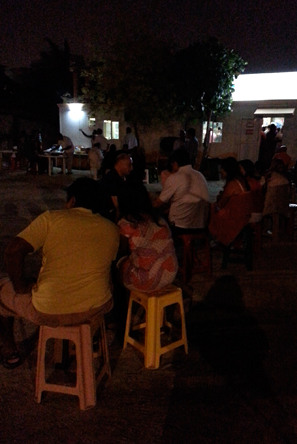
It’s all in the fish, the fresh fish, the deep fried fresh fish, the deep fried spicy fresh fish!
The menu is unwritten, and is flexible depending upon the catch of the day which is limited to mostly Sheri, Hamour (belonging to the Grouper family and very popular in the UAE. Dear restaurant, please note that Hamours belong to the ‘overfished’ category!), Pomfret, Snapper and Shrimps. In colder months, King Fish is sometimes included in the menu. My favourite in Bu Qtair, are the fried Shrimps (below). Marinated in Salt, Turmeric and a *secret* ingredient which Moosa, the owner is hesitant to share, these insanely tasty fried Shrimps have to be accompanied by a bowl of spicy Fish Curry prepared in the Malabari (Keralite) style with fresh Sardines and Coconut Milk and some soft Malabari Parathas (Indian flat breads fried in oil) to dip into the messy curry. Half a kg of fried Shrimp costs Dhs 75/-. The other fish ranges between Dhs 35/- Dhs 80/-, depending upon the size of the fish and the type of fish. Sheris would be the cheapest while the Pomfret or the Hamour can cost you a bit more. A bowl of Fish Curry comes at Dhs 5/- while a Paratha would cost a Dirham each. Water and soft drinks are the only beverages available here. Though no one is complaining, but I definitely can hear silent whispers from the diners, almost every time I visit Bu Qtair – if only this place was licensed and served some Chilled Beer!
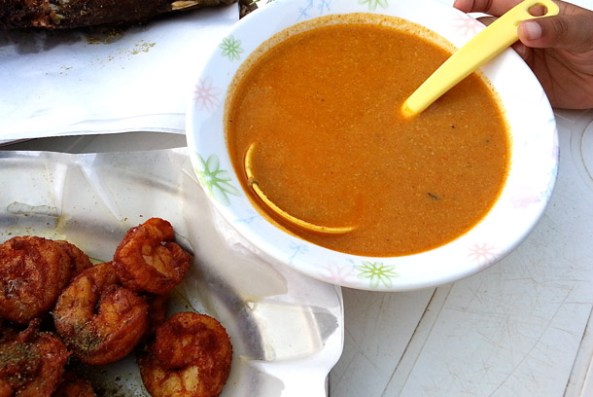
1/2 kg of Shrimps, 2 medium sized Sheris, Parathas, a bowl of Fish Gravy cost us Dhs 155/- and fed 3 hungry adults and 2 equally hungry kids sumptuously. While the above images show the food that arrived to our table, the following is a behind the scene image of the marinated Shrimps before they went into the frying pan. 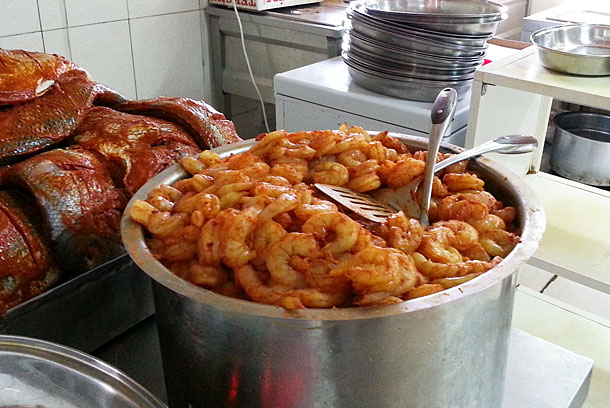
◊—————————————————————◊
Bu Qtair Fish Restaurant
Fresh Seafood Budget Restaurant; Out door sitting and Take away
Telephone: 055 7052130; Opening hours: Saturday till Thursday – 12:00pm – 2:30 pm and 6:30pm – 11:30pm, Fridays open after afternoon prayers.
Location: Umm Suquim 2 (Jumeirah 5). As you are heading towards the Burj Al Arab from Union House, take the right exit at Street 35a, off the glamorous Beach Road. Look out for an Emarat Petrol Station before the Umm Sequim Park which houses a small McDonald’s. Once on Street 35a, approach left when you hit Street 2b and you’ll find the Bu Qtair amidst the boat sheds.
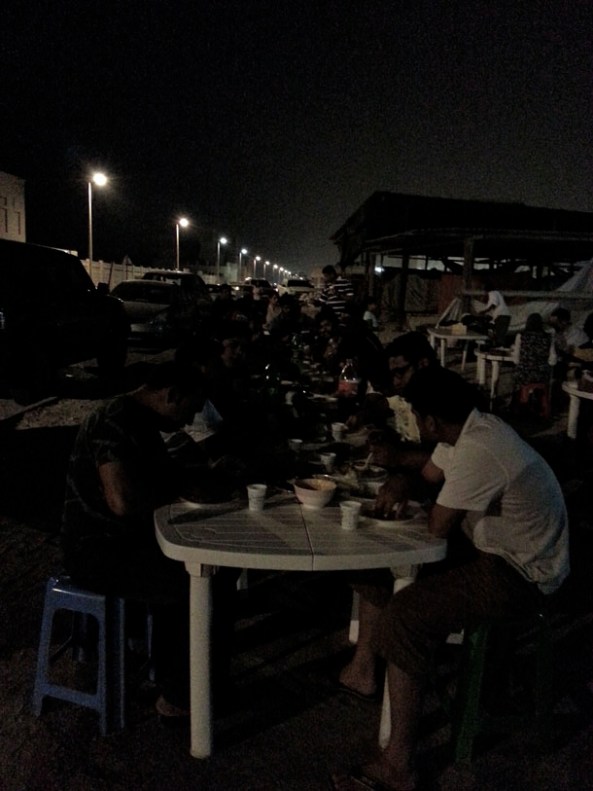
Once the evening sets in, the place becomes so crowded that it’s impossible to speak to Moosa, the Arbab – the owner, or any other staff, to the point that one starts to feel that the staff is really rude. But hang on there for some time and you’ll realise that they are busy, working in a fairly synchronized rhythm to tackle the crowd that pours in. Everybody is attended to. The place has garnered a lot of media attention lately and this shack-eatout has become a hot place to visit. My estimate is, there would be 100 diners on a regular weekday. Moosa deserves all the attention. He’s been hanging on here for the last 23 years. While in the initial days, he would be buying in from the local fishermen who would anchor their fishing boats by his shack, now he resorts to a regular supply from bigger fish markets. He also has more staff who work for him. They speak in broken English – ‘Enjoy your food Madam’ and ‘It’s my pleasure’. Well Moosa, it’s been my pleasure writing about you. I should have done this long back. Sometimes one remembers to give attention to strangers and acquaintances while friends and family remain unattended. It happens when we are in a trance and forget to look inwards. Thankfully, I’ve shaken myself off that trance.
Unblogging it all… Ishita
Disclaimer: After I came out with this post, Emirates 24/7 has published this video and the post on their website. Please note that this post is not a sponsored post and the subject, story, opinions and views stated here are my own and are independent. While you enjoy reading the posts with lot of visuals, please do not use any material from this post. You can catch my daily travel and food journey on Instagram, Facebook and Twitter
◊—————————————————————◊
Related articles from my blog
• A Connoisseur’s Guide To Eating Out In Dubai
• Masqouf in Bait Al Baghdadi | Tasting Iraq’s National Dish
• Arabian Pilgrimage Food Tour With Frying Pan Adventures
• The 7 Tastiest Fast Feasts Of Dubai | Introducing Chowzter to Dubai
Other Related article
• Where to take visitors to eat in Dubai – on a budget (mycustardpie.com)
• Bu Qtair Dubai (Pear tree Diaries)
• Dubai :: Bu Qtair: Fried fish worth waiting for (The World according to Mitzee Mee)
BE SOCIAL. SHARE THIS!

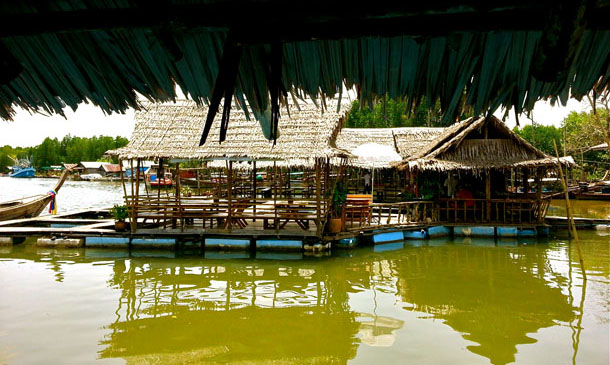
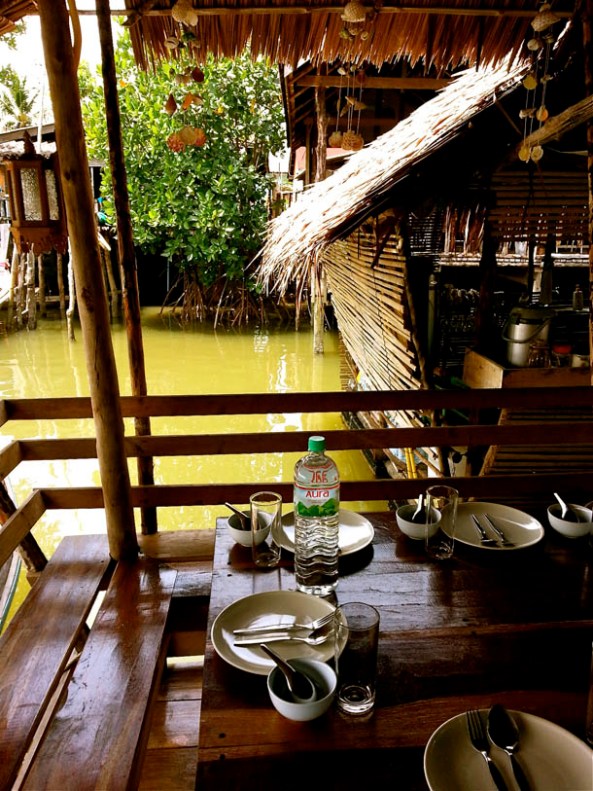
A few days spent in South Thailand and I feel that I’ve spent my entire lifetime there. That is how inspiring travelling can be. It can change moments, perspectives, individuals and lives. Co-living in the ecosystem and incorporating that in daily lives – that’s what the farmers or the fishermen of this island has done. They have embraced the environment they live in. And are proud to introduce their culture and lives to the tourists. Baan Ma-Yhing Restaurant, situated by the fish farms, on a canal shooting out of the Krabi river – where the fresh fish is caught and cooked and served – all in a span of 45 minutes – is one such fresh culinary experience not to be missed. I’ve ransacked it’s location on Google Map and have frantically searched the net for their website, if at all it exists. I genuinely feel that this small restaurant is worth more than just a visit. It might seem very complicated but in effect there’s only one main road running through the island and there are only a few restaurants located in the fishermen’s village along the canal district. The Google translator literally translates the restaurant’s website, hence please apply your own IQ while deciphering that translation! You might have to read some weird English as Home straight Ma (grandmother) our which probably means House (Baan) of the Grandmother (ma-Yhing). Or the tagline reads as Cages as other seafood which probably means freshly caught Seafood!
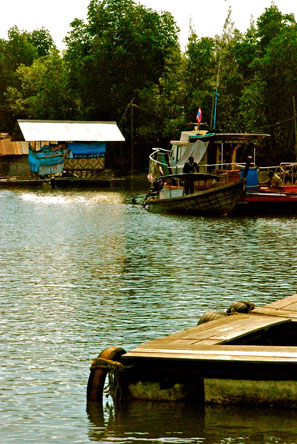
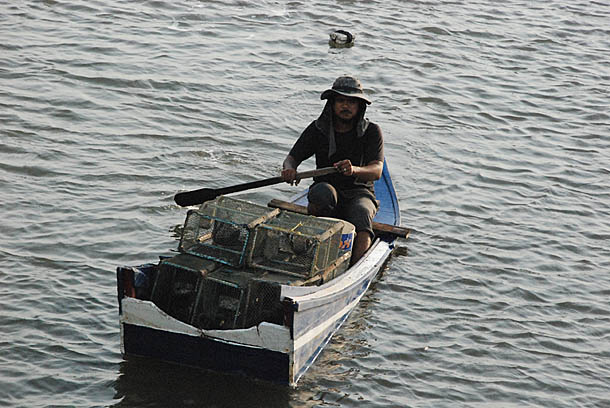
Koh Klang is a small fishing island on the Andaman Sea and is covered by thousands of acres of mangrove forest. Koh means island, Klang means middle and Koh Klang is situated in the middle, just at the mouth of the Krabi river as it opens up into the Andaman Seas. Located in the Krabi province on the west coast of southern Thailand, this is an idyllic island with smiling locals overwhelming the tourists in an inspirational way. The Baan Ma-Yhing restaurant is located in the fishermen’s village on in the historic canal district. The restaurants here have their own fish farms located at a distance and barricaded mini farms on the canal waters (fifth image below). Fish is caught fresh. And cooked. The fisherman below catches the crab which is served minutes later on to our table as Crab stirred in Oregano!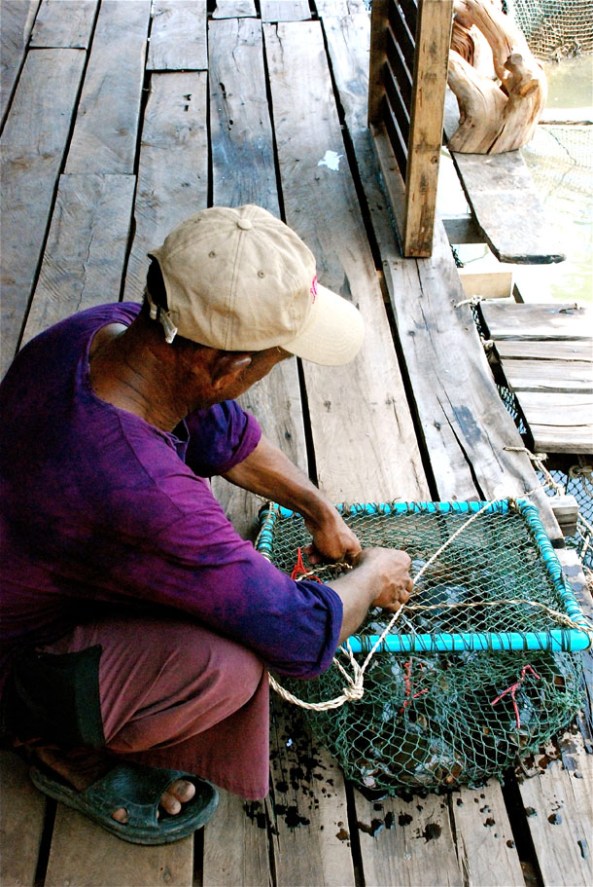



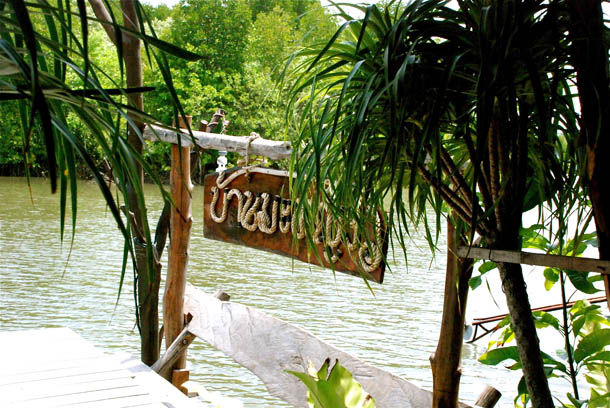
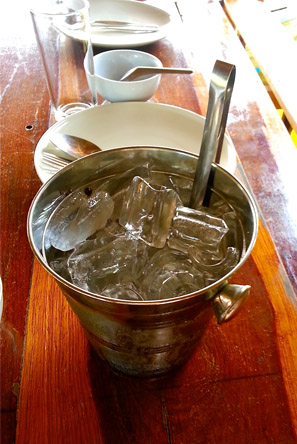
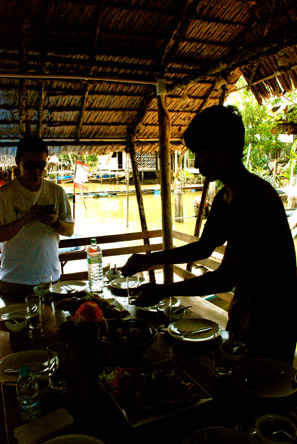
Baan Ma-Yhing written by curling a rope on a wooden plank, hangs by the canal. This is also the same place from where we set off for Kayaking the next day. Humidity soars on the day we visit the restaurant. The morning had been jampacked with a learning on Shallow water fishing and Shell fish hunting – just a few of the activities that we have partaken in during our stay in Koh Klang. My earlier post recalls the island life of Koh Klang, pictorially {Koh Klang in Krabi, Thailand | A Photo Essay of An Island Life}. As we settle down in the wooden benches, the restaurant staff promptly brings in the portable standing fan and focuses it towards us. Ice buckets reach the table. This is a major subject of controversy – to have them or not to have them? As mentioned in an earlier post, many suggest that one should only take ice if it is one of the round, cylinder type cubes that has a hole in them as these type of ice cubes are supposedly commercially produced in hygienic conditions. Whatever it is, I think it is the heat and the humidity that makes one forget the logistics and ask for ice, whether it’s in a restaurant or while ordering a drink off a street vendor. Ao nam keng?/Do you want ice? I don’t remember saying Mai ao nam keng/No, I don’t in my entire stay in Thailand. It only takes a while before you get addicted to the ice itself!


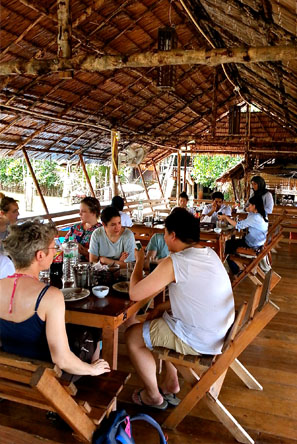
The Thai way of eating – all together, at the same time!
As we spend more and more time in Thailand, I realise – whether it’s a small restaurant or a big one, all the food that has been ordered is served at the same time to all tables. There’s no concept of Starters or Main course. And cooking starts once the guests pour into the restaurant so that food can be served freshly cooked. But not necessarily hot. This is because they’ll cook everything and serve only when the last dish has been cooked. The Thai people like to mix their food while they eat. One spoon of soup probably gets mixed up with a munch of crunchy starters, only to be wrapped up in noodles and then gets slurped in. I also asked the my co-diners, specially the locals who were sitting at the same table as me, whether it is the usual thing to cook so many items for regular meals at home. It seems that the food we ate is not spectacularly different from what they ate at home. The more dishes on the table, the happier they are. And the number of dishes increase as the number of family members increase. As I came back to Baan Ma-Yhing in the evening for a cooking class with Bao, the cook whose mum owns the restaurant, I realised that Thai cooking is elaborate in the numbers of spices and herbs that go into the dishes. But the cooking as such takes very little time (provided all the pastes have already been made before and the herbs and the vegetables have been chopped).
My first Thai food experience in Thailand had been brilliant {Ruen Mai Restaurant In Krabi | A Tantalising First Experience Of Thai Food {In Thailand, That is!}. A few days and some of these fishes became very familiar to me. I also feel in love with the above – the Clam soup with Lemongrass or the Hoi Talab Lai Tom Takrai. I’ve fallen in love with this dish – completely and absolutely. This is a very light clear broth with the clams boiled in. The strong flavour of ginger and lemongrass is very comforting. Even in Baan Ma-Yhing restaurant, the spread was very extensive. And I definitely got used to the Southern Thai style of cooking.
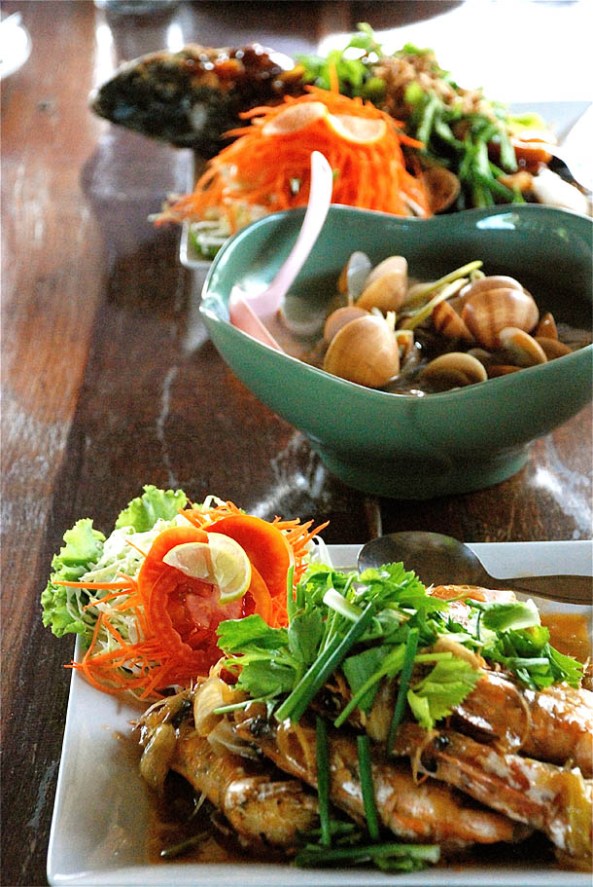
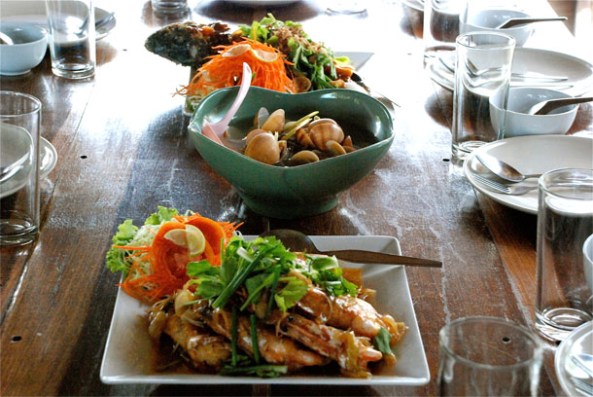

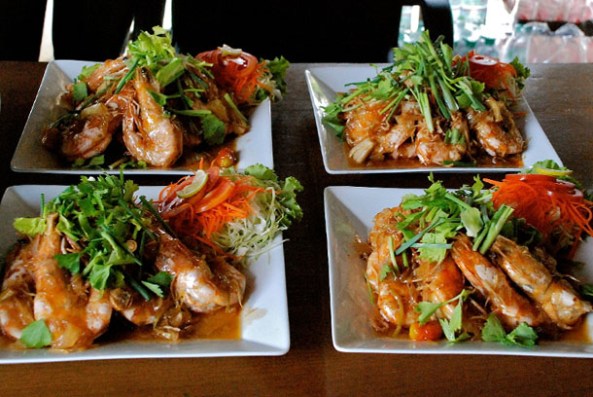
Goong Makham: Prawns in Tamarind Sauce (above and below) – this is also another dish that I was eating for the second time and I did come across many times in this trip and yes, you guessed it right – I ended up falling in love with. This is an easy preparation (yes, I’ve made this at home post-Thailand). Palm sugar is added into a wok over a low heat and stirred continuously until the palm sugar starts to melt and turn a little brown. Tamarind juice, fish sauce and pepper is added and stirred in for a few minutes until the sauce starts to thicken. Finally, the prawns are added and simmered for about 2 minutes and served with a garnish of fried onions and garlic… such a simple but tasty recipe that can be easily recreated at home.


Pla Kao Rad Prik: Grouper topped with Chilli (above)… I learnt a variation of the same dish but made with the Baramundi later in the evening. These fish were also caught fresh infront of us before they were plopped into the pan. Another dish that was served to us was the Pla Krapong Nung Manao or the Snapper steamed with Lemon. This dish looks plain – the steamed fish but the sauce makes the taste buds go ballistic. It’s made with chopped green and red chillies only. This is really really hot! Bao, the cook has trained under a Chef working in one of the bigger hotel chains. He’s got a penchant for stylish presentation (as you can make out from the pictures – this is not a huge restaurant but the presentation is sophisticated and very stylish). The Crab stirred in Oregano (below) is his creation. Poo Pad Oregano, as is called, is not like the Singaporean Pepper crab though it looks very similar. The strong taste here comes purely from the Oregano. 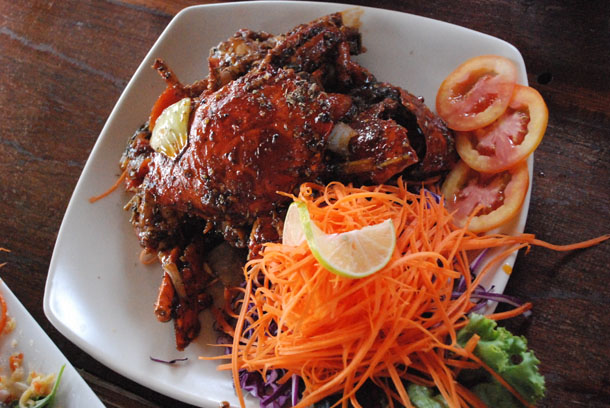

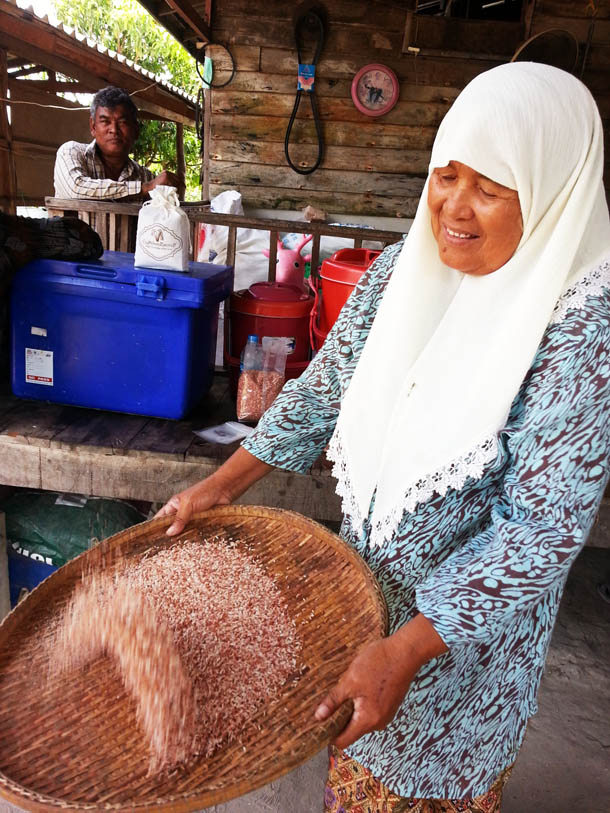
Sangyod Rice: Most of the population in the island are engaged in either coastal fishing or agriculture, specially in growing the organic Sang Yot or Sangyod rice. Originally growing in Pattalung, now there are only two places in Thailand where the Sangyod rice is produced and these are Koh Klang and Pattalung. The canals on the island of Koh Klang make it ideal for rice cultivation. Sangyod Rice is a purple coloured, high quality, fragrant organic rice, having a very high fibre content. Traditionally, Sangyod rice used to be cooked during special occasions or to usher in important guests. A bit of pounding (indigenous milling) leave us drained while the women who are engaged here, do such arduous pounding throughout the day – all with a pinch of smile! We were served Sangyod rice in one of our lunches (pic further down) – it tastes a bit salty because of the salt water in which the rice farms are sometimes submerged in. Do hop into my earlier post to see us toiling in the Rice farms (over dramatic, I know. But whatever sells!).
As in the Ruen Mai restaurant, here too the desserts consisted of only fresh fruits – mostly Watermelons and Pineapples. Delicious, fresh, chilled and generous amounts of these sliced fruits. Actually, It in Ruen Mai that we tasted a few more fruits like red Papaya, Mangoes and Wood Apple.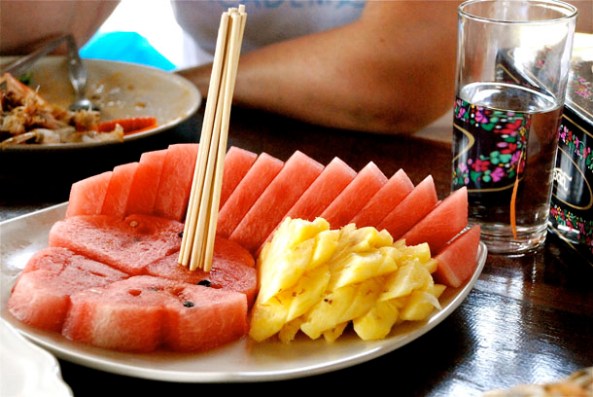
◊—————————————————————◊
Baan Ma-Yhing Restaurant
Seafood restaurant located in the fishermen’s village; Practices Halal
Location: 10 Moo 1, Klong Muang Krabi 81000, Thailand; Co-ordinates on Google map (below): 8.056278,98.932807; Email: Bdml111222@gmail.com
If you visit their Website, please remember that the Google translator literally translates the Thai into English! More on Koh Klang island from the web.
◊—————————————————————◊
Thai cooking lesson with Bao – fresh fish from the net to the frying pan!

Bao, the cook or the Chef of Baan Ma-Yhing became our tutor when Debbie (my #FoodieOnTour partner in this Thailand Academy trip and a fellow Fooderati blogger) and I came back later in the evening for our Thai cooking lesson. The lessons learnt:
1) The Red Thai Curry in Southern Thai Cuisine is not red in colour: This was one revelation that practically shocked me initially. The dishes in Southern Thailand had thick curries (mostly) that are poured on the top. Whole Turmeric or Kamin was grounded along with red chillies, thereby diluting the red colour of the Thai red curry. A bit of study into the Southern Thai curry reveals that there is a prevalence of coconut milk and fresh turmeric in most dishes here, as compared to other regions.
2) Oil is not put into the Wok first to make the Thai Curry: The curry is made as the Thai pastes are mixed into the Coconut milk as it boils in the Wok while the Chilli Oil (below right) is poured into it once the paste cooks itself in the Curry and the Curry itself has been thickened.

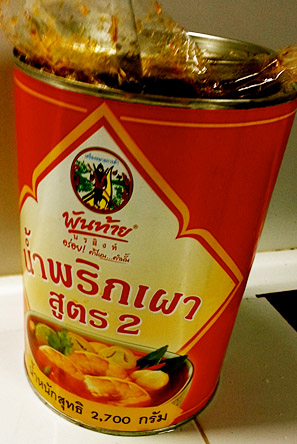


Bao’s sister, beautiful wife Sun (her name that is!), his 8 year old daughter – everybody joins in the cooking. The Baramundi fish that will be cooked is brought into the kitchen sink – alive! Before it goes into the Wok (below). Bao pours more than half litre of Palm Oil into the Wok for deep frying the Baramundi. What impresses us is that the oil left in the Wok would be recycled into lighting the stove. The Baramundi is deep fried and the Red Thai Curry that Bao’s wife makes (above left) is pored on top of the fried fish. Bao fine-tunes it again with pouring some thickened Coconut milk (third pic below).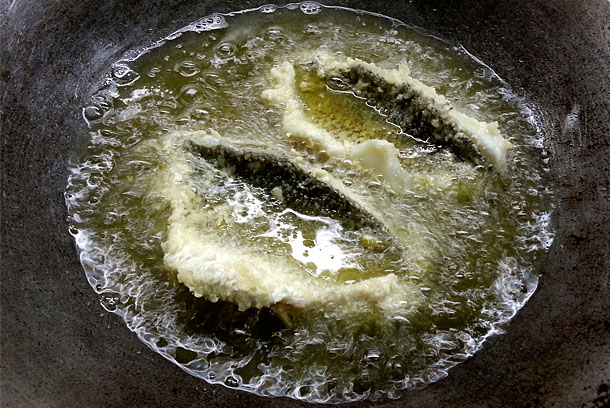
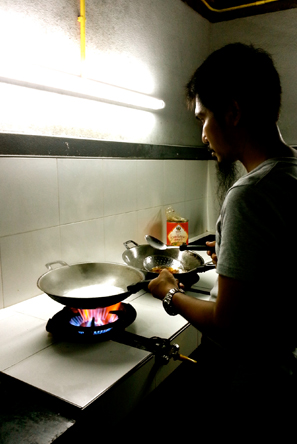
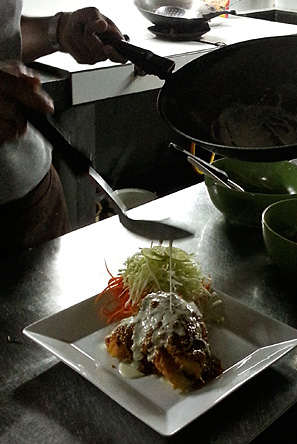

Chopping the salad for each dish takes some more time. As I’ve told you that Bao loves gorgeous presentation of food. He makes a Clam Salad with Tiger Prawns. He just puts the clams onto the pan and adds chopped fresh lemongrass, garlic and butter onto each clam. The clam cooks by itself, each clam carefully holding the delicious juice that come out of the mussels (below). Tiger Prawns are just placed on heated pans and is covered with a Wok turned upside down. No oil, no salt – the prawns gets cooked on its own. Bao presents them with tomatoes, chopped coriander leaves and the mussels, accompanied by a spicy dip. 

Another thing that he cooks is the Prawn cakes – very different from the ones we have tasted. He chops fresh chicken and prawns (uncooked) and minces them in the food processor. He adds chopped garlic, onions, lemongrass, spring onions and pepper into the mince. He rolls them into large pattice and puts a piece of Salted Egg Yolk (Pla Meuk Pad Kai Kem – salting eggs in brine is a way of preserving eggs in Thailand. The weather can be very hot and eggs could only be kept for a short time unless salted. As with many cultures, the Thai’s acquired a taste for the salted product, and created recipes around it {More here…} in each pattice and fries them slightly. Then he takes them out of the oil and cuts them into two and deep fries the pattice halves in oil. 
◊—————————————————————◊
Baramundi in Thai Red Curry
Category – Fish/Seafood; Cuisine type – Southern Thai
Following are the characteristics of all recipes doling out of our little hands, big hearth –
♥ Easy to cook
♥ Regular canned products off the shelf may be used (However, we advocate using fresh products)
♥ Goes well both as a regular or party dish
♥ Children can easily help in making the dish (My two little sous-chéfs are aged 8 and 3 years 4 years)
♥ And lastly, guaranteed to be tasty!
For the printable recipe →
Serves 4 persons
Preparation time – 45 mins maximum (Cooking time – 30min; Remaining time is for the preparation)
Ingredients
Barramundi fillets or any whole fish – deep fried in oil (Bao didn’t put any salt but I did put a bit of salt to the fish when I made the same recipe at home)
White Oil – 2 cups, for frying the fish
Thai Red Curry – 1 cupCoconut Milk – 1/2 cup, thickened to pour over the top
Basil Leaves – 20 pieces, deep fried in White Oil
Lemongrass – finely chopped, for garnish
Thai Kaffir Lime Leaves – for garnish
• Once the fish is fried, the Thai Red Curry is poured on top of it and the thickened Coconut Milk is added on it. It’s served with the fried Basil leaves on the sides and garnished with Kaffir Lime and chopped Lemongrass.
Thai Red Curry Paste or the Kaeng Phet
Ingredients
Shallot – 1 medium, chopped
Garlic – 4 cloves
Galangal or Thai Ginger – 1 inch in size, skin peeled
Red Chillies – 10 medium sized
Lemongrass – 1 fresh stalk, chopped finely
Kamin or Whole Turmeric – 1 inch in size, skin peeled
White Pepper – 10 whole pieces
Nam Pla or Fish Sauce – 2 tbsp (For vegetarians, you could substitute the Fish Sauce and the Shrimp Paste with 2 tbsp of dark Soy Sauce)
Kapi or Shrimp paste – 1 tbsp*
Thai Red Chilies – to taste (optional)
Kaffir Lime Leaves – 4 to 5 or Lime peel
Sugar – 1tsp
Method of Preparation
Grind all the ingredients with a pestle and mortar or in a food processor. Add 2 tbsp of Coconut Milk in order to loosen the paste, if required.
*(In Thailand Kapi or the Shrimp Paste is an essential ingredient and is used in Thai dips, sauces, curries and paste. Very popular in Thailand is Nam Phrik Kapi, a spicy condiment made with fresh shrimp paste and most often eaten together with fried Pla Thu/Short mackerel and fried, steamed or raw vegetables. In Southern Thailand there are three types of shrimp paste: one made only from shrimp, one containing a mixture of shrimp and fish ingredients, and another paste that is sweet. More here)
Though Banu didn’t use, but many standard Thai Red curry pastes call in for Kaffir lime or Thai lime peel, Coriander root, Coriander seeds, Cumin seeds along with additives such as Thai eggplant, Bamboo shoots, Bai horapha or Thai basil leaves. Also, there are lot of regional differences in Thai cooking. Whereas in the North, in the Chian Mai region they don’t use ground Turmeric in the Red Curry, in South Thailand, whole Turmeric is ground along with the red Chillies.
◊—————————————————————◊
Islanda Eco Village Resort
Thai Village styled Eco Resort; On Koh Klang, Krabi
Islanda Eco Village Resort is an eco-resort, with the accommodation originally styled after Thai village huts (conical structures) that wouldn’t require any air conditioning. Submerged mangroves, loud chirping of birds, the lazy sunset over the Andaman seas and the water seeping through the fishing traps and bamboo fences into the resort grounds – the resort blends into the entire island, which practices sustainable tourism. In the recent years, we have been trying to travel responsibly and checking into the Islanda Eco Village Resort just adds to the gradually growing list of the Eco Resorts that we’ve visited so far. All fresh produce that is required in the Resort’s kitchen, is bought from the local markets on the island, (a tick mark on my current favourite topic of Locavorism) and fish is brought from the local fishermen. This is the only resort in the island and it completely blends into the surrounding environment without disrupting the island’s unique eco-system.
Tel No: 083-636 7887; Location: Moo 3 T. Klong Pra-Song (Koh Klang) A. Maung Krabi, Nong Thale, Mueang Krabi, Krabi 81000, Thailand
Islanda Eco Village Resort: Website; Facebook Page; Instagram
◊—————————————————————◊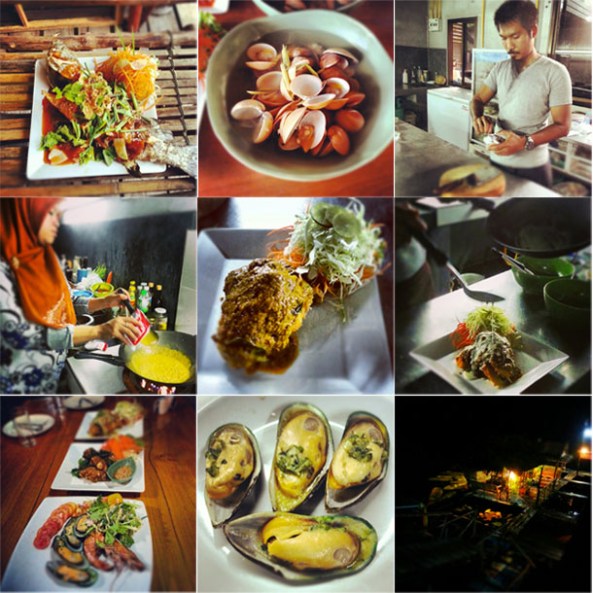
Debbie has written beautifully about our Koh Klang island experience. All throughout our trip we realised how much of a social traveller we had become. I had to Tweet, Instagram (above) and post on my Facebook Page and although I was travelling without my family leaving behind the Z-Sisters, I was not travelling alone. I was constantly in touch with my readers and friends through LIVE interaction over social media. This perhaps is the new phenomenon in travelling as is evident by the super amazing travel series of the two Emirati brothers in the Peeta Planet. I love these two guys. They are dare devils and hilarious and are out to something that no one has done – see the world the way their followers want them to see. Although my travel decisions might not be dependent on those who are following me on social media, but I have been sharing my stories and taking many cues from suggestions left behind. I started blogging because I wanted to share my stories. While previously I could share my travel and culinary stories only when I blogged about them, now I share them LIVE while write my blogposts in detail much later. What do you have to say about this kind of social travelling? Would you rather make your own travel plans or will you fly to a place on the basis of a comment left on your Social media page?
Unblogging it all… Ishita
Disclaimer: The Thailand Academy trip was an invite from the Tourism Authorities of Thailand Middle East and Aviareps Group. However, the opinions stated here are my own and are independent. I do hope you enjoy reading the posts with lot of visuals. Please do not use any material from this post. You can see more pictures of my travel and food journey here.
◊—————————————————————◊
My other Thailand posts:
- Ruen Mai Restaurant In Krabi | A Tantalising First Experience Of Thai Food {In Thailand, That is!}
- Koh Klang in Krabi, Thailand | A Photo Essay of An Island Life
Other posts on my Oriental Journey:
- Singapore At Night
- Eating Out Is A National Pastime | Singapore
- Bikol Express & The Romanticism Of The Mayon Volcano
- Pancit – Palabok, Bihon, Canton | On A Filipino Food Trail
Posts from other members who were in the trip:
- Ein Dorf am Meer: Islanda Eco Village Resort, Krabi, Thailand «Escribo»
- Amazing Thailand – Dubai to Koh Klang – a Krabi experience «coffeecakesandrunning.me»
- Koh Klang Local Village Life «coffeecakesandrunning.me»
- Kayaking & Spa Day in Krabi «coffeecakesandrunning.me»
BE SOCIAL. SHARE THIS!

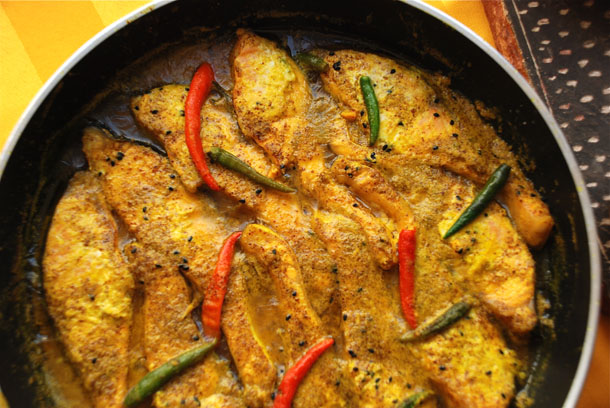
Shorshe Bata Maach – Mustard Salmon In This Case | A Detour From Thailand To Wish Shubho Noboborsho!
All men are equal before fish ~ Herbert Hoover
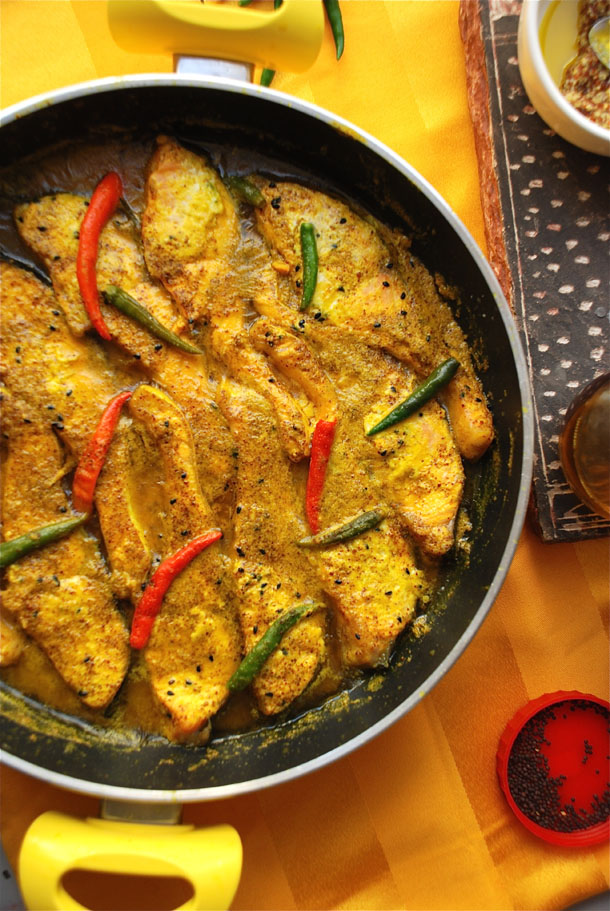
This post probably should have happened a long time ago. The Shorshe Bata Maach or the Bengali Mustard Fish is the most sought after dish in a Bengali’s life (sounds cliched? But its as cliched as taking a Kolkata selfie with Howrah Bridge at the backdrop – or as inevitable as having the Eiffel Tower in Paris). It is also the most searched term in my blog. A Bengali blogger at the end of the day has to blog on Maach/Fish, Shorshe Bata/Mustard Paste and Rôshogolla/Rasgulla. On Rôshogolla, I already have. On Shorshe Bata, I haven’t. I have been feeling a bit nervous lately with the invisible ostracisation (from the Bengali community) notice hanging over my head. So, I take the opportunity of the Noboborsho, first day of the Bengali New Year, to write my long overdue post on Shorshe Bata Maach. This is a slight detour on my blogging atlas – I’ve been hovering in Thailand lately with my last few posts being:
• Koh Klang in Krabi, Thailand | A Photo Essay of An Island Life
• Ruen Mai Restaurant In Krabi | A Tantalising First Experience Of Thai Food {In Thailand, That is!}
Before I write my third post on the Fishermen’s village in Thailand and the floating restaurant where I paid another visit to learn Thai cooking from Bao, the cook at the restaurant and before I share more fish recipes… I thought my Bengali Macher post has to come through! [Updating in March 2018… by this time there’s also a fishy post by the name of A-Z of Bengali Fish]
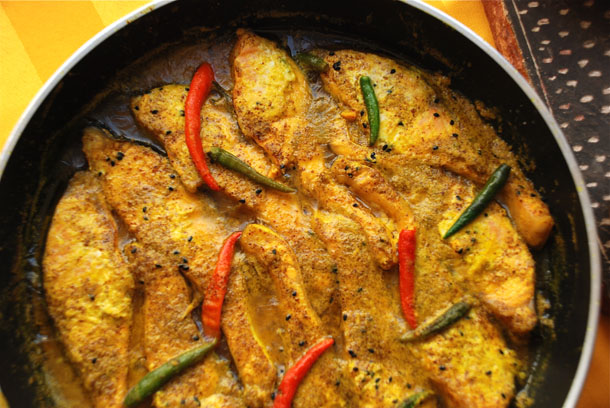
I have tick marked all the right check boxes to prove my Bengali genes by writing an ode to Luchi in the lifestyle Gourmet magazine {Luchi Featured In Ahlan! Gourmet | My Ode To Phulko Luchi!}, Mishti Doi in BBC GoodFood Middle East {Bhapa Mishti Doi and A Food Safari of Bengal }, I have even made Rôshogolla for the local television channel Dubai One for a special episode on Ramadan {Rasgulla Macapuno On TV & Shubho Bijoya to all!} and prepared the Bengali Aam Pana for another channel {UAE National Day… Aam Pana | My Dubai My City}, Rôshogolla in {Rôshogolla (রসগোল্লা) | Bengali’s Own Sweet} and some more sweets {Bengali Sweets That Came By Parcel!} … I still feel incomplete because I haven’t written on Shorshe Bata Maach!
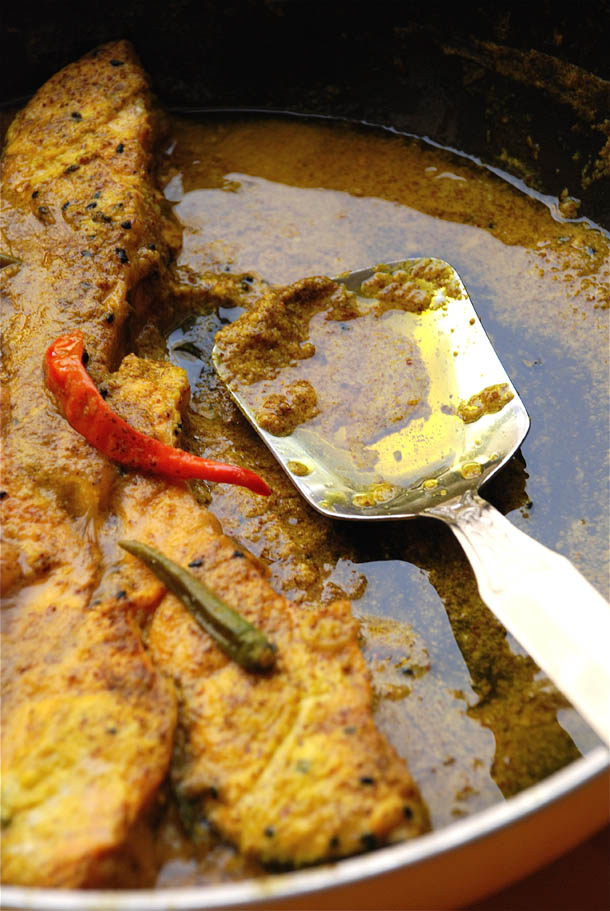
Probably every Bong is born into this world expected how to cook Shorshe Bata or how to categorise a dish cooked in Shorshe Bata as oshadharaon/fabulous or joghyono/horrible. Taking cue from a Bengali phrase, this post is not about Mayer kaache Maashir golpo bola (which loosely will translate into… saying things to a person that are already known to him!). What I mean to say is that… this is what I do when I cook Shorshe Bata for our non-Bengali friends or non-Indian friends. The taste is traditionally Bengali, the cooking technique mostly not. And most of the times, the fish too is not what a traditional preparation would typically expect – Rui or Katla. My freezer doesn’t regularly stock Bengali fish – the frozen Bengali fish bought from the Bangladeshi markets, until and unless our parents are visiting us. Or, some fussy relative visits us from back home who cannot digest his/her meal without a Bengali fish and that too cooked in a typical Bengali jhol or jhal (below)!
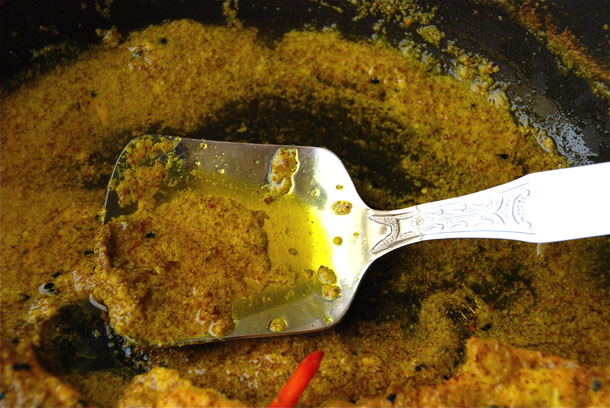
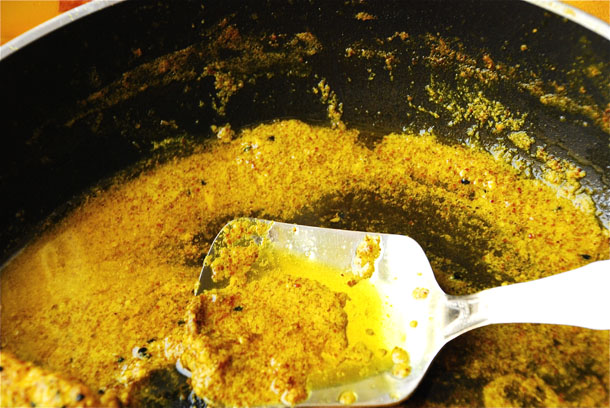
One of the things that cannot be substituted is naturally, Shorsher Tel or the Mustard Oil. The gravy (above) that gathers once cooked in Mustard Oil is, then Bong certified! Getting the right Mustard Oil can be sometimes tricky on foreign shores. The Asian supermarkets do stock different types of Mustard Oil. Here in Dubai, even regular supermarkets like Spinneys, Choitram’s, Carrefour or Lulu Hypermarkets stock Mustard Oil but a few of the brands are taste very bland and flat. A small study into Mustard Oil {here...} probably will help in choosing the right Mustard Oil. It has to be really pungent, must be very deep in colour and have a strong Mustard smell. I have been using a brand that is called PRO (probably there are more brands around, but this is readily available. I remember using another brand called Tez while we were in Frankfurt. I’ve found it in Dubai too, but which currently is unavailable). Do look out for this term ‘Kachi Ghani‘ where the term refers to cold press extraction process of Mustard Oil so that it may retain more oxidants and vitamins.

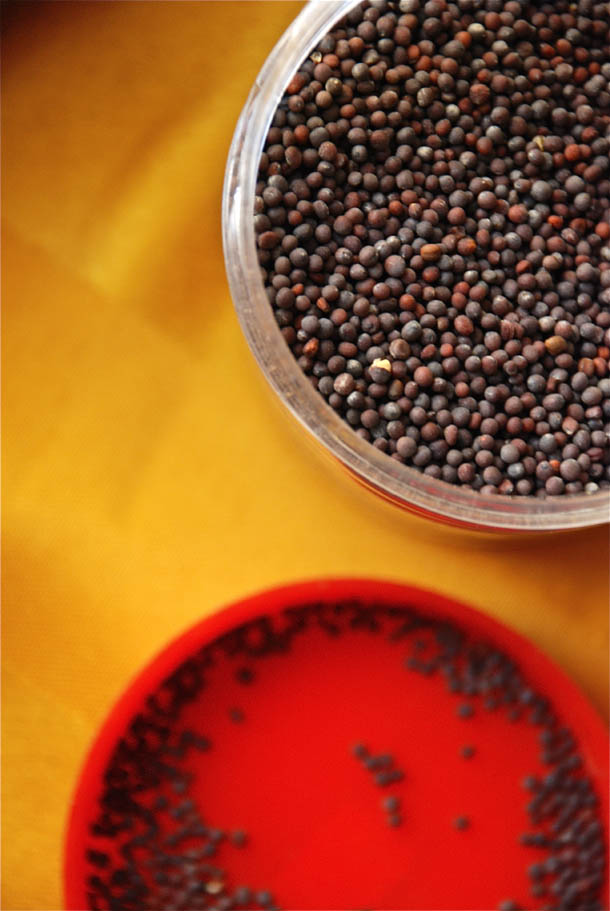
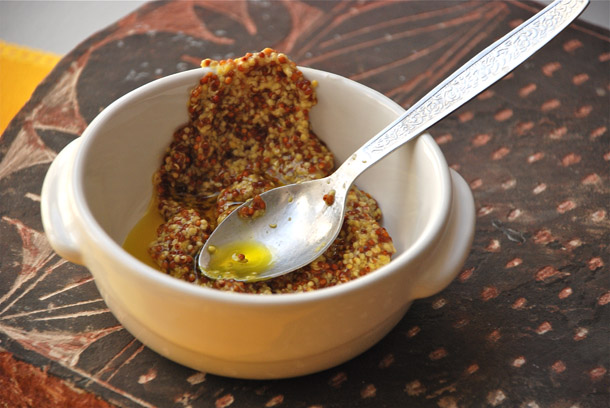
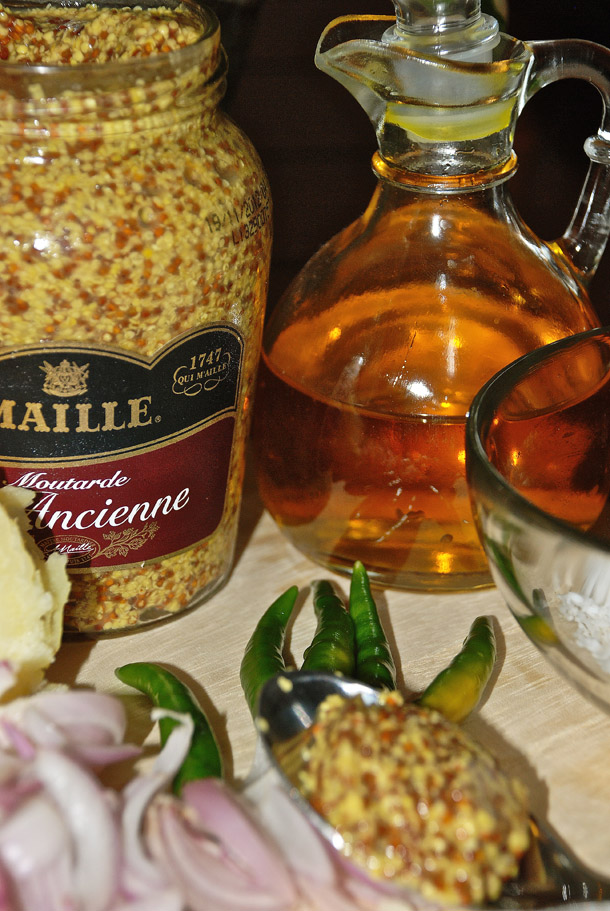
The second most important ingredient is Mustard Paste. Traditionally, Mustard Paste is made by grinding the brown Mustard Seeds (above) on a Sheel Nora, the traditional grinding stone used in Bengali kitchens but a look at my etched Sheel (below) will probably tell you that I’ve figured out other ways to get my Mustard Paste done! A modern day Coffee grinder works just as fine though my Mum and Mum-in-law wouldn’t agree to that. And if this is also a bit too much of a chore, I’ve experimented with a whole lot of bottled Mustard Pastes available in the supermarkets and have found my soul mate – the Mailler’s Moutarde D’Ancienne Mustard Paste (down below). You may probably stumble upon your own version but definitely do use a Mustard Paste which has these visible seeds in them and is not a smooth paste – in order to give the authentic Bong Shorshe Bata feeling. I’ve been also fine-tuning the Aloo Bhaate or the simple Mashed Potato with this Mustard paste {Mashed Potato Bengali Style/ Aloo Bhaaté} to make a gourmet presentation for my German friends who die for Kartoffel Purée!
Shorshe Baata Maach/Mustard Salmon
Category – Main Course; Cuisine type – Traditional Bengali
Ingredients
4 pieces big Salmon steaks, longitudinally cut into halves
2 tbsp mustard paste (brand – I use Mailler’s Moutarde D’Ancienne. Use less if you don’t like the pungent mustard paste but as I’ve mentioned before, definitely use a Mustard Paste which has these seeds and is not a smooth paste)
1 tsp turmeric
1 tsp red chilli powder
1/2 tsp black cumin seeds
1 tsp cumin powder – 1 tsp (my Mum-in-law’s secret tip, specially so if your are grinding mustard seeds to make a paste. this prevents the paste from tasting bitter)
3 tbsp mustard oil
1/2 cup grated coconut (optional)
4 pieces green chilies (slit them if you want them more spicy)
salt, as per taste
* If you make the mustard paste by grinding mustard seeds, the proportions are –
2 tbsp brown mustard seeds, grinded into a paste
Method
- Marinate the Salmon steaks with turmeric and mustard paste for half an hour.
- Pour 1 tsp of mustard oil in a wok, add black cumin seeds and let them splutter. Put them aside.
- In a large pan, put the marinated Salmon steaks. Add salt, red chilli Powder and 1/2 cup of water. Pour over the rest of the mustard oil. Cover the pan and let the fish cook in low seam (Make sure that the fish doesn’t stick to the pan when the gravy thickens and the fish gets cooked. You may have to add a bit of water depending upon how you like your gravy to be).
- Salmon has a lot of oil of it’s own and you’ll notice that a lot of oil releases eventually as the fish is slow cooked.
- Add the sliced green chillies, grated coconut and black cumin seeds.
- Let it cook for a while. Serve hot with white rice.
Some prefer their fish to be fried slightly. Whisked yogurt is also added to thicken the gravy. But we prefer it without the Yogurt as it tends to make the taste of the gravy go slightly sour. Also, I do not use grated coconut so that the preparation is light on Z-Sisters’ tummies. Although we like the gravy of our Shorshe Bata Maach to be a bit thick – what I’d describe as makha makha, I try to get the same by slow cooking cooking as much as possible so that the Masalas get cooked in the fish’s own oil and it separates out and floats dreamily on top!
Different takes on Mustard Fish
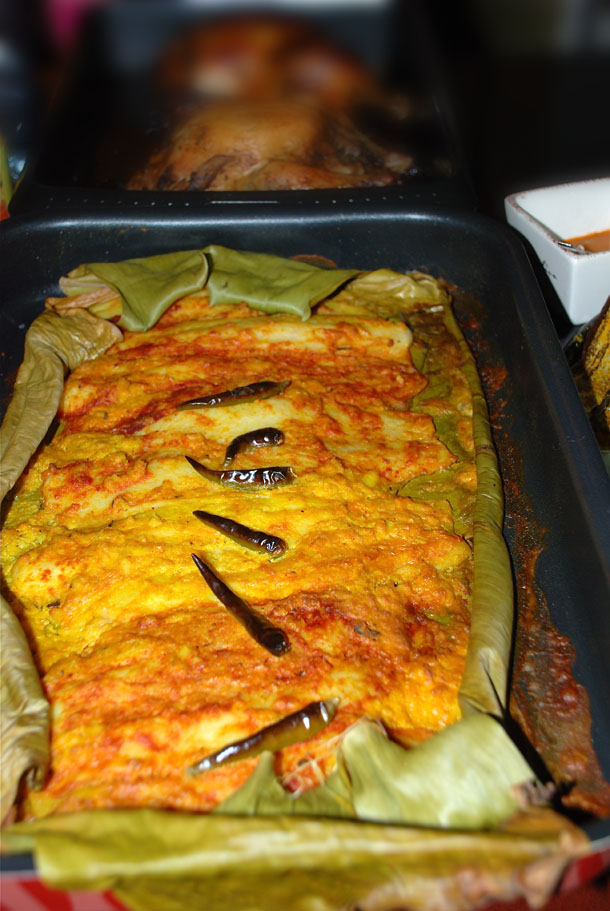
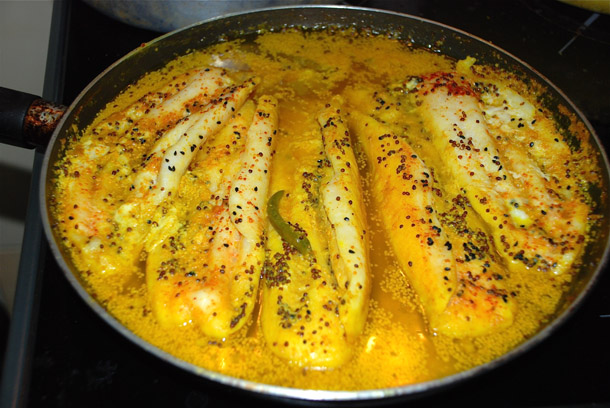
I sometimes grill the fish marinated with the same ingredients after wrapping the pieces in Banana leaf like a Paturi (above) or add more water to make a patla Jhal/light gravy (below) depending upon our mood! Shown below is Nile Perch cooked in the Bengali Mustard style, while the above shows Hummour fillets. We’ve stopped using Hammour completely as they are being ‘over-fished’. in the UAE waters.
Taking the fishy excerpt out of the Encyclopaedia that I’ve written on Traditional Bengali Cuisine:
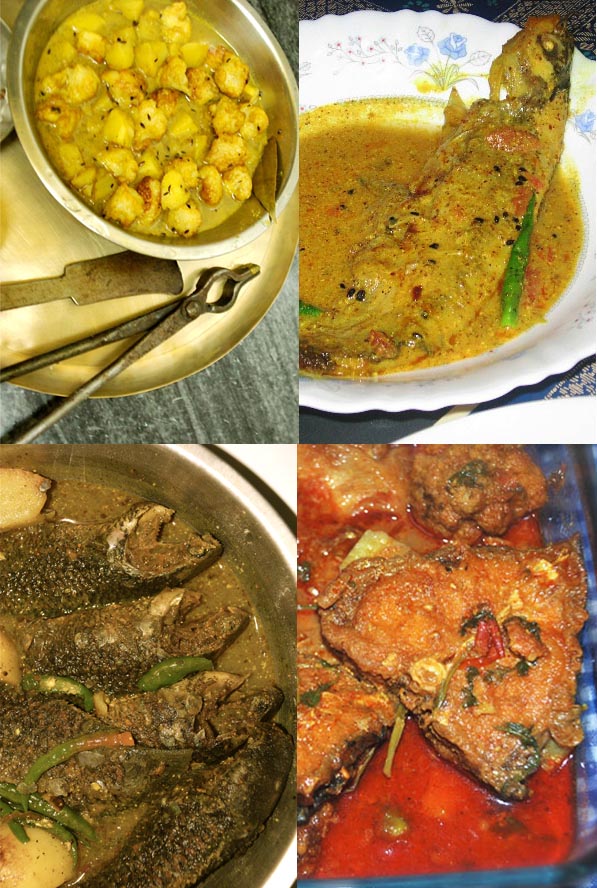
Fish is still cooked daily for main course in most traditional Bengali households. Bengali cuisine is famous for it’s Maacher Jhol or Maacher Jhaal. Maacher Jhol is where the gravy of the dish is made with ginger, turmeric, cumin powder, green chillis (the ingredients may vary from one region of Bengal to another) and Jhaal is where the gravy is hot and spicy and made with mustard paste, turmeric, chilli. Shorshe Maach/Mustard Fish is a very popular fish dish.
Shown below are various Bengali fish delicacies (starting from top left) – Chitol Maacher Muitha/Chitol Fish Dumpling Curry, Pabda Maacher Jhaal/Pabda Fish Spicy Curry, Tel Koi/Koi Fish in Oil, Rui Maacher Kalia/Rohu Fish Kalia. There are obviously many many more types of fish preparation – Doi Maach/Fish cooked in yoghurt, Bhapa Maach/Steamed Fish, Maacher Paturi/Fish marinated in different spices and wrapped in Banana leaves and then steamed.
Special mention has to be made to the Hilsa fish. The Hilsa or the Iilish Maach is synonymous with Bengal and is considered the ‘queen’ of all Bengali fish. Hilsa is also of political importance. It is a serious bone of contention between India and it’s neighbouring country Bangladesh. Which Hilsa is better – the Hilsa that is found in the Padma river in Bangladesh or the Ganga river, the last phase of which flows through Bengal before it merges into the sea-waters of Bay of Bengal?
The entire month of July and August, that is during the Monsoons, Kolkata is gripped by Hilsa fever. Hilsa festivals and special Hilsa lunches are organised in different clubs and hotels. Each conversation revolves around Hilsa. This year had been hard-hitting for the Hilsas with the prices shooting upto as high as Rs 1,500/kg (Dhs 100/- approximately!). The fish markets in Kolkata are in itself a subject for immense discussion – perhaps better kept for another future post. The bony Hilsa is a delicacy and is prepared traditionally in many ways – the Shorshe Baata/Mustard Hilsa, Kalo Jeerar Jhol/Black Cumin Curry, Bhapa/Steamed etc.
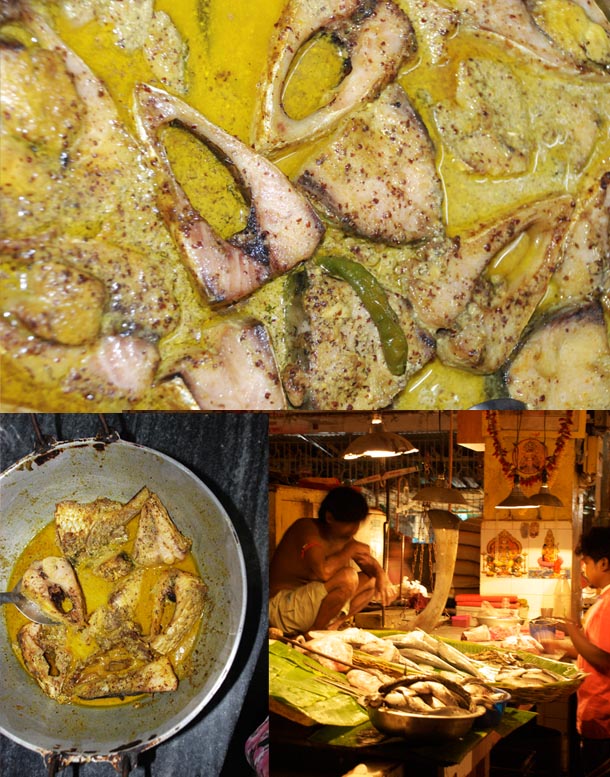
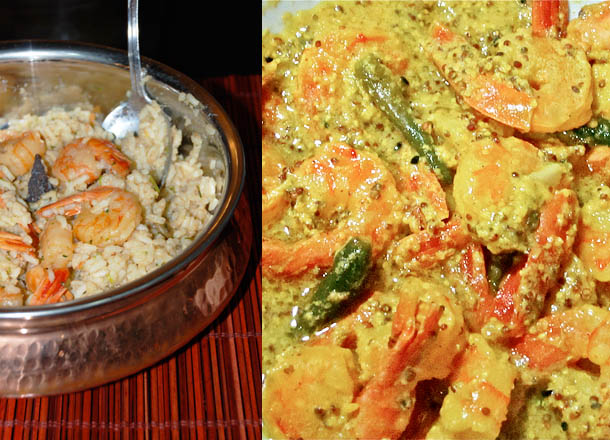
The discussion of Bengali fish can go on for ever. To cut it short we bring in the topic of Prawns. Bagda Chingri/Tiger Prawns and Golda Chingri/Indian Scampi go into making exquisite Bengali delicacies – Shorshe Chingri/Mustard Prawn (below right), Prawn Polao (below left), Narkel Chingri/Coconut Prawn and the famous Chingri Maacher Malaicurry/Prawn Curry where Coconut milk is used to make the gravy and is made on very special occasions.
Where will you get Bengali Fish in Dubai?
Many of us who have now made our homes on the shores beyond Bengal, have substituted various things to complement our Bengali Cooking. We have adapted ourselves and learnt to make good of what is available in the local markets. Most of the Bengali friends of my generation grew up studying for exams and not entering the kitchen that much. We ate what we were served by our Mums. It’s only when we began living our own lives that we started resorting to Bengali Food as our fall back comfort food. Binging on traditional Bengali meals when visiting our parents’ homes on holidays and waiting for someone more experienced in Bengali cooking – were the only ways to experience the meals that we grew up on.
Where will you get Bengali Fish? Most Bangladeshi markets stock frozen packets of the different fish that are used in Bengali cooking. So you’ll get Koi Fish frozen fresh, packed in Thailand and flown many miles to Bangladeshi markets world wide. While we didn’t find any Bangladeshi market in Colombo, Srilanka, our stay in Frankfurt wasn’t devoid of Bengali Fish! Our stint in Colombo, Frankfurt and Dubai has taught us that if one is looking for Bengali food products that are available outside India, they can only be found in Bangladeshi shops and Asian supermarkets selling Bangladeshi products.
In Dubai, a few Bengali fish is available in the supermarket Citi Mart near Imperial Suites Hotel, located on Rolla Road, Bur Dubai (Tel: 04-3523939). It’s quite likely that on Friday mornings you’ll bump into Bengalis who have come to do their fish-marketing. All varieties of Bengali Fish are available at the Bangladeshi markets in Backet in Sharjah. Rui Maach/Rohu fish is available at Lulu Supermarket in Al Barsha but the sizes of the fish being smaller than 1.5 kgs results in a bit if disappointment in taste.
The different fish that are available in the local supermarkets in Dubai that I often use to make traditional Bengali fish preparations… Lady fish fried in batter substitutes well as Topshe Maach Bhaja, Sultan Ibrahami cooked with Black Cumin Seeds substitutes well as Pabda Maacher Jhol, Cream Dori fillets wrapped in Banana Leaves substitutes well as Bhetki Maacher Paturi. Salmon steaks cooked in Mustard Paste and Mustard Oil substitutes, well sorry there can be no substitutes for this – the Hilsa! But it works quite well. Almost! Red Mullets can be cooked like Bhetki Maach and Needle fish can be fried crispy like Mourala Maach.
I’ve gathered the following Mustard fish recipes from my blogger friends (they are food bloggers first and then Bongs!). Some recipes use traditional Bengali fish, some don’t – as my friends too have learnt to cook with substitutes while living on foreign shores.
- Bhapa Shorshe Chingri: Steamed Prawns in Mustard, Poppy Seed Sauce from eCurry
- Shorshe Maach / Tilapia in Mustard Sauce – Guest Post for Vijitha @ Spices N Aroma from Sunshine and Smile
- Flounder in a Bengali Mustard Curry – Shorshe Flounder from Cooking in Westchester
- Macher Paturi/Parcels of mustard-coated fish steamed in banana leaves for a perfect evening from Quick Indian Cooking
- Bhapa Ilish — Steamed Hilsa from Bong Mom’s Cookbook
- Bata Mach Sarse Diye – Fish in Rich Mustard Gravy from Cook like a Bong
- Pomfret Shorsher Jhol or Pomfret in Mustard Curry from Finely Chopped
- Choto Maacher Jhaal from The Bengali Gourmet’s Blog
Food connects people, cultures, countries and minds. I cooked this dish for Dima, a food artisan herself. She came back from her culinary trip from Mauritius and told me that there’s a traditional Mauritian dish – the Vindaye, which is very similar to the Shorshe Bata Maach that I had cooked for her. Here’s her recipe to the Calamari & Shrimp Vindaye – Mauritius Specialty Mustard Curry.
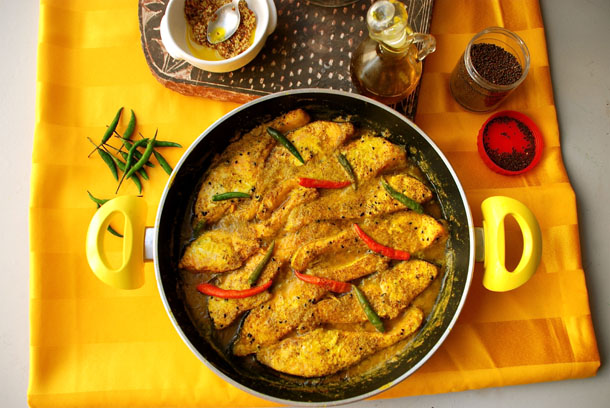
With this post I am a satisfied Bong soul, even though I had written so many Bengali posts previously, including my encyclopedic post on traditional Bengali cooking {Traditional Bengali Cuisine | In ‘Slight’ Details}. Shubho Noborsho to all my readers and here’s explaining the Bengali Mustard fish or the quintessentially Bengali preparation Shorshe Baata Maach for those not acquainted to Bengali cooking – this may not be the traditional Shorshe Bata Maach but it definitely has the same traditional taste, values and emotions!
Unblogging it all… Ishita
Disclaimer: This isn’t a sponsored post, nor are there any affiliated links. The subject, story, opinions and views stated here are my own. While you enjoy reading my posts with lot of visuals, please do not use any material from these posts. Do join me on my daily food and travel journey on Instagram, Facebook, Twitter and Pinterest.
BE SOCIAL. SHARE THIS!

The island of Koh Klang, approximately 814 kms away from Bangkok
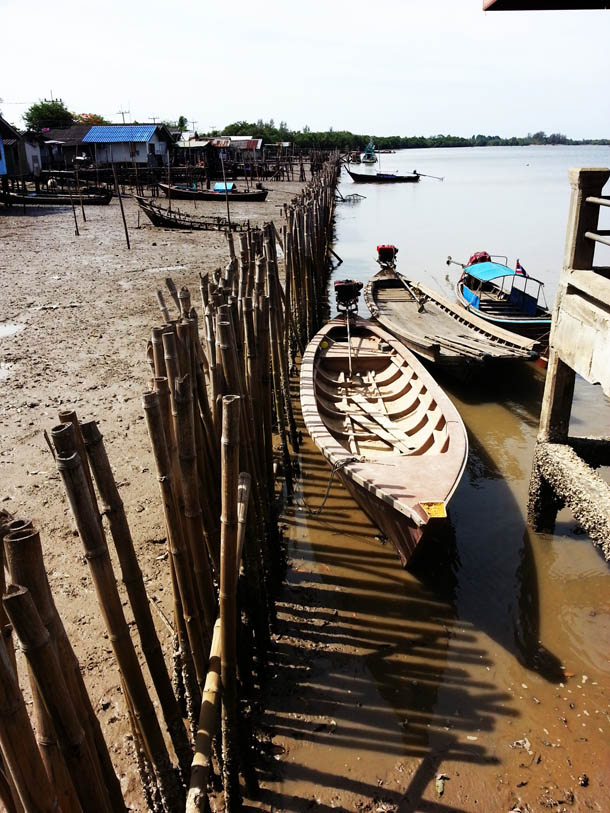
Koh Klang is a small fishing island on the Andaman Sea and is covered by thousands of acres of mangrove forest. Koh means island, Klang means middle and Koh Klang is situated in the middle, just at the mouth of the Krabi river as it opens up into the Andaman Seas. Located in the Krabi province on the west coast of southern Thailand, this is an idyllic island with smiling locals overwhelming the tourists in an inspirational way. The local people are involved in developing eco-tourism on the island with the help of the local government. Most of the population are Muslims and engaged in either coastal fishing or growing the organic Sang Yot rice or building the long tail boats – the Hua Tong boats. Koh Klang is in fact the birth place for Hua Tong boats, which are now recognized as the symbol of South of Thailand, specially Krabi. Totally car-free, Koh Klang can only be reached from Krabi town by crossing the Krabi river in long tail boats. We took a long tail boat from Tara pier on the Krabi mainland, to cross the Krabi river and reach the Tha-Lay pier in the island. The landscape along the banks change with the tides – the long tail boats stand stranded in the muddy swamp during the low tide and wait for the high tide to return (pictures below). The sea being the prinary resource here, these long tail boats are worshipped and bright flower garlands wrap the helms with love and respect. My photo essay of Koh Klang thus begins with the first point of entry to the island – the Tha-Lay Pier…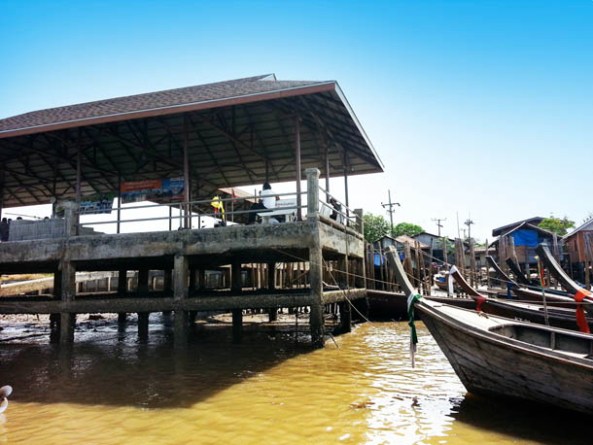
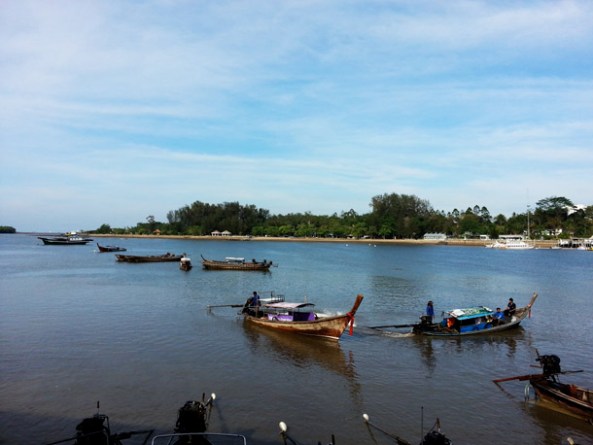

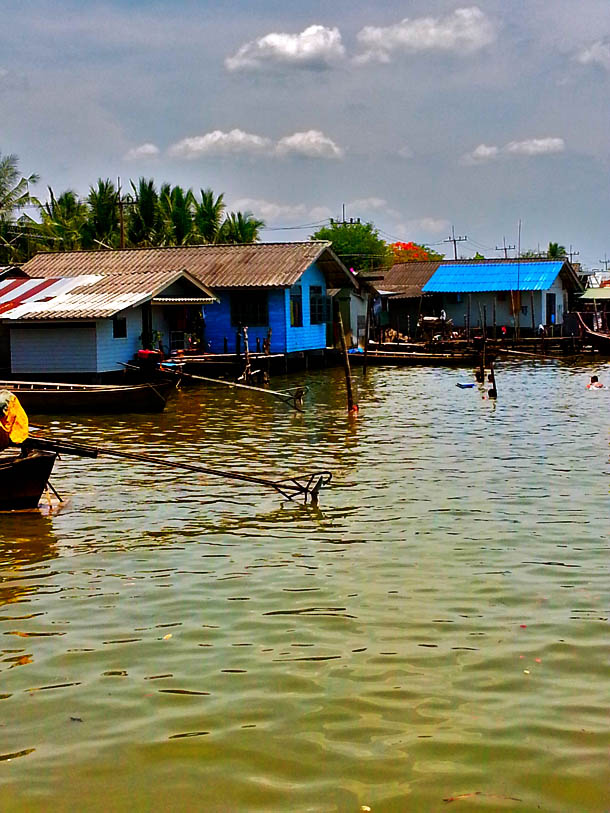

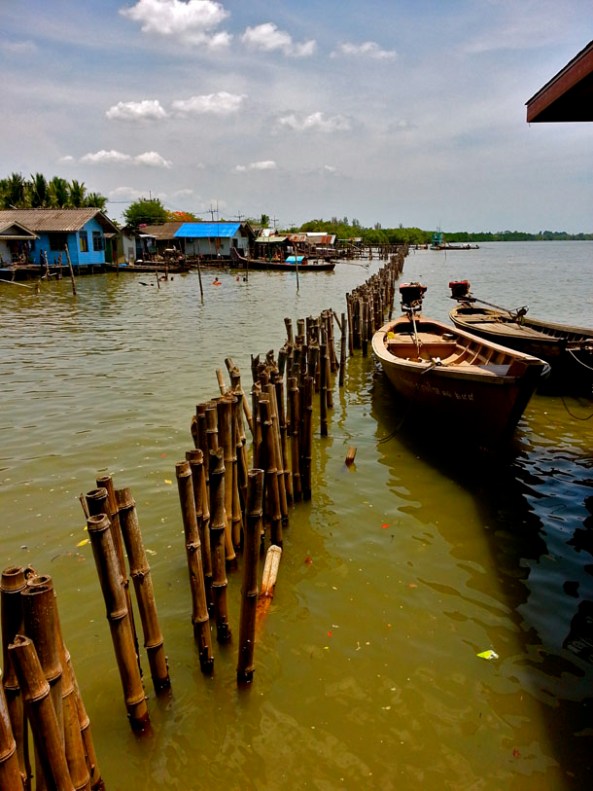
The Formula One cars of Koh Klang – the Skylabs
The Skylabs or the motorcycle Tuk Tuks soon became our only mode of transportation within the island. As we visited the various parts of the island to experience the local village life, I realised that the real heroes of this island are these Skylab drivers and each one can teach Michael Schumachar or Sebastian Vettel a lesson or two in hi-speed driving. These are the lusty, sexy Formula One drivers with even more sexier vehicles – while some have Liverpool stickers attached to them, others have bright florescent neon paints to brighten up the rides. What is a Skylab? An auxiliary wagon with seating, complete with wheels and a shade, is attached to a motor cycle or a scooter. While the Skylab driver can offer a pillion ride on the back of the motorcycle, four more passengers can comfortably (!) sit in the auxiliary wagon. A Skylab ride can be more adventurous than sitting on a roller-coaster. I can go on and on. After all, I do have a long standing relationship with Tuk Tuks or the Auto Rickshaws. Yes, I admit falling in love with these Skylabs (and their drivers)!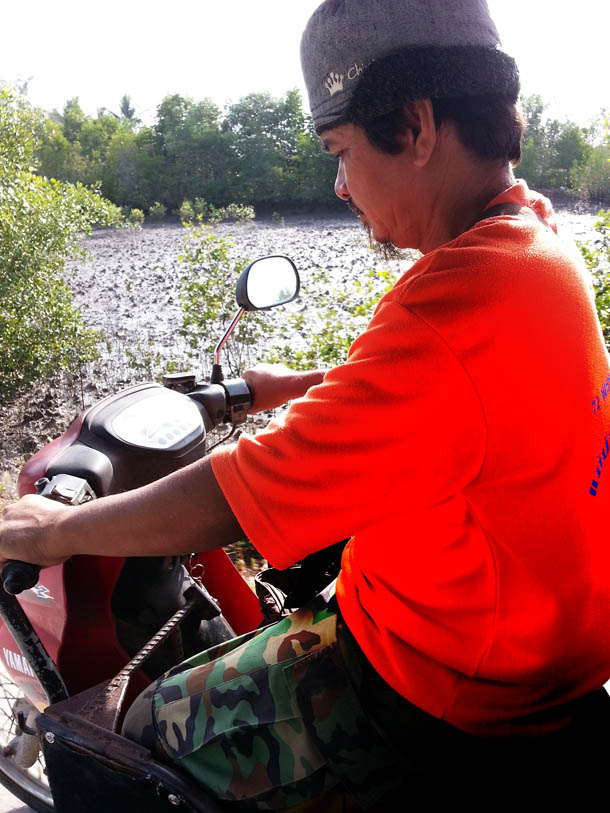


Riding the tides with Shallow-water Fishing
From the Tha-Hin pier we take a long tail boat and sail along the Krabi river to the high seas to learn about Shallow Water Fishing. The fish nets are stuck to wooden planks and form a giant V-shaped trap in the seas (below). At the base of the V, there are dense nets in which the fish gets caught during the high tide. It is from these net traps that the local fishermen catch the fish using submerged baskets. The pictures below show the dense netted area (around which our boats have gathered). Here too, the landscape changes during the low tide – the fishing nets stick out from the ground and the fishermen can walk upto these long distances, provided they can negotiate with the sting rays!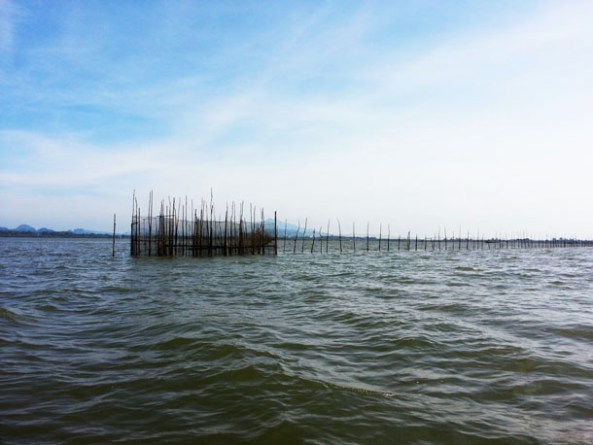

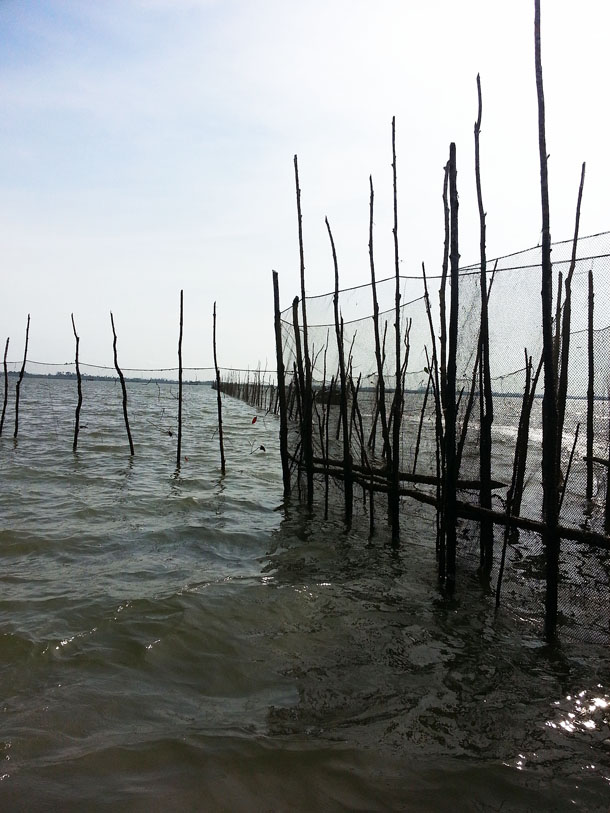
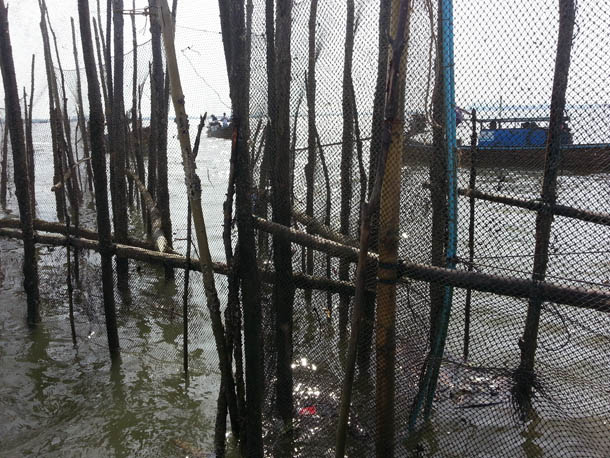
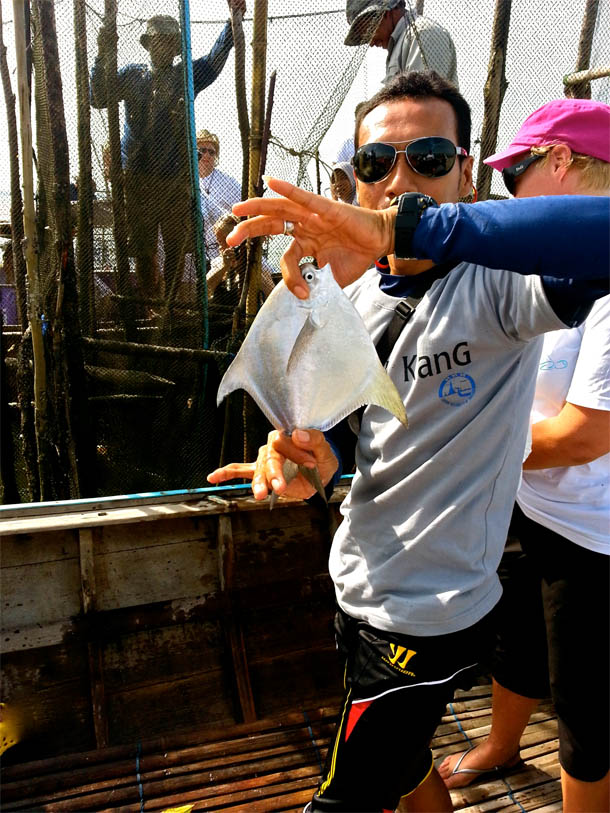
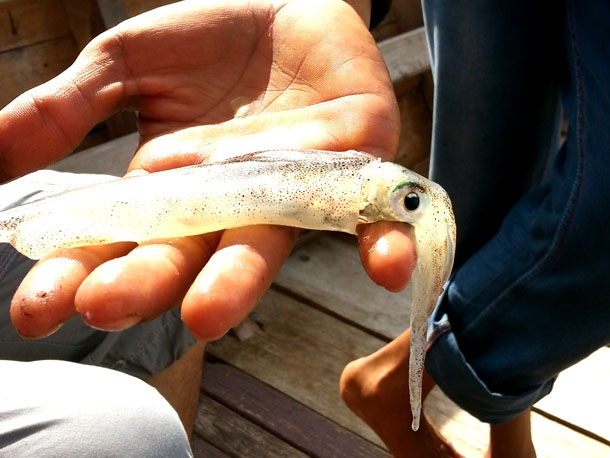
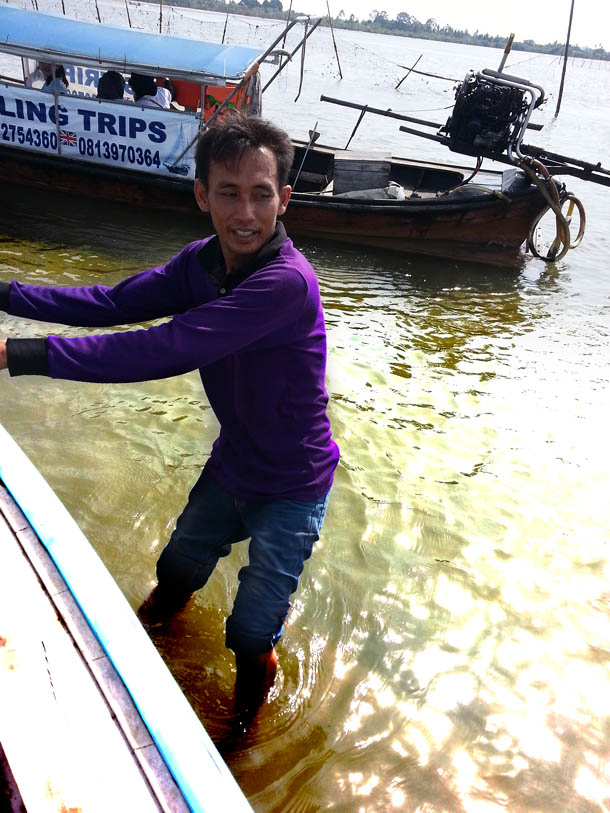
The first two times the basket was submerged, brings in leaves and silt and soon, a treasure chest opens up. Every time the fish basket is submerged, it brings up a huge quantity of fish. Did you know that fish makes sounds like birds’ chirping? I am shocked as the fish scattered on the boat flutters and chirps loudly (moments of contemplation when I think I’ll be turning veg!). Ozzie (below), our Local Wisdom group guide, tells us all about the different types of fish, releasing the ones that cannot be eaten back into the water. A huge fish (looked like a Pomfret to me, shown below) gave him a real hard time – escaping from his grip every now and then. The squid that Ozzie holds, was good for barbequing, we were told (I’m off to my dream mode as I light the fire in a barbeque pit!). He tells us that because of pollution and over-exploitation, many varieties of fish are depleting. Despite this, there are still many fish that are available in abundance – for example, Milkfish, Barramundi, Grouper etc. As I’ve said before, the local life here juggles between the high tide and the low tide and our boat was already getting stuck with the fast receding water and needed a bit of push from the boatman (further below). 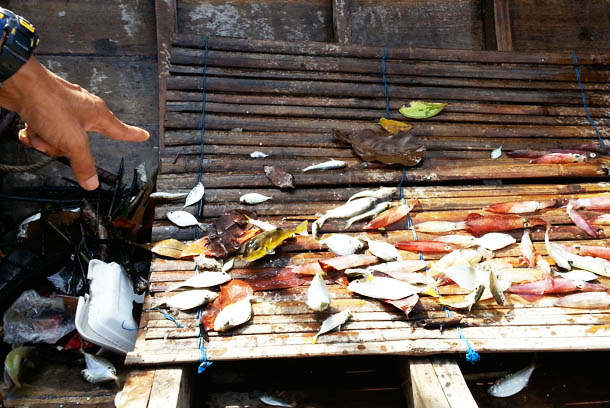
Digging into the ground for treasure – Shellfish hunting
The entire island is covered with extensive mangrove forests. There are mangrove swamps even within the island where the local villagers hunt for shellfish. The heat was getting too much for me and I left my group for the comforts of a shade as the members aimlessly dug into the ground, trying to come up with treasure. I resorted to photographing the unique and peculiar landscape where the roots of the mangrove shrubs protrude out of the ground and spread over the ground, thereby creating what I like to describe as nature art. The mangroves in this island fconstitutes an important part in the bio-diversity of the island’s eco system. Learning to co-exist with the mangroves and educating the locals and the tourists how to preserve the mangroves and chalking out activities around them – kayaking, shellfishing etc, therefore forms an important aspect of sustainable tourism here. (What are Mangroves?)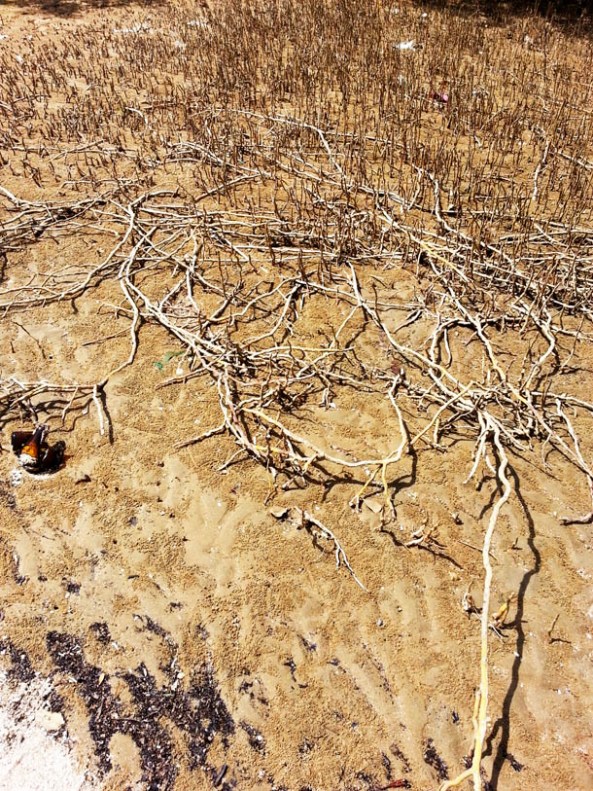



Living in amazing houses floating on water – life along the Krabi river
While I couldn’t capture any shellfish during the shellfish hunting, I did capture a local fisherman with his enormous sized prized capture – the crab which later went into the Crab dish that was served to us for lunch (below). The life along the Krabi river seemed different. With floating restaurants having their own fish farms on water, catching fresh fish and cooking them to serve to the diners… the experience was different (my next post is on that). Not to mention the beautiful houses of the local fishermen which float on the Krabi river, with the help of tyres and empty plastic jars. I also took a fancy to the advertisements of the energy drink that were stuck on the boats – SHARK, the cool bite. I have been working in advertising for long, but never had I come across such a direct branding with a even more direct tagline!
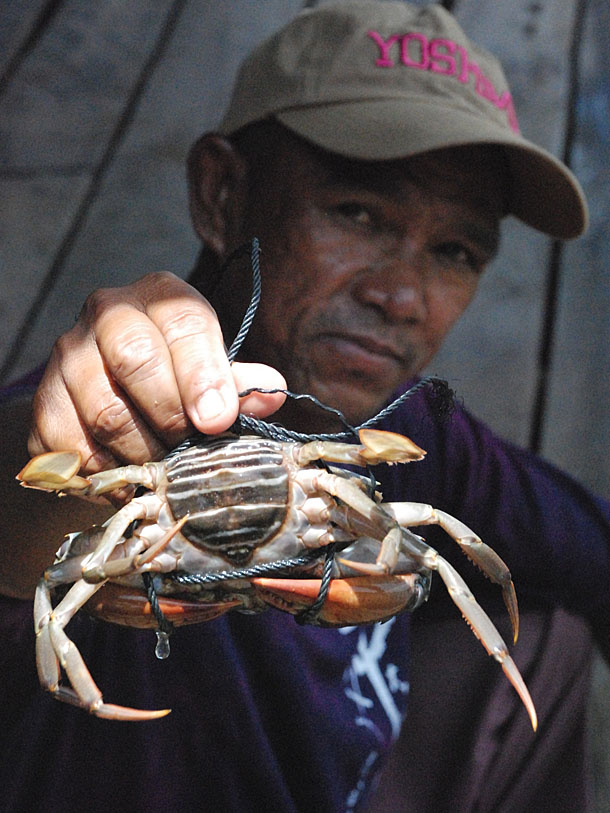

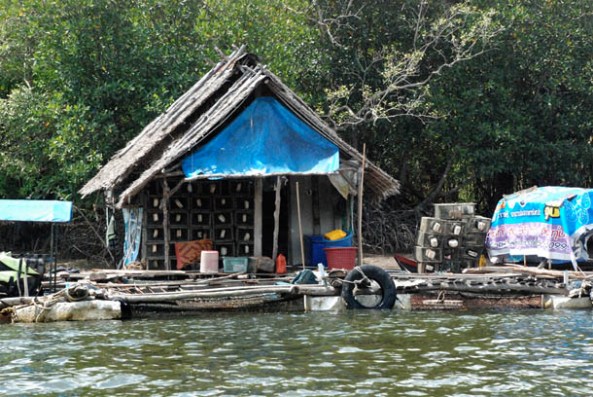
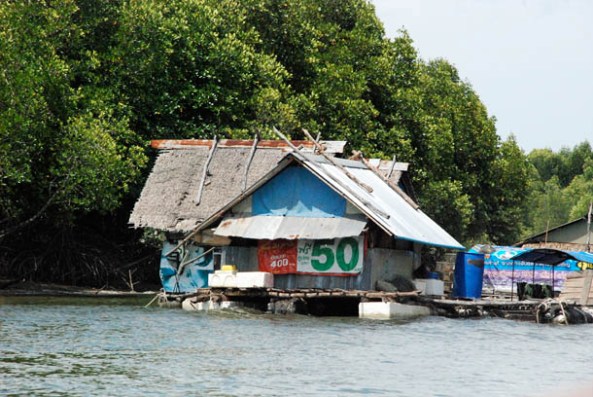
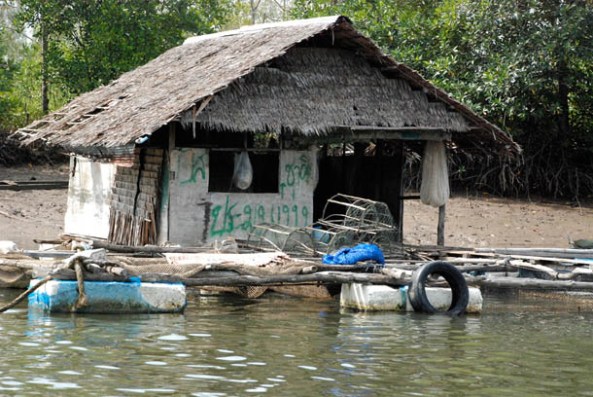

Tailing the Long tail boats
Koh Klang is also the place where the long tail boats or the traditional Hua Tong boats originate. We visit the boat making workshop in Moo 2, Ban Klong Prasong (Moo is Group; Ban is Village). It’s amazing how the same technique with which these small model boats are made, is also used to make the big boats that float on the Krabi river. The Hua Tong boat today has become a symbol of Krabi province. I feel proud that I took exactly 5 minutes to make a model boat. Oh, did I mention that there are DIY packs available for tourists, which translate roughly into just-add-superglue-to-the-cut-pieces!
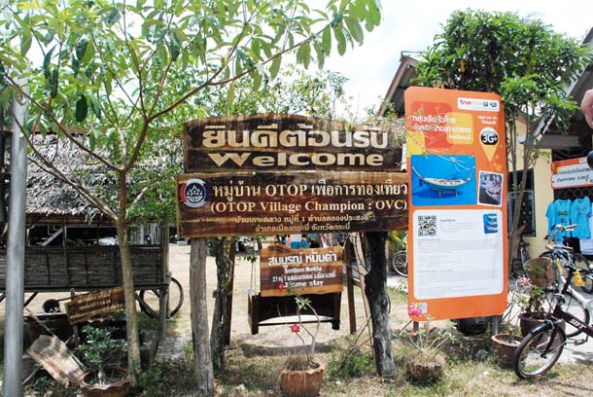
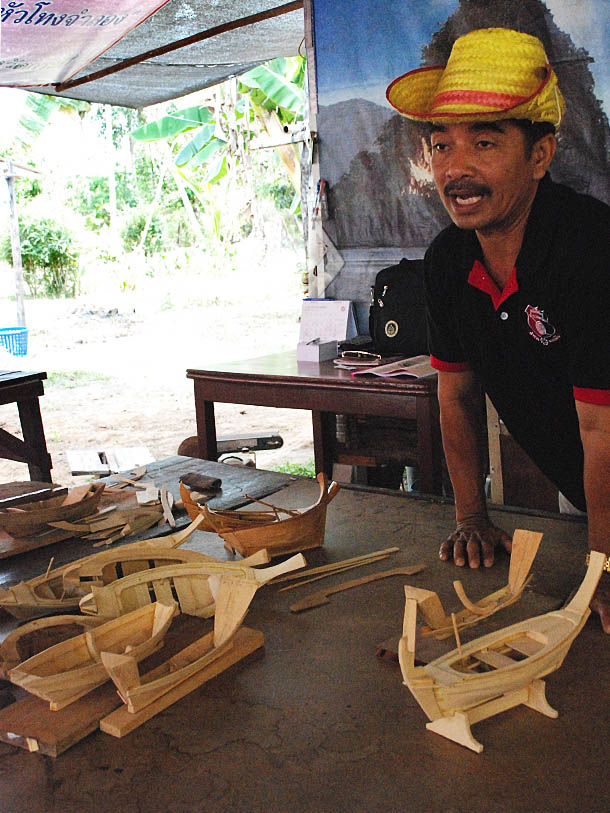

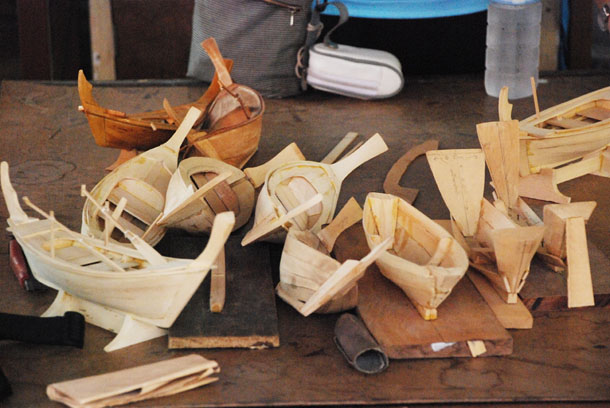
Pounding and grinding with the Rice Farmers – Earning our meals
There are only two places in Thailand where Sangyod (or Sang Yot) Rice are produced and these are Koh Klang and Pattalung. The canals on the island of Koh Klang make it ideal for rice cultivation. Sangyod Rice is a purple coloured, high quality, fragrant organic rice, having a very high fibre content. Traditionally, Sangyod rice used to be cooked during special occasions or to usher in important guests. A bit of pounding (indigenous milling) leaves us drained while the women who are engaged here, do such arduous pounding throughout the day – all with a pinch of smile! We were served Sangyod rice in one of our lunches (pic further down) – it tastes a bit salty because of the salt water in which the rice farms are sometimes submerged in.
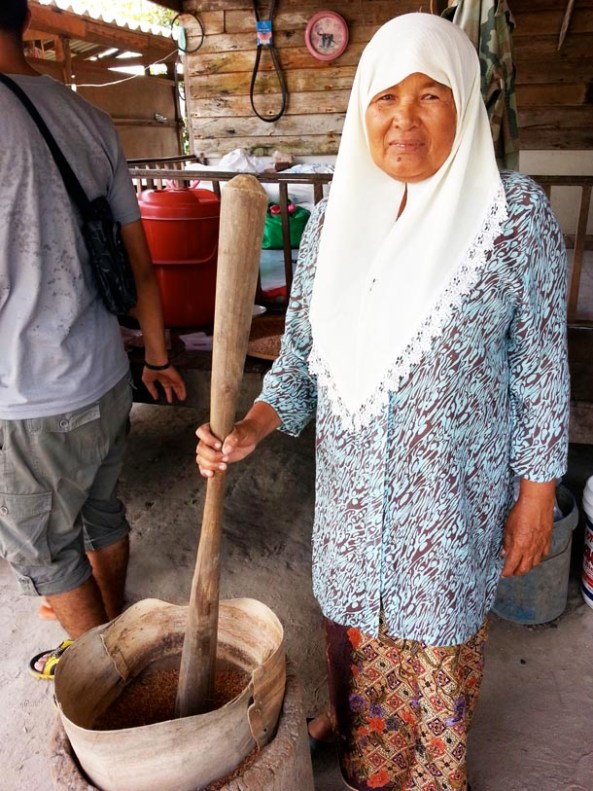
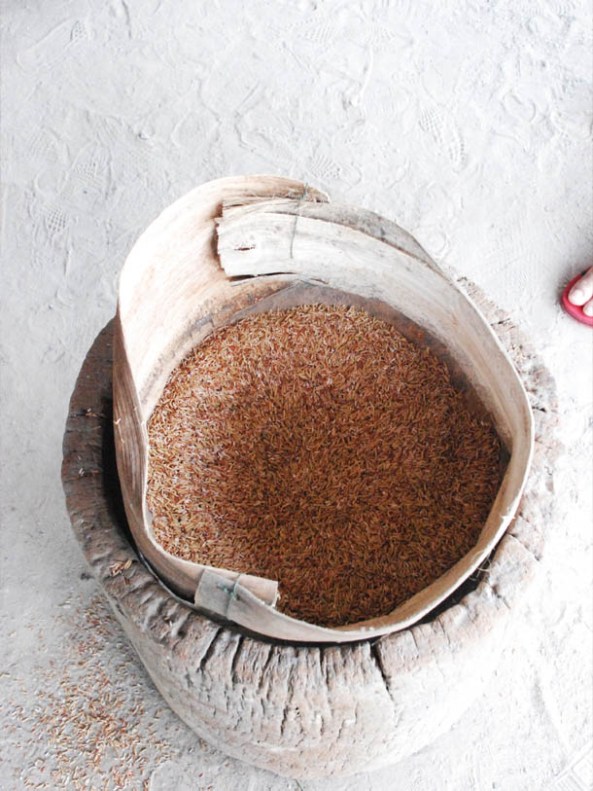
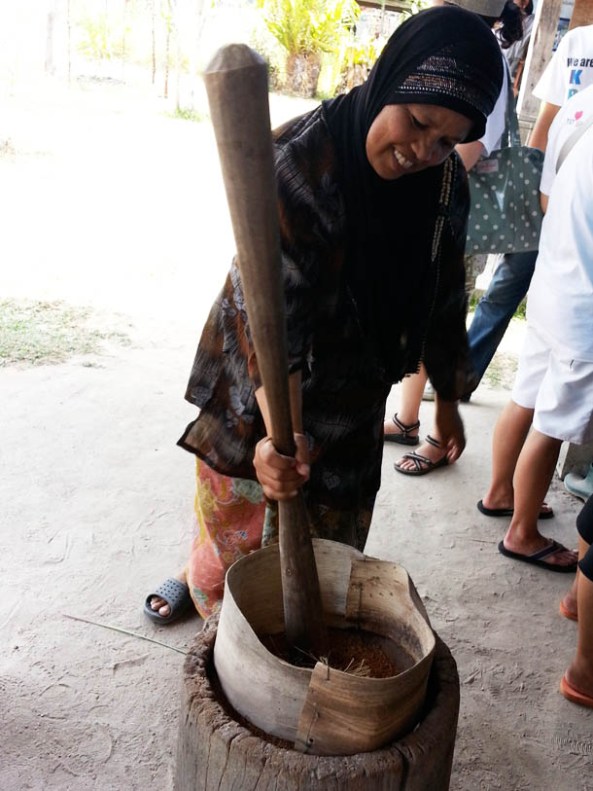
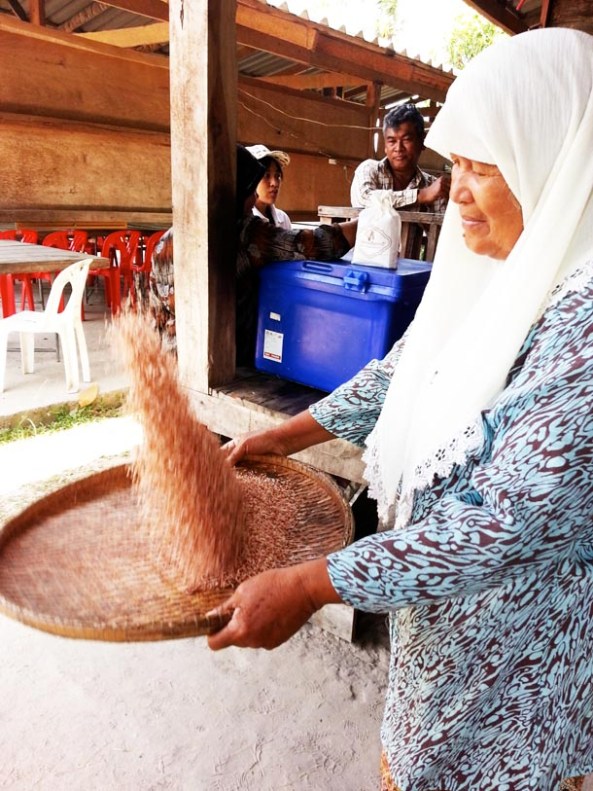
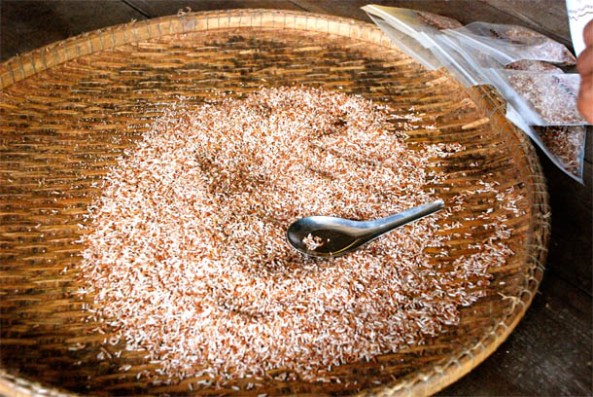
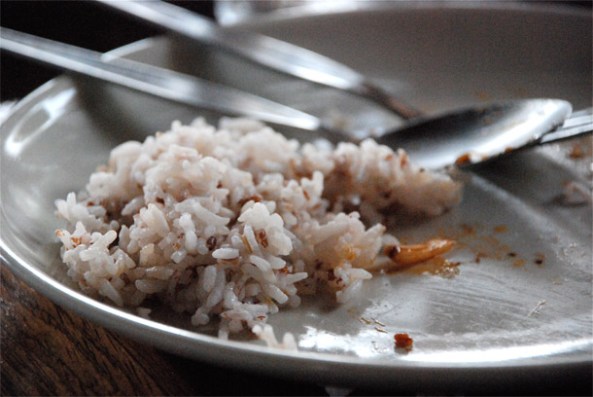
I found my grandmother in the Batik workshop
The people on the island are very friendly, always smiling at us – the Farangs (the foreigners). This is a 100% crime free island and we roam around till late, hiking rides on the Skylabs and chatting to the Skylab drivers. The grand dame at the Batik farm (below) takes the cake in hospitality and I have a sense of déja vu as she roams around explaining the processes of Batik printing in her local language. She looks like my grandmother in a different avatar. I have done Batik in school but here the designs seem very intricate and the white borders that are left behind once the wax melts, seem to be really thin. The metal design blocks are dipped into hot wax and pressed onto the cloth. As they cool off, different colours are added into different areas of the design having a wax fencing – so that colour from one area don’t mingle into the colour from another area. Eventually, the textile goes through five different phases of wash in different chemicals so that the dyes won’t fast. The wax melts off leaving behind a maze of wonder. The Emirati group of students accompanying me gets their hands on this handicraft form as the grand dame guides on.

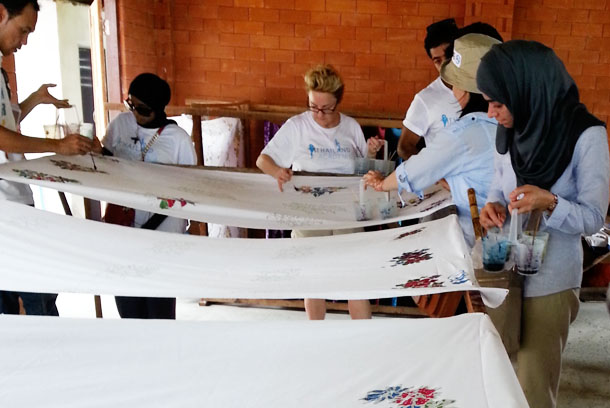
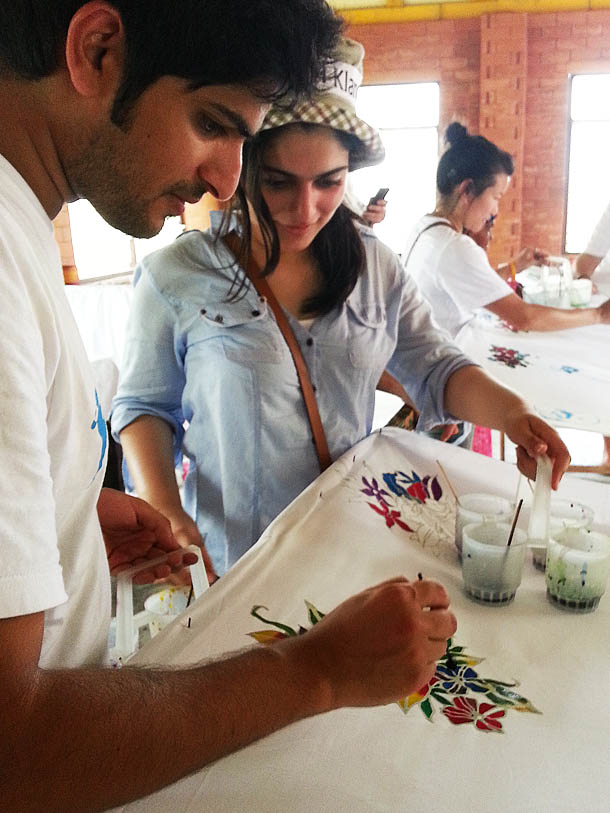
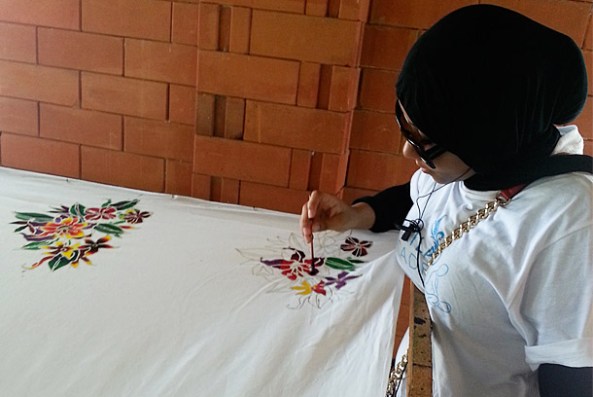
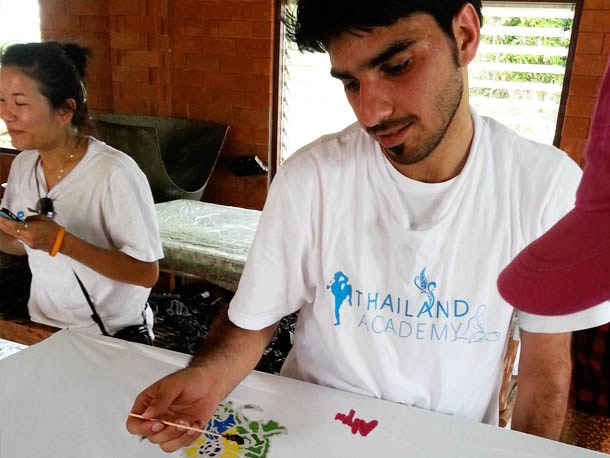
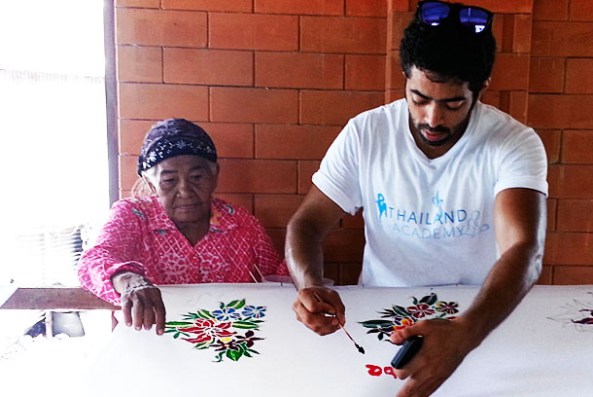
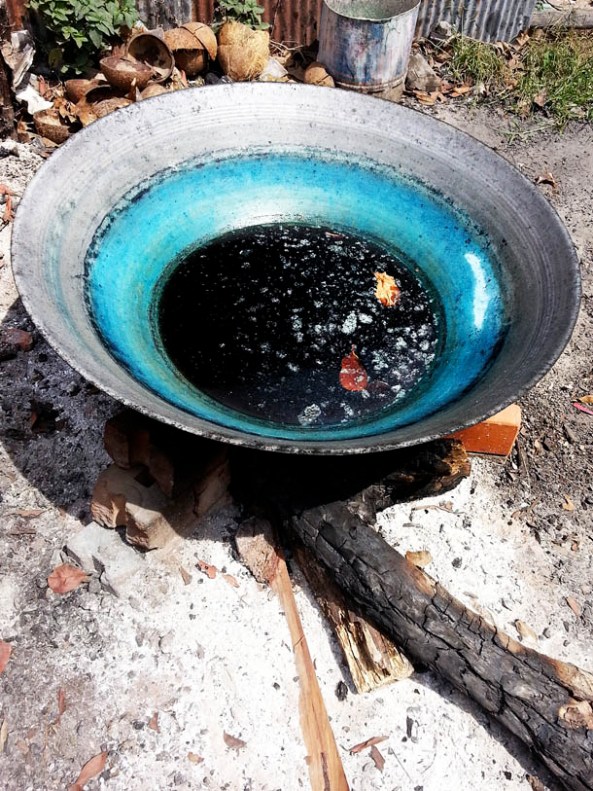
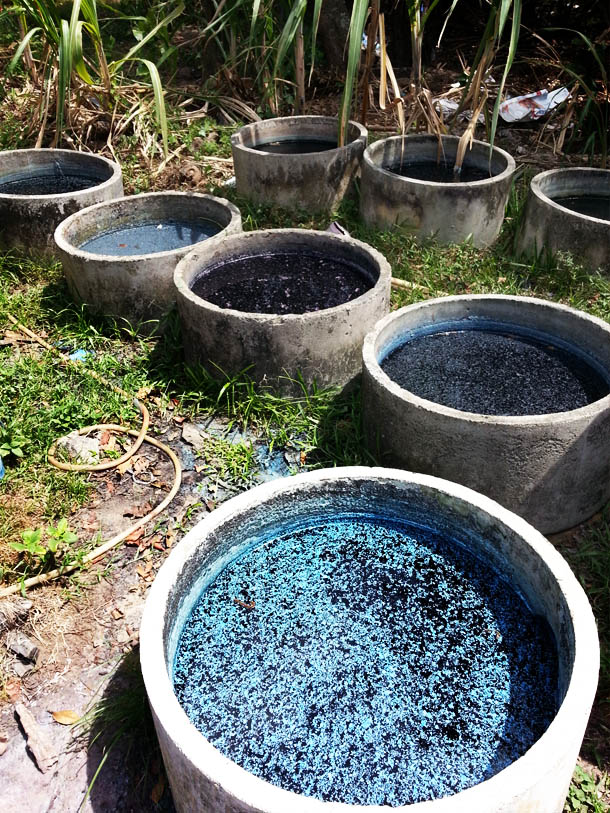
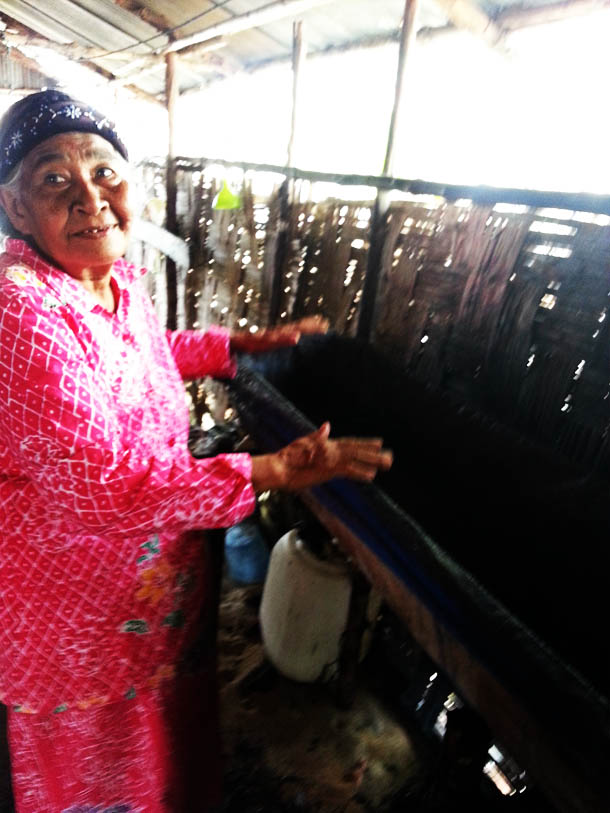
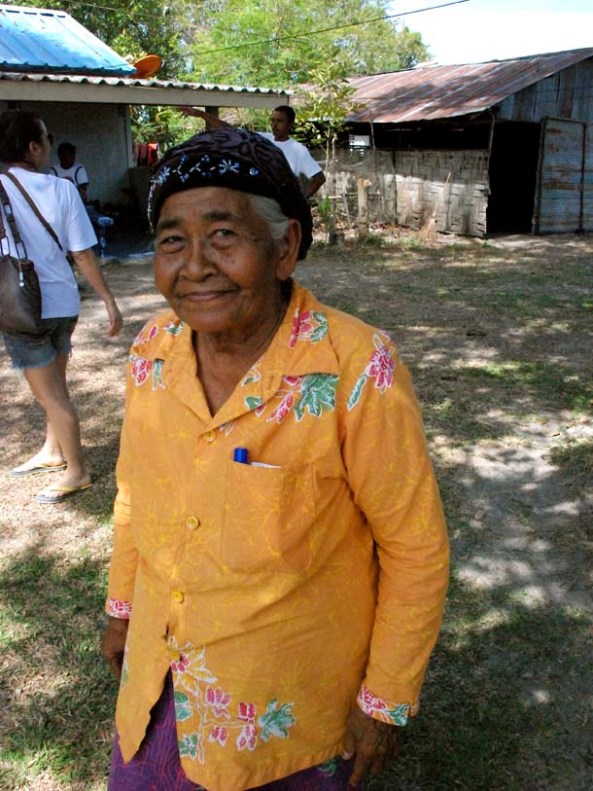
Underneath an island house – a separate life of its own
I was intrigued by the life underneath each house in the island. Houses here are made up of wood and is raised over the ground on erected planks – an evidence of Tsunami or flood that probably hits the island from time to time. Bicycles, colourful clothes being dried, scattered toys, hens and chicks trotting around, pet cats and dogs snoozing in the cool shade – the area underneath each house narrates its own story.
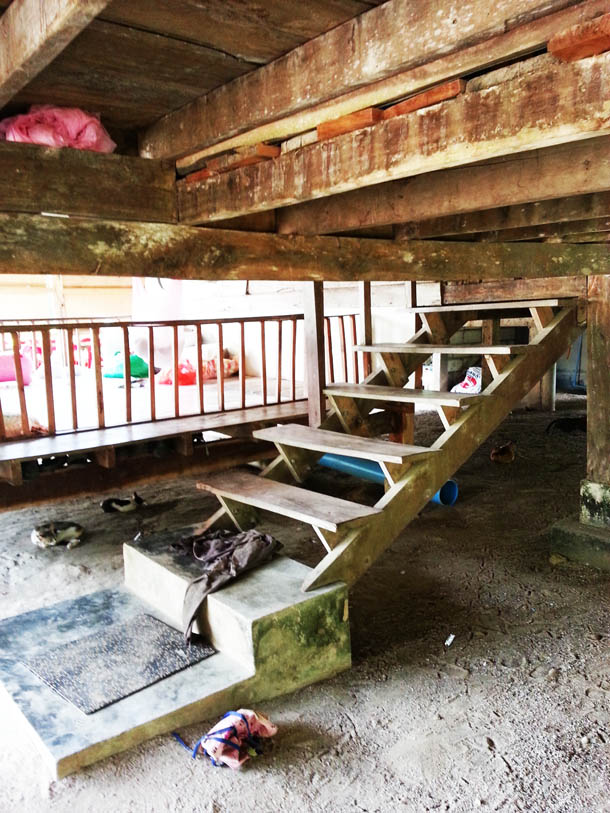
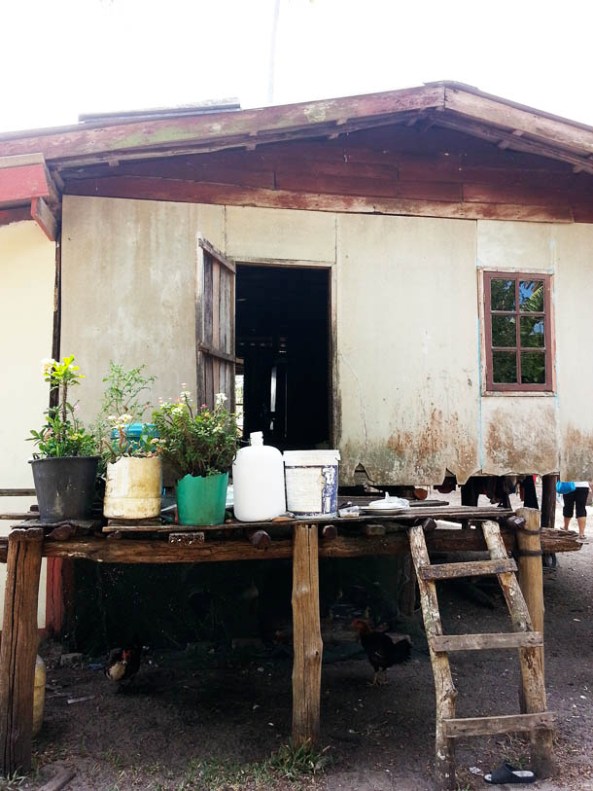
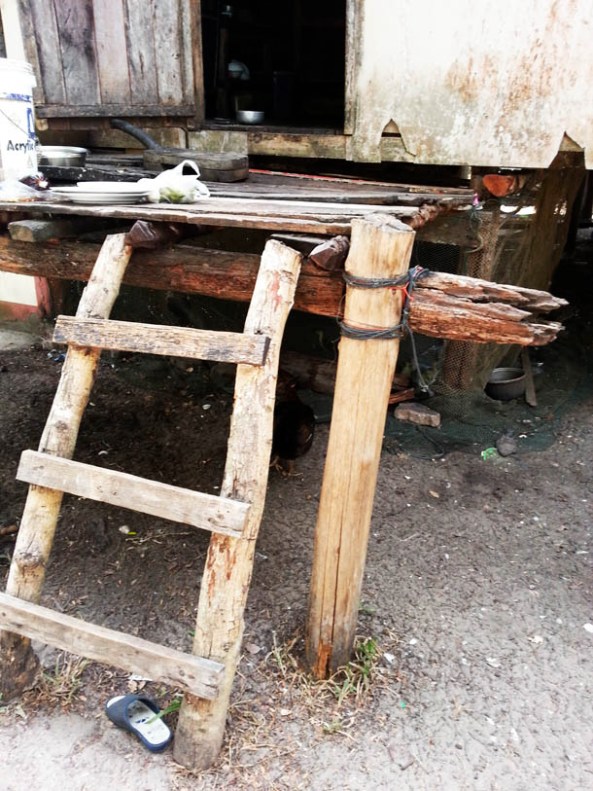
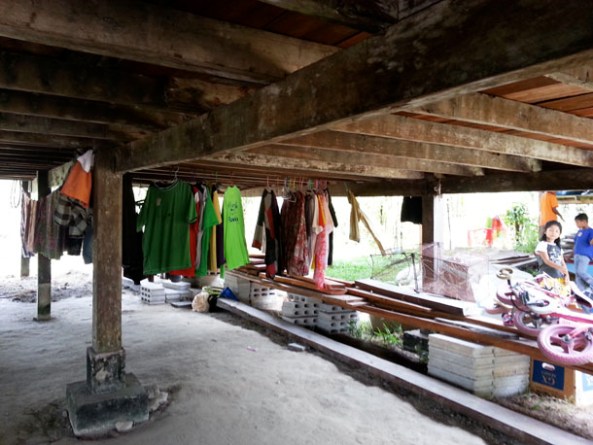
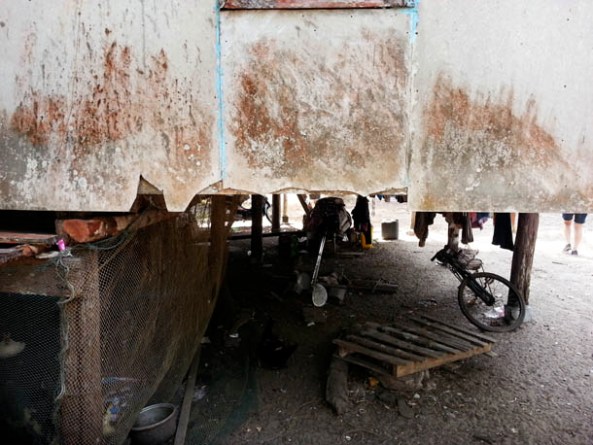
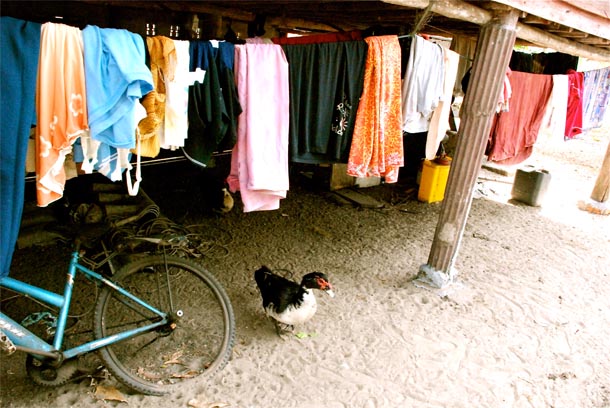
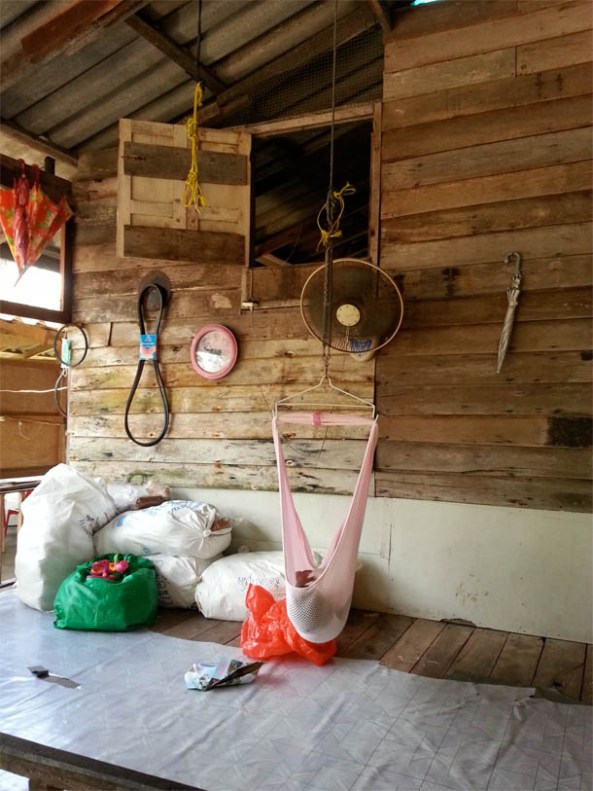
Life in the island is frozen in a different time frame
The little girl here reminded me of Big Z. I had left the Z-Sisters back in Dubai and I was continuously missing them. I felt that the women in this island were independent, roaming around in their bikes or scooters. They were so fashionable, in their own subtle way – tiny broaches, lovely head scarfs, colourful dresses, beautiful sandals. The community is close-knit, with a maximum of 5,000 people living on the island. The children are used to tourists as they mingle with them at ease, including them in their evening games of football or kite-flying. The small stalls selling vegetables and other things in the local markets lining the streets are also predominantly managed by women. The different sauces being sold in sealed transparent plastics seem irresistible and tempting. Life here seems to be frozen in a different time period, far away from hustle and bustle of urban life and I feel lucky to have fitted into it, even if it’s for a while.
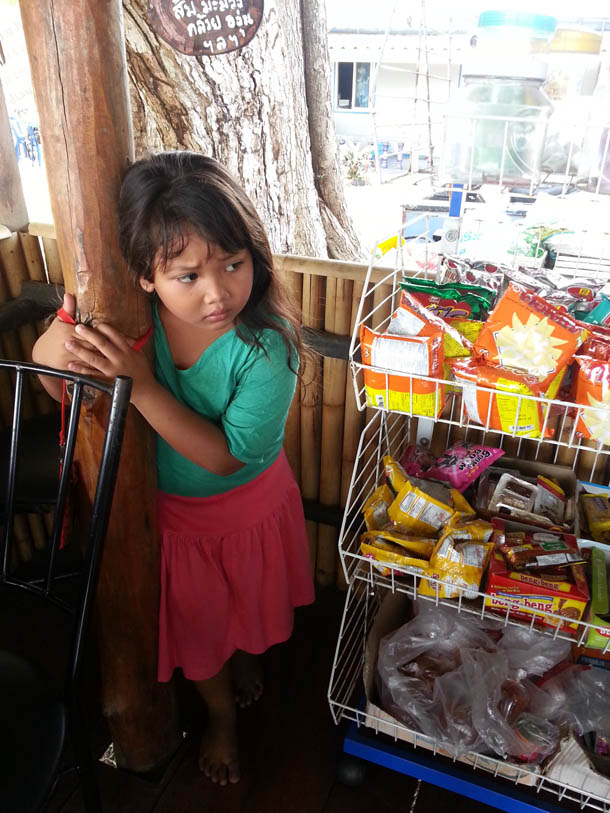

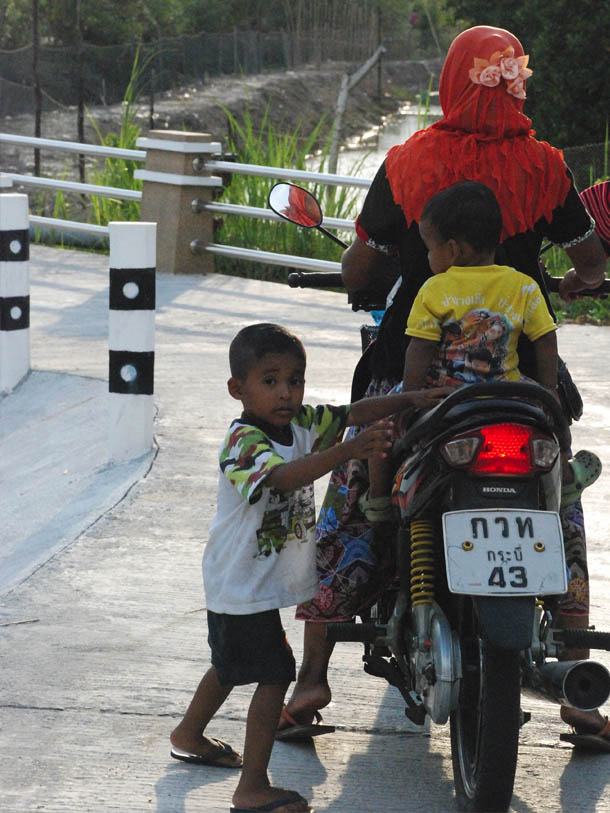
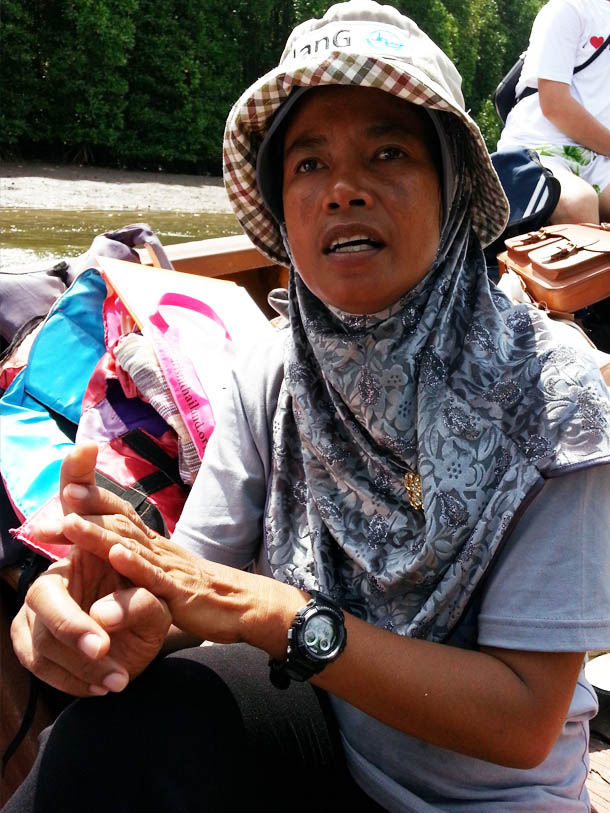
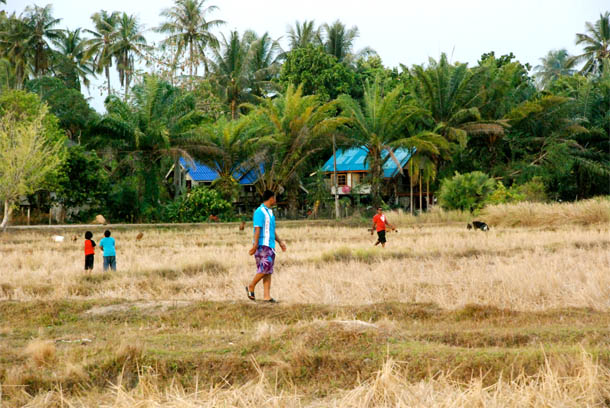
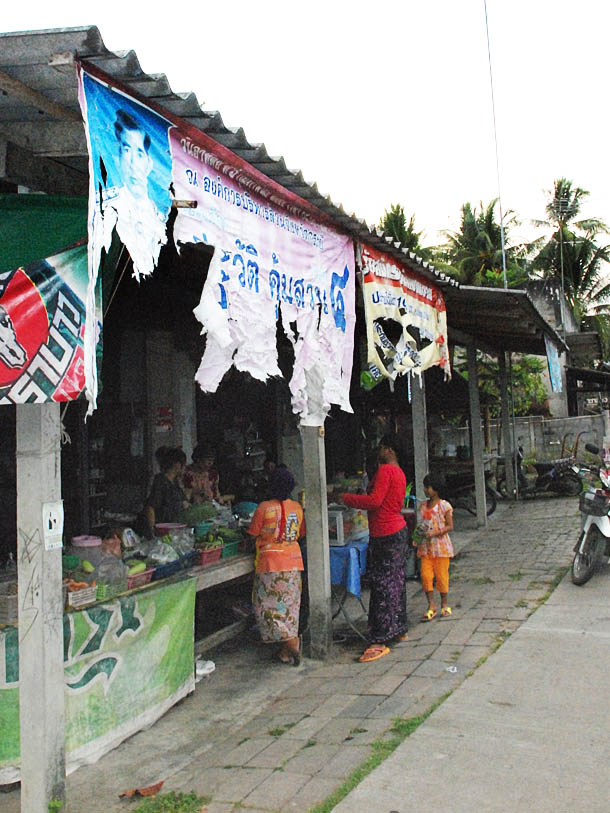
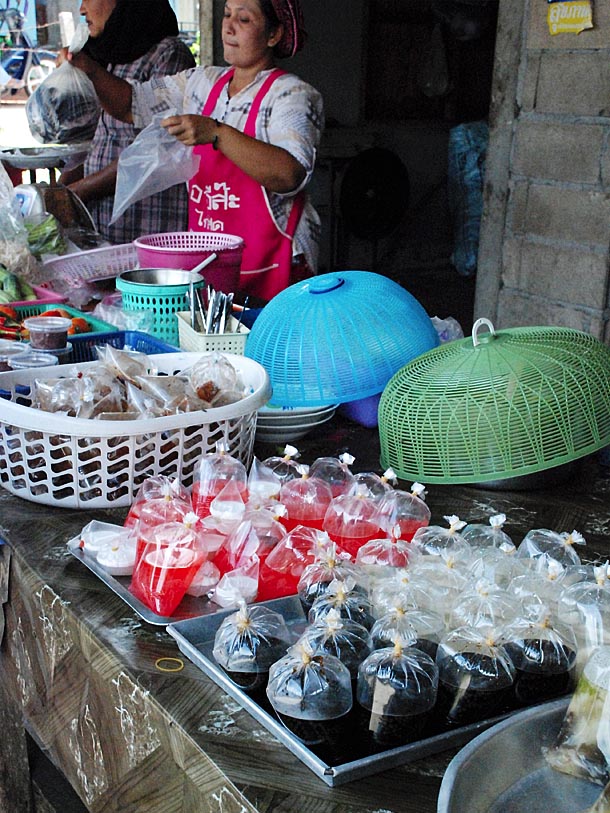
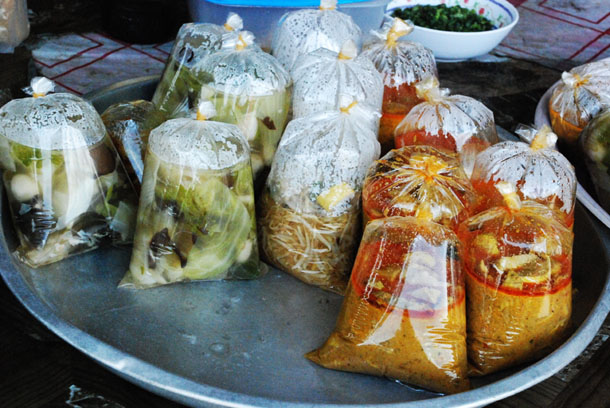
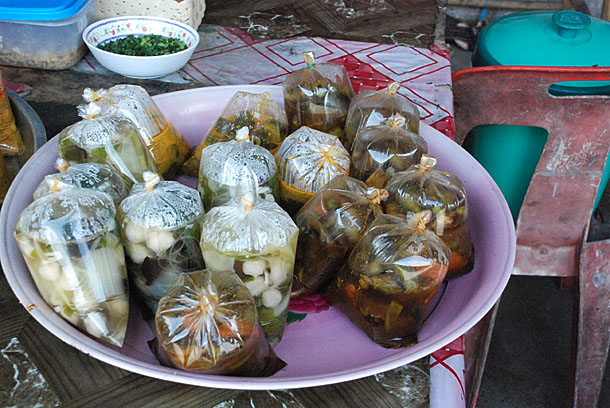
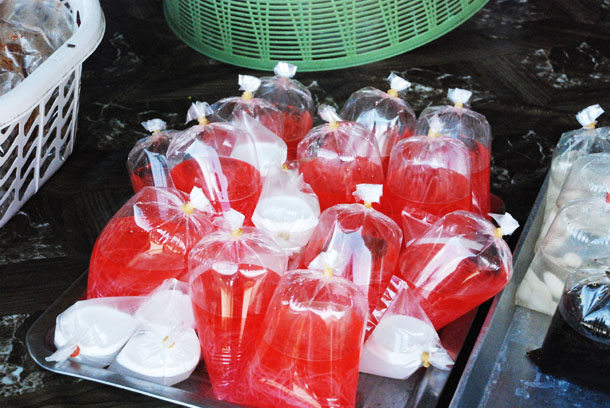
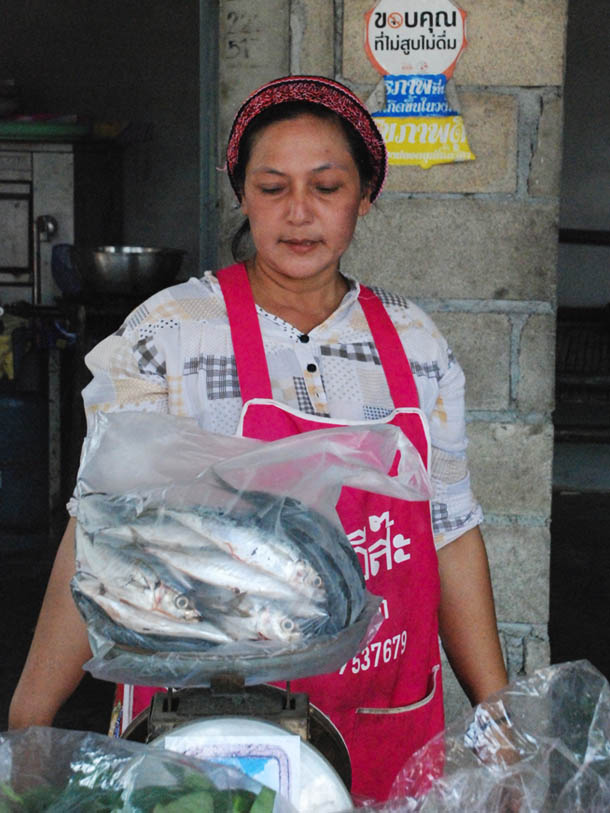
I ate too but this post is not about the standard meals that fed me
While my earlier post, Ruen Mai Restaurant In Krabi | A Tantalising First Experience Of Thai Food {In Thailand, That is!} reeks of spicy Thai food, the future posts would probably do that too. The following pictures are from the mini breaks that refuelled us – Chilled freshly squeezed Sugarcane juice; the Khao tom mat or the sticky rice and banana wrapped in banana leaf; Sarim or pink coloured (often they are multi-colored) mung bean flour noodles in sweetened coconut milk served with crushed ice. While I sneaked in an extra bottle of the Sugarcane juice, I slightly avoided the Khao tom mat as I am not very fond of Bananas and sipped onto the Sarim thirstily only to be choked with the noodle strands going into my throat.
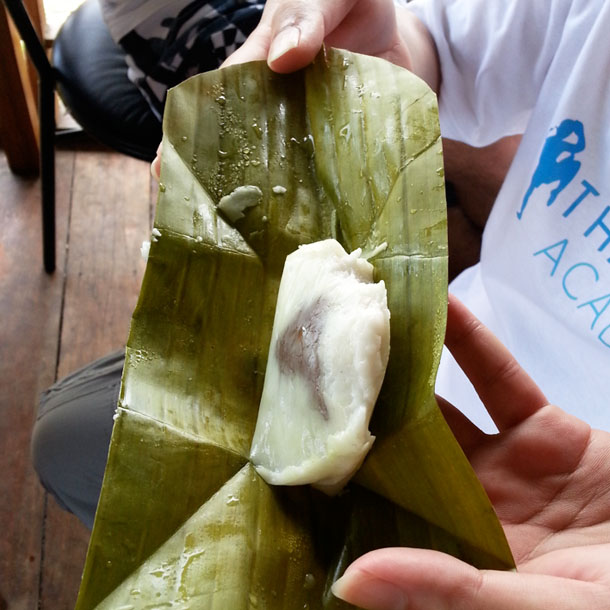
◊—————————————————————◊
Islanda Eco Village Resort
Thai Village styled Eco Resort; On Koh Klang, Krabi
In the recent years, we have been trying to travel responsibly and checking into the Islanda Eco Village Resort just adds to the gradually growing list of the Eco Resorts that we’ve visited so far. Submerged mangroves, loud chirping of birds, the lazy sunset over the Andaman seas and the water seeping through the fishing traps and bamboo fences into the resort grounds – the entire island practices sustainable tourism. Islanda is an eco-resort, with the accommodation originally styled after Thai village huts (conical structures) that wouldn’t require any air conditioning. Bio-degradable detergent is used for the laundry and the dish washing. Practically, the entire staff is from the island and while the water treatment facilitates the resort’s waste management, the salt in the water is not favourable for growing the resort’s vegetable garden. Despite that, the resort has it’s own vegetable garden at it’s backyard. All fresh produce is bought from the local markets on the island, (a tick mark on my current favourite topic of Locavorism) and fish is brought from the local fishermen. This is the only resort in the island and it completely blends into the surrounding environment without disrupting the island’s unique eco-system. The smiling faces of the resort staff adds to the charm.
Tel No: 083-636 7887; Location: Moo 3 T. Klong Pra-Song (Koh Klang) A. Maung Krabi, Nong Thale, Mueang Krabi, Krabi 81000, Thailand
Islanda Eco Village Resort: Website; Facebook Page; Instagram

◊—————————————————————◊
Apart from me and my fellow Fooderati friend, Debbie who writes Coffee Cakes and Running, the Dubai team consisted of six Emirati students (three girls and three boys) who had topped their respective classes in their universities. Koh Klang gave these young students a glimpse into a world which is so different from the urban landscape that they have been living in. I also made a friend in Claudia, who writes an inspirational blog (in Deutsch), met Kay from the UK, who’s a cook, consultant, writer and presenter. I learnt how to count my hours from observing the tides. I also learnt how to be just happy – a smile at a stranger is all it takes. And before I sign off, I must tell you that apart from the smiling people of Koh Klang, the other person who stole my heart was this particular Johny Depp (below), lugging at the oars as he suddenly appeared from the sunset in the horizon!
Unblogging it all… Ishita
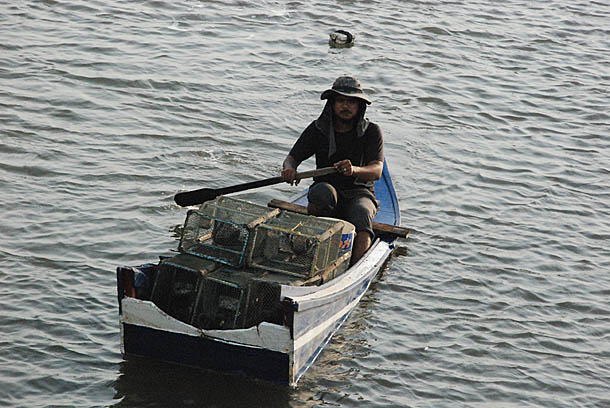
Disclaimer: The Thailand Academy trip was an invite from the Tourism Authorities of Thailand Middle East and Aviareps Group. However, the opinions stated here are my own and are independent. I do hope you enjoy reading the posts with lot of visuals. Please do not use any material from this post. You can see more pictures of my travel and food journey here.
◊—————————————————————◊
You may enjoy my other Oriental journeys:
- Ruen Mai Restaurant In Krabi | A Tantalising First Experience Of Thai Food {In Thailand, That is!}
- Singapore At Night
- Eating Out Is A National Pastime | Singapore
- Bikol Express & The Romanticism Of The Mayon Volcano
- Pancit – Palabok, Bihon, Canton | On A Filipino Food Trail
Posts from other members who were in the trip:
- Ein Dorf am Meer: Islanda Eco Village Resort, Krabi, Thailand «Escribo»
- Amazing Thailand – Dubai to Koh Klang – a Krabi experience «coffeecakesandrunning.me»
- Koh Klang Local Village Life «coffeecakesandrunning.me»
- Kayaking & Spa Day in Krabi «coffeecakesandrunning.me»
BE SOCIAL. SHARE THIS!

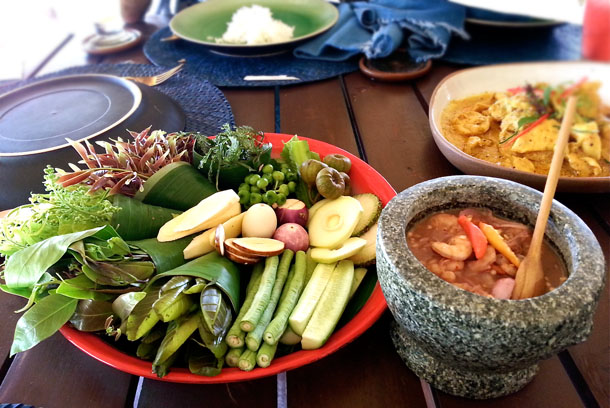
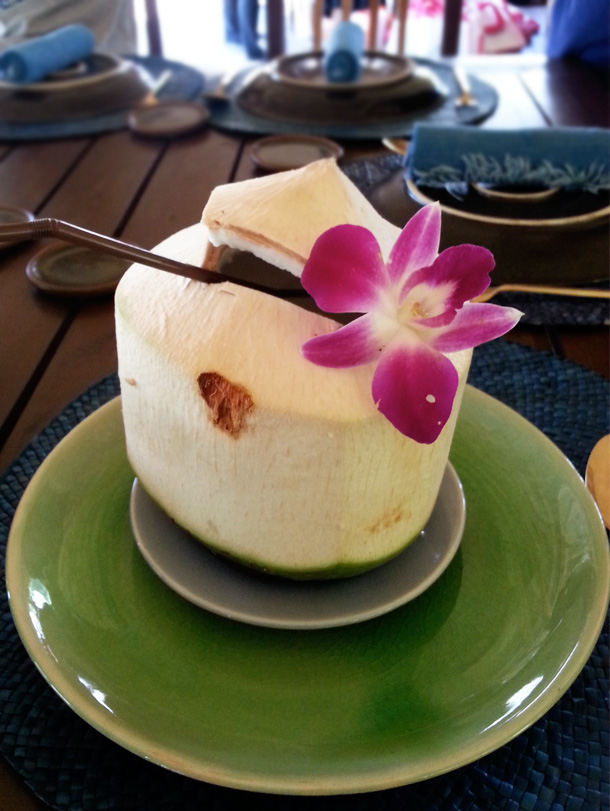
We landed in Bangkok in the early morning and were immediately whisked 700 kms away to Krabi, a province on the west coast of southern Thailand. I am part of the Dubai team which, along with two other teams coming from London and Frankfurt, will soon descend upon loudly on this relatively quiet and less touristy province. Apart from me and my fellow Fooderati friend, Debbie who writes Coffee Cakes and Running, the Dubai team consists of six Emirati students (three girls and three boys) who have topped their respective classes in their universities. This trip was to give these young students a glimpse into a world which is so different from the urban landscape that they have been living in (riding the Skylabs instead of zipping in cars on the Sheikh Zayed Road, no Starbucks coffee or Subway sandwiches – a tough life indeed!). Krabi is a world tucked away amidst 40,000 acres of mangrove forests and the coastline is surrounded by majestic limestone karsts, while the archipelagos forming some of the 130 islands can only be accessed by long tail boats during high tides. At low tide, the limestone karsts resemble floating islands suspended above the water, as the waves unabashedly crash onto them. (What are Karsts? What are Archipelagos?)
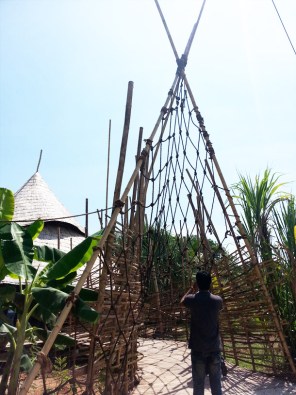
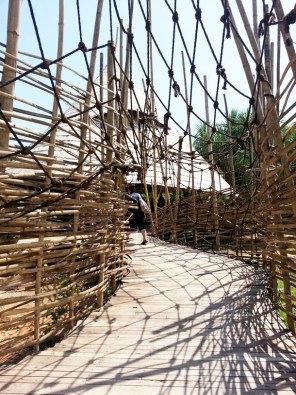
Our first stop after driving out of the Krabi airport is the Ruen Mai restaurant. Situated in the middle of lush green Banana and Sugarcane plantations and what seemed like being dropped just on the highway, this our first experience of an incredulous Thai hospitality and Thai food. Our experience set a very high benchmark for the rest of our trip. This is a new restaurant that the owner has opened just next to his residence. The original Ruen Mai restaurant in Krabi town, is regarded as one of the best Thai restaurants in Krabi. The swinging foot bridge from the main road with a bamboo fence brings us onto the platform – the seating area with an impressive thatched conical roof built with bamboos. Under the shade of the thatched bamboo and wiping our sweats and panting oofs and aahs, we met all the other members who’d come from London and Frankfurt. It was obvious that the soaring high humidity and the overnight journeying left all of us drained. Only to be refreshed by the lunch at Ruen Mai. That too, with an absolutely stunning lunch (assuming, that stunning can be used as a metaphor for the oft-used word awesome!)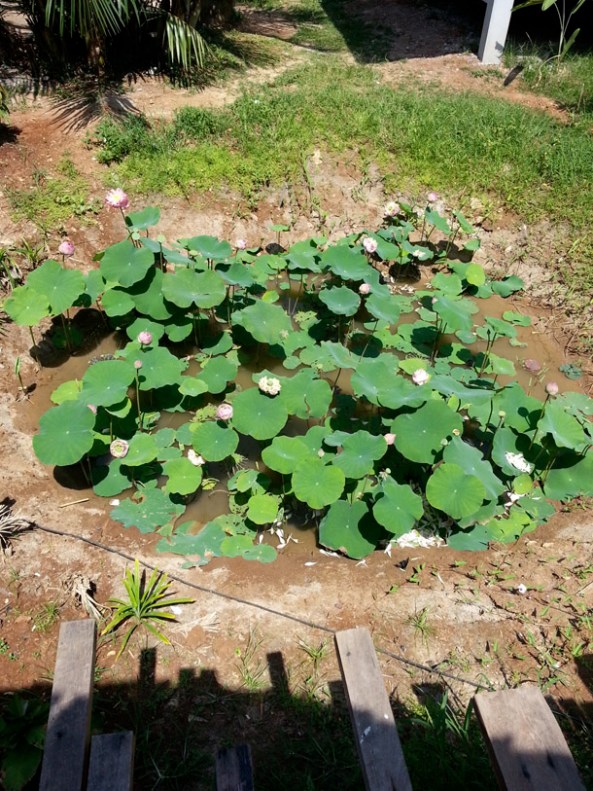
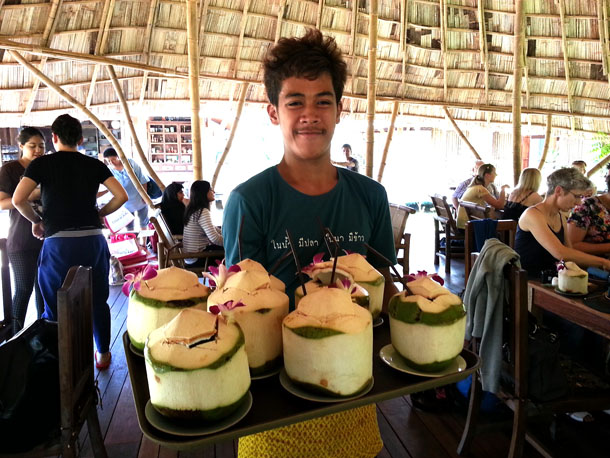
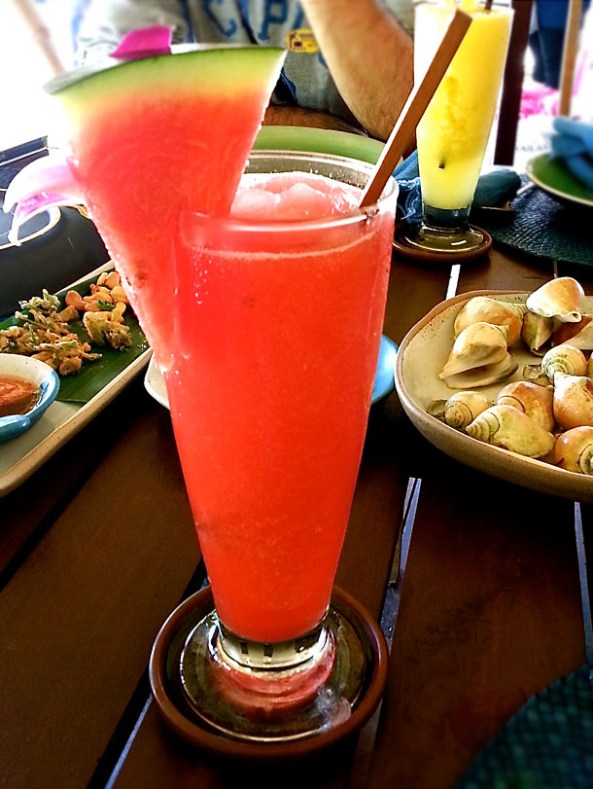 Smiling faces and chilled Coconut water helped in lowering our body temperatures much faster than we imagined. Definitely faster than it would have with regular air conditioners. The chilled Coconut water disappeared in seconds and I ordered a fresh Watermelon Juice (above). No added sugar, plain simple freshly squeezed Watermelon, with loads of ice cubes dunked in. There is a lot of controversy with the ice cubes in Thailand – to have them or not to have them? Many suggest that one should only take ice if it is one of the round, cylinder type cubes that has a hole in them as these type of ice cubes are supposedly commercially produced in hygienic conditions. Whatever it is, I think it is the heat and the humidity that makes one forget the logistics and ask for ice, whether it’s in a restaurant or while ordering a drink off a street vendor. Ao nam keng?/Do you want ice? I don’t remember saying Mai ao nam keng/No, I don’t in my entire stay in Thailand. It only takes a while before you get addicted to the ice itself!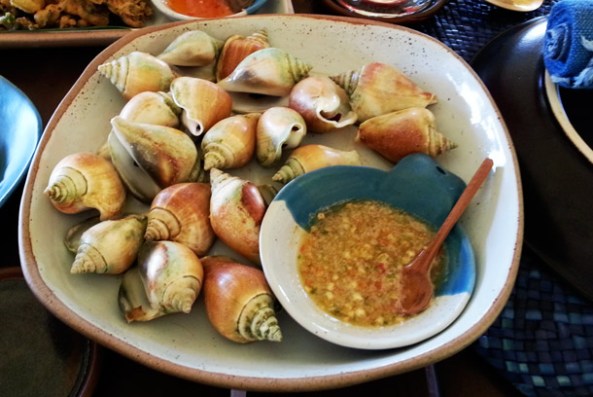
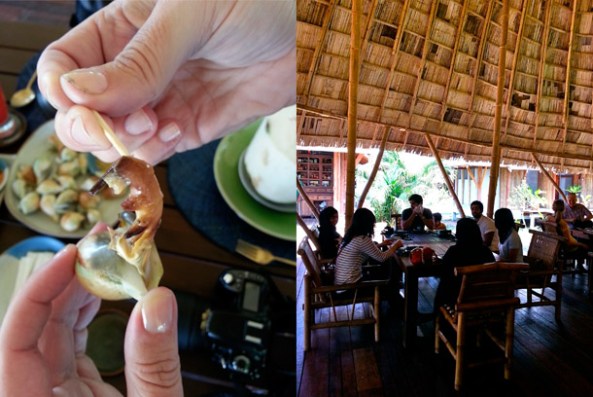
Hoi Chak Teen: The first dish that we were served was the Hoi Chak Teen or the Dog Conch (above), considered to be the king of Krabi shellfish. These shells can be seen sold on beaches, grilled or boiled and served with a really spicy chili sauce dip. Chak teen means ‘feet pulling’ and hoi means ‘shell’. These conch shells pull its’ feet around. So for making a pot, you heat gently, starting with cold water. This way, the feet pulling shells pull their feet, so when cooked, they can be easily picked out of the armour. While Debbie pulled (above left) out the meat with a tooth pick from one of the conch shells, I have to admit that I was a bit faint-hearted, preferring to click her. It’s hardly surprising, as Debbie is the kind who climbs the Mt Kilimanjaro while I would prefer to fly over the Himalayas rather than climb it. (Info courtesy on Hoi Chak Teen from the internet)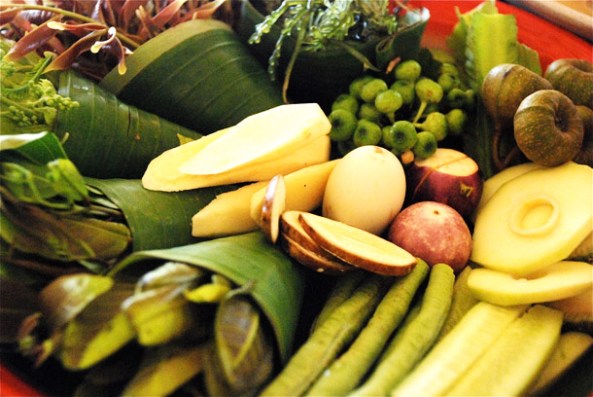
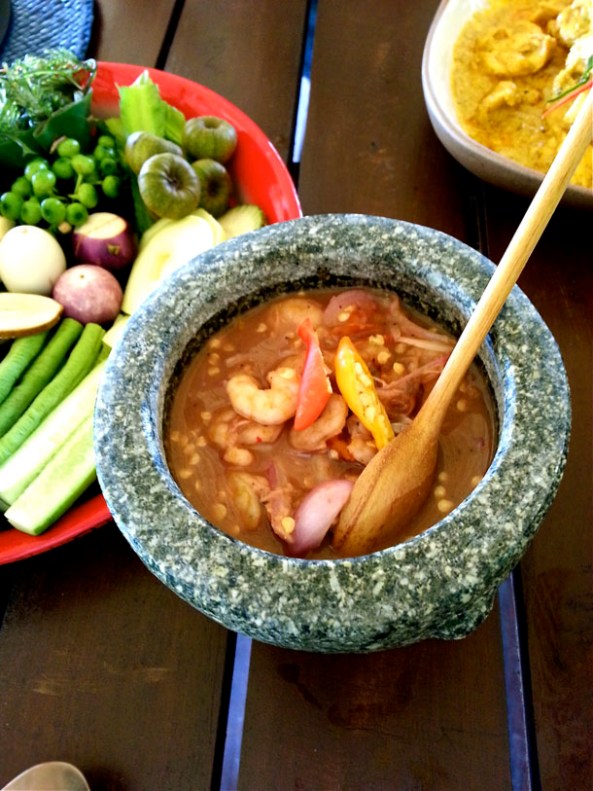
Fresh Vegetables and Shrimp dip: This was an interesting introduction to some of the vegetables that grow in the Krabi region. Served whole or slightly chopped, we were supposed to be munching on them and eat them fresh along with a really spicy dip made with Shrimp paste (above). The vegetables that were already known to me were – Basil leaves, Raddish, Cucumbers and Shallots while most of the vegetables were new to me – different types of fresh seaweed and many more. This dip was not the familiar Nam Pla, but had some other name which I seemed to have missed out noting down. I am wondering whether it was the Shrimp dip that made me eat more vegetables than I would normally eat! 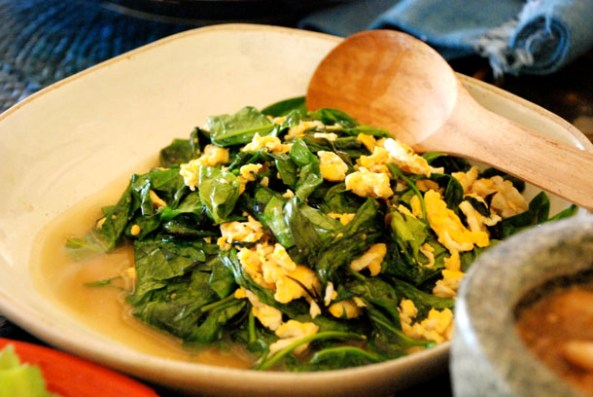
Pad Pak Mieng: Pak Mieng (above) is a slightly bitter regional leafy green from southern Asia. Stir fried with oyster sauce and eggs, this vegetarian dish tasted quite heavenly (the leafy fern reminds me of the Srilankan Kankun leaves or Baby Spinach). Often the Pak Mieng is topped with dried shrimp (Pak Miang Pad Gkoong) or smoke dried fish and crispy fried-dried onions. (more on Pak Mieng)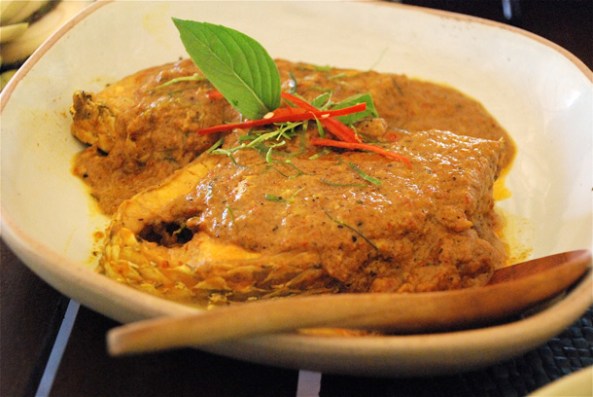
Kaeng phet Pla Insee: The White Snapper in Red Curry (above) was our first Thai red curry in the trip. I felt a sense of tremendous achievement as I licked my fingers and wiped the tears that exploded out of my eyes as the red chillies hit my taste buds – Oh Lord, was I really having my favourite Thai Red Curry, sitting in Thailand! The gravy was thick and poured on top of the fish more like a sauce rather than the light (not in terms of the spice but in terms of the mass and volume) curry that I was used to. We were served another fish dish (unfortunately no picture – the pic quality didn’t do justice to the brilliant taste) – Pla Insee Tod Rad Seoui or the Deep fried Mackerel in dark Soya Sauce. With fried garlic and crispy onions topping the Soya Sauce, this dish was simple, yet absolutely drool worthy. Pla means fish in the Thai language and Insee means eagle, so the Pla Insee can be directly translated as the Eagle Fish. While the Pla Insee Tod refers to the Mackerel, the Pla Insee is a very popular saltwater fish caught in the Gulf of Thailand and is loved for it’s salty flavor by the Thai people. I had never like the Mackerel before. But this could be just the dish that might sway me in favour of Mackerels.
The Red Thai Curry in Southern Thai Cuisine is not red in colour! This was one revelation that practically shocked me initially. A few twitter conversations followed with my Bong food blogger friend Kaniska, who writes down his random thoughts and encounters with food in his blog For the love of food. Apparently, in the Thai curry lessons that he took in Chiang Mai, he had to produce a very very red curry and he felt that the proportions of the red chilies that were put into the red curry paste had something to do with the colour. I argued that both Debbie and I had indeed put in a lot of red chillies in the cooking class that we took later in our trip and yet our red curry didn’t turn out red. Our Tweetversations (conversations on Twitter) led us to the conclusion that in the southern way of Thai cooking we were also grinding whole Turmeric or Kamin along with red chillies, thereby diluting the red colour of the Thai red curry. A bit of study into the Southern Thai curry reveals that there is a prevalence of coconut milk and fresh turmeric in most dishes here, as compared to other regions.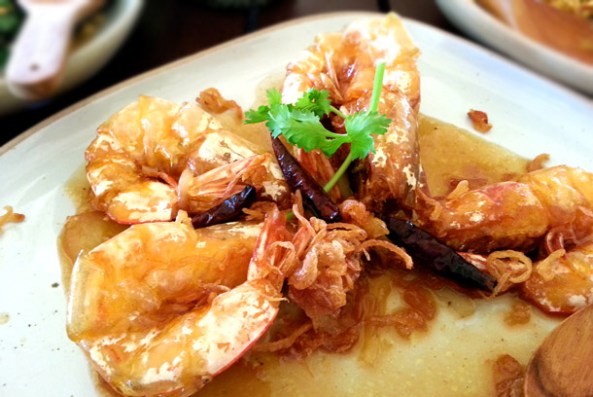
Goong Makham: Prawns in Tamarind Sauce (above) – this is a dish that I’ve come across many times in this trip and ended up falling in love with. So far my experience with Tamarind Sauce has been with Malabar fish curries or the Goan fish curries but not in any Thai preparation. As I started my queries, this dish turned out to be a very easy preparation. Palm sugar is added into a wok over a low heat and stirred continuously until the palm sugar starts to melt and turn a little brown. Tamarind juice, fish sauce and pepper is added and stirred in for a few minutes until the sauce starts to thicken. Finally, the prawns are added and simmered for about 2 minutes and served with a garnish of fried onions and garlic… oh did I just give out the recipe? Well, I did, I guess… such a simple recipe could be easily recreated at our homes.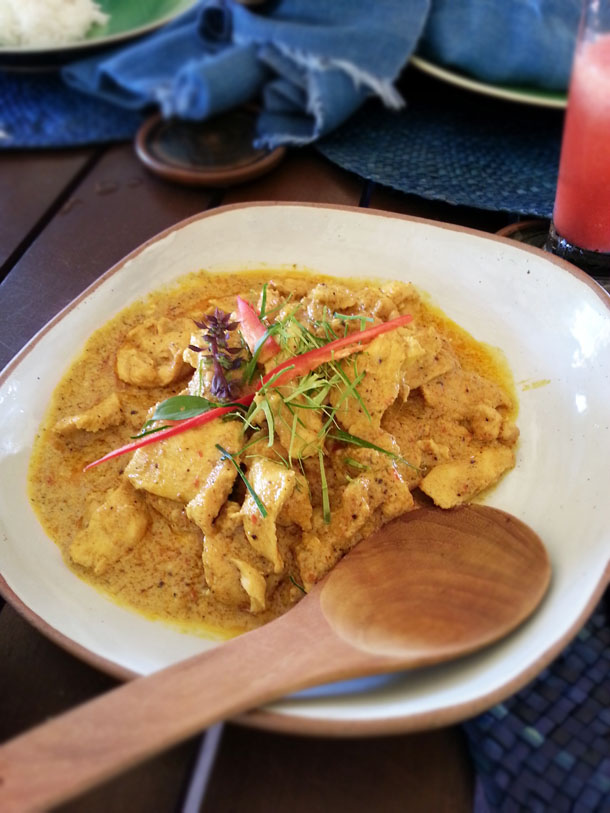
Panaeng Kai: Chicken Panaeng/Panang or Phanaeng curry (above) gets its name from Penang, the Malaysian island. This is a mild Thai curry and reflects the Malay influence on Southern Thai cuisine. It looked very similar to Thai red curry but was richer and creamier (and less spicy). The typical use of crushed peanuts in a Panaeng curry must have been the reason behind its unique taste.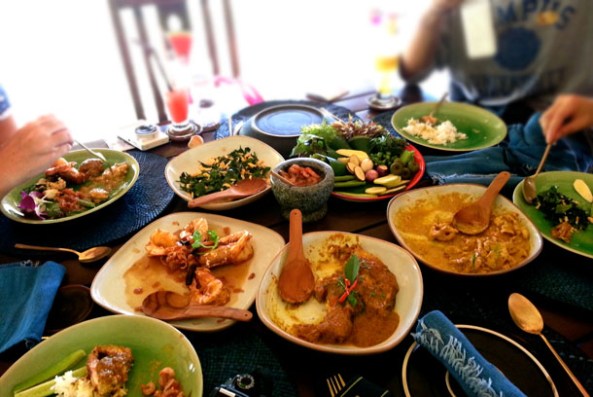
The fun and the feast seemed to have just begun. As I spent more time in Southern Thailand, I realised that there was a vast regional difference in Thai cooking that must have arisen from the difference in the cultural, geographical attributes of the country. While the basic Thai cuisine could be broadly classified into four regional cuisines corresponding to the four main regions of the country, there was a lot of influence from the cuisine of the countries neighbouring the different regions.
The four different classification was – Northern, Northeastern (or Isan), Central and Southern, each cuisine sharing similar foods or foods derived from those of neighboring countries and regions: Burma to the northwest, the Chinese province of Yunnan and Laos to the north, Vietnam and Cambodia to the east and Malaysia to the south of Thailand. In addition to these four regional cuisines, there is also the Thai Royal Cuisine which can trace its history back to the cosmopolitan palace cuisine of the Ayutthaya kingdom (1351–1767 CE). Its refinement, cooking techniques and use of ingredients were of great influence to the cuisine of the Central Thai plains.Western influences from the 17th century CE onwards have also led to dishes such as foi thong and sangkhaya. (More on Thai Cuisine)
Surprisingly, the next few days that we spent in Thailand, our Desserts consisted of only fresh fruits – mostly Watermelons and Pineapples. Delicious, fresh, chilled and generous amounts of these sliced fruits. It was only in Ruen Mai that we tasted a few more fruits like red Papaya, Mangoes and Wood Apple. Papayas looking ravishing in red and tasting gorgeous too, I liked the Wood Apples too. Only Mangoes didn’t seem to arrive properly. Yes, I’ve taken to fashion adjectives, because the culinary adjectives have started falling short as I eat out in Thailand.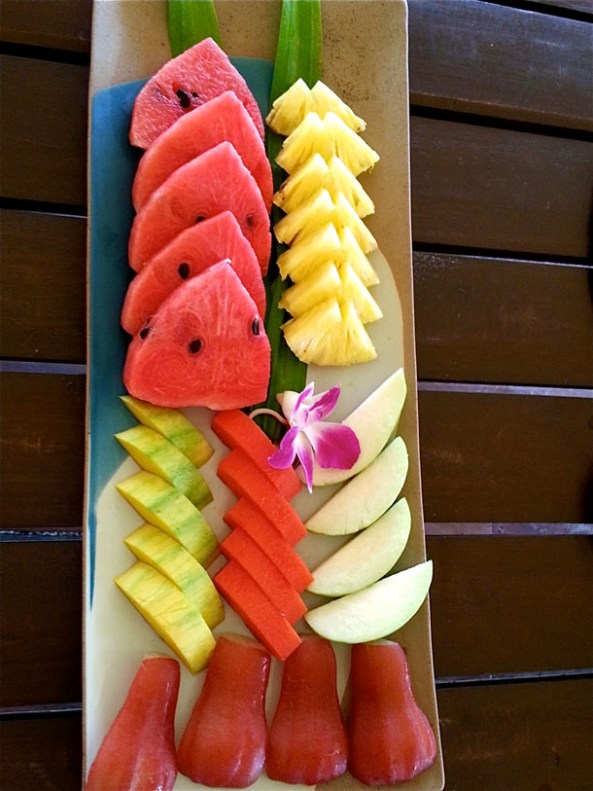
Ruen Mai Restaurant
Tel: +66 3841-4802 (Uttarakit Road, Amphoe Mueang, Krabi)/+6675-631797 (315/5 Maharaj Road, Muang Krabi); Email: ruenmai@hotmail.com
Ruen Mai is regarded as one of the best Thai restaurants in Krabi for more than 20 years. Each dish has the perfect blend of spicy Thai flavours and served with great panache.
◊—————————————————————◊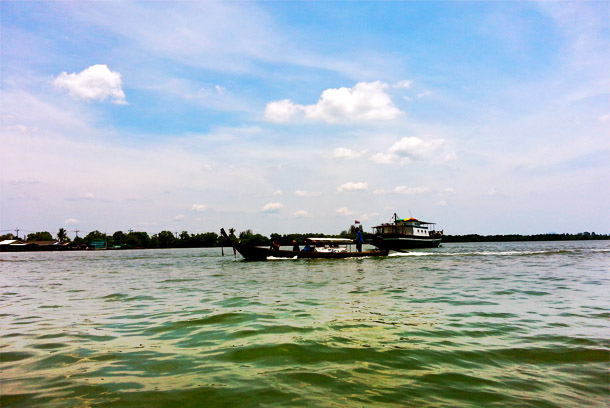
Our destination is Koh Klang, a small fishing island on the Andaman Sea, covered by thousands of acres of mangrove forest. Koh means island, Klang means middle and Koh Klang is situated in between the Krabi river and the Andaman Seas. From the Tha-Lay Pier we take a long tail boat to cross the Krabi river and reach the island. Most of the population in this island are Muslims and engaged in either coastal fishing or growing the organic Sang Yot rice or building the long tail boats. Koh Klang is also the birth place for these Hua Tong boats, which is now recognized as the symbol of South of Thailand, specially Krabi. These Hua Tong boats would become our daily mode of transportation for the next two days as we visit the various parts of the island to experience the local village life. Along with the Skylabs or the motorcycle Tuk Tuks. I soon realise that the real heroes of the island are these Skylab drivers. And considering my long lasting love for Tuk Tuks or the Auto Rickshaws, how can I not fall in love with these Skylabs? This calls for a separate post altogether.
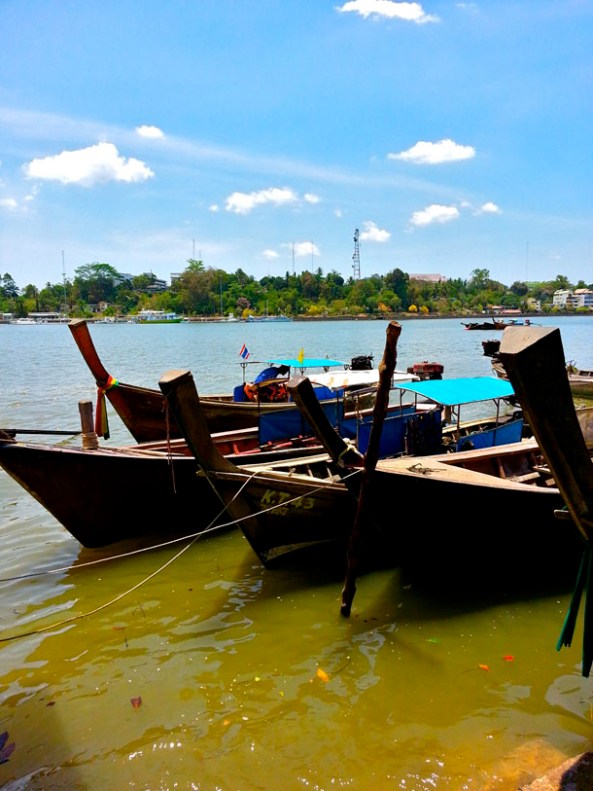
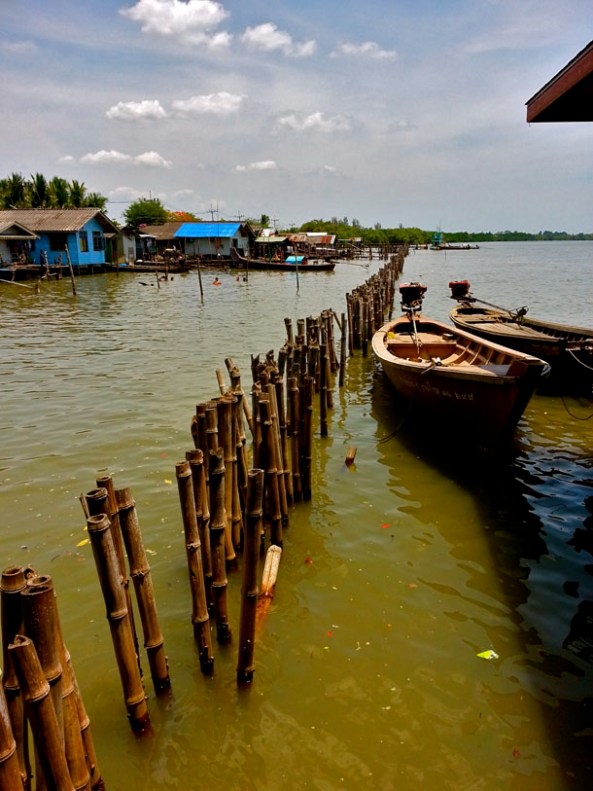
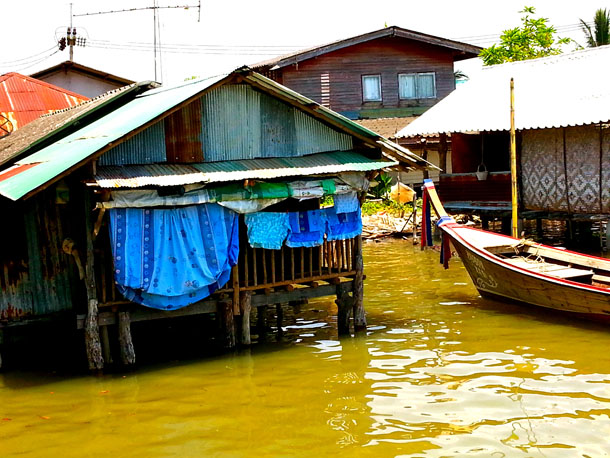
◊—————————————————————◊
Islanda Eco Village Resort
Thai Village styled Eco Resort; On Koh Klang, Krabi
In the recent years, we have been trying to travel responsibly and checking into Islanda just added to the gradually growing list of the Eco Resorts that we’ve visited so far. Submerged mangroves, loud chirping of birds, the lazy sunset over the Andaman seas and the water seeping through the fishing traps and bamboo fences into the resort grounds – this was the first time in our long journey that we were putting our legs up and we were enjoyed it thoroughly.
Tel No: 083-636 7887; Location: Moo 3 T. Klong Pra-Song (Koh Klang) A. Maung Krabi, Nong Thale, Mueang Krabi, Krabi 81000, Thailand
Islanda Eco Village Resort: Website; Facebook Page; Instagram
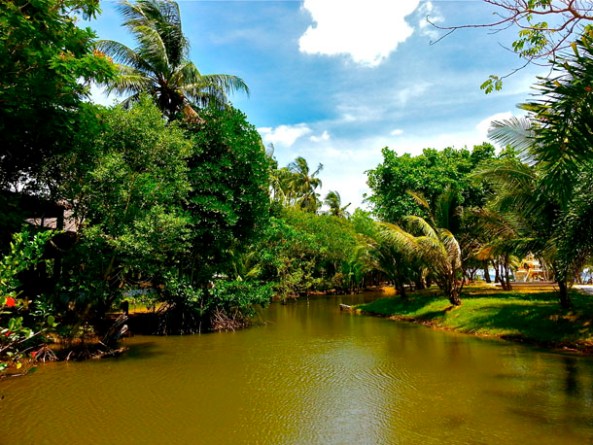
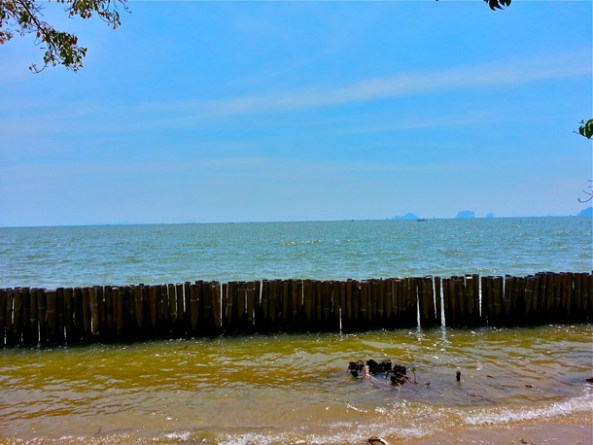



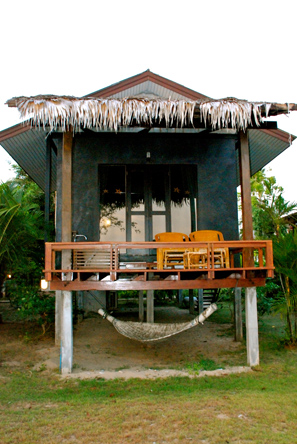

I was living exactly 814 kms away from Bangkok. Submerged mangrove forests, loud, really loud humming (or is it chirping?) of Crickets, the adventurous rides on the Hua Ton boats and the Skylabs as I held on precariously to my life and my seats, my tantalising first experience of Thai food (in Thailand) at the Ruen Mai restaurant, I was in a different world altogether – with a bunch of Emirati college students and without the Z-Sisters… spaced out completely except that I was still tweeting, posting on FB and instagramming LIVE, just like my normal urban self!!! Debbie (middle), who till now had just been a fellow Fooderati blogger and soon became more of a buddy than an accompanying hashtag on Twitter (#FoodieOnTour), and Rung (right) from the Tourism Authorities in Thailand, who I would pester continuously to write down the Thai name of the dishes that we were eating – these names would surely be popping up quite a lot in the next few posts. Do stay with me as I write on my amazing Thailand experiences. This is one trip that I have much more to write on than I had originally planned!
Unblogging it all… Ishita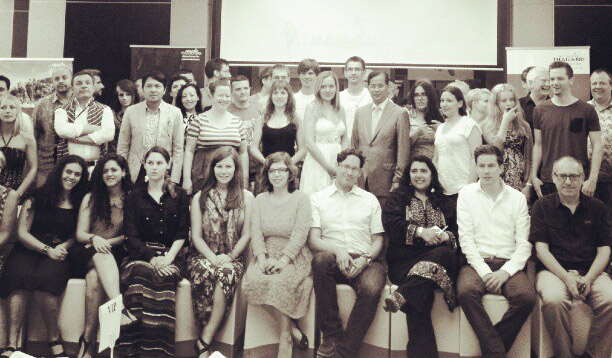
Disclaimer: The Thailand Academy trip was an invite from the Tourism Authorities of Thailand Middle East and Aviareps Group. However, the opinions stated here are my own and are independent. I do hope you enjoy reading the posts with lot of visuals. Please do not use any material from this post. You can see more pictures of my travel and food journey here.
◊—————————————————————◊
You may enjoy my other Oriental journeys:
- Singapore At Night
- Eating Out Is A National Pastime | Singapore
- Bikol Express & The Romanticism Of The Mayon Volcano
- Pancit – Palabok, Bihon, Canton | On A Filipino Food Trail
Posts from other members who were in the trip:
- Amazing Thailand – Dubai to Koh Klang – a Krabi experience «coffeecakesandrunning.me»
- Koh Klang Local Village Life «coffeecakesandrunning.me»
- Kayaking & Spa Day in Krabi «coffeecakesandrunning.me»
- 44 Konsonanten, 16 Vokale und ein Lächeln für alle, «Escribo»
- Abseits vom Massentourismus in Thailand, Impressionen aus Krabi von «Reisewerk»
Info Source:
BE SOCIAL. SHARE THIS!

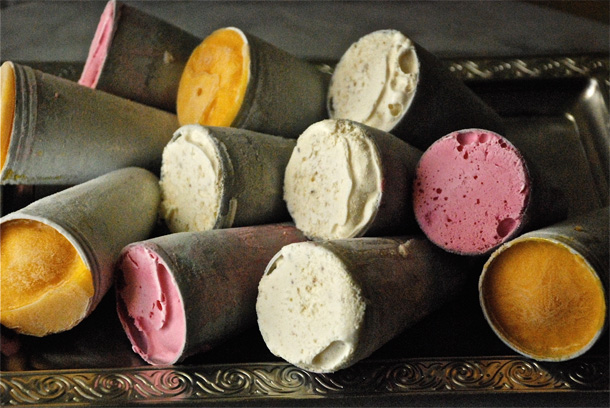
Mere colour can speak to the soul in a thousand different ways ∼ Oscar Wilde

Happy Holi to all of you! My feelings, emotions and nostalgia about Holi havn’t changed much since last year and they unfold in the manner written below:
Holi, the festival of colours, is one of the most famous of all Indian festivals. The entire land as well as the people of India turns into a big canvas on which colours are smeared upon. I’m always debating as to which Indian festival is more popular – Holi or Diwali? And which is more fun – the blurbs of colours in Holi or the bursting of crackers during Diwali? If you are in India, there isn’t any debate. You can have a super colourful Holi and a very noisy Diwali without getting into any trouble with the law! But, if you happen to live outside India, then, Holi might be more of a nostalgia for some. Not all places outside India may have the opportunity to chance upon organised Holi events like in Dubai (or many other cities outside India) where one can have a boisterous Holi.


I have grown up in Kolkata amidst celebrations of all kinds of festivals irrespective of any religion. This is a topic that I have written and re-written about a lot of times. Though we have re-created the festive moments outside India in whichever city we have stayed in, I miss all the festive fervour. In general, the festive spirit of a particular festival doesn’t float everywhere in a foreign land. The playing with colours doesn’t happen in each Muhalla (neighborhood) or each Galli (street and alley). In Dubai there are places where Holi events are organised and one can experience boisterous Holi fun just like in India. There are beaches and parks with designated areas where one can actually ‘play’ with Holi colours. Each year the temptation of playing with Abir or Gulal (the powdered colour), dancing to the DJ’s mixes and re-mixes, savouring on Mithais (Sweets) increases but I've always resisted since the Z-Sisters are still very apprehensive with the smearing of colours.
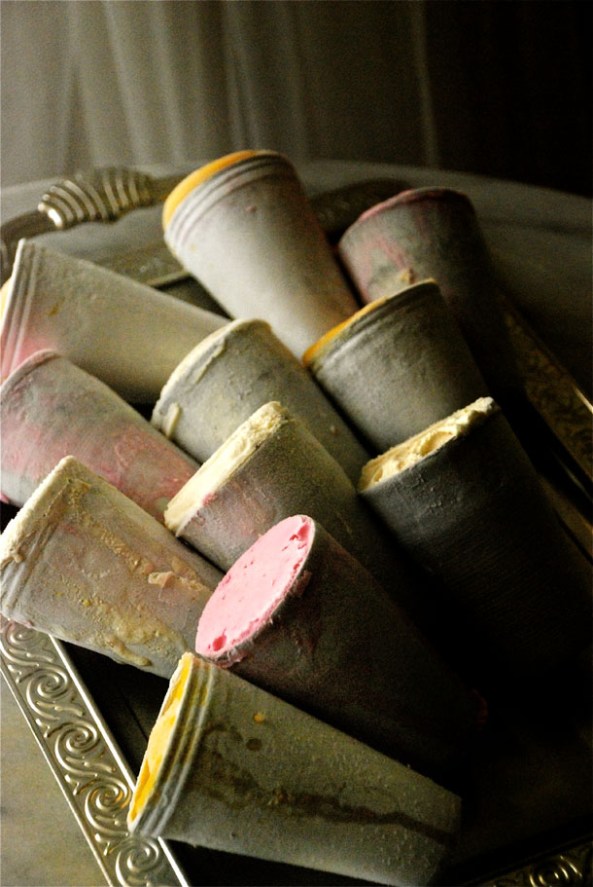
Somethings don’t change: Like leopards don’t change their spots, Homo Sapiens never cease to be show-offs! And I like that. I’m talking about the post-Holi Facebook photo exchange of friends all over the world – from Washington to Singapore and every other city in between. Who played the most colourful Holi this time? We are back being school kids trying to compete and show off. The winner of course has to be the one whose colour lasts the most and doesn’t come off even after days after having played the Holi!


Bengalis celebrate Dol Purnima, not Holi
In Bengal and Orissa, Dol Purnima or Dol Jatra (Purnima denotes Full Moon while Jatra denotes journey) is celebrated and colours are played on the Full Moon day which falls on a day before the Holi. This marks the arrival of Boshonto or the Spring and is also called Basantotsav (Festival of Spring). As I grew up surrounded by history in the Magistrate’s House, the heritage house in Alipore (below), Dol had a completely different connotation. The date would fall either one or two days before or after or on the day of my birthday itself, giving me the notion that Dol was a celebration for my birthday (humility ran in my veins even as a child!). The entire lawn of the Magistrate’s house would be smeared with Abir or the coloured powder. It’s interesting to know how the coloured powder takes the name Abir… in Bengali, the word refers to the particular reddish color of the sky during dusk that forms at the edge western horizon. Ancient Bengali scholars named this color which is in between Pink and Red as the colour Abir. To make our Dols more colourful, we would mix the colours in a small open water tank that was there in the garden, meant to be used for watering the plants! My parents must have really tolerant and so in love with life – they didn’t care about the mess nor the coloured finger prints on the walls. On the night just before the Dol-purnima, we would light a bonfire (the Nyara Pora) with a heap of collected twigs from trees and my Ma would be readying herself full-swing with her tumblers full of Thandai. Thandai is a cold drink prepared with a mixture of almonds, fennel seeds, magaztari seeds (watermelon kernel), rose petals, pepper, vetiver seeds, cardamom, saffron, milk and sugar. My Bab’s job was to make an intoxicating version of Thandai by mixing small and big amounts of Bhang (Bhang is a preparation from the leaves and flowers buds of the female cannabis plant and can be smoked or consumed by mixing it in traditional beverages like Thandai). Getting high on Bhang can be really intense (as can be seen in many Bollywood movies). My blogger friend Rajani gives a non-narco version of this super cool flavourful Thandai… {Eat Write Think’s recipe of Thandai}. Also, Anamika adds a twist to this to create a Thandai Ice cream…{Mad Cooking Fusion’s recipe of Thandai Icecream).

It’s only much later that I realised that Dol was not my personal birthday celebration but had so many religious and cultural connotations… that primarily it was a festival dedicated to Lord Krishna and Dol Jatra meant the procession with bejeweled Lord Krishna on a swinging palanquin (Dol denoting swinging). Also the Abir or the coloured powders originally having medicinal values and derived from flower extracts of Aparajita, Marigold, Hibiscus and Dopati, were smeared on people as a preventive measure against seasonal illnesses like Chicken Pox (also called Boshonto in Bengali) etc. The bonfire too was symbolic, eradicating evil and preparing for new harvest and celebrating the onset of fertility. Ahhh, Indian mythology and the symbolism can be so profound and overwhelming, I tell you! More about the history and the stories behind Holi… in wiki (holi… and bhang, if you are interested in some ethnic intoxication!)
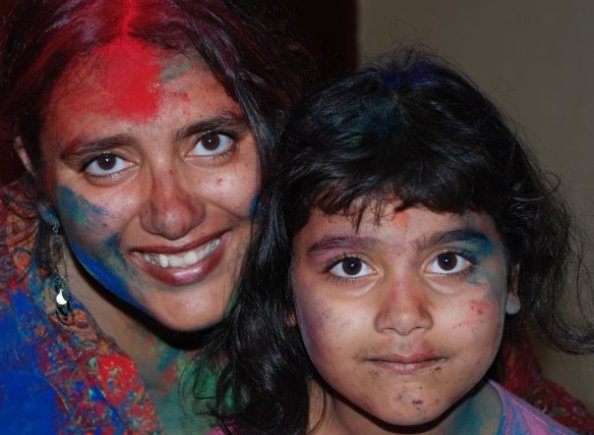
Although I’ve not been able to give a boisterous Holi to the Z-Sister, the rowdiest Holi experience that I’ve been able to give them is playing with dry Abir, that too making sure they have been organic (Organic Abir/Gulal is available in Down To Earth Organic). Yes, punch me if you want… but I have my own reservations as Big Z had been an epileptic child and I don’t want any fun that could turn into a trauma.

Traditional Kulfis and some colourful ones for this Holi… Kulfi is a very popular frozen dessert from the Subcontinent and is popular in countries like India, Pakistan, Bangladesh, Nepal and Burma. Traditionally, Kulfis are prepared by continuously stirring and thickening flavoured Milk until its volume is reduced by almost half. The thickened Milk is poured into sealed Kulhars (above) or Kulfi molds and frozen. Often, they are also set in earthen pots – the Matka Kulfis. Though I got my Kulhars from Kolkata, I’ve seen them being sold in many shops in Meena Bazar in Dubai who sell big aluminum cooking pots and vessels. Since, imagination need no bounds, I’ve also made make-shift Kulfis in muffin molds!
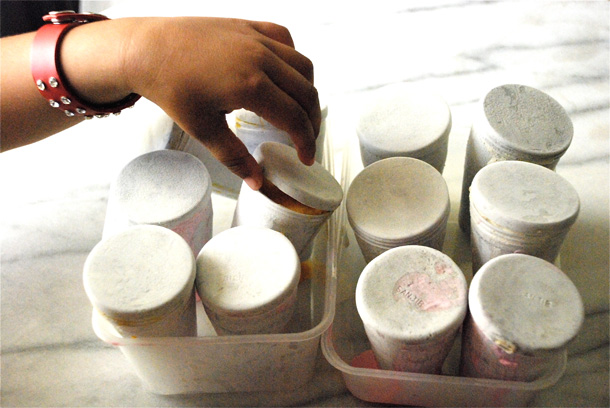


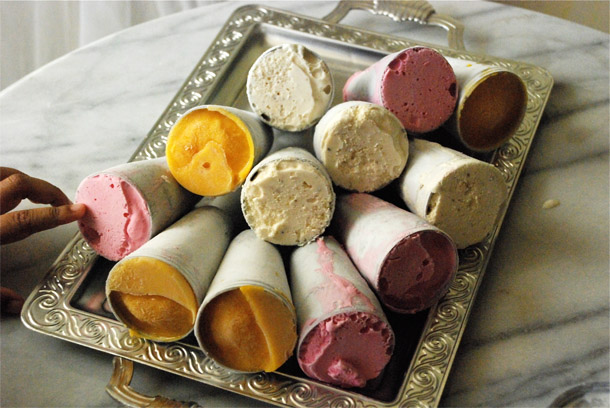
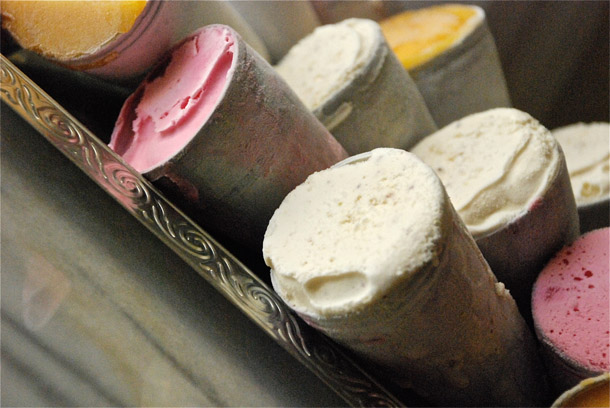
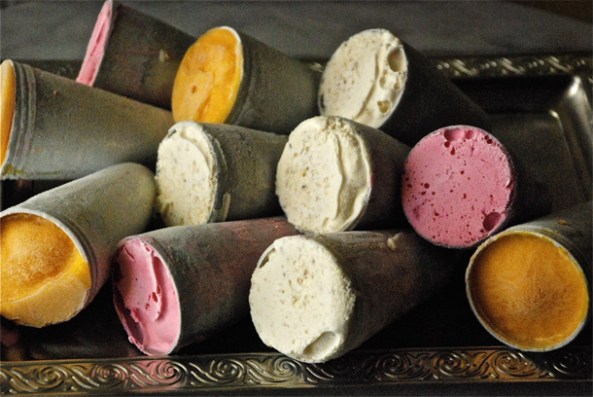


Colourful Kulfis
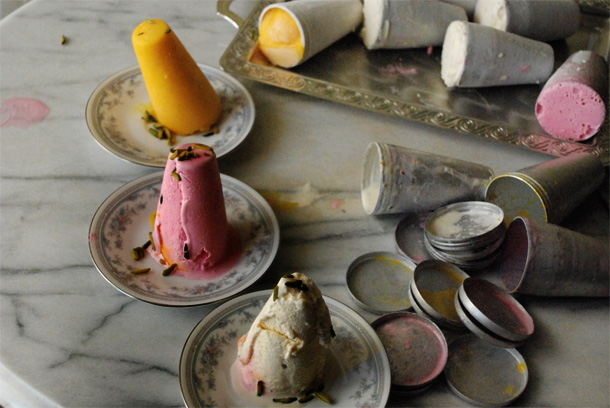
Ingredients
For the traditional Kulfi
2 lts full cream milk (many prefer to use sweetened condense milk, in which case you will need much less milk and sugar. It also saves on the time taken for stirring and thickening the milk)
2 cups sugar
2 tsp almonds, chopped into thin flakes
2 tbsp pistachios, unsalted and chopped finely
1 tsp rose water
For Mango Kulfi and Strawberry Kulfi
1 ripe mango, pulped out (pulp of ripe mangoes are available in cans in most supermarkets, specially of the Alphanso variety)
6 strawberries, puréed into a paste and sieved
Method
For the traditional Kulfi
- Boil the Milk in a Dekchi/a flat bottomed pan while stirring constantly (Dekchis are usually used for cooking Rice. In the Bengali kitchen, any milk preparation like Payesh/Rice Pudding or Kheer is always made in utensils meant for cooking Rice or in utensils kept exclusively for cooking these dishes. This is because of it’s susceptibility to catching the smell of other cooked food. Constant stirring is required so that the bottom of the pan doesn’t get burnt)
- Once the milk starts to boil, allow the milk to boil in low seam
- Add the Sugar, Cardamom pods and stir in while the Milk thickens and reduces to 1/3 of it’s original volume (if using sweetened condensed milk, add it only after the Milk has started to boil. Add Sugar according to taste)
- Add the chopped Almonds and Pistachios and Rose Water once the Milk has reduced and stir them in
- Pour the thickened Milk into Kulfi moulds and let them cool completely
- Put the Kulfi molds into the freezer for a minimum of 2 hours
- Before serving, overturn the molds onto individual plates (they should come off easily from the molds. If they don’t let the Kulfis thaw for a minute or two as they melt at the edges and you can run a knife around the inner edges of the mold). Garnish with chopped Pistachios and Almonds. Dried Rose petals perhaps?
For making the Mango Kulfi and the Strawberry Kulfi, add the purée once the Milk has already thickened and sweetened and let the Milk simmer for a while.
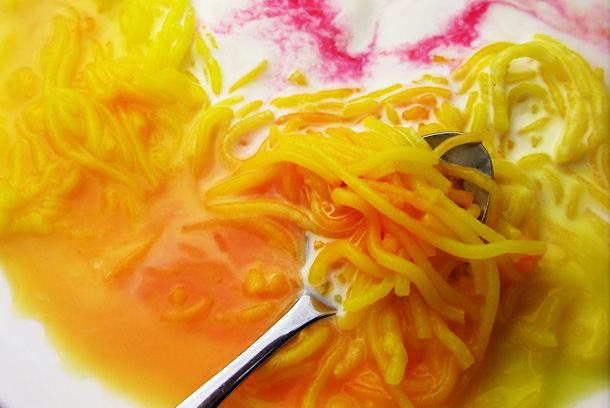
Kulfi with Falooda, the traditional pairing
Kulfis are also popularly served with Falooda, topped with some Rose sugar syrup. Originally, a Persian cold dessert consisting of thin Vermicelli noodles, is made from corn starch mixed in a semi-frozen syrup made from sugar and rose water. I’ve never been very fond of Falooda, finding them to be slithery… but then I fell in love with it one day as a Persian friend of mine introduced me to the home-made Falooda. The other day we attended a friend, Indranimashi’s (mentioned in my Luchi post for the amount of Luchis she had fed us) grandson’s birthday party, we were served Falooda with Vanilla Icecream along with some Rose Syrup. The noodles were soft and thick and the combination tasted pretty divine. (more about Falooda from Wiki)

Sprinkling hundreds-and-thousands
This time, Li’l Z became uncontrollable. She wouldn’t let me click. She was waiting right at the spot, wearing a ballet dress, wanting to taste the Kulfis. ‘Always taking pictures, always taking pictures… You are never letting me eat anything beautiful!’, she went on howling. Moulds went on missing and when they came back they had the little Sprinkles in them. Move away Pistachios, here comes the new age garnishing for Kulfis! Sprinkles, also called jimmies, are very small pieces of sugar strands used as a decoration on cupcakes, cookies, doughnuts, ice cream, frozen yogurt, and puddings. Hundreds-and-thousands pep up a dessert in a very novel way – it adds lot of childish spunk! These sugar-loaded pieces reminded me of a Bengali fusion dessert that I had prepared days back – Shondesh/Sandesh Pudding, as a guest post for Cook like a Bong.
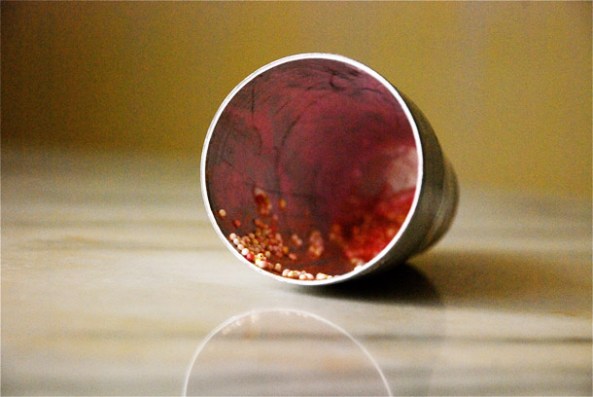
Any festival calls in for celebrations, wherever you are living. So if colourful Kulfis have to compensate for the colourful Holis that we miss, so be it. As I write on Holi, Easter is being celebrated all over. Last year I made an Assorted Easter Egg Curry (the girls knew that it was cooked By Easter Bunnies!), where the Egg basket consisted of Bengali Egg Curry (yellow egg curry), Spinach Egg curry (green egg curry), Hot Spicy Egg Curry (red egg curry). I re-posted it on my Facebook Page today and a reader asked me ‘do you celebrate Easter?’ Born a Hindu but growing up celebrating all festivals and embracing all religion (a bit like the protagonist of Ang Lee’s movie Life of Pi), I just had one thing to say, We are on for all kind of celebrations! A bit of cultural mishmash only helps. Just like the Hundreds-and-thousands brightening up traditional Kulfis! (my Easter post)
I’m flying off to Thailand tonight on an invite from Tourism of Thailand, courtesy Aviareps Group.My hectic itinerary includes a few island hopping in the Krabi region, tour around Koh Klang to experience the local village life, visit organic Sangyod rice farms, learn shallow water fishing, make traditional Hua Tong boats and last but not least taste some amazing Thai food and probably rope in a Thai cooking class as well. Do stay connected and look out for the hashtags #thaitales. Talking about celebrations and festivals, I have already started on my Thai crash cultural course in Dubai itself with Thai Consulate’s celebration of their cultural festival Songkran Splash at Westin the other day. And that makes me wonder, do you celebrate any festival from any other religion or culture apart from yours?
Unblogging it all… Ishita
Disclaimer: This isn’t a sponsored post, nor are there any affiliated links for any of the brands that have been mentioned in my blogpost. The subject, story, opinions and views stated here are my own and all images are from my personal album. While you enjoy reading my posts with lot of visuals, please do not use any material from these posts. Thank you for joining me on my daily food and travel journey on Instagram, Facebook, Twitter and Pinterest!
Try these dessert recipes from my blog: Gajorer Payesh or Carrot Pudding Moong Daaler Payesh or Yellow Lentil Pudding Bhapa Mishti Doi Gulab Jamum Rabri Other reads:How to make Thandai | Sanjeev Kappor Celebrate Holi with colourful recipes across the world |FoodeMag Holi in Nandgaon, Mathura and Vrindavan |FoodeMag Holi | Wiki Braj | Wiki
BE SOCIAL. SHARE THIS!



Violet Oon is the brand ambassador of Singaporean Food. She’s a culinary legend and is regarded as the ‘darling’ of Singaporean food industry. I tasted her cooking. I learnt her recipes. Specially, the Singaporean Chilli Crab. I sat with her as she ate her lunch and we talked only on food. And the above picture belongs exclusively to me!
We are Singaporean Chilli Crab addicts! We had visited Singapore in August 2011 and our tastebuds went ballistic. We ate everywhere – in Chinatown, from the food hawkers at Newton Food Centre to the polished restaurants at the elite Clark Quay. Not to mention the various food stalls thronging the random alleys in the city. Posts documenting our gastronomical exhilaration – Eating Out Is A National Pastime – Singapore and Singapore at Night. Then our search for Singaporean Pepper Crab and Singaporean Chilli Crab in Dubai landed us in Chimes restaurant in Al Barsha and we spent a week feasting on leftovers from home delivery. Sorry, we haven’t ventured beyond their Singaporean Chilli Crab and Singaporean Pepper Crab!
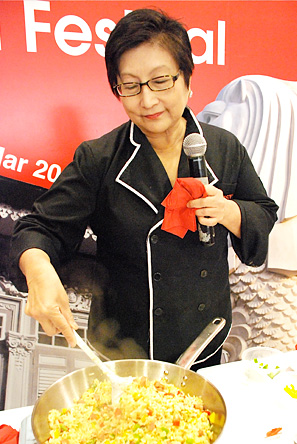

Naturally, I was all excited to hear that the Singapore Food Festival was coming to Dubai. My emotions were frozen when I met up with the grand dame of Singaporean food, the official brand ambassador of Singaporean Food – Chef Violet Oon. Chef Oon’s Singapore Food Festival repertoire included the famous Chilli Crab. The other dishes were: Singapore Satay – spiced meat skewers served with a velvety peanut-based sauce; Laksa – smooth rice noodles in a spicy coconut broth; and Singaporean Fried Rice (above left and below) with succulent bites of chicken served on fragrant rice. By the way, her recipe of the Singaporean Chili Crab is lurking in my palms, waiting to be given away to my blog readers!
A very beautiful lady even at the age of 63 years, friendly and approachable, talking to Violet Oon was a culinary journey on it’s own. We chatted for a long one hour while she finished her lunch over Butter Chicken and Basmati rice, sitting in one of the Queen’s Chamber (oh yes!) at the Peppermill Restaurant. You’ve guessed it right – a trip back to the restaurant followed soon and my post on it is yet to be written.
We all hail from regional places. How difficult or how easy is it to bring forward a regional cuisine to the world? What I find interesting in these kind of food festivals or promotions is that although we talk about regions and countries, at the end of it the food has to be yummy. When people taste our food they don’t even care which country it comes from. The response from the people is ‘Oh wow! It’s delicious! Where do I buy it?’ They want to buy the ingredients and they want to know how they can cook the food. Our food translates overseas as being very delicious. There has been so many influences in Singaporean food. For example, the Indian food that comes from Southern India – from Tamil Nadu and Kerala, gets influenced by Chinese and the Malay food in Singapore. So it’s slightly different in Singapore. Again, the Chinese food that comes from southern parts of China – Guangzhou province, Guangdong, the island of Hainan, is originally mild but gets tempered with the fiery nature of Indian food. The native Malay food cooked with Coconut Milk with spices of Galangal (a type of Ginger that is popularly used in many Asian cooking), Turmeric, Ginger, has been blended with different regional cooking and cultural influences over centuries, thus resulting in tastes (Singaporean taste) that can be very international.
Dubai is aware of many different kind of cuisines. But what about the rest of the world? You are the Brand Ambassador of Singaporean food and when you are presenting in other parts of the world, do you present Nonyan cooking? (Born in 1949, Violet is a Singapore Nonya, belonging to a rich culture which is known as Peranakan. This culture, also known as Baba and Straits Chinese, is a blend of the native Malay of Singapore and the Chinese immigrants who came down south to the Nanyang or the South Seas to make their fortunes in the 19th century. Nonya cuisine is the first and most innovative fusion cuisine of Singapore, representing a marriage of the East and East.) No, I present Singaporean cooking. It is different from traditional Nonyan cooking. Nanyang is one part of Singapore. I try to present different types of Singaporean food. For example here, I will be demonstrating Chilli Crab, which is a part of our seafood tradition. Satays are Malay tradition. The Chicken Rice that I’ll be cooking is a part of Hainanese tradition. Unlike other countries which have huge population abroad, Singapore doesn’t have that. I was told that there are only 800 Singaporeans in Dubai. We Singaporeans are so proud of our passports that we don’t want to settle abroad. There is no Singaporean diaspora. That’s why you’ll not find too many Singaporean restaurants abroad as you would find Indian Restaurants or Chinese Restaurants. Then how do we bring forward Singaporean food? Over the years, many top Chefs from all over the world have come to Singapore and have fallen in love with our street food and sea food. Singapore has a very rich tradition of sea food and the Singaporean sea food restaurants are elegant, chic and naturally expensive (The Palm Beach and Jumbo).
You were featured in The Simpsons. That probably says a lot about Singaporean food! Oh yes, we were featured in The Simpsons. The celebrated Chef and TV host Anthony Bourdain appears as himself on The Simpsons, where he goes to taste some street food in Singapore street market. There he’s joined by other top Chefs of the world (In the episode ‘The Food Wife’, Marge, Lisa and Bart start their own food blog called ‘The Three Mouthketeers’, which earns them a reservation at Springfield’s “premiere modern Restaurant.” Marge ends up having a very bizarre dream, which is where Anthony Bourdain, Gordon Ramsay and Mario Batali come in). One reporter asked me whether this was insulting. But for me to be featured in a food programme is no big deal. But to be featured in The Simpsons for me, is to have arrived in the culinary world. A food channel needs content for it 24 hours, so it will feature anything on food. But The Simpsons doesn’t have anything to do with food. And Singaporean food in Marge’s dreams encompasses the position that Singaporean food has in the culinary world. Interestingly, it hasn’t been discovered by the general population as such but it has definitely been discovered by the top Chefs of the world.
Do you change the way you cook as you travel the world? I don’t change my way of cooking. I may not offer certain dishes. Either because they are not fashionable or I feel will not suit the palate. For example, Soup Kambing – it has oil floating on top. Made with mutton bones, shanks or ribs which are slow simmered with aromatic herbs and spices, it is a hearty meal but high in cholesterol. I will never present this in America. There is so much in Singaporean Food to select from.
Does it help being a lady? Does everyone consider you the Mama and listens to what you have to say? I started my career as a journalist and a music critic. I am not sure whether being a woman has helped. As a woman, (As she talks her food comes in. She had ordered a Butter Chicken and a Saffron Rose Lassi and I tell her that I must take a picture of her eating Indian food) My father was in Kashmir for four hours in the World War ll. So there is a lot of sentimental attachment to Indian cuisine. Indian cuisine is not new to us and has formed a part of the Singaporean food. For example, Roti Prata. This originated from the Indian Parathas. (she points to the Parathas in the bread basket just in front of her. Leticia, from IE Singapore who has been accompanying Violet oon, tells me that there are various versions of Pratas – Banana, Cheese and many more). Even in places and cultures where they have been very rigid, Singaporean food is palatable. Everybody can resonate it. There are many vegetable dishes as well. So I think in that way, Singaporean food is very healthy.
And then there was a lot of reverse questioning… how do I like living in Dubai? How long have I been staying here? How old are my girls? I also tell her that it’s important for me to meet up with women achievers as I want my own daughters, the Z-Sisters to feel that there shouldn’t be any difference in the aspiration for boys and girls. Well, I am not a Chef in that way. I’ve studied Sociology. So I see Food from a different perspective, I try to understand and study food from the perspective of different people and culture.
Although Indian cooking is well known, I come from a region, the cusine of which is not so popular. Food can be tasty. But everytime I’ve to narrate the entire history to exlain my regional cuisine. Hence, to bring out one’s regional dishes to the limelight is not a very easy task. I’m really curious as to how the cuisine of such a small island has traversed far and wide? Or how individuals like you have put the Singaporean food on the world map? It is not me individually who have done this. Singapore government has a very big role to play in this. Organisations like International Enterprise (IE) Singapore, the country’s external trade promotion agency, has contributed a lot too. Singapore Tourism Board is also very aggressive in promoting Singaporean food outside Singapore and they have been doing this for the last 12 to 13 days. IE Singapore
You are always cooking from fresh ingredients. How do you reconcile to the fact that one can cut open a packet of ready-made ingredients and cook up an authentic Singaporean food? I know that these products that have been brought by IE Singapore for this festival, are very very authentic. The manufacturers are so obsessive about the taste and the authenticity, that I have complete trust in them. There are so many procedures to check and test these products within Singapore. So once they have passed these checklists internally, they are bound to pass the tests in other countries. The taste is absolutely authentic and not at all plastic. When you open the packet, the oil and the other ingredients are all there – just like you would make at home. Ofcourse, when I cook, I cook from scratch. And they are elaborate and time consuming for sure. Leticia was typing the other day, as I was telling her the process of cooking each dish and she kept on asking me ‘Are you sure, the procedure is so long?’
Why do you think that Singaporean Chilli Crab has caught on people’s fancy? Which other Singaporean dish, according to you, deserves more attention? I think Sea food always has a Wow factor. And Chilli Crab is really appealing – it looks so robust, so attractive. And the taste is also unique – it’s sweet and sour, at the same time so spicy. Satay has also caught on. Along with Singaporean Fried Rice. What is your favourite Singaporean dish? Maybe, I have 10 favourite dishes. They would be Chilli Crab, Satay, Laksa, . Do you cook at home? Yes, I do. I like it very simple with lots of vegetables. I love eating lots of Salads – plain veggies and fruits. I can happily drink Bittergourd juices and carrot juices (Ahhh… that probably accounts for her amazing skin). I don’t think everybody should be feasting every day. Actually, most professional Chefs cook very simple meals at home.
Oriental Cuisine has a lot of Carbohydrates in it’s noodles and rice dishes and are high in Cholesterol. So do you think that Singaporean food is healthy? Not necessarily. In a good Chinese meal, you are never served a Carb. You serve the rice in the end, in-case if you haven’t had enough to eat. None of the dishes that are served are supposed to be had with rice. Oh, so we have it in the wrong way? No, you eat it in the Family style. You have the Banquet style. In a traditional Chinese wedding Banquet, you’ll be served a cold platter, then a soup, then the different courses – chicken, seafood, vegetables. Only the second last dish, that is just before the dessert, there will be a fried noodles or rice. And the only reason it is served is in case you haven’t eaten enough. But by the time you reach the Carb, you are already stuffed. So the carb is for daily food. It is not a special food. In Malay food, the rice is there and all the sauces are eaten with the rice. Nowadays, people are eating less and less carb and are eating more protein, which I feel is the wrong way round. That’s why in my restaurant, everything has a Salad. I must have veggies with all my dishes and I serve it the same way in my restaurant. Actually, Singaporean home cooking is very healthy. In Nonyan cooking, every day food consists of rice and something else – maybe a soup or vegetables etc. Nowadays everyone has started to eat feast food as every day food. When I was small, we didn’t eat Chicken everyday. People were poorer. Actually, when people are poorer they have a healthier diet!
What is your stance on Organic food, local produce (a topic that is one of my favourite subjects of discussion)? Organic doesn’t necessarily taste better as opposed to popular belief. An organic chicken is not supposed to be tasting better. It is just raised in a different way. My grandson is wheat intolerant. We hadn’t heard of these things when we were small. The greatest gift that you can give to your family is the gift of health. So you have to invest in all these better food varieties. Singapore is very strong on organic products.
While on the subject of organic, you were a journalist. How did this transition to cooking happen? Organically? Yes, absolutely in an organic and unplanned way. My mother didn’t know how to cook. She was a career woman and in the 1950s, a career woman wasn’t supposed to be a Super woman unlike today’s generation of career women. When we went to London, she got herself enrolled into a culinary school and transformed herself into a great cook. But she couldn’t cook her own Nonyan cooking. I had to wait for my Aunts and others to cook and I started learning the Nonyan way of cooking from them. By the time I was 16, I already knew how to cook all these. The reason for my learning was however, for a very selfish reason. I was thinking how will I ever taste these kind of food once my Aunts dropped dead! (she bursts out laughing) There were no restaurants in those days. So I entered the kitchen and watched them how to cook. It’s very different when you see someone cook. In home cooking, one doesn’t even realise the techniques one is using to cook. There are so many different techniques of cooking even within Singaporean cooking. So I tell everyone, every family has a cookbook. Preserve them for the future generations.
An advice that needs to be treasured for sure!
◊—————————————————————◊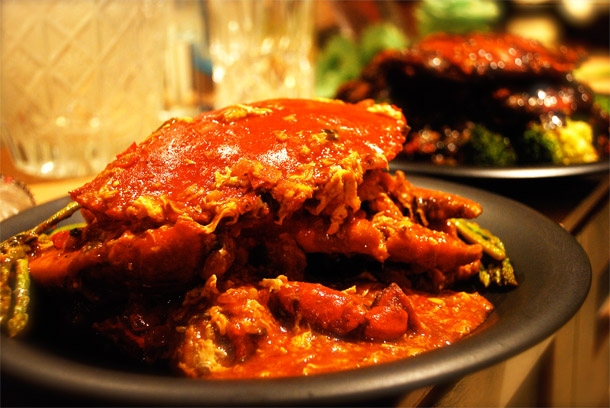
Singaporean Chilli Crab
Category – Main dish; Cuisine type – Singaporean
This is one of Singapore’s greatest culinary export to the world. Singaporean Pepper Crab and Singaporean Chilli Crab, the two celebrity Singaporean dishes have crossed the Singaporean boundaries, and have spread across the globe. They have also remained etched in our taste-buds. As I’ve mentioned in many of my earlier posts, a peculiar Crab-itch develops in our family sometimes and we practically run down the streets, hunting for Crabs cooked either in the Malayalee or the Singaporean style. Here, I am sharing Violet Oon’s recipe of Singaporean Chilli Crab that she said is as authentic as it can get, following the easiest route. In her own words, ‘what makes this dish so special is its sensuous, sweet yet savoury sauce, created with a base of chilli and tomato sauces. For extra oomph, enjoy the dish with Mantou (toasted buns) on the side to scoop up the thick gravy.’

For the printable recipe →
Serves 2 persons
Preparation time – 40 minutes maximum
Ingredients
• For the Sauce
Tomato Ketchup – 5 tbsp
Water – 1 cup
Sugar – 1 1/2 – 3 tbsp, or according to taste
Cornflower – 1 1/2 tsp
Soya Beans or Dark Miso (optional) – 1 tsp pounded brown preserved Soya Beans
• For the Crab
Crab – 1 large, prepared for cooking (My tip here, go in for a large Mud Crab)
Garlic – 6 cloves
Egg – 1
Spring Onions or Scallions – 2, cut into finger lengths
Lime or Lemon Juice – 1tsp, freshly squeezedCoriander leaves or Cilantro – 1 small fresh bunch, cut into 2 cm long pieces
Method of Preparation
– Whisk all the ingredients for the sauce together and set aside
– Pound or grind Garlic and Chillies to a rough paste
– Heat Oil in a wok over high heat
– Add Garlic and Chilli paste and fry till fragrant
– Add Crab and stir fry until the shells turn slightly red
– Add Sauce. Stir well, cover the wok and simmer till the shells turn bright red, indicating that the Crab is cooked
– Break the Egg into the Sauce and mix well. Simmer for another 10 seconds
– Turn off the heat and stir in spring onions and lime or lemon juice
– Garnish with freshly chopped Coriander leaves and serve hot
◊—————————————————————◊
Not for the faint-hearted…
A bit of a rewind on our Singaporean Chilli Crab journey in Chinatown, Singapore! Chinese restaurants – small and big, throng the entire Chinatown. And specially interesting are the dishes they serve – the authenticity of the Chinese dishes diluted and fused by multi-cultural influence! Most of the seafood sections have an array of live crabs which one can select and then order. They are kept tied up in plastic ribbons (left). The sizes of the crabs are enormous. We chose a crab that weighed around 800gms (just to clarify, S did!) and the crab that went into the preparation of the Chilli Crab that we had ordered is shown here! That was our first encounter with Singaporean Chilli Crab, the celebrity dish (down below).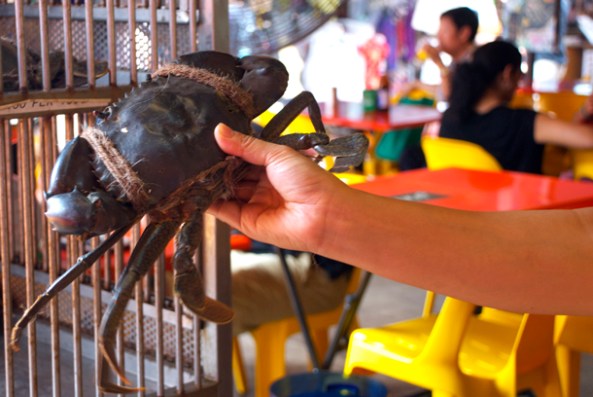

Was I happy with the Singapore Food festival? Well my answer would be a small No and a big Yes. The No is because I had expected the festival to be held at a much grander scale, not just showcase a few Singaporean food labels in the manner of special food promotion kiosks at the Lulu hypermarkets. I would have loved to see more of Violet Oon’s proper cooking, not just watch her cooking up a few quick Singaporean recipes with ready made ingredients. But then, that was my personal expectation. The objective of the festival however, was to promote these Singaporean brands and show most people how to cook Singaporean food at home the easy way. From that perspective, the objective must have been met. This was after-all, a promotional festival held in LuLu’s supermarkets throughout the UAE, as a joint initiative of IE, the country’s external trade promotion agency. Many food brands from Singapore were introduced, and there were cooking demonstrations, tastings, and other events – all surrounding Singaporean Food. Food holds such a centre stage in Singaporean culture, that the Singapore Tourism Board organizes the Singapore Food Festival every July to celebrate Singapore’s cuisine and promote it alongside Singapore’s shopping experience. I am sure their future endeavors in Dubai would be held at a much larger scale. And that’s where I would cast my Yes votes for!
The most important gain for me was to getting a chance to spend a lot of time with Violet Oon, a lady who has spent more than half of her lifetime in promoting her country’s food. Listening to her speak on Singaporean food and her long journey in the food industry, while she relaxed (hopefully!) having her Indian meal of Butter Chicken and Rice made me experience a journey of my own – I’ve been trying to present Bengali Cuisine to the world at every chance I get (Bengali food in Ahlan! Gourmet; my post on traditional Bengali Cuisine that borders on the verge of being an encyclopaedia; making Rasgullas, the most famous Bengali Sweets in a Ramadan special episode aired in Dubai One; also making the traditional Bengali drink called Aam Pana for My Dubai My City – all these while residing on the Dubai shores!). My next restaurant wishlist is to visit Violete Oon’s Kitchen in Singapore. I am signing off with the curiosity tickling me – do you crave for Singaporean Chilli Crab, like our family does, once in a while?
Unblogging it all… Ishita
Disclaimer: I hope you enjoy reading the posts with lot of visuals but please do not use any material from this post. You can see more pictures of my travel and food journey here.
◊—————————————————————◊
Related articles:
- Sanjeev Kapoor | Talking To The Chef Extraordinaire
- Asha Bhosle | Cooking With Her & Sharing Her Chicken Keema Recipe!
- I Saw Them Cook And I Ate What They Cooked | Taste of Dubai 2013
- Chef Abhijit Saha | Is There Heart And Soul In Molecular Gastronomy?
And
- Eating Out Is A National Pastime | Singapore
- Singapore At Night
- Singaporean Chilli Crab At Chimes | And A Special Blog Giveaway For Valentine’s Day!
BE SOCIAL. SHARE THIS!

Asha Bhosle is more than a legend to me. But at this hour, all I can say is that the legend cooked. She cooked for us. I tasted her cooking. I learnt some of her precious recipes. I cooked for her, or am I imagining things in my head? I did hear her sing. I sat with her. I talked to her. And the picture below belongs exclusively to me!
I did have the honour to spend almost a day with Asha Bhosle, the legendary singer of Bollywood whose career has spanned over the last six decades. Entering the Guinness World Records for the most single studio recordings, recording up to 11,000 solos, duets and chorus-backed songs in over 20 Indian languages since 1947, the lady is absolutely mesmerizing. Apart from her singing prowess, many celebrities in the film industry can vouch for her cooking prowess as well. An organic culmination of which has resulted in the award-winning chain of restaurants – Asha’s. From the time I’ve posted the pictures of my cooking lessons with the legend on my Facebook Page, the two questions that many of the readers have repeatedly asked are ‘Does Asha Bhosle cook as good as she sings?’ or ‘Does she sing while she cooks?’ Well, no. She probably doesn’t sing while she cooks, though she did sing her current favourite, Jab Se Tere Naina (a song from the film Saawariya) for us while she cooked. And yes, she does cook as good as she sings. If not better. The lady also looks as pretty in real life as she does in reel life. And she just didn’t pose prettily with pots and pans. She actually cooked all of the four dishes that she demonstrated, from scratch and as hands-on as it can possible be, at the hi-tech kitchens of the Miele Gallery. In Dubai, to attend a special cooking class which was conducted as a part of a promotion run at her restaurant Asha’s across the region (a few lucky participants flying down from Cairo as well), Asha Bhosle seemed like a small bundle of the highest intensity of atomic energy. I happened to barge into the select group at a very last minute, at the right time and at the right moment, following her tweet and perhaps tweeting her back (tweeting a second after she tweeted that she was in Dubai!). I owe big time to the wonderful Uma from Asha’s and Teodora from Wafi’s hospitality division to have sneaked me into the ‘lucky selected’ few to have attended this session.
Chatting and reminiscing on nostalgia while cooking, Ashaji reminds me of a pukka/experienced cook of the mum and grand-mum category, effortlessly tweaking recipes here and there, with her easy expertise and experience, while assuring all the while that the end result will only be a tasty fare. She would bite into her favourite ingredient – the green chilli (below right), to check whether it is hot enough and then ask ‘Do I have to use the spoon or do I put the spices according to my instincts?’ My dad still remembers that when she used to come and stay with a friend in Kolkata, the entire para/muhalla/neighborhood knew what was being cooked by Asha Bhosle. I have also heard that once she was in town in those days, cooking would start as late as past midnight and the aroma of her cooking would linger on in the para the whole day! She laughs when I tell her this and she shares my comment with her comrade of Chefs from Asha’s who hover around her as she cooks. Then onwards she would speak to me in Bengali, calling me the Kolkata girl. ‘Ei je Kolkatar meye… shudhu chobi tulbe naki ektu kheye dekhbe?/Hey, the Kolkata girl… will you only click pictures or you’ll be tasting the food too?’
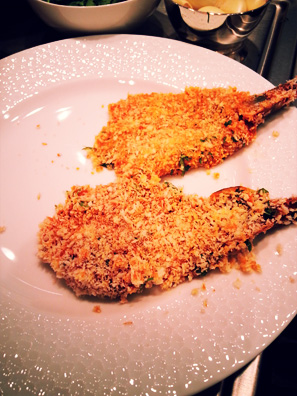
Ashaji cooked four dishes – Chingrir Chaap/Prawn Chaap, Chicken Keema/Chicken Minced, Hare Baigan ka Bharta/Green Eggplant Mashed (her Mom’s recipe) and Shahi Tukda/Bread dipped in sweet syrup. The last recipe being the surprise. Chingrir Chaap (Rahul Dev Burman style) is a signature dish from Asha’s and she narrated how this dish is very special, hailing from the native region of Tripura in North East India. Panchamda or Rahul Dev Burman was a prince of the royal family of Tripura and he simply adored it. In Chingrir Chaap, jumbo prawns are marinated in spicy ginger onion paste for as long as 3-4hours, then breaded and deep fried. The picture to the left shows the Chingrir Chaap in their pre-frying state. Though she shared all the recipes with us, this was one recipe she asked us not to share – ‘Yeh recipe aap kisise share na karein/Please don’t share the recipe with anyone’! Surprised but I did find that the recipe published elsewhere. Not that it matters!

Two and a half hours of non-stop standing and cooking, Asha Bhosle at 80 years, is as vivacious as a teenager. ‘I started cooking at the age of ten. For my father’s shraad/death anniversary, my sister and I would start cooking at 11 in the night and finish at 11 the next morning, cooking a variety of Indian dishes like pakoda, puranpoli etc’ As she pours generous portions of Ghee/Indian clarified butter into the wok, she admits that her secret diet is Ghee. She tells me that she used to have Chappati (Indian flat bread) and Ghee every day at dinner. But now with a concert coming up, she plans to shed some weight. ‘Ghee and butter doesn’t make you fat, but eating junk food does (she does take a name!). Ghee is Amrut/Ambrosia‘. As we get curious about all the celebrities who have tasted her cooking, she goes on to say that Salman Khan came the other day to her restaurant and had a long list of things that he doesn’t eat. But the actors of yesteryears seem to have been very different. She recalled how RD Burman and she would compete in the kitchen to outdo each other. Famous lyricists like Anand Bakshi, Majnu Sultanpuri or actors like Dev Saab (Dev Anand) used to be regulars at her home. While Dev Anand was very particular about what he ate, she remembers the first time Rajesh Khanna came home for dinner. She was skeptical as what to cook as Rajesh Khanna was such a big star. But he came and told her not to restrain herself from pouring Ghee… ‘Ek kyon, aap do tin chammach bhi dal sakte hain/why one, you could pour even two or three spoonfuls of Ghee’! But the heroines – whether of yesteryears or of today, they would always be ‘on a diet or a fast’! Talking about fast, even Asha Bhosle seemed to be on a fast that day (Shivratri). Although she cooked everything, she didn’t even taste what she cooked. And even then, all the cooking turned out to be just perfect, the magical touch of a kitchen connoisseur!

Throughout the session, Asha Bhosle kept on talking. She stressed on the fact that ‘every woman should know how to cook’. Though she confessed that she hardly cooked once she got married because she had to leave home for work as early as 7am and would return at 2am in the morning. It was because of the children that she eventually started cooking so that they wouldn’t eat outside. Even today, all her children and grand children love her cooking. But what is her favourite food? Plain rice, Daal/lentils and Mirchi achar/pickled chillies, yes, it is as simple as that! Ashaji is particularly fond of spicy food and has her own *secret* proportions of spices going into her Garam Masala (below). Even the Chefs of her restaurants do not know the proportions. She personally sends them across to the restaurants – approximately 10 kgs/month for each restaurant. We were lucky to have got a small amount of Ashaji’s secret Garam Masala as a parting gift!
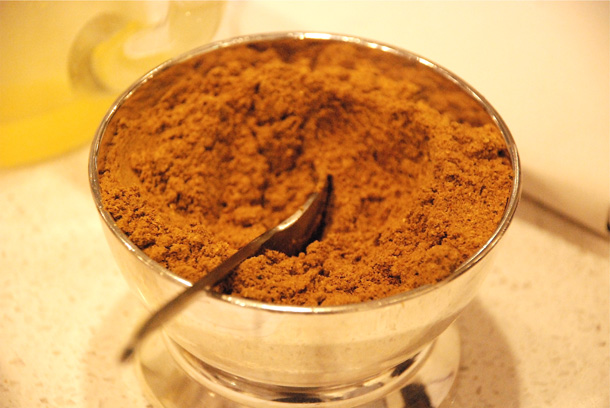
My chat with Asha Bhosle… it’s interesting that while I spoke in Bengali, she answered mostly in Hindi, breaking into Bengali once in a while.
I know everything about you, as much as one can know, from reading and studying the web. I don’t have any question as such. You can say whatever you want. (Oops, without having much to ask, we spent around 40 minutes talking. And did I just say I didn’t have anything to ask?) Well, Asha’s is an enterprise, it’s a business. How much of Asha, the person, is involved in it and how much of it is a brand? My involvement is absolute in the recipe creation of Asha’s – Curry, Gosht/Meat, Shammi Kababs, many Sabzi/Vegetables dishes, Daal/Lentils. I am not involved in the Tandoor part of the menu. This is because, at home also, food is cooked mostly on a char-coal Sigree but not on a Tandoor. I have personally overseen the creation of the rest of the Menu. Makhni/Butter Chicken and other North Indian popular dishes are my Chefs’ specialities. These are dishes where I feel they know much better than me. The Menu also has my style of cooking – Chicken Curry, Chicken Kabab, Chingrir Chaap/Prawn fry, Prawn Pattice etc. I saw a few Bengali inclusions… Yes, there is Chingrir Malai Curry/Bengali Prawn Curry in coconut milk is an authentic Bengali dish. Kishore Kumar challenged me to cook this dish in the most authentic Bengali way. And I took up the challenge and did learn it the traditional way from RD Burman’s grandmother.
The new menu of Asha’s. Is it your creation? Yes, a lot of it is mine. For example, Chicken Chote Kabab, Baigan with Keema… How did you come up with these recipes? Well, I’ve invented a few of these to feed my children. For example, they hate eating Baigan/Eggplant. So I’ve cooked it up with Keema. Clearly, food is a passion for you, isn’t it? Food is definitely a passion. You can create different preparations of food by thinking about all the ingredients that would go into the food, in your own mind. You think what you want to do. Whether you are going put more of one ingredient and less of another ingredient, don’t count so much. I don’t think anybody who’s cooked with numbers in mind, has ever cooked up a great dish. See how a dish is cooked, feel about that particular dish and cook with all your instincts and feelings. And the last but not the least – Feed with love! (It’s just a coincidence that I came across another lady recently, who believes in the same)
Asha’s, the chain of restaurants, is all outside India. You do not wish to open one in Bombay? It is very difficult to open a restaurant in Bombay. Getting a good location, space, managing the permissions, the task is pretty daunting. If you ask any non-Indian about a good Indian restaurant, Asha’s would be one of the two or three names that would come to mind. You like your food to be spicy. But how do you manage to keep the spice factor of your dishes in the Asha’s neutral? My Chefs are there who are continuously planning the recipe along with me. I personally check every dish offered in the Menu. Once the perfect taste of a dish is finalised, the proportions of the ingredients is computerised and this standardised recipe goes across all the restaurants.
About the Garam Masala, there are many regional variation. Obviously, you are not going to share the secret, right? (She laughs heartily. I thought there was some Methi/Fenugreek in it, but I was told NO!) (speaking in Bengali now) Yes, I go to the spice market, sit down and mix the different spices going into the Masala according to my own proportions. I send them to all my restaurants. But the Chefs need to know what goes in, right? Why? I’ve got them with me. I make around 10 kilos of Garam Masala for each restaurant and send them across. It lasts them a maximum of 2 months.
What is your favourite food? When I was young, I had different favourites. But now as I’ve told in the cooking session before, my favourite is Rice, Daal and Mirchi Achaar/Chilli Pickle. Do you like any other type of food apart from Indian food? Well, I’ve tried many different kind of food. But I prefer to eat Indian food. Your favourite Bengali food? Shorshe bata Maach/Bengali Mustard Fish, specially Parshé Maach (Parshé is a very, very bony fish, so this surprises me to no-end). I also like Ilish/Hilsa (another traditional bony Bengali fish) When you fry the Ilish/Hilsa, the oil that is left behind. Squeeze into it some Dhani Lanka/Green Chilli, sprinkle some Salt and eat it with white Rice.
What about the daily cooking at home? I have people who cook for the family. I don’t cook daily meals anymore. My daughter-in-law is there to supervise. But if there’s some special dish that has to be made or people are coming over, I can cook up everything within 2 or 3 hours. Special dish or a new dish – do you read recipes or cookbooks? No, I just remeber recipes from experience. Even if I don’t remember, and I end up adding something new, the dish just becomes a new dish. Which, I would say is more desirable. A bit like a Remix? Yes!
My Mum and my Mum-in-law, they don’t like experiments. They like everything to be traditional. What about you? Well, I’m pretty much like that. I believe in being traditional. I like traditional clothing, traditional food. I was expecting that you are going to wear your trademark white sari with the very famous bracelet that you wear. Well, that is only for my shows. I am wearing the jewellery which I believe is lucky for me.
You look incredibly young. How do you manage that? Will power. Many times, one is faced with major difficulties in life. This can only be overcome with immense faith in oneself and sheer will power. What gives you strength – Music? Or Cooking? Definitely, Music. I listen to the chanting of OM for 20 minutes and then I start my Riyaz/practice. And I believe in hours and hours of practice – classical music. And if someone doesn’t have Music in his/her life, then? Do Pranayam (where Pranayam is an ancient Yoga practice concerned with breath control) and other breathing techniques. You just think about your God, whether it’s Christ, Allah, Shankar etc. and breathe (she demonstrates holding her fingers in the Sahaj Mudra).
Coming back to Music, do you believe in remixes? Do you think it’s okay to have remixes as long as the younger generation listens to your songs? I don’t like remixes. Even when I sing my own remixes. I like listening to the original songs, in the purest form in which they had been created. But as long as new music is not getting created, remixes of old songs will keep on happening. New music will be created perhaps, only when another RD Burman is born!
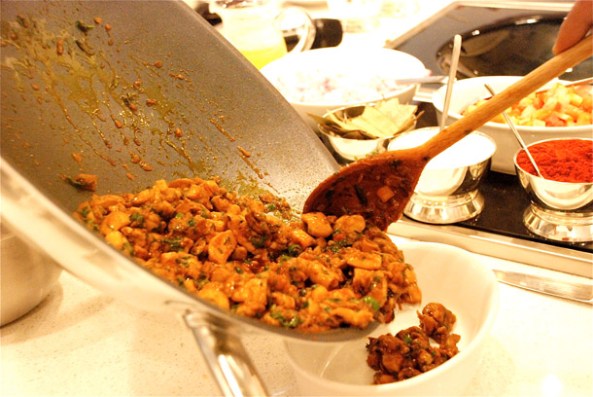
Most of the signature dishes at Asha’s Restaurants are tried-and-tested recipes from Ashaji’s personal kitchen. For instance, the Chicken Kheema or Keema, where the chicken has been hand-chopped and then cooked with potatoes, onions, tomatoes and garnished with her *secret* Garam Masala. This dish originated when her children refused to eat meat with bones in it. ‘This is a recipe by the six foot plus actor, Shaikh Mukhtar. I was intrigued when I had this at his house because usually kheema is made with mutton mince. This was chicken and I immediately copied it down, with his permission of course.’ She laughs about how she had to learn to cope up with noting down the amount of ingredients that goes into each of her cooking, instead of just cooking by her instincts, so that she could offer her signature recipes in Asha’s. Also, the fact that after each dish has been cooked, requires ‘usko kya kehte hai/what is that called?’ – garnishing! Here, I am sharing the recipe of Ashaji’s Chicken Keema, after having tried it at home with minor modification. The ingredients in the recipes were given according to grams and I’ve tried to actually quantify each one of them as I cooked. So here’s Asha Bhosle’s recipe of Chciken keema along with my two-pence worth of cooking tips!
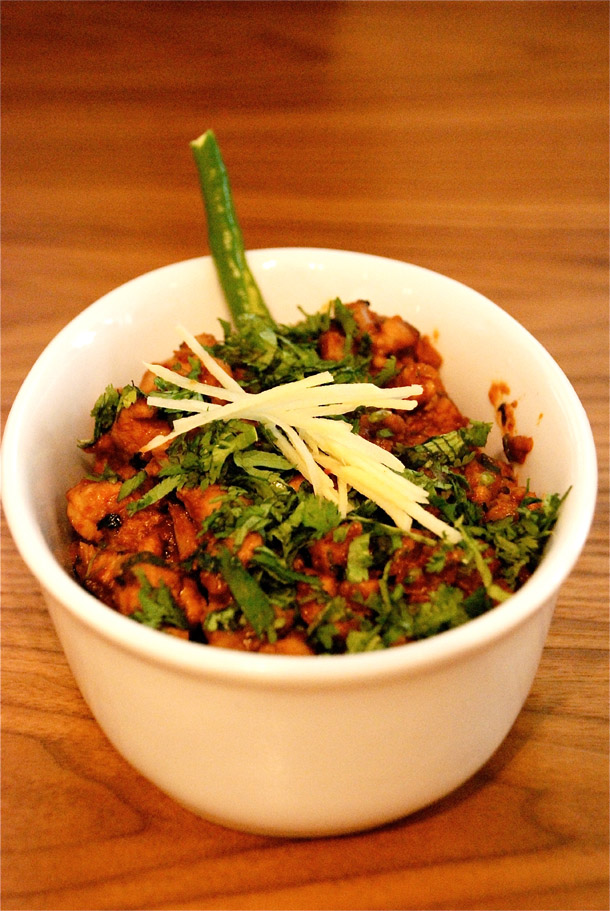
Chicken Kheema/Chicken Minced
Ingredients
Chicken – 300gms, boneless, hand chopped into small bite-sized strips
Bay Leaf – 1
Onions – 2 medium, chopped into small pieces
Ginger-Garlic Paste – 2 tbsp
Tomatoes – 2 medium, chopped into small cubes
Coriander Powder – 1 tsp
Cumin – 1 tsp, roasted
Red Chilli Powder – a pinch (My tip: If you are using Kashmiri Chilli Powder, you could be more generous as this lends a rich colour without making the dish more hot)
Turmeric Powder – 1/2 tsp
Asha’s Garam Masala – 1 tsp (Well, for those who can’t bag this *secret* Garama masala, you’ll have to do with regular Garam masala, but dry roasted before grinding)
Fresh Coriander leaves – a bunch, finely chopped
Green Chilli – 1, finely chopped
Potato – 2 medium, chopped into cubes with the sides measuring 3/4inch each and deep fried till crispy
Salt – As per taste
White/Corn Oil/Ghee – 1/2 cup
Vegetable Oil (To fry the potatoes) – 1 cup (My tip: I’ve air-fried the Potatoes after rubbing the cubes with a bit of Salt, I don’t think that the taste was drastically different but I felt less guilty!)
Garnishing
Ginger – 1 inch piece, julienned
Coriander Sprig – 1 bunch
Method
- Heat the Corn Oil or the Ghee in a Wok and add the Bay leaf (if you are using Ghee, please don’t leave it in the heated Wok for long as Ghee becomes burnt very easily and starts to smell)
- Add the finely chopped Onions and sauté till they turn golden brown
- Add the Ginger-Garlic Paste
- Add the chopped Tomatoes and sauté well
- Add the Coriander powder, roasted Cumin Powder, Red Chilli powder, Turmeric and Asha’s Garam Masala and cook till the oil starts releasing
- Add the Chicken and sauté till the Chicken is cooked
- Add the freshly chopped Coriander leaves and green Chillies and cook well
- Fry the diced Potatoes towards the end and add this to the Keema towards the end of the cooking (Otherwise the potatoes will turn soggy)
- Garnish with freshly chopped Coriander leaves, julienned Ginger and sprinkling of Asha’s Garam Masala (the last part was my own addition)
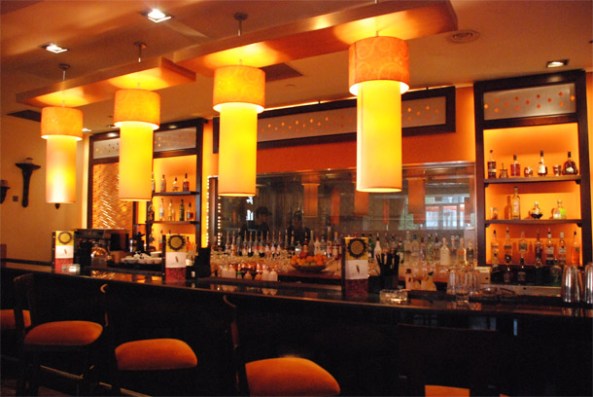
Asha’s Restaurant
Tel: +971 4 3244100 (Pyramids at Wafi) and +971 4 3951231 (Ground floor, Fashion Dome, Mall of the Emirates); For more information, visit the official website: Asha’s Restaurants
While Asha’s in Birmingham UK has been included in the Michelin Guide for the last successive years – 2009, 2010, 2011, 2012, 2013 and the only Manchester Indian restaurant to ever feature in Michelin Guide 2017, the one in Dubai has also been shortlisted and won many regional awards. Having launched the first restaurant in Wafi, Dubai, in December 2002, with a huge expansion plan brewing up over the near future, going back to the original Asha’s always seems like a deja-vu to me. Very recently, a new food and cocktail menu was launched at Asha’s (read rose jam-curry leaf infused Maharaja’s Mistress), with renowned mixologists flown in from the UK. My fellow blogger, Sally (@mycustardpie), describes as ‘The flavours were beautifully balanced in every cocktail some of the best I’ve ever tasted!’
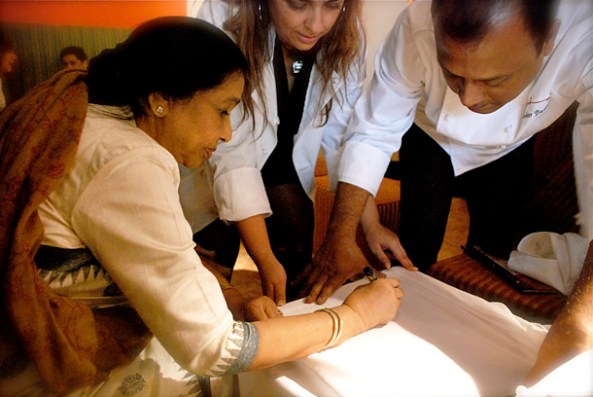
I asked Ahshaji, whether there was something that she still wished to do. Yes, she said – walking the ramp! ‘Lekin maine Malhotra ko bola hay, woh bhi kar loongi/I’ve told Malhotra that I want to walk the ramp, I’ll do that too!’ And yes, Ashaji, it was just 2 days back that I saw your tweet and saw a picture of you walking the ramp for Lakme Fashion Week 2013, looking ravishing in a white Manish Malhotra sari! What next? A celebrity cooking show on Television? Oops! She quips in, ‘I don’t mind doing a show called Asha’s MasterChef, teaching people the art of cooking (specially Biryani!) along with my chefs.’ I can only say that while she blessed me as I touched her feet, I hope that Ashaji has also transfused some of her vigour and energy into me. As I was leaving, she just reminded me of my Mum, ‘Phone lete jana/Remember to take your phone along’ (as my phone sat beside her, recording all that she spoke). It must be a sheer coincidence that I met the lady on Mother’s Day!
Unblogging it all… Ishita
Pssst: I have been shortlisted for the BBC GoodFood Awards ME 2017 under the ‘Food Influencer’ category. Do cast your votes for me!
Disclaimer: This isn’t a sponsored post, nor are there any affiliated links. The subject, story, opinions and views stated here are my own. While you enjoy reading my posts with lot of visuals, please do not use any material from these posts. Do join me on my daily food and travel journey on Instagram, Facebook, Twitter and Pinterest.
You may be interested in reading the following:
- Sanjeev Kapoor | Talking To The Chef Extraordinaire
- Keeping Up With Chef Vikas Khanna | Igniting Sheer Passion!
- Quique Dacosta | When Food Becomes An Enigma
- Chef Abhijit Saha | Is There Heart And Soul In Molecular Gastronomy?
- International Women’s Day | May The Woman Be Celebrated Every Day, Everywhere!
- I Saw Them Cook And I Ate What They Cooked | Taste of Dubai 2013
BE SOCIAL. SHARE THIS!

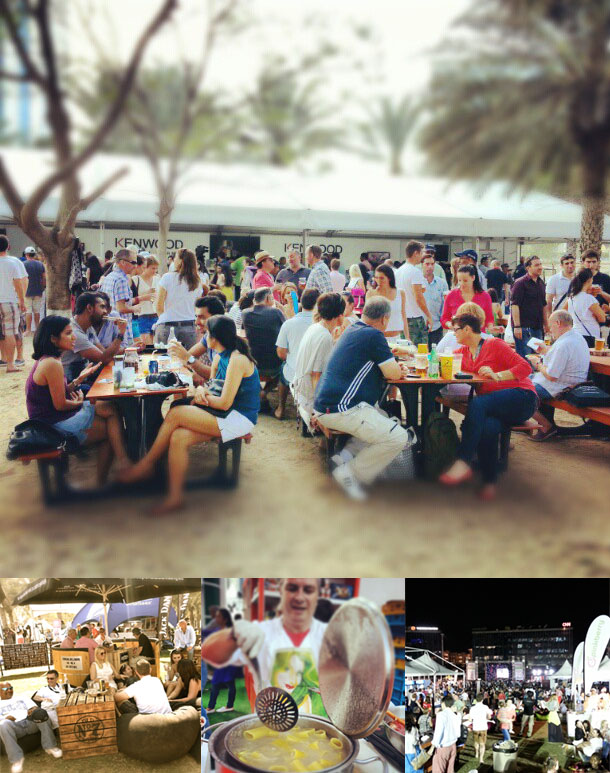
Atul Kochhar, Reza Mahammad, Gizzy Erskine, Vineet Bhatia, Georgio Locatelli and Suzanne Husseini – I saw them cook and I ate what they cooked!
Taste of Dubai is one of the most awaited food events in the city. The 3 day-event just concluded this weekend. Bringing in an alfresco dining experience, it featured internationally renowned chefs and 30 of Dubai’s top fine-dining restaurants. There were far too many good restaurants showcasing their signature dishes at rates that were less than fine-dining (and my gut feeling is that the number of restaurants participating next time is going to hit 100!). But portion sizes? Most of the dishes looked pretty but in pity proportions. The ambiance was great. The enthusiasm of diners was quite palpable. The weather didn’t let us down. The excitement of the drinking brigade let loose officially, on Dubai terrains, in open air, did seem to be contagious. A bit of over-commercialization perhaps?
Personally for me, my visit to TOD was very fruitful. I got the chance, not only to meet a few of my favourite chefs, but also see them cook, taste their dishes, speak to them, learn from them and hear them up, close and personal as they poured out their kitchen insights. Forget about my usual laments of missing out on someone or the other. My laments this time was missing out on Gary Rhodes, Richard Sandoval, Nobuyuki Matsuhisa (Nobu) and Ariana Bundy this time! There were many like me, who never left their seats in the Philips Chefs’ Theatre where some of the celebrity chefs were demonstrating and the Kenwood Cookery School where one could register for masterclasses with these Chefs. I was enjoying my few *fan girl* moments as I saw a whole lot of *stars* – Food Network’s Reza Mahammad and Jenny Morris, Atul Kochhar, Gizzy Erskine, Vineet Bhatia, Georgio Locatelli and Suzanne Husseini – LIVE in cooking action and sign my copies of their cookbooks. Later in life, I might boast of dining in their restaurants (if they have one) but I might not be able to boast of having tasted dishes that have been cooked personally by these Celebrity Chefs. Starting with…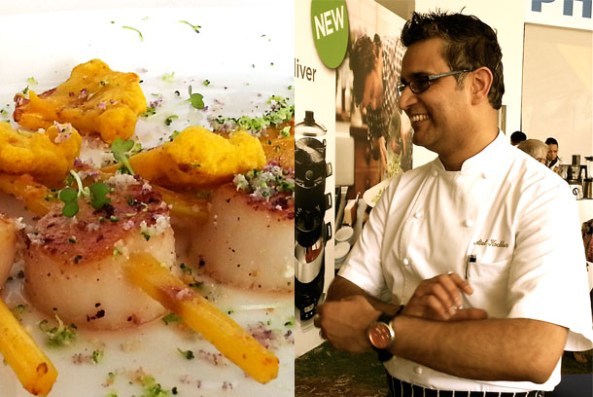
Atul Kochhar @atulkochhar: The Indian born British Chef cum TV personality, is a two timed Michelin star (also the first Indian Chef to receive a Michelin star). Atul cooked Pan seared Scallops (above left). Soft and succulent, I bit into the scallops – my first taste of a Celebrity Chef’s cooking in TOD. I love the way he breaks down the food components of a dish so that it can be appreciated even by those uninitiated into Indian cuisine. When I tell him that there is no Bengali restaurant in Dubai and Rang Mahal, his Indian Restaurant in JW Marriot Marquis Hotel, is probably the only restaurant where one can find a Prawn Mustard cooked in the Bengali style, he gives a hearty laugh and tells me that he was born in Jamshedpur, a city which is very close to Kolkata. And that has influenced his cooking a lot. Atul’s highly acclaimed restaurant in London, Benares Restaurant & Bar (for which he was awarded his second Michelin star in 2007) has always participated in Taste of London. Rang Mahal’s participation in Taste of Dubai, for the first time, will highlight it’s ‘unique dining experience – casual, chic dining with a friendly atmosphere’ that he believes will definitely ‘rock Dubai’! I hope that too, as he does garner a lot of positive ticks on a conscientious foodie’s checklist. 1) Atul believes in locally sourced ingredients, organic products (a tick mark on a subject that is currently on the top my checklist); 2) He has been using responsibly sourced fish in all his restaurants (I have to mention here that I have recently come across a restaurant with a 100% sustainable and organic menu and another, which has a sustainable fish menu and a Salt Guru who advices on the various kind of salt that will enhance the flavour and taste of the fish). In all the excitement of Bengali fish talk, my copy of Atul’s recent cookbook which just got released, Curries of the World, remained unsigned. An excuse to meet him again, soon!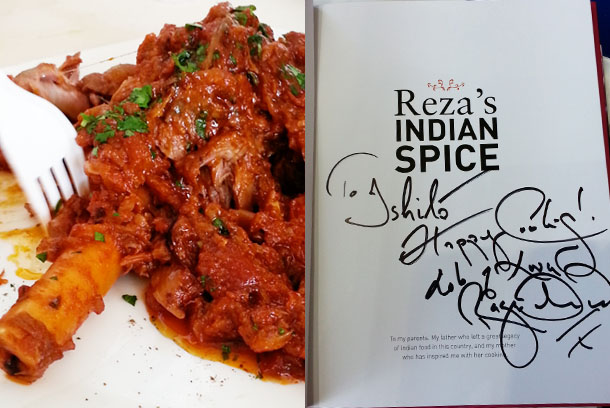
Reza Mahammad @RezaMahammad: OMG! Oh My God! This is my only reaction to describe Reza Mahammad. This man is incredibly funny when he speaks, but don’t get fooled. There is a really serious Chef lurking behind the funny facade, who talks about ingredients, regional spices and history of food. His passion for spices and cooking does overcome his humour eventually. He cooked Lamb Shank Rogan Josh in the Kashmiri style (above left) and a Persian Pulao (below right), all the while talking and describing about his Indian roots and stories on Zanzibar. Why Zanzibar? His latest series with Food Network, Reza’s African Kitchen, takes Reza to southern Africa to discover the tantalizing tastes of Indian inspired food on this continent.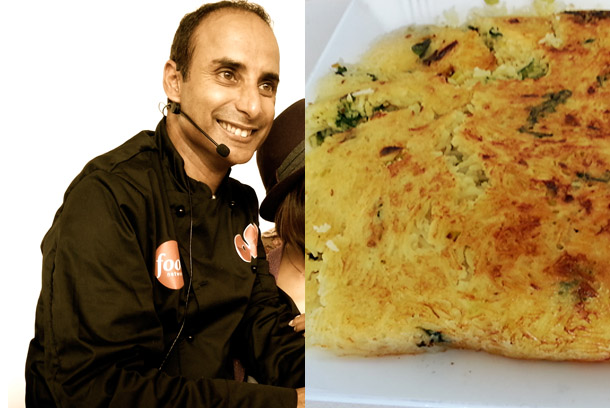
Practically, everybody swoons over Reza – ‘Oh Reza, we love you!’ and Reza blows out kisses in the air, posing with everyone. ‘You must blog about one of the recipes from my book’, he tells me, as he signs my copy of his cookbook, Reza’s Indian Spice. Of-course, I will be blogging, specially after tasting the great Persian Pulao and the tanatalising Rogan Josh you cooked. Next on my wishlist – visit The Star of India, Reza’s restaurant in London and taste his favourite dishes Sunehri Khaste, Venison Pasanda and Malai Adraki Champen! (Reza’s African Kitchen will air on Food Network from 25th March, weekdays at 11.50 and 17.15, repeat Mon 21.00 and Sun from 13.05 to 14.45) 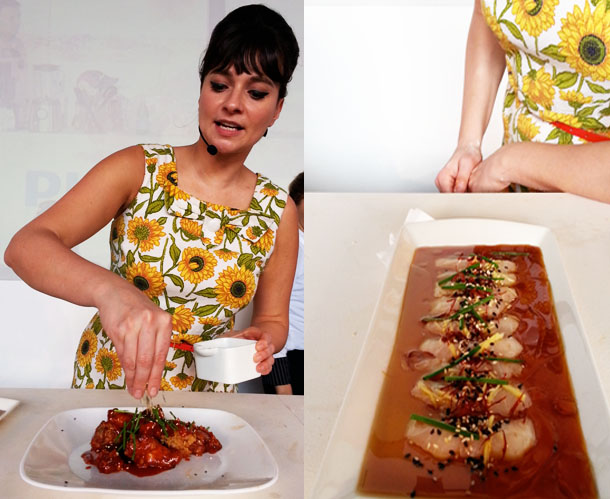
Gizzi Erskine @GizziErskine: Gizzi looks straight out of the box television of the 1960s with a fluffed bouffant and an eyeliner stretching outwards. She is pretty, pretty, pretty! And prettily she cooked up a very tangy Chicken wings (above left) which left my fingers stained with its strong sauce. She also created a Sashimi (above right), dripping in a light sauce base. Looking at her present persona, it’s difficult to fathom that this British chef, food writer and TV personality was formerly a punk and earned her living out of body piercing! Reading up on her is as interesting and edgy as her take on cooking. Her beautiful book, Gizzi’ Kitchen Magic is ‘the new technique based food bible for foodies young and old and there are over 200 straight forward and delicious recipes to choose from’.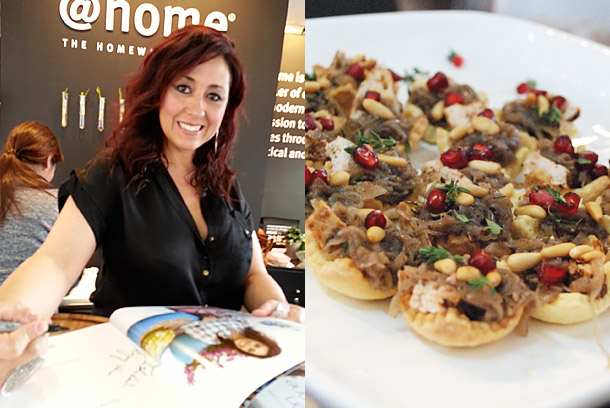
Suzanne Husseini @suzannecooks: I have been lugging around my unsigned copy of Suzanne Husseini’s When Suzanne Cooks, in case I meet her in TOD. I absolutely love this cookbook where the traditional Arabic recipes are tweaked and twisted a bit to make them unconventional. Hosting her own cooking show on TV, Suzanne cooks in her own style and like a fairy godmother sprinkles some magic dust, as the huge ring on her finger sparkles and sweeps though in front of my eyes. She cooked a Roasted Cauliflower with Citrus Tahini Sauce, adding some Orange zest and freshly squeezed Orange juice into the regular Tahini dip to make it taste unique and so unconventional. The other dish that she made is a modern twist on Musakhan (above right), which is a traditional Palestinian dish with roasted chicken over a Taboon bread, with caramelised onions, pine nuts on top, sprinkled with Sumac. Suzanne presented the dish in the form of canapes, with shreds of roasted chicken and caramelised onion going into mini crusts. She added some colour and sweetness to both her dishes with pomegranates or her jewels as he calls them. Her irregular take on the regular dishes, is what makes her recipes so interesting. Her vivacity is infectious as she tries to educate us beyond our limited knowledge of Arabic food, namely Baba Ghanoush, Moutabbel, Houmous etc . Do expect an elaborate post later on with the recipe of Musakhan. At the end of all her cooking, Suzanne likes to put in a secret ingredient. Yes, you guessed it right – ‘love’. The same secret ingredient goes into her signing of my copy of her book!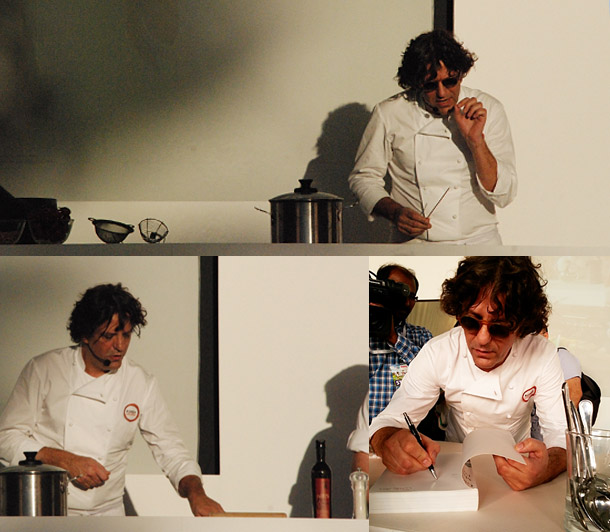
Georgio Locatelli: Well, I love everything Italian – Italian men (ever since Michelangelo sculpted David) and Italian Mamas, their accentuated English, the animated hand movements, their love for cooking and feeding (as I got to know on our Sicilian sojourn). And Locatelli is all that and more. He is passion translated into cooking. As he demonstrates the making of pasta, he explains all the minor nuances of Italian cooking, about the two different types of Italian olives and the importance of a good Olive Oil. As you can see from the pictures, he’s all animated – puts his sunglasses on as the sun hits his eyes, rummages through his unruly hair (sorry, if I’m gushing as if I’m describing the hero of a Hollywood film!). He emphasises on making pastas at home than choosing a variety from supermarkets, also adding that making pasta at home is much easier than what the supermarkets would make us believe. Ronda Locatelli, his restaurant in the Atlantis, The Palm, reflects the same joie de vivre of the consultant Chef. It’s not surprising that passion for food runs in Locatelli’s veins. After all, he’s grown up in a family who ran a Michelin-starred restaurant! Another next on my wish list – visiting Locanda Locatelli, his restaurant in London. The restaurant has been awarded a Michelin star in 2003, which has been retained in 2004, 2005,2006, 2007 , 2008, 2009, 2010 and 2011. Oops!
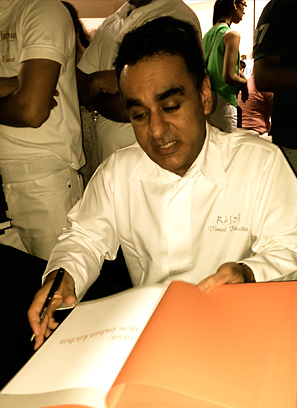
Vineet Bhatia @Vineet_Bhatia: To be honest, I was really shocked to meet Vineet Bhatia. I had read so much about this man – a Michelin star Chef and Restaurateur (also the only Indian Chef to have two Michelin Stars). I had a preconceived notion of a man who would have a lot of airs. Well, he was exactly opposite. He seemed to very calm and composed. He called for four assistants from the audience to help him cook Jumbo Prawns poached in Chilli, Coconut and Lime scented Curry (thanks to Del, one of my ardent readers, who helped to re-assemble the name of the dish once again!). What striked me about Vineet is the way he engaged the audience into his culinary demonstration, how he instructed the four chosen ones with all the steps of cooking the dish and actually let them cook it. Or, rather how subtly he got them to cook the dish the way he wants it to be cooked! He divided the four of them into groups of two, with one group overseeing the sauce and the other group cooking the prawns. After all the shoo-shaa was over and he sat down to sign his cookbook, aptly named Rasoi: New Indian Kitchen, I made sure that I had jotted down all the kitchen essentials that I had learnt from him – ‘stick to simplicity; don’t use more than 4 spices; keep your kitchen work station absolutely clutter-free; be focused and clear in your mind about what you want to do in a dish.’ Interestingly, his Dubai restaurant, Indego by Vineet reflects the same clutter-free decor and clarity in it’s menu. It also serves a Thali/platter, which my friends like to describe as the Michelin Thali! The fourth next on my wish list – visiting Rasoi by Vineet Bhatia in London, which has been sporting a Michelin star since 2006.
I didn’t register for any masterclass this time. I did this consciously as I wanted to enjoy watching and interacting with some of my favourite Chefs. My foodie friend, Darryl (above right), however, had signed up for a cooking class with Chef Masahiro Kinoshita of Izakaya. His thoughts on TOD reflects loosely my thoughts as well – he could hardly believe that he saw two Michelin-star Chefs on a a single day; nor could he believe that he was actually speaking to a Chef who had two Michelin stars (as he spoke to Vineet Bhatia!). Yes, I did miss out on Gary Rhodes, Richard Sandoval, Nobuyuki Matsuhisa (Nobu) and Ariana Bundy. I had been carrying Ariana’s cookbook – Pomegranates and Roses, to get it signed by her. It is so ironical that as a child I grew up amidst a lot of Bengali celebrities and intellectuals and never had this inclination to acquire autographs. But now, I hanker to get my copies signed by celebrities or chefs whom I admire. Probably as a child, I didn’t realise what they had achieved. And as an adult, I’m overwhelmed by their achievement and inspired by these people, in different ways. I specially like to see the first part and the last part in their autographs – ‘Dear Ishita…. with lots of love!’
Unblogging it all… Ishita

Disclaimer: Please note that this post is not a sponsored post and the subject, story, opinions and views stated here are my own and are independent. While you enjoy reading the posts with lot of visuals, please do not use any material from these posts. You can catch my daily food and travel journey on Instagram, Facebook and Twitter.
Related articles
- Chef Sanjay Bahl | Flavours And Flavours And Flavours of Patiala!
- Taste Of Dubai Menu Tasting At Thiptara | Part 1 Of My Gluttonous Double Munching!
- Taste Of Dubai Menu Tasting At Asado | Part 2 Of My Gluttonous Double Munching!
- Chef Abhijit Saha | Is There Life And Soul In Molecular Gastronomy?
BE SOCIAL. SHARE THIS!

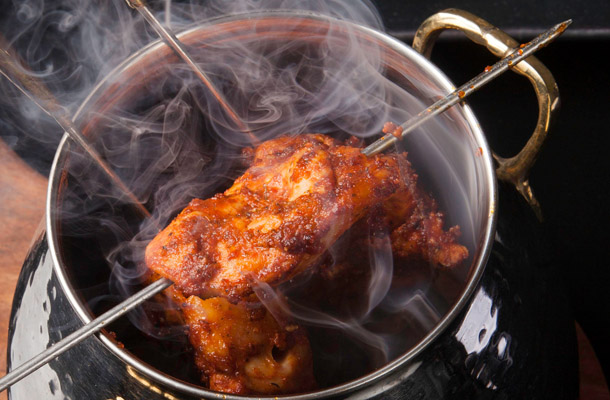
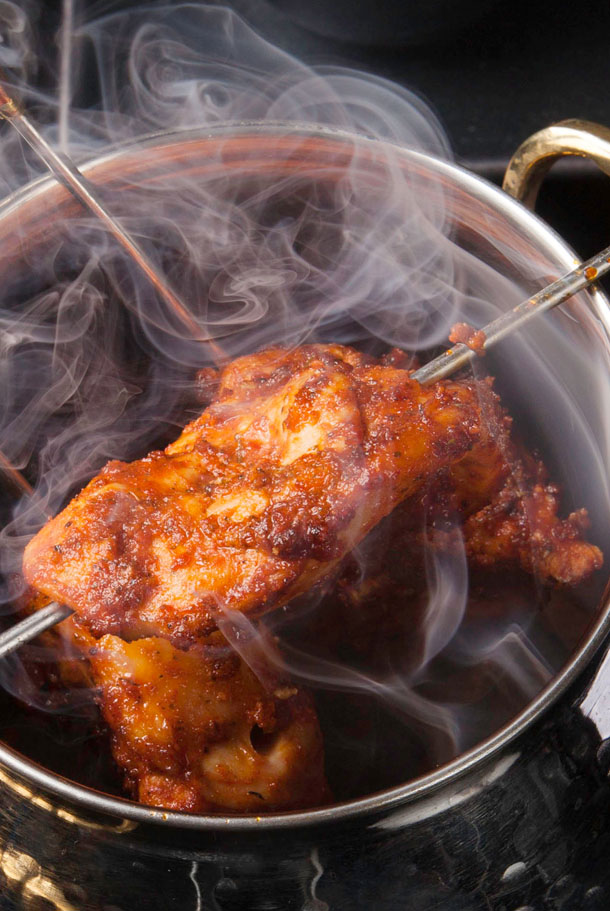
Indian fine-dining must be the new mantra in Dubai food radar – Rang Mahal by Atul Kochhar at JW Marquis, Signature by Sanjeev Kapoor at the Melia Hotel, Options by Sanjeev Kapoor (with 2 branches already – in DWTC and Mövenpick Deira, Asha’s at Wafi and MOE with a launch of a new Menu (and I met the legend Asha Bhosle yesterday!), Amala at Jumeirah Zabeel Saray (also serving North Indian food), Amal in the Armani Hotel… and now Patiala in Souk Al Bahar, in Downtown Dubai. This is definitely a good sign for Indian Cuisine, taking it beyond what is popular internationally – the British Indian Cuisine – the Chicken Tikkas and the Butter Chickens!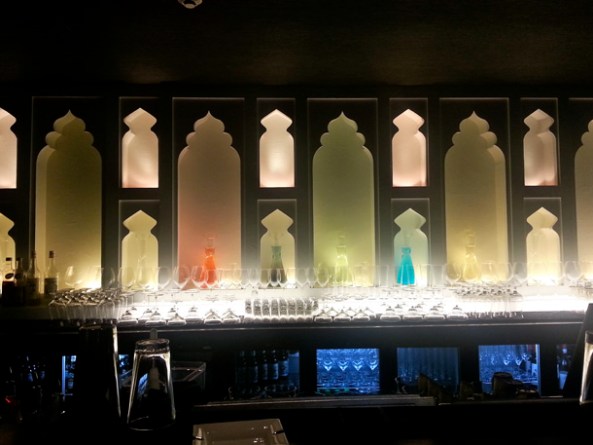
As I enter Patiala, I am charmed by the elegance in the decor – with an unusually long rectangular shape for a restaurant and no bronze elephants or fluorescent colours in the decor to emphasise that Patiala serves Indian Cuisine. Not that I have anything against bronze or elephants or fluorescent colours, I am just against any stereotypes! I had attended the media launch of Patiala – shamelessly abandoning my fellow diners at the table even before the Main Course was served, to pick up the Z-Sisters from school. In-case, if you still haven’t seen my logo, do you see the two kids tagging along? That should explain why I’m always scurrying like a bunny! What I realised was – I just had to come back and talk to Chef Sanjay Bahl, who’s at the helm of the Patiala kitchen, warmth and affection oozing out of his smile. Very approachable and bursting with laughter at every little humour.
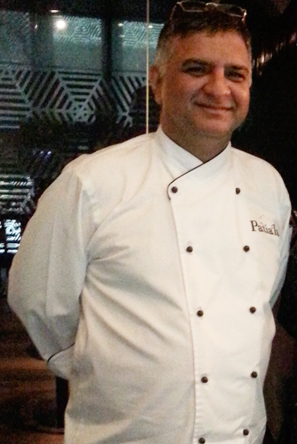 Chef Bahl, an award winning Chef with more than 25 years of global experience, is definitely not the tech-savvy young brigade of Chefs that I have met in the recent times (Chef Avijit Saha, Masterchef Sanjeev Kapoor, Chef David Miras or the Bohemian Chef in Kolkata – Chef Joy). But full of knowledge, wisdom and a huge passion for food. It’s not surprising then that he has fed so many celebrities and dignitaries, including the President of India. He was one of members who developed the global concept of TGKF (The Great Kabab Factory) for Radisson. Tweaking or adding the right Indian flavours to make Indian dishes palatable to the non-Indian diners has not been a new concept for him, as he has also been the Chef Indian Cuisine aboard Queen Elizabeth II or the QE2 as it was popularly known, during one of its World Cruises!
One thing that Chef Bahl insisted about Patiala (and of course, I tasted) was – authenticity, good taste, pure flavours and a great dining experience. Accompanied by the perfect wines served by the glass (only a few restaurants in Dubai do this). Being a wine connoisseur, Chef Bahl has had the experience of organising Wine Dinners and conducting International food fairs and events in India (Italian and Hungarian Food Promotion, the Indonesian Food Festival, the Sri Lankan Food festival). Wine pairing with Indian food is not taught in any culinary school, so my take is – one can trust the wine to complement the regional flavours of the dish that is being served, under such a spirited and able guidance.
Revelation – Patiala is not only about Patiala pegs… The name of the restaurant originates from the southeastern city of Punjab in North India with the same name – Patiala. Historically, Patiala, an erstwhile princely state in Punjab, is known for being a seat of India’s political and cultural aristocracy; boasts of royal architecture; one of the oldest forms of Hindustani classical music – the Patiala Gharana; and the first graduate college in North India, established in the mid-1800s. In popular culture, the city remains famous for its traditional turban (a type of headgear), paranda (a kind of tasseled tag for braiding hair), patiala salwar (a type of female trousers), jutti (a type of footwear) and Patiala peg (a measure of liquor and refers to a larger peg than the standard peg measure). Unfortunately, the popularity of the Patiala peg seems to have overwhelmed all the others!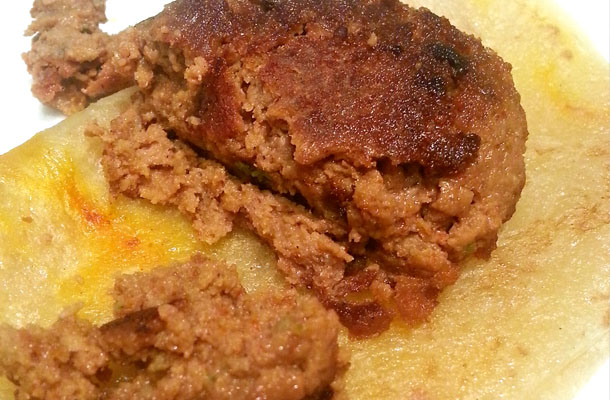
Galauti Kababs melt me down, always… A team of ten Chefs have been flown in directly from North India, including Chef Arif (image below) with an ancestral heritage that I envy – his forefathers had been the creators of the famous Galauti Kabab or the Galawati Kabab. Galauti Kabab deserves a separate post of it’s own and I have enough material to write on this. I’ve been on my own trail in search of this special form of Kebab which practically melts in the mouth, lending the name Galawati or the one that melts. Galauti Kabab is minced meat round patty cooked over griddle, smoked with aromatic spices (traditionally, it can go upto 120 different spices!). Invented during the rule of Nawab Asaf ud Daula in Lucknow (another princely Indian city that gave birth to the Lucknowi or the Awadhi cuisine), the Galauti Kababs were made specially for him since he had weak teeth or was toothless… well, that’s the story that has been going around! I told Chef Bahl, that for a Kolkatan like me, North Indian cuisine doesn’t mean the Punjabi cuisine but essentially the Mughlai food cooked in the Awadhi style. This is because of the historical connection between Kolkata and Lucknow. In 1857 AD, after the Awadh kingdom (modern day Lucknow), was annexed by the British, the Nawab of Lucknow – Mohammed Wajid Ali Shah Bahadur (1822 AD-1887 AD) was exiled to Calcutta (today’s Kolkata). His passion for gourmet food traveled from Lucknow to Calcutta and was nurtured and garnished and fueled by his special Bawarchis or the Chefs of the Nawab. Hence, our penchant for Awadhi cuisine and not the Punjabi cuisine. A plate of Galouti Kebab (above) arrives specially at our table ‘Ek special Galauti lana inke liye/Please bring a plate of Galauti for her’. The result? I am completely sold on it. The Biryani or the Kababs are cooked in the authentic Awadhi style (more on Lucknowy or the Awadhi style of cooking), with the former cooked in the Dumpukht style where the dish is cooked on very low flame, mostly in sealed containers so that the meat cooks in it’s own juices (more on Dum Pukht). Quite naturally, I also had to meet Chef Arif (down below). After all, his great grandfather did the foodie mankind a huge favour by inventing the Galouti. If my great grand father had done such a feat, I wouldn’t be standing as humbly as him!
Chef Bahl talks about the signature dishes of Patiala as we are served – the Quail Kabab, which is a combination of Chicken Tikka and Tandoori Quail, dressed with sweet Dates, crushed Mango chutney and enhanced with red Apples (served in the manner of a Fruit Chaat); Chargrilled Chili Mint Prawns (below) where jumbo prawns have been marinated in a mix of spices and Chilli Mint paste and char-grilled; Zaveri Fish Tikka where Hamour is marinated in Fennel, Ginger, Aamchur/sun-dried mango powder and is cooked as Tikka Kababs (Note: Hamour falls under the ‘over-fished’ category and slowly many restaurants in Dubai are moving towards a sustainable fish menu) Patiala Murg Tikka (the cover picture above) where the spicy Chicken kebabs follow the recipe which has come down from the Chefs working in the royal kitchens; Murg Malai Kabab where the Chicken is chargrilled in a Cardamom and a Kesuri Methi marinade. The Menu boasts of a few royalty breads including the rare Bakarkhani, Sheermal, Taftaan, Kandhari Naan and Kesari Ulta Tawa Paratha etc. I did manage to taste all of these before I scooted out. For me, the winners were the Patiala Murg Tikka and Murg Malai Tikka! Previewing the menu at leisure later, my attention was caught by the Wagyu Naan Rolls in their Patiala Bites or the Snacks Menu. My question is – do we really need Wagyu for a beef that I’m assuming will be chargrilled with Indian spice? If it is a steak, yes. I’ll go for Wagyu. I’m talking from the point of view of the price factor but cannot comment further on it until and unless I taste it. And can Bengali eyes ever overlook desserts? A Rabdi Fondue, where Rabdi is a a traditional Indian dessert where Milk is slow cooked (I’m just remembering a fabulous Rabdi Gulabjamun recipe on my blog that is a speciality of my Marwari friend) and Rose Petal Halwa, where dried Rose Petals are cooked with Milk, Cardamom and Pistachios. Well, if Cleopatra bathed in such a Rose Petal Halwa (sans the sugar) many years back, a modern day Cleopatra like me will probably drive to Patiala to taste it!
My tête-à-tête with Chef Sanjay Bahl…
Is there a lot of difference in the acceptability of Indian food amongst the Dubai diners? Is Patiala targeting all segments of diners, for example – the ones who would love to dig into their spicy Biryanis in Karama restaurants or is the food mild? Oh yes, our Menu will be loved by all diners. I have planned the Menu focusing on flavours of food and of different spices. It is not spicy or mild but tasty and flavorful. I am very confident that if the food is good, your restaurant will do well anywhere in the world.
I thought that the Patiala Menu is a mixture of Awadhi style of cooking and Panjabi style of cooking. Is there a distinctive Patiala style of cooking when it comes to Punjabi style of cooking? If I were to say what is the Patiala style of cooking, it is only honest and flavorful cooking. If I am serving you a Lamb Biryani, it will be made with the best Indian Lamb and nothing else. While the Butter Chicken and the Chicken Tikkas have been cooked in the Punjabi style, the Biryanis or the Galauti Kababs are cooked in the Awadhi style of cooking. I believe that the best flavors of Biryanis are in the Awadhi Biryanis. Here, the strong flavors of spice come out, instead of being simply spicy.
Coming to Galauti Kababs, I’m most excited that Chef Arif is in the team whose great grandfather had invented them. But I thought that was in the late 1700s and the early 18oos. What is Galauti Kabab? If you look at the word carefully, it can also be termed as Gilawat ke Kabab – Gilawat meaning melting. It is a process of cooking. There are 4-5 processes that are followed in making Galauti Kabab. So anything can be Galauti? No, not at all. Not everything will sustain the Gilawat process. For example, Fish. But the actual Galauti Kabab that is so popular in Lucknow, has more than 120 spices. Even Chef Arif hasn’t been parted (by his brother who’s secretive about the original recipe) with the exact proportions or the exact spices that go into the Galauti. But we’ve the know-how of the process. Processes make a lot of difference to the texture and the flavor of food. Why do we first put oil in the pan in Indian Cooking? Because in Indian cooking, the flavors have to be added first – the Tadka. Otherwise, it’s the same spices that go into Moroccan cooking or Spanish cooking. But they taste different because of the different processes. I know how to analyse each process and the flavors that will be enhanced/decreased as each process of cooking takes place. I can cook any dish in the Mneu without a drop of oil and it will still retain all it’s flavors. Because I am aware of each process. But what about home cooking? Our Mums and Grandmums didn’t know all these processes but still their cooking has stood all test of time. They have all been following these processes without knowing that they are following some set processes.
Regarding your Fish Menu, it still has Hamour in it’s Menu (Hamour being the most overfished in the UAE waters). Of late, a lot of Chefs have stopped using Caviar. We are not flying in fish, for example Salmon. Yes, we are still using Hamour because my guests want it. But probably, I’ll be looking into this gradually. But we are only cooking fresh fish. What about sourcing your fresh fruits and vegetables from local organic farms? We are doing that. Right now, my only intention is to serve honest food to my diners, that have been cooked honestly with natural ingredients. And I’m happy that we have diners from different nationalities – Emiratis, Japanese, Germans, French. I am slightly curious about your French diners as they themselves have such a chic culture of gastronomy. Did they like the food? Oh yes! They loved it. And why not? Food has to taste good and that’s the basic ground-rule. In-fact, the restaurant has a huge repeat footfall of diners. I design the menu in such a way that there is a crescendo to the taste – I slowly introduce each spice and once the diner is used to that, I introduce him to the next level of spice.
I’ve always been curious about the wine matching in an Indian Menu. This hasn’t been taught in an Indian culinary school. So how do you go about it? You have to understand wine. I want people to understand that Indian Cuisine is not only about spice or Indian food is not only spicy food. It’s all about the flavors. I have organised Wine Dinners accompanying Indian Cuisine in a wine-matured city like Bangalore. I have sat down with each and every wine, picked up the flavors after noting down the regional and grape-varietals in each wine and matched them to the taste of individual Indian dishes. There is no broad classification of matching wine to the Indian Menu. Each spice level or the flavor of a dish has to be understood and matched individually.
What about Indian Wines? (The subject of Indian Wines have off late caught my fancy as FooDiva, in one of her reviews, mentioned loving her Dindori Reserve Shiraz from the Sula vineyard in India. So I am on my own quest to find out whether the Dubai restaurants have started keeping Indian Wines and how good they are compared to the other wines. The Patiala Wine List is quite impressive and does include Sula Brut in Sparkling, Sula Sauvignon Blanc as well as Sula Shiraz). Indian wines are doing well. But the tastes will definitely vary. The grapes grown in Nasik Valleys taste different from the ones growing in the French Vineyards. India has started producing wines only recently, maybe 10-15 years. We do have the best of the Cabernets and Merlots. But there has been a lot of home-grown liquor brands who have been there for a long time in Indian markets but hadn’t been marketed outside. Do you think that Indian Wines are at par with other wines? Do you think that they can catch up with the rest of the world? Now Chilean wines or Argentinian wines are doing so well. Yes, they are very good. But to catch up with the rest of the world, there are many factors that have roles to play – from marketing to the Wine drinkers getting used to the taste of Indian wines. Are you a wine-man or a whiskey-man? I’d assume it’s the latter, considering that you are from Punjab? I prefer my Cabernets and Merlots. (Our chat leads to a sugary, syrupy Indian Red Wine that used to flood the market, once upon a time – Golkunda Ruby Red. Does anyone remember that? Ahh, nostalgia…)
Are you using techniques like Molecular Gastronomy (my current obsession on studying about this subject which I describe as food under surgery)? No, for the food that I serve, there is no need for Molecular Gastronomy. But what is Molecular Gastronomy? It started as a quest to break down food to the last molecule, in terms of flavors. And it started with the intention of enhancing flavours or identifying the uniqueness in each flavor, so that it could be reproduced elsewhere. So we are coming back to flavors. And as a Chef, I’m always looking for flavors.
Is your kitchen following green policy? Yes. The traditional Indian equipments that we use, for example, the Tandoor, can be as energy-efficient as can be (A tandoor is a cylindrical clay oven used in cooking and baking. Traditionally, the heat for a Tandoor is generated by a charcoal or wood fire, burning within the tandoor itself, thus exposing the food to live-fire, radiant heat cooking, and hot-air, convection cooking, and smoking by the fat and food juices that drip on to the charcoal. Read more on Tandoor). My focus is to bring in naturally flavored, tasty food. I don’t need to add flavor enhancers or any artificial additives.
What is your favourite Khana/meal? I love Ghar-ka-Khana/home cooked meal. And I’m mostly eating vegetarian food. I rarely eat meat or non-vegetarian food outside. I have a lot of vegetarian items in my Menu as well. But I do remember that once in I had Paella in one of the Spanish restaurants and the taste is still stuck to my memory. (I put in the question of the horsemeat scandal which seems to devastate him as an ethical professional working in the food industry) I rarely let my kid eat outside because I’m skeptical about the meat that is being used.
What do you contribute to the change in the mindset of the Indian people, regarding the profession of a Chef? Sanjeev Kapoor (my interview with the Masterchef himself)? When I started my career in 1987, I myself had doubts about the profession that I had taken up and I even asked a senior Chef during my induction – ‘Am I doing the correct thing?’. Actually even before that when I started my college in 1984, I wasn’t even aware that a subject like Hotel Management exists! But studying in the best culinary school at that time – the Oberoi School of Hotel Management (Chef Bahl is one of the first graduates of this culinary training school in India) and working in one of the biggest hotels probably changed my own perspective. As the Indian economy opened up or more Indian hotels came up and Indian Chefs started getting more attention in the international culinary world (Indian Chefs earning the Michelin etc), there has been a lot of change in the perspective. People started understanding Food better and they started applying Food better. As an Indian Chef, your efforts are accepted. There is a forum, Indian Culinary Forum or the ICF (Chef Bahl is a founding member of the ICF). We are sharing our ideas at this Chefs’ Forum. We were the first ones to have organised Charity dinners with Celebrities. And now Celebrity dinners are an everyday affair, aren’t they? (He bursts out laughing)
Do you think that the international acceptance of Indian Cuisine has come because of the British’s love for the Indian Cuisine – the Chicken Tikkas and the Butter Chicken? There’s so much to Indian food than Chicken Tikka and Chicken Butter Masala. I came across a gentleman once, who very rightly explained why Indian Cuisine hadn’t become popular worldwide, in an easy manner. ‘When you, the Indian Chefs do your food, it’s so complicated and elaborate that most people get scared’. It’s so true. However, a new genre of Indian Chefs are making a lot of difference, focusing on flavours. For example, Atul Kochar. He talks about Prawns marinated with Mustard and enhanced with other ingredients, all explicitly explained so that the diner can understand what the dish is. (I’ve rarely come across a Chef talking about another Chef in such a positive light, more so when Atul Kochar’s Rang Mahal is in the same segment that Patiala is positioning itself in. This only highlights Chef Bahl’s confidence and belief in his own kitchen).
Do you think that there has been a change in the cooking techniques over the years? Do you update yourself on the different changes and trends on the subject of food? Yes, every day. I don’t read recipe books but I read on Food as a subject. It is for my own personal growth. I operate in a very different way. In the sense? I am completely hands on. Even if I have been handling 20 hotels and taking up the an administrative role, I’ll still find time to get into the kitchen. I’ve been working in the kitchen for too long to get away from it and so something else. I have always wanted to be a teacher in my life. Had I not been a Chef I’d have become a teacher for sure. But you are a teacher. A Chef cum Teacher. Yes, I have been training my stuff – the things that we learnt in culinary school from the nutritional perspective and applying them to the dishes we cook. I tell the younger generation of Chefs – working in the kitchen is a lot of hard work and being a good team player and realising your mistakes and rectifying immediately, is the key thing in becoming a good Chef. (I hope my younger readers who aspire to become Chefs take note)
Do you think that Indian Sweets are a bit overtly sugar-coated and bad for the pancreas? Oh please, what are you saying? I love sweets. There are so many Bengali Sweets… (Okay I take back the question)
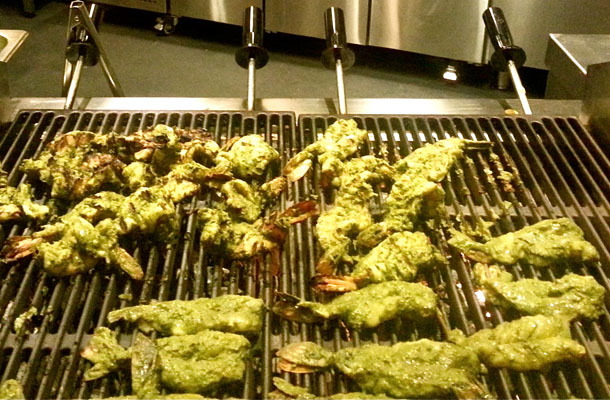
Patiala
North Indian Cuisine, Fully licensed
Tel: +971 4 451 9151 or Email: reservations@patiala.ae; Location: Souk Al Bahar
For more info, visit Facebook: Patiala Restaurant; Twitter: @Patialadubai or the official website: Patiala
Interestingly, there’s a ‘Kebab and Biryani Brunch’ starting at Dhs 195/- on Fridays – Saturdays, 12:00pm – 4:00pm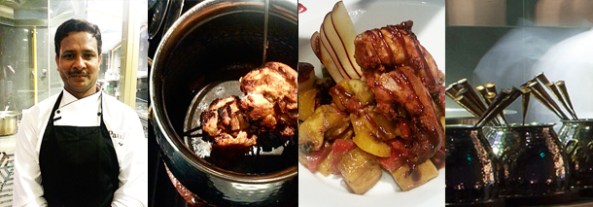
The restaurant website is updated with a Live Chat and a full-fledged Food Menu with the complete Wine list. A new wine list would be introduced very soon under Chef Bahl’s supervision that will complement the different nuances of the Indian dish offered in the Menu. It would do good to the Restaurant’s profile though if it adheres to a few food trending that’s taking place everywhere – The Patiala Menu doesn’t yet focus on sustainable fishing (a few other restaurants in Dubai, irrespective of whether it’s big or small, have started taking a note on this. And some far away places that I visited recently have completely given up on fish that are overfished – for example, Sense on the Edge, Zighy Bay or the Samak Restaurant, Anantara’s Desert Island Resorts. Also, gaining importance is the local organic farms from which daily fresh produce is sourced. What I gather is that these are ideas that they are absolutely open to, probably incorporating them at a later stage. Given the knowledge at the helm of the kitchen and the culinary heritage of the entire team, I shall definitely wait for that. It is also interesting to see when the other established restaurants have been revamping their menus and relaunching them with elements of fusion and new flavours, Patiala is promising to introduce authenticity to Indian fine-dining. Personally speaking, when I know a particular cuisine well, I look forward to a bit of experiment in that. But if I am trying out a cuisine for the first time, I look for absolute authenticity. Signing off with a question, what would you prefer – an authentic cuisine or the one that promises a bit of fusion?
Unblogging it all… Ishita
◊————————————————–◊
Disclaimer: I was invited for Patiala’s media launch. The Cover photo on Kabab is from Patiala. While you enjoy reading a post with a lot of visuals, please don’t use them as some of them may have been taken from our personal albums, just to make your reading experience more pleasurable. You can see more pictures of my travel and food journey here.
Related articles
- Sanjeev Kapoor | Talking To The Chef Extraordinaire
- Chef Abhijit Saha | Is There Life And Soul In Molecular Gastronomy?
- Luchi Featured In Ahlan! Gourmet | My Ode To Phulko Luchi!
- Taste Of Dubai Menu Tasting At Thiptara | Part 1 Of My Gluttonous Double Munching!
- Taste Of Dubai Menu Tasting At Asado | Part 2 Of My Gluttonous Double Munching!
- OPTIONS By Sanjeev Kapoor, Deira Opens | Win Romantic Dinner Invites for 2 couples!
- Shiraz Golden Restaurant, Dubai | From Lucknow To Kolkata And To Dubai!
BE SOCIAL. SHARE THIS!



“Women’s Day (WD), originally called International Working Women’s Day, is marked on March 8 every year. In different regions the focus of the celebrations ranges from general celebration of respect, appreciation and love towards women to a celebration for women’s economic, political and social achievements. More…”
Close to home and my heart, 8th of March is very special. Li’l Z is turning 4 today – the fairy above who’s always trying to soar high! Time does fly very fast. Each day I realise that in no time the Z-Sisters would turn into young ladies. I am constantly worrying about the world they are growing up in. I want them to grow up into emotionally and physically strong, independent and compassionate human beings. To be aware but not wary of the world. This post is dedicated to all the women who have been mentioned in my blog. There are many more who are yet to be mentioned. Some of the women live in a world far away from the the airconditioned comforts of our homes. And a few of them have been women who’ve been in my life. To start with…
The Abandoned Women Amidst Many Prayers | Pashupatinath Temple, Kathmandu, Nepal
These are women who have been abandoned by their families are just waiting for their final call. Their only wish is to die while waiting in the Mahasthan Ghar on this scared premise so that they can go to heaven. Read more…
Innocence In Their Eyes, Joy In Their Faces | Tharu Village, Chitwan – Nepal
I was confronted with the realisation that there was no difference between Li’l Z and a Tharu child. It is sheer destiny that Li’l Z was not born in the Tharu village, running around tourists, totally bare-feet and perfectly happy to be ‘in the camera’ waiting for some random smiley stickers coming her way. I also came face-to-face with the stark reality that plagues many Asian countries – ‘the family wants at-least one boy!’ Read more…
Notun Gurer Payesh/Traditional Bengali Rice Pudding with Jaggery & My Dida
Payesh or the traditional Bengali Rice Pudding also brings in lots of memories of my childhood, specially Dida, my maternal grandma. I have been trying to understand the psyche of a woman whose only demonstration of love for her seven children and their children was through cooking. Read more…

Pickles | Mother (-in-law) Of All Pickles!
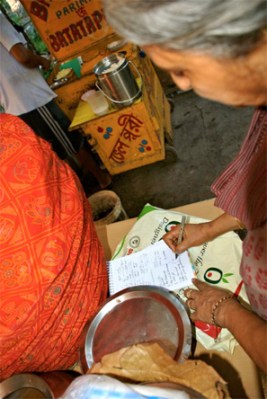 Ma, as I lovingly call my Mother-in-law (left), is fascinated by recipes. She collects recipes – from magazines, newspapers, from television. She doesn’t like cutouts or clippings, she loves organising and segregating them into different notebooks – writing them down as she collects them. At the point of writing this post, Ma‘s shelf had 15 bottles of Pickles – fat bottles, thin bottles, small bottles, large bottles, square bottles, round bottles, plastic containers, glass containers, tin containers – all containing Pickles. Sweet Pickles, sour Pickles, spicy Pickles – pickles of all kinds. Carrots, Mangoes, Gooseberry, Garlic, Capsicum, Olives, Limes etc – these are just a few of the fruits and the vegetables that have been pickled by Ma.
I want to share the story of her pickles with all my readers, far and wide. That’s the only way I can do justice to the tremendous effort she has taken to make all these different kind of pickles. For her, its labour of love. ‘Toder jonyo!/All for you guys!’ she always says. Yes Ma, we know that. Read more…
Momos in Tiretti Bazar | The Last Chinese Remnants in Kolkata!
Athough I wish a better future for all the Chinese migrants who used to throng this Bazar once upon a time who have ‘gone abroad’, at times I wish if time had stood still then Tiretti Bazar would still look like what my earlier memories recall it as… To anyone who’s visiting Kolkata, do visit the lone Aunty of Tiretti Bazar to have her incredible Momos, Dimsums and Paos – before she too decides to ‘go abroad’! Read more…
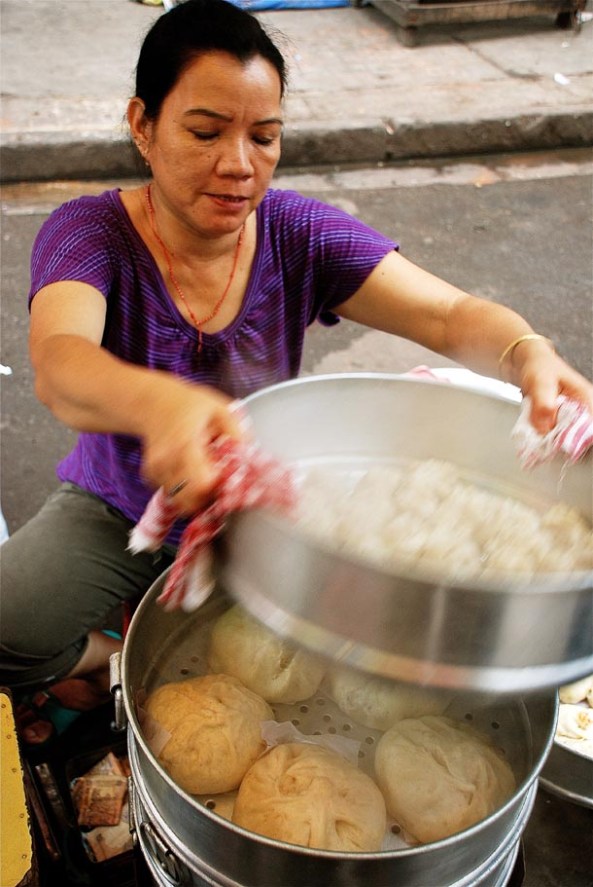
All my associations – with people, places or moments start with the kitchen. This was no different. It was almost 2 years back that my association with Mums Who Share began. A small email from a good friend initiated me into a group of Mums who would cook food in their kitchens and go and distribute the food among the construction workers in a pre-fixed construction site every Thursday mornings. Along with home cooked meals the workers would also get Pita Breads, chilled juices, one fruit like apples, oranges or bananas, biscuits, fruit yoghurts etc. ‘We cook, We Give, We care’ bragged these Mums and they did exactly that – they cooked, they gave and they shared! Read more…
Rasgulla Macapuno On TV & Shubho Bijoya to all!
 In the month of May last year I had written a post – Rasgulla Macapuno – When a Filipina Turns Bong! A fusion recipe on Rôshogolla/Rasgulla as a tribute to my my Lady Friday (LF) without whom my endless photographic sessions on food experiments would never have materialised. LF hails from Bikol, a region in Phillipines which is known for it’s spicy fare. Filipino food is cooked on a regular basis in our kitchen along with traditional Bengali or we end up cooking some Bengali Fusion food. This post also talks about Reem and the changing face of the new generation of Emirati women. This was aired in Dubai One for a Ramadan Special episode. Read more…
If staying with a person from a different culture for a long time doesn’t inspire us, we must be devoid of all emotional sensibilities. The real essence of living in a city like Dubai is that for a Filipina who’s turned into a Bong, there is a Bengali me who’s turned into a Filipina!
A Tale of 2 Cities and Naru/Coconut Jaggery Truffles and Remembering My Thakuma
Each summer has the same story. The months of July and August are spent in Kolkata – when the Z-SISTERS are off from school for two long months. The Z-SISTERS and I, the three of us, make Kolkata our summer base. I call this the period of my Summer Hibernation. At this time of the year, the date palm trees lining the streets of Dubai at this time of the year are filled with dates which brings a flashback of my childhood in Kolkata… the connection being dates, dates syrup and traditional Bengali sweets – Gurer Naru, which I introduce my little ones as Coconut Jaggery Truffles! Naru takes me back to my Thamma or my paternal grandmother would distribute her whole year by staying amongst seven of her kids – 5 sons and 2 daughters (yes, this was before the concept of family planning came in India!). That would translate into one to one and a half months at each of her child’s place. We would eagerly wait for our turn to come and would pray that her stay at our home coincides with our school holidays. And this period would be my earliest summer hibernations. Read more…
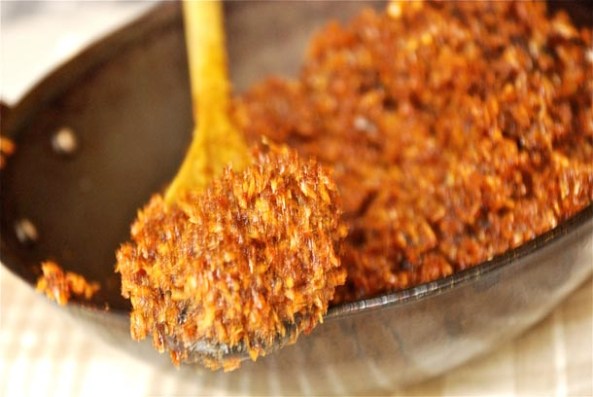

Cuppa-Corn Sweet Yellow Moments
The fondest food moments are those where the experience and the journey to create these moments are more memorable than the food itself. Cuppa-Corn (or the traditional Cup-A-Corn) made by the Z-SISTERS (my sous-chéfs – Big Z, aged 8 years and Li’l Z, aged 3years 4 years) took me to my childhood fantasy – unlimited Cup-A-Corns without having to ask Mom for money. I wish they could also churn out pink Candyfloss with such ease. But again, who said that was impossible? Read more…

Gulab Jamun Rabri has been made by Seema, my very Marwari friend. The entire post was planted on a Lunch invite at their home over a home cooked Marwari meal. Indranimashi (left) has fed me many Luchis in Dubai that have prompted me to make Luchis for the magazine Ahlan! Gourmet and write My Ode To Phulko Luchi! Freny, my Parsi friend introduced me to the Cumin Beetroot Cold Salad. Aunty, as we call her South-Indian Mum-in-law, adds a bit of Bagar/Chaunk/Tadka to the salad to customise it to her traditional South-Indian kitchen. Bagar/Chaunk/Tadka is a kind of tempering or a fried garnish that is commonly used at the end of most Indian cooking. In this salad, Aunty uses a fried garnish of Mustard Seeds and a few pieces of Urad Dal/Black Lentils in white oil.
Gajorer Payesh/Carrot Pudding (below left) had been lovingly cooked by Kakima, my Aunt who had been visiting us for a while. While she left for Kolkata two days before Diwali, she cooked this special Gajorer Payesh/Carrot Pudding and put it in the freezer so that we could have a special dessert on the day of Diwali.
Kakima introduced me to a whole lot up a whole lot of traditional Bengali cooking that even I have not grown up eating. Cooking style differs between regions within Bengal. It also differs within families whose ancestral lineage hails from Bangladesh which before Partition was a part of the Bengal province of the Indian sub-continent. Kakima’s ancestors hail from Faridpur district in Bangladesh and I have been capturing all the dishes, some of them can be termed as Heritage Dishes that I haven’t heard of before. We got a bunch of Tok Palong/Sour Spinach on our visit to the Friday Market in Fujairah that culminated in Locavorism, Friday Market | Tok Palong/Sour Spinach Chutney (below right).


Fooderati Arabia turns 2 with Mango Vanilla Ice-cream!
Finally, I’ve found a bunch of foodies whom I like to call Food Paparazzis (below). This group suffers from the same disorder that I suffer from – OCD (Obsessive Compulsive disorder). The bloggers have similar repeated thoughts (about food), feelings (about blogging), ideas (about why blogging on food give us solace), sensations and obsessions (photographing the food and dissecting it for digestion and the camera). Each blogger in this group is different. We have different styles of writing. We blog on different food matters – some write recipes, some review restaurants, some earn from food, some only spend on food. But one thing is common – we feel that we all belong to the same family – Fooderati Arabia family! 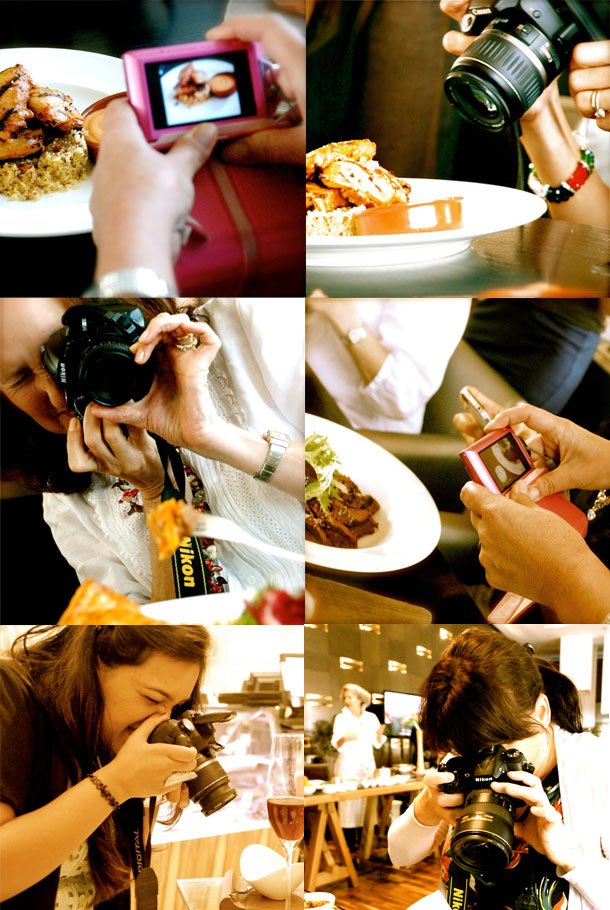
Ideally, I should have finished writing posts on many more women, so that I could include them in today’s post on International Women’s Day, but unfortunately, they are still in the blog queue. The whole day today is dedicated to Li’l Z’s birthday celebrations. And worldwide there are many women who are going to be celebrated today. I just hope that each day such celebrations continue in each and every house for each and every woman – the celebrations starting with the girl foetus, still cocooned in a mother’s sac. And before I sign off, the only post which I regret that I haven’t done before and that’s on Purnimadi’s Biriyani or her Bati Posto. Purnimadi (below) has been cooking for my parents back home in Kolkata for the last 15 years – coming to work every day of her life with a huge smile, come hail or shine, snow or storm – read that as floods, transport strike in Kolkata or the many turmoils and difficulties in her personal life!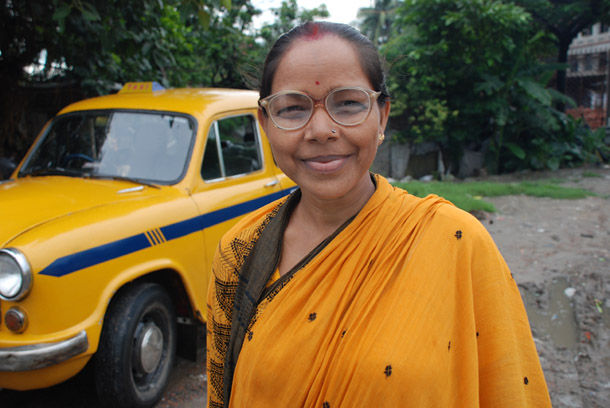
Unblogging it all… Ishita
◊—————————————————————◊
Disclaimer: While you enjoy reading a post with a lot of visuals, please don’t use them as some of them may have been taken from our personal albums, just to make your reading experience more pleasurable. You can see more pictures of my travel and food journey here.
BE SOCIAL. SHARE THIS!



A restaurant perched on a cliff top, 293m above sea level, each dish served like an artwork and accompanied by ‘Let me explain to you what is this dish Sir/Madam’ – this is Sense on the Edge, which has bagged the Middle East Hotel Awards 2012 for the Best Restaurant. An al-fresco dining on the terrace overlooking the Bay of Oman with the lights from the resort and the adjacent Zighy Village glittering like fireflies from below, this is surely the Omani Amalfi Coast! Sadly, the distance and the location doesn’t allow a sudden dropping in for a random meal, though I’ll be tempted to do so, every month on a full moon night, when the Bay waters shine like silver and the mountains are awashed in the moonlight. It was unarguably an evening to remember.
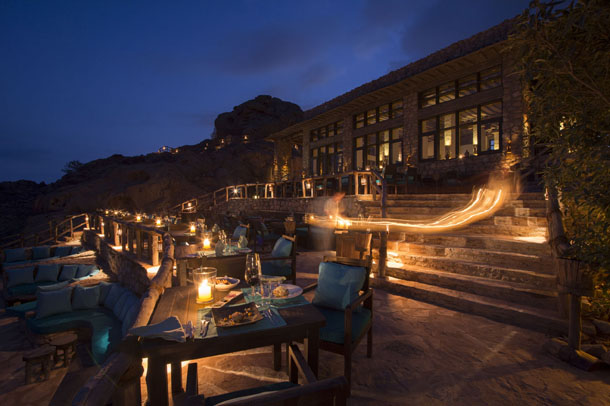
Taking a cue from my last post… We have been trying to travel responsibly over the years and visiting Six Senses Zighy Bay which has bagged the 2012 Middle East Hotel Awards for the Best Sustainable Initiative, just added to the gradually growing list of the Eco Resorts that we’ve visited so far. The resort’s green policy – adhering to the Slow Life… Meat Free Tuesdays… no wild Salmons flown over the Atlantic etc, is not very easy to follow when the mindset of a regular guest is that he/she has a right to demand everything, specially when in a resort as exclusive as this. This is where the Guests have to be in unison with the Six Senses’ vision and philosophy. The last post was about the resort’s green policy – a few highlights from their little green book, visiting the Reverse Osmosis plant and enjoying their almost sustainable Organic garden. This post talks about the romanticism of Sense on the Edge, the fresh food that were offered throughout our stay, prepared with vegetables growing in the resort’s own organic garden. And of-course, our family cooking class with Chef Hassan in Spice Market, the resort’s Arabic restaurant and a super easy Arabic recipe.
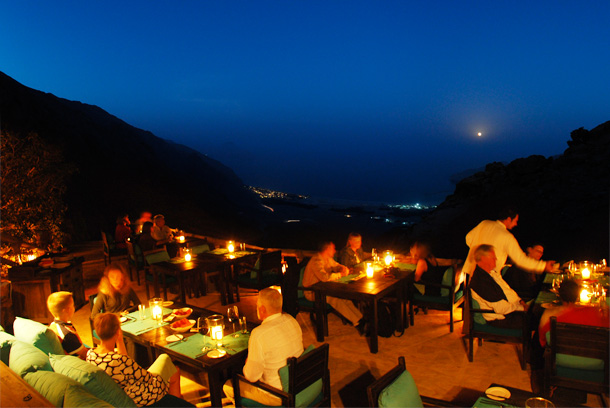
@FooDivaWorld:
@ishitaunblogged Lucky you! Cooking class in organic garden and dinner at Sense on the Edge are a must – enjoy!
I was hoping that our Arabic cooking class would take place in the organic garden just like FooDiva’s, but technical glitches (composts attracting too many flies!) shifted the lessons to the restaurant, Spice Market. The first tip remaining unchecked, I had to make sure that the second tip – dinner at Sense on the Edge, was atleast checked. With a reservation for an early dinner (6:35pm), we set out for the top of the mountain. A Toyota Landcruiser from the resort drove us up in complete darkness, along the same meandering, snaky, rocky slip road that we had taken while coming down to the resort, earlier on our arrival day. Imagine the thrill of dining in another restaurant of a resort that you are staying in, which is detached from the main resort by a 15 minutes drive! This is also the high point from where one can opt for a Paragliding arrival while checking into the resort.

Blame it on the candles – all my photographs are in night-mode or candle-light mode. And not many photographs of the actual food because of the dim lighting. Using a flash in this utterly romantic place would have been quite sacrilegious. The evening started with a Passion-fruit Martini (below) and upgraded gradually to a 2010 Danzante Merlot, the grapes coming from the Tuscan vineyards. Personally speaking, I’d prefer the Date Martinis over the Passion-fruit versions anyday. I must have had the Date Martinis even during teatime! The Sense on the Edge Menu is crafted by Chef James Knight-Pacheco and I was certain looking at the craftily done cover of the Menu (above) – with Cinnamon sticks, Star Anise, Cloves etc – that this was going to be one helluva dinner affair for us. We chose the three-course degustation menu over the seven courses which comes with the Chef’s tasting menu, for the two of us. The Z-Sistershad a lot of choices in their Kid’s Menu. In most places, the standard Kid’s Menu consists of some frozen Nuggets, Burgers and a Tomato Pasta (basically a Tomato-ketchup Pasta) to choose from. Exceptions to this had been our experience in Anantara’s Desert Island Resorts, in Sir Ban Yas Island, which had a full-fledged Menu with multiple options (tagging along some hidden vegetables as well!). Also in BoHouse Café, a Cafe cum Restaurant on The Walk in JBR, where we were very surprised to find fresh Nuggets, home-made Pasta in the Kid’s Menu.
The Starters: Big Z had a Chicken and baby gem Salad, which arrived topped with poached Egg, Bacon dripping in Maple Syrup and sprinkled with crispy Parmesan. For Lil Z, it was a Prawn cocktail, mixed with Rosemary sauce, chopped Tomatoes, Avocado and sprinkled with Dill croutons. She loves Prawns – but the amount of food she leaves on the plate is no indication of the taste or the quality of the food really. Both S and I, ordered Chicken Mosaic (a very dim picture below!) – Chicken Croquets and when cut, a thick delicious Caramel sauce oozed out from inside like a molten lava and poured itself out onto the roasted Pistachios and Mushroom served alongside. I was told that this was organic corn-fed Chicken that had been cooked for 24 hours. The other options for the Starters that seemed interesting were the port marinated Foie Gras (at the cost of being probably chucked out of the Great Foodies’ List, I’ll admit that I never can understand the hoo-haa associated with Fois Gras. This one looked great because of the Port and also a fluid Pineapple gel that was served along with it!), the pan roasted Scallops and a slowly cooked Onion Ravioli with Granny Smith Apple puree, poached baby Onions and almonds, served with Vanilla and a Grape juice. I wish I was not feeling so carnivorous that evening – I had seen the Onion Ravioli being served to another diner and something tells me that I should have ordered that instead of Chicken Mosaic.
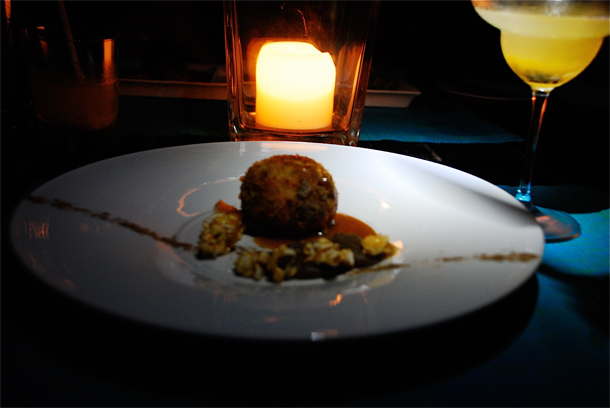
The Mains: My duo of Blackmore Beef came with a pan roasted Loin, a braised flank which had been cooked for 12 hours and served with some pureed Zighy Date and vegetables from the resort’s organic garden. S had ordered Roasted Lamb Leg, which had been poached previously for 24 hours and infused with Tomatoes and Basil. A Confit shoulder along with Sweetbreads, Apricots, sun-dried Tomatoes and Olives – he definitely seemed a very happy man. Big Z had ordered a Chicken and Mushroom Tagliatelle. It came with homemade Tagliatelle, Chicken breast, garden vegetables with thick creamy Butter Sauce poured all over it. We had to pre-order the kid’s meal – it was an oven roasted Burger, cupped by toasted Buns for Lil-Z, but she was already quite full. Curse the fine-dining etiquette that reprimands grabbing the kid’s plate to polish off the remaining food or lick the fork (though I sneakily managed to do both!).
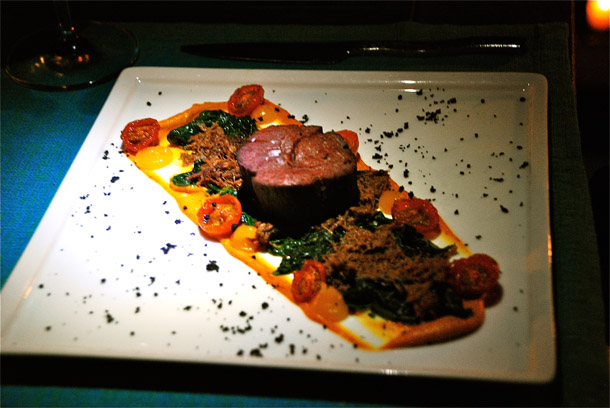
The Desserts: It’s a shame really that the photographs haven’t appeared the way each dish actually tasted (blame it on the romantic ambiance and the candles again!). After having each meal paired with the perfect wine, we still longed for some Desserts not because there was extra space in our tummy, but because we really wanted to see what sweet surprise would spring at us. Our family doesn’t believe in sharing Desserts – hence we all ended up ordering our own respective desserts. The Z-Sisters tasted a Banana split – toasted Banana, smoked Caramel Popcorn, Raspberry Caramel and scoops of Vanilla Ice cream; and Chocolate Slice – interesting slices of Dark and White chocolate slice with Chocolate sauce and White Chocolate crispies. S ordered a Coconut and Mango Mille Feuille (traditionally, a Mille-Feuille is made up of three layers of puff pastry, and two layers of crème pâtissière. The top layer is coated with a sprinkling of powdered sugar. More on Mille Feuille). It was made with Lime powder, Coconut and Malibu jelly, Mango gel, Coconut and Vanilla. I ordered Chocolate. That was the name of the Dessert as well – no fancy French name, only pure Chocolate! This was a lethal Chocolate combo of chocolate liquid, Chocolate Earth (what on Earth is Chocolate Earth? It is Chocolate powder sprinkled all over!), White Chocolate and puffed Rice with malted Milk Ice cream and Raspberries. Phew! Rocket Science is easier than describing the Chocolate!
The Verdict: Most of the degustation menus leave me hungry with their delicately crafted, exotic looking but devastatingly small portion sizes. But, this was one Menu where the portion size as well as the taste left me satisfied. The Kid’s Menu, as I’ve mentioned before, was sumptuous – lot of options respecting the young diner. There were mix and match of various flavours and ingredients and a whole lot of surprise elements. For example, the complimentary Amuse Bouches from the Chef – home made assortment of a Bread Basket with Caramel Butter and Garlic Butter. Or, the Magic Pops (crackling or popping candy granules) that were sprinkled on the Desserts – yes, even for the adults. As the evening passed, the terrace became pretty chilly. But we wouldn’t go inside, lest we missed out our conversation with the stars! The Z-Sisters were wrapped up in warm jackets brought by the caring Restaurant host. Dining in Sense on the Edge was an incredible experience for us. But if this doesn’t sound incredible enough for you, ‘there’s an extra-special and private dining experience; the Starlight Table. Nightly a couple can reserve this intimate table, completely removed from the rest of the restaurant and overlooking all that Zighy Bay has to offer’. Alas, not for us – with two kids in tow!
Okay, so did we manage to grab any romantic two-some moments in a sensational ambiance like this? Eventually, by the time the Desserts arrived, we ended up in the same table with another couple who had come from Mongolia. They too had two girls and as their girls ran off indoors with the Z-Sisters to have their own chit-chat, we – the awesome foursome, had our brilliant Desserts together. Who cares about romantic dinners? We now have someone to say Hello when we knock on Mongolia! Did someone say something about a secluded and exclusive Starlight Table? Ahhh, never mind…
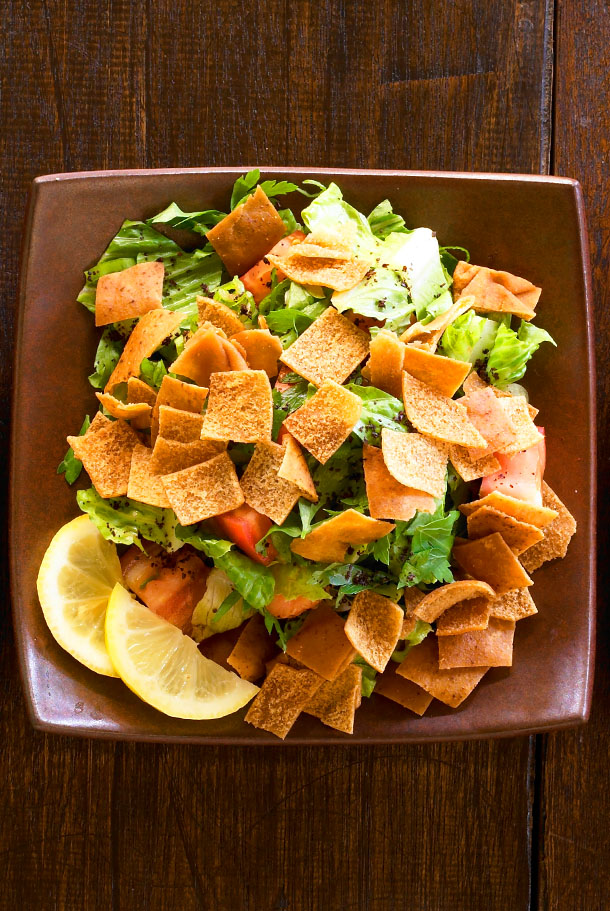
Our family cooking class was set up beautifully at the one of the resort’s Arabic restaurants – the Spice Market. Interestingly, all the furniture in the Spice Market has been created from sustainable wood and boasts of a traditional mud kitchen. A semi circular wooden ring formed our dining table while Chef Hassan demonstrated the Arabic dishes – Fattoush for Salad, Falafel as a Starter, Samkeh Harra/Spicy Fish as a Main Course and our all-time family favourite Arabic Dessert – Um Ali. Um Ali, here was cooked in a slightly different way than the one we had learnt previously at at our cooking class by the beach at Ananatara’s Desert Islands Resorts in Sir Ban Yas Island. The recipe of Samkeh Harra is quite similar to the Prawn Harra that we learnt at Desert Islands, so you could check on that recipe here – Desert Islands Resorts by Anantara | Cooking Spicy Prawn Harra By The Beach. Here, I am sharing the recipe for Fattoush, perhaps, the most popular Lebanese Salad. Sweet, salty and citrusy – it is perfect to combat the hot Middle Eastern Summers. The recipe has been tried and tested at home and I’ve slightly modified it to suit our palate. The Um Ali, however, deserves a separate post altogether. Egyptian in origin, I could wait for my trip to Egypt to write about Um Ali – if only the turmoil in the region would stop. Ingredients Dressing Garnishing Method of PreparationFattoush
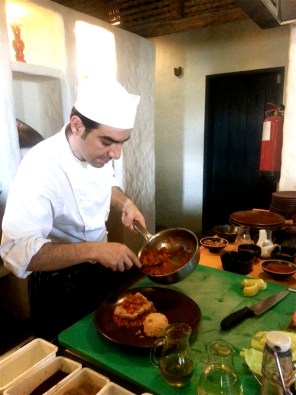
Lettuce – 1 big, chopped into 1 inch strips
Tomatoes – 2 medium, chopped into cubes or 4 Cherry Tomatoes
Cucumbers – 2 big, chopped into cubes
Onions – 1 big, cut into slices
Garlic – 2 pods, chopped
Lemon – 1 medium, squeezed
Pomegranate seeds – 1 cup Pomegranate concentrate – 1/4 cup [According to Chef Hassan, he boils almost a 1lt of Pomegranate Juice for 4 hours in low seam to get the thick Pomegranate syrup. This can be refrigerated upto months. However, Pomegranate molasses are available in the Arabic section in any supermarket and can be used as a substitute.)
Extra Virgin Olive Oil – 1/4 cup
Salt – As per taste
Sumac – 2 tbsp (The fruits of the flowering plant Rhus are ground into purple powder used as a spice in Middle Eastern cuisine to add a lemony taste to salads or meat. Read more on Sumac)
Arabic Pita Bread – 2, toasted or grilled until golden brown and broken into squares of 1 inch
Mix Sumac with Lemon Juice, Pomegranate concentrate or 2 tbsp Pomegranate molass, Garlic and dried Mint. Add Olive Oil, Salt. You may add more Lemon Juice or Pomegranate Concentrate according to your desired level of sweetness-sourness.
Parsley Leaves – 1 cup, chopped
Mint leaves – 1 cup, chopped
Rosemary – 1 sprig
• Coat the Pita Bread pieces with Olive Oil and set them aside
• Mix Lettuce, Tomatoes, Cucumbers, Onions in a mixing bowl
• Add the Pomegranate seeds, Olive Oil, Pomegranate concentrate, Salt and the toasted Pita Bread pieces
• Add the Dressing and mix well
• Sprinkle a bit of Sumac
• Add the Garnishing
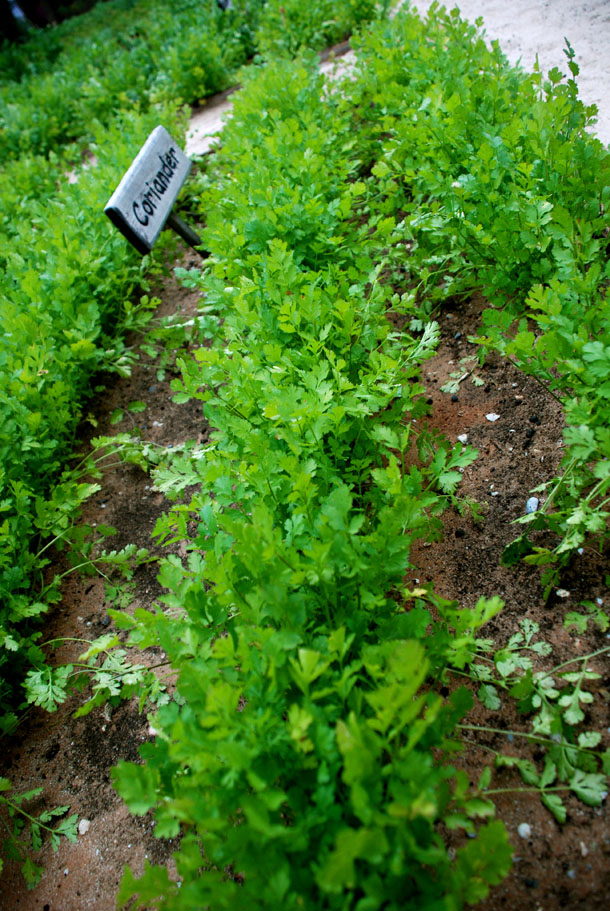
The Organic Garden, local fresh produce, slow life and a sustainable Menu… if you’ve read the previous post, you probably know a bit of what’s to come. The resort’s own organic garden produces most of the herbs and green vegetables that are required – Flat Parsley, Rockets, Lettuce, Tomatoes, Radish, Eggplant, Pumpkin, Bitter gourd, Water spinach, Chico [zapato], Onions, Baby spinach, Beet root, Mint, Sweet basil, Dill etc. Only organic fresh produce is used here – vegetables that do not grow in the resort garden comes from local organic farms from Oman. As I’ve mentioned in my last post, I’m happy to hear that the Six Sense philosophy favours Locavorism over organic produce, a topic that has warranted a lot of discussion currently. So, if a fresh produce cannot be farmed organically but is produced locally, the latter would be given more importance. Dates are abundant and are used for almost everything – we had already sipped into chilled Date Shakes on arrival, they are used for making scrubs for the resort’s Spa treatments; they go into Desserts as Date Cème Brulee; they also go into their brilliant Martinis. And from our dining experience in the Sense on the Edge, it also accompanied our Blackmore Beef as a pureed! All plants and trees found in the resort are also of indigenous origin – Dates (1,066 Female trees within resort and 14 Male trees within resort – I am told!), Figs (430), Lime (90), Sidr (340 in the Zighy Bay area) etc. Different fruits growing in the resort yield organic production throughout the year. Date trees blossom in February and the harvest spreads from May onwards. Organic vegetables grow from November to May, so does the Figs. Limes grow from May to March, while Hennas are there all the year round. Figs, Dates go into the making of home made jams, desserts, reductions, and Spa treatments. The wide array of home-made jams and compotes (below right) are served for daily breakfast – some of the combinations are interesting – Apricot and Basil, Tomato and Vanilla! Fig jam and Honey made from local Dibba Dates are the specialities here. So is the Passion-fruit Martini and the Date Martini (below left). Hammour and lobsters have not been in the Zighy Bay menu ever since they have been become ‘over-fished’. Nor is Salmon, which has to be air-freighted. Instead, the fish menu depends upon the fresh catch from the local fishermen in the Zighy bay, provided they’ve had a surplus. In-fact, the Samkeh Harra that we cooked was with the locally abundant Shaari Eshkelli fish. Tuesdays are dedicated Meat Free days here. The resort also purifies and bottles its own Drinking Water. All in all, this is an example of a Slow life dedicated to a Sustainable Menu.
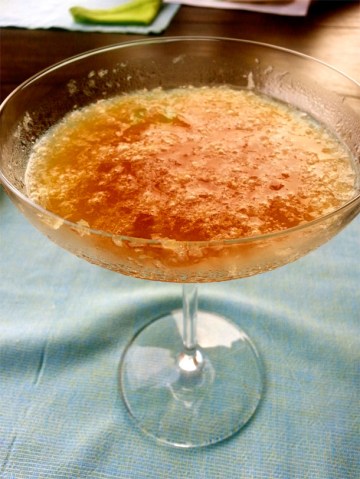
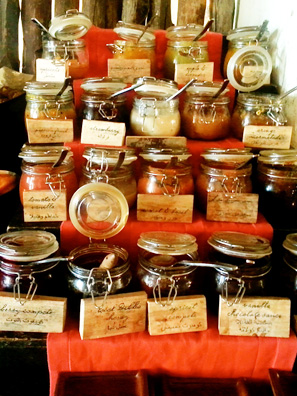
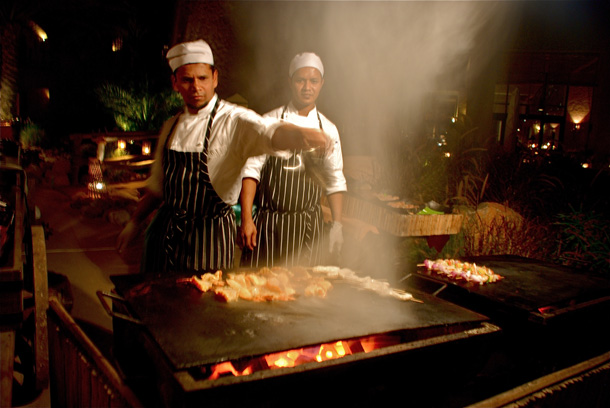
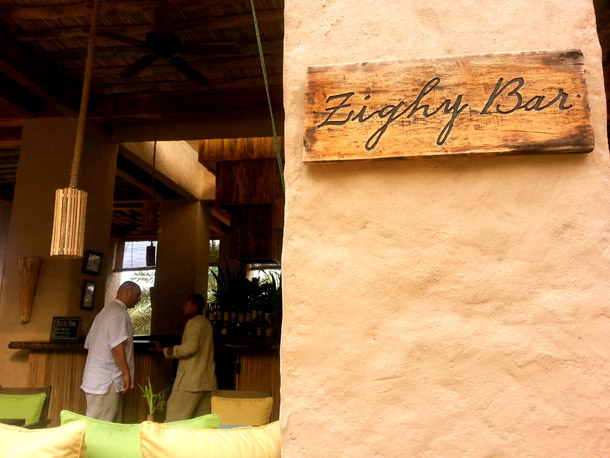
Six Senses Zighy Bay
5* Luxury Eco Resort; Zighy Bay, Musandam, Oman
Zighy Bay is located 120 km, or 90 minutes drive from Dubai International Airport
Tel: +968 26 735888; Email: reservations-zighy@sixsenses.com to check for their Spring Holidays and Easter Programme (22nd March –7th April) and special packages. Or you could visit their Website; Facebook Page; Twitter
Paragliding, Microlites, Kayaking, Snorkeling, Scuba-diving, various Water sports (Water Ski, Wake Board or Tubing), Dhow Cruise, Fishing, Mountain hiking, Mountain Biking, Trekking etc – one can choose from various activities offered by the resort apart from the various specialised Spa treatment from the award-winning Six Senses Spa. A Six Senses Spa is a key component of a Six Senses. The resort features 79 independent pool villas plus the Private Reserve and 2 Retreats in traditional Omani style, with modern amenities and luxury. Six Senses Zighy Bay is one of the exclusive ecologically and socially responsible resorts as chosen by Eco luxury Retreats of the World.
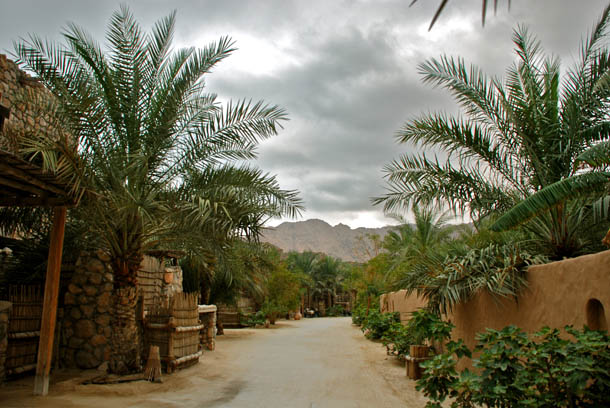
In view of Arab Water Day, the Sustainable water initiatives by the resort becomes more commendable… Arab Water Ministerial Council organises the Arab Water Day on 3rd March every year to urge Arab countries for more work towards achieving water security in the Arab Countries in the way towards sustainable development in the region. I’m taking the onus to highlight Six Sense Zighy Bay’s commitment towards sustainable water. My belief is that – if a luxury resort tucked away in a remote Bay in Oman can achieve this, surely a few rich nations can together achieve a sustainable water target? The resort purifies and bottles its own Drinking Water through Reverse Osmosis (what is Reverse Osmosis?) and re-usable glass bottles have replaced plastic bottles. 50% of Six Senses Drinking Water sales from any of resort’s F & B outlets go to Social and Environment Responsibilities Fund (SERF), a fund for local social projects. Apart from the Drinking Water, the entire water supply of the resort is obtained by desalinating sea-water. Considering that the resort’s water requirement is enormous, with all the villas having their own independent pools, the resort’s sustainable management of freshwater is noteworthy. On International World Water Day, held annually on 22nd March, 100% of the revenue generated from Six Senses water sales is placed into the SERF, in-order to carry out clean water initiatives throughout Oman. Furthermore, waste water is also recycled in the resort’s own waste water treatment plant where it is treated and reused for landscaping irrigation.

From an exotic degustation dining experience in Sense on the Edge to a family cooking class in the Spice Market, from craving for more of those tantalising Date Martinis prepared by the bartenders in Zighy Bar to emphasising my personal belief on the Arab Water Day that a few nations together could embark upon a fabulous sustainable future – the Six Senses Zighy Bay manages to transcend different levels. That probably explains the title to my previous post was Six Senses in Zighy Bay, Oman | Appealing To More Senses Than Six!
Unblogging it all… Ishita

 IshitaUnblogged