
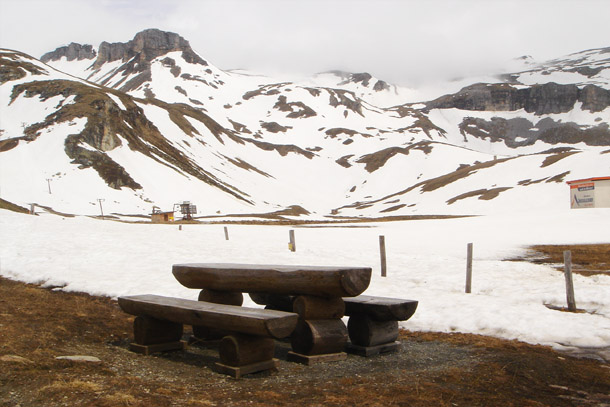

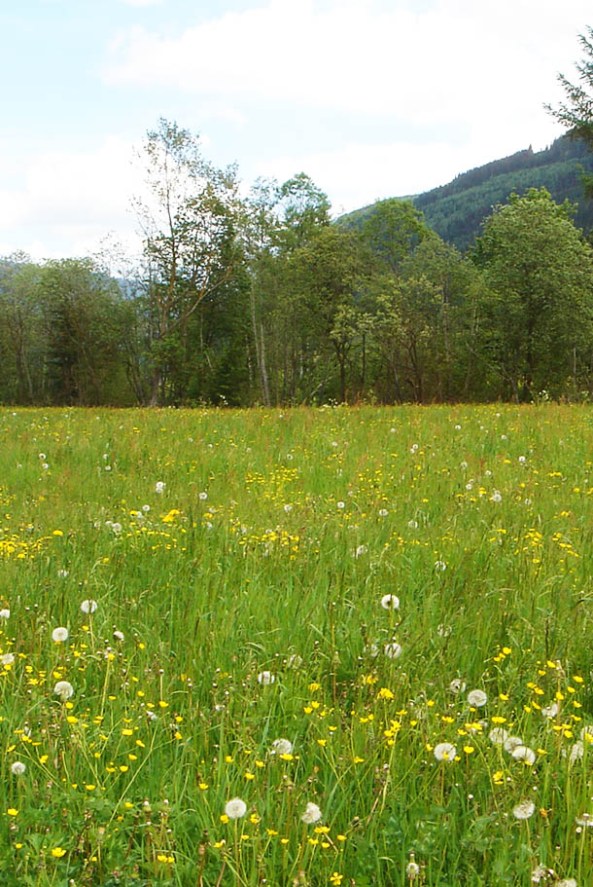
RIP Yash Chopra… the legendary Bollywood film director/producer who taught us to romance in our dreams and roll in the Swiss Pastures as if we were all born in the mountainous lap of the Alps.
I have grown up believing in romance. Believing that all romances culminated themselves on snow-clad Swiss Alps or running down the hill slope in a tiny Swiss Village. Courtesy, Bollywood films. I am an absolute Bollywood freak. Tragedy breaks my heart and Romance mends it. Real money takes you to Switzerland in reality. And an empty wallet takes you to Switzerland as well, but in your dreams. Either which way, you are bound to head to the Alps. Again, all courtesy Bollywood.
Needless to mention that the Switzerland was our first holiday to a foreign (pronounced phoreign) land after we could gather some savings. And all because of Yash Chopra who not only sold us Swiss dreams but earned himself enough reputation in the Swiss land to have a lake named after him!
Below is a song from one of his films… have I been too naive for believing in love?
Our Story – When Mars, Venus and their 2 satellites went on a vacation
Venus wants
– A room with a view…
– A peek at the flea market…
– A comfy sedan while on road…
– Sports cars are too cramped and Motor-bikes merely mess the hair…
– Art Museums please…
Mars feels
– A room with a view is such a waste of money – how does it matter whether a room has a view or a wallpaper if we are going to ‘dump’ ourselves at night?
– Flea Market? Why? Are we going to buy anything that is second-hand? If at all we ended up buying something, we can’t be cleaning everything with a sanitiser!
– Sedan? Why? Why hire a car which we are already driving back home? Why not a ‘buddy’ Jeep Wrangler?
– Art Museums? Why not war museums, comic museums, beer museums?
A kaleidoscopic clash between Mars and Venus…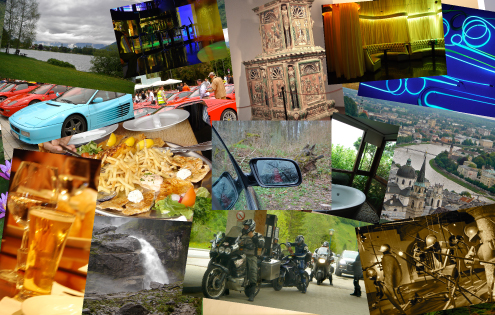 The ‘Big Bang Theory’ re-visits every now and then when Mars, Venus and their 2 little satellites go on a vacation! Mars and Venus need to thank their stars that the satellites haven’t yet formed their own opinions about vacations.
Invariably, during a holiday planning, compatibility and incompatibility issues crop up between Mars and Venus. Always, everytime and without any fail! The tug of war starts from the time Venus and Mars decide that it is probably time for a vacation.
◊——————————————————————–◊
Question: When should we leave?
Mars: Obviously on the last day of school so that we can hop on the flight the very evening, travel through the night and can start partying from the very next day.
Venus: That is impossible since I need to go shopping for the vacation.
Mars: What shopping? We have clothes hanging out of every chair, every shelf, every cupboard, every bed, under the bed and every conceivable piece of space!
If the destination is blue seas and the blue skies, then:
Venus: But I need a new swimsuit and a wrap around
Mars: Why?
Venus: Well, I’m not fitting into my old ones!
If the destination is cool mountains, then:
Venus: But I need some warm clothes and maybe a pair of boots.
Mars: Why?
Venus: Well, I’m not fitting into my old ones. Plus, my old boots don’t fit me either! (Isn’t History known to repeat itself?)
In both cases:
Mars: But you just a bought a ______ few months back. I mean I am wearing the same swimming trunk from my Srilanka days, a decade back!
Clothes can become tight, but shoes? Am I still growing in all possible ways? Many people say that the wisdom tooth can come out even when one is 40, so maybe some amount of growth from my ‘growth quota’ must have remained unused!
◊——————————————————————–◊
Question: Where are we going?
Mars: Car loans, house loans, insurance payments, school fees – remember? So think less, my darling!
Venus: But I didn’t insist on a holiday, did I? I mean, I never insist on holidays, do I? But I am not going to stay in holiday apartments. Remember the last time when we had to make our own breakfasts and that too on holidays?
A few minutes pass.
Mars: Hey, can you check whether there are chalets on the beach?
Venus: But we thought this was going to be a budget holiday!
Mars: Hey please, only for this time. The next time we have to be really, really, very, very cautious! But for this time try to find a hotel which is just known for it’s food!
After much debate, arguments, sweet-talkings, discussions, brainstormings, tele-conversations with closest friends, shopping and purchase of Lonely Planet, Mars, Venus and their two little satellites board the plane…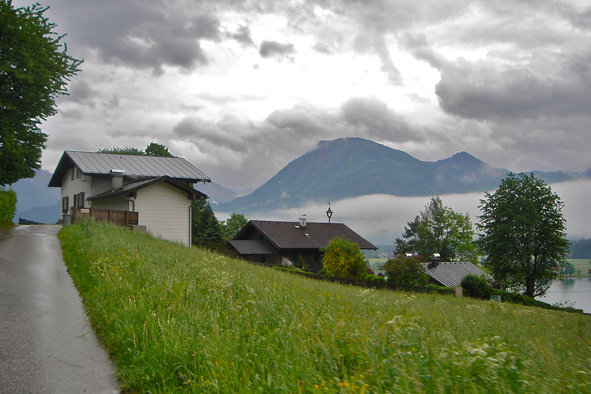
And the story begins. Short stories, based at different locales.
On our way driving from Zell am See, Austria to Strobl, also in Austria. My estimated drive time is 2 hrs. And how long did we take finally? It took us 12 hours! The reason being Mars’ reluctance to depend on Venus’ navigation ability!
The challenges that lie with us when we travel – apart from the fact being that the both of us hail from different planets, are our 2 satellites! Strapped behind in the car seats for more than 2 hours at a stretch boils down to screaming and yelling and downright hysteria! Hence, all my itineraries are planned remembering this challenge. We are driving from a beautiful town on the lake, Zell in Austria to another Austrian town called Strobl in the lake districts. My estimate take on the drive-time is a maximum of 2 hours.
Starting Point: Zell am See, Austria…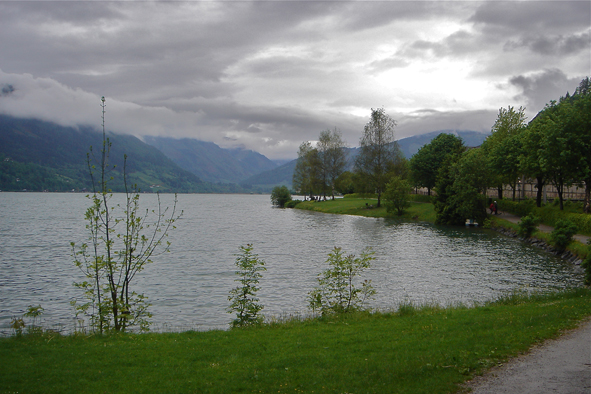 End Point – Strobl in Salzkammergut district, Austria…
Carrying a huge map of Europe which, when unfolded could serve us as picnic mat whenever we want to stop, can be really super cool. The younger satellite doesn’t know her alphabets but every now and then would yell M-M-M… it turned out to be the letter M from poles barging out of Mc Donald’s outlets every 2kms (or even lesser) on the highway! Hardly flattering for Mummy Dear who has been thinking all this while that M was for Mummy learnt from the Alphabet book. But, no. Such simple pleasures are really hard to find!
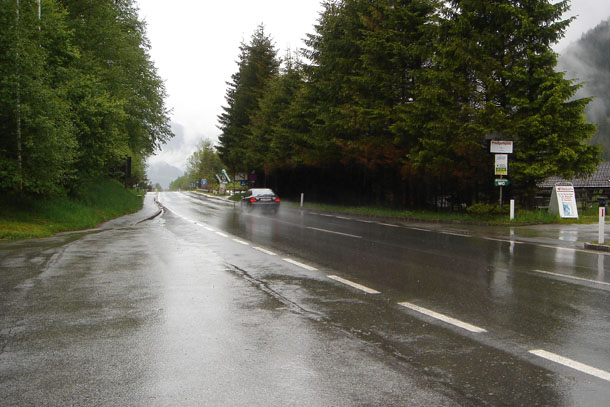
The very same day the Rain-gods also decided to be on the little ones’ side. We now had an additional instrument added to the background score as well – the thunderstorms! Our ears had to get accustomed to the alternate sounds of satellites’ screaming to let them out, the yellings for ‘M’ and the thunderstorm breaking upon our car-roofs. The incessant rain-boulders (how can I even term them as rain-drops?) giving the already existing cacophony a great company.
Where are we heading? Mars had obviously decided to depend upon the car Navigator instead of my meticulous route plans and my trusted hard-bound, paper-bound, plastic-bound, software bound – different kinds of maps! Oh, the Navigator – I call her Navigator Mashi or the Aunt Navigator! We hadn’t managed to make our Aunt Navigator to speak in English. So here she was, our Aunt Navigator, speaking in German, which we were learning at a speed of 1 hour class/week! So ‘Ausfahrt zwanjig’ (Exit 20) would but, obviously sound different to our German-Untrained ears leading to a typical conversation like this:
Mars: I think it was Zehn (10)!
Venus: Are you sure?, Sorry, sorry I wasn’t even concentrating!
Mars: What do you do sitting beside me? Your job is to listen to Navigator Mashi (Mashi is Aunt in Bengali)!
Venus: What do you mean by ‘it’s my job’? Am I not doing anything? I am constantly providing the satellites with biscuits and wipes. I even change the nappies in the running car while they are strapped into their car seats and then again hurdle back to my seat in the front!
Mars: Well, I shouldn’t be the only one to drive the whole day long! You should have sat for your German Driving License. If for nothing, but for the sheer driving pleasure on European highways. Specially the Autobahns.
Venus: I have been giving examinations since my birth. Do I have to keep on giving driving tests all over the world every time we shift? I have had enough of tests and tensions to get my UAE license, I can’t go through this at every stage of my life! (we had been living in the UAE before that where it took me ages to get my Driving License. Those were the days when getting an UAE Driver’s License was as difficult as grabbing the moon!)

Mars: But, you said that it is going to take us 2 hours only.
Venus: Yes, that is what the internet said.
Mars: Don’t trust the internet!
Venus: You are so confused. If I ask you anything, then you ask me to look in the internet!
Mars: We are driving for 4 hours now!
Venus: What? 4 hours? The satellites have gone completely berserk.
Mars: Relax, By an hour, their batteries would be completely down and they will fall asleep!
Venus: And that would be exactly when we would have reached the place where we have to get off and pull them out of their sleep and their car seats!
Mars: Are you actually tracking our drive in the map?
Venus: I was initially. But after Navigator Mashi confused us, I have stopped.
Mars: Please, check in your map.
Venus: Do you admit that you should have depended on me?
Mars: Yup! Pleeeeee-ase check!
Venus: OMG! What have you done? Navigator Mashi is showing Strobl (that too Hotel Strobl) in Italy!
Mars: So?
Venus: We have to go to Strobl in Austria!
Mars: We are already in Italy? How far away from Austria? Are we only in the border? What? What? What?
Venus: Ask your Aunt Navigator!
We were headed to Hotel Strobl. It was in a place called Sesto, near Milan! Almost 405 kms away from Strobl, Austria! The estimated damage was that we were almost 100 kms into Italy and would probably have to drive back another 300 kms to reach Strobl (in Austria, that is). Alas, the original distance from Zell to Stroble had been only 154kms!
That day we travelled for 12 hours! With no apparent view to enjoy. And the worst rains that we had seen in our stay in Europe! But, I must say that the 12 hours of chaos the previous day was absolutely erased the next day when the sun came out and the hills were alive with the Sound of Music!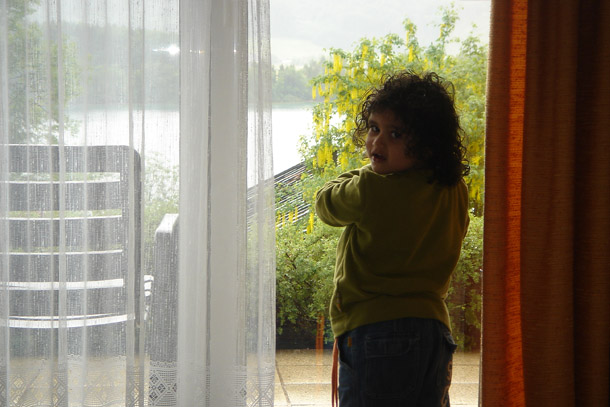 The Austrian Lake district, the Salzkammergut is absolutely enchanting. According to folklore, it took millions of years for Mother Nature to create the Alps. Then the glaciers cut through them and blessed the Alpine valleys with rivers and streams. The hotel brochures here proclaim that Salzkammergut was created at God’s leisure, obviously on a Sunday!
These are the lakes that have been picturised so brilliantly in the movie The Sound of Music and these are the same valleys that Maria, played so beautifully by Julie Andrews and the 7 children of Captan Von Trapp played by Christopher Plummer, ran around. I think I was hearing the tune of Do-Re-Me-Fa… almost everywhere.
It still seems to be linger in the crystal blue skies and the lush verdant valleys. Every year, a music competition, ‘The Sound of Music’ Competition is held in Salzburg. There are original ‘Sound of Music City Tours’ which takes tourists around all the places that have been showed in the movie – the Abbey where Maria lived, Captain Von Trapp’s chalet (it has quite obviously been converted into a hotel – Hotel Villa Trapp!), the glass room where the famous song ‘I am sixteen, going on seventeen…’ was picturised, the lake where the Von Trapp children’s boat had capsized…
Apart from the scenes and locations, the tour also gives information on the movie, cast, information about the Broadway Musical, The Sound of Music Souvenir Shop, The Sound of Music Stamp Collection!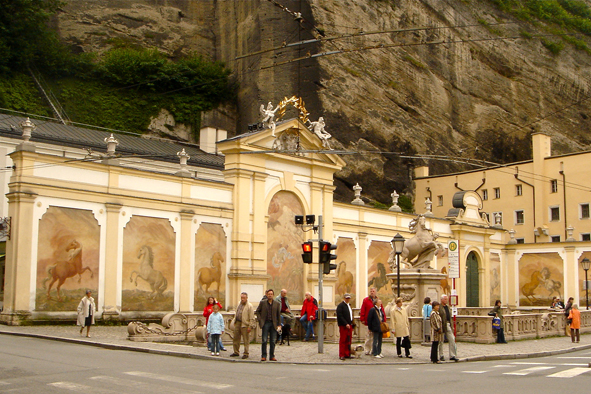 Captain Von Trapp was not a fictitious character. The movie was indeed based on him. Bless him for giving such a script idea to the Americans! Was he really so authoritative like the one shown in the actual movie? Studies say, probably not. He was far more quiet than his movie character. However, in real life he really did use a whistle to address his children! It seems that his great grand daughter defends this act on the ground that the estate of their family home was so vast that it was impossible to call out to the children but to whistle!
Did the real Captain Von Trapp ever imagine that Hollywood would make him into an iconic movie character?
And not to mention these Golden Tours. How did it all begin? Which is the most authentic tour? Among many such tours the Panorama Tours claim that theirs is the original Sound of Music Tour. According to them in 1965 ‘Our buses were used by the film crew and our limousines carried the stars. After the release of the film, many fans came to Salzburg asking the original sites – and our drivers could naturally guide them. That’s how the ‘Original Sound of Music Tour’ started’!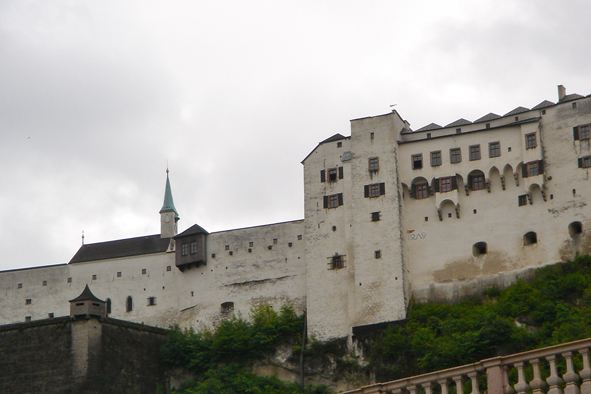
Bollywood and it’s connection to Switzerland
This brings me to our Indian film industry, specifically Bollywood. Or rather, Bollywood’s connection to Switzerland. For the uninitiated, Bollywood is our desi (Indianised) version of ‘Hollywood’. Bollywood is the informal term popularly used for the Hindi film industry based in Mumbai (formally known as Bombay in India). Infact, Bollywood happens to be the largest film producer in India and boasts of being one of the largest centers of film production in the world. And we are still stuck with issues like population while playing the Ranking game!
As admitted earlier, I am a total Bollywood freak. I am crazy about Bollywood films, Bollywood songs, all the over-the-top picturisation of romance and dream sequences. I love it when the hero who lives in the slums breaks into a dance sequence with the heroine, only in his dreams though, in exotic foreign locales! Some may get offended by this stereo-typical typecast of Bollywood films. I agree, that today’s Bollywood is not only about dream sequences but much more. There are so many different kinds of films being made as well. Most often, the critics term them as ‘unconventional’ as well!
So what is conventional? A conventional Bollywood film probably would be (or used to be in earlier) – The poor hero falls in love with a shamelessly rich girl. They don’t date. They dance. They dream. And they dance in their dreams. They change their designer clothes a dozen times. They prance in the Swiss Alps. They hurl snowballs at each other… It’s freezing cold but the heroine wears a halter neck blouse and wears a transparent (or should I describe it as translucent) saree, the 6-yard of clothing that would wrap the heroine and yet seem like she’s wearing a bodice! She spreads her arms out in the chill. Unperturbed by the fact that she is probably standing on the snow capped peak in the Swiss Alps, the Jungfraujoch, the highest peak in Europe!
Yash Chopra, Bollywood and Switzerland
These are the kind of Bollywood films that make me feel good. And I must thank Yash Chopra, the veteran Bollywood director for that. Yash Chopra is undoubtedly India’s most successful film-maker. And most importantly, India’s most successful ‘Bollywood’ film-maker. He has shot so many of his films in Switzerland, and has thereby, indirectly promoted Switzerland as a foreign holiday destination to millions of people in the sub-continent.
What has he got in return? A lake in Switzerland has been unofficially named The Chopra Lake because he has used this lake so many times in so many of his films! And to top it all, he has been honoured by the Swiss Government for rediscovering Switzerland, becoming the first recipient of the title of Ambassador of Interlaken. A special Yash Chopra Suite and Yash Chopra Train were also inaugurated in his honour in Interlaken only last year.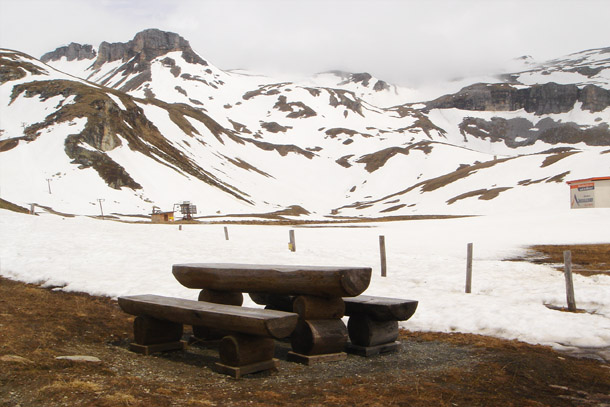
Our Swiss Experience of Bollywood Mania
It was way back in 2000, when we had gone to Switzerland on our first foreign holiday. Quite obviously, our destination was courtesy the visions of romanticism connected with Yash Chopra films! But I felt absolutely dumb when I came across people who were so loyal to Bollywood.
I met families who came all the way from Pakistan or India without any planned travel itinerary, asking us where they should go to find that station picturised in Dilwale Dulhaniya Lejayenge – an Yash Chopra film Shahrukh Khan, the hero of the film meets Kajol, the heroine! It was unbelievable that they had travelled from so far, just to see a scene that they had seen in a film.
There was another instance when we met a pair of visibly harassed parents with two sons who had come all the way from from Jaipur, India. Their sons clearly did not want to see anything but the lake where another Bollywood hero, Govinda had been seen romancing the heroine, Karishma Kapoor in yet another Bollywood movie Hero No. 1!
I saw newly-wed couples from the subcontinent, walking hand in hand and actually singing and dancing just like they have seen in Bollywood films, around the lake in Interlaken!
I saw people taking numerous pictures at the railway station where Shahrukh Khan meets Kajol for the first time in the now historical (pun intended!) film Dilwale Dulhaniya Lejayenge!
A decade back, these hapless tourists didn’t have a clue as to the exact Swiss locales where the scenes were shot. They would just roam around Switzerland randomly. Bollywood brought droves of tourists from the subcontinent to the highest point of Europe – the Jungfraujoch. The proof being that the only café on the top of Europe is actually called The Bollywood Café!
I always thought why couldn’t someone come up with a concept like The Bollywood Journey in the Swiss Alps as an inspired concept from The Original Sound of Music Tour?
A decade later, people have invested in my ideas!
YRF (Yash Chopra Films) Enchanted Journey
We have YRF (Yash Chopra Films) Enchanted Journey on offer from big tour companies like SOTC! Now, you can actually visit those very sites where Yash Chopra shot some of the memorable songs and scenes of his numerous super hit films, right from Chandni to Dilwale Dulhaniya Le Jayenge and many more, in a guided tour right through Switzerland! Tourists visiting Switzerland as part of this package get to visit the original locations of films like Dilwale Dulhania Le Jayenge, Mohabbatein, Veer-Zaara, Chandni, Darr and Bachna Ae Haseeno.
This unique YRF Enchanted Journey, is really the first of its kind anywhere in the world that focuses on a particular filmmaker’s fascination with locations in a country!
The Swiss Government must be forever indebted to Yash Chopra. Last year, a dinner was hosted by the Consulate General of Switzerland in Mumbai and Switzerland Tourism – The Switzerland-DILWALE DULHANIYA LE JAYENGE formal dinner, to felicitate Yash Chopra’s blockbuster film’s unit for the successful running of their film for over 500 weeks. Isn’t that absolutely crazy? That’s about nine and a half years!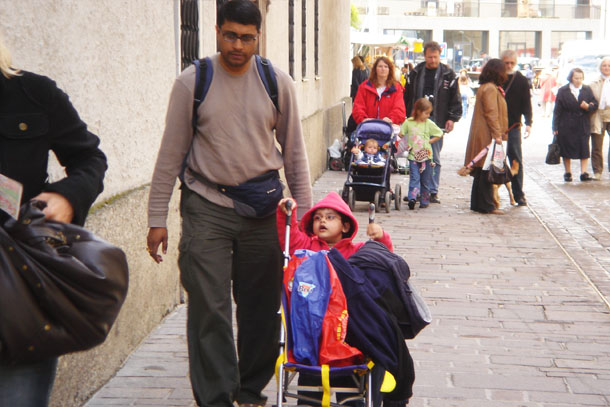 Coming back to Mars and Venus, they argue, they fight over almost everything with reference to their holidays. They are ‘holiday-incompatibles’. The only thing that makes them ‘holiday-compatibles’ is the fact that they love to travel!
Their viewpoints hardly ever match.
Venus’ viewpoint:
– Spectacular views and breathtaking scenery…
– Austrian cakes & strudels…
– Humming ‘Do-Re-Me-Fa…’ as she would like to wander through the lush green valleys, see the snow-capped mountains and walk along the green hillsides…
– Feel the shiver of excitement as historical wonders…
– Maybe, just maybe a beautiful Swedish massage in one of the spas overlooking the lakes!
Mars’ viewpoint:
– Real relaxation with 24 hours service of chilled beer – just keep the beer cartons outside on the terrace, do the earth a favour by not using the refrigerator…
– Austrian coffee and lots of sausages and steaks (raw, perhaps?)…
– Driving a convertible along the beautiful roads along the shores of ‘oh-so-many’ lakes with the chill in the air sweeping across the face…
– How the heck did these men climb up through the mountains without any road and build all these?
-A luxury yacht gliding along the lake… already at 40, maybe there’s no more chances to own a yacht…
For every incident that I have mentioned Mars’ arrogance in putting me down in our holidays, I feel absolutely obliged to narrate a few others when Mars’ contribution had been immense.
– During the entire trip to the Disney Castle in Neuschwanstein, the younger satellite had replaced Mars’ backpack and slept comfortably and snuggly in his arms while we went up the narrow stairs of the castle and through the various rooms that we visited – almost 2 hours of carrying the satellite in his arms while Venus clicked photos and listened intently to the guide!
– Baby-sitting the satellites while Venus insisted that she wanted to see what was real Amsterdam all about – the red-light district and the hullabaloo surrounding Amsterdam!
– Requesting the chef in Srilanka’s Taj Bentota Hotel to almost send the entire dinner buffet in a small sample trolley as room service, when Venus couldn’t go down to the dining room as she was putting the satellites to sleep when the satellites crashed much before the dinner time!
– Baby-sitting the satellites mostly through all the flights and bribing them with videos and movies and snacks and savories so that Venus can sleep through all her flights – so that she is all fresh and ready when she lands on the country they visit!
The incidents of this post refers to the period when the Satellites were a bit younger. Now they have evolved in real life as well as in my blog as The Z-SISTERS. I could go on and on extolling Mars’ virtues. Whatever said and done, the arguments will persist. We will probably be holiday-compatibles, I would say. Well, almost! But we are determined to keep on traveling. As the title of Yash Chopra’s unfinished and as declared by the director himself, probably his last film Jab Tak Hai Jaan/Till we breathe our last breath!
UnBlogging it all… Ishita
Disclaimer: I hope you enjoy reading the posts with lot of visuals taken from our personal albums. While you enjoy seeing them please don’t use them. You can see more pictures of my travel and food journey here.
◊——————————————————————–◊
Our Other European Travel Banters:
The Magic of Christmas! – Kolkata, Frankfurt, Dubai
Smuggled into Godfather’s Sicily – Italy
The unlikely twins – Oberammergau & Kolkata
Rainbows, Violins and the Disney Castle – Bavaria
Lorelei, my ship has passed you by – Germany
BE SOCIAL. SHARE THIS!

An etymological explanation of our extreme Food-Fetish… I would simply say, ‘Blame it on our Bengali genes’!
[Note: This post was originally written on 15 October, 2012 during Durga Pujo. I’ve changed the date of publishing in order to feature it on my homepage in a certain order]
This is an emotional post for me, tugging at all the nostalgic nerves that I have in my body. It has taken me long to gather my thoughts, photographs etc – to explain as simply as I can, the nuances of traditional Bengali Cuisine. It is a cuisine that is vast and elaborate, but every time someone asks me, ‘What comprises Bengali Cuisine?’, I falter for a while as there is no simple answer to that. There are so many layers to the cuisine, so many regional variations and if we probe into the evolution of the cuisine, it will also reflect the history of Bengal.
Most people I have come across are pretty much aware of Indian food. This awareness however stops at Biriyani, the Chicken Tandoori or a Butter Chicken. Or perhaps, the Dosas and the Idlies, which are completely different to North Indian food originating in the Southern states of India. Bengali food belongs to neither of the above categories and definitely not in between. An Indian map will certify that. Bengal is situated to the East of India and borders Bangladesh. And that’s where all the food stories begin.
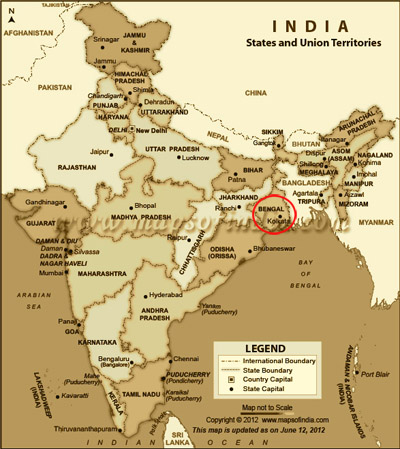 India comprises of 29 states (regional classification, officially) and 7 Union Territories (the union territories are ruled directly by the federal government, unlike the states which have their own elected governments) which are further subdivided into districts and so on. And the food is as diverse as it gets (read here) with each regional cuisine significantly differing from each region. (Map Courtesy: here)
Talking about myself (you can read more about me here), I am a true-blue Bengali or a BONG to the core, the latter being the colloquial equivalent to describe a modern Bengali – the urbane and the cool version. Born and brought up for the most part in Kolkata, FOOD has shaped my personality and character. My Bengali genes are to be blamed not only for my relentless creative pursuits but also my unsatiated taste-buds. FOOD is also our most important travel companion. If there is one thing we as a family, always agree upon unanimously, then that is this – ‘WE ARE HUNGRY!’ And yes, we are proud to have been able to transfer our genes to our little ones – the Z-Sisters!
Annaprashan or the ‘First Rice’
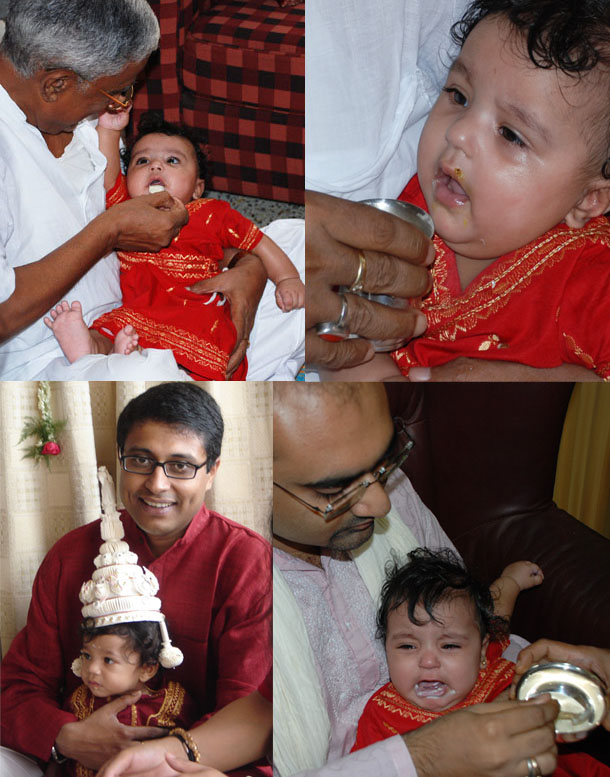
But how and why did this food fetish start? For a Bengali, this food fetish begins quite early – almost at infancy as you can see from the picture above.
The first ceremony or celebration that a Bengali child witnesses is Annaprashan or the ‘First Rice’. This Bengali tradition initiates an infant of barely 6 months to his/her first intake of food other than milk (the child is six to eight months old when the ceremony takes place, odd months for girls and even months for boys). Dressed up in the finest traditional attire (the girl child or the boy child resembling a mini bride or a groom respectively), it is a cute little sight to watch. Provided the little ones do not break into howling (see above how Lil Z reacts while our little nephew seems to be enjoying the adulation) which usually is the case considering the kind of spotlight the child is under! Usually, the Mama/Maternal Uncle or the Dadu/Grandfather according to some family tradition, does the honour of feeding the child a spoon of Payesh, the traditional Bengali Rice Pudding.

An excerpt from my earlier post explains the significance of Payesh…
The only other way to explain the importance of a traditional Payesh/Rice Pudding to a Westerner is to probably compare it with Champagne. If one can understand the importance of the Champagne to bring on a family celebration, then one can probably understand the importance of Payesh. Or say, cutting a cake on a birthday. For a Bengali, a spoonful of Payesh is a must on any special occasion. Also, the first spoon of non-solid food that goes into a Bengali child during Annaprashan or the First Rice is the same auspicious Payesh.
In effect, Payesh is the celebrity dish that cuts the ribbon in an opening ceremony!

What follows there after is a royal initiation (shown above) into food. The first vision of ‘solid food’ comes in the shape and size and form –
• Drops of Ghee (traditional Indian clarified butter)
• Payesh (a sweet dessert made with rice, milk & sugar – traditional Rice Pudding)
• Shukto/Bitter vegetable preparation
• 5 types of Bhaja or fries – Aloo bhaja/Potato fries, Potol bhaja/Parwal fries, Kumro bhaja/Pumpkin fries, Begun bhaja/Eggplant fries, Uuche bhaja/Bitter-gourd fries
• Torkari or an assorted vegetable dish
• Daal or lentil soup
• Of course, a variety of fish preparation accompanied by yes-you gotta-believe-me, a FISH-HEAD and a FISH-TAIL!
• Chutney, a palate cleanser and an informal initiation into a formal dessert tasting
As you probably can understand by now, the groundwork for a Bengali’s taste buds’ perpetual yearning for FOOD is built at almost his/her infancy!
Bengali tradition is reflected by two colours – Red & White
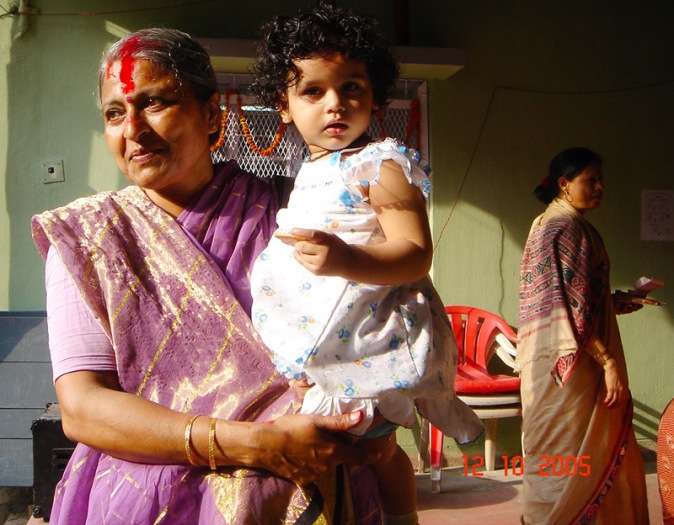
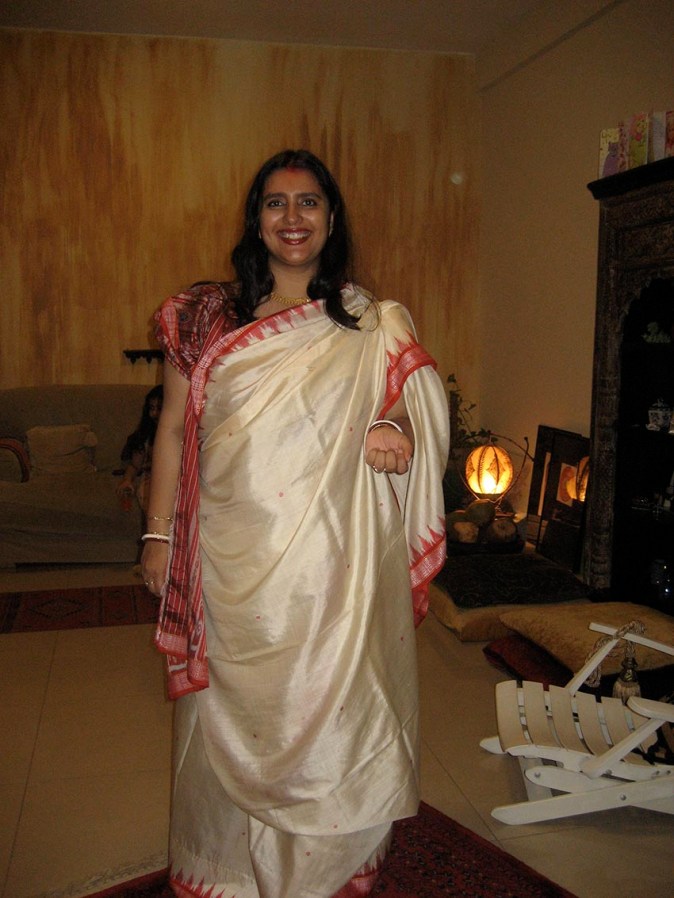
Bengalis world-wide are at this moment caught up in a festive frenzy. Every autumn a festive mood hits Kolkata as if Goddess Durga, comes to life. Thousands of Pujo Mandaps are built all over the city and there are thousands of ‘themes’ on which these Mandaps are built. The lightings, the structures, the extravaganza… the atmosphere is electrifying, almost carnival-like. The Durga Pujo or Durgotsav, as it is called continues for 5 days. Goddess Durga with her two sons (Ganesha & Karthika) and two daughters (Lasksmi & Saraswati), is believed to come down to earth from her heavenly abode in Mount Kailash. On the last day of the worship, the married women wear their traditional white saris with red borders and perform the Sindoor Khela where the married women smear each other with sindoor or vermillion. Well, I miss all these in Dubai although I try to replicate a few things at a special Bijoya gathering at home (yes, that’s me in the above picture and my mum-in-law during sindoor khela in 2005).
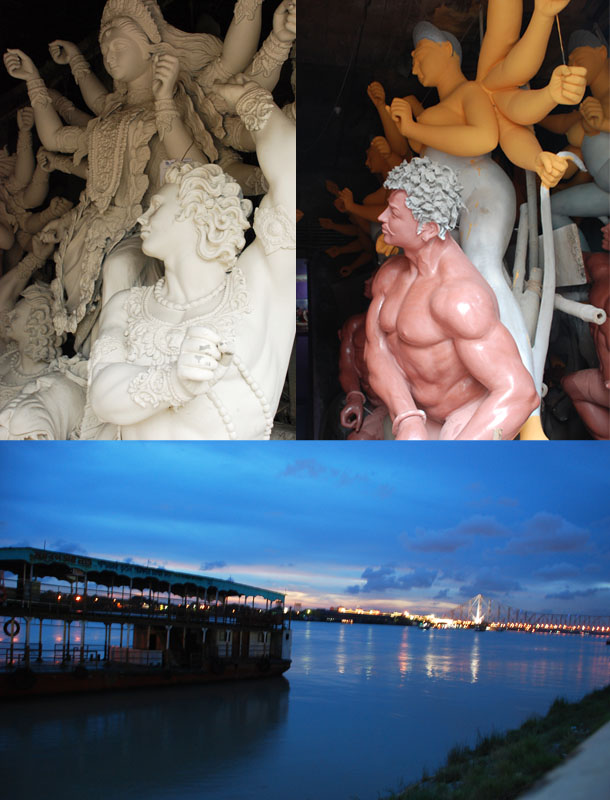
During our Kolkata visit on our summer holidays this time, we visited Kumortuli – the place where the idols are made. The artisans at this time were busy making the idols, only a few of them had been given a poach of paint. But it was still a long way to go for Pujo at that time (above).

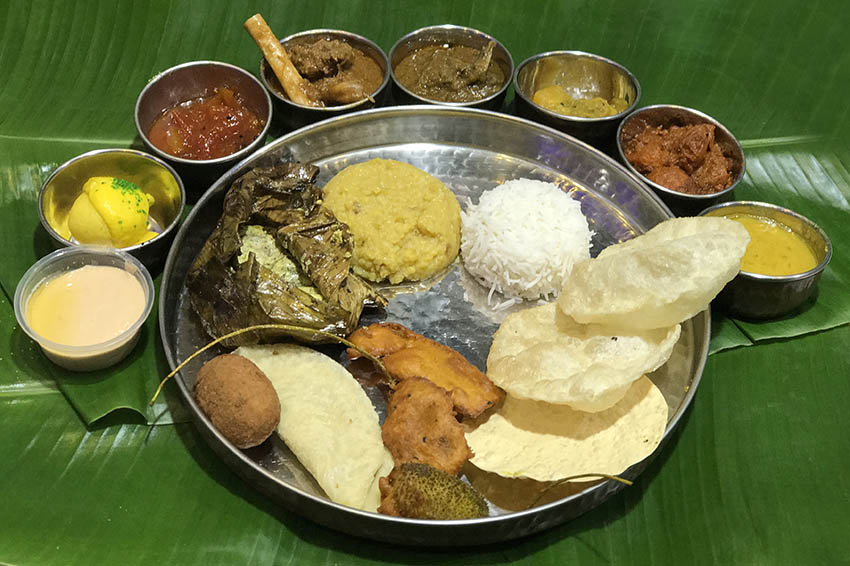
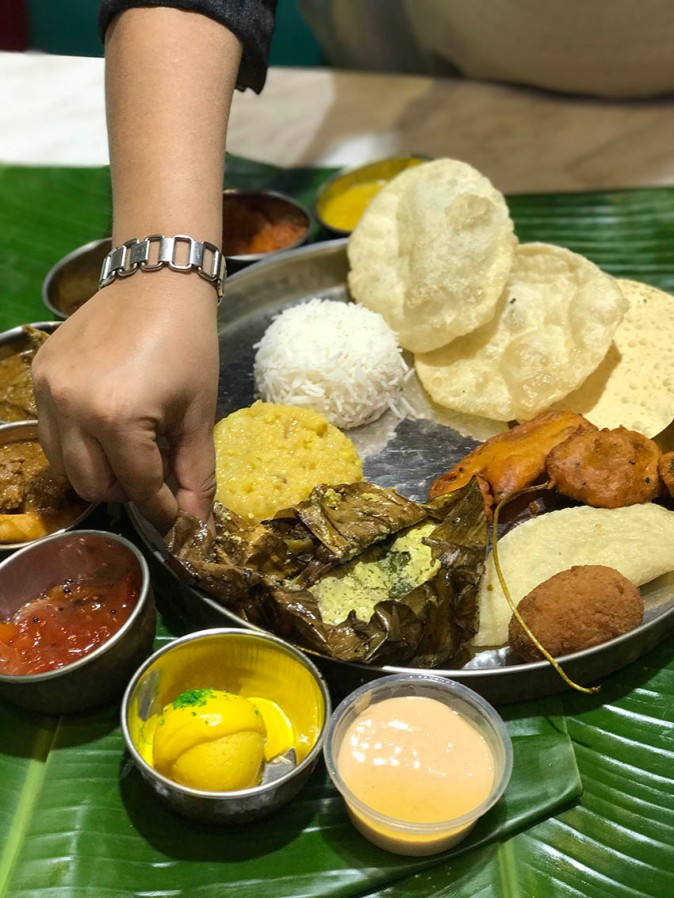
Bhog, the food dedicated to the idol during Pujo is very special – it feels divinely aromatic and traditionally served in banana leaves. The picture below is from a special Pujo dinner at our home and probably shows the extent that we go to in-order to replicate the things and moments that we have grown up with! [Here’s a glimpse into a Bijoya dinner at our home, edited in 2017]
What comprises a traditional Bengali meal?
What follows below is an elaborate and a very traditional Bengali meal – a thing that can be conjured up only in my dreams – only because in reality how many of us are being able to cook up such elaborate and traditional meals on a daily basis?
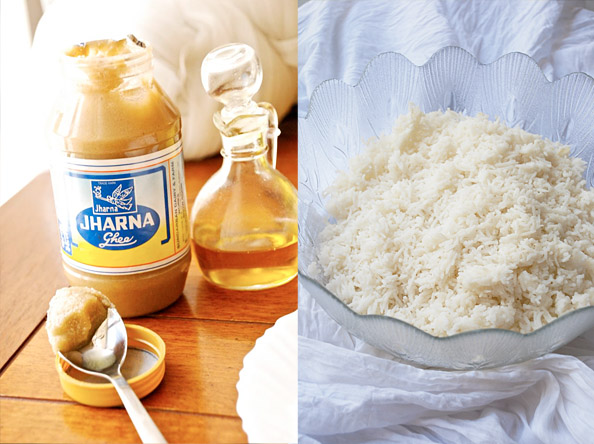
Rice – plain white rice is the main accompaniment to all dishes, unless it’s made into a Mishti Polao. Firstly, Rice is eaten with starters (mainly vegetables) with Ghee or Daal. Rice is eaten in the Main Course too, either with fish, meat or chicken. Traditionally, Bengali dishes, specially the fish, are cooked in Mustard Oil. Rice is also the main ingredient in the preparation of some Mishti or desserts – for example, the Payesh – the rice pudding, or the Pati Shapta – rice crepe with a filling of kheer.
Squeezing a bit of Gondhoraj Lebu or the Bengali Lime (shown below) in Dal/Lentils, specially Mushurir Dal/Masoor Dal or Bhaja Moonger Dal/Fried Moong Dal is very unique to lunches at Bengali homes. These limes have their own aroma and something that I haven’t been able to find beyond the shores of Bengal. although we have found substitutes for many things that we miss from Bengal as we continue to lead our Bengali lives in non-Bengali shores. The closest I’ve come to the aroma of Gondhoraj Lebu is the leaves of Thai Kaffir Lime!
Kancha Lanka/Green Chillis, Gondhoraj Lebu/Bengali Lime and a pinch of Salt in the corner of plate is a trademark of traditional Bengali food serving!

Starters
• Bhaja or Fries: Crispy vegetables deep fried in oil. Examples – Aloo bhaja/Potato fries, Potol bhaja/Parwal fries, Kumro bhaja/Pumpkin fries, Begun bhaja/fried Eggplant, Uuche bhaja/Bitter-gourd fries. Sometimes fried fish may also accompany the white Rice
or
• Bhaaté or mashed steamed vegetables – Examples – Kumro bhaaté/Mashed Pumpkin, Aloo bhaaté/Mashed Potato, Uuche bhaaté/Mashed Bitter-gourd
• Shukto: A bitter vegetable preparation using Korolla or Uuche/ Bitter-gourd
• Shaak: Steamed or lightly cooked leafy vegetables. Examples – Palong shaak/Spinach, Methi shaak/Fenugreek, Lal shaak/Red Leafy Vegetables
• Torkari/ Mixed Vegetables
• Dal or lentil soup: Sometimes Dal contains various seasonal vegetables or fruits in it. Very famous is Aamer Dal/Mango Lentil Soup or Amrar Dal/Dal with Gooseberry. It may also be cooked with fish pieces or fish head and fish bones in it!
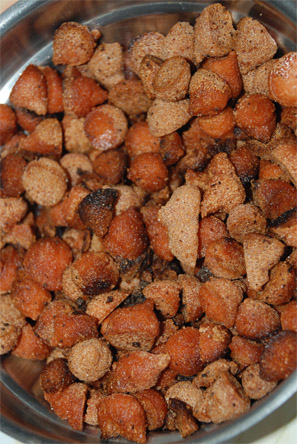

Bori Bhaja/Fried Lentil Balls (left) and Aloo Bhaja/Fried Potato (right)
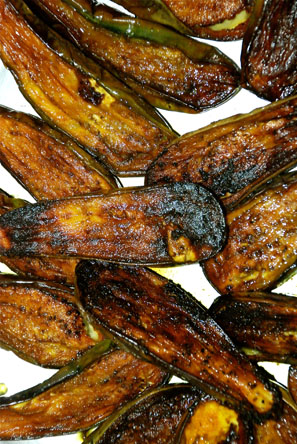

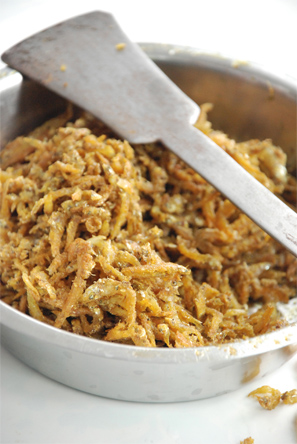
Begun bhaja/Fried Eggplant (left) and Jhurjhure Aloo bhaja/Potato Fritters Bengali Style (right)

Uuche bhaja/Bitter-gourd fries, Beguni/Eggplant batter fried in Besan/Gramflour (left) and Mourala bhaja/Mourala Fish fritters (right)

Kumro bhaaté/Mashed Pumpkin (left) and Aloo bhaaté/Mashed Potato (right)

Shukto or the Bengali ratatouille as I like to call it

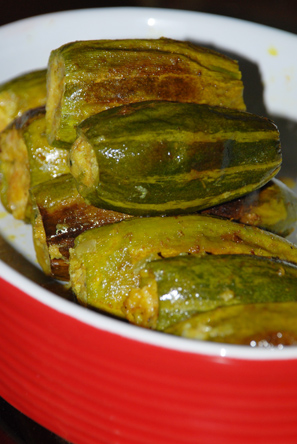
Beguner Dorma/Stuffed Eggplant (left) and Potoler Dorma/Stuffed Parwal (right)

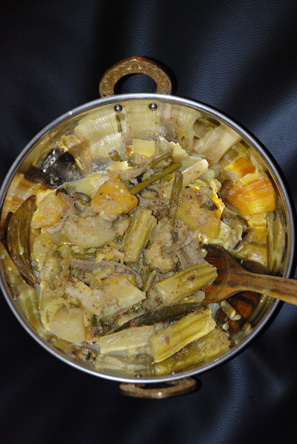
Aloo-Potoler Torkari/Potato Parwal (left) and Paanch Meshali Chochori/Assorted Mixed Vegetables (right)


Maacher maatha diye bhaja Moonger Dal/Fried Moong Dal with Fish-head (left) and Aam diye Musurir Dal/Mango Masoor Dal (right)
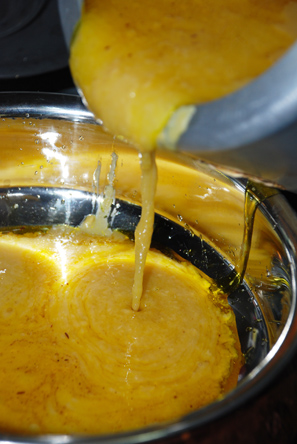

Kaancha Moonger Dal/Moong Dal (left) and Karai Shuti – Phul Kopi Diye Moog Daal/Moong Dal with Green Peas & Cauliflower

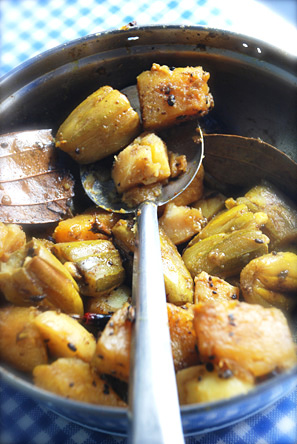
Cholar Dal diye Luchi/Bengali Puri with Bengal Gram Dal (left) and Aloo-Potol-Kumror Chokka/Potato-Parwal-Pumpkin Mixed Vegetable (right) is another popular food pairing.
While making Luchis, a dough is prepared by mixing Maida/Flour with water, a spoonful of Ghee/White Oil and a pinch of Sugar and Salt. Small balls are made out of these dough and flattened flattened and individually deep-fried in Oil or Ghee. When Maida/Flour is substituted with Atta/Wheat Flour, it is called a Poori. And a stuffed Luchi is called Kochuri. Karaishutir Kochuri/Kochuri stuffed with mashed green peas is an absolute delicacy.
Another Bengali delicacy that I miss very much and is not available in Dubai is Posto or Poppy Seeds as it is banned in the UAE because of its addictive quality (read here). However, Poppy Seeds also known as Khaskhas in other parts of India is widely used in cooking. In some regions of Bengal, Posto forms a part of daily meal. Aloo-Jhinga Posto/Potato & Ridge Gourd with Poppy Seeds (below left) or simply Aloo-Posto/Potato with Poppy Seeds is one very popular Bengali preparation. Another very simple yet very delicious Posto preparation is to stir in the Poppy Seed Paste in a bit of Mustard Oil with a slit green chilli thrown in. This is known as Bati Posto (the first picture below).
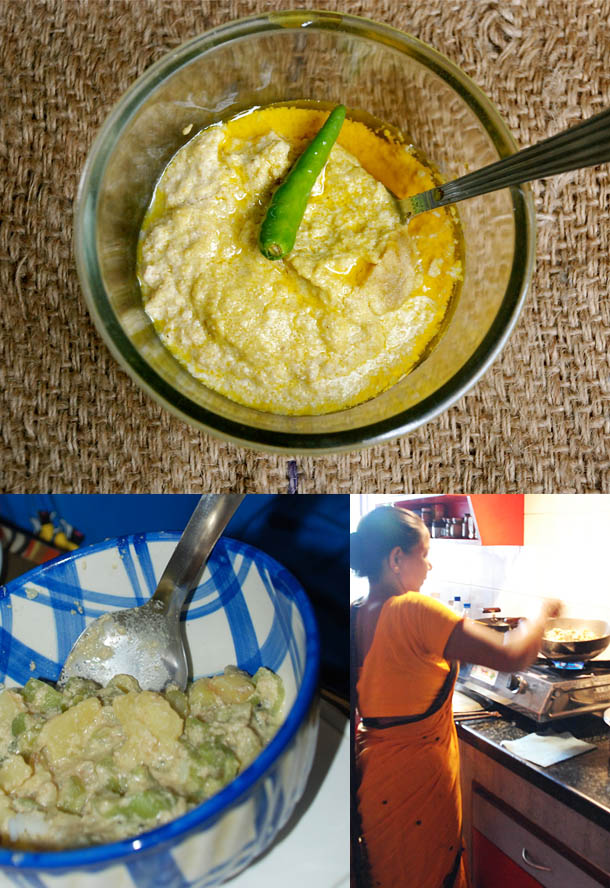
Main Course
Fish is still cooked daily for main course in most traditional Bengali households (do read my write up A-Z of Bengali Fish). Bengali cuisine is famous for it’s Maacher Jhol or Maacher Jhaal. Maacher Jhol is where the gravy of the dish is made with ginger, turmeric, cumin powder, green chillis (the ingredients may vary from one region of Bengal to another) and Jhaal is where the gravy is hot and spicy and made with mustard paste, turmeric, chilli. Shorshe Maach/Mustard Fish is a very popular fish dish.
Shown below are various Bengali fish delicacies (starting from top left) – Chitol Maacher Muitha/Chitol Fish Dumpling Curry, Pabda Maacher Jhaal/Pabda Fish Spicy Curry, Tel Koi/Koi Fish in Oil, Rui Maacher Kalia/Rohu Fish Kalia. There are obviously many many more types of fish preparation – Doi Maach/Fish cooked in yoghurt, Bhapa Maach/Steamed Fish, Maacher Paturi/Fish marinated in different spices and wrapped in Banana leaves and then steamed.

Special mention has to be made to the Hilsa fish. The Hilsa is synonymous with Bengal and is considered the ‘queen’ of all Bengali fish. Hilsa is also of political importance. It is a serious bone of contention between India and it’s neighbouring country Bangladesh. Which Hilsa is better – the Hilsa that is found in the Padma river in Bangladesh or the Ganga river, the last phase of which flows through Bengal before it merges into the sea-waters of Bay of Bengal?
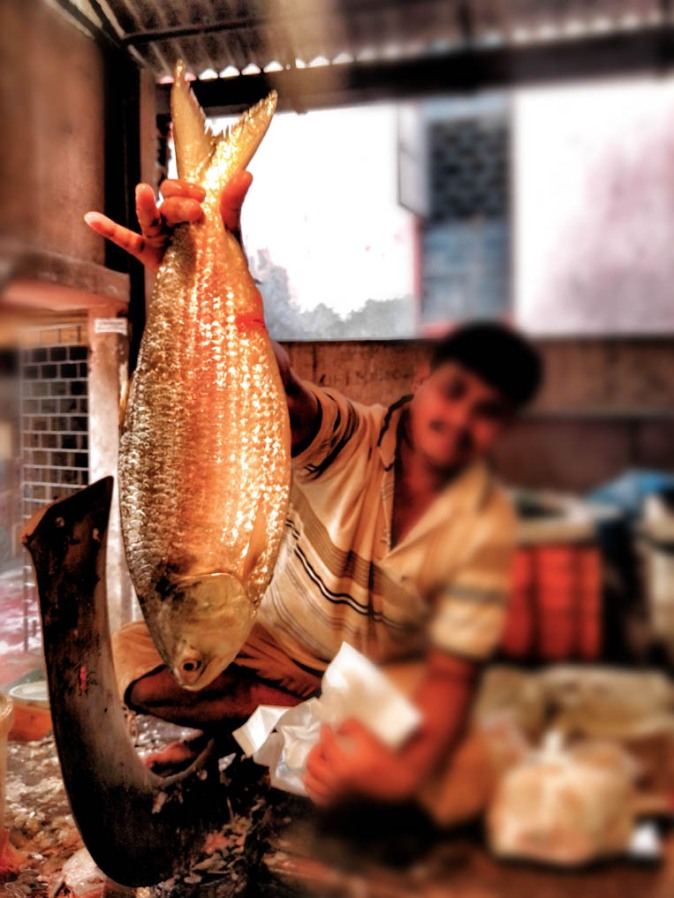
The entire month of July and August, that is during the Monsoons, Kolkata is gripped by Hilsa. Hilsa festivals and special Hilsa lunches are organised in different clubs and hotels. Each conversation revolves around Hilsa. This year had been hard-hitting for the Hilsas with the prices shooting upto as high as Rs 1,500/kg (Dhs 100/- approximately!). The fish markets in Kolkata are in itself a subject for immense discussion – perhaps better kept for another future post (the image below shows a fishmonger showing his Hilsa catch with a lot of pride). The bony Hilsa is a delicacy and is prepared traditionally in many ways – the Shorshe Baata/Mustard Hilsa, Kalo Jeerar Jhol/Black Cumin Curry, Bhapa/Steamed etc.

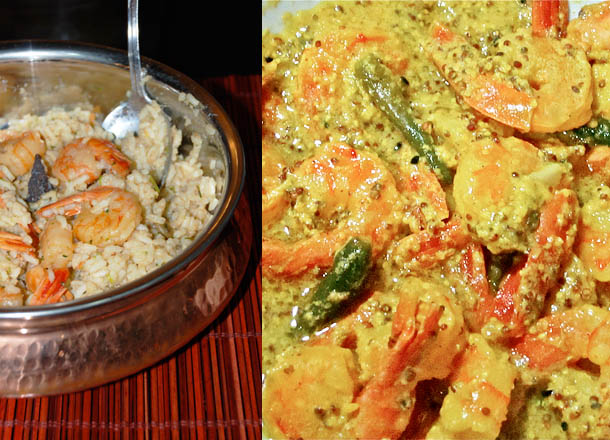
The discussion of Bengali fish can go on for ever. To cut it short we bring in the topic of Prawns. Bagda Chingri/Tiger Prawns and Golda Chingri/Indian Scampi go into making exquisite Bengali delicacies – Shorshe Chingri/Mustard Prawn (below right), Prawn Polao (below left), Narkel Chingri/Coconut Prawn and the famous Chingri Maacher Malaicurry/Prawn Curry where Coconut milk is used to make the gravy and is made on very special occasions.
Meat or chicken substitutes fish occasionally. Generally, Rice accompanies the fish, meat or the chicken. On special occasions, Rice can be substitued by Polao/Bengali Fried Rice. ‘Luchi’ and Radhaballavi/Paratha stuffed with green Peas may also be served. Luchi is famously paired with Kasha Mangsho/Mutton cooked on slow fire.
Sunday afternoons at some Bengali houses are still reserved for Kochi Pathar Jhol/tender Goat Meat Stew Bengali Style (all pictures below excepting the extreme below right which shows Chicken Curry) cooked likely in a Pressure Cooker. Equally important is the Mangsher Jhol/Mutton Gravy and Mangsher Aloo/Potatoes cooked in the Mutton Curry!
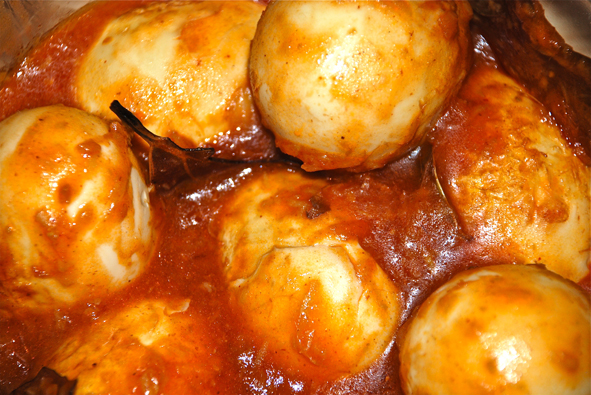
And finally when Fish or Meat or chicken is unavailable, the Bengalis would also cook up a delicacy out of Eggs – the Deemer Dalna/Egg Curry!
Rice – the perfect Meal Partner
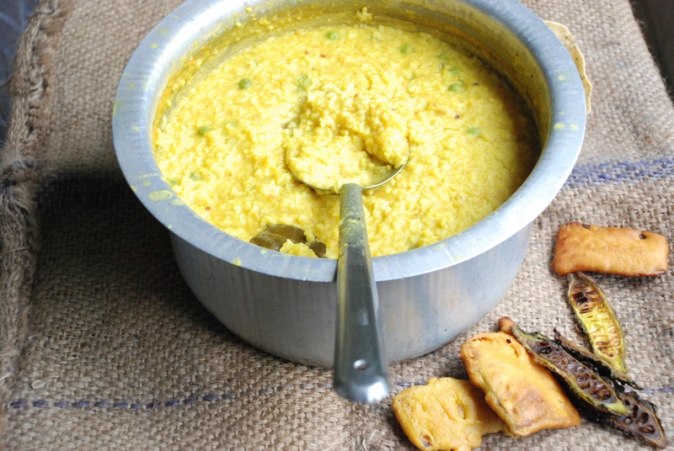
I have already stated earlier that plain white Rice is the main accompaniment to all dishes. However, different types of Rice dish are made for different occasions. Polao, the Bengali version of Pilaf is traditionally cooked in occasions and compliments splendidly with Kasha Mangsho or Mutton/Lamb cooked on slow fire, in the Bengali way. Another Rice dish is Khichuri – a combination of Rice and Lentils cooked together and is an absolute must on a typical rainy day. Unlike Khichuri cooked in other parts of India, the Bengali Khichuri is not a comfort food during illness but is an absolute delicacy when accompanied by various types of vegetable fritters (below).
Though Biryani is not a traditional Bengali dish (but an integral part of Kolkata cuisine), but if ever a Bengali craves for Biryani…. and a majority of Bengalis do crave for Biriyani quite often, then it is mostly Mutton/Lamb Biriyani and must be essentially cooked in the Awadhi or the Lucknowi style!
Sweets/Dessert:
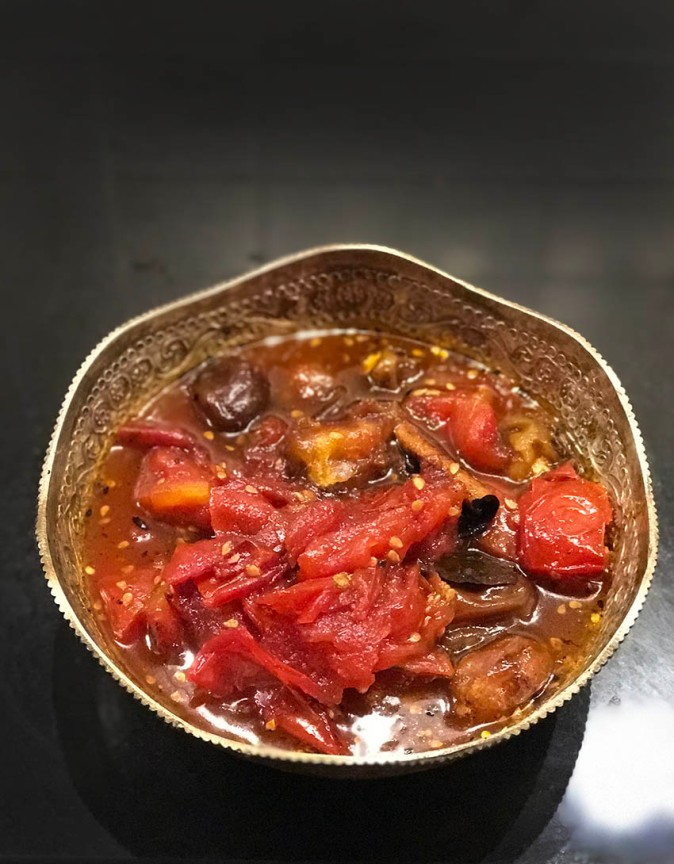
Sweets are a necessary sign-off for a traditional Bengali meal. You end your meal with Chutney, only to move onto the more formal session of dessert tasting. Chutney is a sweet, tangy paste and can be made with every conceivable fruit and even vegetables! For example – Aam/mangoes, Jalpai/Olives, tomatoes, Anarosh/pineapple, Tetul/tamarind, Pépé/papaya and various other type of fruits. Dry fruits like Khejur/dates, Kishmish/raisins may also be added to it the Chutney which is also splashed with Phoron/Mustard seeds cooked slightly in oil or Paanch-Phoron/5 seeds cooked in oil). The Bengali Chutney slightly differs from the other Indian Chutneys in the sense that hey are not eaten as dips with snacks and savouries but as a mini sweet sign-off before the actual desserts. Papad/Big chips like flakes made up of Potatos or Dried Dal usually accompanies the Chutney. Below is the
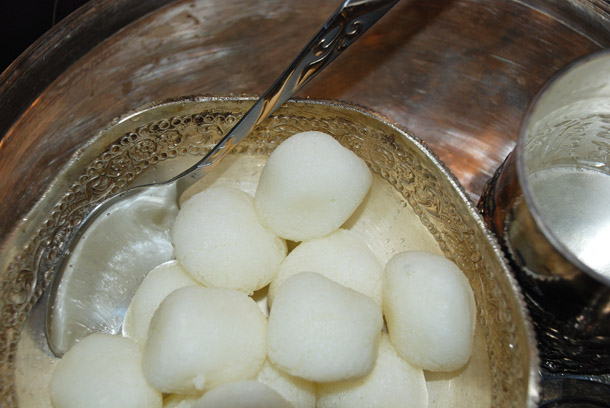
After the Chutney comes the formal dessert tasting! After Fish, Bengali Sweets is a quintessential Bengali topic of discussion. The choice in Mishti/Sweets is absolutely endless. This is a category that has catapulted Bengal into a different quotient of sweetness. Mishti Doi/ Sweet yogurt, Bhapa Doi/Steamed Yogurt, Payesh/ Sweet dessert made with rice-milk-sugar, Rôshogolla/Rasgulla, Rasamalai, Pantua, Lyancha, Chamcham, Chitrakoot, Chanar Jilipi, Kalakaand, Mihidana & Shitabhog, Rajbhog, Rasakadambo, Shondesh… the list is endless!
Perhaps the most famous of Bengali Sweet is the Rôshogolla or the Rasgulla (below) – inspiring me to write an entire post on it.
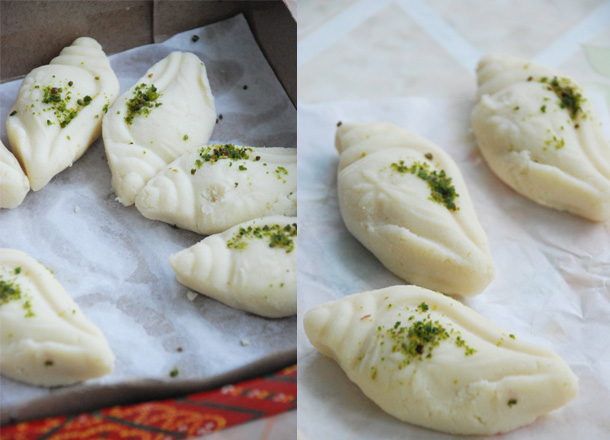
Shondesh is another unique Bengali sweet that is not very easily available in Bengali Sweet shops outside Bengal. Prepared with Chena/Paneer or Indian Cottage Cheese along with a variety of garnishing is very quite easy to make at home. Below are the famous Shokho Shondesh resembling the shape of a Conch or a Shonkho.
You’ll find a sweet meat shop in every alley and every lane in Kolkata – whether they are small locally known shops or big branded ones – a topic that will probably come revisit my blog again. Sweets like Mishti Doi/Sweet Yoghurt and ones dipped in Sugar syrup – for example Rasgulla, comes in a clay pot as shown below. The sweets that follows (clockwise starting from the Mishti Doi) – Nikhuti, Komlabhog or a type of Rasgulla made with Orange rinds giving out strong aroma of oranges; Kalo Jaam and the Bengali Rabri. This famous version of the Rabri hailing from Kolkata is a bit different from the other Indian varieties. As the sweetened milk starts boiling, a layer of cream begins to form on the surface of the milk. That is taken off and kept aside. Repeated process of the same results in the Calcutta Rabri. Needless to say this is extremely rich and creamy and is bound to be heavy on the stomach and extremely fattening.
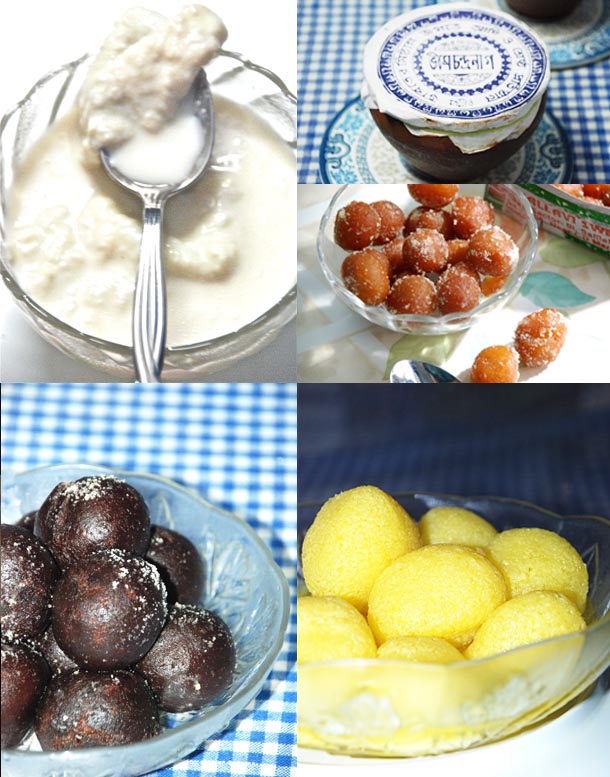
Shown below (clockwise from top left) are Mishti Doi/Sweet Yoghurt in a clay pot; Gujias, a traditional festive sweet and the Jibe Goja (Jibe means tongue and these sweets are elongated tongue-shaped ones, hence the strange name!); Pantua which is not the same as the famous Indian sweet Gulab Jamuns and Jolbhora Shondesh which literally means ‘filled with water’!
An except from an earlier post on Bengali Sweets…
Opening sweet boxes opened the floodgates of my childhood nostalgia. I started telling the Z-SISTERS everything about Bengali sweets and tried explaining to them how each sweet shop in Kolkata or a region and town in Bengal has it’s own signature sweet, a comprehensive list of which has been brilliantly done here.
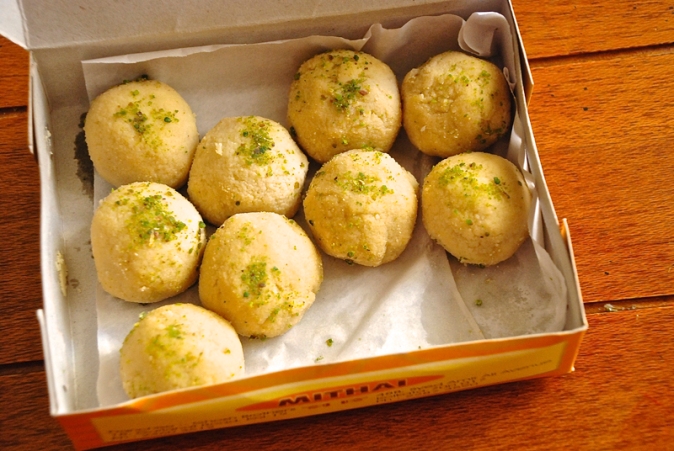
Apart from the never-ending lists of sweets easily available in sweet shops, some Bengali Sweets are traditionally made at home. Or rather used to be made at home. Needless to say that there are many varieties of these as well and require elaborate skills . Shown below are some of the sweets that are still made at our home in Kolkata… the Pithe Puli – Pithas are primarily made from a batter of Rice flour shaped artistically with a Pur or sweet fillings. Then these Pithas are dipped in milk or other types of sweet preparation. These are specially made during the harvest season and has an incredible number of variations (read here). Taaler Bora/Sweet Palm Fritters (below) is another festive home-made traditional Bengali sweet made during Janmashthami, the day when Lord Krishna’s birthday is celebrated.
While Pickles don’t exactly come under Bengali Sweets, it is also a dying home-art and is being gradually being outsourced to small Pickle factories and is being relegated to a small-scale industry. I am fortunate to have a traditional Mother-in-law who is holding on to the art of pickle-making so painstakingly. I have started tracing out her journey with my first post on Pickles.

Nitty-gritties of a traditional Bengali Kitchen
In most Bengali households the Rice is cooked in a Dekchi (shown earlier along with Rice Polao). What is a Dekchi? Sutapa, the grand-dame of Bengali food blogging (14 years into food blogging!), describes it as ‘the handleless modification of the sauce pan – the rimmed, deep, flat-bottomed Dekchi which is a hallmark of the Bengali kitchen!’ Most of the cooking is done in a Kadai or an iron Wok (shown below). The Mutton is likely to be cooked in a Pressure Cooker. The ladle that is used to cook up all the delicacies is called a Khunti and the tongs or the Sharashi helps to transfer the hot pots and pans firmly from the fire to the kitchen counter. Haata is the aluminum serving spoon that is used to serve food and you’ll be having Bhaater haata to serve you Bhaat/Rice; Daaler Haata to serve Dal/Lentils and so on. Spices are ground with a Shil Nora – a grinding stone used in most Bengali kitchens to make Masalas Pastes where one rolls the mortar back and forth on a stone slab sitting on the ground. Vegetables are cut using a Boti where a long curved blade on a platform is held down by foot and both hands are used to cut the vegetables by moving it against the blade. The cooking oil used is mostly Mustard Oil though most modern households have shifted to other cooking mediums that are being advertised as heart-healthy! The unique Bengali spice is Panch Phoron/the 5 spice Mix (picture shown earlier along with Chutney).
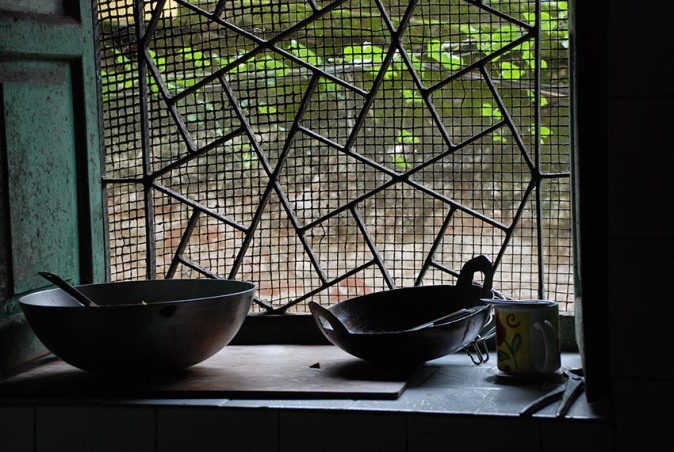
Bengali Kitchens outside the Bengal shores, specially my kitchen in Dubai
Many of us who have now made our homes on the shores beyond Bengal, have substituted various things to complement our Bengali Cooking. We have adapted ourselves and learnt to make good of what is available in the local markets. Most of the Bengali friends of my generation grew up studying for exams and not entering the kitchen that much. We ate what we were served by our Mums. It’s only when we began living our own lives that we started resorting to Bengali Food as our fall back comfort food. Binging on traditional Bengali meals when visiting our parents’ homes on holidays and waiting for someone more experienced in Bengali cooking – were the only ways to experience the meals that we grew up on.
Where do I get Bengali Fish from? Most Bangladeshi markets stock frozen packets of the different fish that are used in Bengali cooking. So you’ll get Koi Fish frozen fresh, packed in Thailand and flown many miles to Bangladeshi markets world wide. While we didn’t find any Bangladeshi market in Colombo, Srilanka, our stay in Frankfurt wasn’t devoid of Bengali Fish! Our stints in Colombo, Frankfurt and Dubai have taught us that if one is looking for Bengali food products that are available outside India, they can only be found in Bangladeshi shops and Asian supermarkets selling Bangladeshi products.
In Dubai, a few Bengali fish is available in the supermarket Citi Mart near Imperial Suites Hotel, located on Rolla Road, Bur Dubai (Tel: 04-3523939). It’s quite likely that on Friday mornings you’ll bump into Bengalis who have come to do their fish-marketing. All varieties of Bengali Fish are available at the Bangladeshi markets in Backet in Sharjah. Rui Maach/Rohu fish is available at Lulu Supermarket in Al Barsha but the sizes of the fish being smaller than 1.5kgs results in a bit if disappointment in taste. And of course, the Backet in Rolla in Sharjah (you can read about my experience here).
Substitutes that I’ve adapted over the years: Gondhoraj Lebu or the Bengali Lime has been the hardest to substitute so far. The closest I’ve come to the aroma of Gondhoraj Lebu is to drop in a few leaves of the Thai Kaffir Lime!
Gobindobhog or the fragrant Rice that is traditionally used in making the Bengali Payeshis a special type of rice. Wikipedia defines it as ‘Gobindobhog is a rice referenced in ancient Indian literature. It was used as an offering to the gods because it was known to be, “The rice preferred by the gods”. It is a short grain, white, aromatic, sticky rice. It is grown traditionally in West Bengal, India. It has many traditional Bengali recipes intended for it specifically. It has a sweet buttery flavor and a potent aroma.’ There is a type of rice which comes from Bangladesh – the Chinigura Rice (similar to Basmati and Jasmine rice but with very tiny, short grains, resembling sushi rice). The latter, though less fragrant than Gobindobhog Rice is easily available in Bangladeshi shops in the Sharjah Backet.
Notun Gur/Season fresh Jaggery can be perfectly substituted by using Date Syrup. One of my blogging friend Yummraj suggests that Maple Syrup works great as well.
Aamshotto/Aam Papar/Dried Mango Bars if not available can be substituted by Dried Apricot Bars easily available in Carrefour and Lulu Hypermarket.
Narkel Kurano/Freshly grated Coconut can be substituted almost perfectly by soaking dessicated coconut in canned Coconut Cream or in the worst case, fresh Milk! Dessicated coconut packets are available in frozen sections of most supermarkets.
The different fish available in local supermarkets in Dubai that I often use to make traditional Bengali fish preparations… Lady fish fried in batter substitutes well as Topshe Maach Bhaja, Sultan Ibrahami cooked with Black Cumin Seeds substitutes well as Pabda Maacher Jhol, Cream Dori fillets wrapped in Banana Leaves substitutes well as Bhetki Maacher Paturi. Salmon steaks cooked in Mustard Paste and Mustard Oil substitutes, well sorry there can be no substitutes for this – the Hilsa! But it works quite well. Almost! Red Mullets can be cooked like Bhetki Maach and Needle fish can be fried crispy like Mourala Maach.
Cookbooks and Bengali Food Blogs
As and when we started craving for Bengali food, we ended up learning from different cookbooks and the all-knowledgeable internet. Some of these Bengali bloggers have now become friends. However, more than the internet my go to guide to any type of cooking is a simple cookbook that has been my trusted guide for the last 20 years – N.I.A.W Cookbook.
Bengali Foodblogs:
• Introduction to Bengali Cooking by Sutapa, the grand-dame of Bengali food blogging (14 years into food blogging!) and her site Bengali Recipes on the Web
• Cook like a Bong by Sudeshna and Kalyan who’s created a comprehensive one stop site for Bengali food
• eCurry by Soma who’s demystifying the magic of Indian Cooking with quite a lot of focus on authentic Bengali recipes
• Bong Mom’s CookBook by Sandeepa whose writing connects to everyone and is doing a brilliant job of ‘passing the legacy of Bengali food to my two little daughters and all the other little ones out there who growing up in a foreign land will find a way to connect to their Bangla roots through the smell and taste of Bangla cuisine’.
• Finely Chopped by Kalyan whose Twitter introduction says it all…”They used to tell me stories to make me eat when I was a kid. Now I look for stories when I eat’. Food & travel blogger. Bengali based at Mumbai. Kalyan has recently come out with his book The Travelling Belly.
• Pikturenama by Madhushree and Anindya. In their words, “We cook, travel and we take pictures. This is our story. This is Pikturenama.”
Bengali CookBooks:
The N.I.A.W. Cookbook ∼ This has been an indispensable resource of recipes by Kolkata’s best ladies-who-cook and my go to guide for the last twenty years on every kind of recipe in this earth… from Burmese to Chinese… and of course Bengali! (couldn’t track it on Amazon or the Net. Available in Bengal Home on Chowringhee Road, Kolkata)
I read a lot on Heritage Cooking and am specially intrigued by the recipes that were followed in the famous Thakur Bari (Rabindranath Tagore’s family) with the ladies of Thakur Bari churning up exotic dishes after having exposed to international cuisine during the times when most Bengali women hadn’t ventured out of their homes. My book shelves are stacked with some of the following cookbooks. These offer great insight into the art of cooking rather than mere recipes… Thakurbarir Ranna by Purnima Thakur, The Calcutta CookBook by Meenakshi Dasgupta, Amish O Niramish Ahaar by Pragyasundari Debi (PragyaSundari Devi, a scion of the Tagore family, used to write a column in a vernacular news paper on various recipes. That perhaps was the first column of its type in the end of 19th Century and the beginning of the 20th Century). Again, I couldn’t track this book to Amazon or online book store but you may read a bit on the first Bengali Kitchen Queens here.
And a whole lot of books by Chitrita Bannerji, whose immaculate writing doesn’t only chalk out food guides but also the cultural history by weaving intricate relationship between food, rituals and art in Bengal.

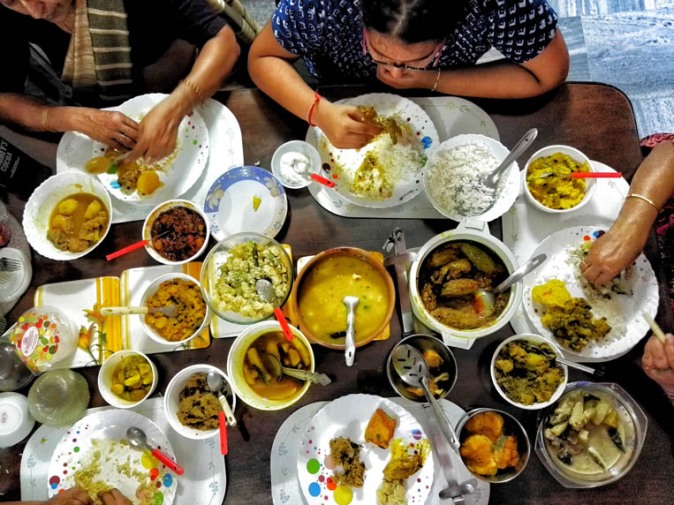
All pictures of Bengali food experiences here are from my very known kitchens – either mine or mum, mum-in-law or other close mums… and a few exceptional Dads’ as well! Sadly, not every dish or delicacy could be captured here – even in the pictures above which are examples of lunches at our homes during our visits to Kolkata (the first one at my mum-in-law’s place and the second one at my ma’s place). But I’m hoping that I have been able to tempt you to Bengali Cuisine and realise how difficult it is being a Bengali and not being a foodie!
Dear Bengali readers, Shubho Mahalaya to you all! I would love to hear from you whether a tiny bit of justice has been done to Bengali Cooking. To the rest of my dear readers – Welcome to my world of Bengali Cooking! I haven’t even mentioned what we eat for Breakfast, or for snacks or on special occasions. Keep pouring in your comments and make my day delicious please!
Unblogging it all… Ishita
Disclaimer: This isn’t a sponsored post, nor are there any affiliated links. The subject, story, opinions and views stated here are my own and all my bills have been self paid. While you enjoy reading my posts with lot of visuals, please do not use any material from these posts. Do join me on my daily food and travel journey on Instagram, Facebook, Twitter and Pinterest.
Do try out these Bengali recipes from my blog:
Shorshe Bata Maach – Mustard Salmon In This Case
Spicy Baby Potatoes or Aloor Dum – Kolkata Street Style!
Luchi Featured In Ahlan! Gourmet | My Ode To Phulko Luchi!
Bhapa Mishti Doi and A Food Safari of Bengal | BBC GoodFood ME
Notun Gurer Payesh/Traditional Bengali Rice Pudding | Remembering My Dida
Payesh or Rice Pudding For My Birthday | Power of Gratitude Messages
Khichuri As Harbinger of Hope & Kolkata Soaked In Rains
And if you are interested in reading more on Bengali food in my blog:
Shubho Noboborsho | A traditional Bengali menu for Frying Pan Diaries podcast
A-Z of Bengali Fish
Pickles… Mother (-in-law) Of All Pickles! – My Pickle Nostalgia
BE SOCIAL. SHARE THIS!

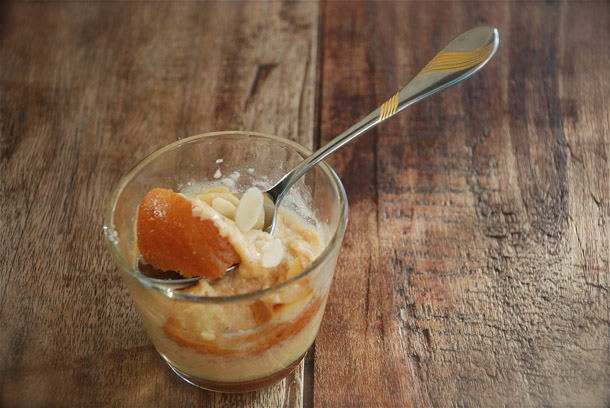
 This blog is inspired by people, places and memories. Recipes created by friends or at our own humble kitchen. Totally unplanned, this post comes as a sudden spurt as we go to our friends house for lunch. The Nevatias are Marwaris from Kolkata. Originating from the former princely state of Marwar, in the Rajasthan area in India, Marwaris have traditionally been traders and have migrated to many places in India (read here). The Marwaris have a strong connection in Kolkata – the major industrialists and entrepreneurs in Bengal belonging to this community.
 Unfortunately our Marwari friends have less to do with Marwar and more to do with Bengalis – either because of our strong influence or they have been plain subjugated! Our freezer has a separate vegetarian compartments just for them. So if we have managed to sacrifice so much (imagine how much meat, poultry and probably fish would have occupied that space), can’t we expect at-least this much from them – provide us with shudh/pure Vegetarian Indian food as well as some awesome western Concoction?
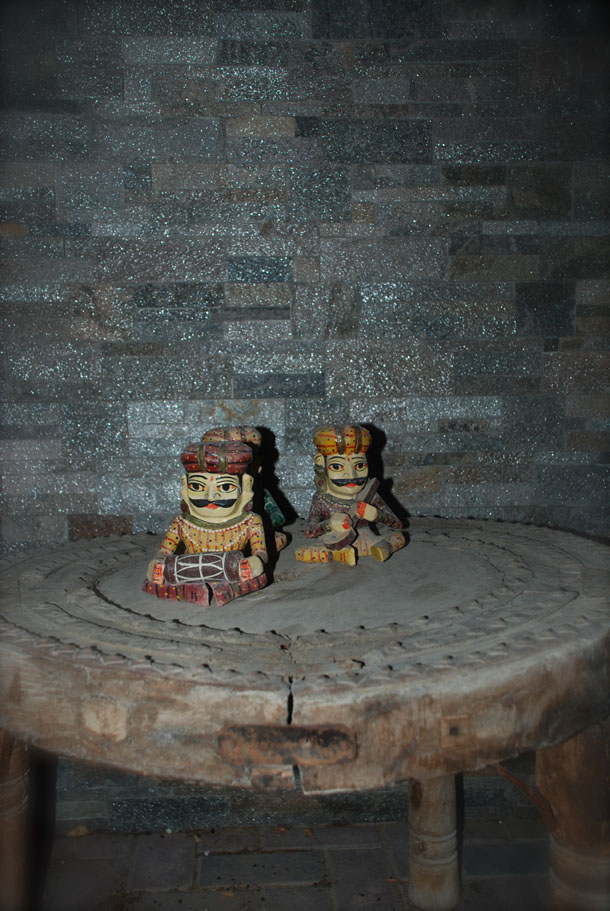 Mrs Nevatia makes fabulous desserts though Mr Nevatia never ceases to complain ‘Tum mere liye kuch bhi nehi banate ho/You hardly cook anything for me!’ This is proof that not only does she cook up some fabulous food but also is generous enough to share the recipe for my post. Yesterday’s lunch at their place saw me clicking away to glory. The dessert was fantastic. And their dining table provided a setup that I completely adore – traditional wooden antique – with rough texture and a whole lot of asymmetry grooved in.
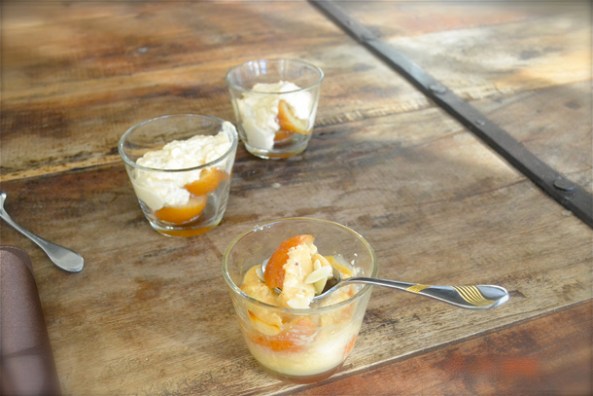 This is also an ode to Claire’s Things We Make, a blog that inspires me visually. I salivate on the wooden tops she composes her food-shots on. And I always leave comments about her table-tops rather than the food shots. Once that led her to reply to one of my comments – ‘You are completely obsessed with my wood’!
Yes, I am. May I also admit that the look of your blog inspired me to choose this Inuit Theme from WordPress when I was setting up my blog? It’s a different matter altogether that I’ve turned the theme upside down to make it look the way it looks now. But then that’s my character – to turn things upside down! Claire, this post is to let you know that ‘I’ve found my own WOOD’. Only thing is it’s located 30 kms away from my house!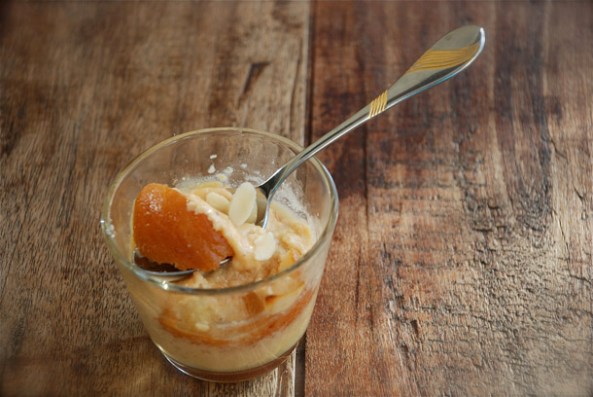
Rabri
If you want to gain 5kgs instantly by eating one Indian Dessert – that would definitely be this! Rabri is made by boiling the milk on low heat for a very long time until it becomes dense. Sugar, spices and nuts are added to it to give it flavor. Rabri is the main ingredient in several Indian desserts.
Calcutta Rabri
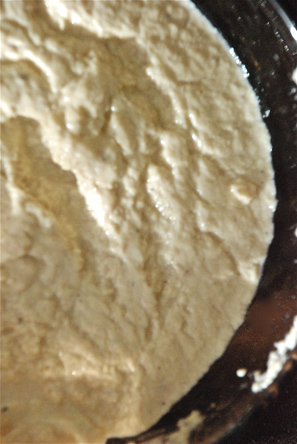
Calcutta Rabri (the picture below): This famous version of the Rabri hails from Calcutta. As the sweetened milk starts boiling, a layer of cream begins to form on the surface of the milk. That is taken off and kept aside. Repeated process of the same results in the Calcutta Rabri – layers and layers of cream floating in sweetened and thickened milk. Needless to say this is extremely rich and creamy and is bound to be heavy on the stomach and extremely fattening! (More here)
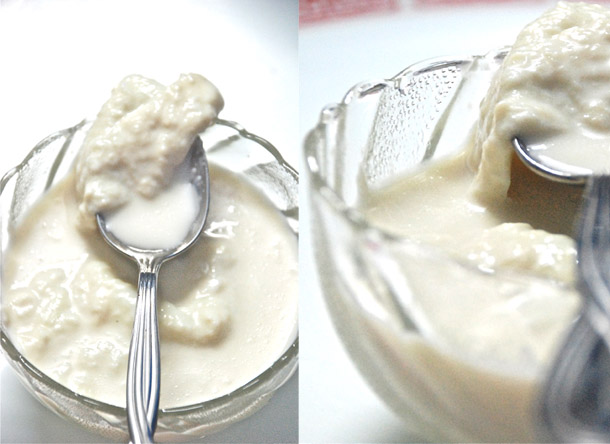 ◊—————————————————————————◊
How to prepare Rabri?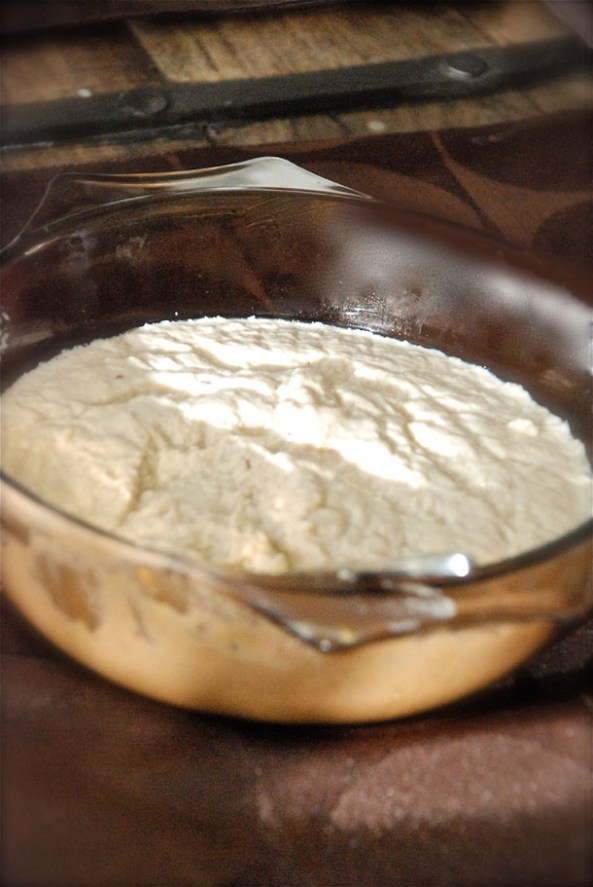
For the printable recipe→
Serves 6-8 persons (maybe less if they happen to be sweet-toothed Bengalis!)
Preparation time – 1 hr 15 minutes maximum (Making the Rabri – 1 – 1hr 30 minutes)
Ingredients
Full Cream Milk – 1 Lt
Sugar – 4 tbsp (Many prefer to use sweetened condense milk – in that case you will not need any sugar. This takes less time as well. However, I prefer using Sugar and stirring the Milk for longer – I like the non-smooth texture the Rabri forms)
Cardamom Powder – 1/2 tsp
Cinnamon Powder – 1/2 tsp
Almond Flakes – 4 tsp
Rose Water – 1 tsp, optional
Method of Preparation
– Boil the Milk in a Dekchi/a flat bottomed non-stick pan (Dekchis are usually used for cooking Rice. Please note that any dessert using Milk is always made in utensils meant for cooking Rice or kept separately and hasn’t been used for any other type of cooking. This is because of it’s susceptibility to catching the smell of other cooked items. Constant stirring is required so that the bottom of the pan doesn’t get burnt)
– Add the Sugar, Cardamom and Cinnamon and keep on stirring till the Milk is almost halved and changes it’s colour
– Add the Rose Water at the last
Rabri is generally refrigerated and served as a cool dessert with preferred garnishing of Pistachios or Almond Flakes. You can serve this Rabri as a complete dessert as well. But here, we’ll further bake it along with Gulab Jamuns. So we leave it as it is.
◊—————————————————————————◊
Gulabjamun
Gulab Jamun is a common dessert common in many countries in the Indian subcontinent – India, Pakistan, Sri Lanka, Nepal and Bangladesh. The name originates from the Persian word Gulab meaning rose, as a rosewater syrup is often used to make Gulab Jamun. Jamun refers to the Jambul fruit because of their resemblance to the latter.
Gulab Jamun is quite a versatile dessert and is made in most Indian celebrations such as marriages etc and is also associated with both Hindi festivals like Diwali (the Indian festival of light) and the Muslim celebrations of Eid ul-Fitr and Eid al-Adhaat. There are various types and regional variations of Gulab Jamun with every variety having a distinct taste. (More here)
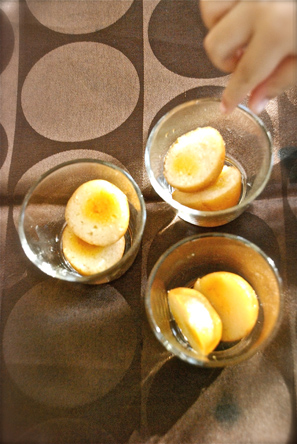
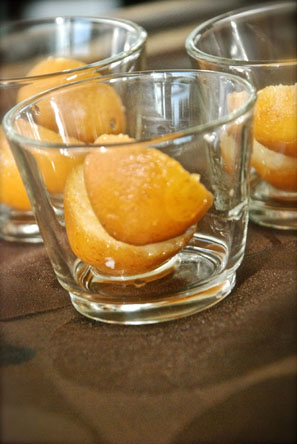
For the printable recipe→
How to prepare Gulab Jamun?
Traditionally, Gulab Jamuns are made with Khoya (reduced solidified milk – either dried whole milk or milk thickened by heating in an open iron pan), is rolled into a ball together with some flour and then deep fried at a low temperature of about 148°C. These balls are then put into a flavoured sugar syrup. The recipe below has been modified a bit but essentially follows from here.
Preparation time – 1 hr – 1 hr 30 minutes; (Making the Sheera – 45 minutes; Making the Dough – 10 minutes; Frying – 30 minutes)
Yield: About 20-24 Gulab Jamuns depending upon the size
Ingredients
Khoya – 1-1/2 cups (For preparing the Khoya at home, click here)
Maida/Flour (all purpose flour) – 1 cup
Sugar – 3 cups
Water – 1 cup
Cooking/Baking Soda – 3 pinches ( 1 pinch would be 1/8th of tsp )
Cardamom – 4 pods or 1/4 tsp Cardamom powder
Saffron – 1/2 tsp
Rose water/essence – 2-3 drops
Ghee/White Oil – for deep frying (Ghee and Oil can be taken in half proportion)
Method of Preparation
The Sugar Syrup
– Combine sugar and water in a flat bottomed broad pan and simmer on a low heat until sugar dissolves
– Add cardamom powder, rose essence and saffron and keep on stirring
The Dough
– Mix the homemade Khova, Flour and the cooking soda
– Knead all of them together into a smooth dough
– Form small smooth balls from this dough (The size has to be smaller than small limes since they will become large while deep frying and even larger when soaked in syrup. Make sure that there are no cracks in the balls since this will cause the Jamuns to disintegrate while soaked in the syrup)
The Frying
– Heat Ghee/Oil in a Wok
– Deep fry the Gulab Jamuns until golden brown over low to medium flame, keeping oil temperature uniform
– Once they get uniformly brown on all the sides, remove them from the oil making sure to drain the excess oil and drop them straightaway into the warm Sheera/Sugar Syrup. The hot Gulab Jamuns in the warm syrup (not hot) helps them to soak the syrup well making them soft (Deep frying 3-4 Gulab Jamuns together may bring down the temperature of the Ghee/Oil resulting in soggy, uncooked Gulab Jamuns.
– Let the Gulab Jamuns soak in the Sheera/Sugar Syrup for at least 1 -2 hours
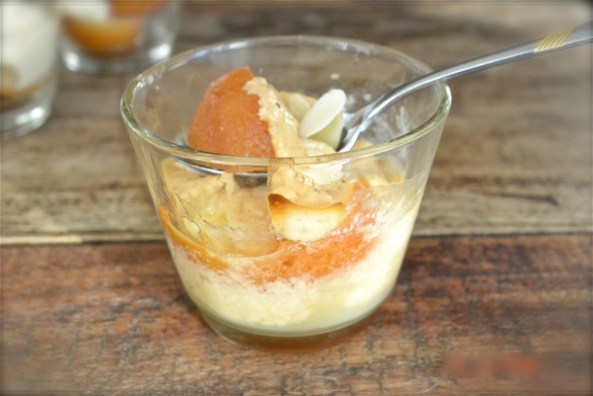
Baked Gulab Jamun Rabri
Category – Dessert; Cuisine type – Indian
Following are the characteristics of all recipes doling out of our little hands, big hearth –
♥ Easy to cook
♥ Regular canned products off the shelf may be used (However, we advocate using fresh products)
♥ Goes well both as a regular or party dish
♥ Children can easily help in making the dish (My two little sous-chéfs are aged 8 and 3 years!)
♥ And lastly, guaranteed to be tasty!
Method of Preparation
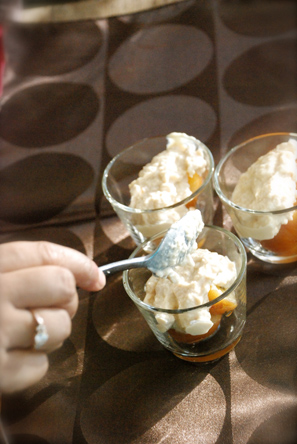
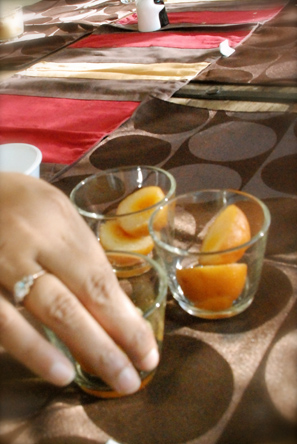
– In a small dessert bowl, place 1 Gulab Jamun, halved
– Pour 3 tablespoon of Rabri on top, let it settle down
– Put in an oven and bake for 15 minutes at a temperature of 200° F (no need to pre-heat)
– Garnish with Almond Flakes
– Serve hot and fresh from the oven
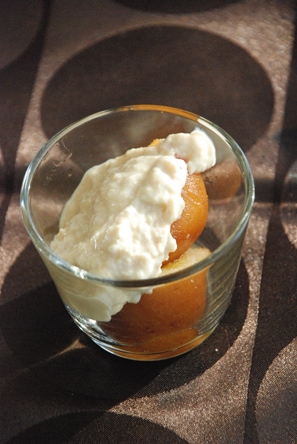
◊—————————————————————————◊
What is the difference between Gulab Jamun and the Bengali Kalo Jaam & Pantua?
Bengal is famous for it’s sweets. A subject that I have already delved with varied intensity in many of my posts (Traditional Bengali Cuisine, Rôshogolla or Rasgulla – Bengali’s Own Sweet, Bengali Sweets That Came By Parcel!). Pantua (right) and Kalo Jaam (left) are two Bengali sweets that most people often compare with Gulab Jamuns. But there is a difference between them in the way they have are prepared. Gulab Jamuns has only Khoya. Pantua has Khoya mixed with Channa/Indian Cottage Cheese (Ricotta Cheese). They are soft and spongy and are similar to Rôshogolla/Rasgullas where the balls of Channa/Cottage Cheese are fried in Ghee/Indian Clarified Butter or oil until they are slightly golden. These balls are then soaked in sugar syrup. Pantuas are deep fried in Ghee to make Kalo Jaam where the coating turns hard and almost black.
Incidentally an entire family of Bengali Sweets have branched out of Pantua. Channar Jilipi, Chitrakoot (diamond shaped variant of the same), Lyangcha (elongated sausage shaped variant), Ledikeni (like very small sausages) and many more. The latter was created in honour of Lady Canning (wife of Lord Canning, the then Governor General to India) by Bhim Nag, a renowned sweets maker in Kolkata (Info Courtesy: Wikipedia)!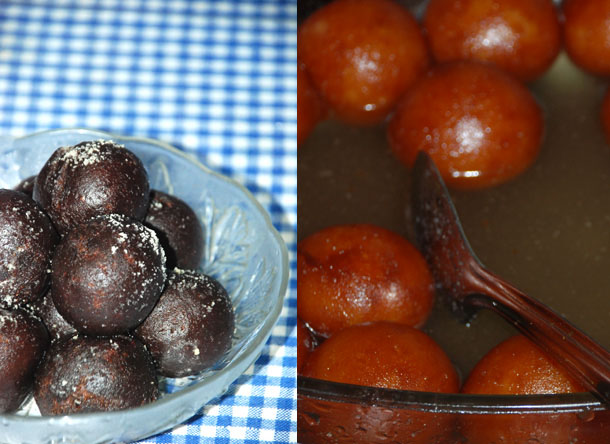
◊—————————————————————————◊
The sweet photo-journey of my friend’s creation – Baked Gulab Jamun Rabri…

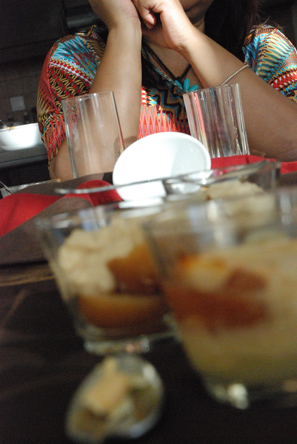
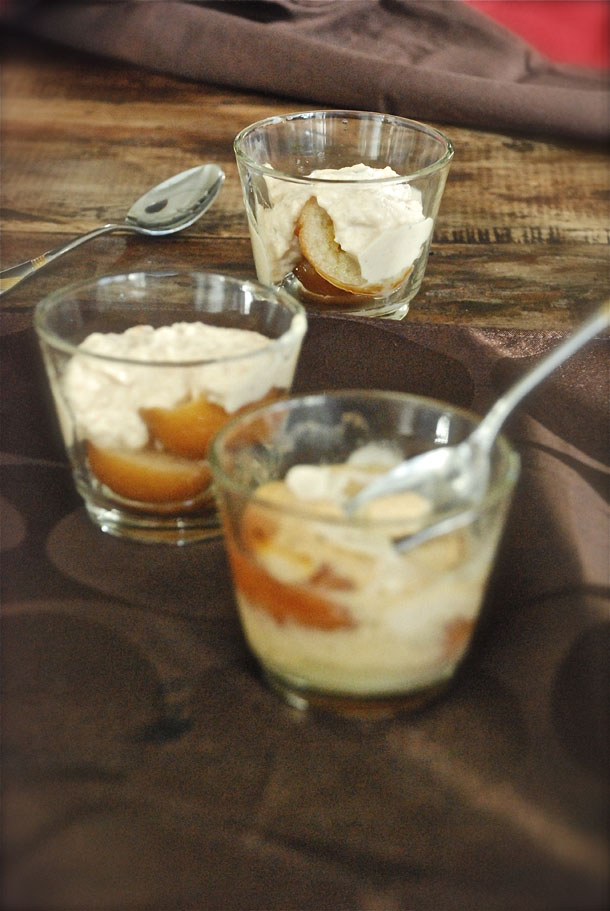
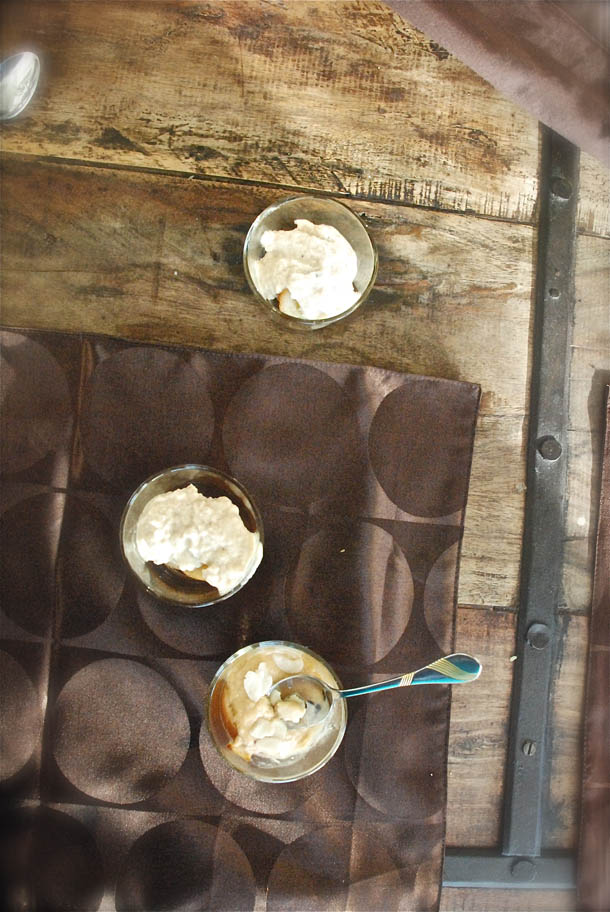
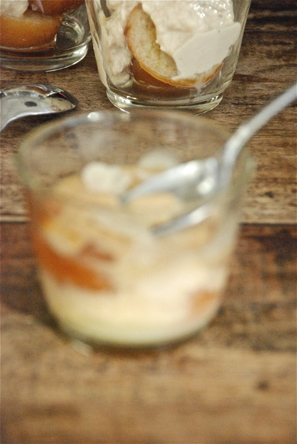
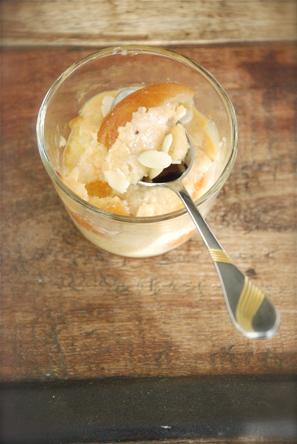

Many calories and many satisfying sighs later, I start downloading the pictures immediately. Yes, this is one dessert that will satisfy the Bengali tooth of even the most staunchest of critics. And the fussy and the messy Z-SISTERS.
By the way, easy ready to make packs of Gulab Jamuns are easily available in most supermarkets in Dubai. Cooking should be fun. If this seems too arduous then the whole objective of writing this post is wasted. Who said there is no fun if you bought the Gulab Jamuns from any sweet shop? Specially when there are so many good sweet shops available in Dubai? Or if driving down to Karama seems arduous as well, get the tinned Gulab Jamuns. As long as they are Baked Gulab Jamun Rabri and tastes this divine, who cares if it is bought from the Sweet Shops or dug out from the tins!
Unblogging it all… Ishita
Disclaimer: I hope you enjoy reading the posts with lot of visuals. While you enjoy seeing them please don’t use them. You can see more pictures of my travel and food journey here. Chappan Bhog, Bikanerwala, Puranmal are just a few examples of very good sweet shops in Dubai. Most are located on Trade Centre Road in Karama and you may find all details from the internet.
◊—————————————————————————◊
You may enjoy reading the following Food Banters:
Firni or Ferni, Ramadan or Ramzan, Mallick Bazar or Karama?
Notun Gurer Payesh/Rice Pudding & My Dida
Rasgulla Macapuno – When a Filipina Turns Bong!
You may also enjoy reading the following Travel Banters:
The Abandoned Women Amidst Many Prayers, Kathmandu, Nepal
Flying over Mt Everest – Nepal
In the land of Paella – Valencia, Spain
BE SOCIAL. SHARE THIS!

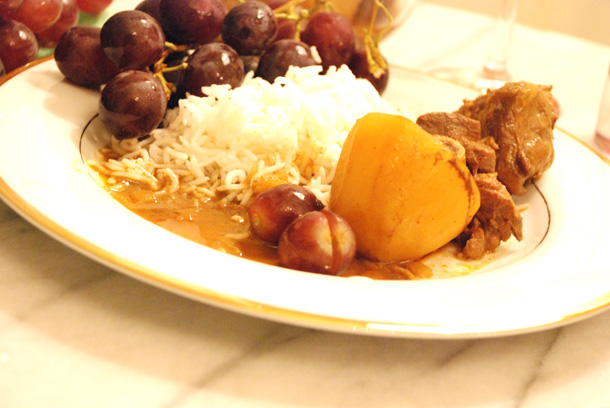

Wine has been flowing freely in our household lately. Not from any bonus or a big chunky project coming my way, but by the way of participating in a Global Wine Adventure organised by Jacob’s Creek under the name of the The Label Project. You can read all about this adventure in my previous article. A few of us had been receiving ‘label-less’ bottles of wine, the grape variety and the region it originates had to be identified on the basis of clues that were given and the decision of our taste-buds.
Quite naturally, a lot of wine flowed into our tummies, conversations and into our cooking. Specially into the Mutton Curry cooked in the Bengali style, so famously known as the Kasha Mangsho. Kasha refers to the cooking style where the oil separates out from the spices as the meat is cooked. You may also cook the same without adding any Red Wine by substituting it with some Red Grape juice and Vinegar (given in the Recipe below).
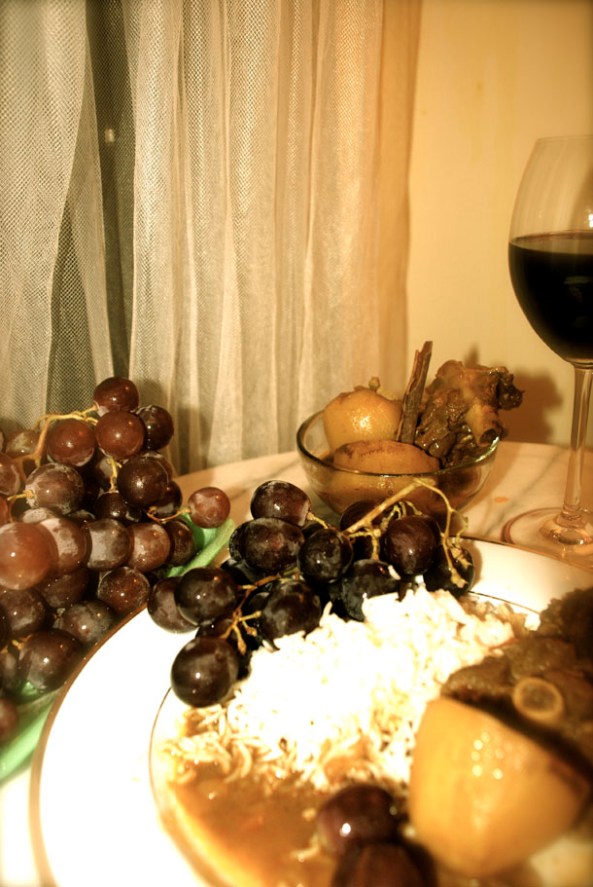
With the Kasha Mangsho turning vintage, I felt the need to share my journey with all. A good experience turns into a better one only if it can be shared amongst more foodies. Traditionalists might scorn at twisting the traditional Kasha Mangsho but I’ve not professed to have written down a traditional recipe.
If you are in the mood to indulge yourself in the 4 S of Wine-tasting – ‘see, swirl, sniff, and sip’, I suggest you pour yourself some Red Wine along with pouring it into some Mutton for an indulgent marination. The Mutton that would have otherwise cooked itself to a Bengali Kasha Mangsho can now re-invent itself as the Mutton Kassa With Red Wine And Red Grapes!
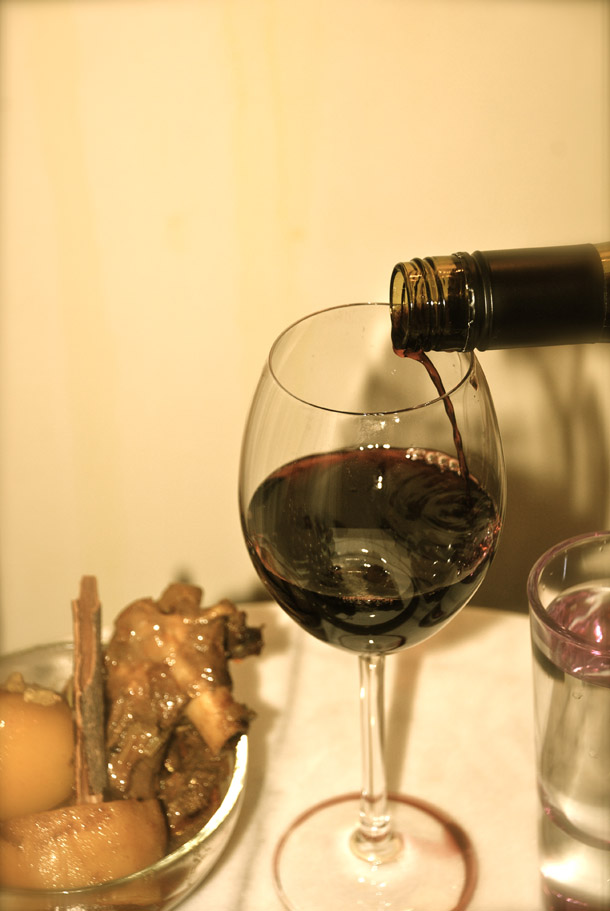
I started cooking in the morning, chalking out the photo-shoot as I spotted the location and finalised the casting. It had to take place in the round marble-topped side table that we had – with the sunlight filtering through the white netted curtains. Though the location was constant, the look of the photo changed as the day progressed. The Grand Finale took place at night – casting shadows on the amateur photographer that I am. Tomorrow wouldn’t see any traces of my dish – that was a fact that I was very certain of!
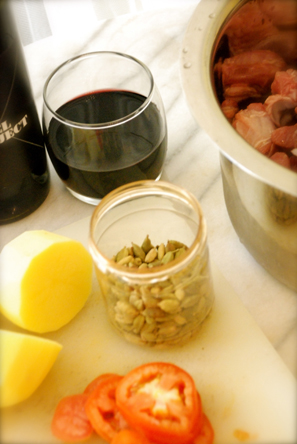


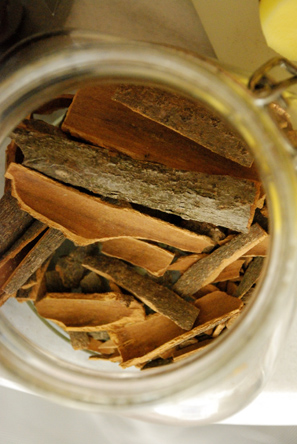
Garam Masala – Cardamom (above L), Cinnamon (below) and Cloves form a very crucial trio for Bengali Garam Masala. Garam Masala (Garam means hot and Masala means mixture) is a blend of ground spices common in Indian and other South Asian cuisines. The composition of Garam Masala differs regionally across India. Roasted Garam Masala is used as a garnishing where the components of the various spice mix are toasted, then ground together.
Variations of the same is used in cooking in Nepal, Srilanka, Bangladesh, Pakistan and many other places, specifically in the subcontinent.
Spices stimulate me like no other thing in the world. I am absolutely obsessed with Spices. I love the different smell, the texture of the different spices and the difference in the tastes that occur as we add a particular spice. This doesn’t mean that I like my food spicy. I like my food aromatic. A brilliant introduction to the most commonly used Indian Spices from eCurry, one of my favourite blog haunts.

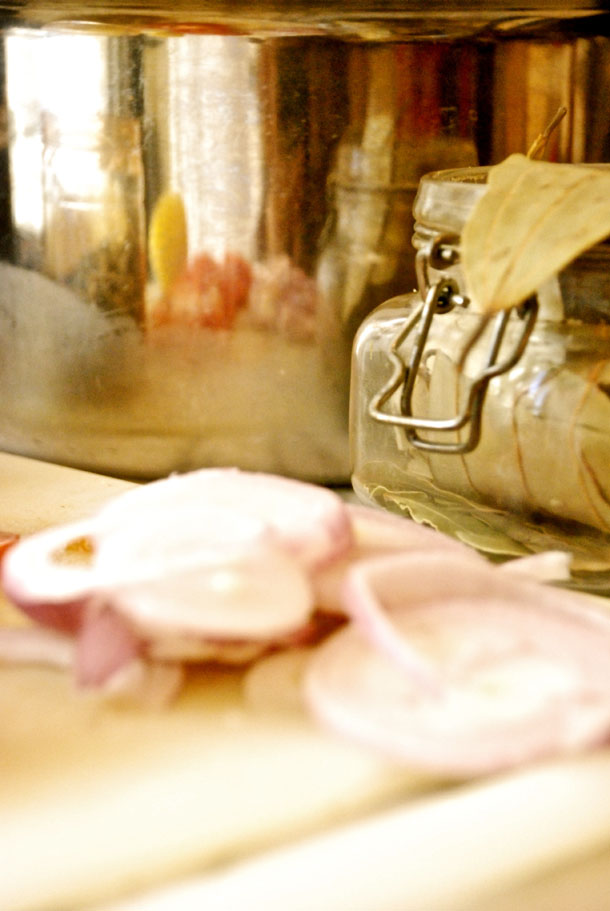
Tej Patta/Bay Leaves are versatile and highly aromatic. Versatile because they can also be used in Western Cooking and highly enhances the aroma – specially in stews. As explained in eCurry, ‘Often mistaken as the Bay Leaf (leaf of the Laurel tree ) used in Western cooking, these are actually three veined leaves of the tree belonging to Cinnamonum group of trees. Tej Patta or Tamalpatra as it is called in Sanskrit are used to flavor different curries and rice. The leaves are aromatic with a slight hint of the fragrance of cinnamon. The leaves are first browned in oil first to increase the aroma.’

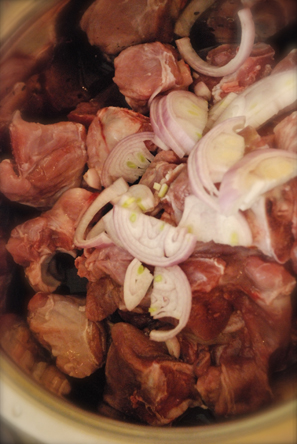

What probably excites me the most about Cooking is the fact that it encompasses all the senses – visual, smell, audio as well as touch. Visually alluring, I like the entire process of cooking. The psshhhhhh as I add the different ingredients into the hot oil, the aroma that instantly generates, the feel of the textures – all these fascinate me. And off-course the final product!
The other thing that fascinates me is the Gravy. And the way it goes into the meat or the fish or say, the simple unassuming potatoes. Specially the Potatoes that accompany a Mutton Curry!
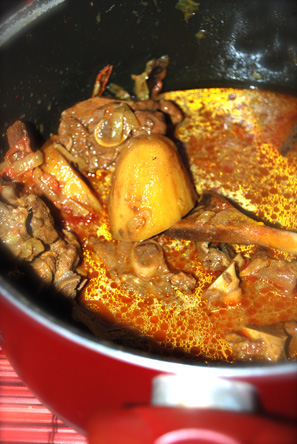

Mutton Kassa With Red Wine And Red Grapes
Category – Side-Dish; Cuisine type – Bengali Fusion
Traditionally Wines do not go into any Indian cooking. The common base for most marinations is Yoghurt.
Following are the characteristics of all recipes doling out of our little hands, big hearth –
♥ Easy to cook
♥ Regular canned products off the shelf may be used (However, we advocate using fresh products)
♥ Goes well both as a regular or party dish
♥ Children can easily help in making the dish (My two little sous-chéfs are aged 8 and 3 years!)
♥ And lastly, guaranteed to be tasty!
Serves 6-8 persons
Preparation time – 2 hr 30 minutes maximum (Marination – 1 hour; Chopping the accompanying Vegetables for making the Fritters – 10 minutes; Slow Cooking – 1 hr)
Ingredients:
Mutton – 1kg, medium sized pieces (I preferably pieces cut from the shoulder – more meat, less bones!)
Whole Ginger – 1 inch in size, grated/ Or Ginger Powder – 2 tsp
Whole Garlic – 8 pods, grated/ Or Garlic Powder – 2 tbsp
Potatoes – 4 medium pieces, cut into half
Onions – 2 big pieces, cut into slices
Tomatoes – 2, sliced into thin rings
Red Grapes – 8
1 tsp Garam Masala Powder
1/2 tsp Red Chilli Powder
1/2 tsp Turmeric Powder
1/2 tsp Sugar
Salt as per taste
White Oil – 2 tbsp (Traditionally Mustard Oil is used. However, wasn’t confident how that would go with Red Wine!)
Water – 2 cups (You might have to add a bit more if the Gravy turns dry)
The Seasoning/Tempering:
1 tbsp Ghee
2 Bay Leaves
1 Red Chilli Whole
4 Green Cardamoms
6 Cloves
2 Cinnamon Sticks, 1 inch in size
For Marination
Ginger Garlic Paste – 2 tsp/ Or Ginger Garlic Powder – 6 tsp
Red Wine* – 1 cup
Pepper – 2 tsp
1 Onions – medium sized, sliced
Garam Masala Powder – 1 tsp
Kashmiri Chilli Powder – 1 tsp (mainly for the colour)
Method of Preparation:
– Marinate the Mutton pieces in Red Wine, Pepper, Ginger Garlic Paste, Garam Masala Powder and Onions. Leave the marination for an hour
– Heat the oil in a flat bottomed. Add a pinch of sugar and gently fry the Potatoes (The Sugar adds a bit of colour to the Mutton). Set them aside
– Add the Bay leaves, Whole Garam Masala – Cardamom, Cinnamon Sticks and Cloves, Red Chilli and set them aside the moment they are lightly fried and starts emitting an aroma (Don’t leave them for long as that would burn these!) and the chopped onion and fry in low flame
– Add the Chopped Onions, grated Ginger and Garlic, Turmeric powder, Garam Masala Powder. Gently fry them making sure that it doesn’t burn or stick to the pan
– Add the Tomatoes and fry in low flame
– Add the Marinated Mutton and cover the pan with a lid and let it simmer in slow flame
– When the Mutton is half done add the Potatoes. Add the salt and salt. Let it simmer further till the meat is cooked till tender
For the Tempering
– Heat the Ghee in a small wok
– Stir in the Red Chillies, Bay Leaves, Whole Garam Masala – Cloves, Cinnamon and Cardamom Sticks, without burning them!
– Add the Grapes, fry them lightly and Pour into the cooked Mutton
The Accompaniment
Have the Mutton Kassa with fragrant Basmati Rice. We had the preparation with a special fragrant traditional Bengali Rice – Gobindobhog. Wikipedia defines it as ‘Gobindobhog is a rice referenced in ancient Indian literature. It was used as an offering to the gods because it was known to be, “The rice preferred by the gods”. It is a short grain, white, aromatic, sticky rice. It is grown traditionally in West Bengal, India. It has many traditional Bengali recipes intended for it specifically. It has a sweet buttery flavor and a potent aroma.’
* If you do not wish to add Wine
Red Grape Juice – 1/2 Cup
White Vinegar – 1/2 Cup
You may substitute Red Wine by adding the above. The taste slightly differs. But nevertheless, tasty.

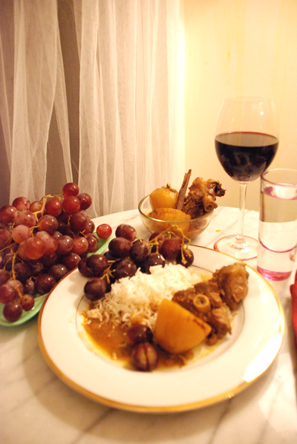
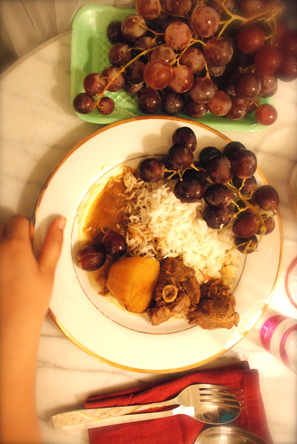
Food evokes nostalgia. It brings back memories. Kasha Mangsho brings very strong memories as well, very beautifully written here. Most of us drift into different places as we we move along in our life’s journey. Making new friends, meeting new people, learning new culture, cooking new food is just a part of that evolution. While we cannot hold back to our past, we can always smile thinking about it as we move towards the future. Looking forward to hearing all about your evolution and life’s journey.
Unblogging it all… Ishita
Disclaimer: I hope you enjoy reading the posts with lot of visuals. While you enjoy seeing them please don’t use them. You can see more pictures of my travel and food journey here.
——————————————————————————–
You may enjoy reading the following:
Khichuri As Harbinger of Hope & Kolkata Soaked In Rains
Hot Garlic Pickle… The Pickled Diary – Episode 1
Rasgulla Macapuno – When a Filipina Turns Bong!
Notun Gurer Payesh/Rice Pudding & My Dida
BE SOCIAL. SHARE THIS!

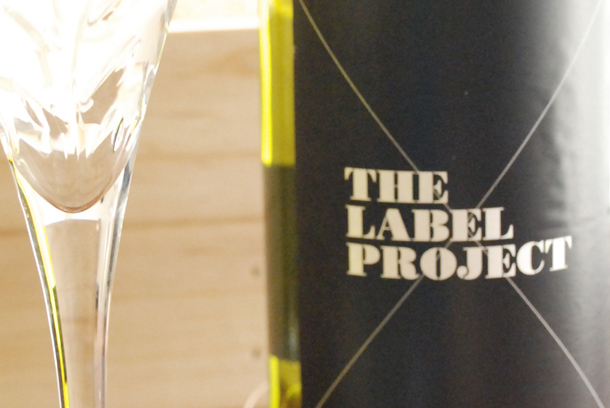

The last 2 weeks I had been part of an unique project – a global wine adventure, called The Label Project (all about it here). Over 140 bloggers from 12 different countries had been invited to partake in a 2-week journey where each one of us had received three ‘label-less’ wines over the period. What had been our job? Well, blind-tasting these wines to correctly identify the grape varieties as well as the regions the wines originate. Our answers had to be based on a sensory clue (smell, taste and sight) and a regional clue. Tough? Well, I suppose so. But who has ever got any free meal in today’s world, leave alone Wine!
To be honest when I got the first email invite – I thought this was some kind of a spam. ‘In order to deliver your invitation, could you please confirm your physical address location so that we can hand this (your invite) over to you personally and also that you hold a valid current UAE liquor licence.’ A bit of interrogation on my part amongst my fellow bloggers and a delayed response on my part fetched me another mail – ‘Hi Ishita, Have we intrigued you sufficiently to deliver the invitation?‘ Oh yes, you surely have!
Soon I was on my way to collect my invite – a current best-seller whose simple cover doesn’t reveal the promiscuous subject inside. Yes, the idea being that how many times do we judge a bottle of wine by its label and not what is truly inside? Never judge a book by its cover. And never judge a bottle of wine by its label. Profound thought and sound education for sure. But a challenge in real life.
The next few days saw me running to Sarah (The Hedonista) who had been gracious enough to accept the deliveries on behalf of mine – beautiful wooden gift boxes, each containing a wine bottle and various clues to identify the wine! What was the next thing that we did? Gulp down the entire bottle, perhaps? Would have loved doing that, believe me, if only the deliveries would coincide with weekends. But we did celebrate in our own unique way – all the 5 bloggers who have been invited from UAE for this oh-so-awesome project – Sally of My Custard Pie, Francine of Life in the Food Lane, Sandy of Ginger & Scotch and myself would celebrate virtually as we tweeted – Wine Arrived… Opened Wine #1… My chocolates melted so had to eat all of it… All clues point to Shiraz but the taste?… Or perhaps, virtual celebrations are not unique anymore. They are the pattern of the day!
For me, this is perhaps the most fun experiences I’ve ever had after passing out from school. Surfing the internet, getting to know Australia – it’s geography, viticulture, climate and political history while each sip did it’s work. Yes, I did try to put all that I’ve learnt from a Wine-tasting evening previously – the 4 S of Wine-tasting – ‘see, swirl, sniff, and sip’… but all in vain! A simple, casual sip didn’t spark any answer.
But a simple rebuke from my 8-year old Big Z did. ‘Mama this not an exam. Just enjoy your wine!’ Yes, I enjoyed all the 3 bottles of Wine, delivered to me as a sudden surprise. And I enjoyed playing the detective, ticking off the different wines and discovering the Wine Atlas of the World!
And where did I start? Australia. No I am not a wine genius. ‘Manufactured in Australia’ just happened to be printed at the back label. And no, that didn’t make my life easy. There was still a lot of studying to do. And a lot of wine to taste!
Wine #1
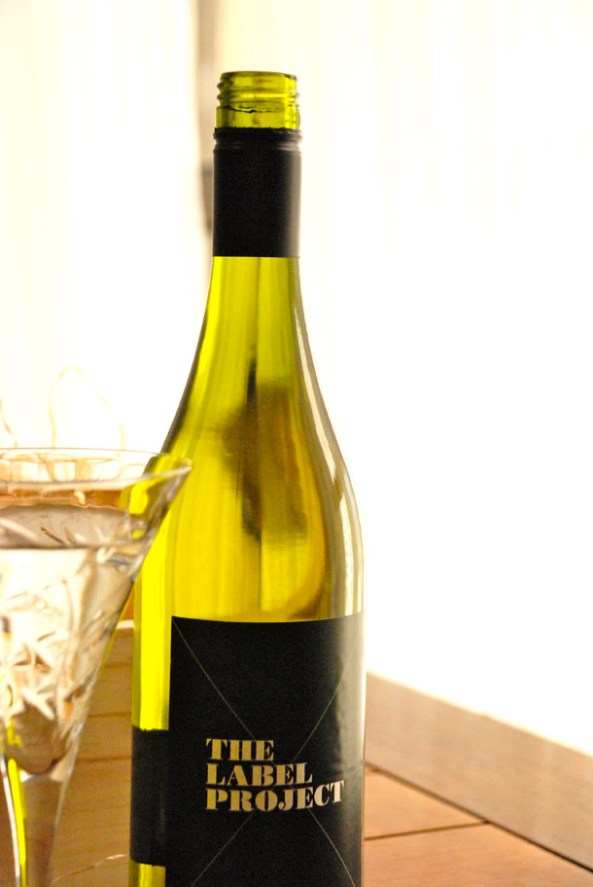
Wine #1 came with three vials of aroma and region clues about its origins –
Region clues:
– It lies between two other major and much older wine regions
– Its macroclimate is cool but within the region there are many varied topographies, soils and mesoclimates
– It is famous for its fruit produce including cherries, pears and apples
Varietal Clues
– Hints of honeydew melon aromas
– A palate of lemon pith
– Underlying creamy texture
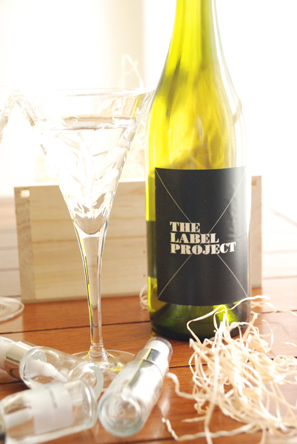
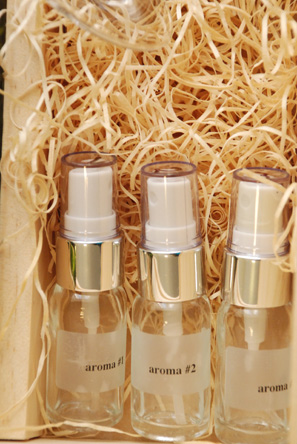
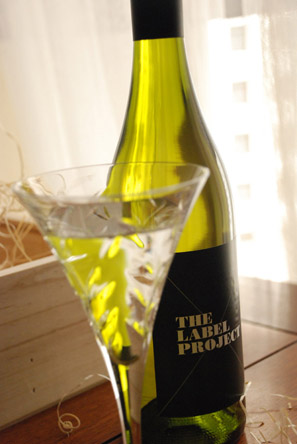
Wine #2
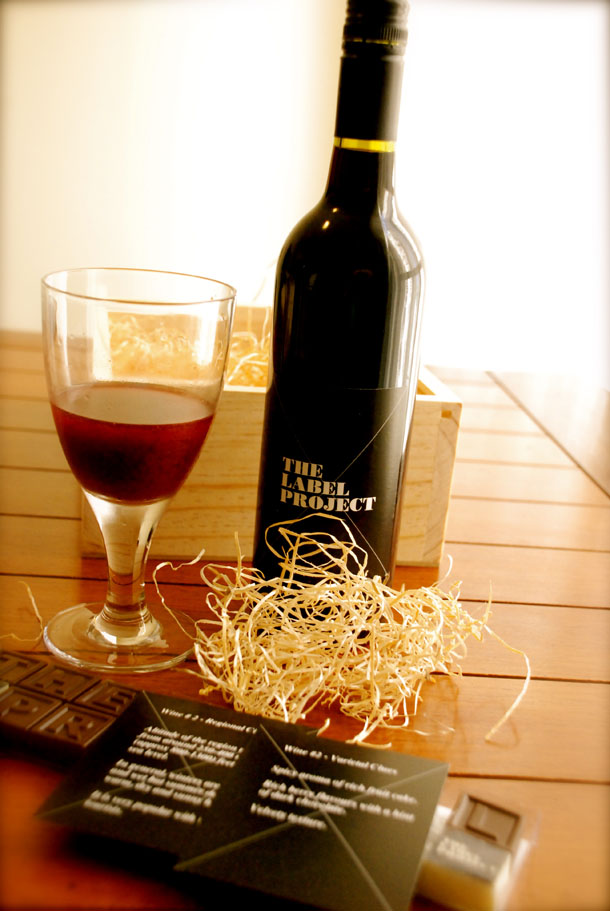 The Chocolates that came along with Wine #2 disappeared in minutes. And no, I haven’t chilled my red wine – it’s sweating because I took the glass outside (40degrees C) from the air-conditioned interiors to the balcony to shoot it in natural light!
Region clues:
– Altitude of the region ranges from around 250-400 m (approx 800-1300 feet) above sea level
– In general, winters are cool and wet but summer days are warm, dry and sunny here
– It is very popular with wine tourists
Varietal clues:
– Spicy aroma of rich fruit cake
– Rich berry flavours with a hint of dark chocolate
– Velvety texture
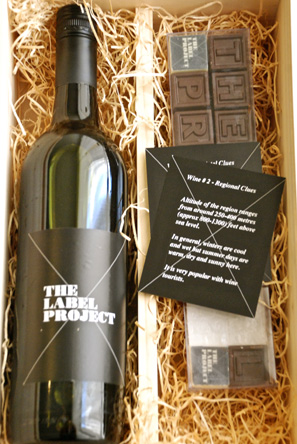

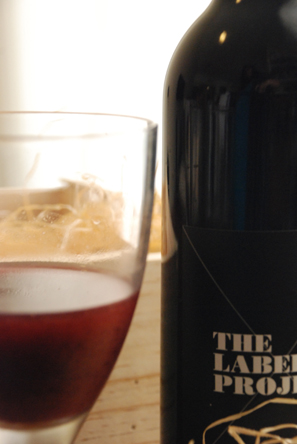
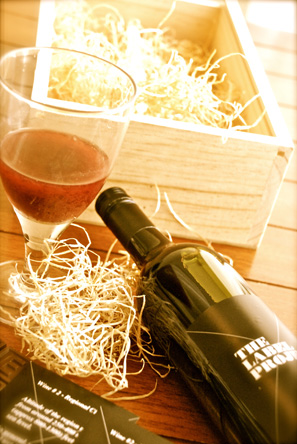
Wine #3
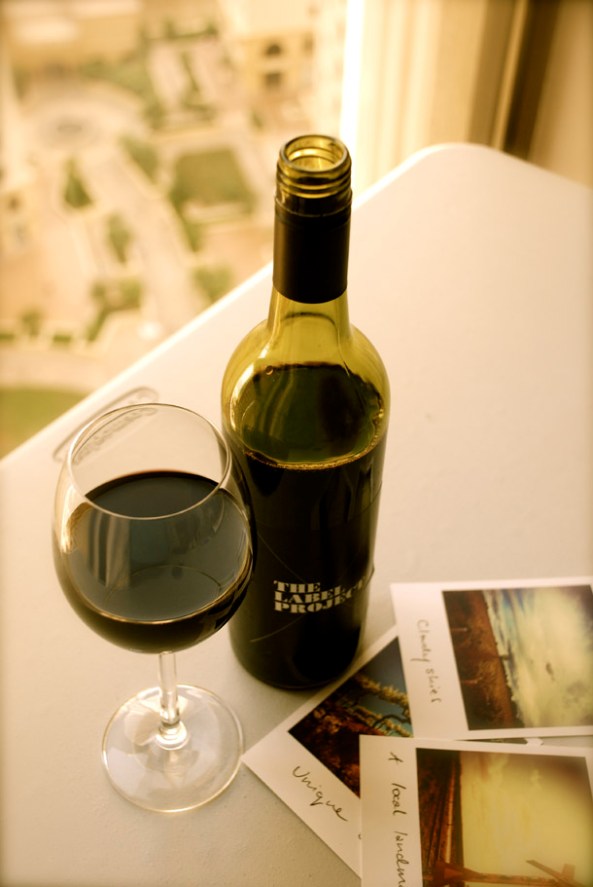
Wine #3 came with some pictorial clues, the study of which made me turn into a geologist, specialising in the study of Australian soils. At this moment I can tell you the composition of soil from each region and I can tell you all type of climatic conditions that could lead to a fabulous grape season or a disastrous one – in Australia!
Region Clues:
– The terrain is completely flat
– Its subsoil is an ancient marine bed
– It has a maritime influenced climate
Varietal tasting note clues :
– Leafy aromas with a hint of mint
– Ripe cassis flavours
– A firm structure with good persistence on the palate
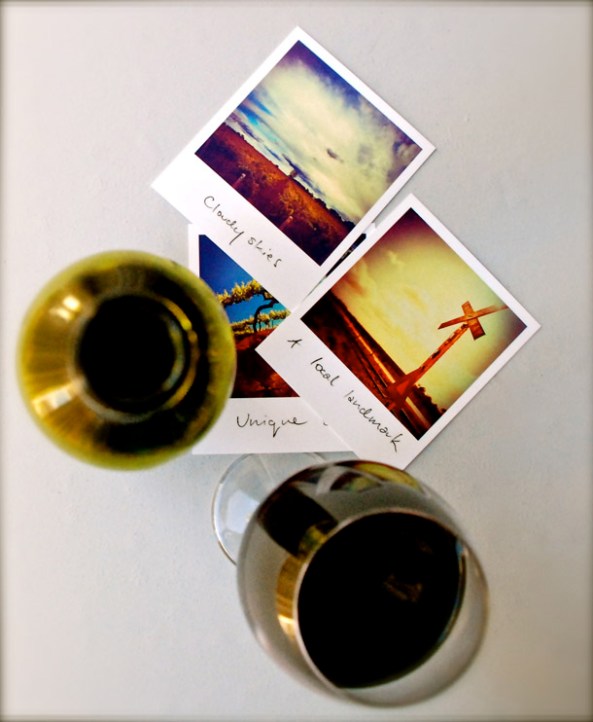
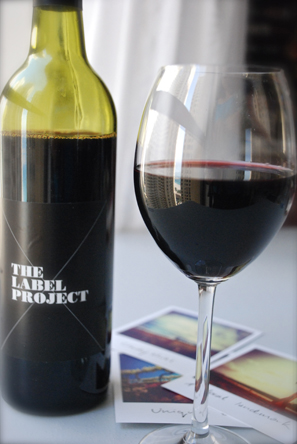



—————————————————————————————-
Ultimately The Labels Are Revealed!
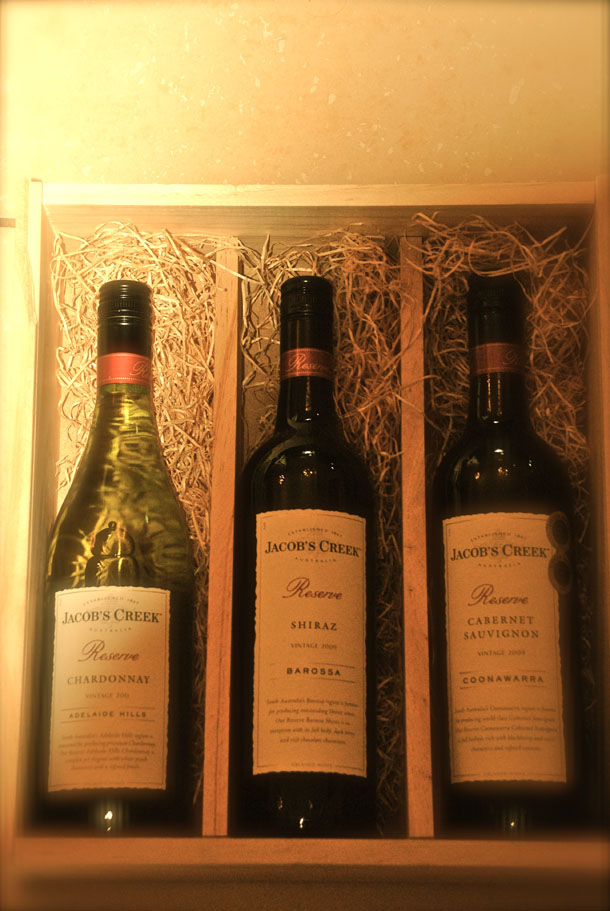
At last, the wine label behind The Label Project was revealed yesterday. Yes, it’s Jacob’s Creek. Though I hadn’t figured out that the wine bottles were from JC, I had been roaming in their websites to study about the regions and the different varieties of grapes that grow there and the popular wines that use these grapes.
Yes, all my 6 answers (a regional clue and a varietal clue for each bottle) have been correct.
The answers to the grape variety and region are –
Wine #1 – Chardonnay from the Adelaide Hills, South Australia
Wine #2 – Shiraz from the Barossa Valley, South Australia
Wine #3 – Cabernet Sauvignon from Coonawarra, South Australia

“The Label Project is a once-off never-to-be-repeated exclusive global wine adventure being run during September 2012, and is open only to bloggers who have been invited to join. Over 140 selected bloggers from 12 different countries have been invited to embark on this unique wine journey at the same time.”
And yes, another final delivery of a bigger box containing 3 bottles of Jacob’s Creek Reserves have arrived. Hoping that this continues for ever. Whether I am selected finally for a wine-tasting trip to their winery remains to be seen. I’m keeping my fingers crossed. But what makes me happy is the fact that I have been chosen amongst many bloggers for this unique marketing and branding project which, in my heart will remain for ever as The Label Project, even when the labels have been revealed. And for my taste buds it will remain known as a historical period when Wine flowed freely!
Unblogging it all… Ishita
Disclaimer: I hope you enjoy reading the posts with lot of visuals. While you enjoy seeing them please don’t use them. You can see more pictures of my travel and food journey here.
—————————————————————————————-
You may enjoy reading the following:
Asado Wine Club, The Palace Hotel, Dubai – An Evening of Wine Tasting!
In The Land of Paella – Valencia, Spain
Deep-Sea Fishing & Fresh Fish Barbeque – Persian Gulf
BE SOCIAL. SHARE THIS!


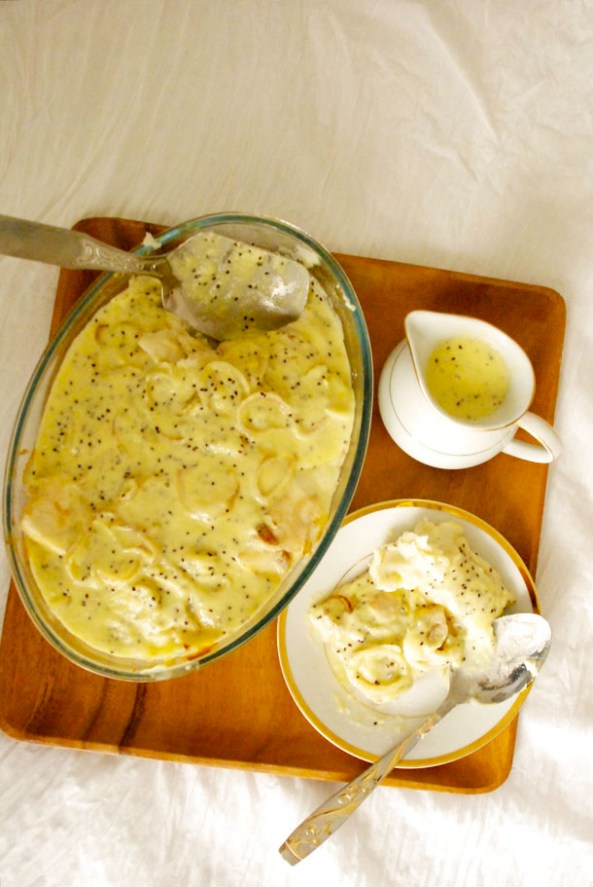
The last few posts of mine have been featuring food from practically every kitchen in Dubai excepting mine. No, there is no major construction and repair work going on in my kitchen. Neither have I stopped creating recipes. In-fact I have been clicking away and my blog-queue is longer than the post-summer immigration lines in Dubai Airport. The Z-SISTERS have been keeping me too busy, but that is no excuse. This blog started with them towing me anyway. It’s just that I haven’t had the patience to sit back and gather my thoughts as to the proportions and the ingredients that have been going into my cooking.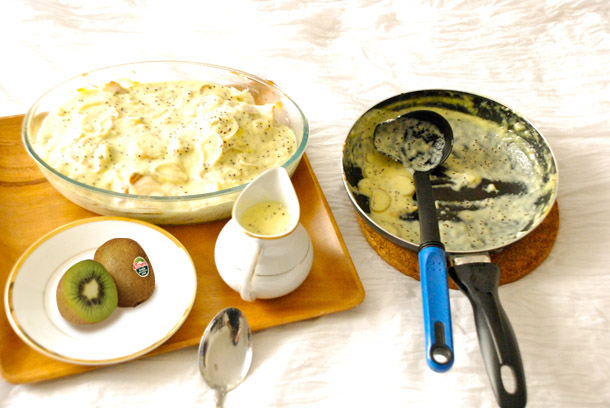
The following recipe was cooked up in a frenzy. Thought of in seconds, re-created in the kitchen in minutes and captured by my camera – all in exactly 1 hour. I want some Kiwis going down into the Z-SISTERs’ tummy without burning their gums and throats. They are always complaining that Kiwis leave their mouths sore.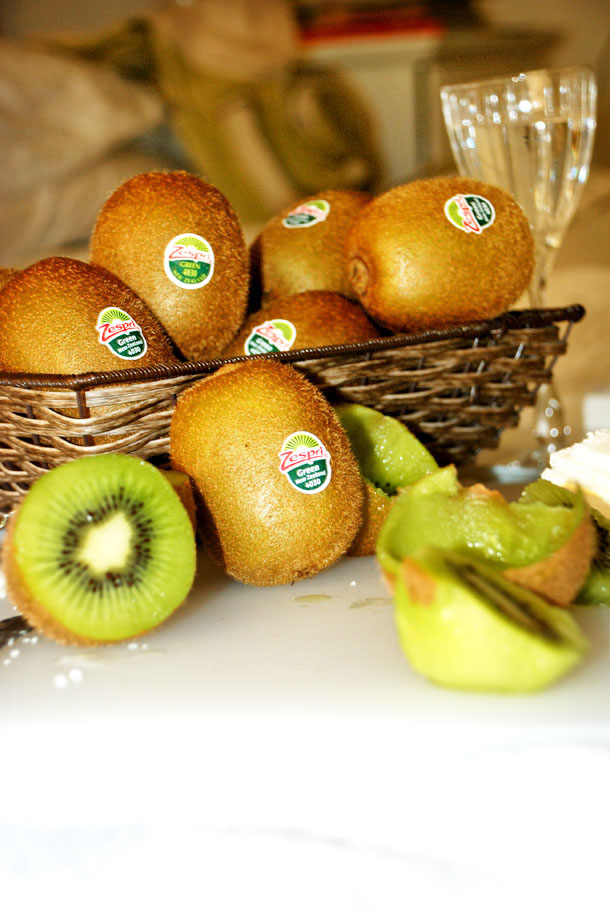
Kiwi is a superfood. Originally called the Chinese Gooseberry and later the ‘sunny peach’, this fruit was renamed the Kiwi by New Zealand natives after their national bird. Would you believe that there are over 400 varieties of Kiwis? And what fascinates me is the fact that Kiwis grow off vines, much like grapes. I would actually love to see them – such big fruits hanging from delicate looking but perhaps very hardy vines! You’ll get more nutritional facts on Kiwis here. And for the kid’s version of the same (which I prefer more since they are more comprehensible) please click here.
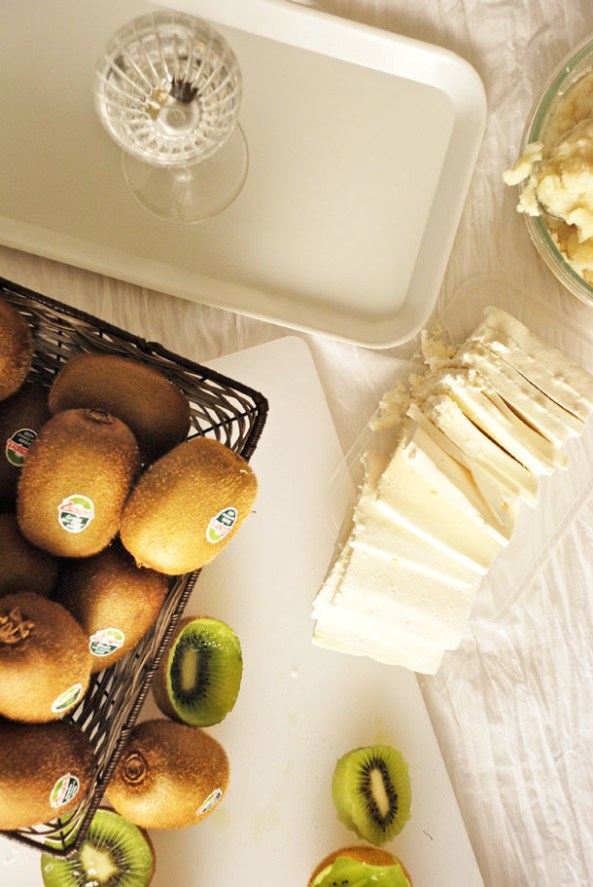
This dish is devoid of any complexities or paraphernalia. As always, it’s got all the characteristics of recipes doling out of our little hands, big hearth –
♥ Easy to cook
♥ Regular canned products off the shelf may be used (However, we advocate using fresh products)
♥ Goes well both as a regular or party dish
♥ Children can easily help in making the dish (My two little sous-chéfs are aged 8 and 3 years!)
♥ And lastly, guaranteed to be tasty!
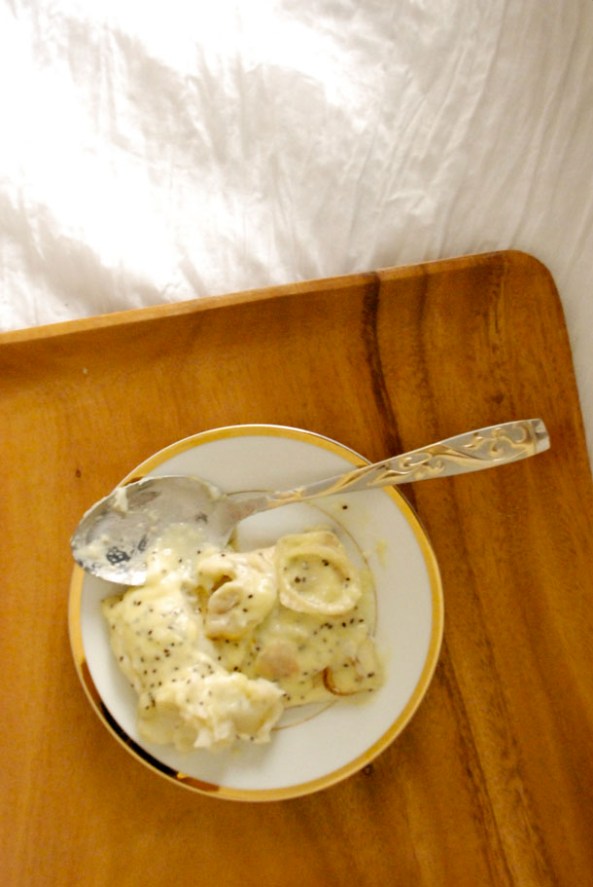
For the printable recipe→
Crusted Paneer Potato with Kiwi Sauce
Category – Side-Dish ; Grilled
Serves 6-8
Preparation time: 45 minutes – 1 hour (sauce preparation – 15 minutes; cooking – 10 minutes; grilling – 20 minutes)
Ingredients:
Fresh Paneer/Indian Cottage Cheese – 250gms, cut into flat thin squares
Onions – 2 large cut into thin slices
Potatoes – 2 large
Cream – 1/2 cup
Green Kiwis – 5 pieces
Low fat Cheese – 3 slices
Butter – 1 tbsp
White Oil – 2 tbsp
Pepper – As per taste
Salt – As per taste
Brown Sugar – 1tsp (Grandma’s secret to get the right taste – a bit of sweetness strengthens the taste of any dish. However, please refrain from the lady’s cooking tips if it costs your health ♥)
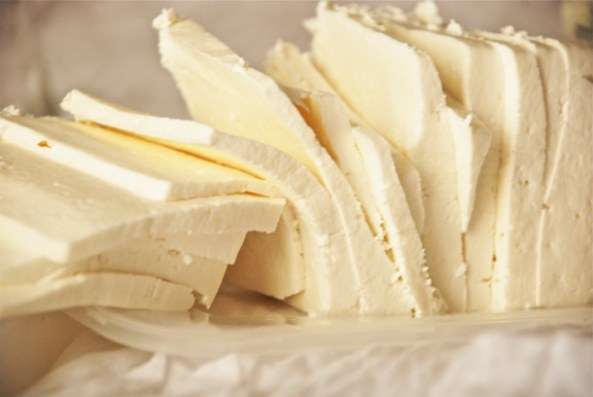
Method of Preparation
Mashed Potato
– Boil the Potato (Takes about 5 – 7 minutes in the Microwave but do make sure that it is covered with enough water so that the boiled potato doesn’t become hard-crusted)
– Hand-mash the Potato, do not purée in the blender (we want this coarseness!)
– Add Salt, Pepper, Butter and a bit of Cream (optional) to the mash and mix it further
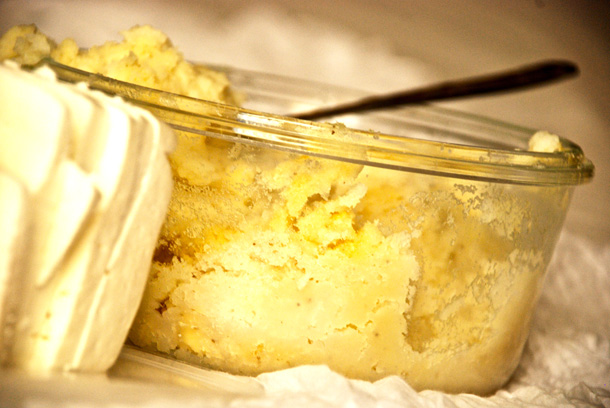
Method of Preparation
The Kiwi Sauce
– Scoop out the flesh from the Kiwi halves and put purée it in a blender
– In a flat bottomed-frying pan, add White Oil and fry the Onions till they are crisp and golden
– Add the Kiwi Purée to the pan and bring it to a boil (it hardly takes minutes so please don’t blink – the purée might get burnt very fast)
– Add the Cream
– Add Sugar, Salt and Pepper and blend them all in
– Let the Sauce thicken while it simmers at at the lowest mark
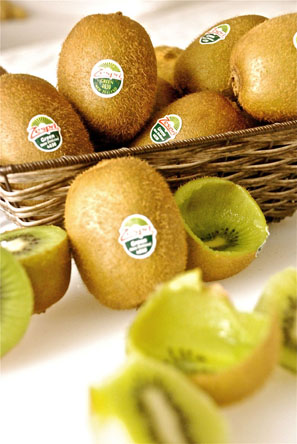
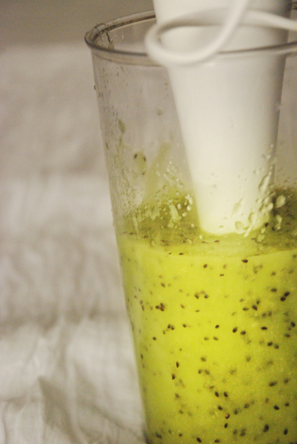
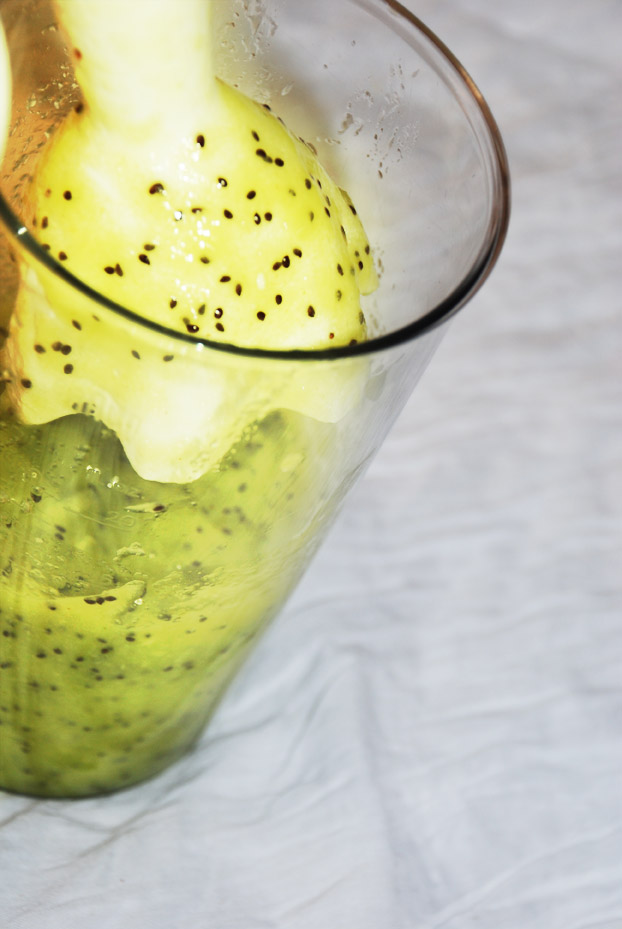
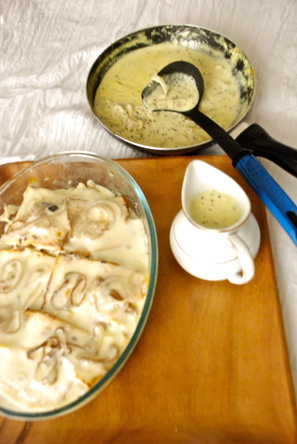
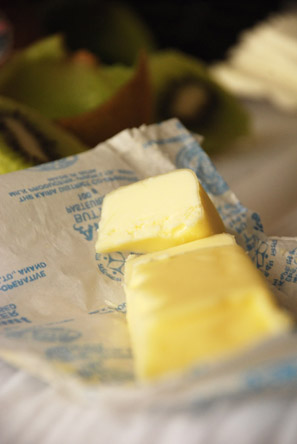
Method of Preparation
The Final Dish
– Heat White Oil in a flat-bottomed pan. Fry the Paneer slices till they are slightly golden in colour (we don’t want it to be crispy and hard as we will be putting the entire dish in the grill. Almost like searing as it is done to a meat or fish for some good crusting)
The Layering
– Layer the bottommost layer of a flat-bottomed oven-proof dish with the Mashed Potato
– Then add the brown crusty Paneer. Sprinkle a bit of Salt and Pepper on this layer
– Add the Cheese Slices
– Add the Onion slices
– Put the dish in a pre-heated Oven (200° F) for 10 minutes
– Pour the Kiwi Sauce on top
The Garnishing
You may garnish with more fried onions on top. The slightly sweet and equally tangy Kiwi Sauce gives a lovely twist to the Crusted Paneer and Mashed Potato beneath. Let the taste direct you to the accompaniments. Do you want to pair this dish with some Garlic Bread or eat it as a stand-alone dish? The choice is yours. Leave the decision making on your taste-buds!
The following is a pictorial journey of the dish. I hope my camera gets the creamy textures and the tints correctly. Enjoy the journey…
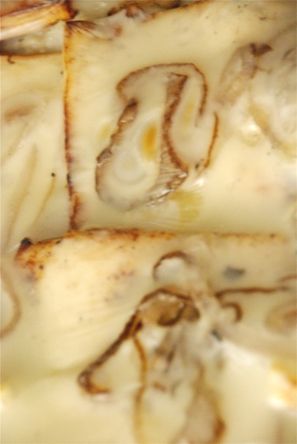
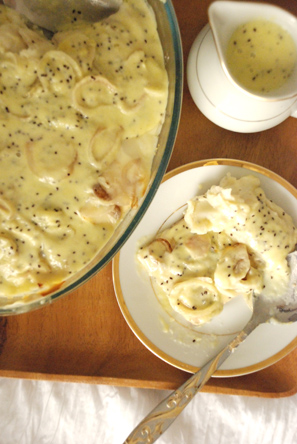
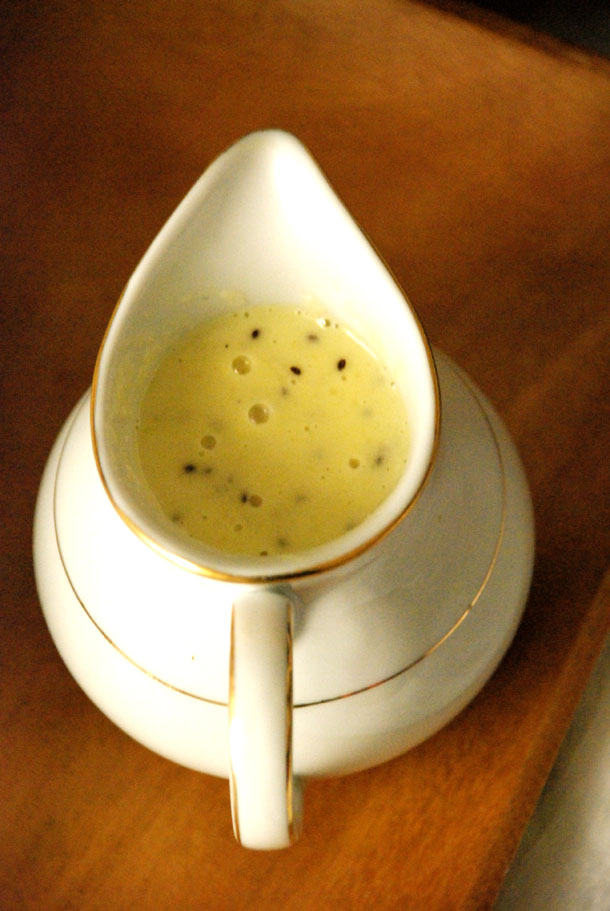
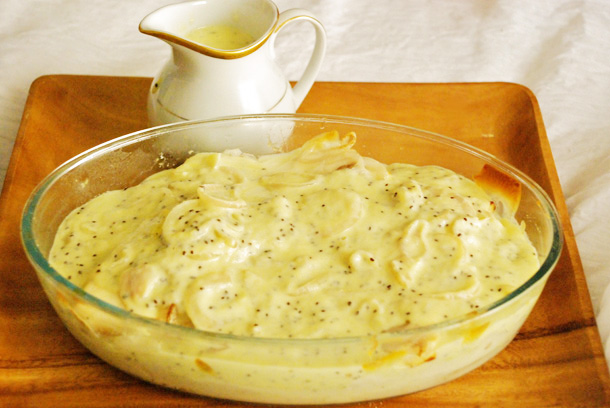
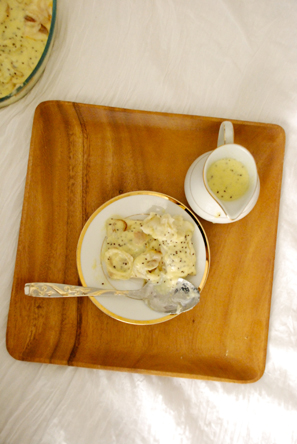
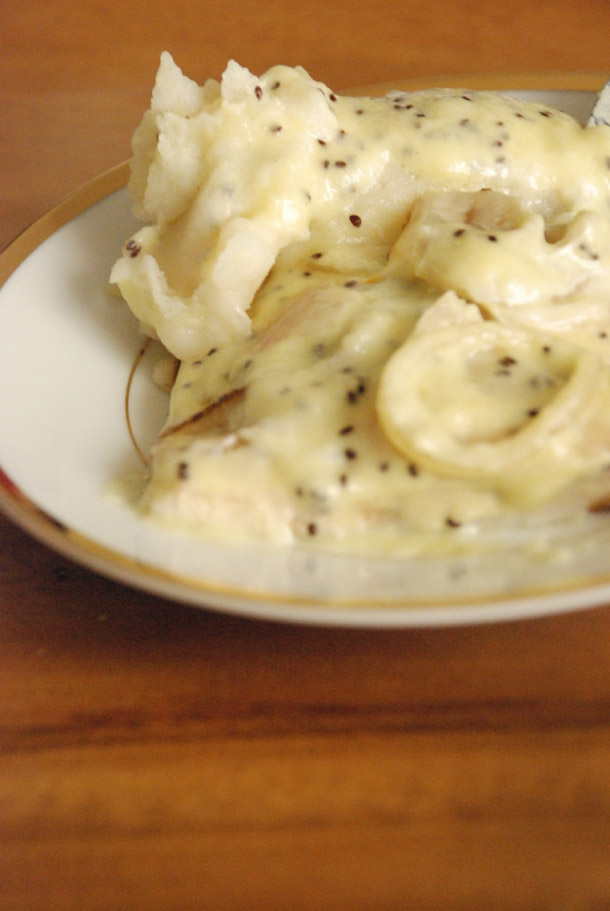
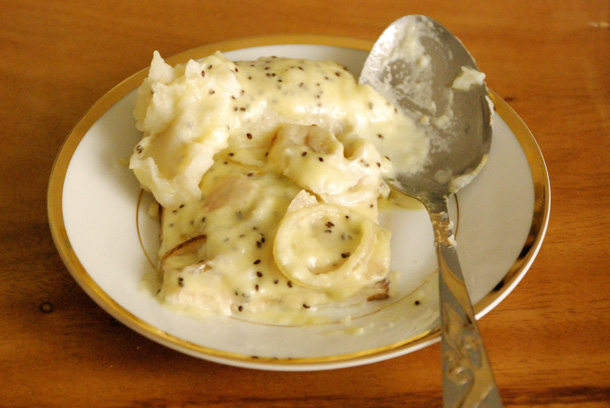
So, did some Kiwis manage to go into the tummies of the Z-SISTERS? Well, not only did they go in the first time around, it also went in many more times hence after. I am obviously a happy Mum. And yes, this is another dish that I want to cook up for our closest pals who are vegetarians and who are always complaining that I feed them the standard Mutter Paneer/Paneer with Peas (a traditional Indian dish) every time they come home. So move aside Mutter Paneer. Here comes the Crusted Paneer Potato with Kiwi Sauce!
Unblogging it all… Ishita
Disclaimer: I hope you enjoy reading the posts with lot of visuals. While you enjoy seeing them please don’t use them. You can see more pictures of my travel and food journey here.
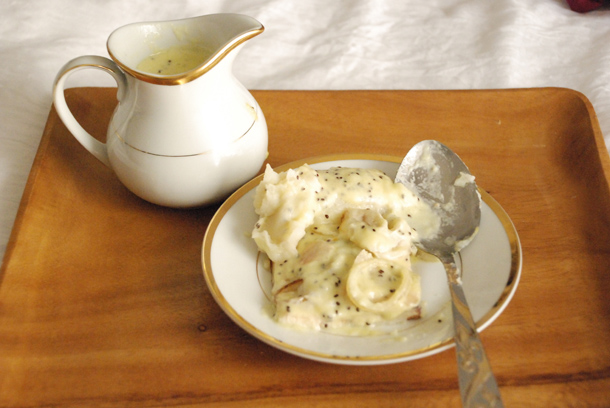
——————————————————————————–
You may enjoy reading the following:
Khichuri As Harbinger of Hope & Kolkata Soaked In Rains
Hot Garlic Pickle… The Pickled Diary – Episode 1
Rasgulla Macapuno – When a Filipina Turns Bong!
Notun Gurer Payesh/Rice Pudding & My Dida
BE SOCIAL. SHARE THIS!



‘We are pleased to accommodate families; however, children under 10 years of age are not permitted in the resort’ – reads Al Maha Resort’s Child Policy. A private sanctuary located in 225 sq kms of the protected Dubai Desert Conservation Reserve, the resort almost fits into the environment and is home to many species of animals, birds and flora and fauna. Though the Z-Sisters are used to travelling, respecting wildlife and hearing a few ‘Shhhh’s, we do respect the resort’s child policy – each room is an independent unit and the charm lies in the fact that a Gazelle might be waiting for you by the window, wanting to accompany you while you walk to the main building to dine! We have been following the green philosophy and trying to book ourselves into places (luxury or otherwise, as much as possible) which adhere to responsible tourism and we are proud that the list of the Eco Resorts that we’ve visited, is gradually growing longer.

Until recently, the resort was only for live-in resort guests. Only now they allow day-visitors. So, the tweaked option that I adopted to visit Al Maha was to attend a Twitterati lunch at the resort. If you are wondering what that is, you are in the same boat as me. Did you know that there are Tweetups i.e. Twitter meetups for people who Tweet. And the people who Tweet are called Twitterati. Almost like a glitterati! Am I a Twitterati then? Not yet, but I don’t mind being one if that gives me the chance to travel and eat. To my rescue comes a little birdie, who has at this second has 13,501,302 Followers and is teaching us humans to stop talking and start Tweeting! If the birdie is instrumental in inspiring such desserts (below R), then so be it!


Getting lost in the sand: A 65km drive from Dubai along the Dubai/Al Ain Road, our navigation system brings us to a halt in the middle of now-where. There is a placard with Al Maha written on it but not the well-fabricated logo of the resort that I had got used to seeing earlier as I hopped onto the offcial web page so many times! A frantic search for anyone, someone, whoever – amidst sand dunes and a few date palm trees ultimately leads us to a Bangladeshi man who tells me in Bengali ‘Didi Apni haraya gaschen!/Sister, you are lost!’ Thank you very much for rubbing that in, little Bro! Even hearing Bengali, my own mother tongue when one is lost in the desert doesn’t help.
Ultimately we reach the resort, on time. For all those future Ibn Batutas who are dependent on their smart phones and GPS navigation systems, this is my advice – it is actually a very easy drive. Just keep on driving on Dubai/Al-Ain Road till you see the board (yes, a fabricated logo this time!) of Al Maha Dessert Resort & Spa.
What followed next? An afternoon of 7 course of sense-tickling sit-down lunch (the printed menu said 5 courses) in a private dining room of Al Diwaan Restaurant amidst the tweeting Twitteratis under the supervision of Chef David Miras, an avid Twitterati himself (@ChefDavidMiras)!


The inaugural drink of Mint & Lemon was absolutely phenomenal. The way it was presented – a small blue glass containing the thick drink perched into a gobbler full of crushed ice – oh! What can I say? Normally, I don’t fancy Mint. Okay, to put it strongly, I absolutely hate the strong taste and flavour of Mint. Frankly, I was initially quite skeptical about it. But this drink was heavenly. Heavenly phenomenal. And phenomenally heavenly. Probably I haven’t been introduced to Mint in this way before!

Our Amuse bouche (what’s that?) came in the form of a delicate Caprese Minuto – a Caprese Salad, Buffalo Mozzarella in a cherry tomato cup seasoned with Liguarian Pesto. Muah!

The Amuse bouche was followed by a Cold and a Hot Starter. The Cold Starter was a dish of raw Tuna – Duo of Tuna with Pickles & Melba Toast, Tuna Tataki & Tuna Cream. I simply loved the Tuna wrapped in white and black Sesame seeds.
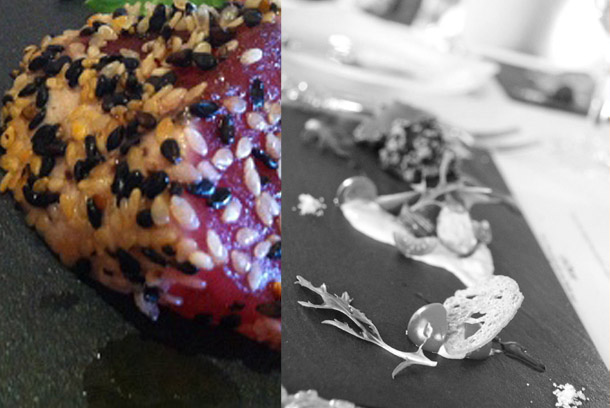
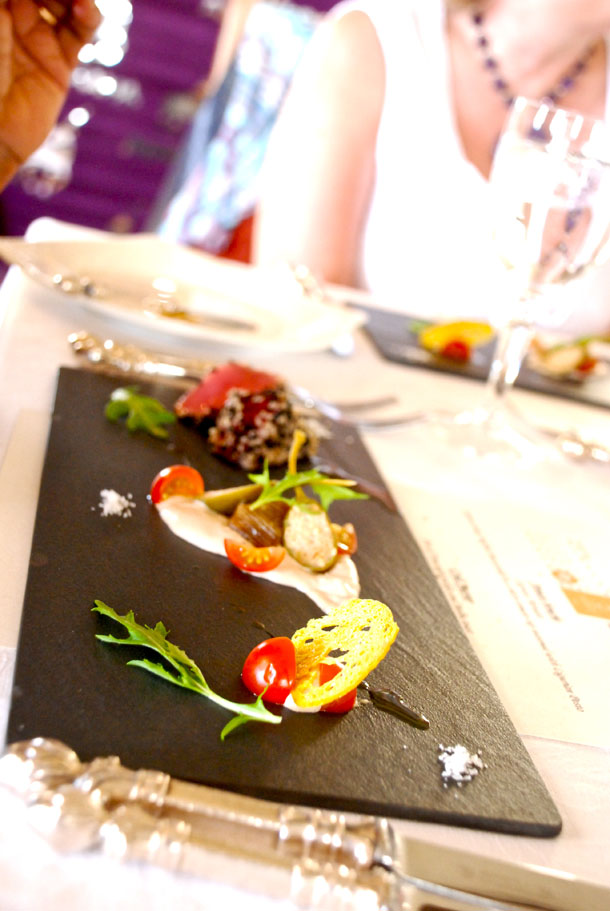
Before the Hot Starter was served, Crab Cakes came in as a surprise from the Chef. A delicious surprise indeed! It was followed by a delicious Parsnip Soup with Sour Apples and pan-seared Scallops. The Soup was rich and creamy and the Scallops really soft. Again, not too fond of Parsnip, this was another revelation for my taste-buds.

The afternoon seemed to be full of surprises with mini sub-surprises thrown in by Chef David – it left us wondering what would be the next thing thing that we would be served? Next came a Mint Sorbet to cleanse our palettes! Again Mint? I was about to turn myself from the world’s worst critic of Mint into the world’s greatest fan of Mint. Dear Mint farmers of the world – if you turn super-rich overnight, you know where to turn your allegiance to!


The Main Course consisted of Wagyu Beef Fillet with a Beetroot Mousse, sautéed Wild Mushrooms, glazed Parsnips and a Shallot Jus. I like my steak Medium Rare. But my companions who who had asked for Rare were equally impressed with the tenderness of the Wagyu Beef that we were served (more on Wagyu). And please Chef, could I request you to make the Beetroot Mousse as a complete dessert the next time I visit? Actually, the Beetroot Mousse has inspired me to make a Beetroot Soup at home which has been certified a success by my family and friends!

My Aunty who’s visiting from India had accompanied me. She became the universal Aunty to the entire gang of Twitteratis. ‘Aunty, did you enjoy your food?’, ‘Aunty, do you like it here?’, ‘Aunty, is the food very different?’ flooded her. My quintessential traditional Bengali Aunty wearing her traditional red and white bangles – the Shakha-Pola (what are they did you ask?) that a Bengali married woman wears in her wrist, soon became very comfortable amidst the smart phone trotting Twitteratis!
She was very delicately asked if she would like to eat something else instead of Beef and was served Chicken prepared in the same style as our Wagyu Beef. Traditionally, Hindus don’t eat Beef. Kudos to the staff for paying heed to these sensitive issues and being aware of the cultural differences that might exist among diners. Yes, they are trained to know these things. But we’ve faced many situations before when the diner has had to face a lot of drama. 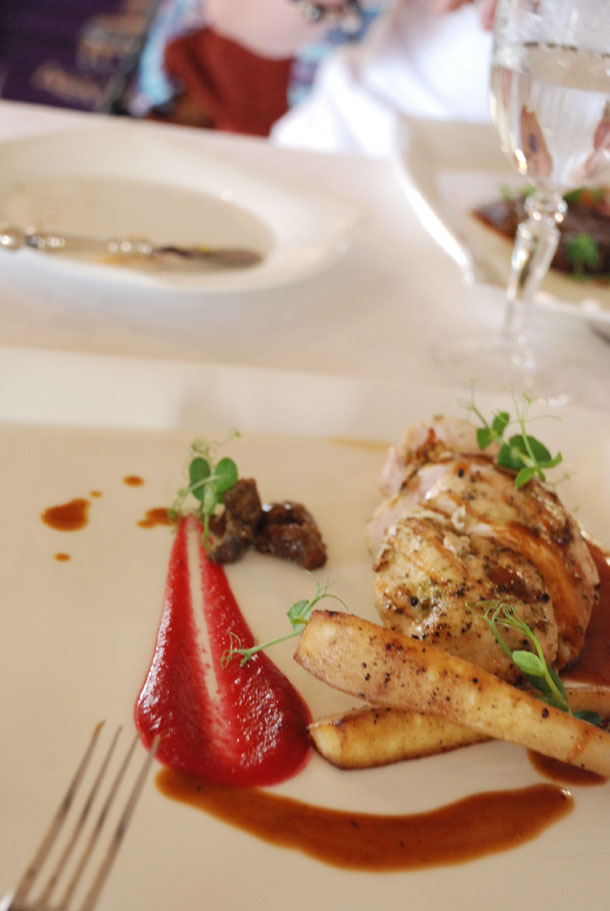
Rounding off with the perfect Dessert is perhaps the most important thing while having a good meal. As usual, there were no disappointments. The White Chocolate & Pistachio Parfait sprinkled with Coconut Almond & Pistachio Sand was just as perfect as the main meals. I could have had just the latter for dessert – the crispy and crumbling sprinklers or the mere add-ons! Here too, the Chef managed to throw in some surprises. The surprises came in the form of Crème brûlée in 3 different flavours – Cinnamon, Saffron and Chilli Chocolate. I have to admit that I have fallen for the Chilli Chocolate Crème brûlée!
The final surprise probably came in the form of the Twitter logo made with Chocolate powder. Really, what will this little celebrity birdie inspire next? Perhaps, some Real estate in Dubai in the shape of the Twitter bird! Why not?
Another sweet surprise came from Debbie who writes CoffeeCakesAndRunning. She made some delicious Banoffees for all of us – including Chef Miras and the kitchen staff of Al Diwaan. Thanks, Debbie for the little take-away for the Z-SISTERS too, they were so thrilled.
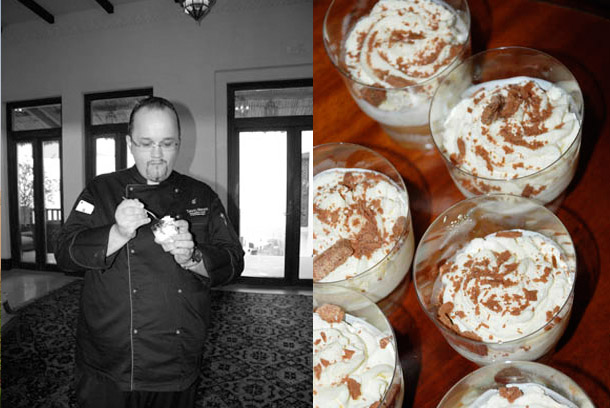
Al Maha Desert Resort & Spa, Dubai Desert Reserve
5* Luxury Eco Resort; In the desert
The resort is located in the first National Park of UAE, the Dubai Desert Conservation Reserve (DDCR) and is geared towards the protection of the delicate desert ecosystem. The food served in the resort focuses on locally grown organic ingredients and the highlight of a culinary experience here lies in the daily changing ‘Chef’s Special‘!
‘The Dubai Desert Conservation Reserve (DDCR) is the UAE’s first national park. Carefully planned rehabilitation over the years has resulted in a protected environment for the last of the desert wildernesses. With the rapid development of Dubai as a major business centre in the Gulf, the Dubai Government has long recognised the need to preserve its unique and beautiful desert habitat, and the many threatened flora and fauna species within. This unique reserve was created for the protection of those endangered species and for the conservation of the natural desert habitat and heritage.’
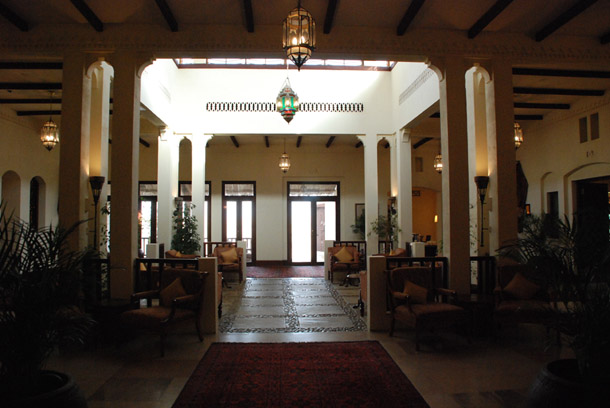

Our lunch was followed by a small educational journey into Arabian heritage – a small peep into Omani tribal jewellery, antique treasure chests and wooden doors – a world which is soon fadng out to electronic doors and swanky urban life. Lynda Shephard, a resident in the UAE for the last 20 years, took us along her nostalgic journey into a world of watercolors and antique furniture and artefacts. As she vacates her Jumeirah home which will be broken down soon to give way to modern row-houses, she’s holding an exhibition to showcase her love for this region. More about her from yesterday’s Gulf News.
The artifacts donning the walls of Al Maha, the framed silver jewellery, the antique wooden furniture – all that attributes to making the decor so luxuriously timeless, has been sourced by Lynda. As she bids adieu to UAE and holds her last exhibition, we probably have to come to terms with the fact that the modern urban pace of life is guzzling up the time-less innocence of a period that will be wiped out by cranes and new constructions.


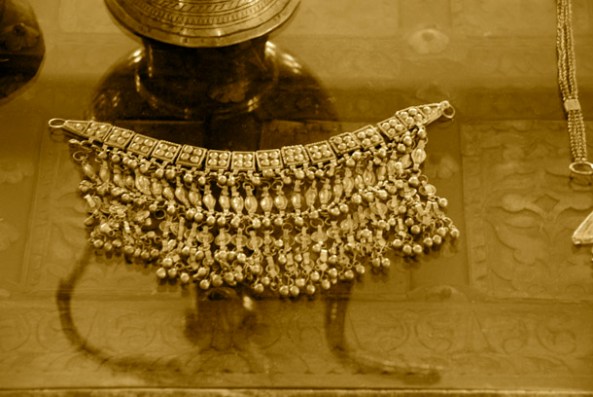
——————————————————————–
What does Al Maha mean? Al Maha is the Arabic for ‘Oryx‘. During 1940’s – 1960’s the Arabian Oryx was hunted to the brink of extinction and was declared endangered by the 1970’s. Today, approximately 300 Oryx, the largest free-roaming herd in Arabia can be found in the Reserve. It is also home to numerous species in additional to Oryx, such as Arabian and Sand Gazelles, Foxes and many more animals. The Al Maha has been thought to have existed from the beginning of time itself as has been recounted in the The Legend of Al Maha!
Shy and hesitant, they move away when you come across these beautiful elegant animals. Yes, it would be lovely to wake up and see the sun-rise together. Or to just gaze into the horizon from your private infinity pool as you step out from your chalet. This is probably the first time I have come across an easel and a binocular in a resort room. The empty pages of the sketch-pad and a box of unused crayons probably seeming more alluring than the welcome dates or fruit baskets or even the complementary chocolates for that matter!


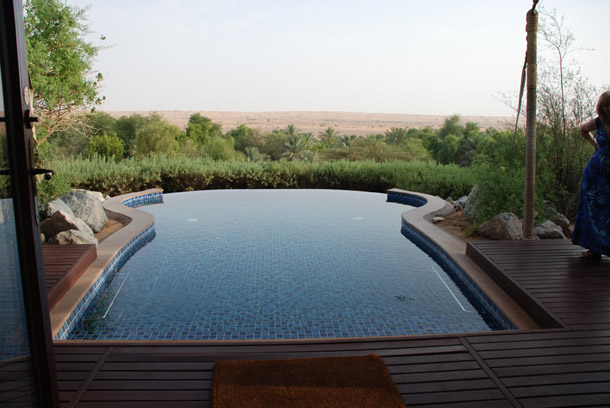




Everything has to come to an end. As we drove back to the city of Dubai, the sunset against the horizon bid adieu to the day as well. Against the rolling sand-dunes and against the thorny bushes a herd of Al Maha gazed back at us. Probably asking, ‘What the hell are you guys doing here?’ I felt unnerved! But I could tell that this was one place where they won’t be disturbed for sure. I want to bring back the Z-Sisters to this place. However, they’ll have to wait for a few more years. For obvious reasons. This is a sanctuary of tranquility, not a noisy zoo.
It was going to be a long 7km drive to the main gate of the Reserve and then a few kms more till we hit the Al-Ain/Dubai Road on our return journey. And all this while the statutory speed limit was 40 kms/hr. I was happy that would take us quite a long time to reach the main road. We didn’t want to be leaving Al Maha so soon!
Unblogging it all… Ishita
Disclaimer: The Twitterati lunch was organised by Debbie Steedman, who writes The REAL Geordie Armani and cost us Dhs 240/person. All images have been taken by me, unless otherwise stated. There aren’t any affiliated links in this post and the subject, story, opinions and views stated here are my own. While you enjoy reading my posts with lot of visuals, please do not use any material from these posts. Please join me on my daily food and travel journey on Instagram, Facebook, Twitter and Pinterest.

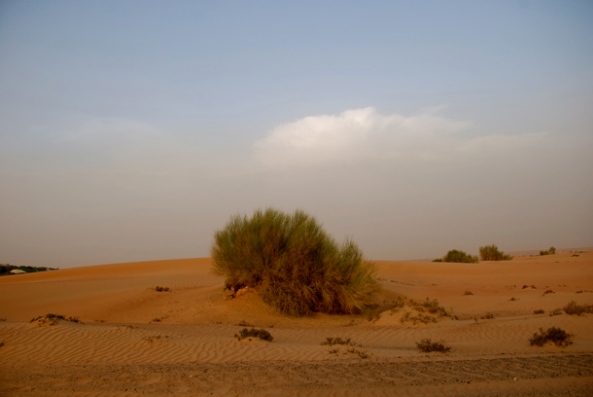


BE SOCIAL. SHARE THIS!


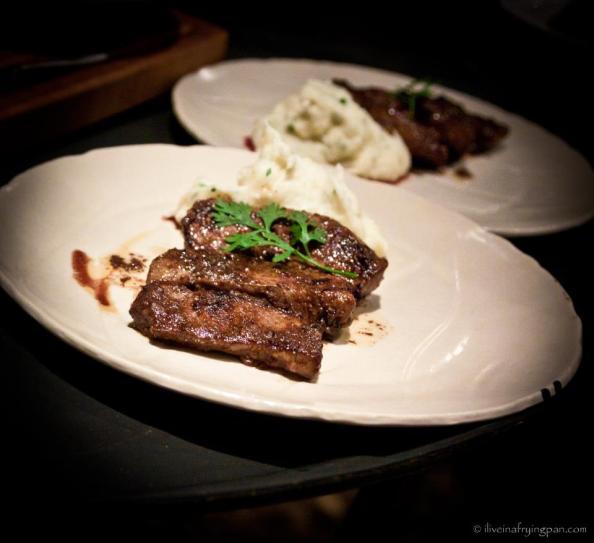
South Africa today is celebrating it’s Heritage Day. This is one of the newly created Public Holidays in South Africa and South Africans all over the world celebrate ‘their cultural heritage and the diversity of their beliefs and traditions, in the wider context of a nation that belongs to all its people’. And we had a taste of South African heritage as we visited TRIBES, a South African Restaurant in the Mall of Emirates (MOE). I have written all about this in my previous post – TRIBES Celebrating South African Heritage Day!
TRIBES is celebrating South African Heritage Day from 21 September – 27 September, 2012. During this period of celebration, will be adding to their standard menu some traditional offerings like Biltong Bread, Beef Tripe Stew with Beans & Tomato served with Pap and Pan Fried Calf’s Liver served with Colcannon Mash.
Today, I’m sharing a few traditional South African Recipes that were shared by the Chef. Needless to say, these were also the ones which we had tasted! And also if you are not so adventurous you could simply adapt the preparation to whatever suits your palette.

TRIBES – The South African Restaurant
Authentic African Cuisine in a themed ambiance; No Alcohol; Kids welcome
Opening Hours: 10am – 11pm (weekdays); 10am- 12pm (weekends)
Location: Fashion Dome, Ground Floor, Mall of The Emirates (MOE);
Tel: +971 50 248 495; Or, you can visit their Website and Facebook Page
The menu offered at TRIBES is taken from the African continent since the Tribal era, influenced by the Spice Islands of the East, the French in the West, the Malay & Dutch in the South and the Arabic flavours of the North. The experience unfurls the moment one enters the restaurant and is greeted by the staff in their tribal language – Tawareq, Shona or Luhyia! Infact, every member of staff has been recruited from African tribes – Xosa, Nguni, Tawareq, Shona, Luhyia to provide the diner with an authentic African experience.
————————————————————————————————–
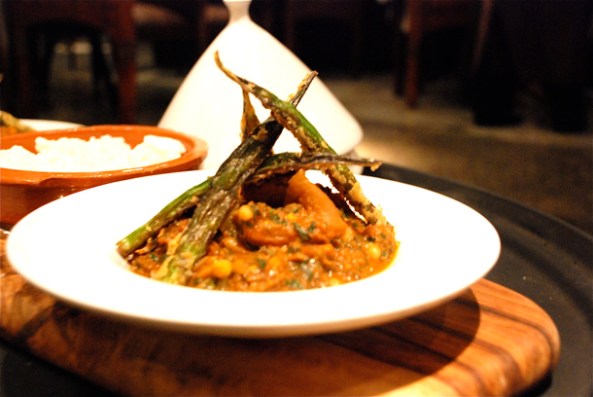
Beef Tripe Stew with White Beans and Tomato Sauce and served with Pap
Category – Main Meal; Cuisine type – Traditional South African
Ingredients for Beef Tripe:
Beef Tripe – 500g
Turmeric powder – 20g
Onion – 100g
Garlic – 20g
Olive oil – 150ml
Carrot – 100g
Celery – 80g
Leek – 60g
Black pepper – 10g
Bay leaf – 1g
Thyme – 5g
Salt – 10g
Masala – 10g
White bean and tomato sauce – 250g
Method of Preparation of Beef Tripe
– Clean the tripe with salt and turmeric. Add to cold water and bring to boil
– Remove boiling water and wash again in cold water
– Fry the tripe in a pan with olive oil until golden, then add the onion and garlic and fry for 8 minutes
– When the onion is brown, add the carrot, celery, leek and herbs
– Add the remaining ingredients and slow braise the tripe for 1 ½ to 2 hours
Ingredients for White Bean Sauce:
White beans – 250g
Onions – 200g
Garlic – 40g
Tomato – 20g
Tomato paste – 20g
Rosemary – 8g
Thyme – 10g
Parsley – 15g
Oregano – 3g
Salt – 2g
Pepper – 2g
Olive oil – 100ml
Sugar – 10g
Water – 100ml
Method of Preparation of White Bean Sauce
– Bring the beans to boil and cook for 45 minutes. Do NOT discard the liquid
– Fry the onion, add garlic, thyme, rosemary and cook for 4-5 minutes
– Add sugar, tomato paste and fresh tomatoes cook for 10 – 15 minutes
– Add the cooked beans with the liquid with oregano, parsley, salt and pepper
– Cook for 30 – 40 minutes until the beans are soft
Method of Preparation of Pap
– Add the polenta meal to water and bring to boil. Whisk the mixture and simmer for 15 minutes
– Once the tripe is cooked, mix with the white bean and tomato sauce.
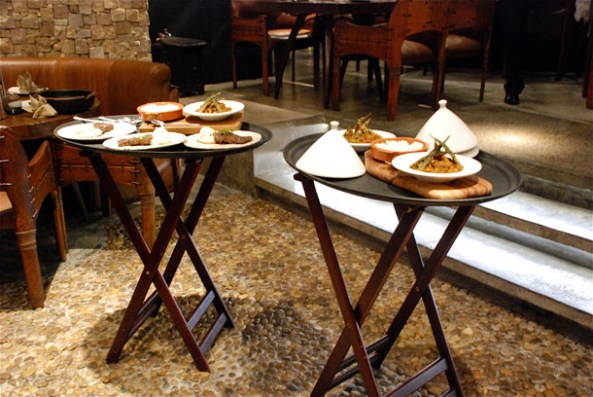
The Beef Tripe Stew and the Pap was served very dramatically on large oval trays. This was exactly the way, as Sipho, the Restaurant staff who was explaining all about the food, said how his Mum would have prepared back home. He was also telling us how in older times this was only for the menfolk who would tear up the intestines of their hunt!
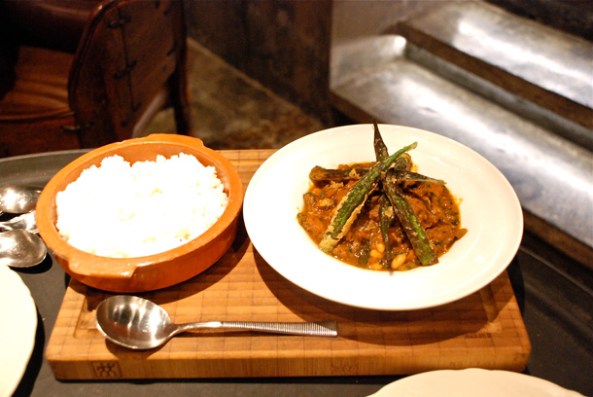
To be honest, I didn’t quite enjoy the Tripe. Probably because I am not used to eating it. I also found the texture very hard. But the gravy consisting of white beans cooked in tomato sauce was quite tasty – I could make out that quite a few Masalas similar to Indian cooking had gone into it. However, this is a traditional dish from South African Cuisine and often eaten at dinner time as a stew with Pap, specially during winter. The Pap tasted a bit like unsalted Upma (an Indian dish made up of Semolina).
Pap, also known as mieliepap in South Africa, is a traditional porridge/polenta made from ground maize. Many traditional South African dishes include Pap. Pap can be of two types – a very thick consistency that can be held in the hand – Stywe Pap or a more dry crumbly Phutu Pap (Info Courtesy – Wikipedia). There is something similar to Pap in India. Coincidentally, it is also called Putu!
These traditional South African dishes will be available at the TRIBES only during the Heritage Day celebrations. A tripe-eater is not rare and a lot of dishes are popularly made from it (read here).
————————————————————————————————–
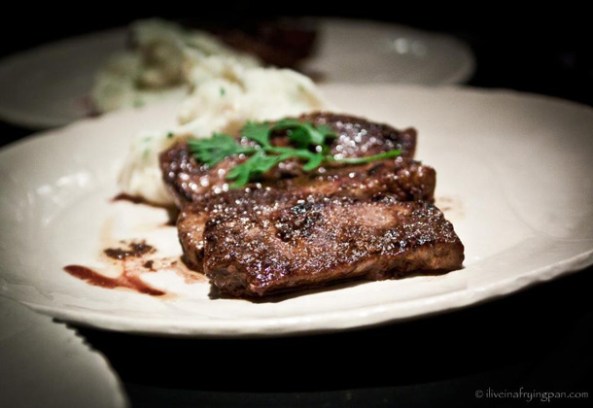

Pan-Fried Calf’s Liver served with Colcannon Mash
Category – Main Meal; Cuisine type – Traditional South African
Ingredients:
Calf’s livers – 250g
Plain flour – 10g
Salt – 2g
Pepper – 1g
Full cream – 200ml
Rosemary finely chopped – 1g
Garlic – 5g
Balsamic vinegar black – 50ml
Olive oil – 50ml
Potato – 200g
Savoy cabbage – 50g
Beef bacon – 50g
Cooking cream – 50ml
Spring onion – 20g
Butter – 20g
Method of Preparation of Calf’s livers
– Boil the milk and add garlic and rosemary. Allow to cool
– Clean the calf’s livers, cut into slices and marinate in the cold milk over night
– Remove the livers from the milk and dust them with plain flour
– Shallow fry the livers in a pan with olive oil, turning each slice over to sear each side
– Check the seasoning and serve with Colcannon Mash
Method of Preparation of Colcannon Mash
– Blanch the savoy cabbage in boiling water for one minute, drain and reserve
– Thinly slice the beef bacon and fry, adding the spring onion and cabbage
– Simmer the potato in lightly salted boiling water until cooked. Pierce with a
sharp knife to ensure the potato is soft in the middle
– Drain water from potatoes, add butter and mash. Add bacon, spring onion and cabbage
with a hint of cream to taste
————————————————————————————————–

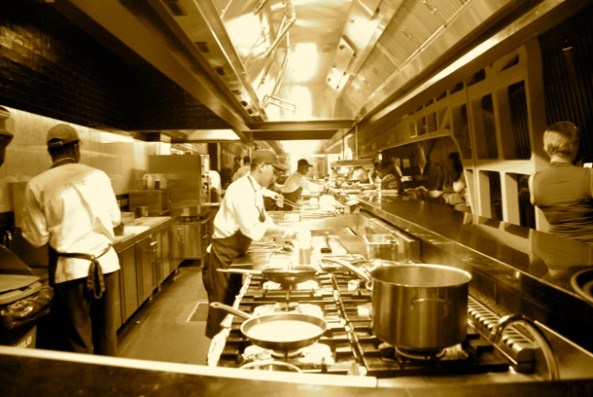
Celebrating History
South African Heritage Day was announced on 24th September, 1996 by the former President Nelson Mandela. Nelson Mandela’s speech echoed the ethos of the nation – “When our first democratically-elected government decided to make Heritage Day one of our national days, we did so because we knew that our rich and varied cultural heritage has a profound power to help build our new nation”.
On that profound note,
Unblogging it all… Ishita
Disclaimer: TRIBES hosted the food tasting evening for Fooderati Arabia to celebrate the forthcoming South African Heritage Day (21 September – 27 September). A few food shots have been very generously shared by Arva of I Live in a Frying Pan.
————————————————————————————————–
Related articles
- Waka waka – this time for Africa (mycustardpie.com)
- TRIBES Celebrating South African Heritage Day! (ishitaunblogged.com)
- TRIBES – National South African Heritage Day (coffeecakesandrunning.me)
- TRIBES (www.therealgeordiearmani.com)
BE SOCIAL. SHARE THIS!

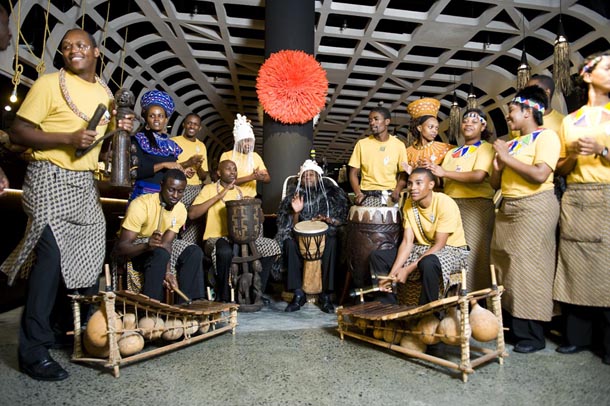
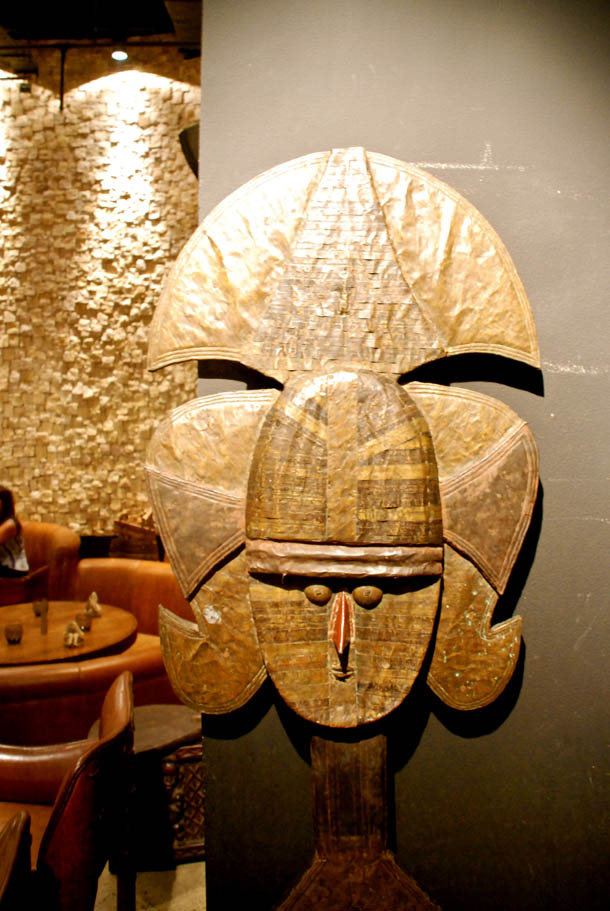
TRIBES doesn’t look like your regular casual dining restaurant. And that is not it’s only USP. If you are looking for an excuse to dine in a restaurant for an experience then this probably is the final destination. Isn’t that pretty apparent from it’s location? Located in the Fashion Dome of Mall of the Emirates (MOE), the restaurant is under pressure from designer boutiques which are located on the first floor just above the restaurant. Names such as Christian Louboutin, Cartier, Galliano, Versace, Mulberry, Diane von Furstenberg, Louis Vuitton, Christian Dior, Gucci and D&G can be intimidating. The decor better be fashionable and the food better be more than just plain good!
Recently, TRIBE hosted a food tasting evening for Fooderati Arabia to celebrate the forthcoming South African Heritage Day. TRIBES does live up-to all expectations. In-fact, the vastness inside is quite a revelation. It also broke the two myths that I had – 1) There’s not much difference between a restaurant in a shopping mall and a regular cafe! 2) You can never enjoy a delicious meal while visitors flanking by with swinging shopping bags and sipping on their take-away coffees!
Here, you have the choice of both – you can sit outside and be overwhelmed by a crowded and noisy shopping mall or you could venture inside – into the world of the TRIBES – a modern cave, decorated with furs, leathers, woods, shields and yes, hold your breath – a fire!
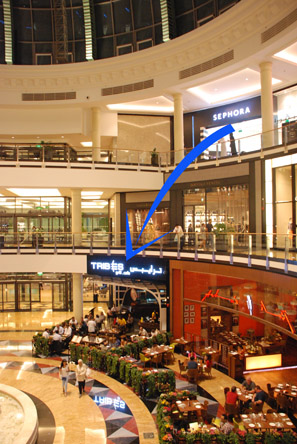
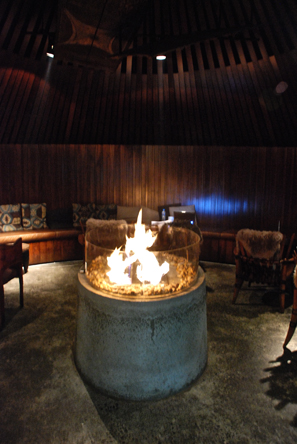
TRIBES – The South African Restaurant
Authentic African Cuisine in a themed ambiance; No Alcohol; Kids welcome
Opening Hours: 10am – 11pm (weekdays); 10am- 12pm (weekends)
Location: Fashion Dome, Ground Floor, Mall of The Emirates (MOE);
Tel: +971 50 248 495; Or, you can visit their Website and Facebook Page
The menu offered at TRIBES is taken from the African continent since the Tribal era, influenced by the Spice Islands of the East, the French in the West, the Malay & Dutch in the South and the Arabic flavours of the North. The experience unfurls the moment one enters the restaurant and is greeted by the staff in their tribal language – Tawareq, Shona or Luhyia! Infact, every member of staff has been recruited from African tribes – Xosa, Nguni, Tawareq, Shona, Luhyia to provide the diner with an authentic African experience.
Incidentally, there are many ethnic groups in Africa, each having its own language or dialect and culture. You’ll find a more detailed study about them here.
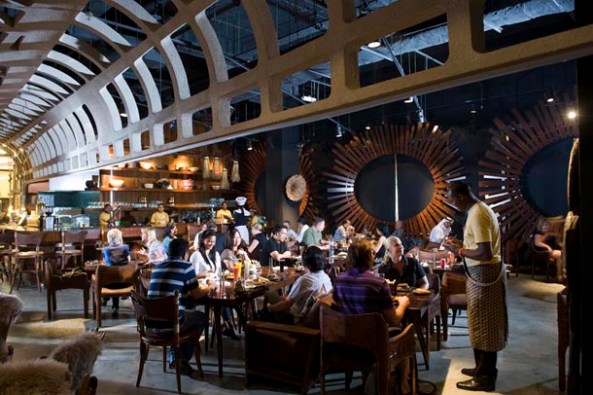
South African Heritage Day being celebrated at TRIBES (21 September – 27 September, 2012)
TRIBES, during this period of celebration, will be adding to their standard menu some traditional offerings like Biltong Bread, Beef Tripe Stew with Beans & Tomato served with Pap and Pan Fried Calf’s Liver served with Yam Mash. There will also be traditional entertainment with tribal songs accompanied by African percussionists.
On 24th September, on the actual Heritage Day, each guest at TRIBES will get the opportunity to have photographs taken with authentic African shields and armour, as well as having traditional African face paint – an experience that I don’t want the Z-SISTERS to miss out on!
A small video from SouthAfricanTourism which reflects the sentiments of the Heritage Day…
Celebrating History
South African Heritage Day was announced on 24th September, 1996 by the former President Nelson Mandela. This is one of the newly created Public Holidays in South Africa and South Africans all over the world celebrate ‘their cultural heritage and the diversity of their beliefs and traditions, in the wider context of a nation that belongs to all its people’. Nelson Mandela’s speech echoed the ethos of the nation – “When our first democratically-elected government decided to make Heritage Day one of our national days, we did so because we knew that our rich and varied cultural heritage has a profound power to help build our new nation”.
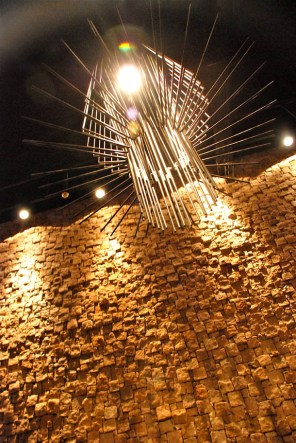
Our experience in TRIBES
The decor: As I’ve mentioned before, the inside of the restaurant is a revelation. African masks don the walls along with shields and armour. And the space inside almost runs unending, atleast longitudinally. African drums, pictures of tribal faces, traditional wooden serving bowls – add a lot of drama. And the drama is heightened by a series of spectacular spiky lights hanging from the ceiling! This describes a cosy portion of the dining area which is practically dug into the ground.
This is where we were seated. This can actually serve as a private space to a group of diners. The ceiling here rises very high and the shadows of the bricks on the wall are deepened by the spiky lights.
Maybe, I am over exaggerating the lights a bit – but yes, I seemed to have taken up by them. And the brick wall. And the smiling staff wearing bright colourful clothings!
Well, if only I realised there was more to come. As I ventured further inside, into the longitudinal modern cave that the restaurant has been designed after, I ended up being hit by an actual fire burning inside with sitting arrangements all around this fire. If this doesn’t replicate an experience of having your grilled meat by the fire in the middle of the night in Africa, what else will?
Visually enthralling, but definitely high-maintenance for the Air Conditioning system! Just curious – what would be the likely temperature at which the Air-Conditioning is switched on with an actual fire inside a restaurant? Never mind – I just loved it and don’t want to act as the mood-dampener!
I don’t know what surprised me more – a fire burning inside the restaurant or the suggestion from Sipho, who was dedicated to us for explaining the food that we were being served – ‘It will be nice if you all washed your hands and tried eating the Beef Tripe with Pap – well that’s what we do in our country’!
I could do it, yes! I’ve grown up eating Rice and Daal with my Bengali hands… it’s a different matter altogether that the cost of salon manicures prevents me from doing the same!
The Food & The Foodie Company
Enough has been said about the things that matter but shouldn’t matter to a foodie – the decor! Let’s re-direct our focus to Food. Now here I have to admit that I went slightly astray while clicking. Most of my food shots have come really messed up. I can’t be terribly blamed. Even Annyen’s mobile fell into the dessert and probably will write about that one day in her GirlieAnnyen’s Blog!
To my rescue, comes dear Arva of I Live in a Frying Pan who sizzles ‘up hole-in-the-wall ethnic eats of old Dubai’. Destiny always has some alternative chalked out for a person. So in a fateful evening when I was predestined to take terrible pictures, Arva was generous enough to lend me hers. The beautiful Drina, who writes a mouthful of wonderful in her Eternal Zest modeled for them. That’s what I call adding cherry to the topping!
The evening started on a perfect note with cool, refreshing juices of fresh Oranges and Strawberries – the minty flavour further upping their freshness. As different types of dishes were plonked on our table, I was glad that Sally of My Custard Pie did the food distribution. She did that perfectly and most importantly without any bias! Or else, Debbie of CoffeeCakesAndRunning who is just back from climbing Mt Kilimanjaro might have been the most deserving candidate for the entire Hakuna Matata Platter for her feat! Or, say Jasmine of Pear Tree Food Diaries for being one of the youngest members of Fooderati Arabia. Or, the other Debbie whose blog is called The REAL Geordie Armani for having created the illusion for people like us who ends up reading the name of her blog as ‘The REAL Giorgio Armani’!
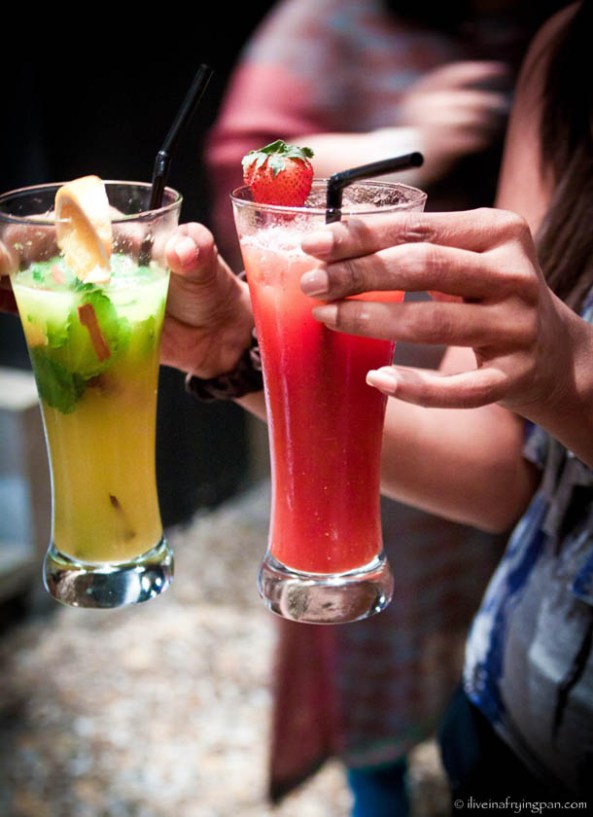
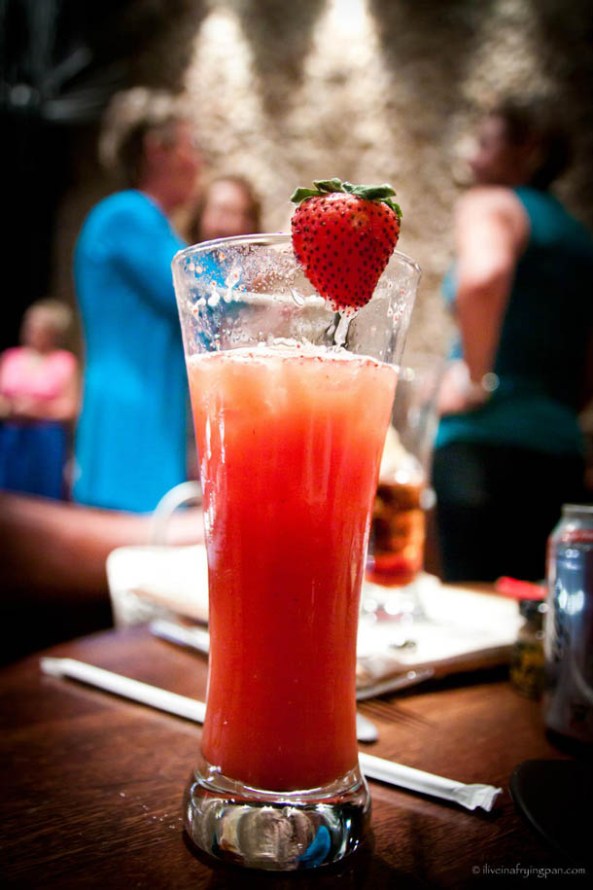
The Hakuna Matata Platter set our tastebuds rolling! There were Grilled Calamari, Ugandan Fishcakes, Madagascar Pan-Fried Chilli Prawns in Peri Peri Sauce, Tunisian Chicken Giblets and African Beef Pie – served with Rice and Ripe Mango Salad and a sweet and tangy dip – very similar to a the Indian Mango Chutney. And in the centre, there was something that I normally hate – fried Bitter gourd! I think the Platter is rightfully named Hakuna Matata – a Swahili phrase which can be translated literally as ‘There are no worries/No problem’…
Yes, with prawns so succulent and Calamari grilled to soft and juicy perfection, you can only feel happy to have found the perfect platter! I liked the Prawns, the Calamari and the Giblets the best!
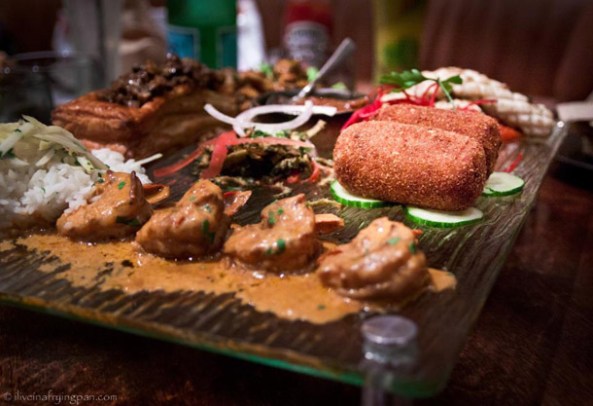

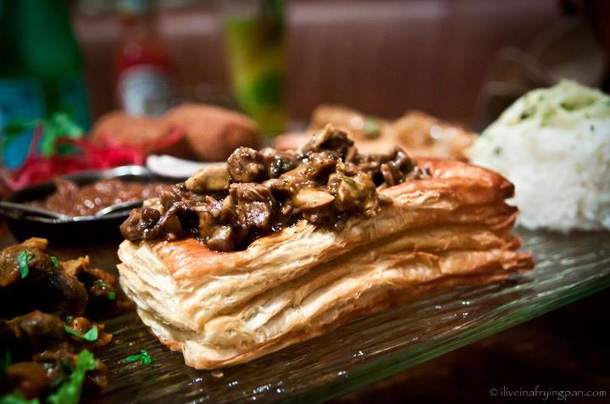
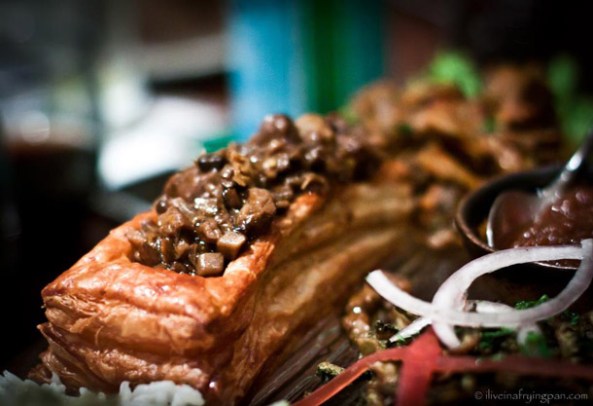
For main-course we were served Pan-Fried Calf’s Liver along with Yam Mash and the traditional Beef Tripe Stew with White Beans and Tomato Sauce and served with Pap.
I enjoyed the former while I have some reservations on the latter. But that’s purely individual.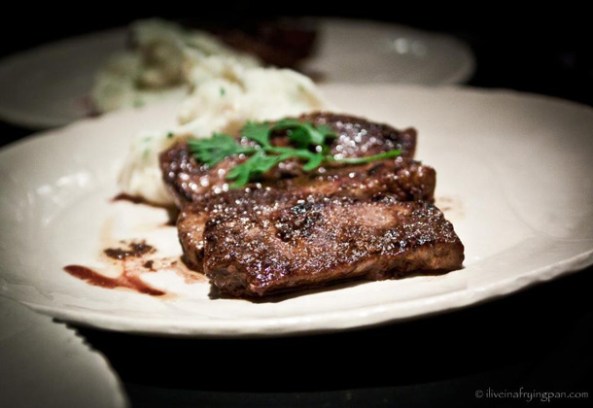
The Beef Tripe Stew and the Pap was served very dramatically on large oval trays. This was exactly the way, as Sipho said, how his Mum would have prepared back home. He was also telling us how in older times this was only for the menfolk who would tear up the intestines of their hunt! Oops!
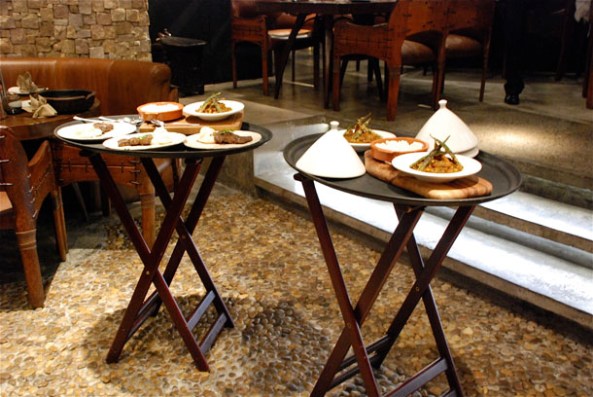
To be honest, I didn’t quite enjoy the Tripe. Probably because I am not used to eating it. I also found the texture very hard. But the gravy consisting of white beans cooked in tomato sauce was quite tasty – I could make out that quite a few Masalas similar to Indian cooking had gone into it. However, this is a traditional dish from South African Cuisine and often eaten at dinner time as a stew with Pap, specially during winter. The Pap tasted a bit like unsalted Upma (an Indian dish made up of Semolina).
Pap, also known as mieliepap in South Africa, is a traditional porridge/polenta made from ground maize. Many traditional South African dishes include Pap. Pap can be of two types – a very thick consistency that can be held in the hand – Stywe Pap or a more dry crumbly Phutu Pap (Info Courtesy – Wikipedia). Arva said that there is something similar to Pap in India. Coincidentally, it is also called Putu!
These traditional South African dishes will be available at the TRIBES only during the Heritage Day celebrations. A tripe-eater is not rare and a lot of dishes are popularly made from it (read here).
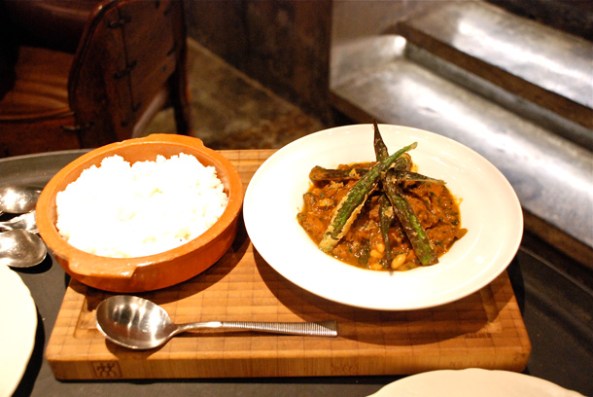
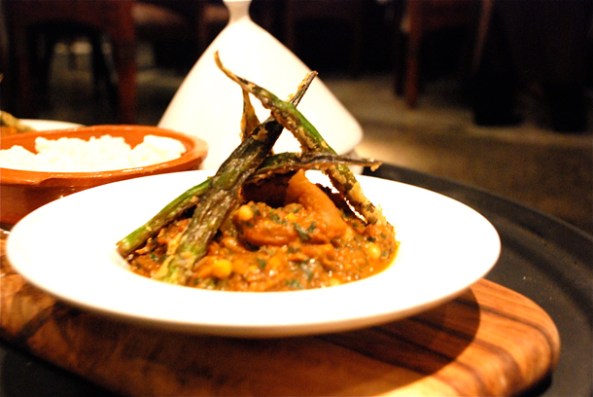
The Desserts: A good dessert is always a heartening sign off to a good meal. We were definitely not disappointed. A delicious array of dessert appeared… Melk Tart with Raspberry Coulis (African Milk Tart); Warm Date and Pistachio Sponge served with Pistachio Ice Cream; Chocolate Malva Pudding served with Madagascar Vanilla Sauce & Apricot Compote;
Coffee Crumble, Poached Pear, Chocolate & Hazelnuts, topped with Coffee Crumble mix, served with Hazelnut Ice Cream!
The Milk Tart was lovely. So was the Date & Pistachio Sponge. The latter reminded me of the local Cake Al Tamor – the date cake, which is deliciously soft and absolutely yummy! I am utterly confused with the taste of the Coffee Crumble – the confusion arising from not being able to hit upon one taste – is if coffee-ish? Or is it pear-ish?
However, the absolute winner would be the Chocolate Malva Pudding – the chocolate filling running out lusciously as we cut into the Pudding. Malva Pudding is a celebrity sweet pudding of Afrikaner origin and derives the name from Malvasia Wine from Madeira. It is usually served hot with custard and/or ice-cream and is made with apricot jam. (Info Courtesy – Wikipedia)
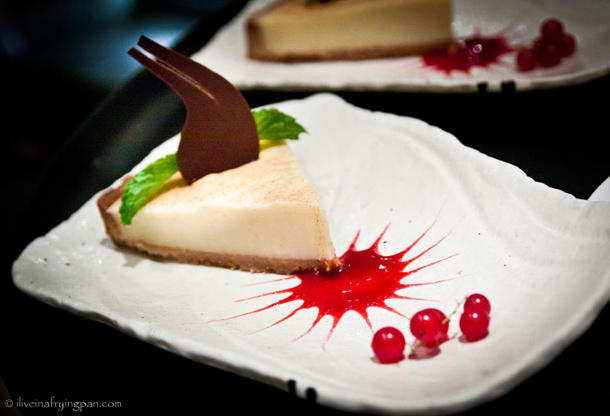
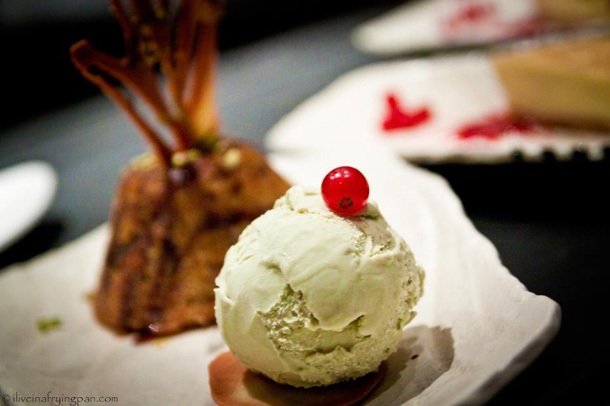
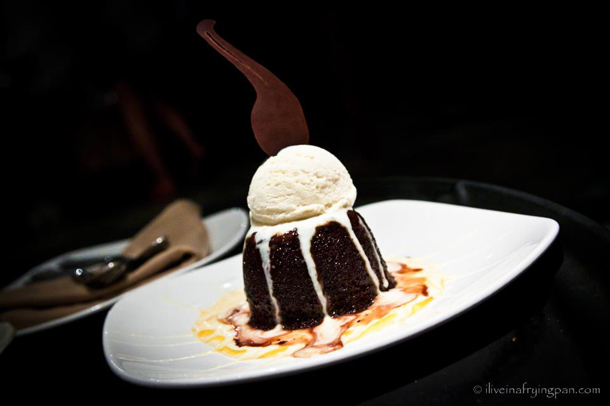
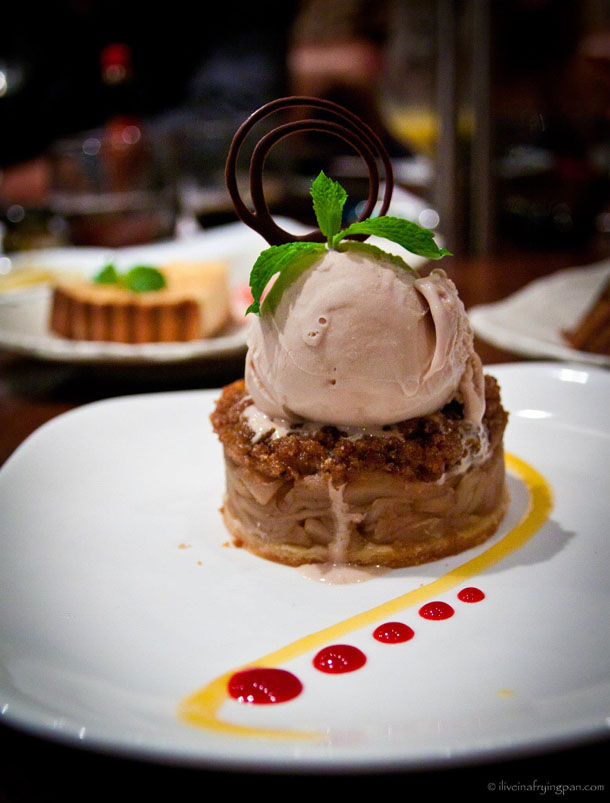
It is always nice to see the source of all the food that has reached our tummy – the kitchen. I’ve always envied big kitchens as our apartment can boast a kitchen – the romantic one, where only one couple can stand inside at any point in time! The kitchen at the TRIBES is beyond my boundary zone of my envy – it is huge! Probably, the entire length of the restaurant is flanked by this open kitchen.
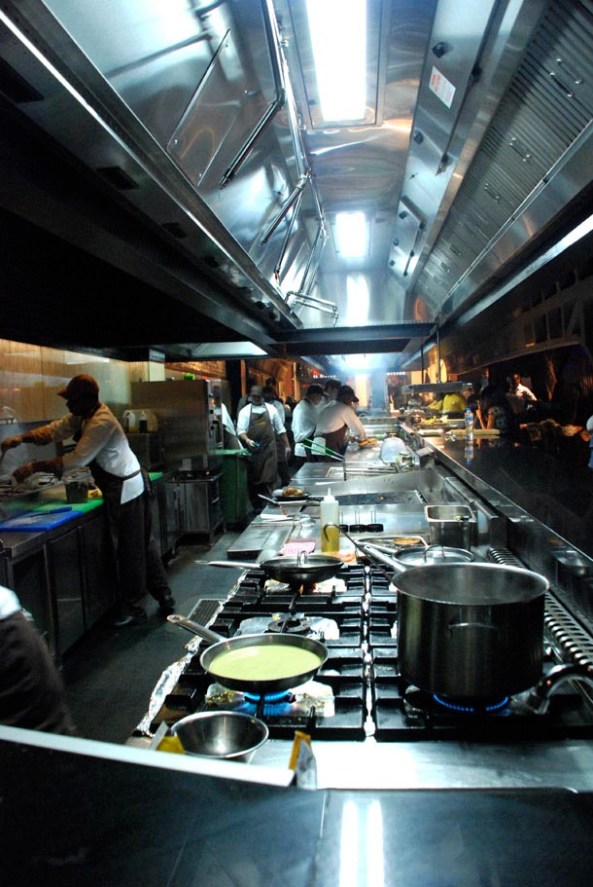
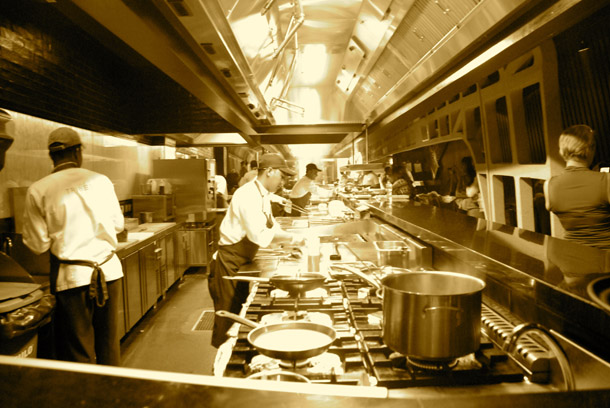
The Chef who is from India (below left) was more than willing to share his culinary stories and answer our never-ending list of queries. Similar enthusiasm seemed to be shared by all the other staff. In-fact, we were really surprised when a few of them broke out into traditional singing and dancing along with some traditional drumming as a diner celebrated his birthday!
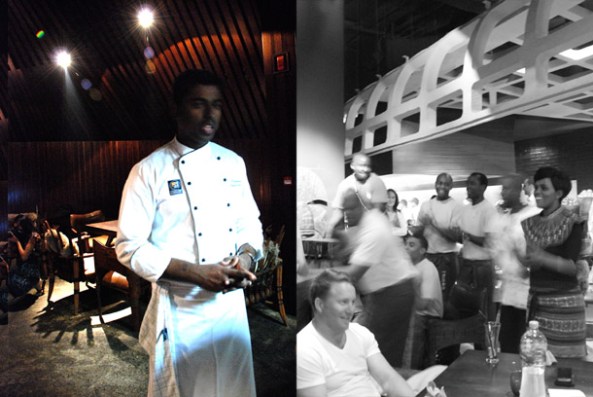
The Sign-Off
I am longing to go back to TRIBES during this period of celebration. I would love to see the African face paints on the faces of the Z-SISTERS. I’m most certain that Big Z would love to drum on the massive African Drums as shown below. And Li’l Z will climb onto the chair below which looks like a throne to me. Ah, my little tribal princess in the land of bling!
Unblogging it all… Ishita
Disclaimer: TRIBES hosted the food tasting evening for Fooderati Arabia to celebrate the forthcoming South African Heritage Day (21 September – 27 September). A few food shots have been provided by Arva of I Live in a Frying Pan.
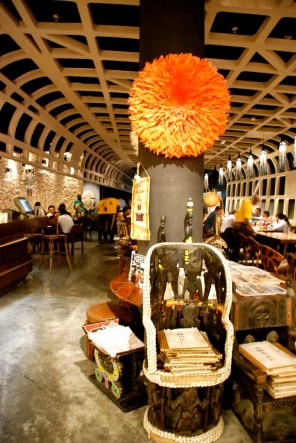
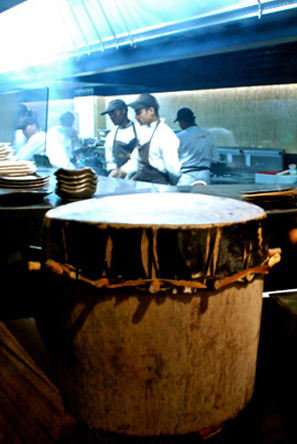
BE SOCIAL. SHARE THIS!

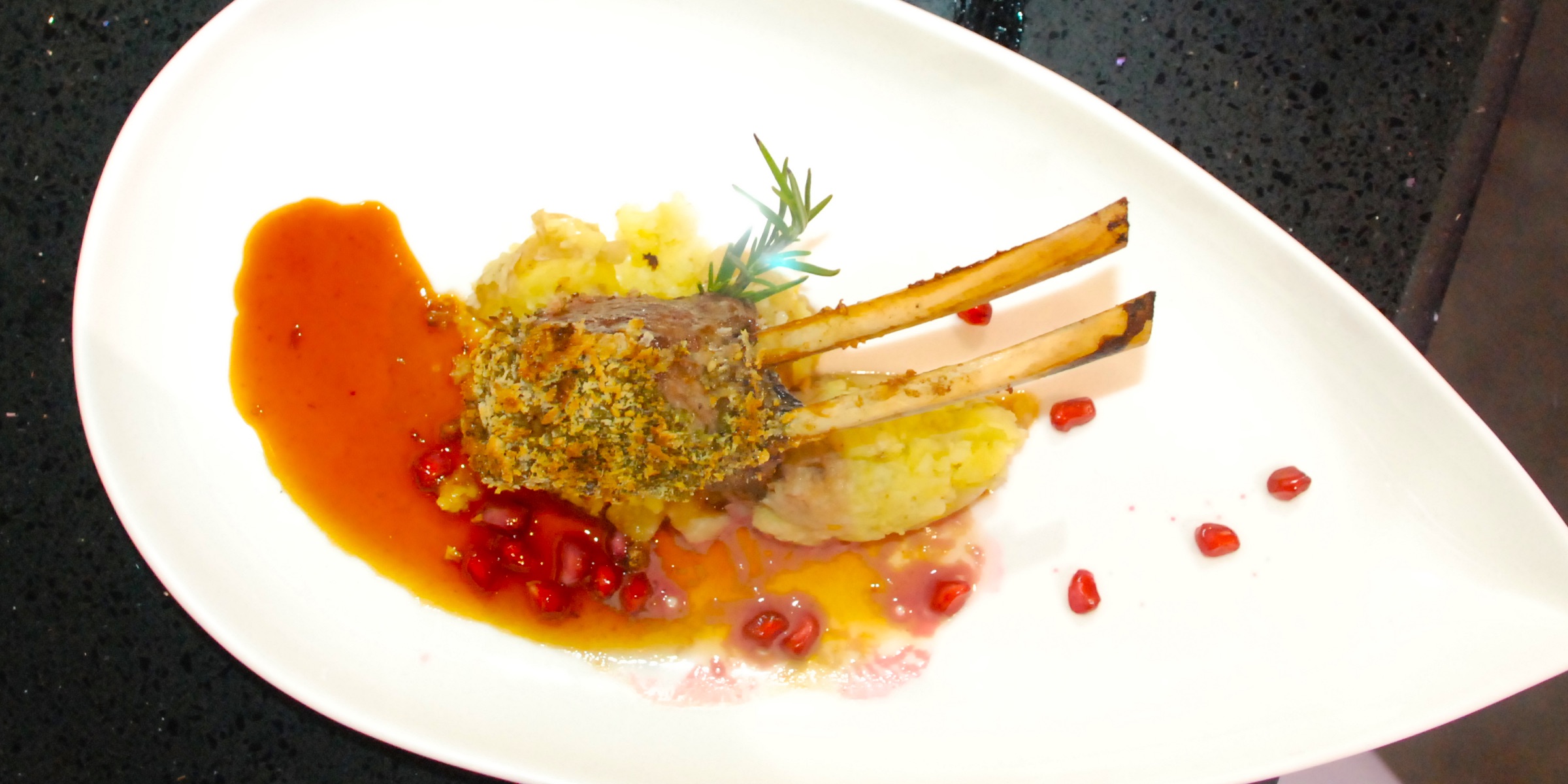
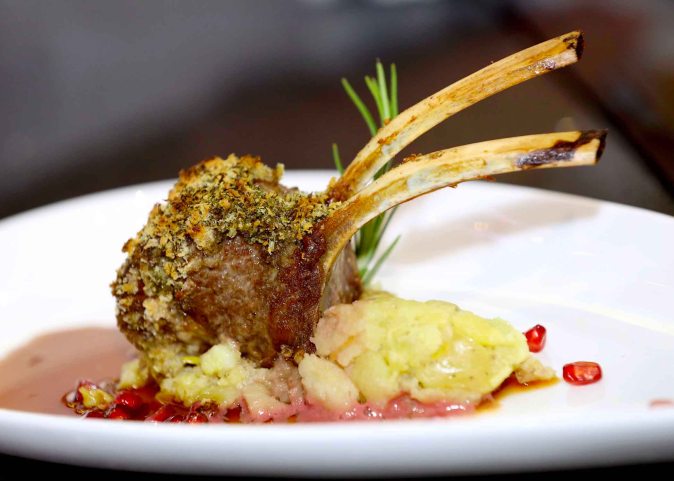
I was invited to attend a Blogger Masterclass in Burjuman recently to learn the various nuances of cooking the exotic dish – Zatar Lamb and Crushed Lemon Potato, from Chef Ron Pietruszka, the Executive Chef of The Ritz Carlton, DIFC. We had the most sophisticated kitchen appliances in a very ‘open’ kitchen at Treat, The BurJuman World Food Fest 2012 where ‘aspiring chefs, families and foodies can look forward to 12 days of free interactive masterclasses, cooking demos, dining etiquette workshops, competitions, food sampling and more’.
 Not many of us get an opportunity like this – watching chef demos where exotic dishes are not only being cooked in-front of your eyes but also getting to hear the ‘little secrets’ behind cooking each dish. The chefs recalled their favourite dishes, their extensive travels and also how did their food journeys start. The word ‘Gourmet’ is a bit upper-lipped and seems inaccessible to most people. But Treat 2012 opens the door of 5-star kitchens to food enthusiasts like us!
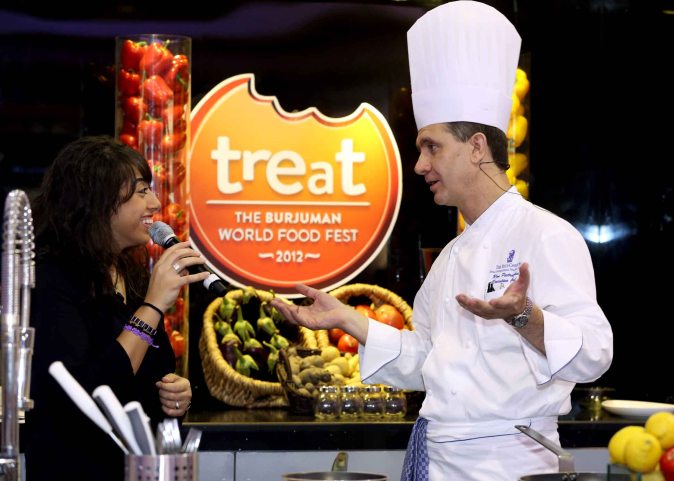
There are no hidden cost – tags involved. Entry is free. So is participation. And also the most crucial part – the tasting! Note that there’s a long queue for the Masterclasses and there are only 6 seats available for that. If you cross that steep hurdle, the spotlight is all yours! Suggestion – be there at 10am in the morning and don’t wait till the last minute… or better still, camp overnight so that you could be the first one to register. It’s more than worth every peck of salt and drop of oil in your pan!
You can do masterclasses and watch demos until 16th September. Following the opening day’s presentations by Radisson Blu Hotel, Dubai Deira Creek will be presentations by The Ritz-Carlton DIFC (Arabic & French cuisine); Dubai Marriott Hotels (Italian); Dusit Thani Dubai (Thai & International Desert); Kempinski Hotel & Residences Palm Jumeirah (Seafood) and Meliá Dubai (International & Indian Fusion).
The Masterclasses will take place daily at the specially created Teka Chef’s Theatre (opposite Virgin Megastore) from 4pm-5pm and will be open to audience participation on a first-come-first-served basis (up to 6 participants per masterclass). This will be followed by three cooking demos – each an hour long – taking place daily at 5.30pm; 6.45pm; 8.15pm.
On September 17th, for one evening only, will be a special series of masterclasses on Hot and Cold Canapes conducted by the International Centre for Culinary Arts Dubai (ICCA), one of the Top 10 culinary institutes in the World. Six half-hour ICCA masterclasses will take place at 4pm, 4.45pm, 5.30pm, 6.45pm, 7.30pm and 8.30pm.
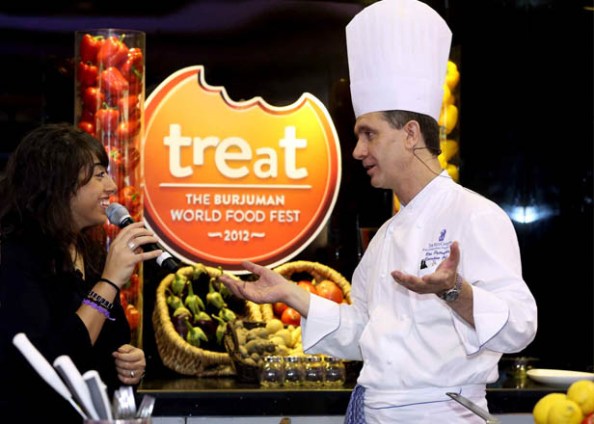
Masterclass with Chef Ron Pietruszka
On the first day of Treat 2012, Chef Uwe Micheel, Director of Kitchens, Chef Sai Min Hoo and Chef Sonbun Phongsri from Radisson Blu Hotel, Dubai Deira Creek stirred up Modern German and Vietnamese recipes – including Chicken Escalope, Pan-Fried Fillet of Salmon, Grilled Lemon Grass Chicken Satays, Vegetable Spring Rolls, Ga Hap Ga and Com Chay.
The second day was presented by The Ritz-Carlton, DIFC with a dedicated food-blogger masterclass with Chef Ron Pietruszka. Along with a few other bloggers from the region, we donned our chef hats and aprons to stir up some exotic aroma and a delicious dish that added some solace to our hungry tummies and food enthusiasm. (from L to R below) – Debbie of Coffee Cakes and Running, myself, Radhina (Platetrotter), Archana (Khana Mama)
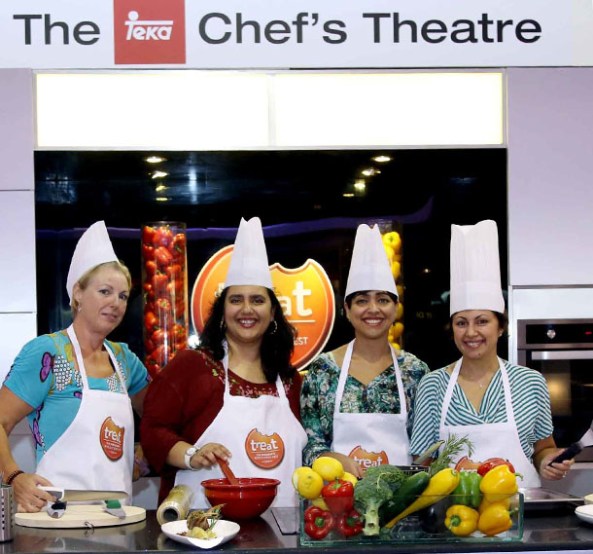
To be honest, I haven’t cooked such a little portion (one portion!) before and that too in-front of such a huge audience. Neither have I been assisted by Chefs before or a kind assistant who would just help me to start my cooker – actually a very sophisticated cooking gadget from Teka with touch-screen technology. I would describe it as a Cooker version of an iPad!
Assistance came in the shape of Chefs of all sizes – from real Chefs helping the participants to the little ones helping Chef Ron himself (below R) when Chef Ron had his daughter helping him with the Crushed Potatoes.
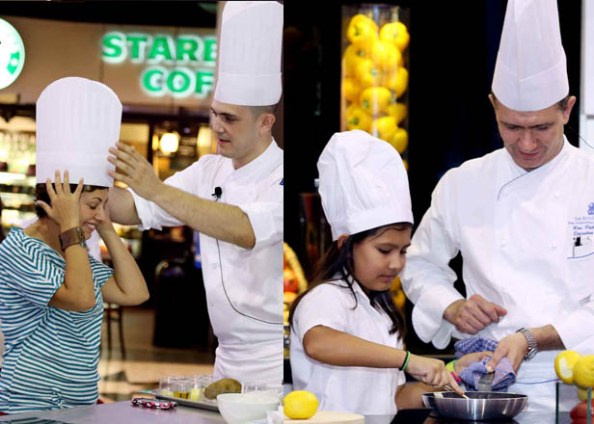
I too had my personal photographer clicking all my stirring. Big Z as usual, was thrilled to be a part of such a culinary experience. She clicked and she clicked. Unlike Li’l Z who was only interested in seeing herself on the projection on the big screen behind the stage, Big Z was most certainly waiting for me to finish cooking so that she could finally taste something she’s never tasted – crushed Purple Potatoes!
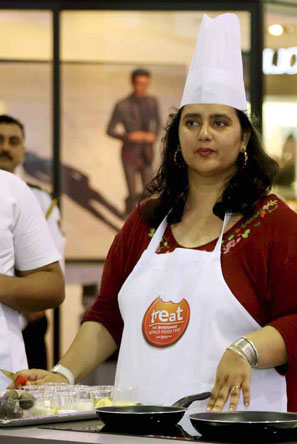
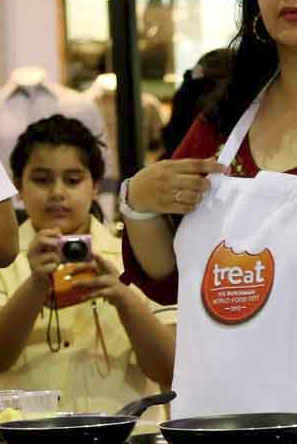
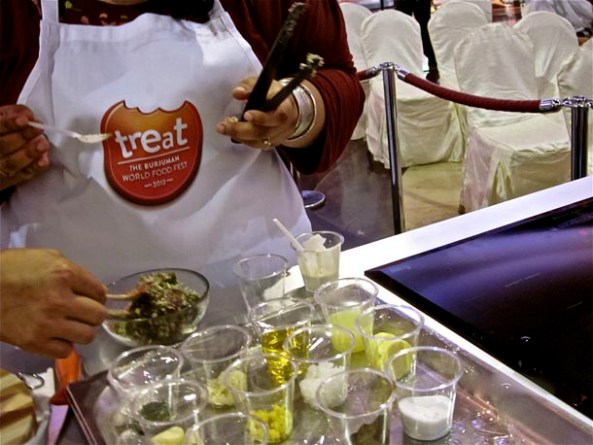
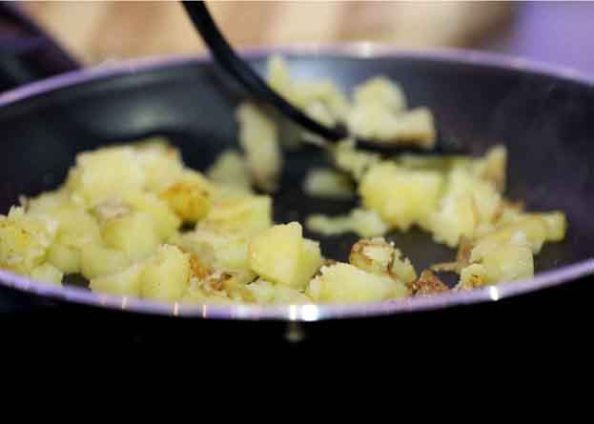
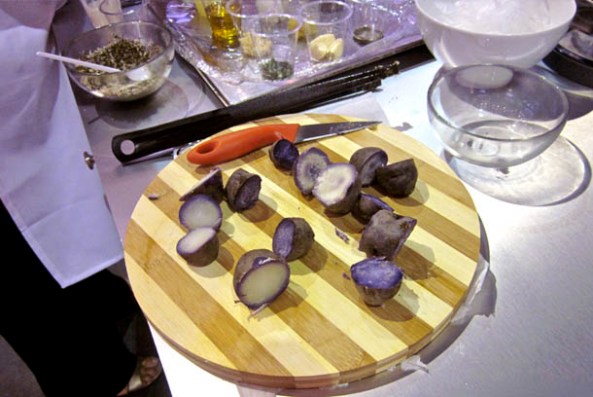
Zaatar Lamb & Crushed Lemon Potato
Cuisine type – Arabic
Ingredients:
Lamb Rack – 6 pcs
Potatoes – 6 medium sizes, boiled and unpeeled (Note: Chef Ron prefers to keep the skins so that the vitamins are not lost)
100gm Zaatar (Zaatar is a very popular local herb used in Middle Eastern cuisine)
Salt, as per taste
Pepper, as per taste
Bread Crumbs – 150gm
Olive Oil – 1/2 cup
Tahina – 1/4 cup (Tahini is also a very popular paste made from ground, hulled sesame seeds used in Middle Eastern cuisine)
Raisin Sauce – 200ml
Pomegranates – 3 tbsp
Thyme, for garnishing
Lemon Juice – 2 tbsp
The Marination
Garlic, Lemon Juice, Olive Oil, Pepper – The Lamb Racks need to be marinated for 1-2 hours with the marination (the proportion of each ingredient in the Marination depends upon individual preference)
Method of Preparation – Zaatar Lamb:
– Smear the Lamb Racks with Pepper, Salt, Lemon Juice
– Sear the marinated Lamb Racks
– Dip the Lamb Racks in Tahini
– Roll them over a mixture of Bread Crumbs and Zaatar
– In a pre-heated oven (190° F) grill the Lamb Racks
– Poke into the centre of each Lamb Rack with a Digital Thermometer to check the internal temperature and cook till the meat is done to your liking*
Method of Preparation – Lemon Crushed Potato:
– Heat the butter in flat-bottomed pan
– Crumble the boiled unpeeled Potatoes and add the Crumble into the heated pan
– Add Salt, Pepper, the mixed mixture of Bread Crumbs and Zaatar, Lemon Juice
– Cook for a while (Whether you want to make a very smooth mash or want it a bit crumbly depends upon each preference)
Garnish the Zaatar Lamb and Lemon Crushed Potato with Raisin Sauce, Pomegranates and Thyme.
——————————————
How will you know that your Meat and your Steak is done? A link to an easy understanding of that can be had here. Based on the internal temperature you can tell when the steak is done to your liking.
Very Rare Steak – 120°
Rare Steak – 125°
Medium-Rare Steak – 130° – 135°
Medium Steak – 140° – 145°
Medium-Well Steak – 150° – 155°
Well-Done Steak – 160°
Chef Philippe Brunear, Chef De Cuisine demonstrated how to make Salmon Rillete and Tomato Tart (below)…
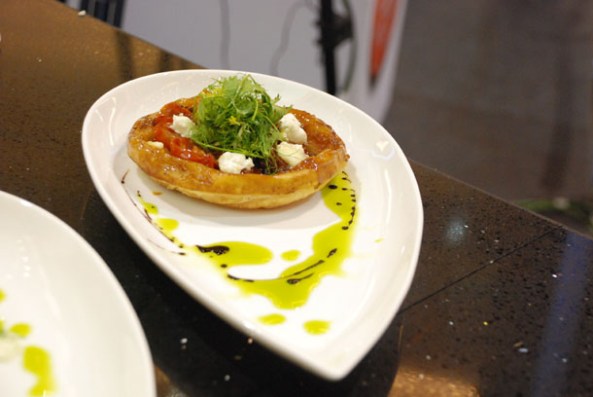
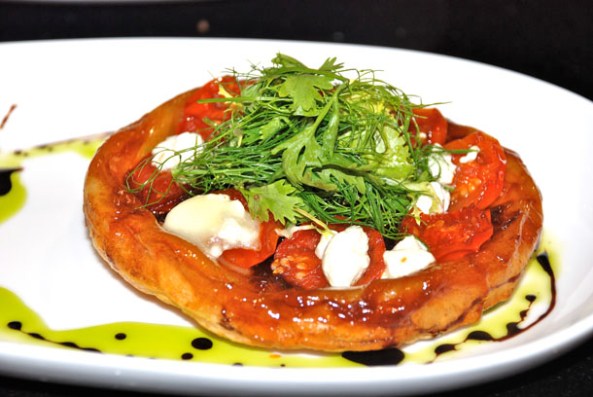
And finally, the ultimate Chocolate Mousse was whisked up by Chef Guillaume Marchand, the Pastry Chef.
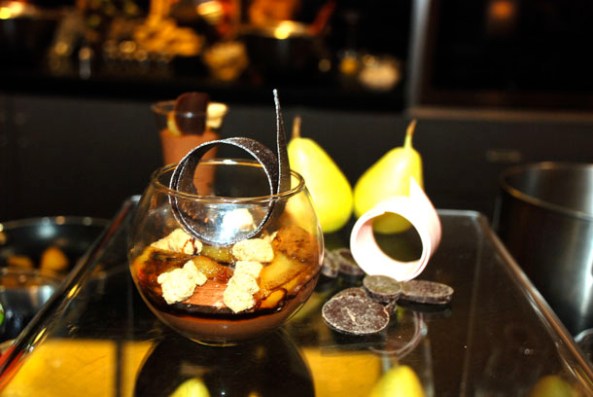
And yes, the time arrived when we could taste what the Chefs had been creating in-front of us. Yes, this was a very big deal indeed. This was real-time Cooking Show with a 4D effect – we could see, smell, feet and most importantly, taste!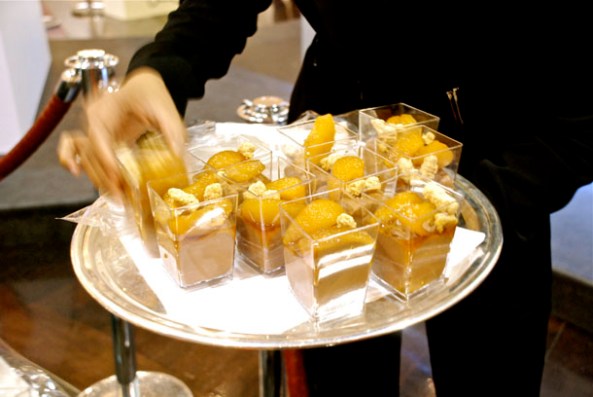
Trust destiny to thrust me into the company of who else but Sounak, a Bengali Chef working in The Ritz-Carlton – all the way from Kolkata. A Bengali foodie connection – how could my dish go even remotely wrong?
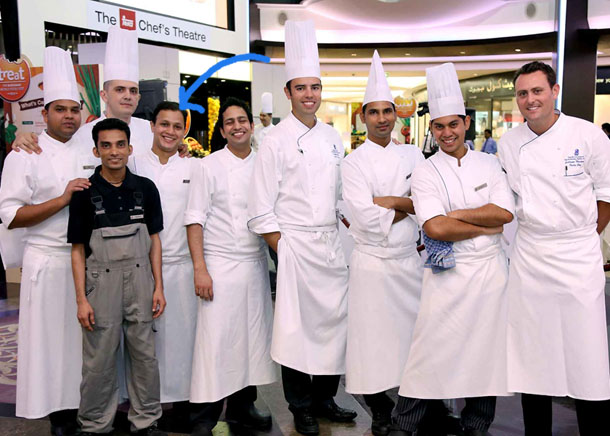
——————————————
Day 3 had Dubai Marriott Hotels showcasing Italian Cuisine. Chef Francesco, the Italian Chef (below L) who hails from Sicily taught how to cook Costoletta Alla Milanese Con Patate in the Masterclass followed by cooking demos of various Italian dishes.
Greed never ceases. Seeing others participate in the Masterclass is not a very heartening experience!
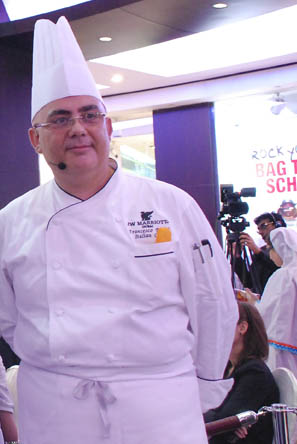
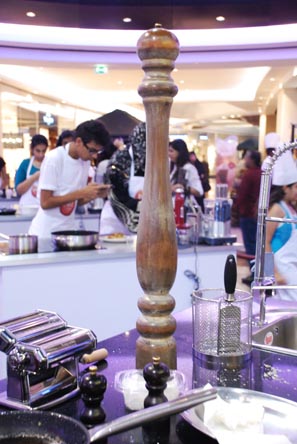
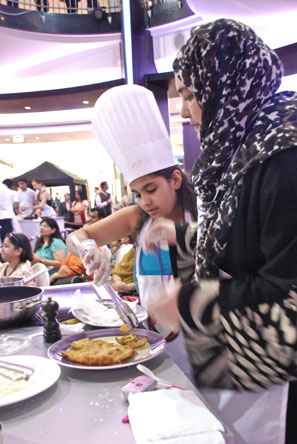
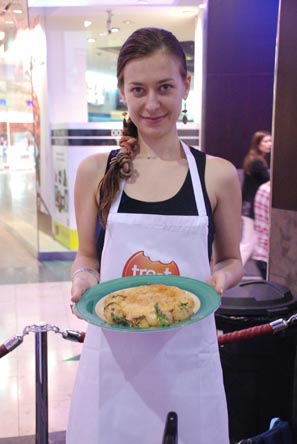
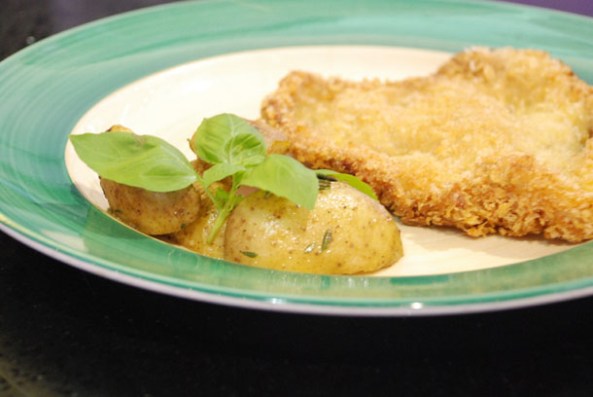
——————————————
What else can one expect in Treat 2012?
Head to the South Village for ‘Table Setting & Culinary Etiquette’ – a series of informative workshops by leading etiquette institute Finishing Touch, on everything from table settings for different menus and occasions, special festive table decorations, creative centre-pieces, cutlery usage, napkin folding, tea etiquette, cocktail party etiquette, creative ways of using fruit and vegetables for decorations and more.
The free half-hour workshops will take place daily from September 11th – 17th at 5.45pm, 7pm and 8.45pm. Tableware and props used will be provided by lifestyle stores Villeroy & Boch and The One.
Kids’ can look forward to a sweet surprise on both Treat weekends. Thursday to Saturdays from 5-9pm Kitsch Cupcakes will offer them a fun way to learn creative cupcake decorations. Kids can decorate their own cupcakes and carry them home!
You’ll get more details regarding the event schedule in the Burjuman website.
——————————————
An unique experience and a humbling experience for me with the realisation of how much effort goes into churning up one single dish that we order in a restaurant. Each dish is a work of art, an unique masterpiece.
Recipes of all the cooking that is being done can be found in the Burjuman Facebook under the tab Treat 2012. But to get a first hand experience in knowing the little tit-bits, it’s better to be there in person. Here, I have to admit that the recipes are not quite full-proof and I’ve had to modify the recipe here according to my own experience in the Masterclass. The Chefs in the 5-star hotel may have perfected the art of creating spectacular dishes but they probably are not the perfect Recipe -writers!
And yes, I also have to add that my enthusiasm has been equally fuelled by Burjuman’s tweet-versations (@itsBurJuman) with me as early as 3am in the morning today…
@IshitaUnblogged: All the recipes for the Masterclass n Chef’s demos were supposed to be in the website. Can’t find them #ChefDemos #Treat2012!
@itsBurJuman: Hi Ishita. You can find all the recipes on our Facebook page in our #Treat2012 tab.
@IshitaUnblogged: Wow! Found them… Thanks so very much:) You guys don’t sleep?
@itsBurJuman: We’re glad you found it! Hope you enjoy browsing through the recipes. We are always here to help. 🙂
——————————————
So what do think we ate for lunch today? Zaatar Lamb and Crushed Lemon Potato, naturally! It’s obvious that I’ll be showing off my newly acquired culinary skill and it really turned out fantastic (below). After all, how often do I get the chance to say that I learnt this in a Masterclass, from the Executive Chef of The Ritz-Carlton himself?
Unblogging it all… Ishita
Disclaimer: Though a few of us were invited to the Masterclass, all the other Masterclasses are open to public. A few pictures are courtesy the event organisers. Link to the posts of other Fooderati Members… Treat – A Culinary Celebration at Burjuman – Cooking Masterclass – Zaatar Lamb (CoffeeCakesAndRunning); A Treat of an Afternoon (Platetrotter); Zaatar Marinated Lamb with Crushed Lemon Potatoes at Treat:The BurJuman World Food Fest 2012 (Khana Mama)
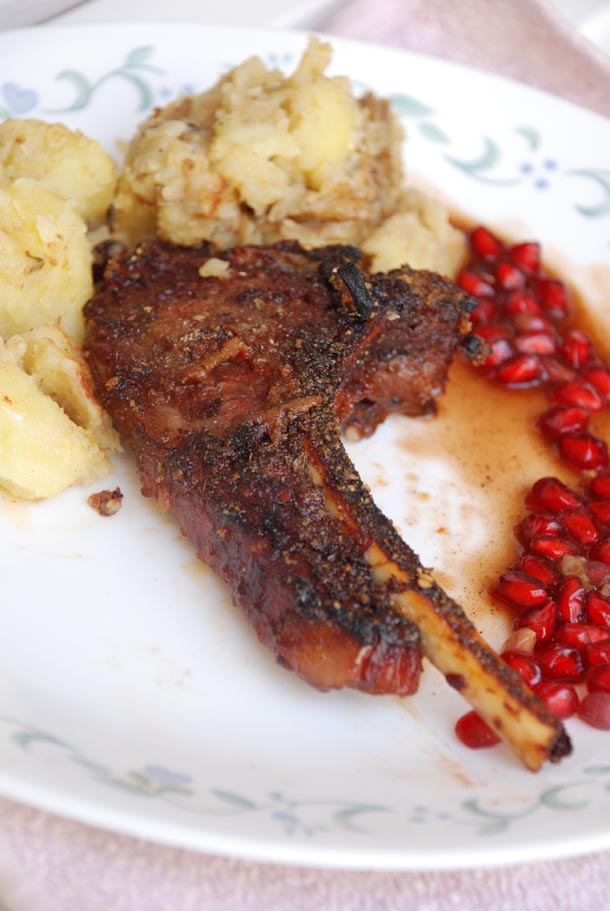
BE SOCIAL. SHARE THIS!


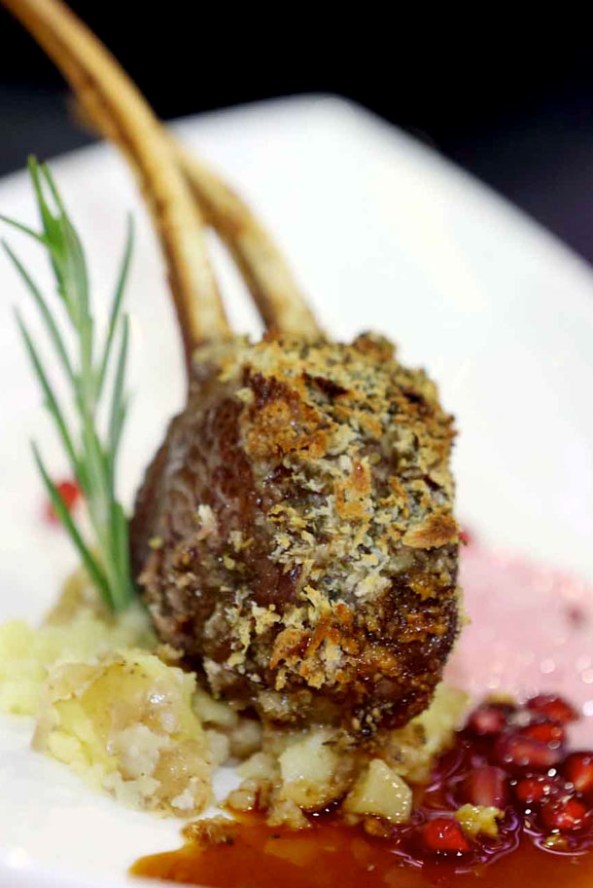
I prepared the Zatar Lamb & Crushed Lemon Potato as shown above. But the picture above is not the one that I cooked. It was cooked by Chef Ron Pietruszka, the Executive Chef of The Ritz Carlton, DIFC. And I was lucky to have attended a dedicated Blogger Masterclass with him, learning the various nuances of cooking this exotic dish, using the most sophisticated kitchen appliances, in a very ‘open’ kitchen, in-front of a large audience… with the Z-Sisters in tow!
Treat – The BurJuman World Food Fest 2012(11 September – 22 September)
‘Aspiring chefs, families and foodies can look forward to 12 days of free interactive masterclasses, cooking demos, dining etiquette workshops, competitions, food sampling and more’
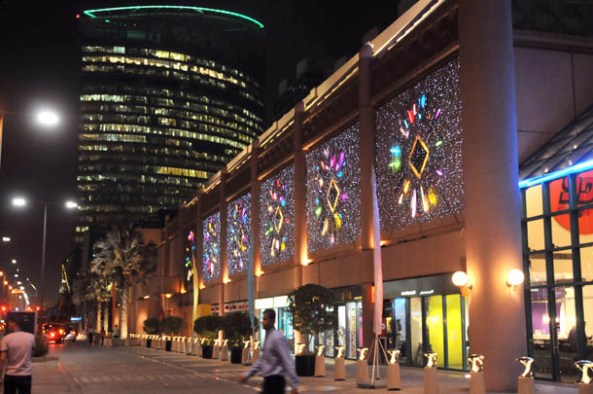
Not many of us get an opportunity like this – watching Chef demos where exotic dishes are not only being cooked in-front of your eyes but also getting to hear the ‘little secrets’ behind cooking each dish, the Chefs recalling their favourite dishes, their extensive travels and also how did their food journeys start. The word ‘Gourmet’ is a bit upper-lipped and seems inaccessible to most people. But Treat 2012 opens the door of 5-star kitchens to food enthusiasts like us!
No, there are no hidden cost – tags involved. Entry is free. So is participation. And also the most crucial part – the tasting! Note that there’s a long queue for the Masterclasses and there are only 6 seats available for that. If you cross that steep hurdle, the spotlight is all yours! Suggestion – be there at 10am in the morning and don’t wait till the last minute… or better still, camp overnight so that you could be the first one to register. It’s more than worth every peck of salt and drop of oil in your pan!
You can do masterclasses and watch demos until 16th September. Following the opening day’s presentations by Radisson Blu Hotel, Dubai Deira Creek will be presentations by The Ritz-Carlton DIFC (Arabic & French cuisine); Dubai Marriott Hotels (Italian); Dusit Thani Dubai (Thai & International Desert); Kempinski Hotel & Residences Palm Jumeirah (Seafood) and Meliá Dubai (International & Indian Fusion).
The Masterclasses will take place daily at the specially created Teka Chef’s Theatre (opposite Virgin Megastore) from 4pm-5pm and will be open to audience participation on a first-come-first-served basis (up to 6 participants per masterclass). This will be followed by three cooking demos – each an hour long – taking place daily at 5.30pm; 6.45pm; 8.15pm.
On September 17th, for one evening only, will be a special series of masterclasses on Hot and Cold Canapes conducted by the International Centre for Culinary Arts Dubai (ICCA), one of the Top 10 culinary institutes in the World. Six half-hour ICCA masterclasses will take place at 4pm, 4.45pm, 5.30pm, 6.45pm, 7.30pm and 8.30pm.
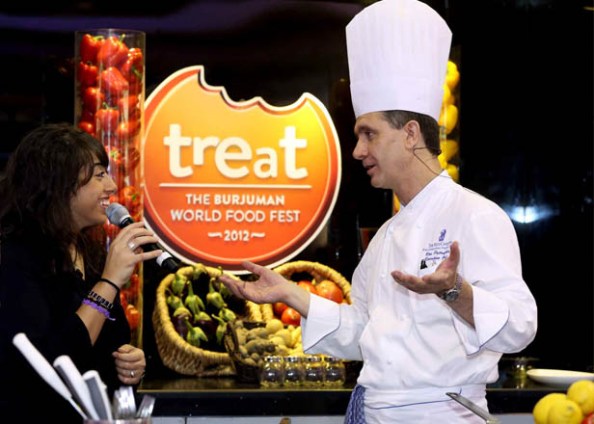
Masterclass with Chef Ron Pietruszka – my unique experience!
On the first day of Treat 2012, Chef Uwe Micheel, Director of Kitchens, Chef Sai Min Hoo and Chef Sonbun Phongsri from Radisson Blu Hotel, Dubai Deira Creek stirred up Modern German and Vietnamese recipes – including Chicken Escalope, Pan-Fried Fillet of Salmon, Grilled Lemon Grass Chicken Satays, Vegetable Spring Rolls, Ga Hap Ga and Com Chay.
The second day was presented by The Ritz-Carlton, DIFC with a dedicated Food-blogger Masterclass with Chef Ron Pietruszka, the Executive Chef there. Along with a few other Fooderati Arabia Bloggers (from L to R below) – Debbie of CoffeeCakesAndRunning, myself, Radhina, of Platetrotter, Archana of Khana Mama donned our Chef hats and aprons to stir up some exotic aroma and a delicious dish that added some solace to our hungry tummies and food enthusiasm.
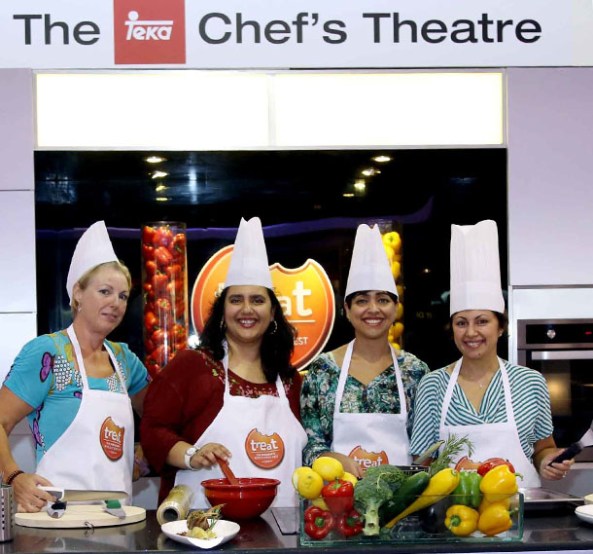
To be honest, I haven’t cooked such a little portion (one portion!) before and that too in-front of such a huge audience. Neither have I been assisted by Chefs before or a kind assistant who would just help me to start my cooker – actually a very sophisticated cooking gadget from Teka with touch-screen technology. I would describe it as a Cooker version of an iPad!
Assistance came in the shape of Chefs of all sizes – from real Chefs helping the participants to the little ones helping Chef Ron himself (below R) when Chef Ron had his daughter helping him with the Crushed Potatoes.
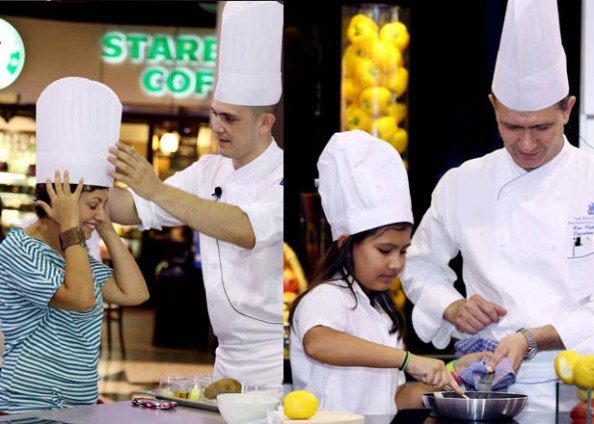
I too had my personal photographer clicking all my stirring. Big Z as usual, was thrilled to be a part of such a culinary experience. She clicked and she clicked. Unlike Li’l Z who was only interested in seeing herself on the projection on the big screen behind the stage, Big Z was most certainly waiting for me to finish cooking so that she could finally taste something she’s never tasted – crushed Purple Potatoes!
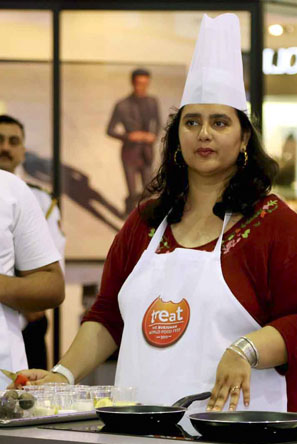
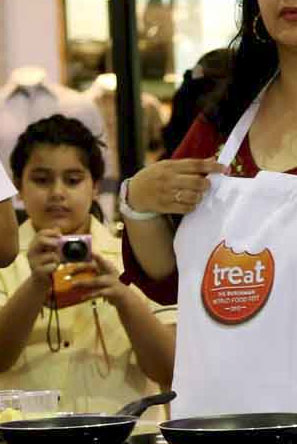
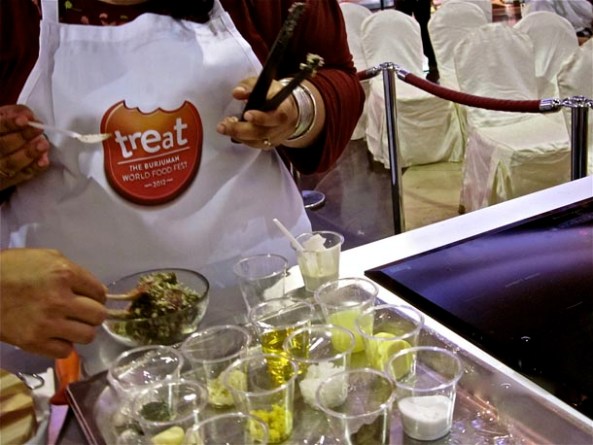
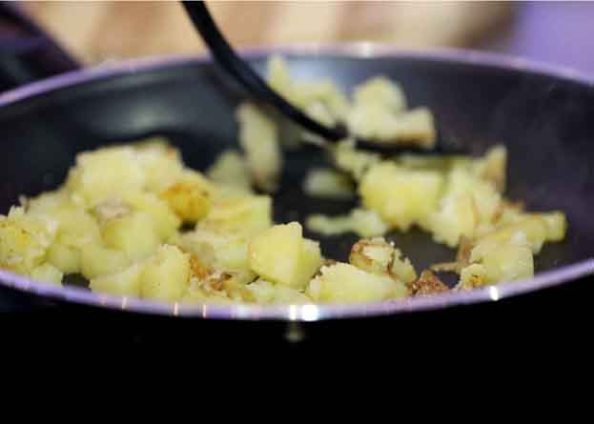
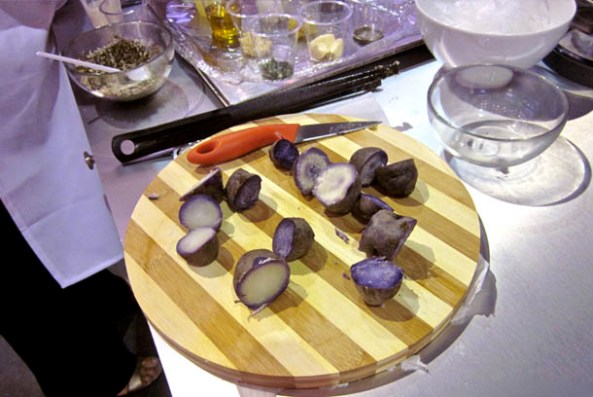
Zaatar Lamb & Crushed Lemon Potato
Cuisine type – Arabic
Ingredients:
Lamb Rack – 6 pcs
Potatoes – 6 medium sizes, boiled and unpeeled (Note: Chef Ron prefers to keep the skins so that the vitamins are not lost)
100gm Zaatar (Zaatar is a very popular local herb used in Middle Eastern cuisine)
Salt, as per taste
Pepper, as per taste
Bread Crumbs – 150gm
Olive Oil – 1/2 cup
Tahina – 1/4 cup (Tahini is also a very popular paste made from ground, hulled sesame seeds used in Middle Eastern cuisine)
Raisin Sauce – 200ml
Pomegranates – 3 tbsp
Thyme, for garnishing
Lemon Juice – 2 tbsp
The Marination
Garlic, Lemon Juice, Olive Oil, Pepper – The Lamb Racks need to be marinated for 1-2 hours with the marination (the proportion of each ingredient in the Marination depends upon individual preference)
Method of Preparation – Zaatar Lamb:
– Smear the Lamb Racks with Pepper, Salt, Lemon Juice
– Sear the marinated Lamb Racks
– Dip the Lamb Racks in Tahini
– Roll them over a mixture of Bread Crumbs and Zaatar
– In a pre-heated oven (190° F) grill the Lamb Racks
– Poke into the centre of each Lamb Rack with a Digital Thermometer to check the internal temperature and cook till the meat is done to your liking*
Method of Preparation – Lemon Crushed Potato:
– Heat the butter in flat-bottomed pan
– Crumble the boiled unpeeled Potatoes and add the Crumble into the heated pan
– Add Salt, Pepper, the mixed mixture of Bread Crumbs and Zaatar, Lemon Juice
– Cook for a while (Whether you want to make a very smooth mash or want it a bit crumbly depends upon each preference)
Garnish the Zaatar Lamb and Lemon Crushed Potato with Raisin Sauce, Pomegranates and Thyme.
——————————————
How will you know that your Meat and your Steak is done? A link to an easy understanding of that can be had here. Based on the internal temperature you can tell when the steak is done to your liking.
Very Rare Steak – 120°
Rare Steak – 125°
Medium-Rare Steak – 130° – 135°
Medium Steak – 140° – 145°
Medium-Well Steak – 150° – 155°
Well-Done Steak – 160°
Chef Philippe Brunear, Chef De Cuisine demonstrated how to make Salmon Rillete and Tomato Tart (below)…
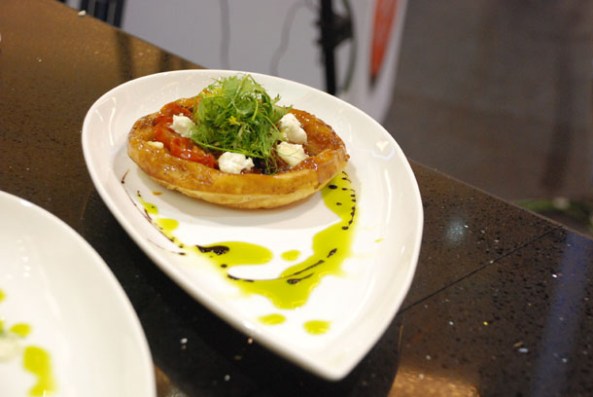
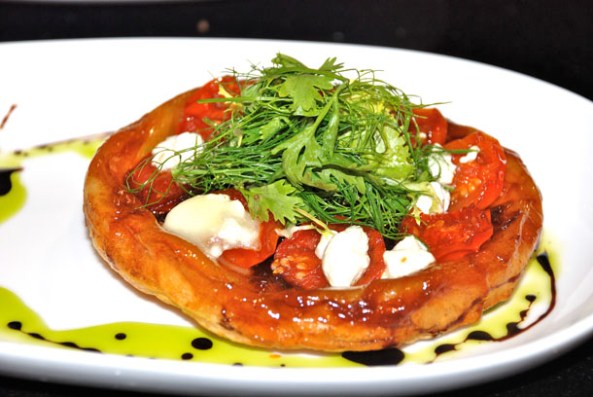
And finally, the ultimate Chocolate Mousse was whisked up by Chef Guillaume Marchand, the Pastry Chef.
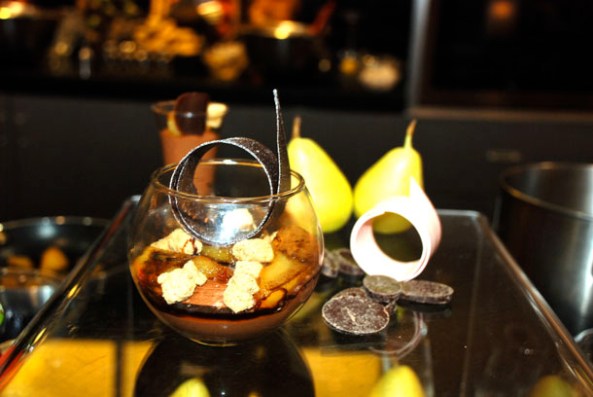
And yes, the time arrived when we could taste what the Chefs had been creating in-front of us. Yes, this was a very big deal indeed. This was real-time Cooking Show with a 4D effect – we could see, smell, feet and most importantly, taste!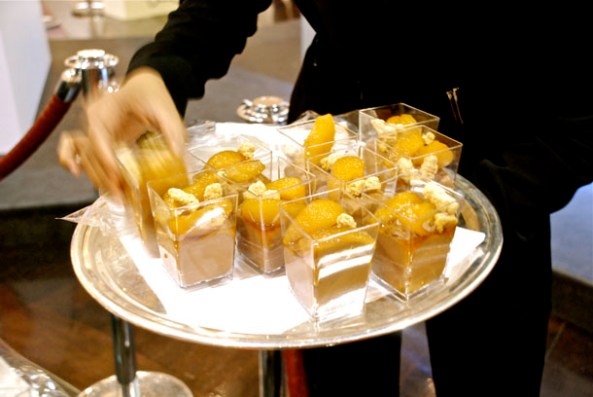
Trust destiny to thrust me into the company of who else but Sounak, a Bengali Chef working in The Ritz-Carlton – all the way from Kolkata. A Bengali foodie connection – how could my dish go even remotely wrong?
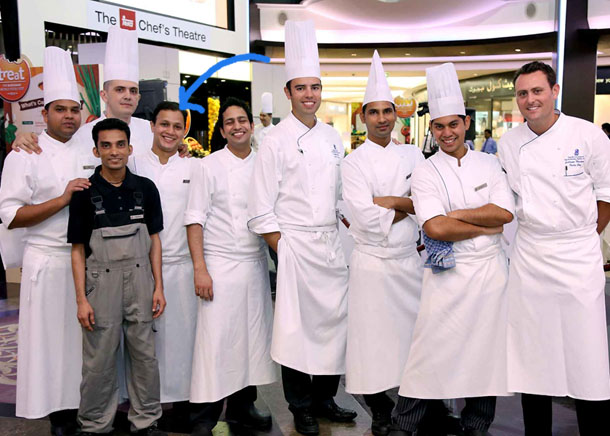
——————————————
Day 3 had Dubai Marriott Hotels showcasing Italian Cuisine. Chef Francesco, the Italian Chef (below L) who hails from Sicily taught how to cook Costoletta Alla Milanese Con Patate in the Masterclass followed by cooking demos of various Italian dishes.
Greed never ceases. Seeing others participate in the Masterclass is not a very heartening experience!
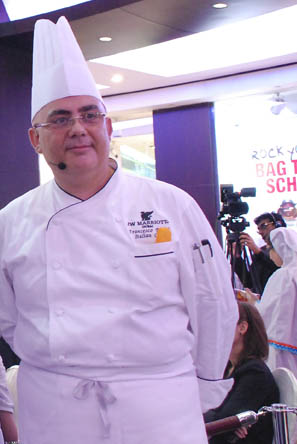
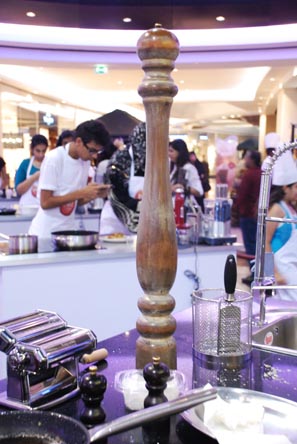
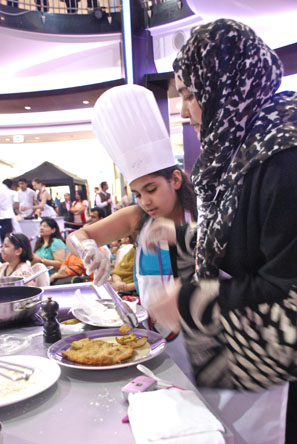
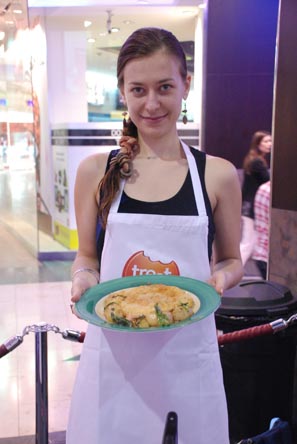
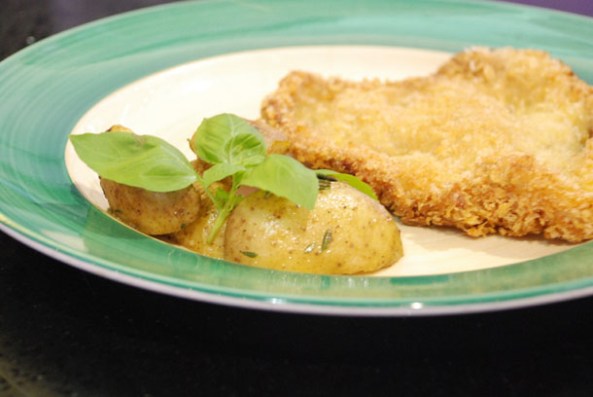
——————————————
What else can one expect in Treat 2012?
Head to the South Village for ‘Table Setting & Culinary Etiquette’ – a series of informative workshops by leading etiquette institute Finishing Touch, on everything from table settings for different menus and occasions, special festive table decorations, creative centre-pieces, cutlery usage, napkin folding, tea etiquette, cocktail party etiquette, creative ways of using fruit and vegetables for decorations and more.
The free half-hour workshops will take place daily from September 11th – 17th at 5.45pm, 7pm and 8.45pm. Tableware and props used will be provided by lifestyle stores Villeroy & Boch and The One.
Kids’ can look forward to a sweet surprise on both Treat weekends. Thursday to Saturdays from 5-9pm Kitsch Cupcakes will offer them a fun way to learn creative cupcake decorations. Kids can decorate their own cupcakes and carry them home!
You’ll get more details regarding the event schedule in the Burjuman website.
——————————————
An unique experience and a humbling experience for me with the realisation of how much effort goes into churning up one single dish that we order in a restaurant. Each dish is a work of art, an unique masterpiece.
Recipes of all the cooking that is being done can be found in the Burjuman Facebook under the tab Treat 2012. But to get a first hand experience in knowing the little tit-bits, it’s better to be there in person. Here, I have to admit that the recipes are not quite full-proof and I’ve had to modify the recipe here according to my own experience in the Masterclass. The Chefs in the 5-star hotel may have perfected the art of creating spectacular dishes but they probably are not the perfect Recipe -writers!
And yes, I also have to add that my enthusiasm has been equally fuelled by Burjuman’s tweet-versations (@itsBurJuman) with me as early as 3am in the morning today…
@IshitaUnblogged: All the recipes for the Masterclass n Chef’s demos were supposed to be in the website. Can’t find them #ChefDemos #Treat2012!
@itsBurJuman: Hi Ishita. You can find all the recipes on our Facebook page in our #Treat2012 tab.
@IshitaUnblogged: Wow! Found them… Thanks so very much:) You guys don’t sleep?
@itsBurJuman: We’re glad you found it! Hope you enjoy browsing through the recipes. We are always here to help. 🙂
——————————————
So what do think we ate for lunch today? Zaatar Lamb and Crushed Lemon Potato, naturally! It’s obvious that I’ll be showing off my newly acquired culinary skill and it really turned out fantastic (below). After all, how often do I get the chance to say that I learnt this in a Masterclass, from the Executive Chef of The Ritz-Carlton himself?
Unblogging it all… Ishita
Disclaimer: Though a few of us were invited to the Masterclass, all the other Masterclasses are open to public. A few pictures are courtesy the event organisers. Link to the posts of other Fooderati Members… Treat – A Culinary Celebration at Burjuman – Cooking Masterclass – Zaatar Lamb (CoffeeCakesAndRunning); A Treat of an Afternoon (Platetrotter); Zaatar Marinated Lamb with Crushed Lemon Potatoes at Treat:The BurJuman World Food Fest 2012 (Khana Mama)
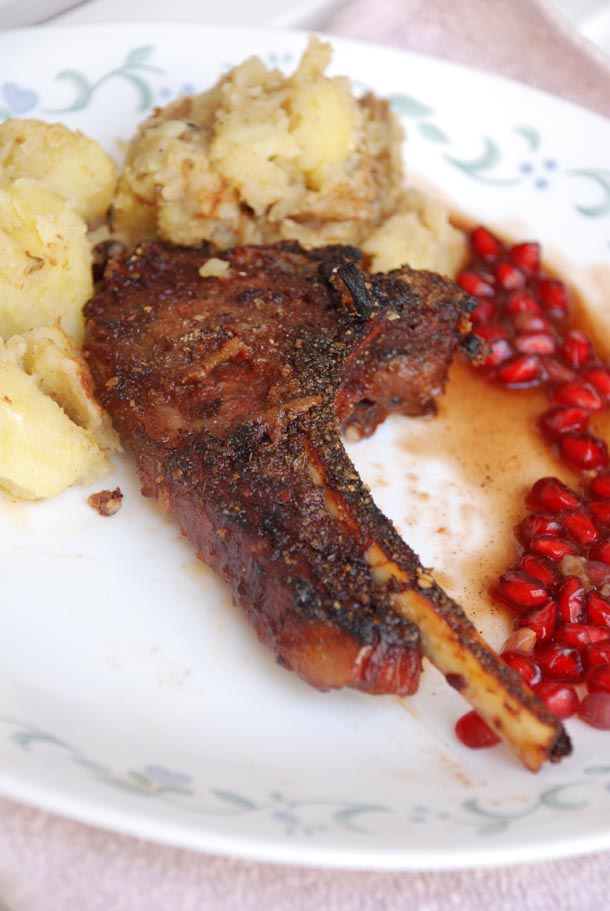
BE SOCIAL. SHARE THIS!

Finally, the summer holidays are over. And we are back to Dubai. Though I’m missing everyone in Kolkata and with every picture downloading into my Mac and memories are screaming out from each pore of mine – yet, I’m glad to be back. Glad to be snuggling into my own bed and into my own pillow. The last two months have been emotionally surcharged – parents and relatives, old friends and a whole lot of food and catching up. I am re-orienting myself to Dubai once again, the city I call home. And longing to get back to the blogosphere – my virtual home away from my real home. Another bout of catching up with all the posts of my fellow bloggers that I missed out reading all this while.
I have also been worried with the new readers who might have hopped into my blog after it’s been featured in the BBC GoodFood ME Magazine. If they have been bombarded with posts on Kolkata it is because of my 2 long months of summer hibernation there. I agree, a bit of Kolkata-centric posts. But hey, this blog is not only on Kolkata. It’s a Culinary Travel Blog inspired by memories, places, people, Kolkata, Dubai and the big world beyond that… A very warm welcome to you!
Our kitchen is in a lazy mode. Running around for new school uniforms and school shoes and hammering into our friends who we had missed for the last 2 months – that ‘We exist and we’re back!’ Casually unwinding.
This is not a post about Starbucks vs Costa, or Tim Hortons vs Costa or Barista vs Costa. It is just about the snuggling up space in the black leather sofas offered by Costa to our family at various locations where the Z-Sisters can accidentally pour their Babyccinos and we can intentionally pull down our hair. And a place which turns into a mayhem when we leave!
A recap of Dubai Summers from a previous post
Each summer has the same story. The months of July and August are spent in Kolkata – when the Z-SISTERS are off from school for two long months. The Z-SISTERS and I – the three of us, make Kolkata our summer base. I call this period my ‘Summer Hibernation’. Amidst make-shift arrangements in the homes of two set of grand-parents – both maternal and paternal, the Z-SISTERS adjust themselves like match-sticks thrown into a new match-box containing a different set of match-sticks. So far they have been adjusting admirably and light up with equal fervor.
What about me? Well, I still continue my work from here – sometimes typing on my Macbook from the verandas, sometimes lying on the drawing room sofa, sometimes using the dining table as my desk post-lunch while I continuously nibble on some hand-made and most importantly Mom-made savoury or snack. Though I am working, my mood is very different – as if I’m working in the middle of a long noisy holiday.
And I’ll continue to do this (hibernate for long during summers!) as long as the Z-SISTERS don’t complain about going back to Kolkata every summer or as long as the parents and a few dear friends are around. And I know that a time will come when probably the Z-SISTERS won’t like to be uprooted from their friends and the life they are used to for so long – but I’ll write about that story when the time comes…
And I know that my story probably resonates the the story of most expatriate Dubai-ites!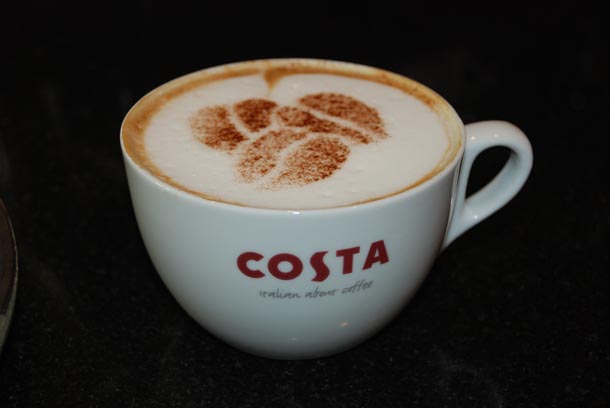
Café Culture and Lounging
Gone are those days when friends would just come home for small chit-chats and for casual tea. We ourselves are crushed for time. And if it has to be relaxation it better be outside – let it be somebody else’s headache. So that has given rise to a culture which I call the Café Culture and an entire generation feeding in it. Thank you Cafés! You provide us with our cup of comfort and a sofa to relax our souls. You are branded and yet humble enough to withstand our nonsense and bear with us and tolerate us at various hours of the day. Your humble sofa and your smoky hot heavy cup of coffee or the tea clears my head and ruffles my intelligence enough to make me want to read everything about the world. And think logically. And this where I end up reading each and every page of the newspaper – from Business pages to the real-estate without grimacing and understanding every single printed word!
The Café Culture is slowly entering the cosmopolitan social horizon all over the world. As our homes are becoming crampier and our fingers becoming versatile in sms-ing and tweeting, we are letting the smiling Baristas to stir in our coffee or the tea. And as long as they are doing that with pleasure what do we have to lose? So the new mantra in culture willingly sweeps all across – from London to Kolkata where an Adda or an informal discussion amongst friends can only happen over a bhaar (clay cup) of tea. This bhaar of tea has now changed its form to a formal cup of coffee or a tea either in Cafés or on current issues. But the Bengali Adda must go on…
Costa Coffee vs Starbucks
Our family is a patron of Costa Coffee because of one reason. And that reason has no connection with coffee or tea in any manner. And that is their black leather sofa! We find Costa Coffee relatively less crowded than Starbucks and Tim Hortons or other chains. The formal office-going jet-set executives are missing here. This could be location specific but still if I picked up any Costa randomly, the atmosphere seems to be much more relaxing. At this point let me make it clear that my post is not sponsored by Costa. I am writing this because we have wrecked their various outlets and have massacred many of their tables. No, that also doesn’t mean that it was us who scribbled Andrea loves Jonathan on the tables or those ridiculous poems dedicated to Cynthia from the guy named Nick!
Costa’s mission is to ‘save the world from mediocre coffee’ with their special Mocha Italia blend which was created by brothers Sergio and Bruno Costa. They started selling to businesses in the UK in 1971, first selling their coffee to a handful of local caterers. and then to some delicatessens. In 1978, they opened their first coffee shop on Vauxhall Bridge Road, London. Today, Costa is the largest and fastest growing coffee shop chain in the UK with 1000 stores in UK itself. Even today, just metres from this very spot, the Costa Roastery continues to produce the same unique blend of coffee they worked so hard to create. Costa claims to slow-roast their coffee beans in exactly the same way, and even in the same roasters, as was done traditionally by Sergio. I have always wondered what make these people different. In 40 years 2 brothers build a brand and then make a multi-national out of it. I simply envy them. I have so many brilliant ideas to market – can anybody help me? I could start with the traditional Bhaar of tea – environmental friendly yet brilliantly authentic!
In 1999, Costa opened the first International store at The Aviation Club in Dubai, UAE. Today there are more than 85 stores operating in the Emirates. Traditional Coffee lovers might hate me for propagating a coffee chain as if a gourmand is suddenly faced with some non-cerebral junk food. As if these high street chains might suddenly endanger the never-dwindling species of traditional coffee drinkers. But who said this was about the Coffee? This is all about the little cozy pad where we can unwind. As any Bengali would describe this as ‘Pati Addar Jayega’ or a simple place to chat! For more serious coffee-lovers who are offended by this post I am re-directing you to the perfect cup of coffee from My Custard Pie!
 What about Starbucks? Well, I have to admit that the aroma in Starbucks is much more stronger than anywhere else – intoxicating and overwhelming. But I have always felt that the coffee-drinker here is in an eternal hurry and engrossed in serious discussion on perhaps how to save the world and the coffee beans! The battle of the brands will always exist. But Costa promises to ‘Make it better’ and has already proved that their claim in advertising campaigns that ‘7 out of 10 coffee lovers prefer Costa’ is true, even winning it’s case against Starbucks when the latter lodged a complaint with the Advertising Standards Authority. Much has been written about this battle – much like Coke and Pepsi, but both are too big to be perplexed by any minor upsurge or any small marketing thesis written by a college graduate or any food blogger.
I love my cup of Coffee from both – but it is the black leather sofa at Costa’s that pulls me down!
The following locations of Costa that we frequent the most as each one of them takes us for mini breaks amidst our hectic daily grind…
Costa Coffee in Meadows
[Inside Spinneys, Meadows 4 Village; Tel: 04 3607829; Timing – Sundays to Saturdays 7am – 10pm]
Overlooking the Lake, the Costa in the Meadows takes me to my own world of imagination – it’s like a home with walls swathed in warm melon and lime greens and also contains a mini library. Sip your coffee or the fresh ice-cold Raspberry tea while reading the best-seller. Let the lake view and the over-filled Magnolia blossoms act as a breather as you pause after a mentally exhausting paragraph. Just like we are regular Friday visitors here, there are a few others who have joined my ‘Costa’ list in Facebook friend lists! Like an Egyptian family who always hangs around after their Friday prayers in the nearby mosque or a few fitness enthusiasts who burn down their calories in the nearby Fitness First centre, only to regain them as they sip into their sugary Ice-blended Mochas.
Almost every Friday we are pulled into Costa here, even if it is for a little while. If we refuse, Li’l Z will make sure we head there – the smiling staff there has already bought her loyalty with the lollipops they offer. That’s besides the fact that she rolls on the sofa, tears numerous sugar sachets, takes out books from the shelves…


Li’l Z doesn’t need a Costa loyalty card. A lollipop from the staff does the trick. I love my Peach Iced Tea (Dhs 13/-, Dhs 15/- and Dhs 17/- for S, M and L) while hubby sips on hot Earl Grey Tea (priced at Dhs 13/- for a M cup) and Big Z loves to feel important sipping her Babyccinos (priced at Dhs 4/-, Dhs 6/-) while she pretends it is her Cappuccino!
What do we eat? Actually we mess up more than we eat – the crumbles lying on the floor and the sofa and Li’l Z crawling all around the floor as she picks up all the crumbles. The Chocolate Twist and the Cheese Twist are our favourites (Dhs 13/- ) while we lounge lazily here with our newspapers and paperbacks. And oh, also the Chocolate Cake (does the price matter? Do have a look at the picture below and decide for yourself!) and the Indulgent Chocolate Donut (Dhs 10/-).
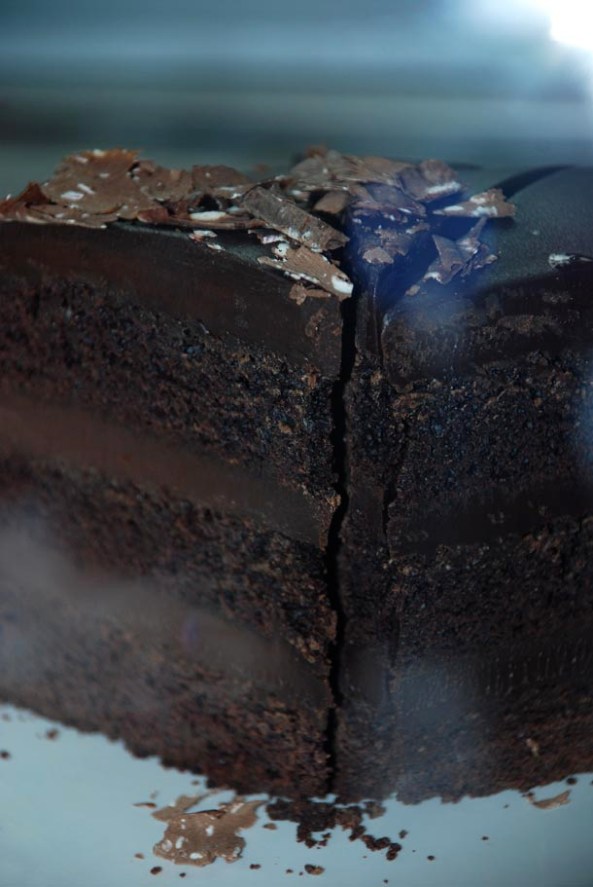
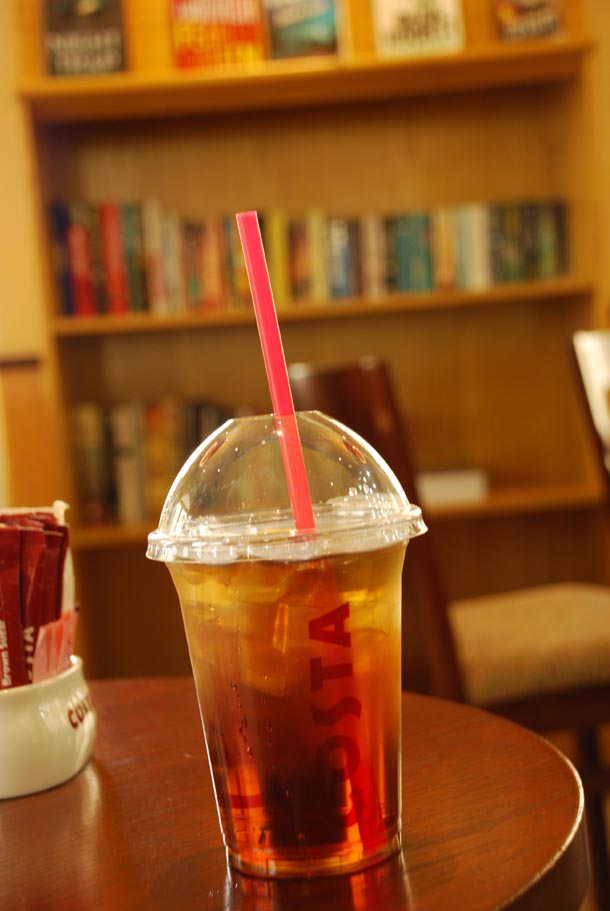
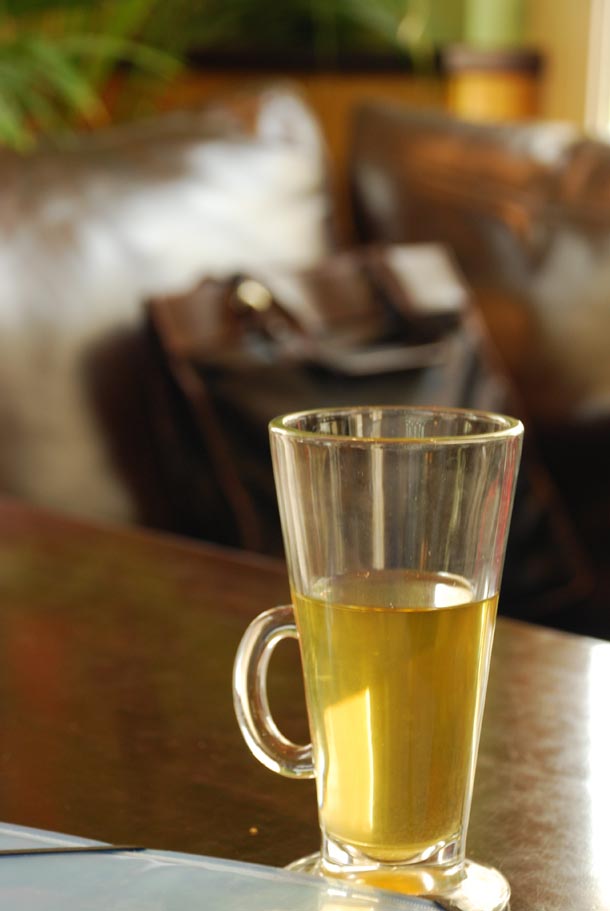


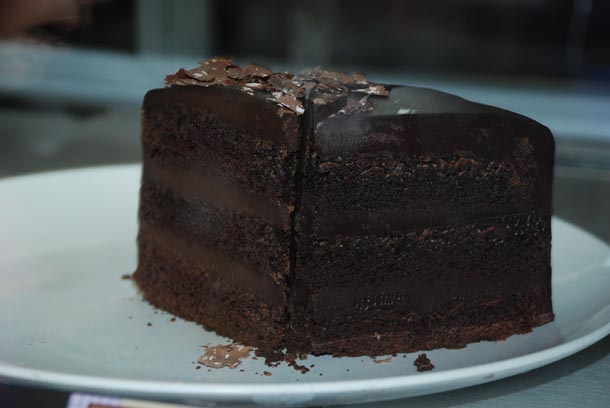

Costa Coffee in JBR
[Sadaf 6, JBR Plaza level; Tel: 04 4342326; Timing – Sundays to Saturdays 7am – 10pm]
While Costa at Meadows reminds one of a lazy tropical summer afternoon, the one at JBR is an extended beach. Beach-goers preparing to tan themselves for the day and joggers by the beach parade into the coffee shop day in and day out. At any point of the day it seems that life has only one thing – a sandy beach and a blue sea. Of-course, the sunset thrown in for the wow effect. Even reading the newspapers and surfing the net here looks like you might be handling the entire Wall Streets on your own!
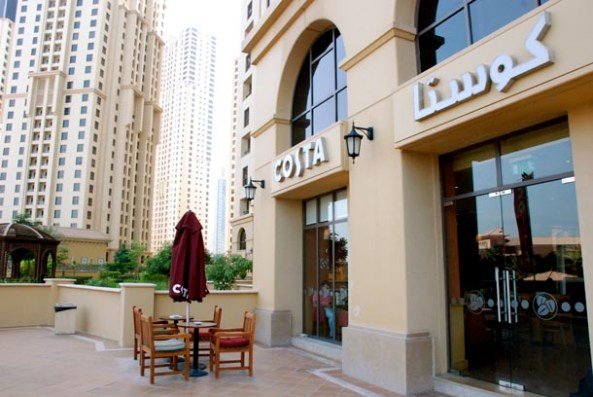
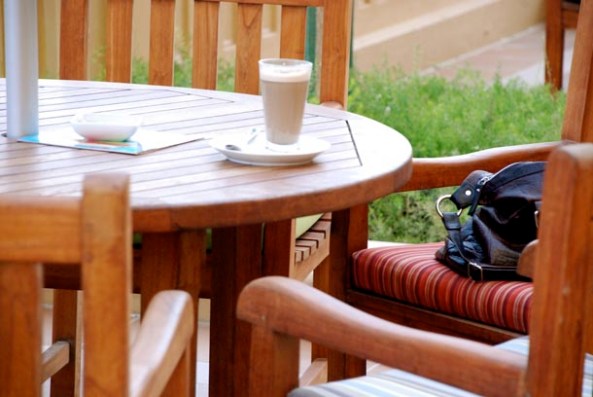
Drinking the Chai Latte is our favourite here. It’s a blend of black tea with aromatic spices – cinnamon, clove, ginger, cardamom & black pepper with honey made with steamed milk. This can be really strong and spicy but absolutely fantastic on a chilly, breezy winter morning, specially when you are sitting outdoors gazing at the cloudy sky above the bluish-grey rough waters of the Persian Gulf.
And on calmer days when the waves rise and fall in tandem with your heartbeat, you have another drink to choose. Specially as the sun comes around as it sets on the beach and you can see the sea-gulls engulfing the horizon.

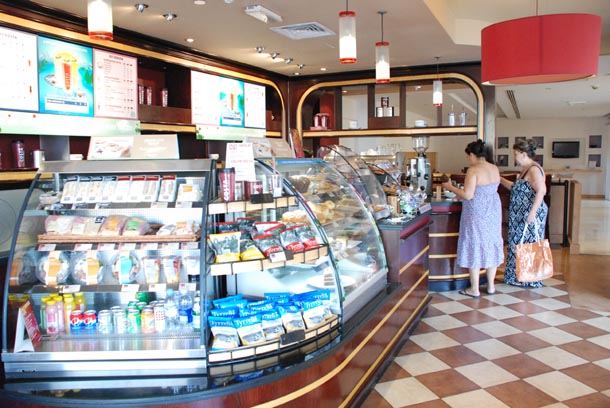
Costa Coffee, Souk Madinat Jumeirah
[First Floor near the Abra Station; Tel: 04 3668888; Timing – Sundays to Saturdays 8am – 10pm]
Ahh… overlooking the Burj-Al-Arab and the meandering canals that flow around the Souk Madinat, this is a total bliss, specially post-afternoon or during sunset when the warm sun-rays stream in through branches of the palm trees and the wooden parapets of the terraces running along the canals. A wonderful aromatic wait while you wait for your Abra or the boat.
You may fancy the Triple Chocolate Brownie or the Chocolate Tiffin (Dhs 11/-) or the refreshing Iced Coffees – Iced Cappuccinos, Iced Lattes, Iced Café Mochas and Iced Americano Espressos created using Costa’s famous Mocha Italia blend (Dhs 16/- Dhs 20/- for M and Dhs 18/- Dhs 22/- for L sizes)
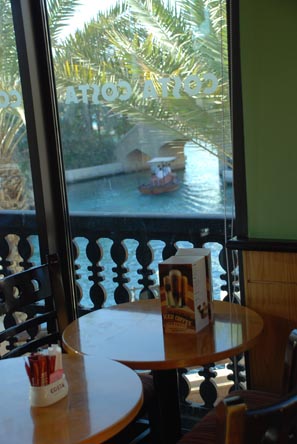
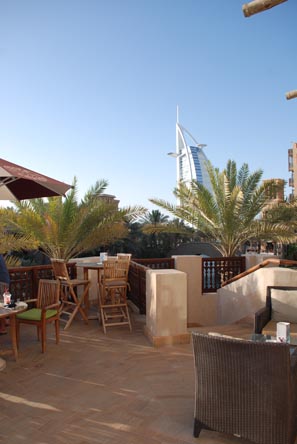

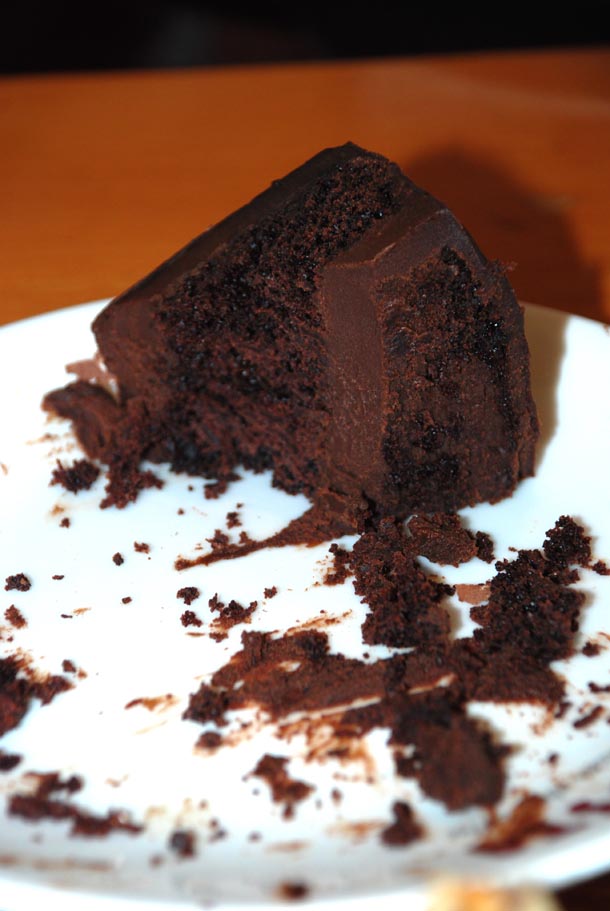
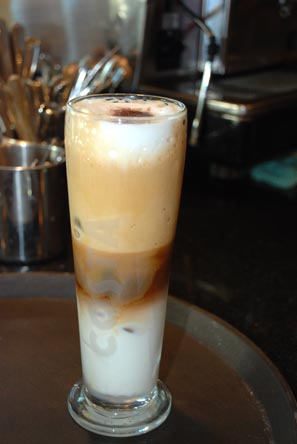
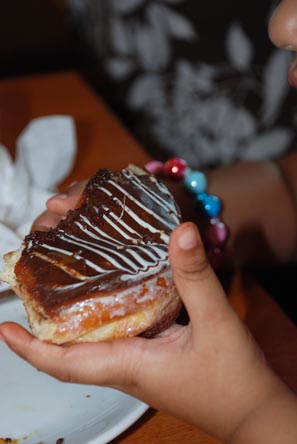
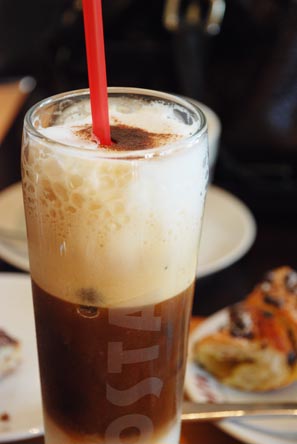
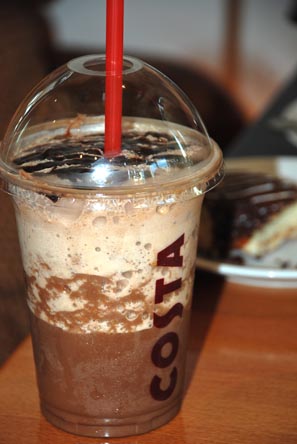

Costa Coffee at Dubai International Airport
Yes, we are obsessed. We may love our cup of coffee but Starbucks satisfy our coffee thirst as much as Costa does. The only difference is that we have always managed to find a Costa which has provided us a warm, luxurious black leather sofa which houses my prancing family. They may pride themselves on their Italian roots regarding their coffees but their sofas boasts neither the pride nor the snootiness of Italian leather. They warmly dig below as we pounce on them for more comfort. So the last cup of coffee before we board our flights as we leave Dubai, whether on a short or an ubér-long break is at Costa Coffee at the Dubai International Airport! We are dead serious. And if you don’t believe us here’s the Chicken Noodle Salad (Dhs 24/-) that Big Z hankers for every-time we switch ourselves off into non-sweet mode!
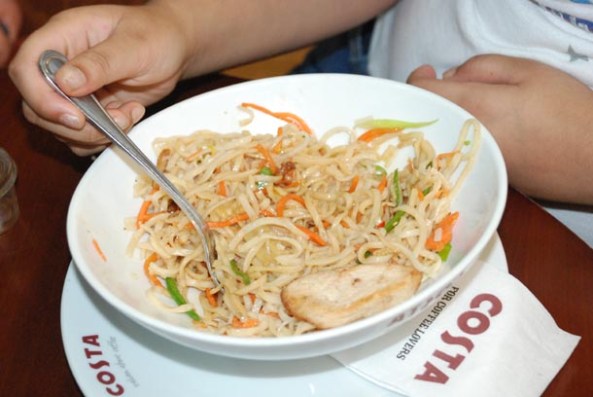

Finding a place or a pad to hang around where you don’t have to look like the way you want to look on Facebook profile is difficult to get. Specially in a city like Dubai where houses don’t exactly have door-steps to hang around with your bum chums as you see them off. Our opinions have arisen from the experiences that we have add. And it’s nice to unwind once in a while in a place where time slows down a bit. And that’s why this post about a lounging pad where the cup of Espresso or the Cappuccino or the Macchiato is not the protagonist but the black leather sofa is. For chilling us down before we start keeping pace with the hectic on-coming week.
There’s another place in Dubai where we feel the same and that is in the meandering art alleys of Bastakiya – the Basta Art Café. Slowly our house would fill up with various guests as the winter sets in and I’ll be off driving them around traversing the heart of the city ‘Like a tourist in my own city’!
Until then let me enjoy my own home and my own space for a while, getting re-connected to you all. Requesting you all to enjoy the photographs but not use them.
Unblogging it all… Ishita
—————————————————————————————-
You may also like the following articles
- Firni or Ferni, Ramadan or Ramzan, Mallick Bazar or Karama? (ishitaunblogged.com)
- Phuchkas in Vivekananda Park (ishitaunblogged.com)
- Things To Do In Dubai – Like A Tourist In My Own City (ishitaunblogged.com)
BE SOCIAL. SHARE THIS!

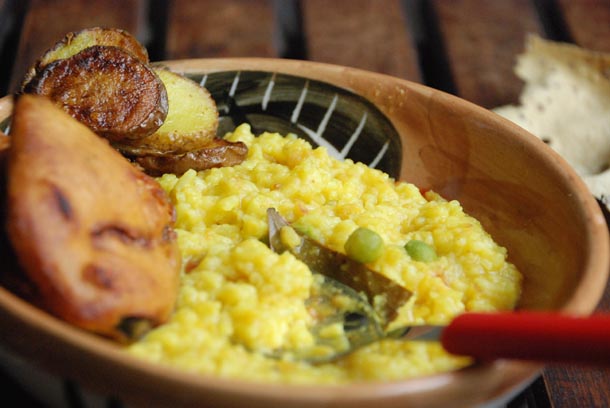
The best thing one can do when it’s raining is to let it rain. ∼ Henry Wadsworth Longfellow
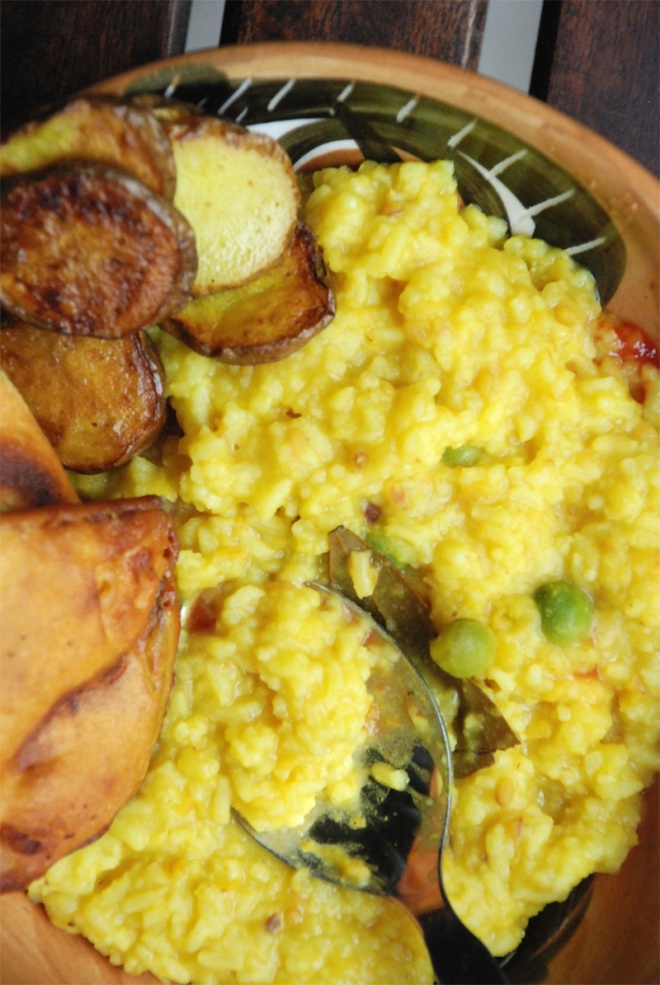
And of course cook something appropriate for the rains… Khichuri?
Khichuri or Khichdi (a dish made up of rice and lentils) as it’s known in many parts of India can be conjured up as a delicacy unlike in many parts of India where it is a basic meal served during ailment and sickness. For Bengalis, Khichuri is synonymous to writing love letters – it requires more punch and accompaniments than other meals. Also, the ambiance required to serve Khichuri is also the same – romantic thunderstorm and dark rolling clouds out bursting into torrential rains and the Bengali soul craves for Khichuri. In Bengal, Khichuri has attained a celebrity status, a cult-companion in a romantic rainy day. We have managed to make Khichuri a celebrity food by turning it into a delicacy, a gourmet food and a must-have dish on a romantic rainy day! And don’t forget to scroll till the end of the post to congratulate Khichuri as it emerges as a harbinger of hope.
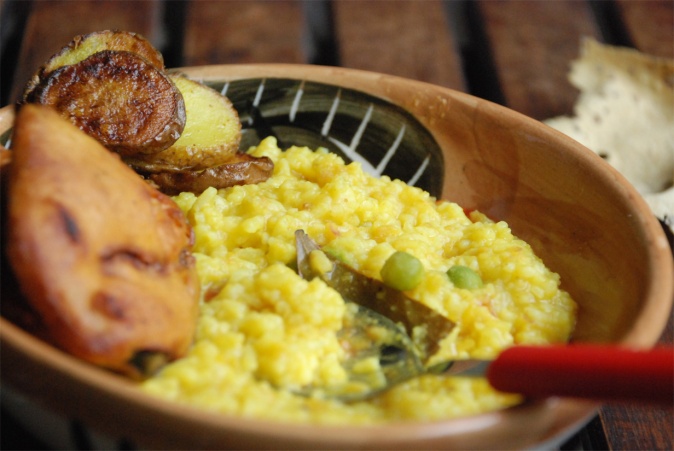
The Bengali Khichuri – a celebrity in it’s own right with star entourage!
Unfortunately, only Khichuri doesn’t suffice. It has to be accompanied by a whole lot of fried and frittered vegetables lovingly called Beguni/batter-fried Eggplant, Kumri/batter-fried Pumpkin, Aloor Fuluri/batter-fried Potatoes, Papad bhaja/Pappadam, Chutney and many more. And to top it all and making this simple Khichuri a gourmet variety is to serve Ilishmaach bhaja/fried Hilsa. Hilsa, being the quintessential Bengali fish, elevating the Bengali’s love for fish into a notoriously snooty level. The Bengali Khichuri also crowns the Bhog/offering to the deities during any religious worship. Bhog-er Khichuri has a different and an unique taste as compared to the Khichuris made at home. Probably it has got to do with the spiritual and religious devotion with which the former is cooked and the abundant Ghee/Clarified butter poured in it as compared to the Khichuri that is cooked traditionally at homes where the home-makers are conscious about cholesterol and saturated fats! Vegetables such as cauliflower, potato, and green peas are commonly added into the Khichuri. In a sense, Khichuri can be treated as a complete meal by itself but Bengalis believe in a bit of opulence, at-least where food is concerned. The luxurious accompaniments as seen in the following pictures…
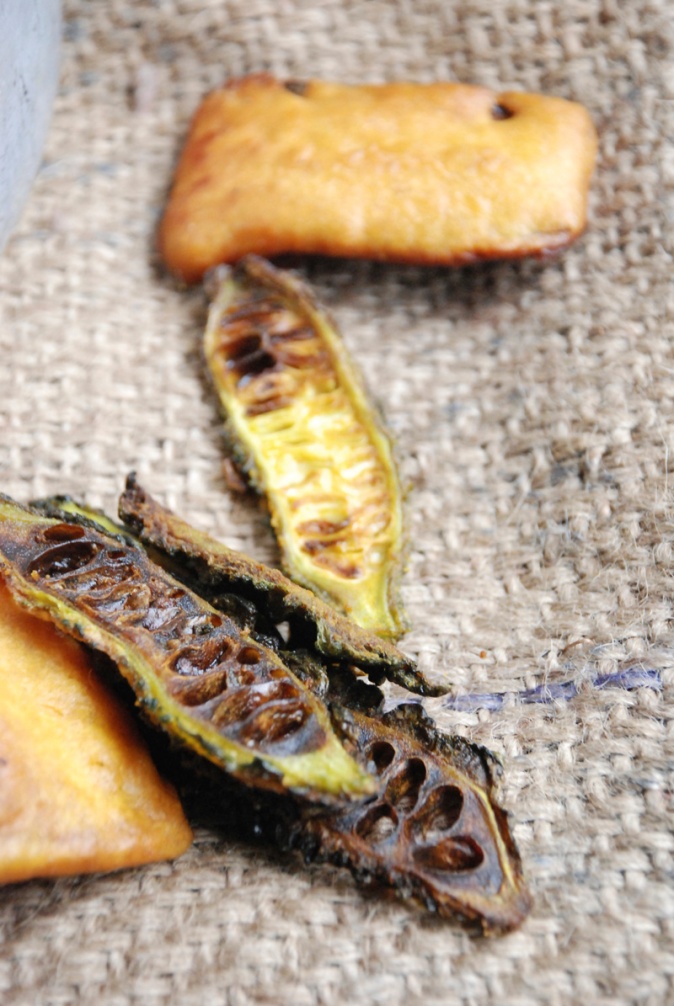
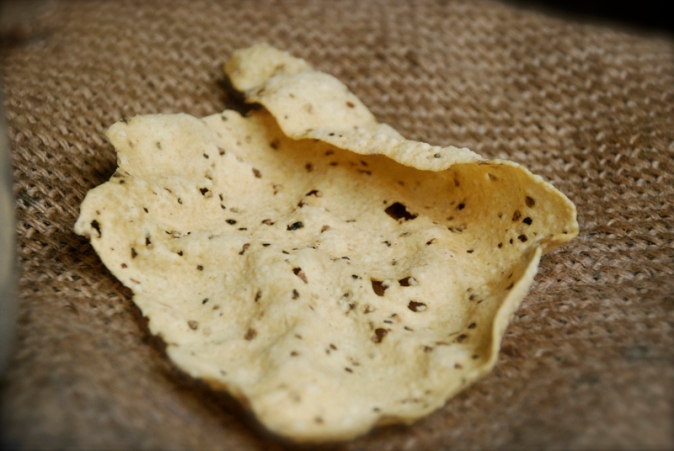
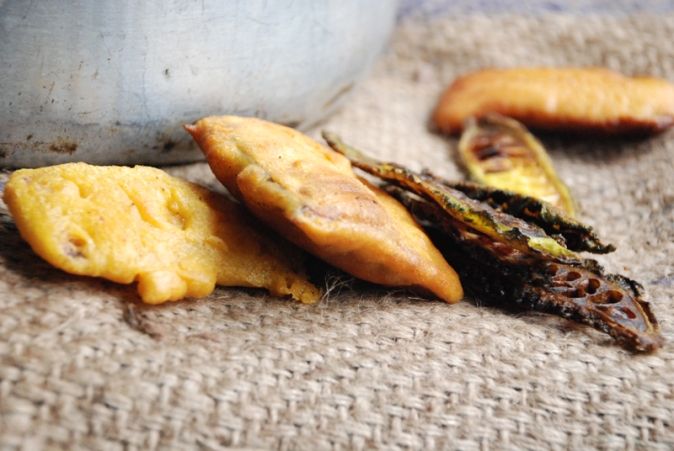
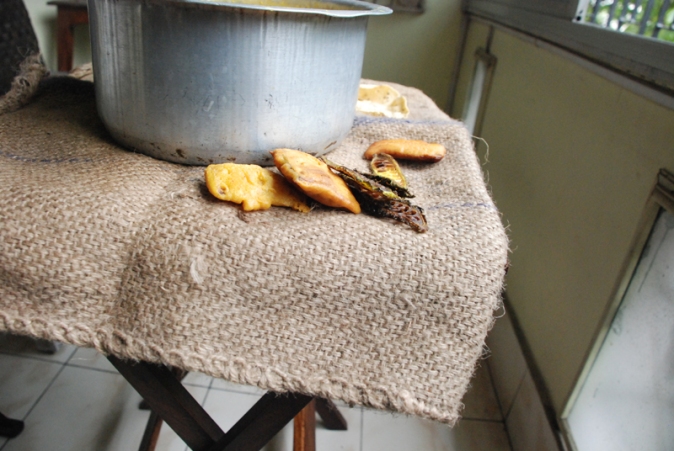
A bowl of Khichuri with all the accompaniments (Beguni/Eggplant batter-fried, Aloo bhaja/Potato fried and Papad shown here)…
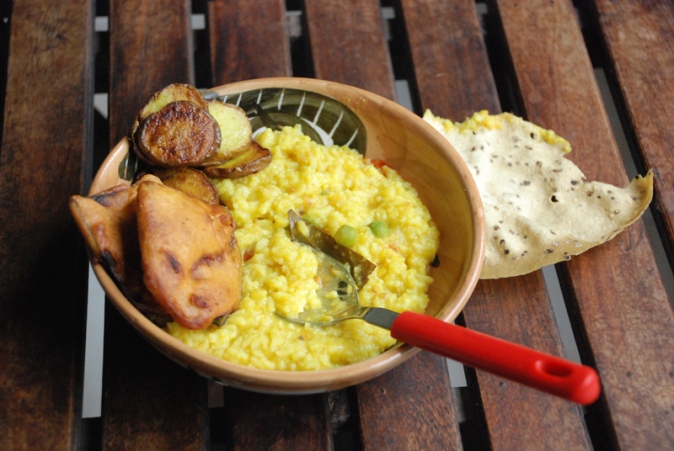
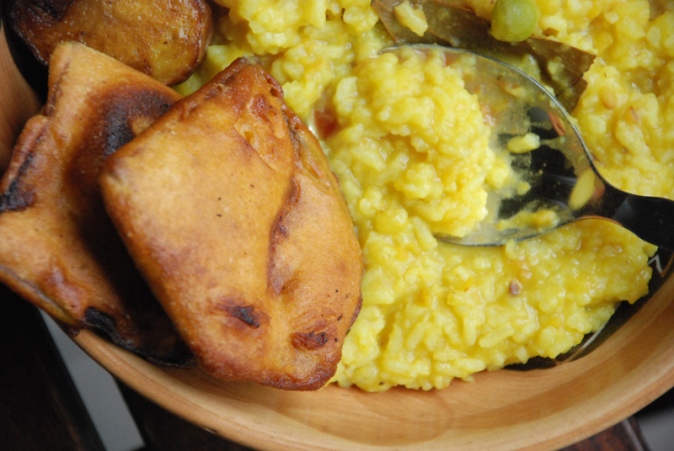
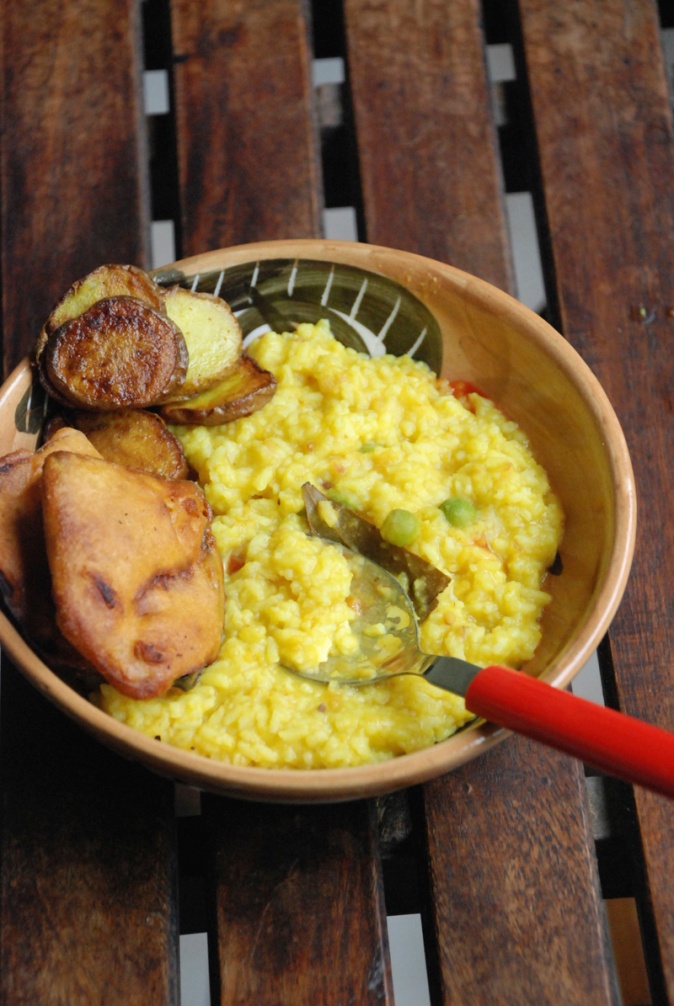
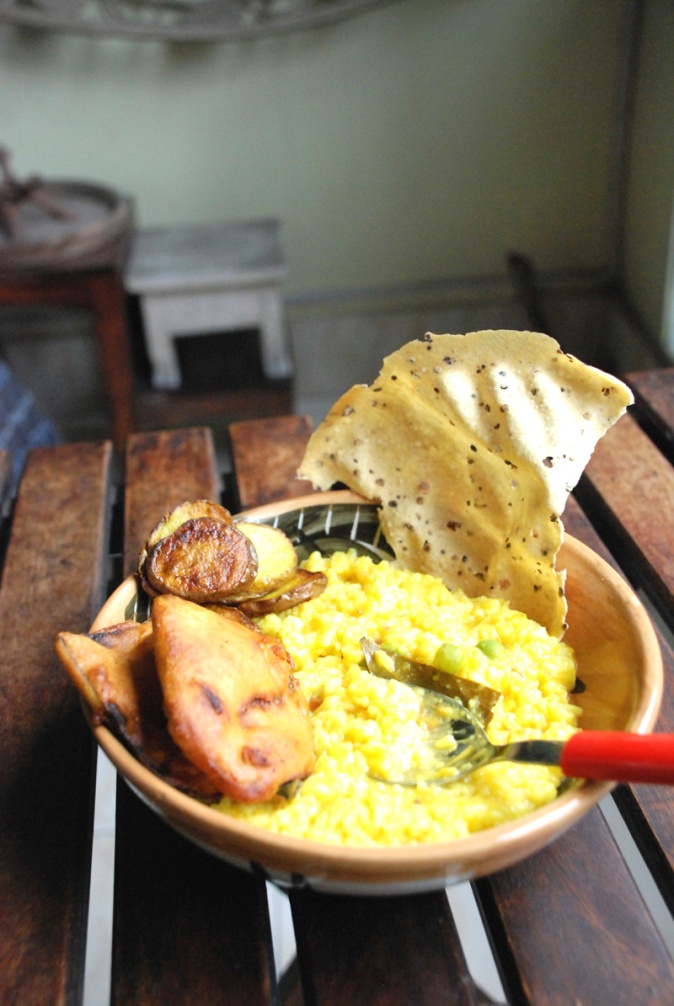
Khichuri or Rice Lentil Dish
The preparation of Khichuri varies from one household to another. The spices differ. The consistency differs. The vegetables that are put into the mixed pot differs as well. It all depends upon personal preferences. Children can easily help in making the dish (my two little sous-chéfs are aged 8 and 3 11 and 6 years!). And lastly, guaranteed to be tasty!(Preparation of the Khichuri – 45-50 minutes; Chopping the accompanying Vegetables for making the Fritters – 10 minutes; Frying the Vegetable Fritters – 30 minutes)
Ingredients
1-1/2 Cup Raw Basmati Rice (or preferably GobindoBhog Rice*)
1-1/2 Cup Moong Dal/ Yellow Lentils
1 tsp Cumin Powder
1/2 tsp Red Chilli Powder
1/2 tsp Turmeric Powder
1/2 tsp Sugar
Whole Ginger – 1 inch in size, grated
Potatoes – 4 pieces, cut into half
Onions – 2 big pieces, cut into quarters
Green Peas – 1 cup
White Oil – 2 tbsp
Water – 7 cups (the quantity will vary depending upon how soupy one prefers it)
The Seasoning/Tempering
2 tbsp Ghee
2 Bay Leaves
1 Red Chilli Whole
4 Green Cardamoms
6 Cloves
2 Cinnamon Sticks, 1 inch in size
Method
Wash the rich thoroughly & drain the water. – Roast the Moong Dal – Heat the White Oil in a Dekchi**. Gently fry the Potatoes and keep them seperately – Add the Onions, grated Ginger, Turmeric, Cumin Powder, Chilli Powder, Salt, Rice and the roasted Moong Dal – Add the Water and cover the Dekchi with a lid let it simmer till the Rice and Dal is half done – Add the Potatoes and Green Peas and let it simmer again till the vegetables (like Cauliflower florets, Tomatoes etc) are cooked – Add the Sugar – You may have to add some more water if you prefer your Khichuri to be more soupy. While the vegetables shouldn’t be over cooked, the Rice and Dal should be cooked to the level where they can be described as ‘mashy’! – Slit the Green Chillies and add just for the flavour
For the Tempering – Heat the Ghee in a small wok – Stir in the Red Chillies, Bay Leaves, Whole Garam Masala – Cloves, Cinnamon and Cardamom Sticks, without burning them! – Pour into the cooked Khichuri
*The fragrant Rice that is traditionally used in making Bengali Payesh/Bengali Rice Pudding is a special type of Rice called Gobindobhog. Wikipedia defines it as ‘Gobindobhog is a rice referenced in ancient Indian literature. It was used as an offering to the gods because it was known to be, “The rice preferred by the gods”. It is a short grain, white, aromatic, sticky rice. It is grown traditionally in West Bengal, India. It has many traditional Bengali recipes intended for it specifically. It has a sweet buttery flavor and a potent aroma.’
Availability of Gobindobhog outside India: Our stint in Colombo, Frankfurt and Dubai suggests that if these are available outside India, they can only be found in Bangladeshi shops and Asian supermarkets selling Bangladeshi products. There is a type of rice which comes from Bangladesh – the Chinigura Rice (similar to Basmati and Jasmine rice but with very tiny, short grains, resembling sushi rice). The latter, though less fragrant than Gobindobhog Rice is easily available in Bangladeshi shops in the Sharjah Backet. You may use a fragrant Basmati rice as well… As I must have mentioned in my earlier posts, after all it’s the journey with all it’s imperfections that will stay in the memory, not the perfect tit-bits!
In what will you make the Khichuri? ** I prefer to cook my Khichuri and everything related to Rice – Plain Rice, Pulao, Payesh/Bengali Rice Pudding, Biriyani etc, in the quintessential Dekchi. I may be a Microwave Mummy and the greatest fan of Pressure Cookers and Non-stick pans but this is the only time when I am all for the old traditional Dekchi! But what is a Dekchi? Sutapa, the grand-dame of Bengali food blogging (14 years into food blogging!), in her beautiful post – ‘Introduction to Bengali Cooking‘ describes it as ‘the handle-less modification of the sauce pan – the rimmed, deep, flat-bottomed Dekchi which is a hallmark of the Bengali kitchen!
A glimpse of the Dekchi full of hot Khichuri below… 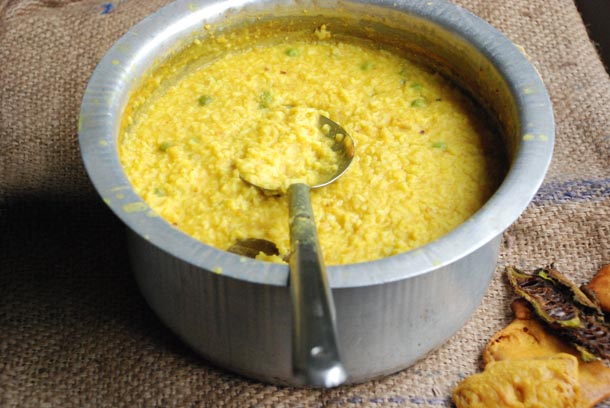
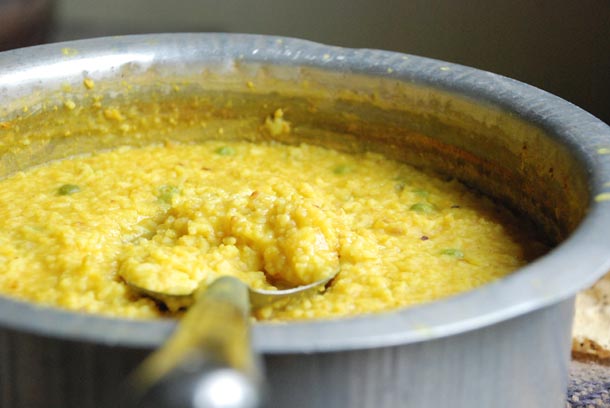
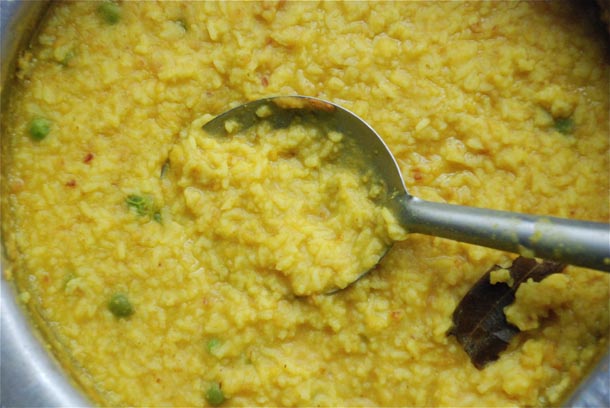
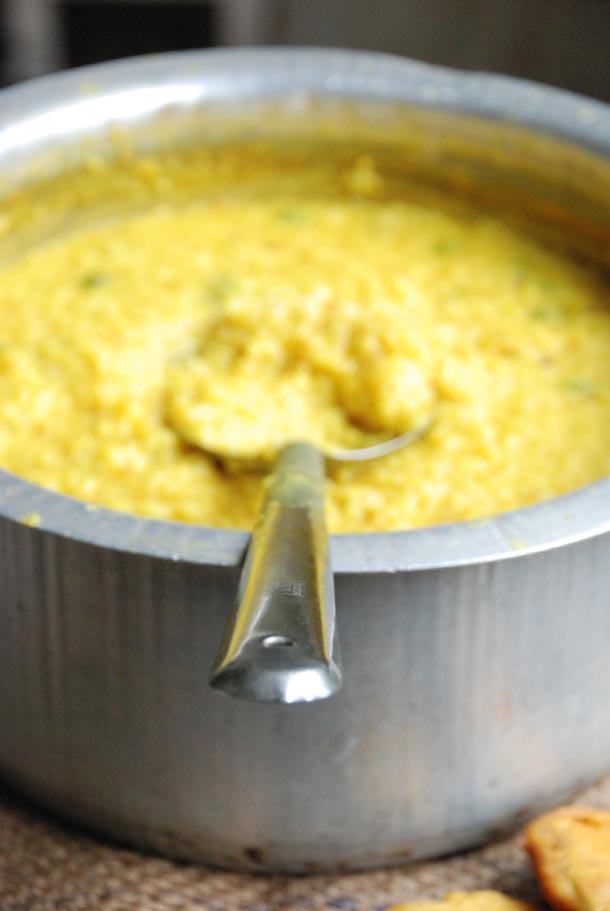
Beguni or Aubergine Fritters
Beguni is the humble accompaniment of Khichuri. Bengali Khichuri is seldom had alone. Beguni-s or Eggplant or Aubergine or Brinjal slices deep fried in a batter. They can be had as a stand-alone tea-time snack as well and goes very well with Muri/Puffed Rice. It is a very popular street snack as well. The similar European version is known as Aubergine Fritters
Ingredients
4 medium sized Eggplants, sliced longitudinally
2 cups Besan/Chickpea Flour/Bengal Gram Flour
1-1/2 cup Water (the Batter should be thick)
1/2 tsp Turmeric Powder
1/2 tsp Salt
1/2 tsp Kalo Jeera Seeds/Nigella/Kalonji/Black Cumin Seeds
1 cup White Oil, for deep frying
Method
Wash the Eggplants and cut them into into thin slices – Mix the Turmeric Powder, Salt, Kalo Jeera Seeds into the Besan along with some water to form a batter and whisk it well till the paste is thick and smooth without any lumps – Heat the Oil in a Deep frying pan or Wok (if the Oil is not sufficiently heated the Fritters would be fried soggily) – Dip the Eggplant slices into the Batter generously and fry in the hot oil till they are golden brown and crispy – Serve them hot as a stand-alone snack or with it’s celebrated counterpart – the Bengali Khichuri! Adding a small amount of baking powder to the Batter makes the Fritters more crunchy. Many prefer to add a small amount of Posto/Poppy seeds. Note: In a similar manner one could make Kumri/Pumpkin Fritters, Aloori/ Potato Fritters and anything that you can think of!
A glimpse of notoriously crunchy Beguni below…
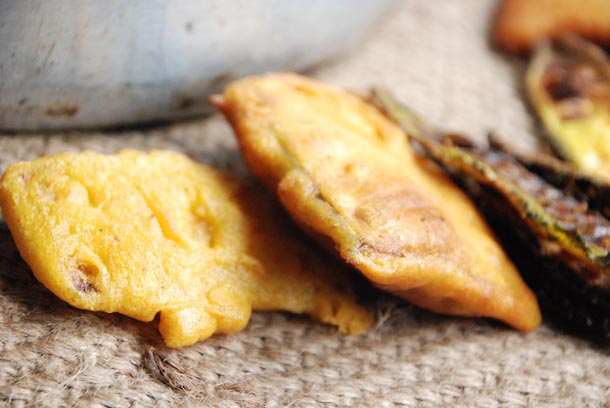
Khichuri is not a common dish by any means… Khichṛī or khichdi, khichri, khichdee, khichadi, khichuri, khichari, kitcheree, kitchree are various names by which Khichuri is called in various regions of India. Though the method of preparation vary considerably amongst the various regions. The word originates from the Sanskrit word Khicca, meaning a dish based on rice and pulses. It is possibly an inspiration for the Anglo-Indian dish of Kedgeree. During the British colonial rule (1858— 1947), the khichdi recipe was modified to suit the Anglo Indian palate, by adding fish and eggs to the ingredients. Kedgeree became popular during the British era as a staple breakfast food. It soon spread outside India to the UK during the reign of Queen Victoria. French traveler, Jean-Baptiste Tavernier, who came to India six times during 1640–1685, mentions that Khichdi prepared with green lentils, rice and butter, was a typical peasant evening meal. Even before that, Seleucus Nicator, a Greek ambassador (ca. 358 BC–281 BC), records the popularity of this rice and pulses meal in South Asia. Khichuri is described in the writings of Afanasiy Nikitin, a Russian adventurer who travelled to the South Asia in the 15th century. Khichuri was very popular with the Mughals, especially Jahangir. Ain-i-Akbari, a 16th century document, written by Mughal Emperor, Akbar’s vizier, Abu’l-Fazl ibn Mubarak, mentions the recipe for khichdi, which gives seven variations! Infact, during the Mughal dynasty (1400—1700s), the traditional khichdi went through various adaptations. They made it rich by adding strong spices, dry fruits and nuts. Mughal Emperor Jahangir popularized this dish and it is believed that Emperor Aurangzeb was particularly fond of khichdi! Khichuri travels borders, boundaries and breaks all barriers… and becomes Khichdi!
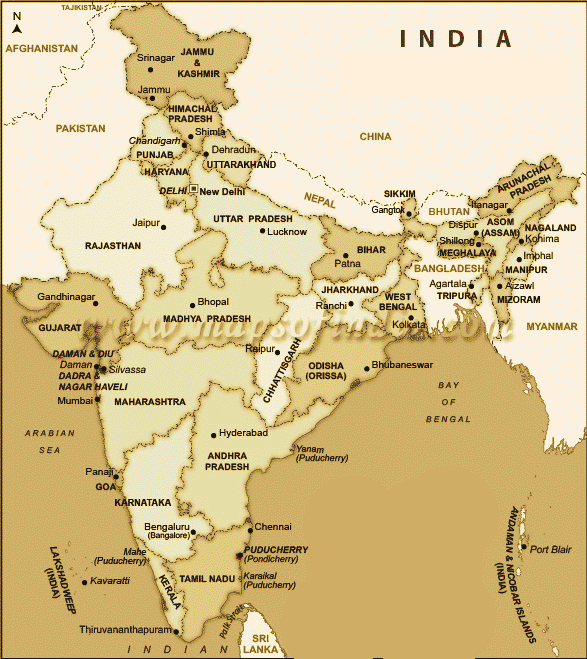
Khichdi is a very popular dish across Pakistan, Northern India, Eastern India and Bangladesh. The dish is widely prepared in many Indian states like Bihar, Jharkhand, Uttar Pradesh, Orissa, Gujarat, Maharashtra, and Bengal (you may see the above map of India for reference. Map Courtesy: here) Khitchuri is traditional diet and daily meal of people of the Kutch region in Gujarat, India. It is also a very popular dish of Suratis in southern Gujarat. While Khichuri is an elaborate meal in Bengal, it is cooked very differently in northern and western India, where it is considered a very plain and bland dish served as comfort-food during ailment. Khichdi is also the first solid that babies are introduced to. Rice and lentils are simmered till mushy, seasoned with turmeric and salt, and fed to infants to introduce them to solid food. Khichri is also popular in Pakistan where it is especially cooked for children and people with stomach problems as it is easily digestible compared to other Pakistani dishes which usually have meat and are also spicy. Not to be confused with Khichra (with an ‘A’ in the end) is actually a variation of Halim or Haleem, a special Ramadan dish made of wheat, barley, meat (usually beef or mutton, but sometimes chicken or minced meat), lentils and spices. In Bangladesh, Khichuri is a popular dish had during Ramadan. Khichdi, when well cooked with a little oil, is considered a light and nutritious dish – a Satwik dish, and is especially popular amongst many who follow an Ayurvedic diet or nature cure. Khechidi as is known in Orissa has many varieties. Adahengu Khechidi (ginger-asafoetida khichdi), Moong Dal Khichdi/Yellow Lentil Khichdi. Adahengu Khechidi is a popular dish in the famous Jagannath Temple in Puri as well. At home, moong dal Khechidi and other Khechidis are served with Pampad, pickle, curd, Aaloo Bharta/Mashed Potato, or Baigan Bharta/Mashed Eggplant, Raita/Yoghurt Dip and chutney. Khichri is also very popular in Bihar. It is made with rice, dal, and Garam Masala, cooked into a semi-paste like consistency and eaten with lots of Ghee, Baigan ka bharta/Mashed Potato, Aaloo ka bharta (mashed potato with onions, green chilli, salt and mustard oil), tomato chutney (blanched tomato, onion, green chilli, grated ginger and mustard oil), Pāpaṛ/Pappadam, tilori (a fried snack), and mango pickle. It is customary to eat Khichdi every Saturday in Bihar, and also at dinner during Makar Sankranti, an auspicious day of the Harvest festival for the Hindus. Bisi Bele Bath or Hot Lentil Rice is famous variant of Kichdi from Karnataka, in Southern India. Pongal, a similar dish is popular in Southern India, primarily in Tamilnadu. It is primarily made of rice and lentils, and seasoned with black pepper, cumin, and cashews. Disclaimer: Info Courtesy on Khichuri – Wikipedia, Indian Currents

 Life through Grilled Windows and Balconies and Hoping beyond… Why did this post on Khichuri originate in the first case? Shira, a very close blogger friend of mine has tagged me along in a HOPE RELAY. This ‘relay’ asks bloggers to touch on the topic of hope. Her blog In Persuit of More sums up ‘Hope’ in more than one way. ‘The blog about living with (just a little) less. By going without, we can gain – by giving to those who have less… Imagine how you can turn that into something positive for those who would otherwise go hungry. Go without so others don’t have to. That’s living with (just a little) less’! What better dish can there be than Khichuri to write a post on Hope? And which better city can there be than Kolkata from where I can write this post? Kolkata throbs in my heart, wherever I am and whichever city I have set my home in. Borrowing from my past articles to describe my feeling – Kolkata is my city, my home. It stirs up my emotions, it stirs up my soul. The city at dusk through the heavy dark thunder clouds, the incessant noise from the crowded streets, the familiar and the unfamiliar faces, the multiple options of local savouries, the hurtling riot of colours – these rejuvenate me. Born and brought up for the most part in Kolkata, my Bengali genes are to be blamed not only for my relentless creative pursuits but also my unsatiated taste-buds. Wherever I go or whichever city I have lived in and set up our homes later in my life, there has always been a reference to something or someplace or somebody or some incident in Kolkata. Not because I grew up here. But because of the city’s resilience, its spontaneity, it’s survival strategies. An over-populated urban hub situated in an equally over-populated country has it’s own nuisance value. A bit of rain leads to water-logging, a bit of sunshine dries up the road-side wells and cracks up the tars on the roads.

Stuck in the traffic in EM Bypass, inside an air-conditioned car while it rains torrentially outside and as I see the flurry of drenched people – men, women and children, scurrying to get into packed over-crowded buses, I do believe that there is HOPE. HOPE that the rains would eventually stop when the same bunch of fatigued people – the same people – men, women and children emerge out of the bus as they near their homes. HOPE that their fatigue would be gone when they are hugged by that one special person at home, waiting to open the door!
HOPE that even after it has rained the whole night when I wake up in the morning and look out through my grilled windows I can see the streaks of sunlight pouring in with the hope that the rains would stop and today would be the brightest day of all! HOPE that after the rains stop, I’ll be smiling happily as I see the rain-drenched greenest of green leaves – smelling fresh after the showers!


The freshly drenched leaves of the Kadam tree…
HOPE that the lives of everyone dwelling down below in the city is also oh-so-perfect and beautiful as it seems from the the 31st floor of the plush high-rise apartment of a dear friend of mine, as we laugh and have a good time with my old school friends! HOPE that everyone walking on the streets of the city has a home at least!
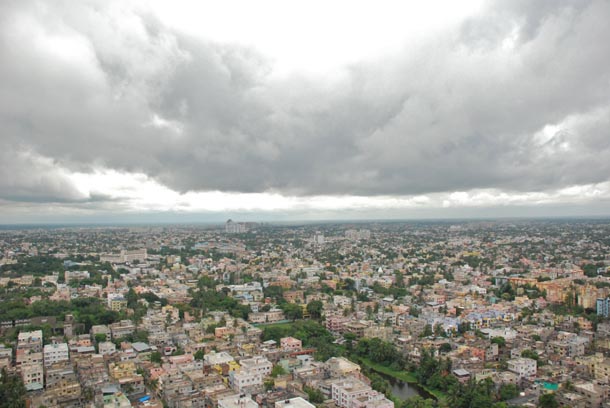

HOPE that the children of the hundreds of homeless who have created their rambling homes under the Gariahat Fly-over and yet manage to play a game of football with their naked feet and a shape-less football at the end of the day, will someday be playing in some proper park or will be able to have 4 walls and a proper ceiling defining their homes instead of the space under a Fly-over! HOPE that the child sleeping on the pavement today gets at-least a bed and a pillow to sleep on tomorrow!


Khichuri as the harbinger of HOPE… When I ask the street urchin munching away some food bought from a street shack, shelling out a mighty 10 rupees earned by him (not derived from begging, as he pointed out to me) – ‘Ki khachish tui?/What are you eating?’… he answered ‘Khichuri-Beguni‘! Surprised that I had asked this very obvious question. True, Khichuri-Beguni are perhaps the only food that connects all of us – from the fortunate ones to the unfortunate ones in this ‘City of Joy’ as Dominique Lapierre has called Kolkata to be in his famous novel. Whether it’s the gourmet variety served in fine porcelain plates on a well laid out dining table or it is served in aluminium foil or plates made out of Shaal pata/Leaves from Shaal tree, it is Khichuri which transcends all social strata and curriculum and fills our tummy and hungry souls! As always, requesting you to enjoy the pictures without using them.
Unblogging it all… Ishita
Disclaimer: However, the subject, story, opinions and views stated here are my own and are independent. While you enjoy reading my posts with lot of visuals, please do not use any material from these posts. Do join me on my daily food and travel journey on Instagram, Facebook and Twitter.
——————————————————————————————————–
Here are the next few blogs tagged in this relay – they are not necessarily food bloggers but give me HOPE at various levels…
In Persuit of More – Shira talks about living with (just a little). She gives me the HOPE that the only thing that can take us through our life is positivity…
Walking on Sunshine – Sally, a food blogger otherwise (My Custard Pie) first started sharing her thoughts in this blog with a very fixed purpose in mind – training, fund-raising for and documenting a challenge for charity along part of the Lebanon Mountain Eco Trail. She gives me the HOPE that we can do much more than what we are doing…
In Bits N Pieces – Aveek who has gone through a lot of personal struggle still manages to be a creative soul finding inspiration everyday in the environment he lives in, enjoying his city, her streets, her people and their lifestyle. His blog is new but gives me the HOPE that he will find his solace through this blog…
Ginger And Scotch – Sandy tries to trace back her roots as she travels the world and writes a food blog in Dubai. She is also trying to give back to society by creating a Resource page with proceeds going to charity…
The Yellow Diaries – Lisa Ray is a film celebrity. I do not personally know her. But she gives me all the HOPE that everything can be fought against – even CANCER…
——————————————————————————————————–
Related articles
- Momos in Tiretti Bazar – The Last Chinese Remnants! (ishitaunblogged.com)
- Phuchkas in Vivekananda Park (ishitaunblogged.com)
- Firni or Ferni, Ramadan or Ramzan, Mallick Bazar or Karama? (ishitaunblogged.com)
BE SOCIAL. SHARE THIS!


I am honoured to be featured in BBC GoodFood Middle East’s August 2012 issue under ‘Meet the Blogger’… a big high indeed!
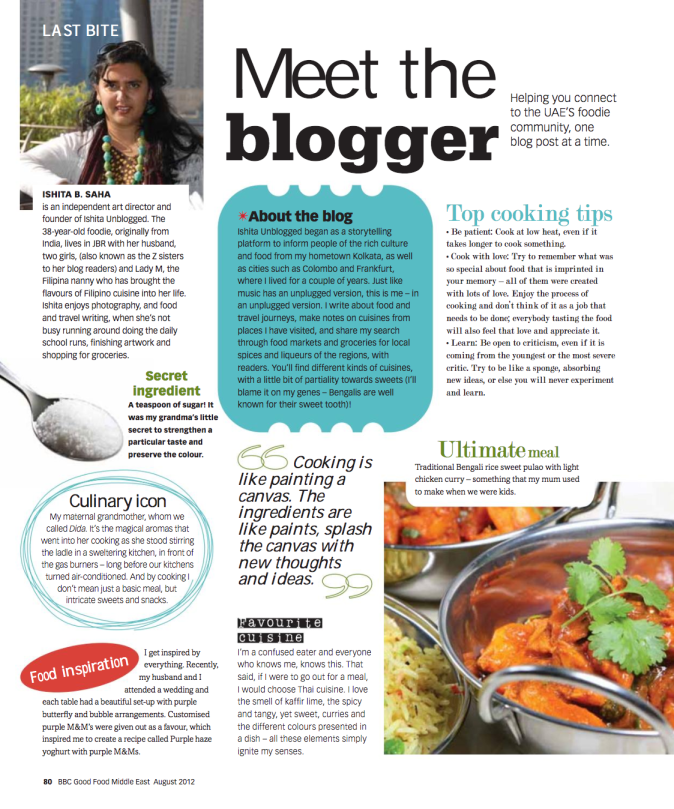
A few posts down the line, a few blogging ‘good’ friends made down the way, a few inspiring bloggers to look up to, a few ups and downs and some moments of real high. One such high is being featured in BBC GoodFood Middle East‘s August 2012 issue under ‘Meet the Blogger’.
The last page of this issue is very special. It features this blog – the first media mention for the blog! A small peep inside…


◊—–◊—–◊—–◊—–◊—–◊—–◊—–◊—–◊—–◊—–◊—–◊—–◊—–◊—–◊—–◊—–◊—–◊
To celebrate the above feat, I am sharing a few of my favourite food and travel banters from my blog:
The Abandoned Women Amidst Many Prayers

Momos in Tiretti Bazar – The Last Chinese Remnants!
Rasgulla Macapuno – When a Filipina Turns Bong!
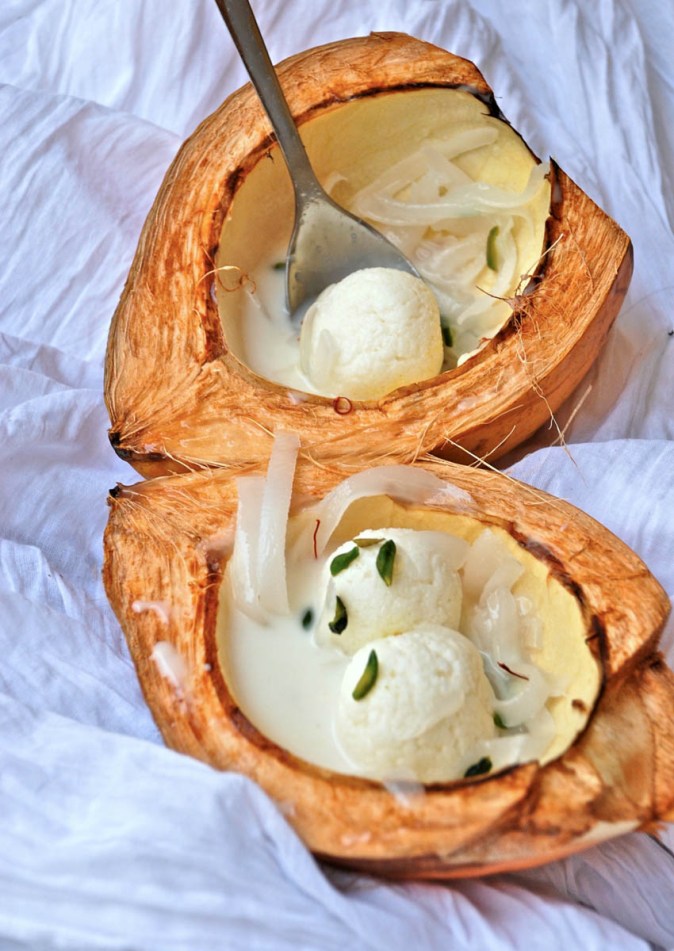
Pickles… Mother (-in-law) of All Pickles
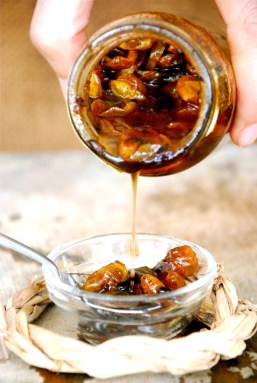
The Magistrate’s House, No. 1 Thackeray Road, Alipore – Kolkata

Things To Do In Dubai – Like A Tourist In My Own City!

◊—–◊—–◊—–◊—–◊—–◊—–◊—–◊—–◊—–◊—–◊—–◊—–◊—–◊—–◊—–◊—–◊—–◊
I’m signing off on a very happy note. Do keep connected through Email, Facebook and Twitter – I would love to hear from you, your feed-backs and any suggestions that will make this blog more interesting. And different!






Unblogging it all… Ishita
Thank you for joining me on my daily food and travel journey on Pinterest, Instagram, Facebook and Twitter!
Disclaimer: This isn’t a sponsored post, nor are there any affiliated links for any of the brands that may have been mentioned in this blogpost. The subject, story, opinions and views stated here are my own and all images are from my personal album. While you enjoy reading my posts with lot of visuals, please do not use any material from these posts.
BE SOCIAL. SHARE THIS!

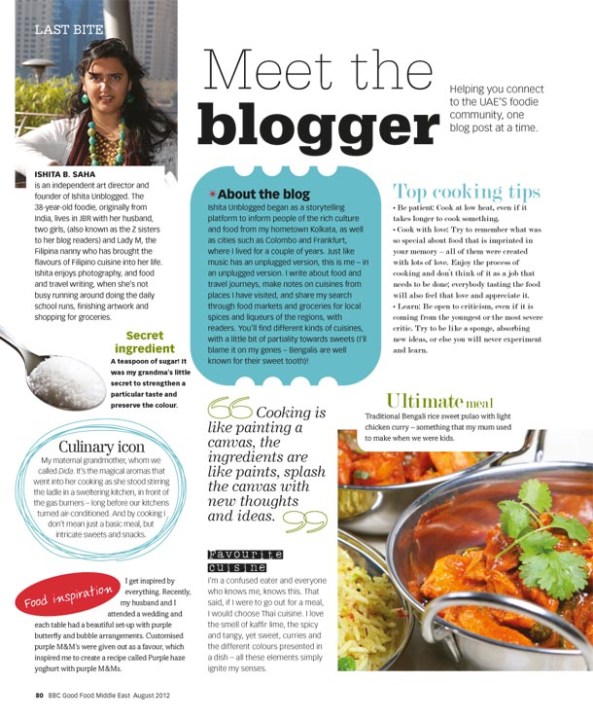
A few posts down the line, a few blogging ‘good’ friends made down the way, a few inspiring bloggers to look up to, a few ups and downs and some moments of real HIGH. One such high is being featured in BBC GoodFood Middle East’s August 2012 issue in ‘Meet the Blogger’. I have always dug myself into this magazine every month – savouring each page with much adulation.
A small peep inside…
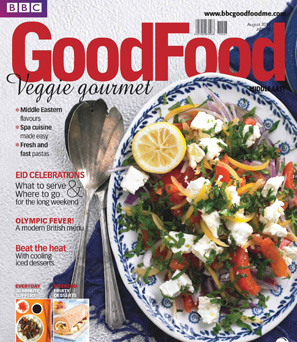
The last page of this issue is very special. It features this blog – the first media mention for the blog!
◊—–◊—–◊—–◊—–◊—–◊—–◊—–◊—–◊—–◊—–◊—–◊—–◊—–◊—–◊—–◊—–◊—–◊
Few of the Food and Travel Banters which are special to me –
The Abandoned Women Amidst Many Prayers

Momos in Tiretti Bazar – The Last Chinese Remnants!
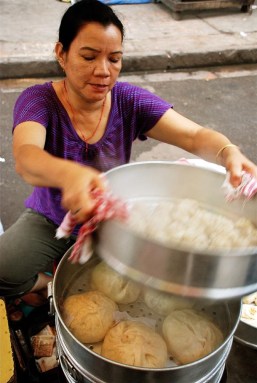
Easter Egg Curry Cooked By Easter Bunnies!
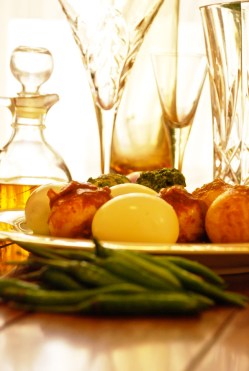
Rasgulla Macapuno – When a Filipina Turns Bong!
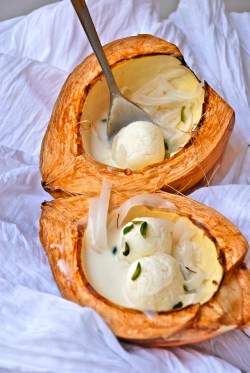
Pickles… Mother (-in-law) of All Pickles
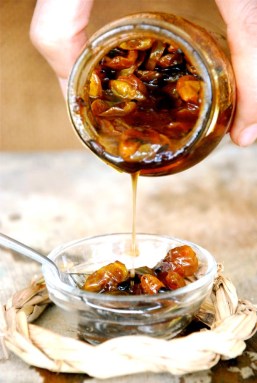
The Magistrate’s House, No. 1 Thackeray Road, Alipore – Kolkata
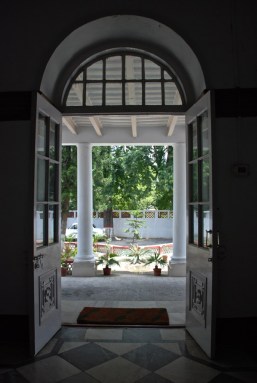
Things To Do In Dubai – Like A Tourist In My Own City!
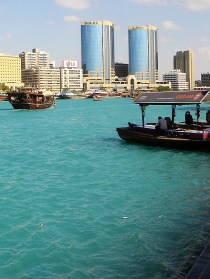
◊—–◊—–◊—–◊—–◊—–◊—–◊—–◊—–◊—–◊—–◊—–◊—–◊—–◊—–◊—–◊—–◊—–◊
I’m signing off on a very happy note. Do keep connected through Email, Facebook and Twitter – I would love to hear from you, your feed-backs and any suggestions that will make this blog more interesting. And different!

Unblogging it all… Ishita

 IshitaUnblogged