


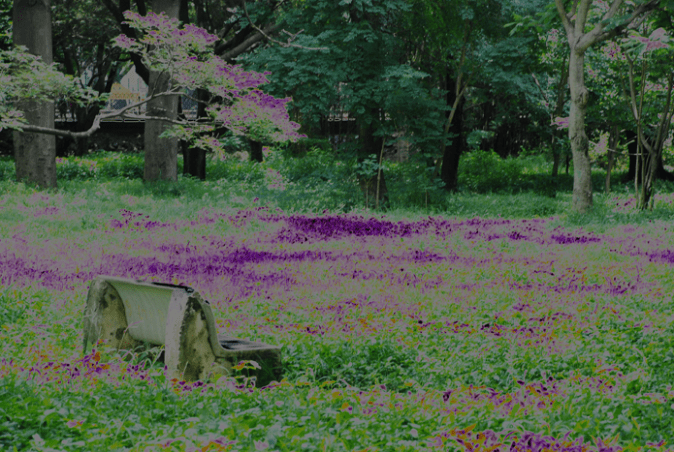
Yes, I admit that I have many stories to share. But ‘Tell’ I will not. And that is precisely why I started blogging. From day one I had the above image in mind in various modes – the violet dream/impression mode in my photo-gallery, green day mode in Twitter when I communicate to the outside world, the B/W mode for my Facebook Profile picture as I would love my stories to impart some colour to it. Here, the empty seat is where ‘I’ sit and write. In my thoughts!
I also started blogging because I wanted to write and share my stories and not tell and re-tell them to my friends a million times who had started avoiding me as if I had the infamous Cheese-touch as in the Diary of a Wimpy Kid. You can watch here how horrible that can be. And if you are having doubts about whether I can match up to your IQ levels just because I have all the 5 books of Diary of A Wimpy Kid on my bedside table – then please re-consider. I can up-size my reading habits to your adult levels, but can you down-size yours to mine? If you can then well, you are probably already on my side. And if you can’t then I promise you that I have stories in my mind that is probably meant just for you. If they haven’t been published yet, they will soon be. Guaranteed.
If you are wondering where am I venturing today, well this is a bit of an introspection into my own journey jotting down my Travel & Road & Food Banters. Banters or Stories – that is exactly what I had been wanting to share with the following people –
– Like-minded people who wouldn’t close their browser windows looking at my posts just because they are not on cricket or say finance or say movies or say politics or say anything that doesn’t interest them. On the contrary they would, well jump excitedly because I write on travel and food journeys inspired by the people I have come across, the places that I have visited and the moments that have touched my heart
– Kind-Hearted people who will be kind enough to share my story with others
– Generous people who would be generous in leaving a small comment even if it’s a single letter code if they have happened to visit my site so that these comments (good or bad) can motivate me, inspire me and most importantly correct me when I’m astray
– Genuine people who would actually go through my story and then click the ‘LIKE’ button. I agree that everyone knows that I am at an emotional crossroad where I swell with each ‘LIKE’ but if you could please press the ‘LIKE’ button after waiting for about 5-7 minutes rather than 5 seconds of my posting a link. Even though it might be pretentious but I’ll never know that and I’ll genuinely feel elated knowing that you have read my story. Ideally, each story should take more than 5 minutes considering the 4-5 hours that I spend writing it and the minimum 15-20 pictures that accompany each post. But since my photographs are intended to narrate the story as well, it should take a minimum of 5 minutes if you skip the text. A bit more if they stimulate your visual senses. And much longer if they have touched your heart.
And that is when I feel I am rested. I could probably re-write the last line – ‘That is what I want to achieve/obtain/aspire/desire/intend ‘ but lately these words have started to make me feel as if I am a conniver. I want to believe that my stories are reflecting the same sense of inspiration that had originally inspired me to write them.

And just when I start to think whether I am reaching out to the like-minded, kind-hearted, generous and the genuine people listed above, something like this happens. A nomination for the Excellence in Storytelling Award! And from whom? A writer and a story-teller herself and someone whose stories have been inspiring me. Dima from Dima’s Kitchen – a lady whose detailed insights into her travel journeys have transported me to the land she has travelled to or fills my senses with the aroma of the cooking and stirring up that she has been doing in the kitchens of quaint, ancient walls of Spanish Gastronomical societies.
And while accepting this nomination I feel the need to explain to a few dear bloggers who had previously nominated me for other blog awards which have humbled me deeply and have made me delirious but at the same time I haven’t gone forward with the requisites of these awards. Ashmita of The Chaotic Soul who had nominated me for the Sunshine Award and The Very Inspiring Blogger Award. She calls me IshitaDi (Di, short form of Didi/Sister is a suffix that adds lot of respect and seniority to a person). I have started interacting with Ashmita more than just leave-a-random-comment. She writes about her random daily life in Mumbai – a young, confident girl aspiring to be independent and enjoy life to the fullest. Her posts are like a déja vu – as if they are a reflection of my life a decade back, when I had just finished college and wanted to fly on my own wings and stand on my own feet. Unfortunately Ashmita, you don’t write on Food.
Then there is Tahmina of Kolpona Cuisine who had nominated me for being a Versatile Blogger. Tahmina cooks a whole lot of Bengali food – almost everything that I used to eat in my childhood – she takes me to a nostalgic period where my Mum and my Grand-mum never left their kitchens. She posts almost every other day. I wait for her posts to reach my mailbox. Her posts make me happy. They take me back to my childhood.
And a small note for This aMACEing Life for nominating me for a Liebster Award. Also shimmeshine for nominating me for a Kreative Blogger Award. If only these awards celebrated my designation as a Story-teller I would have immediately filled up the forms. This is not diplomacy. This is plain desperation to make people perceive what I want them to perceive – a story-teller. That’s why I am honoured when Ashmita who doesn’t write about food reads my stories or anyone coming from a different part of the world wants to read my story – the story of a Bengali who is an outsider in Bengal and a quintessential Bengali when outside Bengal, on her journey to becoming a world citizen.
I am reading new blogs everyday, falling in love with some and following them – I have always felt I cannot justify nominating only a few of them. At random moments of emotional vulnerability, I have scouted the Blogosphere for other Bengali Bloggers, just because I want to present Bengali Cuisine, specifically Bengali Fusion food to the world. In my search I have ended up reading and resorting to eCurry, Bong Mom’s CookBook (my eternal search for a Bong Mom ends here!), Sunshine & Smile or Cook Like A Bong. Everyday I am stumbling into more and bookmarking them. The same quest continues with other non-Bengali bloggers as well.
But what’s provided me with a lot of stimulation is my induction into Fooderati Arabia – a group of bloggers who apparently share the issues that I have – OCD (Obsessive Compulsive disorder). These bloggers have similar repeated thoughts (about food), feelings (about blogging), ideas (about why blogging on food give us solace), sensations and obsessions (photographing the food and dissecting it for digestion and the camera). I am getting to know each blogger and welcome the frills and feelers, support and solidarity that I am expecting them to provide in my blogging journey.
But it all started with one surprise Tweet on a Friday morning from a lady who claims that she practically owns the Custard Pie.
I am nominating her and a few others for this Excellence in Storytelling Award!
Sally Prosser @ My Custard Pie… for capturing the sunlight streaming into her house and spreading that onto her freshly baked loaf of bread and saving me from the misery of continuously thinking that my apartment doesn’t get any direct sunlight pouring in
Arva Ahmed @ I Live In A Frying Pan… for capturing my fancy with the title of her blog, her deliciously crunchy writing skills and humorous posts but mostly because of her random doodling, a hobby that I gave up down the years – when? how? I am not even aware
Sarah Walton @ The Hedonista… for her amazing photographs, sensitive travelogues and the fact that every-time she forces me into re-thinking that you can still narrate a story with as less as one single brilliant photograph which unfortunately I cannot as I’m no Hedonista
Shira @ in pursuit of more. Living With (Just A Little) Less… for inspiring me with each and every post of hers and making me realise that you can get MORE with much LESS.
And finally the lady who nominated me – Dima @ Dima’s Kitchen… for sharing her culinary experiences and narrating them in a manner that can only be achieved by being a keen learner and for telling me that I shouldn’t lose my vision and be just myself. Merely thanking her wouldn’t be enough. But I have to admit that I’m excited.
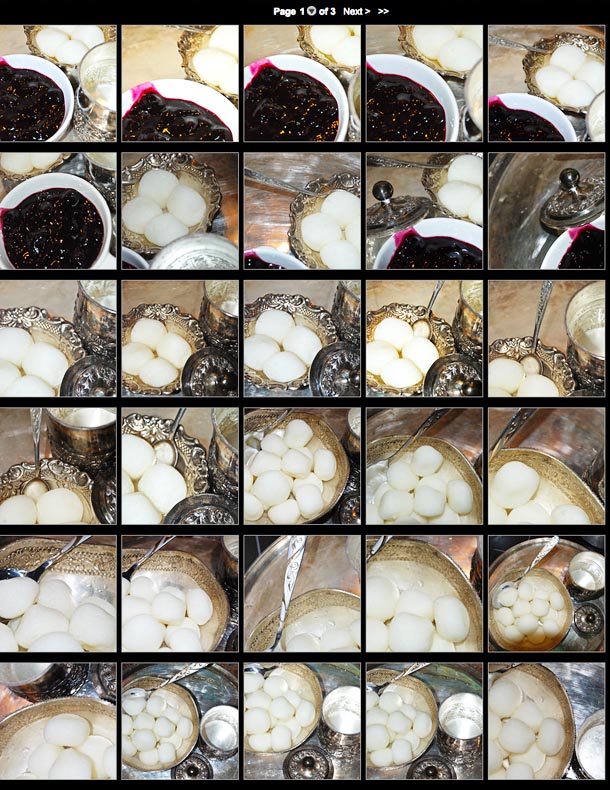
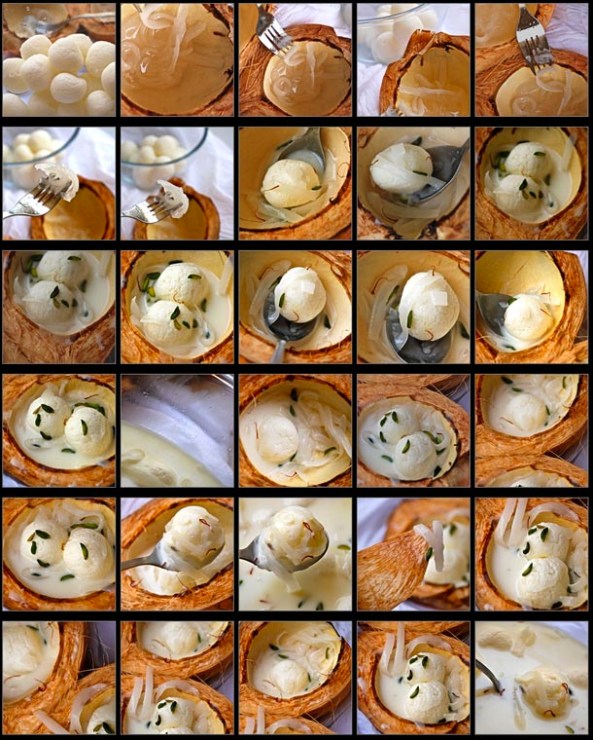
One random thing about myself that I want to share with everyone – I love to write on Bengali Sweets. Particularly Rasgulla or Roshogolla and probably I’ll do something unique and extra-ordinary things on it. In exactly what way I am yet to figure out. Till then you can enjoy a glimpse into the first pages of two of my Rasgulla album!
Unblogging it all… Ishita
BE SOCIAL. SHARE THIS!


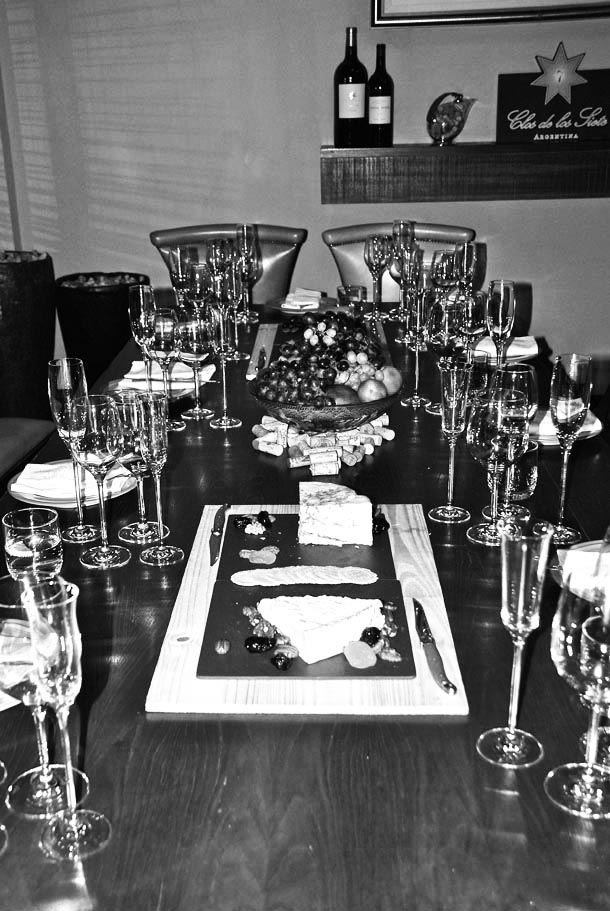
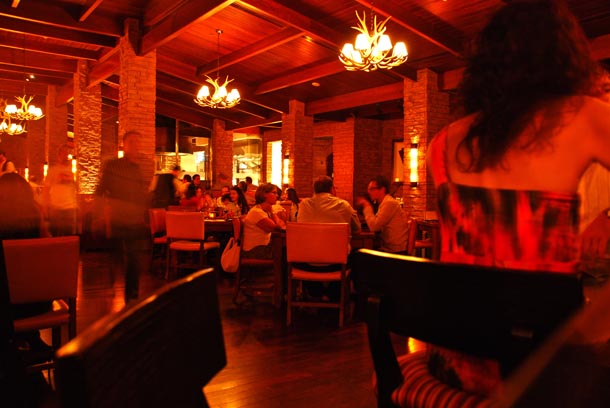
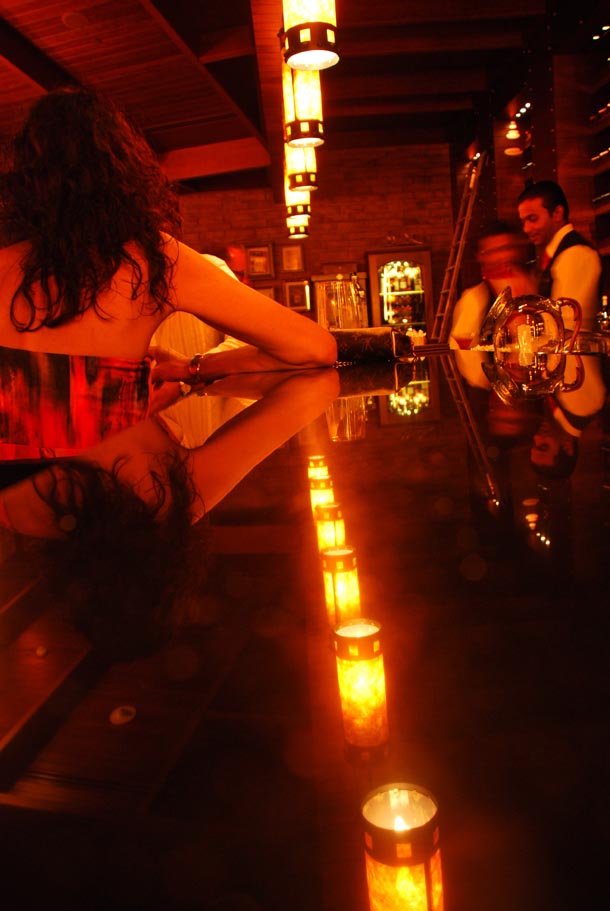
Wine and Cheese amidst dimly lit chandeliers and gorgeously laid out dining table, a company of beautiful people and an evening full of discovery – a perfect setting for the most memorable evening. Quite naturally, I cannot describe my soiree at the Wine Club in Asado anything less than ‘Absolutely Memorable’! It was a beautiful evening of wine tasting, generously hosted by Asado’s Wine Club as our wonderful sommelier, Sarah Belanger guided us through a ‘journey of discovery’ as she calls it, through the world of Argentinean wines and the country’s wine history. Also, the perfect ambiance to meet some of the fantastic fellow bloggers from Fooderati Arabia for the first time. Rewinding the memories of the evening which had me interacting with the Fooderati bloggers – FooDiva, Girlieannyen’s Blog, Life in the Food Lane, The Hedonista, The Naihar Food Blog (in alphabetical order!) and a few others through the clinking of wine glasses over a table laid with savouries, cheese, fruits, nuts and Sarah’s passionate narration of the wine journey drifting through…
Wine Club at Asado in The Palace Hotel, The Old Town
Wine-tasting/Wine-Appreciation session; Minimum 6 persons; Prior reservation mandatory
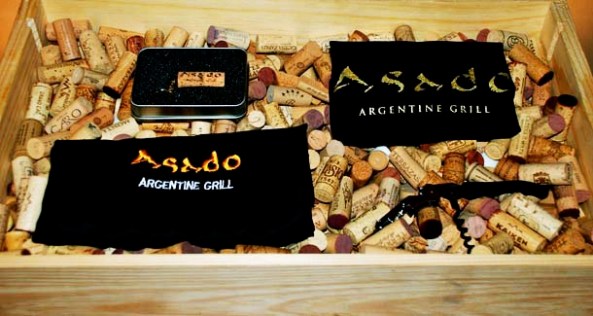
Asado, most recently recognised by Wine Spectator, is home to the largest collection of Argentinean wines in the Middle East. The Wine Club offers wine appreciation classes for groups where guests can regale in the best of Argentinean wines.
The History of Argentinian Wine
Argentina is the sixth largest producer of wine in the world. During the Spanish colonization of the Americas, vine cuttings were brought to Santiago del Estero (the capital of Santiago del Estero Province in northern Argentina) in 1557. The cultivation of the grape and wine production first stretched to the neighbouring regions and then to other parts of the country. Traditionally, Argentinian wine was produced for the domestic market and it is only in the early 1990s that Argentina started producing good quality exportable wine. The major wine regions of Argentina are located in the western part of the country – all along the foothills of the Andes. Unlike the wine-growing regions in Europe where the climate is conducive to producing the best grapes, the Argentinian climate is semi-arid and resembles a desert climate. Then how is Argentina producing such good wines? This is an interesting point indeed. Argentinian viticulture rely on modern techno-savvy irrigation which captures the fresh water dripping down the melted snow caps of the Andes mountains. I wish that I could add similar excitement and the enthusiasm here that was reflected in Sarah’s voice as she so passionately harped on this ‘freshness’ point!
The high altitude and low humidity protects the Argentine vineyards from the factors that affect most European vineyards – the problems of insects, fungi, molds and other grape diseases. This allows cultivating with little or no pesticides, enabling even organic wines to be easily produced!
Important wine regions of the country are located in the provinces of Mendoza, San Juan, La Rioja, Salta, Catamarca, Río Negro and more recently in the Southern Buenos Aires. The Mendoza province produces more than 60% of the Argentine wine and accounts for huge exports.
The Evening
As I walked into the inner parts of Asado into the room that hosts the wine tasting, the first glimpse of the well-stocked cellar through the glass door was a mini give-away to what was to follow in the rest of the evening. Wine and cheese always go hand in hand and the pairings are almost legendary. But I have often found myself stumbling while making the pairing decisions. Thankfully, this evening was going to be different. Though there are no rules as such and a lot depends upon individual preferences, a little note on this can be helpful. Generally the harder types of cheese (i.e. Cheddar or Parmesan) can handle more tannic wines (Tannins are components that ‘dries the mouth’). While creamy cheeses, such as Brie, typically pair better with wines that have more acidity, like a Chardonnay. Salty cheeses (i.e. Blue Cheese and Port) complement sweet wines like Dessert wines.
Sarah guided us through each wine – staring from the Sparkling wine, the Chardonnay, The Malbec and finally the Dessert Wine. She told us all about the food pairings, how different type of cheese complimented different wines and how each sip of a particular wine tasted different without it’s cheese pairing. We explored our own taste-buds – the acidity taste of the wine did change substantially when complemented with cheese. We learnt the ‘systematic tasting’ to check the quality of a wine – check-listing the ‘S’s – the Sight (checking the colour of the Wine against a white background), the Swirling, the Sniff or the Smelling, the Sip and the Slurp. So, next time you are drinking wine – please go ahead and make the expert swirl, the noisy slurp and the snooty sniff – it’s absolutely acceptable!
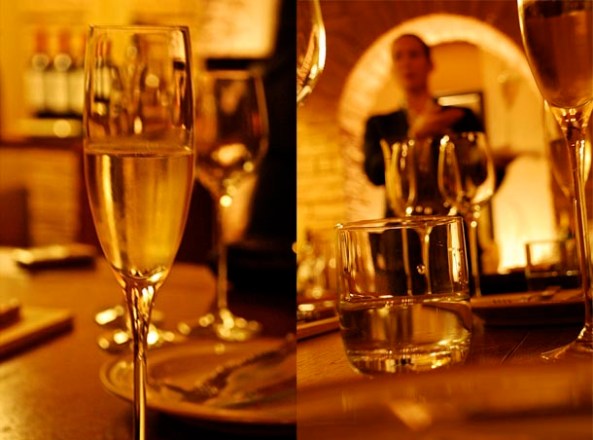
The Sparkling Wine & the Savouries – A supper effervescent Michel Torino with it’s eternal bubbles was the first in the list. Michel Torino does feature among one of the Classic Wines’ list and since 2006 all Michel Torino Vineyards have been certified organic. Situated at 1700m above sea level in the Salta province in north-east Argentina, along the foothills of the Andes, these vineyards are some of the highest in the world. This lovely sparkling wine was fresh, bubbly and citrus with a lovely balance of acidity. It did open up my palate, ready to take on more! I hate to admit this but by the end of the evening a little bit of Michel Torino was still there in my glass and believe me it had slow bubbles still coming out of it!

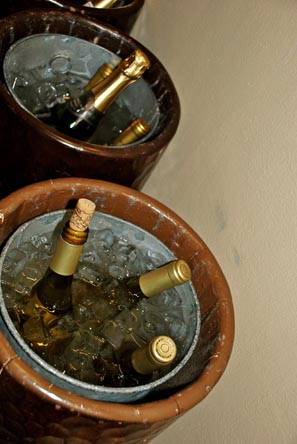



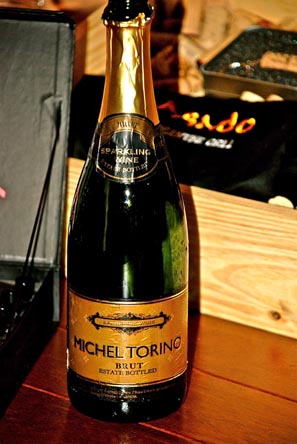


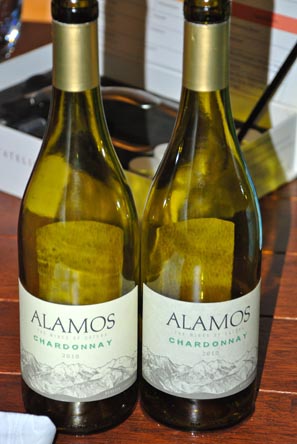
The White Chardonnay & the Brie – An Alamos Chardonnay 2010 introduced us to the famous wine producing Argentinian region of Mendoza. Alamos is labelled as the ‘Wine of the Andes’ and the labels on the bottles pay homage to that and much more. The grapes for Alamos wines are sourced from the high mountain vineyards which are situated at an elevation of 3,000-5,000 m above sea level. Half of the grapes come from the vineyards of the Catena famila estate. The Catena family has an illustrious association in introducing good quality Argentinian wines to the world.
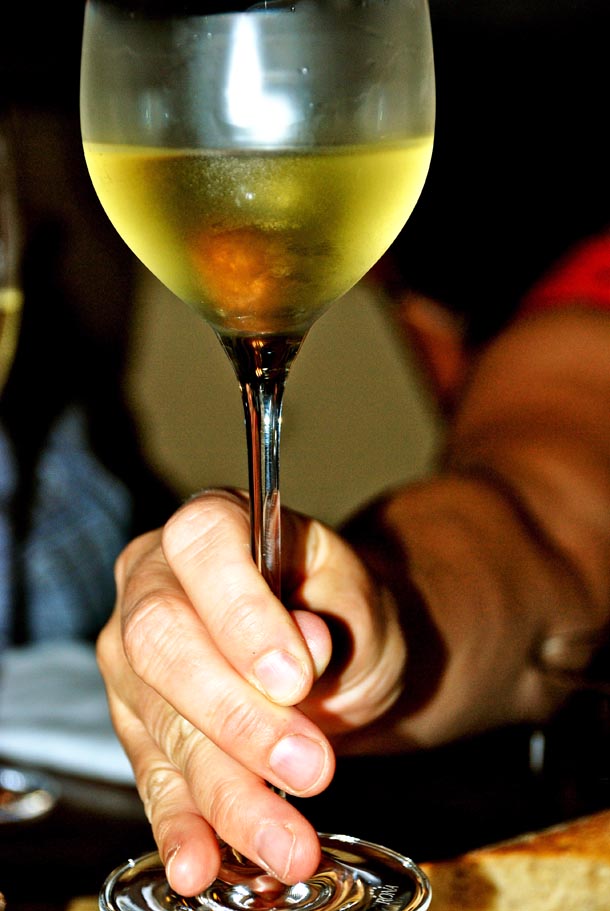
The Brie that accompanied the Chardonnay was perhaps the creamiest of creamy Bries that I have eaten so far. It really did wonders in cutting the acidity of the Chardonnay, making it smooth and gentle. Alamos is oaked for 6 months in both American and French barrels – so it has a nice blend of both without being overtly oaked. Light pale in colour, Alamos is fruity and citrus with slight aroma of vanilla.
Enjoy the photo-journey while we sip the Chardonnay. Oh, in case you were wondering what my pink MP3 player is doing here – well, I recorded the conversations of the evening as I was very sure that I would hate to be making notes while I sip my wine and savour my cheese!



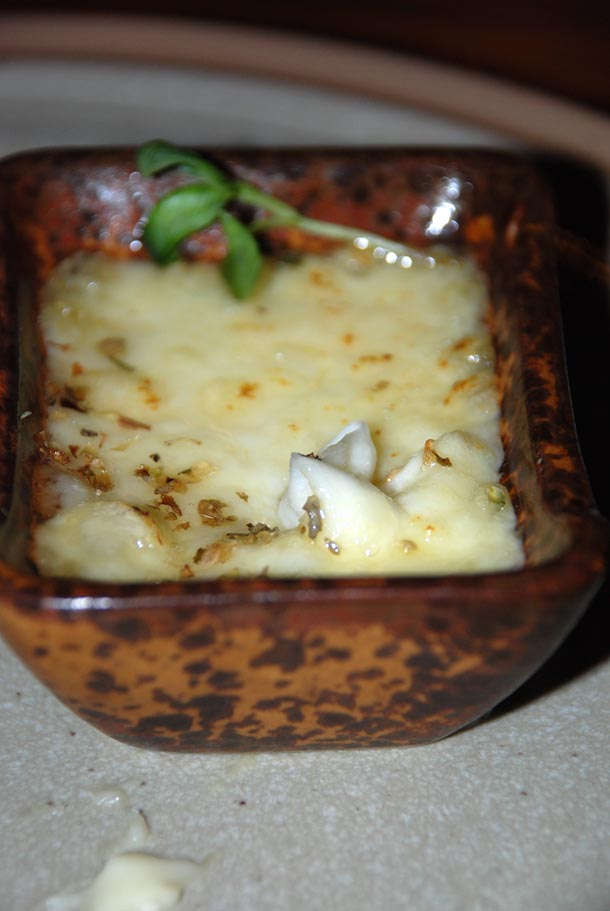
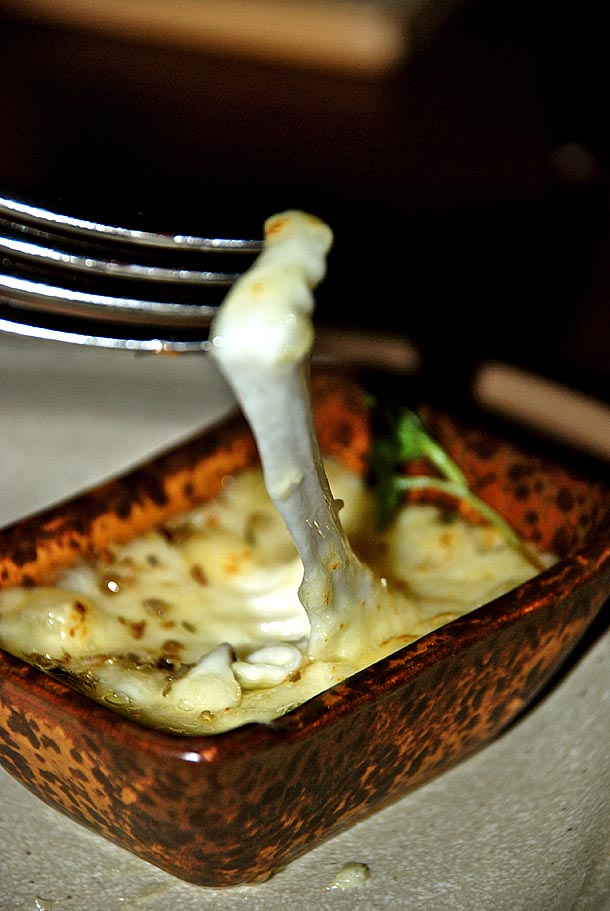
The Malbec & the Provoleta – I have to admit here that I do not have a palate for Red Wine. While everyone else in the room was waiting for this moment to arrive – the Star of the evening, The Malbec, I was hoping that I would probably force myself to a few sips and that’s it – the Red Wine moment would pass!
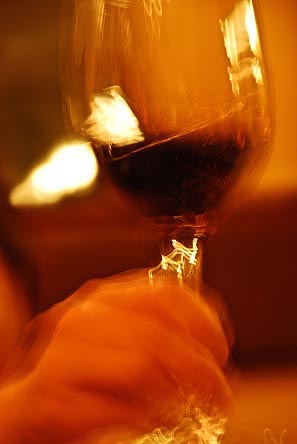
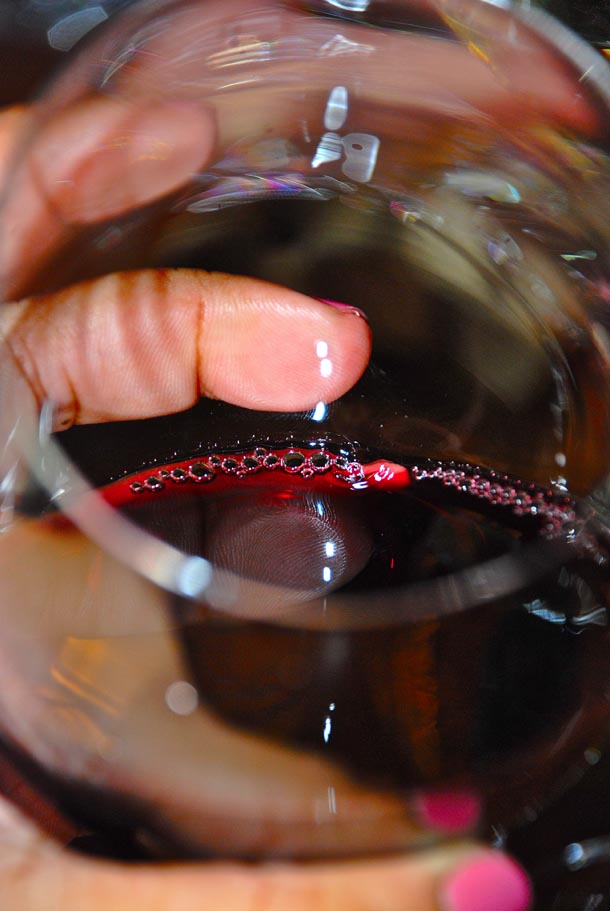
 But, then I hadn’t tasted a Malbec before. We were served an Ique Malbec, 2011. Ique is the signature wine of Bodega Enrique Foster and Malbec is their specialty and has become the flagship of Argentinean wine. This fresh, young, unoaked wine, ruby-red in colour with a tinge of violet gave out a fruity aroma with slight spicy hints of white pepper. I fell in love with Malbec instantly.
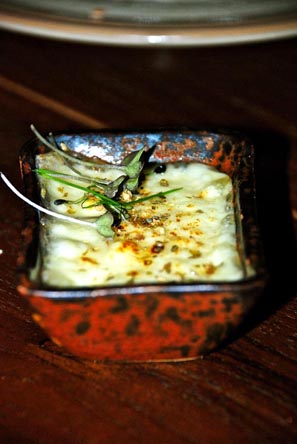
As well as the hot baked Provoleta char-grilled and prepared by Asado’s Chéf. Provoleta is an Argentinian dish where the Italian Provolene Cheese is grilled to perfection to give out a nice smoky oregano flavor. It is a must have pre-meat dish for an asado (a standard word used now for barbecue but you can read more about it here.)
The story behind Bodega Enrique Foster’s Ique is equally interesting. Located in Lujan de Cuyo, the world’s premier location for Malbec grapes, the vineyards of Bodega Enrique Foster are over 80 years old and boasts of a state-of-the-art winery. A gravity-flow irrigation system has been crafted which eliminates pumping and is more gentle on the wine. This is the first purpose-built winery in the world to produce only Malbec varietals by gravity flow. Each grape that goes into making of the Malbec is hand-picked.


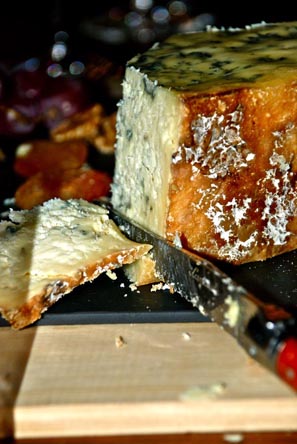
The Dessert Wine & the Blue Cheese – This was going to be ‘the cherry topping’ according to Sarah. Indeed it was. MONTES Late Harvest is a very special Dessert wine harvested in mid June with mild apricot and honey flavours. Coming from the house of Viña Montes which has made Chile internationally known, this is a premium wine which has been awarded the best of the best in this category.
I have a personal preference for Dessert Wine because of my genetic factors – the Bengali genes which always pull me towards anything sweet. And I loved the Montes Late Harvest. And it tasted even better with the salty Blue Cheese which seemed to reduce it’s sweetness quotient a bit – a litlle sigh for my Bengali palate!


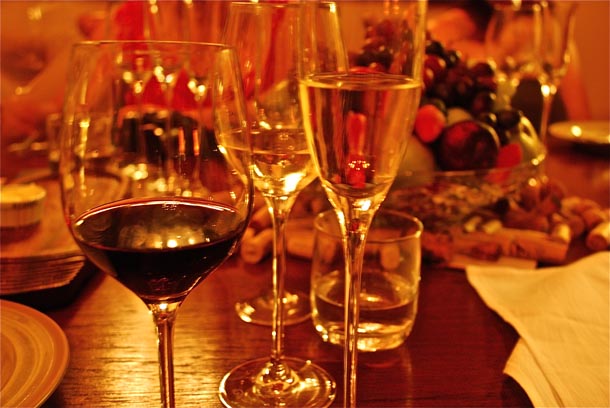
The Sign-off
Priced at Dhs 220/person, this wine wine journey offered by Asado is definitely something not to be missed. It is quite a deal really as Guests get to taste four different wines (and definitely the best names) that include sparklings, white, red, rose, dessert and fortified wines accompanied with an individual cheese and canapé platter. However, a minimum of 6 people are required and each journey lasts around 1.30 hours. There is a goodie bag at the end of the session which includes wine notes and a few other ‘surprise’ goodies that I don’t want to disclose, lest I spoil the surprise. What can be worse than reading a novel where you are already aware of how it’s going to end?
For more details click here or call +971 4 888 3444.
As our wine journey came to an end some of us stayed back over delicious grills from Asado, the lively Argentinean Grill so that the moments could linger on a bit more. A separate post on that in the future perhaps. Don’t forget to enjoy the pictures of Asado and hoping they tempt you enough.
Unblogging it all… Ishita
Disclaimer: The Wine Tasting part of our evening was hosted by Asado Wine Club. All my opinions are independent and based on my own experience. Don’t forget to read the reviews of the evening by FooDiva and Life in the Food Lane.

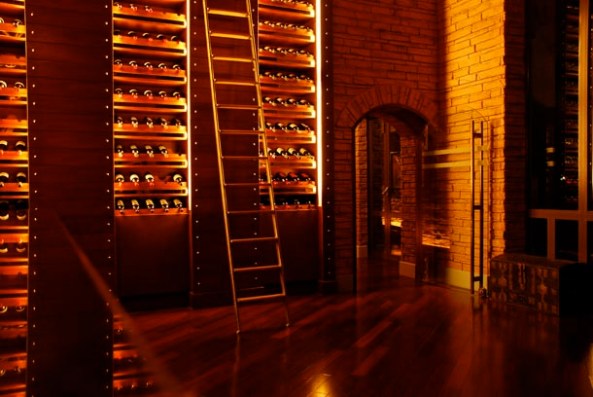
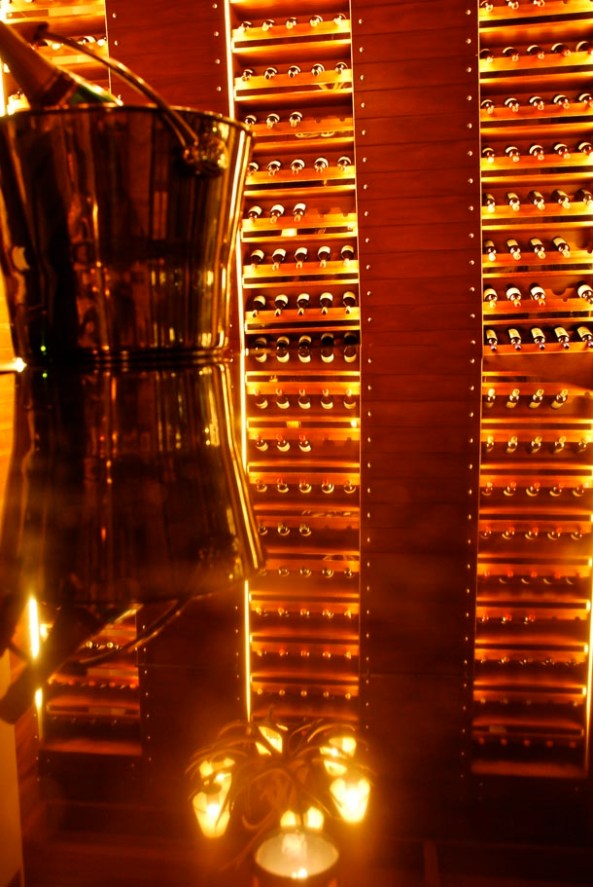
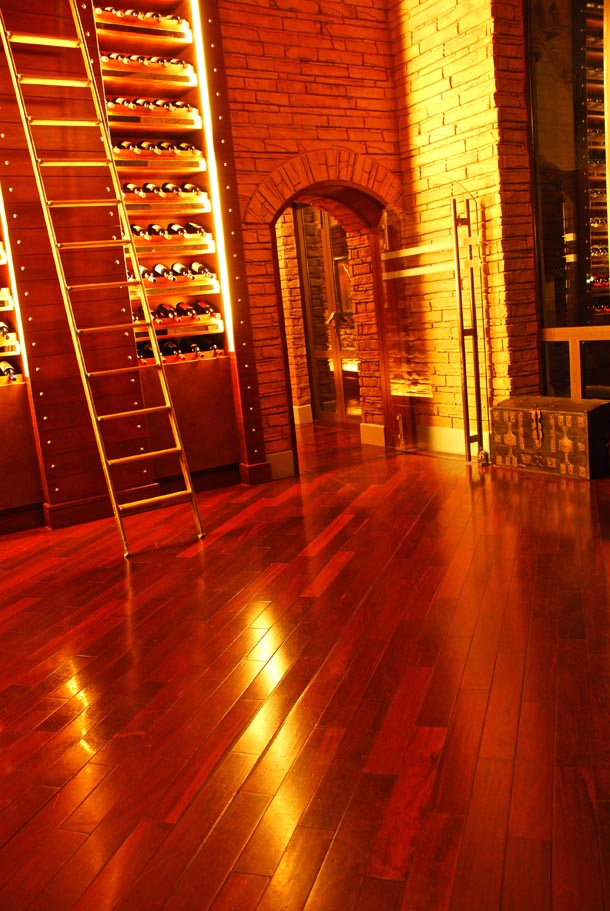
BE SOCIAL. SHARE THIS!

Though I don’t run my household in the manner of taking Geography lessons, but subconsciously our kitchen does turn into a lab. Probably I must have done a Geography Major in my previous birth. I believe in the concept of Reincarnation according to my own convenience. When I cannot explain any particular characteristic (bad or good) in myself, I push the ’cause’ to my previous birth and if I really want to do something but do not have the courage to do so, I try to cajole myself by saying – ‘Maybe in my next birth!’ For example – Bungee Jumping.
My previous articles have touched (though touched it too mild a word) upon our amazing stay in the Machan Paradise View Resort in Chitwan (Gift Wrapped & Preserved For Each Tourist – Chitwan, Tharu Village Walk).
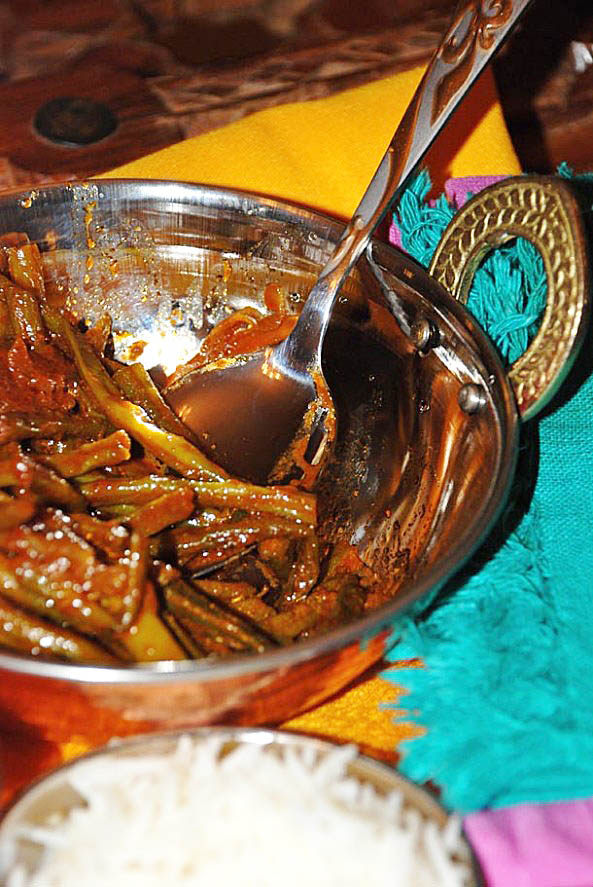
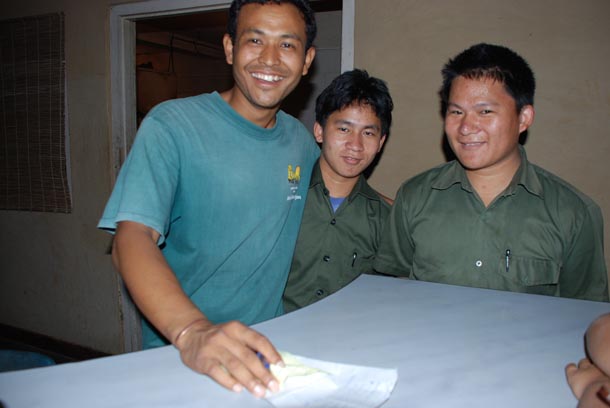
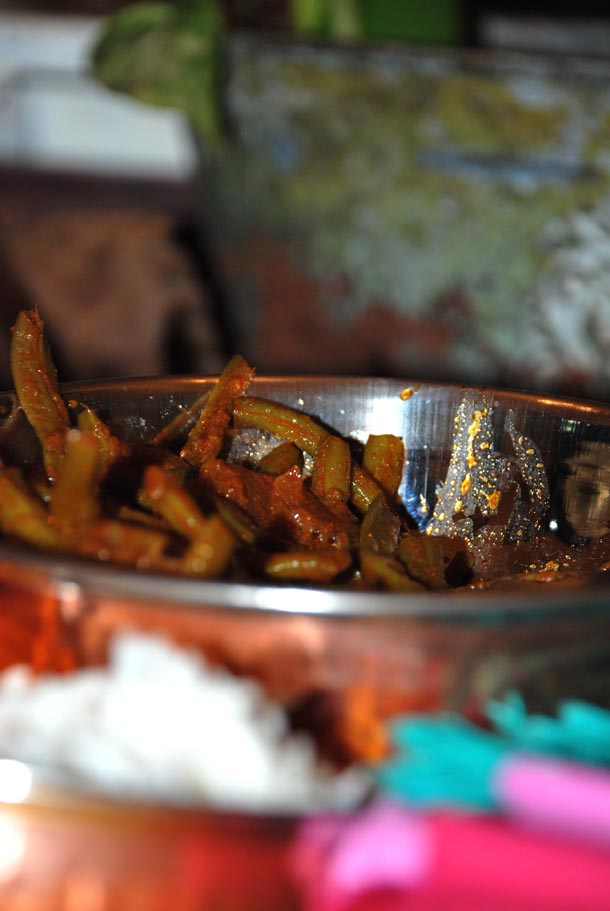
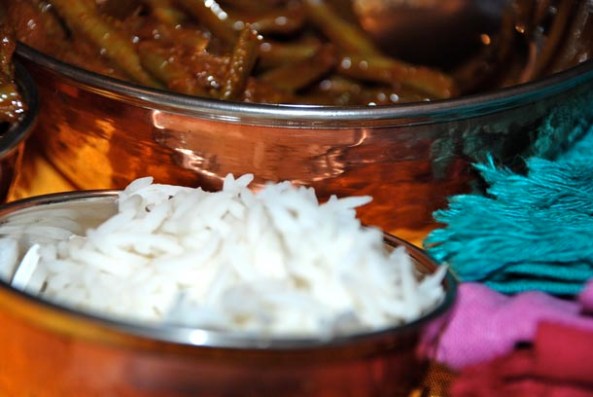
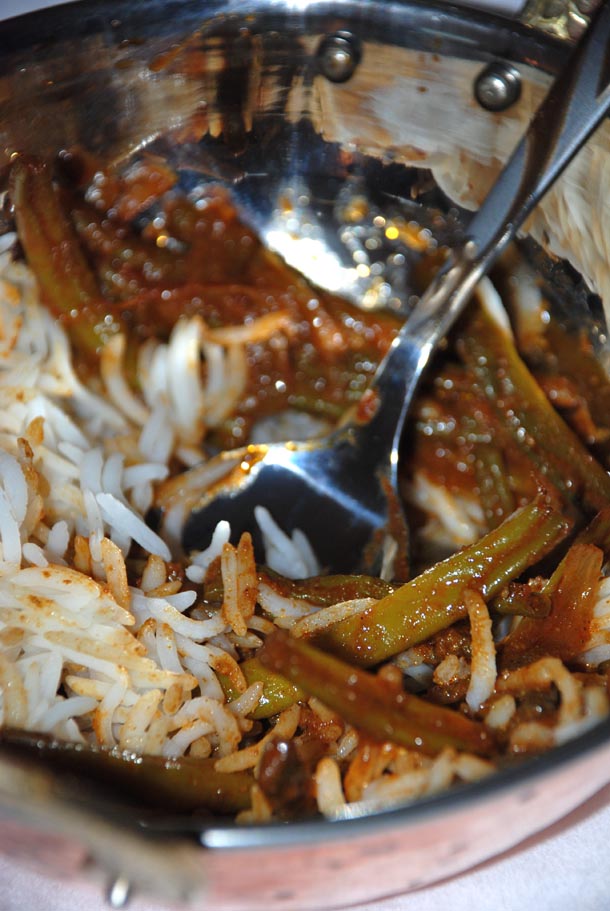
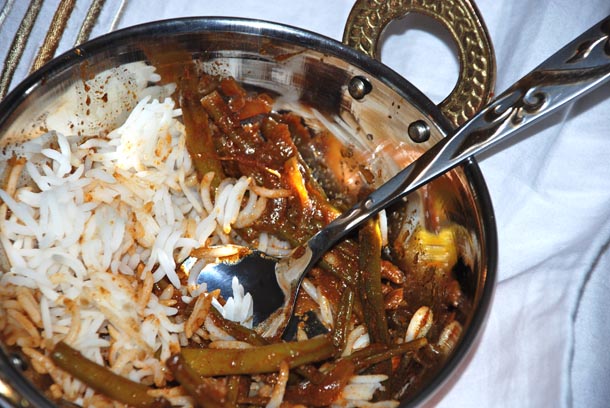
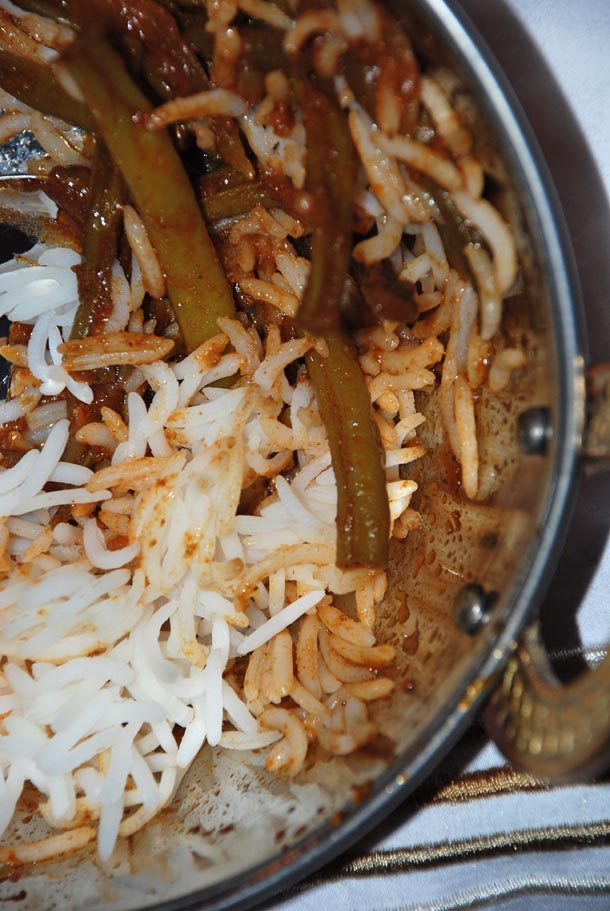
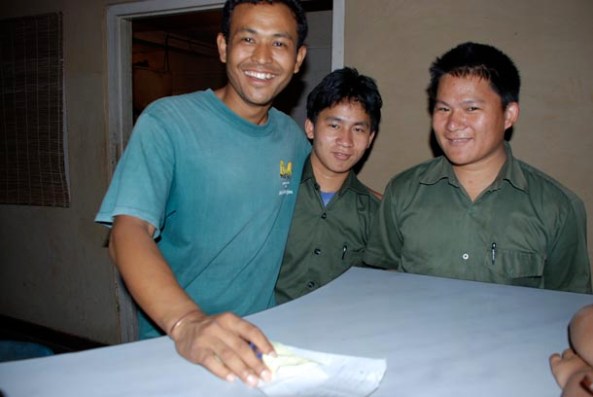
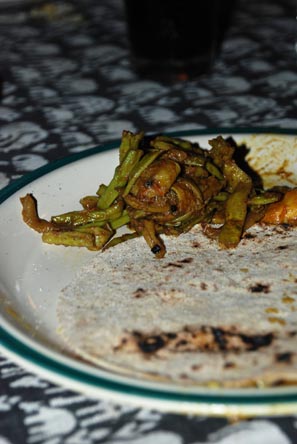
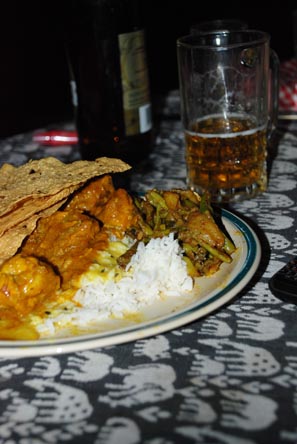
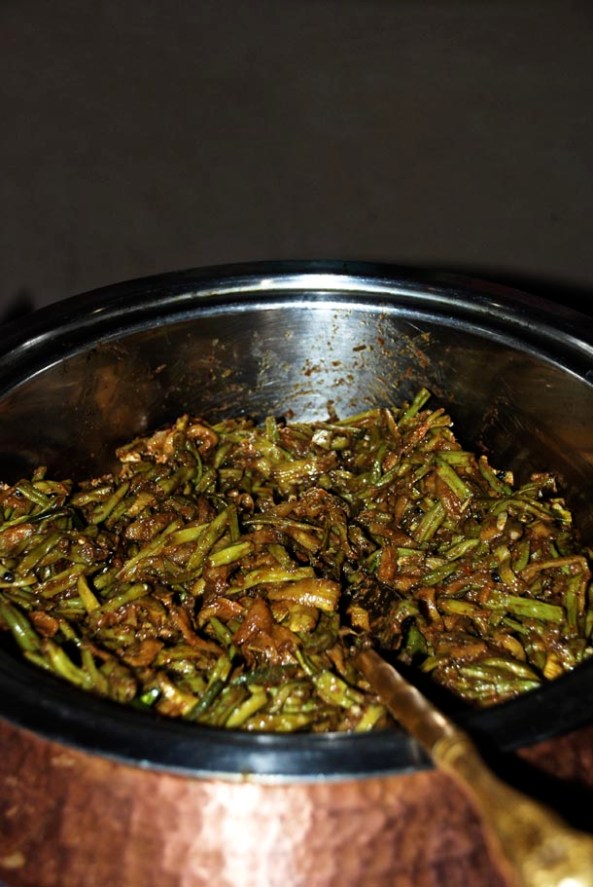
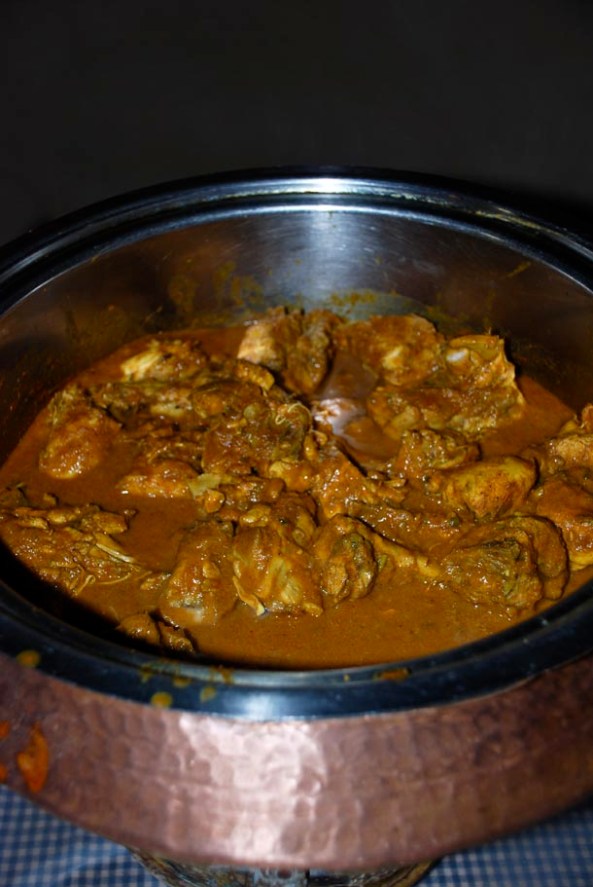
Machan offers only Full-Boarding option. No complaints on that since each meal was an absolute wholesome experience. One such fabulous dinner consisted of Chappatis (Indian flat bread made with Wheat-flour) freshly made in a traditional Tandoor (clay oven used in cooking and baking) where the heat is generated by wood fire, accompanied by a light Masoor Dal/Orange Lentil Soup, a Potato and Peas Curry, a String Bean preparation and followed by a slightly spicy Chicken Curry. Big Z went crazy over the Bean preparation and S went head over heels with the Chicken Curry. So I pestered our shy Chéf (the person on the extreme right in the picture below) into giving us the recipe which later unfolded onto soft paper napkins. Post-Nepal, we have tried cooking both of these with great success. Multiple photo-shoots after, these two recipes have joined my blog-queue. Releasing the String Bean preparation – Bori Tarkari. The second picture (below) is the original preparation from Machan.
Don’t forget to scroll down for some sensory stimulation – Maithili Art!
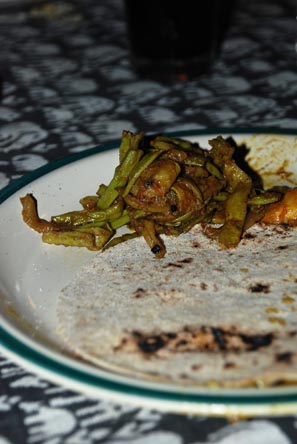
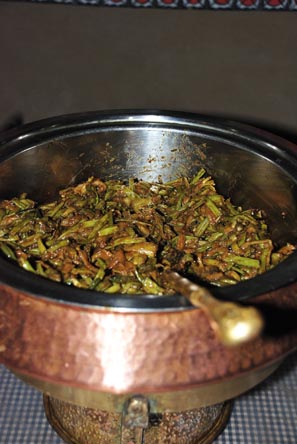
Bori Tarkari/ String Beans Curry
Category – Veg Side-Dish; Cuisine type – Nepali
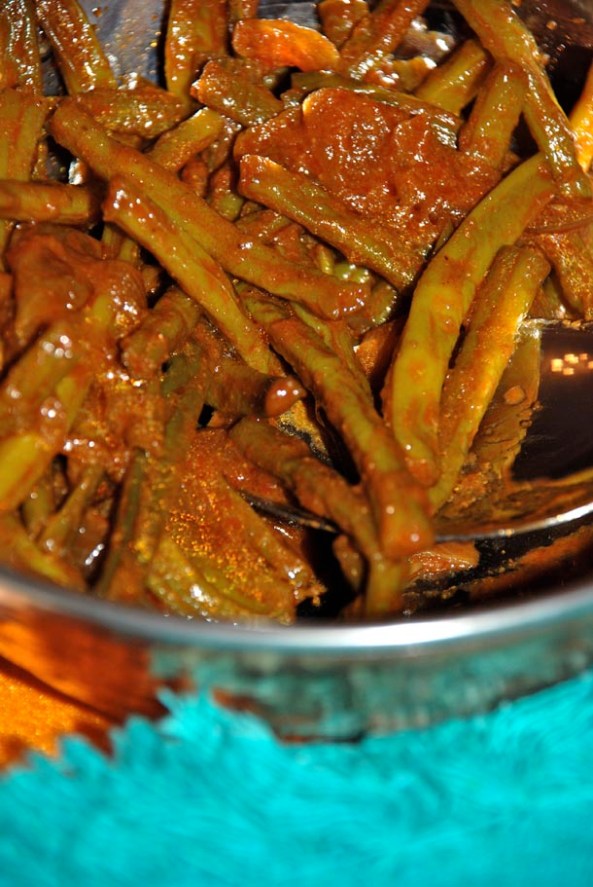
This String Beans Preparation is mildly spicy. Not spicy as in the hot chilli kind but slightly tangy pickled kind. Maybe, because of the tomatoes. Though the English translation says it’s a Curry, Bori Tarkari is a dry vegetable preparation. Interestingly, most Nepali cookbooks that I have come across refer ‘Tarkari’ as Curry. Do not hesitate to add more information to this.
For the printable recipe→
Serves 5-6 persons
Preparation time – 45 minutes (preparation – 15 minutes; cooking – 2 hours)
Ingredients
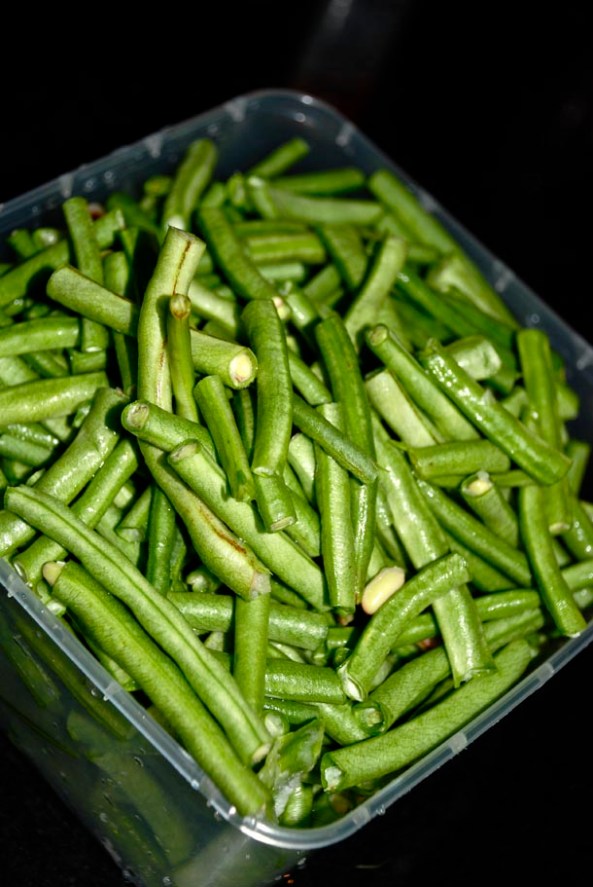
String Beans – 1 kg, cut into 2 inch long pieces
Tomatoes – 2, chopped into small pieces
Tomato Paste – 1/4 cup (You may use puréed tomatoes as well. Well, I asked if we could use only tomatoes instead of purée, I was told that the latter gave a pickled taste. So we decided to go for the purée!)
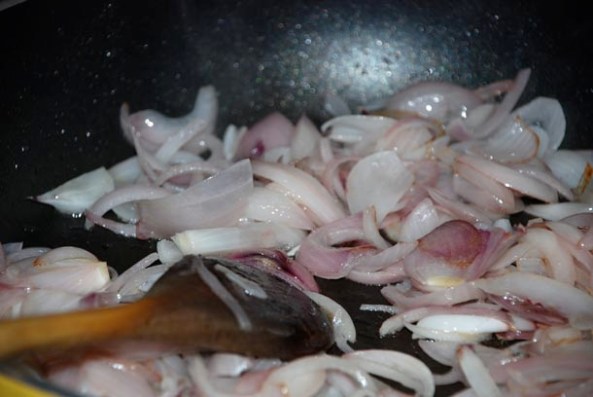
Onions – 4, cut into slices
Curry Powder – 4 tsp
Cumin Powder – 1 tsp
Garam Masala Powder* – 1/2 tsp
Turmeric – 1/2 tsp
Salt – as per taste
Mustard Oil – 1 tbsp
[*Garam Masala Powder used in Nepali dishes is slightly different from the Bengali or Indian Garam Masala. I have come to realise that though some ingredients like Cardamom, Cinnamon, Cloves are common to Garam Masala being used in various regions, each region or culture probably adds its own touch.
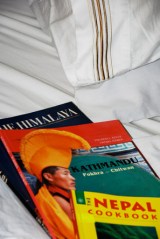
The proportion of ingredients that goes into making the Nepali Garam Masala (from The Nepal Cookbook)
Dry roast the following whole spices separately until fragrant:
5 ttbsp Coriander Seeds
3 tbsp Cumin Seeds
1 tbsp black pepper Corns
2 tsp Black Cardamom Seeds
2 tsp Ground Cinnamon
1 tsp Whole Cloves
1 tsp ground Nutmeg
Grind the above roasted spices into a fine powder.]
Method of Preparation
– Heat the oil in a Wok
– Add onions, chopped tomatoes and fry till the onions turn brown and the tomatoes turn tender
– Add the Tomato Paste, Turmeric, Curry Powder, Cumin Powder and the Garam Masala Powder (Note: Keep stirring slowly to prevent the Assorted Masala paste from burning)
– Add the String Beans and stir in with the other Masalas over high flame for just a minute. Turn the heat down to the lowest level and cover the pan. Let the beans get cooked. (Note: It shouldn’t be over-cooked and soggy)
Accompaniment
Serve with Chappatis (Indian flat bread made with Atta/Wheat-flour), Tandoori Nan (Indian Flat Bread) or plain white Rice with some plain hot Dal/Lentil Soup.
A bit about Nepali Cuisine
Let me also share a bit that I’ve learnt from my stay in Nepal and also from my recent purchase from the Kathmandu airport – The Nepal Cookbook (Author: Padden Choedak Oshoe).
Nepali Cuisine is influenced by the cuisines of both India and Tibet. The use of ingredients is very similar and some of the most commonly used ingredients are as follows – Hing/Asafetida, Mungrelo/Black Cumin Seeds, Cardamom – Alaichi/Black Cardamom, Sukumel/Green Cardamom, Chilli Powder, Red and Green chillies, Hariyo Dhaniya Paat/Cilantor or Coriander leaves, Curry powder, Methi/Fenugreek (most importnat in Nepali Cooking), Saunf/Fennel Seeds, Garam Masala (dry roast of whole spices like Coriander Seed, Cumin Seeds, Black Peppercorn, Black Cardamom Seeds, Ground Cinnamon, Whole Cloves, Ground Nutmeg), Turmeric, Garlic, Ginger, Onions, Scallions, Gundruk (Nepali vegetable dish prepared from green leafy vegetables that are fermented and then sun-dried and is used in soups, pickles and other dishes), Jimbu (aromatic grass from the Himalayan regions and is sold in strands – a pinch is enough to flavour a dish; not available in Asian supermarkets, hence bulb garlic roots are used as a substitute), Jwanu/Lovage Seeds (Ajwain in Hindi), Timbur (another important ingredient used in Pickles), Tamarind pulp.
Dishes are cooked in Ghiu/Clarified Indian Butter (Ghee in Hindi) or Mustard oil, Corn oil and Soybean oil.
Achar/Pickles, a special condiment perfumed with ginger, garlic and hot chillies, is considered indispensable to a Nepali meal. They may be served as a vegetable dish in its own right or as a condiment and may use either raw or cooked cooked vegetables and may be preserved or prepared fresh.
Dal/Lentils, Bhat/Rice, Tarkari/Curried vegetable and a small amount of Achar/Pickle – this is the main staple diet of most Nepalese though festivals call in for more elaborate Nepali meal with Masu/Meat, Macha/Fish and other Nepali Desserts amongst which the most popular is Sikarni made with hung yoghurt/curd mixed with dried fruits. Regional variations in cooking styles and dishes quite obviously exist with the geographical/topographical variations within Nepal as the mountains in the North roll down into Tarai/Plains in the south.
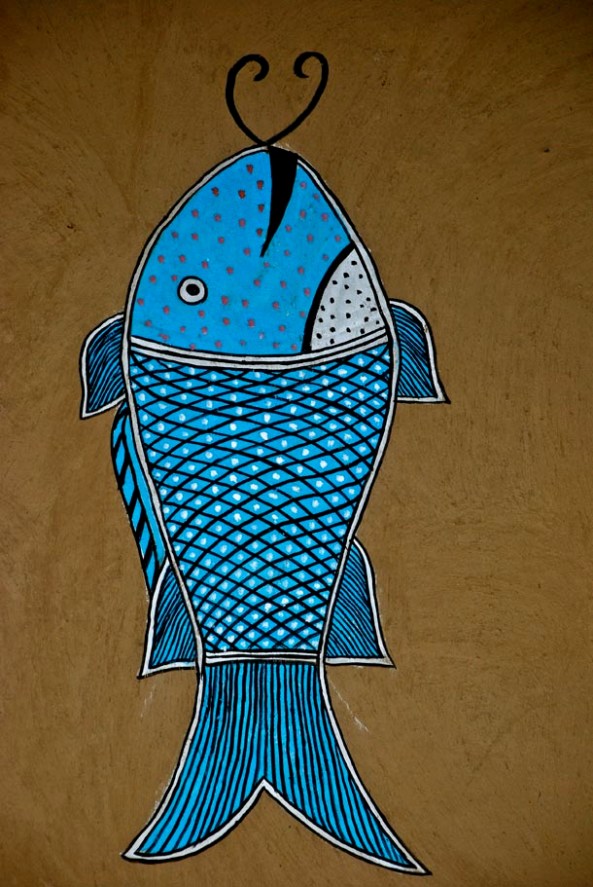
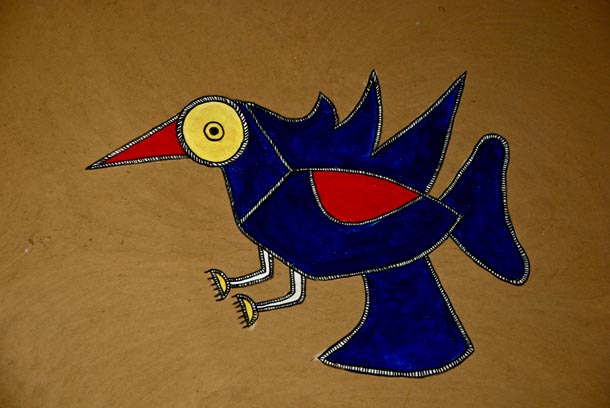
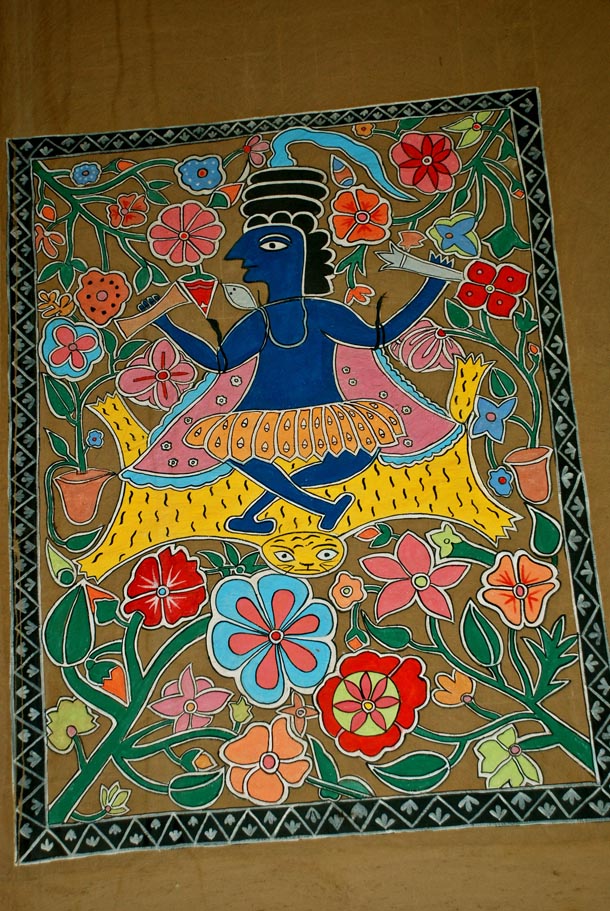
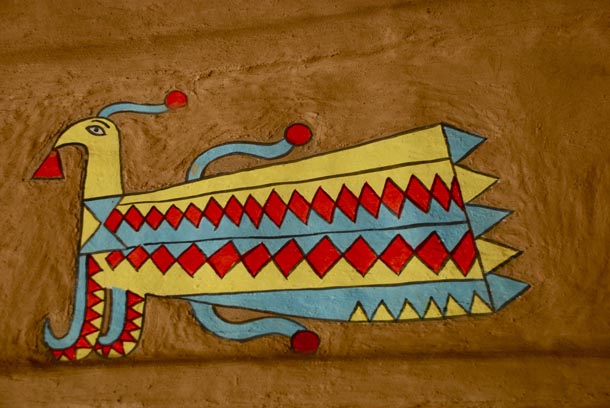
Maithili Art or the Folk Art of Mithila
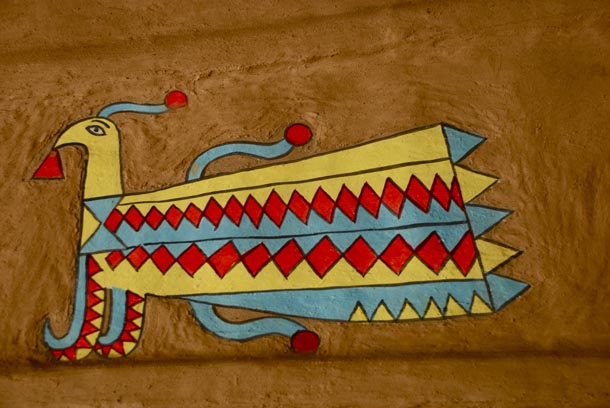
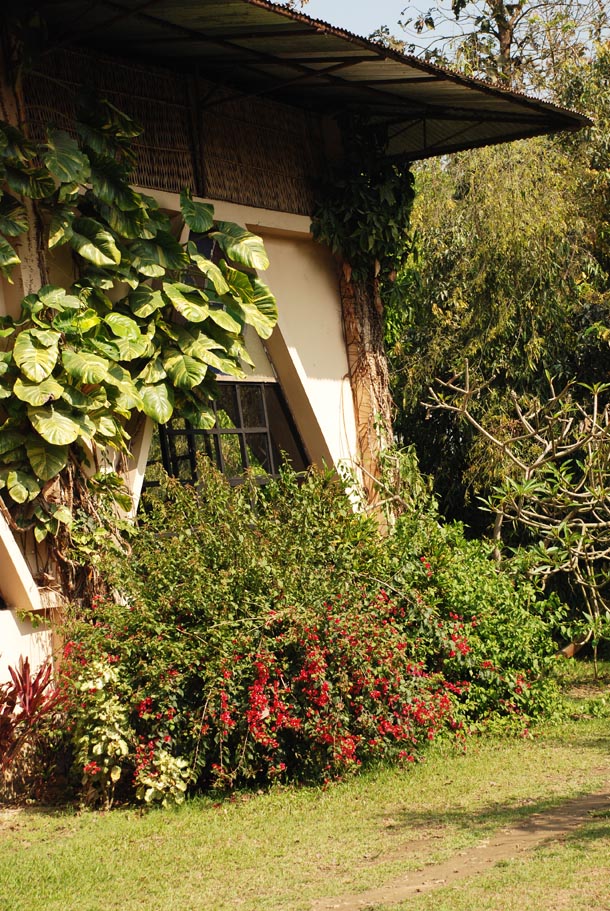
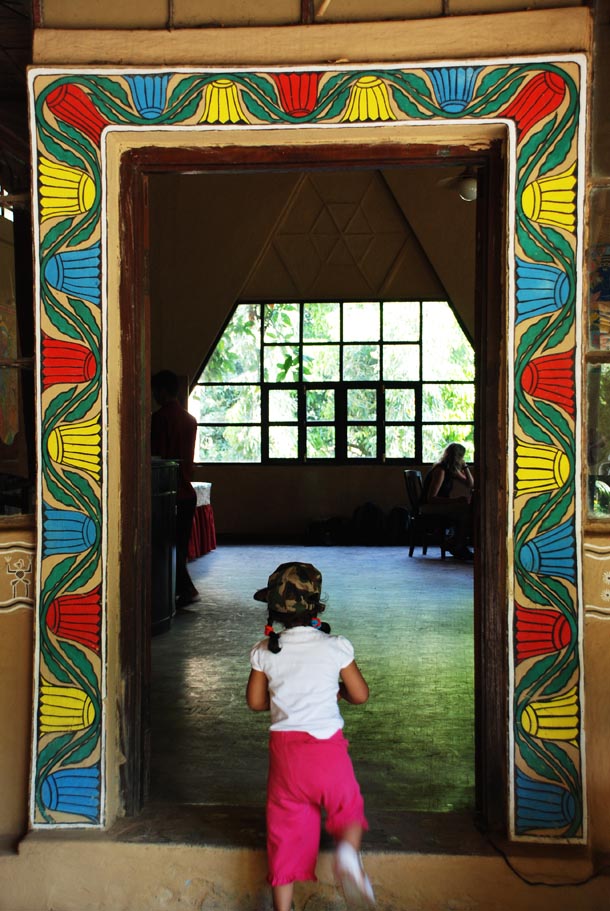
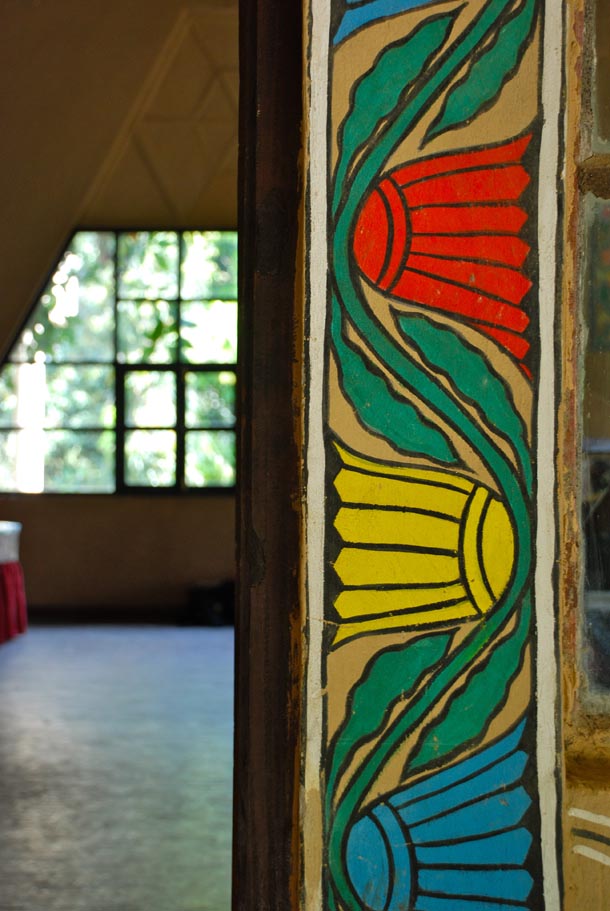
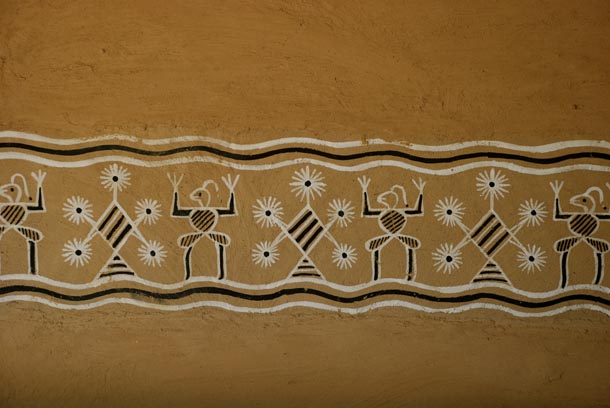
The dining room in Machan is pretty huge with unexceptional high ceiling. The walls have folk art painted on them by the local tribal artists, specially the women using natural vegetable colours. This is the folk art from Mithila or Maithili Art.
History of Mithila
At first the art seemed very familiar – regions of Bihar in India have similar art form. The ancient country of Mithila comprised of the present districts of north Bihar in India and parts of southeast of Nepal. Janakpur, the capital city of Mithila is situated in south-east of Nepal and is the centre of Maithili culture. Sita, the consort to the Hindu God Rama in the Indian epic Ramayana was the adopted daughter of King Janaka of Mithila and a princess heralding from Janakpur. This is the reason why Sita is also known as Janaki. God Rama and Sita are said to have been married in Janakpur and the city celebrates their marriage anniversary each year. People flock to the Janaki Mandir, a temple dedicated to Sita and Janakpur today is a very important Hindu pilgrimage site.
Maithili Culture
Maithili culture has its own language and rich literary tradition and the tradition of painting and handicrafts (specially done by the women) have been passed down from generation to generation. The Maithili Art form was based on ancient rituals and religious practises and had survived centuries. Traditionally, it was a floor and wall art done by the Maithili women and was an integral part of the region’s culture. The designs and motifs took their inspiration form the surrounding nature, people and animals.
The folk art can be divided into two forms:
1) Floor drawings or line drawings on the ground known as Aripana and
2) Wall arts or mural arts known as Mithila arts
An Aripana is drawn on clean swept ground of a courtyard or inside the house. It is a way of worshiping the earth by drawing different auspicious design before any domestic ceremony. The designs drawn are semi-geometric and floral. Each diagram has well defined center on which an installation of a sacred pot, a plate, a basket or a seat is made for ritual purpose. The subject matter of Aripana generally falls into five categories –
1) Images of human beings, birds and animals including fish, peacocks and snakes
2) Flower (lotus), leaves, trees and fruits
3) Tantric symbols
4) Images of gods and goddesses
5) Mountains, rivers
The technique of drawing Aripana though simple, requires a lot of expertise. The designs are usually drawn with fingers. Powdered rice is made into paste with water and is used to give the natural white colour. Turmeric is mixed to produce yellow while Sindur/Vermillion is used for red. The ground is smeared with clay or cow dung before drawing an Aripana. Wall arts are drawn on the occasion of some festivals and other important ocassions such as births, sacred thread ceremony, wedding etc. Each occasion and ceremony is marked by their own signature motifs, a wonderful and a detailed description of which can be found here.
 Evolution of Maithili Art into the famous Madhubani Art
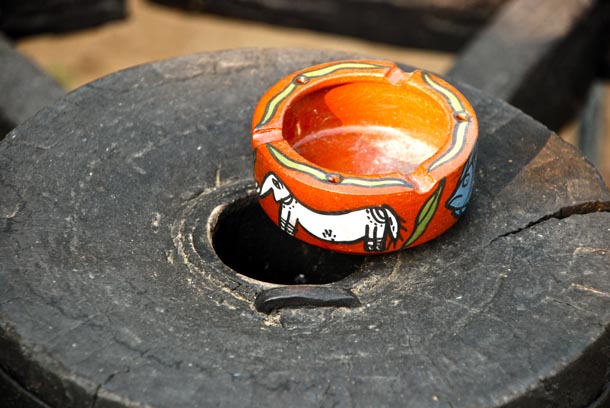
These traditional floor and wall art were temporary in nature. They either got washed away in the rains or were brushed over with new mud when the Maithili people repaired their crumbling mud walls. Though this ritual of traditional floor and wall art by women were still prevalent in the 1990s, soon they started practising the painting on paper. This Maithili Art on paper is called Madhubani Art. Handmade lokta paper was introduced by Claire Burkert to the Maithili women of Janakpur and its neighboring villages. As the Art form found an expression on paper, the artists started experimenting with various techniques and ideas staring from using modern brushes, acrylic colours and newer subjects. Today, Madhubani Art has found its way into handmade cotton clothes, note-books, photo-frame, writing sets, recycled cards, mirrors, ceramics, bags and cushion covers, table cloth, ash-tray, T-shirts and tapestry. Its market value is increasing day by day thereby providing a much needed financial empowerment to the local women.
Colours used in Mithila Art
Bright colours characterise Maithili art. The three basic colours that are frequently used are Bright Red, Yellow and Black. Black is obtained from soot, Red from local clay and Yellow from petals of flowers or turmeric. Vegetable colours are also prepared from different flowers, fruits, barks and root. The gum prepared naturally from the Babul tree is mixed in the colours for durability. The bark of Peepal tree is dried at sunrise and then boiled in water to yield Pink. Blue is obtained by crushing the Sikkar or wild berries. Dark green is made from the leaves of the Saim creepers and Parrot green is obtained from the sepals of Gulmohar (Royal Poinciana or Flamboyant and is also one of several trees known as Flame tree). Watercolour mixed with Pithar/rice powder and Vermillion is also used. Though modern brushes are now being used by many artists, the colours are generally applied with a piece of raw cotton or lint attached to the end of the bamboo splint. Brushes are also by wrapping cotton around one end of a twig or matchstick and acrylic colours are also being used.
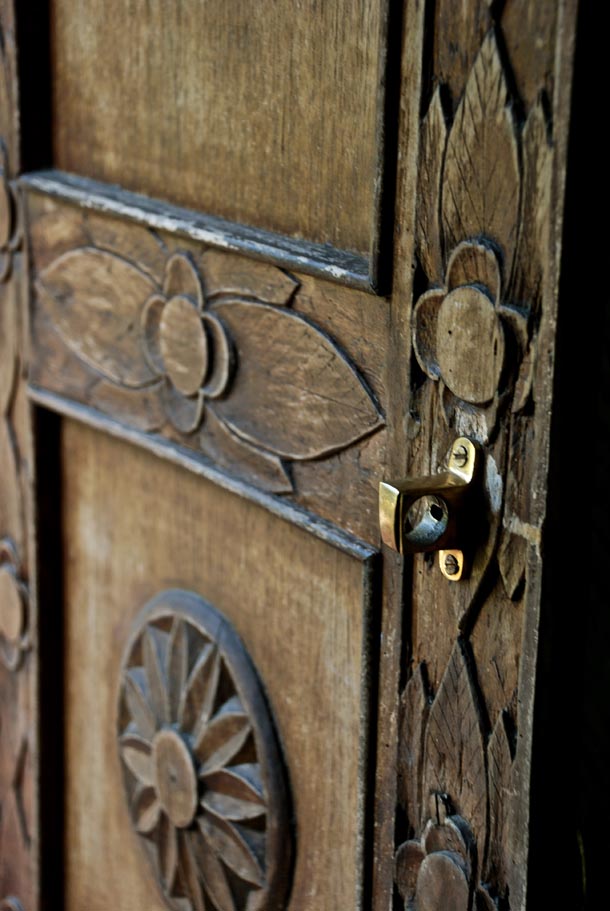
A small photo-journey follows below while you may enjoy many more here. Well, a simple recipe on a local Nepali dish culminating in a journey of learning… about a historical and a traditional folk art. That’s the charm and the blessings of travelling. One learns through the heart and soul and once that is done, it is imprinted in both places forever.
Unblogging it all… Ishita
Other articles on our Nepal trip
Innocence In Their Eyes, Joy In Their Faces
Gift Wrapped & Preserved For Each Tourist – Chitwan
Where The Buddha Only Sees!
Daal Maharani Befitting the Queen (And Also Us) – Recipe
Sikarni Raan/Marinated Lamb Shank from Yak & Yeti – Recipe
Flying over Mt Everest – Nepal
The Abandoned Women Amidst Many Prayers
Resources:
Mithila Art @Jankpur online
Mithila Art
BE SOCIAL. SHARE THIS!

Chitwan Part 2
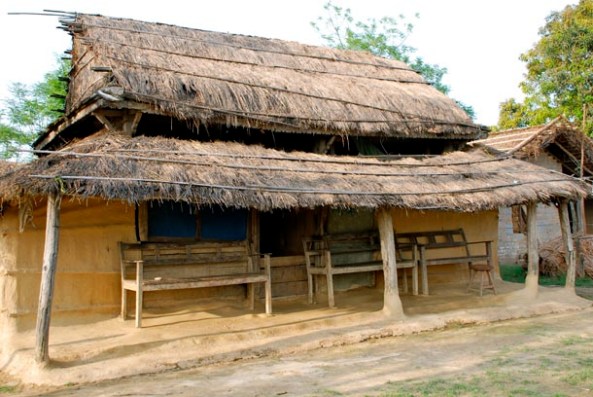
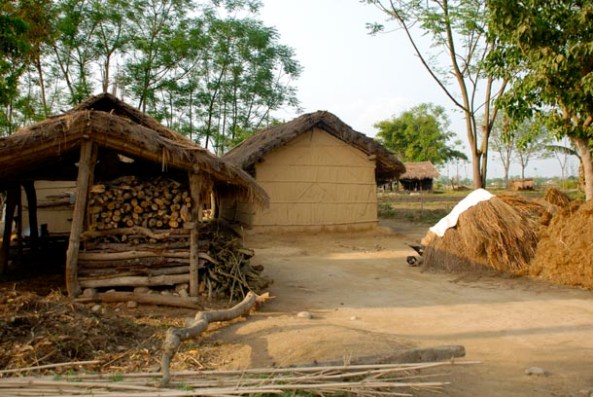
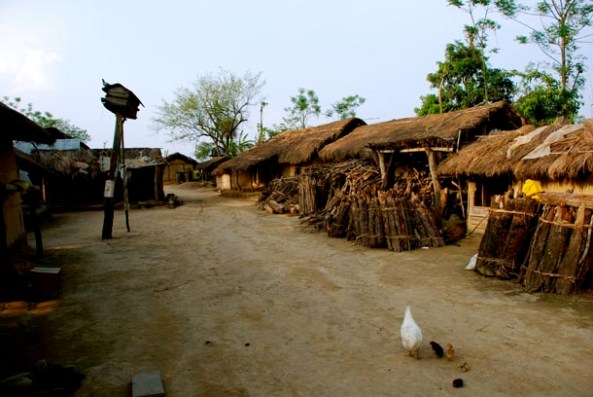
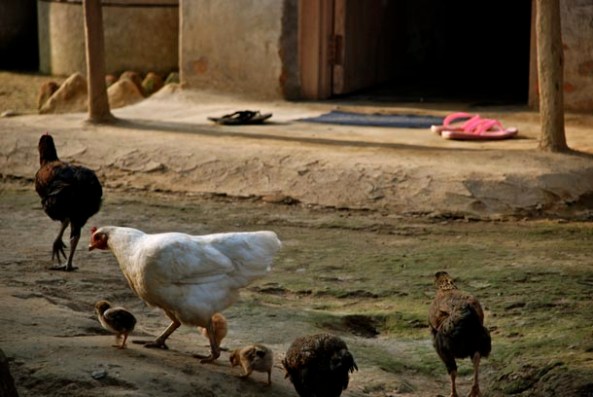
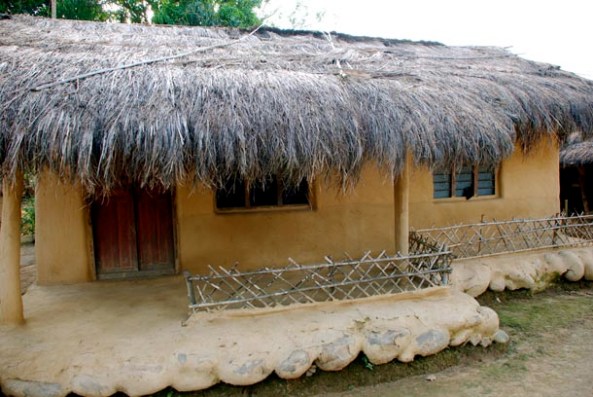
Our stay in Chitwan was memorable not only because it brought us incredibly close to nature but also because it gave us the opportunity to show the Z-Sisters a different world altogether. During our stay there, one evening we went to the nearby Tharu village where they the Z-SISTERS were confronted with some extreme but essential life moments. [Tharu is an ethnic group indigenous to the Terai, the southern foothills of the Himalayas in Nepal and India. The Tharu people themselves say that they are people of the forest. In Chitwan, they have lived in the forests for hundreds of years practicing a short fallow shifting cultivation. They planted rice, mustard, corn and lentils, but also collected forest products such as wild fruits, vegetables, medicinal plants and materials to build their houses; hunted deer, rabbit and wild boar, and went fishing in the rivers and oxbow lakes. They are recognized as an official nationality by the Government of Nepal. The majority of Tharu live in Nepal where they constitute 13.5% of the total population or 3.96 million of Nepal’s estimated 29.4 million population as of July 2010. There are also several endogamous sub-groups of Tharu. The Tharu people themselves say that they are people of the forest. In Chitwan, they have lived in the forests for hundreds of years practicing a short fallow shifting cultivation. They planted rice, mustard, corn and lentils, but also collected forest products such as wild fruits, vegetables, medicinal plants and materials to build their houses; hunted deer, rabbit and wild boar, and went fishing in the rivers and oxbow lakes. Info courtesy – Tharu on Wiki]
We were living in the nearby Machan Paradise View Resort. The walk added yet another wonderful chapter to our Machan memories. The Tharu village was situated very close to the Royal Chitwan National Park. Naturally, the people living there were used to living dangerously close to nature. They were allowed into the National Park for 3-4 days in a year to collect Elephant Grass or the Savannah which they used for making the thatched roofs of their huts or use them to make fire. The Park has been cited as an UNESCO World Heritage Site since 1984. So, that’s another tick on my list of the UNESCO World Heritage Sites that I have visited.
A little excerpt from my previous post… Occupying more than 900 sq kms of Terai lands which are fabulously rich in flora and fauna, this is one of the last refuges of the endangered single-horned Asiatic rhinoceros (estimated at 400) and also the Royal Bengal tiger (estimated at more than 90). Grasslands sweep into the north to the Mahabharat range and jungles extend south to the Churia Hills. Apart from the endangered Asian one-nosed Rhinos and Royal Bengal tigers, the Royal Chitwan National Park is home to many more endangered species and wild animals like leopards, sloth-bear, Indian Bison, Wild Boars, Sambar, Chital, Hog, Barking Deer and many more. Over 50 different species of mammals, 400 different species of birds, 65 different types of butterflies can be found here and 70 different types of grass including the famous Elephant Grass or the Savannah grow here. The fact that Chitwan is among the last surviving examples of the Terai, it deserved all the respect and bewilderment of whoever has the slightest opportunity to experience this. It’s amazing just to think that even 40 years back the entire Terai was like Chitwan!
The Tharu People
Interestingly, historians consider the Tharus to be the direct descendents of the Gautama Buddha. Archeological findings have also been supporting that Tharu people were living in that area for quite long time. The Terai region had infact remained protected from intruders for long because of high incidence of Malaria and the Tharus had developed a natural resistance to the disease. There are quite a few interesting things about them which not only is intriguing but absolutely mersmerising.
Our Tharu Village Walk
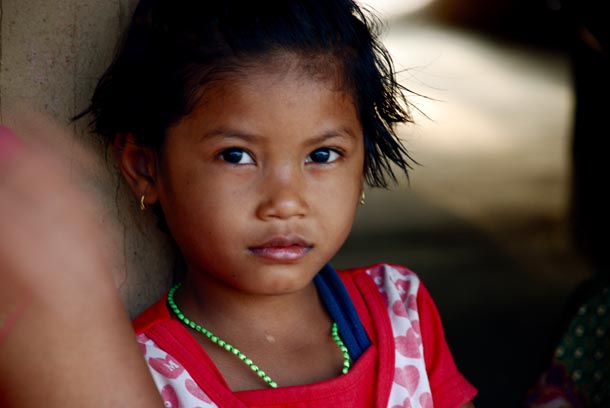
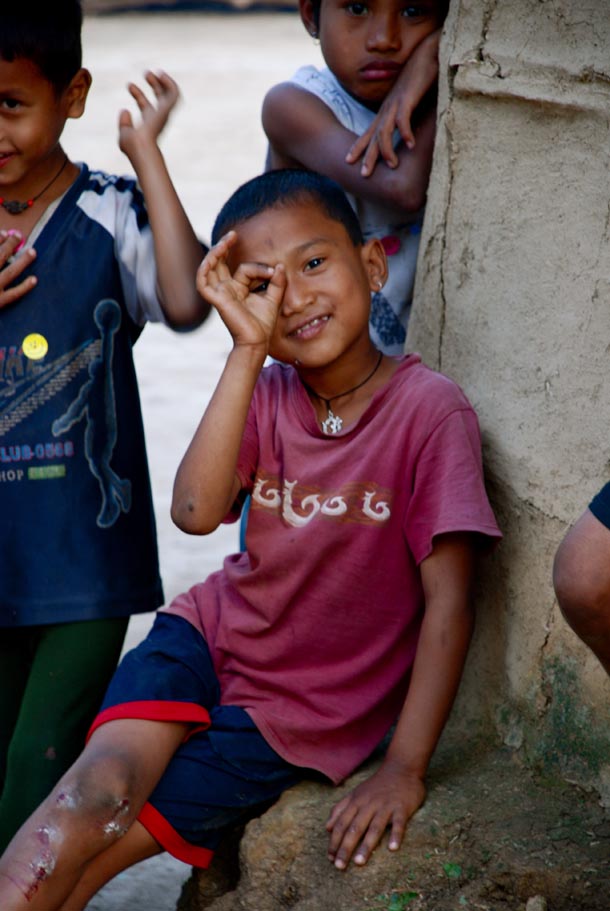
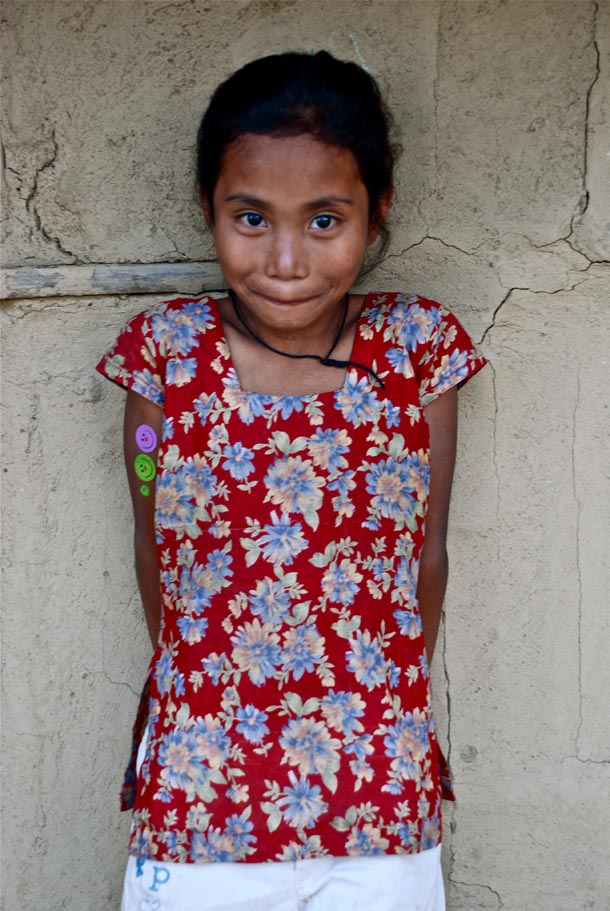
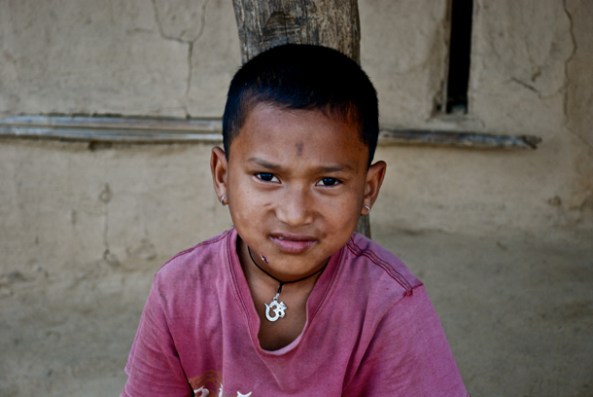
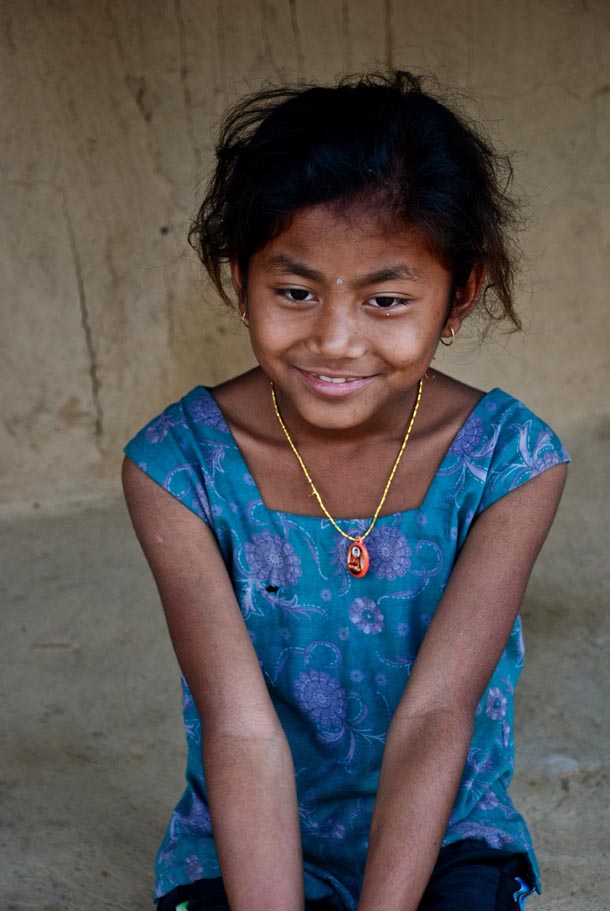
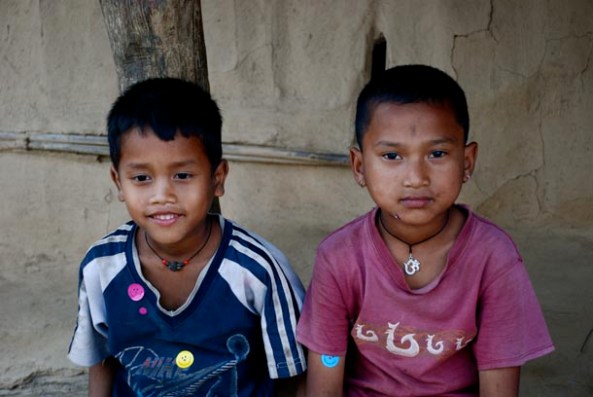
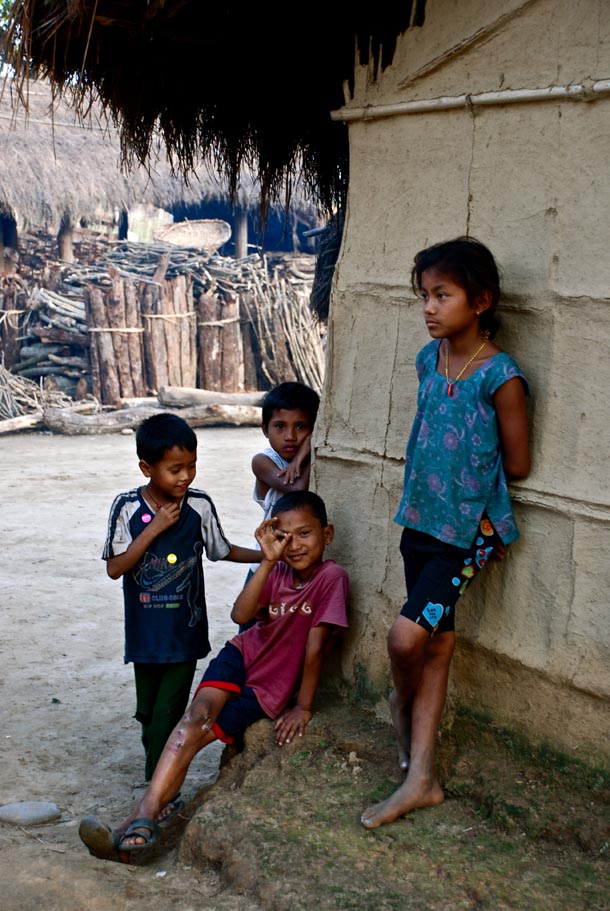
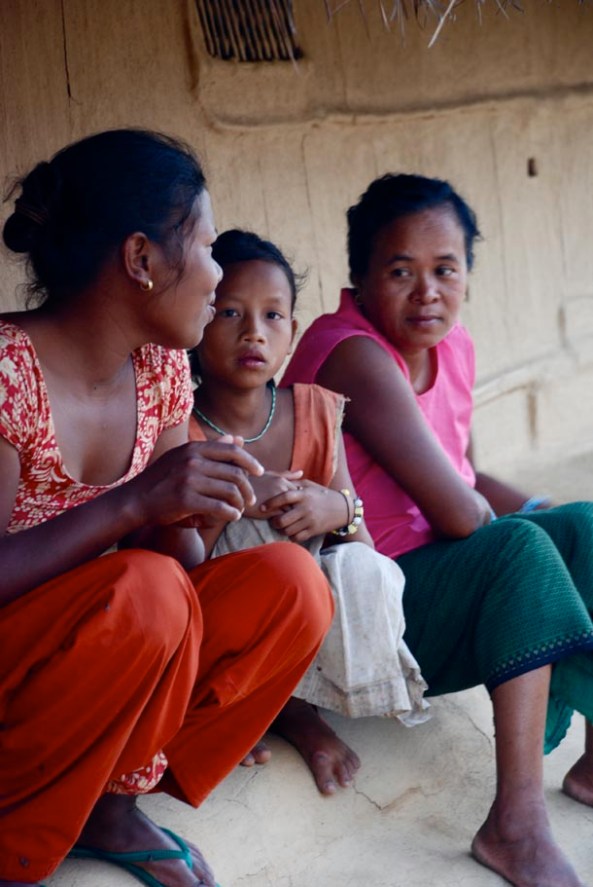
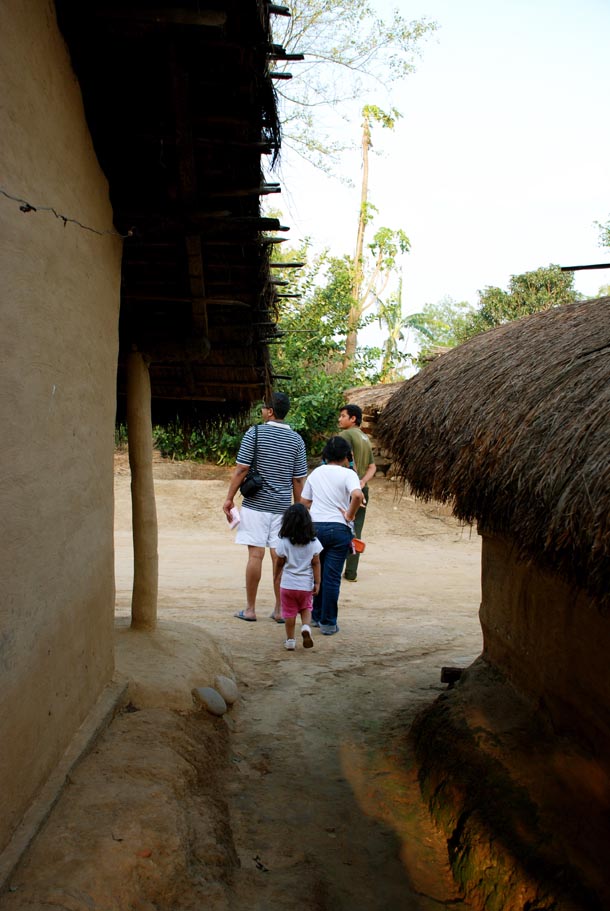
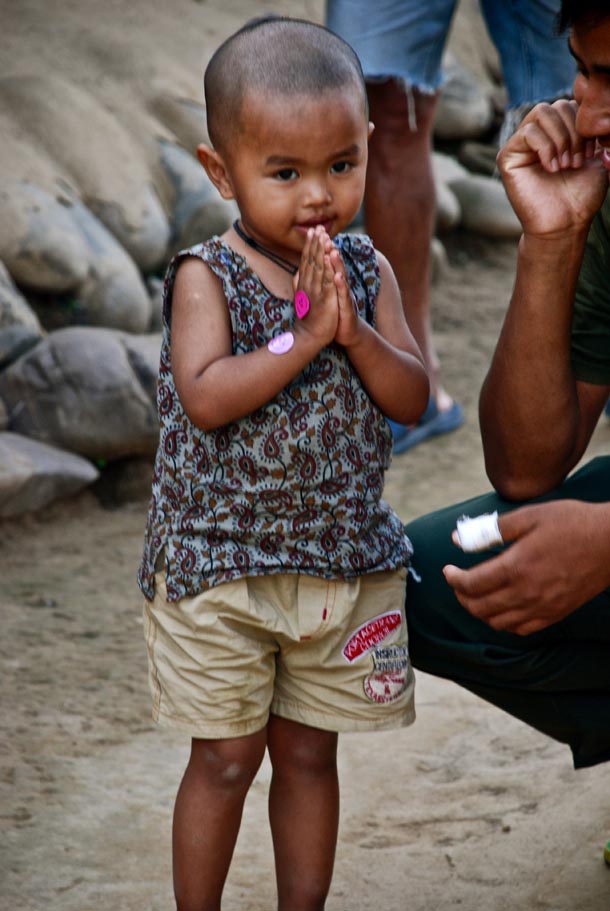
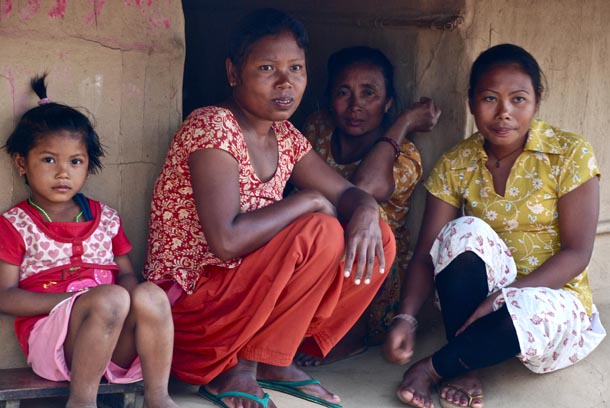
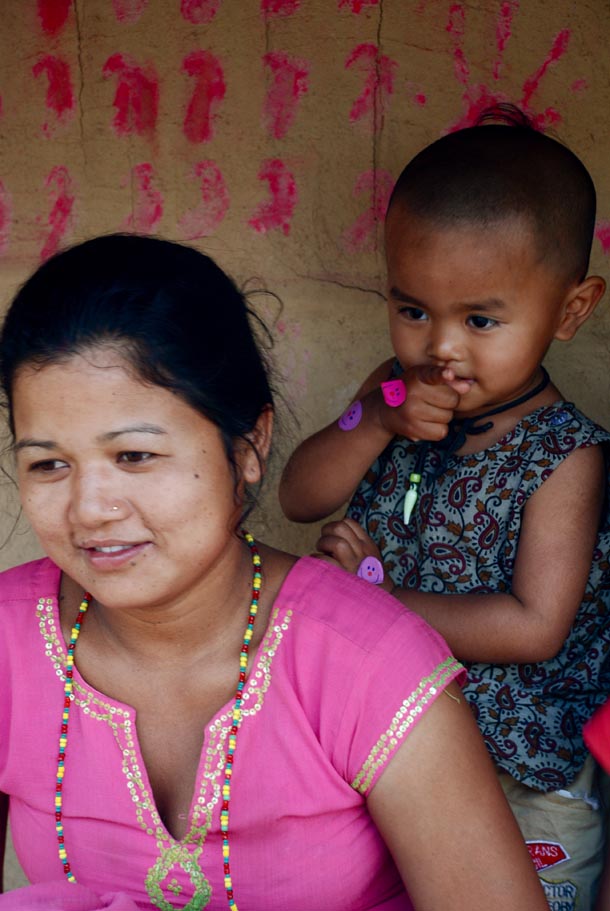
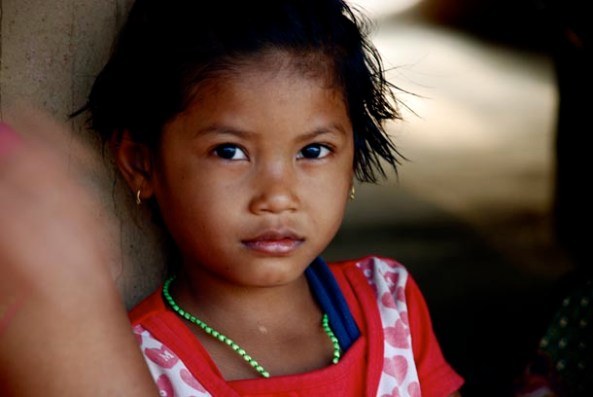
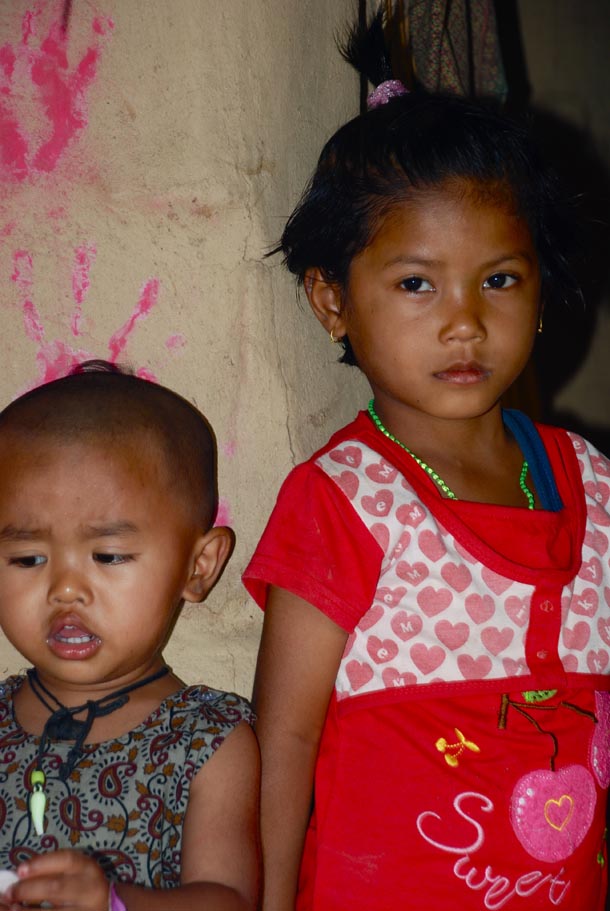
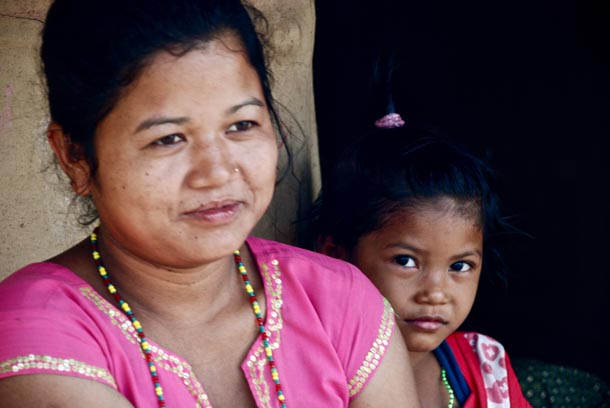
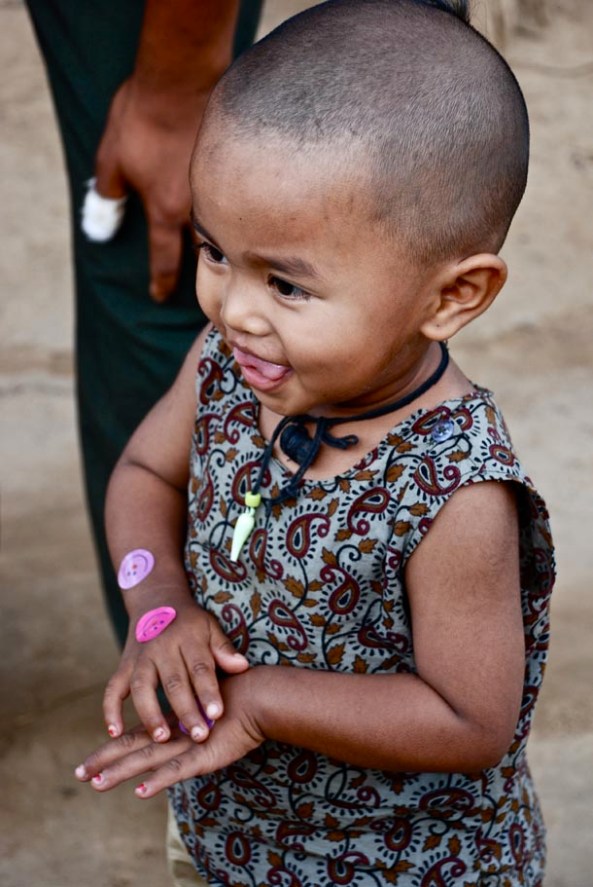
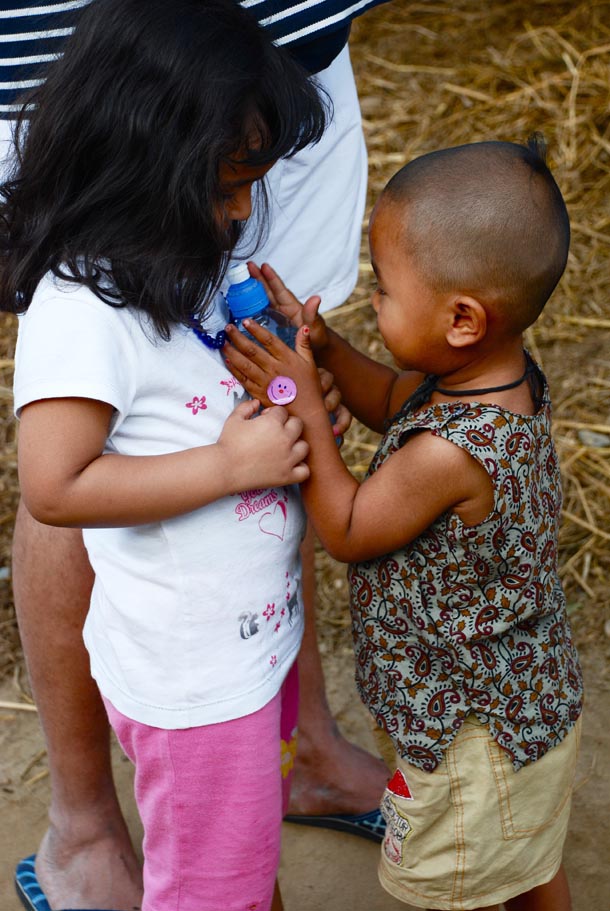
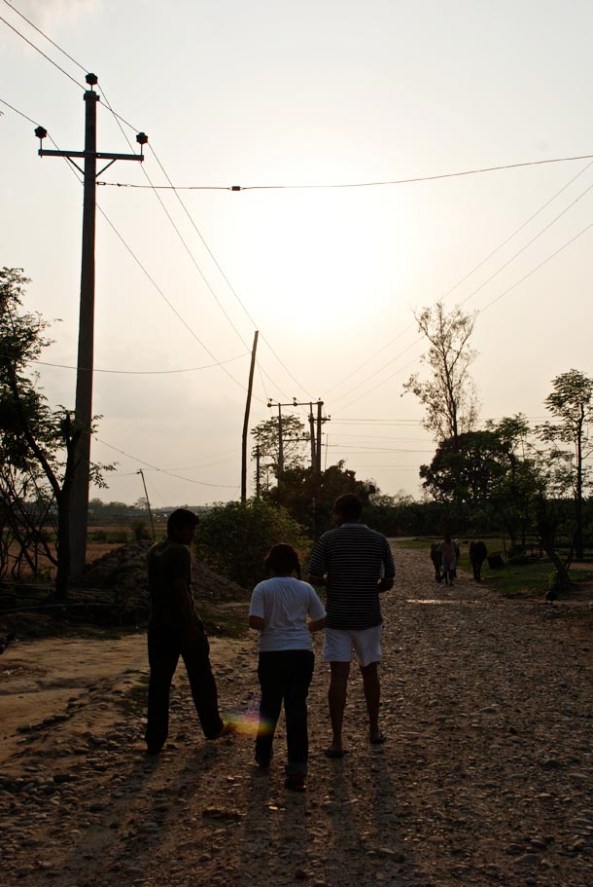
As we walked into the village we realised that the villagers were much used to tourists and lens flare. The children were very excited to see us. They were in-fact waiting for us and started accompanying us, running along or following us. Suraj, the guide from Machan, an expert Naturalist himself, was from this village. Some children had ‘Smiley‘ stickers on their hands – gifted by other tourists. I had to take a video as the children were most excited that they were going to be in a film. The villagers too, were all dressed up in anticipation. Suraj told us that we could peep into their houses as well. Imagine their lives – a whole lot of tourists scampering around, going into their homes, intruding upon their privacy at almost all odd hours. Well, I didn’t have the heart to go in, though the Z-Sisters probably would have gone in, had I given them the green signal.
My short 3-minute video on our Tharu Village Walk revealed a lot of things – as the mentality of ‘a family should have at-least one boy’ is changing and every girl is now slowly going to school, a lot calls in for celebration….
My mind was naturally buzzing with many questions. Here’s the Q & A session with Suraj:
There are tourists coming in continuously, walking through the village, stepping into your rooms. Doesn’t this bother the villagers?
No, they are quite used to it.
But how does this benefit them? I mean does the Resort give the villagers some money occasionally – for them to clean up the village, buy new clothes etc? [The village looked really tidy and clean as compared to many villages that I had seen before!]
No. Sometimes the tourists give them some dollars. But you see that building – that’s the Community Hall. That’s used as a Co-operative Bank where the villagers come and deposit money every week. Plus they may borrow money at a very little interest. It also acts as a Vaccination Centre. The Machan authorities have painted the hall, put new furniture etc and has till now donated almost 2,000 books to build a village library. So in a way, yes the influx of tourists does benefit them to a lot of extent.
So, all the staff working in the resort are from this village?
Not all but definitely more than 50%.
[Well, I was definitely happy to hear that. Machan is a an eco-resort and adheres to the principles of Sustainable/Responsible/Green Tourism. One of the most important criteria of being an eco-resort is that they have to provide employment to the locals]
Do all the children go to school, specially the girls? Or, is there a bias towards the male child?
Yes, slowly the girls are going to school. The mentality is changing but they still expect, you know, at-least one boy!
[Again, this is one issue that probably triggers off lot of emotions. Whatever said and done even today in many Asian countries, often there is a bias towards the male child, irrespective of the financial strength or the literacy level of the society. This is where we do play a role, however small. It is important for us who are fortunate enough to try to bring about a difference in that societal attitude. Sharing here, my interview with Sanjeev Kapoor, the MasterChef – who talks about his two girls and how he’s not going to deny giving them opportunities. Messages from celebrities seem to have a greater impact, so hope that this message reaches far and wide*]
The mentality towards women were changing. Gradually, girls were going to school. And with education, many women are doing jobs in offices, banks and schools in places far away from the village. Infact, Suraj’s wife travels for 2 hours in a bus to go to her workplace. The improvements in the road conditions will make the life of the Tharu village a lot more easier. And every now and then the vision of the little child hugging Li’l Z was coming to my mind (It’s there in the video or you may see them in one of the pictures in our photo-journey below). What were the differences between the two children – Li’l Z and the Tharu child? It is sheer destiny that Li’l Z was not born in the Tharu village as a Tharu child running around tourists, bare-feet and perfectly happy to be ‘in the camera’, waiting for some random smiley stickers to come her way!
The Tharu Village showed a different world to the Z-Sisters. Our intention is not to make them realise at every stage how fortunate they are but to help them develop into compassionate and tolerant human beings. Most importantly, make them aware of the fact that there is a world beyond the flower painted walls of their safe rooms!
Unblogging it all… Ishita
◊————————————————–◊
Disclaimer: Please do not use any material from this post. I hope you enjoy reading the posts with lots of visuals. While you enjoy seeing them, please don’t use them as some of them have been taken from our personal albums just to make your reading experience more pleasurable. You can see more pictures of my travel and food journey here.

*Here, I would like to make a small note on the Indian actor Mr Amir Khan who is conducting a TV Talk show called ‘Satyamev Jayate’ (Truth Alone Prevails) which reflects the dark holes that underlay the India society. I know my post is about Nepal – about the Tharu Village walk. But these are common issues existing in the same world. You may watch an episode here. Warning – it is absolutely heart-wrenching. Though this is not directly related to our Tharu Village Walk, I hopped onto this from the same issue that plague many Indian families as well – ‘the family wants at-least one boy!’
Official Website: Machan Paradise View Resort
Books that I’ve taken help from regarding Chitwan info (apart from the internet)
A Golden Souvenir of The Himalaya – Author: Pushpesh Pant
Kathmandu Pokhra-Chitwan – Author: Thomas L.Kelly, Daniel Haber
Other articles on our Nepal trip
Gift Wrapped & Preserved For Each Tourist – Chitwan
Where The Buddha Only Sees!
Daal Maharani Befitting the Queen (And Also Us)
Sikarni Raan/Marinated Lamb Shank from Yak & Yeti
Flying over Mt Everest – Nepal
The Abandoned Women Amidst Many Prayers
Resources:
Royal Chitwan National Park
More on Chitwan National Park
Royal Chitwan National Park UNESCO World Heritage Site
Terai
Getting to Chitwan
Tharu People @Wikipedia
BE SOCIAL. SHARE THIS!

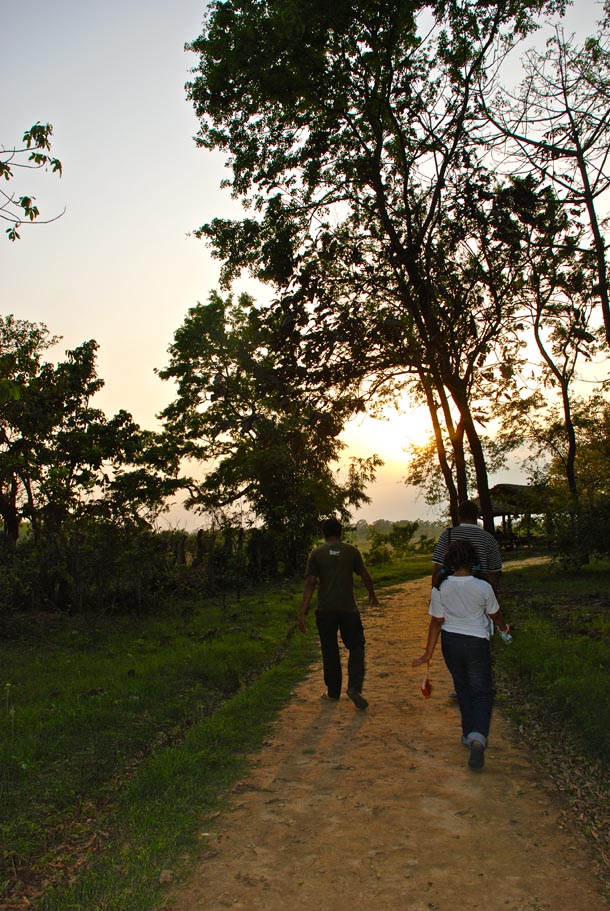
We travelled almost 8 hours by car. Meandering and sometimes very dusty, these snaky Himalayan roads run through the mountains and along a few rivers and their tributaries. We stopped several times. For refreshments (read toilet-breaks), clicking pictures, collecting pebbles as mementos from the banks of the Trisuli river, for Mr Driver to freshen up, to visit the Manakamana temple in the Gorkha district, another sacred Hindu place of worship and finally arrived at Chitwan. Chitwan is one of the last remnants of the Terai – the fertile strip of grasslands and forests which at one of point time stretched along the northern border of India from the Indus river in the west to Burma in the east along the foothills of the Himalayas. Chitwan is only 150m (492ft) above the sea level as compared to 1,350m (4,430ft) – the altitude of Kathmandu where we were based the previous few days.
We were booked in the eco-lodges of Machan Paradise View, a safari resort in Jagatpur, Chitwan. A mere 5 minutes walk from the Royal Chitwan National Park which has been cited as an UNESCO World Heritage Site since 1984. So here goes another tick on my list of the UNESCO World Heritage Sites that I have visited. Occupying more than 900 sq kms of Terai lands which is rich in flora and fauna, this is one of the last refuges of the endangered single-horned Asiatic rhinoceros (estimated at 400) and also the Royal Bengal tiger (estimated at more than 90). I did feel 90 was a very small number for such a regal animal. A shame indeed!
The Royal Bengal happens to be any Bengali’s official relative as they are also found in the mangrove forests of Sunderbans in Bengal. Plus, add to the fact that most of us affectionately call the Royal Bengal – Baagh Mama or the Tiger Uncle. So this was going to be a momentous occasion – NRBs (non-resident Bengalis) coming all the way from Dubai to meet other NRBs, settled in the forests of Nepal!
Machan Paradise View Resort, Jagatpur, Chitwan
Wildlife Safari Resort; Full-Board; Eco-jungle lodging; In the forest, on the plains and by the river
The Stay, The Food, The Experience
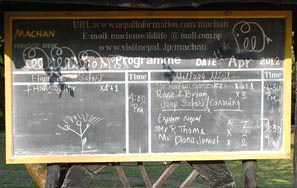
Ideally, Chitwan is a 5 hour drive from Kathmandu. It’s a different matter altogether that it took us more than 8 hours! By the time we arrived we were late. Are you asking ‘Late for what?’ Well, when we were told that our package in Machan included full-board meals and all the wildlife activities (‘Don’t worry Madam – they will give breakfast, lunch and dinner plus the time-table for everything that you are expecting to do’ – our guide Mr Shrestha had previously told us while leaving from Kathmandu), we obviously hadn’t understood the meaning of what this time-table would entail. A time-table in Machan means serious business – it is literally a program chart starting with a briefing session which chalks out all the activities that we would be doing at various time-frames over the the next two days, all jotted down to the last T on a blackboard!
The time-table for us (Mrs Ishita x 2+2) looked like this:
Day 1:
Morning – NA (since we were expected to arrive by Lunch); 4:30pm – Tharu Village Walk; 7:30pm – Dinner
Day 2:
6:30am – Jeep Safari & Canoeing; 9:30am – Breakfast; 1:30pm – Lunch; 4:30pm – Elephant Safari; 7:00pm – Power-point Presentation on Chitwan; 7:30pm – Barbeque Dinner followed by traditional Stick Dance performed by the Thiru farmers
Day of Departure:
6:30am – Bird Watching…… What? No sparing us even on our departure day?

We arrived at Machan at 3pm, way past their official lunch time. The Z-SISTERS were worried. To be frank, even I was. The nearest village was a 10 minutes walk from Machan and the nearest main road was almost 20 kms away! And frankly I don’t even remember seeing any type of brick structure which might even remotely be termed as a ‘shop’ selling any kind of food in the last 1 hour of our journey while driving to Machan. All I could remember were occasional haystacks in the green pastures or the tall forests of Sal trees.
As we entered and parked, we were greeted by a warm smile of the Resort Assistant. He told us that though the regular lunch hours were over he would organise some food for us. He led us through the forests along irregularly cobbled path amidst the chirping of birds, the wheezing of crickets and finally reached the reception. Technically, the sound emitted by crickets are also called chirping but somehow the way my mind is wired up, it is the birds who chirp and insects make sounds! We were received at the bar. Cold lemonades, hot towels and a whirring fan dangling from the ceiling welcomed us. We felt like mini explorers – exhausted after reaching our final destination. Instead of going into our rooms we went straight to the dining room for lunch. A huge room with unexceptional high ceiling, the walls had folk art painted on them by the local tribal artists. All colour that have been used were vegetable colours!
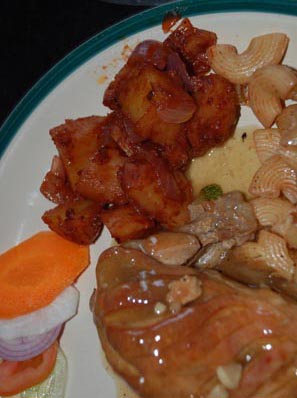
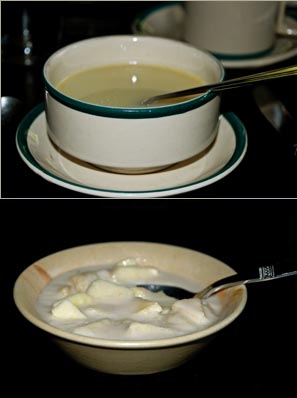
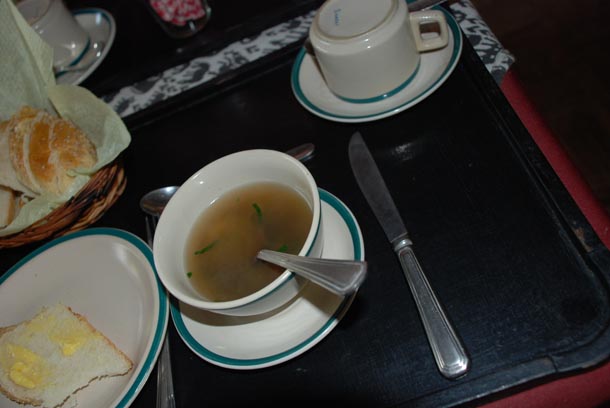
Lunch was served almost immediately. Amazing, amazing, simply amazing! A clear ginger-vegetable soup that re-energised us immediately followed by a plate full of pasta, sautéed vegetables, a grilled chicken whole-leg covered with onion sauce and some fried potatoes. The fried potatoes were really delicious, slightly ketchupy and spicy at the same time while the chicken was soft and succulent. We were hungry for sure. But even if we had lost all our senses we could feel our sixth sense telling us that food was going to be something else here. An absolutely wholesome experience. I tried asking for the recipe of the fried potatoes. The Chéf was a shy gentleman (or was he a boy?), too shy even to accept our compliments. Via translations and after a game of Chinese whispers, I gathered he had just fried boiled potatoes in some white oil along with onions and added ketchup, curry powder, pepper and salt. That’s it and voila! The waiters found the entire episode pretty amusing. And the waiters were well, really waiting on us, serving us in a way that reminded me of my Mummy serving me lunch when I used to come back home from college. Always waiting for me to ask for more!
We seemed to be the only ones in the resort. There were no other tourists in sight, as if the entire resort had gone into an afternoon slumber. Please, please tell me that we were not the only ones. As we found out later, we were not and I couldn’t have been more wrong.
Machan was all about it’s staff. A person was appointed for maybe 2 families, who would look after them from morning till night. Suraj was designated for us. He talked about his forest, his animals and his Resort. He was an expert naturalist, a keen photographer and was from the nearby Tharu village. Starting from our morning tea, hot chocolate for the Z-SISTERS to taking us for all the wildlife safaris, he was with us. He asked me questions about my camera, what shutter speed I used and how to take good wildlife pictures. He said that a friend had gifted him a Nikon SLR without any batteries and every battery that he had bought over the net were spurious. I was slightly confused but considering the amount of knowledge he really had on photography and the amount of love he had for his forest convinced me that he was probably telling me the truth. Well, more on that on a future post.
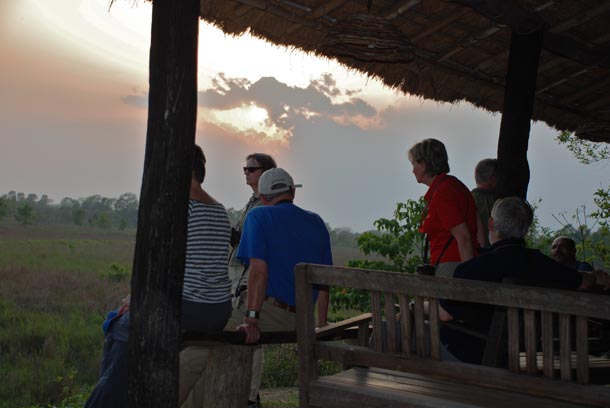
For now, it’s only about our stay in Machan, watching the sunset over the grasslands and the forest from the Sunset Point/Bar, the homely food amidst the rigid time-table and interacting with the villagers and getting to know the forest.
Starting from the time we entered the cobbled gates…
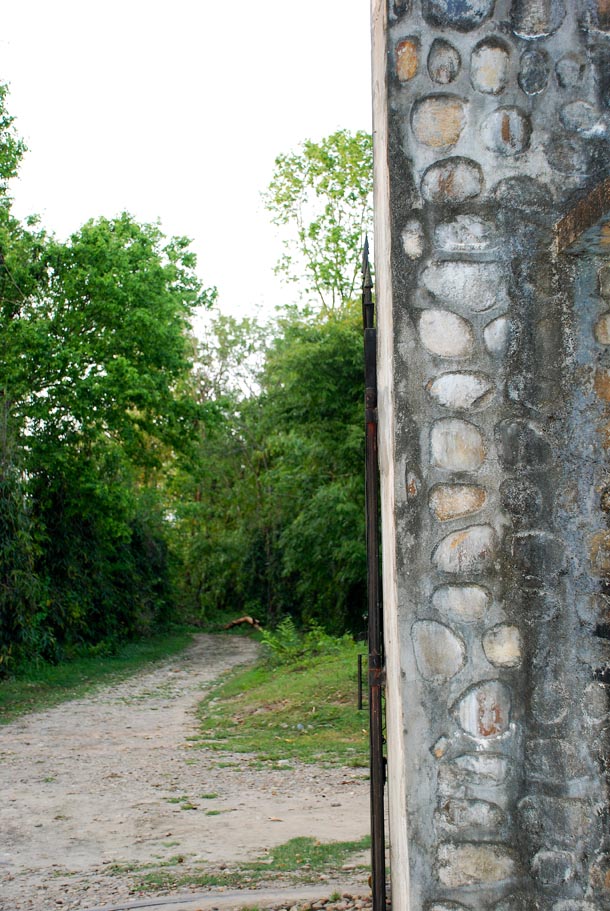
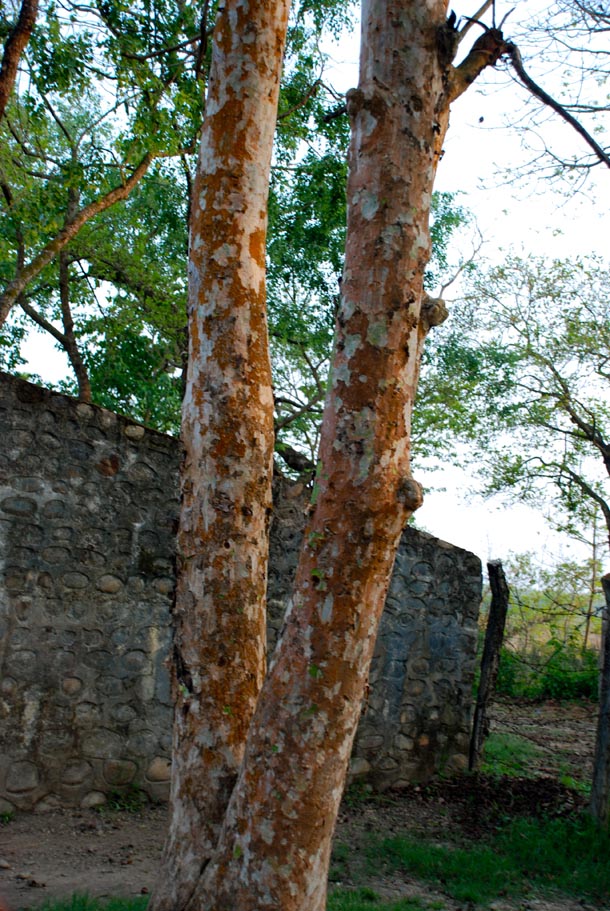
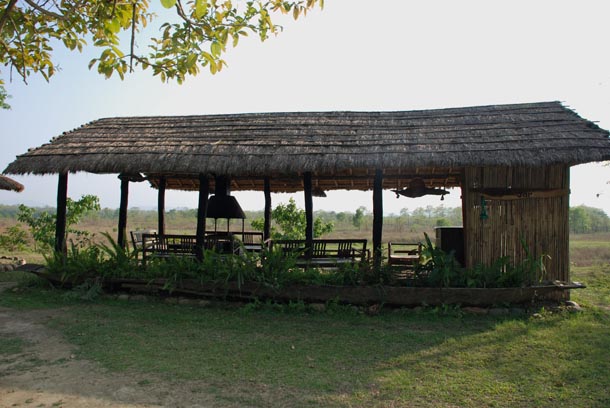
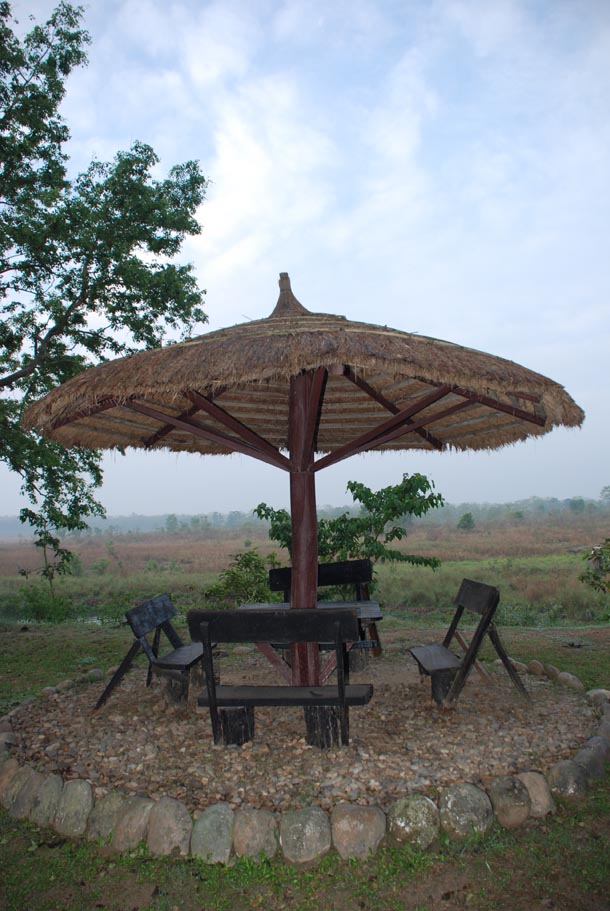
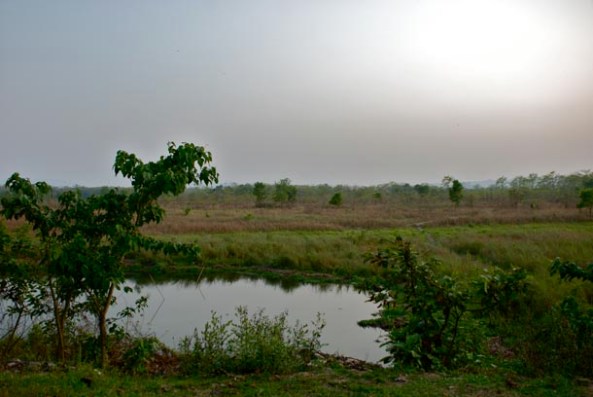
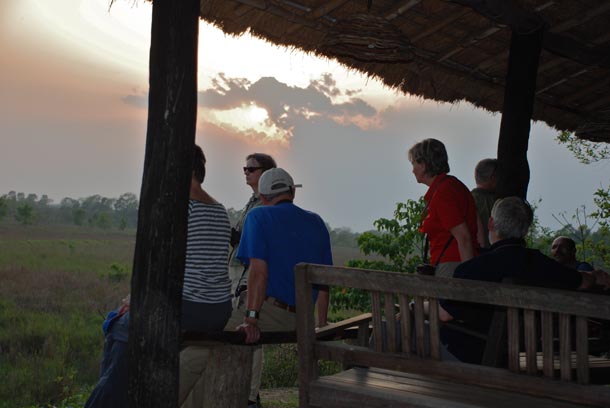
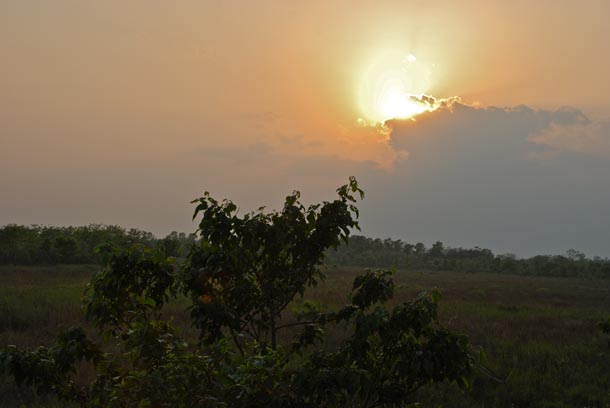
Rooms here were named after birds – Minivet, Oriole, Bulbul, Parakeet, Hornbill, Barbet, Trogon, Egret! We were assigned Minivet 2. The rooms were clean, spacious and basic with en suite bathrooms. This was an eco-friendly resort adhering to the principles of responsible tourism. We have previously stayed in a few Eco-friendly hotels and resorts with varying degrees of luxury and comfort. Most of the time we made a conscious effort to choose such accommodations while making sure that the Z-SISTERS were comfortable and enjoyed their holidays instead of ending up students on a crash course on responsible tourism! Whereas our stay in the Tea Factory Hotel in Nuwara Eliya, Srilanka was very luxurious and unique, the Rafters Retreat in Kitugala was very basic but absolutely magnificent and both were Eco-friendly.
It was tough explaining to Big Z why there were no televisions in the room. The objective here was to be at one with nature, which every staff in Machan made a point to initiate us into, all the time. Step outside the rooms and you’ll be looking through the Sal forests into the Rapti river. Grasslands sweep into the north to the Mahabharat range and jungles extend south to the Churia Hills. Apart from the endangered Asian one-nosed Rhinos and Royal Bengal tigers, the Royal Chitwan National Park is home to many more endangered species and wild animals like leopards, sloth-bear, Indian Bison, Wild Boars, Sambar, Chital, Hog, Barking Deer and many more. Over 50 different species of mammals, 400 different species of birds, 65 different types of butterflies can be found here and 70 different types of grass including the famous Elephant Grass Savannah grow here. The fact that Chitwan is among the last surviving examples of the Terai, it deserved all the respect and bewilderment of whoever has the slightest opportunity to experience this. It’s amazing just to think that even 40 years back the entire Terai was like Chitwan. If we needed a television here for entertainment that would be the biggest shame of all!
That evening we went to the nearby Tharu village where the Z-SISTERS were confronted with a different world altogether. The villagers were much used to tourists and lens flare, the children were nevertheless very excited to see us. This is one experience that I have already captured separately accompanied by a 3-minute video.
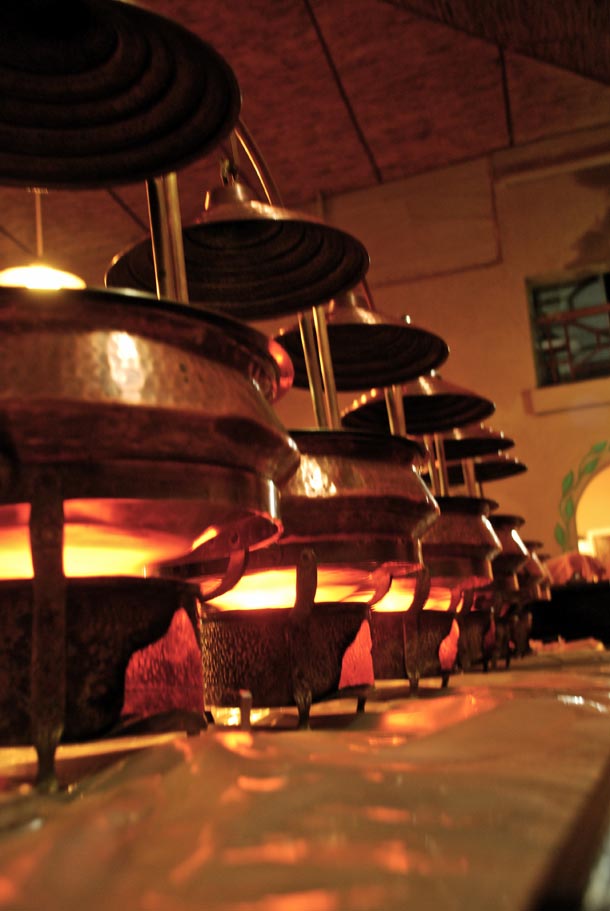
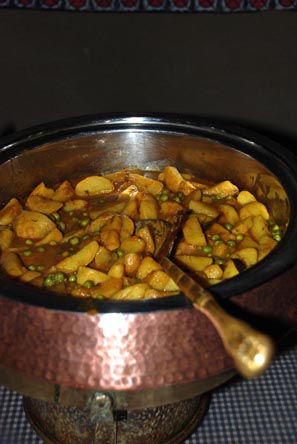
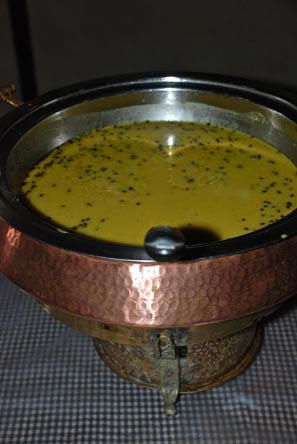
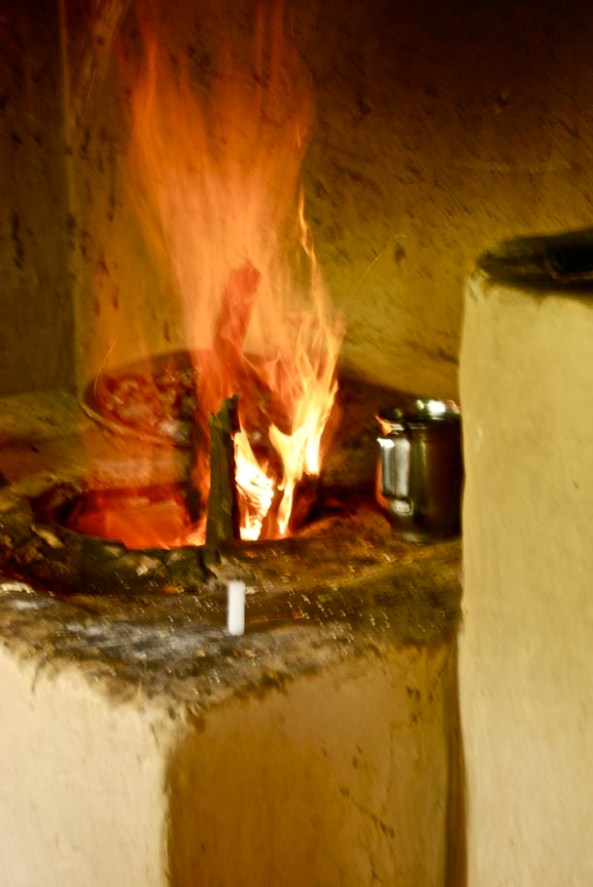
Our first day in Machan was signed off with total exhaustion and intense satiation. Each meal in Machan was like a warm greeting from our shy Chéf. Dinner consisted of freshly made Chappatis (Indian flat bread made with Wheat-flour) in a traditional Tandoor (clay oven used in cooking and baking) where the heat is generated by wood fire. Breads served for breakfast or soup-breads served during lunch the next day was all prepared in this Tandoor, imparting a different aroma and a freshness zing! The Chappatis were accompanied by a light Masoor Dal/Orange Lentil Soup, a Potato and Peas Curry, a String Bean preparation and followed by a slightly spicy Chicken Curry. Big Z went crazy over the Bean preparation and S went head over heels with the Chicken Curry. So I pestered our shy Chéf (the person on the extreme right in the picture below) once again and took the recipe. By this time they were probably expecting me to do this, so without any game of Chinese whispers, the recipes unfolded onto soft paper napkins. Post-Nepal, we have tried cooking both of these with great success. Multiple photo-shoots after, these two recipes have joined my blog-queue!
We were told that the next day our wake-up call would be at 5:30am and at 6:30am we would be going into the jungles on a jeep Safari. That would be followed by canoeing in a traditional dug-out canoe, down the mildly crocodile infested Rapti river! We would come back for breakfast at 9:30 and at 10:30 there would be an Elephant briefing programme. After lunch at 4:30 we would be going forour Elephant Safari which would then be followed by a slideshow, Barbeque dinner and traditional stick dance by the Thiru farmers. Please note that these Thiru people are not same as the Tharu people that we visited on our village walk.
And sure indeed the next day we were woken up sharp at 5:30am and started on our activities as had been chalked out earlier. To the utter disbelief of the Machan staff, we actually opted out of the Elephant briefing programme as we had quite an elaborate session of it last year at Pinnawala Elephant Orphanage in Srilanka!
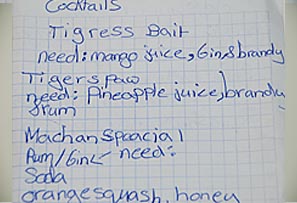
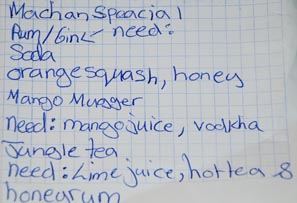
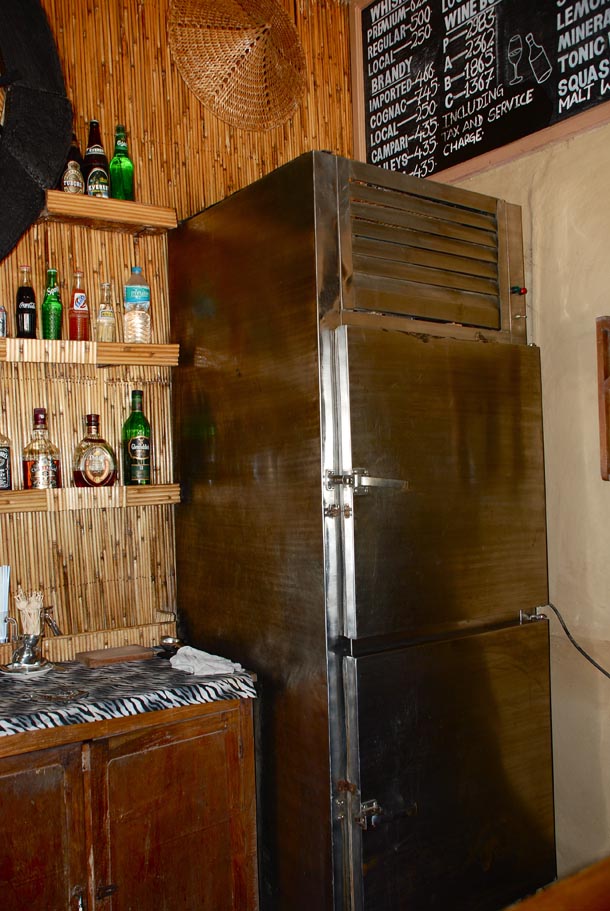
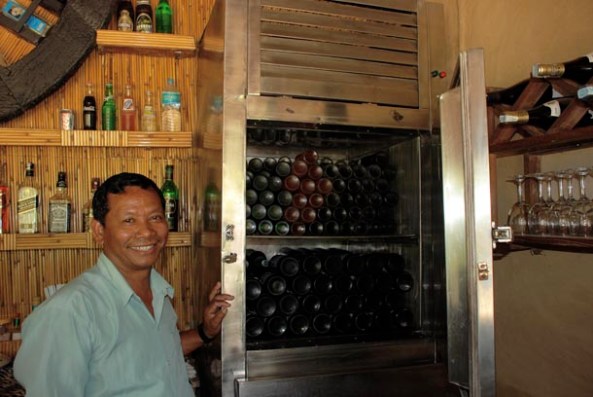
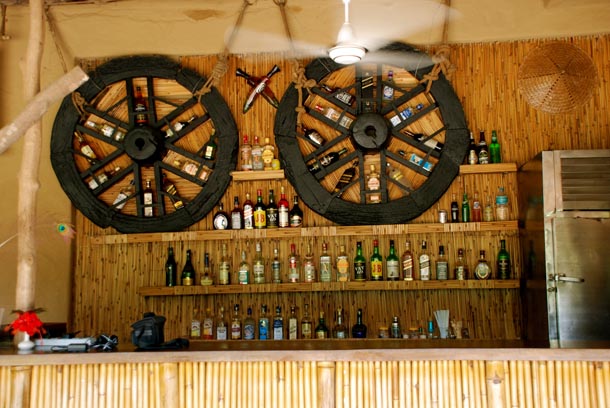
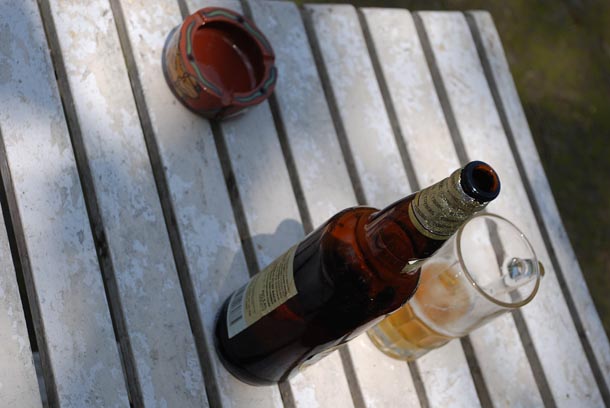
Instead we just ‘did nothing’. The Z-SISTERS lay on the hammock while we, for the first time had a chance to look at the bar. Wow! There was a huge fridge in the corner which Mr Bartender informed could stock upto 150 bottles. ‘Wow-w-w!’ we all screamed in unision when we saw the number of stacked bottles inside. On hindsight this shouldn’t have surprised us at all. I guess, when a resort is tucked this far away – away from human pry and hidden in the jungles, they need to be stocking up these many drinks and beverage bottles at any given time. The cocktails had interesting names – Tiger’s Bait, Tiger’s Paw, Machan Special, Mango Mugger, Jungle Tea, Cold Summer Night, Rhino Delight. Mr Bartender was highly motivated by our interest in them and asked Big Z to write down what went into each Cocktail and the exact break down. ‘Baby, write down, write down. I tell you this is good drink!’ The Bar was a surprise delight, the big Fridge being it’s star attraction.
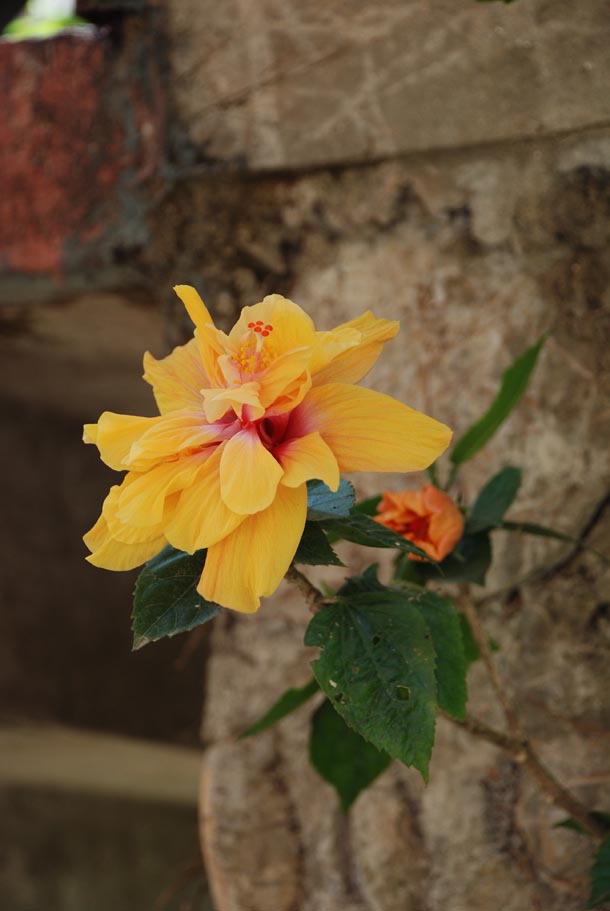
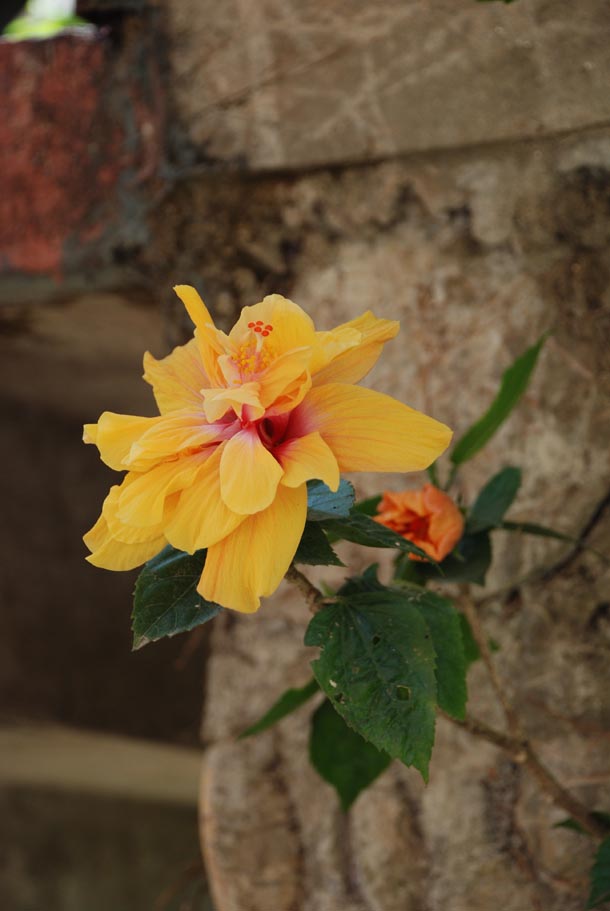
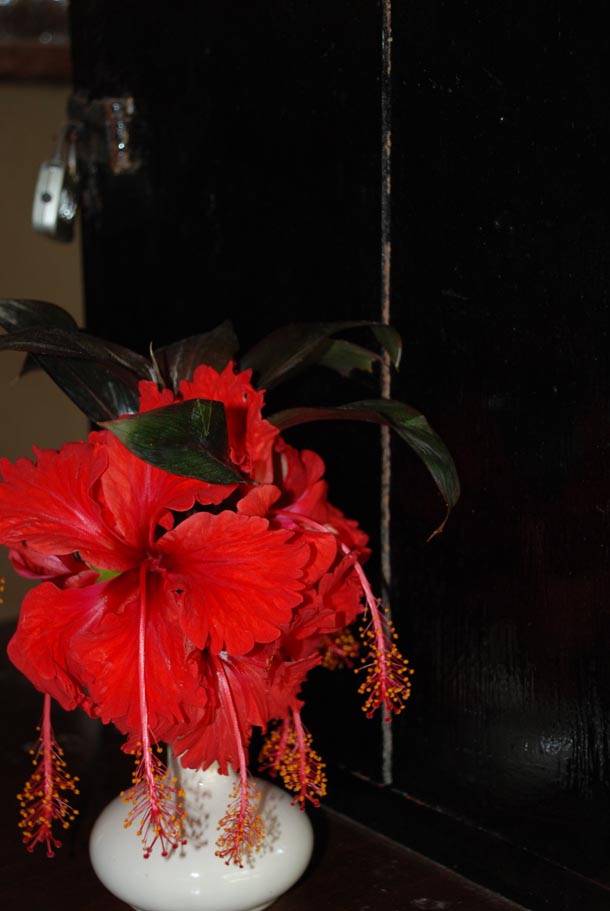
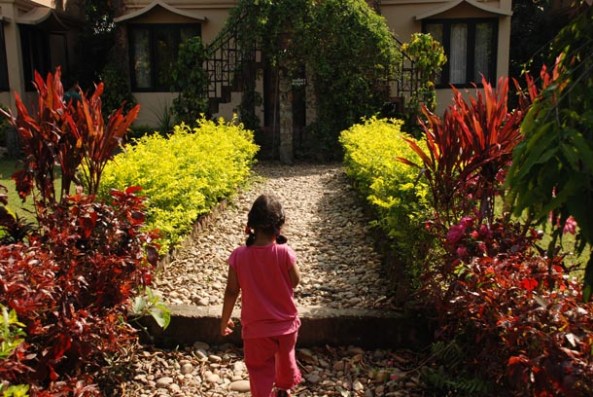
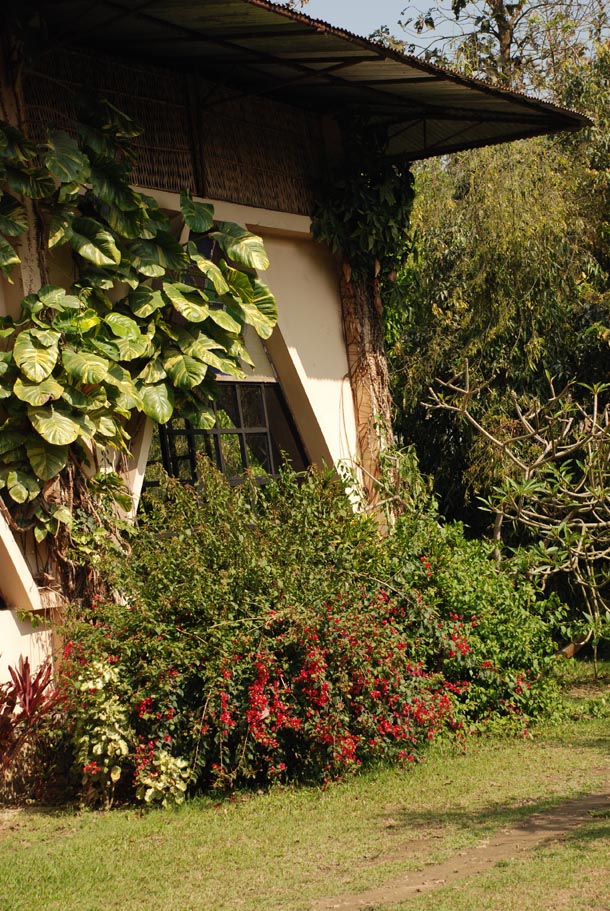
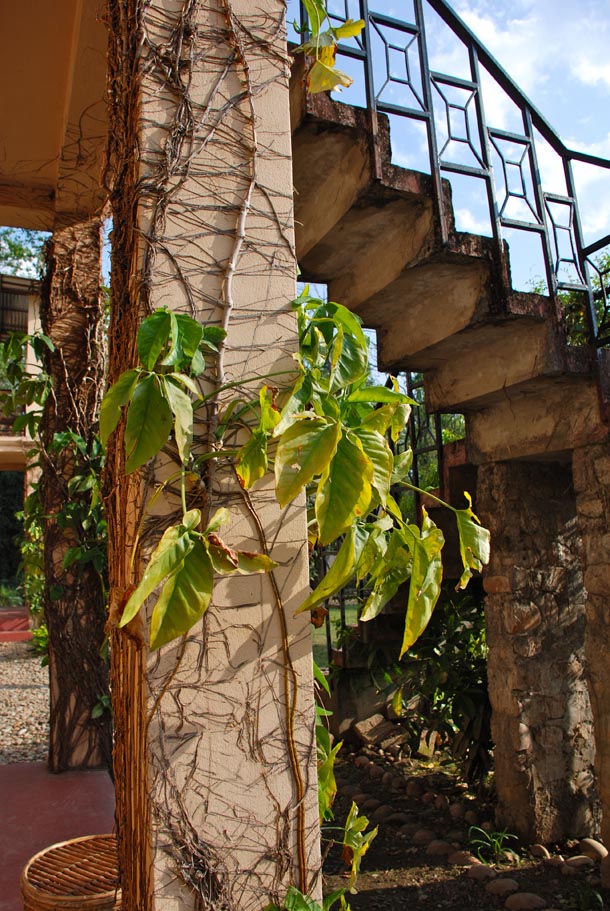
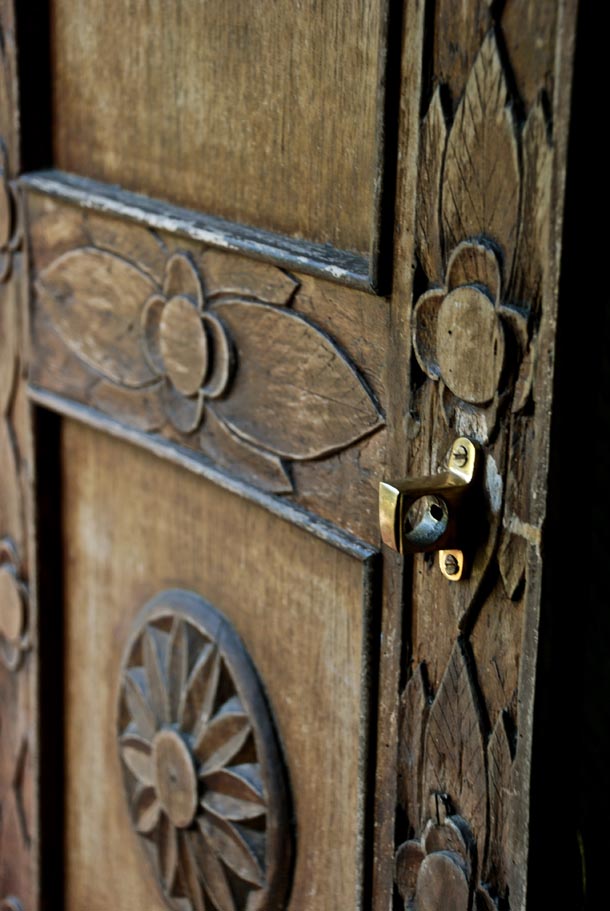
‘Doing nothing’ made us explore the resort itself – the veins of the creepers forming artwork on the walls, a single bright flower popping up occasionally here and there and brightening up the lush green foliage. It also gave me the opportunity to venture into the kitchen to see what was happening for lunch. And how our shy Chéf was doing. The kitchen was huge. Our shy Chéf also spilled out a secret – a special Barbeque dinner was being organised for that night. I had chosen the best time to do all investigation as the entire resort was deserted once again with each tourist being pre-assigned one programme or the other – if not Bird watching, then the Village walk. If not Village Walk, then the Elephant briefing. If not Elephant briefing then the Power-point presentation on Royal Chitwan National Park and all it’s animals…
‘Doing Nothing’…
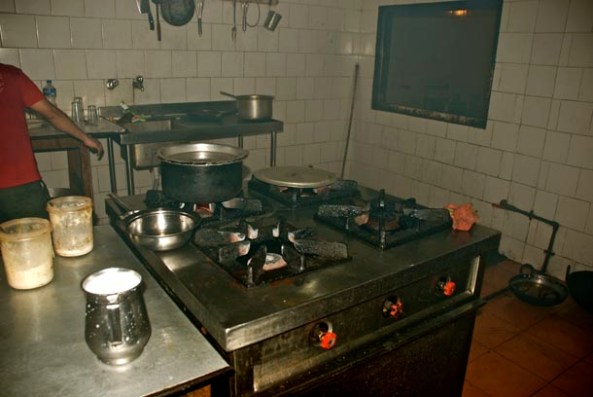
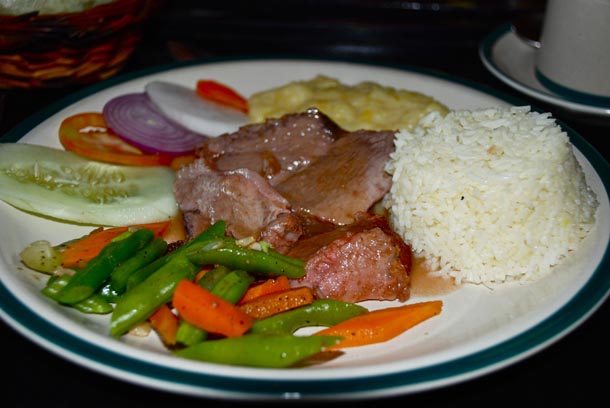
Investigating the kitchen and the traditional Tandoor… Bread, Chappatis, Naans – everything were made in the traditional Tandoor. It was taking long to set up the fire in the Tandoor. They were going to half cook all the marinated meat for the night’s Barbeque. Everybody seemed excited. As if they were having a Barbeque Dinner for the first time. And this was something I noticed in all the staff of Machan. They were always telling us in a very excited manner what plans were in store for us. As the other tourists came back from their respective activities Lunch was served. Breakfast and Lunch were set menus while Dinner was more of a little Buffet spread. While the Lunch was predominantly Continental – Soups, Sautéed vegetables, Breads, Grilled Chicken and Pasta (on our first Lunch), Mashed Potatoes, Grilled Veal and Rice (on our second Lunch). Dinners were spicier, with the dishes cooked in the Indian/Nepali manner. The Barbeque consisted of Chicken and Lamb Kababs, Grilled Pork with a delicious Barbeque Sauce, Potato Curry, Nans and Rice. The night also saw our shy Chéf turn into the Chéf that you would probably expect – with Chéf’s hat and all!
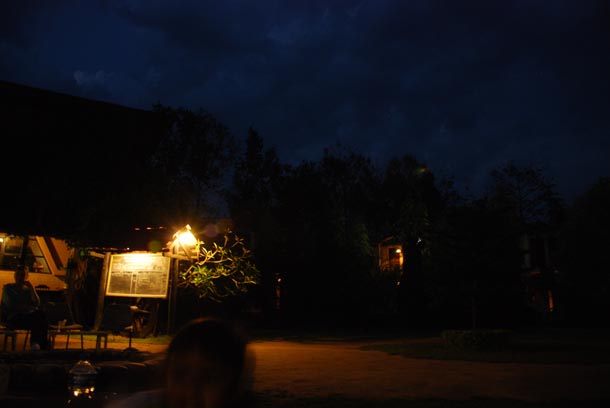
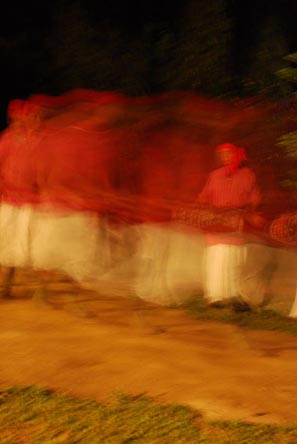
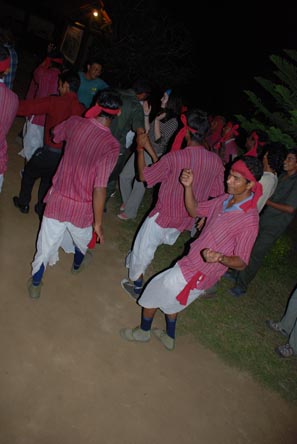
As the night set in, for the first time I saw all the other tourists gathered around sitting in a semi-circle to watch the farmers from the nearby village perform folk dance with sticks. These people were called Thirus (not to be confused with the Tharus that we visited on our village walk the previous day). They were probably called the Thirus as they had migrated from the Thar desert region of Rajasthan, in India.
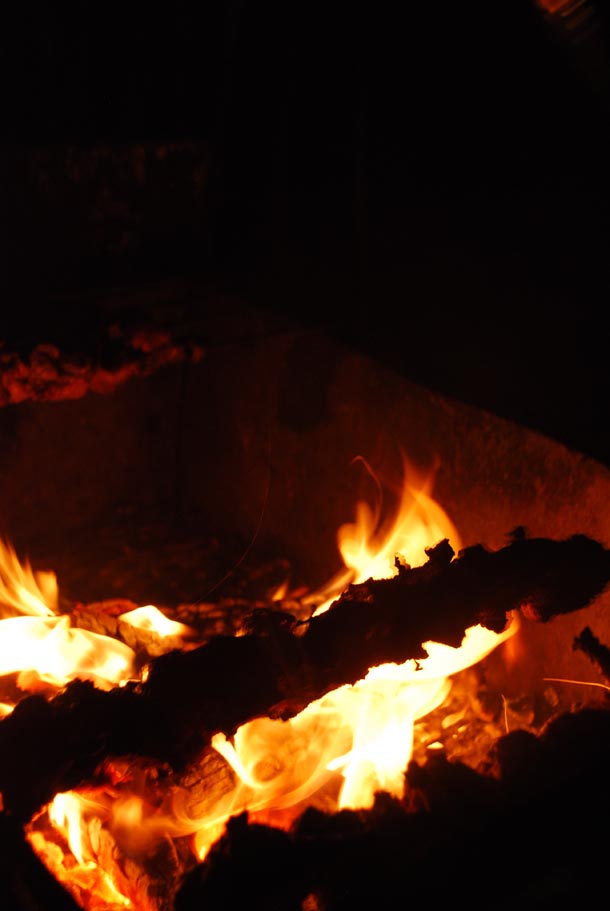
We gathered around them sipping our drinks and munching on the crispy fried starters of Aloo Pakoras (Deep fried Potato balls dipped in a Gram-flour batter). It was a different world – far away from the busy city-life, under a star-lit partially cloudy sky. All of us joined in the folk dance, holding hands while we danced with people who lived in different worlds than ours and led different lives. For that one single moment, heartbeats from many countries across the world joined in the common rhythm of the Thiru drumbeats.
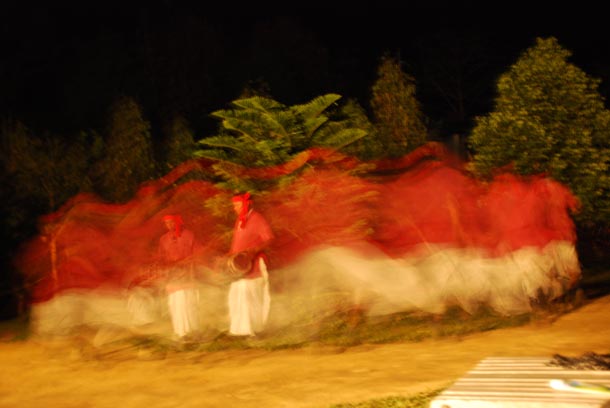
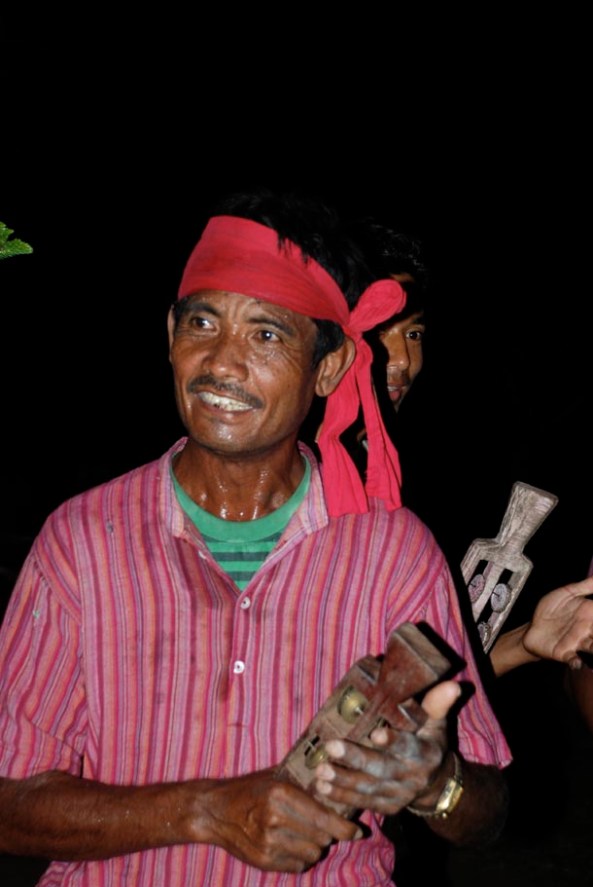
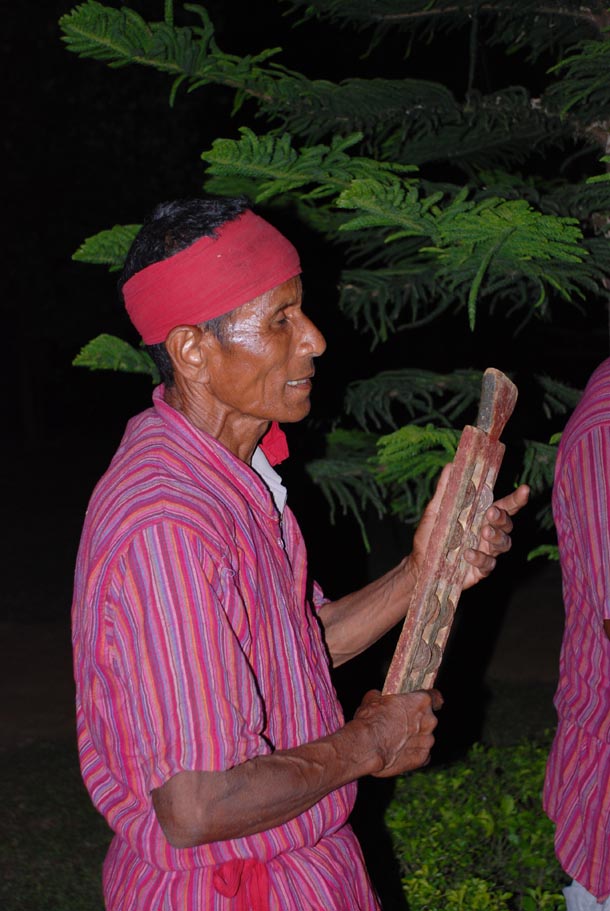
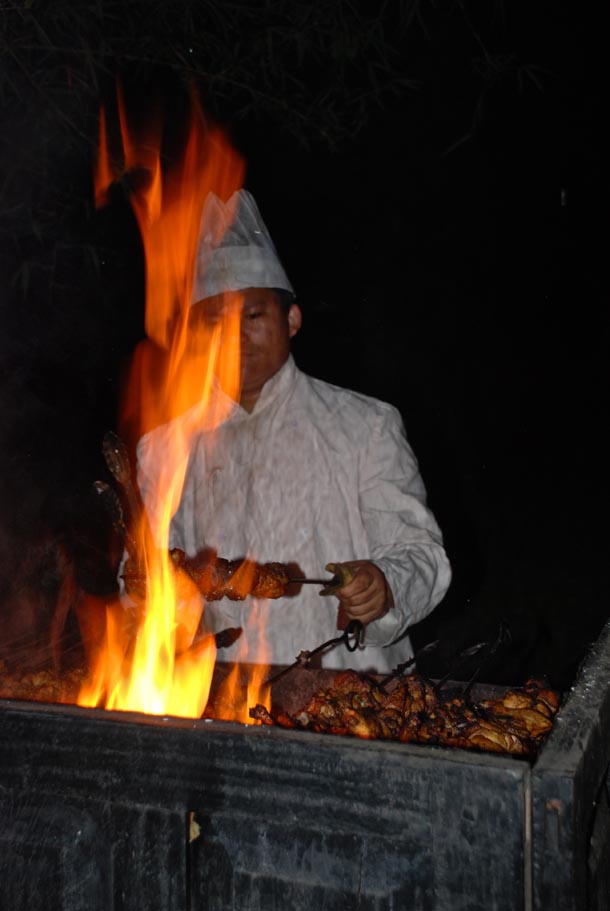
The next morning we were assigned Bird-watching at 6:30 am! Assignments even on the day of departure? There was no way we were going for it.Our earlier experience in bird-watching with the Z-SISTERS hadn’t been too great. Li’l Z’s excited screams when she sees a bird has always made sure that the birds flew away and there was nothing to watch. Though this wasn’t a major issue in our lives, it definitely was going to be for the ornithologists and others who expected to see at-least a few of the 276 species of birds officially recorded in that area.
I regret not having carried a recorder. I missed recording the birds’ chirping. Suraj who accompanied us for our safaris said he had atleast 290 recordings of different birds’ chirping. He promised to email me a few of them so that I could accompany this post with them. I am still waiting for him to send me.
Everybody asked us not to leave that day. An elephant who was expected to go into labour for the last 2 days still hadn’t given birth. Li’l Z wanted to see the new-born calf. So did Big Z. Both of them tried to persuade us to stay back for one more day. We promised them that we will come back to Machan once again some day. And this time we will not travelling by car from Kathmandu. We would simply fly in. There were daily flights twice from Kathmandu to Bharatpur airfield, 20 km from the resort.
The feeling was very different as we left. We had grown so attached to the people out there – something that has never happened before. It was a different world out there, as if gift-wrapped and preserved specially for each tourist to open up.
2 suggestions for Machan Paradise View from my side :
1) Please serve some special dessert after each meals. They did serve a dessert – an yoghurt, fresh fruits or a rice pudding. But considering that their food is really very very special, prepared with utmost care by the cute shy Chéf, the dessert in comparison turns pale. It was was practically missing!
2) They should have a more enthusiastic staff giving out the Slideshow presentation instead of a person just reading out the slideshows and staring at people who were entering late. Face it – we were all on holidays. No, this statement is not defensive at all – we were on time but some other tourists with little children weren’t. I understand if you are late for a Jeep Safari where you will be accompanying other tourists – but slideshow presentation is surely something that could be discounted.
Best Time to Travel
Short grass makes February – May the best game-viewing season. The autumn months are gorgeous with beautiful Himalayan views.
The Sign Off
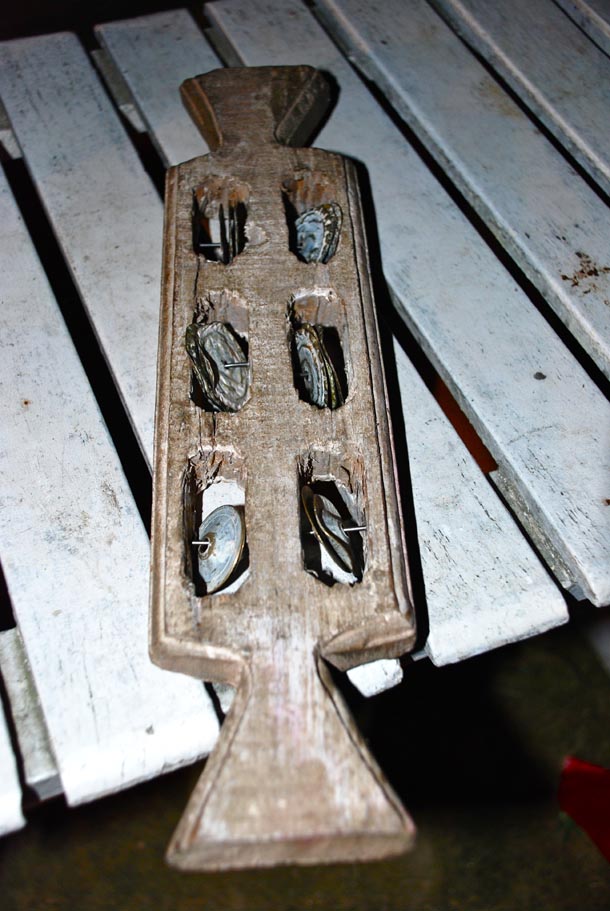
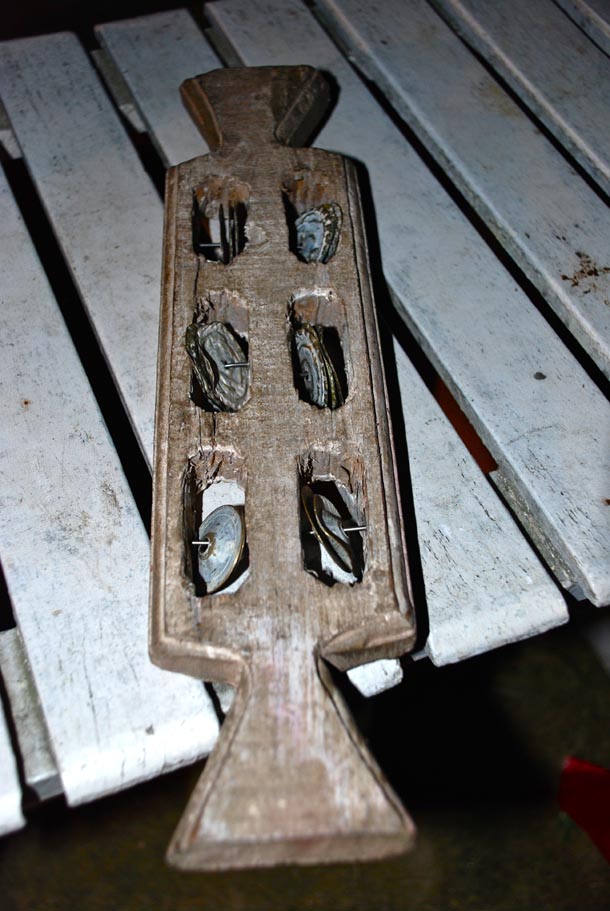
We left Chitwan promising ourselves to come back again. I was carrying something very special. I persuaded one of the Thiru dancers to give me (well, not exactly for free and I did make a payment for it) the wooden musical instrument – the Rattler that he was using. Some of the dancers had these in hand. Hand-made from the wood of the Sal tree, I fell in love with it. The dancer was a bit confused as to how much he should sell it for. Perhaps Rs 500 (Nepali Rs) or may be Rs 700! He discussed the selling price with others and yes, decided on Rs 700. I paid him more than that and requested him to share the additional amount with the other dancers. I hope he did that.
And that Jhilli is with me – a gift for Big Z on her Birthday. We have trying to get her a musical instrument from each place that we have visited. She already has a small cute collection of musical instruments (please read this as tiny, indigenous ones and not as if we bought her a grand piano from Salzburg!)
Oh, I forgot to mention that the instrument is called a Jhilli. Such a sweet name isn’t it? Jhilli in Bengali means sparkling or a spark. I forgot to ask what it means in the language of the Thiru people. One more reason to go back to Chitwan, isn’t it?
Unblogging it all… Ishita
Enjoy more pictures of our stay in Chitwan. But please don’t use them.
Official Website: Machan Paradise View Resort
Books that I’ve taken help from regarding Chitwan info (apart from the internet)
A Golden Souvenir of The Himalaya – Author: Pushpesh Pant
Kathmandu Pokhra-Chitwan – Author: Thomas L.Kelly, Daniel Haber
Other articles on our Nepal trip
Where The Buddha Only Sees!
Daal Maharani Befitting the Queen (And Also Us) – Recipe
Sikarni Raan/Marinated Lamb Shank from Yak & Yeti – Recipe
Flying over Mt Everest – Nepal
The Abandoned Women Amidst Many Prayers
Resources:
Royal Chitwan National Park
More on Chitwan National Park
Royal Chitwan National Park UNESCO World Heritage Site
Terai
Manakamana Temple
Getting to Chitwan
BE SOCIAL. SHARE THIS!

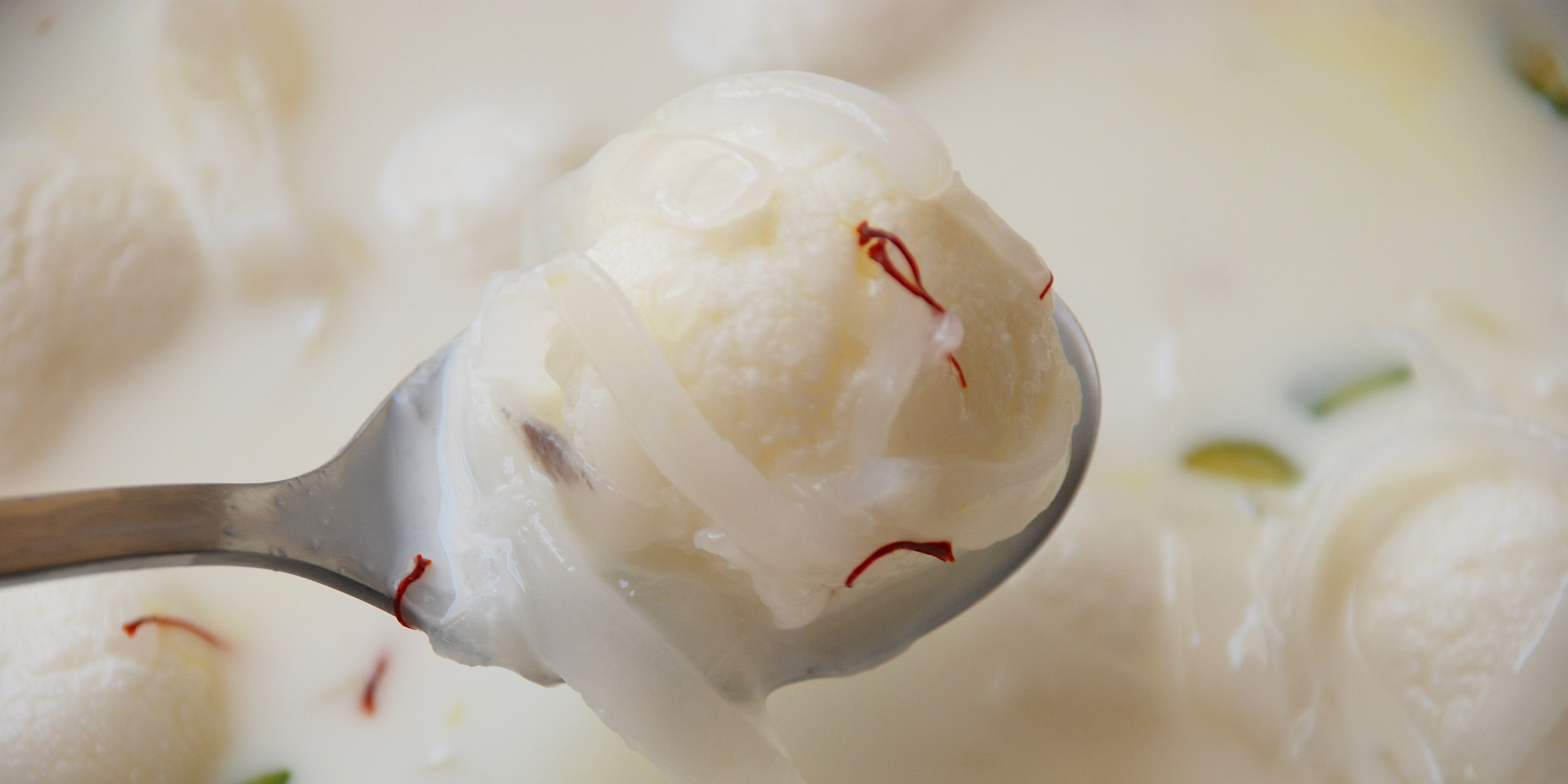
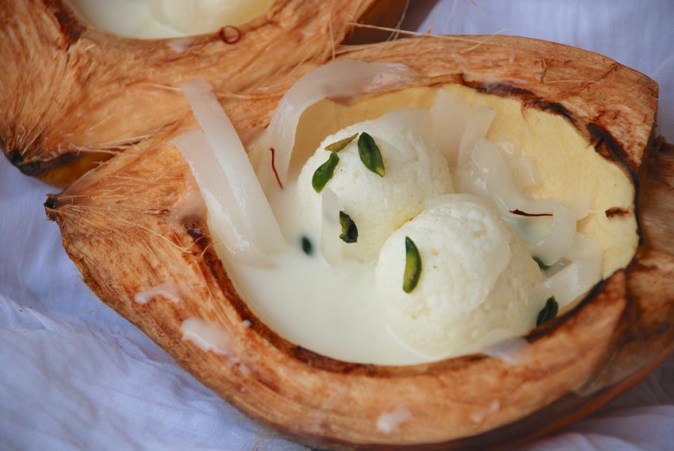
Rasgulla Macapuno is our fusion dessert inspired by Rasgulla, the popular Bengali sweet and Macapuno, the sweetened tender coconut flesh used in several Filipino desserts.
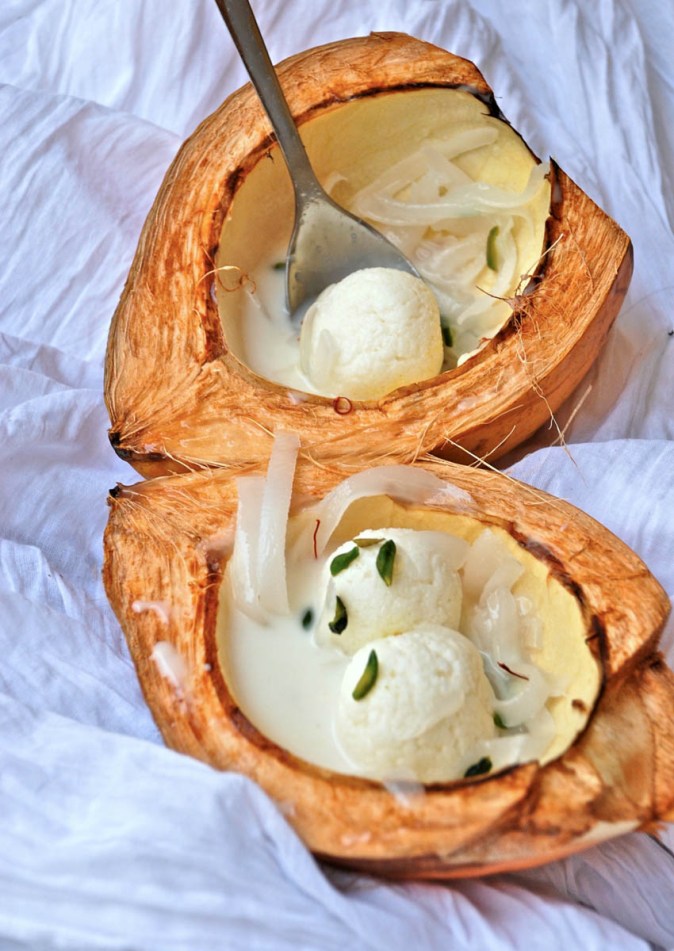
This recipe has been aired on Dubai One TV for a special Ramadan Episode.
I am back to Rasgullas once again. Being a Bengali doesn’t take you too far away from them. Rasgulla or Rôshogolla is a very famous Bengali Sweet and probably one of my favourite topics to explore and experiment. I have previously written an essay on it. Today’s recipe is very close to my heart as it involves my Lady M, our Filipina nanny without whom my endless photographic sessions on food experiments would never have materialised.
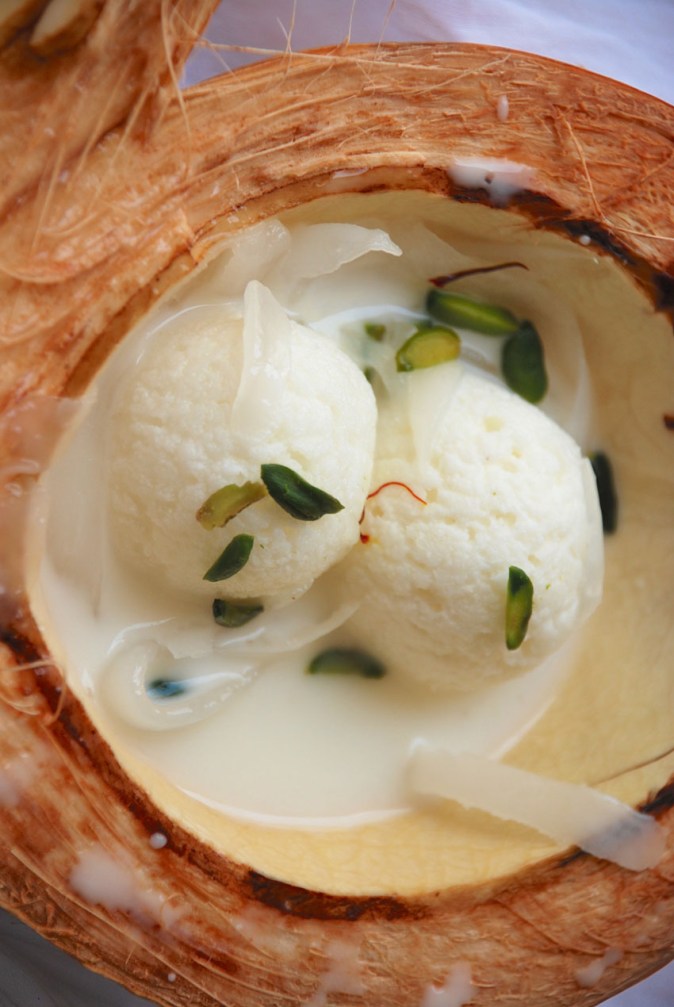
Lady M hails from Bikol, a region in Philippines which is known for it’s spicy fare. Naturally, Filipino food is cooked on a regular basis in our kitchen along with traditional Bengali and experiments with Bengali fusion food. When I eat a traditional Filipino dish, I talk about how we could use and adapt it to our Bengali palate. Similarly, when Lady M eats a Bengali dish she talks about how similar dishes exist in her cuisine or may be how a little addition here and there would make it quite easy to pass off as a Filipino dish.
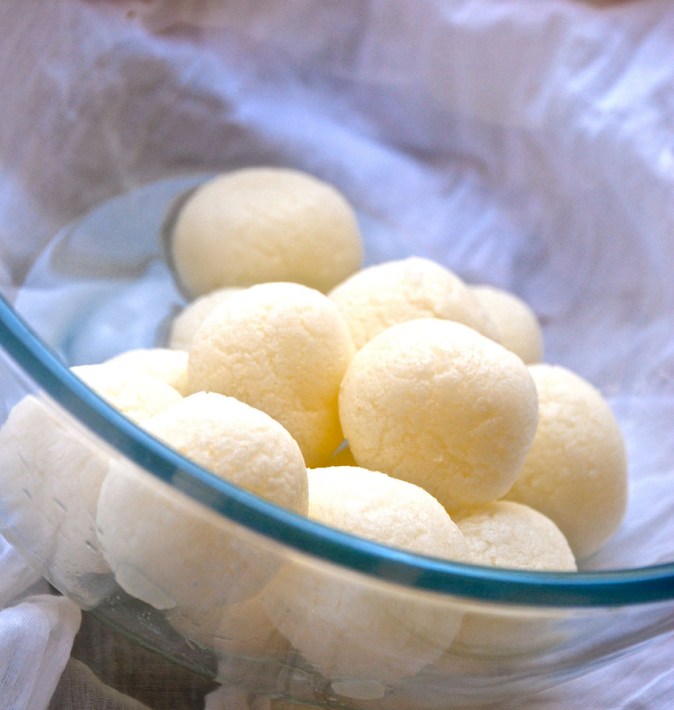
Rasgulla
Rasgullas are most probably the most popular of all Bengali sweets. They are made from balls of chhana (an Indian cottage cheese) and semolina dough, cooked in a sugar syrup. We like our rasgullas from Chappan Bhog, Bikanerwala, Gangaur or Puranmal. The quality of the channa is vital in making of soft rasgullas, as I realised while making rasgullas at home.
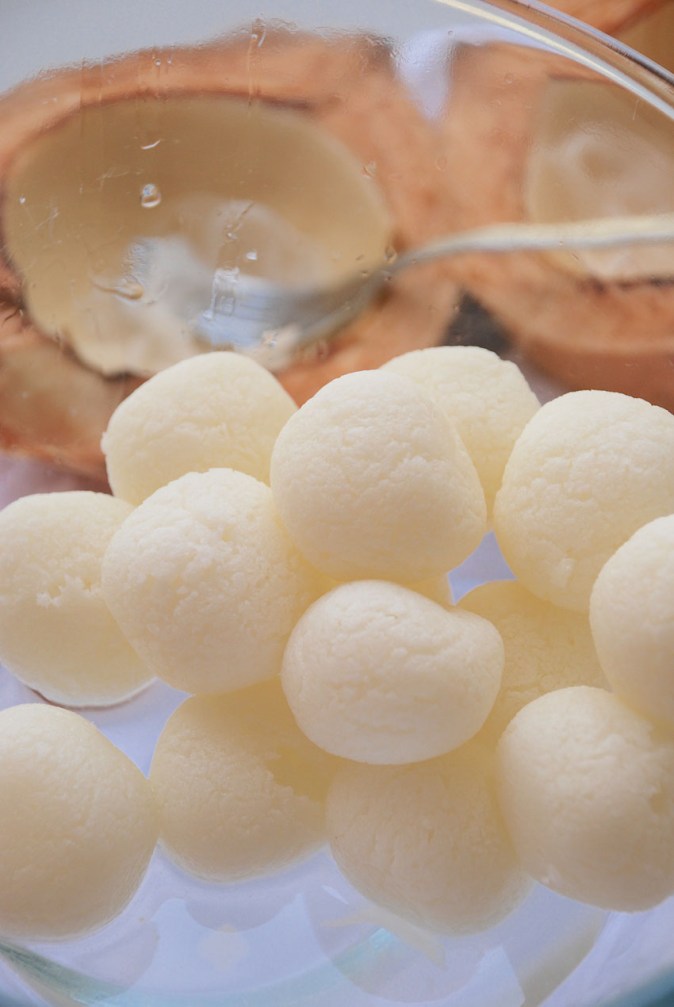
Macapuno
Hailing from Philippines, the macapuno is a variety of coconut which has more flesh than the regular coconut. They are extensively using in making Filipino sweets, fruit salads, ice-creams with macapuno flavours etc. Bottled or canned macapunos are easily available in regular supermarkets in Dubai (Choitram’s, Al Maya Lal’s, Spinneys etc). They are available in different colours – green, red etc. I like to buy the white macapuno to complement the sanctity of my white rasgullas.
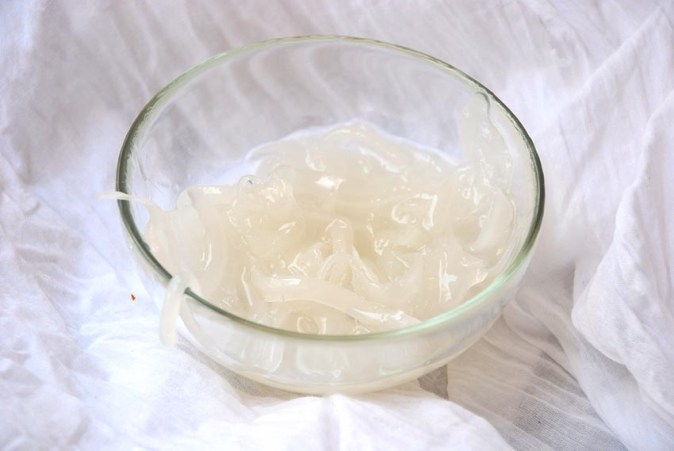
15 pieces rasgullas (you can also get canned Rasgullas from popular brands like Haldiram’s but they tend to be harder. Canned rasgullas are readily available in most hypermarkets like Carréfour, Lulu and other supermarkets like Spinneys or Choitram’s in selected locations)Rasgulla Macapuno
Ingredients
1 glass fresh coconut water
1 cup macapuno (if prepared at home) or 1 bottled macapuno
½ tsp saffron, soaked in milk
4 tsp pistachios, crushed
2 cups full cream milkMethod


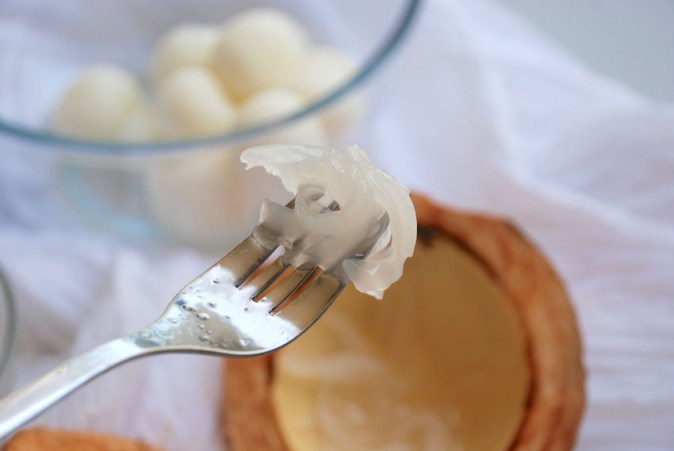
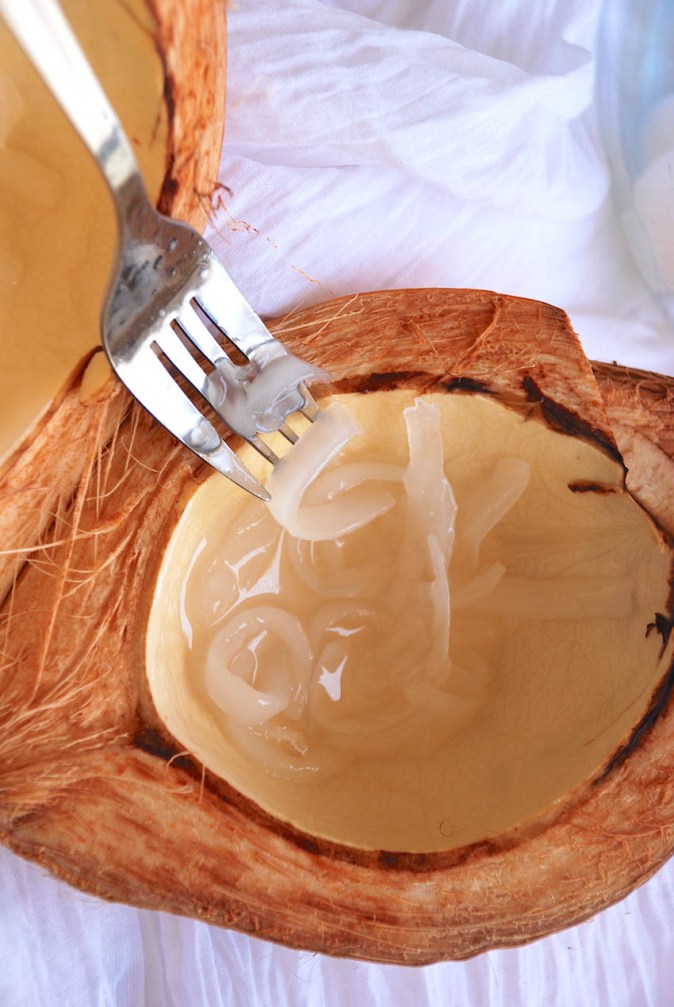
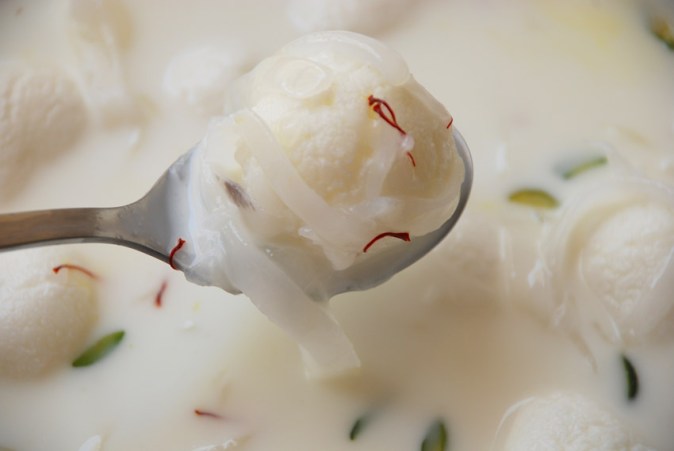


I’m sure you will love this fusion dessert. Though the inspiration of fusing Macapuno with Rasgulla comes from a dessert I had tasted once at a friend’s place. She had used the soft flesh of tender coconut or the shansh in a kheer, an Indian dessert made up of condensing the milk with sugar. Please don’t throw the coconut shells away – why not serve the Rasgulla Macapuno in them? I tried making spoons too from these to scoop out the Rasgullas but wasn’t really successful in my creative endeavour this time. Inshallah, next time! If staying with a person from a different culture doesn’t inspire one, what else will? So for Lady M, a Filipina who’s turned into a Bengali, there is always a Bengali me who’s turned into a Filipina!
Unblogging it all… Ishita
Try some of my dessert recipes:
Home made Rasgullas
 Semaiya Kheer or Vermicelli Pudding
Firni or Ferni - The broken rice pudding
Moong Daaler Payesh or Yellow Lentil Pudding
Thank you for joining me on my daily food and travel journey on Pinterest, Instagram, Facebook and Twitter!
Disclaimer: This isn’t a sponsored post, nor are there any affiliated links for any of the brands that may have been mentioned in this blogpost. The subject, story, opinions and views stated here are my own and all images are from my personal album. While you enjoy reading my posts with lot of visuals, please do not use any material from these posts.
BE SOCIAL. SHARE THIS!

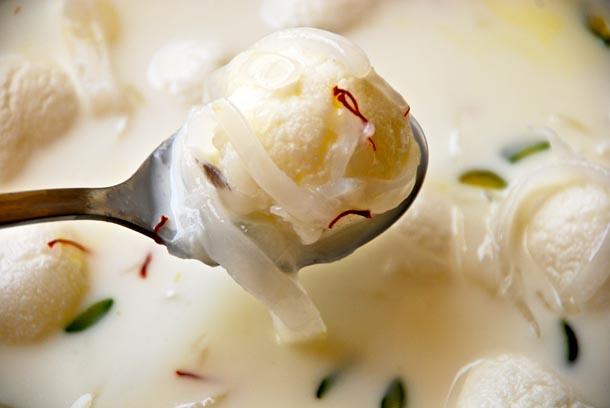

This recipe has been aired on Dubai One TV for a special Ramadan Episode. Read the new post.
I am back to Rasgullas once again. Being a Bengali doesn’t take you too far away from them. Every dessert-tasting session goes like this – Tiramisu, Chocolate Mousse, Mango Sorbet – RASGULLA BREAK – Whipped Cream, Fruits Salad, Lemon Tarts – RASGULLA BREAK – so every 4th Dessert has to be Rasgullas! Rasgulla or Rôshogolla is a very famous Bengali Sweet and probably one of my favourite topics to explore and experiment. I have previously written an essay on it and have even written a fusion recipe on it. Today’s recipe is very close to my heart as it involves my Lady Friday without whom my endless photographic sessions on food experiments would never have materialised.
The recipe is born as a Filipina turns into a Bong or vice-versa. My Lady Friday (LF) hails from Bikol, a region in Phillipines which is known for it’s spicy fare. Filipino food is cooked in a regular basis in our kitchen along with traditional Bengali or Bengali Fusion food. When I eat some traditional Filipino dish, I talk about how we could use and adapt it to our Bengali palate. When LF eats some Bengali dish she talks about how similar dishes exist in her cuisine or may be how a little addition here and there would make it quite easy to pass off as a Filipino dish.
The coconut journey…


Rasgulla Macapuno
Category – Dessert; Cuisine type – Bengali Fusion (Bong/Filipino)
Rasgullas: These Bengali sweet is amazingly versatile – made from balls of Chhana (an Indian cottage cheese) and semolina dough, cooked in a sugar syrup. I get my Rasgullas from Chappan Bhog which is located opposite Centrepoint on the Karama side of the Trade Centre road. Though there are other Indian sweet shops selling Rasgullas I prefer the former (Chappan Bhog is not paying me to write this!). Rasgullas from Chappan Bhog are soft and meets all the Bong sweet-satisfying criterion!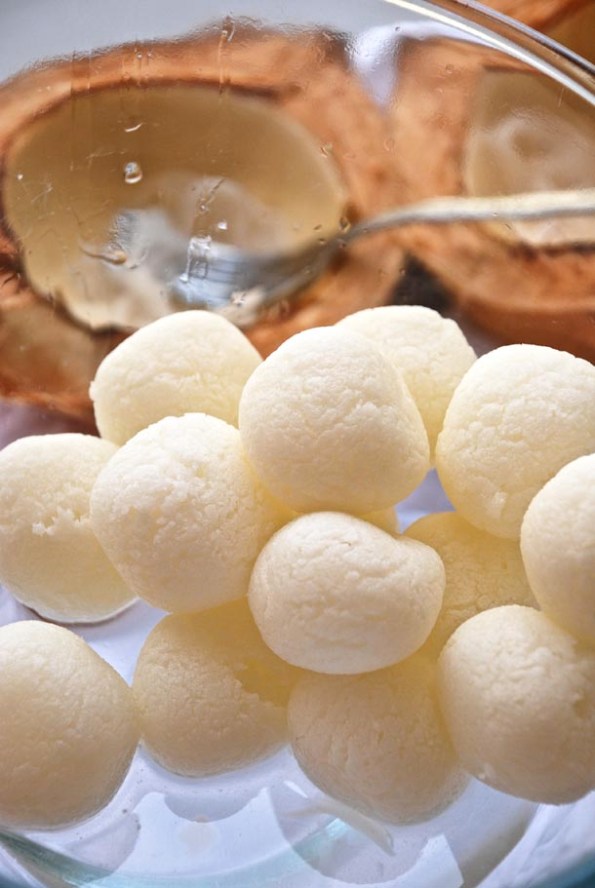
Macapuno: Hailing from Philippines, this is a variety of coconut which has more flesh than the regular coconut. They are extensively using in making Filipino sweets, fruit salads, ice-creams with Macapuno flavours etc. Bottled or canned Macapunos are easily available in regular supermarkets in Dubai (Choitram’s, Al Maya Lal’s, Spinneys etc). They are available in different colours – green, red etc. I like to buy the white Macapuno to complement the sanctity of my white Rasgullas.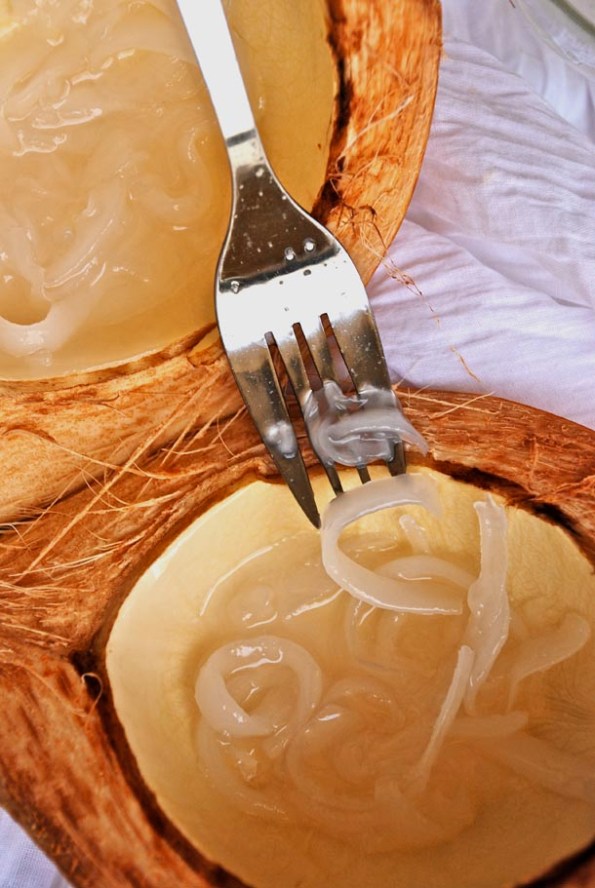
It is also very easy to make something similar to Macapuno from regular coconuts, the process of which has been described later. Coconuts are always available in the Lulu supermarkets or many other Asian supermarkets in Karama. When I bought the coconut, the assistant in Lulu assured me that the coconut will be having a lot of soft flesh inside (Shansh as is called in Bengali). But there was more water inside than flesh. Nevertheless my Rasgulla Macapuno turned out exactly the way I had wished for.
Following are the characteristics of all recipes doling out of our little hands, big hearth –
♥ Easy to cook
♥ Regular canned products off the shelf may be used (However, we advocate using fresh products)
♥ Goes well both as a regular or party dish
♥ Children can easily help in making the dish (My two little sous-chéfs are aged 8 and 3 years!)
♥ And lastly, guaranteed to be tasty!
For the printable recipe →
Serves 5-6 persons (maybe less if they happen to be sweet-toothed Bengalis!)
Preparation time – 1 hr 30 minutes maximum (Making the Macapuno – 45-50 minutes; setting up – 10 minutes; Refrigeration – 30 minutes) or 10 minutes if you use bottled Macapuno
Ingredients
Rasgullas – 15 pieces (you can also get canned Rasgullas from Haldiram’s or other known brands. These are readily available in most hypermarkets like Carréfour, Lulu and other supermarkets like Spinneys or Choitram’s in selected locations)
Fresh Coconut Water – 1 glass
Macapuno – 1 cup (if prepared at home) or 1 Bottle
Saffron – 1/2 tsp, soaked in Milk
Pistachios – 4 tsp
Milk* – 2 cups
Method of Preparation
– Prepare the Macapuno. Grate the soft kernel of a young coconut (Shansh as it is called in Bengali) into thick strips. Mix it with white sugar and a small amount of water. Simmer in a pan for a while until it turns into a sweet syrup without dissolving the kernel strips completely
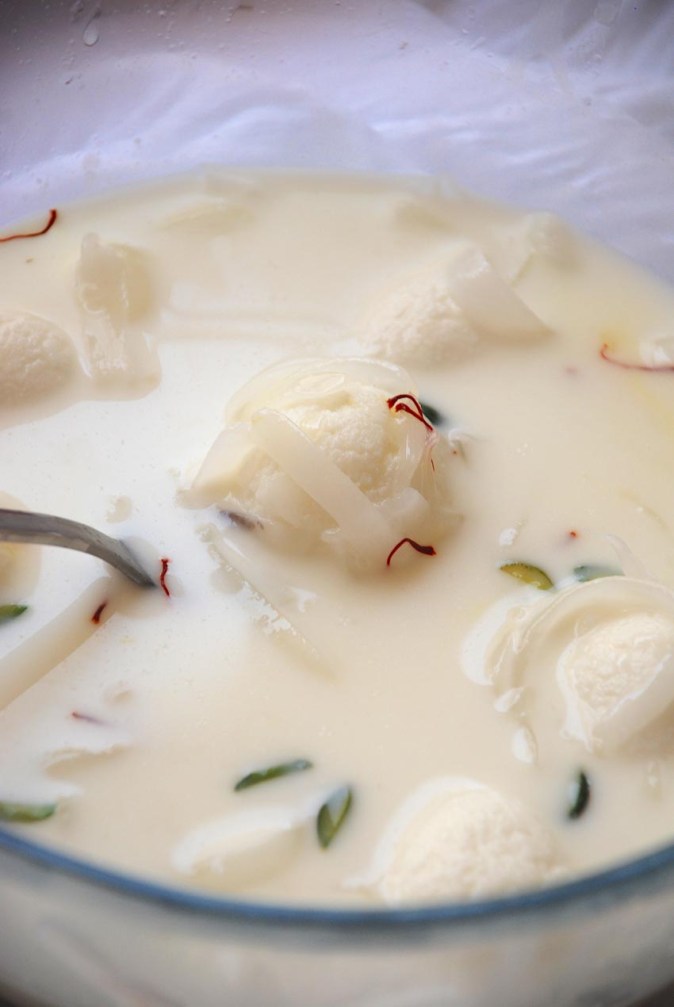
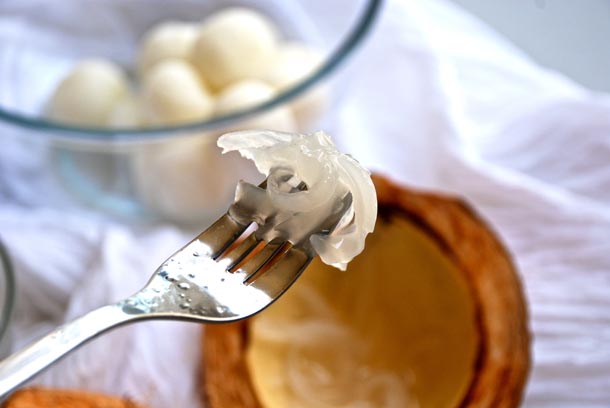
– Pour the Rasgullas into a deep glass bowl (it’s amazing to see them through the transparent glass when it seems like they are floating – there’s one photograph above!)
– Add fresh Coconut Water, Milk, Macapuno and the soaked Saffron
– Refrigerate and serve chilled
– Garnish with Pistachios just before serving
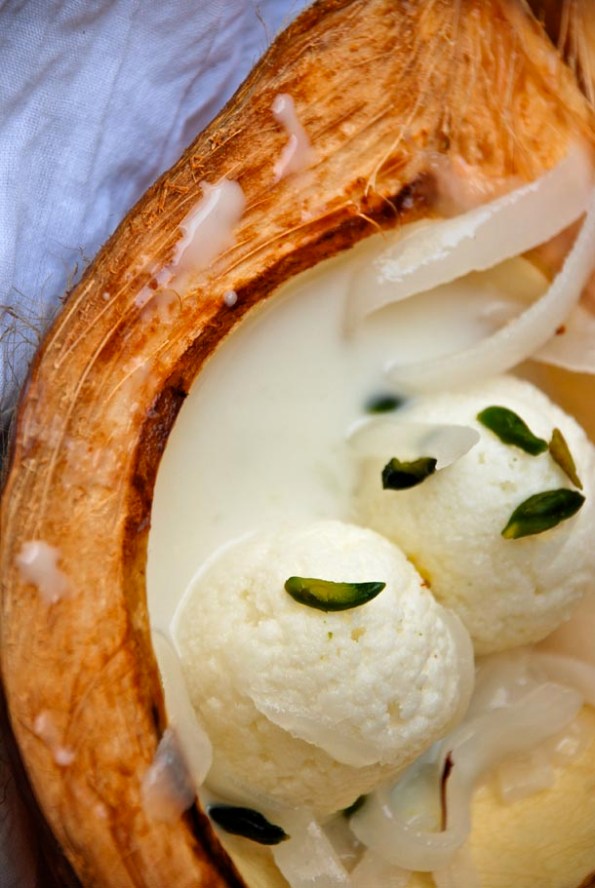
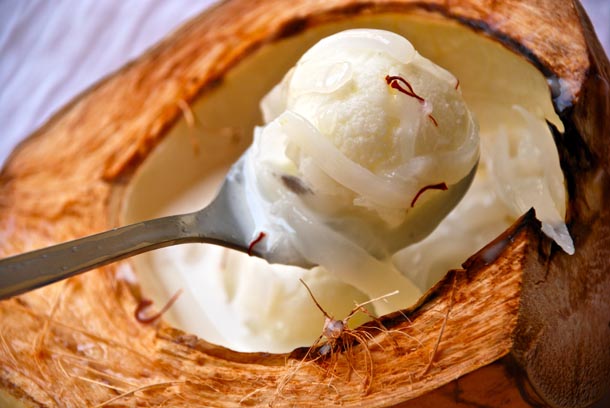
Enjoy the sweet photo-journey of our creation – Rasgulla Macapuno…



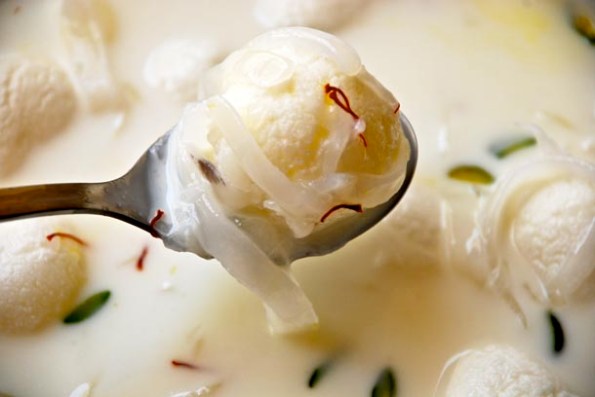

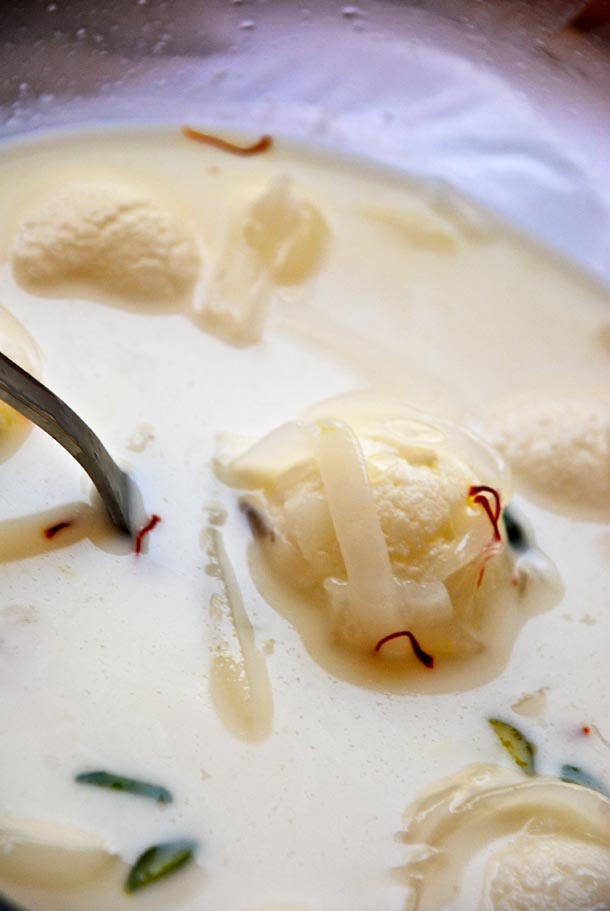
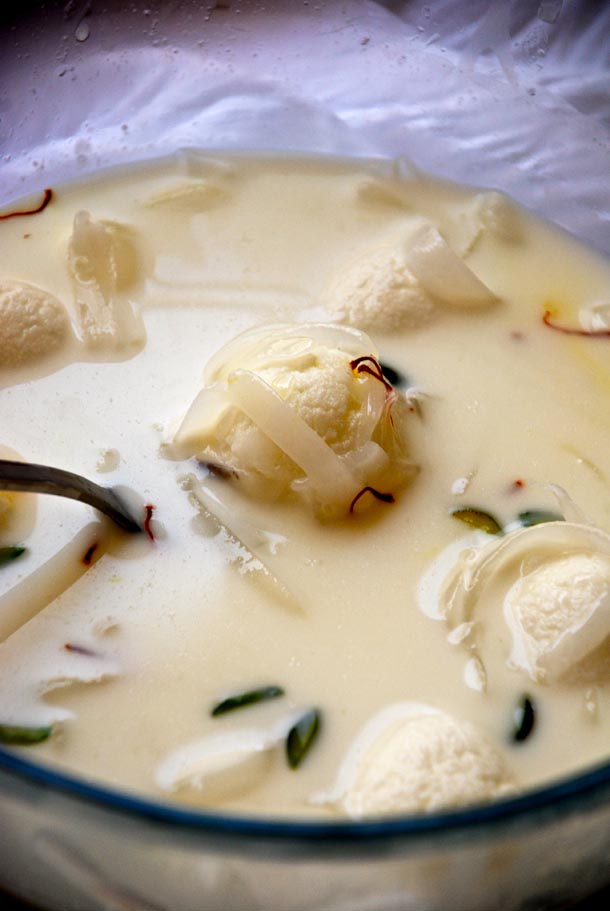

This is the first time I used Camel Milk. Big Z had gone to a camel farm as a part of her school trip and came back enriched with the knowledge of the nutritional values of camel-milk. Li’l Z had been lactose-intolerant since birth and we have been giving her Soy Milk. It didn’t occur to me to put her into Camel Milk earlier on. But a recent significant development in my food blogging journey, my induction into Fooderati Arabia is slowly exposing me to a vast world of foodies where my fellow bloggers are thinking beyond regular recipes to cater to people who have many food issues (apart from gluten issues and lactose issues, the most common 2 issues that people are aware of!). I tried out a recipe from this wonderful blogger using Camel Milk for the first time. Li’l Z has been absolutely fine. Quite honestly, it tasted heavenly. Our friend, Sudip who happened to visit us that afternoon will surely vouch for that. And in return I have chosen the B/W shirt he was wearing to form a lovely backdrop to my photo-shoot. I never forget to show my gratitude!
I’m sure you will love this fusion dessert. Though the inspiration of fusing Macapuno with Rasgulla comes from LF, I have to acknowledge that the first time I had tasted something quite similar was when we used to visit our very close friends in Fujeirah. Though they have moved to Kolkata now, Tutulika Encyclopedia (her husband believes that she’s quite like a literal encyclopaedia while she her nickname is Tutu) had used the soft flesh (Shansh) in a Kheer, an Indian dessert made up of condensing the milk with sugar. If staying with a person from a different culture doesn’t inspire us, how do we emotionally develop ourselves. So this if for the Filipina who’s turned into a Bengali or the Bengali me who’s turned Filipina.
Please don’t throw the coconut shells away – why not serve the Rasgulla Macapuno in them? I tried making spoons too from these to scoop out the Rasgullas but wasn’t really successful in my creative endeavour this time. Inshallah, next time!
Unblogging it all… Ishita
Disclaimer: I hope you enjoy reading the posts with lot of visuals. While you enjoy seeing them please don’t use them. You can see more pictures of my travel and food journey here. Chappan Bhog is located on Trade Centre Road in Karama and offers Indian Vegeterian food as well. (Tel: 04 3968176)
——————————————————————————–
You may enjoy reading the following:
Icecream Rasgulla with Blueberry Sauce Inspired by Holi
Rôshogolla – Bengali’s Own Sweet
Bengali Sweets That Came By Parcel – All The Way From Bangalore!
Other Recipes:
Cumin Beetroot Cold Salad – A Summer Salad
Mango Lentil Soup/Aam Dal – The Summer Combat
Daal Maharani Befitting the Queen (And Also Us)
Sikarni Raan/Marinated Lamb Shank from Yak & Yeti
Easter Egg Curry Cooked By Easter Bunnies!
Mashed Potato Bengali Style/ Aloo Bhaaté
BE SOCIAL. SHARE THIS!

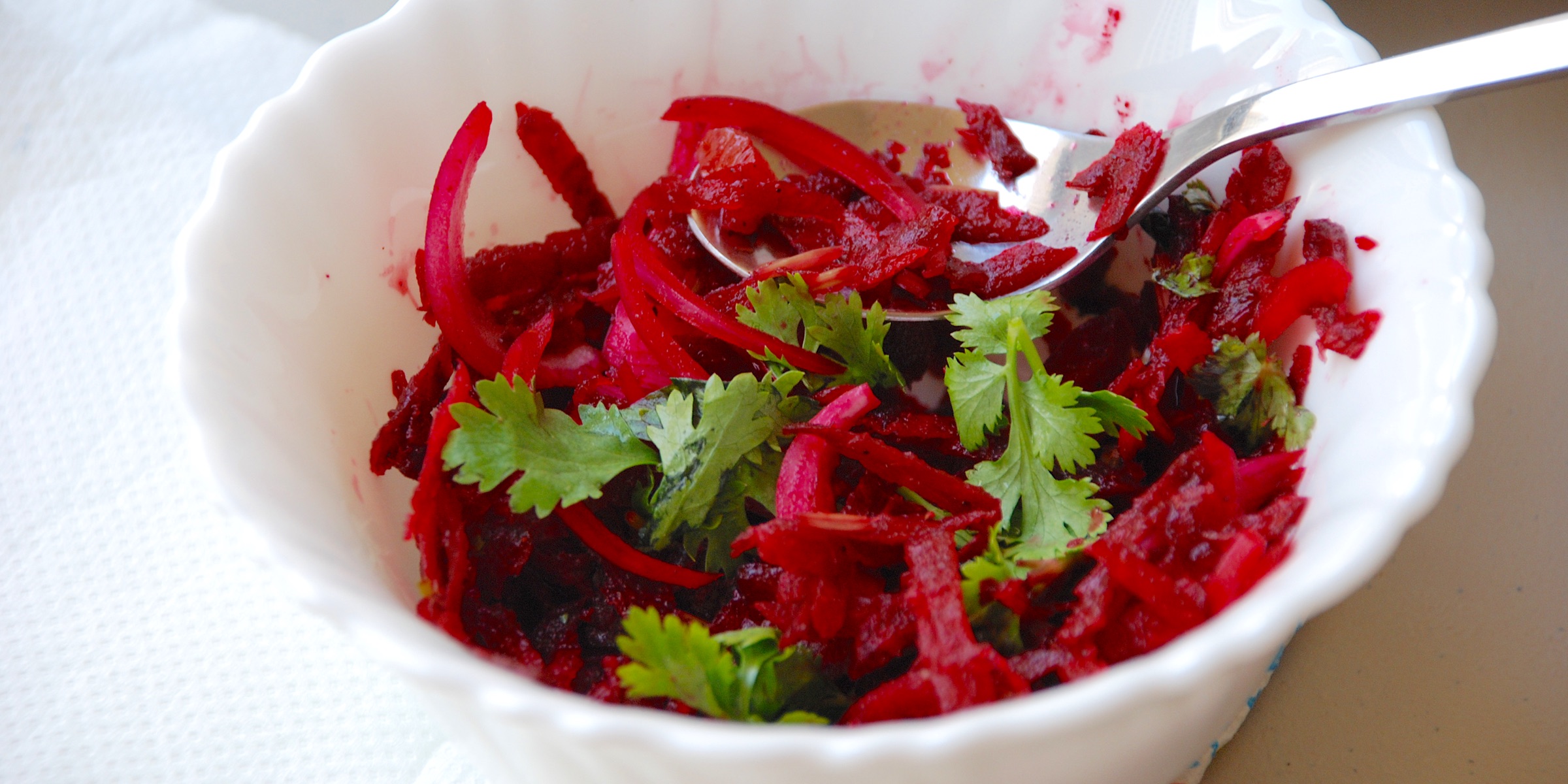
Beetroot and Cumin both have immense health properties. This salad when served cold is really refreshing and extremely cooling.
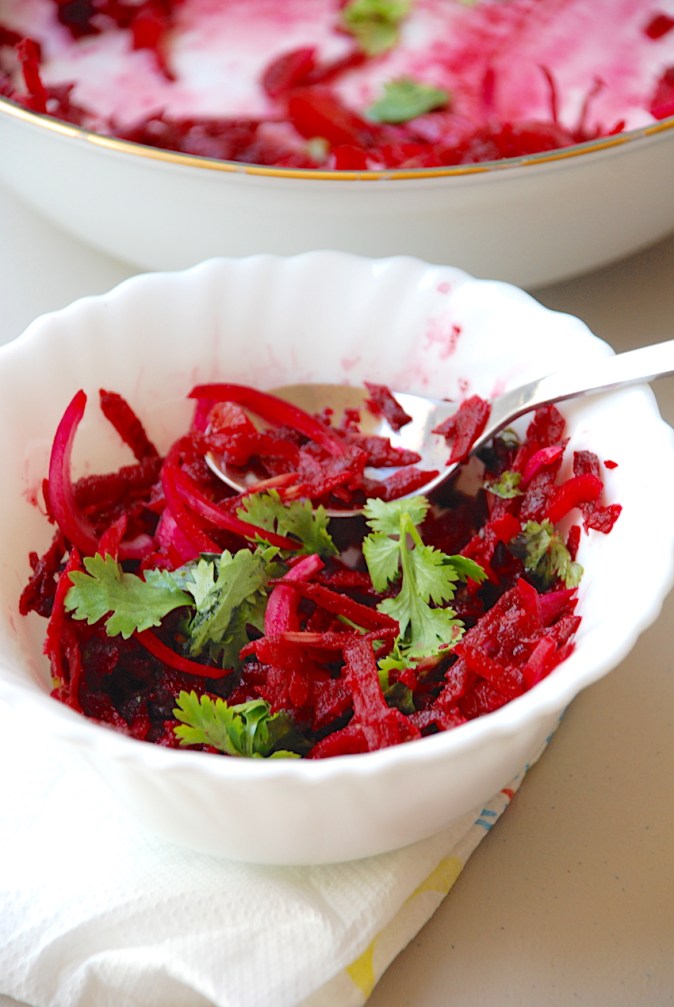
Currently I have been preparing only those dishes which can combat the extreme heat of Dubai summer. Just the other day I cooked Mango Lentil Soup, a traditional Bengali Dal which I should probably refer to as the Bengali Summer Dal! Today’s dish is no exception. Serve this straight out of the fridge as a cold salad and simply devour to feel the automatic air-conditioning. We love beetroots, specially during the summers. Whether make a variety of dishes using beetroots like carpaccio (below), chops, soups and others. Try this salad – its fairly easy to make and you can make variations of the same by altering the tempering and the ingredient proportions.
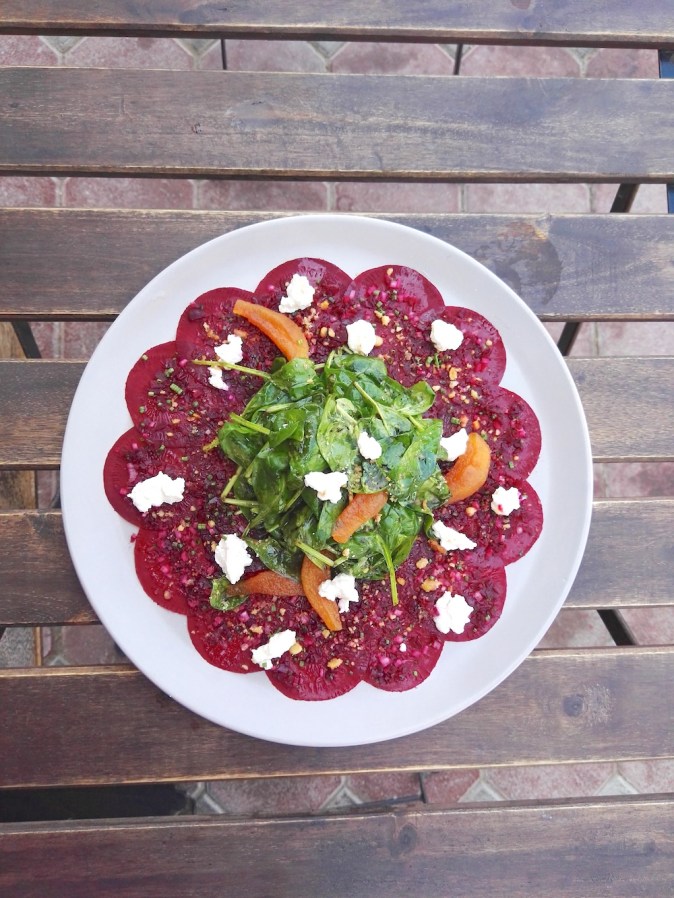
As a child I loved eating Beetroot because of its potential to use it as a cosmetic. I would put a slice of Beetroot into the cover of a ball-point pen and slowly apply it on my lips just like lipstick. I have used them as blushers too! Sharing stories of childhood silly moments with everyone is sometimes quite fun actually. Not that I have to. But I just felt like sharing. The Z-sisters are always scoffing at me when I tell them my stories. Big Z asks me to keep all the peeled skins separately. She tells me that she’s going to soak them in little water and use them as a vegetable colour. She has already gathered lots of scrap paper and glued them to each other and is planning to colour the entire thing with the colour that will run out of the peeled Beetroot skins. This is going to be a recycled gift-wrapping paper, she says. Today’s children are much more aware of other environmental concerns like recycling, waste reduction, pollution etc. These are concepts that we were not very aware of when we were their age.
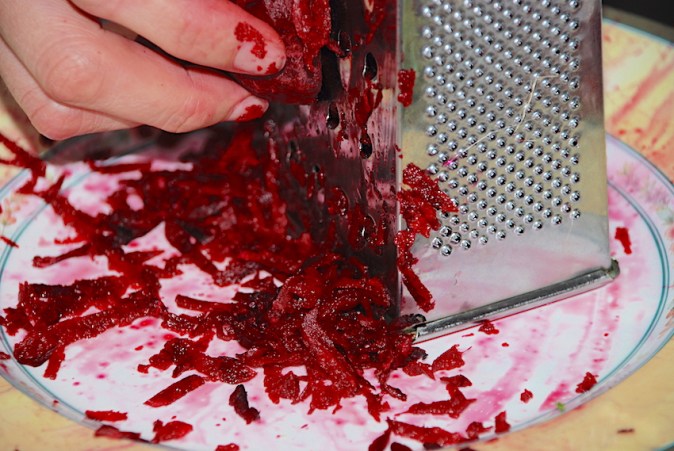
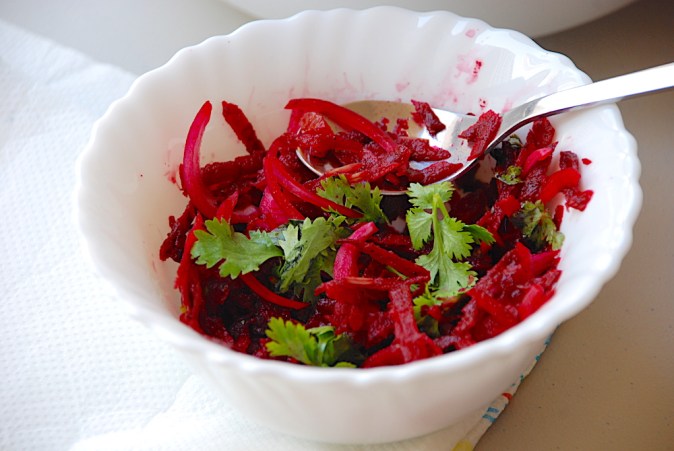
Beetroot and Cumin both have immense health properties. This salad when served cold is really refreshing and extremely cooling. Freny, my Parsi friend who had introduced me to this salad originally, recalls how Aunty as we call her South-Indian Mum-in-law, adds a bit of Bagar/Chaunk/Tadka to the salad to customise it to her traditional South-Indian kitchen. Bagar/Chaunk/Tadka is a kind of tempering or a fried garnish that is commonly used at the end of most Indian cooking. In this salad, Aunty uses the fried garnish of Mustard Seeds and a few pieces of Urad Dal/Black Lentils in white oil.


I find Beetroot extremely photogenic too – much like pomegranates. Whether its the red hue running out of the cut slices and stains the plates or when the tap water runs the hue out from the peeled skins. Each time I’m surprised – as if deep dark secret peels out from the inside!
Cumin Beetroot Cold Salad
Ingredients
4 medium beetroots, grated into fine long pieces
2 medium onions, peeled and sliced longitudinally
2 big tomatoes, peeled and sliced longitudinally into thin slices
1 green chilli (optional), cut into very small pieces
½ tsp cumin powder
½ tsp sugar
¼ pepper
fresh coriander leaves, a small bunch, chopped into very small pieces
salt, as per taste
¼ cup fresh coriander leaves, chopped
1 big lemon, squeezed (use half if it’s an Indian Lime as the later tends to taste more sour)
Tempering (optional)
½ tsp mustard seeds
½ tsp urad dal/black lentils
½ tsp white oil – 1/2 tsp
Method of Preparation
– Toss the beetroot, onions, tomatoes, green chillies in a mixing bowl
– Toss the sugar
– Add the tempering or fried garnish. To make this – Take a small-bottomed wok and once the oil becomes hot, add mustard seeds and lentils. Let them splutter very slightly (even a tad bit too long will make the garnish taste really bitter)
– Refrigerate the salad mix
– Add salt, sugar, pepper and lemon or lime juice and garnish with coriander leaves just as you are serving (adding these before will make the salad go soggy)
Method
- Toss the beetroot, onions, tomatoes, green chillies in a mixing bowl
- Toss the sugar
- Add the tempering. Take a small-bottomed wok and once the oil becomes hot add the mustard seeds and the lentils. Let them splutter very slightly (even a tad bit too long will make the garnish taste really bitter)
– Refrigerate the salad mix
– Add salt, sugar, pepper and lemon or lime juice. Garnish with fresh coriander leaves just as you are serving (adding these before will make the salad go soggy)
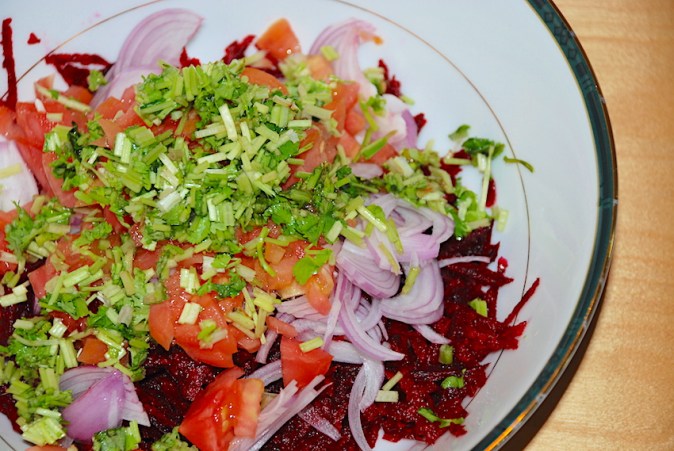
As I sign off with this easy salad, I just realised that the Beetroot art – the recycled wrapping paper project hasn’t yet taken place. It is this weekend’s project. Will probably share those images in the future. But for now, have a wonderful weekend!
Unblogging it all… Ishita
Thank you for joining me on my daily food and travel journey on Pinterest, Instagram, Facebook and Twitter!
Disclaimer: This isn’t a sponsored post, nor are there any affiliated links for any of the brands that may have been mentioned in this blogpost. The subject, story, opinions and views stated here are my own and all images are from my personal album. While you enjoy reading my posts with lot of visuals, please do not use any material from these posts.
BE SOCIAL. SHARE THIS!

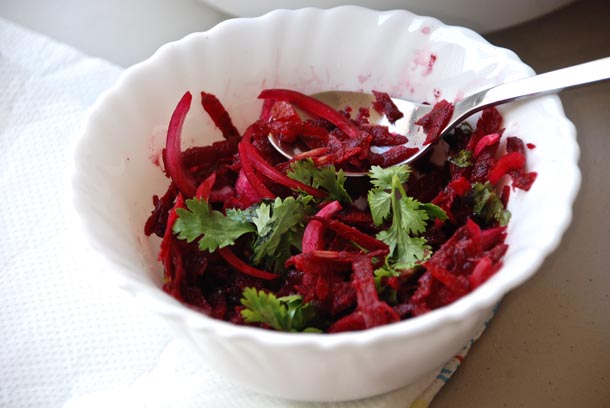
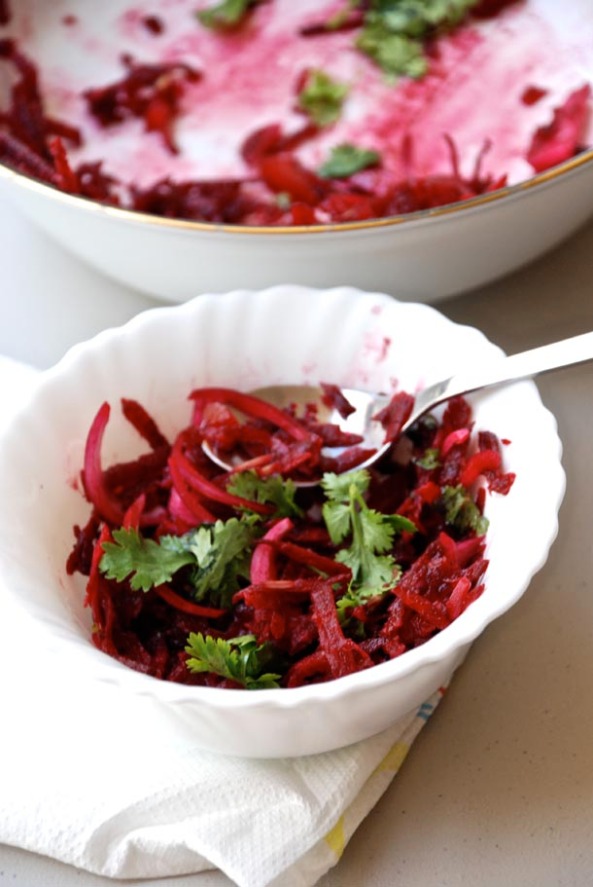
Currently I have been preparing only those dishes which can combat the extreme heat of Dubai summer. Just the other day I cooked Mango Lentil Soup, a traditional Bengali Dal which I should probably refer to as the Bengali Summer Dal! Today’s dish is no exception. Serve this straight out of the fridge as a cold salad and simply devour to feel the automatic air-conditioning.
When I was a child I used to love eating Beetroot because of its potential to use it as a cosmetic. I would put a slice of Beetroot into the cover of a ball-point pen and slowly apply it on my lips just like lipstick. I have used them as blushers too! Sharing stories of childhood silly moments with everyone is sometimes quite fun actually. Not that I have to. But I just felt like sharing. The Z-SISTERS scoff at me when I tell them my story. Even Li’l Z who’s just turned 3! ‘Mummy you were so silly!’ Should I be happy? Or should I be sad? Are their imagination daunted by the I-pads and the X-boxes that surround them?
Big Z asks me to keep all the peeled skins separately. She tells me that she’s going to soak them in little water and use them as a vegetable colour. She has already gathered lots of scrap paper and glued them to each other and is planning to colour the entire thing with the colour that will run out of the peeled Beetroot skins. This is going to be a recycled gift wrapping paper, she says.
Wow! And all this while I thought their imagination was perhaps not getting enough stimulation. Obviously I was wrong. Today’s children are much more aware of other environmental concerns like recycling, waste reduction, pollution etc. These are concepts that we were not even aware of at their age. Anyway, let’s come back to our dish of the day.
This is a very easy recipe and many a times I have served it successfully to my non-Indian friends with very minor modification – without the fried garnish that has been mentioned below.
Following are the characteristics of all recipes doling out of our little hands, big hearth –
♥ Easy to cook
♥ Regular canned products off the shelf may be used (However, we advocate using fresh products)
♥ Goes well both as a regular or party dish
♥ Children can easily help in making the dish (My two little sous-chéfs are aged 8 and 3 years!)
♥ And lastly, guaranteed to be tasty!
Cumin Beetroot Cold Salad
Category – Veg Salad
Beetroot and Cumin both have immense health properties. This salad when served cold is really refreshing and extremely cooling. Freny, my Parsi friend who had introduced me to this salad originally, recalls how Aunty as we call her South-Indian Mum-in-law adds a bit of Bagar/Chaunk/Tadka to the salad to customise it to her traditional South-Indian kitchen. Bagar/Chaunk/Tadka is a kind of tempering or a fried garnish that is commonly used at the end of most Indian cooking. In this salad, Aunty uses the fried garnish of Mustard Seeds and a few pieces of Urad Dal/Black Lentils in white oil.
I find Beetroot extremely photogenic. The cut slices when the red hue runs out from the vegetable itself and stains the plates or even the mess on the sink when the tap water runs the hue out from the peeled skins. Each time I’m surprised when the red hue comes out as soon as I cut them – as if the extreme interior hides a deep secret inside!
I can’t stop clicking. A little into our Beetroot journey…
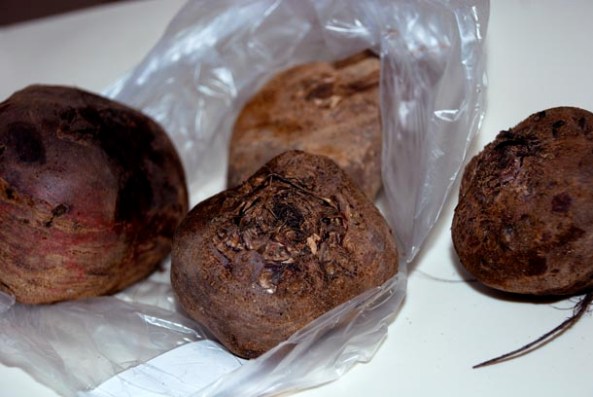
And the sudden bright surprise…
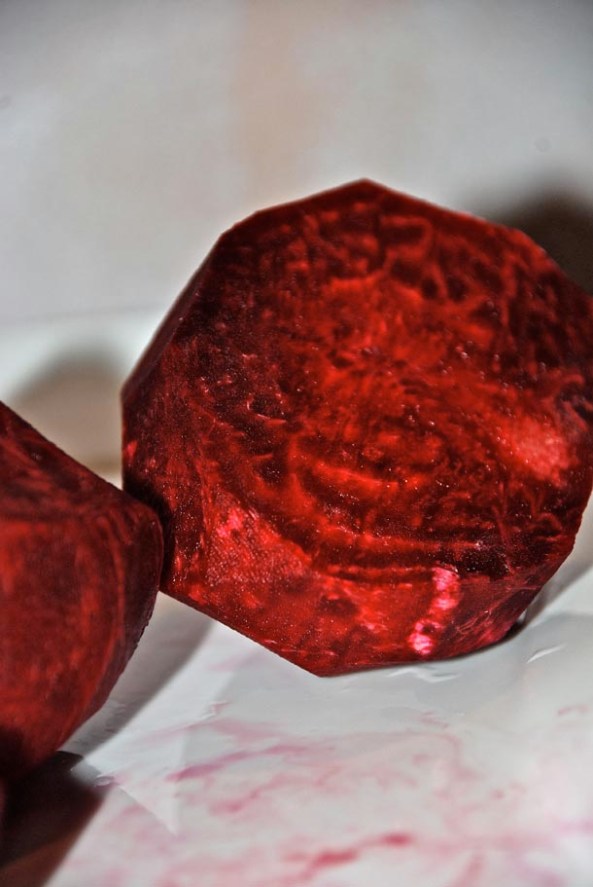
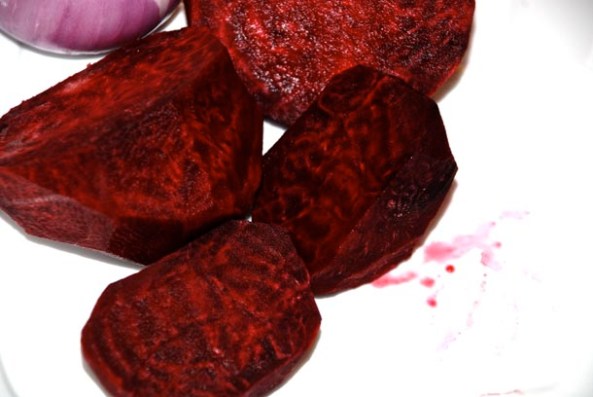
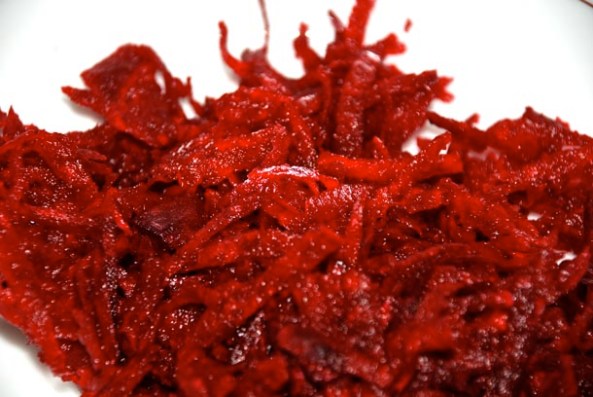
Even the mess on the sink looks pretty. Rose petals or peeled skins?
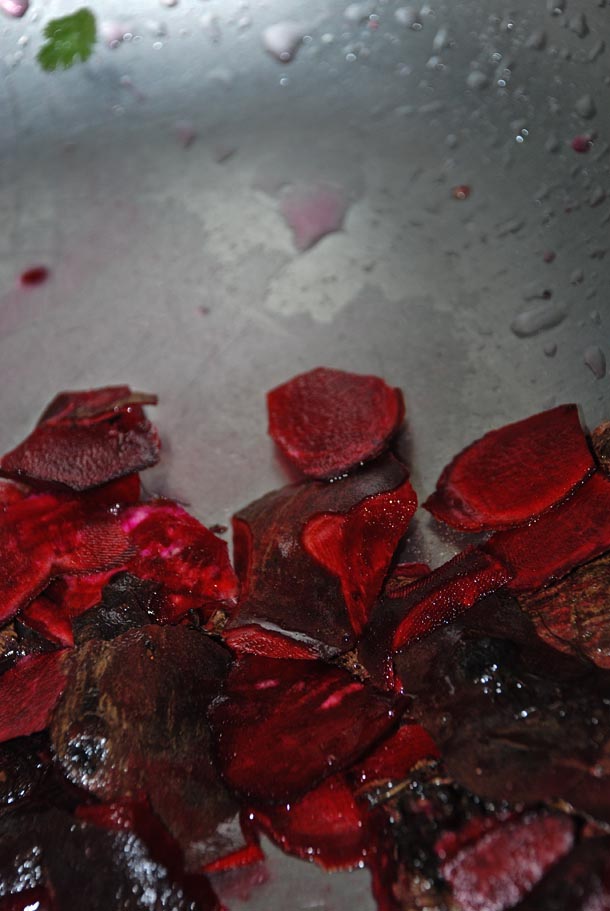
For the printable recipe→
Serves 6-8
Preparation time: 10 minutes (However, please keep aside 20 minutes for refrigeration)
Ingredients:
Beetroots – 4 medium, grated into fine long pieces
Onions – 2 medium, peeled and sliced longitudinally
Tomatoes – 2 big, peeled and sliced longitudinally into thin slices
Green Chillies – 1 (optional), cut into very small pieces
Cumin Powder – 1/2 tsp
Sugar – 1/2 tsp (this is my Bengali Granny’s unhealthy secret funda on how to easily acquire Diabetes and also to make the vegetables retain their colour)
Pepper – 1/4 tsp
Coriander leaves – A small bunch, chopped into very small pieces
Salt – as per taste
Lemon – 1 big, squeezed (or 1/2 if you use the Indian Limes as the later tends to taste more sour)
Fried Garnish (optional)
Mustard Seeds – 1/2 tsp
Urad Dal/Black Lentils – 1/2 tsp
White Oil – 1/2 tsp
Method of Preparation
– Toss the Beetroot, Onions, Tomatoes, Green Chillies in a mixing bowl
– Toss the sugar
– Add the fried garnish. To make this – Take a small-bottomed wok and once the oil becomes hot add the Mustard Seeds and the Lentils. Let them splutter very slightly (Note: Even a bit too longer than this slightly will make the garnish taste really bitter)
– Refrigerate the Salad mix
– Add Salt, Sugar, Pepper and Lemon or Lime juice and garnish with Coriander leaves just as you are serving (Note: Adding these before will make the salad go soggy)
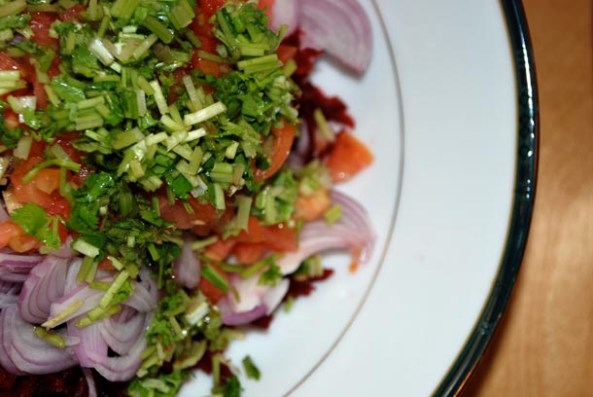
Beetroot
Beetroot has immense value. It is loaded with powerful antioxidant Betacyanin giving the Beetroot its deep red colour. Beetroot purifies the blood, boosts body’s natural defenses in the liver, regenerates immune cells. It has silica which is vital for healthy skin, fingernails, ligaments, tendons and bones. The other elements that are inside Beetroot are sodium, potassium, phosphorus, calcium, iodine, iron, copper, Vitamins B1, B2, B3, B6 and C.
Beetroot is believed to be native of the Mediterranean region of Europe and probably Western Asia. It has been in use for the last 2000 years. Even in the ancient age the Greeks and Romans used Beetroots and was quite a favourite. In-fact, Beetroots have been used as offerings to Apollo in his temple at Delphi. (Info Courtesy: from Big Z’s web reference)
Cumin
Cumin is used as a very common condiment or spice in dishes from the Indian Subcontinent and other Asian countries. It is also used in many African and Latin American countries. Cumin too has high medicinal properties. It helps in digestion, insomnia, respiratory disorders, immunity, cancer and many more. (Info Courtesy: from Mummy’s web reference)
As I sign off with this easy salad, I just realised that the Beetroot art – the recycled wrapping paper project hasn’t yet taken place. It is this weekend’s project. Will probably share those images in the future. But for now, have a wonderful weekend!
Unblogging it all… Ishita
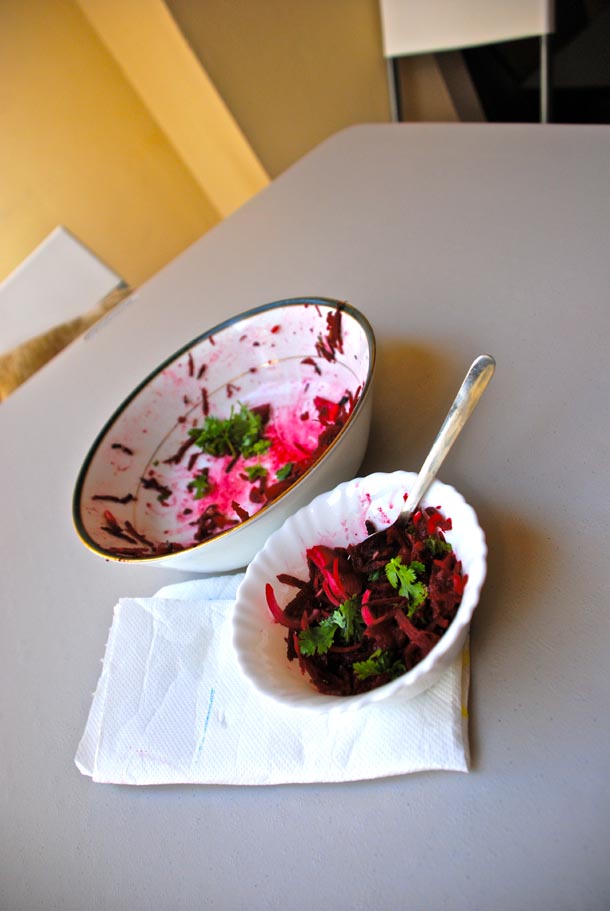
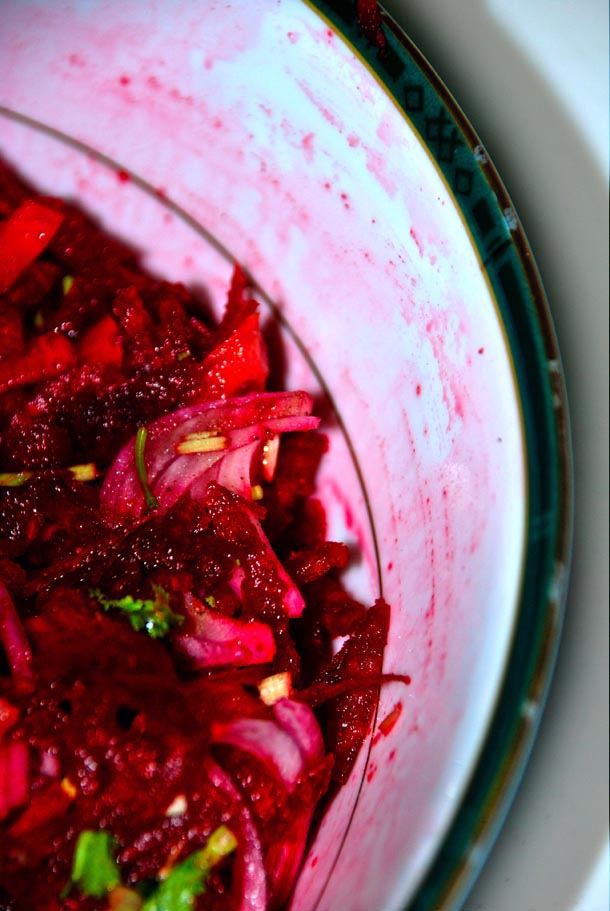
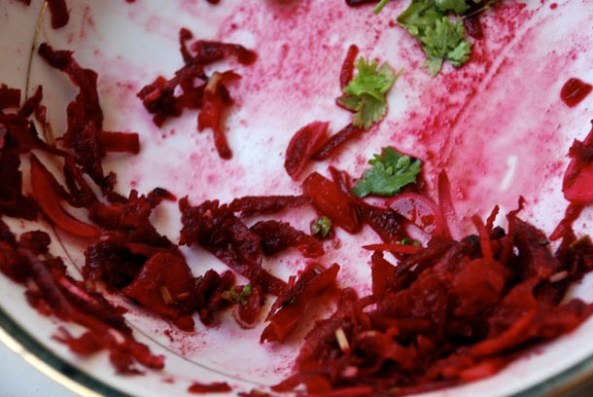
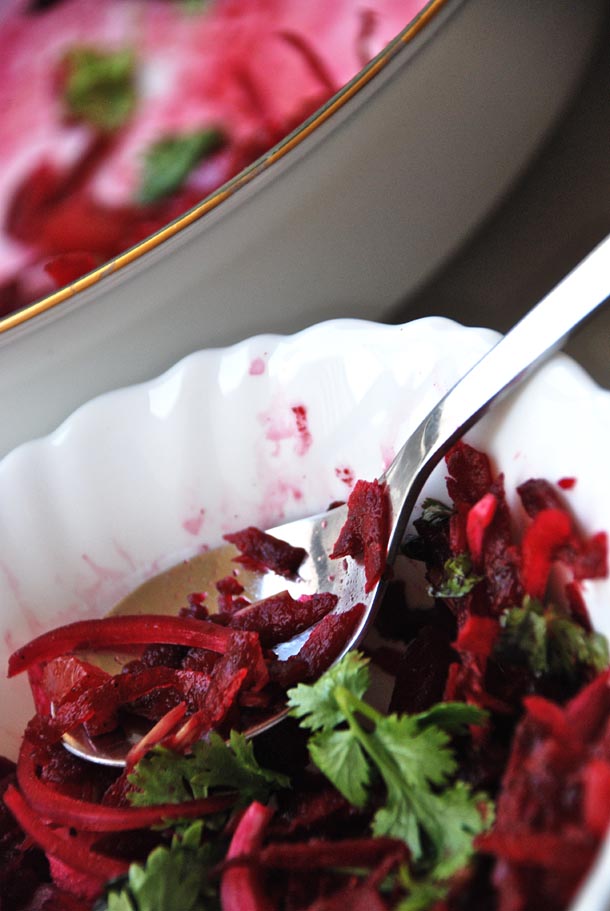
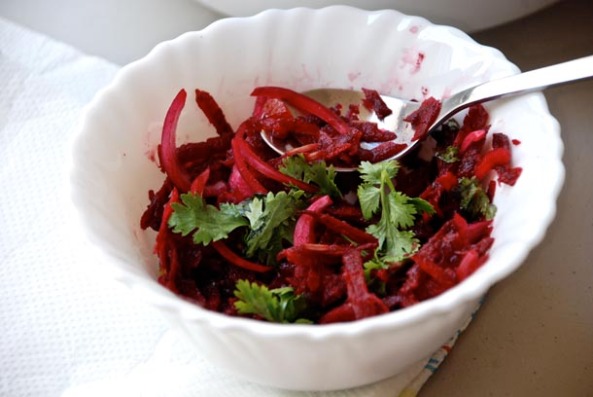
More images on my Beetroot journey. Enjoy seeing them but please don’t use them.
Other Recipes
Mango Lentil Soup/Aam Dal – The Summer Combat
Daal Maharani Befitting the Queen (And Also Us)
Sikarni Raan/Marinated Lamb Shank from Yak & Yeti
Easter Egg Curry Cooked By Easter Bunnies!
Mashed Potato Bengali Style/ Aloo Bhaaté
BE SOCIAL. SHARE THIS!

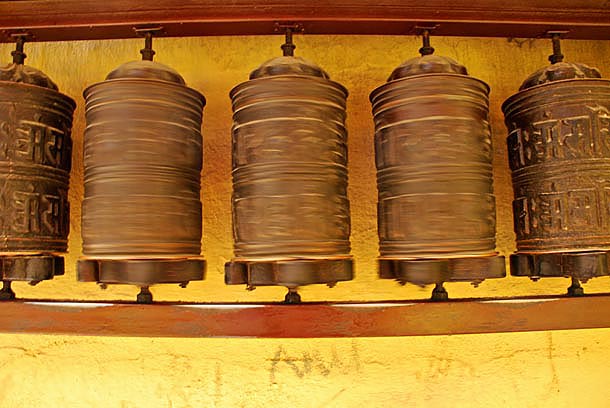
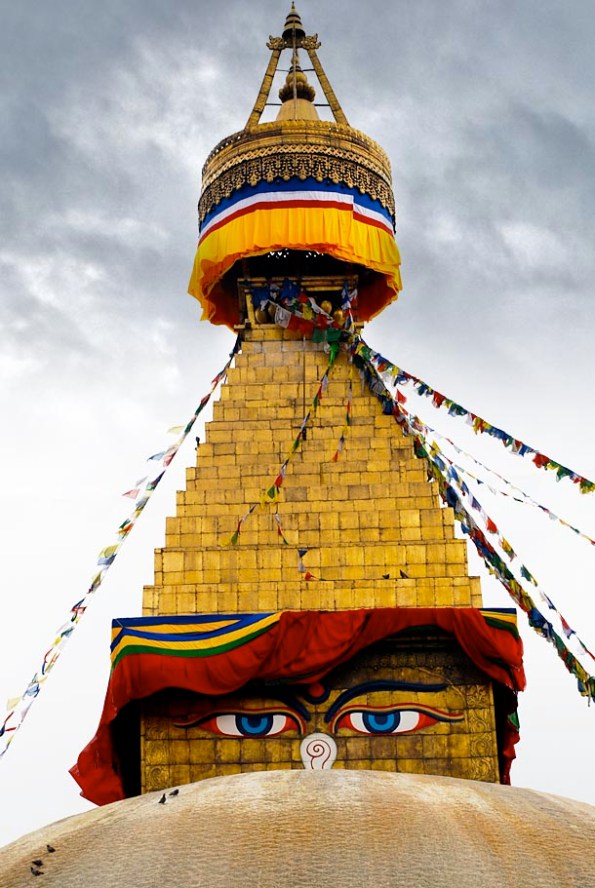
As I transcended on the second part of my spiritual and religious journey in Nepal, I realized that the first part of the journey reflected a strong orientation of Hinduism in Nepal, while the 2nd part of the journey was reflected by elements of Buddhism. Though both the journeys were markedly different, they joined hands to form an unusual assimilation which is very unique and the very essence of religion in Nepal.
A little recap from my first journey –
I have always maintained from the very beginning that I will refrain from expressing my personal opinion on politics and religion in my writings that might reflect any bias or hurt any religious/cultural/spiritual sentiment. Having grown up in the multicultural Kolkata we have participated in all festivals from all religion. My previous writings dwell deeply on this aspect (Article 1, Article 2). But I cannot deny the fact that the enigma of varied cultural/religious aspects of different places simply fascinate me. The strong beliefs and faiths reinforcing the expression on the faces of devotees during worship, the colours, the rituals, the stories underlying these rituals – I have always wanted to capture these elements in a soulful manner. And I hope that I’ve succeeded… [Read more…]
Religion in Nepal
It is fascinating and quite a complex task to understand Religion in Nepal because there is no simple straight forward philosophy. Many communities and many religion have become intermingled. There seems to exist 70 ethnic and indigenous communities in Nepal speaking at least 100 different languages and dialects. Though many perceive Buddhism as the predominant religion in Nepal, it constitutes less than 6% of the the country’s population.
For Hindus the world over, the temple of Lord Shiva in Pashupatinath along the banks of the Bagmati river in Kathmandu is one of the most sacred pilgrimages. Thousands congregate here for the annual Mahashivaratri festival which falls in early spring. In-fact, this temple is one of the 275 Paadal Petra Sthalams (Holy Abodes of Shiva on the continent).
At the same time Nepal is also the birthplace of Lord Buddha. He was born in Lumbini located in southern Nepal. The Stupas or sacred mounds of Swayambhunath and Bouddhanath are very important reference points for Buddhism. Hence, many Buddhist practices, customs and rituals have entered into Hinduism and vice versa. Interestingly, Buddhism here is considered to be a part of Hinduism.
Both these Stupas belong to the group of 7 monuments and buildings in the Kathmandu Valley that makes it a UNESCO World Heritage Site. So here goes another tick in my list of the UNESCO World Heritage Sites that I have visited.
The Buddhist chanting and the prayer wheels
‘Om Mani Padme Hum’ is a special Buddhist chanting that is inscribed in Sanskrit, an Indo-Aryan language which is the origin of most languages in the sub-continent and is evident everywhere in Nepal. This a six syllabled Mantra (a sacred chanting or a sound/syllable/word/group of words that has the power to create a spiritual transformation) specially chanted by the devotees of the Dalai Lama. The chanting is carved onto rocks or written on paper and is inserted into prayer wheels. This is said to increase the power or the effectiveness of the Mantra. Amazing isn’t it?


The meaning of the chant is equally beautiful. Om or Aum is a sacred or mystical syllable of the Hindu religion but is also of great importance in Buddhism as well. It is a droning intonation used in the beginning or at the end of every sacred text used in a prayer in a Hindu worship. It has a profound meaning signifying the ‘universal existence’. The symbol is also synonymous with the Absolute or the Almighty.
Mani in Sanskrit means jewel or gem and Padma means a lotus. Hence the chanting translates itself into the universal existence lying in the jewel of the lotus (probably at Buddha’s feet).
Prayer wheels are another fascinating aspects of Buddhism. They are cylindrical wheels perched on spindles. Traditional prayer wheels have ‘Om Mani Padme Hum’ inscribed on the outside of the wheel. The Mantra is also written in paper scrolls and are put inside the prayer wheel. It is such a pleasure watching a Buddhist practitioner gently spin the prayer wheels while simultaneously humming the Mantras. Usually (specifically in Tibetan Buddhism), these prayer wheels are spun in a clock-wise direction so that the motion of the inscribed Mantra reflects the movement of the sun across the sky. Spinning a wheel is said to have the same meritorious effect as orally reciting prayers.
The concept of spinning of the prayer wheel is a physical manifestation of Lord Buddha’s philosophy of ‘turning the wheel of Dharma’, Dharma being the natural law that is of prime importance in Hindu religion.
Our Buddhist journey begins with spinning the prayer wheels while chanting ‘Om Mani Padme Hum’ like expert Buddhist practitioners (or as I would like to believe!)…

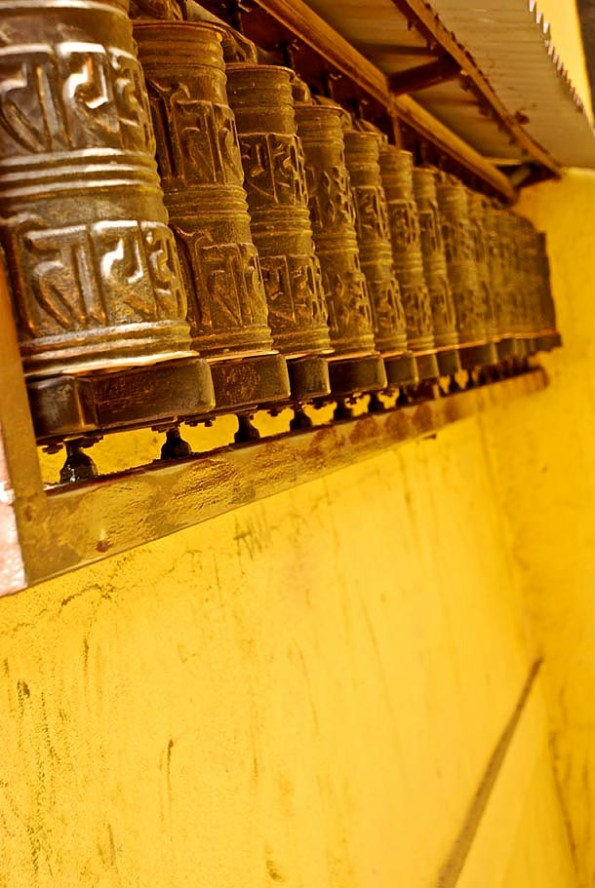

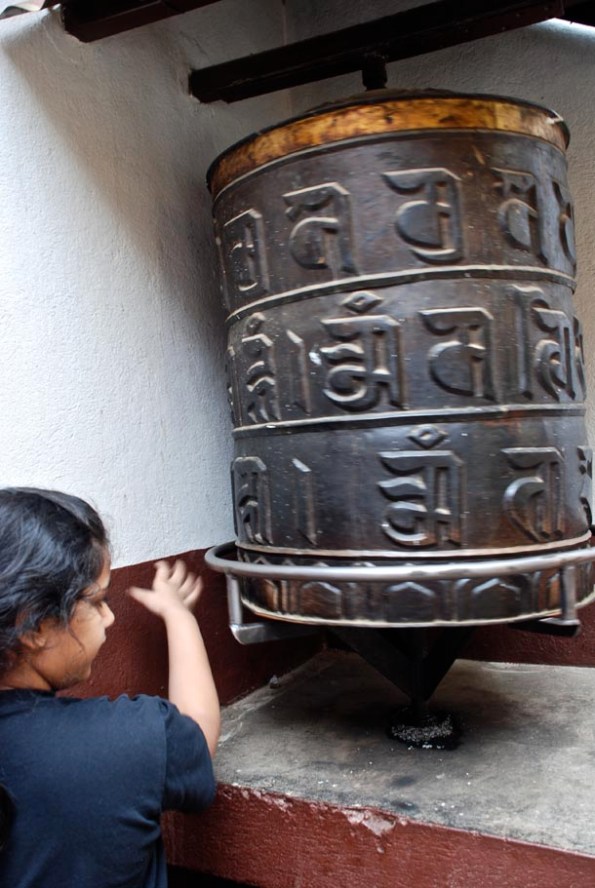
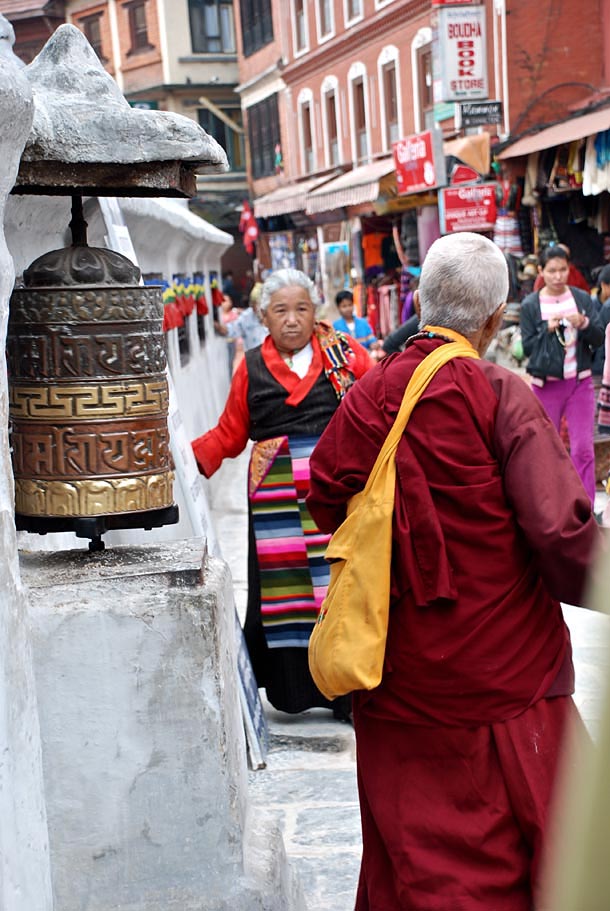


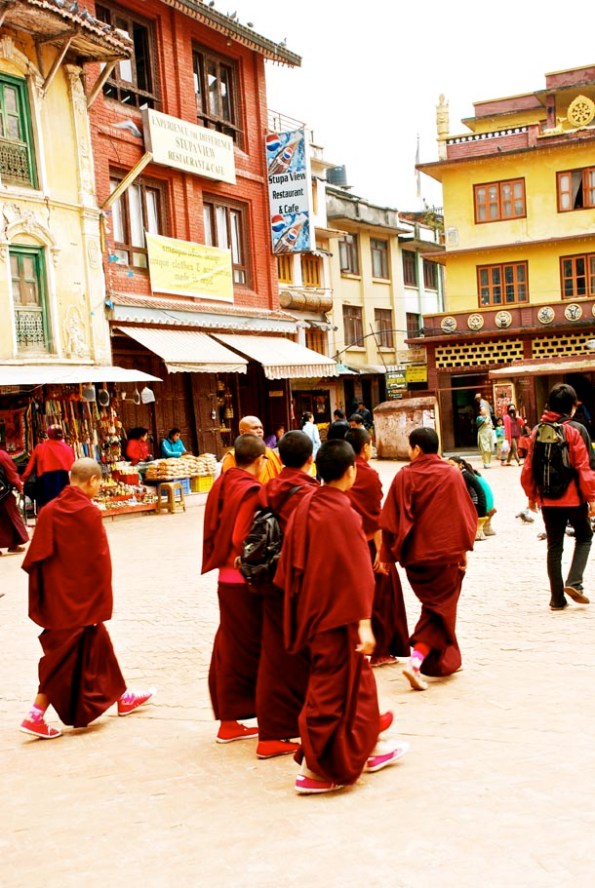
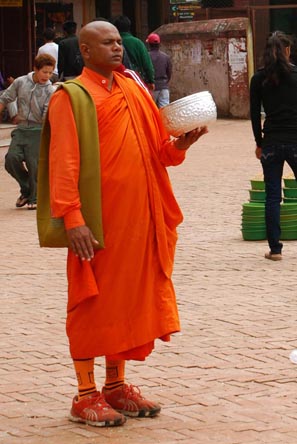
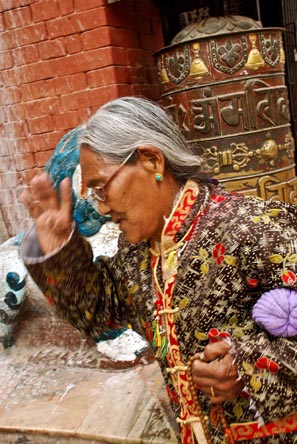

Boudhanath Stupa
The Nepali Buddha is depicted by a pair of beautiful and mersmerising eyes – the ‘all-seeing’ eyes. The Buddha has a pair of eyes only, with a question mark in the place of his nose. This symbol is actually the number ‘One’ in Nepali script, a symbol of unity. The Buddha seems to observe in all the four directions and each pair of eyes represent Wisdom and Compassion. Above each pair of eyes is another eye, the third eye. When Buddha preaches, cosmic rays seem to emanate from this third eye. The Stupa consists of a huge Mandala, a hemisphere which depicts the universe and absolutely dominates the skyline amidst thousands of 5-coloured flags fluttering in the wind. The yellow markings on this Mandala depicts lotus petals. The architecture is an assimilation of symbolic depictions of all the 4 elements – air, water, earth and fire. 108 images of Buddha line the base of the hemisphere. Prayer wheels dot it’s base at the ground level and Buddhist practitioners walk past these prayer wheels in a clockwise direction while spinning them, the process of which is known as circumambulation.
The ancient site is one of the holiest Buddhist sites in Kathmandu Valley and is also one of the largest in the world. This is also the centre of Tibetan Buddhism in Nepal as is evident by the number of Gompas/Monasteries that have come up surrounding the Stupa. During Losar, the Tibetan New Year, the entire site is lit up with butter lamps and is marked with a month-long celebration.
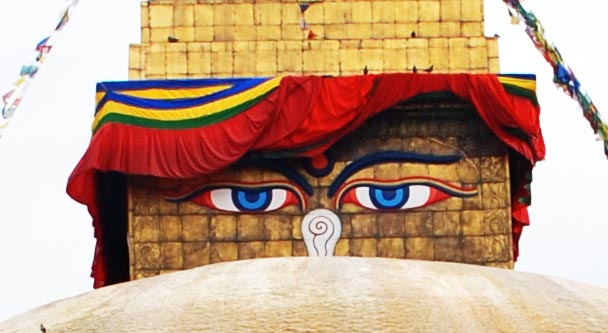
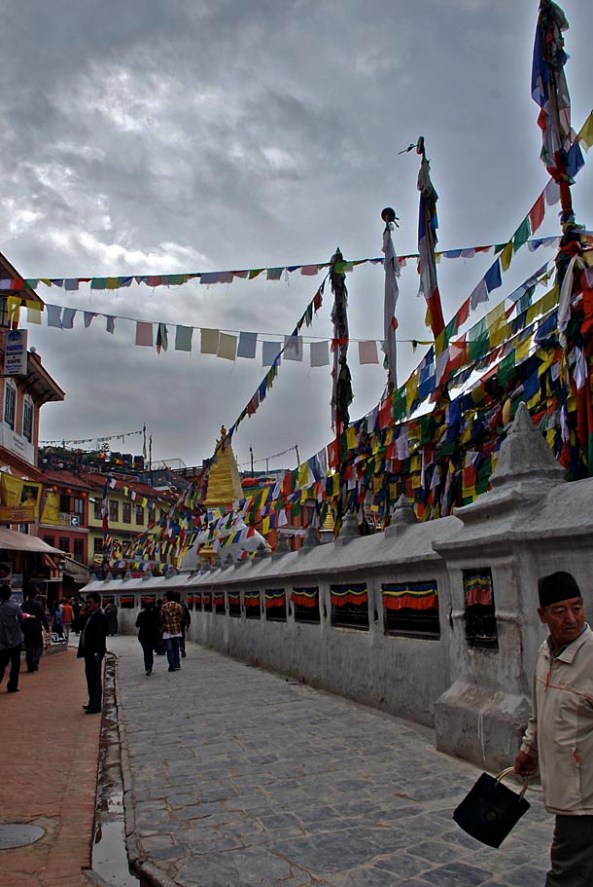
The 5 directions (the Centre, East, West, North and South) are encompassed by a Dhyani Buddha and is depicted by a colour, a carrier, a Mudra or a gesture for Buddha’s fingers, a cosmic element etc. Our guide, Mr Narayan Shreshta enamored us with little stories underlying the various philosophies in such an enticing manner that literally urged us to look beyond the beauty of the surrounding landscape.
An easy and beautiful rendition of the various symbolism of these 5 Dhyani Buddhas can be found here. The 5 Mudras or the gestures of the Buddha are as follows (Image Courtesy: Web):
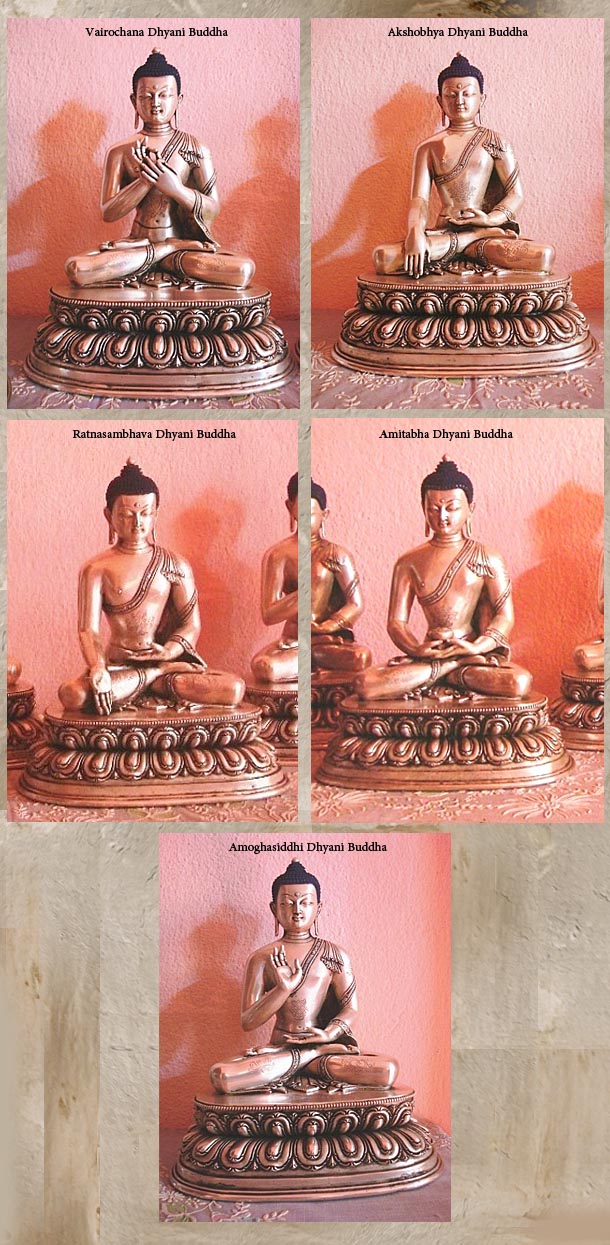
Vairochana Dhyani Buddha; Direction – Centre
Colour – White; Carrier – Dragon
Mudra – Dharmachakra i.e. turning the Dharma-wheel (teaching)
Akshobhya Dhyani Buddha; Direction – East
Colour – Blue; Carrier – Elephant
Mudra – Bhumisparsa (Earth-touching)
Ratnasambhava Dhyani Buddha; Direction – South
Colour – Yellow; Carrier – Horse or Lion
Mudra – Varada (Bestowing, giving)
Amitabha Dhyani Buddha; Direction – West
Colour – Red; Carrier – Peacock
Mudra – Dhyana (Meditation)
Amoghasiddhi Dhyani Buddha; Direction – North
Colour – Green; Carrier – Garuda
Mudra – Abhaya (fearlessness)
Tibetan Curio shops selling various Bhuddhist artifacts and traditional Tankha paintings, Kashmiri garment shops selling intricately embroidered Pashminas and woollens, Buddhist practitioners spinning the prayer wheels while chanting Mantras, young Buddhist monks wearing red robes and discussing mobile phones as well as philosophy of attaining enlightenment in the same breath and the bewildered tourists amidst the noisy fluttering of thousands of 5-coloured flags – all these add a quaint charm to Boudhanath. As Mr Narayan tells us more on religion, myths and legends, Buddha seems to come alive – the magnetic pair of eyes from above the Stupa observing us as we go into our own spiritual journeys.
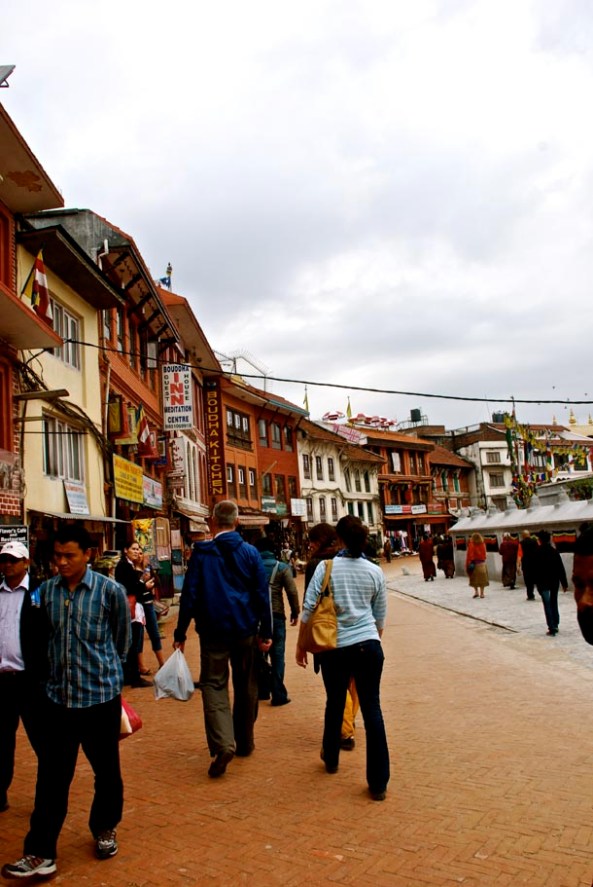

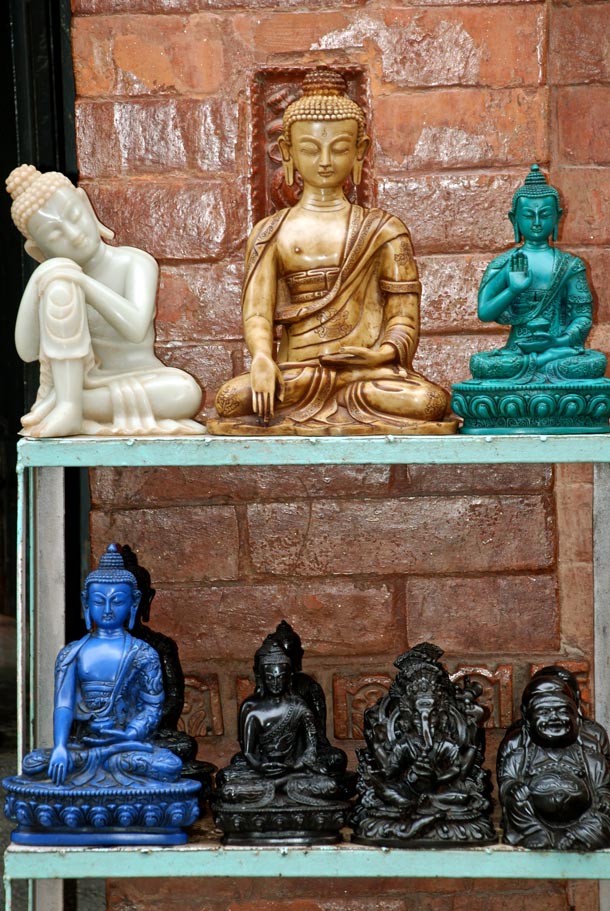

Faith seems to bind everyone here – from Buddhist devotees to others who follow different religions or perhaps even the atheist. Lighting up candles with prayers in the hearts, the spinning of the prayer wheels and the assimilation of all these faith seems to harp on only one thing – we are all but ONE belonging to the same universe! This unique assimilation is also reflected by the artifacts dotting the curio shops, for example – the interesting metal artifact above – a serpent-headed angel cum mermaid or perhaps the symbol OM written in various scripts.
Swayambhunath Stupa
The ancient religious Stupa of Swayambhunath is perched on a hill in the west of Kathmandu and is a UNESCO World Heritage Site. The view from the top overlooking Kathmandu city is beautiful. Like Boudhanath, here too the ‘all-seeing’ Buddha eyes seem to observe in all directions and seems to hover around and protect the entire Kathmandu Valley. During Buddha Jayanti or celebrations commemorating the birth of Buddha, Buddhist monks and nuns along with other devotees climb up the steep hill to circumambulate (walk around) the Stupa.
There are approximately 350 steps to climb up this steep hill and yes, we did climb up along with the Z-SISTERS though Li’l Z was insisting that I shoul carry her all the way up. As if Mummy was a supergirl! We climbed up breathless and sweating, realising how unfit we had become, thanks to the kind courtesy of escalators and elevators in our modern lifestyles. It dawned upon us that before we even dream of our next holiday we have to first enroll ourselves into intensive cardio and fitness programmes!
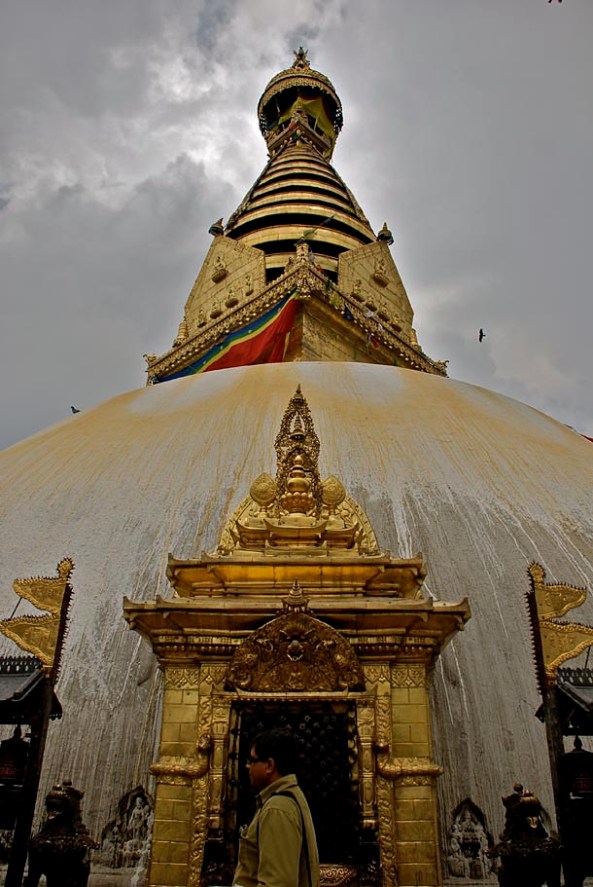
Legend has it that the entire valley was once filled with an enormous lake, out of which grew a lotus. The Bodhisatva Manjushri (‘Bodhisattva’ refers to the enlightened one and ‘Manjushri’ is a Bodhisattva associated with transcendent wisdom) had a vision of the lotus at Swayambhu and travelled all the way here to worship it. To make the site more accessible to pilgrims and for development of human settlement, Manjushri cut a gorge. The water drained out of the lake, leaving the valley in which Kathmandu now lies. The lotus then transformed into a hill and the flower become the Swayambhunath Stupa. The valley came to be known as Swayambhu, meaning ‘Self-Created’.
Swayambhunath is also known as the Monkey Temple as there are holy monkeys living in parts of the temple in the north-west. They are holy because Manjushree, the Bodhisattva of wisdom and learning was raising the hill on which the Swayambhunath Temple stands on. He was supposed to leave his hair short but he kept it growing long and long which eventually became infested with lice. The lice later transformed themselves into monkeys!
There is another Hindu Legend according to which Lord Krishna drained out the water from the lake with one swipe of his sword. Whatever be the story of it’s origin, evidence by scientists suggest that the valley was indeed under water and there is a gorge at a place called Chovar!
Stupa, shrines and temples adorn Swayambhunath. The site is revered by both Buddhists and Hindus. You could describe this as the very charm of religion in Nepal or you may find this entire concept of co-existence of different religious philosophies bewildering.



After climbing up the steep hill and finding ourselves absolutely breathless, the first thing that compensates all the calories burnt (hopefully!) is the breathtaking view of Kathmandu Valley from the hill-top. But please note that climbing the hill may seem to be an easier task than to get a little peep into the valley through the jostling and stubborn crowd!
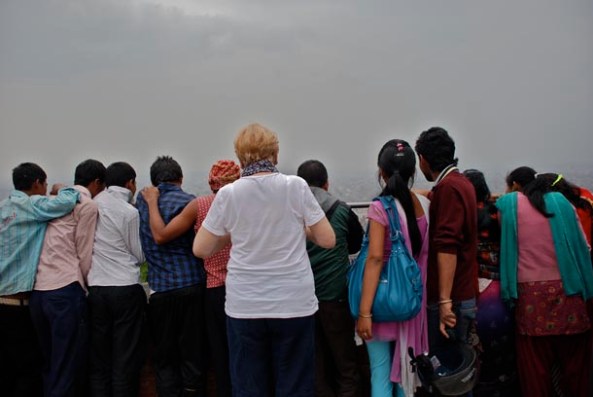
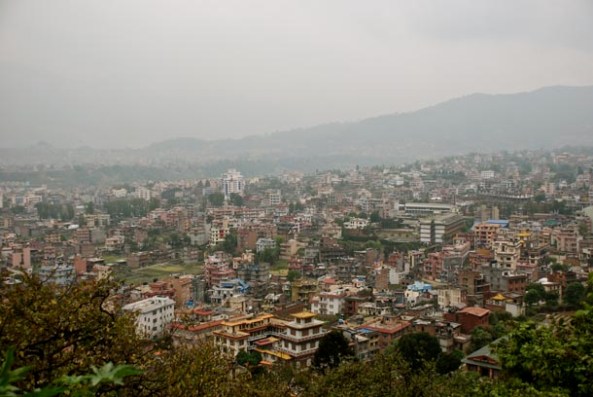
Apart from the religious and the spiritual aspect, the hill-top has an amazing array of jewellery and artifacts pertaining to both Buddhism, Hinduism and other non – spiritual elements that is sure to make you go bankrupt. Even with the knowledge that probably the same things could be available down in other touristic spots like Thamel at a much cheaper price defies all emotional logic. Each piece is a work of art, either painstakingly hand-made or intricately carved. What if you don’t come across these elsewhere?
Our visually and emotionally stimulating journey…

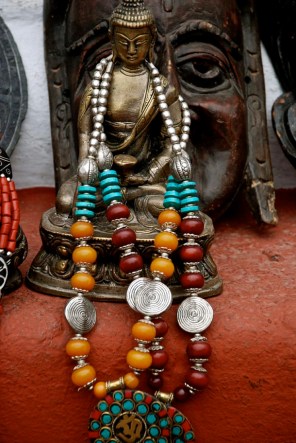

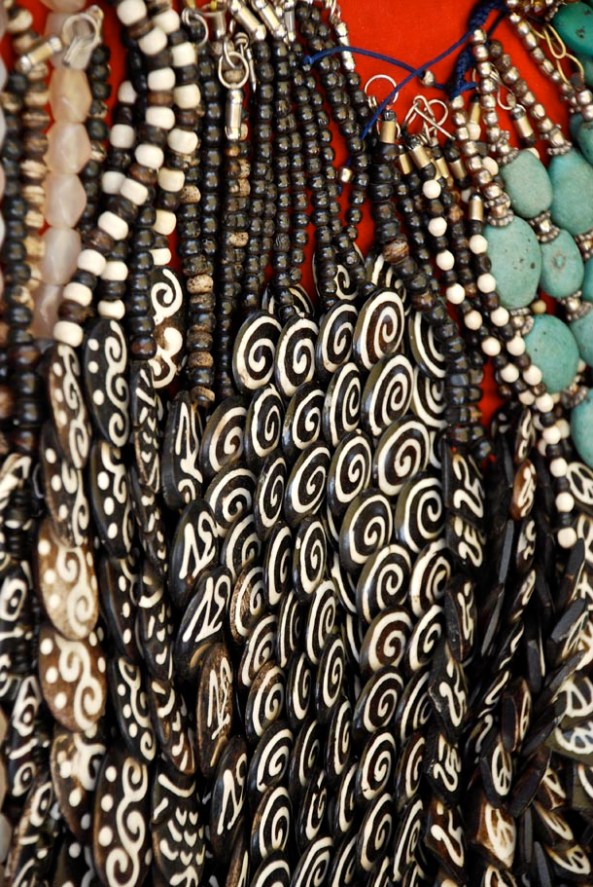

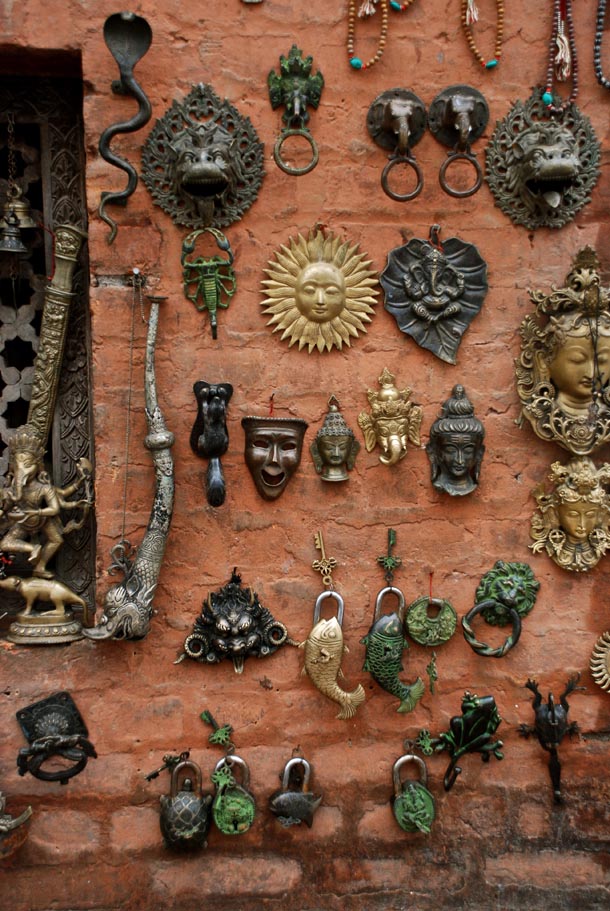
And finally, I chanced upon one of my favourite item that I keep on collecting from everywhere – singing bowls. Singing bowls are used as a signal to begin and end periods of silent meditation and plays a very significant role in Buddhist prayers along with the praying wheels.
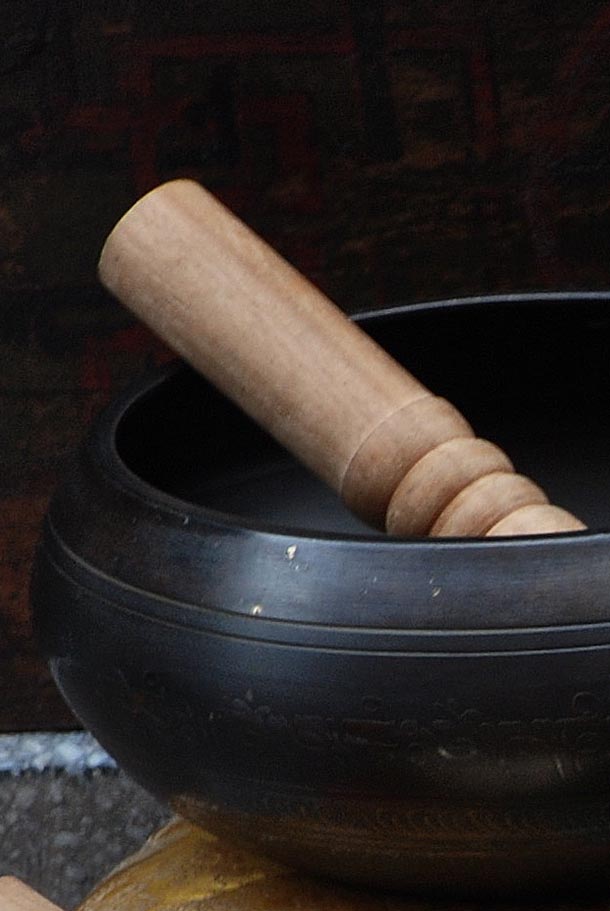
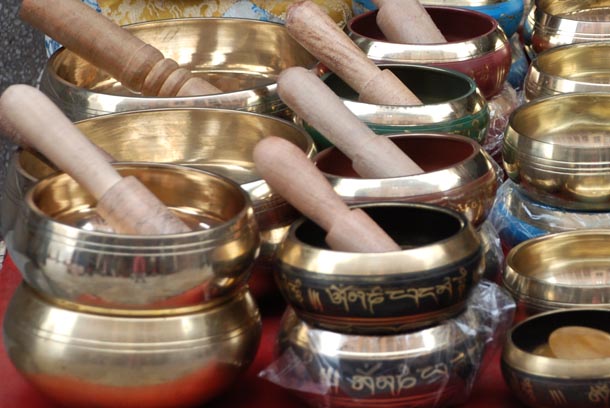
Every time we return back to our hotel I have a huge task at hand – deleting pictures. Not to accommodate new pictures of the next day but to delete the innumerable duplicate ones that I must have clicked resulting from hyper-activity and over-excitement. I can’t even remember those days when digital camera were not there and we had to buy film rolls. We would wait for ‘those’ 24 or 36 perfect moments to take a few historical pictures. Do you remember those pre-historical times? Was that better than having digital cameras where tourists like me end up taking at-least 200 pictures on a half-day trip like the one that I am still writing on? It’s been a long time that I have even seen these words – Kodak films or Fuji Films and am so glad to know that they are still available in some places in the world. That means that some people still exist who are happy with simple pleasures in life – like clicking as little as 36 images during an entire vacation!
Unblogging it all… Ishita
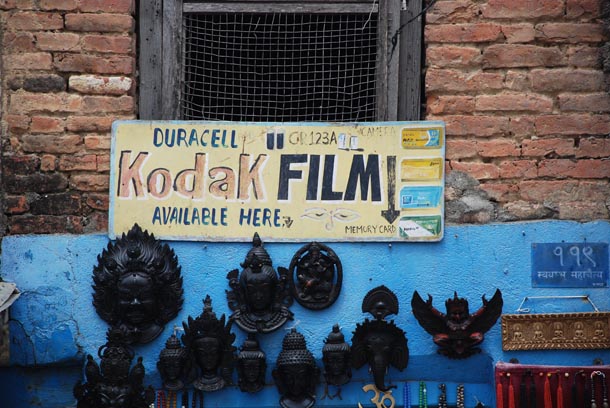
Other articles on our Nepal trip
Daal Maharani Befitting the Queen (And Also Us) – Recipe
Sikarni Raan/Marinated Lamb Shank from Yak & Yeti – Recipe
Flying over Mt Everest – Nepal
The Abandoned Women Amidst Many Prayers
Related articles over the web
Swayambhunath, Bouddhanath, UNESCO World Heritage Site, Stupa, Om Mani Padme Hum,Mantra,Om,More on OM,Prayer Wheels, More on Nepal, Introduction to Nepal
BE SOCIAL. SHARE THIS!


Aam Dal or the Mango Lentil Soup is very easy to make. Green mangoes are also therapeutic in nature and keeps the body temperature down, precisely why the recipe must have originated in some Bengali kitchen during the sweltering summer heat.
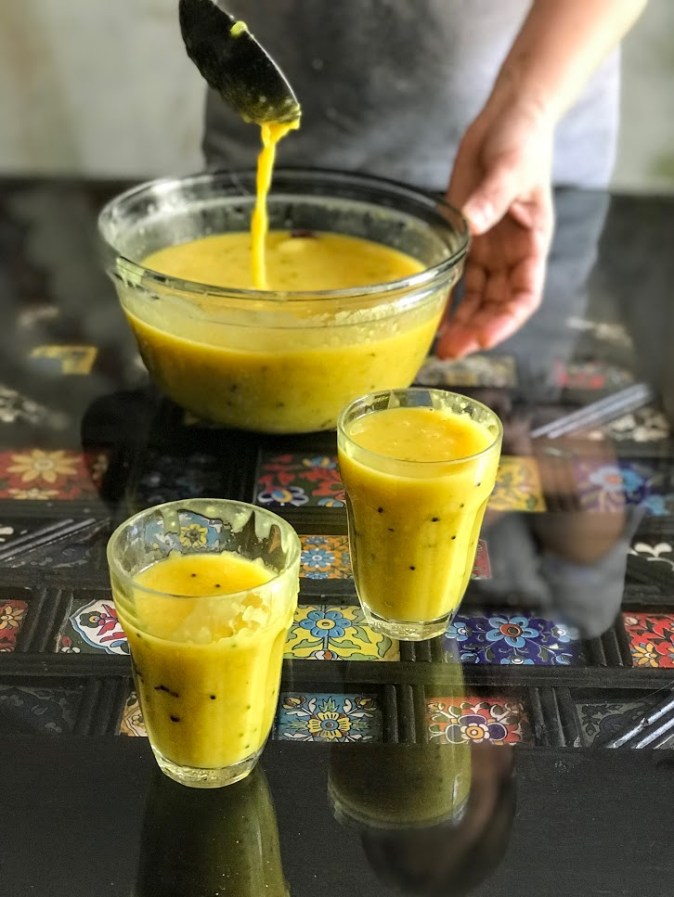
Summer is slowly waltzing into Dubai. A few more days and suddenly the celsius scale would be touching the 40ºC on a regular basis. I have spent so many summers in Dubai, yet the temperature in any random summer day still shocks me every time I know the exact magnitude of it. Conversations with other mums on school runs during the summer while picking up the Z-Sisters sound typically like these – ‘My God, isn’t it really hot today?’ or ‘Did you see the temperature today? It is 40!’ or ‘Really? It’s 40 already? But it’s not even May!’
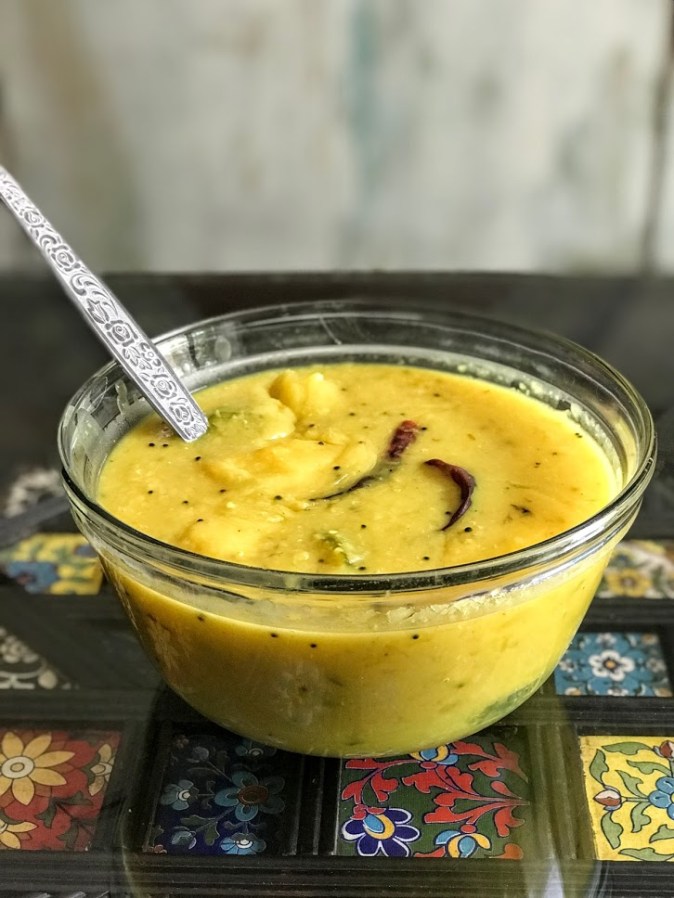
Do all Dubai-ites have this annual short-term amnesia? Or is it only me? Why does it surprise me so much when the temperatures eventually soar high? Do I expect anything else? Or am I too lazy to make new conversations? Whatever be the case, it does give me the excuse to resort to some traditional kitchen remedies to cool my body temperature down. Let me share my dear mum-in-law‘s traditional Bengali remedy to combat the summers … the Aam Dal or the Mango Lentil Soup, before the green mangoes in the supermarkets ripen up and turn yellow. Green mangoes are also therapeutic in nature and keeps the body temperature down, precisely why the recipe must have originated in some Bengali kitchen during the sweltering summer heat.
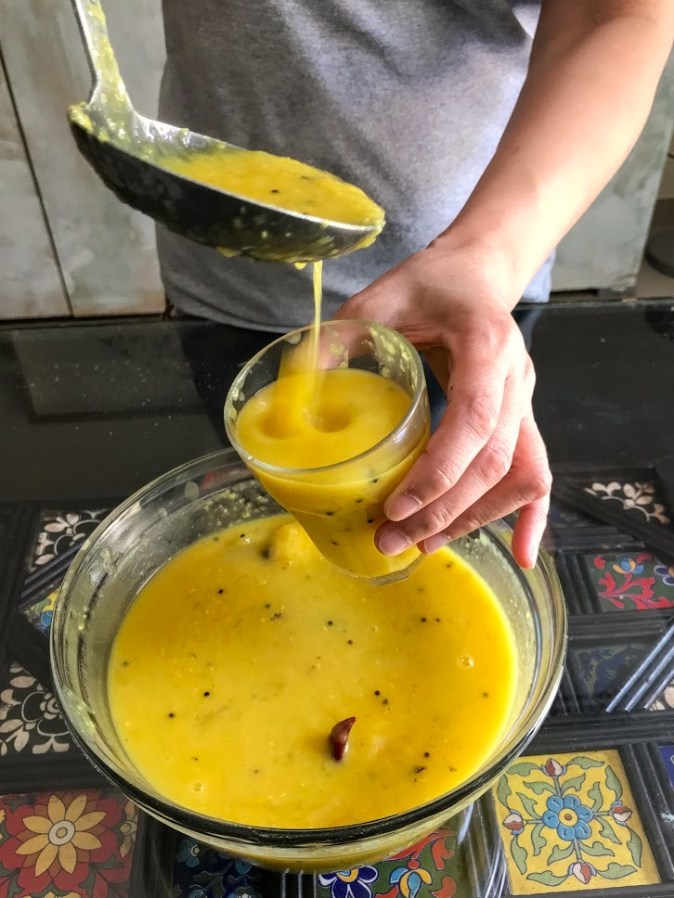
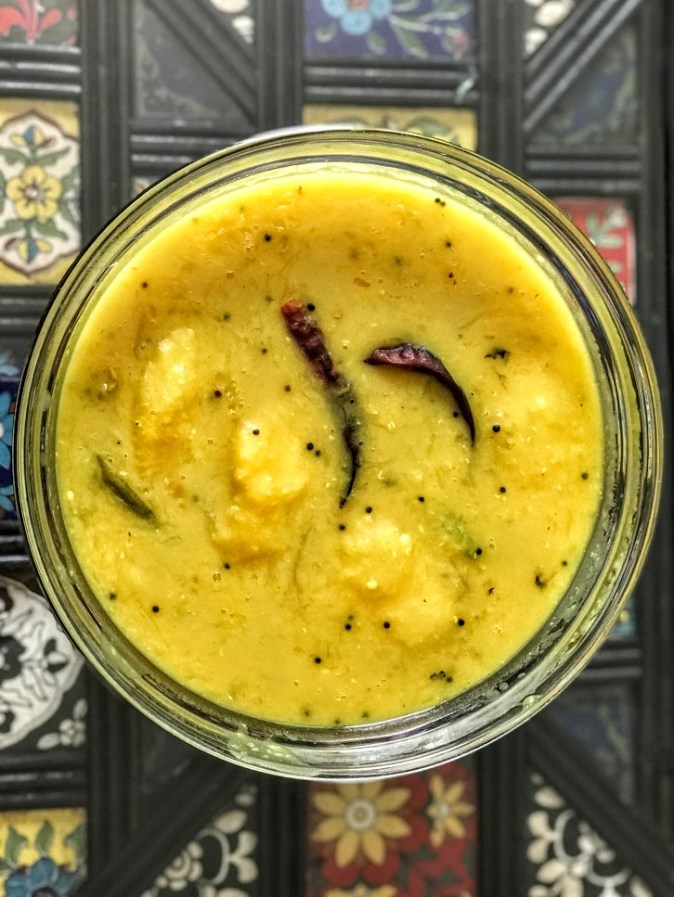
S’s family comes from Opar Bangla, that is originally Bangladesh. Their food habits are very different from what I have grown up eating. Aam Dal would be served as the last course at lunch time, rather than at the beginning of a meal. I also like to drink chilled Aam Dal!
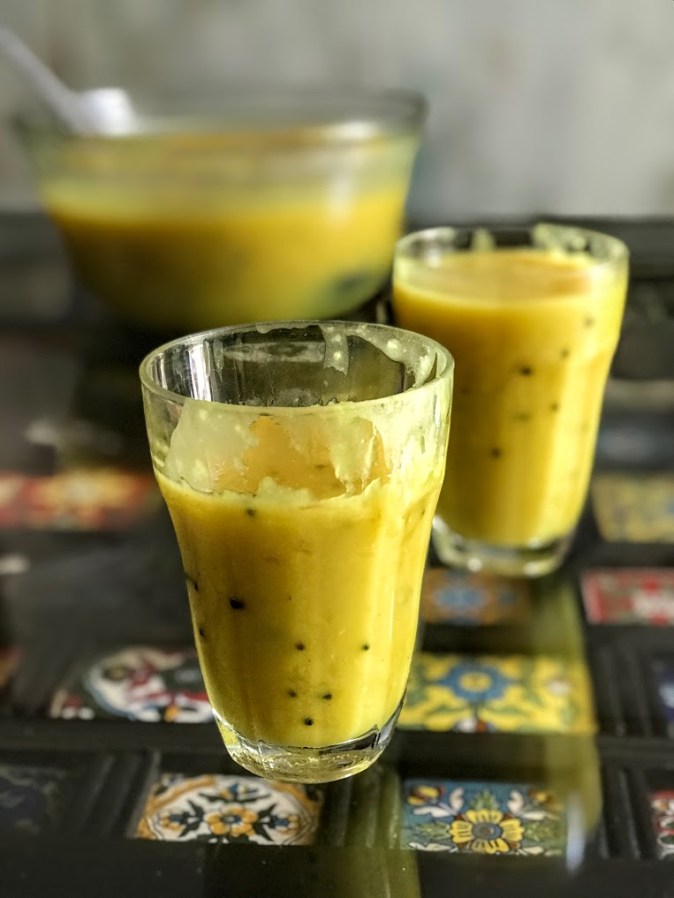
The story of Epar Bangla and Opar Bangla / This Side and That Side


This is an interesting aspect of Bengalis which calls for a lot of controversy and has given rise to many a literary or intra-family debates. When India attained her independence in 1947, Bengal got divided into two parts - one part falling into India and the other part falling into Pakistan which was known as East Pakistan. in 1971 East Pakistan became Bangladesh when the later seceded from Pakistan.

map courtesy: wiki
A lot of families were scattered between these two portions (if I may borrow the term from food terminology!) of Bengal.

For a Bengali residing in the Indian portion of Bengal, Bengal in India is Epar Bangla (Bengal on This Side!) and a person hailing from this side is colloquially referred as a Ghoti.

And the portion of Bengal that falls in Bangladesh is Opar Bangla (Bengal on That Side!) and a person whose ancestors originally hailed from 'that side' is termed as a Bangal.

Bengali is spoken in both sides but the dialect and the accent differs drastically. So does food habits and cultural orientation.

I am a Ghoti but my husband is a Bangal. The fish dishes cooked in my in-laws' place are very different from what I have grown up eating. So are some of the Dals cooked. Aam Dal is eaten here at the end of a meal and not in the beginning of a meal as other traditional Dals!

There is a major debate as to who are better cooks. I love eating good food - whether it is from this side or that side or from the middle. I have incorporated both the styles of cooking in my life and in my opinion there's no point getting into a debate as to which side cooks better. Simply enjoy both as that will give you more options in life!

The story of This Side and That Side breaks down in a foreign land
The so-called Ghoti-Bangal debate has no significance when Bengalis (whether from India or from Bangladesh) are living thousands of miles away from their original homelands. When I walk into a supermarket and a Bangladeshi assistant hears me speaking in Bengali to Big-Z or Li'l Z, one of the most likely string of conversations that might follow sounds like this  -

'Apni ki Bangali?/Are you a Bengali?' and then 'Kothakar? Kolkatar?/From where?From Kolkata?' and finally 'Amio Bangali. Bangladyasher/ I am a Bengali too. From Bangladesh'.

Then there will be a series of information swapping.

From his side: How long am I here? Do I work here? How often do I go to Kolkata? Have I ever been to Bangladesh?

From my side: How long is he here? How long is he working? How old are his children? Do they go to school?

Then the inevitable.. the final question from his side: Dada kothay kaaj koren?/Where does elder brother work?' where, elder brother respectfully indicates my husband!

It's amazing how this geographical border erases out in a foreign land. I have had the same experience every time I have come across anyone from Bangladesh. And why should there be any difference? After all Rabindranath Tagore, the greatest poet in Bengali literature, a Nobel laureate, has penned both the Indian national anthem as well as the Bangladeshi national anthem. Bengalis the world over have more common  things to share than just common songs and common tunes!
Discovering my identity at a macro level
When Srilanka became our home a decade ago, I used to seek out for Indians, thus broadening my horizon beyond Bengal. When we set up home in Dubai, I started seeking out for Indians and Srilankans. When we moved to Frankfurt and set up our home there, I started seeking out for Indians, Srilankans and anyone from Dubai or having an UAE connection. When we came back to Dubai once again, I started seeking out for Indians, Srilankans and Germans.
I am slowly becoming multi-cultural and I realise that I am on my journey to become a global citizen. While doing so however, I haven’t shed any my old feathers. I just kept on adding new feathers as I grew.
Biting into the pulp of the mango as well as savouring the mango seed till the last juicy drop of dal is sucked out – that has to be the mission when Aam Dal is served at the dining table for your dear family. While I request you to incorporate that philosophy into all your meal experiences, this Aam Dal can’t be savoured hurriedly or on the go. Each sip or a spoonful with plain white rice should go into your system slowly, one sip at a time, one spoon at a time!
Unblogging it all… Ishita
Thank you for joining me on my daily food and travel journey on Pinterest, Instagram, Facebook and Twitter!
Summer recipes that you might like making:
Cumin Beetroot Salad
Frozen Aam Pana or Raw Mango Pulp Drink
Disclaimer: This isn’t a sponsored post, nor are there any affiliated links for any of the brands that may have been mentioned in this blogpost. The subject, story, opinions and views stated here are my own and all images are from my personal album. While you enjoy reading my posts with lot of visuals, please do not use any material from these posts.
1 cup masoor dal / orange lentils A non-traditional variationAam Dal or Mango Lentil Soup


Ingredients
3 green mangoes, peeled and cut into big cubes
1 tsp mustard seeds
3 dried whole red chillies
2 green chillies
½ tsp turmeric powder
2 tsp sugar
sugar as per taste
1 tbsp mustard oilMethod
Many of my friends who are not so accustomed to Bengali Cuisine or Indian Cuisine for that matter find the mustard seeds come in the way of appreciating the taste of the dal. I often remove the seeds or use a sieve while making sure that I stir in enough mango pulp to retain the original flavour of the dal. Occasionally, I add add ½ cup of low-fat cream to thicken the consistency. Although the dal loses the authenticity of a Bengali dal, it does become quite rich and creamy.
BE SOCIAL. SHARE THIS!

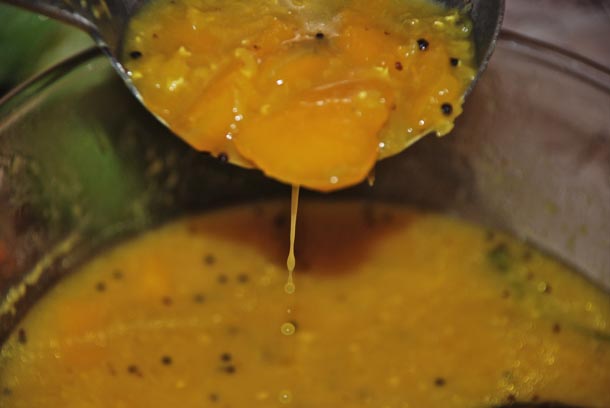
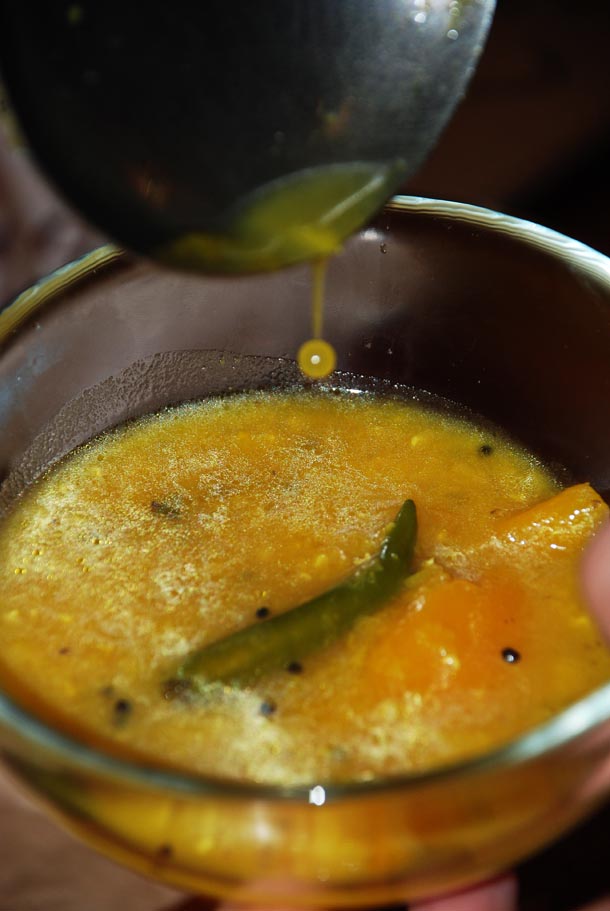
Summer is slowly waltzing into Dubai. A few more days and suddenly the Celsius scale would be touching the 40s on a regular basis. I have spent so many summers in Dubai, yet the temperature in any random summer day still shocks me every time I know the exact magnitude of it. Conversations with other mums on school runs during the summer while picking up the Z-SISTERS sound typically like these – ‘My God, isn’t it really hot today?’ or ‘Did you see the temperature today? It is 40!’ or ‘Really? It’s 40 already? But it’s not even May!’
Do all Dubai-ites have this annual short-term amnesia? Or is it only me? Why does it surprise me so much when the temperatures eventually soar high? Do I expect anything else? Or am I too lazy to make new conversations? Whatever be the case it does give me the excuse to resort to some traditional kitchen remedies to cool my body temperature down. One such traditional Bengali remedy is Mango Lentil Soup or Aam Dal. And before the green mangoes in the supermarkets ripen up and turn yellow let me share the little secret of every Bengali Granny’s summer Dal recipe.
After staying outside Bengal for many years I have realised that the world today has indeed become a smaller place. Our palates have become very flexible and international. There is no need to worry about the global acceptance of a Bengali Aam Dal or a major write-up into the history of Indian Dal making.
This is a very easy recipe and many a times I have served it successfully to my non-Indian friends with very minor modification. Moreover, not to forget that the green mangoes also have a therapeutic value in keeping the body temperature down. And that is precisely why the recipe originated in the sweltering summer heat in some Bengali kitchen.
Following are the characteristics of all recipes doling out of our little hands, big hearth –
♥ Easy to cook
♥ Regular canned products off the shelf may be used (However, we advocate using fresh products)
♥ Goes well both as a regular or party dish
♥ Children can easily help in making the dish (My two little sous-chéfs are aged 8 and 3 years!)
♥ And lastly, guaranteed to be tasty!
Mango Lentil Soup/ Aam Dal
Category – Veg Side-Dish ; Cuisine type – Traditional Bengali
The Mango Lentil Soup or the Aam Dal is sweet as well as sour in taste (not the same sweet and sour taste of Chinese Cuisine!) and doesn’t have a thick consistency like other traditional Indian Dals. It may be served cold but this varies from each household to the other and is supposed to possess enormous cooling properties during summer.
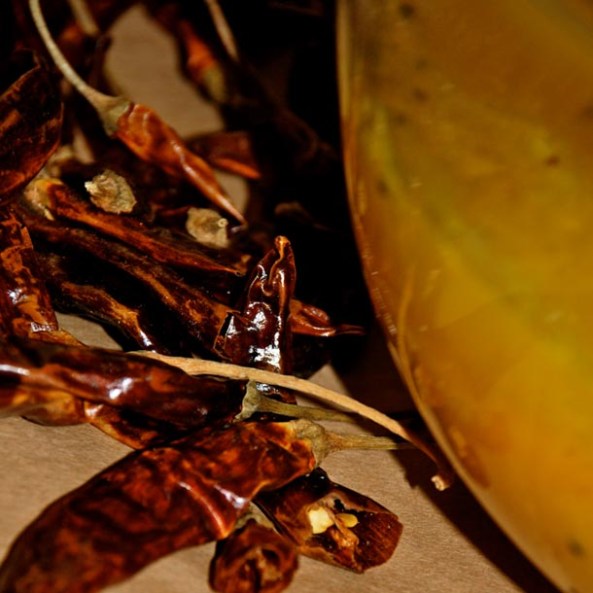
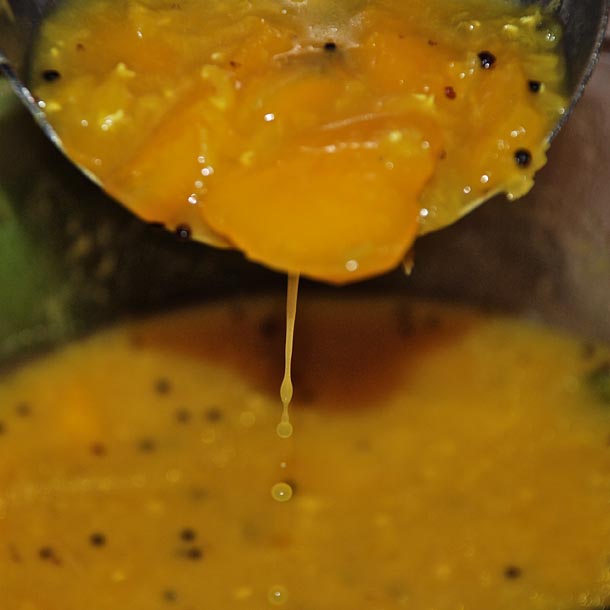

For the printable recipe→
Serves 6-8
Preparation time: 1 hr 30 minutes (boiling the Dal – 1 hr; cooking – 30 minutes maximum)
Ingredients:
Masoor Dal/Orange Lentils – 1/2 cup
Green Mangoes – 2 medium, peeled and sliced longitudinally
Mustard Seeds – 1 tsp
Dried Red Chillies – 3
Green Chillies – 2 (optional)
Turmeric Powder – 1/2 tsp
Salt – 1 tsp
Sugar – 1 tsp
Mustard Oil – 1tsp
Method of Preparation
– Boil the Orange Lentils in 5 cups of water along with green chillies and turmeric powder or Pressure cook the same. If you wish to boil the Dal or use a Microwave then make sure you adjust the water occasionally so that the Lentils don’t become dry
– Heat the Mustard Oil in a deep frying pan
– Add mustard seeds and dried red chillies. When they begin to splutter add the sliced mangoes including the mango seeds
– Add the boiled Lentils once the mangoes become a bit soft
– Cover and let it simmer on very low heat for fifteen minutes (You may have to add more water to make it more soupy)
– Add the sugar and a bit of salt if required (it should taste sweet-sour) and let it cook for 5 more minutes
Accompaniment
Serve hot or cold with plain white Rice or serve it like a soup
A non-traditional adjustment
Many of my friends who are not so accustomed to Bengali Cuisine or Indian Cuisine for that matter find the Mustard seeds come in the way of appreciating the taste of the Dal. For them I have often removed the seeds or used a sieve while making sure that I stir in enough mango pulp to retain the original flavour of the Dal. Occasionally. I have added 1/2 cup of low-fat cream to thicken the consistency. Though the Dal loses it’s authenticity it also becomes widely palatable. Maybe this would call for a sequel in the future.

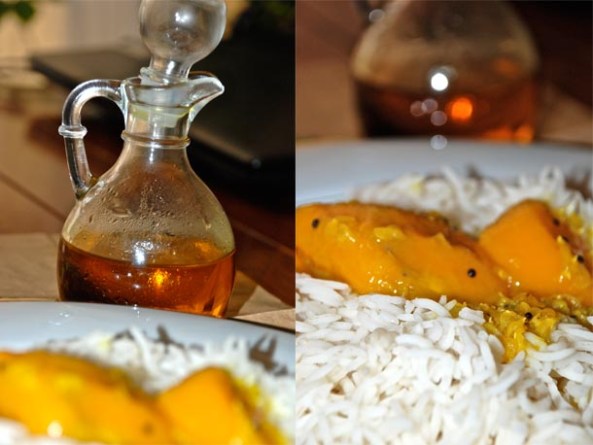
Variation:
Many prefer to cook the Lentils separately with the Mangoes and pour the spluttering Mustard seeds and the dried red chillies in Mustard Oil as a finishing touch. The adding of Mustard Seed or any other seeds in oil is called Phoron in Bengali and Chaunk or Bagar in Hindi. Paanch Phoron is a traditional assortment of 5-Spice seeds slightly cooked in very hot oil and then added to a Bengali dish for a unique taste and aroma.
The cooking technique of tempering is quite typical to Pakistani, Indian and Bangladeshi Cuisines, the type of seeds going into the tempering varying from region to region and from one dish to the other.

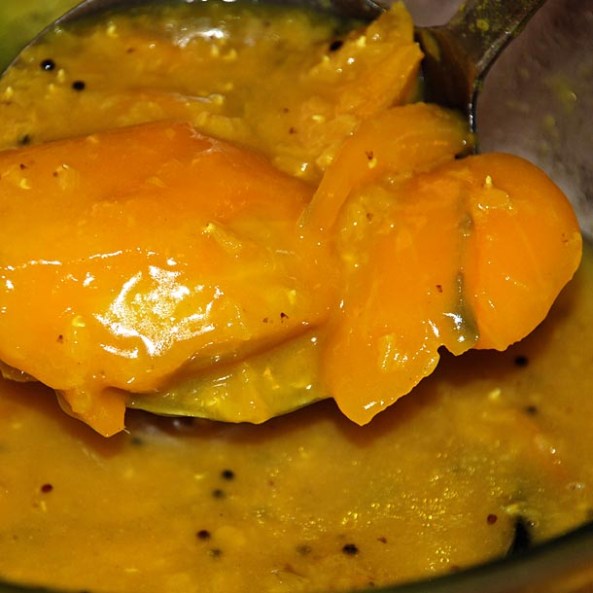
Nostalgia unfolds with the Aam Dal as I venture upon my photographic journey into the making of it. Each day my objective is to surpass the photographer that I was of the previous day. With each subject the number of photographs increasingly pile up as I try to incorporate whatever I’m learning from the various books on photography that I keep on reading. A shocking 130 photographs only on today’s subject. Phew! Now I have assigned Big Z with the responsibility that she should snatch my camera away after she hears the 20th click on a particular subject.
Biting into the pulp of the mango as well as savouring the mango seed till the last juicy drop of Dal comes out – that has to be the objective if you are cooking this Dal and serving it on the dining table for your dear family. The Weekend Review of this week’s Gulf News has an article which states that ‘the remedy for a fast-paced world will be to convert the simplest of acts like eating into a mindful gesture…’ and ‘to pay close attention to the sensation and purpose of each morsel’.
I would request you to incorporate that philosophy into your meal experiences. If not for anything else but atleast for this Aam Dal. The Aam Dal can’t be savoured justifiably on the go. Each sip or a spoonful with plain white rice should go into the system slowly, one sip at a time, one spoon at a time!

The story of This Side and That Side
This is an interesting aspect of Bengalis which calls for a lot of controversy and has given rise to many a literary or intra-family debates. When India attained her independence in 1947, Bengal got divided into two parts – one part falling into India and the other part falling into Pakistan which was known as East Pakistan. in 1971 East Pakistan became Bangladesh when the later seceded from Pakistan.
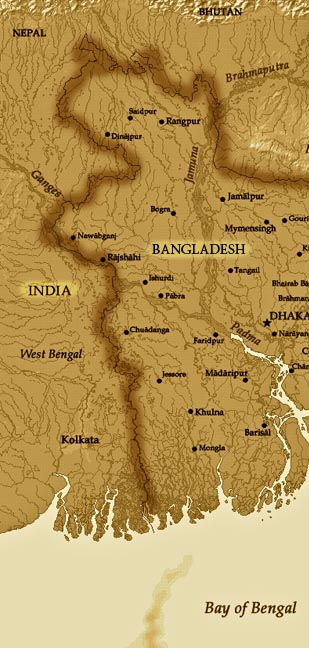
A lot of families were scattered between these two portions (if I may borrow the term from food terminlogy!) of Bengal.
For a Bengali residing in the Indian portion of Bengal, Bengal in India is Epar Bangla (Bengal on This Side!) and a person hailing from this side is colloquially referred as a Ghoti.
And the portion of Bengal that falls in Bangladesh is Opar Bangla (Bengal on That Side!) and a person whose ancestors originally hailed from ‘that side’ is termed as a Bangal.
Bengali is spoken in both sides but the dialect and the accent differs drastically. So does food habits and cultural orientation.
I am a Ghoti but my husband is a Bangal. The fish dishes cooked in my in-laws’ place are very different from what I have grown up eating. So are some of the Dals cooked. Aam Dal is eaten here at the end of a meal and not in the beginning of a meal as other traditional Dals!
There is a major debate as to who are better cooks. I love eating good food – whether it is from this side or that side or from the middle. I have incorporated both the styles of cooking in my life and in my opinion there’s no point getting into a debate as to which side cooks better. Simply enjoy both as that will give you more options in life!
Map Courtesy – Web (though I take the credit of a drastic make-over!)
The story of This Side and That Side breaks down in a foreign land
The so-called Ghoti-Bangal debate has no significance when Bengalis (whether from India or from Bangladesh) are living thousands of miles away from their original homelands. When I walk into a supermarket and a Bangladeshi assistant hears me speaking in Bengali to Big-Z or Li’l Z, one of the most likely string of conversations that might follow sounds like this –
‘Apni ki Bangali?/Are you a Bengali?’ and then ‘Kothakar? Kolkatar?/From where?From Kolkata?’ and finally ‘Amio Bangali. Bangladyasher/ I am a Bengali too. From Bangladesh’.
Then there will be a series of information swapping.
From his side: How long am I here? Do I work here? How often do I go to Kolkata? Have I ever been to Bangladesh?
From my side: How long is he here? How long is he working? How old are his children? Do they go to school?
And then the most probable final question from his side: Dada kothay kaaj koren?/Where does Brother work?’ where Brother respectfully indicates my husband!
It’s amazing how this geographical border erases out in a foreign land. I have had the same experience every time I have come across anyone from Bangladesh. And why should there be any difference? After all Rabindranath Tagore, the greatest poet in Bengali literature, a Nobel laureate, has penned both the Indian national anthem as well as the Bangladeshi national anthem. Bengalis the world over have more common things to share than just common songs and common tunes!
Identifying myself at a macro level
When Srilanka became our home a decade ago, I used to seek out for Indians, thus broadening my horizon from Bengal. When we set up home in Dubai I started seeking out for Indians and Srilankans. When we moved to Frankfurt and set up our home there, I started seeking out for Indians, Srilankans and anyone from Dubai or having an UAE connection. When we came back to Dubai once again I started seeking out for Indians, Srilankans and Germans. I am slowly becoming multi-cultural and I realise that I am on my journey to become a global citizen. While doing so I haven’t had to shed my old feathers but have just kept on adding new feathers as I grew.
Unblogging it all… Ishita


You may want to venture into my photographic journey into the making of Aam Dal.
Other Recipes
Daal Maharani Befitting the Queen (And Also Us)
Sikarni Raan/Marinated Lamb Shank from Yak & Yeti
Easter Egg Curry Cooked By Easter Bunnies!
Mashed Potato Bengali Style/ Aloo Bhaaté
Related Articles over the web
Dal/Lentils
History of Bengal
History of Bangladesh
BE SOCIAL. SHARE THIS!

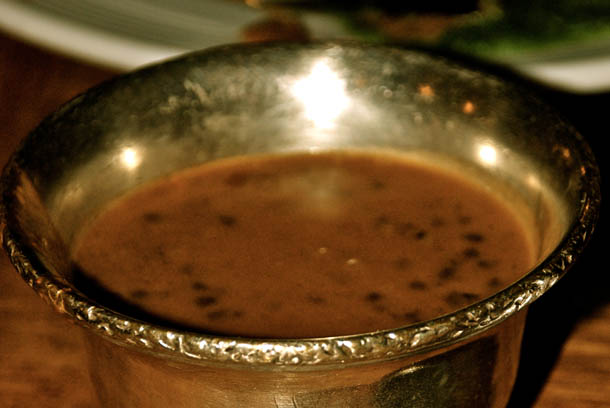
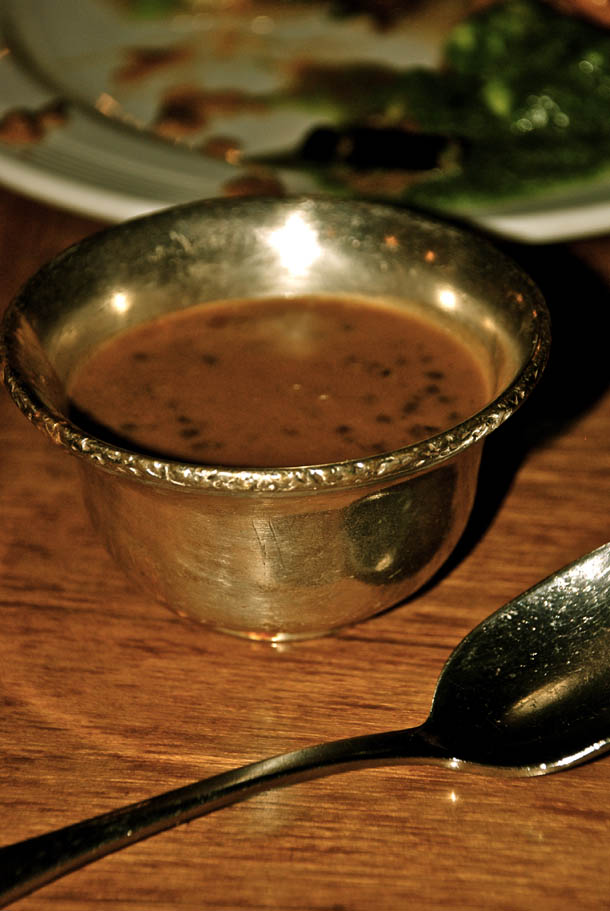
Daal Maharani. Maharani denotes the queen. Can a name be more regal? Perhaps not. Previously, I had dragged the recipe of Sikarni Raan/Marinated Lamb Shank out of the kitchen of the hotel that we stayed in by the method of incessant persuasion. Not that the staff of the restaurant was any less courteous. But there were too many diners vying to catch their attention and I was feeling a bit shy to start on my recipe hunt again! The recipe for Daal Maharani did ultimately dole out from behind the swivelling doors of the kitchen – but how?
Have a look at it yourself…
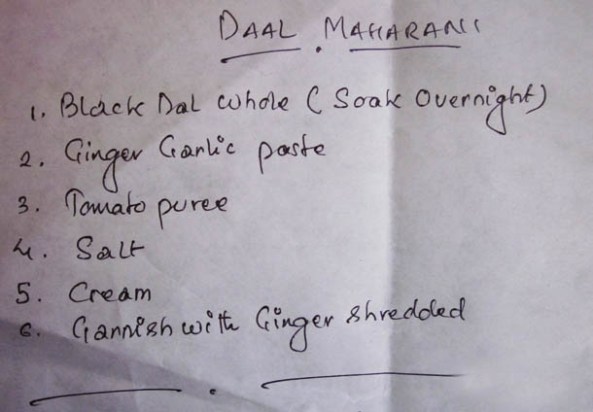
Black Daal Whole (Soak Overnight) – How much of the black Daal?
Ginger Garlic Paste – Again, how much?
Tomato Purée – How much?
Salt – okay as per taste!
Cream – How much?
Garnish with Ginger shredded – Wow!
What about the cooking fat? Did they use Ghee/Clarified Butter or some other Oil? No need for onions? Lots of questions remained unanswered.
After coming back home we tried a combination of the recipe for Daal Maharani obtained from the hotel and the recipe of the Indian Celebrity Chéf, Sanjeev Kapoor’s version of a Daal with the same name but has one less ‘A’ in the spelling of Daal! I’m following the later spelling as well.
Following are the characteristics of all recipes doling out of our little hands, big hearth –
♥ Easy to cook
♥ Regular canned products off the shelf may be used (However, we advocate using fresh products)
♥ Goes well both as a regular or party dish
♥ Children can easily help in making the dish (My two little sous-chéfs are aged 8 and 3 years!)
♥ And lastly, guaranteed to be tasty!
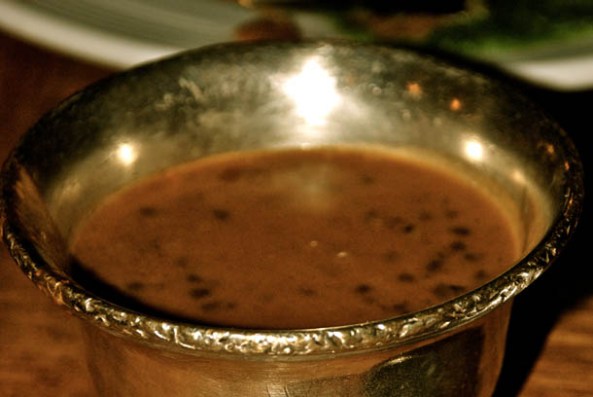
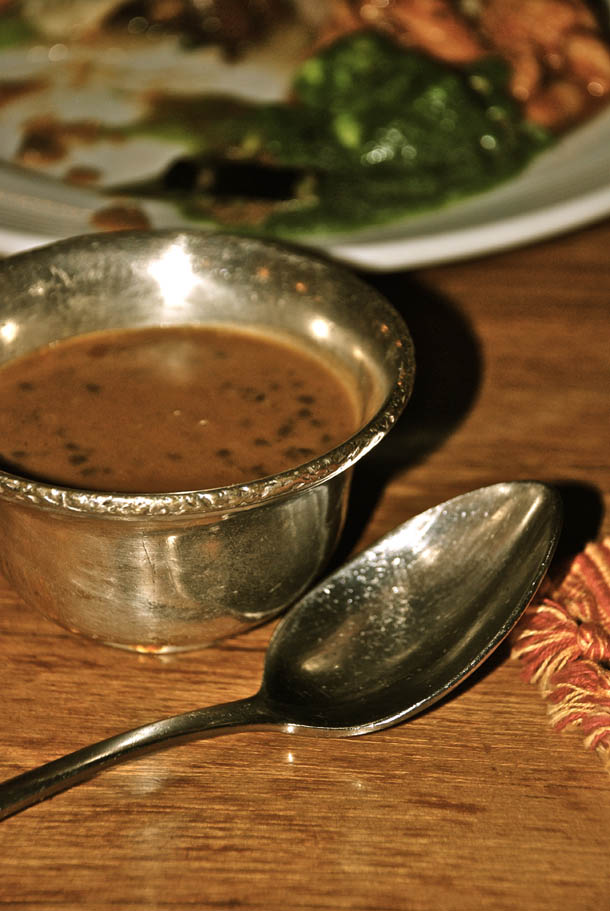
Serves 6-8
Preparation time: 1 hr 30 minutes (boiling the Dal – 1 hr; cooking – 30 minutes maximum)
Ingredients:
Urad Dal/Black Lentils (Whole) – 1/2 cup
Garlic, chopped – 10 cloves
Ginger, chopped – 1 1/2 inch in size
Cumin Seeds – 1 tsp
Garam Masala Powder – 2 tsp
Red Chilli Powder – 1 tsp (optional)
Tomato Purée – 1/2 cup
Onions, chopped – 2 medium
Fresh Cream – 1/2 cup
Salt – as per taste
Ghee/Clarified Butter – 1 tbsp
White oil – 1tbsp
For Garnishing
Ginger, shredded – 1 1/2 inch in size
Method of Preparation
– Soaked the Black Lentils overnight in 5 cups of water
– Pressure cook the soaked Lentils in five cups of water with salt, red chilli powder and ginger. If you wish to boil the Dal or use a Microwave then make sure you adjust the water occasionally so that the Lentils don’t become dry
– Heat the Ghee and Oil (Chéf Sanjeev Kapoor uses Butter but I felt Ghee and then Butter might be a bit too much for the heart which is beating towards 40!)
– Add cumin seeds. When they begin to splutter add the onions and sauté till they turn golden brown
– Add garlic and tomato purée
– When the oil separates out, add the boiled lentils
– Add one cup of water, the garam masala powder and simmer on very low heat for fifteen minutes
– Add fresh cream and let it simmer for five more minutes
– Garnish it with shredded ginger
Accompaniment
Serve hot with Naan/Oven-baked Indian flat Bread or Parantha/fried Indian flat Bread
Here’s a small confession – having the Bengali genes makes us eat everything with Rice! A small introduction to traditional Bengali Cuisine without offending our Rice-loving senses that may convince you to forgive us for our immense love for this carb.
A bit about Dal and Nepali Cuisine (for those who have missed my previous article)
Let me also share a bit that I’ve learnt from my stay in Nepal and also from my recent purchase from the Kathmandu airport – The Nepal Cookbook.
Dal includes Lentils, Chickpeas and small beans. Chana Dal/small Chickpeas (split with skins removed), Moong Dal/Green Mung (split with or without skin), Toor Dal/ Yellow Lentils also called Pegion Peas (split with skins removed), Mussoor Dal/Orange Lentils (split with skins removed) and Urad Dal/Black lentils (split with skins removed).
Nepali Cuisine is influenced by the cuisines of both India and Tibet. The use of ingredients is very similar and some of the most commonly used ingredients are as follows – Hing/Asafetida, Mungrelo/Black Cumin Seeds, Cardamom – Alaichi/Black Cardamom, Sukumel/Green Cardamom, Chilli Powder, Red and Green chillies, Hariyo Dhaniya Paat/Cilantor or Coriander leaves, Curry powder, Methi/Fenugreek (most importnat in Nepali Cooking), Saunf/Fennel Seeds, Garam Masala (dry roast of whole spices like Coriander Seed, Cumin Seeds, Black Peppercorn, Black Cardamom Seeds, Ground Cinnamon, Whole Cloves, Ground Nutmeg), Turmeric, Garlic, Ginger, Onions, Scallions, Gundruk (Nepali vegetable dish prepared from green leafy vegetables that are fermented and then sun-dried and is used in soups, pickles and other dishes), Jimbu (aromatic grass from the Himalayan regions and is sold in strands – a pinch is enough to flavour a dish; not available in Asian supermarkets, hence bulb garlic roots are used as a substitute), Jwanu/Lovage Seeds (Ajwain in Hindi), Timbur (another important ingredient used in Pickles), Tamarind pulp.Dishes are cooked in Ghiu/Clarified Indian Butter (Ghee in Hindi) or Mustard oil, Corn oil and Soybean oil.
Achar/Pickles, a special condiment perfumed with ginger, garlic and hot chillies, is considered indispensable to a Nepali meal. They may be served as a vegetable dish in its own right or as a condiment and may use either raw or cooked cooked vegetables and may be preserved or prepared fresh.Dal/Lentils, Bhat/Rice, Tarkari/Curried vegetable and a small amount of Achar/Pickle – this is the main staple diet of most Nepalese though festivals call in for more elaborate Nepali meal with Masu/Meat, Macha/Fish and other Nepali Desserts amongst which the most popular is Sikarni made with hung yoghurt/curd mixed with dried fruits. Regional variations in cooking styles and dishes quite obviously exist with the geographical/topographical variations within Nepal as the mountains in the North roll down into Tarai/Plains in the south. So, Nepali Cuisine is not too different from the Bengali or the Indian fare that I have grown up eating.
Hotel Yak & Yeti, Durbar Marg, Kathmandu
5* Heritage Hotel; Centrally Located; In the mountains
Review Part2 (continued from Part1)…
As we woke up to the sounds of birds chirping, staring at unspoilt greenery and pouring hot tea into white porcelain cups, the Z-SISTERS fought over sugar cubes and spoilt the crisply ironed white napkins with their fresh watermelon juices. I was aware of the phrase ‘Ignorance is bliss’ but that probably applies to other people who wouldn’t stress themselves out thinking whether the stains will go after a wash but not me!
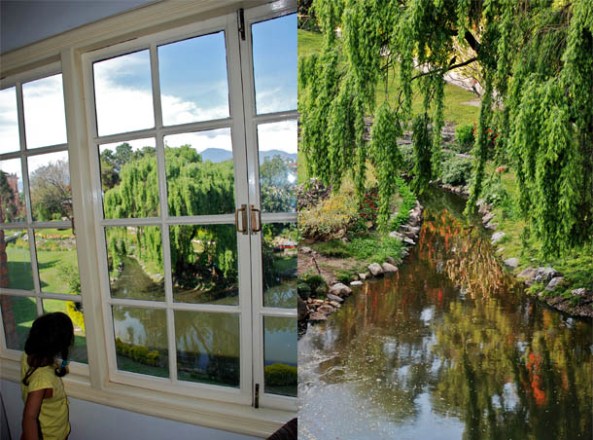
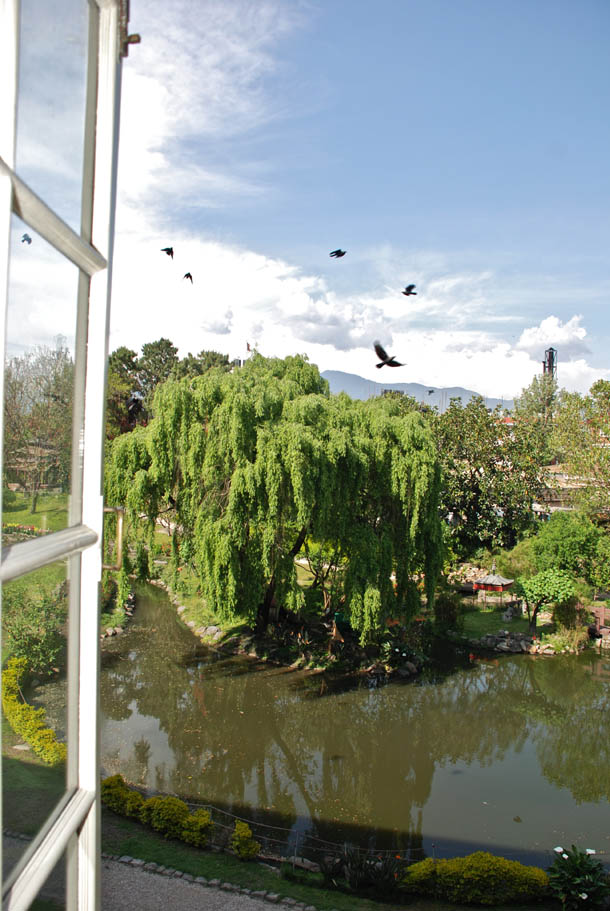
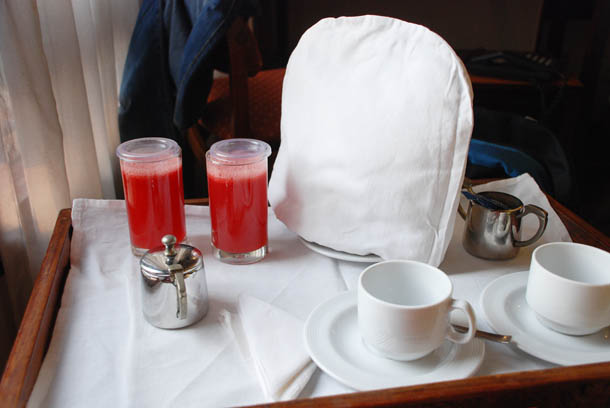
Next on the menu – Enjoying the colours of the flowers in the garden as well as the verdant greenery and Breakfast at the Sunrise Café. Though named Sunrise Café this is another signature Restaurant of the hotel serving Buffets and various A-la-Cartes. The fresh strawberries need special mention here. These were more like tiny little wild berries. We saw them being sold on the streets as well while we drove into other parts of Nepal. Big Z didn’t like them. But Li’l Z and I – we quite took a fancy to these tiny, a little sour, fresh strawberries.
The entire hotel was decorated in a very festive way on the occasion of Nawa Varsa/Nepali New Year. Special breakfast awaited us. Instead of the standard hotel buffet breakfast we enjoyed a homely breakfast with hot and freshly prepared traditional Puris (fried flour Nepali flat Breads) and Aloo Tarkari (Potato Dish), fresh Water melon juice and hot aromatic Nepalese tea.
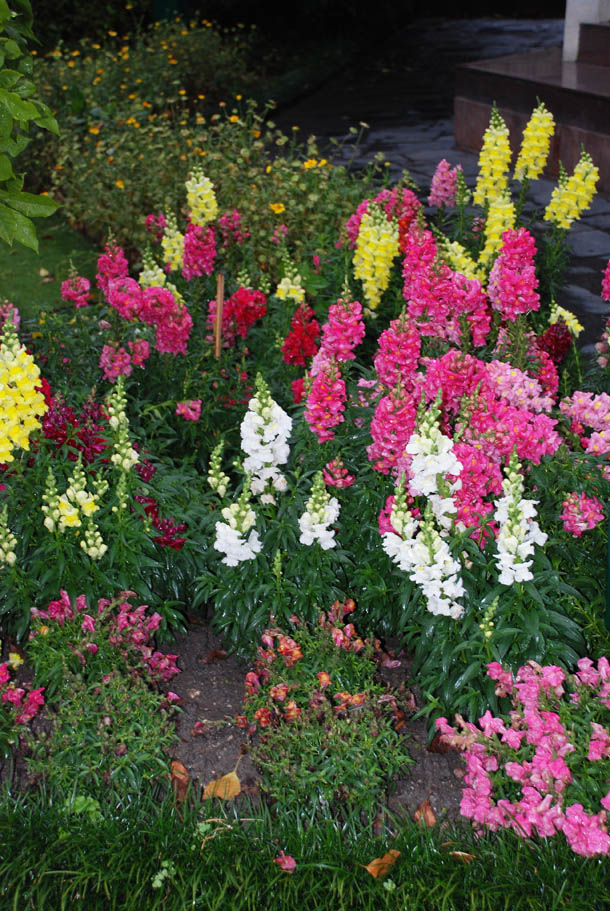
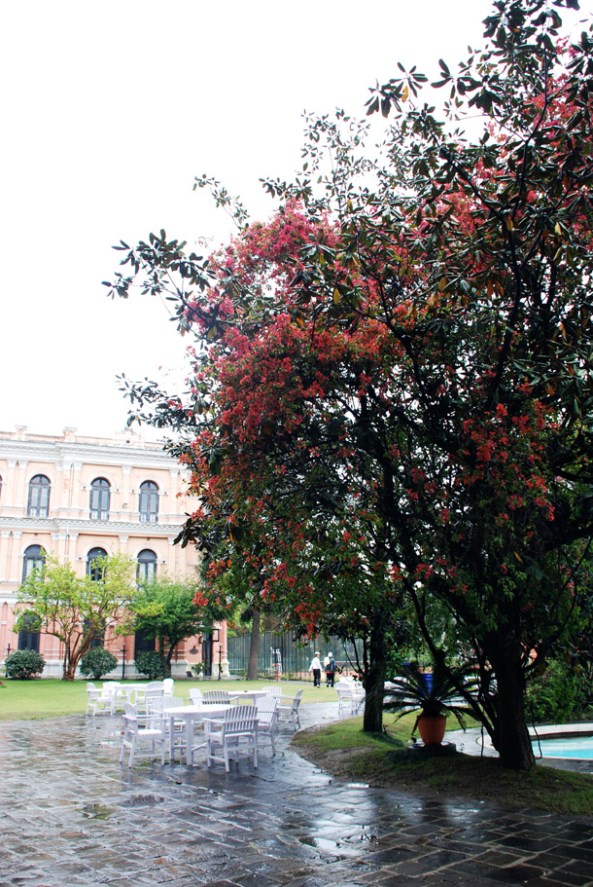
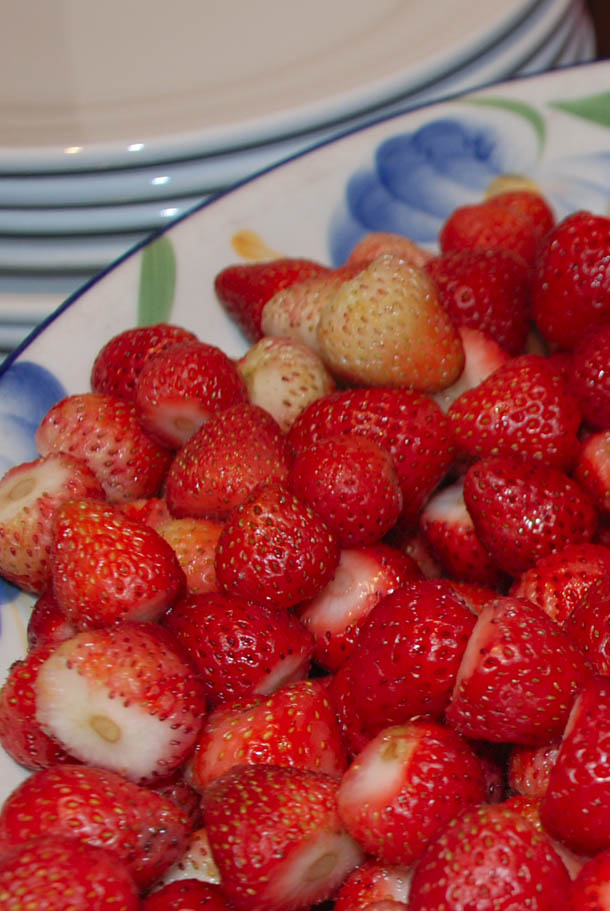
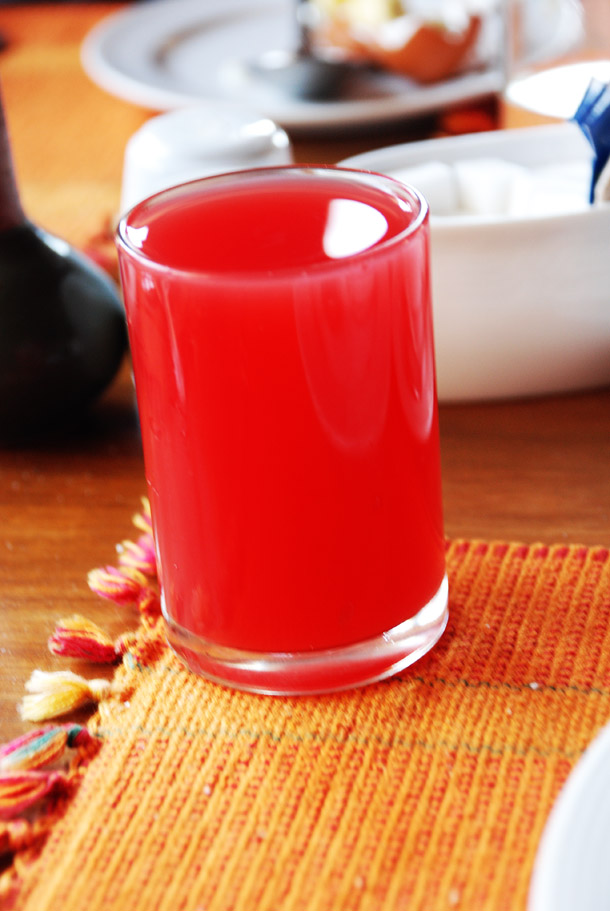
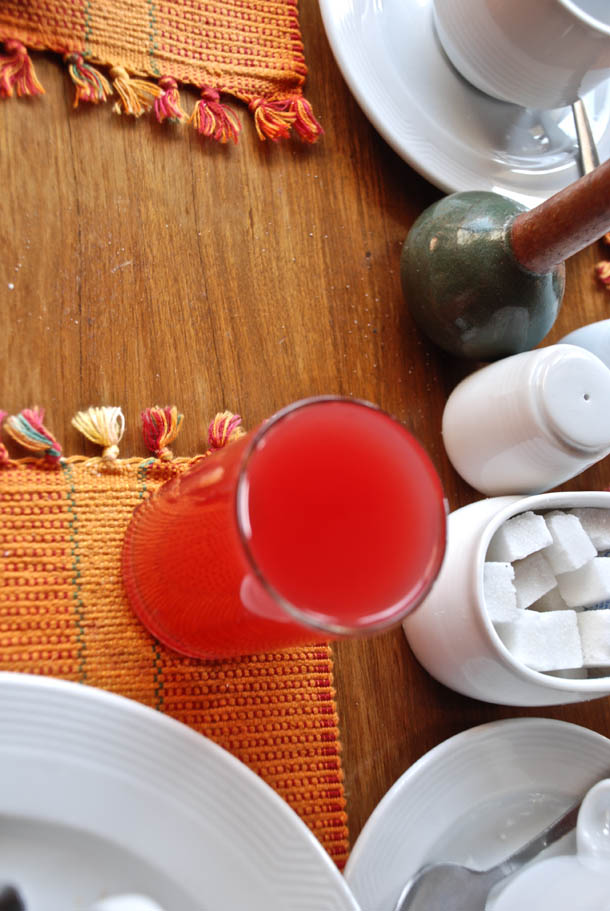
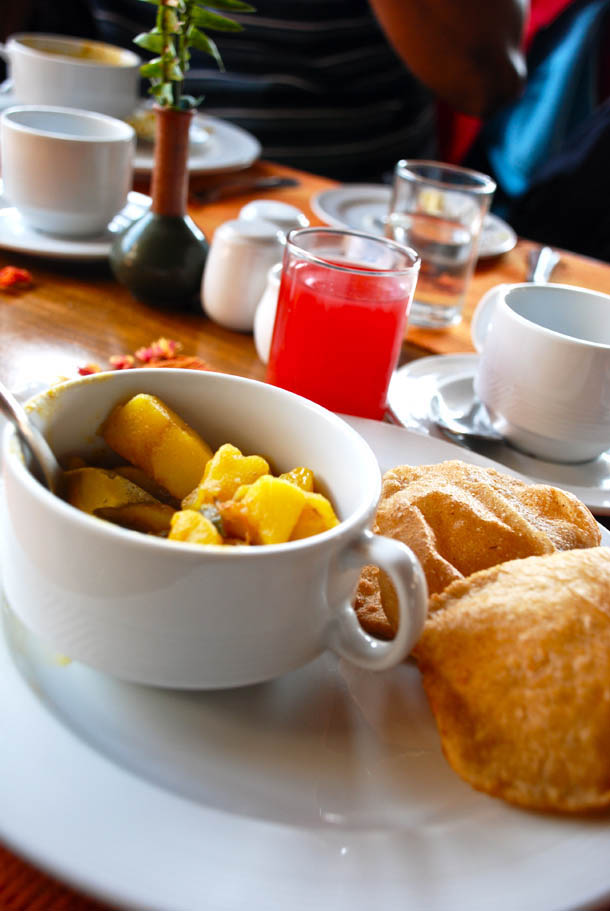
The special decorations for the Nepali New Year, the intricate wood work in the hotel lobby, the magnificent bronze idol of different deities and a few meals are really worthy of special mentioning.
But before that a small excerpt from a previous article on the hotel…
I have started writing our Nepal journey in a very unusual way – the first post on Nepal being the last day of our trip. Probably the divine experience of seeing the Mt Everest and the Himalaya can’t be written anywhere else but on the first post of my Nepal travelogue! But that doesn’t mean that our other experiences were any less than ordinary. For example – the pleasure of experiencing traditional Newari/Nepali food or our stay in a hotel that is as beautiful and rich in history as the city itself. Kathmandu, the capital of Nepal, is situated in the Kathmandu valley which is one of the largest valleys in the Himalaya. Kathmandu is not a copybook beautiful city. It is over-crowded with people as well as the modern brick structures that house these people – all jostling with each other for space. The grey smog that surrounds the city as cars, vans, two-wheelers wheezes past is definitely not the romantic grey clouds blurring the surrounding Himalayas. The beauty of the city lies else where – the warmth of the round and smiling faces of the Nepalese, the innumerable make-shift souvenir and curio shops on the streets, the sudden emergence of ridiculously wired up electrical poles along along with lush green trees (Wired up is another favourite topic of mine – I already have numerous photographs of Kolkata all wired up but wired up Kathmadu really takes the cake). Our hotel – Hotel Yak & Yeti is beautiful and grand. In comparison, I can’t say the same about the rooms housed in the older section that we were given initially. However, the view of the room compensated everything. The rooms in the newly renovated section are much superior. The brick structure of the exterior, the intricate wooden paneling in the interiors almost replicate the wooden panels of the houses in the UNESCO Heritage site of the Durbar Square in Old Kathmandu. Some of these panels are actually 200 years old. Boasting of a fantastic art collection, signature restaurants, famous residents like Sir Edmund Hillary, the famous mountaineer or the neo-classical Lal Durbar or Red Palace which was built more than a century ago by the then Prime Minister Bir Shumshere Jung Bahadur Rana, the history of the hotel seems to run parallel to the history of Kathmandu itself… [Read more…]
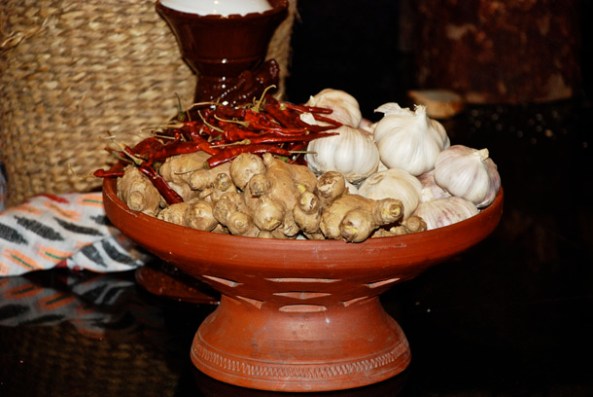
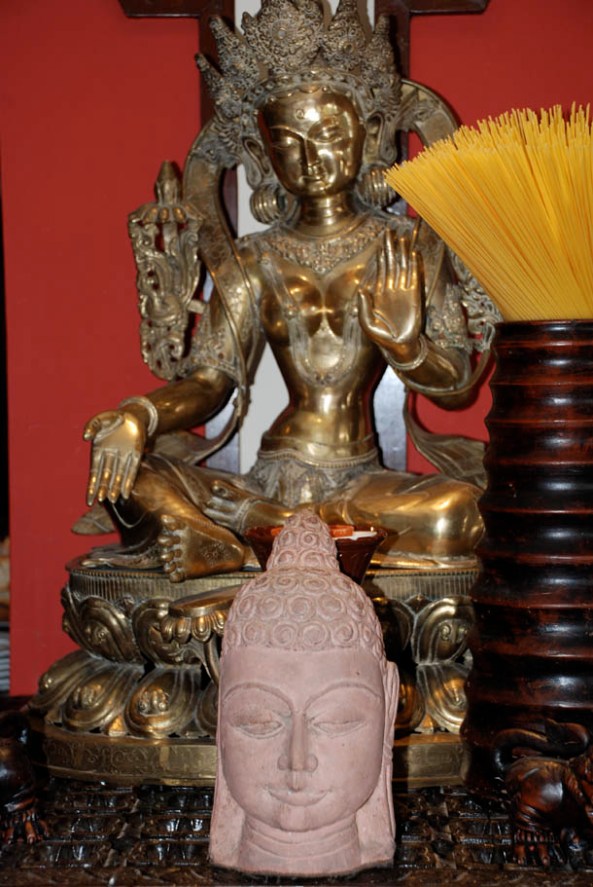
Coming to Food, amidst the usual buffet, the following dishes are still tingling in my memory. Simple but enjoyable. More so because I have never seen the Z-SISTERS enjoy their vegetables so much. Here goes the trio –
The stir-fried vegetables with Sesame seeds and the Chinese vegetable Pakchoi. Pakchoi is definitely going to become my next crush!
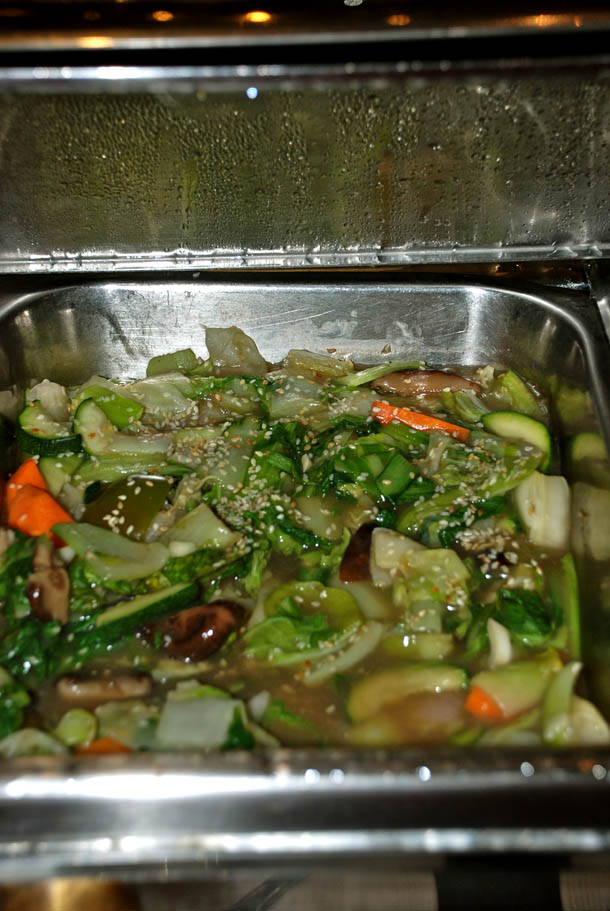
The steamed vegetables – succulent Zucchinis, Green Peas, Cauliflowers and Carrots. Simple and nothing unusual but loved the extra-ordinary taste. Zucchinis are soon going to become my second crush, after Pakchoi!
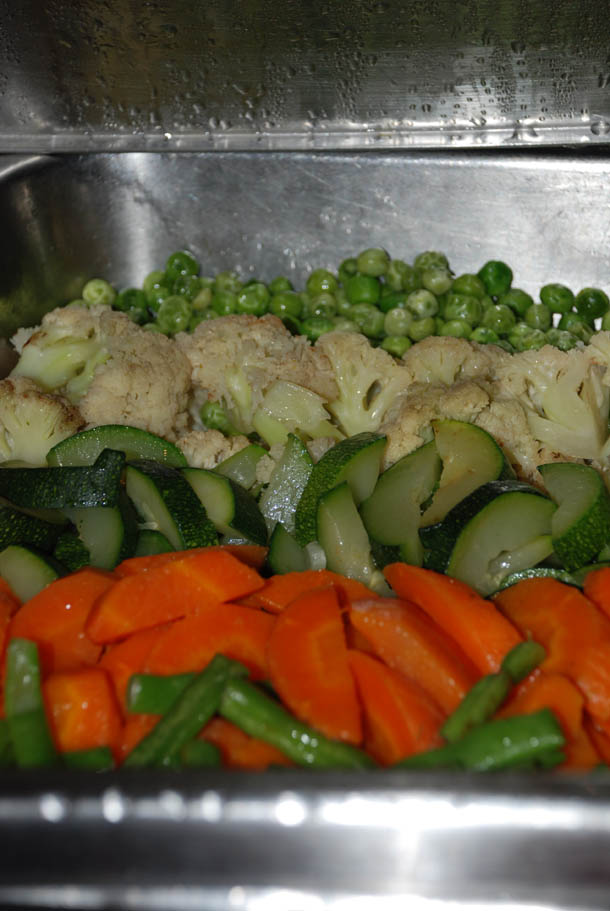
And lastly the Veal in Red Wine Sauce…
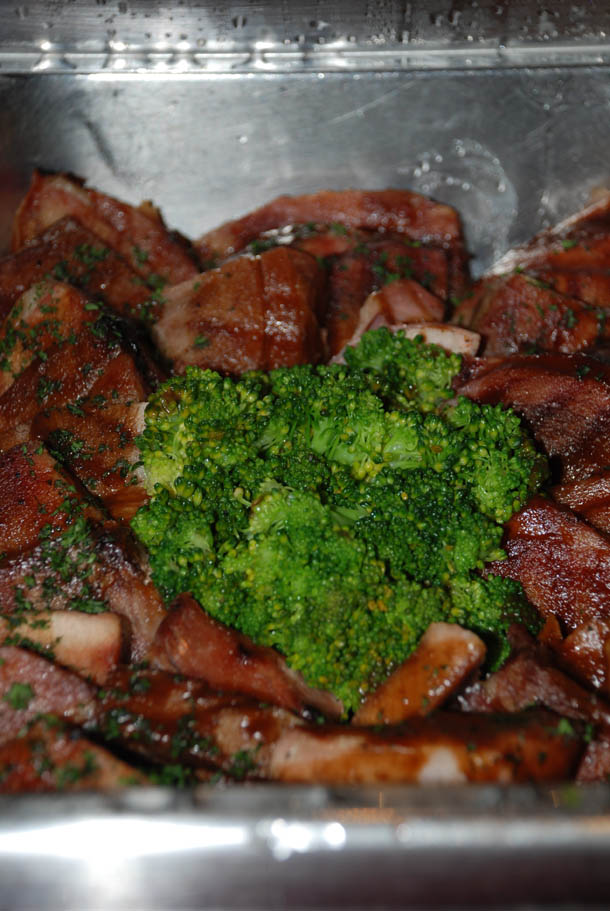
Turning the Red Wine Sauce into another crush may prove to be a foolish idea – it is better to pack for holidays once in a while than to run short of money to pamper your crush. Enjoy a peep into more pictures but don’t forget that they are exclusively mine! Oh, also don’t forget to let me know about the Daal Maharani – I hope you enjoyed it. It’s quite simple actually.
Unblogging it all… Ishita
Other articles on our Nepal trip
Sikarni Raan/Marinated Lamb Shank from Yak & Yeti
Flying over Mt Everest – Nepal
The Abandoned Women Amidst Many Prayers
References/ Books I’m reading/lying on my bedside table:
A Golden Souvenir of The Himalaya – Author: Pushpesh Pant
Kathmandu Pokhra-Chitwan – Author: Thomas L.Kelly, Daniel Haber
The Nepal Cookbook – Author: Padden Choedak Oshoe

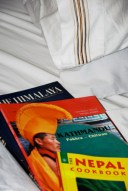
Related articles over the Web
The Himalayas
Introduction to Nepal
Kathmandu Valley as a UNESCO World Heritage Site
All places in Nepal inscribed on UNESCO World Heritage list
BE SOCIAL. SHARE THIS!

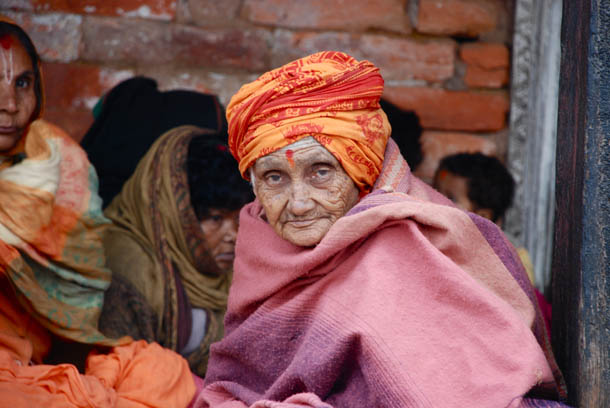
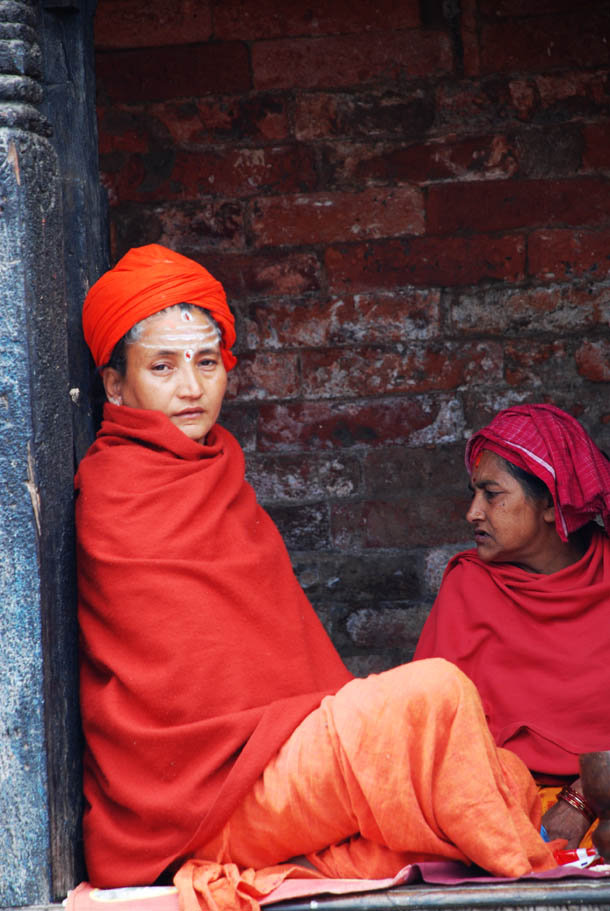
I have always maintained from the very beginning that I will refrain from expressing my personal opinion on politics and religion in my writings that might reflect any bias or hurt any religious/cultural/spiritual sentiment. Having grown up in the multicultural Kolkata we have participated in all festivals from all religion. My previous writings dwell deeply on this aspect (Article 1, Article 2). But I cannot deny the fact that the enigma of varied cultural/religious aspects of different places simply fascinate me. The strong beliefs and faiths reinforcing the expression on the faces of devotees during worship, the colours, the rituals, the stories underlying these rituals – I have always wanted to capture these elements in a soulful manner. And I hope that I’ve succeeded.
Religion in Nepal
It is fascinating and quite a complex task to understand Religion in Nepal because there is no simple straight forward philosophy. Many communities and many religion have become intermingled. There seems to exist 70 ethnic and indigenous communities in Nepal speaking at least 100 different languages and dialects. Though many perceive Buddhism as the predominant religion in Nepal, it constitutes less than 6% of the the country’s population. For Hindus the world over, the temple of Lord Shiva in Pashupatinath along the banks of the Bagmati river in Kathmandu is one of the most sacred pilgrimages. Thousands congregate here for the annual Mahashivaratri festival which falls in early spring. In-fact, this temple is one of the 275 Paadal Petra Sthalams (Holy Abodes of Shiva on the continent).
At the same time Nepal is also the birthplace of Lord Buddha. He was born in Lumbini located in southern Nepal. The Stupas or sacred mounds of Swayambhunath and Bouddhanath are very important reference points for Buddhism. Hence, many Buddhist practices, customs and rituals have entered into Hinduism and vice versa. Interestingly, Buddhism here is considered to be a part of Hinduism.
The Pashupatinath temple dates back to the 17th century A.D and is a UNESCO World Heritage Site. So here’s another tick in my list of the UNESCO World Heritage Sites that I have visited.
The stalls lining up the street to the Pashupatinath temple selling Sindoor/Vermillion and Gulal/coloured powder for smearing on the forehead after the worship, the colourful threads to be tied in the hands as sacred threads, the fresh flowers for decorating the Dali/basket that would be offered during the worship, the famous Nepali Rudraksha chains used as prayer beads, the smell of incense sticks – all form a kaleidoscope for the visual senses. Here’s our journey…
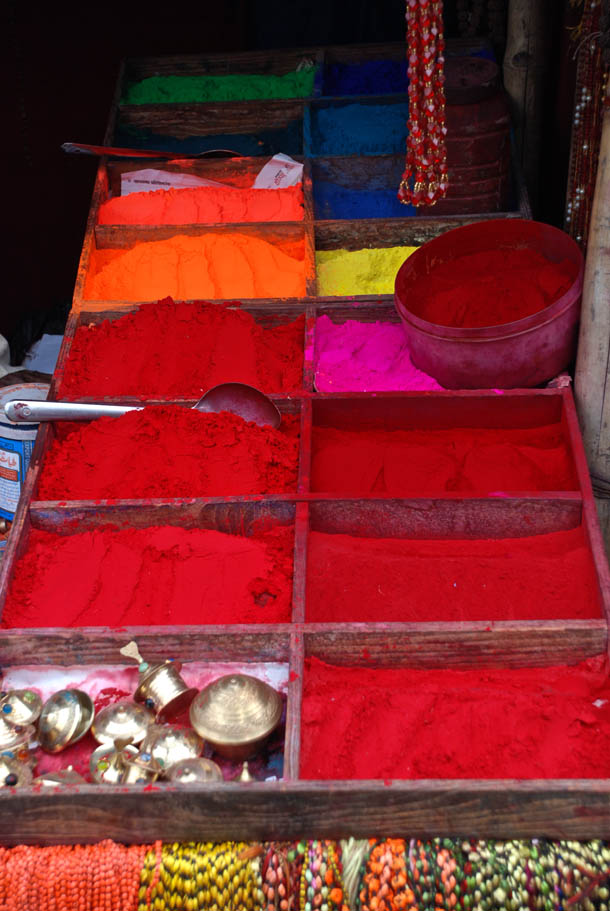
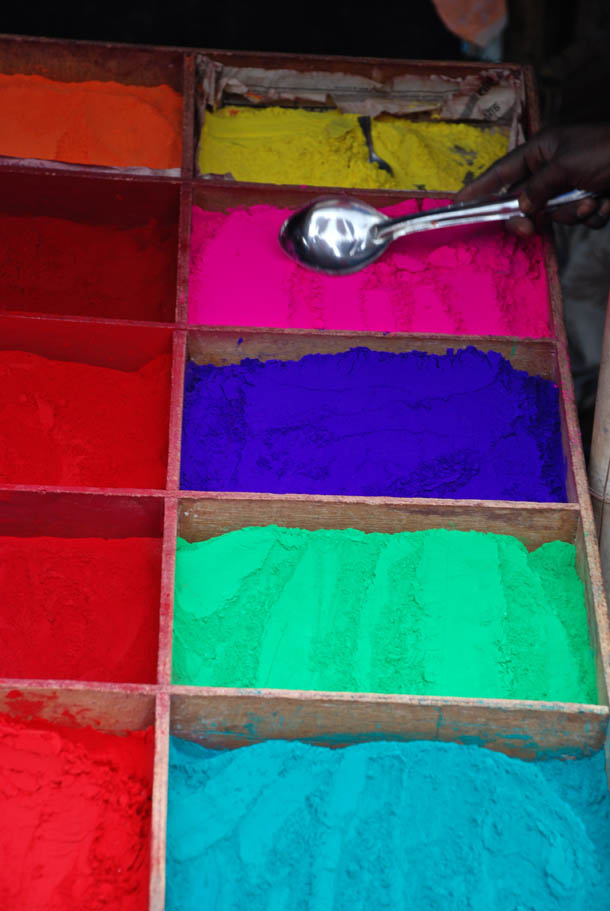
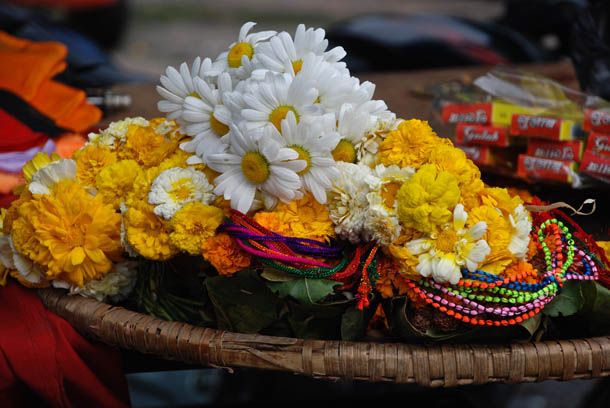
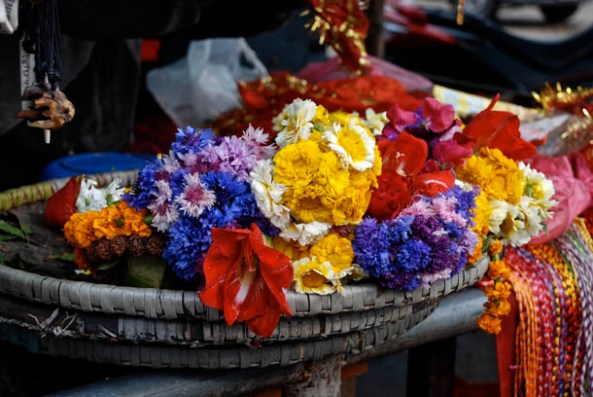
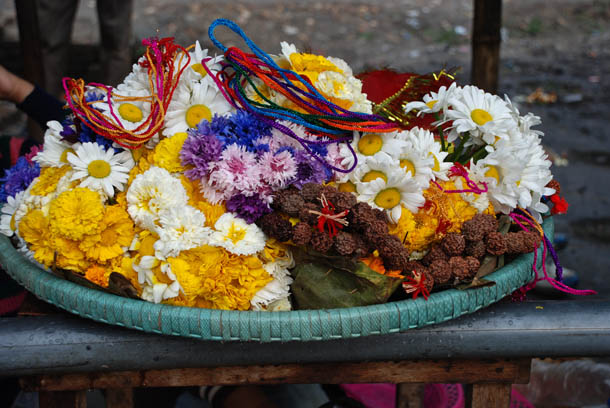
The Abandoned Women Amidst Many Prayers
Where do I start? How do I explain? This is also the title of my post. Red bricks, intricate wooden carvings have shaped the house where the nameplate indicates that this is called the Mahasthan Ghar. An interesting subject for my camera indeed. Till I saw the ladies sitting there with profound expressions in their eyes and fine wrinkled lines on their faces that must have seen a lot and borne a lot. The temple premises are sacred – hence devotees throng to it’s doors on every important aspect of their lives – be it when a new life is ushered in or when a life is gone. The Ghats/Steps leading to the Bagmati river are considered sacred as well. The smoke from the cremation pyres, the baskets of offerings occasionally floating by – these are all witnessed by the devotees who have only prayers in their hearts.
And in this sacred land amidst many prayers, these women who have been abandoned by their families are just waiting for their final call. Their only wish is to die while waiting in the Mahasthan Ghar on this scared premise so that they can go to heaven.
All photographs have been taken after taking permission from these unbelievably dignified women. Notice how calm their faces are and how distant their glances are. Some of them were happy with the fact that I was photographing them but none of them were keen to even see how they looked in them. I still showed them. They were indifferent and saw the pictures without any reaction. Only one lady said, ‘Wait let me have a smoke first!’.
I didn’t venture towards the women who were not feeling comfortable.
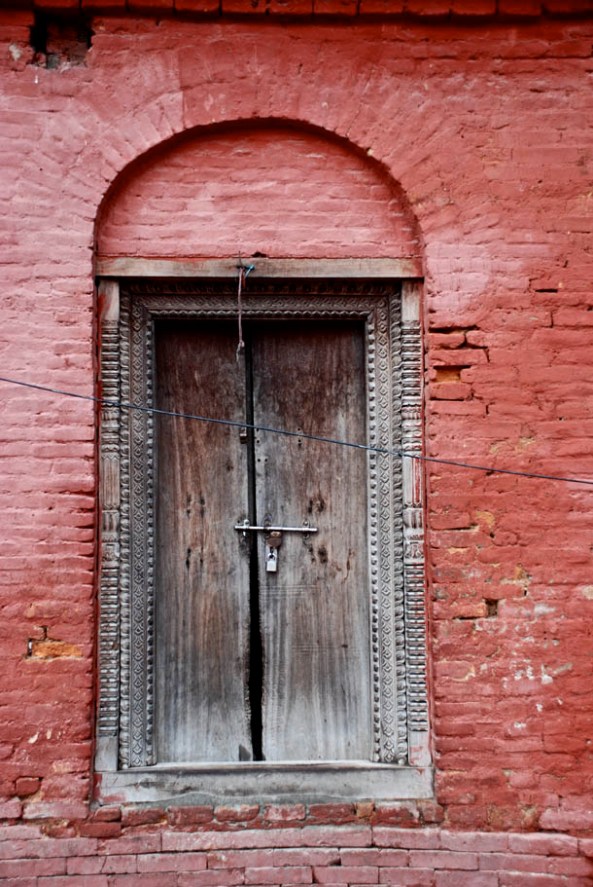
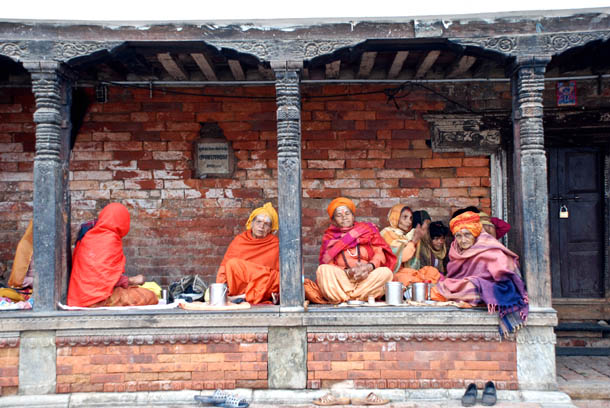
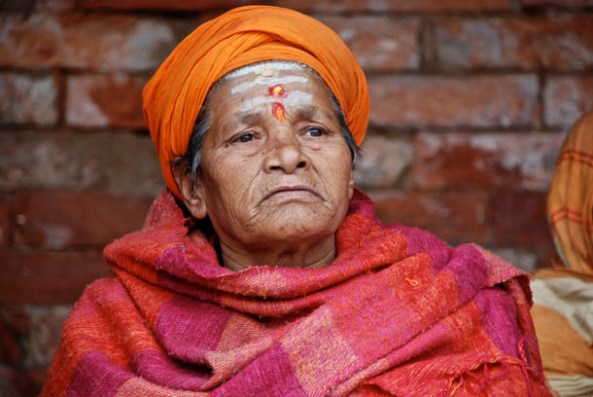
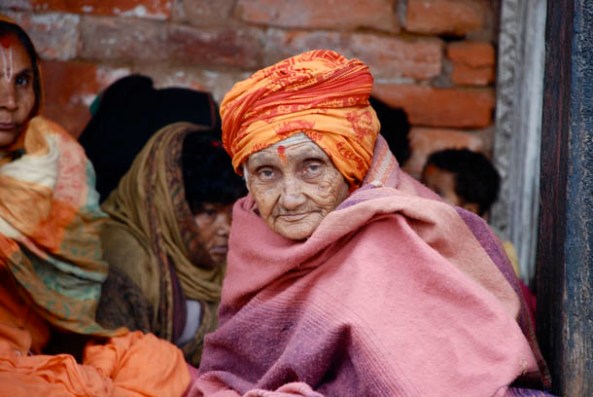
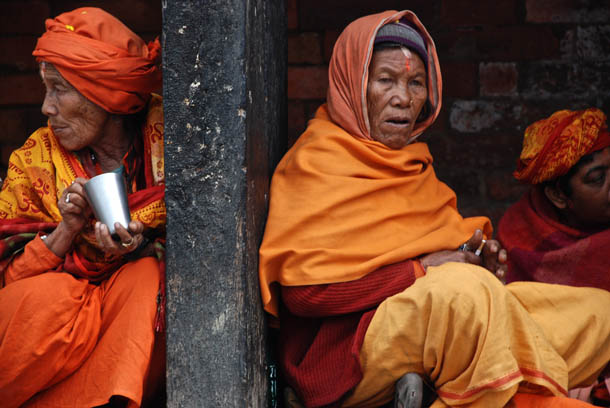
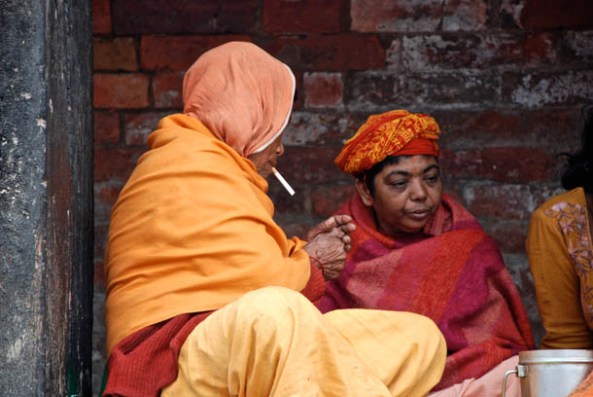
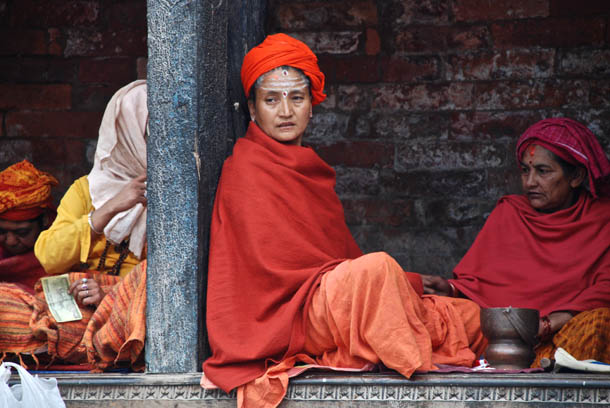
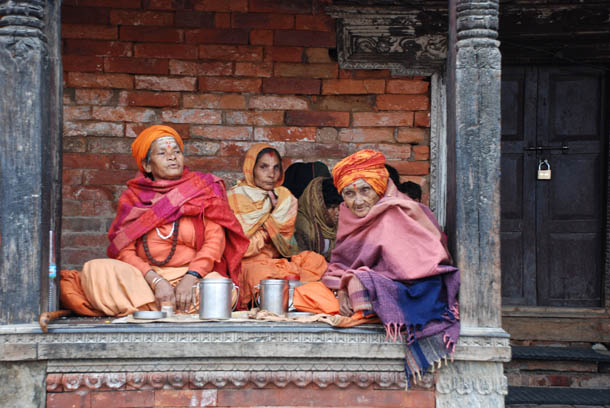
On a lighter note
A little girl wearing red clothes and carrying her little brother in her arms suddenly disrupted the pegions which were perched on the fence and those who were lazing around on the ground. The flight of the pegions and their flapping wings took me away from the unbelievable existence of Mahasthan Ghar in today’s world to the happy moment of our vacation in Nepal.
Hope you enjoy the flight of the pegions as much as I did. Can you hear their wings flapping in tandem?
Unblogging it all… Ishita
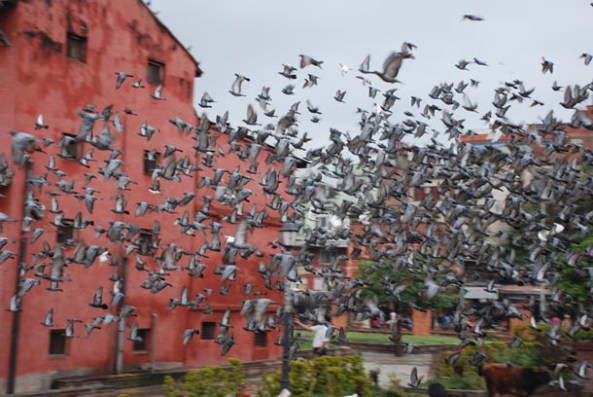
All the photographs are my own. Please do not use them without permission. Do enjoy more of this soulful journey.
Related articles on our Nepal trip
Daal Maharani Befitting the Queen (And Also Us)
Sikarni Raan/Marinated Lamb Shank from Yak & Yeti
Flying over Mt Everest – Nepal
Related articles over the Web
Kathmandu Valley as a UNESCO World Heritage Site
All places in Nepal inscribed on UNESCO World Heritage list
Rudraksha in Nepal
Pashupatinath Temple
BE SOCIAL. SHARE THIS!

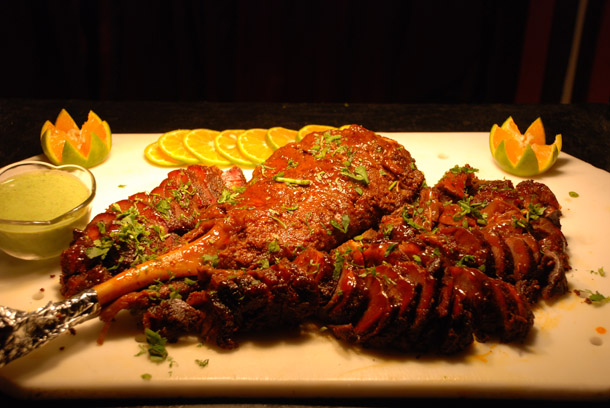
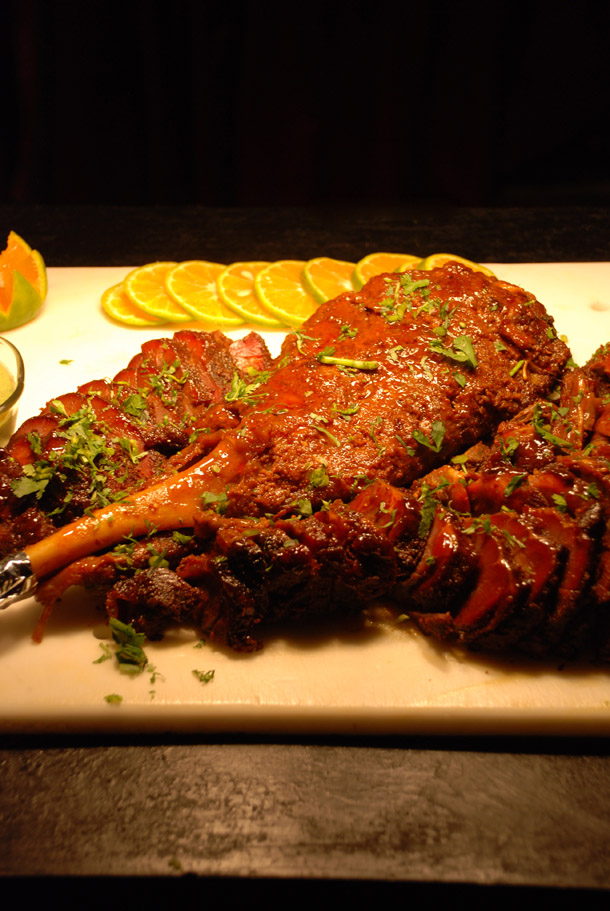
I have started writing our Nepal journey in a very unusual way – the first post on Nepal being the last day of our trip. Probably the divine experience of seeing the Mt Everest and the Himalaya can’t be written anywhere else but on the first post of my Nepal travelogue! But that doesn’t mean that our other experiences were any less than ordinary. For example – the pleasure of experiencing traditional Newari/Nepali food or our stay in a hotel that is as beautiful and rich in history as the city itself. Kathmandu, the capital of Nepal, is situated in the Kathmandu valley which is one of the largest valleys in the Himalaya. Kathmandu is not a copybook beautiful city. It is over-crowded with people as well as the modern brick structures that house these people – all jostling with each other for space. The grey smog that surrounds the city as cars, vans, two-wheelers wheezes past is definitely not the romantic grey clouds blurring the surrounding Himalayas. The beauty of the city lies else where – the warmth of the round and smiling faces of the Nepalese, the innumerable make-shift souvenir and curio shops on the streets, the sudden emergence of ridiculously wired up electrical poles along along with lush green trees. (Wired up is another favourite topic of mine – I already have numerous photographs of Kolkata all wired up but wired up Kathmadu takes the cake, really!)
Hotel Yak & Yeti, Durbar Marg, Kathmandu
5* Heritage Hotel; Centrally Located; In the mountains
Our hotel – Hotel Yak & Yeti is beautiful and grand. In comparison, I can’t say the same about the rooms housed in the older section that we were given initially. However, the view of the room compensated everything. The rooms in the newly renovated section are much superior. The brick structure of the exterior, the intricate wooden paneling in the interiors almost replicate the wooden panels of the houses in the UNESCO Heritage site of the Durbar Square in Old Kathmandu. Some of these panels are actually 200 years old. Boasting of a fantastic art collection, signature restaurants, famous residents like Sir Edmund Hillary, the famous mountaineer or the neo-classical Lal Durbar or Red Palace which was built more than a century ago by the then Prime Minister Bir Shumshere Jung Bahadur Rana, the history of the hotel seems to run parallel to the history of Kathmandu itself. Perhaps, more about this historical hotel in future posts.
The previous night rained heavily with deafening thunderstorms. In the morning, the landscaped gardens outside looked fresh, lush and wetty green! We Dubai-ites have a special yearning for the rains and we rarely complain about the rains even if it is at the cost of spoiling the sight-seeing and everything that is written in the itinerary. Have a glimpse of the day post-rain and let me know what you think…
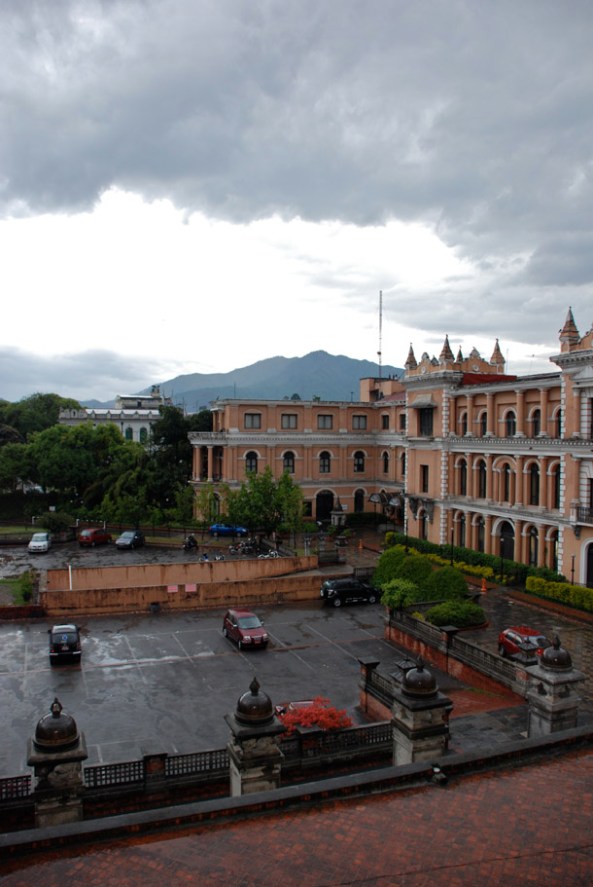
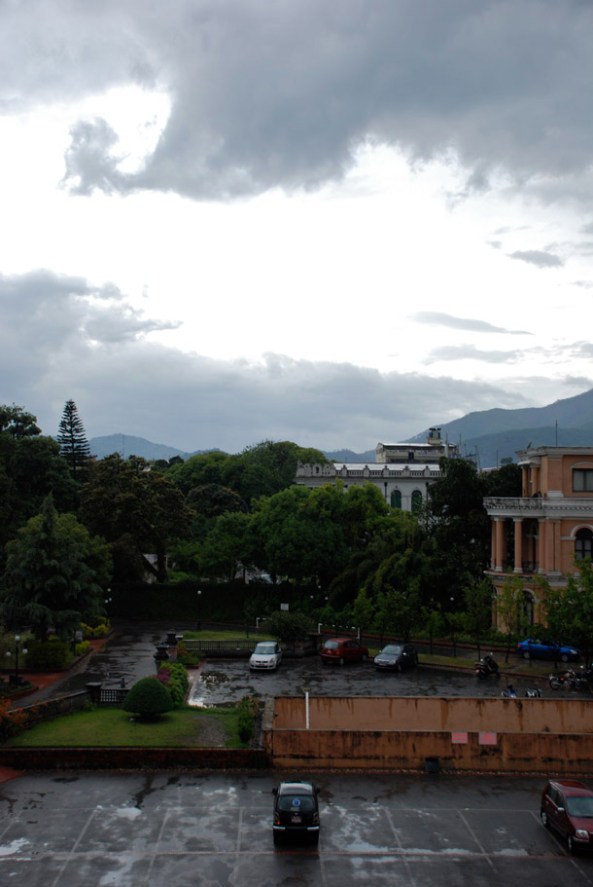
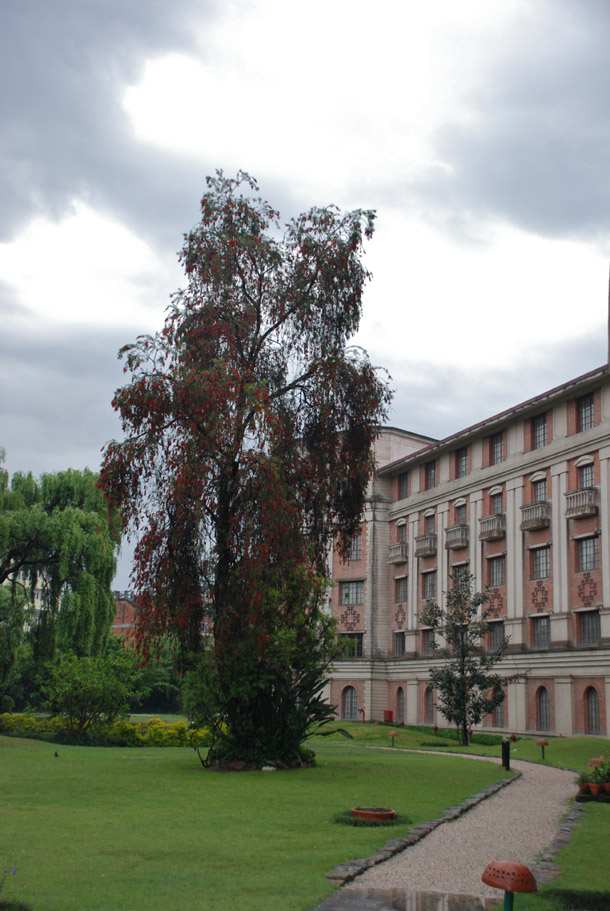

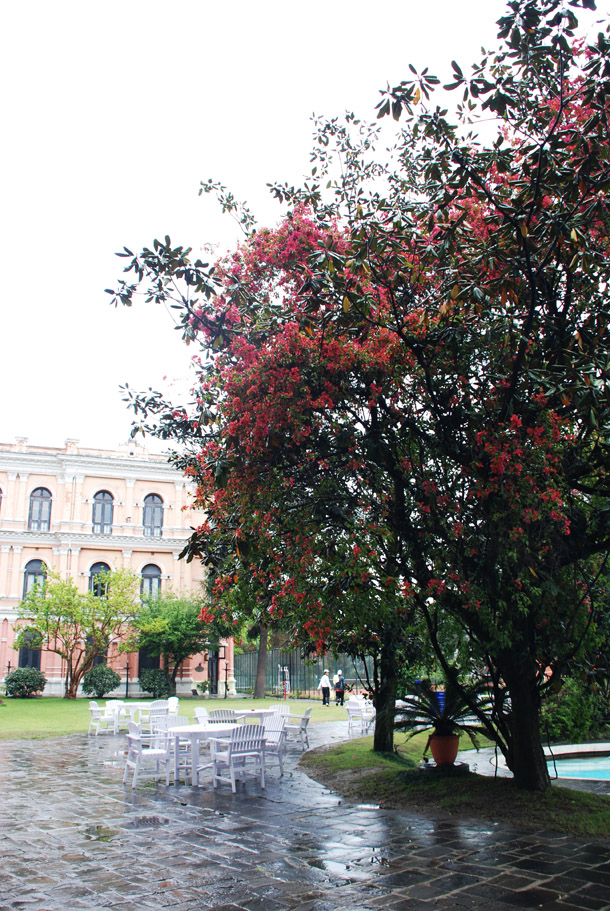

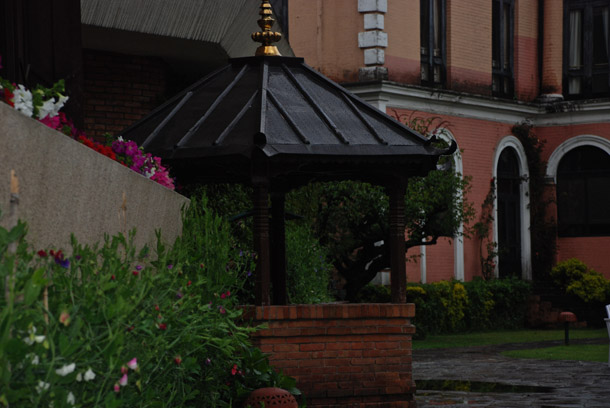
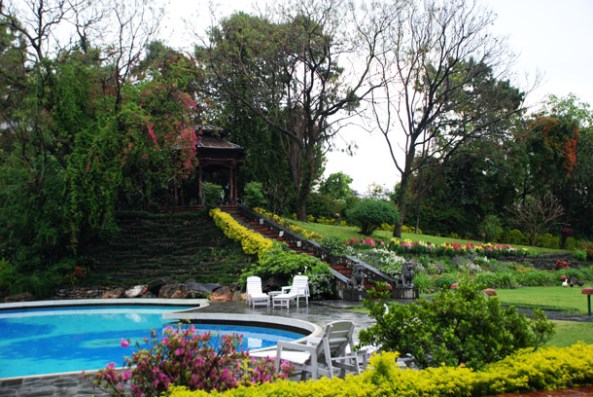
A little peep into the food and the traditional festive decoration of our hotel on the occasion of Nawa Varsa (Nepali New Year) might be able to convince you that one post probably is not enough!
Sikarni Raan or Marinated Lamb Shank
Category – Main-Meal ; Cuisine type – Nepali
Today’s recipe is Sikarni Raan or Marinated Lamb Shank obtained from the Chéf himself of the hotel’s Sunrise Café. The café is a misnomer – actually another signature Restaurant of the hotel serving Buffets and various A-la-Cartes. Absolutely delicious and succulent, this grilled lamb dish is to die for or should I say to live for! Though Sikarni is a very famous Nepali dessert made with hung yoghurt/curd mixed with dried fruits, here the word Sikarni probably indicates it’s association with yoghurt/curd.
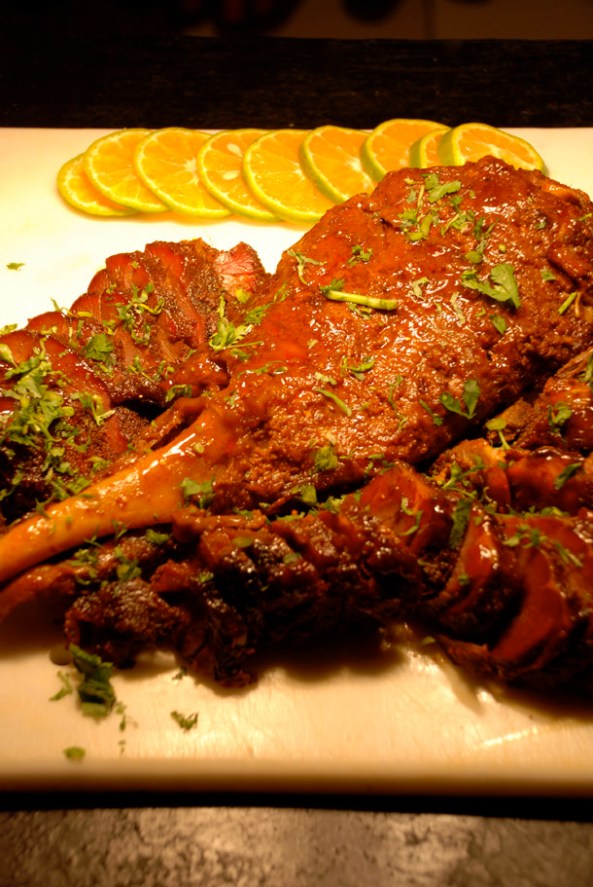
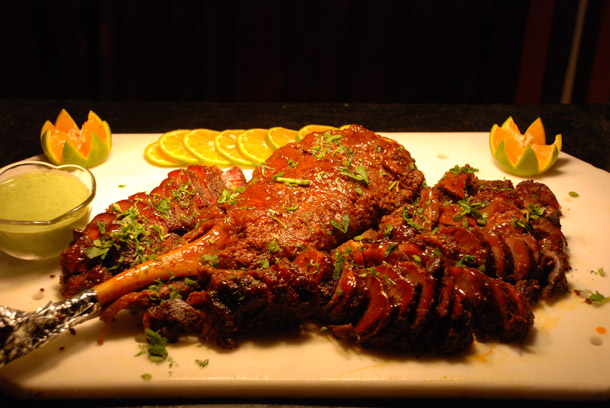

For the printable recipe→
Serves 20 persons (if not more)
Preparation time – 4-5 hours (marination -2-3 hours; mashing, grilling – 2 hours)
Ingredients
1 Big Lamb Leg, 3-4kgs
For Marination
Ginger Garlic Paste – 10 tsp
Peanut Oil – 1 cup
1 big Raw Papaya (grated) or 1 big Pineapple (paste). You may also use meat tenderiser.
Brown Onion Paste – 2 cups
Hung Curd (thick) – 2 kgs
Roasted Cumin Powder – 5 tsp
Nutmeg Powder – 5 tsp
Cardamom Powder, Mace Powder – 5 tsp
Saffron (soaked in milk) – 2 tsp
Coriander Powder – 10 tsp
Garam Masala Powder* – 10 tsp
Kashmiri Chilli Powder or Paprika – 4 tsp
[*Garam Masala Powder used in Nepali dishes is slightly different from the Bengali or Indian Garam Masala. I have come to realise that though some ingredients like Cardamom, Cinnamon, Cloves are common to Garam Masala being used in various regions, each region or culture probably adds its own touch.
The proportion of ingredients that goes into making the Nepali Garam Masala (from The Nepal Cookbook)
Dry roast the following whole spices separately until fragrant:
5 ttbsp Coriander Seeds
3 tbsp Cumin Seeds
1 tbsp black pepper Corns
2 tsp Black Cardamom Seeds
2 tsp Ground Cinnamon
1 tsp Whole Cloves
1 tsp ground Nutmeg
Grind the above roasted spices into a fine powder.]
For Garnishing
Coriander leaves
2 Lemons
Roasted Cumin Powder – 4 tsp
Method of Preparation
– Marinate the Lamb shank for 2-3 hour
– Pre-heat the oven to a temperature of 180°C/350°F
– The entire marinated Lamb Shank should take a minimum of 2 hours. Or continue till the meat is tender. Do not overcook – it should taste soft and succulent
– Garnish with Coriander leaves, squeezed lemons and Roasted Cumin Powder
Accompaniment
Serve with Tandoori Nan (Indian Flat Bread) or plain white Rice so that the aroma of the Sikarni Raan can seep through your veins. While you are waiting for the oven to do it’s job why don’t you pour yourself some Red Wine?
A bit about Nepali Cuisine
Let me also share a bit that I’ve learnt from my stay in Nepal and also from my recent purchase from the Kathmandu airport – The Nepal Cookbook.
Nepali Cuisine is influenced by the cuisines of both India and Tibet. The use of ingredients is very similar and some of the most commonly used ingredients are as follows – Hing/Asafetida, Mungrelo/Black Cumin Seeds, Cardamom – Alaichi/Black Cardamom, Sukumel/Green Cardamom, Chilli Powder, Red and Green chillies, Hariyo Dhaniya Paat/Cilantor or Coriander leaves, Curry powder, Methi/Fenugreek (most importnat in Nepali Cooking), Saunf/Fennel Seeds, Garam Masala (dry roast of whole spices like Coriander Seed, Cumin Seeds, Black Peppercorn, Black Cardamom Seeds, Ground Cinnamon, Whole Cloves, Ground Nutmeg), Turmeric, Garlic, Ginger, Onions, Scallions, Gundruk (Nepali vegetable dish prepared from green leafy vegetables that are fermented and then sun-dried and is used in soups, pickles and other dishes), Jimbu (aromatic grass from the Himalayan regions and is sold in strands – a pinch is enough to flavour a dish; not available in Asian supermarkets, hence bulb garlic roots are used as a substitute), Jwanu/Lovage Seeds (Ajwain in Hindi), Timbur (another important ingredient used in Pickles), Tamarind pulp.
Dishes are cooked in Ghiu/Clarified Indian Butter (Ghee in Hindi) or Mustard oil, Corn oil and Soybean oil.
Achar/Pickles, a special condiment perfumed with ginger, garlic and hot chillies, is considered indispensable to a Nepali meal. They may be served as a vegetable dish in its own right or as a condiment and may use either raw or cooked cooked vegetables and may be preserved or prepared fresh.
Dal/Lentils, Bhat/Rice, Tarkari/Curried vegetable and a small amount of Achar/Pickle – this is the main staple diet of most Nepalese though festivals call in for more elaborate Nepali meal with Masu/Meat, Macha/Fish and other Nepali Desserts amongst which the most popular is Sikarni made with hung yoghurt/curd mixed with dried fruits. Regional variations in cooking styles and dishes quite obviously exist with the geographical/topographical variations within Nepal as the mountains in the North roll down into Tarai/Plains in the south.
So, Nepali Cuisine is not too different from the Bengali or the Indian fare that I have grown up eating. For those who haven’t read my previous post, let me slightly recap that though I am born in Kolkata I have a ‘crawling’ association with the Nepalese language and hence such a strong urge to visit the actual country to which this language belongs. Till I was about one and a half years old, we were living in the beautiful Himalayan hill town Kurseong (very close to Darjeeling, another well-known hill town in Bengal) where my father was posted. His posting there in the initial years of his career in the civil services made him very enthusiastic to the Nepalese culture and language. As a result both my parents became quasi-Nepalese! They used to speak in Nepali language and I grew up amidst Nepalese care-givers, the names of a few of them still reverberates in my mind as my Mum keeps on telling stories about them – Golé, Tolu, Ganga, Basanti and so many more. Their names sounded so quaint and sweet in my ears. My Mum also learnt a few Nepali songs, not to mention a few Nepali dishes as well!While I haven’t yet tried out the Sikarni Raan at home, in case you happen to cook it before I do please do share your thoughts. Looking forward to hearing them, maybe with some trouble- shooting tips as well.
Unblogging it all… Ishita
Official Website: http://www.yakandyeti.com//home/index.php
Other articles on our Nepal trip
Daal Maharani Befitting the Queen (And Also Us)
Flying over Mt Everest – Nepal
The Abandoned Women Amidst Many Prayers
References or Books I’m reading/ Or lying on my bedside table for reading:
A Golden Souvenir of The Himalaya – Author: Pushpesh Pant
Kathmandu Pokhra-Chitwan – Author: Thomas L.Kelly, Daniel Haber
The Nepal Cookbook – Author: Padden Choedak Oshoe


Related articles over the Web
Nepal
The Himalayas
Introduction to Nepal
Nepalese or Newa People
Nepalese Cuisine
Religion in Nepal

 IshitaUnblogged